



Abstract
Before European contact, Māori disposed of the dead in environmentally sustainable ways. Revitalizing pre-colonial burial practices presents an opportunity for Māori to evaluate current practices and reconnect with their ancient tribal customs and practices. The research question asks: What is the decolonizing potential of urupā tautaiao (natural burials)? Paradoxically, environmentally unsustainable modern tangihanga (funerals) retain the ethos of customary funerary traditions. Urupā tautaiao presents an opportunity for iwi (tribes) to retain cultural integrity in the death space, without compromising Papatūānuku (earthmother). Methodologically, a Māori worldview frames an action research mindset. The study captures a tribal community’s exploratory journey into urupā tautaiao.
Introduction
This case study is part of a broader project undertaken over a 12-month period to gauge Māori responsivity to the idea of urupā tautaiao (natural burials). It explores the extent to which traditional customary and ecological knowledge of burial customs exists in Māori communities. Rural communities are reputably the repositories of this ancient burial knowledge. Our study revealed insights about ancient Ma!ori burials, including a little-known standing burial tradition. We also discovered that cremations, a modern anathema to most tribes was also practiced in pre and early contact times. The practice of suspending the dead in trees appears to be ubiquitous across the tribes. Early colonial observations support this finding (Best, 1905, 1934; Oppenheim, 1973).
Māori Burial Practices
It is apparent that prior to European contact, Māori disposed of the dead in ways that were environmentally sustainable (Best, 1905, 1934; Oppenheim, 1973). However, and mindful of tribal diversity, post-colonial tangihanga (customary funerals) incorporate distinctively Māori and European, customary beliefs and practices. They also retain the essence of tūturu (authentic) Māori beliefs that reinforce tribal identity and social cohesion (Higgins & Moorfield, 2004; Matengā-Kohu & Roberts, 2006; Nikora et al., 2010, 2012).
Unfortunately, current day tangihanga have adopted unsustainable European burial customs such as chemical embalming and lacquered wood/metal coffins which contribute to ground water and soil pollution (Pacheco et al., 1991; Spongberg & Becks, 2000; Stowe et al., 2001). Past practices would have had little, to no, environmental impact due to the rapid processing of bodies back into the environment via decomposition without additional non-natural materials or additives. In contrast, modern burials are costly, slow to decompose, and require the use of non-natural materials in coffins and chemical products for embalming bodies.
Environmental Considerations
Environmental responsibility presents an existential challenge for Māori who share with other indigenous cultures, a philosophical connection to, and responsibly for, the natural world (Harmsworth & Awatere, 2013; Maddox et al., 1996; McNeill, 2017). However, the legacy of the colonial experience is material, cultural and spiritual impoverishment (Fanon, 1961; Said, 1993). This explains why, in the modern death space, our relationship with Papatūānuku (motherearth) is severely compromised. A decolonizing agenda reminds Māori of the philosophical connection to, and responsibly for, the natural world.
Alienation from much of their tribal estate has left iwi (tribes) without the economic means to heal their land and waters. A predicament shared with other previously colonized people (Barta, 1987; LaDuke, 1999; Marsh & McNeill, 2005). Urupā tautaiao (natural burials) offer an opportunity for Māori to meet their kaitiaki (custodial) obligations to Papatūānuku. Natural burials accelerate decomposition and eliminate any non-decomposable additions to the burial, thereby minimizing the environmental “footprint” of death.
Funeral Affordability
Another pressing issue for iwi (tribes) is the high cost of death and dying in the modern world (Harmer, 1963; McManus & Schafer, 2014). Funeral affordability is a global cross-cultural, cross-class challenge (Case et al., 2013; Harmer, 1963; McManus & Schafer, 2009; 2014; Woodthorpe et al., 2014). The cost of hosting tangihanga typically held over three to 4 days can be exorbitant. Nikora et al. (2012) describe tangihanga as “… the ultimate form of Māori cultural expression” (p. 400), usually involving elaborate ceremonial rites culminating in a final ritual feast. A system of customary koha (gifting or donation), usually money helps to defray costs, which rarely covers tangihanga costs. In the past, food donations and labor (e.g., cooking and cleaning) were more common expressions of koha.
According to Francis Tipene, a well-known Māori funeral director, tangihanga estimates care “…around $8000 and over, and because of this many Māori are changing the ways in which they hold their funerals.” (Te Ao Māori News, 2015). This is exacerbated by Māori poverty indicators. “The socioeconomic indicators of the indigenous Māori in New Zealand, who make up some 15 per cent of the country’s population, rank consistently below average” (Van Meijl, 2020, p. 79). Ngāti Moko, a hapū (sub-tribe) of the Tapuika tribe (Figure 1), is a community that although materially disadvantaged, is rich in traditional tribal knowledge. As such the hapū presents an ideal case study opportunity. Location of Tapuika, (Ngāti Moko) on map of the North Island, New Zealand. Permission Brad Case.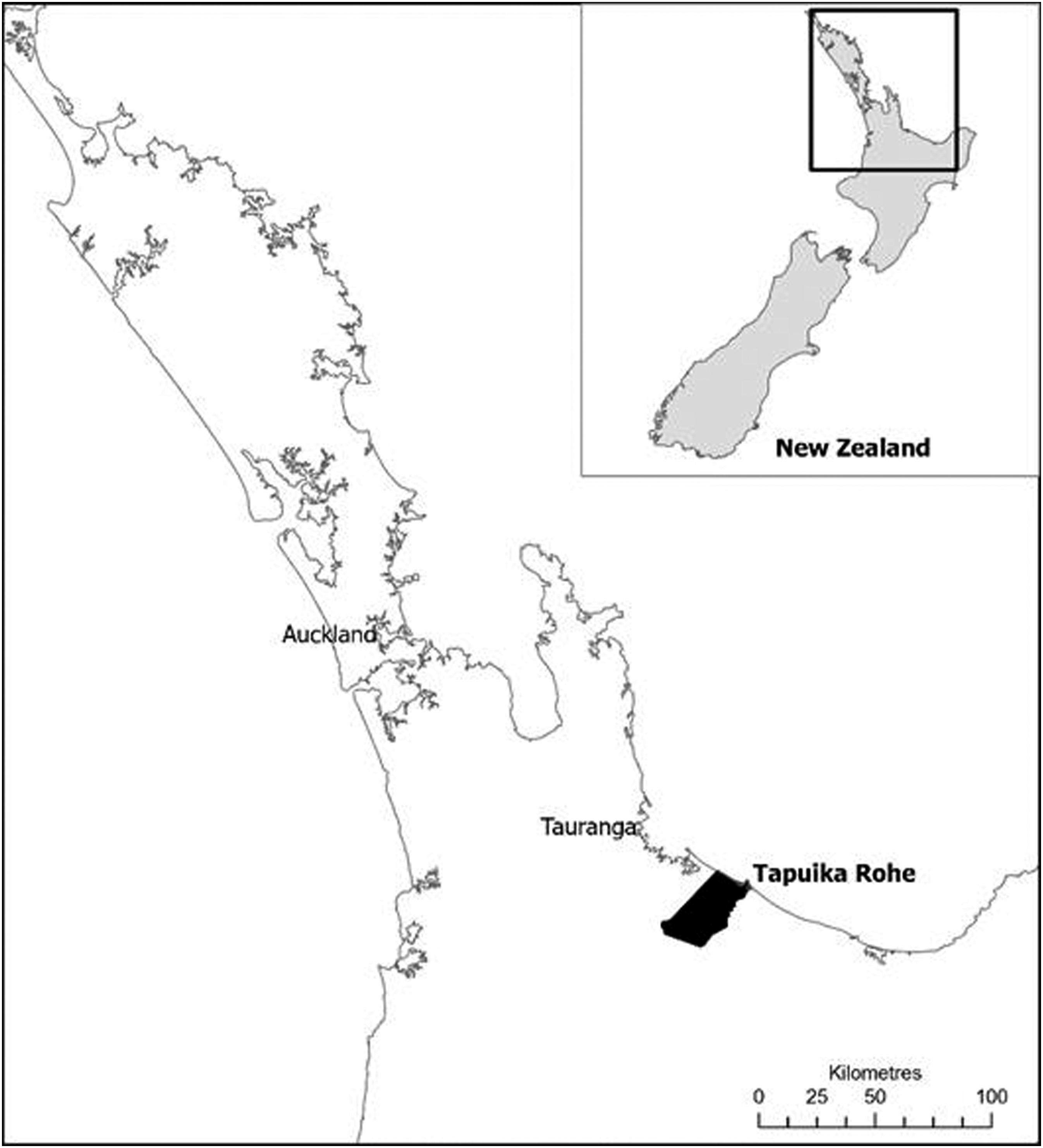
Tapuika, Ngāti Moko
Tapuika, Ngati Moko Colonial Historical Context
Prior to colonization, Tapuika held mana whenua (sovereignty) over their tribal estate. After the signing of the Treaty of Waitangi in 1840, Tapuika fought against the incursions of the colonial powers. Because of their refusal to concede mana (power in this context) against the Crown they were stigmatized as “un-surrendered rebels.” Land confiscations was the punishment for rebellion (Boast, 2008; Boast & Hill, 2009; Marr, 1997; O’Malley, 2019; Sorrenson, 1956; Williams, 1999). For Tapuika this resulted in “…the loss of an estimated 95% of Tapuika land over a 40-year period” (Marsh & McNeill, 2005, p. 91).
The relevance of this historical truth is multi-dimensional. Firstly, Tapuika are enormously proud of their rebellious past, refusing the Crown’s offer to remove the tribe’s un-surrendered rebels’ status (Tapuika Deed of Settlement, 2012). Secondly, the land carries tribal knowledge that is sacred. Separating the people from their land also separated them from the knowledge (ideology and practice) that lies across the land. This project presented an opportunity for the tribe to reconnect, revitalize and adapt ancient burial traditions for modern life. Decolonization in the death and burial space presents a healing and empowerment opportunity for indigenous people.
Modern Challenges
Small rural communities such as Tapuika, and Ngāti Moko are casualties of the myriad challenges that threaten the wellbeing of modern civilization. Arguably, the current global environmental crisis (Assadourian, 2010; Brown, 2011; Hansen, 2004; McDonald and Styles, 2014; Scheffer et al., 2001) presents an opportunity for indigenous communities to bring traditional wisdom to solve a modern problem (Castiano, 2005; Huntington & Watson, 2012; Jewitt, 2000; Maddox et al., 1996; Magni, 2017). Recognition is increasing for “…indigenous peoples and their knowledge as valuable allies in the fight against climate change and sustainable development challenges and in maintaining global biodiversity” (Magni, 2017, p. 444). The moemoeā (dream) is that we will open a portal for other indigenous people to consider the importance of protecting and or revitalizing their environmentally mindful burial customs. It also has the potential to encourage other indigenous communities to explore alternative and innovative ways to address modern death and burial challenges.
Environmentally Responsible Burials
How land is used has a major impact on climate change mitigation and environmental sustainability of both urban centers and rural areas. Funerary practices such as chemical embalming, ground water and soil pollution pose environmental risks (Pacheco et al., 1991; Spongberg & Becks, 2000; Stowe et al., 2001). As with many countries, the major pressures on land use faced by New Zealand include the diminishing area available for burials (Auckland City Council, 2019; McManus, 2015; Washington Post, 2013). This is indicative of the current crisis that also affects Māori. However, especially where older urupā are concerned, and as the generations increase, there may no longer be sufficient land left to receive the bodies of all those who wish to be buried in their ancestral urupā. As a result, from time to time the Māori Land Court receives applications to extend existing urupā, or to set aside Māori freehold land, or sometimes general land owned by Māori, as new urupā reservations (Milroy, 2014, p. 1).
Fortuitously, tribal urupā are exempt from the Burial and Cremation Act 1964. This gives Māori some autonomy over tribally designated burial reserves which potentially benefits initiatives such as the establishment of urupā tautaiao. Also, addressing challenges in the death space gives Māori communities an opportunity to inspire other indigenous communities to bring traditional wisdom to solve modern problems.
Materials and Methods
A Kaupapa Māori (KM) approach (Mahuika, 2008; Mane, 1998; Pihama, 2005; Smith, 1999; Walker, 1996) frames a participatory action research mindset (Caxaj, 2015; Esterberg, 2002; Kemmis & McTaggert, 1990). Using a mixed-methods approach, we applied KM and PAR to address contemporary burial issues. The science component presented expert ecological knowledge and advice, including how principles from restoration ecology and eco-sourcing of seeds, could be used for developing urupā tautaiao. They also encouraged iwi to consider the validity of mātauranga (tribal knowledge), particularly in relation to ancient burial site plants and their habitats. The use of geographic information systems for mapping land, burials and other features was also discussed.
Kaupapa Māori Methodology
Kaupapa Māori (KM) brings an indigenous specific vision that is embedded in Māori epistemology. It is a unique way of knowing and experiencing the world. The KM paradigm incorporates a Māori worldview predicated on the Māori cosmogony. The primeval parents of the Māori ontological universe are Papatūānuku (Earth mother) and Ranginui (Sky father). They are particularly relevant to this study because they represent environmental stewardship, which is central to the project. Mauri (life essence) and wairua (spiritual aspect) denote the esoteric beliefs and values that are integral to this research. The tapu (sacred) nature of the research, arises from Māori beliefs of the gods and their jurisdiction over life and death.
Methods
KM methods do not replicate conventional qualitative methods. KM is a uniquely indigenous methodological approach and is not merely a translation of non-indigenous approaches. KM is holistic encompassing spiritual, social, environmental, economic and psychological aspects of Māori existence. Hui a hapū (tribal gatherings) rely on kōrerorero, which are customary ways of discussing and resolving issues of importance to the hapū. Hui a hapū (tribal gatherings) are usually held at marae (traditional meeting places). The venue is significant because marae (sacred tribal spaces) are the only places in New Zealand society where Māori have cultural autonomy. In relation to this research, the cultural environment immediately empowers the hapū. KM methods involved: (1) Observing Māori protocols. These rituals encapsulate the ontological and epistemological aspects of the KM paradigm. (2) Including hapū (sub-tribe) members in the research team. The lead co-investigator and a tribal research assistant belong to Ngāti Moko. This brings into question the “insider outsider” debate in social sciences (Brayboy & Deyhle, 2000; Bridges, 2017; Brown, 2012; Humphrey, 2007; Merton, 1972). However, we argue that the inclusion of “insiders” gives the hapū participants another layer of protection. The insider researchers are members of the tribe and are held accountable. (3) Adopting kōrerorero (Māori discussion/discourse) as the method for gathering data. As a method it presents the opportunity to develop the discussions into pūrākau (ancient, sacred storytelling). As predicted, hapū members engaged openly and frankly within a familiar environment where kōrerorero is the preferred method of communication for Māori. (4) The hui a hapū were held in the wharenui (ancestral meeting house) on the marae. This also contributes positively to the mitigation of potential challenges in power relations between the researcher and the researched (Foucault & Gordon, 1980).
Participatory Action Research (PAR)
Positive social change is central to PAR methodology. “At heart, all action researchers are concerned that research not simply contribute to knowledge but also leads to positive changes in peoples’ lives” (Esterberg, 2002, p. 137). Philosophically, the Action Research (AR) approach aligns ideologically with the Māori worldview. It seems to me to be urgent for the planet and for all its creatures that we discover ways of living in more collaborative relation with each other and with the wider ecology. I see the participative approaches to inquiry and the worldview they foster as part of this quest. Reason (1994, p. 325).
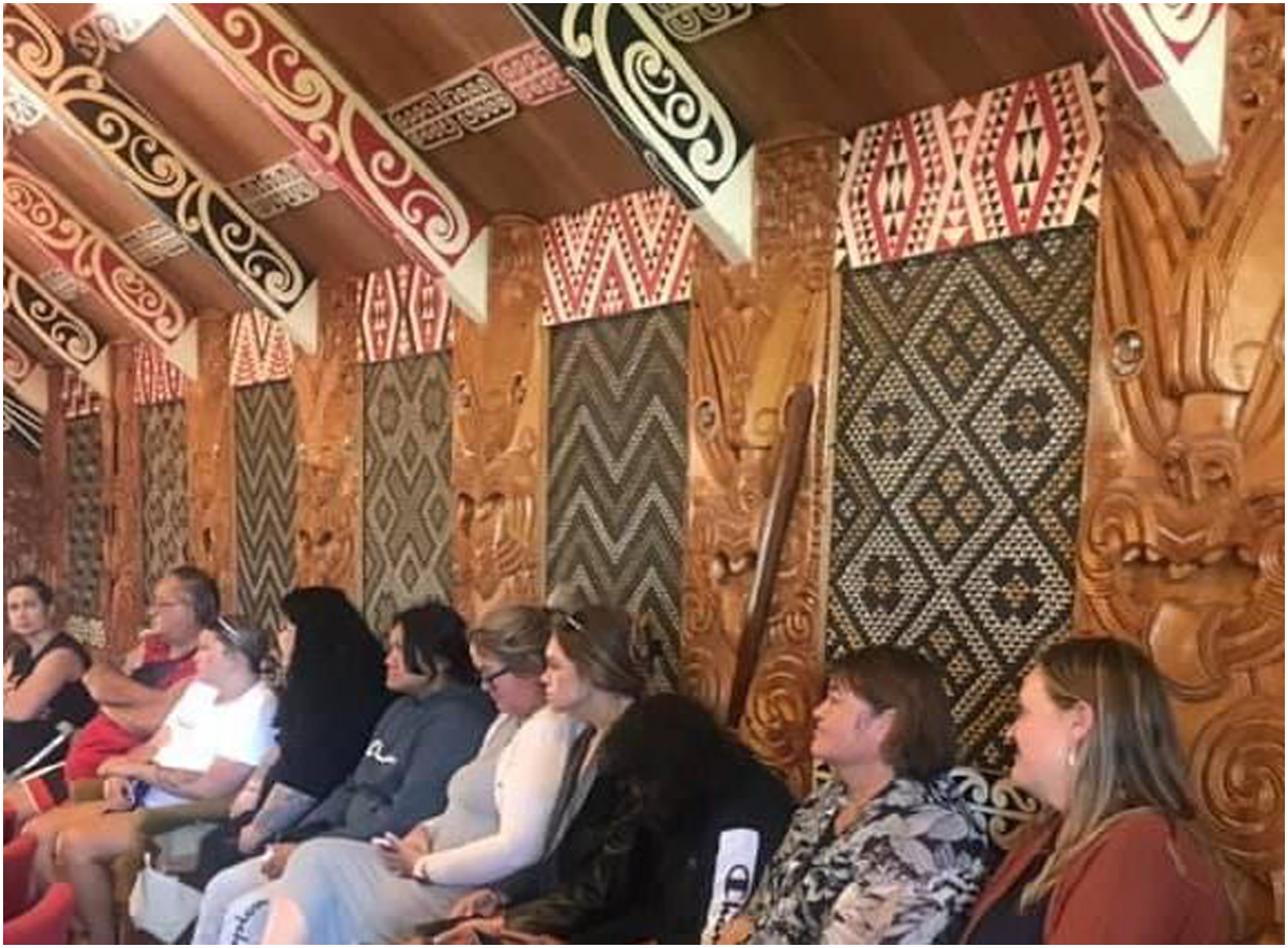
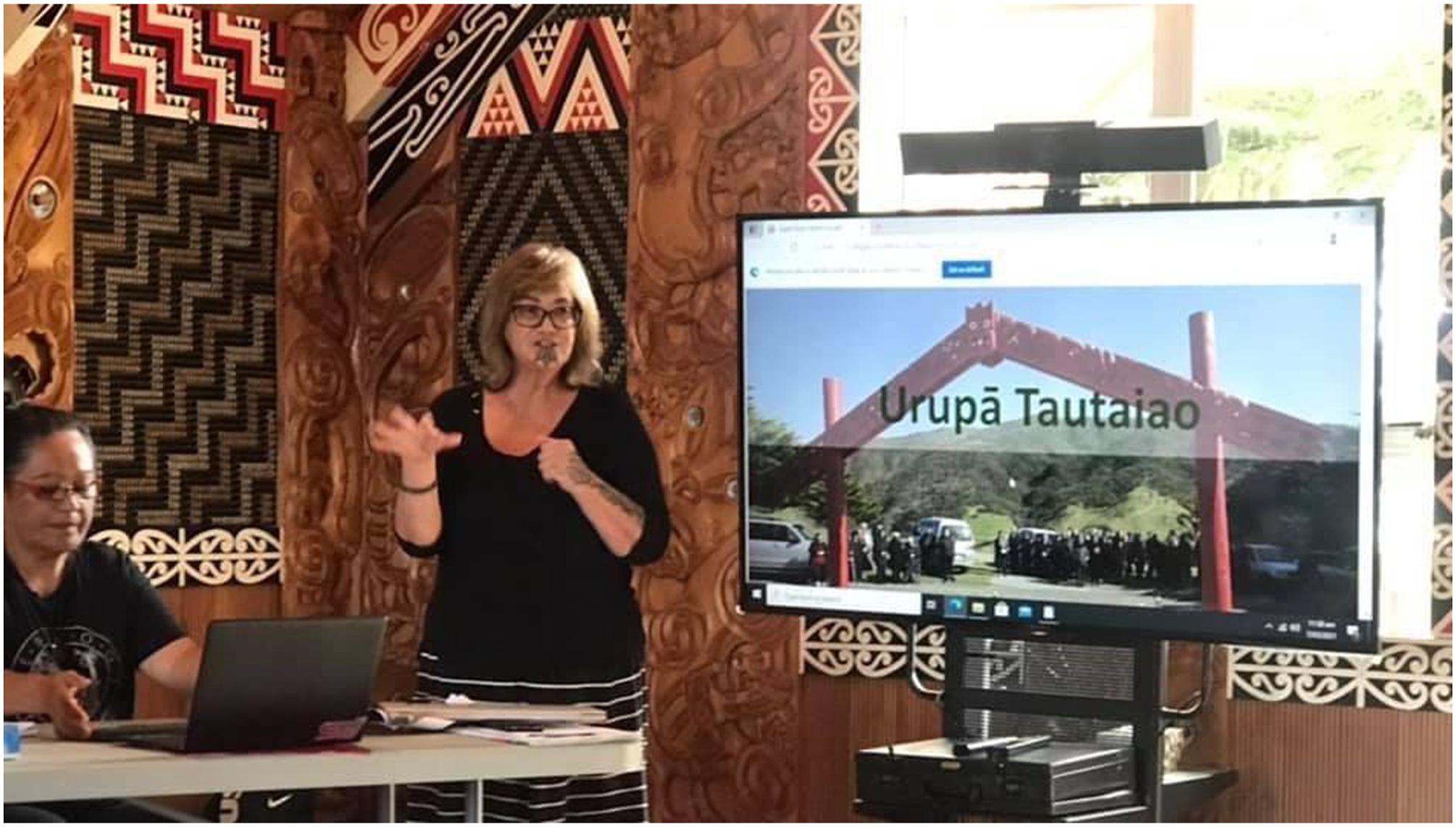
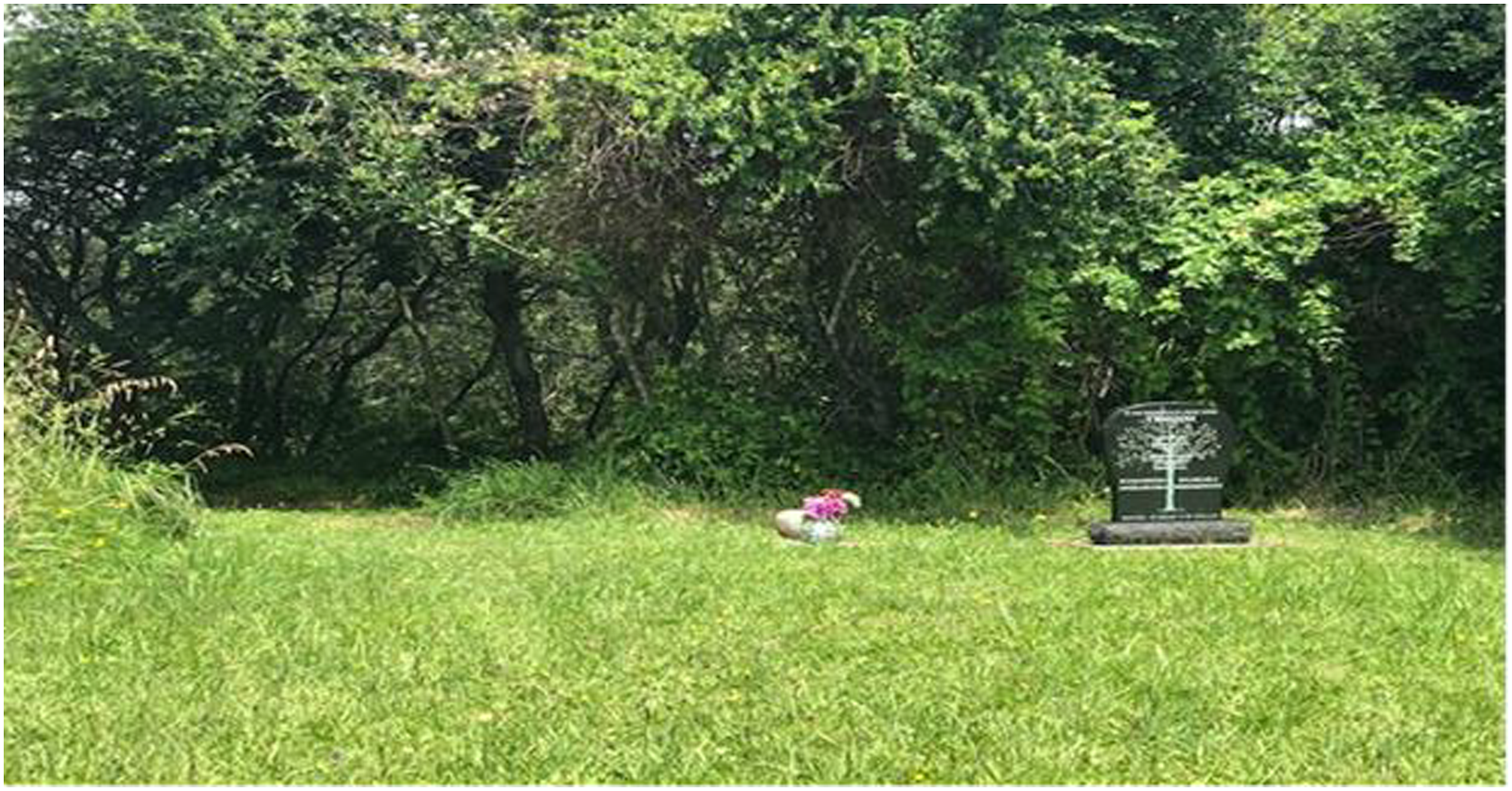
The American psychologist, Lewin (1946) is widely recognized as the originator of AR. Kemmis and McTaggert (1990) explains AR as “proceeding in a spiral of steps, each of which is composed of planning, action and the evaluation of the result of action” (p. 8). There are variations on Lewin’s original model. PAR emphasizes collaboration and for research participants to be engaged as partners in every aspect of the research process. We maintain that we adapted PAR to align with KM principles without compromising the integrity of the different approaches. Participatory Action Research cycle based on Lewin (1946) and developed specifically for the Urupā Tautaiao research project Ngāti Moko participants during urupā tautaiao presentation in the wharenui (ceremonial meeting house). Permission Ngāti Moko Marae Committee. Ngāti Moko researchers presenting in the wharenui (ceremonial meeting house). Permission Ngāti Moko Marae Committee. Te Hiini family cemetery. Proposed site to revitalize standing burials. Permission: Te Hiini family private collection.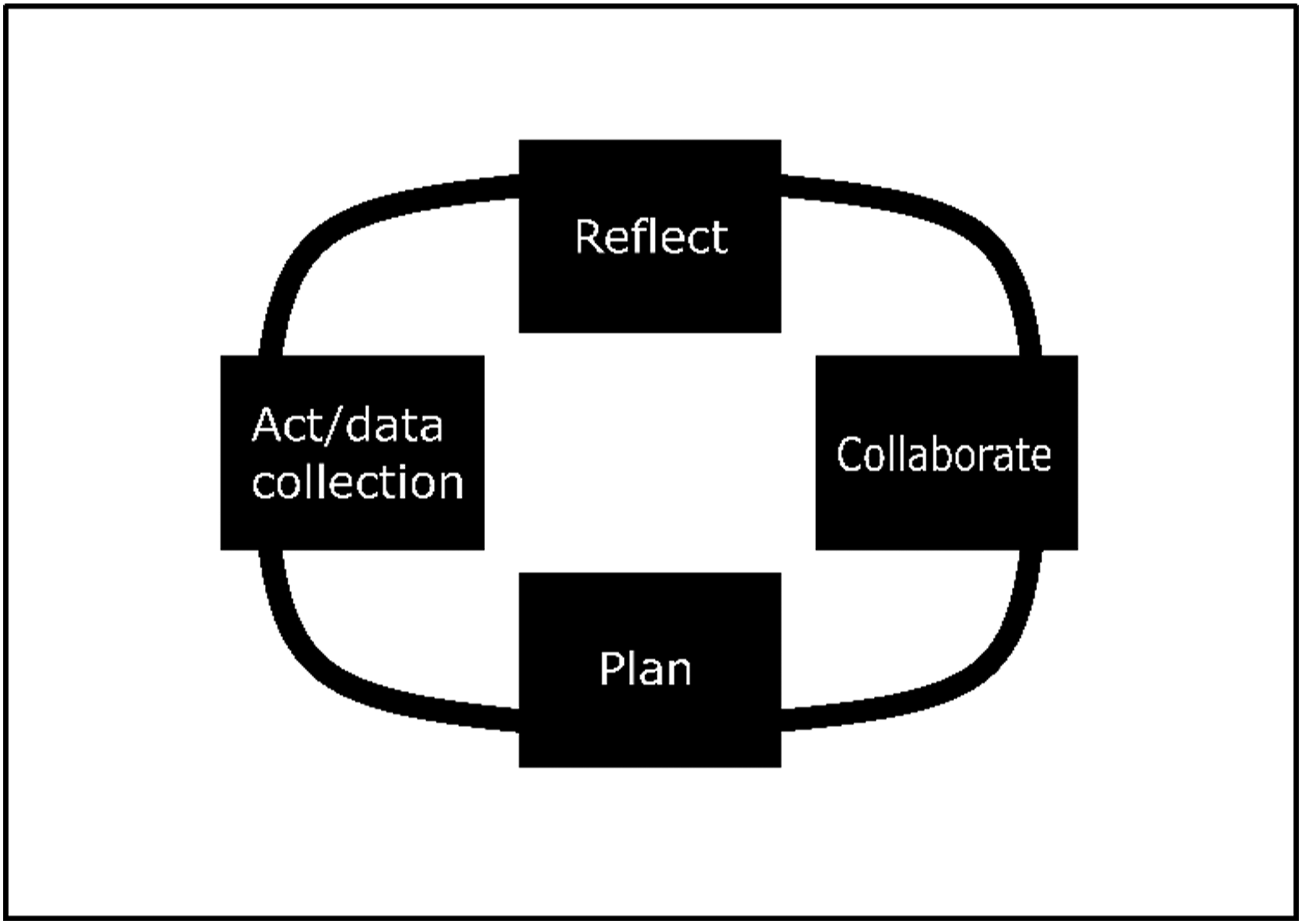
Ngāti Moko and the Participatory Action Research (PAC) Cycle /
The research cycle engaged Ngāti Moko in three hui a hapū. The format involved collaboration between the research team and Ngāti Moko representation at every stage of the research process. While reflexivity is a designated stage in the research cycle model, the team were constantly reflecting throughout the entire research process. The purpose of the first hui was to introduce the research concept to the hapū. At the outset it was made clear to the hui that this was a preliminary study. Ngāti Moko was invited to partner in the research, but there was no expectation that they would develop urupā tautaiao.
Māori traditional knowledge, because it is intrinsically holistic, brings all facets of this project together. PAR was adapted to incorporate hui a hapū as a traditional method for gathering and sharing knowledge. This ensured PAR methodological compatibility with Māori customary practice. The series of hui a hapū explored the environmental, economic, and cultural ramifications of adopting and incorporating urupā tautaiao.
The general format of the series of hui a hapū began with an image rich, electronic presentation exploring key issues. The presentation included, but was not restricted to, the concept of urupā tautaiao, the pros and cons of the idea, and examples of “natural” cemeteries and death practices globally and in New Zealand. In the process, we were raising consciousness, challenging beliefs, and practices designed to encourage hapū participation and discussion. All hui a hapū were recorded in various ways, note taking, filming and photography. The filming component will contribute to the production of a urupā tautaiao documentary.
After each meeting, the team conferred to reflect on the feedback which informed subsequent research planning. In response to specific ecological questions, the ecologist on our team, Hannah Buckley, met with the natural burial reserve management team at Waikumete cemetery in Auckland. This enabled her to address specific questions raised during hui discussion (at a subsequent hui) about the challenges associated with establishing natural burial sites.
Results
Four key themes emerged from the research collaboration with Ngāti Moko. • Revisiting ancient tribal burial beliefs and customary practices • In death returning to Papatūānuku in a natural state (environmental issues) • Tangihanga affordability • Natural burial option
Discussion
Revisiting Ancient Tribal Burial Beliefs and Customary Practices
Revisiting ancient burial practices facilitated a truly decolonizing experience, culminating in a perceptible shift in responsiveness to the idea of urupā tautaiao. The re-evaluation of the burial conventions also challenged deeply held beliefs and practices about tangihanga, as a tūturu Māori (authentically Māori) institution. Whānau shared tribal knowledge the various ways, burials were undertaken in pre-early colonial Tapuika, Ngāti Moko. The practice of suspending corpses in trees, before scrapping the bones and interring the remains in wāhi tapu (sacred places) was common practice throughout Aotearoa, New Zealand. Enthused, whānau shared stories about places, people, and events from the past. One of the older women even physically demonstrated the fetal position adopted when tupāpāku (corpses) were interred in caves. This engendered interest in the locations of ancient Tapuika burial sites and particular plant species used in pre-contact burial sites.
In death Returning to Papatūānuku in a Natural State (Environmental Issues)
Tī kouka (native cabbage tree), was used by Ngāti Moko, before the practice of suspending tupāpāku in trees was abandoned, most likely in the early 1900s. However, ecologically, the design of modern urupā tautaiao would ideally incorporate plants of low stature and are likely to be successful in changing environmental conditions. Native ferns are an obvious choice. However, many species need an adequate water supply, so correct plant selection for urupā tautaiao is crucial. Ngāti Moko identified mānuka (Leptospermum scoparium) as their marker for water sources. Older members of the hapū described a mānuka grove on a section of the Ngāti Moko cemetery, Kenana, at Muriwharau.
This knowledge is significant. Should an urupā tautaiao be added to the existing Kenana cemetery, the original mānuka site is a contender because of the indication of a good level of soil moisture to ensure success of the plantings. However, ecologically, contamination of ground water from natural gravesites was raised at one of the hui. This highlights the importance of accessing ecological expertise critical to the establishment of an urupā tautaiao.
Tangihanga Affordability
Affordability, as already mentioned, was the driver for Ngāti Moko interest in natural burials. Whānau (families) shared their lived experiences. Some talked about choosing home funerals to avoid the costs of a customary 3-day tangihanga. Chemical embalming, coffins and funeral directors’ fees were also raised as an affordability problem. The comparative low cost of natural burials opened the portal to considering alternatives to current practices.
We intend to further explore this perception because while natural burials can potentially ease the cost of death affordability, a careful analysis of natural burial costings also needs to be undertaken. For example, an expressed interest in flax woven coffins, assume that they are more cost effective than conventional coffins. The reality is that raranga (traditional weaving) is labor intensive and therefore may not be the most affordable option. Notwithstanding, natural embalming, coffins made from sustainable material and shrouds are indicators of affordability options.
Natural Burials
Establishing urupā tautaiao is gaining traction amongst Ngāti Moko. One whānau is in the process of developing an urupā tautaiao in their family cemetery located at the rear of homes adjacent to the marae (cultural complex of buildings and spaces). It contains the remains of whānau who died in the 1918 Spanish flu. Two of the same family have expressed a genuine desire to be buried standing. This revitalizes an ancient Tapuika custom of standing burials. To date we have not found any written documentation of this (previously mentioned) custom.
While we are encouraged by the responsiveness, we appreciate that it will take some time for urupā tautaiao to emerge as the preferred method of burial. However, there are other options. Contemporary cemetery landscapes are becoming a global phenomenon and offer a precedent such as mixed cemetery development. Here we argue that the local authority hybrid cemeteries that combine natural burial with traditional graves may have a far greater impact in delivering regulatory and cultural ecosystem services than the much larger and frequently more environmentally ambitious natural burial grounds (Clayden et al., 2018, p. 199).
Ngāti Moko urupā Trustees are investigating the feasibility of developing an urupā tautaiao adjacent to the existing conventional burial grounds. This model, as already intimated, has been successfully established at Waikumete cemetery in Auckland. The hybrid cemetery concept was enthusiastically received as a viable option at hui. Whatever burial conventions, Ngāti Moko develops in the future, this study has challenged the status quo and raises the truism of their traditional role as kaitiaki (custodians) of the environment.
Conclusion
The case study findings demonstrated that decolonizing agendas such as urupā tautaiao empower communities like Ngāti Moko. Applying a PAR approach within a KM framework enabled the research team to collaborate with the community to pragmatically address real, life and death, challenges. It became very apparent that the cost of death and dying in the modern world is financially crippling, environmentally unsustainable, and are often incompatible with people’s values. The fact that death affordability crosses cultural and ethnic boundaries was cathartic for many.
Here, we demonstrate how informed discussions can begin the path to community empowerment and indigenization of an important societal practice, burials. We contend that this research is timely and fits with the recent shift in the modern Māori approach to death. It has created a research platform for observing and changing Māori tangihanga discourses that are meaningful to communities. It demonstrates the efficacy of decolonization as a strategy to empower indigenous populations. Further collaborative research is planned to support Ngāti Moko to advance their commitment to develop urupā tautaiao.
Footnotes
Acknowledgments
The research team is especially appreciative of whānau who generously shared their knowledge and experiences. We also acknowledge the support of Ngāti Moko marae committee and in particular the Chair, Hori Ahomiro. Special thanks to Sam Case for creating the map and diagram. Helen Biel for the Ngāti Moko marae committee photographs. Finally, thanks to Sophie Moore (administrative assistance), Darlene Dinsdale (Ngāti Moko research assistant) and Lyn Walmsley (research assistant).
Declaration of Conflicting Interests
The author(s) declared no potential conflicts of interest with respect to the research, authorship, and/or publication of this article: Corresponding Author, Hinematau McNeill is a member of Tapuika, Ngāti Moko.
Funding
The author(s) disclosed receipt of the following financial support for the research, authorship, and/or publication of this article: Vision Mātauranga Ministry of Business, Innovation and Employment (VM MBIE) contract number: AUTX1906.
