




Abstract
Animal experiments in biomedical research are debated in public, within the scientific community and among students. Despite increased efforts to reduce, refine and replace animal experiments, they remain integral components of the job of a biomedical scientist. In Germany, persons must have a university degree and adequate education and training to perform and direct animal experiments. Therefore, training courses such as FELASA (Federation of European Laboratory Animal Science Associations) courses are provided. However, in our experience, students become aware of this very late in their studies when decisions about their future careers have already been made. We initiated this study to have a better understanding of when and how animal experiments should be discussed during university education. We evaluated the knowledge, self-evaluation and attitudes of biology and medical students of different semesters regarding animal experiments at the RWTH Aachen University, Germany. An online survey was conducted to assess demographic information, knowledge about animal experiments, self-evaluation and attitudes towards animal experiments. Students of both fields showed limited knowledge of animal experiments. Biology students showed significantly better knowledge and self-evaluated their knowledge higher than medical students. The field of the study correlated with their knowledge and self-evaluation but did not predict participants’ attitudes towards animal experiments. In conclusion, the current study showed that there is still room for improvement to raise awareness about laboratory animal science in the biomedical research field.
Introduction
The use of animals in biomedical research is debated in public, within the scientific community and among students.1 –4 Despite increased efforts and success in developing alternative methods, they mainly reduced and refined animal experiments and only a few can replace them entirely. Thus, animal experiments remain part of the job of a biomedical scientist. 5 Therefore, knowledge about animal experiments and alternative methods is essential for students in the biomedical field.
Since the introduction of the 3Rs (replace, reduce, refine), 6 there has been considerable interest in further improvement of animal welfare in biomedical research to ensure the most humane treatment of laboratory animals. Since 2010, this principle is also anchored in the EU Directive 2010/63 and was implemented in 2013 within the German animal welfare law.
Notwithstanding genuine efforts to improve the conditions of animals used in research and transparency, the attitude of the public towards animal experiments remains very diverse and ranges from complete abolition to strong support.7 –9 People opposed to animal experiments commonly focus on animal welfare and their suffering. In contrast, those involved in animal research tend to base their arguments on the benefits that research confers on medical care and new drug or therapy development and the lack of alternatives to animal models.10 –12 Several studies showed the relationship between science and support for animal research.1,13,14 These findings suggest a relationship between informed knowledge and attitudes towards animal experiments.
Regarding the differences between the general public’s attitudes and those of people with informed knowledge of animal experiments, the group of biomedical students represents both aspects. On the one hand, the individuals not yet graduated represent the segment of inexperienced public, while, on the other hand, they also represent the informed knowledge group. The evidence concerning the attitudes of biomedical students is mixed. Several studies suggest that students of biomedical fields are more supportive of animal experimentation compared with the general public.3,15,16 Nevertheless, it was also shown that they are sceptical towards animal experiments.17 –19
Furthermore, the roles of gender20 –22 and eating habits13,23 are discussed. Therefore, these factors must be considered when investigating the attitudes of biomedical students towards animal experiments. In addition, the field of study could be a suitable predictor for the attitude towards animal experiments.
At the RWTH Aachen University, students of medicine obtain little if any education regarding animal experiments during their studies, which last 10 semesters and one year of residency. They only come in contact with laboratory animal science when animal experiments are part of their dissertation or if they took a voluntary information course or an extracurricular FELASA (Federation of European Laboratory Animal Science Associations) course. Biology students participate in animal physiology skills training during their Bachelor of Science studies. This skills course is taken at the end of the fourth semester (total 10 semesters for B.Sc. + M.Sc. degree). The course discusses the general aspects of animal experiments and related ethics in two lectures accompanied by three skill training sessions on deceased fish, crawfish and locust specimens.
In general, biology and medical students are becoming aware of the topic of animal experiments very late, when decisions about their future careers are already made. This can be a major drawback when realising that performing animal experiments is not an option for reasons of ethics, emotion or lack of practical skills.
Due to the lack of recommendations about the inclusion of animal experiments as a theoretical module in the curricula in both fields of study, considerable differences exist between universities nationally and internationally.
This study investigates the knowledge, self-evaluation and attitudes regarding animal experiments to understand better when and how animal experiments should be discussed.
Materials and methods
Ethics statement
The questionnaire was answered anonymously and voluntarily. Informed consent was obtained from all participants before the survey, and all research was performed in accordance with relevant guidelines and regulations. 24
Study sample
At the RWTH Aachen University in Germany, 322 students of biology (n = 194/322, 60%) or medicine (n = 128/322, 40%) were recruited to participate. The study sample consisted of 181 (56%) female and 141 (44%) male students with a mean age of 22.98 years (SD = 3.67) that ranged from 18 to 38 years. Of these, 9.3% were not of German nationality, and 9.9% indicated a language other than German as their native language. Besides the current study of biology or medicine, another inclusion criterion was moderate or higher German language skills. Additional details are provided in Table 1.
Demographic characteristics of the study sample (N = 322).
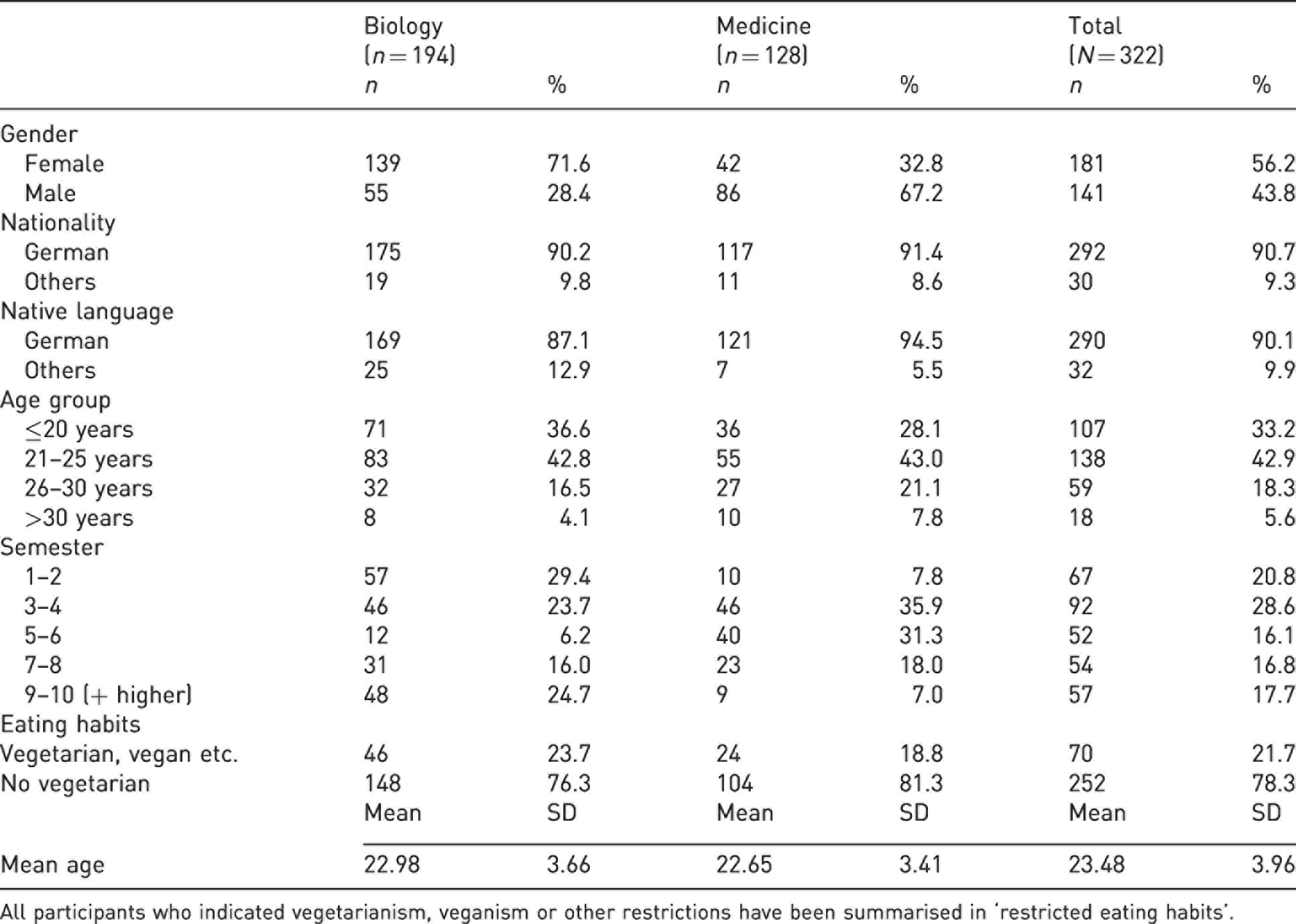
All participants who indicated vegetarianism, veganism or other restrictions have been summarised in ‘restricted eating habits’.
Survey design
The online questionnaire was in German and was realised with SoSci Survey (www.soscisurvey.de, Munich, Germany). The primary study was performed between April 2017 and July 2017. Students of biology and medicine were asked to participate in the study via email lists of student advisers and announcements before or during lectures.
Conception of the questionnaire
The questionnaire consisted of five sections: 1) demographics, 2) self-evaluation, 3) knowledge, 4) attitudes and 5) an additional section containing questions about university courses addressing animal experiments. In the first section, demographic information of the participants was gathered (Table 1). The second section included eight questions about the participant’s self-evaluation of their knowledge about animal experiments. Their attitudes (section 4) were assessed by 16 questions and rated on a four-point scale: ‘I fully disagree’, ‘I partly disagree’, ‘I partly agree’ and ‘I fully agree’. An even number of options was used to avoid central tendency bias, 25 and four response options were chosen to ensure comprehensibility and reliable distinguishability.26 –28 Eight multiple-choice questions assessed the knowledge of the participants, each consisting of five options while only one could be selected. The design of the questions was derived from those frequently used questions in the literature.3,4,14,29 –31 All questions were pre-checked by two experts in laboratory animal science (LAS) for the level of difficulty and representation of relevant subjects. Last, students were asked how the topic ‘animal experiments’ is currently addressed during their studies and what teaching formats students would prefer to learn more about animal experiments. Five possible answers were provided, and only one could be selected. The complete questionnaire and further details can be found in Supplemental Materials S1 and S2 online.
Statistical analysis
For sample size estimation, a statistical power analysis using the software G*Power 3.1.9.2 was performed. Data analysis was performed using SPSS for Windows (Version 24, Statistical Package for the Social Sciences, Inc., Chicago, IL, USA) and GraphPad Prism 6 (GraphPad, La Jolla, CA, USA) for visualisation. Details can be found in Supplemental Material 2.
Results
Knowledge about animal experiments
As depicted in Figure 1, 113 biology and 91 medical students achieved less than 50% of correct answers, and 42 students of biology and 23 students of medicine answered 50–59% of the questions correctly. Only 39 biology students and 14 students of medicine could answer more than 60% correctly, which is the usual minimum requirement to pass exams in medicine at RWTH Aachen University. No student reached a result of 90–100% of correct answers in the knowledge section. The percentage of wrong answers in the knowledge section was 79.89% for biology students and 89.06% for medical students, suggesting limited knowledge about animal experiments.
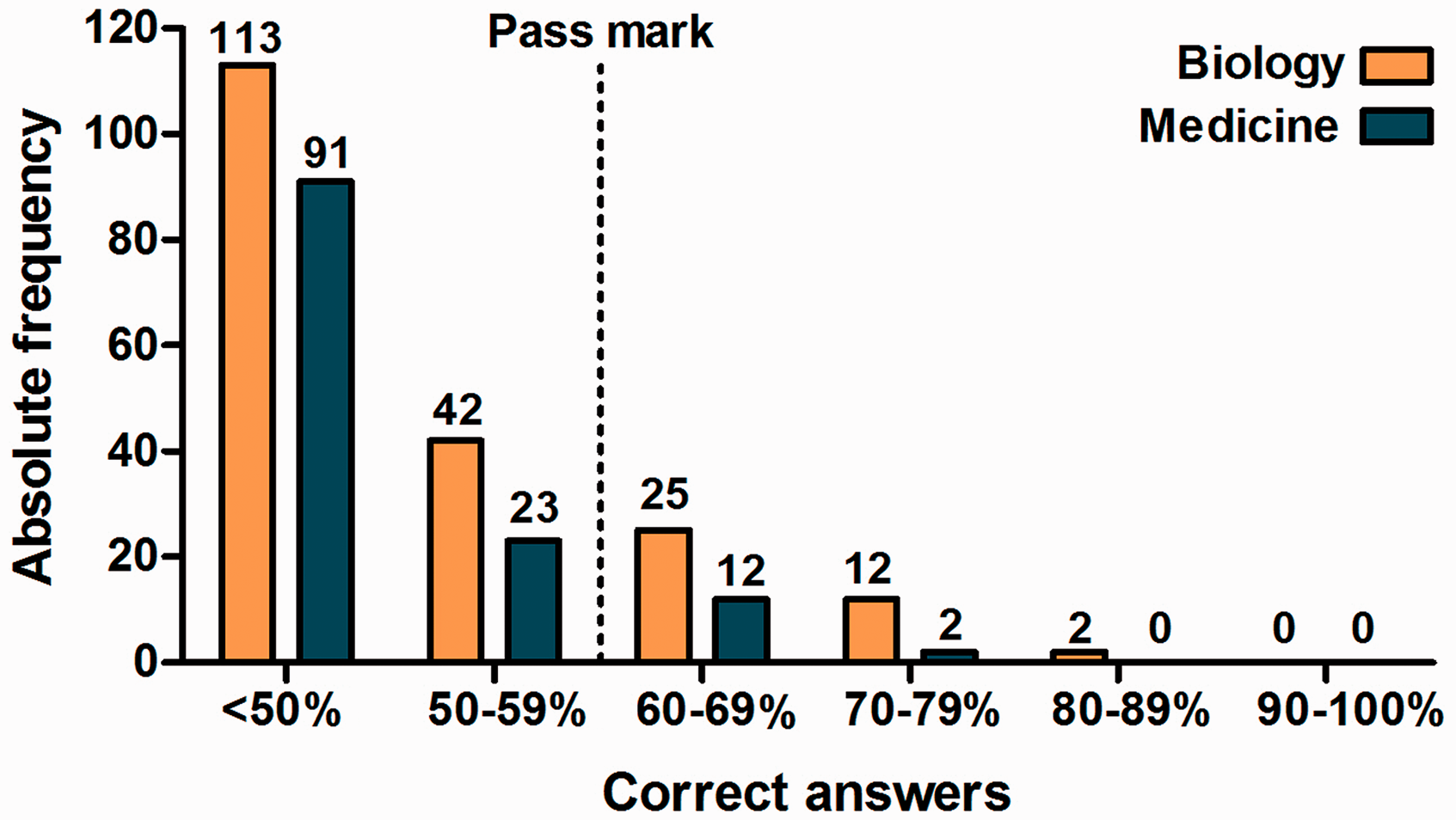
The knowledge about animal experiments is shown as the absolute frequency with 322 students completing the questionnaire. The section was evaluated in percentage of correct answers corresponding to the grading system of RWTH Aachen University in medicine with 60% correct answers to pass (dotted line = theoretical pass mark).
Differences in knowledge, self-evaluation and attitudes between biology and medical students
The mean knowledge, self-evaluation and attitudes of biology and medical students independent from the length of study are shown in Figure 2. The knowledge about animal experiments (Figure 2(a)) was measured in percentage of correct answers and was significantly higher for biology students (x¯ = 51.88 ± 19.87%) than medical students (x¯ = 46.48 ± 17.33%) evaluated by Student’s t-test (t(320) = 2.51, p < 0.05). The effect size was |d| = 0.29 with a confidence interval (CI) of 0.06–0.51. However, the level of knowledge in both fields of study was generally low. Regarding self-evaluation (Figure 2(b)), biology students assessed their knowledge about animal experiments significantly higher than did medical students (x¯ = 2.25 ± 0.65) versus (x¯ = 1.92 ± 0.66). The difference was evaluated by Student’s t-test (t(320) = 4.51, p < 0.001) and the effect size was |d| = 0.51 (CI = 0.29–0.79)). The attitudes towards animal experiments (Figure 2(c)) of students from both study fields did not differ significantly ((x¯ = 2.55 ± 0.60) versus (x¯ = 2.66 ± 0.59)).
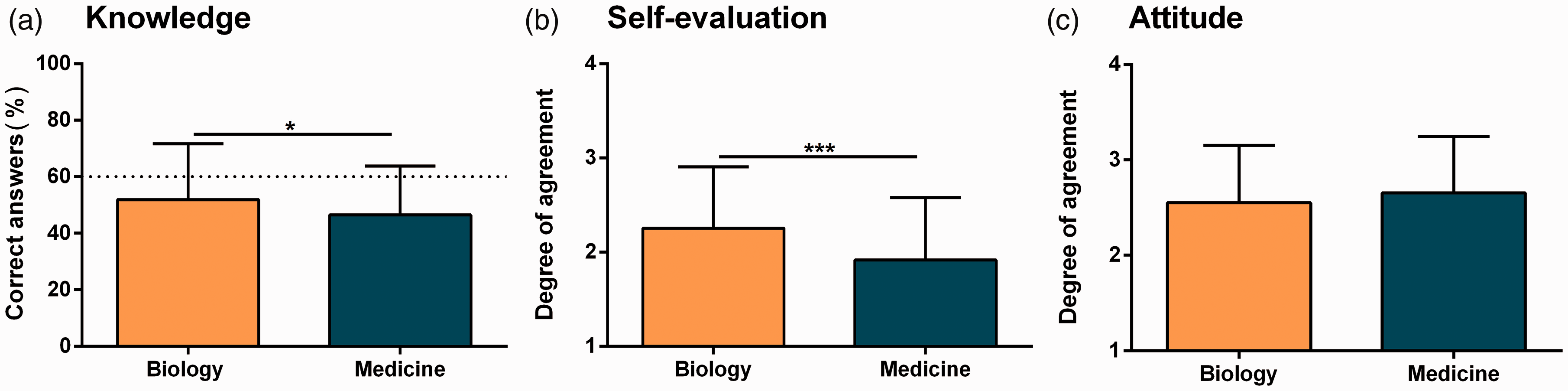
Knowledge (a), self-evaluation (b) and attitudes (c) of biology and medical students are shown. Knowledge is expressed as a percentage of correct answers, and the dotted line indicates the theoretical pass mark. Self-evaluation and attitudes are presented as degrees of agreement depending on the four-point scale used. Values are shown as mean + SD.
Influencing factors on knowledge about animal experiments
Besides the influence of the field of study on knowledge, the role of the study duration was investigated and is indicated with the number of semesters (Figure 3). Biology students increased knowledge with an increasing number of semesters, with the highest knowledge level in semesters 5–6 (60.58% ± 22.48%). Medical students showed their best performances (53.41% ± 18.49%) in semester 7 or higher. However, even in the semesters with the highest number of correct answers, biology students hardly reached a theoretical passing grade level. In contrast, medical students did not reach this level at all. A two-way analysis of variance (ANOVA) was performed and significant influences of the field of study (F(3318) = 4.59, p = 0.03), the number of semesters (F(3318) = 5.41, p = 0.001) and the interaction of both (F(3318) = 4.28, p = 0.006) on the knowledge about animal experiments were found.
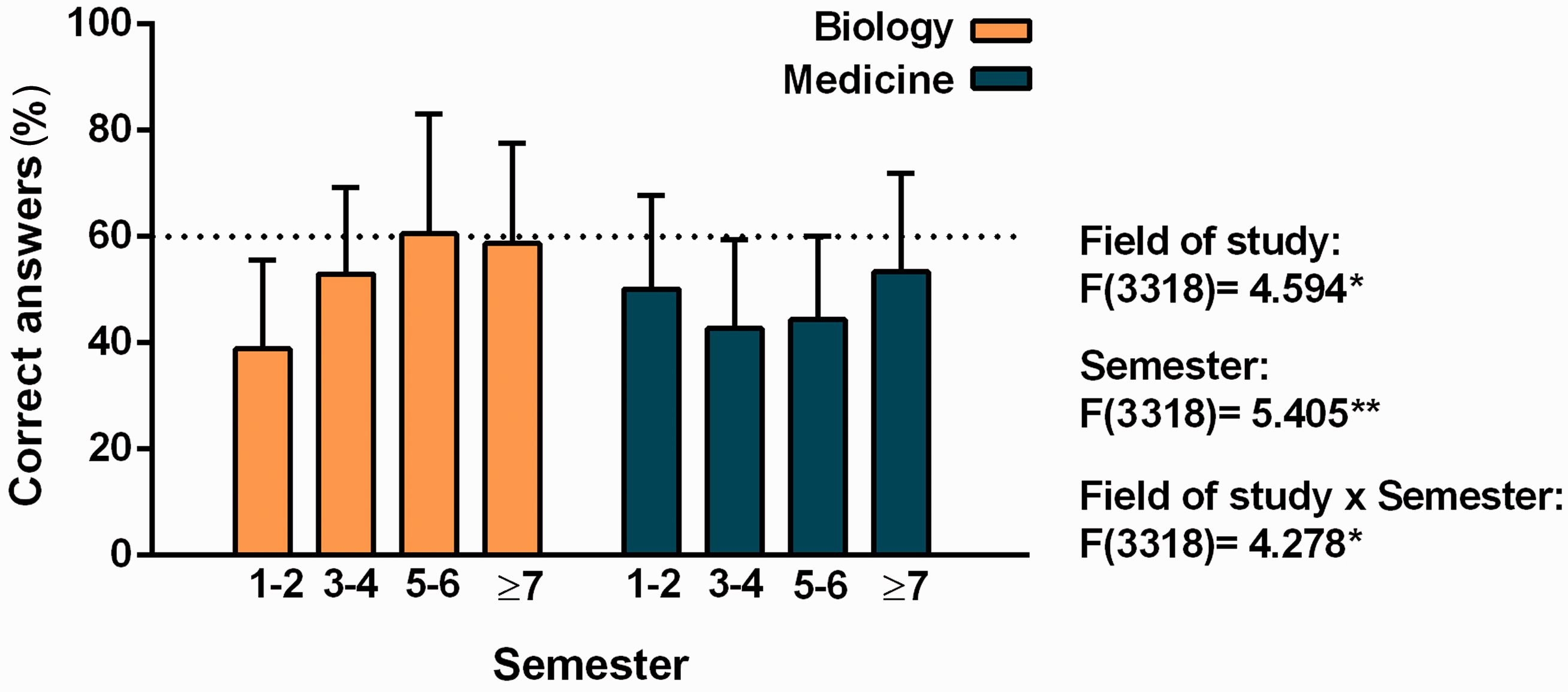
The knowledge of biology and medical students as the percentage of correct answers based on their study duration. Both fields of study were divided into semesters 1–2, 3–4, 5–6 and 7 and higher. Values are shown as mean + SD, and F-values of two-way ANOVA are depicted.
Predictors of knowledge, self-evaluation results and attitudes towards animal experiments
A self-evaluation and the attitudes towards animal experiments hierarchical linear regression analysis were performed to evaluate which parameter can predict knowledge (Table 2). In model 1, the influences of the two predictors gender and eating habits on knowledge, self-evaluation and attitudes were investigated. Model 1 was significant in predicting self-evaluation (F(3318) = 3.80, p = 0.023) and attitudes (F(3318) = 37.97, p = 0.000) but not knowledge. Gender was a significant predictor of self-evaluation (p = 0.008), and gender and eating habits were significant predictors of attitudes (p ≤ 0.000). The findings of model 1 demonstrate that veganism/vegetarianism correlated with more critical and concerned attitudes towards animal experiments. In contrast, the female gender resulted in more critical and concerned attitudes towards animal experiments and had a negative impact on the self-evaluation. In model 2, the independent variable field of study was added. This model significantly predicted the dependent variables knowledge (F(3318) = 3.26, p = 0.022) and self-evaluation (F(3318) = 10.12, p ≤ 0.000) but not attitude. The field of study was a reliable predictor of knowledge (p = 0.015) and self-evaluation (p ≤ 0.000) regarding animal experiments even when adjusted for gender and eating habits. In contrast to gender and eating habits, the field of study was not a significant predictor of attitudes towards animal experiments.
Hierarchical linear regression with knowledge, self-evaluation and attitude as dependent variables.
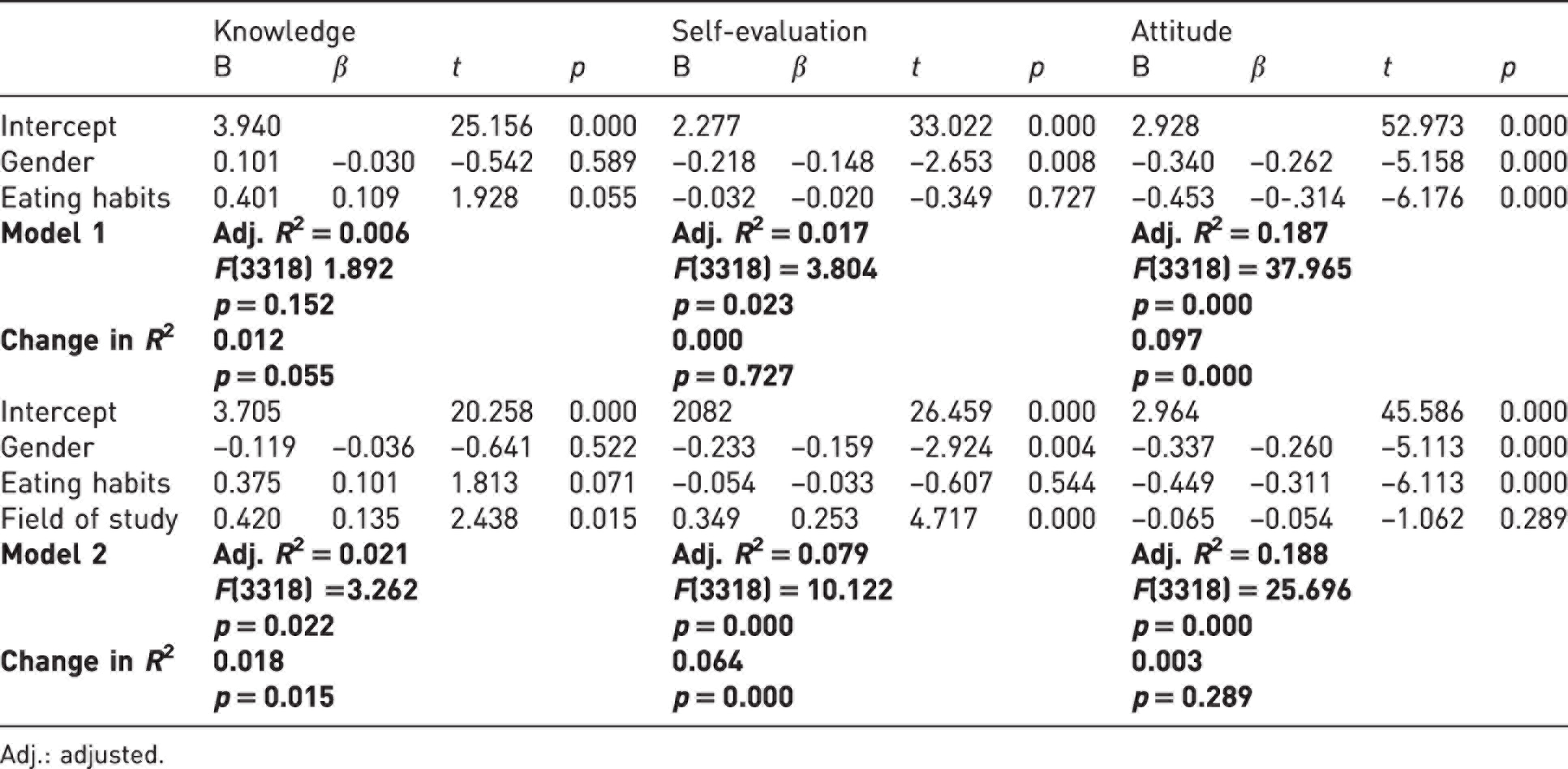
Adj.: adjusted.
Teaching formats to learn more about animal experiments
As depicted in Figure 4(a), 84.16% of biology and medicine students reported that the topic ‘animal experiments’ is not covered, is discussed rarely or not in enough detail (15.53%, 36.9% and 36.02%, respectively). Only 15.84% of participants answered that the topic is discussed sufficiently or too often (15.53%, 0.31% (equals one student)). For the future (Figure 4(b)), they mainly would prefer a voluntary module (30.75%) or a seminar with discussion (29.5%) to cover the theoretical principles of animal experiments. The implementation of a lecture, a theoretical or practical course or a mandatory module to cover this topic was not preferred (13.66%, 10.87%, 15.22%, respectively).
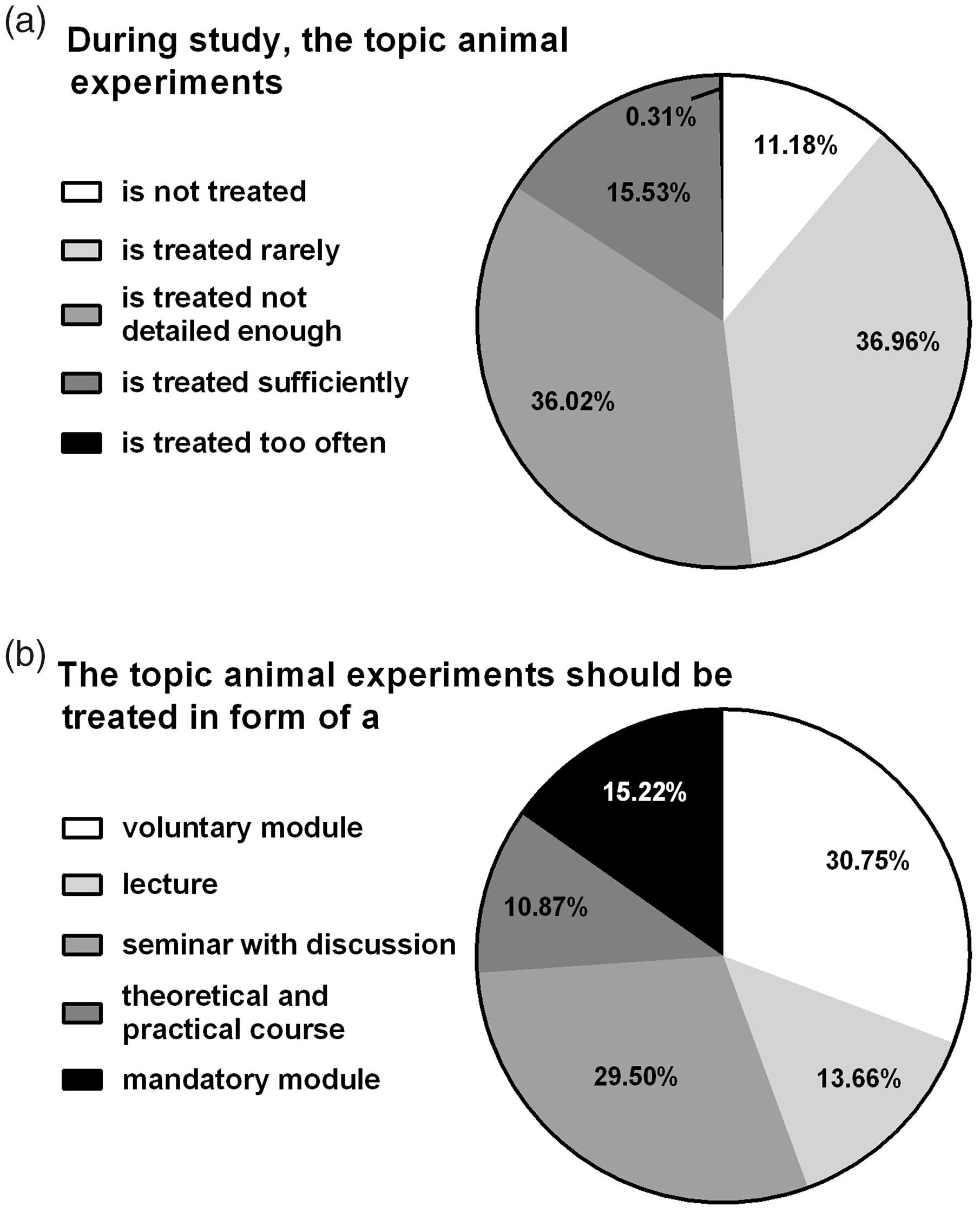
Evaluation of (a) the current information level on the topic ‘animal experiments’ and (b) the preferred teaching format for the future.
Discussion
The present study investigated the knowledge, self-evaluation and attitudes of biology and medical students at the RWTH Aachen University in Germany regarding the use of animals in biomedical research. To date, no recommendations for the education of undergraduate biology or medical students regarding the theoretical principles of LAS exist, even though animal experiments and related topics may be part of their daily business as future scientists or physicians. Our study revealed that students had a low level of knowledge about both subjects, with biology students demonstrating a significantly higher knowledge level than medical students. Accordingly, when biology students assessed their knowledge about animal experiments, it was also higher than that of medical students. However, both groups showed a low level of knowledge about the topic in general, and only a small portion of the group reached the theoretical pass mark of 60%. Typical failure rates on medical exams range from 4% to 55% in the USA and Great Britain32,33 or from 15% to 30% at the RWTH Aachen University. Surprisingly, 79.89% of biology students and 89.06% of medical students had a low information level or knowledge and the consecutive need for additional information regarding animal experiments. Hereby, the field of study was a reliable predictor of knowledge and self-evaluation, but not attitudes demonstrating the effect of teaching formats in the study courses.
Considering that theoretical knowledge and practical skills required by the EU Directive 2010/63 are essential to assure animal welfare and the quality of science, knowledge and skills must be taught. 16 As the practical training with experimental animals within the basic education level at the university is politically unwanted, at least the theoretical aspects of animal experimentation need to be covered to ensure an adequate education of future scientists and medical doctors. In the Medical School at the RWTH Aachen University, no mandatory courses regarding LAS are provided. All biology students have a theoretical and practical course during their basic studies, which allows the first contact with animal experiments and the possibility of ethical discussion about the topic. Furthermore, since students of biology, but not medical students, showed a higher information level and knowledge in advanced semesters, the effect of their study duration or increasing motivation could be discussed. The results of knowledge and self-evaluation suggest a slight enhancement in the group of biology students that might be due to the practical course’s addressing animal experiments in the fourth semester. However, as the information level and knowledge attained by biology students remained low, education during their study needed improvement. In general, researchers must understand how animal experiments are designed and how they can be improved according to the 3Rs 6 if they perform animal experiments on their own or evaluate them.
This is also true for medical doctors. Here, basic education regarding animal experiments should be part of their studies to interpret results of animal studies in research publications and in regulatory studies, which are the basis for drug licensing and developing treatment options for patients.
The need for basic education regarding animal experiments was demonstrated in our study. Here, a self-evaluation investigated the confidence and theoretical skills regarding animal experiments and assessed knowledge based on a real theoretical background. Both fields of study showed poor results in the knowledge section. Nevertheless, both evaluated their knowledge about this topic as weak, suggesting a realistic perception of their knowledge regarding animal experiments. However, biology students showed significantly higher knowledge in both sections than medical students.
As acknowledged in the surveys of medical students and researchers published by Franco et al. 34 and Baldelli et al., 35 early and further education is needed in LAS and alternative methods and the 3Rs.
Therefore, we think that the following topics should be covered in a basic course for undergraduate students in the biomedical field: national legislation regarding the use of animals for scientific purposes; ethics in regard to the use of animals for scientific purposes; basic and appropriate species-specific biology and animal models; anaesthesia, analgesia and sacrificing, humane end-points; requirements of replacement, reduction and refinement; the design of procedures and projects; alternatives to animal experiments (in silico, in vitro), for example, computer models, simulations, cell cultures, organoids, isolated organs. Here, courses should focus on the basics and include ethical discussions rather than technical details and skills training required in LAS courses needed to perform animal experiments. Besides knowledge and self-evaluation, we also investigated the attitudes of students towards animal experiments and their relationship to knowledge. Several studies have shown a relationship between knowledge about science and the support of animal research.13,14,20,36,37 Confidence in science 36 and medical and veterinary education 18 are typical characteristics of participants associated with the approval of animal use in research. Furthermore, education and training in LAS result in increased acceptance and understanding of the need to use animals in biomedical research, 31 alternative methods and the 3Rs. 32 In contrast, few studies suggest that increased knowledge leads to less supportive attitudes towards animal experiments.20,38,39 Evans and Durant showed that a higher level of knowledge is associated with a more supportive attitude towards science in general. In contrast, less informed people in morally contentious areas are more strongly opposed to and discriminate against research areas to a greater degree. 38 However, this study did not focus directly on animal experiments. Questions about ethically controversial parts of animal experiment-based research, for example, generating new forms of animal life, were asked and received less approval. Questions about general or practical science, for example, cancer research including animal experiments, were answered with high acceptance, suggesting an effect on research investigating the relationship between knowledge and attitudes towards animal experiments. In addition, numerous factors, such as age, gender, experience with animal experiments, religion, eating habits, animal species and the availability of alternative methods, influence the formation of attitudes towards animal experiments. These factors might cover the effect of background knowledge on attitudes. 7 Furthermore, prior experience or reflection about animal experiments could influence the participants’ responses. Participants who have already read about or discussed animal experiments are more likely to present a congruent and stable response pattern compared with random or emotion-based answers given by inexperienced participants. 9 Therefore, the attitude towards animal experiments must be based on facts and informed knowledge to prevent spontaneous feelings or emotionality as the foundation of future legislation and regulations. At least basic training in LAS should be part of the curricula in biology and medicine at the undergraduate level. Ideally, a harmonised education system for LAS studies of biomedical fields in Germany or Europe could ensure that research and medical professionals have informed knowledge upon which to base their opinions and decisions.
Students of both subjects, biology and medicine, were aware of the lack of treatment of animal experiments as topics during their studies and would prefer the inclusion of a voluntary module or a seminar with a discussion of LAS in the future. These results further underline the necessity to re-evaluate and improve university education in this field. Extracurricular courses for students and staff working with animals in biomedical research are mandatory in the EU. Moreover, in Germany, the Netherlands and Sweden, LAS courses certified by the FELASA are required by the authorities. They cover a wide range of LAS topics, such as refinement methods, experimental design and ethics. After completion, students reported an increased awareness of the importance of the topic, better theoretical and practical skills training in the course and an improved ability to judge the necessity of animal experiments in medical research.16,40 Thus, a university education system with several theoretical modules, seminars and discussions can be expected to have a large effect on the knowledge of future scientists and medical doctors.
As mentioned above, attitudes towards animal experiments are influenced by various characteristics.9,12 Regarding gender, many studies reported that women are more likely to oppose animal experimentation, indicating a strong predictor of opposition.20 –22,37,41 A study in the US conducted on medical students showed that males and those with previous research experience had a more positive attitude towards animal experiments, which became more positive after viewing an educational video about animals used in research. 42 Other variables, such as eating habits, did not impact the attitude in their study. However, in other studies, vegetarianism was associated with a lower acceptance of animal experiments43,44 but could not always be identified as a strong predictor.13,23,45 Vegetarianism as a behaviour is a result of the particular attitude towards animal experiments. 9 Our study identified the field of study as a reliable predictor for the dependent variables of knowledge and self-evaluation but not for attitude, even when adjusting for gender and eating habits. However, attitudes toward the use of animals in research related more to empathy toward animals than to confidence in science.9,46
Further research is needed to understand attitude formation regarding animal experiments among biomedical students more completely. Some limitations must be kept in mind when interpreting the results. The questionnaire was presented online, and, therefore, the context in which the participants answered it was unknown. In addition, the self-selection of participants generally interested in the topic of animal experiments compared with those who are not interested is likely. However, in light of a potential selection of interested participants, the lack of knowledge and intrinsic motivation regarding animal experiments is even more impressive. Finally, the current study had a cross-sectional design and was unable to detect time-dependent effects. Further research should also focus on longitudinal investigations to identify important milestones in the courses of study. Furthermore, longitudinal studies could address the optimal time slot in the curriculum to implement LAS training.
Conclusion
In conclusion, this study showed the need to improve knowledge about animal experiments of biology and medical students. The field of study was identified as a predictor for knowledge and competency but not for attitudes towards animal experiments, thereby uncovering a similar position regarding animal experiments among students of biology and medicine. Despite the increased effort of implementing the 3Rs and developing alternatives to animal experiments, animal experiments will remain a part of basic research and drug development. Thus, the inclusion of LAS lectures in the early education of future scientists and medical doctors is preferable and should be implemented in their curricula. Improving the knowledge about animal experiments and available alternatives in the biomedical field enables students to form their own qualified opinions about animal experimentation instead of dealing with it primarily on an emotional level. Therefore, we recommend improving and coordinating undergraduate student education regarding animal experimentation in biomedical research.
Supplemental Material
sj-pdf-1-lan-10.1177_00236772221080833 - Supplemental material for Animal experiments in biomedical research: Knowledge, self-evaluation and attitudes of biology and medical students
Supplemental material, sj-pdf-1-lan-10.1177_00236772221080833 for Animal experiments in biomedical research: Knowledge, self-evaluation and attitudes of biology and medical students by Stephanie Kanzler, Julia Krabbe, Thomas Forkmann, René H Tolba and Julia Steitz in Laboratory Animals
Supplemental Material
sj-pdf-2-lan-10.1177_00236772221080833 - Supplemental material for Animal experiments in biomedical research: Knowledge, self-evaluation and attitudes of biology and medical students
Supplemental material, sj-pdf-2-lan-10.1177_00236772221080833 for Animal experiments in biomedical research: Knowledge, self-evaluation and attitudes of biology and medical students by Stephanie Kanzler, Julia Krabbe, Thomas Forkmann, René H Tolba and Julia Steitz in Laboratory Animals
Footnotes
Acknowledgements

Data availability
Original datasets are available from
Declaration of conflicting interests
The author(s) declared no potential conflicts of interest with respect to the research, authorship, and/or publication of this article.
Funding
The author(s) received no financial support for the research, authorship, and/or publication of this article.
Supplemental material
Supplemental material for this study is available online.
References
Supplementary Material
Please find the following supplemental material available below.
For Open Access articles published under a Creative Commons License, all supplemental material carries the same license as the article it is associated with.
For non-Open Access articles published, all supplemental material carries a non-exclusive license, and permission requests for re-use of supplemental material or any part of supplemental material shall be sent directly to the copyright owner as specified in the copyright notice associated with the article.
