




Abstract
Students and course providers have found online options for laboratory animal science (LAS) courses helpful because the content is accessible with flexible timing options. This study aimed to explore whether a blended LAS course with video lectures would be preferred and perceived effective, accounting for students’ educational levels as well as prior experiences and future expectations in the use of animals. Data were collected by a feedback survey including three 5-Likert type scales and open-ended questions created by the authors. Of the 134 course students from various programmes, 101 consented to the use of their responses in this study. The analyses indicated that the respondents were generally satisfied with the blended course, especially the hands-on components, even though some found video lectures challenging due to their own ineffective time and study management skills. Plans to use animals in the future increased satisfaction with the course significantly, while the education level or previous experience with animals did not affect the outcome. Background variables did not affect views about video lectures significantly. Conclusively, the blended structure seemed to provide sustainable LAS course experiences for normal and unpredictable times.
Introduction
Laboratory animal science (LAS) training is a prerequisite for personnel seeking to use animals for scientific and educational purposes. The personnel should have adequate education, competency and continuous training to fulfil the legislation’s requirements and follow good scientific practices. LAS curriculum and modular training structure are based on the foundations given in the working document of the European Commission on protection of animals used for scientific purposes under the Directive 2010/63/EU. 1 Based on detailed guidelines and learning outcomes, education and training activities work together in LAS courses to promote the mobility of personnel. Scientists or staff can be educated and trained for Function A (carrying out procedures on animals), Function B (designing procedures and projects), Function C (taking care of animals), or Function D (killing animals). Institutes of higher education have explored and offered blended courses even before the recent COVID-19 pandemic. Blended learning with videos is considered effective in a wide range of medical and veterinary education fields.2–4 Despite the absence of an agreed-upon definition of blended learning, the common understanding is that it is an integration of different components of face-to-face and online learning, such as video lectures and assignments. 5
Video lectures, where the instructor explains the critical content in a lecture format or a presentation video, 6 are beneficial in providing students access to the lessons while individualizing their pace of learning.7,8 While face-to-face lectures enable immediate interaction with peers and the instructor, video lectures allow students the flexibility of studying where they want to and when they are ready. 9 Part-time and distant students are provided the opportunity to enrol on courses and continue their education.10,11
Blended courses enhance the quality of learning by providing access to learning resources while expanding the teaching and learning environment beyond the physical classroom. 12
Because blended learning can take place in different ways, understanding its effect on students’ outcomes is not easy; 13 hence, evaluation should correspond to the specific blended design. 5 One way to document its effect is to explore students’ views14,15 because the benefits, motivation and satisfaction students experience are commensurate with the outcomes of this learning style; 15 and they reflect the personal goals and preferences in the specific blended course. 5 Generally, blended learning is perceived positively by students, especially due to its flexibility.8,14 It improves students’ motivation and attitudes towards learning the content. 15 Nonetheless, it is also reported that blended learning with video lectures and those with face-to-face lectures do not differ in terms of effectiveness on students’ performance.9,10
LAS courses, mandatory in a wide range of programmes where students with diverse backgrounds, interests and intentions to work with animals bring two challenges. 16 First, since students may have different expectations based on their background and future plans, they may not benefit from the course as intended. This requires clear communication of the course goals and the use of live animals in hands-on components. 16 Second, it is difficult to arrange a course that fits with students’ conflicting schedules in different programmes but offering it fully online or in a blended version are equally beneficial alternatives. 17
LAS courses have been widely offered either as traditional classroom lectures or as blended online options, for example the web-based LAS courses offered by the University of Copenhagen in Denmark and the Karolinska Institutet in Sweden. Online options for LAS courses are considered useful by course providers and students because they make the content accessible with flexible timing options. 17 They also contribute to the sustainability and availability of the courses in response to the demands of an increasing number of researchers 16 and have the potential to train researchers abroad. It is expected that the current pandemic will boost the number of online or blended courses.
As the Central Animal Laboratory (CAL), part of the Faculty of Medicine in a multidisciplinary university in Finland, we have organized the LAS course twice annually both in Finnish (functions A and D) and English (functions A, B and D) as a face-to-face course before the COVID-19 pandemic. LAS courses are nowadays rather comprehensive, containing several modules depending on the function, and with new modules (e.g. EU-12: The severity assessment framework) being added, teaching hours have increased. Moreover, since our LAS courses are obligatory or optional for several undergraduate, Master’s and doctoral degree programmes, we’ve been seriously challenged to fit the schedule of our courses with the overlapping schedules of those programmes. Existing scheduling difficulty and the restrictions due to the pandemic have prompted us to develop a blended LAS course that offers a flexible means of education 18 by providing a balanced combination 19 of (a) online resources, such as video lectures and demonstration videos through Moodle Learning Management System, and (b) face-to-face demonstrations and hands-on procedure training for small groups of students as suggested by the FELASA E & T Board. 20
As the design of LAS courses is iterative in nature, analysis of student feedback is important to ensure the courses’ effectiveness. Assessing the strengths of the blended courses and exploring the perceived effectiveness of video lectures will also benefit other institutions designing blended LAS courses. Accordingly, the aim of this study was to explore whether a blended LAS course with video lectures would be perceived effective and preferred by the course participants taking into account the students’ education levels, prior experiences with and the need for future use of animals.
Materials and methods
This survey study gathered and analysed students’ ideas about the blended LAS course experiences via their responses to the survey questions 21 at the end of the Autumn 2020 term. Finnish National Board on Research Integrity (TENK) indicates that this type of human research does not require an ethics committee approval. TENK regulations for ethical research practice were followed in the study. Feedback collected from the previous years’ LAS courses with face-to-face education was not included in this study, because we did not have the students’ consent to use their responses for research purposes.
The study protocols and procedures for using animals for teaching purposes were approved by the National Project Authorization Board (project licence number ESAVI/175/04.10.07/2017) in accordance with the EU Directive 2010/63/EU and the Finnish national legislation following the 3Rs principles.
The blended LAS course
The blended LAS course included the core modules for functions A, B and D, and function and task-specific modules. It consisted of asynchronous video lectures (independent study), face-to-face demonstrations and hands-on exercises, group work for project licence application practice (only for Function B), and an electronic examination. Due to the university’s pandemic restrictions, demonstrations and hands-on trainings were offered to 64 students who would use animals in teaching or research in the near future in small groups. The rest had the option to complete practical trainings after the course if necessary.
Course materials included (a) 25 8–21-minute-long video lectures and an additional Good Laboratory Practice (GLP) video lecture; (b) 13 rat and 11 mouse short videos describing handling, dosing and sampling techniques; (c) supplementary handouts and an obligatory quiz for each lecture; (d) dose calculation assignment; and (e) an interactive video assignment of writing a Standard Operating Procedure (SOP) prepared with H5P tool.
Lecture videos were presented as PowerPoint slides with the instructor’s voice commentary in the background. These videos were then saved as pptx files and converted to mp4 video format, after which they were uploaded to our university’s Echo360 platform. All procedure videos were recorded by competent CAL personnel in our animal facilities. All materials, including the lecture videos, were available for students in the Moodle (version 3.8.5) platform.
In addition to the content mentioned above, Function B required students to review a scientific article, write a project licence, and analyse different ethical views as assignments. Students could attend demonstration and hands-on sessions only after they completed all video lectures, assignments and quizzes. Face-to-face demonstration sessions were followed by a hands-on session for each selected animal species to practise the immobilization and handling, and sampling and dosing techniques. The Moodle platform also included a guide for practical exercises with text and pictures, a completion tracking tool and function-specific assignments. Regular synchronous question-and-answer meetings were held in Zoom once a week in Finnish and English. The course started in September 2020 and it ended with an examination, all of which was completed in six weeks.
Participants
Of the 134 students who took the course, 108 of them responded to the survey. A total of 101 of them consented that the anonymous data they provided could be used for research and publication purposes. No personal information was gathered during the study. Of the respondents, 63% (n = 64) were enrolled in functions A/D in the course, while 26% (n = 26) were enrolled in functions A/B/D. Only a total of 11% (n = 11) of the respondents, with previous Function A/D certificates, were in only Function B or one or more species-specific add-on modules.
Starting from March 2020, the University took extensive measures due to the pandemic and switched to emergency remote teaching while allowing only necessary small group teaching (generally up to 10 or 20 students depending on the suggestions of the health authorities). The University encouraged the use of online software (Zoom) for synchronous and asynchronous teaching, and the existing and widely used learning management system, the Moodle platform, in the courses. Therefore, it can be assumed that students were familiar with the use of Moodle, online teaching and, possibly, video lectures before taking the course. Research staff whose previous online learning experiences were unknown, also took the course.
Data collection tool and process
A feedback survey in English was constructed by the authors as the data collection instrument for this study and distributed via the Webropol 3.0 platform. It included (a) background questions about respondents’ departments, education levels, functions they attended, and previous and possible future experiences in animal handling; (b) three scales with 5-Likert type items to reveal respondents’ opinions and experiences on the LAS course; and (c) 10 open-ended questions about participants’ experiences on the course components (such as video lectures and hands-on practices) and recommendations for improving the course and its components. One ‘overall rate item’, which was not included in the scales, asked respondents’ their overall rating of the course with a 5-Likert scale from ‘Very poor (1)’ to ‘Very good (5)’.
The first scale, General Views (GV), assessed general opinions about the LAS course and its improvement with 16 items of a 5-Likert scale ranging from ‘To a very small extent (1)’ to ‘To a very large extent (5)’. The second scale, Course Components (CC), asked for general evaluation with a 5-Likert scale from ‘Very poor (1)’ to ‘Very good (5)’ in 10 items. In the third scale, Video Lectures (VL), respondents evaluated each video lecture in 26 items on a 5-Likert scale from ‘Very poor (1)’ to ‘Very good (5)’. Higher mean scores in these scales indicated that the respondents had positive views and/or were highly satisfied with the mentioned course components.
Due to the modular structure of functions, participants could attend different teaching activities and course sections, but not necessarily all of them. Therefore, an additional ‘I did not attend (NA)’ option was added to all items in the CC and VL scales, and to three items in the GV scale, which were about specific course components.
Analysis
The statistical analyses were carried out via IBM SPSS Statistics 26. The Shapiro–Wilk test revealed that the data were not normally distributed, which led to non-parametric methods for subsequent analyses for the scales. Only the mean and SD were calculated for the overall rate item.
A reliability test conducted for all items in the GV scale with all respondents (regardless of which activities and functions they attended) indicated that the scale was reliable (α = 0.85). Factor analysis was not conducted because the number of respondents did not meet the suggested 300 samples. 22 Additionally, the N/A responses in CC and VL scales dropped the valid number of cases to one, which was not enough for the factor analysis and reliability test. Therefore, sum-scores for the Likert scale items could not be calculated in a reliable manner and an item-based analysis was adopted except for the GV scale. Further analyses concerning the VL scale were run only for the responses of those who attended the A/D and A/B/D functions because these groups consisted of the majority of the course participants (n = 90). Eight items about the videos of the other functions were removed from this section for the analyses. Consequently, respondents’ views were documented via descriptive statistics and their responses to the open-ended items.
The missing data were excluded pairwise from the analysis to minimize the loss of data. Previous experience with animal handling, education level and future plans for using animals for research were considered as the ‘background variables’. The Kruskal–Wallis analysis (also known as the ‘one-way ANOVA on ranks’) was used for comparing the means to document differences between the groups based on the background variables. A series of Wilcoxon signed rank tests were run to reveal the ranking of the course components based on the respondents’ perceived satisfaction.
The responses to the open-ended items were analysed by inductive open-coding 23 to reveal respondents’ views and experiences of the course components. The responses for each open-ended question were read several times by the first author (ÇH) and the recurring concepts were discussed with the two other authors (EY, SH-P) to ponder the benefits or challenges of the course and the connections of concepts to each other. The recurring concepts were refined after these discussions and were identified as codes, such as time management, lack of interaction and flexible scheduling, which eventually led to a code-set for each question with room for possible emerging codes. Then, the responses for each question were coded with the code-set and surfacing views and experiences were determined. The findings were described in detail initially and further discussed among the three authors (ÇH, SH-P, EY). Then, a refined version of findings was produced to reflect respondents’ views and experiences.
Results
We have evaluated the views of course participants in terms of benefits, challenges, valuable aspects and suggestions addressing the course components, such as video lectures and hands-on practices.
The background variables used in the analyses were respondents’ education levels, prior experience working with animals, and their plans to use animals in the future. The education levels of the respondents were classified as undergraduate (64%, n = 61), graduate (33%, n = 31) and other (3%, n = 3). While 62% (n = 63) of the participants lacked experience using animals, almost all would use them to some extent in the future. Some of the participants (18%, n = 18) were currently using animals either in a course or project.
General views about the course
The mean scores about general views as presented in Table 1 showed that the respondents had positive views and were satisfied with the course experiences. They agreed to a large extent that their knowledge, skills and understanding of using animals had increased. The course structure and overall theme were relevant and consistent, and the workload was reasonable. The components of the course, especially the demonstrations and hands-on exercises, were very useful, interesting and valuable for the respondents. Although they gained knowledge from the video lectures, they scored them lower than the other components. The quizzes seemed to encourage better attention to the video lectures. Respondents said they assumed responsibility for their own learning and could ask their questions about the course to the instructors. These findings were consistent with a high mean score for the overall rate item (Meanoverall rate = 4.10, SD = 0.656, n = 101), indicating a high overall satisfaction with the course. Respondents’ general views as revealed in their responses to the GV scale are presented in terms of mean score and SD for each item in Table 1.
General views (GV) about the course.
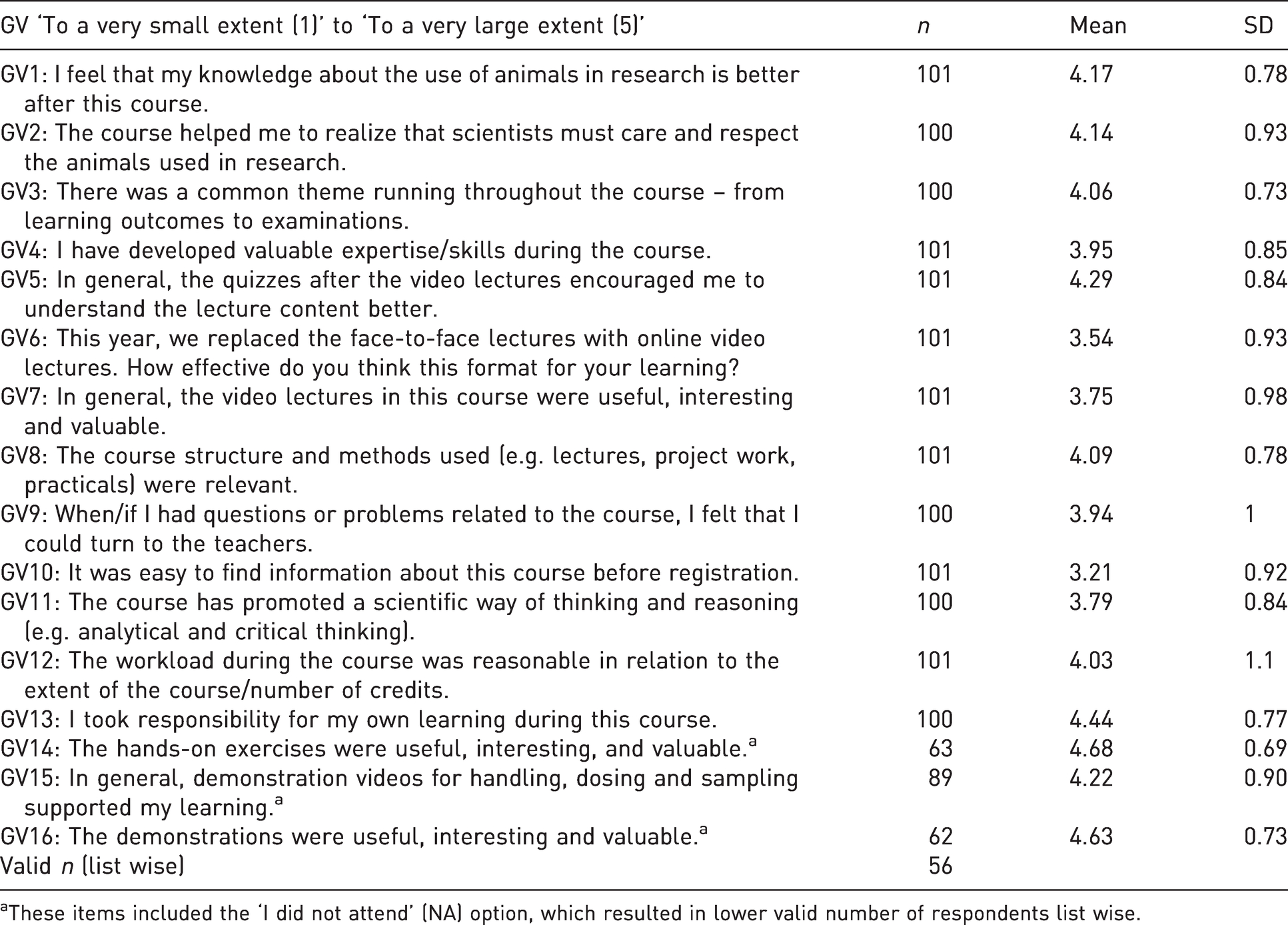
aThese items included the ‘I did not attend’ (NA) option, which resulted in lower valid number of respondents list wise.
To explore the possible effects of respondents’ background variables on their overall satisfaction, Kruskal–Wallis H tests were conducted. A statistically significant difference was observed. Those intending to use animals in the future were considerably more satisfied (x2 (1) = 5.458, p = 0.019), while no significant difference was observed for education level (x2 (1) = 2.342, p = 0.126) and prior experience (x2 (1) = 0.076, p = 0.783).
In open-ended questions, respondents expressed additional comments and suggestions (43 responses). The positive comments stated that the course provided essential knowledge and skills in the field: ‘This course really fuelled my interest for animal physiology and LAS, and I am seriously considering a career in researching both alternative methods and how animal experiments can be improved to ensure animal welfare and more reliable study results.’ Some of the respondents emphasized the benefits of the course components. For example, video lectures were effective because they ‘give freedom to study when you have the time as opposed to scheduled face-to-face lectures’ and hands-on practices were effective in improving laboratory skills. Although respondents indicated that they “could progress [the lectures] speed as [they] wanted to’, there were difficulties in managing self-regulation of study habits: ‘Self-study is hard! Especially if [you] have deadlines for other stuff. You just keep forgetting it. It was a challenge.’
The suggestions to improve the course (47 responses) were mainly about interactive lectures and quizzes. Respondents indicated that future courses could have more synchronous lectures or interactive materials. They suggested that quizzes could be improved in terms of content coverage and immediate feedback. There could be more quizzes with the answers distributed randomly in the related material so that ‘the more lazy students have to read through all the material’. Some participants expressed a desire for hands-on experiences, not offered in their functions, to complement their knowledge. Some also indicated scheduling problems while organizing online group meetings for project licence application assignment.
Course components
Respondents were generally satisfied with the CC as illustrated with the mean scores for each item in Table 2.
Evaluation of course components (CC).
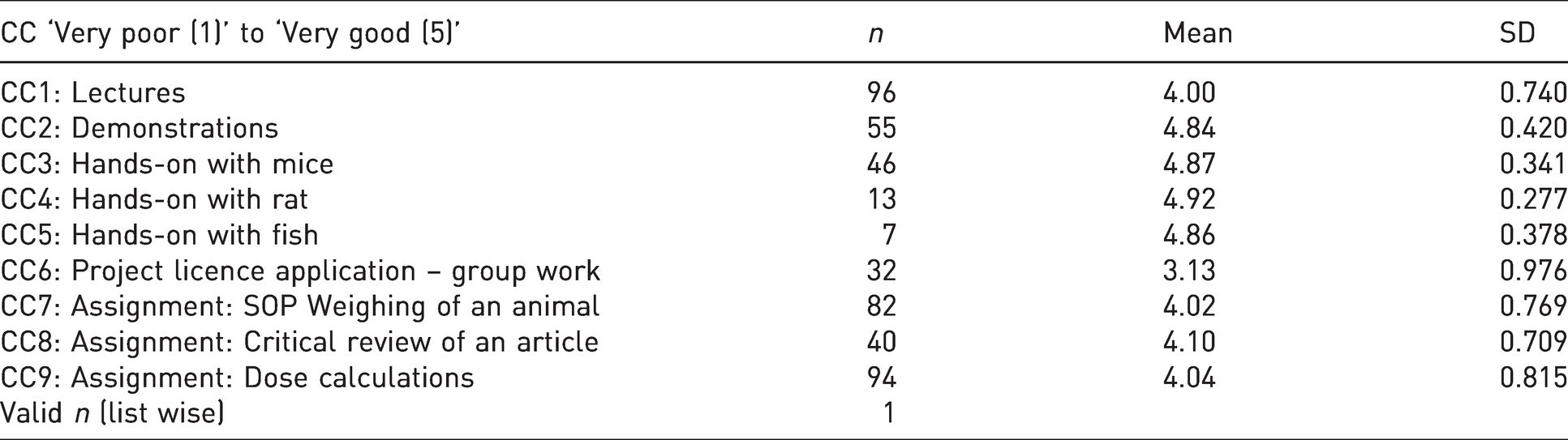
The mean scores in Table 2 illustrated that the respondents were generally satisfied with the lectures and assignments. Practical components (demonstrations and species-specific hands-on trainings) were rated high, indicating broad approval, although the participation in those components was lower than the others. About one third of the respondents (who attended only Function B or functions A/B/D) indicated a rather low level of satisfaction with the project licence application.
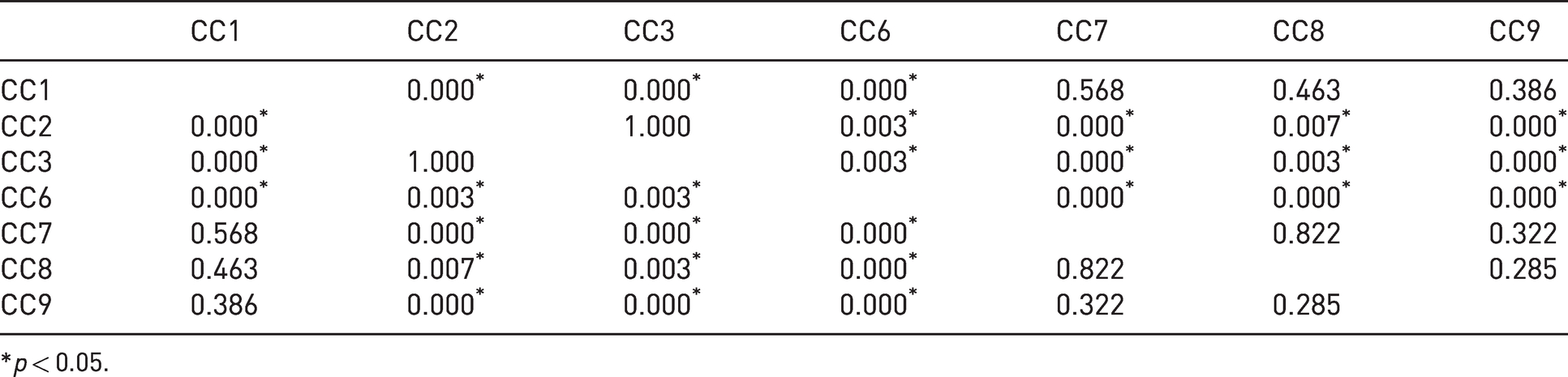
The significance of the difference in mean scores could not be checked due to small group sizes for ‘hands-on with rat’ (n = 13) and ‘hands-on with fish’ (n = 7) components. After excluding these two components, the rest were compared, using the Wilcoxon signed rank test based on the ratings of respondents. Table 3 presents the course components that are significantly different in terms of participants’ satisfaction levels. The ranking of the course components based on the respondents’ perceived satisfaction can be interpreted from these results.
Wilcoxon signed rank test for different course components (CC).
*p < 0.05.
In Table 3 the median ranks, as analysed in the Wilcoxon test, revealed significant differences in satisfaction levels of course components. Respondents ranked the demonstrations and hands-on with mice the highest, followed by the lectures, and the assignments about SOP weighing of an animal, critical review of an article and dose calculations. They were least satisfied with the project licence application–group work component.
Views about video lectures
Two items in the GV scale asked about the effectiveness of video lectures (GV6) and whether they were useful, interesting and valuable (GV7) (see Table 1). Although the mean scores for these items were relatively low (MeanGV6 = 0 3.54, SDGV6 = 0.93; MeanGV7 = 3.75, SDGV7 = 0.98), respondents had positive views about the video lectures. The effects of background variables on responses to items GV6 and GV7 were investigated through a series of Kruskal–Wallis H tests. The analyses revealed no significant differences in mean scores in GV6 based on prior experience with animals (x2 (1) = 0.263, p = 0.608), education level (x2 (1) = 1.060, p = 0.303), plans for using animals in the future (x2 (1) = 3.340, p = 0.068); and in GV7 based on prior experience with animals (x2 (1) = 0.848, p = 0.037), education level (x2 (1) = 0.752, p = 0.100), and plans for using animals in the future (x2 (1) = 3.340, p = 0.068). Table 4 shows the mean scores for the video lectures in functions A/D and A/B/D.
Evaluations of video lectures (VL).
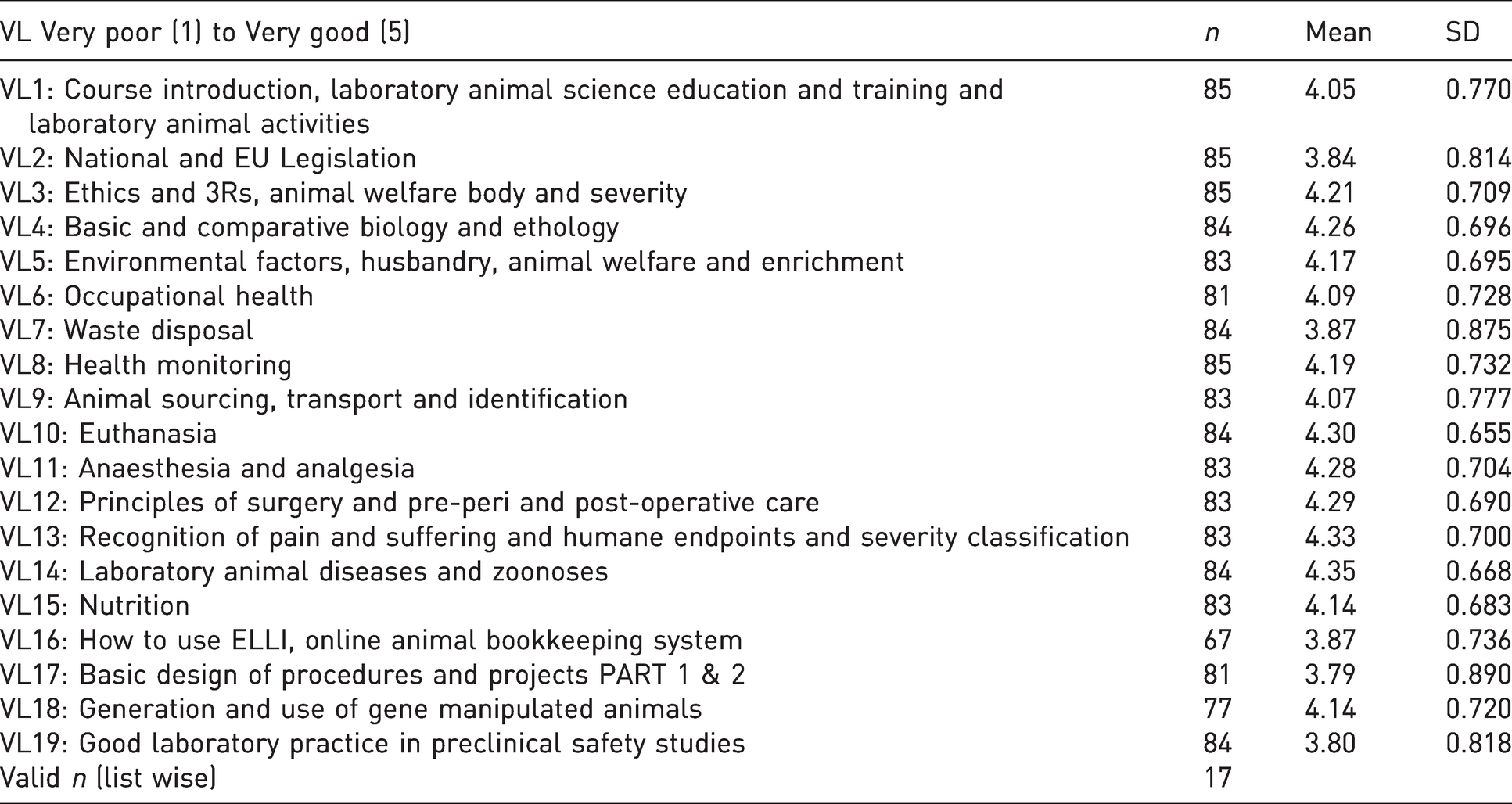
A closer look into the mean scores for the items in the VL scale (Table 4) showed a high level of satisfaction with most of the video lectures. However, lectures dealing with project design, legislation, waste disposal and GLP had lower scores.
The Kruskal–Wallis H tests were used to uncover the effects of background variables on respondents’ evaluations of VL (the sum score of items in Table 4). Results showed that respondents’ evaluations were not affected by their educational level (x2 (1) = 0.594, p = 0.441) or their previous experience in animal handling (x2 (1) = 0.021, p = 0.885). Future plans for using animals as a background variable was removed from the analysis due to low group sizes for the selected cases.
Respondents stated challenges (62 responses) and made suggestions (40 responses) for the video lectures in the open-ended questions. The videos worked well for some because they were ‘clear and almost everything was said out loud, so [I] did not have any additional questions either’. The challenges related to the dense content of the video lectures, lack of instructor interaction, ineffective self-study skills and technological problems. Some respondents struggled when the presentation/slides and the instructor’s explanations flew simultaneously in the videos combined with ‘the inability to ask questions during the lecture, finding motivation to watch them and to concentrate’. Some indicated that ‘it has more to do with video learning itself’, not with the dense content. Yet, some of them developed strategies to learn from the videos in a ‘three phase process: listening, reading [the slides] and listening again’. The lack of interaction in the video lectures was a problem especially when respondents ‘could not ask questions [to] the teacher right at the moment when watching videos’. In addition, time management. independent study, and occasional technological problems due to their equipment were stated as challenges.
Respondents had different expectations and suggestions about the video lectures. While some wanted the instructors to paraphrase the content on the slides and add more information, others wanted them only to go through the slides slowly. They suggested the following: (a) extending the duration of the videos so that ‘when there [was] a lot of content, [the lecture would go] through it more slowly’; (b) making the video lectures more interactive, for example, by ‘adding questions in the middle of the lecture so that the lecture continues only after the question has been answered’; (c) enhancing the content of the videos by emphasizing important points and giving more illustrative examples.
Views about hands-on exercises
Hands-on components were useful, interesting and valuable for the respondents as indicated in the GV scale (GV14 in Table 2, Mean = 4.68, SD = 0.62). Analysis of 55 responses to the related open-ended item revealed that especially for the respondents experiencing certain procedures for the first time, such as handling a specific animal, valued this learning-by-practice experience. Learning about more general issues, such as proper ways of handling animals, under the guidance of the tutors in a face-to-face environment was also valuable: The practical information on behaviour of animals during handling, the tips and skills about handling animals and also the possibility to ask questions face to face about the procedures and experience on handling animals were the most valuable and interesting, since these could not be replaced by videos and online lectures.
Discussion
The blended LAS course, which included video lectures, demonstration videos, hands-on practices and assignments, was offered to a diverse group of students in terms of their course expectations, educational background and intention for future use of animals. Students, coming from diverse backgrounds, require clear communication of the course goals, content coverage and benefits of the non-practical content in order to decide if the course structure meets their needs and expectations. 16 Building connections between the LAS course content and further courses or required skills at the beginning of the LAS course will provide students the rationale for taking the course and a vision of its contribution to their education, training and career.
Based on their feedback, it was concluded that the participants were generally satisfied with the blended LAS course experiences. The findings indicated benefits and challenges for the participants and confirmed the previous findings that students’ views on blended learning related to the course design and individual learning preferences, as well as the goals and expectations of the course.5,14 However, certain issues surfaced which needed more consideration for the subsequent application of the course based on the analyses.
The video lectures provided flexibility for most respondents in terms of arranging their time and place to learn, and the opportunity to review the material at their own convenience, confirming the advantages for blended learning with video lectures.6–9 These results indicated that asynchronous video lectures were a solution for the scheduling problem of the LAS course for students from different programmes and made it possible for them to access the learning materials more flexibly with some arrangements for the face-to-face components.9,17
The face-to-face components were also valued very highly by the respondents as they provided the opportunity to perform important skills as supervised by the instructors.16,24 Those who did not attend practical training sessions indicated their absence in their function as unfavourable. The benefits of the course for gaining animal handling skills and the positive views found in this study suggest that the major expectation from this course may be rising, specifically increased animal handling skills. Correspondingly, respondents planning to use animals in the future were significantly more satisfied with the course experiences. These findings showed that those intending to use knowledge and skills from the blended LAS course were more inclined to make sense of the content provided, developing ways to learn from the video lectures.
Despite the benefits, blended courses have the challenges of integrating flexibility, fostering interaction, supporting students’ learning and motivating students. 25 However, the structure of the blended LAS course, like any learning environment, could be enhanced to better address students’ needs. For example, research revealed that students have positive views of blended learning when the course structure is clear, course components support student outcomes, and the communication between the students and the instructors is effective. 14 Our LAS course attempted to enhance student learning by providing flexibility within a six-week period for interaction via group work and weekly Zoom meetings with the instructors. Lecture-specific quizzes, assignments, and a completion tracking tool also supported motivation and learning.
Some challenges were expressed due to ineffective time management and the lack of experience and information about learning from the video lectures. While some respondents highly valued the existence of video lectures and developed strategies to learn from them, others needed more guidance on this. The conflicted views may be due to the diverse student expectations and learning preferences or the lack of prior experience with online learning. In fact, some of the students seemed to have asynchronous lecture experience in the previous spring as the COVID-19 pandemic forced the University to find alternative teaching methods. However, postgraduate course participants may not have had any online learning experience. These challenges could be attributed to any specific blended LAS course or a face-to-face course, because they include students with various background, expectations, motivation and characteristics. Notwithstanding our efforts to overcome the challenges in the blended LAS course, low levels of motivation and interaction remained as obstacles, affecting some of the participants’ learning experiences in this course.
Motivation plays an important role in students’ learning 26 and it is a personal trait which helps people evaluate the existing situation with a focus on future actions. 27 Two types of learning motivation, intrinsic and extrinsic may provide a perspective on our findings. Intrinsic motivation is a key personal trait in blended learning because it provides an impetus for completing the tasks with better performance. 26 Respondents possessing intrinsic motivation might have valued their learning experiences in the blended LAS course because it was interesting and enjoyable for them, 28 providing important knowledge and skills for their future career. 27 As a result, they might have learned from the video lectures more effectively than those respondents with extrinsic motivation, 28 who were simply gaining credits or completing degree requirements. Thus, future LAS courses should consider students’ motivation and provide guidance on the benefits of the knowledge and skills gained in the course. This might also indicate stronger collaboration between the units offering LAS courses and the programmes that the students are enrolled.
Students have expressed challenges in learning especially the legislation and project design, which resulted in relatively lower scores for these lectures. We observed that ethics and severity classification topics were not completely comprehended by the students based on the evaluation of writing a project licence application. Our experience from previous years’ courses showed that legislation and discussion about ethical cases were more effectively addressed in the face-to-face lectures. The reason might be the possibility of immediate interaction with the students while explaining the difficult aspects and supporting students in internalizing the demanding content with small group work. It is also possible that the scores of the lectures were affected by the lecturers’ teaching skills, fluency in the language of instruction (in this case, English), and the instructor’s familiarity with practical aspects of the LAS field. Correspondingly, topics such as waste disposal, occupational health, or GLP may not be considered primarily related to using animals, hence scored lower.
In order to overcome the challenges related to rather ‘abstract’ or ‘demanding’ topics such as legislation, we added three synchronous Zoom-lectures in each of the subsequent LAS courses organized in January and May 2021. In the first introduction to the course lecture, we emphasized the content in more detail, the expectations, and the possible challenges with the time required to study the course material. The subsequent obligatory two Zoom-lectures covered the legislation, ethics, and guidance for project licence application for Function B. Zoom meetings also provided the possibility to ask questions concerning the assignments or any issue regarding practical arrangements such as demonstrations or hands-on trainings. The effectiveness of obligatory synchronous Zoom-online lectures, in addition to the asynchronous video lectures, remains to be determined based on the future analyses of the feedback. A short guidance video, possibly for each module, on how to study video lecture content could be both interesting and effective in providing essential suggestions to improve study skills.
One important limitation of the study was the NA responses due to the structure of the course. NA responses were important to understand the nature of the results; however, they limited the statistical analyses to a considerable extent. It is possible that the results will change, especially in relation to the background variables, if there are different data collection instruments for different functions. Another missing element was the views of the course staff. Future research of LAS courses should take their views into account to provide a more comprehensive evaluation of the courses. Furthermore, feedback collected from the previous years could not be used for comparison due to the ethical regulations. Studies comparing the students’ experiences in blended and face-to-face LAS courses would provide more insight into the effectiveness of the blended courses on students’ learning.
Although the findings presented here were limited to the responses from one blended LAS course, they addressed important issues to consider for those who plan to initiate blended LAS courses with video lectures. The blended structure seems to be a sustainable way to make LAS course experiences available both in normal and unpredictable times. Experiences of this blended LAS course with video lectures revealed advantages in terms of flexibility in scheduling of the course components (except for the face-to-face components), availability of time and space, and participation of students from different programmes and from abroad without complications, as reported in earlier studies.9–11 Nonetheless, diversity of the students and the individual differences in learning preferences should be taken into account and more interactive components should be added to the future blended LAS courses with video lectures.
Footnotes
Data availability statement
Data for this study were collected from human participants. They consented for the use of data for research and publication purposes, but not for providing as open data.
Acknowledgements
Terhi Hiltula Maisala, Malgorzata Major, Joonas Khabbal, Nina Kulmala and Nina Juoperi for expert hands-on training. All lecturers of the course are acknowledged for valuable contribution to the course. We greatly appreciate the work of Caroline MacFarlane for language editing. Faculty of Medicine Postgraduate Education Unit (PGE) of University of Turku is acknowledged for supporting our LAS courses.
Declaration of conflicting interests
The author(s) declared no potential conflicts of interest with respect to the research, authorship, and/or publication of this article.
Funding
The author(s) received no financial support for the research, authorship, and/or publication of this article.
