




Abstract
Xenopus laevis frogs have long been widely used as an animal model in research. However, their husbandry has scarcely evolved, although they are prone to environmental stress. Environmental enrichment has been shown to improve animal welfare and adaptation, as well as zootechnical indices, which have become very important in recent years. The aim of this study was to examine the preferences of X. laevis frogs for various elements of environmental enrichment: opaque polyvinyl chloride (PVC) pipes, artificial plants and clear spaces. A preferential study was conducted in two different tanks, each divided into six parts, where the two enrichment elements were rotated. Ten X. laevis frogs were introduced into each tank, and the number of frogs was counted in each division three times per day for six weeks. The number of frogs in the different spaces and different enrichments was evaluated through a Poisson regression model. Frogs preferred plants to PVC pipes and clear spaces regardless of the position of the enrichment element, time and day. This indicates that artificial plants should be used as the enrichment element rather than the commonly used PVC pipes. In addition, the use of plants facilitates the observation of frogs without disturbing them and reduces the accumulation of detritus, as it occurs inside the pipes.
Introduction
Xenopus laevis have been commonly used in biomedical research; 1 however, little is known about their ideal husbandry conditions.2, 3 This animal model is susceptible to environmental conditions, with stress having a direct impact on their health 4 and the quality of the oocytes they produce. 5
Enrichment, which is defined as a set of techniques aimed at improving the welfare and conditions of captive animal care, has been used for captive animals, such as frogs, since the 1980s.6,7 Enrichment is usually subdivided into environmental, behavioural, and social. 8 These techniques can improve zootechnical indices and avoid pathological and psychological problems, such as stereotypes.
X. laevis frogs are opportunistic animals, but constitute prey for predators. 9 Consequently, these frogs look for some form of concealment in tanks apart from their pigmentation pattern. 10 Environmental enrichment has been shown to be an effective method to reduce mortality, injuries and stress in these frogs. 11 Furthermore, this method improves psychological conditions by decreasing the prey instinct and stress. 12
The most common element used for enrichment is shelter. The use of shelters has been associated with a decrease in fighting injuries and day activity patterns in X. laevis.13,14 Traditionally, opaque polyvinyl chloride (PVC) pipes cut in half have been commonly used as a coverage and concealment area.5,13–15 However, the use of artificial plants for X. laevis’ maintenance has not been studied, despite the fact that their natural habitat is characterized by an abundance of plants.
The aim of this study was to identify the predilection of X. laevis frogs for two types of shelters – PVC pipes and artificial plants – in contrast to clear or empty spaces, using a preference test.
Methods
Two glass tanks (50 cm × 100 cm filled with 70 L of Aquarium Bau Schartz water, Germany), each housing 10 X. laevis, were used. Three sidewalls of the tanks were dark (blue), while the front was translucent and covered with a shading mesh to reduce visual impact and light intensity, reducing visual stress (Figures 1 and 2(a)). 12 The top lid of the tank was closed with a sliding wall to prevent the frogs from jumping out of the tank. The bottom of the tanks was black with a movable cover, allowing observation from below without interfering with the frogs’ behaviour, as their eyes are located dorsally. Thus, frogs were visible from below even when in shelters.
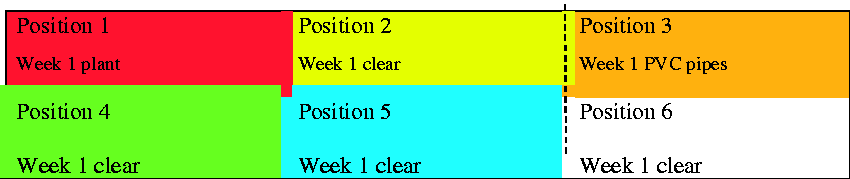
Initial disposition of enrichment items. Every week for six weeks, the elements were rotated clockwise until rotation was complete. Plants and the PVC pipe were stationed in all positions. The borders of each space (discontinuous line) were assigned to a neighbouring space based on the colours indicated.
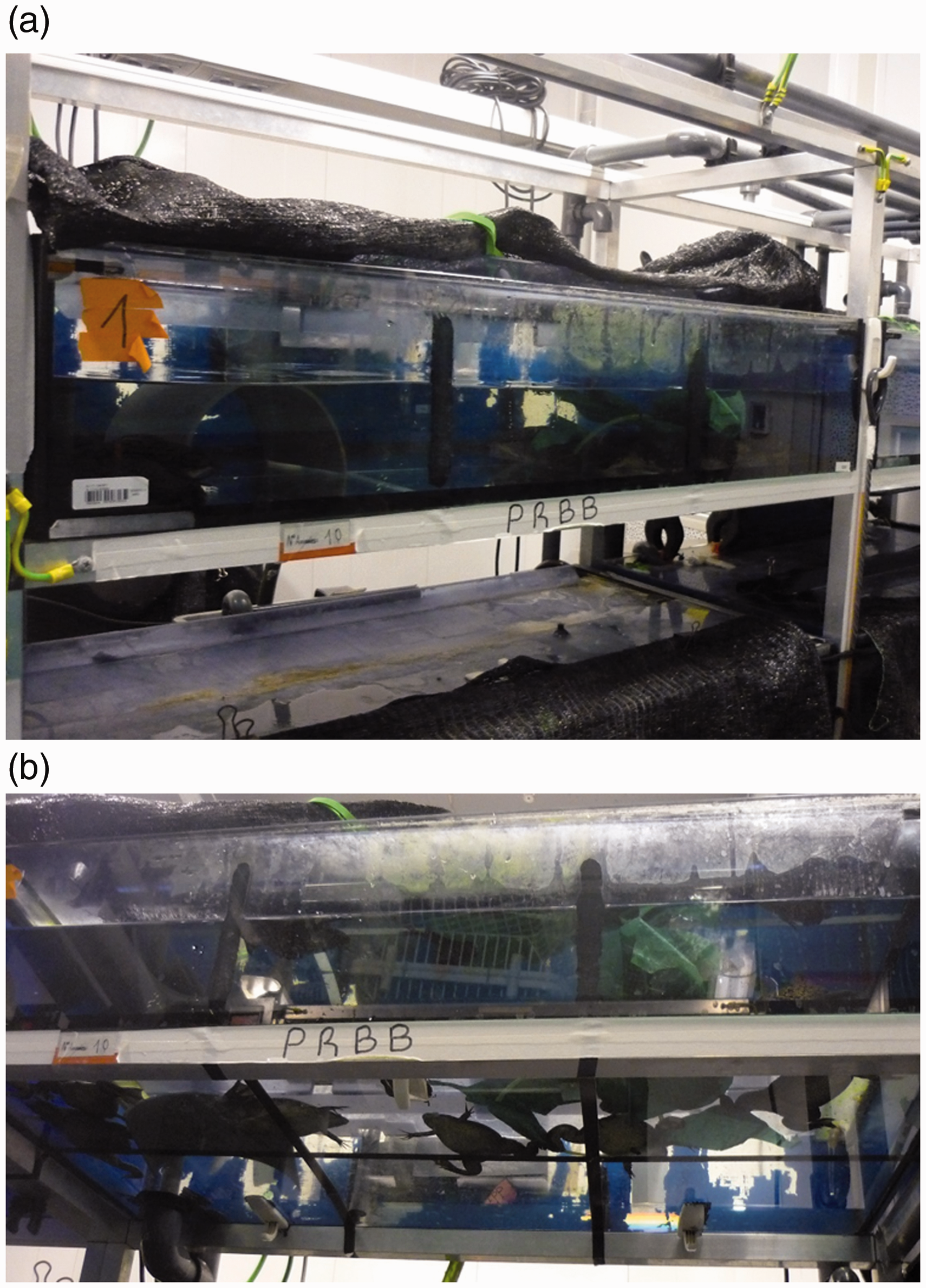
(a) Front side of the tank used for the experiment with PVC (polyvinyl chloride) pipes and artificial plants. The shading mesh that diminishes the visual impact during the observation was placed at the top of the tank. (b) Low angle of the tank used for the observation of 10 Xenopus laevis frogs. The six divisions of the tank were visible through which the PVC pipes and plants were rotated.
Each tank was divided into six equal parts, where the different enrichment elements were rotated to eliminate the animals’ preference for space. Thus, one space contained artificial plants, another the PVC pipe shelter, and the other four remained clear or empty. Every week, the shelters were moved to the contiguous space, rotating through the six delimited positions. The divisions were delimited by an adhesive tape on the outside of the glass floor of the tank (Figure 2(b)).
Two elements were used for environmental enrichment: artificial plants and grey PVC pipes. The plants were manufactured from a 70-cm-long tube made of non-toxic silicone with 10 green leaves affixed that had positive buoyancy. To avoid undesired movement of the plants from the assigned place in the tank, they were ballasted with stainless steel weights at one end and attached to the bottom of the tank (as an anchor). The leaves were arranged along the water column, as they have positive buoyancy, offering cover for the frogs. Thus, the plants offered a refuge at different levels of the water column, similar to a natural plant. Each leaf was foliar-shaped, with a surface of 66 cm2 and a length of 25 cm (Figure 3). Grey PVC pipes had a negative buoyancy and were 14.5 cm long, 10.5 cm high and 19.5 cm wide, which allowed the shelter to be adjusted to each of the six spaces of the tank. The shelter was made from a standard PVC pipe of 200 mm in diameter cut in half.
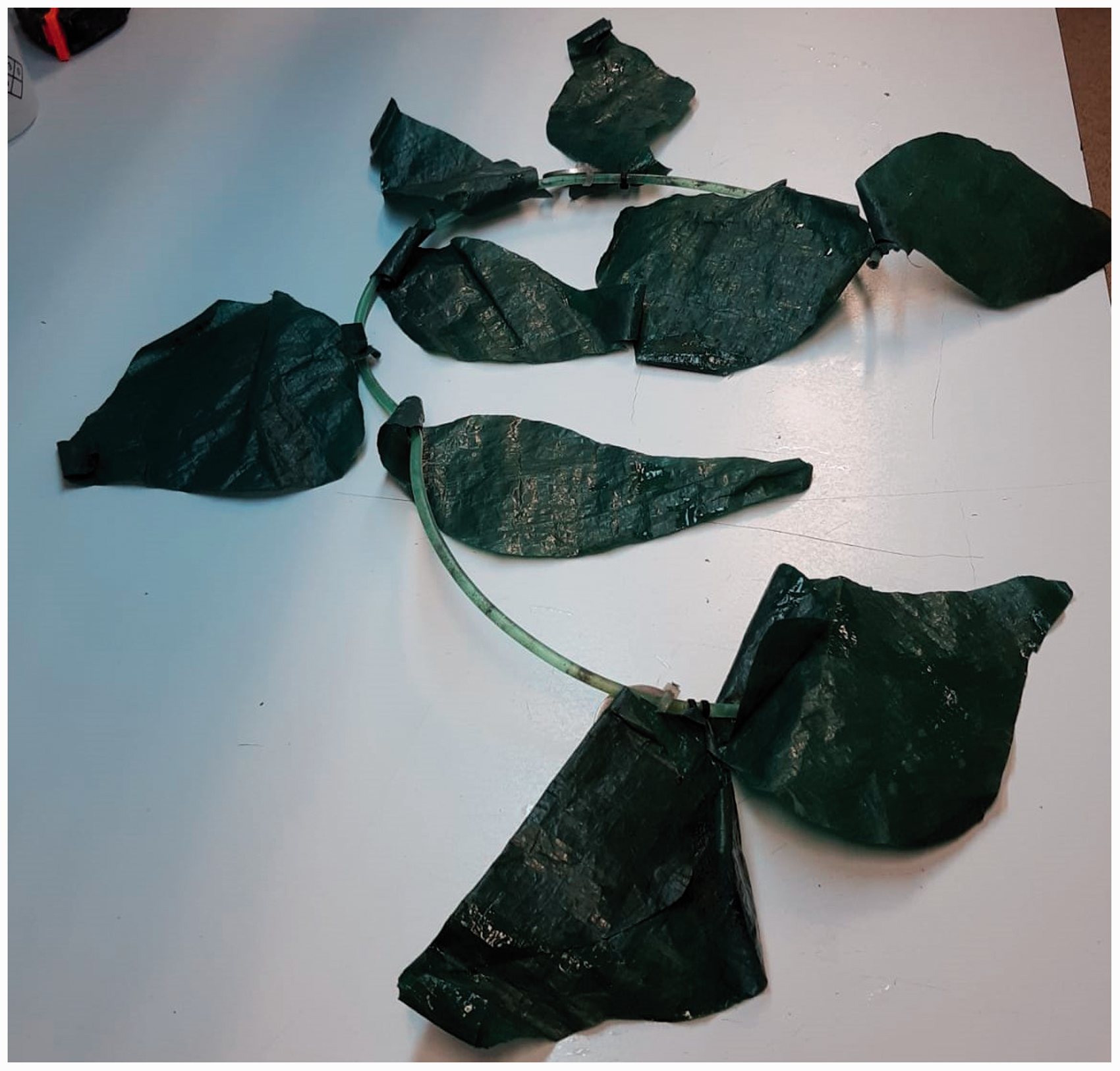
Handmade plants made from a 6–8 mm non-toxic silicon tube (stem) and a green non-toxic plastic (leaves). Ten leaves with a surface of 66 cm2 were fixed to the tube with plastic clamps, with sharpened parts removed. As all the elements had positive buoyancy, a stainless ballast was added at the end of the tube as an anchor.
The size of the enrichment elements was adjusted to fit the dimensions of the six sections of each tank. Six sections were chosen in order to assess positional preferences of the frogs in the tank: corner, middle, front, and back, for a total of six divisions. Shelters were smaller than standard ones in order to differentiate the preference between the two elements of shelters and plants, and open spaces.
The plant has a maximum coverage area of 660 cm2 (66 cm2 × 10 leaves), while the shelters offer only 288 cm2 of coverage. The plants therefore provide a greater coverage area by using the entire water column and allow the frogs to maintain distance, thereby facilitating their observation.
Ten five-year-old X. laevis female frogs were placed in each of the two tanks, setting a standard density according to regulations. 16 All frogs were supplied from the same lot by NASCO (USA) to standardize the origin of the animals. Frogs between 9.5 and 10.5 cm in length and weighing between 160 g and 180 g were selected for this study. Larger animals are usually dominant when eating or lying in the tank, due to environment stimuli. 4 In order to reduce this effect, the groups of frogs were homogenized by size during selection and given an acclimatization period of one month. 17 The groups were kept in the same tanks for one month prior to the study in order to avoid social stress due to regrouping. 17
The frogs were kept in recirculation systems that make it possible to maintain the water in stable and optimal conditions (pH 7.5/8, temperature 18±1°C, conductivity 1500 ± 300 µS, photoperiod 12/12). They were fed three times per week with Royal Horizon XP23 pellets (Skretting, Stockholm, Sweden).
Every day for six weeks, the frogs were observed at established periods. Lights were switched on from 08:00 h to 20:00 h and there were three observation periods: between 08:00 h and 09:00 h; feeding time, at least 15 min after feeding to avoid foraging behaviour (between 10:30 h and 11:30 h), in order to examine influence of ingestion; and between 16:30 h and 17:30 h. Due to staff availability, the last observation was eliminated on weekends.
The observations were made during the established periods when all animals were static in order to count the number of frogs in each of the six parts of the tank. If any frogs stayed between two positions, they were counted according to a pre-established template (see Figure 1) to avoid counting errors. The observation did not cause any escape reaction or aggression due to the tank setup described above. Data were collected by two technicians, one on weekdays and one on weekends.
To evaluate frogs’ preferences as a dependent variable, frog counting was performed for each of the six divisions of the tank. The variables tank, day of the week, time of the day, and type of enrichment were considered independent (Table 1).
Number of Xenopus laevis frogs stratified by tank, day of the week, time of day and type of enrichment.
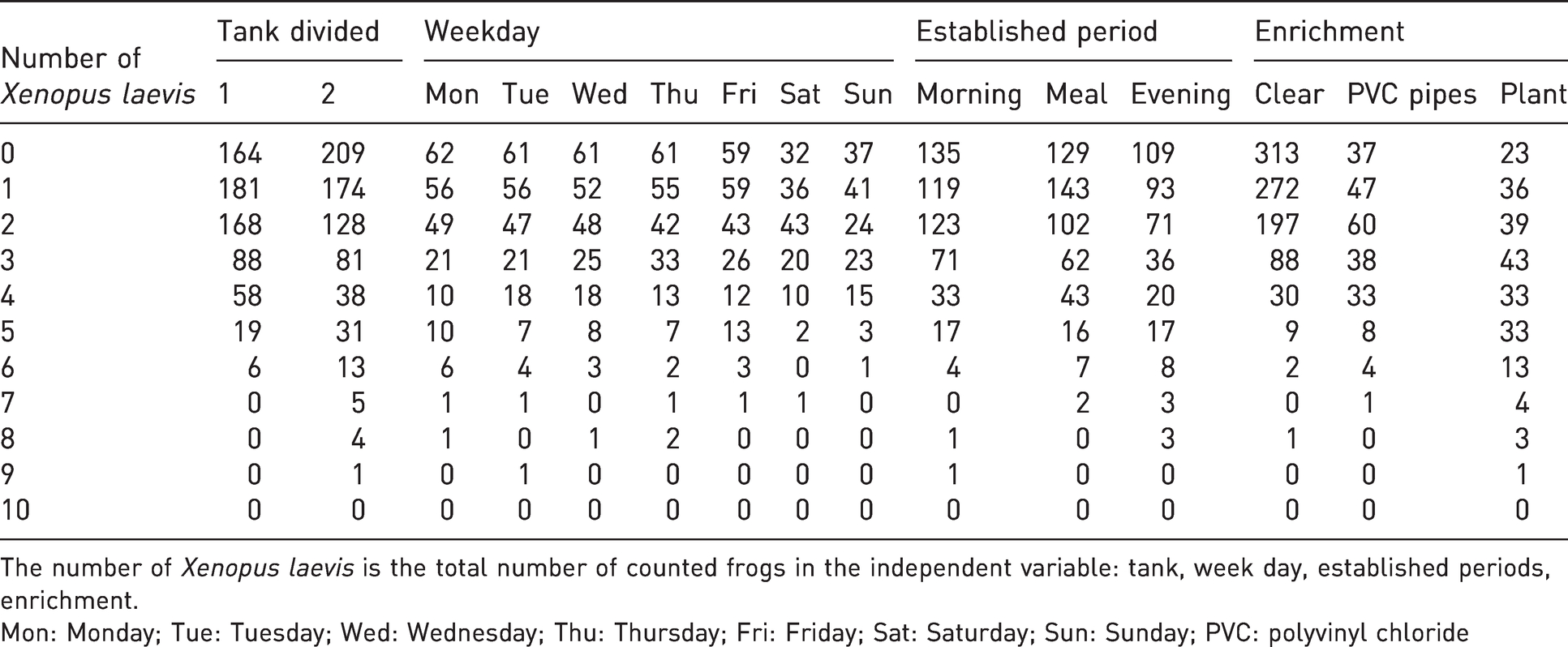
The number of Xenopus laevis is the total number of counted frogs in the independent variable: tank, week day, established periods, enrichment.
Mon: Monday; Tue: Tuesday; Wed: Wednesday; Thu: Thursday; Fri: Friday; Sat: Saturday; Sun: Sunday; PVC: polyvinyl chloride
The study was approved by the ethics committee of PRBB (Barcelona Biomedical Research Park). The study did not cause any substantial change in the frogs’ husbandry conditions.
Statistical analyses
The number of X. laevis frogs in the different places and different enrichments was evaluated using a Poisson regression model. Incidence risk ratios (IRRs) and 95% confidence intervals (CIs) were evaluated. Statistical analyses were performed using Stata software version 13.0 (Stata Corp., College Station, Texas, USA).
Results
The Poisson model found no significant differences in the preference of the frogs for the tank, day of the week or time of the day. The IRR coefficient was calculated by dividing the total number of frogs counted for each variable by the total number of frogs counted in the standard condition. However, there were significant differences in preference for the type of enrichment used, with an IRR of 2.44 (95% CI 2.21, p < 0.001) for plant enrichment and an IRR of 1.74 (95% CI 1.56–1.93, p < 0.001) for PVC pipes, compared with clear spaces (Table 2, Figure 4). The X. laevis preferred plants 2.44 times more to clear space and PVC pipes, 1.74 times more to clear space. Therefore, plants were preferred 40% more than PVC pipes ((2.44–1.74)×100/1.74) = 40%).
Poisson regression model. Dependent variable: frog count; independent variables: tank, day of the week, time of day, type of enrichment (clear space, PVC pipe, or artificial plant).
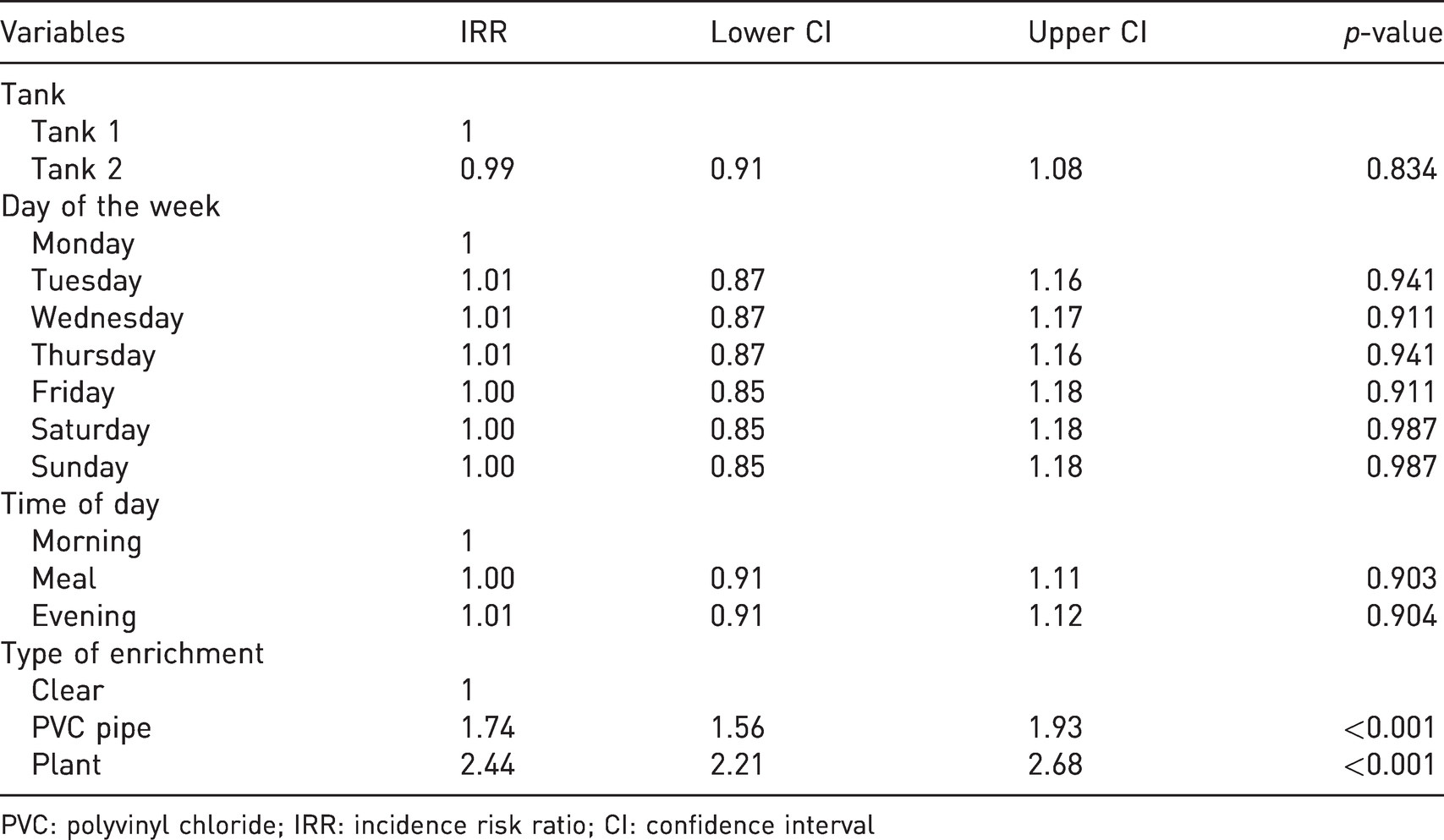
PVC: polyvinyl chloride; IRR: incidence risk ratio; CI: confidence interval
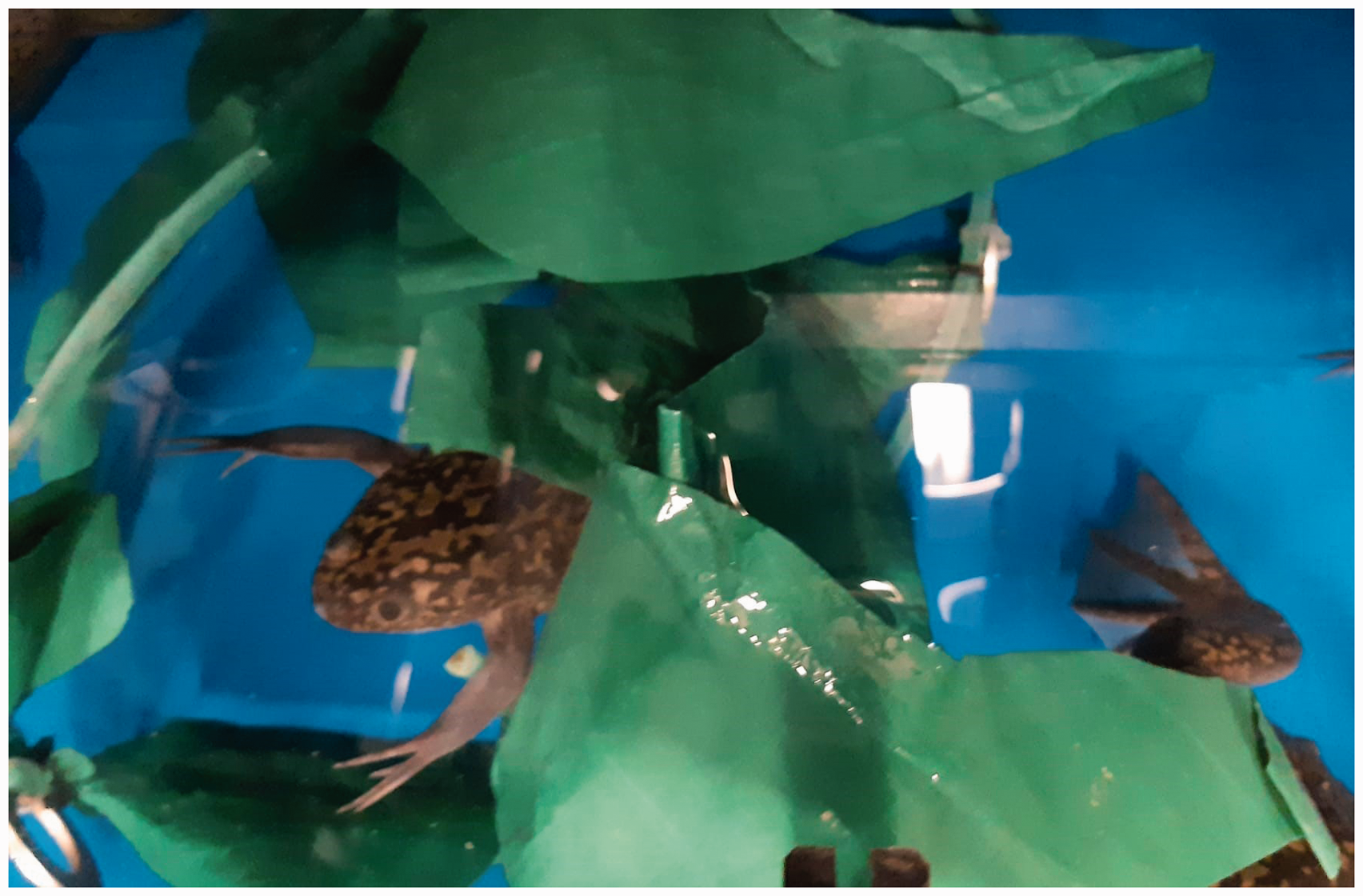
Xenopus laevis using plants as enviornmental enrichment.
Discussion
X. laevis frogs do not usually interact with each other in captivity. 13 However, some incidents of aggression have been observed, particularly bites 11 at mealtime or due to environmental stimuli, such as noise or people in the surroundings.
Preference tests are commonly conducted to evaluate elements related to animal welfare, such as aversion to anaesthetics and euthanasic products, diets and elements of enrichment and housing. 19 These studies are usually based on allowing animals to freely choose between two or more elements in order to determine their preferences.
In this study, we eliminated the influence of variables other than environmental enrichment and spatial preference by performing a preferential study using rotation of enrichment elements in two separate tanks with the same lighting conditions, water quality and feeding regimens. Different variables (tank, day of the week, time, and environmental enrichment) were analysed independently, and significant results were only observed for environmental enrichment.
Traditionally, tanks are enriched with cave-like elements,13,14 such as PVC pipes, although frogs commonly use plants in nature. In an attempt to reproduce their natural environment, both plants and PVC pipe shelters were provided as enrichment elements. An increase in the number of frogs was observed in the spaces with artificial plants compared with spaces with PVC pipes and clear spaces.
To the authors’ knowledge, to date there have been no studies evaluating the preferences of adult X. laevis for shelter types. 18 There are studies revealing the preference of other frog species, such as Xenopus tropicalis, for opaque or translucent shelters with red filters. 15 However, the preference of X. laevis for artificial plants as a shelter represents an advantage, because they offer more hiding space, compared with the use of opaque or translucent shelters, such as PVC pipes or shelters with red filters.
The size of the shelters might have influenced the results obtained, as PVC pipe length was reduced to half of the standard size, while the addition of plants provided sufficient coverage for 10 frogs.
The mean frogs counted was 40% more in plant shelters than in PVC caves. The frogs’ preference for the plants could be due to the plant shape or large hidden surface. Some frogs preferred to be without coverage, watching and breathing the air surface 3 or lying at the bottom of the tank, 13 which are natural behaviours for X. laevis.
There were usually six or fewer frogs in each plant. Therefore, a minimum of two plants per one tank with 10 frogs is recommended, providing two coverage areas to accommodate the entire population of the tank. Plants increase the hidden surface of the tank compared with PVC caves, as the entire water column is used.
Furthermore, the use of plants as environmental enrichment improves the observation of animals, avoiding the removal of elements for visualization and control of the frogs. The frogs can be observed through the leaves, which is impossible with PVC caves. In addition, frogs are more dispersed in the tank, coming into less contact with one another, allowing for better visualization, and the use of plants prevents the accumulation of detritus beneath the area where the animals are located, making the tanks easier to clean. With PVC caves, all debris tends to accumulate inside the pipe, as it interferes with the water current. The use of plants also reduces the need to remove the shelter during routine control, reducing frog disturbance, as they can be easily watched. These results indicate that plants are a superior enrichment element for X. laevis aquarium husbandry compared with PVC pipes.
This study provides valuable information on the preferences of X. laevis frogs for enrichment elements, which can be implemented into future frog husbandry. Although the reasons for the preference were beyond the scope of this study, the larger hidden area provided by plants may be one explanation. A psychological study of the beneficial effects of enrichment should be conducted in order to improve and implement the use of plant shelters in future practice. Future research should assess the zootechnical impact of these enrichment practices for housing X. laevis frogs under laboratory conditions, focusing on animal welfare and egg quality.
Footnotes
Acknowledgements
We thank Cristina Fernández, Chief of the Preventive Medicine service of San Carlos Hospital, for her contribution with statistics, Tania Ayllon for her scientific support, and the aquatic caretakers of the PRBB (Marc Casanovas, Cristina Rodriguez, Miquel Parra, Didac Cañas and Nolasc Puig) for their contribution as technicians in the project.
Declaration of conflicting interests
The author(s) declared no potential conflicts of interest with respect to the research, authorship, and/or publication of this article.
Funding
The author(s) received no financial support for the research, authorship, and/or publication of this article.
