




Abstract
The microbiological quality of experimental animals can critically influence animal welfare and the validity and reproducibility of research data. It is therefore important for breeding and experimental facilities to establish a laboratory animal health monitoring (HM) programme as an integrated part of any quality assurance system. FELASA has published recommendations for the HM of rodent and rabbit colonies in breeding and experimental units (Nicklas et al. Laboratory Animals, 2002), with the intention of harmonizing HM programmes. As stated in the preamble, these recommendations need to be adapted periodically to meet current developments in laboratory animal medicine. Accordingly, previous recommendations have been revised and shall be replaced by the present recommendations. These recommendations are aimed at all breeders and users of laboratory mice, rats, Syrian hamsters, guinea pigs and rabbits as well as diagnostic laboratories. They describe essential aspects of HM, such as the choice of agents, selection of animals and tissues for testing, frequency of sampling, commonly used test methods, interpretation of results and HM reporting. Compared with previous recommendations, more emphasis is put on the role of a person with sufficient understanding of the principles of HM, opportunistic agents, the use of sentinel animals (particularly under conditions of cage-level containment) and the interpretation and reporting of HM results. Relevant agents, testing frequencies and literature references are updated. Supplementary information on specific agents and the number of animals to be monitored and an example of a HM programme description is provided in the appendices.
Environmental and genetic factors and their interactions may influence the suitability of an animal for use in research.1,2 The occurrence of infectious agents in breeding or experimental laboratory animal facilities highlights the need to consider the animals’ microbiological quality since it directly influences welfare, experimental variability and scientific research projects. 3 The use of animals of known biological characteristics is important in ensuring reproducibility of experimental results. The main objective of these recommendations is to harmonize health monitoring (HM) programmes (i.e. designing, sampling, monitoring, reporting and interpreting) which will help to improve knowledge about the microbiological quality of animals used in research and to meet scientific, legal, and welfare requirements.
Several groups of microorganisms are responsible for infections in rodents and rabbits. Most infections do not lead to overt clinical signs. Therefore, an absence of disease symptoms has only limited diagnostic value. Latent or inapparent infections, however, can have a considerable impact on the outcome of animal experiments. There are numerous examples of the influence of microorganisms on the physiology of a laboratory animal (behaviour, growth rate, relative organ weight, immune response).1,4 Infections, apparent or inapparent, may confound scientific results, increase biological and experimental variability, and cause an increase in animal use. Contamination of biological materials such as transplantable tumours and other tissues, cell lines and sera or embryos and gametes5,6 can occur as a result of latent infections in animals. Such contamination may in turn infect new animals or interfere with the materials’ use. Some infections in laboratory animals can also infect humans (zoonoses). 7 For all these reasons, it is important that each institution establishes a laboratory animal HM programme as an integrated part of any quality assurance system. The cost of preventive measures and HM may seem high, but is low in relation to the total cost of the research project. Institutional HM programmes and testing laboratories can be accredited according to the Federation of European Laboratory Animal Science Associations (FELASA) guidelines for the accreditation of HM programmes and testing laboratories. 8
It is important that animals are free of agents that may interfere with specific models or projects. However, it is also important to emphasize that it is not a requirement of these recommendations that all animals used in biomedical research are free from all of the microorganisms tested.
HM is a complex issue. Therefore, it is strongly recommended that a person with sufficient understanding of the principles of HM (preferably of FELASA Category D or equivalent) be identified as the individual responsible for devising and maintaining an HM policy for the facility. The use of these recommendations will be facilitated by basic knowledge of microbiology and of infectious agents of laboratory rodents and rabbits. Moreover, the success of a health management programme requires that all individuals who work directly (e.g. animal care staff, technicians, researchers) or indirectly (e.g. supply teams) with the animals should also have an understanding of the rationale of health management and monitoring. Efficient health management requires a culture of communication between all involved in the animal care and use programme, so that health screenings are properly performed, their results are correctly interpreted and subsequent actions are appropriate. 9
The results of HM are summarized in a health report that is in a standardized format for clarity and ease of use. However it is important to emphasize that these reports are only a part of the HM programme, which also includes microbiological unit definition, sampling, sample analysis, results reporting and interpretation of the reported results.
The FELASA HM recommendations are aimed at all breeders (commercial and non-commercial) and users of laboratory animals (e.g. animal facility managers, veterinarians, scientists using animals for experimental purposes) as well as diagnostic laboratories. They provide a framework for HM of laboratory rodents and rabbits in breeding and experimental colonies, with the intention of harmonizing systems principally among countries associated with FELASA. The present recommendations represent a revision of previous FELASA recommendations for the HM of breeding and experimental colonies of rodents and rabbits 10 and shall replace them. Compared with previous recommendations, more emphasis is put on the role of a person with sufficient understanding of the principles of HM, opportunistic agents, the use of sentinel animals (particularly under conditions of cage-level containment) and the interpretation and reporting of HM results. Relevant agents, testing frequencies and literature references are updated. Supplementary information on specific agents and the number of animals to be monitored and an example of an HM programme description is provided online (see http://lan.rsmjournals.com/lookup/suppl/doi:10.1177/0023677213516312/-/DC1). These recommendations will be periodically reviewed and amendments published as necessary.
General considerations in the design of an HM programme
The present recommendations constitute a common approach for the HM of laboratory rodents and rabbits and the reporting of results. Relatively uncommon species in current scientific use, such as Chinese hamsters and Mongolian gerbils, will not be addressed because there is not enough published information on infectious agents in these animals to make valid recommendations. Recommendations should be adapted to individual and local needs, research objectives, local prevalence of specific agents, the existence of national monitoring schemes, and other regulations such as those related to the production of sera and vaccines. However, microbiological status standards must be clearly defined and appropriate systems of preventive measures developed to meet those standards. A documented HM programme established in each animal housing facility should determine if the preventive measures have been effective and the microbiology quality goals have been met.
Examples of microbiological units.
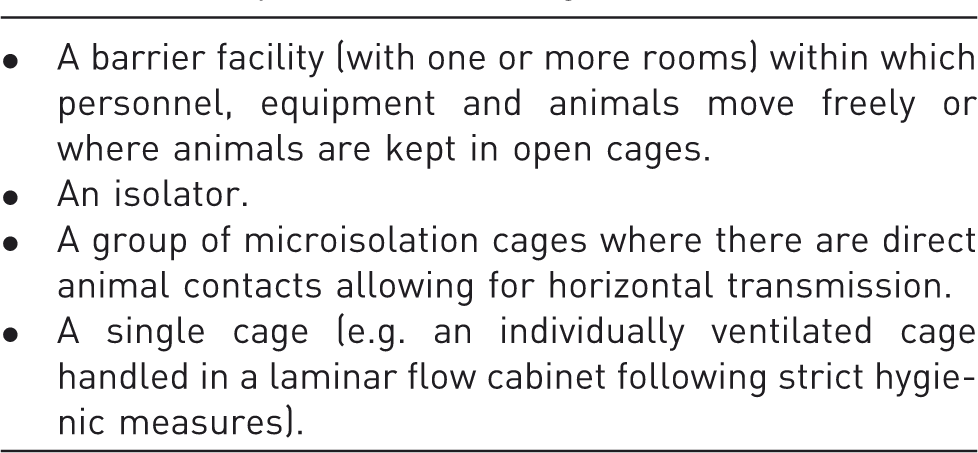
The definition of the microbiological unit is a critical step in the design of the HM programme since it will influence the sampling programme, the nature and frequency of the tests, as well as the interpretation of the results. For example, since the risk factors and consequences of a microbiological contamination can be different in breeding versus experimental units, the design of the HM programme should reflect this diversity.
In a breeding facility, only a small number of people should have access. On rare occasions animals may be introduced, but only after following strict measures to safeguard microbiological quality. Given the possible wide distribution of animals from breeding facilities, the frequency and thoroughness of the monitoring programme is essential to prevent the spread of infectious agents to experimental facilities.
In an experimental facility, both breeding and experimentation may occur. Introduction of animals from outside sources is usually necessary. In addition to animal care staff, numerous researchers enter the experimental animal unit to conduct protocols. Biological materials have to be introduced into an experimental animal unit and these may also need to be monitored.
The use of cage-level containment housing such as individually ventilated cages (IVCs) is now common in laboratory rodent facilities. Transmission of fomites or animal-borne infectious material between cages is dependent on the husbandry and handling procedures but is generally reduced compared with open cages. IVC housing has the potential to reduce the spread of both infectious agents and allergens. Under these conditions, HM has become a challenging task and strategies for proper sampling need to be developed for breeding and experimental populations independent of statistical considerations used in the previous recommendations.
Emerging infectious agents and new HM technologies are also a consideration. A new agent or technique does not change the goal of an HM programme, only the reporting or the means of monitoring. If the HM programme indicates the presence of an agent which, although not listed in these recommendations, is suspected of being important, this agent should be mentioned in subsequent reports and treated as other listed agents.
The HM programme must allow for the accurate assessment of the protective measures put in place in the unit. The design of the programme must be tailored to local needs and requires consideration of the microbiological unit(s), the animal species, the immune status and number of animals in the unit(s), the frequency of monitoring, which animals and sample(s) are to be collected, the organisms for which to test, the detection methods and the health history of the unit. In microbiological units containing more than one animal species, each species must be screened separately. Furthermore, susceptibility to infection and serological response may vary according to both age and differences in genetic background. Animals of varying ages should be selected for monitoring. If varied strains or stocks are present, as many as possible or even all may need to be screened, or the sampling should be rotated between strains and/or stocks over time, since the results will represent all animals of the same species within the same unit.
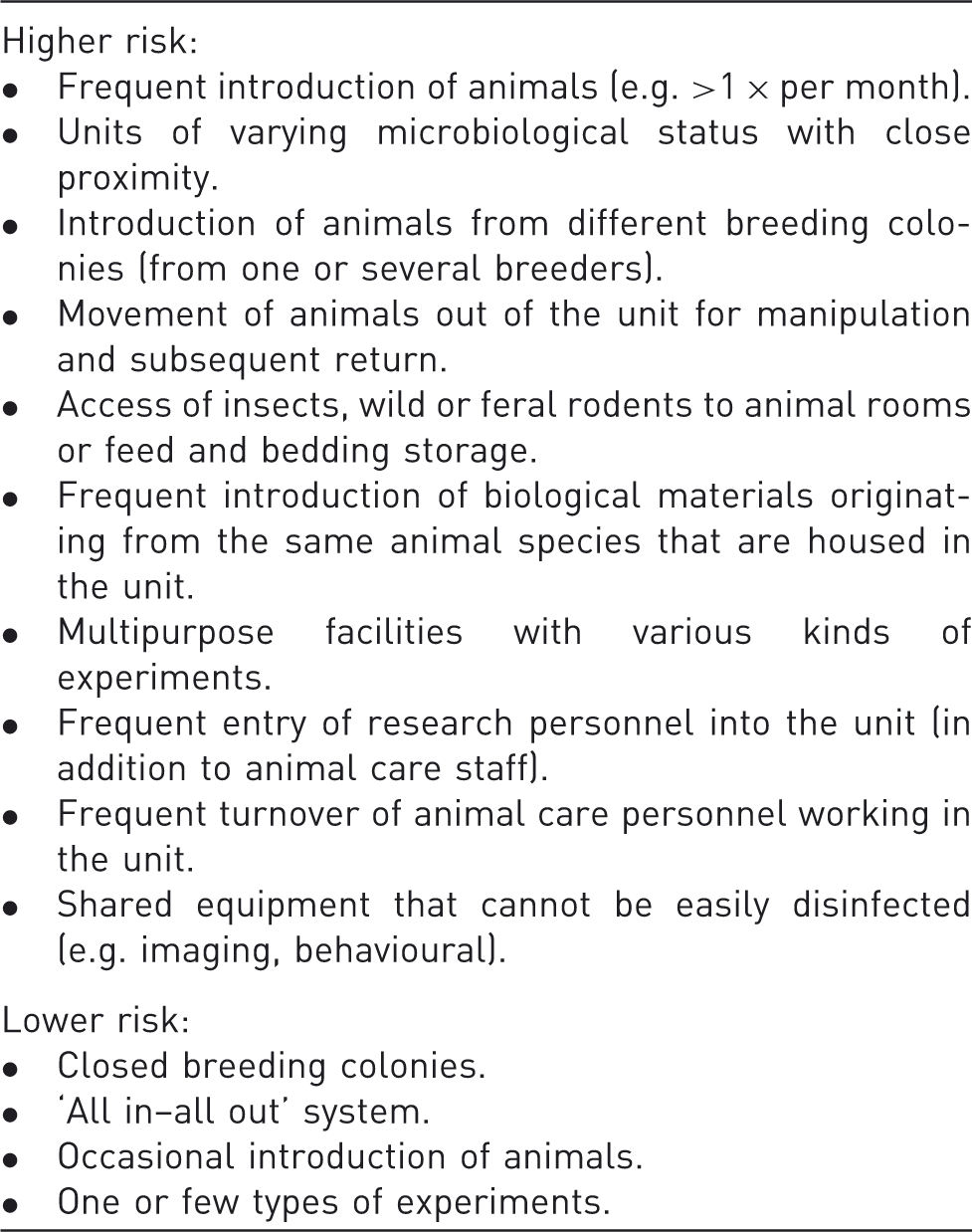
Some factors that determine the risk of introducing unwanted agents into an animal unit.
Recommended infectious agents to monitor and frequencies of monitoring for laboratory mice (Mus musculus).
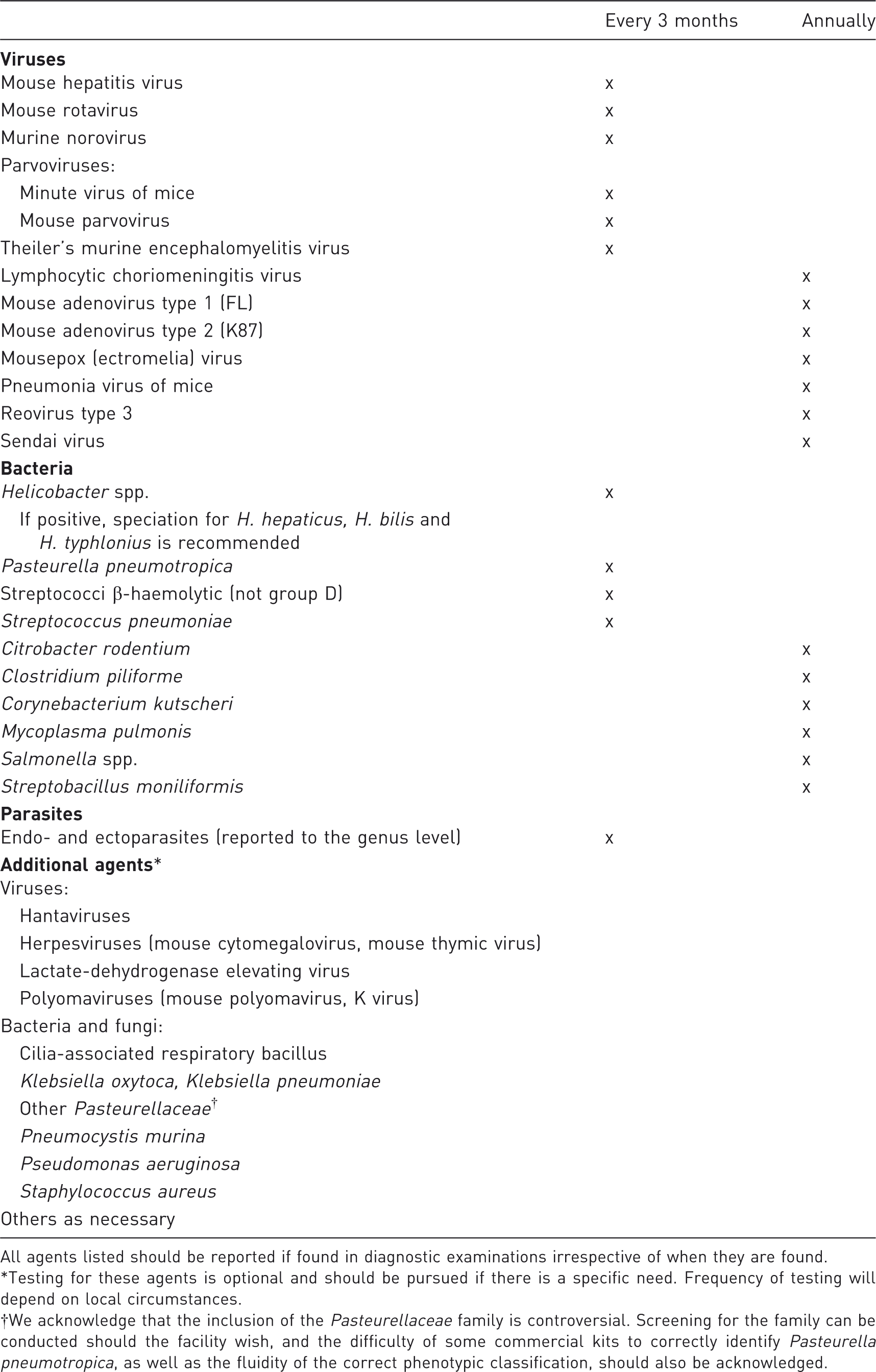
All agents listed should be reported if found in diagnostic examinations irrespective of when they are found.
Testing for these agents is optional and should be pursued if there is a specific need. Frequency of testing will depend on local circumstances.
We acknowledge that the inclusion of the Pasteurellaceae family is controversial. Screening for the family can be conducted should the facility wish, and the difficulty of some commercial kits to correctly identify Pasteurella pneumotropica, as well as the fluidity of the correct phenotypic classification, should also be acknowledged.
Recommended infectious agents to monitor and frequencies of monitoring for rats (Rattus norvegicus).
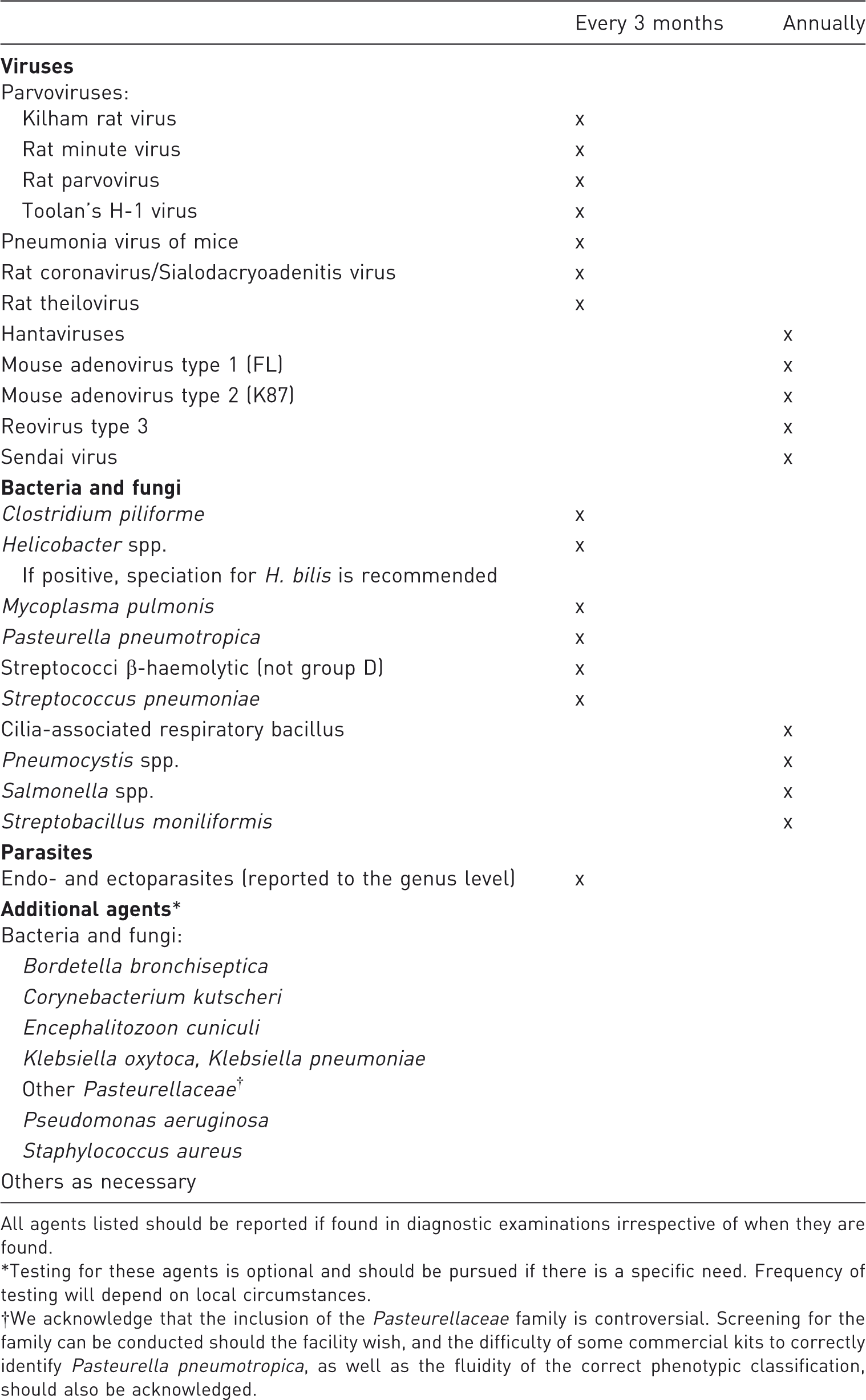
All agents listed should be reported if found in diagnostic examinations irrespective of when they are found.
Testing for these agents is optional and should be pursued if there is a specific need. Frequency of testing will depend on local circumstances.
We acknowledge that the inclusion of the Pasteurellaceae family is controversial. Screening for the family can be conducted should the facility wish, and the difficulty of some commercial kits to correctly identify Pasteurella pneumotropica, as well as the fluidity of the correct phenotypic classification, should also be acknowledged.
Recommended infectious agents to monitor and frequencies of monitoring for guinea pigs (Cavia porcellus).
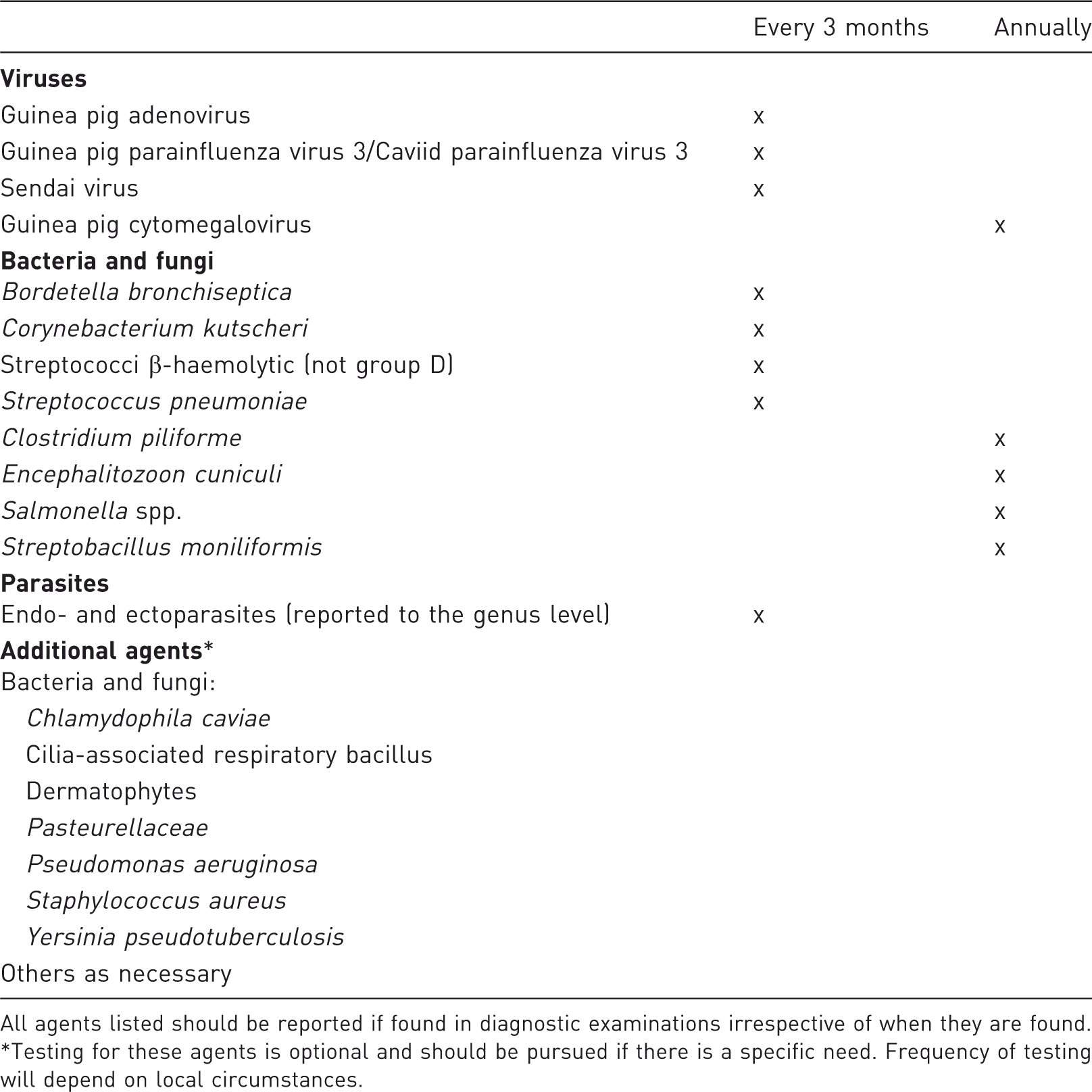
All agents listed should be reported if found in diagnostic examinations irrespective of when they are found.
Testing for these agents is optional and should be pursued if there is a specific need. Frequency of testing will depend on local circumstances.
Recommended infectious agents to monitor and frequencies of monitoring for hamsters (Mesocricetus auratus).
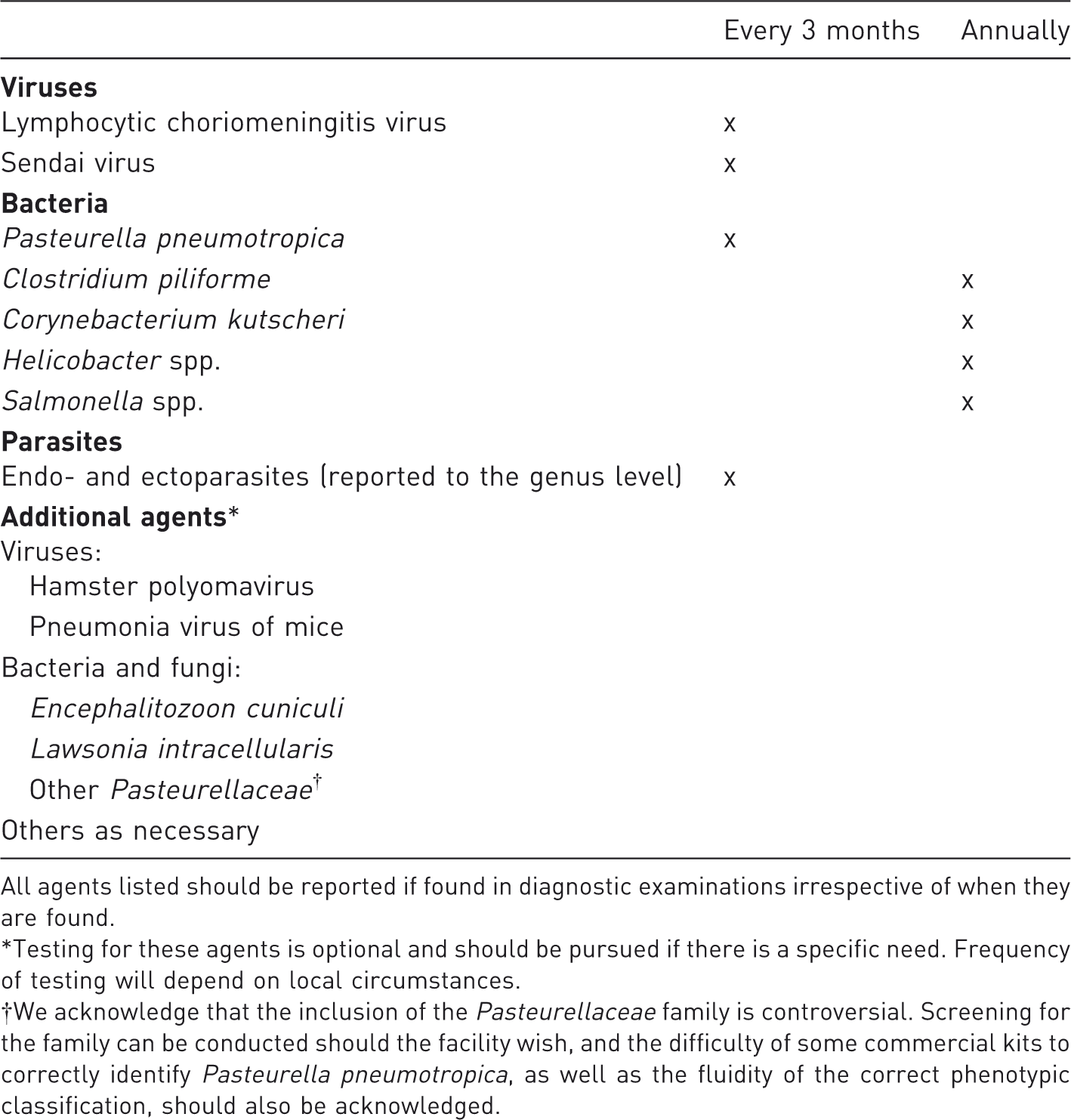
All agents listed should be reported if found in diagnostic examinations irrespective of when they are found.
Testing for these agents is optional and should be pursued if there is a specific need. Frequency of testing will depend on local circumstances.
We acknowledge that the inclusion of the Pasteurellaceae family is controversial. Screening for the family can be conducted should the facility wish, and the difficulty of some commercial kits to correctly identify Pasteurella pneumotropica, as well as the fluidity of the correct phenotypic classification, should also be acknowledged.
Recommended infectious agents to monitor and frequencies of monitoring for rabbits (Oryctolagus cuniculus).
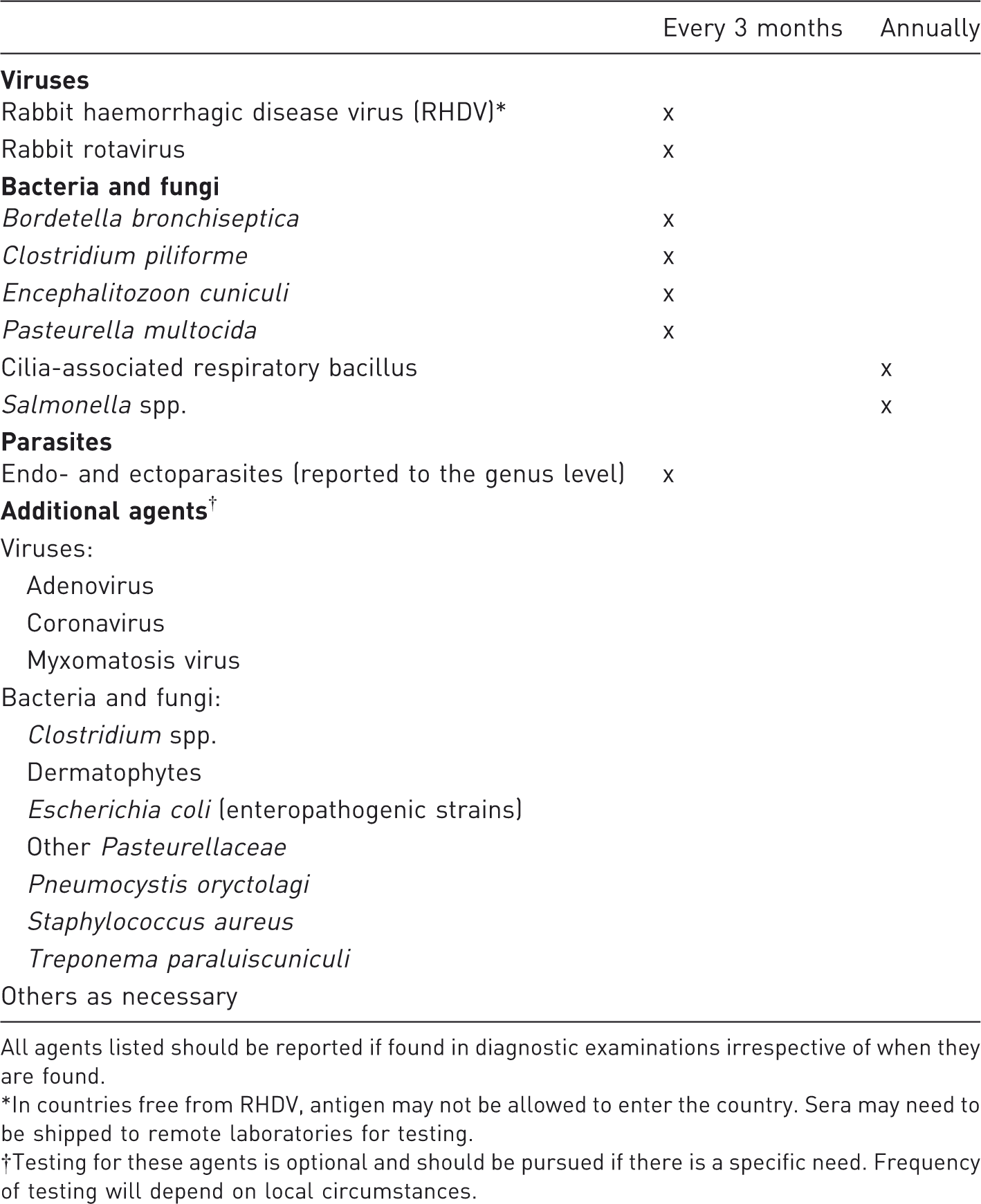
All agents listed should be reported if found in diagnostic examinations irrespective of when they are found.
In countries free from RHDV, antigen may not be allowed to enter the country. Sera may need to be shipped to remote laboratories for testing.
Testing for these agents is optional and should be pursued if there is a specific need. Frequency of testing will depend on local circumstances.
Choice of agents
The selection of agents to be monitored is determined by numerous factors including effects on animal health, effects on biomedical research (e.g. the confounding of scientific experiments as a result of physiological modulation), species specificity, zoonotic potential, prevalence, host factors (particularly immune status), desired unit microbiological status and historical results. Detection of an organism does not necessarily mean that it has to be eliminated.
The examples below show that the list of microorganisms monitored is neither exhaustive nor permanent. The list will change over time; infectious agents will rise and fall in importance. The current recommended agents to be monitored in each animal species addressed in this working group report are given in Tables 3–7. Monitoring for additional agents may be useful under specific circumstances: if they are associated with lesions or clinical signs of disease, if there is evidence of physiological perturbation or alteration in breeding performance, or when using immunodeficient animals. Limited information about agents and their effects on research can be found in Appendix 1 and in various review articles and textbooks.2,4,11,12
Species specificity and zoonoses
Some microorganisms are host-specific or have a relatively limited host range, whereas other agents may infect various animal species. In addition, some of the microorganisms that may be present in laboratory animals can infect humans or vice versa (zoonoses). 7 Although the contemporary prevalence of potential zoonotic agents with few exceptions (e.g. Staphylococcus aureus) is rather low in laboratory rodents and rabbits, the potential risks necessitate continued surveillance for such organisms. 13 The risk of a zoonosis also exists when biological material is used. For example, there are reports of contamination of hamster tumour cell lines with lymphocytic choriomeningitis virus (LCMV). 5 Today, humanized immunodeficient animals are being used for studies of the human immune system, xenotransplantation and as infection models. These animals not only accept grafts but may also amplify microorganisms of human origin such as human immunodeficiency virus (HIV). 14 Human cell lines that are intended for use in animals should be screened for both rodent and human pathogens.
Opportunistic and emerging agents
Various microorganisms that do not usually cause clinical signs in immunocompetent animals may cause disease in immunodeficient animals or in animals whose resistance is lowered, for example, by other diseases, experimental procedures or drugs. Genetically-modified rodents may have unanticipated phenotypes, including overt or subtle immunomodulation, which result in disease induced by organisms thought to be commensals or previously unknown in that species. It may therefore be necessary to monitor such animals for opportunistic agents or commensals.2,15 As almost any organism can be an opportunist, 16 provided it finds a suitable host or favourable circumstances, it is impossible to define a complete list of opportunistic agents for which animals should be monitored. Pathogenicity may be due to a variety of factors, including host, microbial, environmental, or combinations thereof. 17
Emerging agents that affect animal health and research may be discovered at any time. Once discovered, such agents present challenges to HM programmes because it is necessary to develop diagnostic assays and an understanding of the agent’s epidemiology and transmission routes. In addition, time is needed to fully understand a newly discovered agent’s effect on health and research. For these reasons, caution should be exercised before adding such organisms to a monitoring list.
Prevalence of infectious agents
Prevalent agents pose a higher risk of contamination than rare agents. Prevalence will vary depending on the animals’ or biological materials’ intrinsic characteristics, but also on the development and application of biocontainment methods, diagnostic tools and preventive or therapeutic measures. Prevalence data may be helpful in deciding which agents to monitor.18–24 Local prevalence of an infectious agent may also depend on numerous other factors, such as the strain, immune status, age and sex of the animals, and the local conditions in each unit, such as open cages or microisolation cages, intensity of animal movement within and between facilities, and working routines.
Biological materials
Biological materials can potentially contain the same organisms, notably intracellular microorganisms, present in live animals. 25 For example, it has been shown that embryonic stem cells are susceptible to persistent infection with mouse hepatitis virus and may produce viruses.26,27 Microorganisms can also be transmitted by materials such as monoclonal antibodies 28 and viral stocks. 29 In addition, murine germplasm should be considered as a potential source of infection.30,31 More recent reports25,32 suggest that the incidence of infectious agents in biological materials has markedly decreased over the past decades, but the risk still exists especially for those biologicals that have been stored for a long time and the source of which is ill-documented. For example, outbreaks of ectromelia in the USA caused by contaminated serum33,34 underline the risk of agent transmission by biological materials.
Animals for testing and sampling
The choice of animals and samples to test is important for accurate HM programme results. Animals resident within a unit give the most reliable data on the microbiological status of a particular unit and should be used for HM wherever possible. In microbiological units consisting of two or more rooms, the sample should comprise animals from as many rooms as possible. It is important to note that each IVC can represent a microbiological subunit of the rack where they are placed and therefore as many cages as possible should be sampled.
In addition to those scheduled for routine monitoring, sick and dead animals or samples from these animals should be submitted for examination. This may apply to animals showing unexpected phenotypes in breeding facilities, as well as to experimental animals. A necropsy can allow the investigator to distinguish between effects caused by the experimental protocol and those caused by infection. The outcome of the necropsy may prompt an increase in the sample size or frequency of monitoring, or give rise to additional agent screening.
Resident animals
In a breeding facility containing at least 100 animals of the same strain or stock, and kept in open cages under conventional handling procedures, the so-called ‘ILAR formula’35,36 can be used to estimate the sample size in order to assess its microbiological status. Animals of all ages and both sexes should be sampled, due to their differing susceptibility to agents. The animals should be taken from different locations and cages within the microbiological unit.
The ‘ILAR formula’35,36 is applicable only if certain circumstances are met. See Appendix 2, which outlines the conditions under which the ILAR formula may be applied. These include a population of at least 100 animals where infections can spread and be distributed freely. The ILAR formula is not appropriate to define the size of the samples for monitoring small animal colonies kept in isolators, IVCs or other cage-level containment.
Sentinel animals
In some experimental and breeding units a number of factors, such as housing conditions, immunodeficiency of resident animals, or insufficiency of animals may not allow for the direct sampling of resident animals. HM may then be carried out on sentinels. Sentinels are exposed to animals of the same (or another) species to evaluate their microbiological status and should be submitted for testing after a sufficient exposure period. They are often introduced from external sources, but it is also acceptable to use the term for animals that are taken from the resident population and then widely exposed to other resident animals. If sentinels are not bred within the unit that is being monitored, they must be obtained from a population free of the agents and antibodies to be monitored.
Sentinels may be either indirect (animals that are exposed to materials soiled by resident animals, such as bedding, water, or feed) or direct (animals that are placed in the same cage as the resident animals). Sentinels should be housed in the same unit as resident animals for at least six weeks before testing, using the same husbandry conditions. Longer exposure periods (10–12 weeks) are better since more time may be necessary for infection and/or seroconversion to certain agents such as Mycoplasma pulmonis and Pasteurella pneumotropica. Retention of sentinels may also allow for a low prevalence infection in cage-level containment housing to reach a prevalence where a sentinel might detect it.
Generally, sentinel animals should be of the same animal species as the population to be examined. Occasionally, exotic species of rodents are housed in laboratories. In this case, sentinels from a common rodent species are used when the concern is what the exotic animals might transmit to common laboratory rodents. For example, laboratory mice or rats might be used as sentinels for naked mole rats. A variety of stocks and strains of animals can be effectively used as sentinels. Immunocompetent outbred animals are frequently chosen since they are robust and susceptible to a wide range of agents. Inbred or mutant strains vary in their susceptibility to specific infectious agents,37,38 but could be used as long as this varying susceptibility is taken into consideration, where known. Similarly, the animals’ age and sex may influence susceptibility to infection with certain agents.37,39 If serological methods are to be used, the sentinel animals should be immunocompetent young animals, which usually mount a good immune response.
Immunodeficient animals are generally more susceptible to infectious agents than immunocompetent animals but may not seroconvert effectively, or at all. They may sustain persistent infections and thus may allow the detection of agents that are usually eliminated by immunocompetent sentinels and detected by direct methods, such as Pneumocystis murina or Corynebacterium bovis. A disadvantage of immunodeficient animals is that they may serve as a source of persistent infection for the other resident animals.
Sentinel animals may acquire infectious agents present in a microbiological unit by indirect or direct contact with colony animals. The most common method of indirect exposure is via dirty bedding. This entails keeping sentinels on soiled bedding taken from an adequate number of cages from the microbiological unit under examination. Dirty bedding sentinels should be housed on at least 50% dirty bedding and the bedding should be changed at least weekly. The number of cages supplying each sentinel cage should be determined by the person overseeing the HM programme. Typically, one sentinel cage per 50–80 IVCs is used. Regular changes of donor cages may then give insight into the microbiological status of the unit. The reliability of this method is dependent on the choice of sentinel, the route(s) by whích the infectious agent is shed, the duration of shedding, the concentration of the excreted agent, the stability of the agent after it is shed, the volume of soiled bedding transferred, and the frequency of the bedding transfer.40–42 Sentinel animals may also be fed from used feeding devices and drinking bottles or even housed in cages previously occupied by resident animals. The testing of exhaust filters by polymerase chain reaction (PCR)-based methods may also be considered for monitoring exhaust air from individual cages or an entire IVC rack.40,41 In any case, sentinel animals should be handled last during routine husbandry procedures.
Not all agents can be easily transferred via soiled bedding (e.g. LCMV, Sendai virus, Pasteurella pneumotropica)13,41,43 or exhaust air (e.g. Helicobacter spp., mouse rotavirus, mouse parvovirus) 41 and therefore in some circumstances sentinels may be kept in direct contact with the animals to be monitored by placing them in the same cage. The use of direct contact sentinels may allow or at least increase the chance of finding certain agents. Contact sentinels should be compatible with the animals to be monitored. The movement of contact sentinels among cages may spread an agent to previously uninfected cages and should be avoided.
If suggested FELASA testing frequencies are followed, new sentinels will be placed at least quarterly. A sufficient number of exposed sentinels to allow for confirmatory testing should always be present in the microbiological unit during a monitoring period; sentinel cages often contain 2–5 animals. The number of sentinels per unit depends on many factors including type of housing, risk of acquiring infections or detection methods, and should be determined by the person responsible for the institution’s HM programme.
In summary, indirect sentinel methods alone cannot reliably detect all infectious agents, but direct sentinel use or resident animal sampling may not always be possible. When cage-level containment housing (e.g. IVCs) is used, it is difficult to gain a complete overview of the unit’s infectious agent status. Therefore, a complex course of action is necessary in which the optimal HM programme should be determined on an individual basis.
Assays and interpretation
Testing should be performed under supervision of staff with an academic degree in veterinary medicine, medicine or microbiology, who also have experience in laboratory animal diagnostics and laboratory animal science at the level of FELASA Category D (or equivalent). 44 FELASA advocates accreditation of diagnostic laboratories and HM schemes according to FELASA guidelines 8 although neither is required. Each animal facility should also identify a person with sufficient understanding of the principles of HM as the individual responsible for interpreting the results of laboratory tests. Laboratory reporting is not always sufficient and additional information may thus be required in order to interpret positive as well as negative results.
The presence of an infectious agent in a population can be detected by a variety of direct or indirect methods. A full necropsy of euthanized animals allows for the systematic examination of the carcass for abnormalities and the inspection of organs for the presence of gross abnormalities. Routine histopathology on grossly normal organs is not generally necessary. The aetiology of gross changes should be further investigated by additional methods, as appropriate. Histopathology may also be used to detect or confirm infections by uncultivable bacteria, such as Clostridium piliforme, or extraintestinal parasites such as Klossiella spp. Lesions may support positive serology results, or may reveal organisms not included in routine screening programmes. This may be particularly important in immunodeficient animals, where a variety of organisms can cause opportunistic infections. General guidelines for necropsy and sampling for histopathology and microbiology in rodents and rabbits have been published. 45
The skin and fur of animals should be examined for evidence of ectoparasites. Endoparasites can be diagnosed by PCR, direct visual examination, or smears of intestinal contents, after flotation and microscopy of faeces, and on adhesive tapes used for sampling around the anus. Identification of parasites should proceed as far as possible to the species name.
Serological methods are widely used for screening for viruses, certain bacteria (e.g. Clostridium piliforme, Mycoplasma pulmonis) and a limited number of other organisms, such as Encephalitozoon cuniculi. Suitable serological methods include bead-based fluorescent multiplexed immunoassays (MFI, or MFIA®), the enzyme-linked immunosorbent assay (ELISA), the indirect immunofluorescence assay (IFA), and the haemagglutination inhibition (HAI) test. Western blots are not suitable for routine screening, but are highly specific and sensitive, so are occasionally used for confirmation.
Direct detection of agents by PCR is useful for confirmation of positive or equivocal serological results, for the early detection of agents before seroconversion occurs, or for the screening of immunodeficient animals. It requires careful selection of animals and tissues for evaluation since target organisms must be present at the time of testing in the specimen evaluated. PCR can also be used to evaluate the risk of agent transmission from animals, for example by testing excretions for shedding of organisms. Furthermore, PCR assumes a more prominent role in the screening of biological materials where it replaces conventional antibody production tests. 46
Culture techniques are usually employed for the detection of most bacterial and fungal agents. Samples are commonly taken from the genital mucosa, the large intestines, nasopharynx, and trachea; and other sites may be sampled as necessary. Lesions suspected to be of bacterial origin should be cultured. The skin of rabbits and guinea pigs may be examined for dermatophytes. Identification of relevant bacteria should proceed to the species level where necessary. Commonly used kits for the identification of human and veterinary pathogenic bacteria may fail to correctly identify bacterial strains from laboratory animals (e.g. Pasteurella pneumotropica and Citrobacter rodentium). PCR is now routinely used for the detection and identification of some bacteria, most notably Helicobacter spp., which are otherwise difficult to cultivate or identify to a species level with classical culture techniques. Serological methods exist for the detection of various bacterial pathogens 47 but there is a higher risk of false-positive reactions when compared with viral serology, due to the more complex antigenic structure of bacteria.
The use of a suitable test method does not necessarily imply a reliable test outcome. At a minimum, reliability depends on the sensitivity and specificity of the test, as well as the sample’s true representation of the microbiological unit. Since positive results may prompt drastic measures in a facility, including culling of animals, facility disinfection and interruption of experiments, it is important to confirm any positive results by using other methods at least as specific as the first one. The results should be confirmed by repeated sampling and testing of resident animals or sentinels. If possible, positive results should also be confirmed by another laboratory. Experience shows that results obtained from different diagnostic laboratories may vary. Conflicting or borderline results should be investigated further until a conclusion on agent status can be reached. A health management action plan should be put in place while waiting for confirmatory results in order to avoid the potential spread of contaminants. Confirmation processes in progress should be mentioned as additional information in the HM report.
Every assay can produce false-positive and false-negative results. Prevalence data may help in the estimation of the predictive value of test results, i.e. they are helpful in knowing how much weight to accord a positive test result. Rare agents are less likely to be found in a population, and therefore less likely to produce true positives. When a number of sera are subjected to a battery of serological tests, some false-positive test results must be expected, even when tests are highly specific, e.g. 95%.48,49 The presence of antibodies in animal serum generally indicates a current or previous infection, but may also be due to maternal antibodies, vaccination or a cross-reaction. PCR can also give false-positive results, for example due to sample contamination or non-specific amplification of DNA.
If serological tests are used, negative results mean only that antibody activity to the microorganisms monitored has not been demonstrated in the animals screened by the test(s) used. The results are not necessarily a reflection of the status of all the animals in the unit. It takes some days or weeks for animals to produce an antibody response detectable with routine serological tests, therefore serological test results will be negative during the early stages of infection. Studies on rodents infected with some prevalent agents, such as parvoviruses, have shown that some infected animals are poor responders and may seroconvert slowly or not at all.37,38 Seroconversion also depends on the dose, biological attributes of the agent and the genetic composition, age and immune status of the infected animal. Equivocal results should be evaluated carefully in light of the above.38,50 PCR can also give false-negative results (e.g. due to the presence of polymerase inhibitors) as can bacterial cultures. Bacteria responsible for subclinical infections may be present only in low numbers and may not be detected, either due to overgrowth of other bacteria on conventional culture media, or because they perish in transit to the testing laboratory. Sampling from recently killed animals and the use of selective and transport media respectively may help in overcoming these potential problems.
Health monitoring report
It is important to note that an HM report is not a laboratory report. The laboratory report consists simply of results provided by the testing laboratory on samples from tested animals. This means that it does not allow for conclusions about the microbiological status of the complete unit because it lacks information provided in the full HM report.
HM reports should be produced by the person in charge of the HM programme. They should be made available to interested parties within an institution and when animals are shared between institutions. Data reflecting the health status of animals used in an experiment are part of the experimental work and should therefore be evaluated for their influence on the results of experiments and included in scientific reports and publications as part of the animal specification.
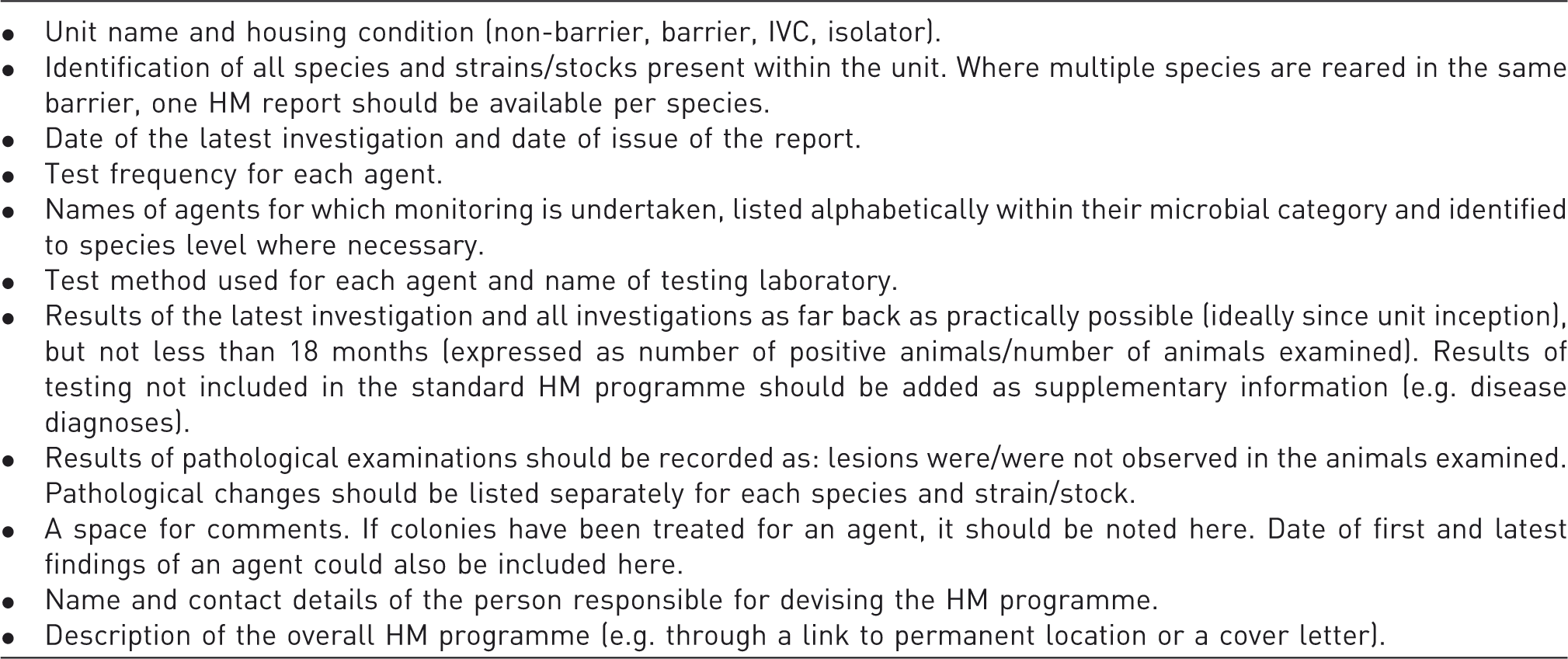
HM reports should, as far as possible, be presented in a format standardized in layout and content. A joint working group comprised of members of FELASA and AALAS is currently (2013) evaluating the potential for a common health report to be used for international transfer. Table 8 contains suggested information to be presented in a health report. A sample HM report is shown as Figure 1.
A sample health monitoring report. Other formats are acceptable if the information is presented clearly and simply. Recommended information for a health monitoring (HM) report.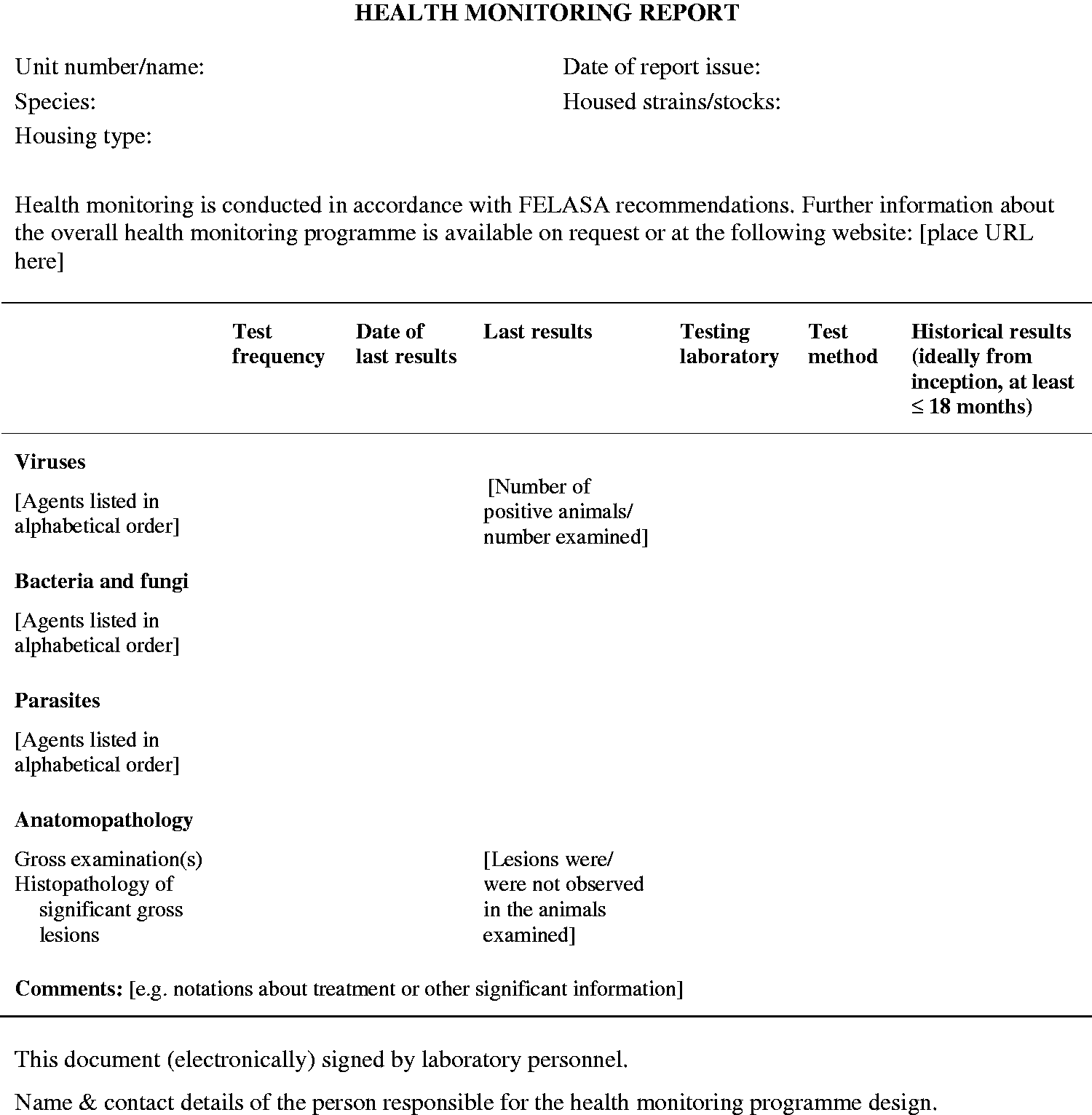
An agent must be declared to be present on the health report if it is identified and confirmed in one or more of the animals screened. Agents known to be present need not be monitored at subsequent screens provided that they are declared in the health report. The unit must continue to be reported as positive at subsequent screens until the organism has been eradicated, for example by means of hysterectomy or embryo transfer or restocking with animals from another source. Eradication of the infection(s) will be confirmed by subsequent testing.
Given the statistical limitations of the results, the HM report should not be the sole basis of the decision to allow the entry of imported animals to a facility. The health history of the facility of origin and its HM programme, as well as the risks of possible contamination, should also be taken into account. For an example of an HM programme description, please see Appendix 3. In addition, the health status of animals may change during transport. Facilities should evaluate the risks inherent in the introduction of animals and develop an appropriate plan (e.g. quarantine and testing process).
Funding
Attendance at the meetings of this working group was supported by travel grants from
References
Supplementary Material
Please find the following supplemental material available below.
For Open Access articles published under a Creative Commons License, all supplemental material carries the same license as the article it is associated with.
For non-Open Access articles published, all supplemental material carries a non-exclusive license, and permission requests for re-use of supplemental material or any part of supplemental material shall be sent directly to the copyright owner as specified in the copyright notice associated with the article.
