




Abstract
The 3Rs principle of replacement, reduction, and refinement has increasingly been endorsed by legislators and regulatory bodies as the best approach to tackle the ethical dilemma presented by animal experimentation in which the potential benefits for humans stand against the costs borne by the animals. Even when animal use is tightly regulated and supervised, the individual researcher’s responsibility is still decisive in the implementation of the 3Rs. Training in laboratory animal science (LAS) aims to raise researchers’ awareness and increase their knowledge, but its effect on scientists’ attitudes and practice has not so far been systematically assessed. Participants (n = 206) in eight LAS courses (following the Federation of European Laboratory Animal Science Associations category C recommendations) in Portugal were surveyed in a self-administered questionnaire during the course. Questions were related mainly to the 3Rs and their application, attitudes to animal use and the ethical review of animal experiments. One year later, all the respondents were asked to answer a similar questionnaire (57% response rate) with added self-evaluation questions on the impact of training. Our results suggest that the course is effective in promoting awareness and increasing knowledge of the 3Rs, particularly with regard to refinement. However, participation in the course did not change perceptions on the current and future needs for animal use in research.
‘… the freedom of choice of the experimenter is often much wider than it at first appears. The full use of this freedom is the mark alike of humane and successful experimentation.’ Russell and Burch
In their groundbreaking publication, published at a time when regulatory requirements for animal welfare were inexistent in most countries, Russell and Burch urged researchers to use their freedom with responsibility towards both the quality of science and the ethical treatment of animals in their care, 1 a responsibility that is now seen as the ‘4th R’ of animal research, first coined as such by R E Banks. 2 This responsibility is shared among all those participating in the use of animals for research, including regulators and inspectors, animal caretakers and veterinarians, funding agencies, scientific journal editors and ethics committees. 3 But even with today’s demanding regulations concerning animal use, scientists continue to be those ultimately deciding how animals are treated, and their attitudes are decisive for the implementation of the 3Rs.
In order to be licensed to work with animals, researchers are required to undertake specific training. 4 In the absence of detailed standards for training in European regulation, the majority of European Union (EU) Member States follow the Federation of European Laboratory Animal Science Associations (FELASA) recommendations for categories B or C.5,6 Category C courses are aimed at researchers responsible for designing or conducting animal experiments (who, as a prerequisite, must hold a degree in the life sciences), and aim to provide basic training for researchers in the multiple basic skills and theoretical knowledge needed to become fully autonomous in planning and conducting animal experiments. A wide range of topics – which include refinement measures, alternatives to animal experiments, experimental design, and ethics – are covered through a minimum of 80 h of theoretical and practical classes, with the 3Rs being an overarching principle of the course curriculum. 6 Continuous training of researchers and all personnel dealing with laboratory animals are considered fundamental to the responsible use of animals in research, while maintaining high scientific standards, and this is indeed seen as a means of refinement in itself.7–10 However, to our knowledge, there are no studies in the available literature on the actual impact of this kind of training on scientists’ attitudes to the 3Rs.
The present study aimed to assess the attitudes of participants in FELASA accredited courses held in Portugal to the use of animals in the life sciences – as well as its regulation and supervision – and to evaluate the impact of this formal training on how the participants view and apply the 3Rs.
Materials and methods
A self-administered survey was delivered to all participants in eight laboratory animal science (LAS) courses following FELASA recommendations for category C (n = 206) held in Portuguese research institutes and universities, namely at the IBMC – Institute for Molecular and Cell Biology, in Porto (2008, 2009, 2010); the Center for Neuroscience and Cell Biology, in Coimbra (2008, 2009, 2010); the University of Trás-os-Montes e Alto Douro, in Vila Real (2010); and the Life and Health Sciences Research Institute, in Braga (2008). All the courses were organized by the same team, followed the same syllabus and shared most of the lecturers. One year after the course, the participants were asked to complete an online questionnaire (57% of all course participants responded) including self-evaluation questions regarding the course and its impact on their attitudes to the 3Rs.
Timing and setting of surveys.
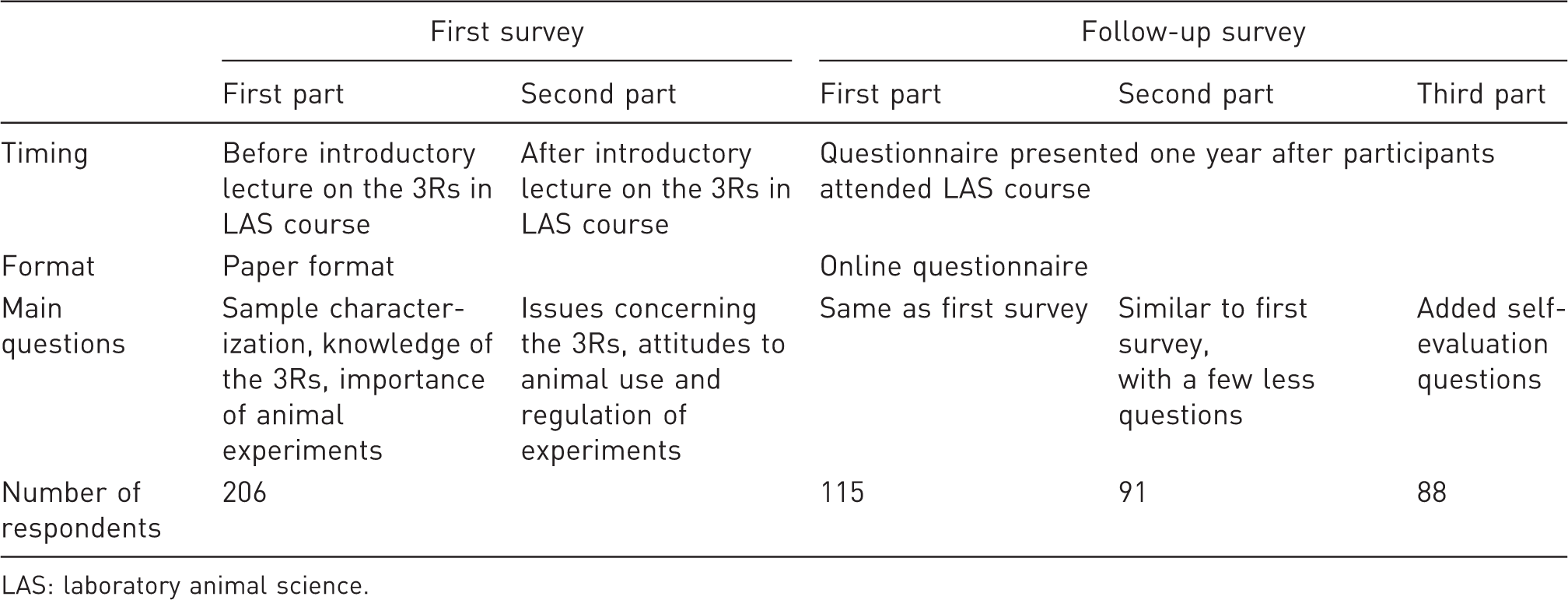
LAS: laboratory animal science.
As some of the respondents did not complete the questionnaire, the number of answers for each question is provided. For questions in the follow-up questionnaire that were only presented in the 2009 and 2010 questionnaires, any comparison between course and follow-up surveys includes only data from those years. As responses were anonymous, it was not possible to link the response to the course and the follow-up questionnaire of individual researchers. For the follow-up study, slight modifications were introduced to the second part; for aspects affected by such changes only responses from 2009 and 2010 were included and this is clearly reported in the results (questionnaire provided as supplemental material, see http://lan.sagepub.com/content/48/1/50/suppl/DC1).
Chi-square tests were applied to determine the statistical significance of inter-group differences. The Mantel–Haenszel linear-by-linear association test was used to assess the linear relationship between ordinal variables. The Social Statistics pack for Social Sciences (SPPS®) software (Chicago, IL, USA) was used for data analysis. Differences at P < 0.05 were considered to be significant.
Results
Sample characterization
In every LAS course, female researchers were in the majority (68% overall, ranging from 55% in Coimbra, 2009 to 86% in Braga, 2008). Respondents varied in age between 22 and 60 years, with a median of 31.5 years (Figure 1a); there was a significant (P < 0.001) difference in age distribution between different courses.
Age distribution of course participants (a) and experience with laboratory animals (b) for participants at the beginning of laboratory animal science (LAS) courses and in follow-up tests.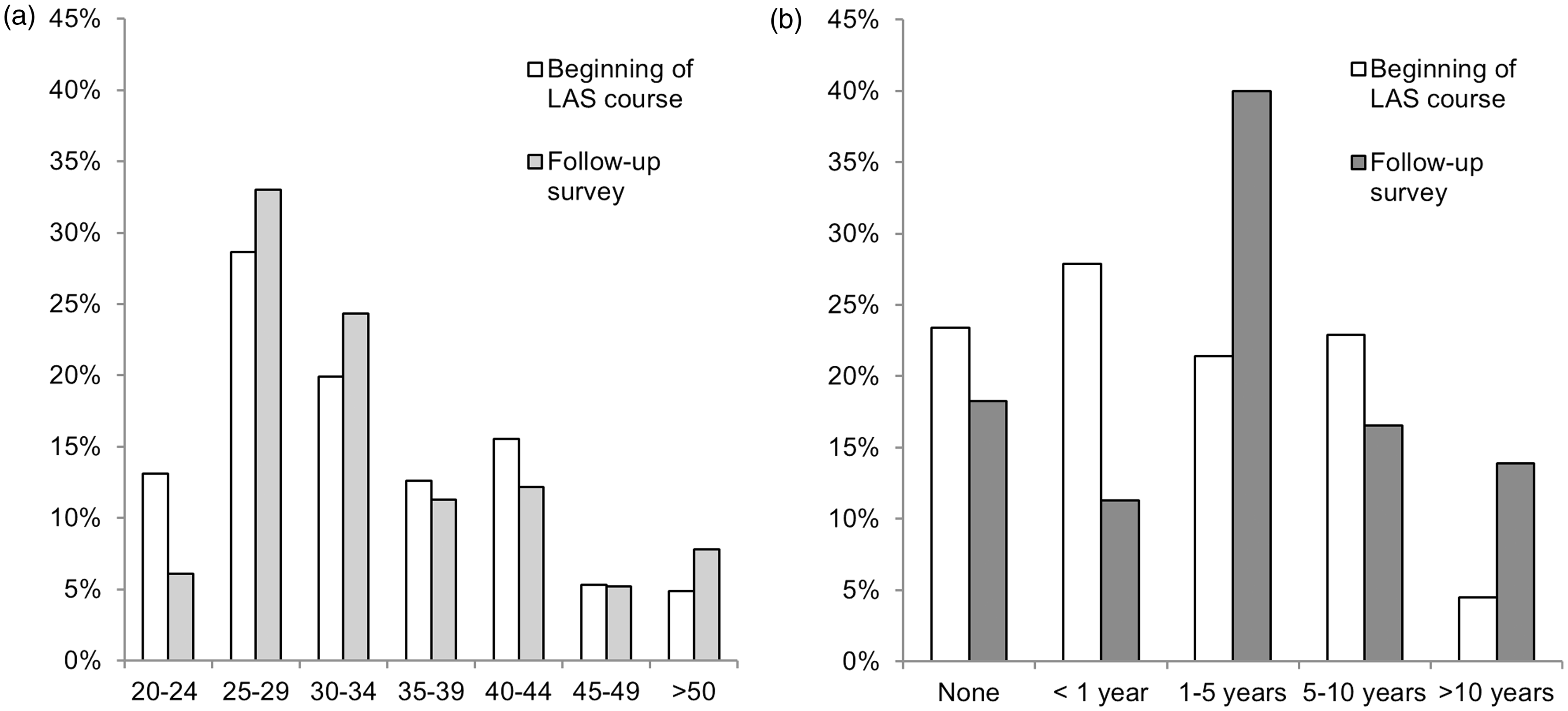
Before attending the course, most participants (51%) had no or little experience (i.e. less than one year) with laboratory animals, as shown in Figure 1b. However, experience varied significantly between different courses: for instance, in the 2008 Coimbra course, 89% of participants had more than 10 years’ experience in working with laboratory animals. The age and gender distributions of respondents were similar for the first questionnaire and follow-up (one year later), whereas as expected the latter had significantly more experience with laboratory animals (P < 0.001).
Respondents were asked whether they supported any animal rights or animal protection associations. Around 42% stated they did not support any such associations. Only a small number were fee-paying supporters (6%) and only one participant worked as an active member in any such associations. However, 40% indicated that they sympathized with such causes.
Views on the need for animal experiments
When asked to assess how their work would be affected if they could not conduct animal experiments, on a scale of 1 (not at all affected) to 7 (affected in all aspects), most participants gave a score of 6 or higher (median score = 6, mode = 7; standard deviation [SD] = 1.46). When asked how they would classify the present role of animal experiments in their field of research, 46% chose the option ‘Invaluable; without it, there would be no relevant scientific advances in the field’, 42% considered it to be ‘Very important, without it scientific advancement would be compromised’, and only 12% believed it to be ‘Important for answering some questions, but significant advances could be achieved by non-animal approaches’. None opted for ‘Dispensable, most relevant issues may be addressed by resorting to alternative methods’. The higher the score (1 to 7) students gave to the importance of animal experiments in their own work the more important respondents thought animal use to be in their own field (chi-square P < 0.001; linear-by-linear trend P < 0.001). The proportion of respondents stating that animal research was invaluable for every relevant scientific advance in their field decreased (P < 0.05) one year after the course.
When asked to predict the relevance of animal experiments over the next 50 years, most respondents (68% before the LAS course, 71% in follow-up) considered that some experimental steps could eventually be replaced during this time span. However, some (27% before, 20% after) did not expect any differences to occur even on such a long-term perspective. Only a small percentage of respondents (4% before, 6% after) expected most current experiments to be replaced by alternatives, with even fewer (1% before, 3% after) believing that alternatives would be found for all procedures that currently need the use of animals within the next 50 years.
The level of replacement expected over 50 years was lower among those attributing greater importance to animal experiments in their own work (Pearson chi-square P < 0.05, linear-by-linear association P < 0.01) or in their field of research (Pearson chi-square P < 0.001, linear-by-linear association P < 0.001). The distribution of answers to this question was very consistent throughout the years, with no significant variations across different courses or between LAS course and follow-up surveys.
Regarding the need to use animals in teaching (n = 171; question presented only in LAS course questionnaires), only a minority considered it necessary to include the dissection of live animals in high schools (9%) as well as in the training of high school biology teachers (16%), whereas the majority approved of it at university level studies in biology (54%), medicine (69%) and veterinary medicine (86%).
Awareness of the 3Rs
In response to the question ‘Do you know the 3Rs of animal research?’, 58% of respondents admitted to be completely unaware of the 3Rs, 21% claimed to know but failed to name the 3Rs correctly, and 20% properly named these principles. The level of awareness varied significantly (P < 0.001) between courses, as well as through the years and different venues. Knowledge of the 3Rs was neither influenced by age, gender nor by number of years of experience with laboratory animals. One year after the course, the percentage of respondents from all courses naming the 3Rs correctly rose (P < 0.001) to 96% (Figure 2).
Level of awareness of the 3Rs for each of the eight courses surveyed (a) and comparison with (clustered) results of the follow-up survey (b). In graph (a) each letter at the x-axis indicates a single course.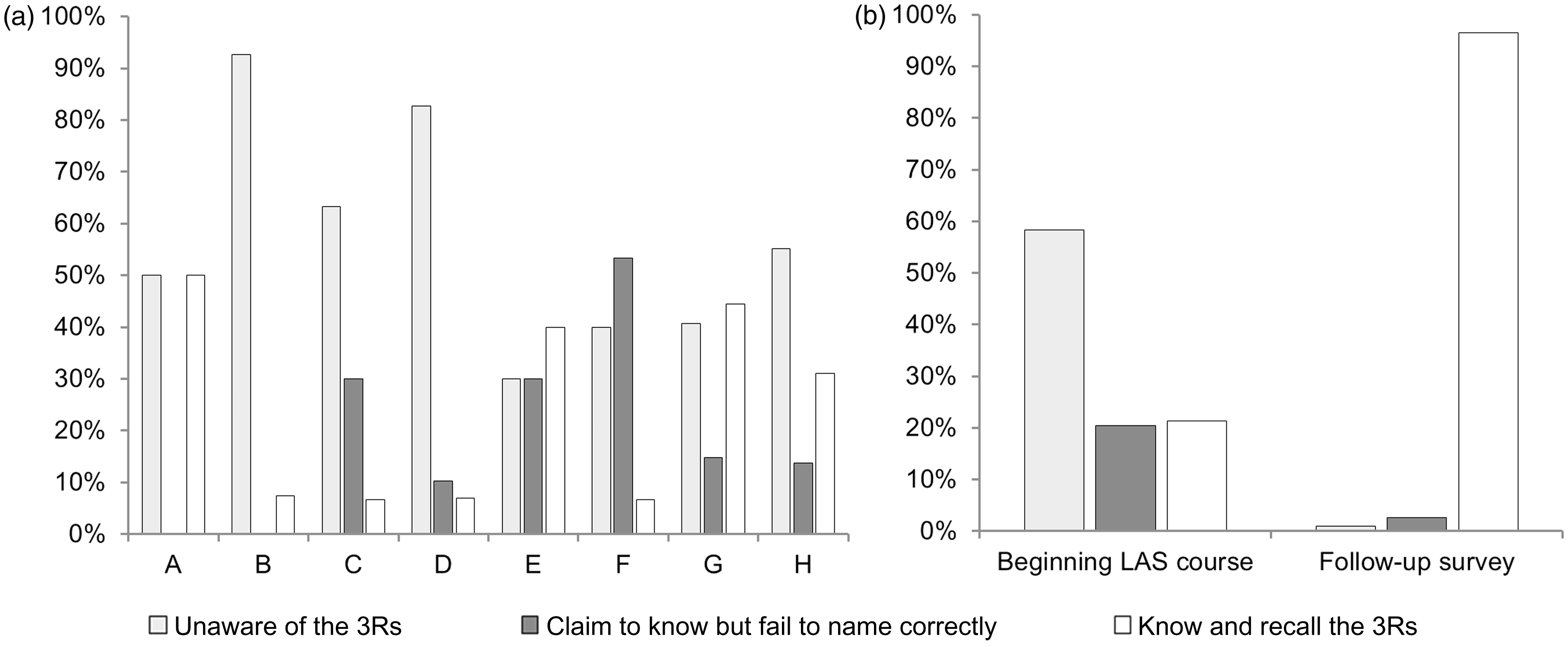
Researchers favour refinement over reduction
Case study 1.
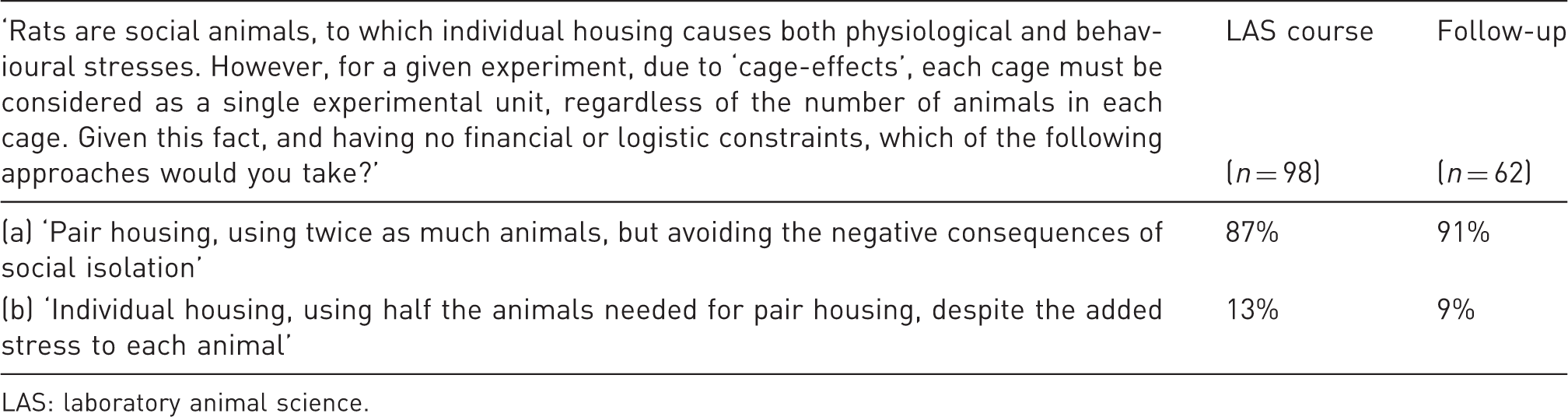
LAS: laboratory animal science.
Case study 2.
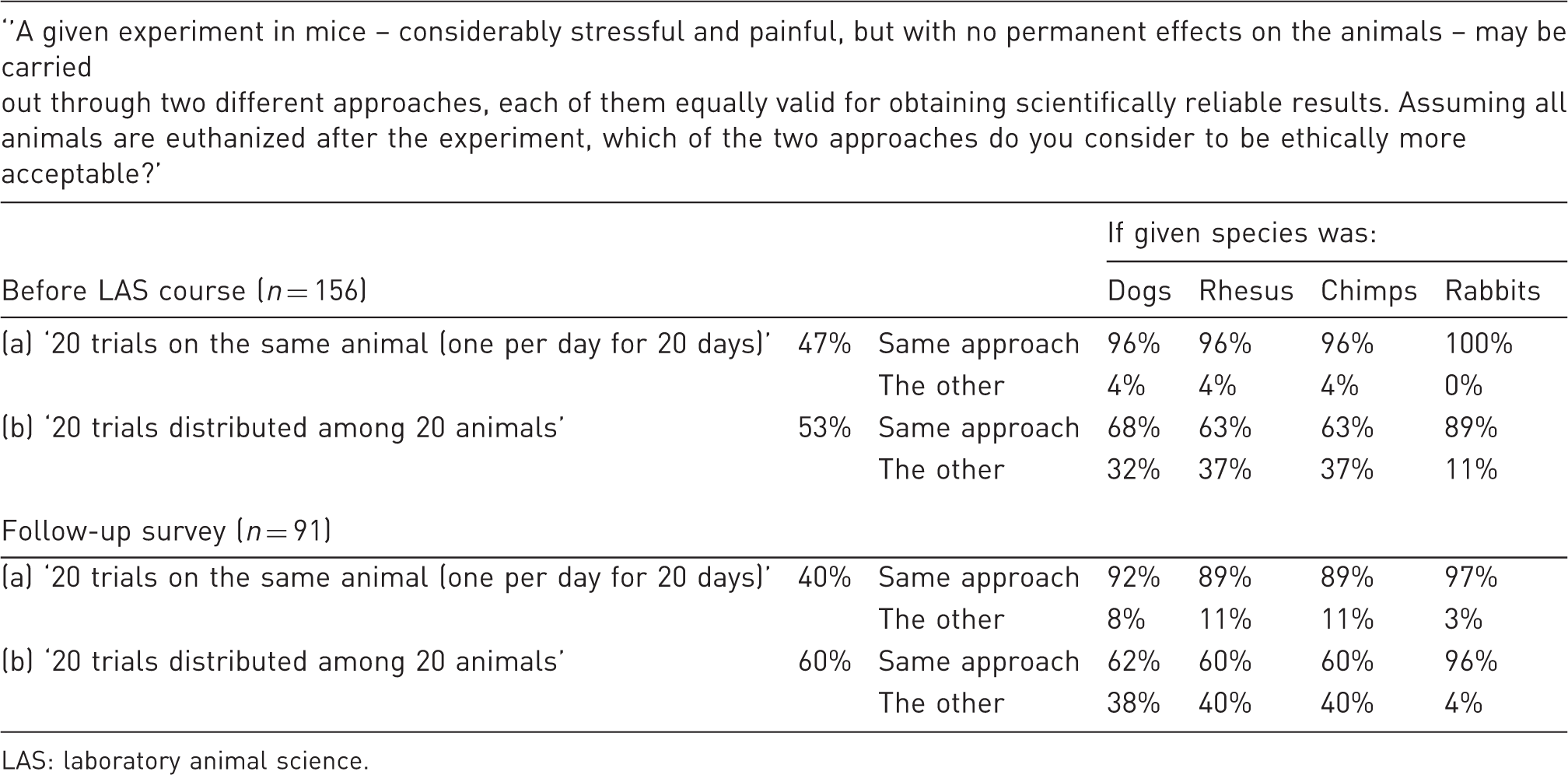
LAS: laboratory animal science.
For both case studies, the majority of respondents opted for the approach that implied less distress to individual animals, even when that would require using twice or 20 times as many animals – a situation that was similar in all courses, and was consistent between the LAS course and follow-up surveys. For case study 2, researchers were more divided. Also, when enquired about how they would act if faced with the same situation but involving other species (dogs, rhesus monkeys, chimpanzees or rabbits), the number of respondents admitting to changing their approach was significantly higher (P < 0.001) among those who initially favoured using 20 mice, while those favouring reduction (i.e. 20 procedures to one mouse) were more likely to maintain their standing.
Views on different laboratory animal species
To assess researchers’ attitudes to the use of non-human primates, we presented a case concerning a severe model of a neurodegenerative disease (Huntington’s) in rhesus monkeys (available only to the 2009 and 2010 courses), and asked respondents to choose which sentences best represented their own personal views on the issue (see Table 4). These included the phylogenetic proximity as an argument either for or against using primates, the suitability of primates for assessing cognitive and psychiatric effects of the disease, potential benefit in terms of reduction of animal numbers by using primates instead of rodents, the eventually greater impact of disease in primates given their more complex faculties and needs, the ethical implications of using primate models of severe diseases, and the moral standing of primates compared with rodents. Answers in the follow-up surveys were generally consistent with those given at the beginning of the course; the only significant difference being that more follow-up survey respondents agreed with the statement that an animal phylogenetically closer (to humans) is less acceptable for research (P = 0.001). Although none of the proposed views was consensual, only a small number of course participants considered the use of primate models of severe disease to be ethically unacceptable. This did not mean, however, that phylogenetic proximity was seen as irrelevant, since very few considered that the closer the species is to humans the more acceptable it is to use them as models in research. Also, when asked to rank seven different species – dog, rat, Drosophila, pig, zebrafish, chimpanzee and rhesus macaque – in order of acceptability of their use in research (from 1 – ‘most acceptable’ to 7 – ‘least acceptable’; 2009 and 2010 LAS course editions only, n = 114; 87 answered the question, and 27 stated they were unable to do so), primates were seen as the ‘least acceptable’ (Figure 3).
Species ranking according to acceptability of their use in research. Chimpanzees were seen as the least acceptable (rank 7) or second least acceptable (rank 6) by, respectively, 56% and 36%; rhesus macaques by, respectively, 28% and 56% and dogs by, respectively, 14% and 3% of respondents. Case study 3 (2009 and 2010 participants only). LAS: laboratory animal science.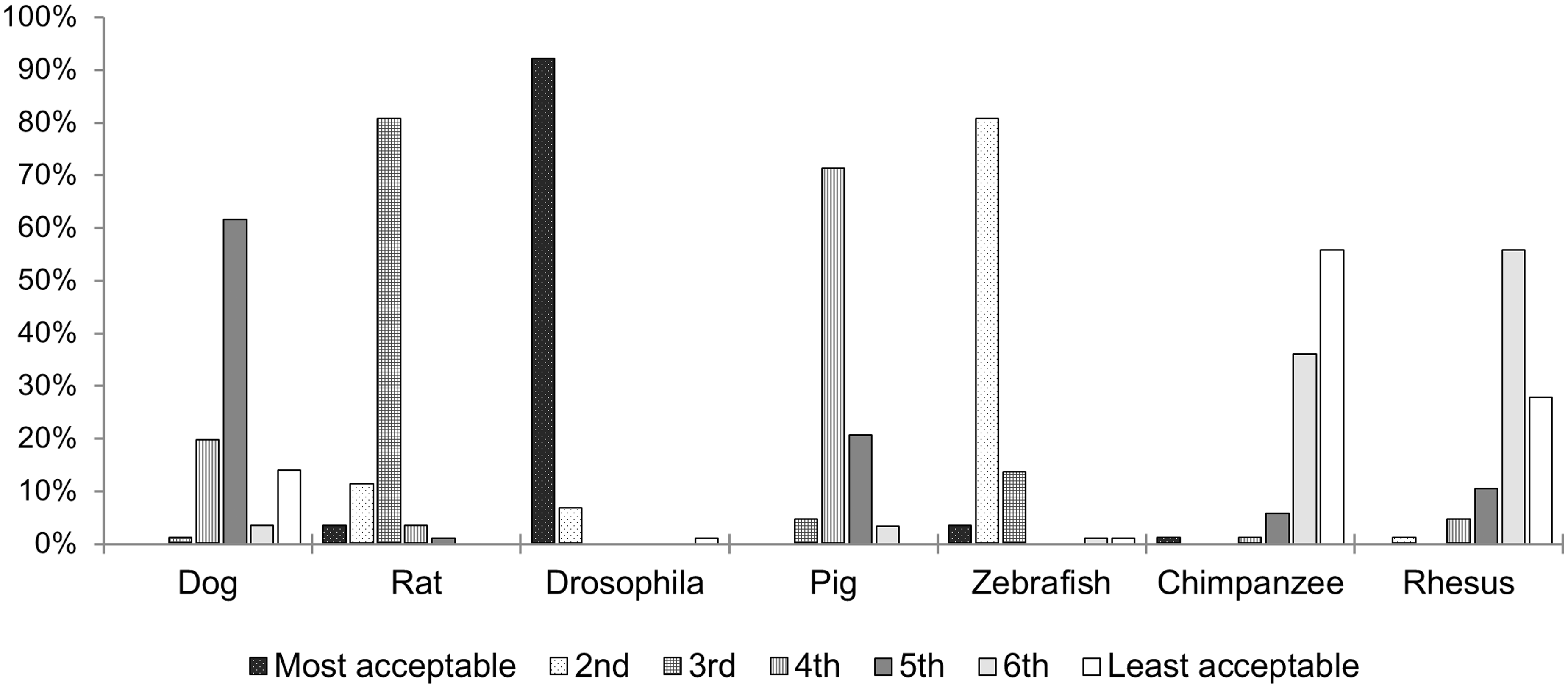
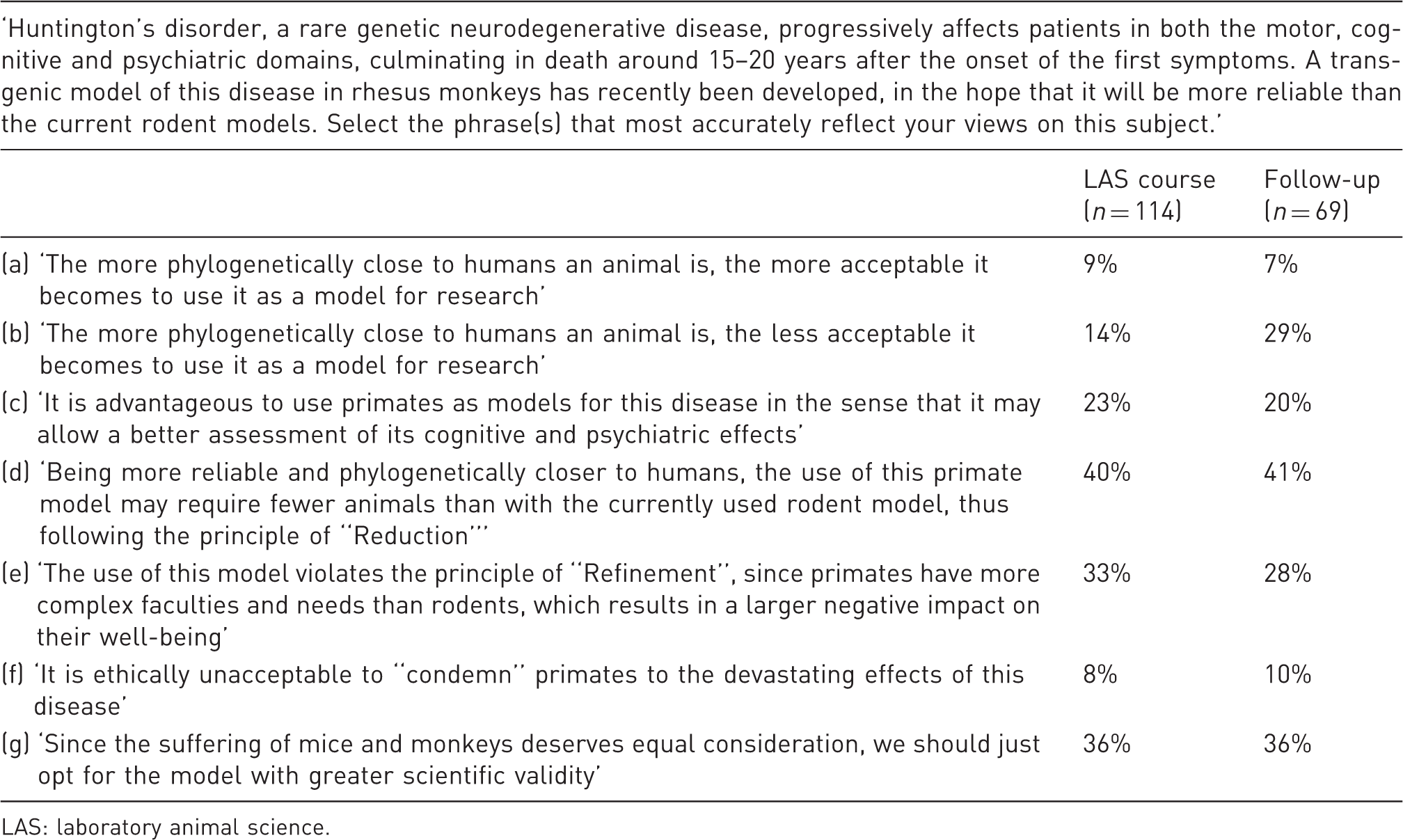
When questioned on which criteria were used for assigning species to a hierarchy, 71% took into consideration the ‘phylogenetic or behavioural proximity to human beings’, 68% their ‘estimate of the degree of self-awareness’, 65% the ‘affective relation with humans’, 53% the ‘estimated degree of intelligence’, 49% the ‘estimated degree of sensitivity to pain or discomfort’, and 39% ‘differences in welfare demands, due to the level of cognitive and behavioural complexity’. Although the option was available, none of the respondents suggested other reasons than those already in the questionnaire. When asked which animals previously used in experiments could be transferred to ‘sanctuaries’ or given for adoption when no longer needed and provided that rehabilitation was possible (2009 and 2010 questionnaires, n = 114 at the beginning of LAS courses, n = 68 in the follow-up), primates were given the highest level of consideration, with the great majority of respondents stating that this could be applied to great apes (92% in LAS course, 97% in follow-up) and rhesus (or other) monkeys (89% in LAS course, 94% in follow-up). The large majority considered dogs and cats suitable for rehabilitation (89% and 87%, respectively), much more so than rats (35%) and guinea pigs (48%),with results being very similar between the first and the follow-up surveys.
Ethical approval of animal experiments
When asked which entities should solve or help solve ethical questions during the planning of a research project (n = 175 LAS course; n = 91 follow-up), most respondents selected (71% in LAS course, 81% in follow-up) an institutional ethics committee as the most suitable choice. The number of respondents who would also like to have support from a laboratory animal scientist or veterinarian at their institution dropped from 70% in the LAS course to 59% in the follow-up (P < 0.001). Only 13% of LAS course participants (11% in the follow-up) believed that a semi-informal multidisciplinary group assembled ad hoc was a viable option. The Direcção Geral de Veterinária (the national competent authority for veterinary issues and responsible for legal authorization of animal experiments) was considered as a good option by 37% of LAS course participants (40% subsequently). Only 2% of LAS course participants (similar in the follow-up survey), believed that no entity should be involved on this issue, which should be left to each researcher’s conscience and judgement.
With regard to opinions on composition of ethics committees for evaluating animal experiments (n = 171, LAS course survey only), the choice for veterinarians or laboratory animal scientists was the closest to consensus, being selected by 98% of respondents. Professors or researchers in the institution were chosen by 86%, and animal facility personnel by 67%. Other potential members gathered only minority support, with members of the board of the institution being selected by 31%, representatives of civic organizations by 19%, lawyers by 14%, representatives of the political power by 9%, lay/general public by 7% and philosophers by only 5%. Less than 1% proposed integration into ethics committees of other interested parties.
Opinions about whether decisions taken by ethics committee should be binding divided the respondents, with about half (58% in LAS course, 51% in follow-up) stating that they should, while the remaining would prefer ethical committees to issue non-mandatory appraisals of research projects.
Self-evaluation of the impact of LAS courses
When course participants were asked in the follow-up survey (n = 91) to classify the impact of LAS courses on their knowledge, practically every respondent agreed that they knew more about laboratory animal welfare on account of the LAS course, and considered animal ethics (which is addressed in the course) to be a relevant topic. The great majority also stated that the course had made them more aware of the issue of animal welfare. When prompted to classify the statement ‘The course did not change my attitude to laboratory animal welfare’, most respondents were in disagreement with it (Figure 4). These positive views on the relevance of the course are in accordance with previous data from graduate and undergraduate participants in LAS courses in Sweden.
11
Questions regarding researchers’ self-evaluation on the influence of laboratory animal science (LAS) training on their awareness of animal welfare and the importance of ethics in the course syllabus.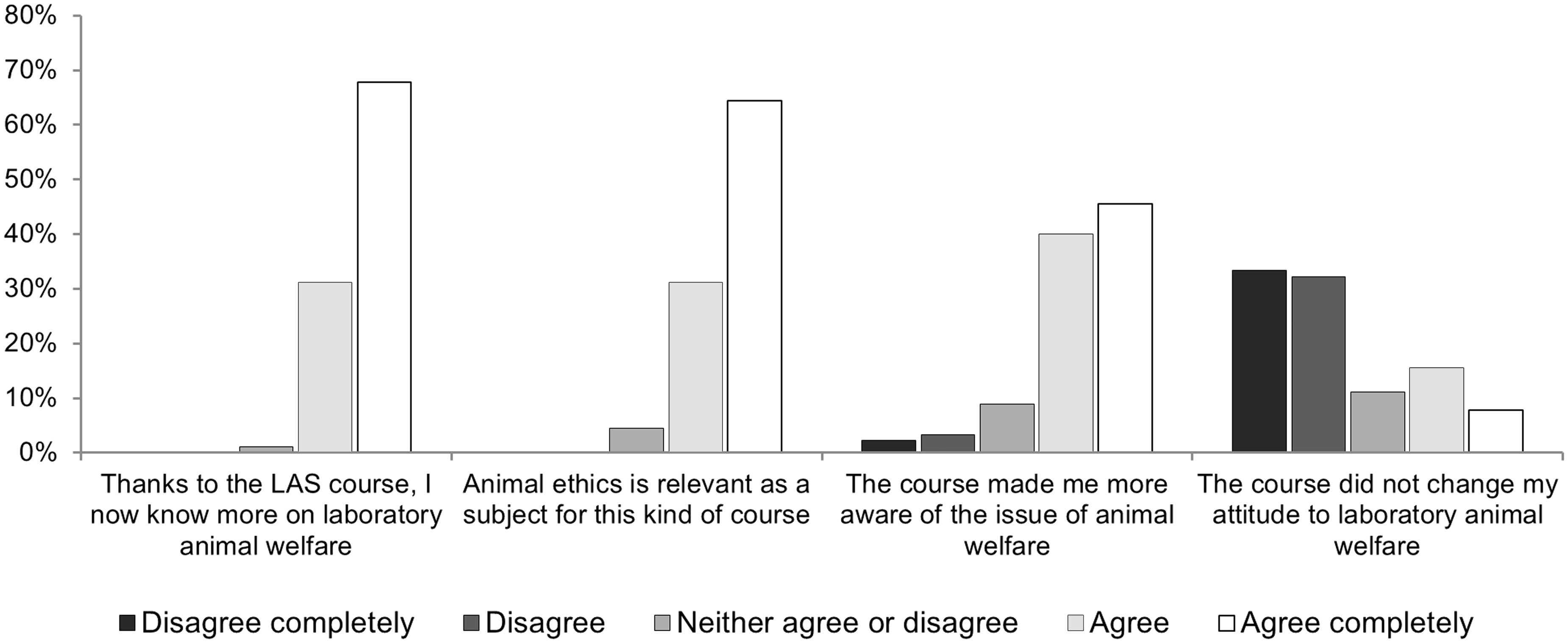
When asked if the LAS course had had any influence on the integration of the 3Rs into their own experiments 84% responded affirmatively. Reasons for this included becoming more receptive to the issue (36%), already having that concern but lacking the necessary knowledge prior to the course (28%) or being able to improve even further their previous efforts in implementing the 3Rs (20%). Others (8%) stated they already had that level of concern before attending the course, 6% did not apply the 3Rs on account of not performing any work with animals and one respondent was unable to for scientific reasons, which s/he prioritized. None chose the options ‘I did not learn anything I could actually apply on my own research’, ‘I did not do it for financial, logistic or professional constraints’ or ‘I believe to have no reason why I should apply the 3Rs’.
Discussion
The main objective of category C courses is to train researchers to be skilled and competent in conducting animal research, but also in promoting the responsible use of animals. 6 The acquisition of specific attitudes is not defined in the FELASA recommendations, but these list topics to be covered which can be expected to affect what researchers consider as appropriate practice in research with animals, including the 3Rs, possibilities and limitations of alternatives in education and research, attitudes towards animals, human–animal relationships, the intrinsic and instrumental value of animals, arguments for and against the use of animals for scientific purposes, and discussion of the ethical aspects of animal use and ethics committees. 6 To our knowledge, this study represents the first attempt to assess the impact of LAS training on researchers’ attitudes to the 3Rs and the integration of these principles into their work.
At the start of the course, a surprisingly large number of researchers were unaware of the 3Rs principle, even those who had worked with animal models for over 10 years. However, LAS courses appear to be effective in overturning this situation, with almost every participant being able to name the 3Rs one year after the course; this matched the level of awareness shown in a survey of licence holders in the UK. 12 Furthermore, results from researchers’ self-evaluation show that they perceive the course to have had a relevant positive impact on both their knowledge and awareness of animal welfare issues, as well as in the implementation of the 3Rs in their work with animals.
This initial lack of knowledge of the 3Rs principle may be a reflection of the specific context in which these courses were held; in Portugal FELASA category C level courses have only been organized on a regular basis since 2005. Although 3Rs knowledge did not vary with the subjects’ age or years of experience with animals, it did vary significantly between different institutions where the LAS courses were held, suggesting that institutional policies and ‘lab culture’ regarding the ethical treatment of animals may play a relevant role in researchers’ awareness of animal welfare issues.
The high importance attributed by course participants to animal use in their work or within their field of research is in accordance with data from surveys carried out in other countries.12,13 Furthermore, a relatively high percentage of respondents did not expect any changes in animal use in their field of research within the upcoming 50 years, with views on this topic being affected by participants’ perceptions on the relevance of animal experiments to their own work or field of research. Nevertheless, the proportion of participants believing that relevant advances in their field could not be achieved without the use of animals decreased in the follow-up survey, suggesting that at least some researchers became more able to recognize the current importance of non-animal methods in their field. Most researchers surveyed considered that even in the long term, even partial replacement of animal experiments is unachievable, in contradiction with the European Commission’s explicitly stated final goal of ‘full replacement of procedures’ 4 and in sharp contrast not only with the belief held by many animal rights organizations that full replacement could readily be achieved or is imminent, but also with the more modest projections by the Humane Society of the United States, that have set their goal of scientifically achievable replacement of all animal experiments by 2050.14,15
In some cases, the use of refinement conflicts with the goal of reduction. 8 Most respondents considered that refinement should take precedence in cases in which reduction would lead to animals paying a higher cost in terms of their welfare (the ‘fairness to the individual’ argument 16 ). However, when the available options were using one or 20 animals, preference shifted towards the use of only one animal in the case of primates or dogs (but not rabbits, for which most respondents applied the same approach as for rats). Thus, the principle that each sentient life is valuable in itself and should therefore be preserved – the ‘badness of killing’ argument 17 – was considered more relevant for some species than others. This difference in approach for primates and dogs reflects current practice in research with these species, which are usually used in fewer numbers and kept for longer periods than the more ‘disposable’ rodents and rabbits. Although other factors may influence the reduction preference for these species – like the financial cost of breeding and housing them – the different moral standing attributed to these animals certainly plays an important role, which may also explain the financial and logistical efforts often made to rehabilitate laboratory dogs for adoption and to rehome primates in sanctuaries to live the remaining of their lives after their use in research is over.
Nevertheless, for a considerable proportion of respondents (on average just under half), subjecting one animal to 20 procedures was preferred to subjecting 20 animals to one procedure. We think that this reflects an underlying difference in how individuals position themselves in a choice between ‘life in itself’ or ‘quality-of-life’, which may also affect people’s positions on other controversial bioethical issues in society. Of particular relevance to the laboratory animal context, this discrepancy means that there is no ‘right’ or even consensual view on how to resolve dilemmas among the 3Rs. 18
While primates and companion animals were seen as less ethically acceptable for use in research than rodents, only a small percentage of researchers ruled out the use of primate models of severe diseases on ethical grounds, in accordance with the known position of fellow European colleagues (as made evident, for example, by the Basel Declaration 19 ) rather than by the opinion of a large part of the general public, who typically condemn the use of primates20–22 or companion animals in research while accepting the use of rodents. 23 The acceptability of the use of each species in research accords with the idea of a sociozoologic scale, 24 i.e. a tacitly accepted hierarchy that ranks the perceived moral significance of different animal species and places invertebrates and fish at the bottom, followed by rodents (traditionally seen as pests, and thus ranking low), with farm animals somewhere in between, and primates and companion animals at the top, just below humans. 25 The rank in the sociozoologic scale tends to rely more on the proximity of each species – in the strict sense of ‘co-existence’ with humans, but also behavioural and phylogenetic proximity – rather than on attributes like sentience. It is thus not surprising that, despite its subjectivity (or perhaps because of it), the affective relation with humans was seen as a more relevant criterion for the ethical evaluation of species choice than criteria based on the estimated level of cognition or sentience. Among our respondents, the preferred criterion for ethical consideration was the phylogenetic or behavioural proximity to human beings, further suggesting an anthropocentric perspective.
The appraisal of research projects by an institutional ethics committee, which is not mandatory in Portugal at the time of the surveys, gathered much more support than the actual organization responsible for the approval of animal experiments. However, the preference for committee members to be drawn from colleagues at the same institution rather than lawyers, lay people, philosophers, or representatives of organizations – suggests that most researchers were reluctant to accept non-scientists or people outside the institution (or both) directly intervening in their work. The finding that almost half the researchers surveyed prefer decisions from committees to be non-mandatory also indicates some unwillingness to allowing external entities to issue ethical appraisals of a binding nature.
Conclusion
The new 2010/63/EU Directive emphasizes the importance of education, training and competence for professionals working with laboratory animals. From our results, it is clear that mandatory training in LAS is a valuable means of educating and raising awareness about animal welfare, not only because it makes participants more knowledgeable about the 3Rs but also because it increases their (self-reported) actual implementation of this principle. The legal requirement for training those responsible for designing and performing animal experiments may thus contribute to improving and harmonizing practice, a goal particularly important in the context of the EU, where ongoing work by the European Commission and Member States is taking place to set minimum requirements for professional competence in dealing with laboratory animals and criteria to assess such competence.
Although it is important to increase the implementation of reduction and refinement measures, these courses appear to have little influence on researchers’ acceptance of replacement alternatives to animal use. This is maybe not surprising, given that the course syllabus focuses on refinement and reduction and places relatively little emphasis on replacement. Hence, despite the full replacement of animal experiments being explicitly stated as a long-term objective in the new directive, 4 our results however suggest that initiating the paradigm shift needed to achieve at least some level of replacement of animal experiments in basic and applied science will require more specific measures.
Footnotes
Acknowledgments
The authors wish to thank João Arriscado Nunes for advice on methodology, Ricardo Castro for setting-up the online survey, Magda Castelhano Carlos for distributing questionnaires, Bryan Howard for comments on an earlier version of this manuscript and all the survey respondents.
Funding
Nuno Franco was in receipt of a PhD grant from the Portuguese Foundation for Science and Technology (SFRH/BD/38337/2007).
References
Supplementary Material
Please find the following supplemental material available below.
For Open Access articles published under a Creative Commons License, all supplemental material carries the same license as the article it is associated with.
For non-Open Access articles published, all supplemental material carries a non-exclusive license, and permission requests for re-use of supplemental material or any part of supplemental material shall be sent directly to the copyright owner as specified in the copyright notice associated with the article.
