




Abstract
With heightened equity pursuits in 21st century schools and the key role of assessment in teachers’ concerns with educational equity, scholars have recently attempted to empirically investigate teachers’ conceptions of fairness in classroom assessment. This study contributes to this growing literature and draws on interview data from 27 experienced high school teachers to further appreciate the factors that propel teachers’ fairness conceptions. The results indicate that the teachers’ conceptions of fairness in classroom assessment were influenced by three themes: (a) individual mechanisms, (b) social mechanisms, and (c) dialectical relationships between individual and social mechanisms. These themes underscored how teachers’ individual philosophies and experiences interacted with their encounters with social conditions of society, schools, and classrooms to influence their conceptions and articulated practices of fairness in classroom assessments. The results contribute to provoke conversations around assessment fairness education during pre- and in-service programs.
Introduction
Historically, fairness has been a central issue in assessment from teachers’ and students’ perspectives. However, the scholarly literature on fairness in educational assessment has begun around 1960s in North America to respond to the social movements of the era (Cole & Zieky, 2001; Zwick, 2019). Since then, fairness has been recognized as a foundation for gauging the quality of tests and assessments in Standards for Educational and Psychological Testing (American Educational Research Association [AERA] et al., 2014). Recently and as a response to the 21st century equity-based social movements, educational researchers have investigated various theoretical conceptualizations of fairness at the large-scale testing and school-level classroom assessment (Camilli, 2013; Dorans & Cook, 2016; Herman & Cook, 2019; Karami, 2018; Nisbet & Shaw, 2019). The large bulk of these investigations have focused on advancing fairness theory and application in large-scale tests (e.g., through differential item functioning); however, little research has aimed to develop a theory of fairness based on conceptions of fairness as understood by teachers and students in the classroom assessment contexts. The present study aims to draw on in-depth interview data from experienced high-school teachers to identify factors that contribute to shaping teachers’ articulated conceptions and practices of fairness in classroom assessment.
Growing literature is building on empirical data to generate theoretical conceptualizations of fairness derived from teachers’ conceptions of fairness in classroom assessment (Murillo & Hidalgo, 2020; Rasooli et al., 2018, 2019a, 2019b; Tierney, 2014). Teachers’ conceptions refer to “mental structures, encompassing both beliefs and any aspect of the teachers’ knowledge that bears on their experience, such as meanings, concepts, propositions, rules, mental images, and the like” (Thompson, 1992, p. 141). Based on this definition, the literature aims to identify factors (e.g., equity and equality) that teachers deem significant in their conceptions of fair classroom assessments. Given that teachers create the assessment culture within a classroom, their conceptions of fair and equitable assessments will have an impact on the learning and psychosocial outcomes for students (Elwood & Murphy, 2015; Moss et al., 2005). The current assessment standards (AERA et al., 2014) put fairness principles such as (a) fairness in treatment during assessment, (b) fairness as reducing measurement bias, (c) fairness as access to the construct being measured, and (d) fairness as an opportunity to learn that can be implemented by teachers in the classroom assessment context (Herman & Cook, 2019). However, the translation of these principles into classroom context from top-down may not resonate with teachers’ conceptions and daily assessment practices, precluding meaningful change in the classrooms. Another path would be to begin appreciating the complexity of underpinning driving factors shaping teachers’ current conceptions of fair assessments and then visualizing how current fairness principles can be positioned meaningfully and logically in tune with teachers’ current conceptions. The sole introduction of current principles in Standards in teacher preparations in assessment fairness would lack insights into the potential (choice for) failure on some teachers’ side to implement such principles in the classroom. Teachers’ potential dilemmas with Standard’s principles of fairness in their classroom practices cannot also be fully elucidated without clearly delineating various factors that come into play in teachers’ general and contextual conceptions of assessment fairness. Therefore, additional research in follow-up with prior empirical research is fruitful to explore the underpinning factors that drive teachers’ conceptions of fairness in assessment as a basis to promote fairer practices that recognize and build on teachers’ current conceptions and practices.
While a few assessment studies have used fairness theories to interpret their findings (Rasooli et al., 2019a), coupled with the empirical research showing the cross-cultural variations in conceptions of fairness (Tata, 2005), this study was designed to leverage social psychology theory as a basis to empirically investigate experienced high school teachers’ conceptions of fairness in classroom assessment. Specifically, this study has interviewed 27 experienced high school teachers from across seven provinces in Iran to explore their conceptions of fairness in classroom assessment. To that end, this study is guided by the following overarching question and two related subquestions: what are teachers’ articulated conceptions and practices of fairness in classroom assessment? What are psychological factors driving Iranian teachers’ conceptions of fairness in classroom assessment? What are sociological factors influencing Iranian teachers’ conceptions of fairness in classroom assessment? By answering these questions, this study aims to further contribute to developing fairness theory and practice in classroom assessment and offer avenues for additional empirical research to contribute to more fair and equitable experiences in classroom contexts.
Literature Review and Theoretical Perspective
Empirical Studies on Fairness in Classroom Assessment
Teachers’ conceptions of fairness in classroom assessment have not been systematically investigated until recently. Given the prevalence of fairness underpinning assessment decisions, fairness has been discussed as a component of various domains in assessment including feedback (Lizzio & Wilson, 2008; Van der Kleij & Lipnevich, 2021), grading (Brookhart et al., 2016), groupwork assessment (Forsell et al., 2020), accommodated assessment practices (Rasooli et al., 2021a; Baker & Scanlon, 2016), peer assessment (Panadero, 2016), and general assessment approaches and conceptions (Brown, 2006; DeLuca et al., 2016).
Using multiple methods to explore students’ perceptions of effective written feedback, Lizzio and Wilson (2008) identified fairness as a key component, with students interpreting fairness as provision of clear, reasonable, and consistent information. Brookhart et al. (2016) showed that previous grading research has interpreted fairness as ensuring equitable, consistent, accurate, and transparent outcomes and procedures. Forsell et al. (2020) concluded giving voice and control to students and grading based on individual contribution was considered as key to the fairness of groupwork assessments. Baker and Scanlon (2016) showed that students with high-incidence disability shared concerns about the fairness of accommodation practices in response to receiving accommodations in front of their peers. Panadero (2016) showed that several studies have investigated fairness in peer assessment with studies finding contradictory evidence in terms of students identifying peer assessment as fair or unfair. Finally, focusing on teachers’ conceptions of assessment using a survey, Brown (2006) has identified “assessment as irrelevant” including unfairness items as a factor, showing fairness as a common component of teachers’ interpretations of assessment. While this scattered literature corroborates the influence of fairness in teachers’ and students’ interpretations of assessment, these studies indicate that more research is needed to explicitly leverage theories of fairness in designing, analyzing, and interpreting assessment processes and outcomes. This need is even more pronounced in the backdrop of contemporary literature on teacher assessment literacy that emphasizes teachers’ capacity to leverage fair and valid approaches to interpret and use assessment within the socio-cultural context of classrooms, policy, and curriculum (Willis et al., 2013; Xu & Brown, 2016). Despite the noted significance of fairness in teacher assessment literacy models, little guidance exists on its meaning. Accordingly, more explicit research on teachers’ and students’ conceptions of fairness can contribute to building a fairness theory for assessment practices.
Another line of burgeoning research has directly leveraged fairness theory to interpret teachers’ assessment conceptions and practices (Murillo & Hidalgo, 2020; Tierney, 2014). This research directly responds to the recommendations of Standards for Educational and Psychological Testing (AERA et al., 2014) and Classroom Assessment Standards (Klinger et al., 2015) that encourage using fairness as a fundamental quality to guide the interpretation and use of assessment practices. Using Aristotle’s phronesis, Tierney (2014) conducted a qualitative case study of six English language arts teachers in Canada and found that teachers interpret assessment in relation to constructive classroom environment, equity and equality, reflective thinking, and transparent communication. Using equality and equity perspectives, Murillo and Hidalgo (2020) focused on interpreting 30 primary and secondary school teachers’ conceptions of fairness in classroom assessment in Spain. Sampling teachers from schools with high and low socio-economic demography, the authors found that primary and secondary teachers with equality orientation interpreted fairness in terms of transparency in the assessment process and exam content as well as aligning teacher assessments with standardized tests to support students in their future pathways. While equality orientation was favored more frequently in schools with high socio-economic status, teachers in schools with low socio-economic status were in favor of equity in the sense that assessments needed to be individualized, continuous, and responsive to student needs, circumstances, effort, and improvement. In this equity view, teachers also advocated for fair (ungraded) assessment to promote responsible and motivated learners in the classroom. Overall, empirical research has demonstrated the pervasiveness of fairness as an underpinning quality in various domains of assessment, with recent research showing factors (e.g., equality, equity, socio-economic background of students) constituting teachers’ conceptions of fair assessments.
Social Psychology of Fairness in Assessment
Considering that fairness studies in assessment have begun to explore the adequacy and usefulness of a few theories to interpret teachers’ conceptions of assessment, this study aims to add to the conceptual repertoire of the existing studies by interpreting teachers’ conceptions of fairness in classroom assessment using social psychology theory. Prior studies in classroom assessment have begun to use social psychology theory to conceptualize and empirically investigate students’ perceptions of fairness (Grace, 2017; Rasooli et al., 2019a, 2019b). This research has indicated that students’ perceptions of fairness in assessment are cyclically interconnected with classroom teaching, interactions, and learning spaces and are perceived in a multidimensional framework (i.e., distributive, procedural, and interactional justice, see the definitions in the next paragraph). Recent research has argued for expanding this conceptualization of social psychology theory in assessment to examine psychological and social mechanisms that influence individuals’ conceptions of fairness (Gollwitzer & van Prooijen, 2016; Liebig & Sauer, 2016; Rasooli, 2021b).
Psychological mechanisms include the distributive, procedural, and interactional justice principles as well as personal variables (e.g., personality) that shape individual and interpersonal perceptions of fairness (Rasooli, 2021b). Distributive justice focuses on examining the fairness of outcome distributions such as grade via equality, equity, and need principles (Adams, 1965; Deutsch, 1975). Procedural justice examines the fairness of procedures for outcome distributions using principles such as accuracy, transparency, consistency, bias suppression, correctability, voice, and reasonableness (Leventhal, 1980). Interactional justice considers the fairness of interactions (through principles such as respect, caring, and politeness) and communication of information (through principles such as adequacy, truthfulness, timeliness, and justification) (Bies & Moag, 1986). In addition to these three dimensions, personal variables such as fairness as a moral drive (i.e., an inherent need for humans to believe that they live in a fair and just world; Lerner, 1980) and teachers’ personality (Rasooli et al., 2019a) are additional factors contributing to shaping the psychological mechanisms for teachers’ and students’ conceptions of fairness in classroom assessment (Rasooli, 2021b).
Social mechanisms include the social conditions and structures prevalent within a particular social and temporal context that shape individuals’ perceived fairness (Liebig & Sauer, 2016). For example, the socio-economic structures of a school context can contribute to shaping teachers’ and students’ conceptions of fairness in the school. The psychosocial mechanisms work together to shape individuals’ perceptions of fairness. Within assessment contexts, this theory would support understanding what psychosocial mechanisms are at play in shaping fairness conceptions in assessment that subsequently influence teachers’ fairness practices and students’ psychosocial outcomes such as learning and motivation within a classroom. Specifically, this perspective dives into understanding how teachers personally conceptualize fairness in assessment and how their personal conceptions are in dialectical relationships with the social contexts they live, teach, and assess (Rasooli, 2021b).
The social psychological conceptualization of fairness also nicely aligns with the socio-cultural theory of classroom assessment, as the adopted definition of classroom assessment in this study. Socio-cultural theory of classroom assessment promotes attention to social, cultural, and economic milieu within which assessments happen (Brookhart, 2018; Elwood & Murphy, 2015). This theory encourages looking beyond students’ cognitive abilities and searches for clues about students’ and teachers’ personal histories that shape classroom assessment practices. This study uses a social psychology perspective to explore the factors that drive experienced Iranian teachers’ conceptions of fairness within the socio-cultural theory of classroom assessment.
Method
Context
This research was conducted in the Iranian high school educational context. The educational schooling system in Iran is governed by the Iranian Ministry of Education. The Ministry is responsible for preparing the curriculum and textbooks for various subjects and grade levels, designing assessment policies, and recruiting and training teachers. In high schools, students are guided into four streams, largely based on their scores in certain subjects. Based largely on cut-off scores in certain subjects in Grade 9, students can select any of the four streams including humanities, mathematics and physics, empirical sciences, and technical and vocational training for their future academic pathways. For example, 14 in math subject is cut-off score for entry into mathematics and physics stream, 14 in sciences for empirical sciences, 14 in Persian literature for humanities. Mathematics and physics, empirical sciences, and humanities are often based within one school context, while technical and vocational training students go to their associated schools. Based on this streaming, teachers are directed to teach specialized subjects in humanities stream (e.g., philosophy, sociology, advanced Persian literature), in mathematics and physics streams (e.g., with a focus on mathematics and physics), empirical sciences (e.g., with a focus on biology, geology, and chemistry) and in technical and vocational training stream that includes different majors (e.g., software engineering, agriculture, painting, music, handicrafts, architecture, physical education, and electronics). Some subjects are shared across these streams such as English Language Arts, Arabic, Persian Literature, History, Geography, and Islamic Theology. Depending on the focus of streams, these subjects are offered in basic or advanced levels.
The teacher assessment preparation in Iran is guided by educational policies (e.g., National Curriculum Document [NCD] of Islamic Republic of Iran’ Ministry of Education, 2010), assessment textbooks, peculiar approaches of teacher educators and a myriad of additional cultural and social factors. The NCD notes ten principles for sound classroom assessment practices: (1) the teacher should be able to leverage multiple methods to assess students’ learning; (2) the teacher should provide adequate evidence to accurately judge student performance in relation to educational standards; (3) given the unique learning trajectory of each student, the teacher should clarify the next steps for learning; (4) with an emphasis on student self-assessment, the teacher should guide students in learning from their mistakes to promote learning; (5) to protect student dignity and positive self-concept, the teacher should avoid using anxiety-provoking assessment methods; (6) the teacher should involve students and their parents in the assessment process to better evaluate multidimensionality of student learning; (7) the key role of teacher and school as major decision-makers in assessment should be preserved within the context of general guidelines provided by the Ministry of Education; (8) assessment should emphasize process evidence for primary schools and mixed process and product evidence for secondary schools based on educational standards; (9) assessment should take groupwork and problem-solving forms to undermine competition across students; and (10) assessment should be integral to teaching process and its results should inform teaching. While these principles do not explicitly use “fairness,” some of them have implications for fair assessments (e.g., multiple assessment, student dignity, formative assessment). In addition to this policy document, textbooks in teacher preparation courses in assessment offer training in assessment principles (validity, and reliability), methods (multiple-choice, open-ended, and performance assessment), scoring, and item statistical analyses (e.g., Seif, 2010). Despite its unique assessment context, the assessment culture in Iran has undeniable resemblance in content to North American educational assessment content, as also evidenced by the review of content of the NCD policy, the textbook, and Iranian teacher educators’ reading of international literature on assessment resources. The limited fairness discourse within classroom assessment context in Iran is also partly fed by similar trends in the international assessment culture (Rasooli et al., 2018).
The assessment policies underline both formative and summative assessments (Firoozi et al., 2019). However, the educational system has historically equated assessment with summative purpose, with teachers’ central attention to summative exams (Ahmadi, 2022). While teachers value and practice formative assessment (as evidenced in this study too), their major assessment focus is on designing, administering, and scoring summative achievement tests that also largely form students’ grades. In Grade 9 and 12, the summative exams are centralized and graded blindly by a teacher panel installed by the Ministry. Student grades from Grade 12 coupled with student performance on the university entrance exam (i.e., Konkur, derived from French “concours”) contribute to students’ admission to post-secondary education. Konkur is a high-stakes exam that is administered once each year and students sit in this exam for three to four hours that partly determines their eligibility for admission into various universities and fields of study. The better the rank, the higher the opportunity to enter top universities as well as most coveted majors such as law in humanities and medicine in the empirical sciences. The presence of Konkur has also created numerous industries that focus on preparing students for this test. Landing at a good university and a good major is important because the unemployment rate is high and those with better degrees can have better jobs. The best universities are also state-run and a higher rank in Konkur means free education at a good university. This context propagates a race among the families to make sure their children get a better degree, provoking a high-stakes context for assessments. Overall, these descriptions provide adequate background to interpret teachers’ conceptions of assessment fairness in this study.
Data Collection
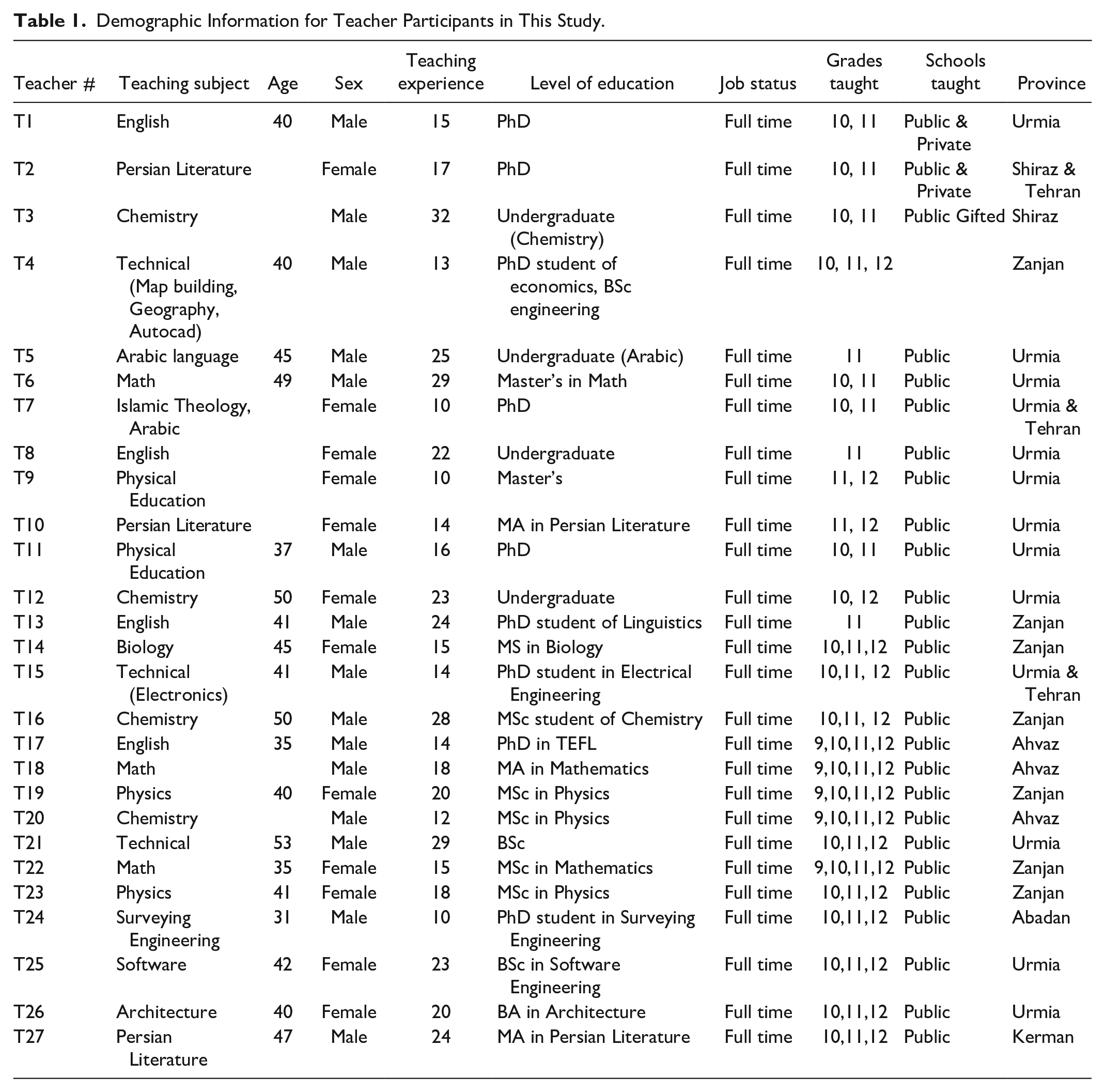
A qualitative methodology was used to interview experienced high school teachers about their conceptions of fairness in classroom assessment (Creswell, 2007; Patton, 2015). After the proposal approval of the Ministry of Education to collect data from the teachers, 27 experienced high school teachers from seven provinces in Iran were conveniently selected. The teachers were informed about the purpose of the study and willingly consented to participate. They were interviewed in their free time in person or over the phone. They agreed for their voice to be recorded. Participants were invited to participate in this study based on the researchers’ initial contacts and snowball sampling. Out of 30 teachers who were invited, 27 teachers accepted to participate. The criteria for sampling were to have a balanced representation of experienced full-time teachers (i.e., more than 10 years of experience) across the main academic streams in high school and across gender demography. Participants were each interviewed, and the lengths of the interviews were on average about 45 min. Teachers were selected from across humanities (=10), empirical sciences and math and physics (=10), and technical and vocational training (=7) streams, with 15 of the participants being male and 13 female, and a mean age of 42 years. Seven teachers had undergraduate degrees, 11 teachers had Master’s, and 9 teachers had PhD or were PhD students. Teachers were selected from publicly funded as well as private schools. Full demographic information about teachers can be found in Table 1.
Demographic Information for Teacher Participants in This Study.
The interviews were semi-structured and flexible and focused on teachers’ articulated experiences, conceptions, and practices of fairness in classroom assessment practices as well as the influence of external issues on teachers’ practices. Prior to interviews, the interview questions were reviewed by the researchers several times and were also pilot tested with a teacher prior to use with study participants (Supplemental Appendix A). The piloting process contributed to revising and rewording a few questions prior to actual interviews. Three researchers conducted the interviews in person (prior to COVID-19) and virtually and used audio-recording devices to capture what the participants were discussing. All the interviews were conducted in Persian, and the data were transcribed verbatim in Persian.
Data Analysis
Data were analyzed using a standard inductive thematic analysis approach (Patton, 2015). Four researchers proficient in both Persian and English as well as experts in assessment and fairness literature individually coded each interview file on Google Drive. After coding each file individually, researchers met together to discuss their codes, the meanings of their codes, and their multiple perspectives over codes with divergent meanings. Overall, the researchers met virtually for 28 sessions each lasting for an hour to discuss their codes on the interview files and settle their disagreements. The researchers used both social psychology framework as well as inductive coding to analyze the data. The social psychology framework helped identify individual and social mechanisms that underpinned teachers’ articulated conceptions and practices of fairness in classroom assessment. The inductive analysis allowed flexibility and latitude to identify additional components that shape these individual and social mechanisms within the particular context of assessment. Once the initial coding ended, the first two researchers met for an additional couple of meetings to bring together the codes on each interview file on a single file with general themes and associated subthemes that can fully represent the codes. The third and fourth researchers were then involved in reviewing this single file and adding their comments. This single file went through four iterations to arrive at themes and relevant subthemes that adequately summarized teachers’ conceptions of fairness in classroom assessment. The entire data analysis process facilitated a deep engagement, prolonged reflections, and multiple perspectives that enhanced the quality and depth of researchers’ understanding of teachers’ conceptions of fairness in classroom assessment. In total, three overarching themes and associated subthemes were found to summarize teachers’ conceptions and articulated practices of fairness in classroom assessment. These themes included (1) individual mechanisms, (2) social mechanisms, and (3) dialectical relationships between individual and social mechanisms. The individual mechanism included four subthemes of (a) teachers’ philosophy of fairness, (b) philosophy of education, (c) caring, and (d) teaching and life experiences. The social mechanism included two subthemes of (a) cultural, economic, social, and family mechanisms, and (b) educational mechanisms.
Findings
Individual Mechanisms
Individual mechanisms constituted personal philosophies, beliefs, and experiences that shaped teachers’ personal conceptions and articulated practices of fairness in classroom assessments. Specifically, four subthemes of (a) teachers’ philosophy of fairness, (b) philosophy of education, (c) caring, and (d) teaching and life experiences were found that influenced teachers’ personal approach to classroom assessment fairness.
Teachers’ philosophy of fairness
With respect to philosophy of fairness, teachers articulated two perspectives: (a) equality versus equity, and (b) fairness as a moral drive and relative nature of fairness.
While several teachers articulated equal treatment of students as a philosophical foundation for fair assessments, some others argued for equitable treatment of students. Teachers interpreted equality in relation to equal treatment in providing opportunities and grading. Teachers uttered providing all students with equal opportunities to participate in the classroom through randomly calling students, presenting all students with an equal number of questions or with the same level of difficulty, and giving more written quizzes (than oral). For example, a teacher stated, “due to time limit, we use written quizzes that enable us to include all relevant questions pertaining to the module we have taught. In oral questioning, I cannot ask two students similar questions with similar difficulty.” (T5) Some teachers interpreted equal treatment in grading as avoiding bias by disregarding students’ privileged or disadvantaged backgrounds and equally inflating grades for all students instead. For example, a teacher articulated, “a teacher should put aside some of his biases about the student including whether he likes a student, his relationship with students’ parents, student behavior, and an impression that a student has always been strong.” (T1)
Participants discussed equity in classroom assessment in relation to equitable opportunities to demonstrate learning, equitable homework, equitable grading, and equitable feedback and formative assessment. To provide equitable assessment opportunities, some teachers argued for creating quizzes and exams with questions in the ability spectrum of low, mid, and high difficulty to support all students’ psychosocial and learning outcomes. Others argued for using ongoing multiple assessment opportunities to redress the impact of student anxiety, special circumstances, and student absence on the exam day. Yet, a few teachers also used multiple assessment opportunities to accommodate students with disability and or health issues.
I provide easy and average questions on the written quiz. I also give two difficult questions for the strong student. If I give all average questions, the strong student could not demonstrate learning, and if I give difficult questions, low and average ability students would get discouraged. (T26)
“I give multiple quizzes because girls might be in their menstruation and could not show their learning on a quiz.” (T22); “I have a student with a disability. I tell this student the question that I am going to test him or her on. I also start his or her test early because I know this student needs this to complete the test.” (T25)
A teacher argued that homework load should vary across students with different abilities to enact fairness. “I have frequently happened to tell a student to do an assignment twice; another was told to do it once and yet another was told not to. This difference is fair for student learning.” (T1). There were a wide variety of ideas concerning equitable grading. While some teachers decided grades based on integrating a set of evidence from ongoing and summative assessments to value student active engagement in the entire course, some others prioritized only summative assessment evidence in their grade decisions with attention to ongoing evidence during the course to adjust the summative grades. Yet, others insisted that summative and ongoing grades should be kept separate so that students realize that they need to put the effort into the course and their ipsative progress (i.e., their progress relative to themselves) in the course is significant. “I rely on the overall assessment during the course and do not grade based on a 30-min exam as we may not be able to include all questions in the summative exam.” (T24); “I largely decide grades based on students’ performance on the summative exam and increase these grades based on student responses to oral questioning during the course.” (T12); “I keep summative exam grades and ongoing assessment grades during the term separate. This will show students that their performance and effort in the entire course are important to me.” (T14)
Some teachers interpreted equity in feedback and formative assessment with attention to providing feedback that is individualized, timely, and responsive to student need. For example, a teacher stated providing feedback individually to weaker students to preserve their face: “those students who are weaker, I would provide feedback to them in person.” (T17) “For feedback to be fair, it should be individualized as each student has specific conditions and needs.” (T15) Overall, teachers considered equality and equity in their conceptions and articulated practices of fairness in assessment.
Some teachers stated that they inherently value fairness in the assessment processes and decisions: “I treat them equitably so that my conscience is at ease and students also feel safe.” (T12) Some others acknowledged that the meaning of fairness depends on the situational factors and the relative judgment of individuals involved (i.e., students and parents). A teacher stated, “I might do something that I think is fair, but would students interpret this as fair as well? How about the society?” (T2)
Teachers’ philosophy of education
Several teachers considered their primary philosophy of education as teaching the curriculum. These teachers highlighted grading students’ work only based on their ability and achievement in the content area: “When I grade, I only consider student ability in the architecture field. Their social and ethical behavior does not impact my grades. We expect a good architect to do good architecture and we do not deal with personal behavior.” (T26)
Some others conceived of nurturing professional, ethical, and accountable citizens as their primary philosophy. For example, a teacher argued against adjusting weaker students’ grades based on nurturing accountable citizens: “In my belief, giving an extra grade to a weak student is unfair to a hard-working student. If the weaker student learns that they can pass without putting effort, they will expect this as well in the future.” (T26) There were a few teachers that valued both philosophies equally well in their grading: “I have a set of grades for students’ technical work and a set of grades for their attendance, discipline, and behavior. Together, these make students’ grades.” (T21)
Caring
Caring was raised by teachers to compensate for the prior disadvantages that students were dealing with such as disability, low socio-economic background, and sick parents. Some teachers considered caring in adjusting students’ grades, asking questions, and considering students’ attendance. Specifically, some teachers considered it fair to adjust a grade for students who had lost a parent, students who worked outside of the school, students from troubled families, and students with little access to resources.
I had a student who was strong at the course. Her mom had a long-term sickness, and I knew that they were dealing with financial issues as her dad had spent a lot on her cure. The day before the summative exam, her mom died. I did my best to pass her given that she performed very poorly on the exam. Did I enact fairly? I did not. (T8) I consider the attendance differently for students with mental and physical health issues, students who work outside of school, and students with divorced, addicted, or imprisoned parents. For example, we had a student who was working overnight at a workshop and sometimes could not wake up to come to school. I allowed him not to come for a few days. (T15)
Teacher education, teaching, and life experiences
Teacher education, teaching experiences, and teachers’ life experiences were also found as additional individual mechanisms contributing to personal fairness conceptions. Teachers recognized the diversity of students and their experiences and highlighted a need to get trained in teacher education programs to support students’ diverse needs fairly. However, almost all teachers reported that either they did not get training on fairness in assessments, or the training programs were not effective. For example, a physics teacher said I needed training in psychology in treating adolescents, classroom teaching, and assessment. I don’t think it is necessary to train me in physics. I already know physics . . . I have a kid now that made me study psychology and adolescents’ diverse needs. I am learning these things now and regret that I have taught students so many years so far and might not have taken into consideration students’ psychological needs for treating them fairly in classroom assessments. (T7)
Despite inadequate teacher education on fairness, several teachers relied on their classroom teaching experiences as a basis to learn about fairness. Teachers articulated using diagnostic assessment as well as quiz results to learn about fairer ways of dealing with student learning.
I have learned to use student average performance on assessments as well as students’ feedback to see how I have taught them. These analyses help me understand, ok, I have not taught well and need to modify my teaching methods. (T18)
“A teacher could use some sort of diagnostic test prior to the course to get a picture of students’ abilities as well as their individual differences.” (T1)
While assessment process was used in these examples to inform teaching, some teachers relied on their teaching experiences and ongoing assessments to shape expectations from students that rarely change during the course.
If I get to know that a student is good, I will have a positive impression of the student. However, if a student is weak, even if I test them 10 times, they will get the grade I predicted. The first 4 months in school shapes my expectations. (T17)
Several teachers also articulated their life experiences as students themselves as another source for understanding fair assessments: “if a teacher had more eye contacts with me, I had the feeling that s/he liked me more. We should also be fair in the number of eye contacts we have with students.” (T26)
Social Mechanisms
Social mechanisms constituted social structures that influenced and at times overshadowed teachers’ personal approaches to fairness in classroom assessment. Specifically, two subthemes of (a) cultural, economic, social, and family mechanisms, and (b) educational mechanisms were identified that drove fairness in teachers’ articulated conceptions and practices in assessment.
Social, cultural, economic, and family mechanisms
Most teachers articulated multiple examples of social, cultural, economic, and family conditions of the school and society that influenced their fairness conceptions and practices. Teachers described that the overarching social condition of the society and the socio-economic conditions of students impacted their conceptions of fairness. Teachers recognized that the meaning of fairness varied at a disadvantaged versus advantaged school regardless of their personal conceptions of fairness.
The social condition of society has a great impact, too. Students’ socio-economic background and cultural capital at home are important. I was teaching at a school, where half of my students were already married. Most of them were sleepy in class as they had other housework and family responsibilities. The fairness in that school and classroom is not the same as fairness in another school and classroom. (T20).
To be fair at disadvantaged schools, teachers adjusted their grading and questioning to be more lenient.
My teaching in a private school is different from my teaching in a disadvantaged school. It is not that I determine this, the conditions change. In private school, grades start from 17 (out of 20) and students are sensitive to their grade differences. In the disadvantaged school, only 3 to 4 students may get 17. The conditions are very different. (T14)
Teachers expressed that a student’s disadvantaged background can manifest itself in her socially inappropriate behavior that further contributes to disadvantage her: “These students sometimes get angry soon and show some behavior that would send a signal to me that they have an issue so that I go and check with the principal.” (T9) In contrast, stronger students would benefit from rewarded behavior: “students with stronger social skills have a positive influence on our assessments and classroom interactions. These students are often from well-educated families and have adequate resources.” (T22)
Students’ disadvantaged backgrounds can manifest themselves in the awareness of their rights, too. Rural students versus urban students may realize an injustice but would not bring it up: “rural students would know if a teacher were teaching and assessing unfairly but would rarely bring it up, unlike urban students.” (T18) To offset these disadvantages from unjust social, cultural, economic, and family conditions, some teachers advocated for prioritizing the well-being of disadvantaged students: “some students come from disrupted family backgrounds. What would happen if we also do not treat them well in the school; they will have lots of psychological issues.” (T27) Yet, a few others perceived fairness only in relation to encouraging these students because they believed that the disadvantaged family background trumps teacher agency in bringing a change: “a teacher is limited in what can be done and can only encourage a student. If the family background is not right, students would not get anywhere.” (T19)
Educational mechanisms
Teachers also articulated accountability and assessment mechanisms at the educational level that can influence and at times overcome their conceptions and practices of fairness in classroom assessment. The centralized Ministry of Education in Iran mandates accountability mechanisms that shape sweeping changes to assessments at the classroom level. Teachers articulated four consequences as a result of the accountability mechanisms. First, under the accountability pressures, teachers were forced to be lenient in grading to increase student pass rates: “The school pass rate should go up. The schools with good pass rates receive incentives and the principal would ask you to increase grades. As a teacher, you would learn this by time.” (T13)
Second, some teachers asserted that the provincial summative exams held at the end of Grades 9 and 12 were unfair to the students attending disadvantaged schools: “in national summative exams, all students answer the same questions. It is unfair for students attending disadvantaged schools to answer the same questions.” (T14) Third, teachers at technical and vocational training schools considered mandated written assessments as opposed to performance assessment not to be fair and misaligned with the objectives of their applied and hands-on courses: “just giving students written exams in a practical course is not fair. I give them written exams, but I ask them to work on projects as well.” (T4)
Fourth, teachers maintained that the national university entrance exam (i.e., Konkur) posed serious challenges for their teaching and assessment objectives. Some teachers opted to focus on preparing students for Konkur (i.e., multiple-choice exam).
For a few years, I tried to help my students develop a deep understanding of chemistry. But, when they became 12-Graders, I realized that I was wrong. The students had to take the university entrance exam and were not ready. I was trying to help them internalize the subject and learn more practically, but the exam required different skills and knowledge. (T20)
Other teachers preferred only to teach the curriculum objectives: “a teacher’s job is to teach the coursebook. That is what the Ministry of Education expects us to do. University entrance exam falls outside a teacher’s duty.” (T19) Altogether, teachers noted social, cultural, economic, family, and educational conditions as key social mechanisms influencing their conceptions and articulated practices of fairness.
Dialectical Relationships Between Individual and Social Mechanisms
While the previous two themes presented the respective influence of individual and social mechanisms on teachers’ conceptions of assessment fairness, these mechanisms interacted in shaping teachers’ conceptions of fair assessments. At times, teachers articulated experiences, where they had personal conceptions of fairness that would clash with the larger social conditions of the school that ultimately provides a venue for rethinking their conceptions. The following example shows how a disadvantaged school (i.e., social mechanism) gets into a dialectical struggle with a teacher’s personal conception (learned through being from an advantaged background) that finally produces a new understanding of fair assessment. This mental process has taken 2 years for this teacher to be realized.
I was in the math and physics stream in high school with good and high ability students. Once I joined the technical and vocational training school as a teacher, I found that students in the classroom had poor performances on the quizzes and exams. It was very tough for me as I was teaching them very well and didn’t know what was wrong. Now, I have realized that my students had a lot of background challenges that impacted their learning. Before, I was blaming them, but now I have realized that they had injuries in their lives. They need caring and support. (T14)
Discussion
International educational research has recently begun to empirically explore teachers’ conceptions of fairness in classroom assessment as a basis to promote fairer 21st century classrooms (Murillo & Hidalgo, 2020; Tierney, 2014). In this study, we aimed to contribute to this emerging empirical evidence by examining 27 experienced teachers’ conceptions of fairness in classroom assessment within an Iranian educational system. The results add to the current literature by underscoring how teachers’ individual philosophies and experiences interact with their encounters with social contexts of society, schools, and classrooms to shape their conceptions and articulated practices of fairness in classroom assessments. These findings support the foundations that social psychological theories of fairness and socio-cultural theories of assessment provide for developing a fairness theory that is attentive to social, cultural, and economic milieu within which assessments happen (Brookhart, 2018; Elwood & Murphy, 2015).
Theoretical Implications
This study identified larger themes and associated subthemes including individual, social, and their dialectical relationships as contributing mechanisms to teachers’ conceptions of fair assessments. These mechanisms expand the prior literature by providing a more comprehensive outline of factors that constitute teachers’ conceptions of assessment fairness. Prior empirical research on teachers’ conception of assessment fairness has identified equity, equality, reflective thinking, constructive classroom environment, and the socio-economic conditions of schools as factors contributing to teachers’ conceptions of assessment fairness (Murillo & Hidalgo, 2020; Tierney, 2014). These prior findings resonate with the individual and social mechanisms identified in this study; however, our findings demonstrate additional psychological and social mechanisms such as teachers’ philosophies of fairness and education, caring, teaching and life experiences as well as cultural, economic, social, family, and educational mechanisms that impact teachers’ conceptions of fairness in assessment. The findings in this study also show in more complexity the dialectical relationships between psychological personal mechanisms and the sociological structures that wrestle with, overshadow, and at times change teachers’ personal conceptions of fairness in classroom assessment. Given the empirical support for the impact of teachers’ conceptions on their assessment practices (Barnes et al., 2014), the social psychological mechanisms identified in this study offer an initial empirical framework describing the multiple key factors in shaping teachers’ conceptions of fair assessment practices.
The results from this study also add evidence to refine and expand the existing conceptualizations of social psychology theory of fairness in classroom assessment. While prior literature in classroom assessment has conceptualized social psychology theory as including distributive, procedural, and interactional justice dimensions (Grace, 2017; Rasooli et al., 2019a), the findings of this study extend this conceptualization as including individual and social mechanisms that influence teachers’ conceptions of fairness paralleled with very recent conceptual extensions (Gollwitzer & van Prooijen, 2016; Liebig & Sauer, 2016; Rasooli, 2021b). Individual mechanisms included not only the justice principles (e.g., equity and equality) in teachers’ philosophy of fairness subtheme but also additional subthemes such as teachers’ philosophy of education, caring, and teacher education, teaching, and life experiences that contributed to teachers’ personal and psychological conceptions of fairness in assessment. Social mechanisms included social conditions and structures including cultural, economic, and family mechanisms, and educational mechanisms that grappled with and at times shaped teachers’ conceptions of assessment fairness. These findings can be leveraged to expand existing three-dimensional (i.e., distributive, procedural, and interactional) conceptualization of social psychology perspective to describe the complexity of teachers’ conceptions of fairness.
Despite that the results from this study stemmed from an Iranian context and fairness is a contextual construct, the identified themes are comparable to the studies conducted elsewhere (e.g., in the United States). As empirical research in assessment fairness in classroom is nascent for use to show this comparability, a study in school psychology literature shows comparable results. In this study, researchers explored six veteran (i.e., more than 7 years of experience) school psychologists’ conceptions of social justice (Biddanda et al., 2019). The results showed that school psychologist associated social justice with equity for responding to students’ specific needs and situations and awareness of students’ backgrounds and school psychologists’ personal biases. Participants considered social justice advocacy emerging from its innate value for school psychologist as well as their own disadvantaged lived experiences as individuals. Participants reported societal and school structures such as racism, poverty, and overrepresentation of students of color in special education, teachers’ different philosophies of their role as only a subject matter teacher, as well as parents’ pressures as challenges associated with performing socially just. These findings not only show the comparability of themes cutting across two systems of educations (Iran and the United States), but also indicates the significance of learning from and contributing to other educational disciplines to conceptualize fairness in assessment and educational contexts.
Individual Mechanisms
Teachers in this study identified (a) philosophy of fairness, (b) philosophy of education, (c) caring, and (d) teacher education, teaching, and life experiences as mechanisms contributing to their individual and personal conceptions of fairness in classroom assessment. While prior literature has identified equity and equality as the overarching principles guiding teacher philosophy of fairness (Murillo & Hidalgo, 2020; Tierney, 2014), this study identified a more complex interplay between equity and equality. Although teachers provided examples that they distinctly selected equity over equality (e.g., in feedback), most articulated valuing both principles and using them in various contexts (e.g., provide equitable grades but give equal inflated grade adjustments). Several teachers also considered the significance of fairness as a moral drive (see Lerner, 1980 for discussion of fairness as an inherent human drive) and a few argued for the relative nature of fairness, indicating their hesitations in relation to what fairness is. Teachers’ hesitations might come from conceptualizing fairness as a binary construct (e.g., fair vs. unfair) and/or valuing fairness but not knowing what fairness can be in assessment as also evidenced by teachers’ accounts in this study that they had not received education on assessment fairness during preservice programs. The lack of explicit education on fairness in assessment can be also observed in inexplicit emphases on this topic in assessment textbooks (Seif, 2010) and the NCD policy. As Iranian assessment culture learns from and contributes to international literature in educational assessment, such a lack of attention can also be observed in a long-standing neglect of fairness in classroom assessment textbooks. However, with an increasing emphasis on this topic, this gap is expected to be addressed locally and internationally. The findings from this study can be used to inform increasing additions of classroom assessment fairness issues in the educational policy and assessment textbooks.
Teacher belief literature has shown that most of teachers’ conceptions derive from their school experiences and family upbringing (Pajares, 1992). This conclusion is also supported by the findings in this study. In a meta-review of 17 prior reviews of teacher beliefs, Fives et al. (2019) note that in-service teachers can be more resistant to change their conceptions due to multiple reasons including deeply held general values attached to identity and beliefs from prior K-12 school experiences. Preservice teachers seem to be less resistant to change their conceptions but have been found to complete their preservice education largely maintaining their initial conceptions at the beginning of the program (Pajares, 1992). Thus, the future teacher education programs in assessment need to begin from unpacking the roots of teacher candidates’ as well as in-service teachers’ conceptions of assessment fairness as a basis to provide further education to address the current gap on assessment fairness literacy. The examples in this study can be used as scenarios in provoking teacher candidates to identify the factors driving the teachers’ approaches to fairness. The (dis)agreements with the teachers’ approaches in these scenarios can further shed light on teacher candidates’ underpinning personal fairness values. The dig to bring these values into consciousness is a first step to examine personal approaches to fairness in assessment in light of empirical evidence.
Social Mechanisms
Teachers in this study identified (a) cultural, economic, social, and family mechanisms, and (b) educational mechanisms as social structures contributing to their conceptions of fair assessments. Teachers noted that low cultural capital, socio-economic background, and disrupted family background generate disadvantaged school structures, anomalous student behavior, unawareness of assessment rights, and low student expectations that impact the fairness of assessments. Specifically, teachers noted how disadvantaged school structures disarm teachers’ personal conceptions of fairness in assessment, dictate the use of an assessment regime different from that of an advantaged school, and make teachers undergo a long process for developing a conceptual change in their assessment and educational expectations from students in these schools. Only Murillo and Hidalgo (2020) have investigated the influence of social conditions and structures to date in the literature and has found that teachers in schools with low socio-economic status advocated equity in assessment (i.e., individualized, continuous, and responsive to student need, circumstances, effort, and improvement), while teachers in schools with high socio-economic status advocated equality. More research is needed to examine the role of cultural, economic, social, and family mechanisms in teachers’ conceptions of fairness, particularly within socio-cultural understandings of assessment theory.
From a practice lens, the issue of student behavior is of urgent attention because research has shown that student behavior (e.g., interactional justice) is included in grades and is inequitable (Brookhart et al., 2016). The findings of this study showed that the behavior of disadvantaged students, which is the result of students’ cultural capital at home, can be anomalous in school contexts that are governed by largely middle to high class teachers from advantaged family backgrounds. The anomalous behavior is internalized by disadvantaged students because of the cultural and social structures they have lived within and would negatively impact their school grades as these behaviors may be judged to be shown consciously by the disadvantaged students. As research shows that rejected students at home are more sensitive to teacher fairness (Liu et al., 2018), assessment unfairness due to the internalized unconscious behavior is harmful to the disadvantaged students’ learning, belonging, trust, and well-being.
Teachers also recognized the accountability and assessment structures that may dictate or interfere with their personal conceptions of fairness. Fives et al. (2019) note that the school structures that do not align with teachers’ personal conception can create a condition that engulfs a teacher’s practice from articulated conceptions (Bullough, 2015). In this study, teachers conceived it as unfair to increase pass grades due to the influence of principal and accountability mechanisms, to use written tests solely for assessment of practical courses, and instructing students only based on multiple-choice questions akin to Konkur. In such instances, teachers are likely to succumb to social conditions and either change their practices to fit with the requirements or attempt to be flexible in moderating between their personal conception and the mandates of social condition. For example, this struggle can be better observed in the context of Konkur. Students from low socio-economic backgrounds cannot afford expensive Konkur preparatory classes, yet Konkur is one of the few opportunities for upward mobility for them. This created a fairness dilemma for some teachers about whether it would be unfair if they did not prepare the students from disadvantaged backgrounds for Konkur (e.g., by coaching them and including Konkur-like questions in their classroom assessments). Further, a teacher may wonder if s/he would be perceived by students as fair if s/he just taught the curriculum well and did not prepare them for Konkur, while some other teachers did. Further research can employ “washback effect lens” (Messick, 1996) that deals with the negative effect of tests on teaching, learning, and society at large to explore how a high-stakes test like Konkur can affect the conceptions of fair assessment practices for classroom teachers.
Limitations
The findings of this study should be interpreted within its limitations. The sample for this study was selected conveniently that supported the initial step for conducting research on teachers’ conceptions of classroom assessment fairness. Future research can employ a purposive sampling strategy and select school contexts (e.g., dis/advantaged) and examine how the specific influence of school structure on teachers’, students’, parents’, and principals’ conceptions of fair assessment. Given the sampling of experienced teachers in this study, future research needs to focus on preservice-level teachers and seek their conceptions to provide more responsive teacher education in assessment fairness. This study also employed qualitative interviews that rely on teachers’ articulation of their practices. While the qualitative interviews can be used in other studies, this method can be strengthened by including additional data evidence through focus group interviews as well as observation of teacher assessment practices and assessment artifacts.
Conclusion
Overall, this study provides an additional empirical foundation identifying the psychosocial mechanism that drives teachers’ conceptions of fairness in classroom assessment. These mechanisms depict a complex collage of various personal and social forces in a dialectical relationship stemmed from contexts in which teachers (have) live(d), assess(ed), and instruct(ed). While these mechanisms include the fairness principles recommended by standards (i.e., fairness in treatment during assessment, fairness as reducing bias, fairness as access to the construct being measured, and fairness as an opportunity to learn, AERA et al., 2014), they outline broader and multiple factors that bear unto teachers’ conceptions but less recognized in the current edition of Standards. Future revisions of the current standards can respond more adequately to the context of fairness in classroom assessment by recognizing the psychosocial mechanisms that drive fairness conceptions and move beyond suggesting principles that probably find themselves seemingly practical but easily lost in the complexity of classroom and societal contexts.
Supplemental Material
sj-docx-1-jte-10.1177_00224871221130742 – Supplemental material for Teachers’ Conceptions of Fairness in Classroom Assessment: An Empirical Study
Supplemental material, sj-docx-1-jte-10.1177_00224871221130742 for Teachers’ Conceptions of Fairness in Classroom Assessment: An Empirical Study by Amirhossein Rasooli, Abdollah Rasegh, Hamed Zandi and Tahereh Firoozi in Journal of Teacher Education
Footnotes
Declaration of Conflicting Interests
The author(s) declared no potential conflicts of interest with respect to the research, authorship, and/or publication of this article.
Funding
The author(s) received no financial support for the research, authorship, and/or publication of this article.

Supplemental Material
Supplemental material for this article is available online.
Author Biographies
References
Supplementary Material
Please find the following supplemental material available below.
For Open Access articles published under a Creative Commons License, all supplemental material carries the same license as the article it is associated with.
For non-Open Access articles published, all supplemental material carries a non-exclusive license, and permission requests for re-use of supplemental material or any part of supplemental material shall be sent directly to the copyright owner as specified in the copyright notice associated with the article.
