



Abstract
Teacher Education for Sustainable Development (TESD) is a niche innovation in teacher education that empowers teachers to prepare learners to address global socio-environmental challenges. To advance the diffusion of this niche innovation into general teacher education, this article offers a systematic literature review based on a qualitative analysis of 158 peer-reviewed publications on TESD research. Our results show that TESD research is a growing field characterized by five types of inquiry: designing learning environments, understanding learner attributes, measuring learning outcomes, promoting systems change, and advancing visions for the field. Major innovation potentials of TESD for more general teacher education are its emphasis on the grand socio-environmental challenges of our times, methodologies to engage with knowledge diversity (e.g., inter/transdisciplinarity), and sustainability science learning approaches (e.g., backcasting). We suggest that future work builds from this review to strengthen links between teacher education and TESD in enhancing quality education.
Keywords
Accelerating changes in life-supporting Earth systems such as climate change and growing social disparities are putting the world as we know it under pressure (Leach et al., 2013; Steffen et al., 2015). Students around the globe, grappling with these complex challenges, have begun to take action by walking out of school and confronting the collective inability of decision-makers to implement necessary sustainability transformations (Boulianne et al., 2020). As interconnected issues that undermine socio-environmental stability continue to emerge and evolve, education will need to respond to a rapidly changing world. In meeting this challenge, teacher education is a key arena for shaping progress toward more sustainable futures (United Nations [UN], 2020).
Education, and education for sustainable development (ESD) in particular, plays a central role in building society’s capacity to address some of the most pressing societal challenges faced today (Agbedahin, 2019; Holfelder, 2019). This crucial role is reflected in the commitment of the international community to the Sustainable Development Goals, one of which is to “ensure inclusive and equitable quality education for all and promote lifelong learning opportunities” (UN, 2015, p. 14). ESD seeks to support learners through the development of competencies for sustainability problem-solving and enable them to participate in sustainable development while critically reflecting on their own actions (Brundiers et al., 2021; Rieckmann, 2018; United Nations Educational, Scientific and Cultural Organization [UNESCO], 2017). The ESD concept gained momentum with the Decade of ESD from 2005 to 2014 (Leicht et al., 2018) and has developed into a well-established field of educational policy and practice (UNESCO, 2014b). The Global Action Programme on ESD supported further extension and dissemination of the efforts of the Decade “so that everyone has the opportunity to acquire the knowledge, skills, values and attitudes that empower them to contribute to sustainable development” (UNESCO, 2014a, p. 14). Present-day follow-through is guided by the ESD for 2030 Agenda (Agbedahin, 2019). But despite these efforts to mainstream ESD, international monitoring shows that the goal of a broad implementation into all educational levels is not yet achieved (UNESCO, 2014b).
To advance the impacts of ESD while increasing the capacity for education to respond to complex socio-environmental challenges, teachers and teacher education will play a significant role. The monitoring and evaluation of the Decade has shown that the support of teachers has been a key condition to the successful adoption and implementation of ESD (UNESCO, 2014b). Consequently, the Global Action Programme included a priority key action area explicitly aiming to “strengthen the capacity of educators, trainers and other change agents to become learning facilitators for ESD” (UNESCO, 2014a, p. 35).
Teacher Education for Sustainable Development (TESD) is the area of policy, practice, and research focused on the integration of ESD-related concepts and objectives into teacher education. As the Decade of ESD and the Global Action Programme supported more countries to embed ESD in their teacher education policies and practices, research on TESD began to grow substantively. The field has witnessed the emergence of dedicated journals, conferences, and networking bodies (McKeown & Hopkins, 2007), which has led to a range of conceptual and practical approaches implemented in diverse contexts. However, there remains an increasing need to consolidate the body of research. Therefore, this review aims to address this need by filling the gap that previous reviews have recognized when calling for more comprehensive overviews of the field that provide conceptual clarity through critical analysis while demonstrating how the field has been operationalized empirically and practically (Bascopé et al., 2019; Bourn et al., 2017; Vare & Scott, 2007).
Our review seeks to provide a comprehensive and systematic analysis of the field to determine the innovation potentials that TESD research offers to support teacher education to respond to socio-environmental challenges in research, policy, and practice. In pursuing this objective, we ask two research questions:
Contextualizing TESD Within Teacher Education Research
Teacher education research represents an “emerging, complex, and multifaceted field” which is often “influenced by competing ideas about the purposes of research and the goals of education” (Cochran-Smith & Villegas, 2015, p. 7). As such, it is repeatedly the subject of reviews that attempt to delineate contours and trace how the field is developing over time. Recent reviews cast different perspectives on the field, providing insights into what challenges the dynamic and contested space of teacher education research is currently facing. Three recurrent categories in teacher education research can be distinguished: methods, topics, and contexts. The methods category focuses on the types of empirical research that are being conducted in the field. Borko et al. (2007) identify four genres of teacher education research methods that comprise effectiveness studies, interpretive analyses, practitioner research, and design-based approaches. These forms are implemented in manifold ways to study teacher learning approaches, processes, and environments; examine the conditions and factors that mediate these; and evaluate the outcomes that are produced (Avalos, 2011). The topics category is more concerned with identifying prominent and emerging thematic trends in teacher education research, often in connection with pedagogical practice. Examples for long-standing foundational topics are the practice–theory relationship or the use of technology in education (Livingston & Flores, 2017). More recent topics include globalization and multicultural education (Caillier & Riordan, 2009; Dooley et al., 2011). The context category engages more with the question of how broader historical, cultural, and societal trends influence theory, research, and practice in teacher education. Cochran-Smith and Villegas (2015) in their influential review identify three trends in teacher education research that are informed by broader social and political agendas as well as intellectual schools of thought: (a) a focus on accountability, effectiveness, and policy; (b) preparing teachers for work in the knowledge society; and (c) increased engagement with diversity and equity. Overall, recent reviews present teacher education research as a field that asks fundamental questions about the role of teachers and schools in the face of current societal challenges and produces insights to inform and improve teaching practice.
TESD research has emerged as a field to address fundamental questions in teacher education in the context of sustainability issues and to develop evidence-based practical approaches integrating ESD into teacher education. As such, it can be considered a subfield of teacher education research. Importantly, the field can also be distinguished as an offshoot of ESD, which has been demonstrated as a growing field focused on intertwining education and sustainable development to advance critical, transdisciplinary, and action-oriented approaches to teaching and learning (Grosseck et al., 2019). Past literature reviews on TESD have explored important links between teacher education and sustainability, but have focused on specific aspects in a primarily bibliometric way and not yet engaged comprehensively with taking stock of this emerging research area through a qualitative, interpretive analysis. Specific aspects focused on in previous works have included the development of the field and its challenges for future progress (McKeown & Hopkins, 2014), approaches to embedding sustainability in teacher education (Evans et al., 2017), and research lines and trends exemplified by publications in a specific TESD-focused journal (Pipere, 2019). Other reviews have focused on principles and pedagogical approaches in TESD in early childhood education (Bascopé et al., 2019), the attitudes and competencies developed through TESD (Del Carmen Pegalajar-Palomino et al., 2021), and contextualizing TESD within broader educational trends related to global competencies, cultural understanding, and the moral and social purposes of teaching (Bourn et al., 2017). These reviews have identified how international policies have sparked a growing area of research and practice that provides a foundation for innovations and new foci for education more broadly.
Despite the demonstrated potential of TESD research, reviews have also revealed the manifold barriers that efforts to mainstream TESD face (McKeown & Hopkins, 2014), as well as a preoccupation of TESD researchers with studying small-scale cases through often descriptive approaches (Evans et al., 2017). This has contributed to gaps in the field in identifying conceptual boundaries and ambitions (Bourn et al., 2017), effective implementation strategies (Evans et al., 2017), theoretically informed practical approaches (Bascopé et al., 2019), relevant empirical evidence from diverse contexts (Hallinger & Nguyen, 2020), and opportunities to develop teachers’ TESD-related professional skills (Del Carmen Pegalajar-Palomino et al., 2021). While the individual findings that have emerged from the specific perspectives of existing TESD review studies can be readily related to the broader categories and trends in teacher education research outlined above, the limitations of previous reviews have exposed the need for a systematic review of research trends in TESD research and an explicit discussion of their significance for teacher education research. Our review responds to this need and differentiates itself from previous reviews by (a) using an inductive, qualitative approach to developing TESD research types and themes; (b) providing systematic evidence of methods, outcomes, and innovations in the field; and (c) contextualizing the insights that emerge within the broader scope of teacher education research and practice.
Method
Search Process and Criteria
We performed a search for publications using the Scopus database, which was selected because of its interdisciplinary scope (Mongeon & Paul-Hus, 2016). Utilizing a search for “teacher education” AND “sustainab*,” we collected all available peer-reviewed articles and book chapters published through the end of 2019. We focused on original primary research and excluded aggregated (reviews, meta-analyses) or abbreviated publications (theses, summaries). Only articles and book chapters published in English were included. Following the PRISMA guidelines for systematic literature reviews (Moher et al., 2009), we screened all publications in multiple steps to discover the relevant literature related to TESD.
The search yielded 455 publications, with 13 duplicates being removed for an initial sample of n = 442. Using a set of criteria related to teacher education and ESD derived from definitions in the field, abstracts were screened by two reviewers to determine whether the publication concerned both the teacher education and ESD aspects of TESD (Table 1, Supplemental Appendix 2). Disputes in this initial round of review were resolved through discussion with a third reviewer to determine a final decision. This process led to n = 217 publications, which then underwent a full-text review.
Inclusion and Exclusion Criteria and Rules (Examples).
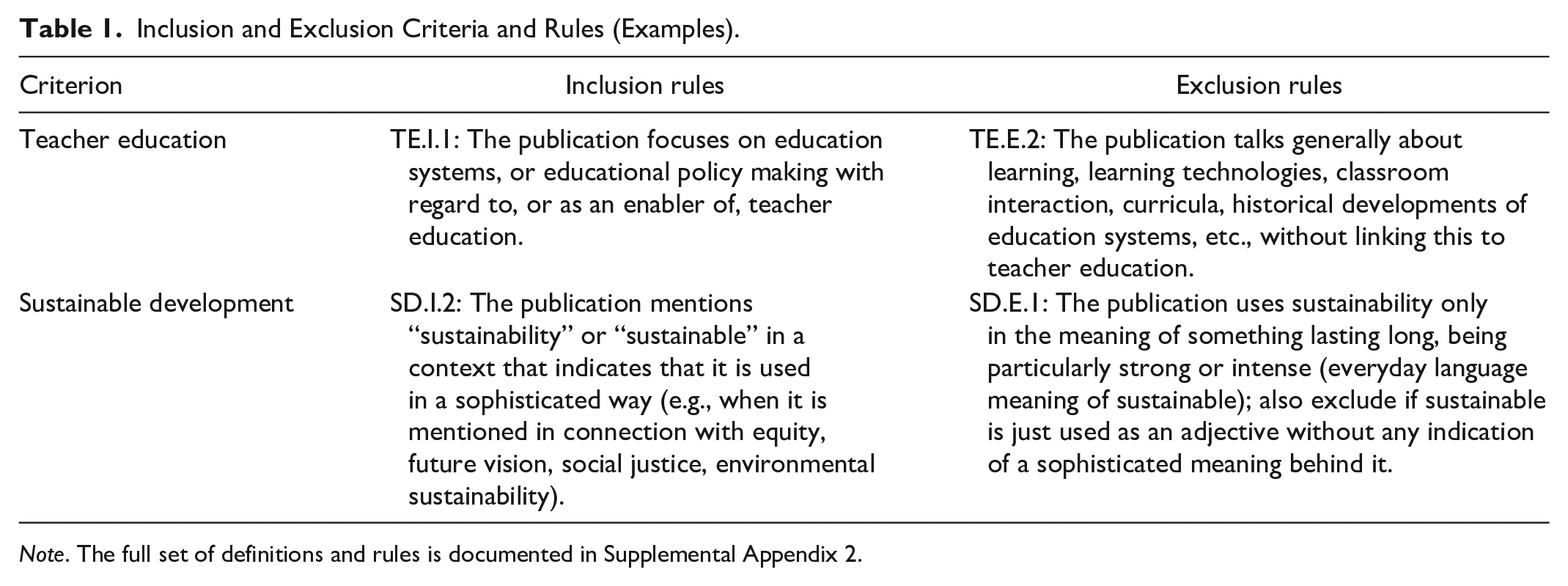
Note. The full set of definitions and rules is documented in Supplemental Appendix 2.
Full texts were screened by the research team on the same criteria to determine eligibility for ultimate inclusion (see Figure 1), culminating in a final sample of n = 158 (exclusions are explained in Supplemental Appendix 2). To ensure the reliability of both the inclusion/exclusion decision-making and data coding, a small set of papers were reviewed and discussed by the entire research team. Approximately 10% of the papers were consensually coded by differing pairs of reviewers to further establish reliability. Qualitative data concerning the papers’ key characteristics and insights concerning TESD were then collected during the full-text reviews. This process was done using a data extraction scheme where rules and profiles for each thematic category were iteratively established to guide the coding process that was used during full-text analysis to provide information about the research being conducted (see Supplemental Appendix 2). The systematically extracted data supplemented bibliographic meta-data for each publication collected through the Scopus database. These were analyzed using descriptive statistics to provide an overview of the profile and evolution of TESD research.
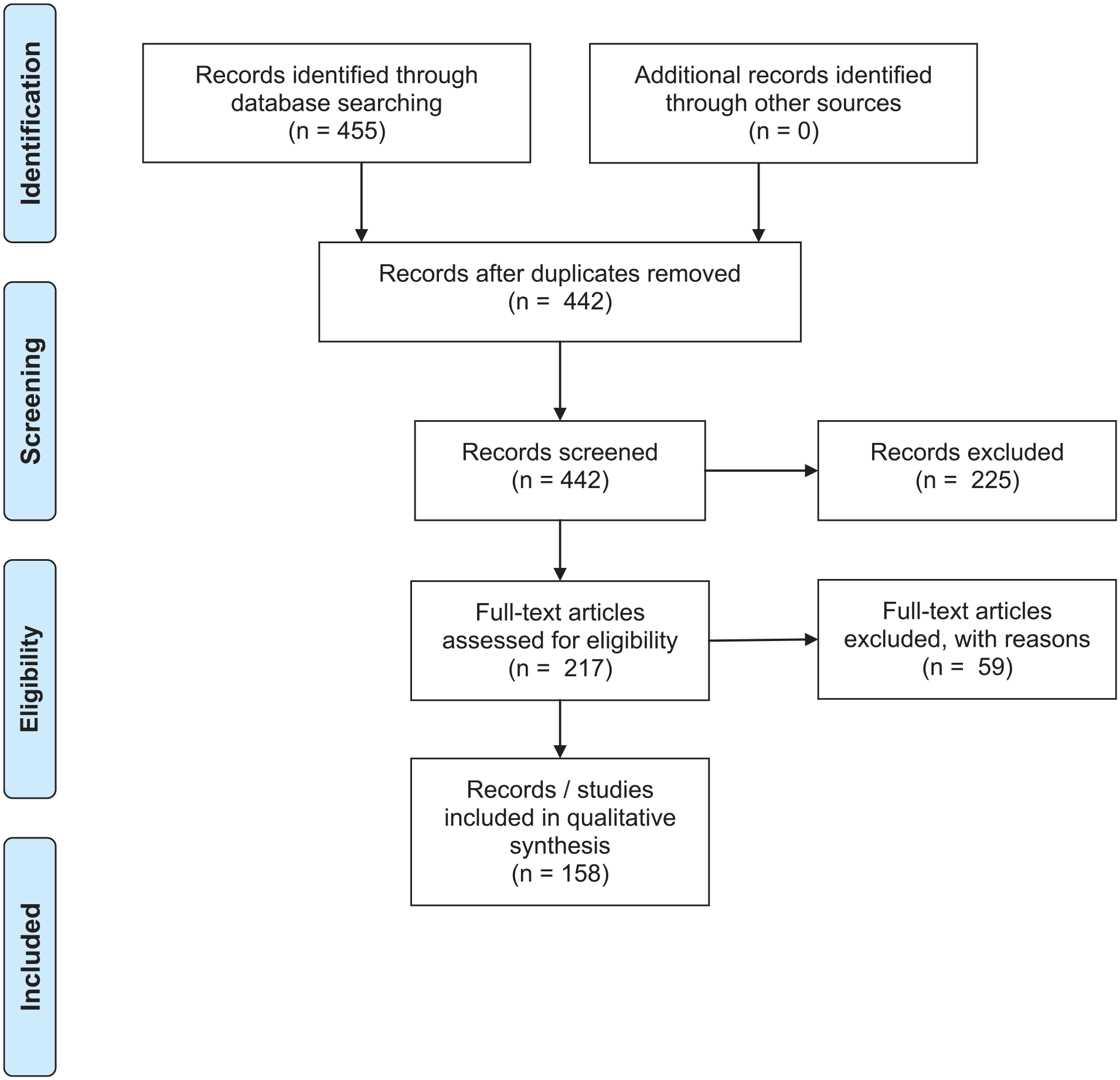
Data collection and screening steps of the review (according to PRISMA).
Analysis
Earlier review studies have used quantitative approaches such as keyword or co-citation analyses to identify patterns and trends in the field. This review adds to these existing works with its qualitative approach to identifying thematic trends. The final sample of publications was analyzed to establish a typology of TESD research by inductively categorizing publications by their research focus and purpose. Two reviewers worked separately to systematically identify the research questions, aims, purpose, and/or objectives for each publication. These were coded to build emergent themes that were sorted to determine distinct yet overlapping “types” of TESD research. Unclear cases, particularly publications initially identified as belonging to more than one type, were reviewed by the coding team to sort all publications into a single type. The full list of papers for each type can be found in Supplemental Appendix 1.
To establish representative insights for each type, the five most heavily cited papers for each type were reviewed to determine common aims and themes, the body of existing knowledge and its robustness, and remaining gaps and possible directions for future research in that type (for a more detailed description of the procedures and categories used see Supplemental Appendix 2). The results of this typology-building process are presented in the next section, after an overview of the characteristics of the final sample of TESD research publications.
Results
Overview of Total Sample
Publication details
The results describing the final sample (n = 158) depict an emerging area of research that can be profiled as distinct yet diverse. Similar to other areas of study, such as global citizenship education (Estellés & Fischman, 2020) and social justice education (Mills & Ballantyne, 2016), as well as teacher education research more broadly, publication rates in TESD have grown in recent years. The publications were primarily journal articles (n = 143), prioritizing a focus on pre-service (n = 146) rather than in-service teacher education (n = 29), though some publications addressed both phases (n = 21). Publications appeared in n = 60 journals, with the most common journals being Environmental Education Research (n = 21), the Australian Journal of Environmental Education (n = 14), Sustainability (n = 13), the Journal of Teacher Education for Sustainability (n = 12), and the International Journal of Sustainability in Higher Education (n = 11). A wide range of authors (n = 313) was represented in the final sample, with several authors (n = 61) having multiple publications, including as co-authors (see Supplemental Appendix 2).
Geographical context
Authors are primarily concentrated in Europe (n = 93) and the Australia and Oceania region (n = 43), followed by North America (n = 23), Asia (n = 22), Africa (n = 7), and Latin America and the Caribbean (n = 1). Overall, the authors were from 41 different countries, with research being conducted in 53 different countries. The most common countries for research to be conducted in included Australia (n = 37), the United Kingdom (n = 15), and Germany (n = 11). Research tends to focus on subnational contexts (a single course, program, or university; n = 101) compared with broader scales (such as national-level teacher education programs or projects). There is a distinct lack of research that focuses on multinational (n = 15) contexts. Instead, the majority of research is being conducted at smaller scales, with an emphasis on cases analyzing classes or courses (n = 56) or programs and curriculum (n = 50). Less common are works that engage with large networks (n = 20), small networks (n = 11), or whole institutions (n = 10).
Research foci and methodological approaches
The results concerning the methodological approaches to TESD research portray several common themes amid a varied set of methods and perspectives. Publications were separated into five distinct research foci: exploratory, explanatory, descriptive, conceptual, and mixed methods. Table 2 demonstrates the primacy of exploratory studies, which primarily utilize qualitative methods to gain a more detailed understanding of a certain topic or context. Analysis of the evolution of these research foci suggests that though conceptual and descriptive studies were prevalent in earlier years, they have gradually been supplemented by an increase in explanatory studies and mixed-methods approaches. Exploratory studies have maintained their prominence throughout the years, after establishing their role in TESD research around 2005.
Research Focus.
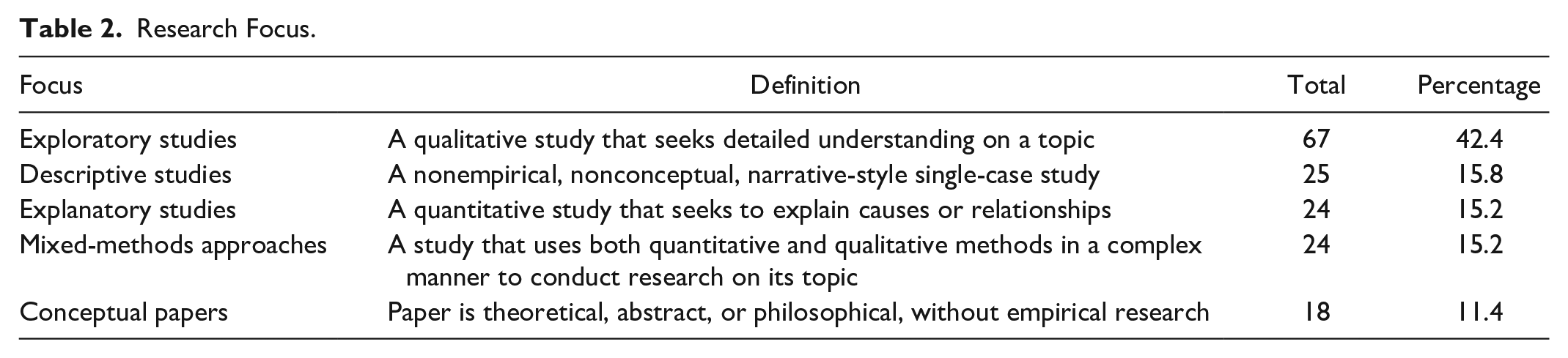
Besides the different research foci, the reviewed studies employed several methodological approaches, with a focus on case studies. Nearly half of the publications employed a case study research design (n = 77), followed by survey and/or trend studies (n = 36), conceptual papers (n = 18), and action and/or participatory research (n = 15). Both experimental/quasi-experimental approaches (n = 5) and naturalistic and/or ethnographic research (n = 1) were rarely observed in the sample. Among these different research designs, several data collection methods emerged as the most common. Surveys and questionnaires (n = 65), interviews (n = 46), and document analysis (n = 41) were the most frequently employed methods. Other data collection methods included observation (n = 21), focus groups (n = 18), and tests or assignments (n = 10).
Data were often collected only once (n = 62), supporting the prevalence of exploratory and case studies that often capture phenomena in a more restricted temporal context. Some publications reported collecting data multiple times from the same sample (n = 46), whereas there were also publications that either did not collect data (n = 31) or were unclear or did not specify how data were collected (n = 7). Also, more than one third of publications did not state explicit research questions (n = 58), though the majority of papers did list research questions (n = 100).
A Typology of TESD Research
After analyzing the overall sample, publications were sorted into types based on their research questions, aims, and purposes. Through an inductive coding process, five types of TESD research were identified: Designing Learning Environments, Understanding Learner Attributes, Measuring Learning Outcomes, Promoting Systems Change, and Advancing Visions for the Field (Table 3).
Typology of TESD Research.
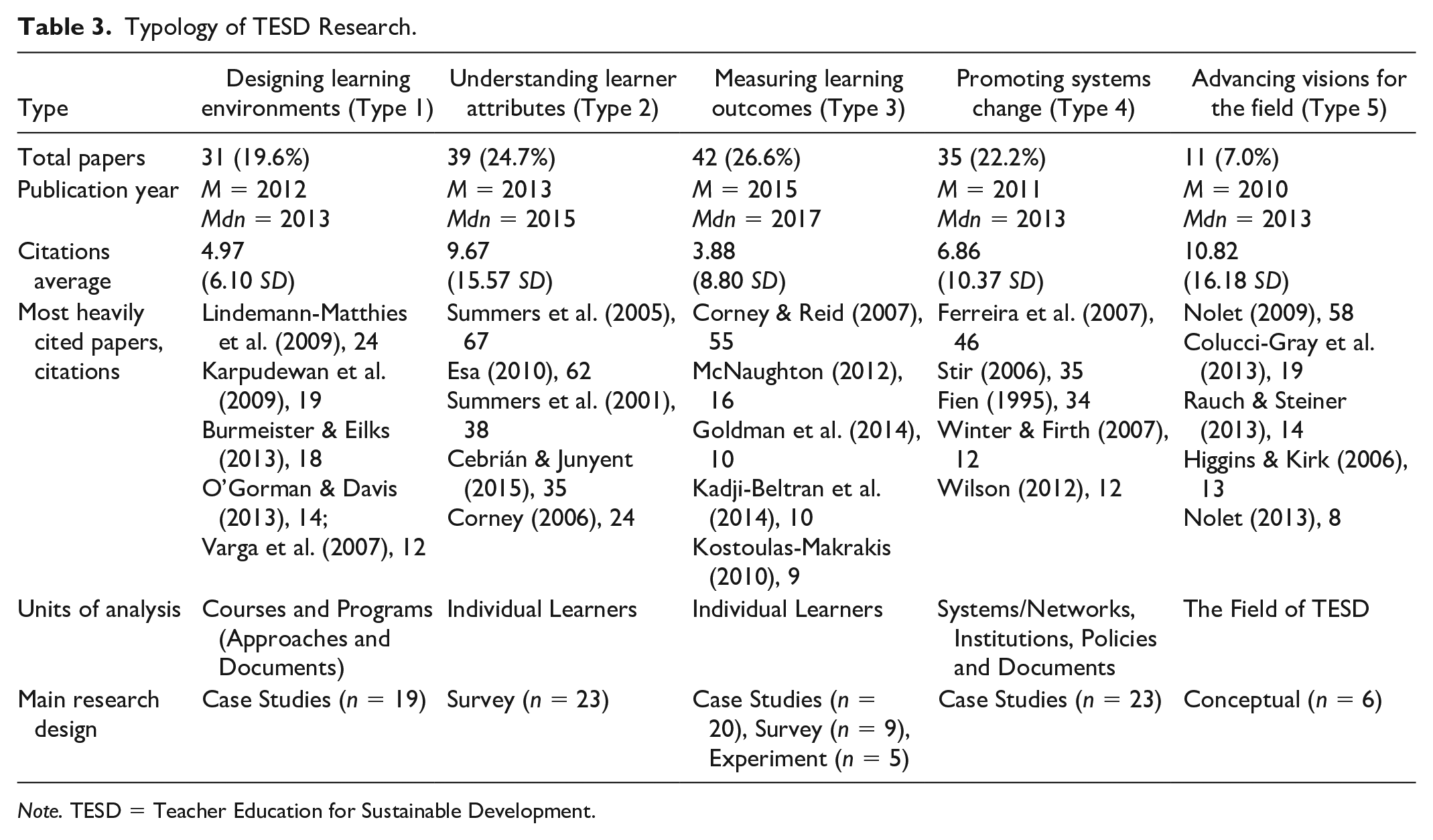
Note. TESD = Teacher Education for Sustainable Development.
Reviewing the progression of publications in each theme by year (Figure 2) suggests that as the field established itself around 2005, both the Advancing Visions for the Field and Promoting Systems Change themes were crucial concerns for researchers. The proportion of papers focused on Understanding Learner Attributes or Designing Learning Environments has wavered, yet each of these types has retained an essential role in TESD research. The most significant development over time has been the increased emphasis on research on Measuring Learning Outcomes. Particularly, as publications concerning Advancing Visions for the Field have declined, research on the Measuring Learning Outcomes type has grown, suggesting a transition in the field. Rather than focusing on defining the conceptual parameters of TESD or arguing for its importance, the field has progressed to prioritize understanding the effects it is having on prospective and continuing teachers.
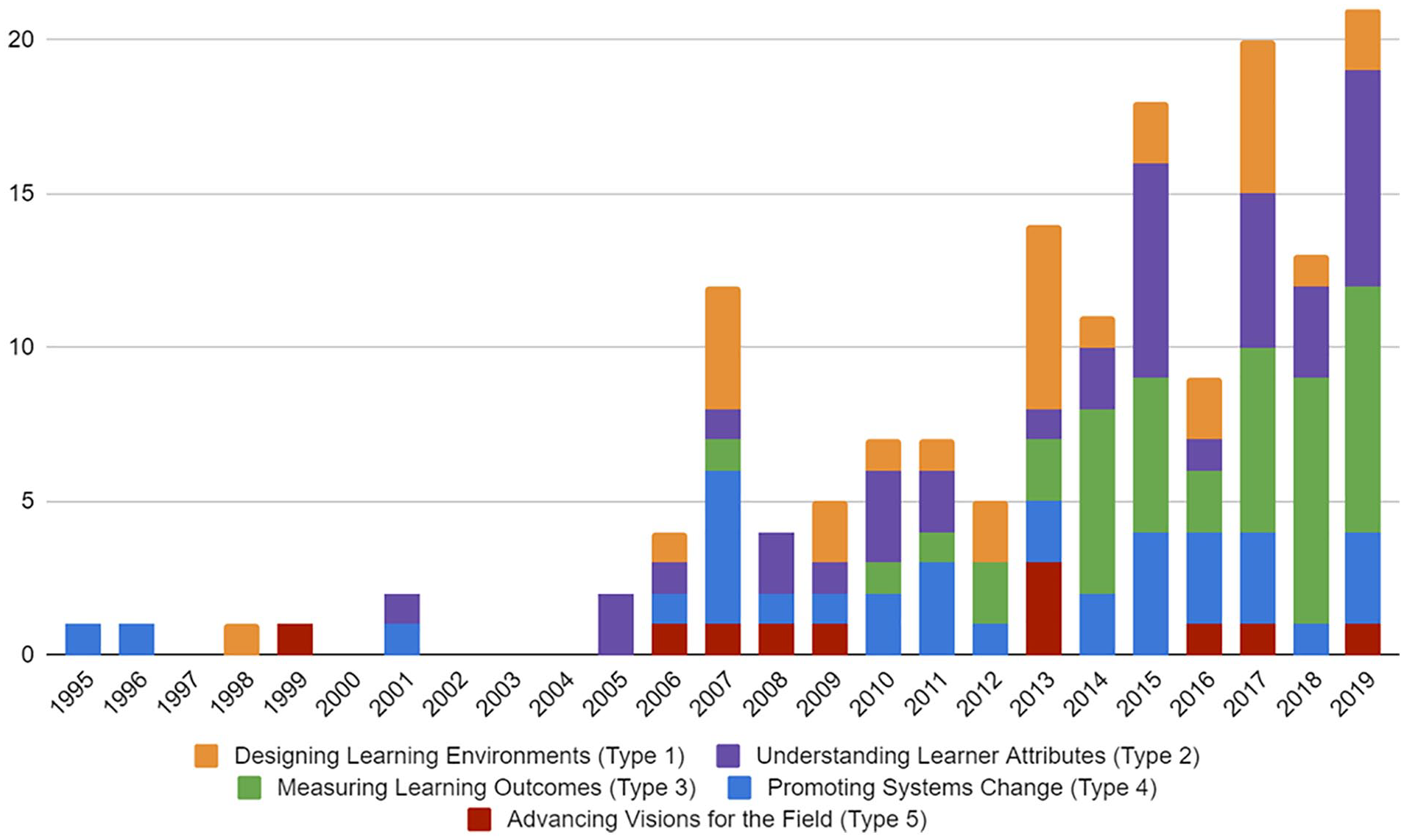
Publications per year for each type.
In the following, we profile each of the five types progressing from types focused on the teaching and learning process to broader efforts and conceptualizations related to educational systems. For each type we provide an overview of its main aims and themes, research characteristics, produced insights, and remaining gaps. For the findings we cite exemplary papers from the type.
Type 1: Designing learning environments
Publications in this type (n = 31) describe or analyze the development and design features of a TESD activity. This includes teachers’ perceptions of such activities (Nielsen et al., 2012) as well as broader teaching and learning-focused explorations of pedagogies in TESD (Kennelly & Taylor, 2007). Research of this type examines how ESD can be implemented in teacher education courses or programs (Lindemann-Matthies et al., 2009). Publications cover design features of a TESD activity (O’Gorman & Davis, 2013), specific pedagogies (Karpudewan et al., 2009), or change processes in the curriculum (Flaws & Meredith, 2007). Analysis focuses predominantly on learning processes (Smorti et al., 2013) but also covers to a certain extent teachers’ perception and links to learning outcomes (Vare et al., 2019).
Research is conducted in subnational contexts (n = 23) that balance study of classes/courses (n = 15) and program/curricula (n = 10). Although publications are often exploratory (n = 13), they are also commonly descriptive (n = 9) or conceptual (n = 7). Data are typically collected once (n = 10) or multiple times from the same sample (n = 10), often using document analysis (n = 12). The most prevalent locations for authors, similar to the overall sample, were Europe (n = 13) and the Australia and Oceania region (n = 9).
Research in this area illustrates how design elements of ESD in teacher courses or programs stimulate self-reflection and enable the integration of sustainability content and pedagogies. Key findings of the most cited publications point out how (participatory) action research can be utilized to develop new course modules (Burmeister & Eilks, 2013) and how self-reflective reorientation processes can be integrated into teacher education activities for ESD (Varga et al., 2007).
Two aspects seem to be necessary to further consolidate work in this type. First, publications have a tendency to present primarily descriptive success stories of designing learning environments. A more analytical elaboration of the design process with comparative analyses of different approaches will provide clearer guidance for curriculum developers on the most suitable approaches for different contexts. Second, a clearer link between learning processes and design elements with the respective learning outcomes will help to better understand the effectiveness of different approaches.
Type 2: Understanding learner attributes
Publications in this type (n = 39) describe or analyze pre-service or in-service teachers’ intra-individual characteristics and their relationships. Research of this type seeks to analyze how teachers understand and engage with sustainability, both professionally and personally (Summers et al., 2005). A prominent line of research in this type explores individual attributes such as knowledge, attitudes, and values (Esa, 2010). Often, studies relate intra-individual variables to outcome variables (e.g., pro-environmental behavior or professional practice; Lummis et al., 2017). Other studies focus on the experiences, perceptions, and struggles that student teachers encounter as they engage with ESD practices in the classroom (Corney, 2006).
Consistent with the overall sample, research is concentrated on subnational levels (n = 27), with a balance between program/curriculum (n = 14) and class/course contexts (n = 13). More than the other types, research tends to be explanatory (n = 14), but also emphasizes exploratory approaches (n = 19). Data are often collected only once (n = 28), primarily through surveys/questionnaires (n = 28). While authors tend to be from Europe (n = 22), this type also has a relatively strong portion of authors from Asia (n = 7).
Research studies of this type scrutinize student teachers’ conceptions of sustainability and the underpinning subject knowledge (Dyment & Hill, 2015), pointing out existing biases, misrepresentations, and misconceptions. Publications in this type also offer insights into the specific challenges that student teachers face as they implement ESD in practice and the resulting implications for their conception of learning outcomes and the design of learning environments.
So far, research of this type is characterized by the use of rather unconnected terminology and poorly defined constructs studied in often descriptive ways. A challenge for future work is to clarify and better integrate the plurality of variables studied and the theoretical tenets that underpin them. This could include addressing the lack of work that systematically connects learner attributes with research on learning outcomes and the design of learning environments. Finally, though research of this type has strongly focused on pre-service teachers, there remains the need to better understand the attributes and experiences of inservice teachers as well.
Type 3: Measuring learning outcomes
Publications in this type (n = 42) describe or analyze the impacts of TESD activities on teachers, specifically focusing on learning outcomes related to professional practice. Research of this type examines what pre-service teachers learn through specific courses, programs, or other interventions (Goldman et al., 2014). Research seeks to relate these outcomes to elements of the teaching and learning process (Andersson et al., 2013). While there are a variety of variables that are studied, the primary focus is the development of professional knowledge and competence that can lead to effective implementation of ESD in current or future teaching (Corney & Reid, 2007).
Research on these topics tends to be conducted on primarily subnational levels (n = 31) and in course settings (n = 25) with small sample sizes. The publications utilize exploratory (n = 19) or mixed-methods (n = 12) approaches, with data collection occurring multiple times from the same sample (n = 20) through surveys/questionnaires (n = 18) and interviews (n = 17). Similar to overall trends, authors are primarily from Europe (n = 25).
The findings of research of this type suggest broadly that TESD can equip teachers with increased awareness, knowledge, and competencies related to sustainability concepts and associated pedagogical strategies (Kadji-Beltran et al., 2014; Kostoulas-Makrakis, 2010). These publications underline the relevance of approaches such as self-reflection, interdisciplinary learning, and action-oriented experiences in achieving these outcomes (McNaughton, 2012).
While the results of studies in this type suggest positive outcomes through various approaches to TESD, a lack of research designs that incorporate broader outcomes and larger time frames implies certain limitations. Existing research has yet to rigorously study two main areas. The first concerns the complexity involved in teaching–learning processes and how the design of such processes, and subsequent activities, can influence learning outcomes. The second area questions the duration and stability of measured changes, particularly the extent to which self-reporting of short-term changes in pedagogical attitudes and personal values suggests lasting impact on teachers’ practices. In addressing these areas, research might more intentionally incorporate insights from educational assessment and theoretical models of teacher development, such as efforts to understand the development of complex constructs such as generic sustainability competencies.
Type 4: Promoting systems change
Publications in this type (n = 35) describe or analyze how TESD is integrated, implemented, and/or mainstreamed in organizations and education systems, including TESD network initiatives. This also includes analyses of systemic drivers and barriers to implementing TESD. Research of this type explores strategies for increasing the prominence of ESD in teacher education, recognizing its key role for enabling change in educational systems more broadly (Fien, 1995). The research categorizes change across a wide variety of levels through the efforts of a diverse set of actors and methods (Wilson, 2012).
Compared with other types, research on systems change emphasizes national efforts (n = 11) and the study of large networks (n = 13) more, focusing on processes that drive holistic transitions toward the integration of TESD. These publications are predominantly descriptive (n = 12), particularly compared with other types, and either do not collect data (n = 15) or conduct document analysis (n = 12). In contrast with the other types, authors are primarily based in the Australia and Oceania region (n = 14).
Research of this type illustrates the complexities of change processes in different contexts, while presenting drivers and barriers to mainstreaming ESD (Stir, 2006; Winter & Firth, 2007). This includes identifying strategies that more effectively facilitate the integration of ESD into curricula, whole-school approaches, policies, and collaborations (Ferreira et al., 2007). Examples of research in this area suggest that efforts to enhance TESD practices require change processes to be well attuned to their particular contexts (Stir, 2006), as well as the need to align strategies to ESD principles such as being inclusive, systemic, multidimensional, collaborative, and transformative (Inman et al., 2010).
Although research demonstrates progress at differing scales, as well as a host of effective strategies for fostering change, the impact of these changes remains to be robustly evaluated. This is particularly true for broader efforts that seek to create change across national boundaries by influencing policies or through large-scale initiatives. In more small-scale change processes, such as in teacher education programs at universities, work has not fully addressed how to appropriately translate relevant strategies for application across diverse contexts. Research that endeavors to link change processes across levels, while identifying common factors and applying theory to understand frameworks for change, may support multifaceted approaches to enhance the integration of TESD throughout educational systems.
Type 5: Advancing visions for the field
Publications in this type (n = 11) describe or analyze the status, boundaries, aims, objectives, contributions, and priorities of TESD as an area of research and practice. Research in this type deals with TESD in very foundational and creative ways and relates it to different disciplinary or national contexts. Often taking a meta-perspective on sustainability and education (Nolet, 2009), these works propose new perspectives on where the field stands and why it is relevant (diagnosis; Nolet, 2009), generate new impulses for the field (innovation; Rauch & Steiner, 2013), and embed TESD in current pedagogical discourses (contextualization; Vega-Marcote & Varela-Losada, 2016).
Research focuses on national contexts (n = 4) and often offers perspectives on more general issues relating to TESD programs and curricula (n = 6) and beyond. Although not exclusively so, papers are primarily conceptual (n = 6) and do not collect data (n = 7). Authors in this type are concentrated in Europe (n = 8), though prominent authors exist in North America (n = 2) as well.
Research of this type has mapped ways forward through conceptual and theoretical explorations and critical observations that envision a greater role for TESD in reorienting teacher education, advancing educational science, and facilitating sustainable development. The scope of papers spans analyses of recent national and international policy initiatives and their impact (Nolet, 2013), discussions of how emerging frameworks in sustainability science can innovate teacher education (Colucci-Gray et al., 2013), and explorations of synergies between TESD and other educational fields such as outdoor education (Higgins & Kirk, 2006).
The diversity and fragmentation of the scholarly work in this type does not allow to identify clear-cut gaps. On the contrary, there are strong opportunities to enhance inclusiveness by acknowledging and emphasizing the diversity of approaches from different regions around the globe.
Discussion
With its origin in the broader field of sustainability science, TESD can be considered a niche innovation that has been brought into the field of teacher education from the outside (“outside-in” according to Barth & Michelsen, 2013). At the same time, however, the research produced in this field also points to the potential contributions that TESD can make to the broader field of teacher education research. In the following discussion, we explore three innovation potentials that correspond to context, methods, and topics as recurrent categories in teacher education research (see section “Contextualizing TESD Within Teacher Education Research”). We end by identify promising avenues for future TESD research and critically scrutinizing some limitations of this study.
Innovations in Educational Responses to Socio-Environmental Challenges
Since its beginnings, teacher education has been in constant exchange and interaction with the social and cultural contexts in which it is situated. On one hand, teacher education research is affected and influenced by larger societal developments. As an example, Cochran-Smith and Villegas (2015) have demonstrated how policy trends of accountability and effectiveness have resonated in teacher education research. But also broader socioeconomic trends in the course of postindustrialism, globalization, and migration have given rise to questions about the role of teacher education in the knowledge society and in advancing diversity and equity. On the other hand, teacher education research also plays an active role in shaping society by taking up certain societal challenges, problematizing them, and contributing to educational responses.
TESD research offers insights on which new demands arise for education in light of the emergent and existential global socio-environmental challenges of our time, offering insights on how teacher education practice, policy, and research can respond to these in ways that address the limitations of dominant approaches to education (Bourn et al., 2017). This is particularly visible in the publications from Advancing Visions for the Field, which provide diagnosis, innovation, and contextualization of how TESD contributes theoretical (Nolet, 2009) and applied (Higgins & Kirk, 2006) reorientations for teacher education.
Beyond conceptual innovations, a strand of TESD research engages with the practical implementation of such reform agendas to reorient policy objectives, teaching approaches, and learning outcomes in the pursuit of sustainability, with publications from Promoting Systems Change actively focusing on implementing and mainstreaming TESD at different levels of educational systems. As such, TESD research demonstrates a truly critical potential to refocus how teacher education can respond to the contexts it is embedded in and develop solution-oriented approaches to the urgent socio-environmental problems of our times.
Innovations in Research Methodologies
Previous reviews have shown that teacher education research employs a diversity of methodologies and research designs, highlighting the prevalence of small-scale designs and case studies, the overrepresentation of pre-service (vs. in-service) samples, and an overall lack of mixed-methods and comparative perspectives (Dooley et al., 2011; Livingston & Flores, 2017). Our review confirms these overall tendencies for the TESD research literature as well. But it also highlights some innovation potentials that relate to what Borko et al. (2007) presented in their account of the field as four central genres of teacher education research.
TESD research has produced an ample body of work on questions around effectiveness and operationalizing constructs to systematically manipulate in controlled study designs. This line of work is particularly prevalent in Understanding Learner Attributes and Measuring Learning Outcomes, although there are also a number of interpretative studies exploring these issues.
Finally, two lines of inquiry in TESD research seem particularly promising for methodological innovation: the action research orientation toward inducing broader systemic changes (as observed, for example, in Promoting Systems Change) and the inter- and transdisciplinary research modes with their focus on experimentation and utilization of diverse knowledges (as observed, for example, in Designing Learning Environments). Regarding the former, TESD research is often conducted by teacher educators themselves, who are concerned with changing structures at their own institutions or in their education constituencies so that teacher education, for example, takes on more community-based, values-oriented, and action-integrated sustainability efforts (Bascopé et al., 2019). Regarding the latter, TESD research reflects and draws on methodological trends in the broader field of sustainability science, where inter- and transdisciplinary research modes are typically employed to challenge traditional divides between researchers and practitioners, scientific and other types of knowledges, as well as the potential of research results to benefit scientific knowledge advancement and practical problem-solving (Lang et al., 2012). In this vein, TESD research offers new perspectives for teacher education research and, in particular, provides new impulses for working on the gap between research and practice in teacher education (Bürgener & Barth, 2018).
Innovations in Pedagogical Practices
Commentators have repeatedly mentioned that “models of instruction” (Dooley et al., 2011), the “systematic design and study of instructional strategies and tools” (Borko et al., 2007), or “approaches to teaching a subject” (Livingston & Flores, 2017) are topical categories connected to pedagogical practices that draw continued attention from teacher education researchers. As our review shows, TESD research makes no exception here. In connection with the previous methodological innovation potentials, it presents research that describes and tests experimental pedagogical practices that enable teachers to address socio-environmental issues, while incorporating diverse knowledge sources and experiential activities. These innovations feature prominently in Designing Learning Environments. Specific practices that target solutions-based learning and cultivate teachers’ competencies, such as systems- and futures-thinking, can support teacher education to better prepare teachers for the challenges that they will encounter (Del Carmen Pegalajar-Palomino et al., 2021; Grosseck et al., 2019; E. Redman et al., 2018). In doing so, TESD draws from the broader field of sustainability science and other disciplines to translate emergent methodologies (e.g., scenario learning, forecasting/backcasting) into new teaching–learning approaches that can add to the repertoire of teacher education.
Outlook
The critical appraisal of TESD research has identified open questions and blind spots that can inspire future research in the field and harness its innovation potentials for broader teacher education research. We see these on two levels: further developments within the existing types of TESD research that we have identified and further developments of the field beyond these types.
Within the individual types, needs for further research can be derived from the various knowledge gaps identified. Our findings corroborate earlier calls for stronger theoretical and conceptual consolidation of TESD research (Evans et al., 2017), especially with regard to the conception of learner attributes (what are desired learning outcomes?), as well as the explication of change theories (how can these outcomes be achieved?) and the purpose of these objectives (why do these outcomes matter?) (Vare & Scott, 2007). Empirical work on learning outcomes has developed rapidly over recent years, as a comparison to a review from the general field of Higher Education for Sustainable Development in 2016 shows, where this type was rather weak (Barth & Rieckmann, 2016), though recent progress has been made (Hallinger & Nguyen, 2020). One reason for this may be the generally increased focus on empirical educational research, especially in the area of learning outcomes, which can be attributed to the broader trend toward increasing accountability in teacher education and education in general (Cochran-Smith & Villegas, 2015). Despite the increasing activities in this area, it can be noted that while some consolidation has now begun on what is to be learned in the area of sustainability competencies (Brundiers et al., 2021; Bürgener & Barth, 2018), operationalization and measurement is still at an early stage (A. Redman et al., 2021).
Previous reviews have highlighted the need for more empirical research that provides evidence of TESD implementation in diverse contexts (Bourn et al., 2017; Hallinger & Nguyen, 2020). This seems to be a particularly promising area of research where TESD and teacher education TE research can cross-fertilize more than they have in the past. Further research is needed to strengthen the theoretical foundation of previous work, especially in explaining changes at individual (effectiveness of learning environments) and structural levels (system changes). For that, it seems promising to utilize the different types of research in a more integrated manner and explore their interconnections, for example, between (the design of) learning environments, learner attributes, and learning outcomes.
Beyond the individual types, future research needs to emphasize the synthesis, aggregation, and extensification of research. The aim should be to gain a better understanding of the contextual conditions of TESD and the interaction of contextual factors with individual learning and structural implementation processes. Possibilities for strengthening future research lie mainly in developing more complex questions and designs that go beyond explorative and descriptive single-case studies and the focus on short-term measurement of simple constructs. It seems particularly promising to advance empirical research on the measurement of more complex learning outcomes (e.g., general and sustainability-specific competencies) and to develop more differentiated theoretical approaches to explain how learning effects can be attributed to learning environments and learning processes (Types 1–3 in our typology).
In the same vein, the long-term effects of TESD should be given more attention, which refer to direct (teachers) and indirect (students) learning outcomes, as well as to structures (anchoring of TESD) and to broader envisioned impacts (sustainability effects) (E. Redman et al., 2018). This requires not only the creation of appropriate funding structures for more longitudinal research, but also an expansion of research geographies (especially the Global South), target groups (particularly in-service teachers), and the methodological repertoire of TESD research. Similar to concerns in teacher education research more generally (Dooley et al., 2011), TESD research, too, has only a low proportion of studies with a multinational focus. Country-comparative studies, case-comparative, and time-series (longitudinal) studies remain the exception in the field. Future research is challenged to overcome the strong focus on single-case studies with a predominantly descriptive orientation, similar to criticisms in general ESD research due to the limited insights this type of research is able to produce (Barth & Thomas, 2012; Corcoran et al., 2004).
Further insights into future research needs can also be gained from observing which types of TESD research do not appear in the typology. It is remarkable that systematic studies of multilevel implementation processes spanning meso- and macro-levels of educational systems are largely absent in the literature (and also do not feature as an explicit distinct area of inquiry in any of the teacher education research reviews covered in this article). This is particularly astonishing as the mainstreaming and upscaling of TESD are both priority educational policy objectives as part of the UN’s ESD for 2030 agenda (UN, 2020) and have been identified as central research areas (Gough, 2016; Nolet, 2009). A promising way to address this gap is to relate approaches from the field of educational governance more systematically to questions of TESD and to investigate drivers of successful diffusion processes of TESD in the context of systematic comparative case studies (Barth & Thomas, 2012; Bormann & Nikel, 2017). Furthermore, it is surprising that there have been hardly any studies to date on how successful TESD can contribute to quality promotion in educational systems beyond narrowly defined sustainability-related effects (Pigozzi, 2007). For more than three decades, ESD has been seen as an approach to promote quality education (Laurie et al., 2016). Analysis of the bibliographic metadata of our sample showed that countries in which there is a strong discourse on questions of school and quality development (especially with regard to international large-scale comparative studies) are also overrepresented in our sample. However, work connecting (the development of) educational quality and TESD remains limited and thus represents another promising field for future research.
Finally, we noticed that very few studies explicitly engaged with the question of how findings from TESD research can be translated to inform practice. This is an issue that has been discussed extensively in teacher education research (e.g., Korthagen, 2010) and is also prominently addressed in the broader field of sustainability science (e.g., Lang et al., 2012). Future work in TESD research needs to focus more attention on this and connect more strongly to existing research in these fields.
Limitations
The present study has limitations in a number of aspects that must be critically considered. The aim of the review was to shed light on the current state of research in the field of TESD. The search string used to identify relevant studies required these terms to be explicit. Thus, studies that are relevant to TESD but use other terms (e.g., environmental education, teacher professional development) could not be found.
Bibliographic metadata reviewed shows a strong Western character of the research field. The most represented research locations are the (primarily Western) European countries and Australia/Oceania. Similar findings have been reported in general ESD (Côrtes & Rodrigues, 2016; Edwards et al., 2020) and higher education for sustainable development (Barth & Rieckmann, 2016; Hallinger & Chatpinyakoop, 2019). However, it should also be treated with caution, as the high share of Australian papers, for example, can be attributed to only two very active single authors and as such does not reflect broader national or regional research trends. The regional distribution is likely also an expression of a general publication bias in academic databases that systematically underrepresents publications in languages other than English (Albarillo, 2014).
The influence of publication language also becomes obvious in distinct publication practices that are grounded in regional discussions in teacher education. An example of this is South Korea, which has its own publication line on TESD, but only provides abstracts in English and otherwise publishes in South Korean (Sung, 2006). It can be assumed that the geographical contexts of TESD, in research and practice, are more extensive and varied than our review reflects, as it remains difficult to capture TESD efforts described in reports, policies, initiatives, and programs outside the scope of peer-reviewed published research.
Finally, it is important to emphasize that the typology does not assume that papers engage exclusively with one type, but reflects the main focus of the research. In practice, papers can reflect elements of different types. The typology can thus best be understood as a means of understanding different emphases and trends in the field.
Conclusion
Through a systematic literature review, we have shown that TESD is a growing field of research aiming to enhance the capacity of teacher education to navigate pressing socio-environmental threats such as climate change and social injustice. Tracing the evolution of TESD research has demonstrated that this emerging area has expanded to become more sophisticated with distinct types of inquiry. We have identified five types of TESD research, which each demarcate and consolidate established areas of work and point to potential contributions that TESD has to make for teacher education in general.
Looking ahead, TESD research must continue to evolve to further its contributions to the broader teacher education discourse. Specifically, TESD research can explore how to link approaches in teacher education to quality education as well as identify potential strategies that can facilitate mainstreaming and implementation in teacher education programs and policies. The typology of research that we have presented offers a valuable heuristic for researchers and practitioners to engage with developing and applying new insights on learner attributes, the design of educational settings, and approaches to assessment in teacher education.
Advancing empirical research in these areas, as well as more robust conceptual and theoretical work, will strengthen the link between teacher education and TESD to inform innovations in practice. With this aim, we hope that future progress in TESD research will contribute to supporting teachers to meet the demands of their evolving role as they seek to orient education toward responding to socio-environmental issues both locally and globally.
Supplemental Material
sj-docx-1-jte-10.1177_00224871221105784 – Supplemental material for Teacher Education for Sustainable Development: A Review of an Emerging Research Field
Supplemental material, sj-docx-1-jte-10.1177_00224871221105784 for Teacher Education for Sustainable Development: A Review of an Emerging Research Field by Daniel Fischer, Jordan King, Marco Rieckmann, Matthias Barth, Alexander Büssing, Ingrid Hemmer and Detlev Lindau-Bank in Journal of Teacher Education
Supplemental Material
sj-docx-2-jte-10.1177_00224871221105784 – Supplemental material for Teacher Education for Sustainable Development: A Review of an Emerging Research Field
Supplemental material, sj-docx-2-jte-10.1177_00224871221105784 for Teacher Education for Sustainable Development: A Review of an Emerging Research Field by Daniel Fischer, Jordan King, Marco Rieckmann, Matthias Barth, Alexander Büssing, Ingrid Hemmer and Detlev Lindau-Bank in Journal of Teacher Education
Footnotes
Credit Author Contributions
DF and MR conceived of the manuscript idea and developed the research design. DF and JK supervised manuscript progress and drafted figures and tables. All authors designed the manuscript; developed data collection instruments; collected and processed, analyzed, and interpreted data; and reviewed and revised the draft. The original draft was written by DF, JK, MB, AB, and MR.
Declaration of Conflicting Interests
The author(s) declared no potential conflicts of interest with respect to the research, authorship, and/or publication of this article.
Funding
The author(s) received no financial support for the research, authorship, and/or publication of this article.

Supplemental Material
Supplemental material for this article is available online.
Author Biographies
References
Supplementary Material
Please find the following supplemental material available below.
For Open Access articles published under a Creative Commons License, all supplemental material carries the same license as the article it is associated with.
For non-Open Access articles published, all supplemental material carries a non-exclusive license, and permission requests for re-use of supplemental material or any part of supplemental material shall be sent directly to the copyright owner as specified in the copyright notice associated with the article.
