




Abstract
Using a broad-based assessment for understanding what teachers learn in historic site-based professional development (HSBPD), this study follows 29 teachers from a HSBPD at Thomas Jefferson’s Monticello to see how their work at historic sites affected their practice upon return to their classrooms. Influenced by the Interconnected Model of Teacher Growth and Complexity theory, this study considers the complex outcomes of teachers as individuals, professionals, and learners in communities of practice. Results explore a range of outcomes related to content, pedagogical content knowledge, working with peers, interactions with the historic site, and a willingness to reconsider historical information. The discussion offers a consideration of the network of HSBPDs as a cumulative system and the ways in which teachers’ on-site work can deepen our understanding of working with complex historical sources and make larger curricular changes.
Keywords
Historic sites 1 are complex semiotic and curricular spaces designed to teach visitors about the people and/or events on which the site’s import rests (Burgard & Boucher, 2018; Van Leeuwen, 2005). Visiting an historic site is not a neutral experience, and teachers who attend historic site-based professional development (HSBPD) are not neutral agents in it. Like all other visitors, they navigate personal histories/heritage(s), identities, knowledge, beliefs, and more to assign meaning to their encounters (cf. Cameron & Gatewood, 2003; Doering & Pekarik, 1996; Drozdzewski, Nardi, & Waterton, 2016; Gatewood & Cameron, 2004; Goldberg, 2013; Grever, de Bruijn, & van Boxtel, 2012; Kello, 2016; Klein, 2016; Knowles, 2018; Levy, 2017; Reich, Buffington, & Muth, 2015; Rosenberg, 2007; Rosenzweig & Thelen, 1997; Sather-Wagstaff, 2011; Schwartz, 1991; Van Boxtel, Klein, & Snoep, 2011). Yet they are unique among visitors, in that they join peer teachers—also idiosyncratically navigating the “free choice learning” (Falk, Dierking, & Foutz, 2007) environment of the historic site—to work with history practitioners (e.g., historians, curators, museum educators, etc.), to extract something that will affect their knowledge and teaching of history. From this collaborative space, they return to their particular contexts and apply what they have learned. Given these layers of complexity, it is not surprising that we know little about what teachers take from HSBPD and use in their classrooms.
The current research landscape for teaching and learning at historic sites is best thought of as a research archipelago: many small-scale, disconnected works with different questions, methods, research paradigms, for different audiences, that do not speak to each other, or add up to a larger whole. Dominating this landscape are atheoretical descriptive works (e.g., Fortney & Sheppard, 2010; McRainey & Moisan, 2009) and visitor studies programs/events/exhibits, with little generalizable beyond those specific circumstances (DeWitt & Storksdieck, 2008; Dudzinska-Przesmitzki & Grenier, 2008; Falk & Dierking, 1995). There is a growing body of research centered at historic sites, but it has largely focused on student and/or augmented learning with emerging technologies (e.g., Johnson et al., 2017; Klein, 2016; Lee, Hicks, Henriksen, Mishra, & Cain, 2015; Price, Jewitt, & Sakr, 2016; Savenjie & de Bruijn, 2017). Yet, each year, millions are spent in public (e.g., NEH Landmarks of American History and Culture program), nonprofit/foundation (e.g., George Washington’s Mount Vernon), and personal funds to send history teachers to HSBPDs without clear outcomes.
To change this landscape, we need broad-based research about what teachers take from HSBPDs that connects to their larger work as teachers. This research seeks to address that gap. This article reports on the second round of Y1 data from a 3-year Institute of Museum and Library Services (IMLS) National Leadership Grant project to develop a broad-based assessment for use at HSBPD programs. This study follows 29 teachers who participated in a history-focused institute, at Thomas Jefferson’s Monticello, to explore how HSBPD affects their classroom work.
Research Site
The present study was conducted at Monticello, Thomas Jefferson’s plantation home in Charlottesville, VA. Meaning, “little mountain,” Monticello offers panoramic views of the Virginia Piedmont. Named a UNESCO World Heritage Site Monticello is today a beautiful setting (UNESCO, 2018). That beauty cannot be divorced from its history as a plantation built and dependent upon enslaved labor, which Jefferson depended upon for his livelihood and his public pursuits. It is a site of difficult history.
Over the last three decades, interpretation at Monticello has increasingly wrestled with the interconnectedness of Jefferson and the 600 enslaved persons whose lives and work made Jefferson’s life and work possible. The most public of these changes has been the integration of the historical (Gordon-Reed, 1997) and DNA evidence (Foster et al., 1998) identifying Jefferson as the father of the children of the enslaved woman, Sally Hemings. Archeological, documentary, and architectural research has guided the restoration of the slave quarters and work sites along Mulberry Row, and recently Sally Hemings’s room. Corresponding educational programs urge visitors to consider the full, often uncomfortable, story of the mountaintop plantation. It is into this complicated space that teachers come for professional development (PD).
Conceptualizing Teacher Learning at HSBPD
The challenge of conceptualizing learning in HSBPD is determining how to position the question about teachers who encounter the historic space as individual learners, interacting with peers, for professional purposes, to use the experience/information gathered, in different roles and contexts. Focusing on the individual teacher as learner would build on existing research in cognition to explicate how teachers encounter artifacts and transfer that understanding/experience/process across contexts to students (Barnett & Ceci, 2002; Clark & Paivio, 1991; Mayer, 2009). Similarly, their work with museum educators could draw upon work modeling expert practices (Baron, 2012; Wineburg, 1991) and/or developing pedagogical content knowledge (Shulman, 1987). Their embodied experiences with the landscapes, objects, and historical persons, including the range of affective and numinous encounters participants report, require attention (cf. Cameron & Gatewood, 2003; Csikszentmihalyi & Robinson, 1991; Gatewood & Cameron, 2004; Latham, 2013).
However, teachers are individuals embedded in the learning community of HSBPDs, requiring understanding of their situated perspective in the communities of practice (Hutchins, 1995; Korthagen, 2010; Lave & Wenger, 1991; Zeichner, 2005). Furthermore, teachers are embedded in larger sociocultural practices and systems beyond the historic site that require consideration; particularly related to their curricular choices and the influence working at/with historic sites has on their teaching of historical concepts/persons/event in relation to their students and the schools in which they work.
As this research is intended to provide a broad foundation for exploring HSBPD and the need for research across these learning perspectives, complexity theory and Clarke and Hollingsworth’s (2002) Interconnected Model of Teacher Growth influenced us. These allow for recursive interaction between knowledge, identity, and participation in communities (Zellermayer & Margolin, 2005), and consideration of HSBPDs as both part of and a subsystem within the constellation of teachers’ work. Accordingly, “learning in one system must affect and be enacted and supported in another system. Rather than seeing [HSBPD] as isolated events, ‘effective’ teacher learning requires multiple and cyclic movements between the systems of influence in teachers’ worlds” (Opfer & Pedder, 2011, p. 386). Neither complexity theory nor the Interconnected Model preclude drawing upon differently situated works, rather view them as complimentary ways to explore the same circumstances at different levels of analysis (Clarke & Hollingsworth, 2002; Greeno & Engstrom, 2014). Accordingly, we offer this research as an invitation to a recursive process in which knowledge about teaching and learning based on teachers’ interactions with historic sites is coproduced and mutually informing.
Consequently, we needed a methodology that allowed consideration of “multiple causalities, multiple perspectives, and multiple effects that constitute complex activity within and between complex systems and subsystems from the perspectives of interacting agents” (Opfer & Pedder, 2011, p. 396). We used Q-methodology, which quantifies subjectivity, allowing researchers to capture the complex qualitative stories, attitudes, and values that teachers embody. Q utilizes an interactive elicitation tool, known as a concourse that guides participants through a metacognitive reflective process that asks them to consider multiple factors in relation to each other. As “a small-sample technique that can lend statistical validity to the qualitative interpretation of subjective data” (O’Leary, Wobbrock, Riskin, 2013, p. 1941), Q addresses the persistent issue of HSBPD’s small sample sizes.
Q-methodology’s data collection tool, called a Q-Sort, is comprised of statements—known as the concourse (Brown, 1980)—that participants rank on a normal distribution curve. To ensure focal content, skills, and dispositions connect to larger professional contexts (Borko, 2004; Garet, Porter, Desimone, Birman, & Yoon, 2001; Hochberg & Desimone, 2010; National Research Council, 2000; Penuel, Fishman, Yamaguchi, & Gallagher, 2007; Vermunt & Endedijk, 2011), we drew upon standards created by teacher education professional accrediting/affinity groups to ground the concourse. These standards sets, in combination, provide a foundation for understanding what the field deems essential across areas of interest.
The concourse addresses four areas relevant to history teachers’ professional lives as they intersect with HSBPD. We used the Interstate Teacher Assessment and Support Consortium (InTASC) Core Teaching Standards (Council of Chief State School Officers, 2011) and the National Council for Accreditation of Teacher Education’s (NCATE; 2008) Professional Standards for Teacher Preparation Institutions for statements related to professional dispositions, pedagogy, and content knowledge; National Council for the Social Studies’s (NCSS; 2013) C3 Framework for Social Studies State Standards for historical, economic, geographic, and civic content knowledge and analytical skills development; and the Ethical Dimension from Seixas, Morton, Colyer, and Fornazzari’s (2013) Big Six Historical Thinking Concepts (Table 1).
Concourse Item National Standard Correlates.
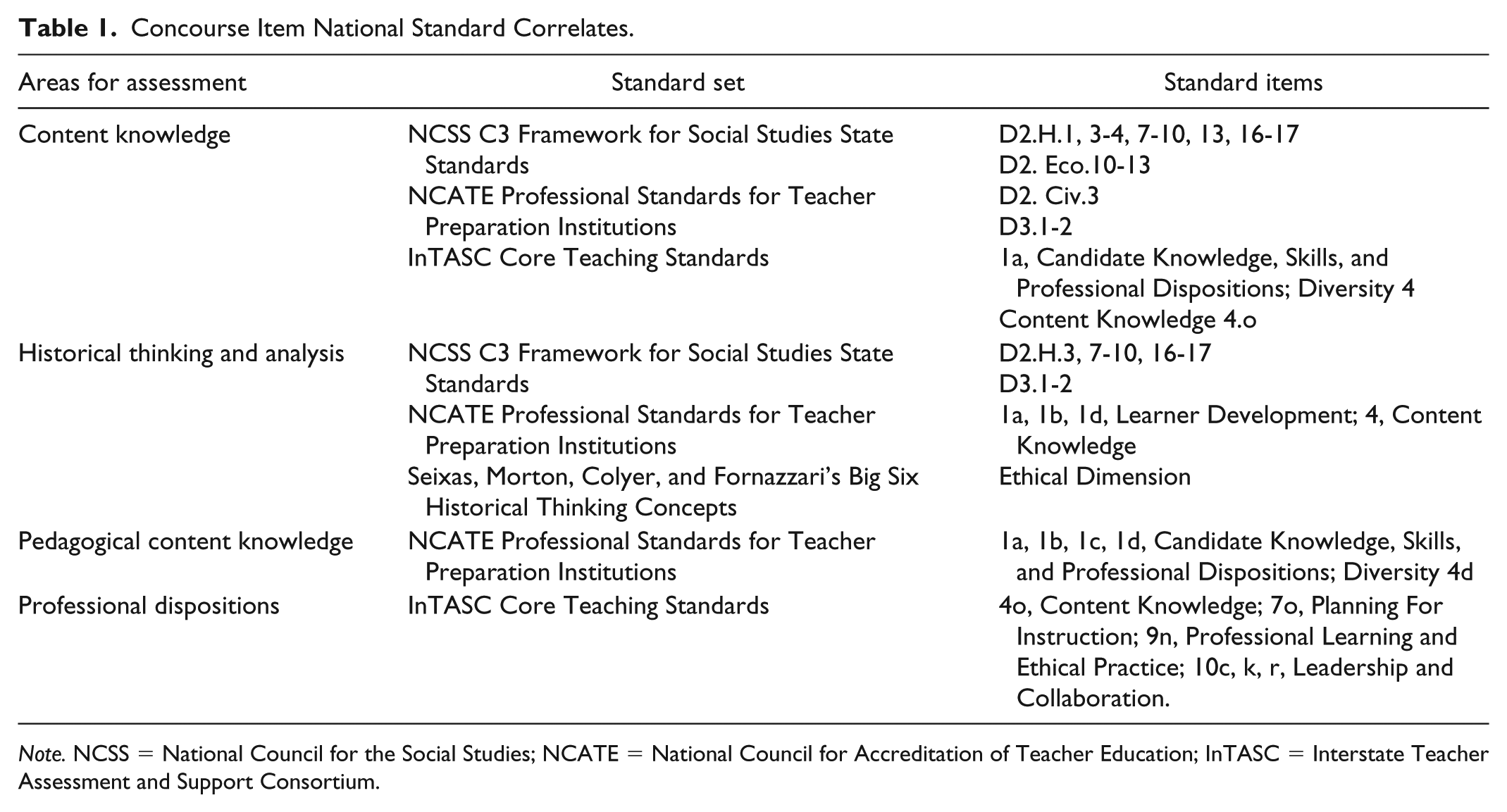
Note. NCSS = National Council for the Social Studies; NCATE = National Council for Accreditation of Teacher Education; InTASC = Interstate Teacher Assessment and Support Consortium.
Method
Participants
Twenty-nine U.S. teachers from 20 states and one U.K. teacher participated in the study (Table 2). The participants averaged 15.3 years in the classroom (range 3-35; mode 5), most often held a master’s degree (BA/BS: 2; MA/MAT/EdM: 22; PhD/EdS: 5). Participants were asked to identify their preferred racial/ethnic and gender descriptors. Twenty-two identified as female and seven as male. The racial/ethnic composition of the participating cohort echoes the larger U.S. educator population (U.S. Department of Education, 2016), approximately 82% (n = 24) of the participants identified as White and 18% (n = 5) of the participants identified as Latina (1), Latina/White (1), Hispanic (1), Caribbean/East Indian (1), or Arab (1). Twenty-five participants taught U.S. History/Social Studies in Grades 5 to 12. One taught K-12 social studies. Three were Library/Media instructors.
Pre/Post/Post-Post Factor Loadings.
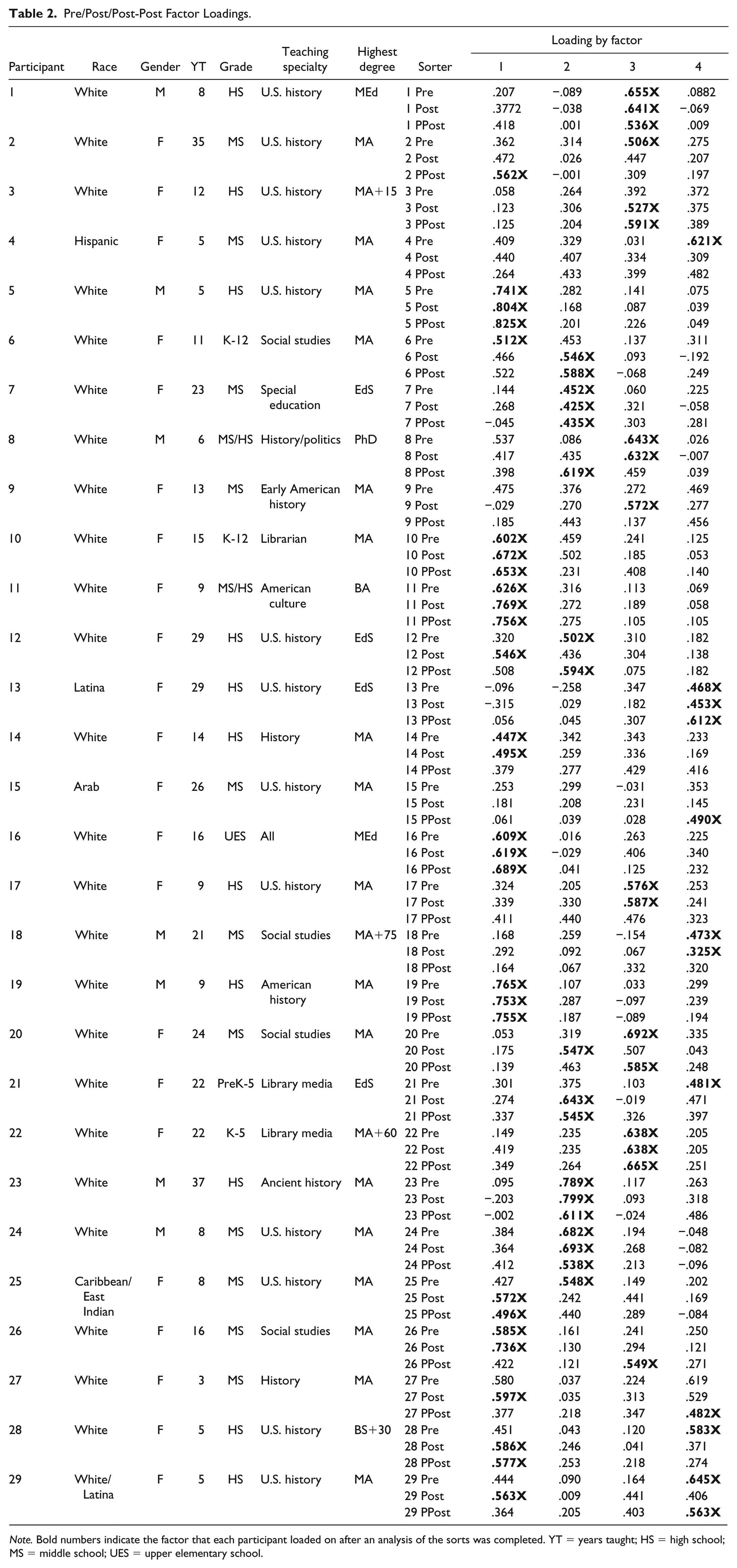
Note. Bold numbers indicate the factor that each participant loaded on after an analysis of the sorts was completed. YT = years taught; HS = high school; MS = middle school; UES = upper elementary school.
Participants should be seen as self-selecting and motivated in a well-resourced program. Participants applied to participate in the Monticello Teacher Institute (MTI), situated at Monticello, Charlottesville, VA. The Monticello education staff managed the application process. All 29 accepted participants agreed to participate in the research.
Participants participated in lectures, discussions, and tours as a cohort, and worked independently in the archive to create curriculum/materials. Many participants identified themselves as “PD junkies” or “History Nerds” who sought out HSBPD annually.
Q-Methodology
Q-method 2 is a systematic and rigorous quantitative study of subjectivity (McKeown, 1990). Subjectivity defined as a person’s communication of his or her point of view on any matter of personal or social importance. Q-methodology’s advantages over Likert-type scale surveys rest on using “forced choice” which brings personal values and experiences into the ranking process. In a traditional Likert-type scale survey, participants could rank everything at the same position on the scale without differentiating between them. In Q-method, participants rank the statements against each other on a worksheet that arranges them into a normal distribution curve (Figure 1). Next, they are interviewed about why they ranked statements as they did. These interviews allow for holistic interpretation of the data that can reveal patterns missed via other means.
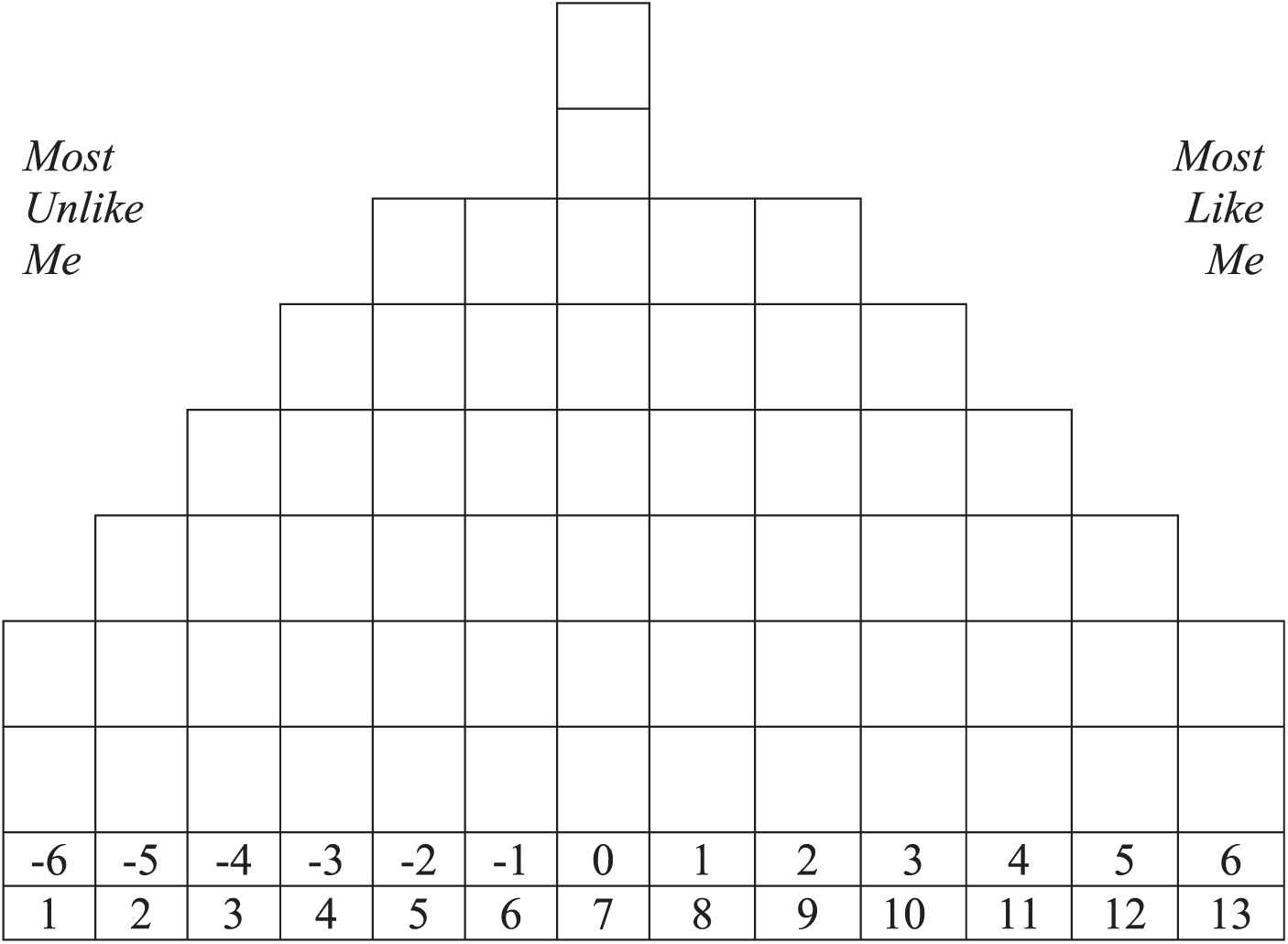
Q-Sort worksheet.
Administration of Q-Sort
Participants received the concourse, a set of 60 index cards, with a single statement written on each. Participants sorted cards into three piles: Most Like Me (MLM), Least Like Me (LLM), and Neutral, based on the prompt: “PD at historic sites affects my development as a teacher by . . .” Next, participants ranked the 60 statements on a forced distribution worksheet (Figure 1) ranging from +6 (MLM) to −6 (LLM). Participants placed MLM statements on the worksheet in the +6 column on the far right, the three MLM statements into the +5 column and so on until all statements from MLM pile were placed on the worksheet. This was repeated with the LLM (−6, –5, etc.) and Neutral statements (0, –1, +1). As participants were not required to create three equal piles, statements ranked as +2 or −2 should be interpreted as low positive/negative, high neutral. We urged participants to rank statements based on their daily work, rather than what they believed was important, but did not enact. The prompt of “flossing your teeth daily” was offered to help weigh statements they knew to be “right” against what they actually did. Follow-up interviews asked (a) why participants ranked their MLM and (b) LLM statements as they did, and (c) to describe their experience doing the sort.
Frequency
The Q-Sort was administered at three intervals: (a) Pretest, on site, on the first day of the institute prior to instruction; (b) Posttest, on site, on the last day of the institute after instruction/tours ended; and (c) post-post test, completed via Skype, in participants’ homes or classrooms, 6 months post-HSBPD. Interviews were conducted at the conclusion of each sort.
Data Analysis
We used Q-Methodology software PQ-Method (Schmolck, 2014) to analyze correlations among sorts, Eigen values, rotated factors, factor loadings, z scores, and rankings of Q statements in each factor (type or pattern). Centroid factor analysis was used to obtain an initial estimate of potential factors. Interpretable factors were selected among factors of eigenvalues greater than 1.
A four-factor solution was retained with more than seven defining sorts for each factor. Ranks for statements on each factor, distinguishing (statements with statistically significant factor scores; p < .05) statements, z scores and consensus statements (statements that do not distinguish between any of the factors), demographic information, and comments from open-ended questions were utilized for a complete interpretation of factors.
Results
Four factors were named. Type 1: Historical Pedagogical Content Knowledge (14% of variance; 12 sorts), Type 2: Learning From Experts (10% of variance; seven sorts), Type 3: Monticello-Focused Affective Experience (19% of variance; 20 sorts), and Type 4: Reconsidering the Past (15% of variance; 13 sorts).
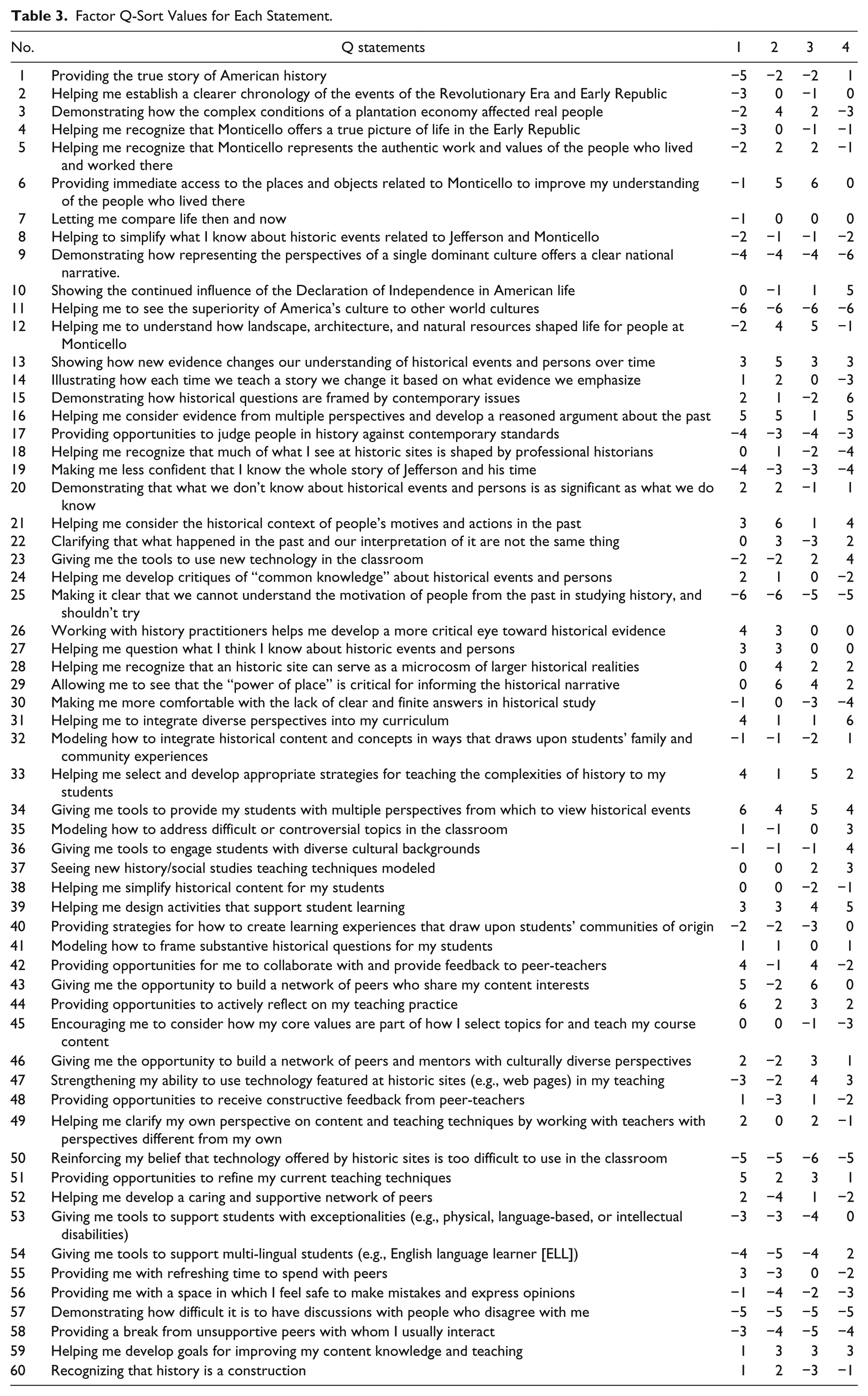
Analysis for Q-methodology is holistic, meaning that patterns of attitudes are observed utilizing the Q-Sort and interview data. The present study focused on how the participants perceived their HSBPD experience from pre-sort at the start of the institute (A), to the post-sort at institute’s end (B), to the post-post sort administered 6 months later, when teachers were back in their classrooms (C). The factors that emerged in this (ABC) data vary from those in the pre/post data (AB) (Baron, Sklarwitz, Bang, & Shatara, 2019). While many distinguishing statements from (AB) rank as +6 or −6, many (ABC) statements rank between +3 and −3, offering a more sober view of what teachers retained from HSBPD, rather than what is exciting about being at the historic site (see Table 3).
Factor Q-Sort Values for Each Statement.
Factor 1: Historical Pedagogical Content Focus
Factor 1 was the largest of the four factors in the post-post administration. Across all administrations, participants loading on this factor represented the widest range of years teaching, but below the cohort average (Factor 1 Average 12.8 years; range 3-35; Mode 5), grade level (2 K-12; 1 Elementary; 4 Middle School; 1 Middle School/High School; 6 High School), and education (BS-EdS). There was a higher than the cohort average ratio of female to male participants (13-1).
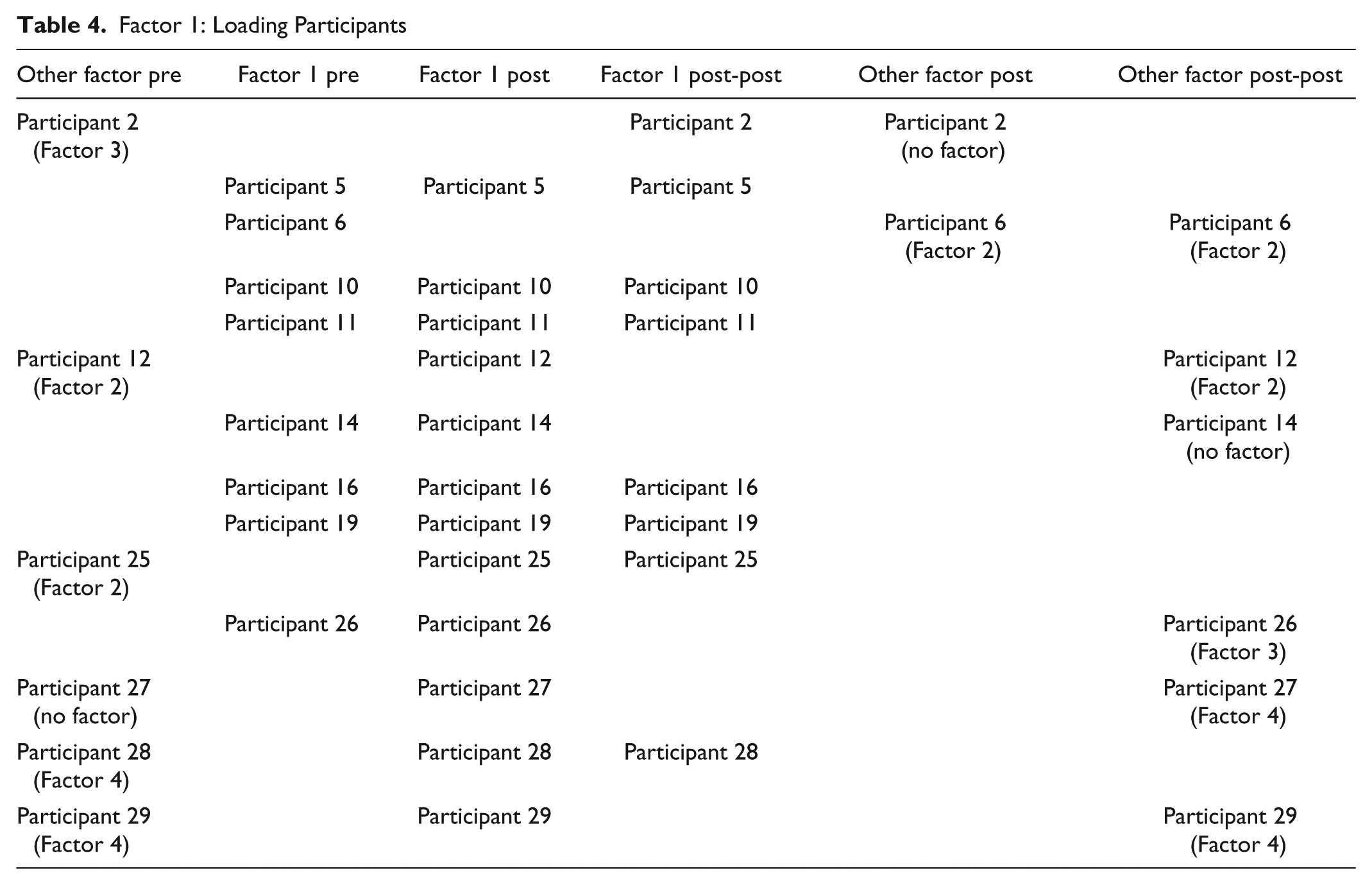
In comparison to on-site evaluations (7), nine participants loaded on Factor 1. Of these nine, four loaded on Factor 1 across three administrations (Table 4). Three elements remained once back in their classrooms: the value of reflective space to consider their practice, opportunity to build a network of content-area peers, and pedagogical tools to provide their students with different perspectives on the history they study. Less important were history content and professional dispositional statements about needing a “break” from their peers, with whom they were once again in daily contact. Statements indicating pedagogical strategies and materials gathered were far more significant once back in their classrooms.
Factor 1: Loading Participants
Participants conceptualized one of the distinguishing statements for this factor, Statement 31: Helping me to integrate diverse perspectives into my curriculum, in several ways. Most interpreted it to mean incorporating perspectives of women and African American historical agents into their curriculum. Many sought to provide these perspectives for students who lived in communities that were predominantly White, for example, Participant 5: I think perspective is really important in my classroom because my classroom is not very diverse. We are 98% White in my school, so they have no perspective outside their own and we don’t get multiple perspectives in the classroom. By trying to integrate different perspectives throughout history I hope then kids are able to step outside themselves a little bit and see things from other perspectives.
There was a desire to think differently regarding their personal understandings and reflections on teaching (Statement 44). (e.g., Participant 16: “I work with people who are very like-minded. [Northwestern State] isn’t known to be terribly diverse and I live in a not very diverse part of [Northwestern State]. Getting other people’s perspectives and feedback, that’s a big reason why I come to these things. It is to get different perspectives and different ways of looking at things.”)
Repeated exposure to Monticello’s main house and adjacent slave quarters on Mulberry Row was cited in helping participants expand the range of voices integrated in their curricula. While many were aware that Jefferson was a slaveholder, seeing the disparity between where the Jefferson and enslaved families lived and worked illuminated the complex interwovenness of their narratives. Once back in their classrooms, participants noted an intensity to this perspective that stayed with them and informed their teaching on a range of subjects within American history. For example, Participant 25, who loaded on Factor 1 in the post/post-post, noted as follows: My experience really shaped how I teach Jefferson. Previously, I would teach about Jefferson, but I did not really frame it in the context of his life at Monticello. After seeing Monticello and the [online resources], you could have kids see the perspectives from somebody who is enslaved to someone who is visiting Jefferson. Just going through the house you can compare it to the [Mulberry Row] cabins. I was thinking of the kitchen and where it’s located [under the house], the perspectives of the enslaved people who worked there. I was thinking there was even a narrative to how the rooms were set up. All that is powerful in just describing the day-to-day life of the time-period.
This points to the online resources’ role in bridging HSBPD work and classroom activities. The story Participant 25 referred to about “how the rooms are set up” relates to the degree of control Thomas Jefferson exerted over the physical plant at Monticello. In particular, his daughter Martha, who ran the plantation in his absence, a complex enterprise involving multiple business and personal arrangements, could not move her bed across her bedroom without Thomas’s permission. Permission he did not give. This speaks to the powerful encumbrances gender norms imposed upon the residents of Monticello and how guided exploration of the physical environs illuminated such issues.
Participants noted their peers’ perspectives were an essential part of the HSBPD experience, particularly the building of a network of content-area peers (Statements 43 and 55). For many participants, HSBPD offers respite from the isolation of being the only person in their buildings who teach particular subject matter. (e.g., Participant 5: “I think that’s the most valuable thing because so many of us don’t really have a chance to bounce ideas off of other people.”) Participants were motivated to work with content-area peers and build ongoing relationships, so they could continue to work through curricular issues once they returned to their classrooms.
Factor 2: Learning From Experts
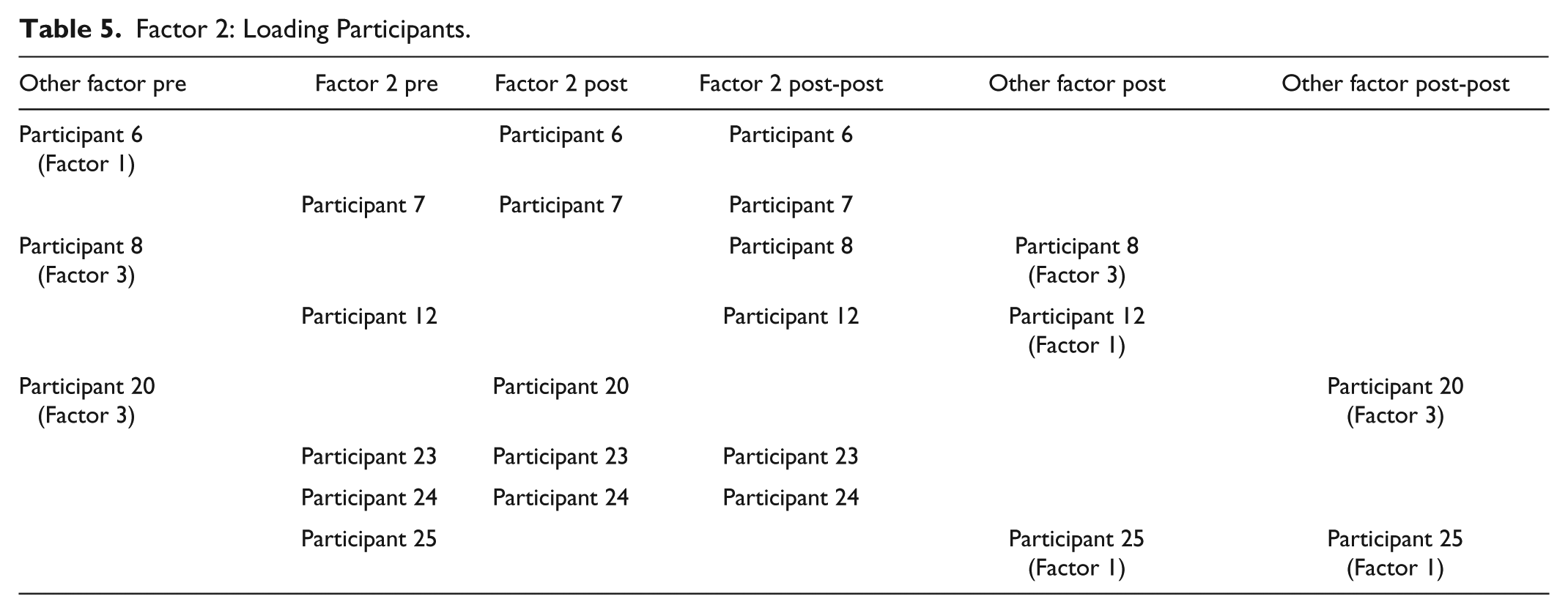
Across three administrations, Factor 2 was the most stable of the factors in terms of participants and distinguishing statements. Three of the six participants loaded on Factor 2 across three administrations; two loaded on it either pre- or post- as well as the post-post. Similarly, the distinguishing statements remained constant with one addition (Statement 18) indicating the importance of historians in shaping the site (Table 5). Participants chose as MLM historical content and analysis statements. Participants’ LLM statements were items that identified simplistic conceptualizations of history or working closely with peers.
Factor 2: Loading Participants.
Participants who loaded on Factor 2 averaged 20 years teaching (range 8-37) were more likely to hold terminal degrees (PhD/EdS), equally likely to be female or male, which skews more male, relative to the rest of the cohort. These participants attended HSBPD to engage with disciplinary experts, sought those experiences on site, and held that view upon return to their classrooms. Participant 6 exemplified this perspective: The reason I go to these PDs is to work with the experts. To watch and observe how do they observe and interpret evidence. How do they form a historical perspective? [I’m interested in] seeing how they work with the evidence, how all of the different disciplines from archeology to interpretation to site tours all work together.
Across three administrations, participants loading on Factor 2 held the most sophisticated views of history, as a discipline, its role in classrooms and society, including a sense of history and historic sites as constructions based on changing information, in the statements participants chose as Most Like Them as well as in their rejection of the statements indicating Least Like Them. For example, Participant 23 chose as LLM Statement 25: making it clear that we cannot understand with certainty the motivation of people from the past in studying history.
I believe that we can understand in part [historic agents’] motivation and that’s why you study history. You dig deeper into the lives or narratives, and people and incidents will be revealed in some way. Why study something you can’t know? Why study dates and facts? People make history. I think we can discover something more about the human condition that will help us understand the current human condition in which we are in.
In contrast to other Factors, participants who loaded on Factor 2 chose statements for their LLM indicating professional goals for collaboration with their peers. Participant 7, who loaded on Factor 2 in the pre and post-post, summed up her position in response to her LLM Statements (Statements 57 and 58): I frankly don’t care about what a lot of people think. I’m used to having a lot of people disagreeing with me at work. I just go about my day and do what I have to do. I don’t try to get away from people, but I don’t go out of my way to interact, so it doesn’t bother me if they don’t agree with me.
Other participants echoed Participant 7’s sentiment regarding relationships with peers. For them, being at the historic site was an opportunity to connect with the site and experts, not peers. This perspective is consistent with prior research indicating that teachers with predominantly content-oriented focus in PD were less likely to engage in reflective or collaborative activities (de Vries, van de Grift, & Jansen, 2014).
Factor 3: Monticello-Focused/Affective Experience
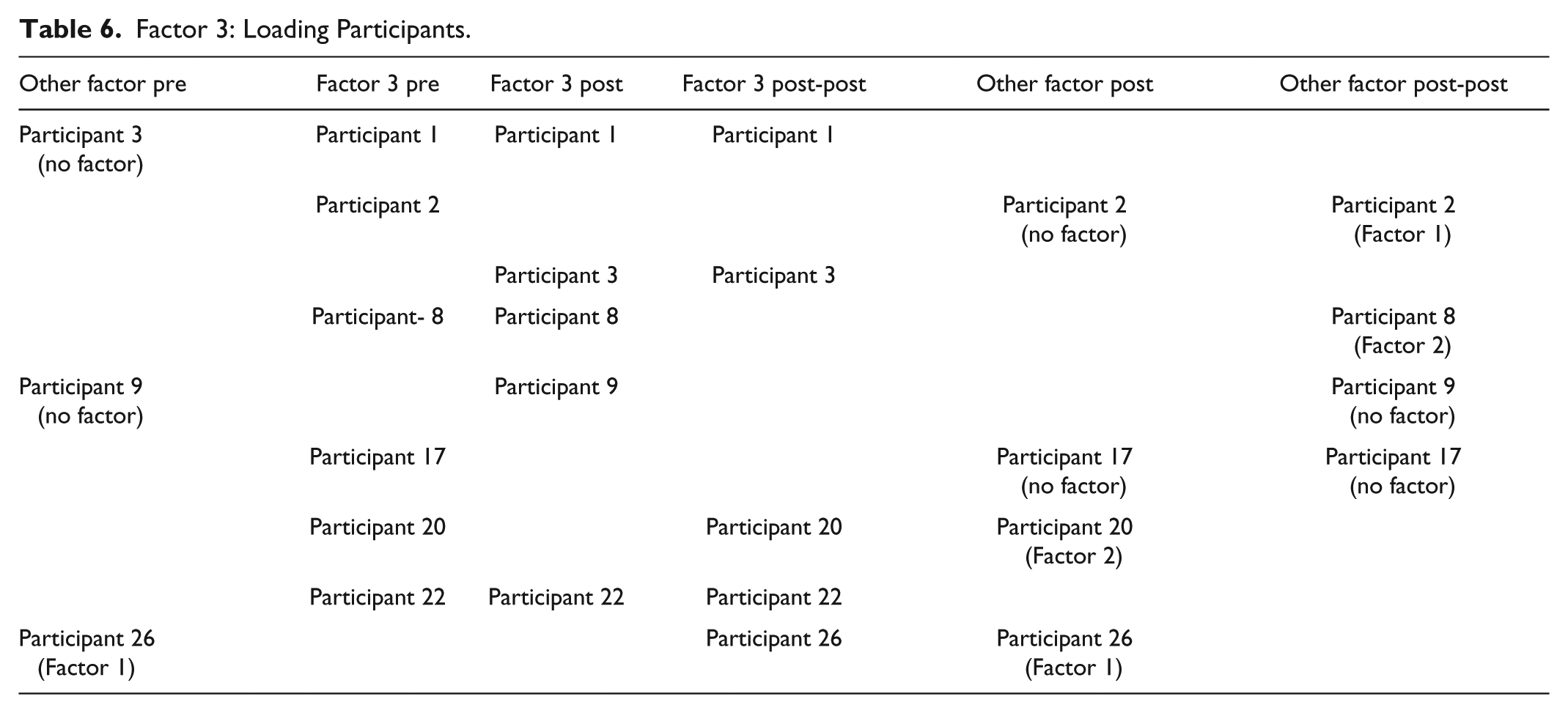
Throughout the administrations, there was considerable participant movement between Factor 1 and Factor 3. What ultimately distinguished Factor 3 in the post-post was equal prioritization of being at the historic site and working with peers (Table 6). Participants’ consensus statements drew from the declarative content (e.g., chronology) elements drawn from the social studies standards and the professional disposition standards, indicating they tended toward narrative historical understanding versus deep analysis/disciplinary structures, and emotive empathy versus historical empathy (Bryant & Clark, 2006). Participants who loaded on Factor 3 averaged 15.6 years in the classroom (range 8-24) were 4:1 female: male and skewed slight toward middle school/elementary teaching.
Factor 3: Loading Participants.
Factor 3 participants offered few explicit links to pedagogy/curriculum or critical appraisals of the site. Participants voiced imaginative and object-linked numen-seeking (Latham, 2013) views of the site. To wit, Participant 20 responding to Statement 29: Power of place as MLM during her post/post-post interviews described her feelings being on site: I feel that being at a historical place is the key to being able to understand the individuals [who lived] there. I feel when you are teaching kids and you’ve been there, you have the emotion and the feel of that place, it’s easier to portray that to students. I feel when you look at the gardens, you look at the landscape, you really get a vision of what Jefferson was like and how he would have felt. I think just the landscape, getting the feel for standing on this mountain, you can definitely see why it was attractive to Jefferson. You can envision the slavery that was there and through Mulberry road.
In the post-post interview, the appeal of the numinousness (Latham, 2013) of the site was what remained: Part of my decision to enter the summer institute was the power of place, to be at a particular location. I just wanted to experience it myself. Being there and walking in those footpaths, helped shape my opinions on the landscape, [Jefferson’s] relationship with his slaves, the different inventions in the home, just the whole experience.
Participants noted they would discuss their experiences being on site with their students, but without the explicit connections to conceptual/curricular issues that typified the responses of other Factors. Participant 22, who loaded on Factor 3 across three administrations, noted the opportunity to renew her interests in content and return to the classroom revitalized: I’m here to learn as much as I can and take what I have back to my students. It inspires me. It gives me something new to bring back to the students. I think when the teacher is enthusiastic you hook the kids. Coming to a place provides a newness for me to bring back, new information too. I’ve been to the Library of Congress teacher’s institute, I’ve been to Mount Vernon. And it totally brings a new me back to school every year.
Similarly, Participant 26 explained how working with her peers at the historic site was what she took from the experience: When I’m at an historic site looking at the specific concept in my lessons, I have all of these wonderful people I can work with and shoot ideas off of, and refine what I do. I’ve been working closely with a group of people for a week that are invested in the same things I’m invested in. They enjoy teaching. They are passionate about their subject area and knowledgeable about it. And not just the teachers, but [the site staff] as well. It’s not just teaching. All these other components build my classroom.
It is notable that nearly half (four of nine) of participants who at one point loaded on Factor 3 shifted to no factor at all. As the Factor whose members offered the least nuanced historical interpretations it is of considerable interest what substance they took from the experience.
Factor 4: Reconsidering the Past
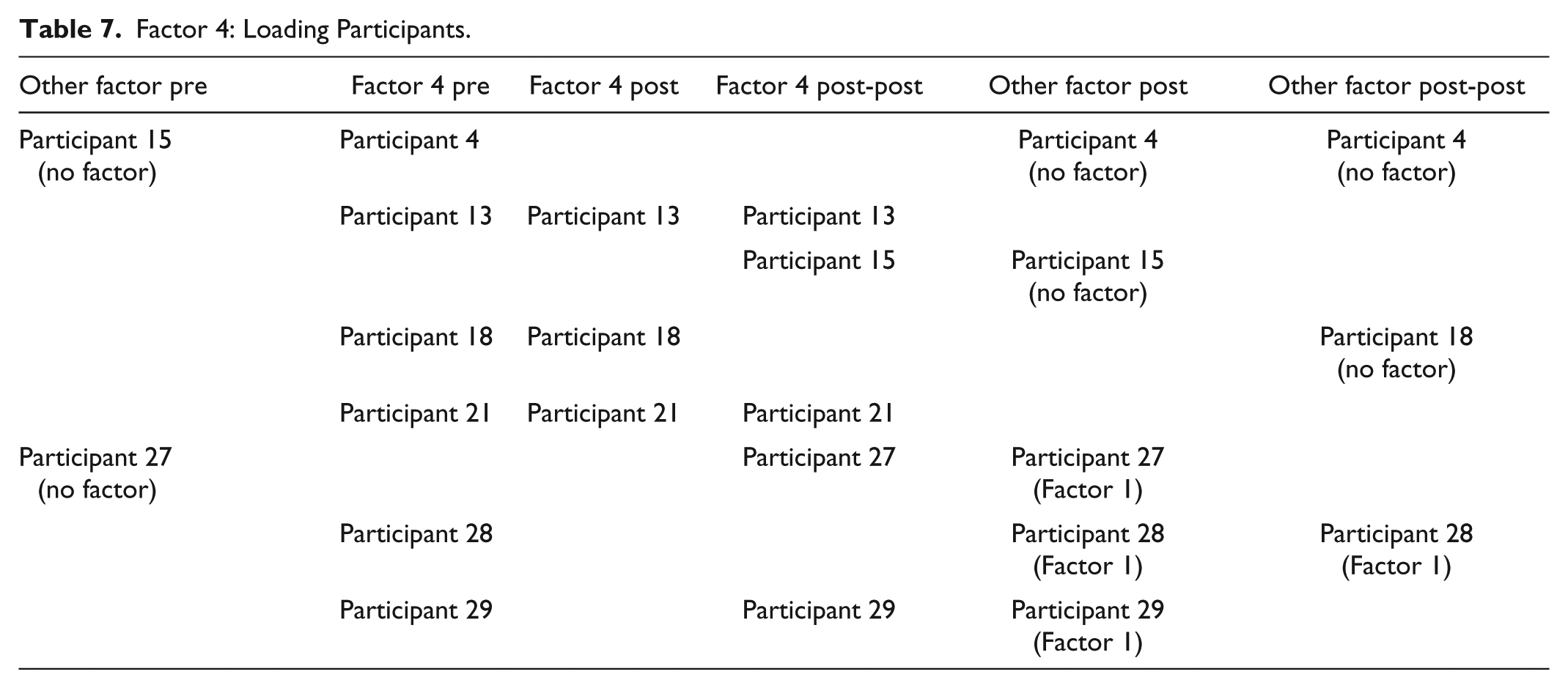
Factor 4’s Reconsidering the Past was the most variable of the Factors in terms of participant movement. In the current administration, five participants loaded on it, including one for the first time (Table 7). The other four participants loaded on it in either the pre- or post-administration. Participants averaged 15.8 years in the classroom (range 3-29) and identified as female. The statements chosen reflected the historical analysis and the learner diversity standards.
Factor 4: Loading Participants.
The 2016 U.S. presidential election, concluded weeks prior to the final administration, brought into focus many issues raised by Monticello’s complex racial history. The overriding sensibility of participants loading on Factor 4 was that history was not “finished,” but reinterpreted as new information emerged/events occurred. There was a humility about how little they could know about historical persons/events. Participant 21, loaded on Factor 4 across three administrations, in the reasoning she gave for her choice of her the MLM item (Statement 20) typified this perspective: The more that I learn, the less I realize I know. The more I learn about history, it just brings up more questions than answers. I think that’s important to know about history: just when you think you’ve got it, you don’t.
Participant 15, who loaded on no other Factor in the previous administrations, loaded on Factor 4 in the post-post. For her, the national conversations surrounded the 2016 election were clarifying experiences. Responding to MLM statements (Statements 35 and 27), Because of what is going on lately in the news it’s in the forefront of my mind in terms of the origins of slavery and racism. How racism is displayed so much more blatantly, whether it’s police or random people being emboldened by whatever is going on in the country. I started to see things a lot differently. So much has happened in the political world and historically, how eventful the last few months have been, it seemed like a lot longer. [Having been at Monticello] gives me a different viewpoint and helps me analyze things better. An old adage keeps coming up, the more I know the more I know I don’t know. So it’s more, what have I missed? What don’t I know that can make me understand things a lot better?
Across all the administrations, four of the five institute participants who identified as People of Color (Latina, Hispanic, and Arab) loaded on Factor 4. They comprised more than half of the loading participants in the post-post administration. While the sample is small and the post-election moment was raw, it may point to the prioritization of People of Color to engage in an ongoing reevaluation of the past, as distinct from a greater willingness among White participants to accept prior historical knowledge as settled (e.g., Burgard & Boucher, 2016; Epstein, 1998, 2000; Rosenzweig & Thelen, 1997).
Discussion
The current study begins to show the range and complexity of outcomes that teachers derive from HSBPD upon return to their classrooms. One of the ways participants repeatedly referred to their time in HSBPD was in relation to other site-based programs that they attended. Participants noted that these programs were an annual part of their PD plans. Greater attention must be paid to the network of historic sites that annually offer HSBPD. To understand the ways in which history practitioners are teaching teachers, we must begin to consider this network of programs as a system and to the cumulative effect that participation has on history teacher teaching and learning.
Disciplinary Considerations: Place as Context
History educators across a range of perspectives note the essential role understanding historical context—situating persons and events in the full complexities of the time and place in which they lived/occurred—plays in studying history (e.g., Lévesque, 2008; Seixas et al., 2013; Van Drie & van Boxtel, 2008; Wineburg, 1998, 1991). However, teaching context and the context-dependent historical empathy/perspective taking have been notoriously difficult (contextualization: Britt & Aglinskas, 2002; Mosborg, 2002; Nokes, Dole, & Hacker, 2007; Reisman, 2012; historical empathy: Berti, Baldin, & Toneatti, 2009; Brooks, 2009, 2011; Cunningham, 2007, 2009; Endacott, 2010, 2014; Endacott & Brooks, 2013; Endacott & Pelekanos, 2015).
Yet this series of studies is beginning to show the centrality of the “Power of Place” and its role in teachers’ deepening understanding of the complexities of the historic persons and the contexts in which they lived. The situatedness in the physical context of the historic site raised consideration of a range of historical contexts (cf. Boerman-Cornell, Kim, & Manderino, 2017; Wineburg, 1998), particularly, the social context in which enslaved and free people lived side-by-side. This aspect of the on-site work remained vivid once back in the classroom and permeated subsequent content presentations. However, as with Factor 3 participants, it did not automatically generate critical appraisals or contextually grounded historical empathy (Bryant & Clark, 2006; Endacott & Brooks, 2013).
Thus far, the literature on historical contextualization and empathy/perspective taking have focused on students’ capabilities (e.g., contextualization: Baron, 2016; Huijgen, van Boxtel, van de Grift, & Holthuis, 2017; Huijgen, van de Grift, van Boxtel, & Holthius, 2018; Van Drie & van Boxtel, 2008; empathy: De Leur, van Boxtel, & Wilschut, 2017; Endacott & Pelekanos, 2015; Savenije & de Bruijn, 2017). Missing is exploration of teachers conceptualization and enactment of these skills in their own learning and transfer to the classroom. The more complex problem remains in understanding how the embodied experience of Place helps teachers teach the content embedded in it from a distance (i.e., Monticello from their classrooms) and how they navigate their way back to that Place cognitively, conceptually, logistically, to draw out its lesson for themselves and for their students. Given the disciplinary and curricular connections, exploration of teachers’ development and understanding of historical context and empathy offer the clearest pathways to begin to answer this question.
The Question of Perspective
At the intersection of disciplinary content, pedagogy, professional dispositions, and personal experience rests participants’ engagement with and retention of different perspectives as a feature of HSBPDs. Consequently, participants’ conceptualization of those perspectives is layered, but point to a desire to think differently about a range of issues of national, curricular, disciplinary, and personal import.
It is necessary to consider how differently teachers think about either the past or the present after attending HSBPD and what action follows those thoughts. Within the concourse, several items identified different perspectives that participants could prioritize. While the entire cohort of teachers rejected positive framing of the superiority of American culture (Statement 11), “dominant culture,” or “national narrative” (Statement 9), the rankings diverge when considering the more active/interventionist idea of “integrating diverse perspectives” into their curricula (Statement 31) versus the more personal, slightly more passive notion of “considering multiple perspectives” (Statement 16) for themselves and their students (Statement 34). While there was broad appreciation for the consideration of multiperspectivity across all four factors, the greater the need for direct action, the softer the support.
We do not know how these considerations manifested changes in classroom action or curricular orientation. For example, while participants explicitly noted perspective shifts related to slavery or enslaved persons were those shifts sufficient to decenter the Whiteness of their curriculum or did they reify progress narratives in it. Given the cultural authority of historic sites, we must understand the ways they help teacher’s examine their own biases and redraw boundaries within the content they teach (cf. Burgard & Boucher, 2016, 2018; DiAngelo, 2011; Gutiérrez et al., 2017; Kennedy, 2016; Sleeter, 2001, 2016).
Promoting racial literacy goes far beyond the traditional mission of museums as purveyors of content and raises questions about the degree to which historic sites are interested in or prepared to engage in the social justice mission of teacher education (cf. Goodwin & Kosnik, 2013; Swennen, Jones, & Volman, 2011). The teacher education community must interrogate ways they can support historic sites and museum educators in this work.
Limitations and Next Steps
The sample is comprised of very experienced, self-selecting participants. Although this is a typical population for HSBPD, findings may not extend to PD with compulsory attendance. Furthermore, caution is necessary when considering the impact of PD in changing classroom practice. Even with motivated participants who embrace transformation, the obstacles teachers face in changing classroom practice can overwhelm even the most committed practitioner (Cohen, 1990). Furthermore, while Q-methodology offers a rigorous process for studying subjectivity, it relies upon participants’ self-reporting what they deemed important. While this study offers a window into participants’ interactions with historic spaces, it does not objectively address participants’ learning outcomes. Those must be investigated by other means.
Given the challenges of conceptualizing teacher learning at and with historic places, we recommend that researchers interested in this question begin by situating their work to focus on the lesson planning products that teachers produce as part of their HSBPD experiences. Critically, as the question of how teachers use HSBPD materials in classrooms centers on transfer (Baron, 2014; Barnett & Ceci, 2002) the next steps for investigation call upon cognitive works. Positioning research within the problem-solving literature, theorizing lesson planning as a nonrecurring, goal-directed, cognitive effort, in an ill-structured problem space (c.f., Anderson, 1987; Kim, 2012; Pretz, Naples, & Sternberg, 2003; Spector, 2010; Voss, Tyler, & Yengo, 1983), would give shape to questions of teacher learning at historic sites firmly within the professional purpose of their visit and the mental models they construct to manage the transfer of the information they gather on site back to their classrooms. Subsequently, exploring the sociocultural and embodied experiences of teachers, both at the site and again in their classrooms, within those models would then help us understand how the historical content, experiences, and reported perspective shifts are embedded within curricular and pedagogical enactment.
Conclusion
HSBPD offer teachers opportunities to engage as individuals, professionals, and in communities of learners with complex historical and professional resources. At historic sites like Monticello, which challenge visitors to consider difficult histories, where teachers volunteer to engage in discussions about it, there is considerable opportunity to reshape schools, curriculum, teacher education, and museum practice. This study offers an entry point for further examinations of what aspects of HSBPDs remain once teachers return to their classrooms and begin to change their classroom practice.
Footnotes
Acknowledgements
The authors gratefully acknowledge the contributions to this work of Thomas Jefferson Foundation staff members Gary Sandling, Linnea Grim, Jacqueline Langholtz, Melanie Bowyer, and Lora Cooper.
Declaration of Conflicting Interests
The author(s) declared no potential conflicts of interest with respect to the research, authorship, and/or publication of this article.
Funding
The authors disclosed receipt of the following financial support for the research and/or authorship of this article: This project was made possible in part by the Institute of Museum and Library Services through the National Leadership Grants for Museums program ( ; Federal Award Identification Number: MG-10-15-0095-15).