




Abstract
Professional learning provides the opportunity to improve teacher practice and student outcomes; however, challenges exist in ensuring that teachers can access quality professional learning. Teachers in regional and remote schools may have even more limited access to the expertise required to support changes in practice than their peers in metropolitan centers. This article reports on a continuing professional learning program designed to support teachers in two regional schools to implement a new approach to teaching reading in their schools. The findings from this research suggest that existing online learning platforms can be used to deliver targeted instructional coaching for teachers and support in-school coaches to improve their knowledge of reading instruction and their instructional coaching skills.
Keywords
Previous data from the International Association for the Evaluation of Educational Achievement (IEA), Trends in International Mathematics and Science Study (TIMSS), and the Progress in International Reading Literacy Study (PIRLS) have demonstrated that students in remote and regional Australia are frequently disadvantaged compared with their peers in metropolitan schools (Thomson, De Bortoli, & Underwood, 2017; Thomson, Wernert, et al., 2017), particularly regarding reading outcomes (Thomson, Hillman, et al., 2017). In the analysis of Australian data from the latest PIRLS assessment, it was identified that students in remote schools were 3 times more likely to be poor readers than their peers in metropolitan schools (Thomson, Hillman, et al., 2017). Furthermore, in schools categorized as disadvantaged, the percentage of students who were poor readers was double that of other schools. Buckingham et al. (2013) note that children from low socioeconomic backgrounds are more likely to enter school with lower literacy levels than children from higher socioeconomic backgrounds and that this disadvantage continues throughout their schooling. Despite this, they assert that, at the school level, the quality of teaching is more significant than the school’s resources in ameliorating this disadvantage.
The Australian Government acknowledges that quality teaching is key to student outcomes (Teacher Education Ministerial Advisory Group, 2015) and lack of teacher knowledge about reading acquisition has consistently been cited as a significant contributing factor in children’s poor reading skills (Moats, 2009; Seidenberg, 2017). In their study of mono- and dizygotic twins, Taylor et al. (2010) found that effective teachers were the key to enabling students to reach their full reading potential. Kraft et al. (2018) also found clear evidence of a link between instruction and achievement. Preservice teachers’ preparation to teach reading has been criticized (Buckingham & Meeks, 2019), which could have implications for regional and remote schools where the percentages of new graduates in primary schools are 23.2% and 44.7%, respectively (McKenzie et al., 2014). However, well-structured professional learning opportunities have the potential to support improvements in teacher knowledge and practice (Fullan et al., 2006; Ingvarson et al., 2005).
Continuing Professional Learning (CPL)
Professional learning opportunities can take many forms, ranging from one-off sessions to extended engagement in learning and practice cycles. The term professional development is often seen as being synonymous with professional learning or professional learning communities; however, these can represent markedly different approaches. The term continuing professional learning is used in this article as an amalgam of the terms continuing professional development and professional learning (Boylan & Demack, 2018; Fullan et al., 2006). CPL is conceptualized as incorporating ongoing professional development activities and involvement in professional learning communities where participants have the opportunity to work with external experts, in-school senior teachers, and their peers to implement new practices and evaluate outcomes.
The literature on effective CPL reveals several factors for consideration when designing learning experiences for teachers, including a focus on content, active learning, and feedback (Guskey, 2014; Timperley, 2011). Through their review of experimental and quasi-experimental studies on CPL, Desimone and Pak (2017) elaborated on these three components, identifying five key areas in effective CPL. These five areas were as follows: (a) Content focus, relevant to the subject and how students learn it; (b) Active learning, teachers engaging with and enacting the content in the context of their classrooms; (c) Sustained duration, professional development taking place over an extended period, for example, a year; (d) Coherence, the content and objectives of the professional development are consistent with the goals and beliefs of all participants; and (e) Collective participation, a professional learning community developed from the participant group, for example, teachers of the same content.
Content focus and active learning can be effectively supported by instructional coaching, a collaborative process where experts in a particular field work with teachers to support them to implement teaching practices through modeling, collaboration, and performance feedback (Jones, 2018; Joyce & Showers, 2002). Denton and Hasbrouck (2009) identified several types of instructional coaching approaches, including peer coaching, cognitive coaching, technical coaching, problem-solving coaching, and reform coaching. Consistent across these approaches is the theory of adult learning that posits adults—must be involved in planning and evaluating their learning, learn best by doing, are problem-focused and goal-oriented, and need to see the immediate relevance of their learning (Knowles, 1984).
Instructional coaching has been adopted across multiple countries (Van Nieuwerburgh, 2018) and is mandated for some programs in America (Coburn & Woulfin, 2012; Desimone & Pak, 2017). Research consistently supports that developing teachers’ content knowledge concurrently with in-classroom coaching is critical to improving teacher practice and student outcomes (Desimone & Pak, 2017; Freeman et al., 2017; Marzano & Simms, 2013; Matsumura et al., 2019). Correlations between coaching and improved student outcomes on standardized tests have also been established (Biancarosa et al., 2010; P. F. Campbell & Malkus, 2011; Elish-Piper & Allier, 2011).
Coburn and Woulfin (2012) found that instructional coaching supported teachers to implement a specific approach to reading instruction that was about more than simply improving current practice. Their evaluation indicated that instructional coaching was effective at not only changing practice but also beliefs about practice, which are more difficult to change (Slater & Nelson, 2013). Freeman et al. (2017) assert that instructional coaching provides the means “to bridge the implementation gap from knowing-to-doing” (p. 29). When teachers see the strategies promoted in the CPL modeled, have the opportunity to practice these skills, and receive feedback on their delivery, they are more likely to use the strategies and deliver them effectively (Carlisle & Berebitsky, 2011; Carlisle et al., 2011; Desimone & Pak, 2017; Putman et al., 2009).
Online CPL
Countries such as Australia experience challenges supporting the professional learning of teachers and students in regional and remote areas of the country. Some characteristics of CPL can be difficult to facilitate in schools where there are restrictions due to geographical access and financial resources (Glover, 2017b; Stelmach, 2011). This includes ensuring that in-school coaches have the necessary skills and knowledge to be effective (Allington, 2006; Garnier et al., 2012). However, Matsumura et al. (2019) suggest that “the medium through which coaching is delivered is less important than are the quality and substance of the learning opportunities provided to teachers” (p. 194), and online CPL has been suggested as a viable alternative (Herbert et al., 2016). Some research suggests that virtual coaching is more effective than face-to-face coaching (Powell & Diamond, 2013), and the use of videos to support teacher reflection and professional growth is well documented (see Matsumura et al., 2019).
Coaching components of effective CPL that can be challenging in an online environment include the modeling of teaching approaches, observations of teachers implementing these practices, and the provision of feedback on these observations (Jones, 2018). While challenging, the use of online platforms to facilitate the coaching process has been shown to increase the efficacy of teacher–coach interactions (Freeman et al., 2017; Glover et al., 2019). Kurz et al. (2017) note that, while some coaching models suggest that immediate feedback (synchronous) is most effective, asynchronous coaching (where coach and teacher meet at a designated time such as online meetings) allows the coach and teacher more opportunity to reflect on the teaching. This can result in higher quality feedback.
Evaluations of the web-based professional development program MyTeachingPartner (MTP) found the approach to be effective for a range of professional development purposes from pre-kindergarten (Downer et al., 2011; Pianta et al., 2008) to secondary (Gregory et al., 2017). Of relevance to this study, the combination of online supports, including video conferencing and video examples of practice, used in this program, was identified as more effective than text-based materials at improving the literacy and language skills of 4-year-old children (Downer et al., 2011).
Another important theme in the literature is the importance of the relationship between the coach and teachers to the success of the endeavor (Darling-Hammond et al., 2017; Matsumura et al., 2019; Toll, 2018; Van Nieuwerburgh, 2018). Further investigation is needed to establish whether these components can be achieved through online CPL.
Methodology
This research project aimed to develop, trial, and evaluate processes for working with schools in regional and remote areas to deliver online CPL in reading instruction. The intended outcome was to provide the schools with the skills and knowledge necessary to maintain the literacy and instructional coaching practices learned through the CPL, that is, to ensure a sustainable professional learning community existed in the schools.
Research Questions
The research questions that guided this project were as follows:
Participants
The demographics of the two schools are summarized in Table 1. The socio-educational backgrounds of students in Australia are measured using the Index of Community Socio-Educational Advantage (ICSEA; Australian Curriculum Assessment and Reporting Authority, 2020). With an ICSEA between 930 and 935, the schools in this research are below the median ICSEA of 1,000 and are, therefore, categorized as disadvantaged. The National Assessment Program Literacy and Numeracy (NAPLAN) compares schools’ results in standardized assessments for literacy and numeracy using their ICSEA to determine whether schools are performing at the same level as schools in similar contexts. The NAPLAN results in reading for both of these schools indicate that they are performing at the same level as schools with a similar ICSEA but below the average performance of all Australian primary schools.
Participating Schools’ Demographics.

Note. ICSEA = Index of Community Socio-Educational Advantage. EALD = English as an Additional Language or Dialect.
All three of the teachers who volunteered to be part of the online instructional coaching were within their first 5 years of teaching and had graduated with a Bachelor of Education. The in-school coaches had over 10 years of teaching experience and both had a Bachelor of Education. Neither of the coaches had formal training in instructional coaching, but one was a lead teacher in her school and, as such, was familiar with supporting staff to deliver the curriculum. All teachers and coaches were female and the technology support person was male. The classes taught were pre-primary level, meaning that their students would turn 5 years old by June 30 in the year they enrolled.
Method
A mixed-methods approach to data collection was employed as this provided for a more comprehensive exploration of the research questions and enabled the researchers to build a “detailed view of the meaning of a phenomenon or concept for individuals” (Creswell, 2009, p. 18). The mixed-methods approach to research is generally attributed to D. T. Campbell and Fiske (1959) who established the use of both qualitative and quantitative measures as a way of triangulating data and validating findings. Johnson et al. (2007) suggest that the use of mixed-methods research is primarily a pragmatic approach to knowledge, which attempts to consider all viewpoints. The researchers used recordings of teaching; lesson observation forms; semi-structured interviews with teachers, coaches, principals, and the technology support teacher; and student reading achievement data to evaluate the efficacy of this coaching approach for developing teachers’ reading instruction skills.
The lesson observation form was developed by the researcher coach (RC) based on the Letters and Sounds lesson overview. The form included terminology familiar to the teachers and a sequence that aligned with the researcher’s recommendations on lesson delivery. The criteria were as follows: Introduction and warm-up, Revisit and review, Learning intentions, Explicit teaching, Practice, Apply, and Review and assess. This form was used by both the coach and the RC to provide feedback on recorded lessons and when directly observing classroom practice. These criteria were also used for the lesson plan template to provide teachers with a guide to planning their lessons for the program.
Face-to-face, semi-structured interviews were conducted after the intervention with question prompts provided to participants before the interview. Semi-structured interviews enabled discussion of responses not previously predicted or identified and have been shown to elicit more in-depth answers and considered responses by offering participants the opportunity to talk about their experiences (Creswell, 2009). Interviews were conducted with all research participants, including the principals, technology support person, coaches, and teachers about their experience of the learning management system (LMS), online learning, coaching, and support. Interviews with in-school coaches and teachers also provided insight into the development of the coaching skills of the in-school coaches.
Recordings of teaching, lesson observation forms, and semi-structured interviews collected in the study were subject to repeated reading and constant comparisons against a priori codes drawn from the literature on effective professional learning and indicators of effective implementation of the literacy program. These codes provide a framework into which data are organized (Miles et al., 2014; Neville & Whitehead, 2020). The purpose of this type of analysis is to identify concepts or themes present or absent in the data that would enable the researchers to answer the research questions.
The inclusion of student assessment data to evaluate the effectiveness of the instructional coaching program follows recommendations made by Erchul (2015). While confounding variables preclude direct cause and effect conclusions, it is important to consider assessment data given the established link between coaching, teacher efficacy, and student outcomes. Assessment data are, therefore, considered in comparison with known effect sizes for sytematic synthetic phonics programs with similar age students and the normative data associated with the assessments. When combined with teacher interview data, valuable inferences regarding the effectiveness of the instructional coaching in influencing student achievement through increased teacher efficacy, including teacher self-efficacy, may be made.
Intervention
The intervention involved four stages. In the first stage, one of the researchers responded to schools who were seeking to improve the reading performance of their students. She provided a face-to-face session about the current research on effective reading instruction (Hempenstall, 2016) and discussed teaching approaches and programs that aligned with the research. The schools’ leadership elected to use the Letters and Sounds program (Department for Education, 2007) to support teachers. The Letters and Sounds program is effective in teaching early reading skills (Shapiro & Solity, 2016), and the program is free with numerous online resources available to support implementation. The Letters and Sounds program was developed in the United Kingdom in response to the Rose Report on early reading instruction (Rose, 2006). It is a systematic synthetic phonics program incorporating six phases intended to be delivered from kindergarten to Year 2. The program is not fully scripted but does recommend a teaching sequence and provide some sample scripts for teaching specific aspects of the program.
In Phase 1 of Letters and Sounds, the emphasis is on oral speaking and listening and begins with general sound discrimination through to oral blending and segmenting. In this phase, students are working orally and are not required to map the sounds to letters. In Phases 2 to 6, students are taught letter–sound correspondences for 44 sounds of the English language, including the teaching of irregular words they might commonly encounter in reading pre-primary to Year 2 books. The sequence for teaching grapheme–phoneme correspondence means that students are reading, spelling, and writing single words from Week 2 of Phase 2, captions by Week 3 of Phase 2, and increasingly complex sentences by Phase 3. As the students in these schools may not have experienced the same instruction recommended in Phase 1, the schools taught Phase 1 activities for Term 1 and continued to incorporate these as part of their review activities for the remainder of the year. In Terms 2 to 4, Phases 2 and 3 were delivered. Literacy lessons in the schools also incorporated guided reading activities using reading books aligned to the sequence of letters presented in the program. This provided opportunities for students to practice connected reading as well as develop their comprehension skills.
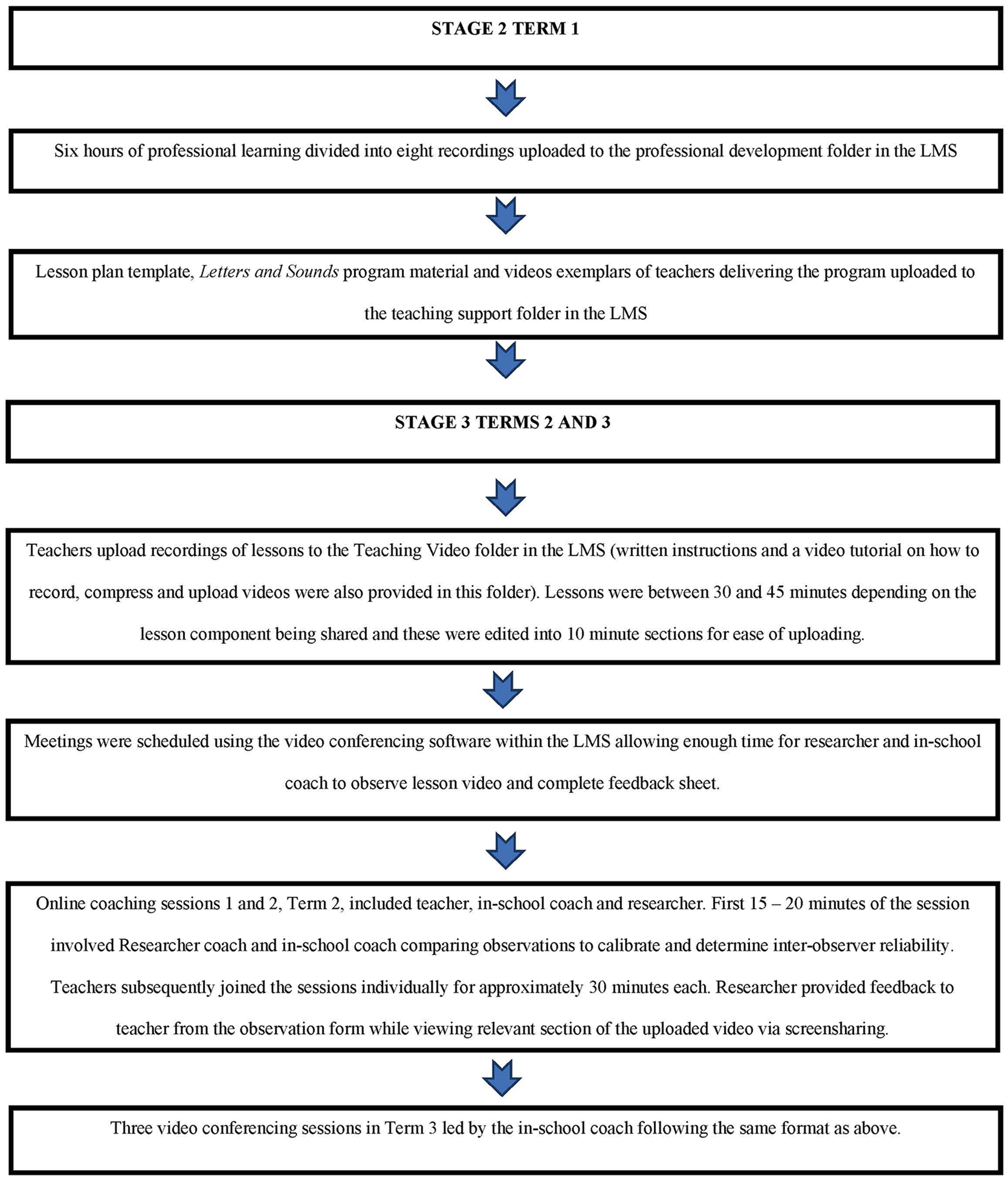
A senior teacher at one school and the literacy support person at the other school were selected to undertake the role of in-school instructional coach. The RC also worked with the teacher allocated the role of information technology support person at School 1 to select an online LMS for instructional coaching, professional discussions, and the sharing of materials with participants. The LMS includes shared file storage, options for online collaboration, and video conferencing tools. The LMS available through the researchers’ university was considered; however, it was important to use a system that would remain accessible to the schools once the research project was completed. As the Department of Education (DoE) in the state in which the schools were located used the Blackboard LMS with Collaborate, it was decided to use this as it was available to all teachers in this state (see Figure 1).
Use of LMS throughout the CPL.
During this stage, teachers collected data on students’ reading skills using the Progressive Achievement Tests in Reading (PAT-R) assessment (Stephanou et al., 2008) and the Alphacheck (Konza, 2012) to provide baseline data on the students’ reading proficiency. The PAT-R pre-primary is the first in a series of tests designed to track student achievement in reading from pre-primary through Year 10. It is an individually administered assessment of comprehension, vocabulary, and spelling; has no time limit; and provides national norms against which progress can be monitored. The norming methodology for PAT-R is described on pages 50 to 54 of the PAT-R manual (Australian Council for Educational Research [ACER], 2006). The publisher, ACER (2006), acknowledges that students’ rate of growth in reading achievement in Prep, Year 1, and Year 2 is higher than in later years, and the progress of the students in this study is viewed in light of this knowledge. The Alphacheck is a criterion-referenced assessment of students’ knowledge of single-letter names and sounds, and common letter–sound combinations. Together, these assessments provided information on students’ reading development, from decoding through to comprehension, that were aligned with the schools’ objective for professional learning to improve reading outcomes for their pre-primary students.
In Stage 2, the researchers provided professional learning that included 6 hours of online professional development in the Letters and Sounds program for the five classroom teachers and two instructional coaches involved in the research project, and an additional 2 hours with the coaches on instructional coaching procedures. The professional learning was recorded and delivered electronically, but one of the researchers was present at the school hosting the PD during its delivery in case of issues with technology and to observe the operation of the online training and the subsequent implementation of teaching approaches based on this training. The training sessions remained available to participants via the LMS so that they could view them again if necessary.
Teachers were provided with the lesson plan template developed by the researchers as a guide to planning their lessons. This planning template included the following criteria: Introduction and warm-up, Revisit and review, Learning intentions, Explicit teaching, Practice, Apply, and Review and assess. While the RC was still on-site, in-class observation, involving the RC and the in-school coaches, was undertaken at both schools using the lesson observation feedback form containing the criteria from the lesson plan template. This afforded the opportunity to provide early feedback to the teacher and coaches and familiarize them with the content of the lesson plan template and observation form.
During Stage 3, the RC used the online platform to observe five videos of the classroom teachers delivering agreed content that was supplied by the teachers over three terms. After viewing each lesson, using the video conferencing function on the LMS, the teacher and the in-school instructional coaches met with the online coach to discuss the lesson. Teachers were asked how they thought the lesson went including what they were pleased with followed by areas they identified for improvement. Accounting for this conversation and using the lesson feedback form, the observer noted whether each of the sections was included, the specific activities used, and the delivery of the content, as well as noting any areas for attention and recommendations. There was the opportunity for teachers to discuss any questions about the program and its delivery. For the first two observations, the RC provided the feedback to the teacher and there was a follow-up meeting (online) with the in-school instructional coach to compare observations. Once the researcher and the instructional coach had reached at least 80% interobserver reliability, feedback was provided by the in-school coach, with the RC providing additional feedback only if necessary. Feedback from the RC and the in-school coaches was collected and subjected to detailed analysis of lesson content and delivery to contribute to the evaluation of the project.
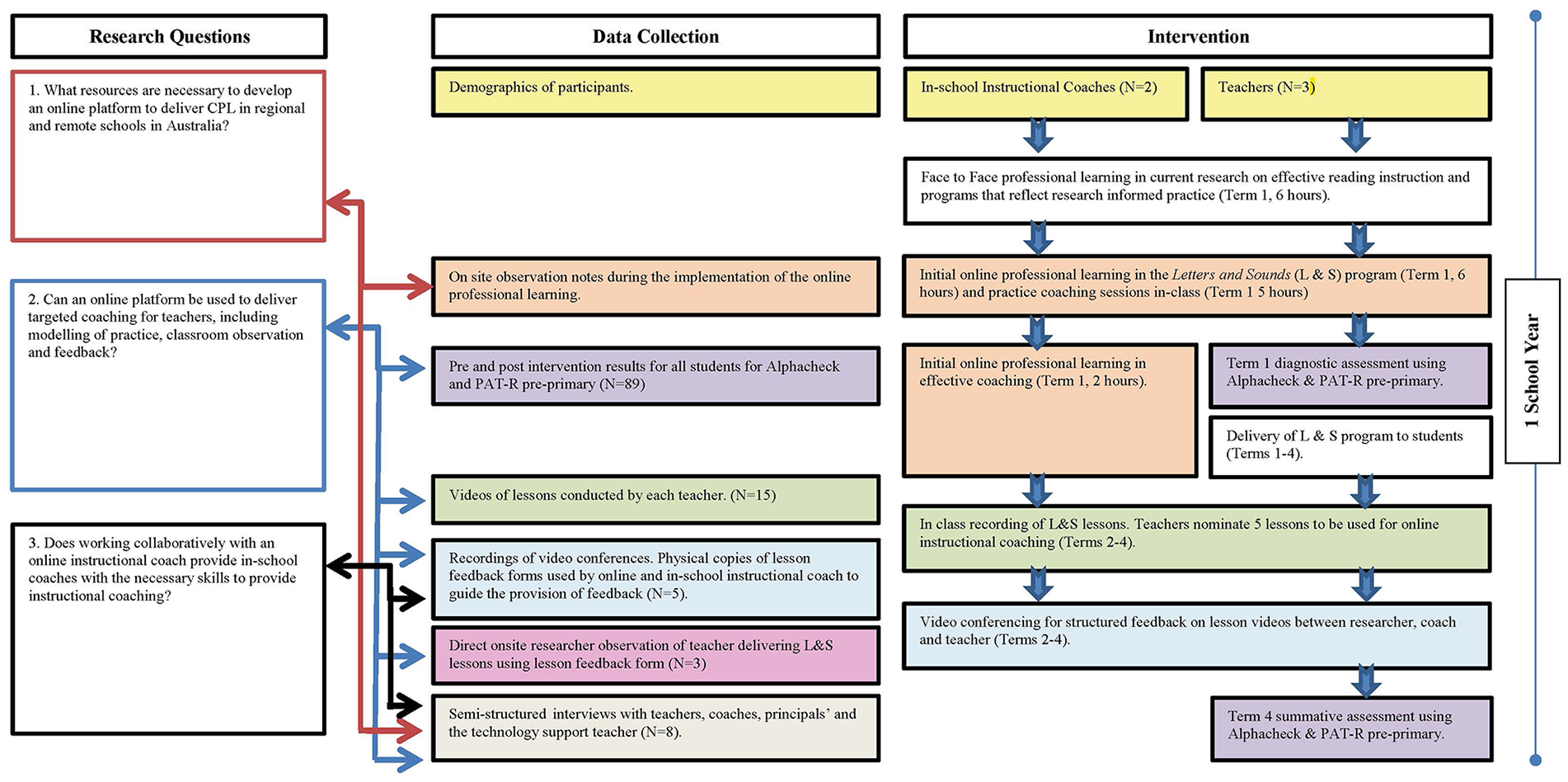
In the final stage, the researchers visited the schools in Term 4 so that the RC could directly observe classroom practice using the lesson feedback form. Interviews were conducted with all participants at this time. Teachers assessed students’ reading and comprehension skills using the PAT-R assessment (Stephanou et al., 2008) and the Alphacheck (Konza, 2012). Figure 2 summarizes the intervention and data collection in relation to the research questions.
Conceptual diagram.
Findings
Initial discussions around the online delivery of the CPL focused on platforms that would enable the sharing of materials and conferencing that supported synchronous video observation. At School 1, one of the teachers, “Vance,” was familiar with information technology and was selected to work with the researchers and act as the support person for both schools. The LMS selected for this research was Blackboard as it was the system used by the state’s DoE and was available to all staff in the schools. The ability to share documents and videos on this system was critical to the delivery of the CPL, and the Collaborate video conferencing software was particularly important for the instructional coaching as it was used to set up virtual meeting spaces where video and documents were shared.
When interviewed at the conclusion of the research project, Vance noted that teachers had differing levels of familiarity with the LMS and needed time to familiarize themselves with how to upload, remove, and access material on it noting that “people have used it [Blackboard] but not the back end of it, the actual creation part of it.” Setting up a new site requires someone to liaise with the administrators of the DoE’s e-Learning environment, but Vance reported that they were very responsive to his requests and provided all of the necessary assistance to ensure the LMS was set up appropriately “often within the hour.” Once the uploading of lesson videos commenced, it became obvious that the current storage specifications for the standard DoE LMS setup were insufficient. Vance’s request for additional storage space was actioned quickly and without issue.
One of the limitations identified by Vance and the teachers was that he was only available in School 2 once a week. Teachers experienced difficulty uploading the videos to the LMS as they were large files, which is not surprising considering Australia’s internet speeds are rated 50th in the world (Thompson et al., 2017). Vance produced a video about how to reduce file sizes using Movie Maker, as this was available on all of the staff computers, and made this available on the LMS. This alleviated some of these difficulties, but the lower bandwidth for School 2 meant they continued to experience difficulty uploading videos. “Isabel,” the teacher at School 2, reported that “our internet is really bad it is very slow and we have a lot of drop-out spots . . . it can be gone for half an hour.” Although this did not happen during the video conferencing sessions, it was difficult to play the video during the online instructional coaching meetings without a time lag between participants. However, as teachers, in-school coaches, and the RC had already watched the video prior to the online meeting, it was not necessary to watch the full video during the conference. Using the video chat function during these meetings also tended to result in some delays in hearing each other. This was more noticeable in School 2 but was not so significant that it required abandoning the video conference. The principal at School 2 reported that it was possible for schools to purchase more bandwidth from the DoE and he was looking into this for the whole school, not just because of this research project.
All participants reported that they did not utilize the LMS to its full extent, in part because the in-school coach at School 1 downloaded the material from the site and provided it to teachers in either hard copy or electronically. “Anna,” from School 1, reported using it more often than the others but required an email prompt from the researchers when new material was uploaded. All participants acknowledged that having ongoing access to this material through the LMS would be beneficial in subsequent years and was a good platform to share the resources developed for the program, particularly if new teachers commenced at the school or more schools were involved. This was evidenced at School 2 where the teacher teaching Year 1 the following year was selected after the training had concluded. She was able to access all of the training and support videos and, therefore, familiarize herself with the program and delivery. The most viewed resources reported by participants were the videos of practice, both those recorded by participating teachers and those provided by the Letters and Sounds program developers, and the teaching resources. Videos of the teachers delivering lessons were viewed by the other teachers involved in the project as well as being shown as examples of practice during whole staff meetings. The principal of School 1 noted that the online platform could be extended into other areas including into moderation with other schools in the region.
Recordings of teaching, lesson observation forms, interviews, and student reading achievement data were used to determine how effective the implementation of the reading program was for the schools with an emphasis on whether this medium was effective for modeling of practice, classroom observation, and feedback (see Figure 2). Five teachers were involved in the implementation and agreed to be part of the research; however, once the requirement to film their teaching became clearer, the two senior teachers withdrew from the research. All teachers, regardless of whether they were involved in the research, received the same training and had their lessons observed by the in-school coach. The three remaining teachers agreed to video their teaching, share these videos with the researchers, and commit to five online instructional coaching sessions.
All three of the teachers who volunteered to be part of the online instructional coaching were within their first 5 years of teaching. These teachers reported that they were comfortable with videoing their practice as this had been part of their preservice teacher courses. They valued the feedback and were equally happy with in-school and online coaching. When asked to compare the online coaching with the in-class coaching, Isabel reported that “they were both very similar” but “with us filming it [lesson], I could stop it and restart it or if I forgot something I could redo it.” Videoing also enabled the teachers to review and select what they shared with the coaches, which meant that they were reflecting on their practice as they taught and could self-correct without waiting for external feedback.
Isabel relayed that another “positive for the online was that you could watch it [teaching video] again and again.” All three teachers noted the ability to be more reflective with the online coaching with Anna noting that “we could watch ourselves and give ourselves feedback . . . we can go back later and reflect oh look how far I have come or look what I have changed.” Similarly, “Oriana” disclosed: I was better prepared to be reflective with the online coaching . . . I was pleasantly surprised how good it is to work under pressure. Having someone there filming and being able to watch it back, I personally really enjoyed. [laughed] . . . Kept me on-track.
Anna suggested that having access to recordings of her peers, teaching was better than in-class observations because “you can watch someone teach but you can’t always remember everything you’ve seen.” An advantage cited by Isabel for teachers in more remote schools was the posting of recordings onto the shared LMS so they can see what other teachers are doing. She noted that “It’s really hard out here when it is just you doing it” and that being able to view the other teachers delivering the same content was particularly advantageous for her self-reflection and practice.
The teachers appreciated seeing what their peers were doing; however, the videos modeling practice developed for the Letters and Sounds program were also useful in the early stages of the CPL when there were none of their recordings. These were revisited when a new activity was mentioned in the program: “It was helpful to see what they meant by the CVCC reading as this is different to what we learnt at uni” (Oriana).
Anna reported that, as a result of her involvement in this project, she intends to continue reflecting on her practice and seeking opportunities to observe other people teaching. Both Anna and Isabel looked forward to being able to see their professional growth when watching the videos from this year in subsequent years. All teachers reported that they would be happy to continue videoing their practice as long as they had the time and support to do this.
Concerning delivering the reading program, Oriana reported that the instructional coaching enabled her to teach more explicitly as the year went on and to streamline her lesson so that instruction was focused on the important elements, leaving out extraneous content. All teachers reported that the clear sequence of the program and the recommendations for delivery that were elaborated by the researchers, during online instructional coaching, made it easy to teach the program and improved their confidence. Specifically, Oriana shared that “week by week I know exactly what I am doing and I know how to teach it . . . I know that. For the most part, I have set them up for success.” Oriana and Anna relayed that they felt their teaching had improved this year. Kaley, the in-school coach at School 1, also observed the growing confidence of the teachers in her school: “It is fabulous to see how enthusiastic they are . . . they know that what they are doing is making a difference.”
Classroom observation feedback forms evidenced improvements in teachers’ knowledge of the language constructs relevant to teaching beginning reading such as identifying where children might be experiencing difficulty with phoneme awareness or phonics, and how to correct these errors. The teachers were observed to use the terminology more effectively and comfortably and noted surprise that students were also able to use the more explicit terminology to describe language features. Anna reported being amused when an education assistant (EA) working with one of the children in her class was corrected: EA (pointing to the letter “e” at the end of a word)—this is a bossy “e”
No, that is a split digraph.
Over time, the teachers’ pace of delivery was better, they were more consistent at including all of the elements of the lesson (Introduction and warm-up, Revisit and review, Learning intentions, Explicit teaching, Practice, Apply, and Review and assess), rotations were better differentiated and organized, and they had a better understanding of the purpose of the activities they were using. When using the decodable texts in guided reading activities, teachers were initially using the same procedures that they used for leveled readers. By the end of the year, teachers were able to use the correct procedures for decodable readers, that is, ensuring the focus of reading was on decoding, rather than using syntactic and semantic cues.
The teachers and the in-school coach reported that they observed improvements in students’ reading and writing that was greater than in previous years. Student enthusiasm was also noted at both schools. Oriana reported she felt secure in the knowledge that she had set up her class for success. Anna noted that “it all just clicked” in their reading as well as their writing, more than in previous years. Kaley was excited by the progress the students in School 1 were making: “I love going into the prep classes, just to see them so excited about their learning, wanting to show me their work, and the [reading] data—it’s wonderful.”
Student Assessment Data
Student assessment data were recorded to monitor the progress of students in the research project, acknowledging numerous factors influence students’ progress that are difficult to control for in educational research. The t tests of pre- and post-CPL assessment data were conducted, and effect sizes were calculated for the PAT-R and the Alphacheck test . For large samples, Cohen’s d and Hedges’s g will give a similar result. Due to the small sample size at school 2 (<20), an adjusted Hedges’s g is the preferred statistic. Therefore, to enable direct comparison, Hedges’s g has been used for all cases.
Paired-samples t tests were conducted at each school to evaluate the change in students’ scores on the PAT-R test. At School 1, there was a statistically significant increase in scores from T1 pre-intervention (M = 7.54, SD = 3.421) to T2 post-intervention (M = 14.28, SD = 4.550), p < .001 (two-tailed). The mean increase in PAT-R score was 6.743 points with a 95% confidence interval ranging from 5.893 to 7.593. The Hedges’s g statistic indicated a large effect size (g = 1.66). At School 2, there was a statistically significant increase in scores from T1 pre-intervention (M = 12.20, SD = 4.263) to T2 post-intervention (M = 20.53, SD = 2.722), p < .001 (two-tailed). The mean increase in PAT-R score was 8.33 points with a 95% confidence interval ranging from 6.758 to 9.909. The Hedges’s g statistic indicated a large effect size (g = 2.43).
Figure 3 summarizes the final achievement of the sample by stanine, post-intervention, compared with initial achievement, pre-intervention. The publisher recommends that differences of “two or more stanines should be regarded as indicating a real difference in performance” (ACER, 2011, p. 3). Seventy-two percent of the students in the sample increased their achievement by a minimum of two stanines. Only 6% of students were achieving at average or above pre-intervention, while 62% of students were achieving at average or above post-intervention.
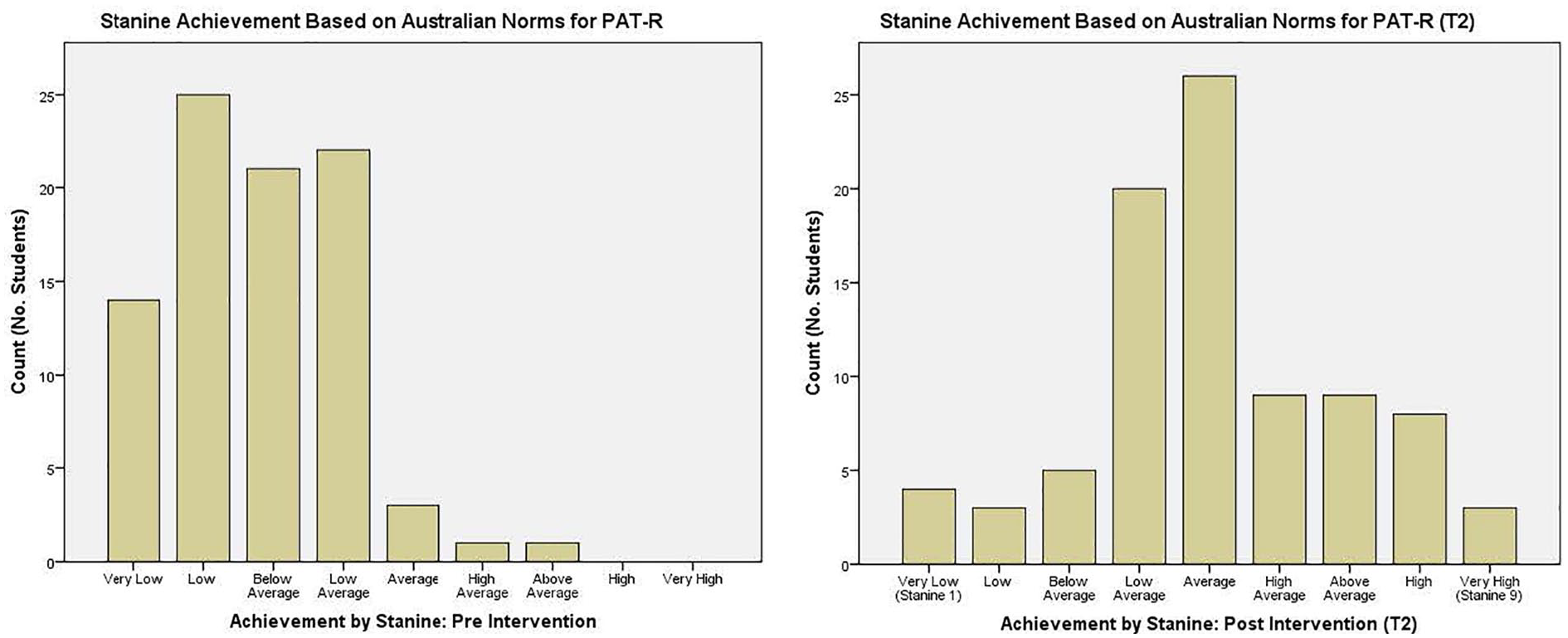
PAT-R test achievement by stanine pre- and post-intervention.
A statistically significant difference in scores was also noted for the Alphacheck test between Term 1 and Term 4 at both schools. Changes in achievement scores for the Alphacheck test are summarized in Table 2.
Alphacheck Achievement Scores.
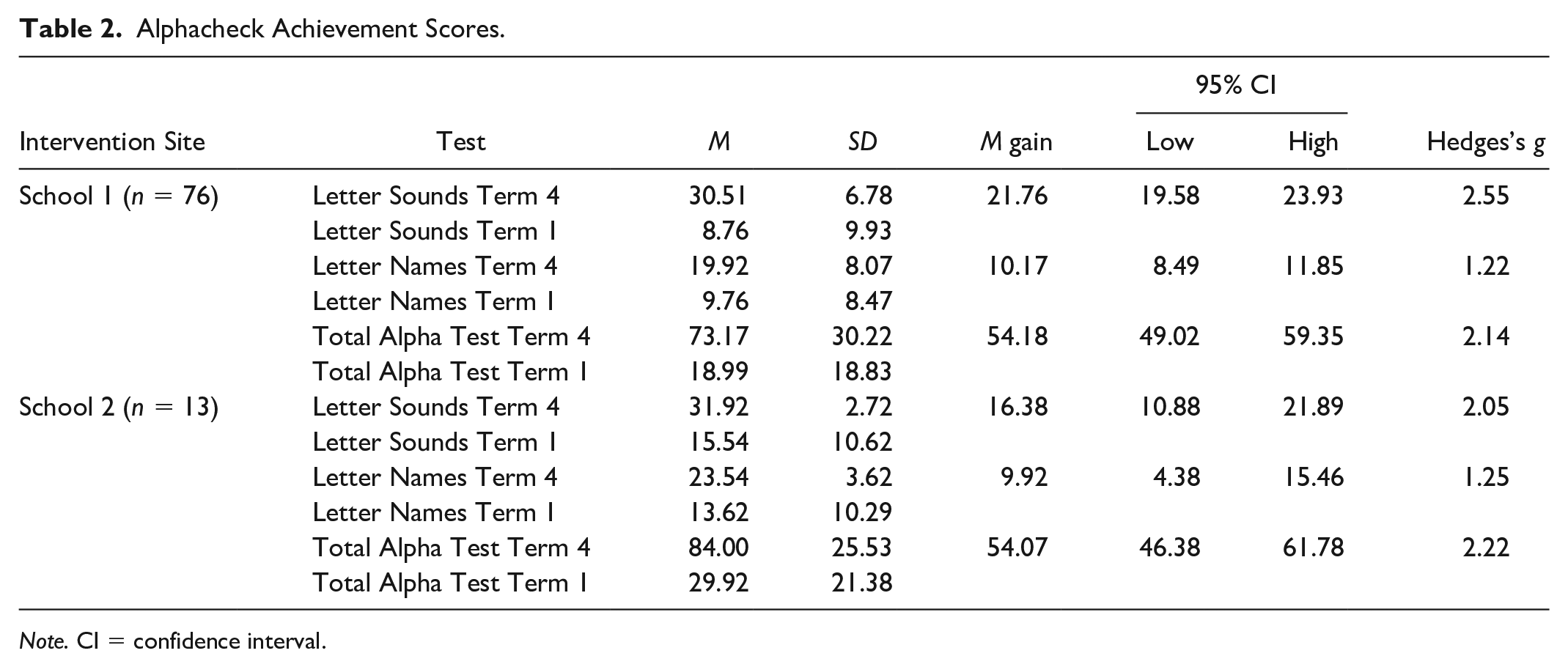
Note. CI = confidence interval.
In response to the question of whether the existing resources developed in this project will be enough if other schools in the region wanted to work just online, Kaley responded that she believed using the same processes of videoing, reviewing, reflection, feedback, and collaborative discussions would be effective and result in positive outcomes for teachers and students.
In the context of this research, working collaboratively is used in the more general sense of sharing knowledge and practice to improve outcomes. The in-school coaches reported positive experiences of the instructional coaching that they engaged in during the research project, in-school and online. Both principals were keen on extending the use of instructional coaching in their schools, noting it was an area that had needed improvement. Principal 1 stated, “I see the traction around the observation and feedback and coaching and I see that working.” The in-school coach from School 1, Kaley, also noted that involvement in this project had led to more coaching and feedback as school-wide practice: “That’s been a good thing for our school that’s just happened because of doing this project.”
Kaley reported that working with the RC doing in-class instructional coaching at the start of the CPL was useful because she did not have the expertise in reading instruction to know what to look for. Observing the class together, and making notes that were shared during a discussion with the teachers, helped her understanding of what to look for. However, she explained that the online coaching of the teachers was even more valuable in facilitating the coaching conversations and developing her knowledge of reading instruction. Also, these sessions could be scheduled more frequently than if someone had to travel to the schools. Elena, the coach in School 2, also reported that online was worthwhile because she was able to view the video first and consider the feedback, rather than have to respond instantly. Although she was the school’s literacy support person, therefore familiar with the content, Elena reported that being able to discuss her observations with the RC enabled her to reflect on the feedback she was providing to the teacher and consider, “am I being too passionate or have I said too many things, am I expecting too much?”
Reflecting on collaborating with the RC to develop their instructional coaching skills, Kaley and Elena both noted that it was important to have someone who can undertake the coaching role in the school. Elena suggested that “when you are not in a school then you have to rely on what people say to you is happening and this may not be the case.” The in-school coach can provide additional information about what is occurring regularly in the classroom. Kaley reported that she observed teachers frequently, but mostly in an informal way, watching 5 min and making some notes for the teachers. This enabled her to get a more complete picture of what the teachers were doing and provide feedback to the teachers and the researchers. She was able to encourage and facilitate teachers’ videoing of practice, outside of what was required for the project, and found it valuable for teachers to be able to reflect on their practice and for her to watch the videos they shared.
In both schools, the in-school coaches had some flexibility with their timetable. In particular, in School 1, the coach was off-timetable and could block out time to visit classes or take over classes so teachers had time. In addition, Kaley had the opportunity to run workshops for parents on the Letters and Sounds program, so that they could support their children at home, and these were well received with parents wanting more sessions. Kaley suggested that a challenge for in-school coaches might be allocating time to meet and support the teachers and she identified that schools have to make the financial commitment and allocate time for coaching, feedback, and reflection within the timetable.
Relationships are an important factor in the success of instructional coaching, and the teachers reported feeling comfortable sharing their teaching with the online coach and expressed the hope that they would continue this relationship into the following year. Kaley reported that if it was not for the coaching support in this project, she would not have been able to develop a relationship with the two teachers not involved in the online research project: “breaking down that barrier of having someone coming in and watching them teach was very difficult . . . but I have really built on that with them.” Although these teachers did not want to be involved in videoing their practice for research purposes, they continued to be involved in delivering the program. Kaley used the opportunity afforded by the research project to visit their classroom to provide them with teaching resources and see how they were going with the implementation of the program. The knowledge she gained from working with the researcher enabled her to evaluate their progress and provide additional support and resources where needed. Once the student data were recorded, she was able to discuss the progress their students were making and they began instigating more contact with Kaley, building a strong working relationship.
Discussion
The purpose of this research project was to determine whether CPL can be delivered effectively online and, if so, to identify approaches to achieving this that can be applied in national and, potentially, international contexts. Measurements of efficacy in CPL include the engagement of participants, changes in classroom practice, and student outcomes (Biancarosa et al., 2010; Desimone & Pak, 2017; Marzano & Simms, 2013; Matsumura et al., 2019). Based on the available data, the CPL in this research project appeared to meet all of these components.
The observations and interviews indicated that the teachers and in-school coaches were enthusiastic about the material they were delivering and were willing to engage in the instructional coaching activities. Interviews with the schools’ principals provided support for this perception. Teachers reported that the most beneficial aspects of the CPL were the synchronous online coaching and the videos of practices stored in the LMS. They preferred to watch the video of their peers but used the modeled practice examples provided with the Letters and Sounds program when introducing a component of the program that was new to all of them. Changes in classroom practice were evident in the lesson observation notes and the teachers themselves reported that their practice had changed for the better from previous years. Student performance against Australian norms for the PAT-R was encouraging. While research suggests students in educationally disadvantaged schools perform poorly compared with their urban counterparts, for this sample, post-intervention student achievement was comparable with other Australian students. This is despite the negative effects that test bias can have when measuring achievement in students from low socioeconomic status (SES) backgrounds (Klenowski, 2009; Popham, 2012).
Hattie (2018) suggests teaching approaches that have effect sizes of 0.4 or greater have the “potential to accelerate student achievement” and effect sizes of 0.7 or greater have “potential to considerably accelerate student achievement” (p. 1). In a meta-analysis of early literacy programs supporting alphabet learning and instruction, Piasta and Wagner (2010) found programs involving letter name knowledge, letter–sound knowledge, and letter writing outcomes in both multi-component and single-component instruction models showed effect sizes for pre school children ranging from 0.14 to 0.65. The effect sizes for these assessments indicate considerable progress for students consistent with the participants’ perceptions of the efficacy of the online CPL program implementation. However, this is not to suggest that this CPL addresses all of the factors that contribute to poor literacy results for children from regional, remote, and low SES areas.
As to whether the online component was sufficient without the on-site components, the purpose of the online CPL was to provide the schools with the knowledge, skills, and resources to ensure the school was able to maintain the program and instructional coaching practices once the online support from the researchers was no longer available. The mandate to use literacy coaching to ensure high-quality literacy instruction in America provides us with ample evidence of the need to ensure those delivering the coaching have the skills to do so (Toll, 2018). Interviews with the in-school coaches indicated that, as a result of the online support, they now felt confident in undertaking the role of literacy instructional coach in their school. Based on the feedback in-school coaches provided to teachers in the online coaching sessions and the training the coach in School 1 ran for parents, the researchers were also confident that the coaches had the knowledge and skills necessary to support teachers implementing these practices.
Consistent with the findings of Passmore and Rehman (2012), the instructional coaching in this CPL facilitated the development of more positive relationships with the participants and greater satisfaction in the outcomes. However, while the teachers in School 1 indicated that they felt supported by the in-school coach, the relationship between the coach and teacher in School 2 was not as strong, despite this coach being selected due to her literacy knowledge. This highlights the complex nature of selecting appropriate staff to undertake instructional coaching roles. Specific area knowledge is not enough to guarantee the relationship necessary to support changes in teacher practice. The role of the online coach was primarily to provide the literacy expertise and model appropriate interactions between coach and teachers; it was anticipated that stronger relationships would exist between the in-school coach and the teachers. Fortunately, the online coach was able to develop positive relationships with all of the teachers and this ensured that the teacher in School 2 was supported in her implementation of the program.
Not surprisingly, support from the school was a major contributing factor in the success of the CPL. Time allowed for reflection and coaching conversations was a factor, whether in-school or online. Although the teachers in this research project felt they had more time with the online coaching, as they met away from their classroom, this could also have been facilitated by time away from class after in-school observations. The teachers also identified the value of videoing and reflecting on their teaching, and this practice is recommended whether the coaching occurs in-school, online, or both. One challenge is to support more senior teachers, who are not as familiar with having their practice observed, engage with the videoing and instructional coaching practices. The relationship the School 1 coach was able to develop with the teachers not participating in the instructional coaching suggests that starting in the role of interested colleagues may be the answer to engaging these teachers.
One important area for consideration when using online resources is the accessibility of the technology to the participants. When running video conferences that attempted to stream videos of lessons and synchronous conversations, there was some delay resulting in overlapping conversations. The solution was to only show sections of the lesson video when necessary to illustrate a specific point. Despite Australia’s slow internet speeds, the online platform was still an effective medium for coaching activities. Teachers did require assistance with compressing and uploading videos, which made the inclusion of a technology support officer essential to this project. However, with knowledge of these difficulties, subsequent CPL can include training in the skills necessary to use the technology.
What became evident was that online instructional coaching can ensure that there is expertise in the school to support teachers developing new practices as part of CPL. As recommended by Downer et al. (2011), video conferencing and providing access to online videos of practice was included in the project’s approach to instructional coaching and this proved effective. Furthermore, practitioner-friendly tools are also necessary to support the implementation and evaluation of coaching (Glover et al., 2019), and the lesson planning sheet developed for this research project provided a framework for planning instruction as well as targeted feedback. Glover (2017a) also identified the importance of supporting teachers to examine student data to inform classroom instruction, ascertain any areas of need for teachers, and guide the content of the CPL. In this CPL, the schools already had a strong emphasis on data-informed teaching through their use of Putting faces on the data (Sharratt & Fullan, 2012), which supported the CPL. If schools do not have these processes in place, it is necessary to include this as a component of the online support.
In their meta-analysis of coaching on instructional outcomes, Kraft et al. (2018) identified issues with scalability in terms of diminishing returns on student achievement the greater the number of participants involved in the CPL. A limitation of this research is that there is no evidence that the approach used in this research project can be up-scaled. However, the online coaching model means that local expertise is not required and coaching can be facilitated without the requirement to travel between schools; therefore, the online coach can support several teachers and schools on the same day. The online resources that were developed for the CPL can easily be shared across numerous sites within the state, via the statewide LMS, providing them with essential support. A review of other Australian states DoE sites indicates that most states have a form of LMS that could be used to host these project resources. There is, however, the need to make all teachers in the CPL aware of the online materials and how to use the platform for them to get the most benefit out of this resource.
Additional limitations to this research include the use of teacher interviews to evaluate the benefits of engagement with the CPL. Self-report measures are often criticized for being unreliable (Barker et al., 2002; Lam & Bengo, 2003; Onafowora, 2005) and teachers can be influenced by what they believe the researcher wants to hear. The research design also does not allow for the separation of the program’s components. It is not possible to determine the relative impact of individual elements such as instructional coaching, videoing practice, and the literacy program.
Conclusion
This research explored a potential model for providing instructional coaching in regional and remote schools. An existing LMS was used to host professional learning materials and share examples of practice for instructional coaching. This approach proved effective despite Australia’s poor internet. The principals, coaches, and teachers reported that the videoing of practice to facilitate reflection was becoming part of the school culture and there was a much stronger emphasis on instructional coaching across the schools. The model of online support used in the CPL may ameliorate the lack of expertise in regional and remote areas. The RC was able to support the teachers and the in-school coaches to develop the knowledge and skills necessary to effectively implement the new reading program. While not part of the original scope of the research, the approach to CPL presented in this study could also be utilized to support teachers in any location, especially given the increased requirement for online learning that has occurred in recent times.
Footnotes
Declaration of Conflicting Interests
The author(s) declared no potential conflicts of interest with respect to the research, authorship, and/or publication of this article.
Funding
The author(s) received no financial support for the research, authorship, and/or publication of this article.
