




Abstract
The purpose of this study was to investigate issues of equity in access, uptake, and outcomes of high school music education in the context of an individual state, Maryland. I explored equity through four angles: (a) representation among music students and teachers, (b) factors associated with access to music courses, (c) student and school characteristics associated with music enrollment, and (d) postsecondary enrollment outcomes of students who did and did not enroll in music. Sample members included all students enrolled in a public high school in Maryland belonging to the 2015 to 2016 ninth-grade cohort (N = 55,500) and public high school teachers (N = 17,250) during the 2015 to 2016 school year. Approximately 22% of all students were enrolled in a music course their ninth-grade year, and there were substantive differences in demographic representation in band, chorus, orchestra, piano, and guitar classes compared to the student body. Logistic regression results showed that school size was the most salient predictor of access to a music course. Multilevel modeling revealed student-, school-, and teacher-level characteristics were all associated with student enrollment in an ensemble music course. Finally, students who enrolled in music courses did not suffer an opportunity cost regarding college enrollment.
Introduction
The music education profession’s desire for inclusive and equitable education is perhaps best characterized by the National Association for Music Education’s (NAfME) stated mission “to ensure all students have well-balanced, high-quality music instruction” (NAfME, 2022). Yet a growing body of research has illuminated inequality in access and uptake to K–12 music education at the secondary level (Elpus, 2022a; Elpus & Abril, 2011, 2019; Kinney, 2010, 2019). In educational settings, unequal representation can signal potential inequity if groups of individuals are consistently denied access or faced with additional barriers to uptake or outcomes (Gillaspy et al., 2022; Maryland State Department of Education, 2022). Representation of music students and teachers along a number of demographic and background characteristics (e.g., race, ethnicity, academic achievement, socioeconomic status, etc.) is then a direct, albeit incomplete, indicator of equity. In this article, I explore equity issues in music education by examining access, uptake, and postsecondary outcomes at the high school level in Maryland by analyzing data from the Maryland Longitudinal Data System. Throughout this article, I use “access” to describe whether a student attends a school offering a particular music course and “uptake” to describe enrollment in a music course. Although financial constraints, for example, may make music education inaccessible to a student, the separation of school-level access and student-level uptake provides a useful framework for discussing the multiple layers of equity barriers.
Literature Review
Demographic composition of music students and teachers
Nationally, the demographic composition of students who enroll in high school music ensemble courses is systematically different from the demographic composition of the general student body (Elpus, 2015b, 2022b; Elpus & Abril, 2011, 2019). Elpus and Abril (2019) found that 60% of music students were female and 40% were male. Most ensemble students were White (58%), and other demographic populations were underrepresented. They also found differences in demographic composition between music students when disaggregating by ensemble. For example, an even greater proportion of choir students (71%) were female. In orchestra, there was a substantively higher proportion of Asian/Pacific Islander students and a lower proportion of Black/African American students. The issue of unequal demographic representation in music ensembles raises a pressing concern for equity and social justice in music education (DeLorenzo, 2012).
Examinations of music teacher demographics have revealed trends similar to music students: Compared to the broader teacher population, music teachers represent only a select subset of the population. For example, several studies have estimated the percentage of music teachers identifying as White to range between 82% and 92%, a higher proportion than the general teacher population (Elpus, 2015a, 2022c; Gardner, 2010; Matthews & Koner, 2017). As with students, music teacher demographics varied based on state, grade level, and content area (Miller et al., 2021; R. D. Shaw & Auletto, 2022; Smith et al., 2018). For example, Miller et al. (2021) found disparities in self-reported teacher gender between band and orchestra teachers in North Carolina: Approximately 37% of band or hybrid teachers identified as female, and nearly 59% of orchestra teachers identified as female. In comparison, Smith et al. (2018) found that approximately 64% of orchestra teachers across the United States identified as female. In Michigan, 58.6% of music teachers were female, but female teachers comprised only a minority (45.5%) of music teachers at the high school level (R. D. Shaw & Auletto, 2022). These studies disaggregated by state and/or music content area highlighted pertinent differences in the music teacher population that were unobservable in broad national analyses. Because high school music classes and teachers are particularly salient factors when one is considering a potential career in music teaching (Rickels et al., 2013), equitable representation of students and teachers is of paramount importance to fostering long-term equitable outcomes for music education.
Music education access and uptake
A recently estimated 91% of public secondary schools offered music instruction (Parsad & Spiegelman, 2012), indicating that the majority of students have access to music education in some capacity. However, several studies have shown that access to these music opportunities was not always uniform (Abril & Gault, 2008; Elpus, 2022a; Give a Note Foundation, 2017 B. P. Shaw, 2021). At the high school level, students were most often able to enroll in large ensemble music courses, with band being the most common, followed by choir, then orchestra (Elpus 2022a; Give a Note Foundation, 2017). Researchers have found that the number and kinds of choices a student has for high school music study were related to school size, urbanicity, and school-wide socioeconomic status (SES; Abril & Gault, 2008; Elpus, 2022a). Smaller schools and less affluent schools offered reduced music options. When also conditioning on these two factors, Elpus (2022a) found that the relationship between urbanicity and course offerings was diminished, providing more context to the significant relationship between urbanicity and music course offerings found by Abril and Gault (2008).
Several well-documented factors have been associated with student uptake in music ensembles, particularly SES and academic achievement (Elpus, 2013; Elpus & Abril, 2011, 2019; Kinney, 2008, 2010, 2019). Students from the highest quintile of SES were overrepresented in music ensembles, and students from the lowest two quintiles of SES were underrepresented in music ensembles (Elpus & Abril, 2019). Students with higher academic achievement were more likely to initially enroll in music ensembles (Kinney, 2008, 2010); differences in achievement between ensemble and nonensemble students were diminished after controlling for a variety of factors, whether academic achievement was measured by SAT scores (Elpus, 2013), standardized ninth-grade algebra test scores (Elpus & Abril, 2019), or a variety of standardized tests in middle grades (Kinney, 2019). However, several researchers have found that academic differences between choir students and the general student population were less pronounced than band and orchestra students (Elpus & Abril, 2019; Kinney, 2019). Students who enrolled in chorus ensembles tended to be more congruent with the broader student population along several domains than students who enrolled in band or orchestra (Elpus & Abril, 2019; Kinney, 2019). There are clear lines of inequality in uptake that, when considered alongside issues of access, deter or deny some populations of students from receiving a high-quality music education.
Postsecondary enrollment
A key area of education policy interest has been postsecondary readiness and enrollment for K–12 students upon graduation. Efforts to improve postsecondary enrollment, persistence, and completion among students with lower academic achievement have included students using their elective enrollments for additional or remedial academic work, such as double dosing in algebra (see, e.g., Cortes et al., 2015; Nomi et al., 2021). This practice has been problematic for music students because scheduling concerns and the use of elective time are of particular importance when persisting in high school music classes (Baker, 2009). For example, if parents, teachers, or guidance counselors steered students with lower academic achievement away from music to improve postsecondary outcomes, those adults carried an implicit belief that music courses came with an opportunity cost, one that was potentially seen as too consequential and not worth the trade-off. Empirical work exploring postsecondary outcomes of music students is limited, but Elpus (2018, 2022d) has twice found that on a national scale, music students did not suffer a penalty to postsecondary admissions, institutional prestige, or choice of college major. Building on this work is critical to strengthening the evidence base and reducing the inequitable barriers to music education access and uptake.
Purpose
Education policy decisions are most consequential at the state and local education agency (LEA) levels, underscoring the need to contextualize national findings in a nuanced, more locally relevant manner for evaluating potential policy decisions. Thus, the purpose of this study was to investigate issues of equity in access, uptake, and outcomes of high school music education in the context of an individual state, Maryland. The following research questions guided this inquiry:
Research Question 1: What are the demographic compositions of public high school music students and teachers, and how do they compare to non-music students and teachers?
Research Question 2: What music courses do high schools in Maryland offer, and what factors are associated with schools offering such courses?
Research Question 3: What student and school characteristics are associated with student enrollment in ensemble music courses?
Research Question 4: Do ensemble music students enroll in postsecondary institutions at comparable rates to non-music students?
I examined the cohort of students entering ninth grade in the 2015–2016 academic year. I selected this cohort because it was the only cohort with middle school course data in the observable data set whose high school graduation (Spring 2019) and potential postsecondary enrollment (Fall 2019) were unaffected by the COVID-19 pandemic.
Method
I analyzed data from the statewide Maryland Longitudinal Data System (MLDS). The MLDS offers a distinct advantage as a data source because it can connect data from the Maryland State Department of Education (student enrollment/demographic data and school data), the Maryland Department of Labor (teacher characteristics), and the Maryland Higher Education Commission and National Student Clearinghouse (postsecondary enrollment). Access to data within the MLDS is restricted, requiring fingerprinting and a federal background investigation. To comply with confidentiality restrictions for disclosure risk, all sample numbers reported in the current study are rounded to the nearest 50, percentages are reported to the nearest whole number, and any analytic cells with fewer than 10 observations were omitted or combined with other categories.
Statewide administrative data can require extensive cleaning guided by decision rules to resolve record duplication; these decision rules impact analytical results. In the present study, I resolved duplicate records by keeping records of students who attended a school for more than 90 days. The final analytic sample for students included observations with enrollment data in any of grades nine to 12 enrolled at their school for more than 90 days belonging to the ninth grade 2015–2016 cohort (N = 55,500). Final reported sample numbers in some analyses may vary due to those who entered/exited the Maryland public schools between ninth and 12th grade. I coded data for enrollment in music courses using a combination of School Courses for the Exchange of Data (SCED) code searches and string searches in LEA-provided course names using regular expressions. For example, if a student was enrolled in a course with one of the SCED codes associated with chorus or if the LEA-provided course name included character strings such as “Chorus” or “Vocal Ensemble,” the student was flagged for being enrolled in chorus. I repeated this process using appropriate SCED codes and strings for band, orchestra, piano, and guitar.
In Maryland, the Baltimore City school district is a large urban district that differs greatly from the county school districts because it is the only city-wide district and the only school district in an urban area. Additionally, five large suburban districts around and between Baltimore and Washington, D.C., serve more than 60% of all students, a disproportionately large number compared to the other 18 county systems. For all analyses, I explored potential differences due to urbanicity. For descriptive outcomes in which results were substantively different across urbanicities, I report statewide results and results disaggregated by urbanicity. For multivariate regression analyses, I tested an urbanicity factor variable in model building stages. However, urbanicity was not a significant factor in comparisons between the rural county systems and the county systems along the Baltimore–D.C. corridor, and thus only a dummy indicator for Baltimore City was used when warranted.
Empirical Strategy
Research Question 1: Demographic analysis of students and teachers
I analyzed the demographic composition by race/ethnicity and sex of music students using descriptive statistics, disaggregated by band, choir, orchestra, guitar, and piano. Then, I compared the demographic composition of students in each type of music class to the general student population using a χ2 test of independence. Next, I conducted similar demographic analyses comparing high school music teachers (n = 500) to non-music teachers (n = 16,750). In addition to race/ethnicity and sex, I examined additional relevant teacher characteristics including average and median years of teacher experience, the proportion of teachers holding advanced degrees, the proportion of teachers new to their school that academic year, and the proportion of teachers who attended an out-of-state college.
Research Question 2: Access—school course offering
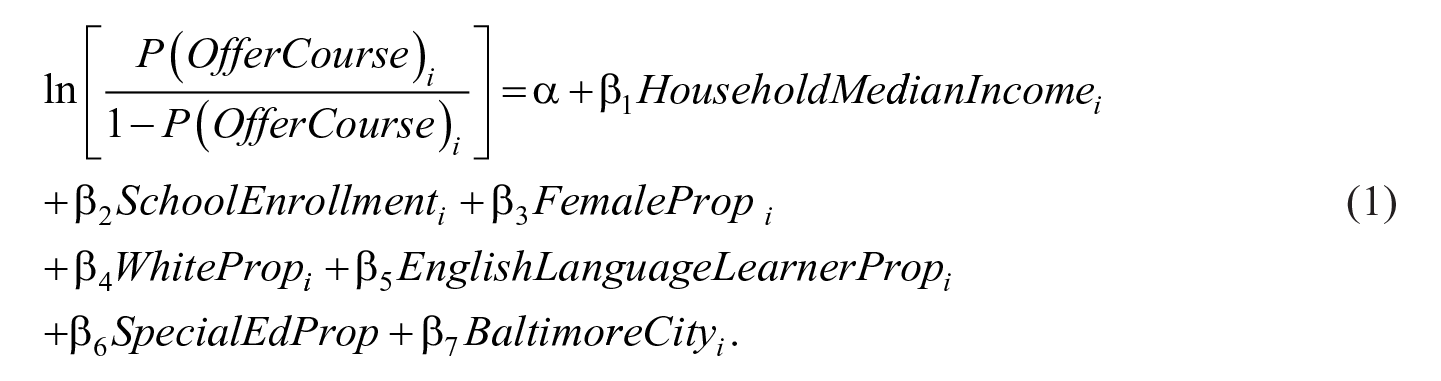
I used course enrollment data to determine if a high school (N = 220) offered a music course. If no students were enrolled in such a course, the school was presumed to not offer that course. There was a possibility that a school offered a course and no students enrolled, but there was not a definitive way to determine which possibility was the cause of zero enrollment. As such, this rule was the most consistent decision rule that could be uniformly applied to all schools. First, I used descriptive statistics to determine the proportion of schools offering band, choir, orchestra, piano, and guitar. I examined these proportions in the whole state and then disaggregated by LEA urbanicity grouping. Multivariate logistic regression was used to examine what school-level factors were associated with offering the course. Census data on median household income from the 2019 American Community Survey was a proxy measure for school-wide SES. I used the geocode ID of school addresses and merged the 5-year median household income by census block group for analysis. Attendance data were used to determine the number of students enrolled in each school and the demographic composition of the student body. The final factors were the proportion of students identified as English-language learners (ELLs) and the proportion of students eligible for special education services.
Initial data exploration revealed a small number of extreme outliers among the proportion of students identified as ELL and the proportion of students eligible for special education services. To mitigate the potential impact of these outliers in multivariate analyses, I winsorized these proportions at the 99th percentile. Because individual schools exist in districts, it is reasonable to presume that schools in the same district are likely more similar to each other than schools in other districts. To account for this clustering, I used a design-based statistical correction with clustered standard errors in Stata (Version 16), with standard errors clustered at the LEA level. I estimated the following theoretical model:
Research Question 3: Uptake—ninth-grade enrollment
Using course enrollment data, I examined equity of uptake for ninth graders in the 2015–2016 academic year. Due to sample size limitations, I limited analyses to the three most common music courses at the high school level (band, choir, orchestra). Because the transition to high school is a large source of attrition in music education (Elpus, 2022d; Evans et al., 2013; Tucker & Winsler, 2022), understanding factors associated with ninth-grade enrollment can inform both recruitment/retention strategies and substantive policy initiatives. The association between music students and higher academic achievement is well documented (e.g., Elpus, 2013; Elpus & Abril, 2011, 2019), so I examined eighth-grade course enrollment for indicators of achievement. With SCED codes and LEA-provided course names, I screened for advanced math and reading course enrollments in addition to middle school music course enrollments.
Whereas I used a design-based approach to account for district-level clustering of schools in the previous analyses, I employed a model-based approach to account for students clustered at the school level. Because access varied by school, it was also important to capture school-level factors associated with an individual student’s uptake in music. Multilevel modeling (MLM) is a model-based approach that can be used when substantive questions of interest include questions about individual and higher-level clustered observations. In the present study, I used MLM with logistic regression to examine the following individual characteristics: sex, race/ethnicity, middle school music enrollment, enrollment in advanced eighth-grade math and English courses, eligibility for free and reduced lunch, eligibility for special education services, and identification as an ELL. School-level variables included enrollment size (grand-mean centered and scaled to 100s of students), household median income (grand-mean centered and scaled to $1,000s), the proportion of students who were White (grand-mean centered, scaled to 10s of percentage points), and the corresponding music teacher’s years of experience and if they held an advanced degree.
The first step in MLM is to examine the intralevel correlation coefficient (ICC) of the null model to determine the extent to which the observations within clusters are correlated. A lower ICC indicates that clustering accounts for a lower proportion of the residual variance between individuals, whereas a higher ICC indicates that a larger proportion of the residual variance can be explained by clustering. If an ICC is close to zero, there is little evidence to suggest that individuals within clusters are more like each other than individuals from different clusters. The ICC values for the null model of each music outcome were as follows: band = .196, chorus = .328, orchestra = .413. These values indicated a large proportion of variance in student enrollment was explained by school membership, supporting the use of MLM. After specifying the null model, I selected student-level covariates shown to be related to uptake in prior research (Elpus, 2013; Elpus & Abril, 2011, 2019; Kinney, 2008, 2010, 2019) to create an intermediate model and assessed model improvement and fit by comparing Akaike information criteria (AIC; Vrieze, 2012). Finally, I added school-level covariates shown to be related to access in prior research (Abril & Gault, 2008; Elpus, 2022a; Give a Note Foundation, 2017) and within the present study’s analyses and again assessed model improvement and fit. For these analyses, I used random intercept models for school-level variables. I did not examine random-coefficient models or cross-level interactions because I did not have an empirical or theoretical reason to do so.
The final theoretical model is estimated with the following equation:
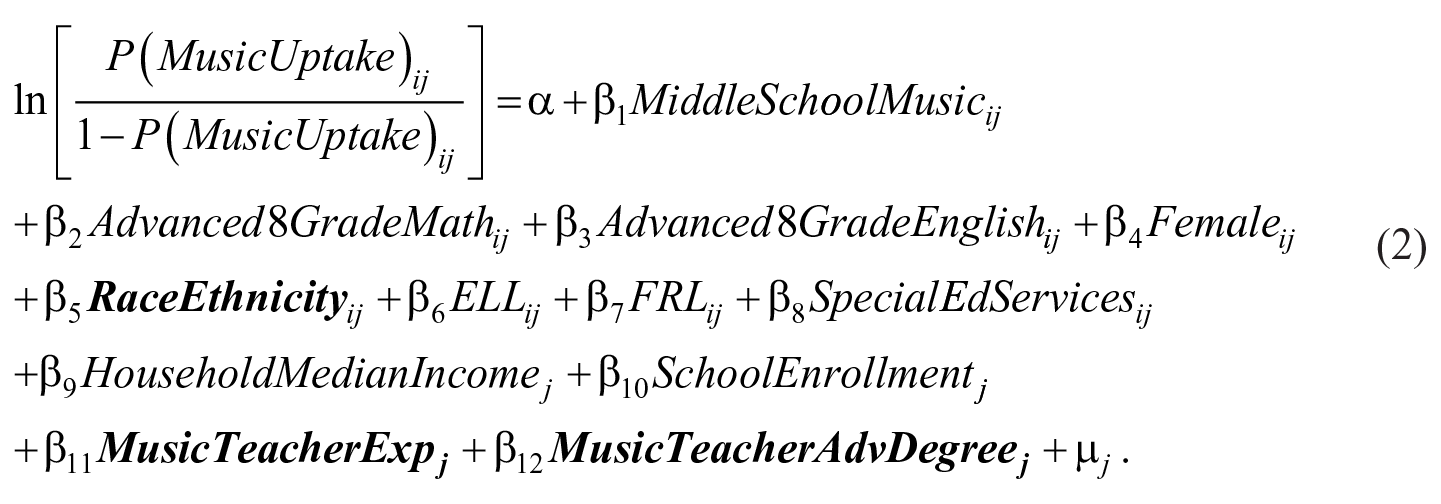
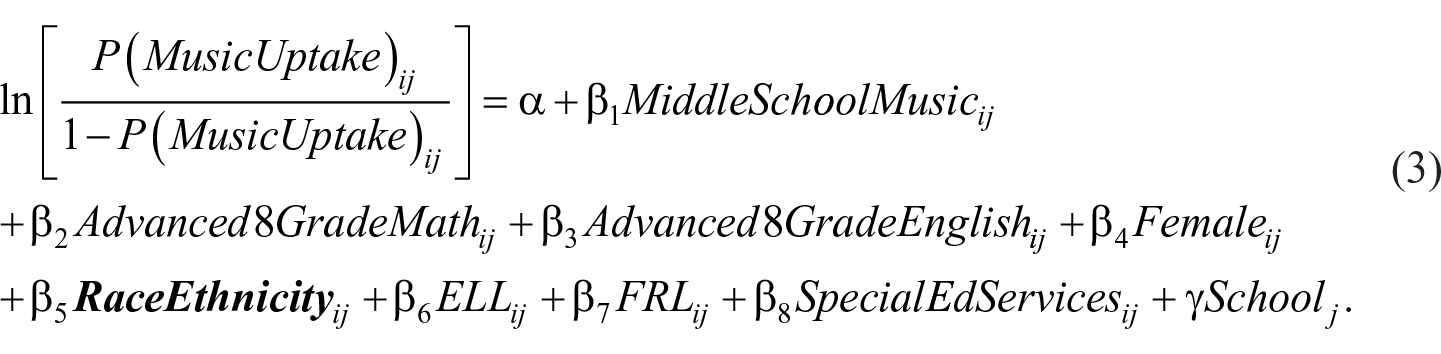
A potential limitation of MLM is omitted variable bias at the level of the cluster; unobserved school-level confounders could potentially bias student-level regression coefficients. As a robustness check, 1 I conducted an ancillary analysis with school-level fixed effects, shown in Equation 3:
Research Question 4: Postsecondary transition
Nationally, Elpus (2018, 2022d) found that music students had no disadvantage regarding postsecondary college attendance compared to their non-music peers. I investigated whether this finding held for Maryland high school students again using multivariate logistic regression with design-based correction for clustering, modeled with the following equation:
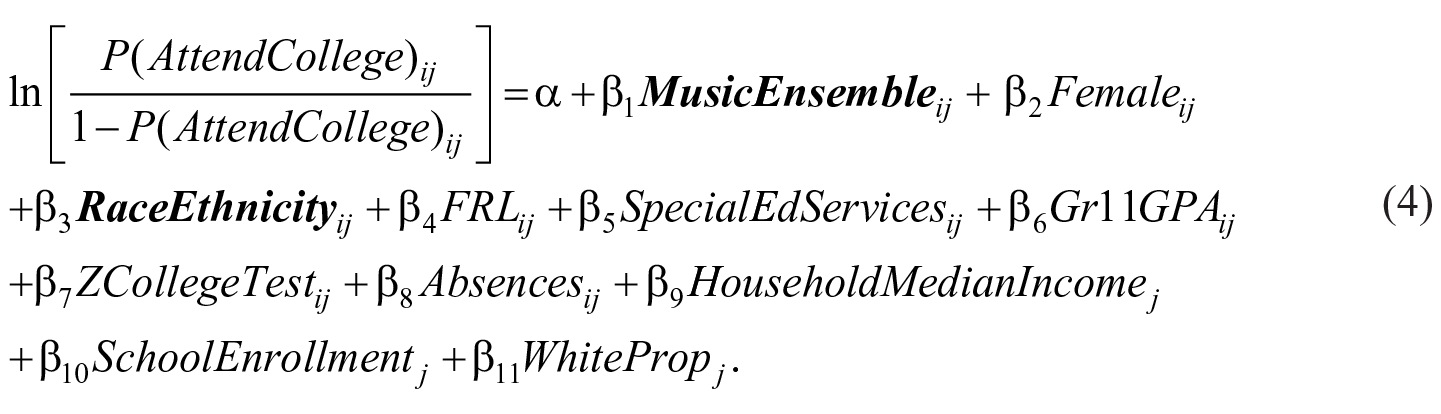
In this model, MusicEnsemble was a dummy indicator set to 1 if a student was, at any point in high school, enrolled in a band, choir, or orchestra course and 0 otherwise. Elpus and Abril (2019) found that the characteristics of students who enroll in each type of ensemble may differ, so I also ran this analysis with students disaggregated by music ensemble. Finally, I specified all models treating music ensembles as a dosage indicator (i.e., a variable whose value was equal to the number of ensemble courses taken) to examine if taking music classes throughout high school impacted postsecondary enrollment outcomes. Gr11GPA was the unweighted GPA of students at the end of the 11th grade, calculated from final course grades for all available years. ZCollegeTest was the student’s SAT or ACT composite score converted into a standardized z score, 2 whichever was higher. Because some students only took one exam, it was necessary to convert the composite score into z scores to avoid listwise deletion. Absences was a variable indicating the number of recorded absences in a student’s senior year.
Results
Due to data confidentiality restrictions, reported results may be rounded. Percentages are rounded to the nearest whole number, population estimates are rounded to the nearest 50, and any cells with fewer than 10 observations are omitted. Results are organized by research question.
Research Question 1: Demographic Analysis of Students and Teachers
In the 2015–2016 academic year, about 22% of students were enrolled in one or more music classes. The percentage of students enrolled in each course was as follows: band (7%), choir (6%), orchestra (3%), guitar (3%), or piano (3%). Demographics for students are reported by race/ethnicity and sex in Panel A of Table 1 (see Figure S1 in the supplemental document included with the online version of this article for a visualization by race/ethnicity). Although gender identity is much more nuanced than the birth-assigned sex dichotomy, statewide administrative data used binary sex from official records that may or may not reflect individuals’ gender identity. χ2 tests of independence revealed significant differences in race/ethnicity and sex demographic proportions between the general student population and each subgroup of music students (p < .001). For band, White students were overrepresented, Black and Hispanic students were underrepresented, and male students were overrepresented compared to the general student population. For choir, White students were overrepresented, Hispanic students were underrepresented, and female students were overrepresented compared to the general student population. For orchestra, Black students were underrepresented, Asian students were overrepresented, and female students were overrepresented compared to the general student population. For guitar, White and Hispanic students were overrepresented, Black students were underrepresented, and male students were overrepresented. For piano, White students were underrepresented, Black students were overrepresented, and female students were overrepresented compared to the general student population.
Bivariate Demographic Analyses of Music Students and Music Teachers.
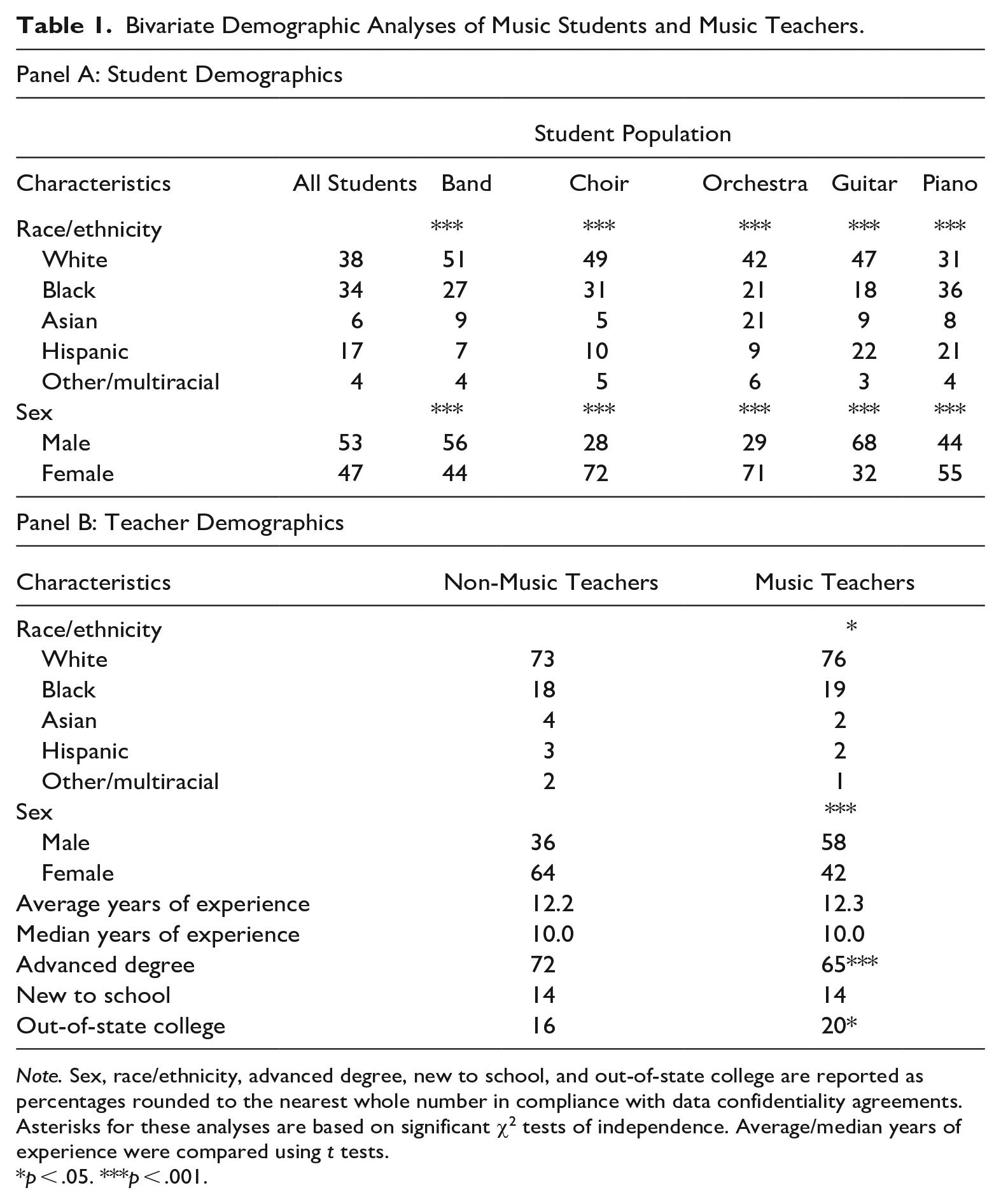
Note. Sex, race/ethnicity, advanced degree, new to school, and out-of-state college are reported as percentages rounded to the nearest whole number in compliance with data confidentiality agreements. Asterisks for these analyses are based on significant χ2 tests of independence. Average/median years of experience were compared using t tests.
p < .05. ***p < .001.
Demographic information for high school teachers in the 2015–2016 academic year is reported in Panel B of Table 1. In addition to race/ethnicity and sex, I also compared average and median years of experience, the proportion of teachers holding advanced degrees, and the proportion of teachers credentialed from an out-of-state institution between music teachers and non-music teachers. Of the approximately 17,250 high school teachers, about 500 were music teachers. Bivariate analyses using χ2 tests of independence revealed significant differences in race/ethnicity between music teachers and non-music teachers (p = .016). There was a slightly higher proportion of music teachers who were White and a slightly lower proportion of music teachers who were Asian. However, due to the small cell sizes for music teachers within some groups of race/ethnicity, readers should exercise caution in interpreting the significance of this test. Regarding sex, male teachers were significantly overrepresented in music teachers compared to non-music teachers (p < .001). Years of experience were comparable between music and non-music teachers, with average experience just above 12 years and median experience at 10 years for both groups. A smaller proportion of music teachers held an advanced degree than non-music teachers (p < .001). For about 14% of music and non-music teachers, the 2015–2016 academic year was the first year at their school, indicating comparable levels of teacher turnover. Finally, a higher proportion of music teachers attended college out of state than non-music teachers (p = .028).
Research Question 2: Access—School Course Offering
Proportions of school course offerings for the state and disaggregated by district groupings are identified in Table 2 (see Supplementary Figure S2 in the supplemental document included with the online version of this article for a visualization). In the 2015–2016 academic year, the most common music courses offered across the state were band and choir, with approximately 80% and 82% of public schools serving grades nine to 12 offering these ensemble classes, respectively. The next most frequently offered course was orchestra (approximately 61%), followed by piano (55%) and guitar (48%). Course offerings were not consistent across district groupings. For example, in the rural districts, chorus and band were offered in over 92% of schools. The suburban districts offered courses beyond band and chorus in a greater proportion of schools compared to the state averages (orchestra = 78%, guitar = 70%, piano = 74%). In the Baltimore City school district, only 32% of high schools offered band, 26% offered chorus, 10% offered piano, and guitar and orchestra were offered in as few as 3% of schools.
Percentage of High Schools (N = 220) Offering Music Course in Maryland and Disaggregated by District Type.
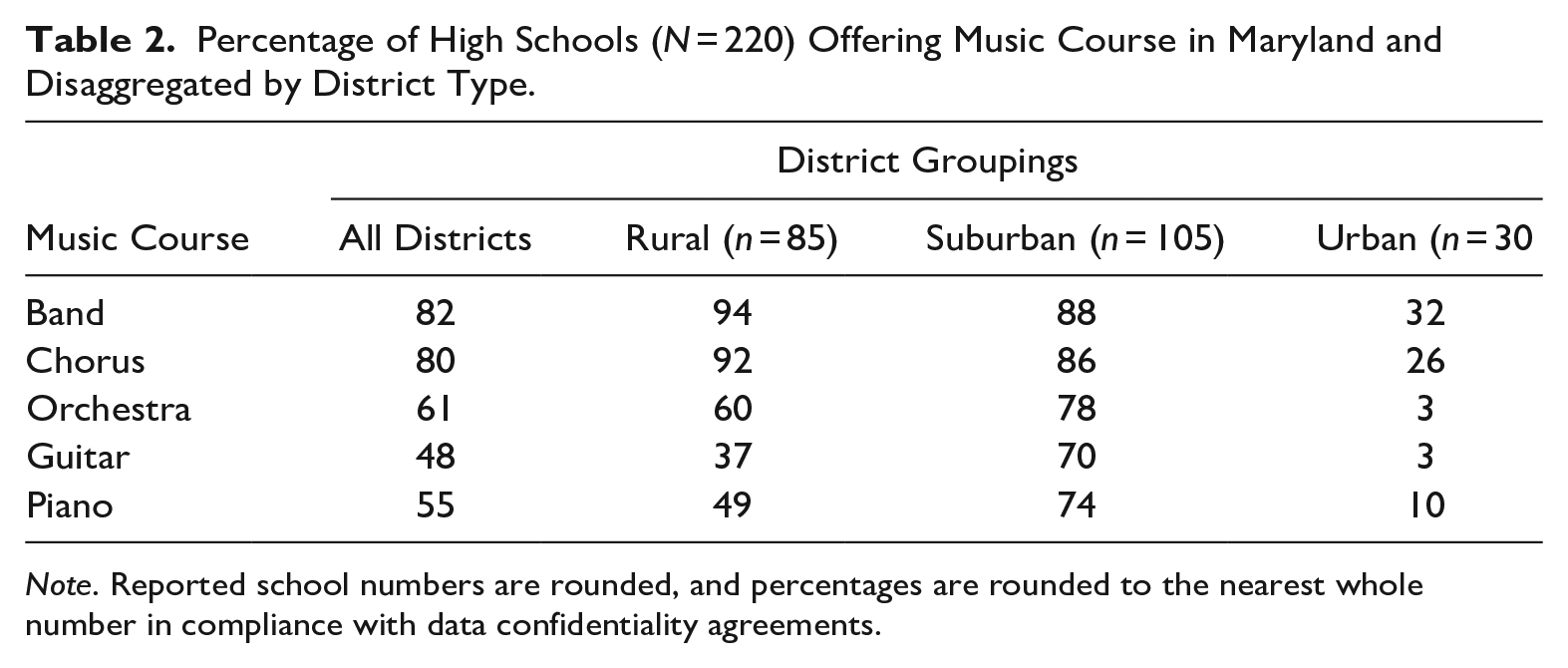
Note. Reported school numbers are rounded, and percentages are rounded to the nearest whole number in compliance with data confidentiality agreements.
To examine what school-level factors were associated with offering each of these courses, I used multivariate logistic regression to determine the unique impact of individual factors while holding other factors in the model constant. Full logistic regression results for each music course are included in Supplementary Table S1 in supplemental document included with the online version of this article. To improve the interpretability of odds ratios, I scaled median income in the $1,000s, enrollment in 100s of students, and proportions in 10s of percentage points. Due to the differences in offerings by Baltimore City, I included a dummy variable indicating membership in the LEA.
The odds that a school offered band were 1.53 times higher for every increase of 100 student enrolled, holding other factors in the model constant (p < .001), and the proportion of White students was also significantly associated with odds for offering band (odds ratio; OR = 1.57, p < .001). Household median income, the proportion of female students, and the proportion of ELL students were not significantly associated with access to band courses (p < .05). For chorus, significant predictors included enrollment (OR = 1.38, p < .001), proportion of White students (OR = 1.44, p < .05), and proportion of ELLs (OR = .77, p < .05). Significant predictors for orchestra included enrollment (OR = 1.55, p < .001). After controlling for school-level factors, membership in the Baltimore City school district was associated with about 97% lower odds of offering orchestra (p < .001). Significant predictors for guitar included school enrollment (OR = 1.31, p < .001) and median household income (OR = 1.02, p < .01). Significant predictors for piano were enrollment (OR = 1.27, p < .001) and proportion of female students (OR = 1.51, p < .05). After controlling for school-level factors, membership in the Baltimore City schools was associated with 89% lower odds for offering piano (p < .001).
Research Question 3: Uptake—Ninth-Grade Enrollment
Results for final multilevel models examining factors associated with a ninth grader’s decision to enroll in band, choir, or orchestra are reported in Table 3. Regression coefficients are reported as OR. Importantly, coefficients should be interpreted as measures of association, not causality. All standard errors were calculated using Stata’s robust standard error option, yielding standard errors robust to heteroskedasticity. Fixed-effects results were consistent with those from MLM; regression results comparing fixed-effects analyses with multilevel models are included in Supplemental Table S2 in supplemental document included with the online version of this article.
Final Multilevel Models for Ninth-Grade Enrollment in Chorus, Band, and Orchestra Classes (N = 55,500).
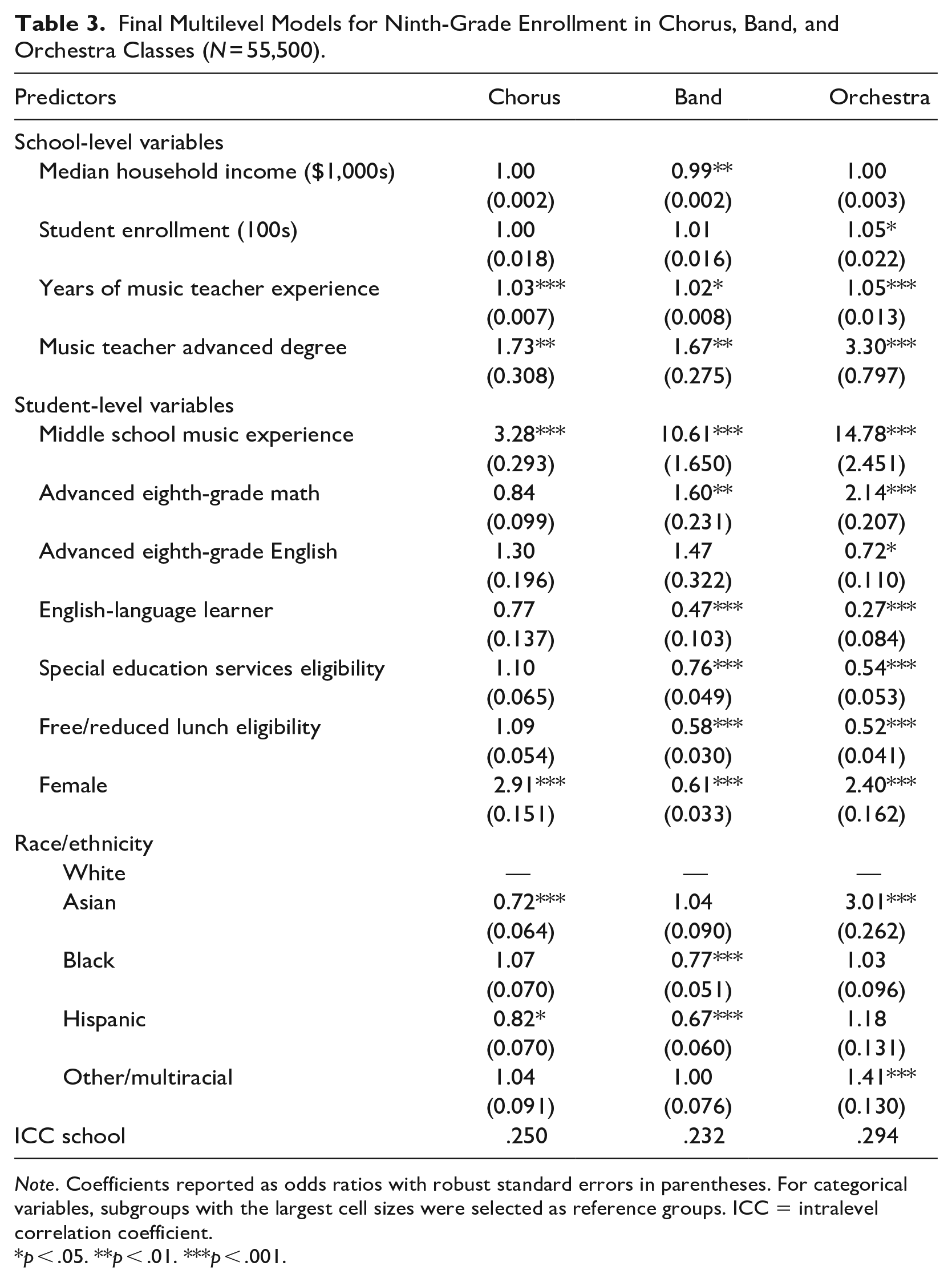
Note. Coefficients reported as odds ratios with robust standard errors in parentheses. For categorical variables, subgroups with the largest cell sizes were selected as reference groups. ICC = intralevel correlation coefficient.
*p < .05. **p < .01. ***p < .001.
The first student-level predictors I examined for uptake in ninth-grade ensemble music courses were middle school course enrollments. Prior music experience was significantly associated with enrollment in band (OR = 10.61, p < .001), chorus (OR = 3.28, p < .001), and orchestra (OR = 14.78, p < .001). Enrollment in an advanced eighth-grade math course was significantly associated with band (OR = 1.60, p < .01) and orchestra (OR = 2.14, p < .001) but not chorus. Students enrolled in an advanced eighth-grade English class had significantly lower odds of enrolling in ninth-grade orchestra (OR = .72, p < .05), but odds for enrollment in band or chorus were not significantly different from those not enrolled in an advanced eighth-grade English class.
Second, I examined the following demographic characteristics of students: ninth-grade ELL status, special education services eligibility, free/reduced lunch eligibility, sex, and race/ethnicity. ELL status was associated with reduced odds for enrollment in band (OR = .47, p < .001) and orchestra (OR = .27, p < .001). Students eligible for special education services were less likely to enroll in band (OR = .76, p < .001) or orchestra (OR = .54, p < .001). Eligibility for free/reduced lunch was associated with lower odds for enrollment in band (OR = .58, p < .001) and orchestra (OR = .52, p < .001). Compared to male students, female students were more likely to enroll in chorus (OR = 2.91, p < .001) and orchestra (OR = 2.40, p < .001) but less likely to enroll in band (OR = .61, p < .001). Compared to White students, Asian students were less likely to enroll in chorus (OR = .72, p < .001) but more likely to enroll in orchestra (OR = 3.01, p < .001). Black students were less likely to enroll in band (OR = .77, p < .001) but had no significant difference in odds for enrollment in chorus or orchestra (p > .05). Hispanic students were less likely to enroll in band (OR = .67, p < .001) and chorus (OR = .82, p < .05). Students identified as multiracial of another race/ethnicity were more likely to enroll in orchestra (OR = 1.41, p < .001).
Finally, I examined school-level factors associated with enrollment in ninth-grade music ensembles. Census group block median income of the school was significantly associated with a student’s enrollment in band (OR = .99, p < .01) after controlling for individual factors. Median income was scaled in $1,000s and centered at the grand mean. Although the resulting OR of .99 is close to 1, the multiplicative nature of odds ratios quickly scales for large differences. For example, students attending a school with a median income of $10,000 over the state mean would mean their odds for enrollment in band would be multiplied by about .90, about 10% lower. For students attending a school with a median income of $20,000 above the state mean, their odds of enrollment in band would be about 18% lower. Students attending larger schools were more likely to enroll in orchestra (OR = 1.05, p < .05). School size was scaled in 100s of students and centered at the grand mean. Thus, students attending a school with 500 more students than the state average had odds about 28% higher to enroll in orchestra than students attending a school with the average number of students. Years of ensemble music teacher experience (band: OR = 1.02, p < .05; chorus: OR = 1.03, p < .001; orchestra: OR = 1.05, p < .001) and holding an advanced degree (band: OR = 1.67, p < .01; chorus: OR = 1.73, p < .01; orchestra: OR = 3.30; p < .001) were associated with increased odds for enrollment for their respective ensemble courses. Although student-level factors were more strongly associated with enrollment in an ensemble music course, school-level factors still impacted student uptake. Furthermore, additional school-level factors associated with enrollment in ensemble music courses were omitted from the final model that were unobservable in the data set, as evidenced by the ICC values in the final models (band = .232; chorus = .250; orchestra = .294).
Research Question 4: Postsecondary Transition
For the final component of the study, I examined the 2015–2016 ninth-grade cohort’s transition to postsecondary institutions in Fall 2019. First, I examined the association between membership in any ensemble for at least 1 year with enrollment in a postsecondary institution. In a single regression model with no covariates, those who took a music ensemble course were significantly more likely to attend a postsecondary institution than those who did not take an ensemble course (OR = 2.53, p < .001). After controlling for school- and individual-level covariates, differences between ensemble music students and non-ensemble music students were eliminated (OR = 1.02, p > .05). These results are shown in Supplemental Table S3 in supplemental document included with the online version of this article. Results held when disaggregated by ensemble: Membership for at least 1 year in any music ensemble was not significantly associated with a difference in postsecondary attendance compared to those not in a music ensemble (p > .05). Furthermore, all results were robust to specifications with the number of music courses taken by students: Additional course enrollments beyond one in any music ensemble in high school did not impact students’ postsecondary enrollment (OR = 1.04, p > .05).
Discussion
Demographic Analyses
Initial descriptive analyses of Maryland high school students revealed demographic differences between those who enroll in music and those who do not enroll in music. These findings corroborate evidence from the national level that music students are systematically different from non-music students and different from students in other music courses (Elpus, 2013; Elpus & Abril, 2019; Kinney, 2019). The state demographic composition of Maryland public high school students differed from the national estimates of an older cohort reported by Elpus and Abril (2019), but the same general trends for differences between music ensemble students and non-music ensemble students nationally were consistent in the present study. White students were generally overrepresented in ensembles, and Hispanic/Latinx students were underrepresented in ensembles. In orchestra, Black students were underrepresented, and Asian students were overrepresented. For state-listed sex, findings from the present study were consistent with national findings: Band had a high proportion of male students, and choir and orchestra had a higher proportion of female students. However, the degree of differences was larger within Maryland compared to national estimates. I also found substantive differences in the demographic composition of guitar and piano along race/ethnicity and state-listed sex.
Compared to non-music teachers, music teachers held similar years of experience and exhibited the same rate of teacher turnover within schools: About 14% of teachers were new to their school in the 2015–2016 academic year. Music teachers were less likely to hold an advanced degree and were more likely to have attended college out of state compared to non-music teachers. Additional research is needed to determine if Maryland’s music teacher preparation programs do not produce enough graduates that enter the teacher workforce to fill high school openings. A plausible alternative explanation is that the state of Maryland’s job opportunities and employment benefits for music teachers make the state a particularly attractive employment prospect for teachers from out of state.
The demographic composition of high school music teachers for race/ethnicity was similar to that of high school teachers. Although the χ2 test of independence was significant, small cell sizes in several of the categories warrant caution in interpretation. The difference in state-listed sex of music teachers compared to non-music teachers was substantive and consistent with findings from Elpus (2022c) for high school teachers. Additionally, these proportions contrasted starkly with the proportion of male/female music teacher licensure candidates (Elpus, 2015a) and the in-service music teacher population (Gardner, 2010). Even among music teachers, it appears those teaching at the high school level represent a select subset of the teaching population, likely due to disparities within instrumental conducting positions, based on prior evidence (Bovin, 2019; Brimhall, 2022; Fitzpatrick, 2013).
Several possible reasons may explain differences in the gender composition of the high school music teacher workforce. First, there is a possibility that LEA hiring practices could favor male candidates because of overt or subconscious biases (Sears, 2010). Marching band is traditionally male-teacher-dominated, and several accounts from female band directors have shared discriminatory experiences in the profession (Bovin, 2019; Coen-Mishlan, 2015 Sears, 2018). Discrimination could stem from administration, parent booster organizations, or other music colleagues (Bovin, 2019). There could also be sociological factors contributing to a teacher’s choice/preference of school level. Because women are underrepresented in high school and especially college conductor roles, preservice music teachers may experience differing degrees of socializing into these roles. The pathway to becoming an ensemble music teacher is invariably impacted by enrollment in school-based ensembles; the gender differences of music students enrolled in band may also contribute to differences in the teacher population. Additional research into LEA hiring practices, sociological factors contributing to music teacher choice/preference for school level, and the pathway from music student to music teacher could provide clarity and insight into making the music teaching profession more equitable.
Equity of Access
The results of the present study demonstrated the relationship between school size and music course offerings is ubiquitous: Public high school students in Maryland attending larger schools were more likely to have access to music courses. Additionally, all non-band music courses were less likely to be offered in schools with a proportion of White students substantively below the mean. In other words, the schools that did not offer music courses beyond band served the fewest White students proportionally after controlling for median household income and school size, among other factors. This finding raises serious concerns regarding opportunities for music education among students attending high schools that predominantly serve students of color.
Most notably, there was a distinct barrier to access for high school students in the Baltimore City school district. Whereas most public schools in the rural and suburban districts offered band and choir and a large proportion offered orchestra, piano, or guitar, the proportion of schools offering such music courses in Baltimore city was much lower. Even when accounting for school-level characteristics previously shown to be associated with music course offerings, multivariate analyses revealed a large disparity between students within Baltimore City and the rest of the state. From a policy perspective, most students in Baltimore City do not have access to a “well-balanced, high-quality music instruction” (NAfME, 2022) within the public schools, so music education advocates should work with state, LEA, and community partners to rectify this inequity. Additional investigations into access to music education at the elementary and middle school levels within the state of Maryland broadly and Baltimore City specifically are warranted.
Equity of Uptake
Even after accounting for individual characteristics, MLM revealed that school-level factors were significant predictors of an individual student’s enrollment in music programs. Household median income was not significant for chorus or orchestra enrollment but was significant for band enrollment. However, this finding may be a result of students in more affluent schools having more options for music study, such as guitar or piano. Larger schools were more likely to offer more music courses, but students were also more likely to enroll in orchestra if they attended a larger school. Ostensibly, scheduling difficulties could be one possible reason (Baker, 2009). Smaller schools have fewer scheduled blocks of any particular math or English course, increasing the risk of singularly scheduled courses conflicting with a music course. Music teachers should be aware of potential conflicts and work with building-level administrators and counselors when building the master schedule to facilitate the successful enrollment of music students. Additionally, if the music programs at larger schools have larger music class sizes, students may find that social dynamic more appealing, increasing the likelihood of enrollment.
Teacher experience and advanced degrees were factors in a student’s music course enrollment. Perhaps the expertise gained through teaching experience and graduate coursework provided teachers with stronger recruitment skills to reduce attrition. However, I suspect that teachers with higher levels of experience or education are more likely to be employed by schools with higher music enrollments; more research in this area is needed. I also examined whether a music teacher being new to the school impacted students’ decision to enroll, but teacher turnover did not have any apparent effect. This finding may be explained by the timing of course registrations compared to the job application cycle: Students complete their course registration in the spring, but many staffing changes are not announced or completed until later in the school year or even over the summer.
Results for student-level factors for enrollment were in line with previous research (Elpus & Abril, 2019; Kinney, 2019); band and orchestra students represented a more select subset of the student population, and choir students were comparatively more representative of the broader student body. Students who were eligible for free/reduced lunch, eligible for special education services, and ELLs were all less likely to enroll in either of the instrumental courses, and those with higher academic achievement (measured using advanced course enrollment as a proxy) were more likely to enroll in the instrumental music courses. Perhaps ELLs or those with special education services had additional courses taking up elective registration slots, but these factors did not impact a student’s enrollment in choir, indicating that other explanations are more likely. Further research into social and academic barriers to enrollment among English language learners and students receiving special education services is required. Although race/ethnicity and state-listed sex continued to be significant predictors, there were some notable differences in the MLM compared to the bivariate proportion analysis. For example, the bivariate analysis showed Black students were substantively underrepresented in orchestra, but MLM demonstrated no significant difference between Black students and White students after controlling for the school- and individual-level characteristics, specifically school size, the proportion of White students, individual SES, and academic achievement, among others. In addition to issues of cultural representation in the large ensemble model for music education, broader societal inequities and structural barriers that disproportionately impact students of color likely contributed to the inequality of uptake in ensemble music courses. Although factors associated with enrollment in piano and guitar were not examined in the present study, the concept of cultural relevance could potentially explain some of the observed differences in demographic representation of students in various music courses.
One of the most impactful student-level factors associated with enrollment in ninth-grade band, choir, or orchestra was prior enrollment in middle school music. The odds for band and orchestra enrollment increased by a factor of 10.61 and 14.78, respectively, for those with prior middle school experience, whereas the odds for chorus enrollment increased by a factor of 3.28 for prior middle school experience. One possible explanation for these differences between the instrumental courses and chorus is the financial investment in a physical instrument. Students who own an instrument have made a financial investment in their instrument, perhaps increasing pressure for matriculation through ninth grade. Similarly, the financial investment for middle school choir may not be as substantive, making middle school experience less impactful on one’s decision to matriculate to high school music courses. Another likely explanation involves the requisite skills required to join band or orchestra in high school. Often, prior experience on an instrument and music reading skills are expectations for high school band/orchestra enrollment, without space for any beginning-level students. These expectations make a lack of prior experience necessarily prohibitive for opportunities in high school. Conversely, a lack of prior middle school music experience may not be as restrictive for enrollment in chorus. Thus, one possible route for improving equity in both access and uptake of music education could be continuing to expand curricular music options.
Postsecondary Transition
Consistent with prior work (Elpus, 2018, 2022d), the 2019 cohort of Maryland graduates was not disadvantaged in college enrollment outcomes by taking ensemble music courses. Music educators should work with students, parents, and guidance counselors to help dispel the myth that dropping music courses in favor of additional remediation, honors, or Advanced Placement courses improves college attendance. One potential limitation of this analysis is that I did not differentiate the selectivity ratings or prestige of 4-year colleges attended. Although it is plausible that the perceived quality of postsecondary institutions may be different between music students and non-music students specifically in Maryland, the evidence on a national scale suggests parity between music and non-music students along the college application and admission pathway in terms of college selectivity and major choice.
Conclusions and Suggestions for Future Research
The results of the present study have highlighted several inequities within Maryland K–12 public high school music education programs, but they have also revealed additional opportunities for music study beyond the national averages: A greater proportion of schools offered orchestra, guitar, and piano compared to national averages as reported previously (Give a Note Foundation, 2017). Similar research investigating access and uptake at the middle school and elementary school levels is required. Qualitative studies on the experiences of students who enroll in these courses and those who elect not to enroll in high school music are needed to better understand the nuance of these decision-making processes. Research focusing on students, teachers, and curricula of non-ensemble courses could be especially valuable for understanding how the profession can promote these options in a variety of K–12 and postsecondary contexts. Finally, more research is required to understand the extent to which gendered experiences may impact different facets of the pathways to ensemble music course taking and music teaching. Additional use of statewide longitudinal data systems can illuminate myriad potential barriers to equity within music education to inform better policy. With a better understanding of the scope of access and uptake across an entire state, researchers, educators, and advocates can work toward actualizing high-quality music education that is inclusive and equitable for all students.
Supplemental Material
sj-docx-1-jrm-10.1177_00224294231163848 – Supplemental material for Public High School Music Education in Maryland: Issues of Equity in Access and Uptake
Supplemental material, sj-docx-1-jrm-10.1177_00224294231163848 for Public High School Music Education in Maryland: Issues of Equity in Access and Uptake by David S. Miller in Journal of Research in Music Education
Footnotes
Declaration of Conflicting Interests
The author declared no potential conflicts of interest with respect to the research, authorship, and/or publication of this article.
Funding
The author disclosed receipt of the following financial support for the research, authorship, and/or publication of this article: This research was supported by the Maryland Longitudinal Data System (MLDS) Center. I appreciate the feedback received from the MLDS Center and its stakeholder partners. All opinions are the author’s and do not represent the opinion of the MLDS Center or its partner agencies.

Supplemental Material
1
In this case, the multilevel model is preferred to the fixed-effects model because the observable school-level data are theoretically relevant to student enrollment in music courses.
2
Standardized scores were calculated using published means and standard deviations for the exams.
Author Biography
References
Supplementary Material
Please find the following supplemental material available below.
For Open Access articles published under a Creative Commons License, all supplemental material carries the same license as the article it is associated with.
For non-Open Access articles published, all supplemental material carries a non-exclusive license, and permission requests for re-use of supplemental material or any part of supplemental material shall be sent directly to the copyright owner as specified in the copyright notice associated with the article.
