




Abstract
We consider how agreement terms create a national framework for development to address the root causes of conflict (public goods) and prevent recidivism through the economic reintegration of ex-combatants (private goods), thus offering agreement terms that are acceptable to both parties and enabling long-term peace. We argue that peace agreements that include promises of public goods, such as national development, and private goods, such as training opportunities and direct fund transfers to ex-combatants, are more capable of preventing violence resurgence. We examine variation in peace agreements contents and how these relate to the durability of peace using newly coded data on private goods. Using a series of Cox proportional hazard models, along with a variety of robustness checks to account for matching, placebo effects, selection bias and implementation factors, we offer evidence that peace agreement content has important implications for post-civil war outcomes. Our results suggest that agreements with provisions for fiscal federalism and for the economic reintegration of ex-combatants are more durable than those that do not. Moreover, contrary to expectations, most economic development promises do not affect the durability of peace.
In their seminal work, Hartzell and Hoddie (2003) show that peace agreements specifying power-sharing among ex-combatants create longer lasting peace. These findings have formed the basis for a wide range of scholarship exploring the content of peace agreements. With growing evidence highlighting the importance of peace agreement content (Badran, 2014; Lee et al., 2016; MacGinty et al., 2019; Nomikos, 2021; Sharif and Joshi, 2023), we examine how economic provisions within these agreements can better reintegrate ex-combatants in post-civil war settings, offer broader plans for economic development and contribute to building a durable peace. We consider how the terms of peace agreements outline or fail to create specific mechanisms for the economic reintegration of individuals, thereby helping to prevent civil war recurrence. In addition, we examine how peace agreements can lay the groundwork for longer term economic transformation of a society, enabling a more durable peace through economic development.
To date, research on the relationship between economic provisions and durable peace has been insufficient, partly due to challenges in measuring and precisely capturing the economic factors that impact both ex-combatants (private goods) and the public (public goods) in the short- and long term. While case-level analyses have hinted at the potential of economic provisions in peace agreements to facilitate ex-combatant reintegration and increase the costs of recurring conflict, these studies tend to focus on the outcomes of specific programs and offer mixed findings (Blattman and Annan, 2016; Gilligan et al., 2013; Humphreys and Weinstein, 2007; Levely, 2014; Pugel, 2009).
Moreover, there is only limited cross-national evidence on the link between economic reintegration and peace (Colletta et al., 1996; Knight and Alpaslan, 2004). Thus, while scholarship has examined peace agreement implementation and the durability of peace both quantitatively (Högbladh, 2011; Joshi et al., 2015) and qualitatively (McMullin, 2022; Tobias et al., 2013), there has yet to be a cross-national analysis of how specific agreement terms targeting economic reforms affect peace durability.
Given mounting evidence that the simple disarmament of ex-combatants is not enough to lead to prolonged peace following civil war (Stedman et al., 2002; Wood, 2010), more recent peace agreements have begun to include economic provisions for ex-combatants to help with their reintegration, as well as broader plans for economic development. For example, a cornerstone of Colombia’s 2016 peace accord with the Fuerzas Armadas Revolucionarias de Colombia (FARC) was a promise for rural development, but the effectiveness of such plans in promoting long-term peace remains ambiguous.
We consider how comprehensive peace agreements lay the groundwork for the creation of private goods, which incentivize disarmament, and public goods, which address underlying societal problems. We introduce new data on the inclusion of economic development provisions in peace agreements and offer empirical evidence of the value of codifying specific economic reintegration programs to study the durability of peace. While case studies indicate that economic provisions allow ex-combatants to enter the legal workforce, in turn increasing the costs of rebelling (MacGinty, 2010; Verwimp, 2003), we offer cross-national evidence of how peace agreement terms build the economic reforms that enable a durable peace.
In the pages that follow, we consider the scholarship on peace agreements and peace durability after conflict. We then argue that the specific terms of peace agreements help explain how successfully ex-combatants are reintegrated and address the root causes of conflict, leading to a more durable peace. Our research emphasizes the necessity of distinguishing two types of economic peace agreement terms: those promising private goods for ex-combatants, such as direct funds, training programs and explicit reintegration mechanisms; and those promising public goods, such as broader plans for economic development, fiscal federalism and infrastructure reconstruction. We test our arguments using original data on civil war peace agreement terms from 1975 to 2021. We show that, other than fiscal federalism, peace accords that promise public goods, such as development and infrastructure, do not lead to a durable peace. Rather, agreements that specify that ex-combatants receive direct funds, training programs and explicit reintegration measures are most effective in preventing recidivism. We conclude with a discussion of the implications of our findings for academics and policymakers, as well as directions for future research.
What makes for a durable peace agreement?
A growing body of scholarship argues that peace agreements are not just epiphenomenal (Fortna, 2004a), as the signing of such agreements offers a strong signal that parties are ready to transition to peace (Walter, 2002). To enable this transition, comprehensive agreements typically address substantive issues, outline a path for future negotiations and attempt to permanently end the conflict. As this action offers observable evidence of a shift in conflict dynamics, research has explored the signing and implementation of these agreements (Högbladh, 2011; Joshi et al., 2015; Karreth et al., 2024).
Scholars focus on the elements of agreements that build a more durable peace. It is not just the signing of the agreement but its design and content that explains peace duration (Badran, 2014; Walter, 2002). While military victories can prevent the resurgence of violence, negotiated settlements can offer incentives and threats that can enable peace (Toft, 2010). However, almost half of all peace agreements fail before two months (Bercovitch and Gartner, 2006), thereby failing to shift political conditions (Rothchild, 2002; Stedman et al., 2002). Carefully designed peace agreements enable a sense of security (Hartzell and Hoddie, 2003), address obstacles to cooperation (Badran, 2014), prevent violence with other groups (Ottmann, 2020) and enable both justice (Druckman and Wagner, 2019) and peacetime coordination (Johnson, 2022).
Peace agreements must address the underlying causes of violence (such as reforming governance), deal with events that occurred during violence (such as through truth commissions and tribunals) and seek to rebuild the lives of those affected by violence to produce a durable peace. The literature highlights two main explanations of peace durability: baseline prospects for peace and proactive measures (Bercovitch and Gartner, 2006; Fortna, 2003b, 2004b; Gartner and Melin, 2009; Gerner and Schrodt, 2001). The former are characteristics of the situation over which actors in the present have little control, such as the issue in dispute and history of the conflict, whereas the latter involve actors’ deliberate attempts to enhance the durability of peace. Below we discuss both explanations.
Baseline prospects for peace
The baseline prospects for peace consist of situational or structural factors that exist at the time of an agreement that cannot be easily negotiated. These include contextual variables that distinguish ex ante the cases that are more likely to fail (Bercovitch and Gartner, 2006; Fortna, 2004b; Gerner and Schrodt, 2001). Examples include the disputed issue, conflict intensity, violence levels, and strength of the disputants. Studies have linked outcome durability to relative power (Dixon and Senese, 2002; Quinn et al., 2006; Werner, 1998, 1999), as well as dispute history and that of intergroup relations, which can affect underlying security concerns, shaping the negotiations, agreement terms and agreement durability (Hartzell and Hoddie, 2015; Mattes and Savun, 2010; Park, 2015; Werner and Yuen, 2005). Moreover, agreements over territory are less likely to hold (Hensel, 1994; Huth and Allee, 2002).
For an agreement to build durable peace, it must address the underlying issues that inhibit cooperation (i.e. improve baseline prospects). Indeed, strong peace agreements address uncertainty, misperceptions and commitment problems (Fearon, 1995). As war provides information about relative capabilities, uncertainty and misperceptions are less challenging in the post-agreement setting compared to the commitment problem, especially in the civil war context (Walter, 1997).
Building on this bargaining logic, strong civil war peace agreements reduce fear and increase the costs of further fighting (Mattes and Savun, 2009) – typically through government reforms or power-sharing clauses, which divide power among rivals along its military (integration of rebels into army), territory (autonomy), politics (shared government) and economy (shared prosperity). The more dimensions addressed, the greater the durability of peace (Hartzell and Hoddie, 2003; Hoddie and Hartzell, 2003), especially when they involve relatively cheap government concessions, such as military integration and autonomy (DeRouen et al., 2009). Security sector reform is especially important (Joshi et al., 2015).
Proactive measures for peace
The second explanation for protracted peace hinges on proactive measures that directly aim to cultivate a robust and enduring peace. Proactive agreement terms raise the cost of violence, reduce uncertainty, and prevent accidents, thereby altering disputants’ incentives. Indeed, agreement precautions, such as demilitarized zones, dispute resolution commissions, peacekeeping and external guarantees, can establish a durable peace (Fortna, 2004b).
Third-party guarantors of peace agreements are consistently highlighted as prolonging peace (Hartzell et al., 2001; Pearson et al., 2006; Walter, 2002), and international peacekeeping operations enable durable peace in both interstate wars (Fortna, 2003a; Smith and Stam, 2003) and in intrastate wars (Doyle and Sambanis, 2000; Hartzell et al., 2001).
A transition to peace necessitates reintegrating ex-combatants into society. Case studies suggest economic provisions in peace agreements facilitate reintegration and increase recidivism costs (Blattman and Annan, 2016; Gilligan et al., 2013; Humphreys and Weinstein, 2007; Levely, 2014; Pugel, 2009), however, there is only limited cross-national evidence (Colletta et al., 1996; Knight and Alpaslan, 2004). Indeed, while existing evidence supports the importance of peace agreements in generating a durable peace both quantitatively (Högbladh, 2011; Joshi et al., 2015) and qualitatively (McMullin, 2022; Tobias et al., 2013), there has yet to be a cross-national analysis of how specific agreement terms targeting economic reforms affect peace durability.
We build on growing evidence of the importance of peace agreement content (Badran, 2014; Lee et al., 2016; MacGinty et al., 2019; Nomikos, 2021). We examine how economic provisions within these agreements can create a pathway for reintegrating ex-combatants and build a more durable peace. In particular, peace agreements that include both private goods, to ensure successful reintegration of ex-combatants in the short term, and public goods, necessary for long-term reconstruction and development, lay the fundamental groundwork for durable peace. Below, we consider the implications of economic reintegration and development terms within peace agreements for helping prevent civil war recurrence.
Theory: Peace agreement provisions for durable peace
A peace agreement that specifies programmatic efforts for economic reforms offers an observable signal that former warring parties have negotiated an agreement that incorporates a shared vision for the transition to peace. Leaders are careful in the formation and design of formal agreements, as with treaty specifications in international alliances (Leeds et al., 2000). While many agreements lay out plans for changes in government policy and issues of representation, some also consider the economic piece of peace.
We argue that peace agreements that promise development policies that address nationwide grievances (the root causes of conflict) provide for the public goods that enable a long-term peace, and specific policies and resources that ensure ex-combatants reintegrate into the legal economy (i.e. private goods), such as training and funds, help overcome the more immediate threats of recidivism.
Public goods provision
Peace agreements provide public goods through stipulating economic policies focused on reconstruction and long-term economic development. While foreign aid (Collier and Hoeffler, 2004) and private sector investment (Bray, 2009) can help promote economic growth in the post-conflict setting, peace agreements signal whether parties are considering economic transition as a part of the shift from war to peace. Agreement terms have implications for the availability of resources for communities rebuilding from war.
Peace agreements can foster public goods by incorporating economic development programs aimed at poverty reduction, a key factor in post-conflict reconstruction efforts (see Flores and Nooruddin, 2009; Holtzman et al., 1998; Van Houten, 2007). Economists promote foreign direct investment and aid packages as keys to peace, as poverty alleviation is closely linked to many societal benefits (Collier and Hoeffler, 2004; Elbadawi et al., 2008). Peace agreement terms can increase the costs of renewed rebellion (Mattes and Savun, 2009), improve living conditions (Walter, 2004), increase average income (Collier and Hoeffler, 2004) and lower rates of unemployment (Hegre, 2004).
Many of the development programs and much of the government restructuring promised in peace agreements aims to address issues of economic inequality, offering national wealth redistribution and government reconfiguration. Horizontal inequalities, or inequalities that coincide with identity-based cleavages, can enhance grievances, group cohesion, and facilitate mobilization, thereby increasing the risk of civil war (Cederman et al., 2011, 2013; Østby, 2008). This scholarship suggests the need to create more equitable societies, such as increasing access to income or governance. For example, in the Memorandum of Understanding between the Georgian and the Abkhaz sides, the agreement stated that ‘The parties express the wish that for purposes of promoting economic recovery in the conflict zone an international commission be established with the participation of international and national organizations’ (United Nations, 1992: 2).
Economic development is an important public good that peace agreements can incorporate into their contents. Investment in programs that foster economic development in a public way, such as rebuilding or improving infrastructure and creating national development plans, can provide public goods that address the underlying causes of violence and therefore help to create long-term peace. We therefore expect to find that:
Hypothesis 1: Peace agreements that stipulate economic development clauses lead to a more durable peace.
However, development programs require years to yield results. More immediately, agreements must prioritize violence cessation by establishing clear pathways for rebel reintegration, enabling their contribution to and benefit from long-term development. We now turn to ex-combatant reintegration clauses as a source of peace durability.
Promises of private goods
We can contrast public goods that, as non-rival and non-excludable, benefit all members of a society with private goods that benefit individuals – in this case, the rebels. Peace agreements can outline programs that disincentivize rearming. Rational accounts of civil war recurrence emphasize incentives for rebellion and rearmament, implying that private goods can alter ex-combatant payoffs during the critical post-agreement period.
Enabling ex-combatant economic productivity is especially important given the governance challenges of post-conflict societies. Research suggests that employment opportunities may create a lasting peace (Beber and Blattman, 2013; Humphreys and Weinstein, 2007; Miguel and Gugerty, 2005). This study focuses on private goods facilitating ex-combatant economic reintegration through legitimate income generation and societal embedding. We examine how peace agreements can initiate specific policies supporting ex-combatant transitions to peace.
The process known as demobilization, disarmament and reintegration (DDR), operates to help former combatants return to civilian life. During reintegration, fighters change their identity from combatants to civilians and alter their behavior from violence to activities sanctioned by the mainstream community (Thiessen, 2015). DDR research focuses on accessing program outcomes, considering how policies and contextual factors enable the reintegration of former rebels (see Ojeleye, 2011; Özerdem, 2002; Phayal et al., 2015; Rolston, 2007).
Case studies suggest post-war programming can enable successful reintegration. In South Sudan, former combatants report satisfaction when the reintegration processes include job training and UN presence, but have persistent concerns surrounding political instability and the availability of firearms (Phayal et al., 2015). Without such training opportunities, such as in the countries of El Salvador, Cambodia, Mozambique and Nicaragua, former combatants were disposed to make their living through banditry after demobilization (Kingma, 1996).
Training is especially key in locations where high illiteracy and low-skilled labor lead to employment issues (Ojeleye, 2011). In Liberia, for example, employment rates are significantly higher for those who complete training programs (Levely, 2014). There is also evidence of ex-combatants turning to organized crime in Bosnia (Moratti and Sabic-El-Rayess, 2009), petty crime in South Africa (Mashike, 2007) and the return to violence with mercenary fighting in Liberia (Hill et al., 2008). Former fighters took part in electoral violence in Sierra Leone (Christensen and Utas, 2008), turned to organized crime in Mozambique (McMullin, 2004) and were recruited into criminal bands in Colombia (Nussio and Oppenheim, 2014), especially when strong wartime social ties enabled criminal opportunities (Daly et al., 2020).
Generally, DDR scholarship has shifted toward a more holistic approach to post-conflict processes while previous work focused on demilitarizing exclusively. For example, Tanner (1996) focused on military disarmament and showed little consideration of the political or economic implications of disarming, with more recent work discussing economic reintegration (see Knight and Alpaslan, 2004). If former combatants do not have access to economic opportunities and their weapons are still available to them, this may lead to violent crime and a lack of security for civilians (Stedman, 2003). A strong peace agreement must offer ex-combatants private goods that create employment opportunities and make rebelling less attractive, meaning that economic reintegration of former combatants is a key component of preventing renewed violence.
Indeed, reintegration programs can be effective in reducing poverty among ex-combatants and enabling them to achieve a better livelihood (Gilligan et al., 2013), and employment and education increases in ex-combatants have a preventive effect on recidivism (Kaplan and Nussio, 2018). Colombia’s policies and entrepreneurial business practices enabled ex-militants to use the market to overcome discrimination and to reintegrate peacefully (Barrios Fajardo et al., 2019; Gallo et al., 2023). The Irish case suggests that successful programs require both political will and the participation of former combatants in reintegration programs (Rolston, 2007). Peace agreement terms create the processes and programs that enable this transition, which means that reintegration clauses need to be designed carefully to prevent recidivism.
Peace agreements are increasingly accounting for reintegrating ex-combatants as a part of reconstruction in the aftermath of war. Economic reintegration programs, which often rely on international donors for funding, can offer resources such as training programs and seed funds for would-be entrepreneurs. Peace accords can offer paths for investing in ex-combatants, in terms of their ventures and their employability. These programs help to create structural paths for reintegration through building the skills of ex-combatants (as with the World Bank-funded Demobilization and Reintegration Project in Rwanda), their seed capital for business ventures (as in the Colombian Peace Agreement with FARC) and, therefore, help prevent recidivism.
For example, the Peace Agreement between the Government of the Republic of Rwanda and Rwandese Patriotic Front (1993: 165) outlines payments to be made to former combatants in great detail: Each serviceman/gendarme to be demobilized shall be paid a lump-sum demobilization allowance in constant value of Rwandese Francs, amounting to:
- One hundred thousand (100,000) RWF for Corporals, Privates and Gendarmes.
- Two hundred thousand (200,000) RWF for Non-Commissioned Officers – 2nd Category.
- Three hundred thousand (300,000) RWF for Non-Commissioned Officers – 1st Category.
- Four hundred thousand (400,000) RWF for Junior Officers.
- Five hundred thousand (500,000) RWF for Senior Officers.
While the civil war context of agreements shows variation in the outcomes that result from agreement design and actual implementation (Ottmann and Vüllers, 2015), we expect that the promise of private goods offers not only a clear path for ex-combatants to reintegrate economically, but also an important signal of the bargaining process that was undergone in order to reach the agreement. Indeed, ensuring that combatants transition to a job in the legal economy offers evidence of the commitment to peace that rebel leaders may have, as they are basically disbanding their armies, which means that reigniting a rebellion would be more difficult.
Our second hypothesis is therefore:
Hypothesis 2: Peace agreements that stipulate ex-combatant economic reintegration clauses lead to a more durable peace.
In sum, we argue that effectively preventing armed conflict in fragile and conflict-affected areas requires innovative approaches that create opportunities for legal commerce (private goods) and foster development (public goods), which can in turn transform the local social, political and economic structures. In the next section, we next test these expectations.
Research design
To test our expectations, we use both existing sources and collect original data (DeRouen et al., 2009; Fortna, 2004b; Joshi and Quinn, 2017). Our analysis centers on the Durability of peace as the dependent variable, capturing the duration of peace spells after agreements using a Cox proportional hazard model. 1 Specifically, the dependent variable measures the time until peace agreement failure, defined as the recurrence of conflict between the parties that signed the agreement. This is quantified as the number of days until the next episode of conflict begins, where a new episode is identified based on the occurrence of a conflict event in the Uppsala Conflict Data Program (UCDP) Georeferenced Event Dataset Global version 24.1 (Sundberg and Melander, 2013). The recurrence is captured at the dyadic level, and only episodes with 25 or more battle-related deaths are considered as a valid conflict event in the data.
We run robustness checks that address selection bias, implementation, placebo effects, and the use of matched samples, as detailed below. Economic measures serve as key predictors, allowing us to assess their impact on the risk of peace agreement failure. In the survival model, negative coefficients indicate a decreased risk of conflict recurrence (i.e. a greater likelihood of peace enduring), while positive coefficients suggest an increased risk of failure, meaning peace is less likely to be sustained. By measuring conflict recurrence in this manner, we can analyze the factors that influence the durability of peace following the implementation of peace agreements.
The data comprise 382 peace agreements observed between 1975 and 2021 inclusive of 78 unique conflicts, each assessed for its duration and whether it experiences ‘peace failure’, defined as the recurrence of conflict after the agreement. These agreements are tracked from their signing date to either their end date or the end of the study period. Censoring is employed to handle agreements still in effect at the study’s conclusion, with a binary variable indicating right-censoring. This variable takes the value of 1 if peace fails during the observation period and 0 if the agreement is ongoing or right-censored. Among the 382 agreements, 136 are recorded as experiencing peace failure. We measure the duration of each peace agreement in days from the start date to either the end date or the end of the study period.
We collect original measures of private goods using the UCDP’s Peace Agreement Dataset version 22.1 (Davies et al., 2022), which covers peace agreements between warring parties signed between at least two opposing parties in an armed conflict from 1975 to 2021. These include 1) Explicit economic reintegration, 2) Training program for ex-combatants, and 3) Direct funds for ex-combatants. The public goods measures come from the PA-X Peace Agreements Database version 8 (Bell and Badanjak, 2019). These include 4) Socio-economic development, 5) National economic plan, and 6) Fiscal federalism. These variables are dichotomous, indicating the presence or absence of peace agreement provisions pertaining to each of these categories.
National economic plan, Fiscal federalism, and Socio-economic development test our expectations about public goods outlined in Hypothesis 1. National economic plan captures agreement provisions for a clear and specified economic plan promoted at the central government level. A national economic plan typically involves large-scale public investments and policies aimed at improving the overall economic infrastructure and well-being of the population, which are quintessential public goods. Fiscal federalism measures agreement provisions for institutions of fiscal federalism, which distributes financial powers and resources among different levels of government. Such programs ensure that resources are allocated for public services and goods across regions, enhancing the equitable provision of public goods. Socio-economic development captures agreement provisions for general development. Socio-economic development initiatives are designed to improve public services, health, education and general welfare, which benefit the entire population.
The remaining variables measure agreement provisions offering private goods to ex-combatants, testing Hypothesis 2. Training program for ex-combatants codes the presence or absence of specific training programs for ex-combatants, geared toward employability. Direct funds for ex-combatants measures agreements provisions offering ex-combatants direct funds, either through lump sums or payment plans, to assist with the reintegration process. Explicit economic reintegration programs for ex-combatants codes explicit agreement terms for the economic reintegration of rank-and-file ex-combatants. This variable captures other targeted reintegration that does not fall under direct funds or training programs. Table 1 offers a sample of each category, as coded from each Comprehensive Peace Agreement (see additional examples in Online Appendix A). 2
Sample text of economic reintegration variable coding.
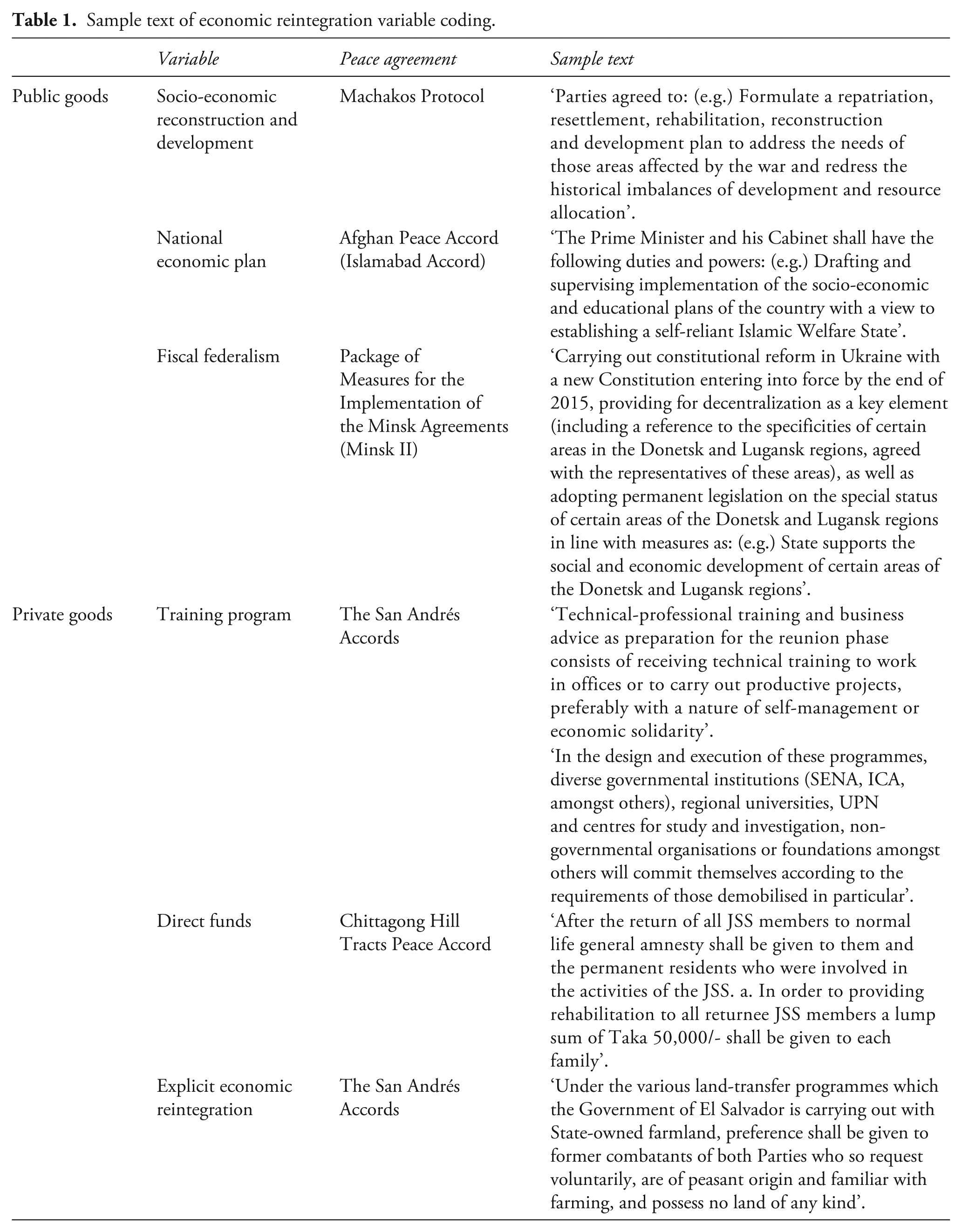
While these variables are not subsets of each other, they are highly correlated. This, in addition to the relatively small n, prevents us from including all of them in the same model. To show the cumulative effect of how these might work together to achieve a more durable peace, we employed principal component analysis (PCA) to create a composite variable that captures the underlying variation in each of the three sets of variables in the public and private goods categories. That is, we used PCA to capture economic reintegration of ex-combatants as well as aggregate public goods provisions. PCA resulted in two composite variables that effectively encapsulate the variation present in the original sets of highly correlated predictors (see Online Appendix B).
Inclusion of the Public goods principal component and Economic reintegration principal component variables in our analyses allows us to condense the essence of the three economic predictors (for public and private goods) into a singular component. In each model, the first principal component was selected due to its ability to account for the maximum amount of variance in the data, making it a representative summary of the shared variation among the variables in Table 1. This approach allows us to assess not only the individual impact of each original predictor but also the collective influence of the underlying factors captured by the principal component variable. By incorporating PCA, we enhance the robustness of our analysis, providing a more accurate understanding of how the economic elements present in peace agreements collectively contribute to the survival of these agreements over time.
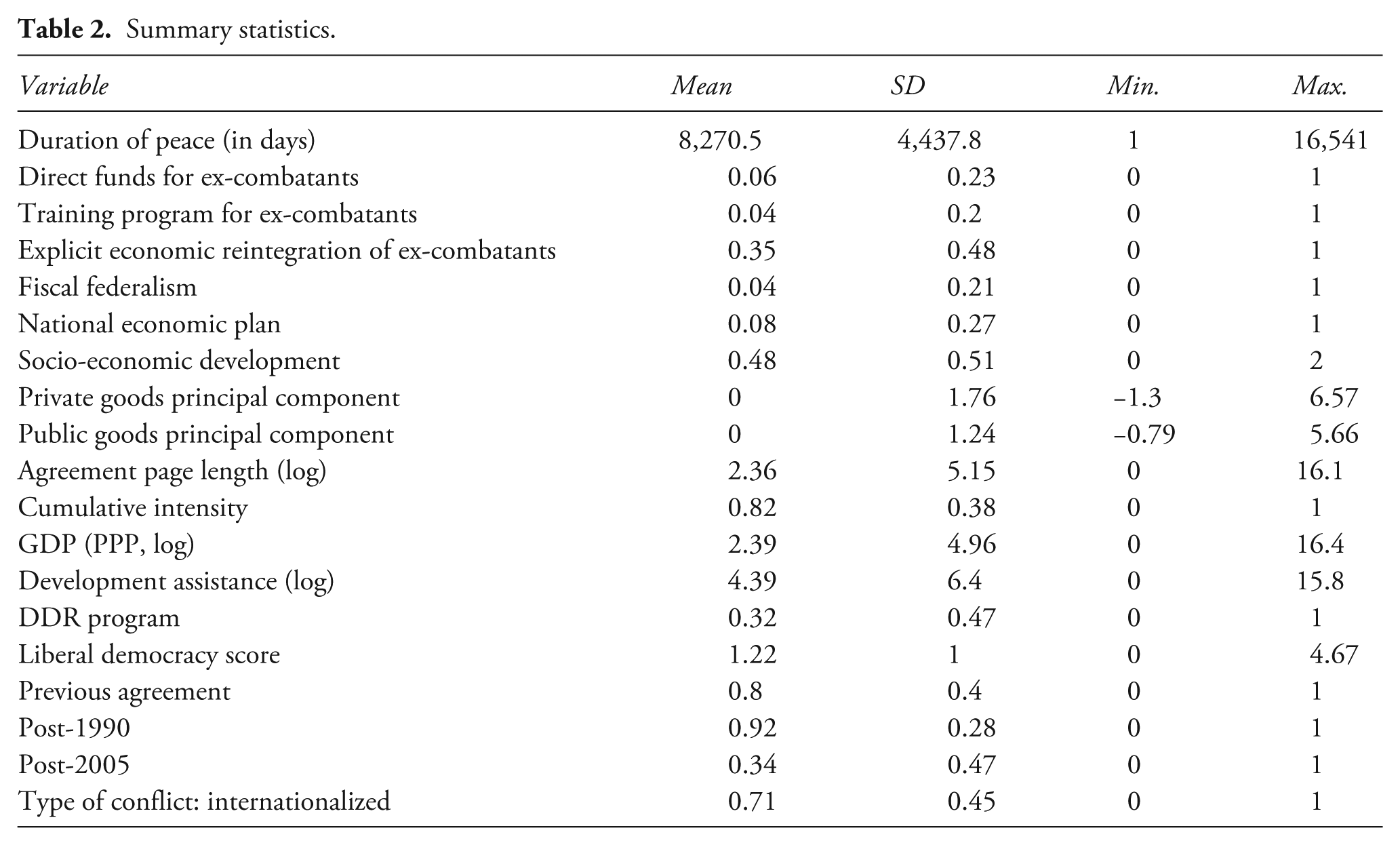
We follow established research frameworks to select control variables accounting for conflict- and development-related factors (see Table 2) (Caplan and Hoeffler, 2017; Joshi and Quinn, 2017; Karreth et al., 2023). To capture the nuances of conflict dynamics and peace agreement characteristics, we include Agreement page length, Cumulative intensity (whether conflict has exceeded 1000 battle-related deaths), and Type of conflict (intrastate or internationalized) from the UCDP Armed Conflict Database (Pettersson et al., 2021). To address development-related confounders possibly influencing post-conflict stability, we incorporate GDP (purchasing power parity (PPP), logged) (World Bank, 2022). Recognizing the importance of agreement implementation, (Joshi and Quinn, 2017; Karreth et al., 2023; Stedman et al., 2002), we include net Development assistance (logged) (World Bank, 2022) and the presence of a DDR program (Pettersson et al., 2021). 3 We also include an indicator to capture whether the country is a Liberal democracy using V-Dem, scaled from 0 to 1 (Marshall et al., 2016) and a binary variable for whether there was a Previous agreement signed in the given conflict. Finally, we include dummy variables in our models for the post-1990 and post-2005 eras, due to the changing nature of peace agreements and international institutions supporting them (Boutros-Ghali, 1992; United Nations Economic and Social Council, 2016). Agreements written after 1990 include additional integration measures, more detail, and are more comprehensive. In 2005, the United Nations held a World Summit recognizing the need to better anticipate and respond to the challenges of peacebuilding and established the Peacebuilding Commission.
Summary statistics.
Results and discussion
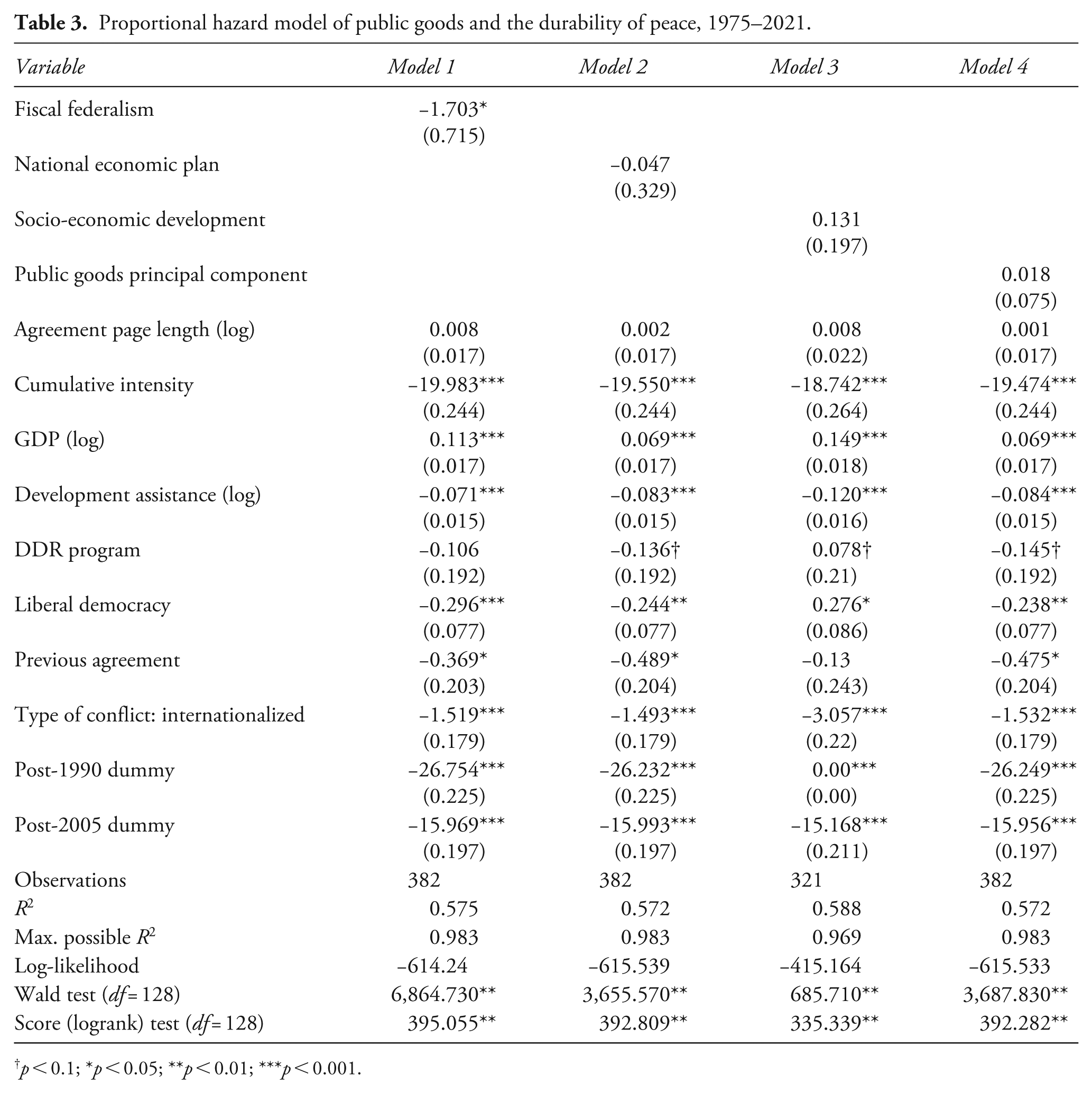
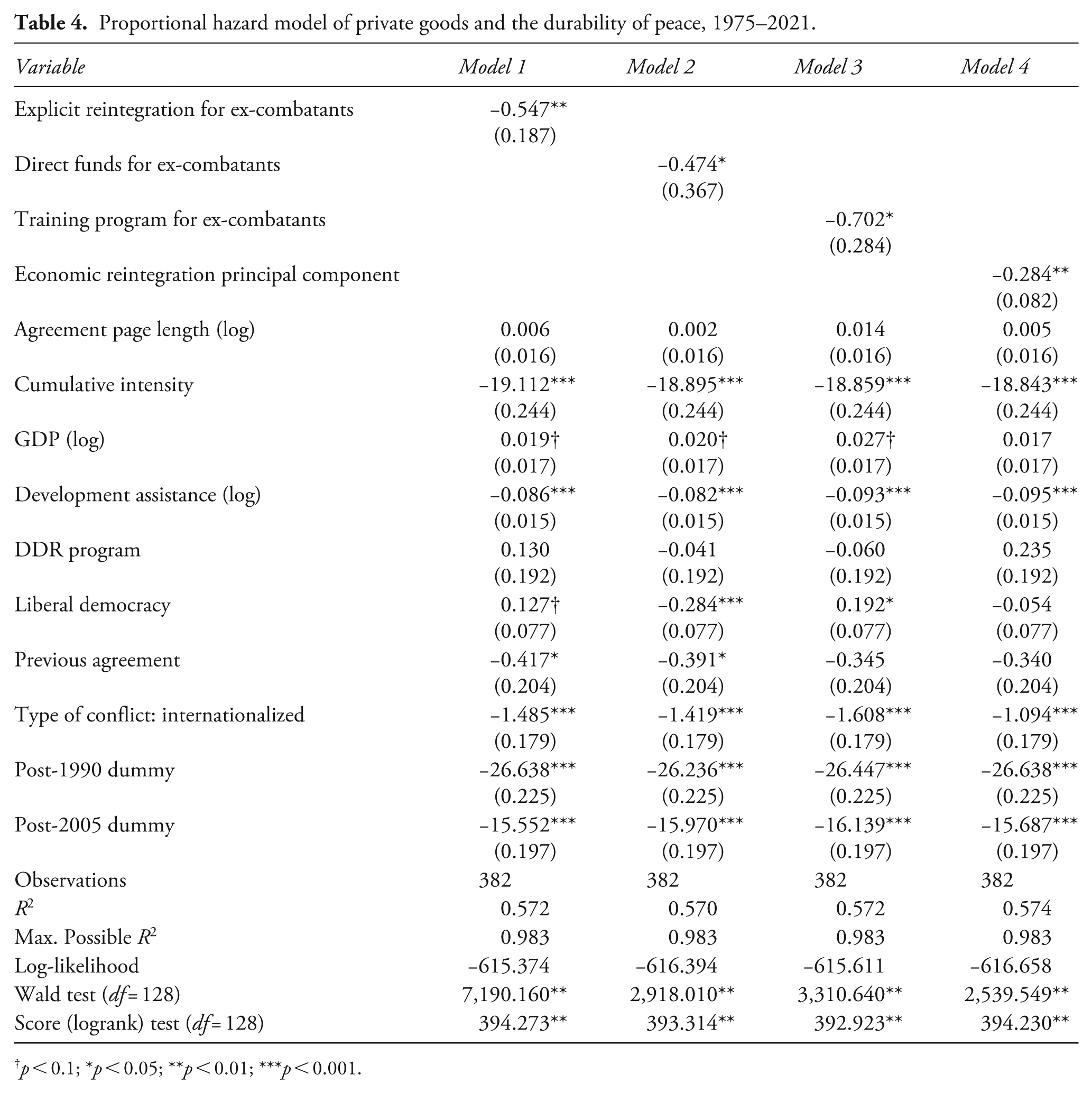
We argued that peace agreements including both public goods, to ensure national development, and private goods, to ensure ex-combatant reintegration, increase peace durability. Although our findings support our expectations regarding economic provisions, the results suggest that private (see Table 4), not public (see Table 3), goods are the most important in achieving durable peace. In the models, a negative coefficient signals a reduced hazard, meaning a lower risk of conflict recurrence occurring sooner. We use terms like the ‘survival of peace’ and ‘conflict recurrence’ accordingly because negative coefficients indicate that these variables are associated with longer periods of peace and lower risks of conflict reoccurrence. Below, we present our results.
Proportional hazard model of public goods and the durability of peace, 1975–2021.
p < 0.1; *p < 0.05; **p < 0.01; ***p < 0.001.
Proportional hazard model of private goods and the durability of peace, 1975–2021.
p < 0.1; *p < 0.05; **p < 0.01; ***p < 0.001.
As can be seen, reconstruction and broad economic development provisions do not significantly affect conflict recurrence. In other words, the promise of nationwide public goods, which likely has little ability to dissuade rebels from violence, does not address the root causes of the conflict. Thus, while national development and reconstruction provisions may ensure peace in the far future, the short-term economic situation faced by rebel groups when they demobilize may not be preferable to a continued struggle.
The one exception is economic power-sharing provisions related to fiscal federalism, which significantly reduce conflict recurrence. The inclusion of these provisions leads to an 81.8% increase in the likelihood of peace survival (hazard ratio: e−1.703 ≈ 0.182). This means that agreements that empower regions to have more control over their taxation and finances are more likely to produce a durable peace. 4 This finding adds to divergent findings on the role of federalism in conflict (Bakke and Wibbels, 2006; Hoddie and Hartzell, 2003; Lake and Rothchild, 2005), and suggests a need for further investigation into the roles of decentralization in peace durability.
Table 4 presents findings on how private goods in peace agreements effect the durability of peace. Our findings strongly support the hypothesis that the implementation of economic reintegration measures for ex-combatants contributes to durable peace. Specifically, our analysis reveals a significant decrease in the likelihood of conflict resurgence when peace agreements incorporate specific economic reintegration mechanisms (Model 1), direct funds (Model 2), and training programs (Model 3) for ex-combatants. Contrary to providing public goods, ensuring the economic well-being of ex-combatants is the most important economic aspect of a peace agreement. In other words, an end to the conflict requires combatants to be ‘bought off’ to induce peace, even after the signing of an agreement. Specifically, our three main models show an increased likelihood of the survival of peace at a rate of 42.2% for explicit reintegration, 37.8% for direct funds, 50.4% for training programs, and 24.8% for economic reintegration principal component. Our results suggest private goods are the key economic aspect of peace agreements for peace durability.
Our results point to the importance of ensuring the livelihood of ex-combatants and not just simply disarming and demobilizing them. These findings suggest private goods provisions targeting ex-combatants deter recidivism because they ensure that the commitment to peace and reintegration is economically preferable to continued violence. Moreover, as the Colombian case shows, ex-combatants may pursue peace and reconciliation with victims and communities through the market (Gallo et al., 2023).
The principal component provides a robustness test of the results (Model 4). The principal component, derived from the combination of explicit training programs, direct funds, and specific economic reintegration mechanisms, significantly decreases the likelihood of agreement failure. This indicates that the underlying dimensions of economically reintegrating ex-combatants help sustain peace. Narrow confidence intervals, a characteristic inherent in PCA, reinforce the principal component’s significance and support its use as a composite measure. This emphasizes the idea that a comprehensive economic reintegration strategy holds greater significance in preventing conflict resurgence compared to broad economic development provisions promising public goods.
Figures 1 and 2 plot the coefficients of Tables 3 and 4 respectively. Coefficients under 0 indicate increased survival time of an agreement. In terms of public goods, fiscal federalism leads to an 81% increase in the likelihood of peace survival (hazard ratio = 0.182), whereas provisions for a national economic plan, socio-economic development, and the public goods principal component are not statistically significant (see Figure 1).
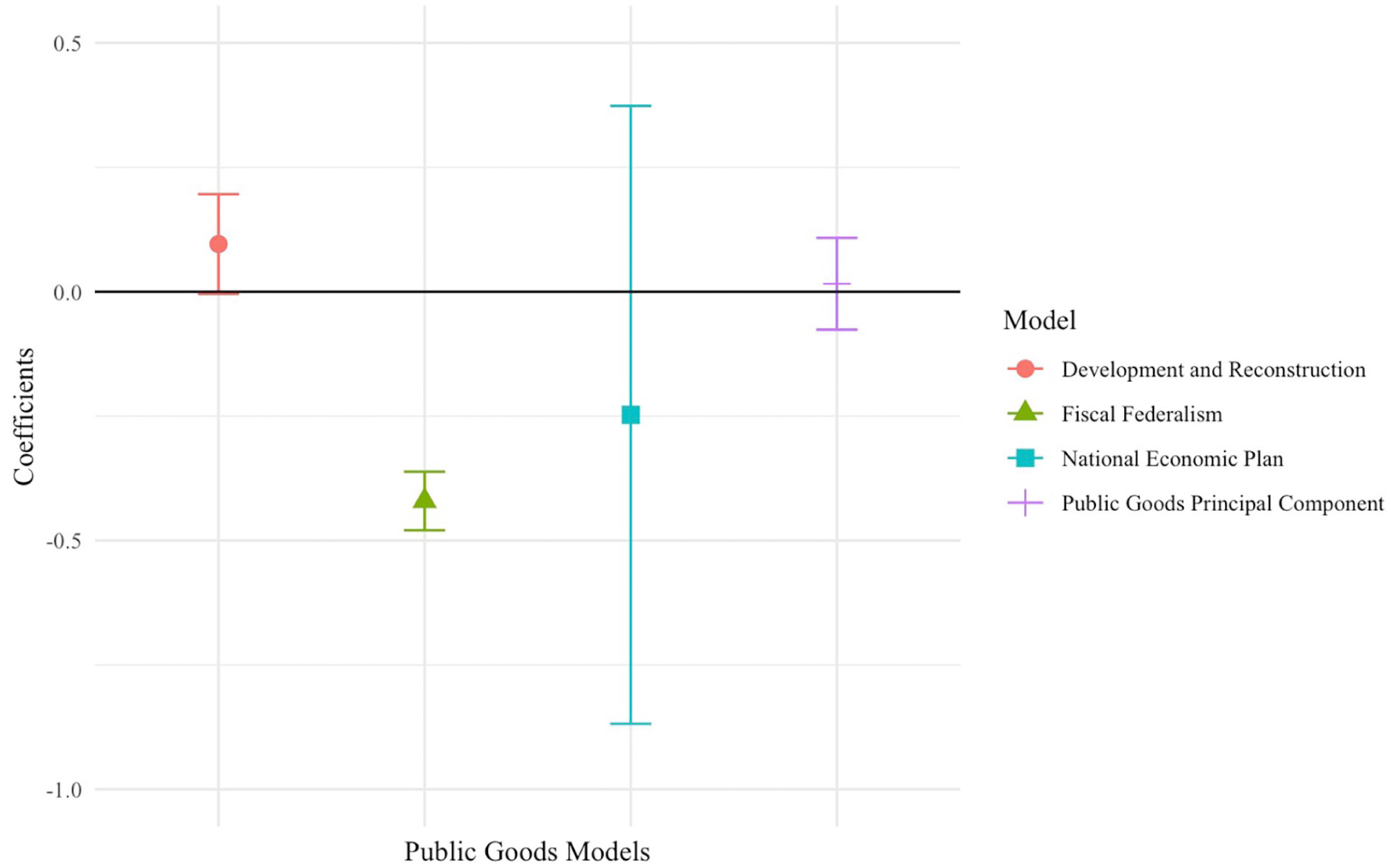
Public goods coefficient plot of peace durability, 1975–2021.
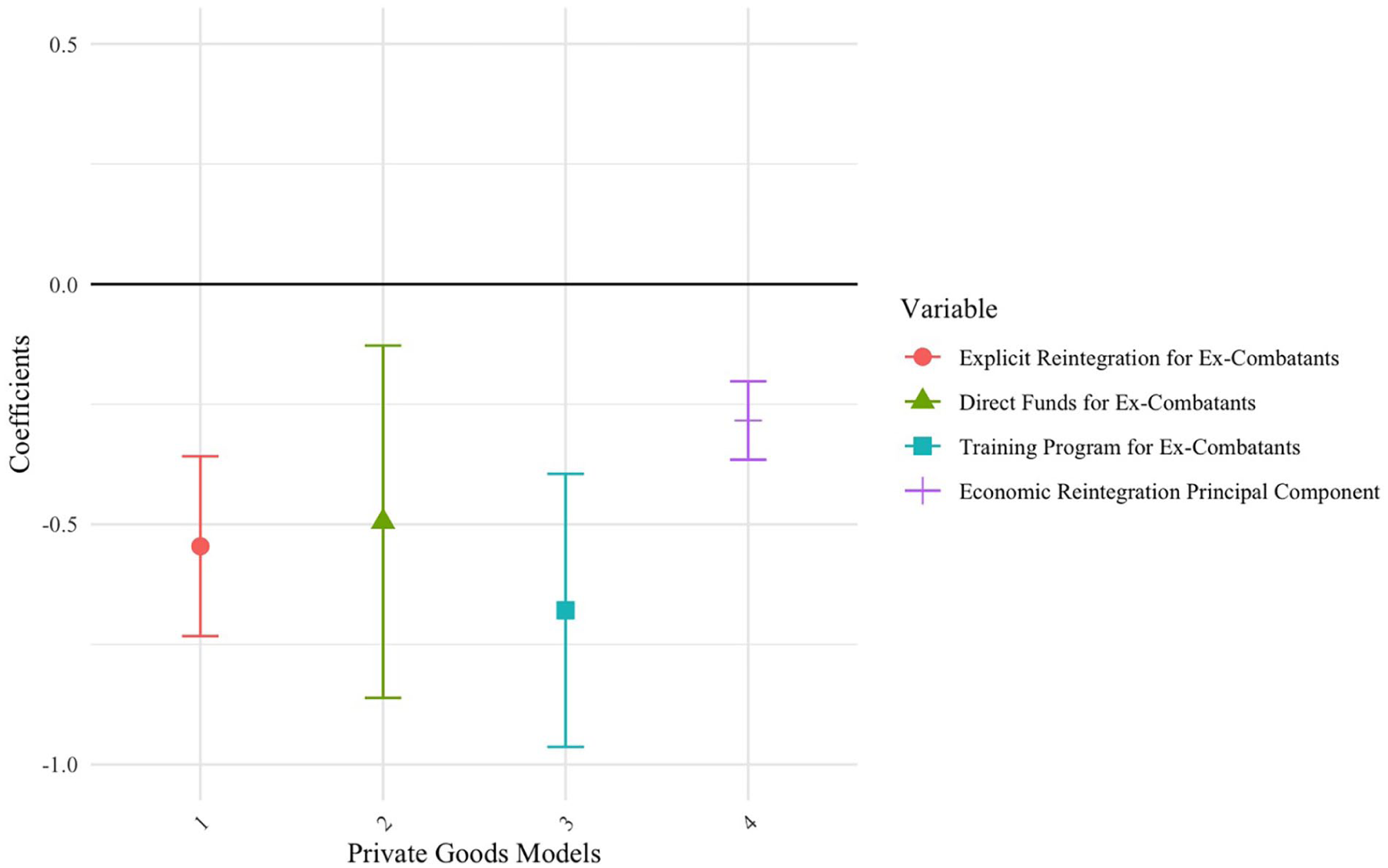
Private goods coefficient plot of peace durability, 1975–2021.
Regarding private goods, explicit economic reintegration of ex-combatants in peace agreements leads to an approximate 42% increase in the likelihood of peace survival (hazard ratio = 0. 579; see Figure 2). Providing direct funds to ex-combatants in peace agreements leads to an approximate 37% increase in the likelihood of peace survival (hazard ratio = 0.622). Including specific training programs for ex-combatants in peace agreements leads to an approximate 50% increase in the likelihood of peace survival (hazard ratio = 0.496). Finally, for our composite principal component indicator shows an approximate 24% increase in the likelihood of peace survival (hazard ratio = 0.753).
Consistent patterns among control variables support past findings on peace duration. The negative relationships with cumulative intensity and previous agreement suggest regions with intense conflict history exhibit resilience, possibly due to conflict fatigue or cumulative peacebuilding effects from established institutional frameworks (DeRouen et al., 2009; Mitchell and Kadera, 2008; Owsiak, 2014). GDP consistently increases the survival time of peace agreements, which is in line with a large body of research (Collier and Hoeffler, 2002; Fearon and Laitin, 2003). Liberal democracy consistently shows a negative relationship with conflict resurgence, suggesting that democratic systems have better mechanisms for conflict resolution due to their inclusive nature (Hegre et al., 2001).
Internationalized conflicts and temporal controls display negative coefficients, indicating a lower likelihood of conflict resurgence in internationalized conflicts and during post-1990 and post-2005 periods. This trend may reflect enhanced international conflict resolution efforts and better-crafted agreements, suggesting a global learning effect from past agreement designs. Longer agreements, indicated by page length, are associated with more durable peace, likely because they are more comprehensive and more thoroughly negotiated.
Our controls for implementation are in line with expectations. The results for development assistance imply that aid decreases the likelihood of conflict recurrence, in line with the findings of Karreth et al. (2023). Similarly, DDR programs play a crucial role in mitigating post-conflict risks by reintegrating ex-combatants into society, reducing the likelihood of conflict resurgence (Phayal et al., 2015).
Robustness
While most of our control variables exhibit consistent patterns, certain coefficients appear volatile. This can be attributed, in part, to multicollinearity among controls. In this analysis, we applied PCA to all control variables, mitigating issues arising from their intercorrelation. 5 The results from the robustness check reveal fully consistent findings for our main predictors, even after accounting for the multicollinearity among controls. 6
While these models do not allow us to capture whether the promises made in peace agreements were fully implemented, evidence suggests these measures were likely implemented in practice. Specifically, when peace agreements explicitly mention integration programs and mechanisms for ex-combatants, direct funds distributed through lump-sum payments, and well-defined training programs, the level of detail suggests extensive negotiations and a readiness to implement agreement provisions. Additionally, the variable representing DDR indicates the existence of post-agreement programs designed to facilitate implementation, and the measure of development assistance suggests outside, third-party investment in peace. In addition, we draw from the Peace Accords Matrix’s (PAM) extensive implementation data as a robustness test, using PAM’s Total implementation points indicator of implementation across all provisions within an accord based on a three-point ordinal scale (Joshi and Darby, 2013). 7 Together, these factors provide support for the argument that the measures discussed in peace agreements were not merely rhetorical but have tangible implications in practice that are accounted for in the models.
Likewise, conflict causes and histories have implications for civil war negotiations and the design of peace agreements (Hartzell and Hoddie, 2015; Mattes and Savun, 2010; Werner and Yuen, 2005). Provisions detailing private goods may be a good indicator of the parties’ willingness to uphold the agreement, signaling agreement strength. To address selection bias, we incorporate a Heckman selection model as an additional robustness check. 8 We select variables for inclusion in the selection model that are common in the civil war agreement literature (Walter, 1997) and augment our Cox proportional hazards models with the inverse Mills ratio to mitigate selection bias. 9 The results support our findings that economic aspects of peace agreements help explain peace durability.
To test whether the results hold in a more balanced panel, we ran a matched sample analysis. We treated the predictors as if they were a treatment and applied nearest neighbor matching based on a logistic regression of the predictors against key covariates like GDP, political conditions, and past agreements (see Online Appendix H for full model specification and results). Due to the criteria of the matching method, some models dropped over 90% of the observations to achieve convergence. Therefore, when comparing and interpreting the matched results, it is important to be mindful of the total number of observations.
After matching, we ran Cox regression models on the matched data to assess the relationship between our main predictors and the duration of peace. For models that retained 50% or more of the total observations, we observed the same levels of statistical significance and coefficient directions as in the main models. This approach helps ensure that the results are not driven by imbalances in the panel data and that the relationship between predictors and outcomes remains consistent even when controlling for other factors.
We also conducted a placebo test by running the same models with shuffled values for the key predictors for both public and private goods. This robustness check helps to determine whether the observed effects are driven by the relationship between predictors and the outcome or by random noise. The results of this placebo test are presented in Online Appendix I. A lack of significant results in the placebo test suggests that the relationships observed in our main analysis are unlikely to be spurious, strengthening the credibility of our conclusions.
Overall, our findings run counter to both research and policy work that suggest shared prosperity is a potential avenue for preventing recidivism (Collier and Hoeffler, 2004; Holtzman et al., 1998). Economic development clauses other than fiscal federalism do not seem to influence conflict recurrence. That is, when economic development is part of the agreement, there is no effect on the peace spell that follows, except when it comes to giving more financial autonomy to a country’s region. How may we account for this unexpected result? One possibility is that it is simply cheap talk: a vague promise from the warring parties to show some commitment to peace and the welfare of society. Indeed, it might simply be a way for both parties to show their constituents that they achieved something and that they are committed to peace – similar to autocracies signing human rights treaties or states imposing economic sanctions.
For an alternative explanation, we may take insights from the rational design of international institutions (Koremenos et al., 2001). As peace accords are an attempt to solve the bargaining problem underlying the civil conflict, which is typically the distribution of (political) power, then the distribution problem inherent in the negotiation may lead to agreements with a greater scope than simply the end of violence. In other words, the severity of the distribution problem may lead to a greater issue scope given that the (purely) political problem may be intractable on its own. Adding economic development to the issue list (i.e. issue linkage) may be the easiest (or only) way to get both parties to sign an accord. Two factors may be at play: first, the specificity of political and economic clauses in the agreement. The lesser the political concessions to the rebel group, the more likely economic clauses are to be included so that rebel leaders are inclined to sign. Second, the vaguer the language, the more flexibility both parties have in the interpretation of the agreement and their commitments. That is, the accord may not solve commitment problems but rather leave greater exit options for both warring parties.
Conclusion
Post-conflict countries face significant challenges in rebuilding from wartime destruction and preventing further violence. At the national level, the transition requires investment in rebuilding and economic development, but at the individual level, the transition entails a change from rebel to citizen. While foreign aid (Collier and Hoeffler, 2004) and private sector investment (Bray, 2009) can help promote economic growth in the post-conflict setting, peace agreements may ensure that ex-combatants share in post-conflict prosperity to avoid recidivism – but only when parties consider the individual-level challenges of economic reintegration as a part of the shift from war to peace.
Given the commitment problems at the heart of civil war settlement (Walter, 2009), strong peace agreements can be designed in a way that increases the costs of further fighting (Hartzell and Hoddie, 2003). Much of this work focuses on governance and fear-reducing measures (Mattes and Savun, 2009), as well as international monitoring and verification, in reducing the risks of renewed civil war (Mattes and Savun, 2010). We contribute to the literature by considering how peace agreements create the framework for economic development and economic reintegration of former combatants.
We analyze the effect of public goods (national economic development) and private goods (ex-combatant economic reintegration) provisions in peace agreements on the durability of peace. As expected, we find that explicit economic reintegration measures in peace agreements leads to a decreased likelihood of conflict recurrence. Our results point to the importance of combatants being enticed to relinquish violence. However, and contrary to our expectations, public goods geared toward sharing national prosperity and addressing root causes of conflict do not have an impact on the durability of peace – the exception being a promise of fiscal federalism (financial autonomy for subnational units). We argue that this might simply be cheap talk or issue linkages that allow parties to sign the agreement and ‘show results’, though they may not solve the commitment problem of upholding peace because their effects may only be felt in the long term. What matters, then, is to ensure that combatants give up violence for good and incorporate into society not only politically, but also economically.
While our findings cannot examine agreement terms implementation, they suggest that peace processes that negotiate the economic reintegration of combatants are making an investment in building a higher quality, more durable peace. Future research should focus on the actual implementation of the economic reintegration in terms of peace durability and the role of economic reintegration programs not anchored in peace agreements. Additionally, the factors we highlight as preventing conflict recurrence do not preclude ex-combatant criminal activity. Therefore, future research should consider what programs, especially in terms of economic reintegration, are most effective in preventing ex-combatants from turning to criminal activity.
In sum, our findings suggest that the economic provisions of peace agreements can lay the groundwork for durable peace, especially those that ensure economic reintegration. As there can be economic reintegration programs outside peace agreements, such as governmental programs or those operating through non-governmental organizations, further research is needed to differentiate those ex-combatants that are successfully economically reintegrated from those who are not. Our work considering how peace agreement terms promoting economic reforms can enable economic reintegration (a private good) and economic development (a public good) highlights economic reintegration as an avenue for future research on post-civil war peace.
Supplemental Material
sj-pdf-1-jpr-10.1177_00223433251345382 – Supplemental material for Private goods for peace: Economic provisions of peace agreements and the durability of peace
Supplemental material, sj-pdf-1-jpr-10.1177_00223433251345382 for Private goods for peace: Economic provisions of peace agreements and the durability of peace by Elisa D’Amico, Santiago Sosa and Molly M Melin in Journal of Peace Research
Footnotes
Acknowledgements
The authors would like to thank the editor and the two anonymous reviewers for their useful comments, as well as the participants of a Peace Science Society pre-conference workshop.
Replication data

Declaration of conflicting interests
The author declared no potential conflicts of interest with respect to the research, authorship, and/or publication of this article.
Funding
This research was funded in part by the Folke Bernadotte Academy (grant no. 21-00258) and in part by the Peace and Conflict Resolution Evidence Platform (PeaceRep), funded by UK International Development from the UK government. The views expressed are those of the authors and do not necessarily reflect the official policies of the Folke Bernadotte Academy or the UK government.
Notes
References
Supplementary Material
Please find the following supplemental material available below.
For Open Access articles published under a Creative Commons License, all supplemental material carries the same license as the article it is associated with.
For non-Open Access articles published, all supplemental material carries a non-exclusive license, and permission requests for re-use of supplemental material or any part of supplemental material shall be sent directly to the copyright owner as specified in the copyright notice associated with the article.
