




Abstract
It is often assumed that we are currently living in an ‘age of apology’, whereby countries increasingly seek to redress human rights violations by offering apologies. Although much has been written about why this may occur, the phenomenon itself has never been examined through a large-scale review of the apologies that have been offered. To fill this gap, we created a database of political apologies that have been offered for human rights violations across the world. We found 329 political apologies offered by 74 countries, and cross-nationally mapped and compared these apologies. Our data reveal that apologies have increasingly been offered since the end of the Cold War, and that this trend has accelerated in the last 20 years. They have been offered across the globe, be it that they seem to have been embraced by consolidated liberal democracies and by countries transitioning to liberal democracies in particular. Most apologies have been offered for human rights violations that were related to or took place in the context of a (civil) war, but there appears to be some selectivity as to the specific human rights violations that countries actually mention in the apologies. On average, it takes more than a generation before political apologies are offered.
Introduction
‘For no word, how well chosen it may be, can undo what has happened’. 1 These words, spoken by the Swiss Bundesrätin Simonetta Sommaruga in an apology to victims of draconian social welfare policies, convey the core of what Tavuchis (1991) has called ‘the paradox of apologies’: they cannot undo what has been done, yet they are often experienced as highly important in healing and national and international reconciliation processes. And so, despite their ostensible emptiness, apologies have been offered in the last decades by political representatives for human rights violations that happened in the recent and distant past. For example, President Mário Soares of Portugal apologized in the Israeli Parliament in 1995 for the persecution of Portugal’s Jews during the Inquisition over 500 years ago, and in 2017 Chile’s President Michelle Bachelet apologized for the brutal military campaigns against the indigenous Mapuche people.
These apologies are only a few examples within a seemingly broader trend that is often referred to as ‘the age of apology’ (Brooks, 1999), where countries increasingly are being held responsible for past wrongdoings and seek to redress these wrongs by offering apologies. Although some see this apparent shift of amending the past through apologies as an essential step to restore justice and promote reconciliation in the aftermath of human rights violations (e.g. Brooks, 1999; Gibney et al., 2008), there is also skepticism about the sincerity of the phenomenon – Thaler (2011) labeled it ‘apology mania’ – and the transformative power of political apologies (e.g. Trouillot, 2000). This debate has led to a growing body of literature whereby researchers from various disciplines have written about apologies that have been expressed, their potential significance for the groups involved, or how they might contribute to forgiveness and reconciliation (e.g. Hornsey, Okimoto & Wenzel, 2017; Nobles, 2008).
It is remarkable, however, that the idea that we live in an ‘age of apology’ or even in a state of ‘apology mania’ is often used as a starting point for current theorizing and research, but has never been examined empirically through a large-scale review of the apologies that have been offered by states for human rights violations. Much of the research in this area has relied on case studies, although some valuable attempts have been made to make an overview of public apologies (e.g. Columbia University Political Apologies Archive, n.d.; Howard-Hassmann, 2016). Nevertheless, these overviews remain somewhat limited in their use for a more detailed and comprehensive review of the ‘apology landscape’ because their format does not allow for systematic and comparative analyses, and their criteria for inclusion are often unclear. As a result, it is difficult to use these data to draw broader conclusions about the phenomenon itself. For example, has there indeed been an increase in the number of political apologies by state actors for human rights violations in the past decades? If so, since when does this increase occur and how universal is this phenomenon? And what are key characteristics of the apologies that have been offered? Are there national or regional differences in this regard?
The aim of the present article is to shed more light on these questions. For this, we created a database of the apologies that have been offered for human rights violations by states or state representatives across the world, and we coded these apologies on a number of key characteristics. By providing more quantitative data on the political apologies that have been offered over the past decades, we aim to complement current research on this topic and to provide ingredients that are essential for a broader understanding of apologies as a mechanism to come to terms with the past.
Why a political apologies database?
The current body of literature on political apologies can be characterized by its inherently interdisciplinary nature. Despite differences in approach and terminology, however, researchers do seem to agree that the number of apologies has increased in the last decades. This trend has been linked to the global emergence of a discourse on human rights after World War II, which has not only resulted in a growing concern for the consequences when these rights are violated, but has also led to the emergence of redress and reparations movements. Especially since the 1960s, these movements have called for action to address human rights violations through legal or non-legal means such as the establishment of truth commissions or apologies (Howard-Hassmann, 2012; Newman, 2019).
According to Barkan (2000), concerns about the consequences of human rights violations have become even more prominent following various violent episodes between 1989 and 1999 (e.g. in the former Yugoslavia, Rwanda, East Timor), and the often-violent regime changes in Latin America. Some authors have noted in this regard that the offering of political apologies might particularly speak to established liberal democracies or societies transitioning from authoritarianism to democracy, as they reflect the ideals of liberal democracies such as constitutionalism, the rule of law, globalization, and respect for human rights (e.g. Bentley, 2014; Howard-Hassmann, 2012). Others, however, have made the case that the focus on ‘coming to terms with the past’ is the result of the decline of progressive political visions (e.g. socialism) since the end of the Cold War, whereby ‘righting past wrongs tends to supplant the search for a vision of a better tomorrow’ (Torpey, 2003: 37).
While scholars seem to agree that political apologies for human rights violations are an increasingly popular phenomenon, existing studies tend to concentrate on single case studies or on what might be called the ‘usual suspects’ – certain countries or apologies that have garnered much attention. This is evidenced by the many studies on apologies offered by Japan (e.g. Lind, 2008), by former settler states such as Canada and Australia (e.g. Nobles, 2008), and by Germany (e.g. Daase et al., 2016). Nevertheless, the question remains whether claims about the prevalence, form, and function of political apologies can be substantiated by a focus on certain cases only. As Thoms, Ron & Paris (2010) note regarding the ‘selection bias’ in much of the transitional justice literature, it is possible that the existing knowledge base is built on a biased sample.
Similar to the motives for creating the Transitional Justice Mechanism dataset of Olsen, Payne & Reiter (2010), we contend that limitations in current research on political apologies for human rights violations call for a better understanding of the ‘what, where, who, how, and when’ questions. We therefore set up a cross-national database in which we have included and systematically coded (1) basic information regarding the apology, (2) basic information about the broader context of the human rights violations and of the human rights violations as acknowledged in the apology, and (3) the performance of the apology. Our dataset thus allows us to explore temporal and geographical trends in the political apologies that have been offered across the globe, to obtain a broader understanding of the phenomenon.
Defining political apologies
At its broadest level, a political apology can be defined as a verbal statement or non-verbal gesture ‘by a representative of a state, corporation, or other organized group to victims, or descendants of victims, for injustices committed by the group’s officials or members’ (Thompson, 2008: 31). Narrowing Thompson’s definition, the focus of this study is on political apologies issued by a national state or state representative to a collective for human rights violations that happened in the recent or distant past. We restricted ourselves to state apologies for human rights violations because they concern (systematic) abuses that result from the relations within or between groups. Such violations often have or have had consequences for large groups within society or for society as a whole, and in some cases still lie at the root of current abuses, tensions, and conflicts. This is likely to render the apology act particularly delicate (also compared to other state apologies), and to impact when and how they are offered, and how this is interpreted.
When does a statement qualify as a political apology? While some scholars have argued that it should include the word ‘sorry’ or ‘apology’, a (non)verbal expression of remorse or regret, and an acknowledgement of responsibility and wrongdoing, others have maintained that a promise of non-repetition of harm or offers for material compensation are also essential (e.g. Blatz, Schumann & Ross, 2009; Lind, 2008). There is no guarantee, however, that only those statements that include all of these elements will be accepted as an apology by victim groups or the wider public, and which specific elements are deemed important may also depend on factors such as the historical and political context, the timing and setting of the apology, and cultural and linguistic expectations or conventions (e.g. Dundes Renteln, 2008; MacLachlan, 2010). For example, when Queen Elizabeth visited Amritsar in 1997 and bowed her head at the site of the 1919 massacre, or when Prime Minister David Cameron in 2013 bowed his head and wrote a note in the book of condolences, this was described as ‘showing their respect but carefully avoiding making an actual apology’ for the Amritsar massacre (Wagner, 2019). German Chancellor Willy Brandt’s silent genuflection at the Warsaw Ghetto monument in 1970, on the other hand, has often been described as an expression of apology.
Given that there is no consensus about which elements a political apology should include to be recognized as such by the intended recipients, and given that this is likely to vary as a function of the specific historical, political, and cultural context, we decided to rely on a broad definition. In our database, we have thus included all those statements or gestures by states or state representatives that contain words such as ‘sorry’, ‘apologize’, expressions of regret or remorse, or requests for forgiveness. We also included statements that contained expressions of guilt or shame for a human rights violation, if they also included an acknowledgement of responsibility or wrongdoing, or a recognition of the suffering and trauma among victim groups. For instance, during his 2017 speech before the United Nations General Assembly, Canadian Prime Minister Justin Trudeau admitted mistakes made and took responsibility for the mistreatment of the country’s indigenous population – calling it Canada’s ‘great shame’. 2 Although this statement did not contain the words ‘apology’ or ‘sorry’, we included it in our database as it can be seen as an apologetic performance (e.g. Horelt, 2019). As such, we move away from a dichotomous approach (whereby a statement is considered to be an apology based upon the presence of words such as ‘sorry’ or ‘apology’) but recognize instead that different elements can be used in varying degrees and do not all have to be present for a statement to be seen or accepted as an apology by the recipients or bystanders. This means that the apologies in our database differ substantially in their content and form, which users should take into account, together with the specific circumstances of the apologies. We also included non-verbal apologies as these performances too can be seen as ‘symbolic gestures on symbolic sites on symbolic dates’ (Horelt, 2019: 27).
We included interstate, intrastate, and transnational apologies (i.e. to a transnational community such as the Roma people, or to multiple countries). We focused on apologies that were related to transgressions that would fall under the UN classification of human rights violations, including: genocide, slavery and slavery-like practices, summary or arbitrary executions, torture and cruel, inhuman or degrading treatment or punishment, enforced disappearance, arbitrary and prolonged detention, deportation or forcible transfer of population, and systematic discrimination (UNCHR, 1993), and we also added injustices such as endangering individual and public health. We did not limit the time frame of the date of the apologies nor that of transgressions for which they were offered.
Data collection
As a starting point for our database, we used data from the Political Apologies and Reparations website, which was created by Howard-Hassmann (Wilfrid Laurier University), and the Political Apologies Archive (Columbia University). From these sources, we selected those apologies that met our selection criteria.
Once we had this preliminary inventory, we used a variety of search procedures to expand our database. We conducted online search queries via Google News using the words apology, apologize, regret, forgiveness, or compensation as search terms in conjunction with a word suggesting a political context (i.e. political, state, public, official, parliament, government, queen, king, [prime] minister, president). These combined terms were entered both with and without double quotation marks. Based on language and region preferences, Google News provides an overview of news articles published in a particular region and language, containing the search term that was entered. We conducted the search in five languages: English, Arabic, Mandarin Chinese, French, and Spanish. 3 For this, the key terms were translated into each of these languages and discussed with research assistants who conducted the search and were native speakers of these languages. They were instructed to use the Google Incognito mode so that the results would not be influenced by their browsing history or information entered in previous online forms. 4
With the same key words, we then used a similar search procedure with the WorldCat Discovery engine, which covers the collections of libraries worldwide, and the Google Scholar search engine. We searched by title word and reference, and checked the relevant search results (articles, books, chapters) for references to political apologies for human rights violations. Both Keesing’s World News Archives and RefWorld (a large online collection of a variety of reference documents collected by the UNHCR: United Nations High Commissioner for Refugees) were consulted to search for new apologies or to fact-check information from other sources. After we had established a fairly large inventory, we started a new search procedure whereby we systematically searched via Google for each country in the world, from Afghanistan to Zimbabwe, in combination with the word ‘apology’ and ‘apologized’ (no quotation marks). This search was conducted in English, but depending on the country or region also in Dutch, German, French, and Spanish. We also purposefully searched for political apologies offered before and right after the World War II but only found apologies that did not fit our criteria.
The different search procedures were conducted from 2017 until late 2019. Prior to including an apology in our database, we obtained more background information about the apology through various primary (e.g. speeches and other government documentation) and secondary (e.g. media and academic publications) sources to ensure correctness. Many team discussions were held to decide whether a statement fitted our criteria, and apologies were only included when all team members agreed. The apologies (286 in total) that did not meet our criteria (e.g. for incidents or accidents, or by officials not representing the national government such as governors or mayors) were recorded in separate sheets but not included in our database or analyses. On 1 January 2020, the Political Apologies Database (www.politicalapologies.com) consisted of 329 political apologies (324 verbal, 5 non-verbal). We were able to find the full texts of 208 of the verbal apologies and parts of the texts of 105 apologies. For 11 apologies, we were unable to find any text. All of the non-English complete texts that we found, with the exception of some Dutch and German apologies, were translated into English. The database starts in 1947 and ends with an apology in December 2019. We have used the start of the year 2020 as the cut-off date for the purpose of the present analyses.
Coding the apologies
We coded each apology on a number of key characteristics: the country that offered the apology, the receiving country or group, whether it was a within-country, between-country or transnational apology, the name and official role of the sender, whether the sender was in office when the human rights violation occurred, the context within which the human rights violation had occurred, the human rights violations as mentioned in the apology, when the human rights violation had Number of political apologies across time (N = 329)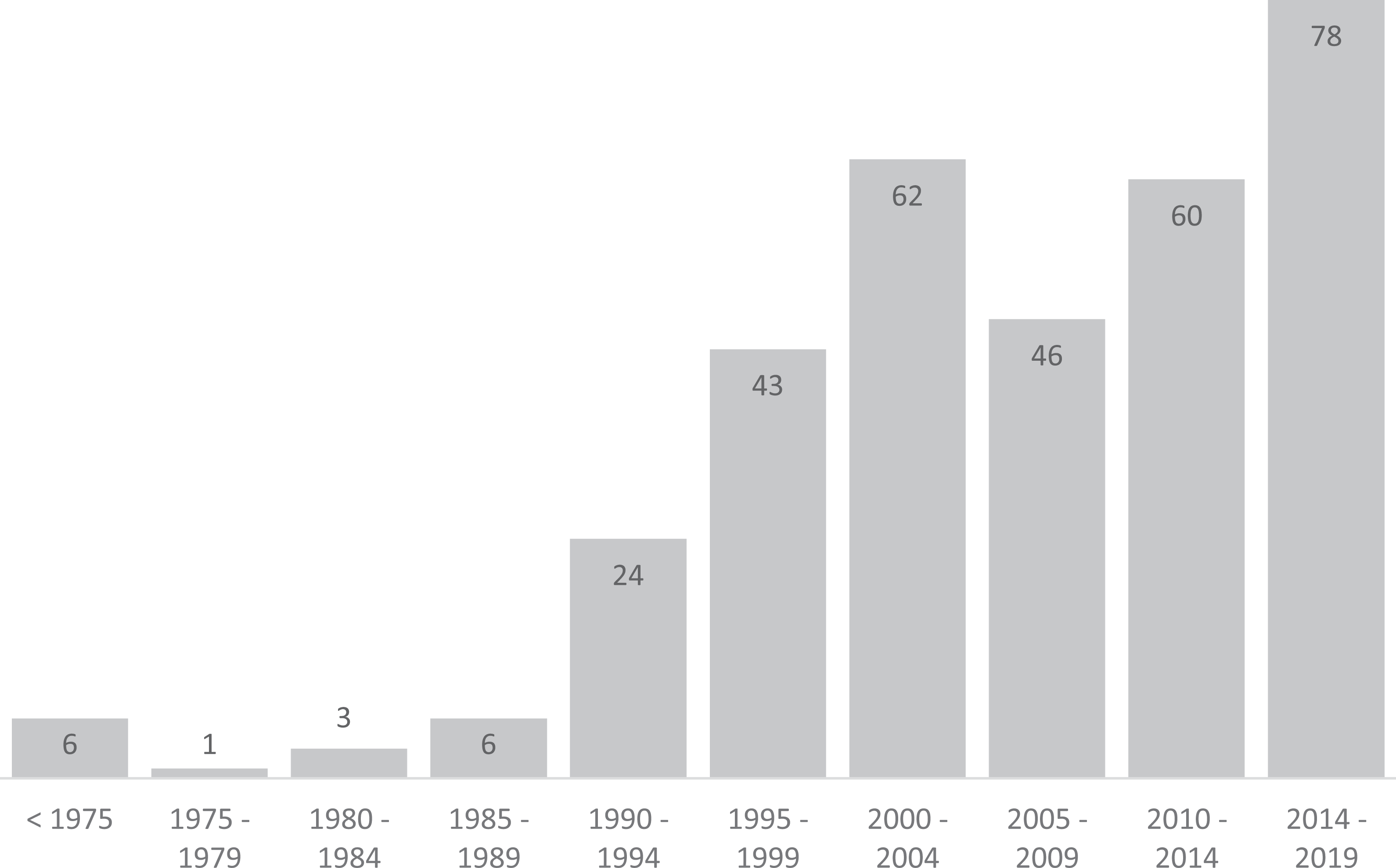
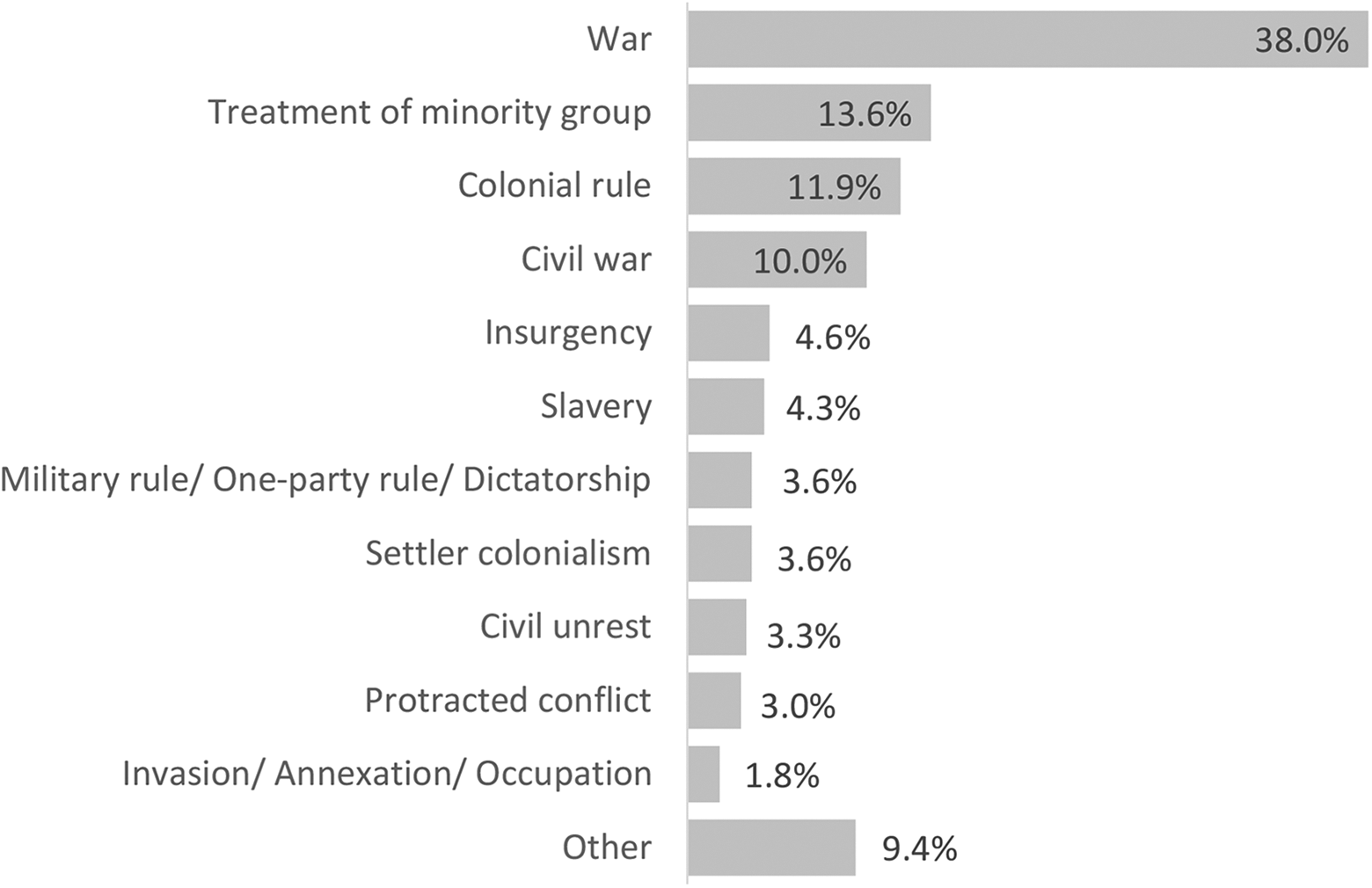
We also coded for the broader context that led to or within which the human rights violations took place, as well as the specific human rights violation as mentioned in the apology. Based on various sources (news articles, academic literature, government reports), we coded the broader context with more abstract terms: ‘war’, ‘civil war’, ‘protracted conflict’, ‘insurgency’, ‘invasion/annexation/occupation’, ‘civil unrest’, ‘colonial rule’, ‘settler colonialism’, ‘slavery’, ‘military rule/one-party rule/ dictatorship’, ‘treatment of minority groups’, and ‘other’. The codes for the human rights violations that are mentioned in the apology are based upon the UN classification of human rights violations. For this, we only coded those violations mentioned in the apology, to avoid creating the impression that countries had admitted a specific human rights violation while they – for various reasons – had not explicitly done so. For example, US Secretary of Defense Donald Rumsfeld apologized in 2004 for the ‘terrible activities that took place in Abu Ghraib’. As he did not specify what these ‘terrible activities’ entailed, the human rights violation as mentioned in the apology is coded as ‘not specified’. The broader context of these human rights violations was the Iraq war, and this was hence coded as ‘war’. Note that this context code only provides information about the circumstances within which the human rights violations took place, not about the content of the apology nor about what countries actually apologized for.
In case we only had part of the text of the apology, we based our coding on the excerpts. For those apologies of which we were unable to find any text and for the non-verbal apologies, we did not code the human rights violations. 5 Each apology was coded by at least two coders. Disagreements were discussed and resolved during regular meetings, and a third coder was consulted when the two coders still disagreed.
Results
Apologies across time
One of our primary questions was whether we are living in an ‘age of apology’. For this, we looked at the frequency of political apologies over the years. Figure 1 shows that there has indeed been a rise in the number of apologies in the past decades. The number of apologies in our database from before 1975 is small (six in total), with the first apology dating from 1947 – a non-verbal apology by United States president Harry Truman. In these early years, the United States, Germany, Countries that have offered apologies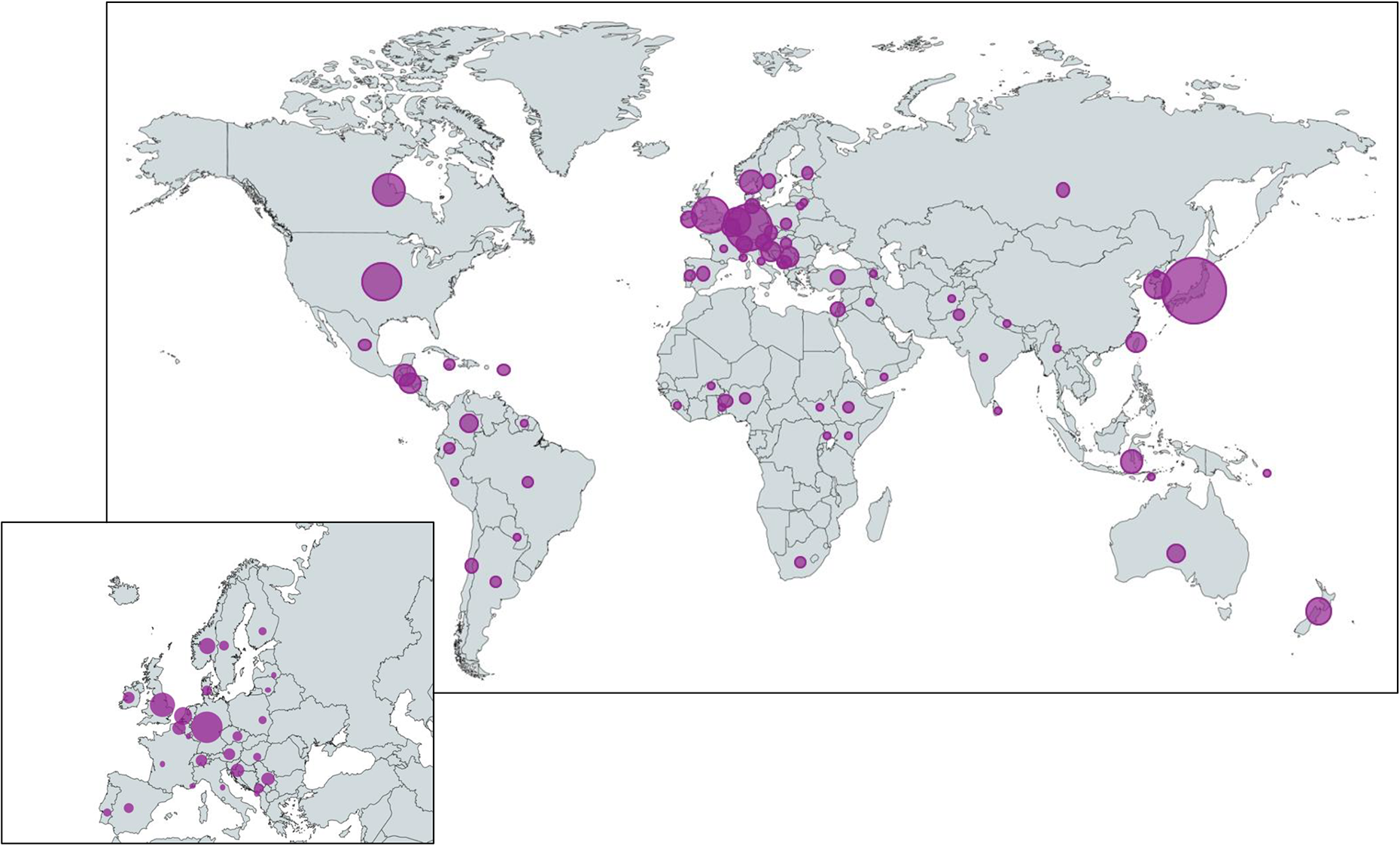
Apologies across the world
Our second question concerned the universality of political apologies: are they a global phenomenon or are they limited to only certain parts of the world? By the end of 2019, our database included apologies offered by 74 countries worldwide, including – to name a few – Burkina Faso, Colombia, Iraq, Latvia, Monaco, and Timor-Leste. Figure 2 gives an overview of countries that have offered political apologies, with a larger bubble signifying a larger number of apologies given by a country.
Countries that have offered most political apologies
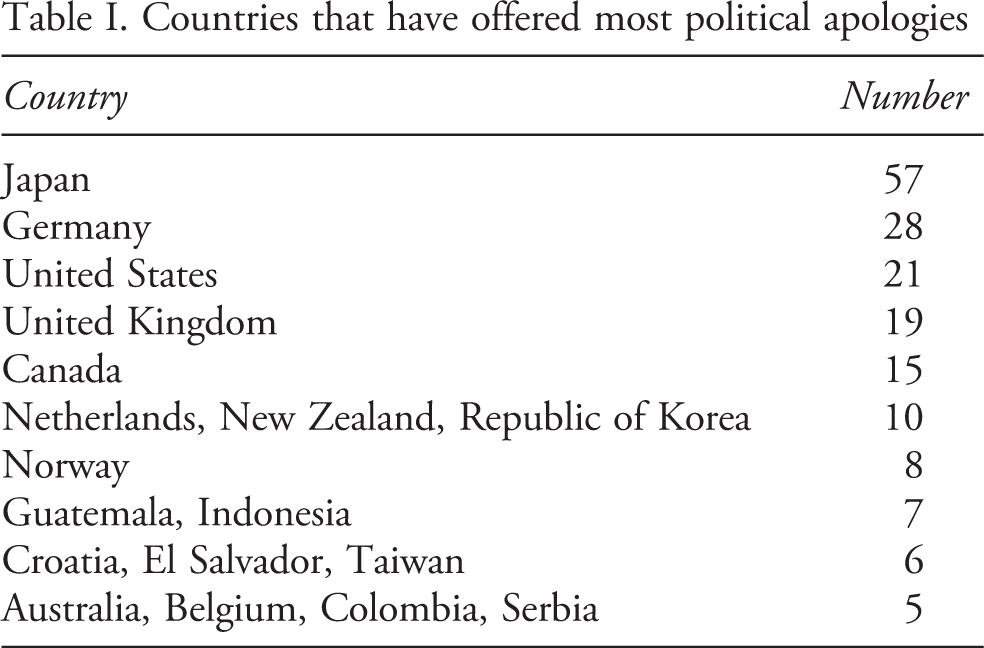
The countries that have apologized for past wrongdoings can be found across the world, but certain countries and regions do tend to dominate. For example, Japan has offered by far the largest number of apologies (57 in total), followed by Germany (28), the United States (21), the United Kingdom (19), and Canada (15) (see Table I). Countries such as the Republic of Korea, The Netherlands, New Zealand, Norway, Guatemala, and Indonesia have also apologized multiple times in recent decades.
Figure 3 displays the number of apologies offered over the years per subregion – based upon the UN Standard Apologies per subregion and across time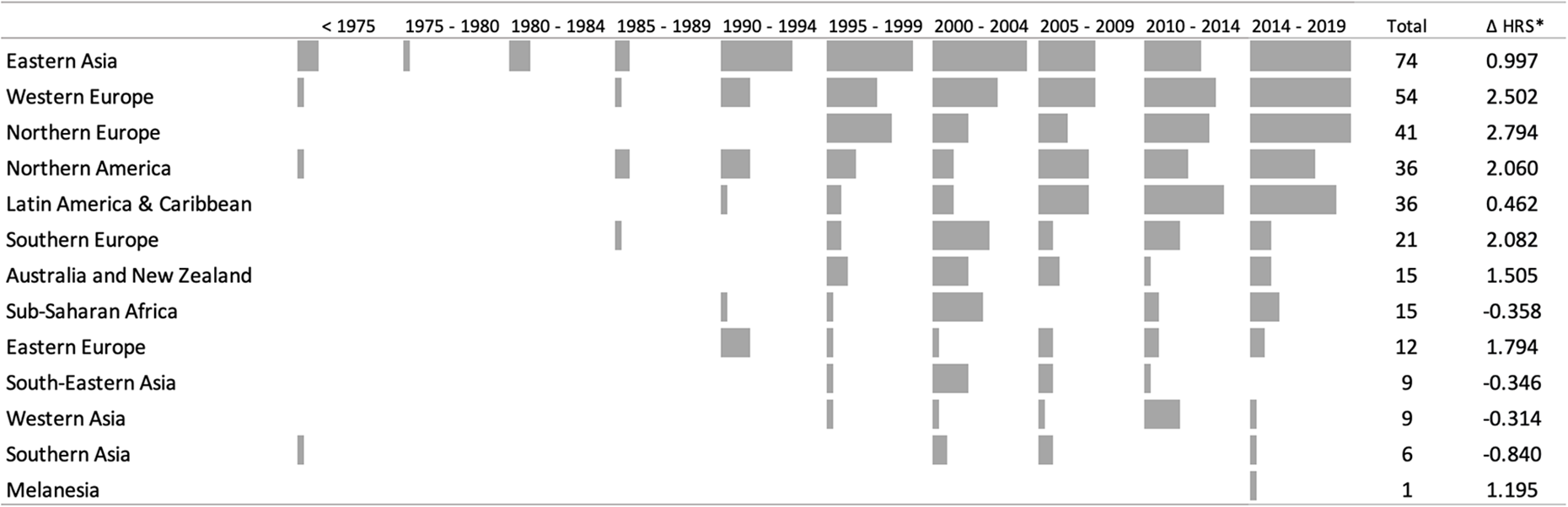
We also looked at countries where apologies have been received. Figure 4 shows that a substantial number of the apologies (152 in total, 46%) in our dataset have been offered by a state or state representative to a group within their country. Many of these apologies have been given by previous settler states or countries with an indigenous population (e.g. Canada, Norway, Taiwan). Latin America also counts relatively many within-country apologies, often made in the context of past (state) violence. A still considerable number of apologies (119 in total, 36%) in our database, however, have been offered between countries and 44 countries have been on the receiving end of such apologies. Figure 4 shows that these countries are often located in North America, Europe, or South-Eastern Asia. The Republic of Korea, Israel, and the United States are among the countries where the largest number of apologies have been received. A smaller number of apologies (58 in total, 18%) are ‘transnational apologies’, most of which have been offered by Japan (25 in total).
Apologies and human rights violations
What are states and state-actors apologizing for? We have coded for the broader context within which the human rights violations that led to the apology occurred, as well as the human rights violation(s) as explicitly mentioned in the apology. As shown in Figure 5, most apologies in our database were offered for human rights violations that were related to or took place in the context of a (civil) war (158 in total, 48%). The largest number of these apologies were related to World War II (97 in total). These apologies have not only been offered by Japan and Germany, but also by countries such as Canada, France, Lithuania, Monaco, Switzerland, and the United States. A substantial number of apologies in our database (particularly by countries such as Canada and Norway, but also the United States, Ecuador, and Peru) were offered in the context of the maltreatment of Countries where apologies have been received (within-country and between-country apologies) Broader context of human rights violations leading to apologies Role of the apology sender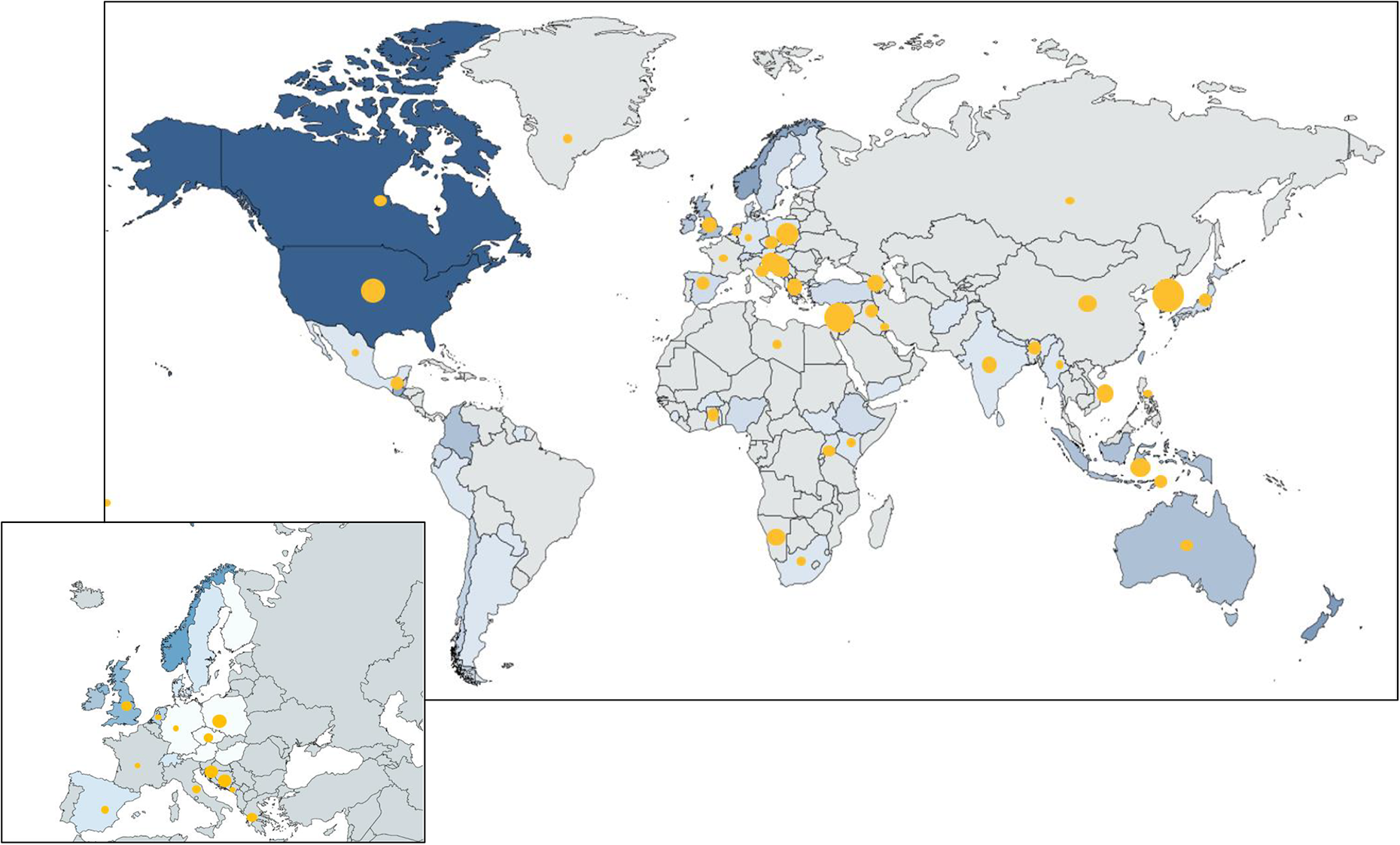
Analysis of the (partial) texts that we were able to find revealed that in many political apologies (65 in total) no clear reference could be found to the specific human rights violations that were committed (see Online appendix I). In these cases, the apology statements include words such as ‘a terrible tragedy’ or ‘incident’ instead. It is interesting to note in this regard that relatively many Japanese apologies (15) do not contain explicit references to human rights violations. Countries such as Indonesia, the Republic of Korea, and the United Kingdom have also offered multiple apologies without explicitly naming the wrongdoing(s).
When countries do mention human rights violations in the apology, they most often refer to murder, executions or massacres committed during a (civil) war, period of military rule, or insurgencies. Crimes of aggression are often mentioned as well (by Japan in particular), but countries also explicitly refer to the extrajudicial punishment or unjust imprisonment of citizens (e.g. Taiwan, Ecuador, Chile) or their forced removal (e.g. the deportation of Jews, or the removal of indigenous children from their parents in Australia, Canada, and Norway). Remarkably, in only a relatively small number of apologies do countries explicitly apologize for colonial rule, with Japan being a notable exception. Genocide, an especially loaded term in (inter)national politics, is mentioned in 17 apologies and mostly in reference to the Holocaust, except for three apologies: a 2004 apology from Germany to Namibia, a 2009 apology by Guatemala’s president Colom for the genocide that happened during the civil war, and a 2015 apology by German president Gauck for Germany’s shared responsibility in the Armenian genocide. Among the apologies that have been offered by countries for their failure to intervene during human rights violations, two have been made in reference to the Rwandan genocide (by Belgium and South Africa).
The performance of political apologies
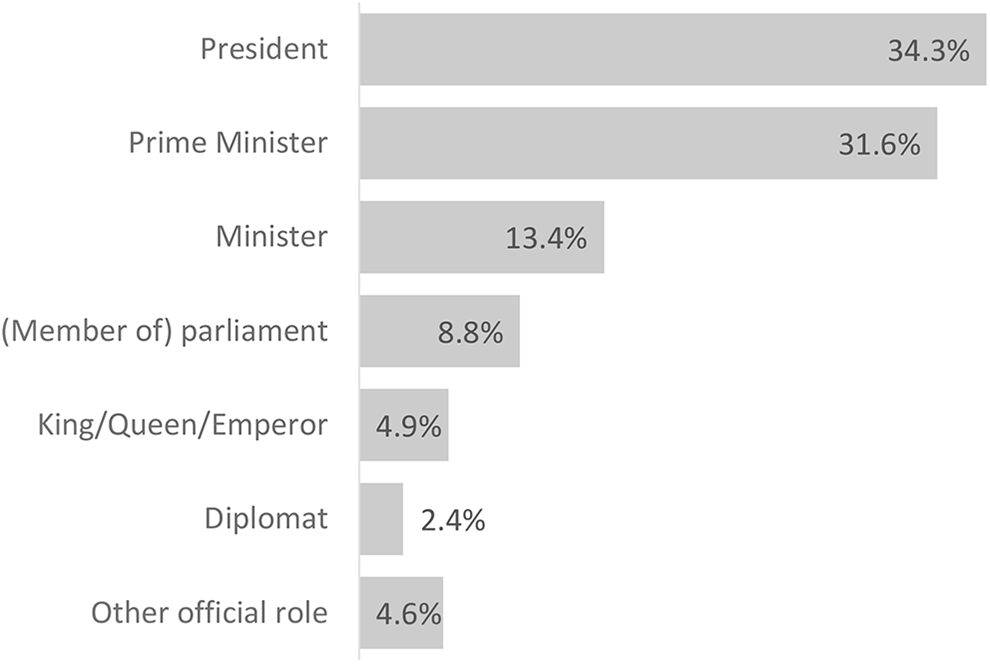
Finally, we were interested in the performance of political apologies. Who offers the apology, how, and where? Figure 6 shows that the bulk of the apologies in our database have been offered by a head of state or head of government. It is also noteworthy that only 12% of the apologies have been offered by a state representative who was in office when the human rights violations were committed. In general, it seems that a considerable amount of time must have passed before an apology is given. Although difficult, we tried to determine a rough estimate of the year that the human rights violations ended to obtain a global idea of how much time passes between the transgressions and the apology. This analysis revealed that it takes on average more than a generation (over 40 years) before a political apology is offered, although there is substantial variation in this regard.
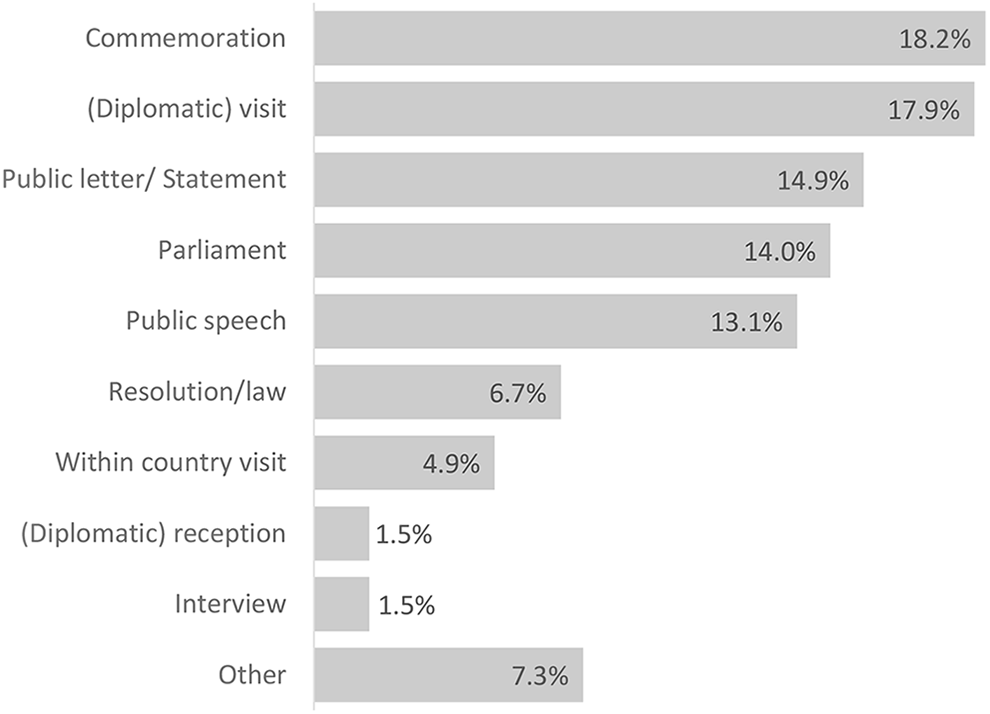
Diplomatic visits and commemorations, particularly those marking the end of a (period of) human rights violations, tend to be important occasions during which apologies are offered (see Figure 7). Some differences can be found between countries in this regard. For example, German apologies have frequently been offered during diplomatic visits and commemorations. Japanese apologies have been expressed on such occasions as well, but have also been offered relatively often via public statements or letters. State representatives in countries such as Canada, the United Kingdom, Australia, and New Zealand most frequently use the national parliament to apologize. In the United States, a substantial number of apologies (9 in total) have been offered through the passing of a resolution or law. The vast majority of apologies in our dataset have been offered orally (256 in total).
Setting or medium used to offer apologies
Discussion
The findings from our database do seem to confirm the idea that we live in an ‘age of apology’: over the past decades, and particularly since the 1990s, the number of apologies by states or state representatives has increased dramatically. This rise in the number of apologies could not be linked to an increase in state sponsored human rights violations: instead, government protection of citizen rights seems to have improved in most subregions in this period. It does coincide, however, with the end of the Cold War, thereby supporting the idea that it is mainly in the aftermath of the Cold War that state-level concerns with reparation politics started to fully take shape. Sharp (2015) has pointed to the ideological and political currents associated with the end of the Cold War – with the ‘seeming triumph of western liberal democracies’ – that have led to an internationalization, professionalization, and institutionalization of processes of coming to terms with the past. With 75% of the political apologies in our database having been offered in the last 20 years, it seems fair to say that expressing regret or remorse has become part of a ‘default expectation’ (Sharp, 2019) of states to confront past wrongdoings.
What is remarkable, however, is that our data show a more nuanced picture when it comes to the universality of political apologies than the literature tends to assume. While scholars have referred to human rights as a ‘universally cherished concept’ (Barahona de Brito, Enriquez & Aguilar, 2001), with political apologies serving as a new global norm (Barkan, 2000), these assumptions are only partially supported by our data. On the one hand, we do see that apologies have been offered across the world and have been used by a large number of countries to address past wrongdoings. On the other hand, Northern and Western European countries, Japan, and a number of settler democracies are clearly overrepresented in our database, whereas countries in the northern and southern (except for South Africa) part of the African continent, Central Asia, and China are (largely) absent. Although we cannot rule out the possibility that this is due to our search procedures – we strongly relied on online sources and were limited to a certain number of languages – these findings suggest that political apologies have been embraced by liberal democracies and by countries transitioning to liberal democracies in particular. As such, they not only seem to serve as a means to pursue liberalism but also seem to be an instrument to perform liberalism. This is in line with more recent notions that transitional justice is ‘fundamentally liberal’ (Park, 2020), and that political apologies seem to ‘reinforce key liberal tenets’ (Bentley, 2014). The position of Japan is remarkable in this regard, as this country has apologized following considerable pressure by other countries, which has often led to mixed responses (e.g. Lind, 2008).
Our findings show that most apologies are so-called within-country apologies offered to, for instance, indigenous communities or formerly oppressed groups. These statements have often resulted from a country’s self-examination or from demands for acknowledgement by victim groups and social movements. Especially in Latin America, where several countries went through a period of regime change in the 1980s and early 1990s, many apologies have been offered in the context of past state violence and have often been preceded by recommendations of a truth commission. All of these Latin American political apologies came after 1990, confirming the suggestion that with the collapse of the Cold War bipolar structure came a wave of liberalization (Newman, 2019), as well as the adoption of political apologies as a way to deal with the past. Additionally, our data show that several established settler democracies, such as Australia or Canada, have offered political apologies to indigenous communities for a legacy of large-scale abuse and injustice. Although some authors have been critical about the structure and format of such political apologies (e.g. Bentley, 2017), our findings show that within-country apologies have been used around the world as part of a larger process of coming to terms with the past. Countries as diverse as Togo, the Republic of Korea, Ethiopia, and Denmark have apologized to formerly oppressed groups within their borders – with each of these countries at some point in time also setting up national commissions to investigate the injustices.
Our data also show that political apologies have been offered in the context of a broad range of human rights violations, although the largest number of political apologies have been offered for transgressions that have taken place in the context of (civil) war, and World War II in particular. The former Axis powers Germany and Japan have offered most of these apologies, although a substantial number of other countries have offered apologies for crimes related to World War II. We also found, however, that countries tend to be selective about the human rights violations for which they offer apologies. Most apologies in our database have been offered for specific massacres or killings that happened during periods of large-scale violence or oppression (e.g. the massacres of Achi Mayans in Guatemala, or the Jeju 4.3 massacres in the Republic of Korea). This selectivity is also noticeable in the apologies that are related to colonialism, which have been offered for specific transgressions that happened during the colonial era (e.g. the Dutch apologies to the Indonesian widows of Rawagede or the Belgian apologies to the ‘metis’ children) but not for the overall structure of systematic abuse or for colonialism as such. This supports the concern expressed by some authors that states tend to ‘cherry-pick’ the violations that will be acknowledged and apologized for (e.g. Bentley, 2014; Dragovic-Soso, 2012). In addition, our findings show that in many apologies, the human rights violations that were committed are not explicitly mentioned. A specific case in point is Japan, the country that has offered the largest number of apologies but that relatively often does not mention the human rights violations or does so in rather general or indirect terms.
Finally, our data show that most of the apologies have been offered by a head of state or head of government. This seems to be a global trend and is congruent with literature that views the executive of a nation as the most qualified person to offer apologies, as the supposed effectiveness of a group apology largely depends on the authority given to the representative of that group (e.g. Horelt, 2019; Tavuchis, 1991). Nevertheless, only a very small number of apologies have been offered by a state or a state representative who was in office when the human rights violations took place, suggesting that it takes time to come to terms with the past – for established as well as less established democracies. Commemorations and diplomatic visits tend to be the most common occasions during which apologies are offered, although within-country apologies have often been delivered in parliament or through national legislation. Being included in state legislation and recognized on a state level may be particularly important to formerly oppressed or marginalized groups.
By setting up a database of political apologies that have been offered across the world, we have taken a first important step in trying to obtain more insight into what has often been referred to as ‘the age of apology’, using more quantitative data. For a broader understanding of the phenomenon, however, future analyses should also examine in more detail the key characteristics of the countries that have apologized and those that have not, as well as the countries and groups that have been on the receiving end of these apologies. In addition, a more in-depth analysis of the content of the apologies that have been offered is necessary, as well as their evaluation by the intended recipients, to gain more insight into their potential transformative power. With our current database – which we set up in such a way that it can easily be linked with other datasets – such analyses are possible and we aim to address these questions as a next step. It is also necessary to further expand our database, as we relied heavily on internet sources to find apologies (which may have introduced a bias as well, because apologies offered in the current information age may be easier to find) and did not include calls for apologies or refusals to apologize. Nevertheless, we think that the findings from this first systematic analysis of political apologies that have been offered worldwide add to the literature on political apologies, and that our database offers scholars many new and interesting opportunities for future research.
Footnotes
Replication data
The dataset and syntax for the empirical analysis in this article, along with the Online appendix (containing an overview of the countries and the types of human rights violations mentioned in the apologies), can be found at www.politicalapologies.com and  .
.
Acknowledgements
We are very grateful to Rhoda Howard-Hassmann, Canada Research Chair in International Human Rights 2003–16 at Wilfrid Laurier University, for providing us full access to the data that she and her team collected for the Political Apologies and Reparations website. We also thank Martin Hoondert for his valuable comments on earlier drafts of this manuscript.
Funding
This study was funded by a European Research Council Consolidator Grant awarded to Juliette Schaafsma (682077-APOLOGY) under the Horizon 2020 research and innovation program.