




Abstract
Does internal migration following natural hazards increase the likelihood of protests in migrant-receiving areas? To address the question, this study first looks at the extent to which experiencing different forms of natural hazards contributes to a household’s decision to leave their district of residence. In a second step, the article explores whether that internal migration flow increases the number of protest events in migrant-hosting districts. In doing so, it contributes to the existing debate on the extent to which natural hazards impact the likelihood of social contention, and the role of migration as a linking pathway in that relationship. The impact of climate-related shocks may erode household assets and therefore adaptive capacity in ways that can eventually influence decisions to migrate to larger urban centres. Although migrants are agents of economical and technological change, urban environments may impose challenges to recently arrived migrants and their host communities, affecting the motivations and mobilization resources of urban social groups to protest. As a consequence, the probability of urban unrest in these locations is expected to increase. To test this, I use geo-referenced household-level data from Bangladesh for the period 2010–15, which records households’ experiences of different forms of natural hazard and internal migration flows, available from the Bangladesh Integrated Household Survey. It combines this with data on protests, derived from the Armed Conflict Location and Event Data. Findings suggest that flood hazards in combination with loss of assets increase the likelihood of internal migration, but unlike other types of domestic mobility, hazard-related migration does not increase the frequency of protests in migrants’ districts of destination.
Introduction
Millions of people will be exposed to the impacts of anthropogenic climate change, with projected increased duration, frequency and magnitude of extreme weather events (IPCC, 2018). Climatic changes are expected to have serious impacts on land loss, with consequences on crop production, livelihood diversification and food security (IPCC, 2018). Migration is one adaptive response to these impacts. Seasonal migration has long been a key livelihood strategy and a tradition for many communities (Baldwin, Fröhlich & Rothe, 2019), but climate change will most likely amplify existing migration patterns (Millock, 2015). For example, movements from rural to urban areas are expected to increase (Sedova & Kalkuhl, 2020). Despite general agreement in academic discussions that climate change is rarely a main cause of human mobility, it is expected to increasingly play a role (Hugo & Bardsley, 2014).
Since the 1980s, some scholars have argued that climate-related migration (also referred to as environmental migration) could lead to mass displacement that might result in conflict (Myers, 2002). Recent academic research, however, has been cautious when discussing the relationship and has challenged these expectations due to limited theoretical and empirical foundations. Despite case studies showing that natural hazards may contribute to the likelihood of conflict through migration, quantitative studies do not agree on whether the pathway is causal or even exists (Brzoska & Fröhlich, 2016). The impact of climate migration as a topic has also entered political conversations internationally, where the theme is regularly framed in the language of national security. When looking at domestic discourses in countries affected by environmental migration, Boas (2014), however, notes that the discussion rather concerns internal forms of migration and centres around individual well-being, as opposed to national security.
Focusing on the issue from a human security perspective, this study then asks whether natural hazards play a role in people’s decisions to internally migrate, and whether that is associated with increased protest frequency in migrant-hosting areas. The study specifically looks at a single case, Bangladesh, in order to unpack the complex relationship while considering the context of these local dynamics. Focusing on a broad conceptualization of conflict such as peaceful protests also accounts for important variation. Qualitative case studies of the societal impact of climate variability continuously highlight the occurrence of land disputes, riots and nonviolent protests as a more likely outcome than severe forms of armed conflict. This subcategory of conflict does not necessarily require the same level of organization and funding, entails lower personal risk, and in case of discontent could be more likely to occur in the aftermath of a natural hazard (Buhaug & Seter, 2014).
Drawing on existing theoretical perspectives, I expect that after having experienced a flood or drought, members of households adapt to financial challenges at home and attempt to diversify their income by migrating to other, often urban areas in search of better living conditions. Although the new environment offers potential benefits, it also imposes unforeseen challenges. If not properly managed, the subsequent internal migration may amplify grievances and reconfigure social networks, in turn affecting motives and mobilization of resources of different urban social groups in districts of migrants’ destinations. As a result, local urbanites and migrants may protest to voice their demands for better social and governmental services.
To test these claims, the study utilizes fine-grained geo-referenced data from Bangladesh between 2010 and 2015. The statistical analysis is conducted in two parts: first, I rely on micro-level data from the Bangladesh Integrated Household Survey, to examine the extent to which experiencing different forms of natural hazards such as floods and droughts contributes to a household’s decision to leave their district of residence. Second, I move from the household to the district level to explore whether these internal migration flows increase the number of protests occurring in migrant-hosting districts, using data from the Armed Conflict Location and Event Data Project. The results suggest that flood hazards and consequent loss of assets increase the likelihood of internal migration. I find that higher levels of total migration to a district also increases the frequency of protests. When separating natural hazard-related migration from the rest of the inflow, however, estimated results suggest that environmental migration does not affect the likelihood of protests, neither in itself nor as an addition to the remaining ongoing internal migration.
Literature review
Academic research exploring the link between climate change, migration and conflict goes back to Robert Malthus, who argued that global population growth would gradually lead to environmental decline and conflict over renewable natural resources. Subsequently, Homer-Dixon (1999) and Reuveny (2007), among others, highlighted environmental migration as one of the main pathways from environmental decline to violent conflict. Still, the empirical evidence for this pathway is ambiguous and our understanding of whether and when climate-related migration promotes the risk of conflict remains limited (Raleigh, Jordan & Salehyan, 2008; Gleditsch, 2021).
Existing studies find that when moving herds to more resource-rich areas, the presence of pastoralists in the vicinity of other groups may promote competition over shared resources due to pre-existing socio-economic tension (Adem et al., 2012; Reuveny, 2007) or lack of common conflict resolution mechanisms (De Juan, 2015). In these cases, shared practices and laws may differ, leaving both communities more vulnerable to violence (Adano et al., 2012; Linke et al., 2015). Along those lines, Koubi et al. (2018) show that even though gradual climatic changes such as drought amplify environmental migrants’ conflict perception, those who relocate are unlikely to support the use of violence unless they have been victimized (Linke et al., 2018). In terms of state response, a study of Indian states shows that weather-shock-driven internal migration increases the risk of rioting if the host population is politically aligned with the central government, as resource availability and impunity increase migrant intimidation (Bhavnani & Lacina, 2015). Cottier (2018) reports that droughts and heavy rainfall increase the rates of rural–urban migration, but finds no evidence that movements by ethnically distinct migrants increase the risk of nativist violence in receiving areas, unless the native group is politically marginalized by the government.
Regarding state and economic development, Kelley et al. (2015) argue that rapid urbanization that put pressure on economic and social services, coupled with governmental neglect, contributed to political unrest in Syria. Ash & Obradovich (2020) also find that drought spurred out-migration in Syria by reducing agricultural output, which likely contributed to additional protests in receiving areas. Fröhlich (2016) meanwhile finds that climate migrants could not have initiated or participated in the protests due to extreme marginalization and exclusion from social networks. Selby et al. (2017) also note that the scale of drought-induced migration was too small to have an actual impact on the Arab Spring uprising in Syria.
All these studies provide important insights into the relationship between natural hazards, migration and violent and nonviolent conflict. However, obtaining fine-grained data on internal migration at a subnational level remains a major challenge. Previous research on the implications of internal migration has mostly employed qualitative methods. The few quantitative studies have primarily relied on proxy measures of internal migration such as population density and urbanization rates (Ash & Obradovich, 2020; Beine & Parson, 2015).
In an effort to overcome this limitation, a few studies have relied on survey data, which allow for tracing down household members from area of origin to area of destination (Bohra-Mishraa, Oppenheimer & Hsiang, 2014; Koubi et al., 2016a). Micro-level data have the advantage of accounting for variation in households’ experiences of natural hazards and associated losses. Aggregated measures expect that all households in the area would experience a certain disaster, but surveys show large interhousehold variation in experiences in the same community. This study joins these recent efforts to rely on more nuanced data for improved inference. Focusing on Bangladesh, I evaluate the relationship between different types of natural hazards, migratory responses and protest by employing data that account for households’ experiences of these phenomena. This allows me to trace the effect of natural hazards on protests as a social outcome, while isolating the effect of different types of migration from other determinants of protests.
Theoretical foundation
The following section discusses how environmental migration relates to the likelihood of participation in protests –among both locals and migrants in the receiving area. Generally, the likelihood of participation can, among others, be explained by two theoretical approaches: grievance-based and resource mobilization explanations (Chenoweth & Ulfelder, 2017). Below, I apply these two perspectives to the context of local urbanites and environmental migrants taking part in protest.
Grievance-based motives
Individual motives and grievances help explain protest participation, with systematic socio-economic injustice motivating mobilization (Gurr, 1970). How could disaster-related migration affect the dissidents’ motives? The impacts of natural hazards on food production could be detrimental for economies dependent on agricultural and fishery production. In the aftermath of a natural hazard, rural, landless agricultural or fish-dependent communities may have few incentives or options to sustain current livelihood activities, and instead choose to participate in the off-farm labour market, which often entails relocation (Cattaneo et al., 2019). By migrating to other districts in search of job opportunities, household income could be diversified from being a climate sensitive livelihood (Afsar, 2000).
Most internal migration is urban-bound, especially since job opportunities are disproportionately located in cities (Hossain, 2013). Migration has been one of the major factors contributing to high urbanization rates, bringing both opportunities and challenges to cities, governments and migrants themselves (United Nations, 2018). In subsistence economies, internal migration is one of the main sources of urban growth (IOM, 2015), with a large share of migrants having engaged in agricultural and fishery activities (Afsar, 2003). Global economic growth has led to expansion of industry and service sectors, much of it in urban centre peripheries. Urban transformation and redevelopment have also been guided by city beautification strategies common in big cities around the world (Hossain, 2013). The policies and improvements often favour well-off and well-connected urban dwellers, further pushing economically marginalized people to urban peripheries (Hossain, 2013). Having primarily engaged with agricultural activities, migrants in the new environment lack certain employment training required to obtain jobs in the formal sector of the urban economy and thus may turn to opportunities in the periphery. Manufacturing and garment factory jobs are emerging in urban peripheries, so settling there facilitates migrants’ access to employment opportunities. Some of these peripheries, turned into illegal settlements and slums, are lower-lying wetland areas prone to natural flooding. As a consequence of these settlements, migrants face physical insecurity, fear of eviction, limited delivery of basic services and consequent health issues, potentially contributing to migrants’ grievances related to the host area.
Disaster-related migrants, specifically, may also have grievances due to restricted choice in their decisionmaking. For instance, those who move for aspirations of better work opportunities, marriage or educational purposes might be more willing to integrate in their new environment since they retained greater agency in choosing their move. Meanwhile, according to interviews conducted by Hossain (2013), families in Bangladesh who lost their land to river erosion stated that migration was their last resort as there were no other employment alternatives in their place of origin. Because disaster-related migration is driven by many non-environmental factors (McLeman, 2019) and could be a risk- or income-diversifying strategy similar to economic migration, it is difficult to clearly differentiate between the two. Still, I expect that, in contrast to economic migrants, disaster-related migrants may feel they have no other choice but to leave, a feeling they carry over to the host area (Koubi et al., 2016b). Partially forced movement following a disaster may generate certain agitation, impede integration and potentially motivate disaster-related migrants to protest.
However, this is not to say that political protests are necessarily initiated by the migrants themselves. Migration also poses the potential for grievances from the local resident population in their aim to secure access to resources. Rapid growth of the city population may strain the government’s ability to provide services such as education, water supply and employment opportunities. High migration rates may also exacerbate existing issues such as land shortage, if the labour market struggles to absorb fast-growing numbers. Local urbanites then might also experience more limited governmental services (Buhaug & Urdal, 2013), further motivating some locals to protest their government with the aim of improving governmental provisions. In addition, Côté & Mitchell (2017) argue that although so-called ‘sons of the soil’ conflicts adopt an ethno-religious character, other characteristics factor into the conflict. For example, local urban residents may consider themselves the true owners of the land and its respective resources and perceive a threatened urban status (Grace & Keepper, 2009); therefore, duration of residency may also influence demands for quality government services.
Mobilization resources
Although individuals may be motivated to participate in a protest to achieve a common goal, they still need to know about and coordinate for protest, and overcome collective action problems. According to the resource mobilization approach, grievances alone are not sufficient drivers of protests; a certain movement’s capacity to acquire and employ resources in order to mobilize for protests is a fundamental element of the process. Social networks can be crucial to resource mobilization and protest participation (Parkinson, 2013). They enable groups to disseminate information, draw on in-group solidarity norms (Gould, 1993) and form pre-existing infrastructures to overcome collective action problems (Lichbach, 1998). Collective action problems for protest mobilization arise because individual participation could be costly in terms of, for example, personal security, whereas the fulfilled goal holds benefits for both participants and non-participants (Olson, 1965).
Concerning social networks for disaster-related migrants, if individuals tend to settle with kin and with other migrants, this can provide a broader in-group social network, consequently facilitating collective action. People concentrated in slums and working in the same garment factories can also be united by commonly experienced deprivation and communicate their grievances to each other more easily. The fact that the manufacturing sectors provide an important revenue source for the state suggests that the regime is vulnerable to non-cooperation in this economic sector as the social group can withdraw resources from the government (Butcher & Svensson, 2016). This might also add additional leverage to the migrants, in turn motivating dissidents and facilitating participation in protests.
For local urban residents, the collective action problem is less acute from the start. They learn about protest events and logistics easily due to more developed local social networks. After longer-term residency in an area, locals might be part of or simply know more about political organizations and unions responsible for staging protests and demonstrations, increasing the likelihood that they take part in these events. Similar to migrants, local urban residents also have a bargaining chip during protests. Leverage comes from the power resources that a group can employ to inflict costs on the regime and consequently use to extract concessions (Dahlum, 2019). Urban resident populations, often composed of members with high human capital and enhanced organizational skills, are employed in central pillars of the economy, and therefore have influence over key sectors (Dahlum, 2019). In that sense, urban social groups, including migrants and non-migrants, have varying resources to protest. Taken together, these theoretical explanations account for grievances and social networks that inform and motivate both migrants and locals in urban areas. Therefore, natural hazard-related internal migration affects the motivations and mobilization resources of different urban social groups in districts that witness higher migration trends. This is expected to increase the likelihood of protest occurrence, leading me to the following hypothesis: Hypothesis: Natural hazard-related internal migration increases the likelihood of protests in districts hosting these migrants.
Data and research design
The case of Bangladesh
Bangladesh is often mentioned when discussing dire climatic change impacts (Kumari Rigaud et al., 2018). The country is located in the Bay of Bengal, a large deltaic area, highly exposed to natural hazards such as floods, droughts, cyclones and riverbank erosion (IPCC, 2018). Even though Bangladesh has always been flood-prone and many of its agricultural activities depend on seasonal inundation, climate projections suggest that flooding will increase due to irregular rainfall, intensified cyclone activity and river run-off (IPCC, 2018). Because flooding is a commonly occurring climatic shock and government institutions are weak, rural households have over a long period of time developed a range of adaptation strategies, with seasonal migration being a key component (McLeman, 2017). Even though Bangladesh has certainly improved early warnings and development of evacuation plans, the projected negative consequences of climate change may mean that people are often unable to return home and are forced to relocate.
In terms of social movements, Bangladesh should also face higher levels of demands and experience higher likelihood of protests since institutions have limited effectiveness but political organizations and associations are allowed. Countries with semi-democratic or semi-autocratic governments are more likely to experience protests (Tilly, 1978) as transitioning regimes might be less responsive to popular demands and less capable of responding to dissent (Hegre, 2014). A semi-autocratic structure may not respond to these demands, nor suppress organizational efforts so as to prevent collective action (Cunningham, Dahl & Frugé, 2017). According to Varieties of Democracy data, Bangladesh scores relatively low on the liberal democracy index, while attaining a relatively high score on the freedom of association index, looking at the extent to which civil society organizations are able to form and operate freely (Coppedge et al., 2020). Bangladesh should therefore be a relevant case for examining the relationship of interest, but it has rarely been considered in the climate–conflict literature (for an exception see Adger et al., 2021).
Research design
The theoretical argument suggests that higher levels of disaster-related migration increase the likelihood of protest through grievances and resource mobilization for both migrants and host urbanites. To evaluate this expectation, I first rely on household-level data to distinguish natural hazard-related migration from other sources of mobility. Since data on internal migration rarely include stated reasons for migration, it is difficult to separate economic or even violence-driven responses from those preceding natural hazards. Therefore, the article first determines whether natural hazards contributed to the household-level decision to migrate. Following expectations from the migration literature that decisions are not made by migrants alone, but by households (Stark & Bloom, 1985), the unit of analysis is the household-year with binary measurements of migration as a dependent variable and experienced natural hazards as a main independent variable. In the second step, the data are used to analyse the relationship between immigration flows – separating between hazard-induced and other migration – and frequency of protests in migrant-hosting districts for each year.
Constructing natural hazard-related migration
Dependent variable: Internal migration
To measure internal rates of migration, I rely on the Bangladesh Integrated Household Survey (BIHS). BIHS is conducted in two rounds – in 2011–12, and in 2015 (IFPRI, 2016; Ahmed, 2013). BIHS is a nationally representative survey project, administered to the same sample of households (6,503) in both rounds with an annual temporal resolution, which allows for creating a panel dataset. 1 All variables on the household level are geo-located to the 64 districts (second-order division levels) in Bangladesh. BIHS contains information on the spatial location of a migrants’ district of origin and destination for the last five years. This allows for creating a binary variable of whether a household member migrated from the current district of residence or not in a given year. In the first survey wave, respondents recalled when a member migrated from 2006 to 2012. The second survey wave asks: ‘Has any member of your household migrated since the baseline survey?’ which then generates time-series data for the period 2012–15. This results in a panel data set from 2006–15 with information on internal migration estimates per district and year in Bangladesh.
Independent variable: Natural hazards and disasters
Each household is also asked if they experienced different types of shock in the last five years, including floods and droughts. The questionnaire asks whether the household lost crops, harvest or productive assets due to natural hazards. Consequently, I created five sets of variables about experience of natural hazards. For each household, disaggregated per district-year (2010–15), I include the following binary variables for whether and when they experienced: flood shock (Flood (crop losses)) or drought shock (Drought (crop losses)) with reported crop damages; flood with reported asset losses and damages to house plot, agricultural land or livestock, Flood (lost assets); and flood or drought with reported harvest losses, Flood (lost harvest) and Drought (lost harvest). I differentiate between the types of natural hazards since individuals displaced by a rapid-onset hazard (e.g. flooding) are expected to display a different migration response than those affected by gradual changes (e.g. drought) (Renaud et al., 2011). For example, it is possible that slower-onset hazards such as sea-level rise or drought allow longer adaptation time and conceptually may be similar to the voluntary parts of economic movement (Cattaneo et al., 2019). Individuals who move in the aftermath of a drought are also more likely to have stronger conflict perceptions due to prolonged deprivation in the area of origin (Koubi et al., 2018). This real or perceived systematic deprivation might in turn increase grievances that motivate participation in protests. The conceptual separation therefore allows for assessment of the impact of different natural hazard types on the likelihood of protests.
Socio-economic control variables
The model also includes household-level control variables that prior research suggest are critical determinants of migration: human, social and physical capital (De Sherbinin et al., 2008). Human capital refers to skills and experiences that make it more likely that individuals will migrate but at the same time make them less vulnerable to a natural hazard. Education, literacy and occupation are forms of human capital, which I measure with binary variables for above secondary level of education attainment, whether or not the head of household can read and write, and whether or not their occupation is related to agricultural or fishing activities. Social capital entails being related to others with prior migratory experience, which greatly increases the odds of out-migration by reducing the costs and risks of undertaking a trip (Cattaneo et al., 2019). I measure this through a binary variable for the presence of others from the household with migratory experience. Physical capital refers to the presence and value of assets within the household, including agricultural land, house plot, livestock, savings and household equipment. Ownership of such assets may render a household less vulnerable to natural hazards, and can either encourage migration by providing finances for an expensive trip, or enable household members to cope with the shock event and remain at home. The survey also includes separate questions on access to loans and subsidies as a presence of safety nets. I create a binary variable for household renewable resource dependence, measuring ownership of arable land, pasture or cultivable pond to account for the extent to which livelihoods might be affected by a natural hazard.
In addition, I include district-level controls for the area of origin. Distance to the capital takes into consideration that rural-to-urban migration is the most frequent type of migration in Bangladesh and that movements decrease with greater distance between the two locations (Kumari Rigaud et al., 2018). Other important push-factors entail population density and area size, where less populous, smaller regions likely see more out-migration (CIESIN, 2016). Finally, infant mortality rate proxies economic development and serves as a broader measure of social well-being (Storeygard et al., 2008). Districts with higher economic development might be better prepared to respond to the natural hazard effects and therefore witness fewer emigration responses.
Internal migration and protests
Independent variable: Natural hazard-related internal migration
Internal migration flow per district is estimated in the first part of the analysis. In addition to information on whether a household member has migrated in the past, the survey also inquires about the district of their destination. Relying on the BIHS data on migratory histories, location and timing, I build a dataset of variables that approximates yearly numbers of internal immigrants to second-order receiving administrative units in Bangladesh. This entails obtaining the numbers of migrants in each survey wave and combining the two Districts of origin (left) and destination (right) of natural hazard-related migrants, shown in percentages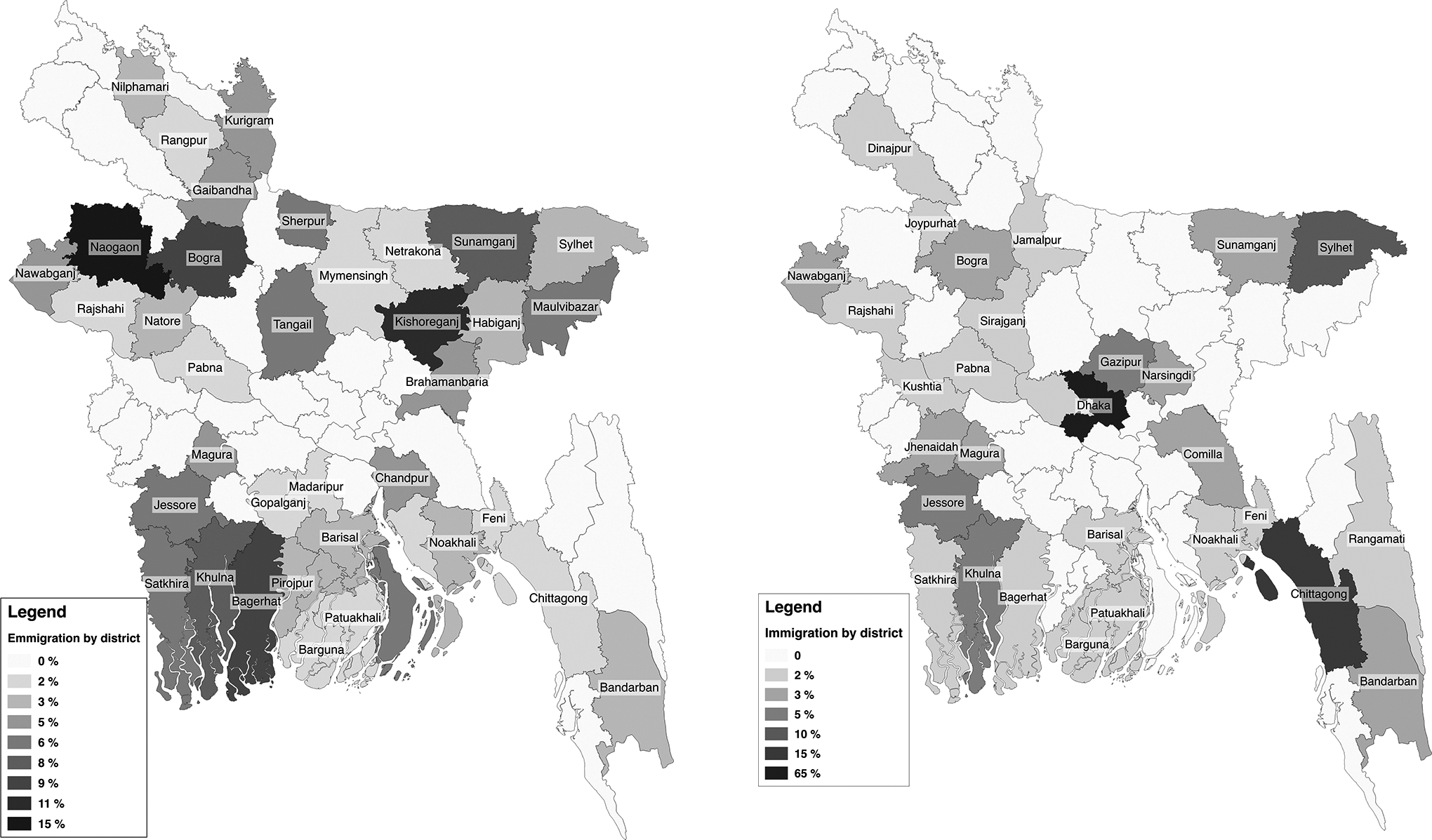
One challenge in existing research is in differentiating types of migration. It is difficult to isolate natural hazard factors from other well-known migration drivers such as poverty, lack of risk-reduction strategies and unemployment (Uddin, 2013), and decisions to migrate are inherently complex due to socio-economic, demographic and political factors (Black et al., 2011). The theoretical argument put forward assumes that migratory responses, where natural hazards contribute to the decision to migrate, are different from other forms of mobility. An additional t-test in Online appendix A2 shows that, in comparison to those households that did not experience a flood disaster but still migrated, the subsample of migrants who experienced flood-related asset losses and migrated tend to relocate from districts: (1) that are further away from the capital, (2) with higher infant mortality rate, (3) with lower population size and (4) of lower economic development. Those households also tend to be more dependent on renewable resources, and to have lower educational attainment and household income. Nevertheless, both types of migrants tend to relocate to the three largest urban centres in Bangladesh. In order to make the empirical distinction between migratory responses, first, a total number of migrants per receiving district is calculated based on the head of household responses about the migrants’ destination. This number is used to create a count variable of migrants. Of this total for households migrating, I then separate those who have experienced natural hazards and those who have not, producing a separate count variable. Distribution of natural hazard-related migrants per district of origin and destination is shown in Figure 1.
In order to translate the migrant count to approximate ‘true’ numbers, I multiply the number of households in the sample by the average household size in Bangladesh for the period 2010–15, which is 4.5. The number approximates population size in my sample. Considering that the actual population size of Bangladesh for the same period of time is around 158 million and that the BIHS survey project is representative at the national level, I attempt to estimate a close to ‘true’ count for migrants per district. The estimated actual number of migrants is calculated by multiplying the migrant count in the sample by the population size of the country, divided by the population size in the sample.
Dependent variable: Protests
To test the association between internal migration and protest, I rely on Armed Geo-located number of protests per second-order administrative district in Bangladesh, 2010–15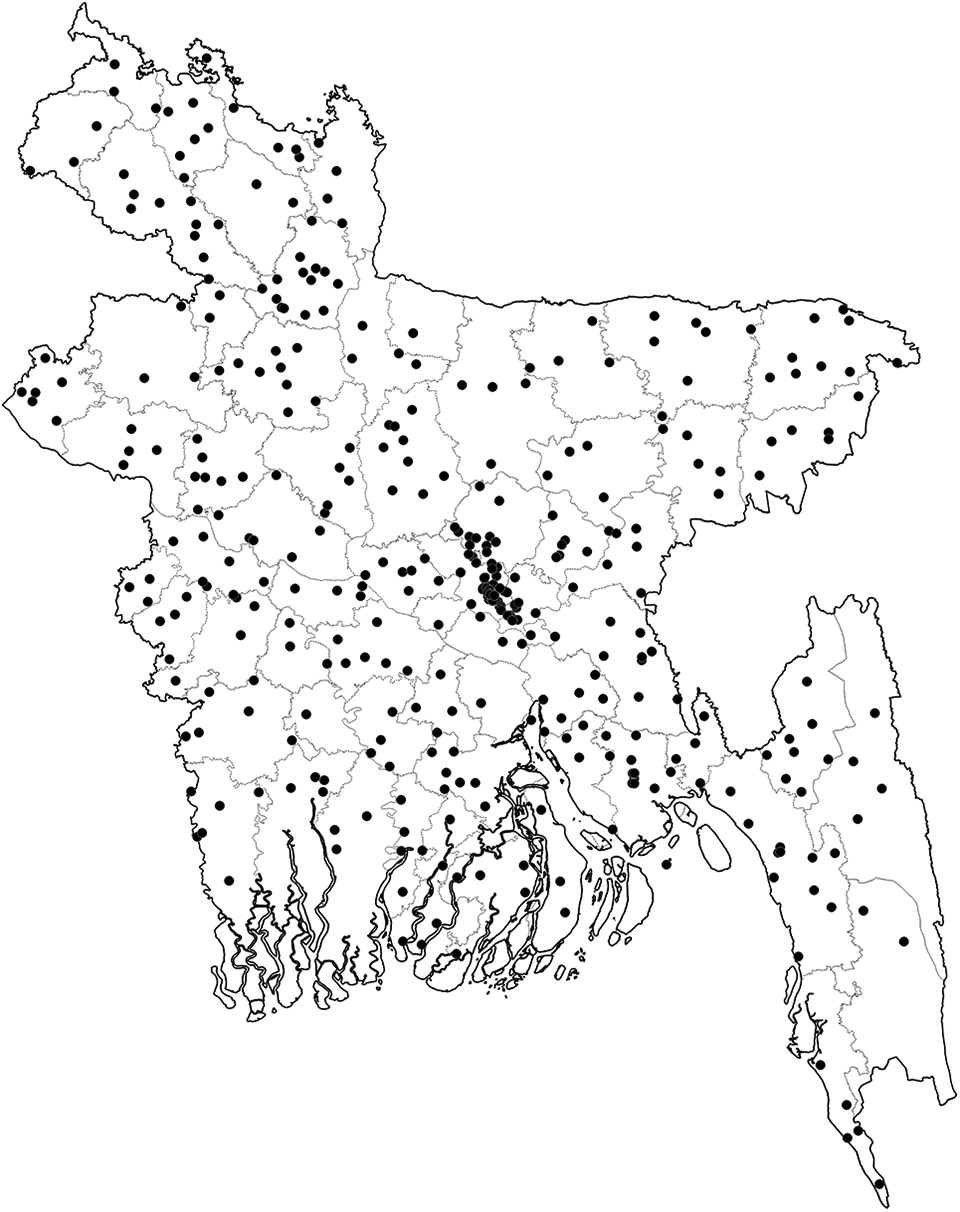
Control variables
To account for possible confounders, I include a range of control variables, measured at the second-order administrative unit level that might relate both to migration and protest. I control for the level of economic development, measured by infant mortality rate (Tollefsen, Strand & Buhaug, 2012), as this may affect adaptability to grievances and reduce the cost of participation. I also include population size (logged) (CIESIN, 2016), since larger and more concentrated populations facilitate protest coordination (Butcher & Svensson, 2016). These socio-economic factors are also likely to influence the decision to migrate since differences in economic opportunities between districts are one of the biggest drivers of migration in Bangladesh (Martin et al., 2014). The presence of violent riots also makes it less likely to see migration to a certain district due to avoidance of violent areas. Riots challenge political stability by undermining state capacity to address the needs of a growing urban population and consequent dissent. State involvement in riots also entails lower capability to respond to and manage ongoing unrest or to maintain consistent control in urban areas. I also add a control for the history of protests as a temporal decay function, expecting that districts with a long history of protests affect the organizational skills of society. Finally, to account for the contagious nature of protest and potential diffusion, vicinity of protests is included, measuring the count of other ongoing protests within a 50 km buffer around the district border.
Analysis
Estimating natural hazard-induced migration
In this first empirical section, I aim to examine whether migratory decisions are indeed related to a preceding natural hazard and if so, to which type. Tables A2.III and A2.IV in Online appendix A2 provide descriptive statistics for all included variables.
Table I presents estimates of the models testing for a direct association between natural hazards and internal migration. The first three models rely on household responses about whether they experienced flooding (with lost crop, assets or harvest), while the other two models use household responses for drought experience. The models estimate whether and to what extent individual migration to other districts is associated with natural hazard-related events. 2 I estimate multilevel logistic regression models and include random intercept for districts to account for the clustering of households within districts. If we consider coefficients that reach statistical significance at the 5% level, the results show that having experienced a flood shock with asset losses in the preceding year increases the likelihood of a household member internally migrating. At the 10% level, results also indicate that having experienced a flood or a drought shock resulting in lost harvest also increases migration likelihood.
Mixed-effect logistic regression with district random intercept: Natural hazards and internal migration, household-year unit of analysis, Bangladesh 2010–2015
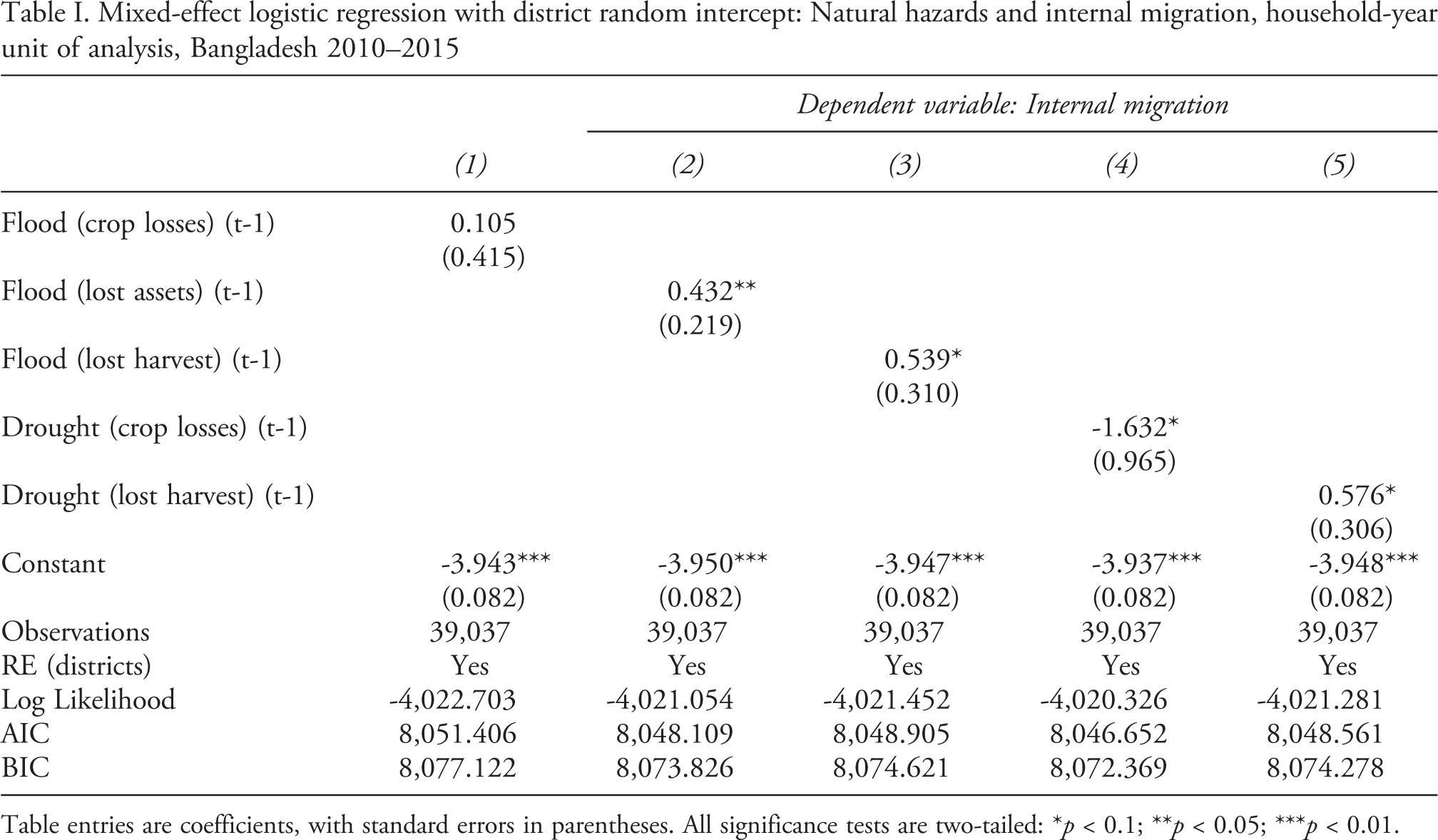
Table entries are coefficients, with standard errors in parentheses. All significance tests are two-tailed: *p < 0.1; **p < 0.05; ***p < 0.01.
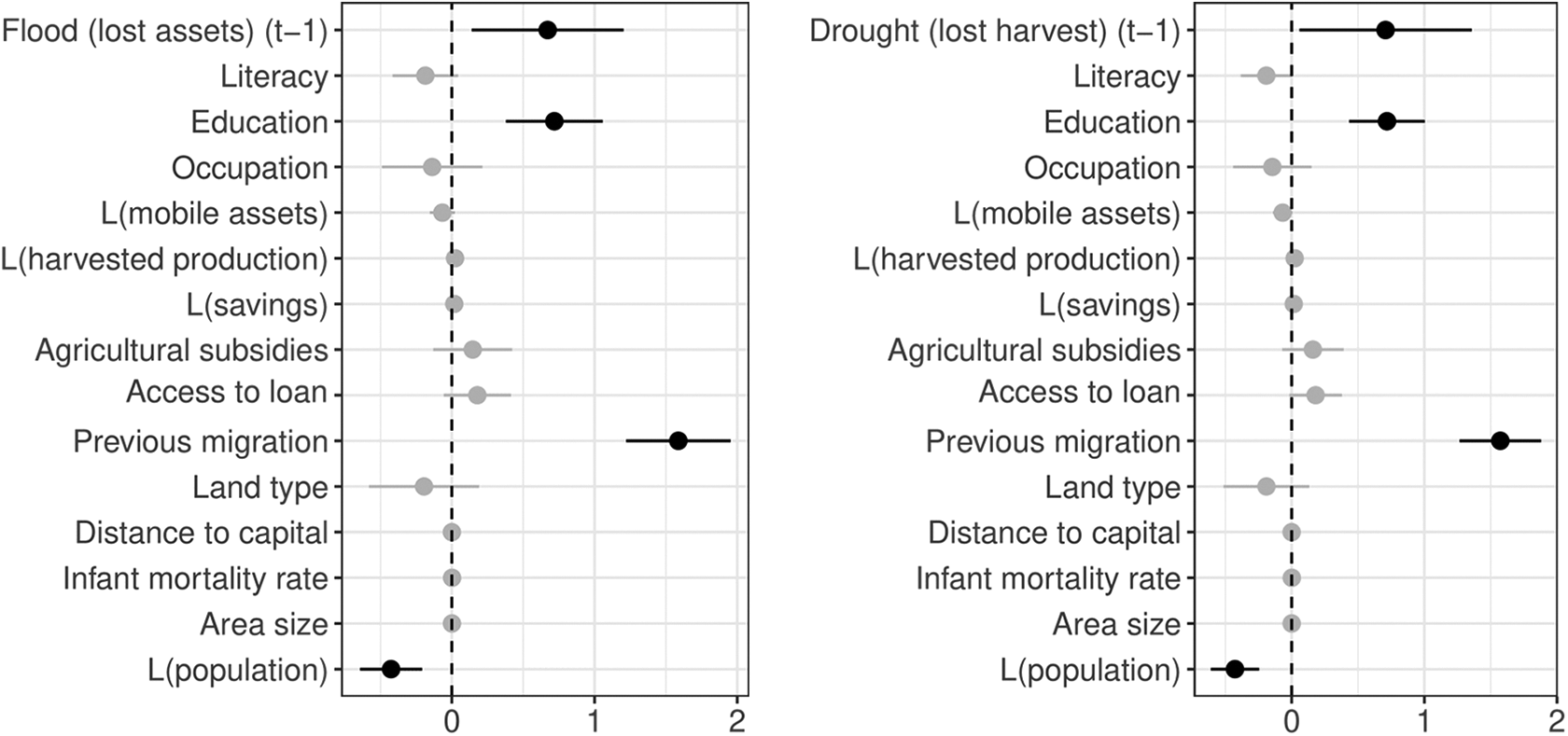
Coefficients for natural hazards and internal migration at 95% and 90% confidence intervals, including socio-economic controls
Figure 3 plots estimated coefficients for the relationship between natural hazards and internal migration, accounting for households’ human, physical and social capital, as well as district-level drivers as potential push factors (for a full regression table see Table A2.VII in Online appendix A2). I focus on the three hazard measures that obtained statistical significance in the baseline model. The estimated effect of Flood (lost assets) and Drought (lost harvest) remains similar to the results presented in Table I even after including socio-economic control variables. This suggests an association between experiencing adverse flood shocks, including associated Simulated effect (N = 1,000) of flood disaster (left) and drought (right) on the expected probability of internal migration, with all other socio-economic controls kept at their mean, 95% and 90% confidence intervals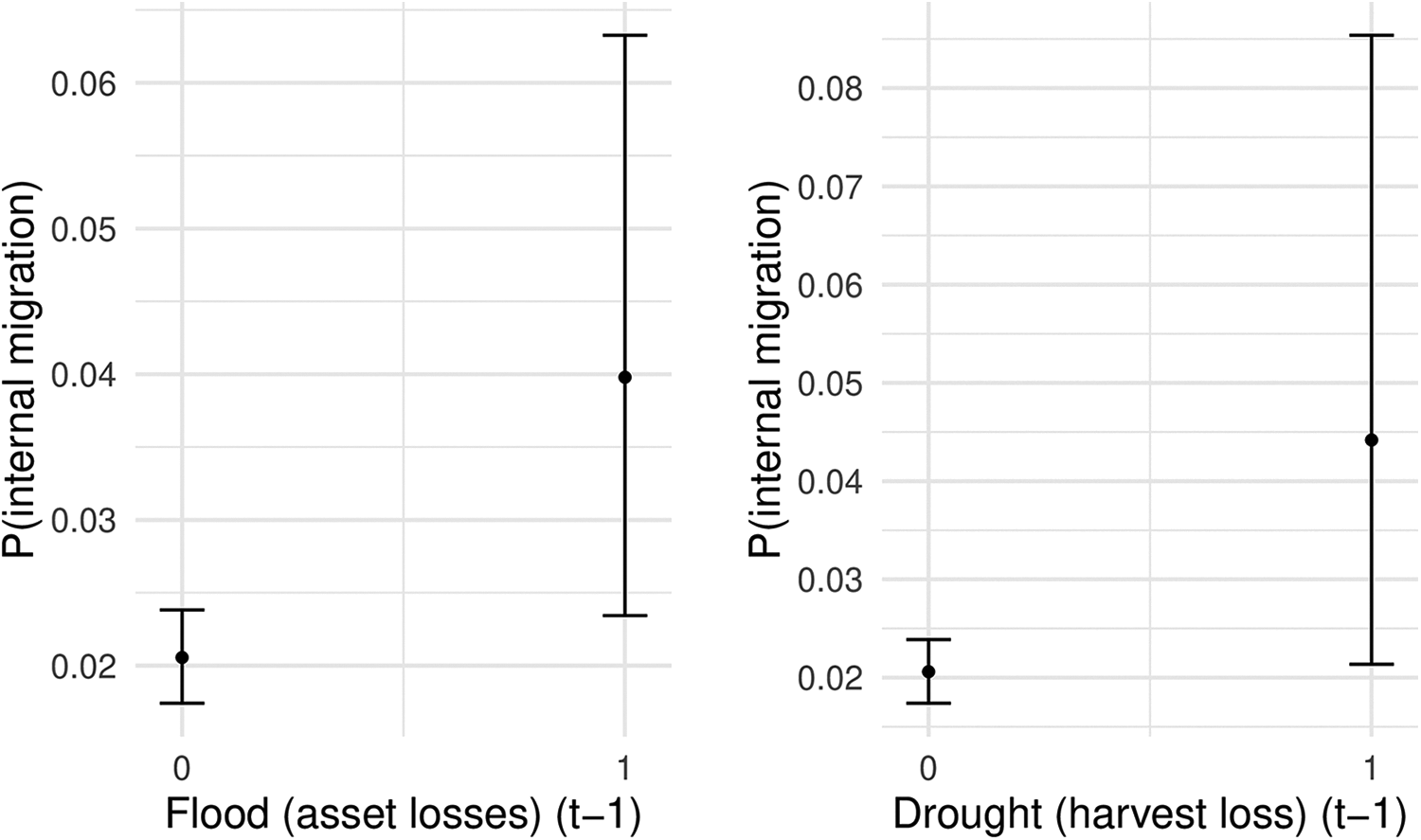
The results remain robust to the inclusion of demographic controls such as ethnicity, religion and language of the household head. The robustness checks include the presence of ongoing violent riots as another potentially important push factor. Since the theoretical argument expects members of households to leave for urban areas, I test whether in the aftermath of a natural hazard individuals not only leave their district, but choose to settle in an urban area. The estimated effects of all robustness checks are shown in Online appendix 3 and remain substantially similar to the original results.
To consider the substantive implications of the findings, I simulate expected probability and confidence intervals of internal migration. To do so, I draw parameter estimates from the estimated coefficient vector and the associated variance/covariance matrix 1,000 times, assuming multivariate normal distribution. The left-hand side of Figure 4 shows the effect of experiencing a flood-induced asset loss on the probability of internal migration with 95% confidence intervals, including all socio-economic control variables. The right-hand side of Figure 4, meanwhile, shows the effect of drought-driven harvest losses on the likelihood of domestic migration at the 10% level. All other independent variables, except the binary ones, are set to their mean, whereas the two main independent variables are allowed to vary across their observed range. Figure 4 gives the observed range of flood and drought disaster measures, including associated losses (0 – no; 1 – yes) (x-axis), with the probability of internal migration in Bangladesh (y-axis). The plotted results show that the expected probability of migration increases by about 4% after flood or drought disaster in a given administrative district in the preceding year.
Internal migration and protests
Now that I have estimated the likelihood that household members move following flood-related asset losses and drought-related harvest losses, I estimate whether this environmental migration contributes to protest frequency in the districts where the migrants settle. This entails moving to a district level of analysis.
Negative binomial: Internal migration and number of protests, district-year unit of analysis, Bangladesh 2010–2015
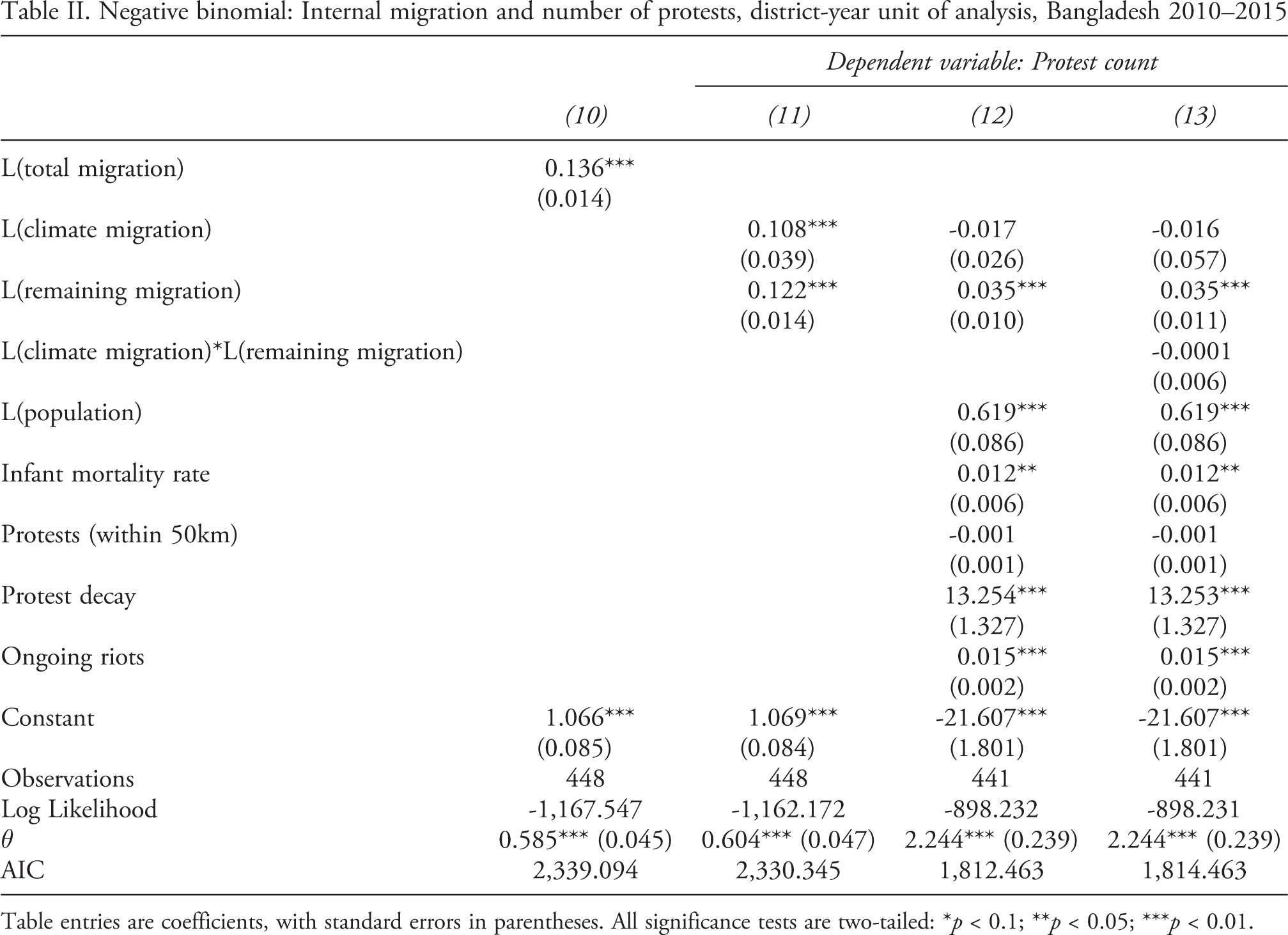
Table entries are coefficients, with standard errors in parentheses. All significance tests are two-tailed: *p < 0.1; **p < 0.05; ***p < 0.01.
To make a better sense of the findings, I plot expected counts for protest given different migration levels to a district. The right-hand side of Figure 6 shows that even though the results do not reach statistical significance at conventional levels, the presence of increasing environmental migrants slightly decreases the expected protest count. On the other hand, the left-hand side of Figure 6 shows that when the remaining number of migrants Coefficients for right-hand side variables and their 95% confidence intervals, based on the parameter estimates of Model 12 in Table II Simulated effect (N = 1,000) of the rest of the migrants (left) and climate migrants (right) on the expected count of protests, with all other controls kept at their mean, including 95% confidence intervals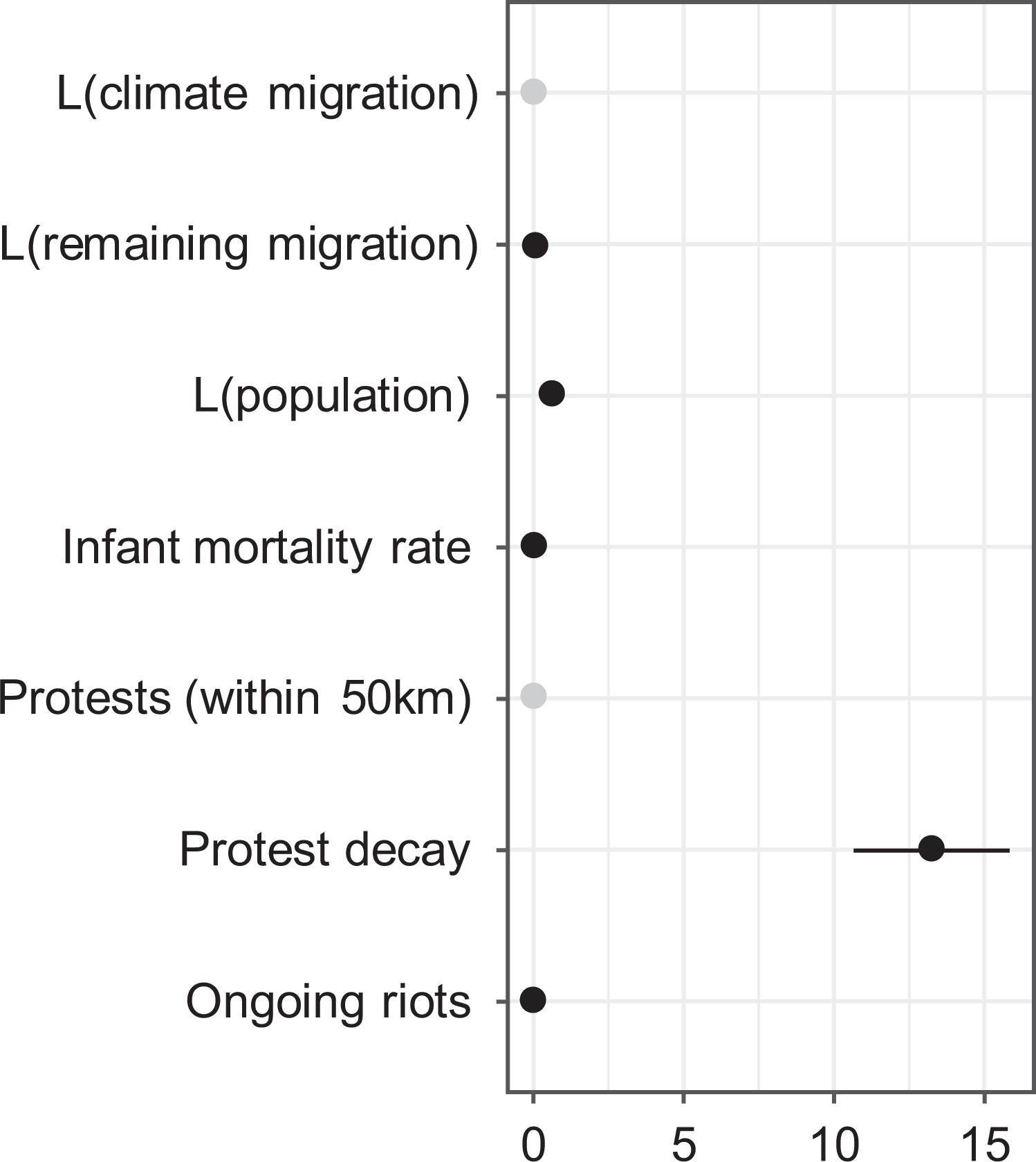
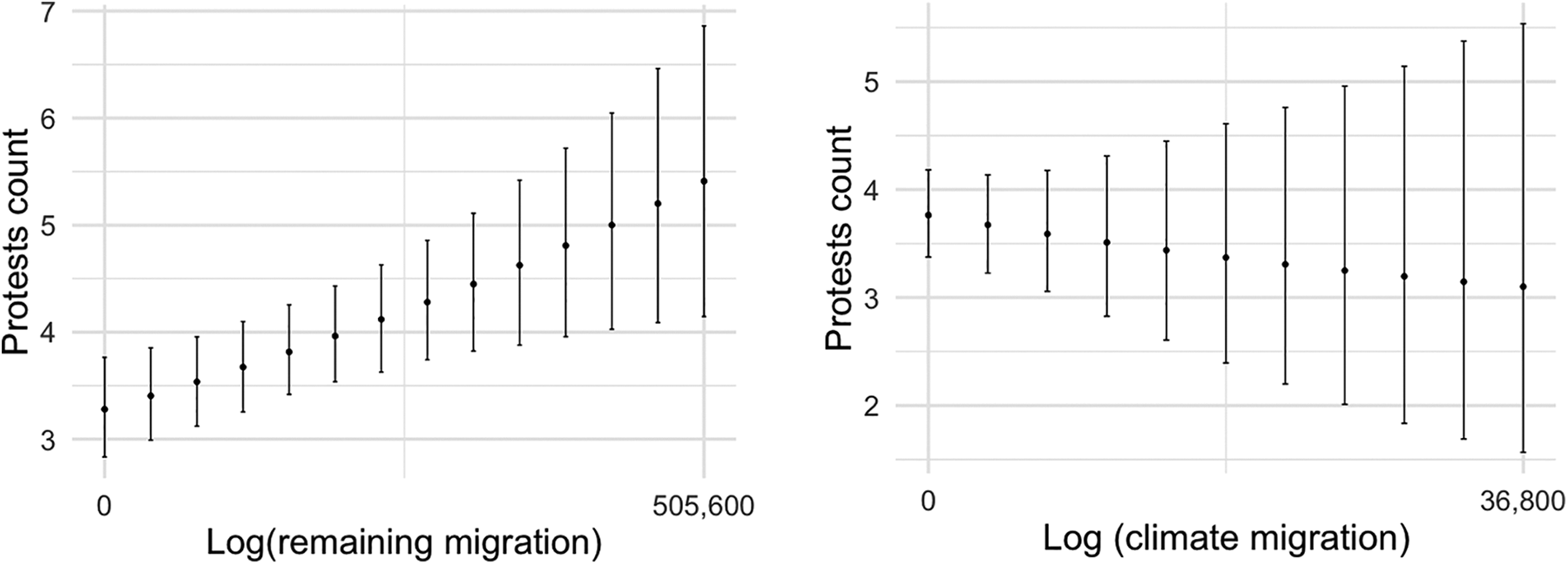
The results remain robust to using a Bayesian mixed effect negative binomial with a district random intercept. I also relax the operationalization of protests by including both violent and nonviolent attacks. In both cases, results remain robust to the different estimation techniques and operationalization. In an alternative calculation of environmental migration, I first estimate the predicted probability of a member of the household migrating. Then all hazard variables for all households are set to zero and predicted probabilities of migration are estimated again using the original model as a counterfactual to climate migration. The sums of both predicted probabilities are aggregated to the district level, an upward adjustment is made and the difference is computed. This difference then serves as an estimation for natural hazard-related migration, which still seems to decrease the frequency of protests. The estimated effect for the remaining migration is still positive and reaches statistical significance at conventional levels but seems to decrease in substantive terms. Finally, to address multicollinearity issues when including both types of migratory flows in one model, I examine hazard and non-hazard-related migration in two separate models. Results remain substantially similar to the original results in Table II. All robustness checks are shown in Online appendix A3.
Discussion and conclusion
Using fine-grained data from Bangladesh, this article studies the relationship between households’ experience of different types of natural hazards such as floods and droughts, their decision to internally migrate and the frequency of protests in migrant-hosting districts. The first part of the analysis shows that members of households are likely to relocate after a natural hazard, but only when they have experienced certain subsequent asset losses. Estimated results, presented in Table I, further suggest that experiencing flood hazard with reported losses in crop yield have no effect on the likelihood of domestic migration, whereas drought-induced crop losses decrease the risk of migration at the 10% level, suggesting that liquidity constraints play an important role. As opposed to damages that could be harder to recover from, such as losing land, livestock or house plot, crop yield losses might increase the likelihood of migration after a household experiences such loss for consecutive years. Even though some previous studies have found crop failure to be an important factor for human mobility (Gray & Mueller, 2012), operationalized crop losses due to flood and drought in my data might not be able to capture the accumulative effect of such shocks. One priority for future research therefore entails accounting for the long-term compound effect of natural hazards in relation to internal mobility and social unrest.
Factors encouraging communities or households to stay at home, such as social ties and attachment to home, are usually strong. Penning-Rowsell, Sultana & Thompson (2013) also show that there is little permanent movement in response to natural hazards, except when there are related losses in land and assets. Results presented here reinforce previous findings that some of the key economic drivers of migration are affected by climate change and that migration in search for employment opportunity is the dominant type of natural hazard-related migration. Although migrating to cities may not necessarily lead to improved living conditions, it may still help households to cope with temporary earning reduction (Stark & Bloom, 1985). In that sense, migration as a way to diversify income and build resilience by sending remittances back home can also be viewed as an adaptation mechanism, acting as a buffer to natural hazard shocks (Black et al., 2011).
In the second part of the analysis, higher levels of total migration seem to increase the frequency of protests, yet, I find no evidence that this is driven by hazard-related migration. These findings may be due to a number of possible factors. First, the recorded environmental migration still constitutes a small proportion of the overall internal migration in Bangladesh. The small size may simply limit the level of statistical power of the variable, making estimates of any effect highly imprecise due to low numbers. However, it is possible that this type of migration differs enough from the remaining migratory responses so as to affect the likelihood of protests. Although environmental migrants might have good motives to join anti-regime protests due to grievances (Koubi et al., 2021), in some contexts they might lack the means to actually participate. Studies on conflict-induced migration find that refugees and conflict-related internally displaced persons (IDPs) migrate permanently, whereas natural hazard-related migrants are temporarily mobile (Muggah, 2003). Even though households may stay longer than planned, their intention for temporary movement could prevent initial integration with the local urbanites. Although residents in host communities see short- and long-term climatic events as legitimate reasons to migrate, they are not more likely to accept climate-related migrants in comparison to economic ones in their established community (Spilker et al., 2020).
Ahsan, Kellett & Karuppanna (2014) found that migrants often report suffering trauma and a sense of alienation due to a change of social status in the aftermath of migration. This might affect the type of social networks they join. As discussed earlier, social networks can inform, motivate and enable mobilization. Abbs (2020) discusses the difference between intensive and extensive social networks. Intensive social networks have dense intragroup connections and high levels of trust and solidarity, but few connections to other social groupings. Extensive networks have dense intragroup connections as well as connections across groups. It is possible that due to limited integration and communal trust (Leenders, 2013), climate migrants are not linked to other social groups and therein lack extensive networks that can facilitate horizontal mobilization for protests. Research also shows that migrants settling in urban areas in Bangladesh report having experienced economic marginalization (Adger et al., 2021). Suhrke (1997) argues that after natural hazards, migrants might prioritize the most pressing challenges and be unable to effectively make demands to the receiving area, especially in the initial stages of their arrival. In that sense, high economic marginalization and lack of full integration with the established urban community may lead to social isolation, which in turn gives rise to structural barriers and undermines mobilization of resources for environmental migrants.
On the other hand, other ongoing internal migration in Bangladesh seems to be associated with more frequently occurring protests. As discussed earlier, economic and social migrants might have other motives to protest than environmental migrants. Some of the main stated reasons for protests concern living conditions, working wages and land rights – issues about which they are likely to be informed and which are associated with greater solidarity. They might also be better integrated in social networks that help inform and stage protests, making participation easier. Violence-driven mobility in particular could also be different from other forms of migration due to traumatic experiences. Conflict IDPs tend to hold strong grievances (Rüegger, 2013), which could further motivate participation in protest. Studies on conflict-induced migration also find that conflict IDPs tend to migrate permanently, which in turn might facilitate local integration and consequently enable information flow related to protest activity.
Even if environmental migration does not seem to increase protest frequency within the context of Bangladesh, projecting these findings into the future is increasingly challenging. Knowledge about climate change impacts on political stability is still future-conditional, largely dependent on what directions we take in terms of, for example, climate mitigation investment efforts. Still, findings offered in the article could extend to countries sharing common attributes such as high exposure to natural hazards, subsistence economies and political regimes in transition, etc. In-depth qualitative case studies of specific contexts as well as high quality large-scale data collection on internal migration will be crucial to increase the validity and generalizability of these findings. This study offers some theoretical expectations as to how migratory responses vary and how that relates to protest participation, but an empirical disaggregation on participants in these social movements would be an essential contribution for unpacking the relationship.
If it is indeed the case that climate-related migrants have grievances that they are unable to effectively communicate in their hosting areas due to high social and economic marginalization, then appropriate governing strategies can help facilitate this communication and enhance resilience. Policies, for example, should be flexible enough to allow for people to decide for themselves where they prefer to live, and to meet their needs therein. Social assistance, integration schemes and committed investments in urban infrastructure can provide substantial benefits to both origin and destination places, as well as to the migrants themselves. These policies could aim at facilitating more equitable access to basic social services among city dwellers and in that way address the motives of urban groups to (not) protest their government. Through such approaches, policies would refocus from questions of political stability and security towards providing strategies to enhance societal resilience to climate change.
Footnotes
Replication data

Acknowledgements
I would like to thank Hanne Fjelde, Nina von Uexkull, members of the Monday group, participants at workshops on the theme of environmental migration and conflict at University of Geneva (on 5 November 2019) and at ETH Zurich (on 31 January 2020), the editor and three anonymous reviewers for their valuable comments.