




Abstract
This study investigates how deployment of pro-government militias (PGMs) as counterinsurgents affects the risk of conflict recurrence. Militiamen derive material and non-material benefits from fighting in armed conflicts. Since these will likely have diminished after the conflict’s termination, militiamen develop a strong incentive to spoil post-conflict peace. Members of pro-government militias are particularly disadvantaged in post-conflict contexts compared to their role in the government’s counterinsurgency campaign. First, PGMs are usually not present in peace negotiations between rebels and governments. This reduces their commitment to peace agreements. Second, disarmament and reintegration programs tend to exclude PGMs, which lowers their expected and real benefits from peace. Third, PGMs might lose their advantage of pursuing personal interests while being protected by the government, as they become less essential during peacetimes. To empirically test whether conflicts with PGMs as counterinsurgents are more likely to break out again, we identify PGM counterinsurgent activities in conflict episodes between 1981 and 2007. We code whether the same PGM was active in a subsequent conflict between the same actors. Controlling for conflict types, which is associated with both the likelihood of deploying PGMs and the risk of conflict recurrence, we investigate our claims with propensity score matching, statistical simulation, and logistic regression models. The results support our expectation that conflicts in which pro-government militias were used as counterinsurgents are more likely to recur. Our study contributes to an improved understanding of the long-term consequences of employing PGMs as counterinsurgents and highlights the importance of considering non-state actors when crafting peace and evaluating the risk of renewed violence.
Introduction
The US military encouraged Sunni tribal groups to fight insurgents in occupied Iraq between 2005 and 2008 (Clayton & Thomson, 2014: 920). This ‘Sunni Awakening militia’, consisting of local tribes, sided with the US-led coalition forces against al-Qaeda (Clayton & Thomson, 2014: 931). In the fight against the pro-Russian separatist movement, the Ukrainian government relies on allied fighters, such as the so-called ‘Aidar Battalion’ that has criminals and anti-Semites in its ranks (Amnesty International, 2014). President Assad’s regime in Syria is supported by militia groups such as the Alawite ‘Shabiha’ militia (Heydemann, 2013: 67). Serving as ‘shock troops’ and controlling army units to defend defections, the Shabiha forces are presumably responsible for some of the worst atrocities of the civil war (Heydemann, 2013: 67).
Those examples show that governments employ militia groups to fight insurgents in a multitude of conflicts. Governments collaborated with militias (PGMs) in over 81% of country-years of armed conflict between 1981 and 2007 (Carey, Mitchell & Lowe, 2013: 255). 1 The Pro-Government Militia Database (PGMD) identifies ‘rebels’, ‘insurgents’, or ‘political opposition’ as targets for more than 95% of recorded PGM activities during conflict times, thus reflecting their central role in counterinsurgencies (Carey, Mitchell & Lowe, 2013: 255). Pro-government militias have been described as a ‘key component in various counterinsurgency strategies’ (Jentzsch, Kalyvas & Schubiger, 2015: 762).
Given the prevalent use of pro-government militias as counterinsurgents, questions arise on the wider implications of their employment. While states can gain from using PGMs during conflicts as a cheap force multiplier with local knowledge (Carey & Mitchell, 2016: 8), the long-term costs of employing militia groups as counterinsurgents, even after the conflict has come to an end, remain unclear. We know little about how counterinsurgent activities of pro-government militias shape post-conflict situations. 2 Previous studies showed that the absence of a clear winning party (Licklider, 1995) or high post-conflict military spending (Collier & Hoeffler, 2006) increases the risk that a conflict flares up again. However, the influence of militia groups remains underexplored. While case studies for South Sudan, Afghanistan, and South Africa (Alden, Thakur & Arnold, 2011; Berdal & Ucko, 2009; Smith, 2013) evaluated the role of pro-government militias in post-conflict situations, we lack systematic and generalizable research on the ‘long-term consequences of these groups on stability and peace’ (Carey & Mitchell, 2016: 28).
Since most governments rely on PGMs during civil wars, it begs the question of how these militias affect post-conflict stability. Their expectations and preferences are shaped by having fought against rebels while being protected and supported by the government. This experience affects how they evaluate the benefits, and downsides, of postwar peace. During civil wars militia members enjoy benefits that are jeopardized during times of peace, and these actors are usually not included in peace negotiations or postwar disarmament and re-integration programs. After the termination of a conflict, militia members’ privileges will have diminished, providing them with a strong incentive to spoil the peace. Therefore, pro-government militias are likely to increase the risk of conflict recurrence. To empirically test our arguments, we identify whether a pro-government militia was active during any conflict episode between 1981 and 2007 and whether it targeted a rebel group or armed opposition. We code whether the same militia was involved in a subsequent conflict between the same actors. Controlling for the type of conflict, which might affect both the likelihood of observing a pro-government militia and the risk of conflict recurrence, our analysis reveals the destructive impact of pro-government militias in postwar contexts. Conflicts in which pro-government militias participated in counterinsurgent activities are substantively more likely to break out again after they have been terminated. Our findings hold when we compare propensity-score matched violent conflicts with militia involvement with those without.
We provide a brief overview of the literature on pro-government militias and the rationale for states to collaborate with them. We present our theoretical framework, arguing that fighting insurgents under the protection of the government brought several benefits to militia members, which they are likely to have lost with the termination of the conflict. Combined with being excluded from peace negotiations and disarmament programs, they are likely interested in a re-escalation of the violence. We employ statistical simulation techniques and propensity score matching to investigate our arguments. Finally, we discuss the implications of our findings and evaluate their limitations, pointing to new avenues for future research.
Delegating violence to pro-government militias
In his influential lecture on ‘politics as a vocation’ Max Weber defined a state as ‘a human community that successfully claims the monopoly of the legitimate use of physical force within a given territory’ (Weber, 1958 [1918]: 78). While rebel groups, terrorist groups, or warlords represent illegitimate use of physical force, states also deliberately empower different types of armed actors that operate detached from their official armed forces (e.g. Carey, Colaresi & Mitchell, 2015; Jentzsch, Kalyvas & Schubiger, 2015; Staniland, 2015). Defining characteristics of pro-government militias are their separation from the official armed forces as distinctly organized armed groups and a more or less loose connection to the state, reflected in shared information, weapons, and monetary or organizational support (Carey, Mitchell & Lowe, 2013: 250). Deploying militia groups can be of strategic interest to states. Violence, as well as the human and reputational costs associated with it, can be outsourced to PGMs (Carey, Colaresi & Mitchell, 2015; Mitchell, Carey & Butler, 2014). States may benefit from access to local information and intelligence through recruiting from civilian populations (Hughes & Tripodi, 2009), reduce coup-risks (Carey, Colaresi & Mitchell, 2016), promote legitimacy of the government’s fight against the insurgents (Lyall & Wilson, 2009), and increase their force size at low cost (Jentzsch, Kalyvas & Schubiger, 2015). Yet we know little about the short- and medium-term consequences of collaborating with irregular forces after the conflict has come to an end. We expect that the advantages militia members enjoy during the conflict make them prone to spoil postwar peace. This increases the risk that a conflict that involves pro-government militias breaks out again.
Incentives of militiamen to reignite armed conflict
What characterizes the preferences of militia fighters after the termination of an armed conflict, and how might these preferences affect the risk of a renewed conflict? As the government’s ally, militia members derive particular benefits from armed conflicts which they stand to lose when the conflict is terminated. We discuss material and non-material benefits that motivate militia fighters, building on greed- and grievance-based arguments from the civil war literature. We shift the focus from determinants of civil war onset to conflict-induced preferences in the conflict aftermath, concentrating on the subset of PGMs that are actively involved in counterinsurgency activities and that target armed opponents of the government. Rebels might be driven by similar motives to reignite the conflict. We want to find out whether a conflict is more likely to break out again when pro-government militias were involved in fighting the rebels, above and beyond the risk of a conflict recurring that includes only a government and rebel forces.
Looting without government interference
The chaos in postwar societies is often perceived as a window of opportunity for criminal self-enrichment (Nitzschke & Studdard, 2005). Looting and appropriation of wealth may turn into the primary focus of fighting at the expense of political goals and ideologies (Mac Ginty, 2004; Azam, 2002; Azam & Hoeffler, 2002). It is a chance for a sudden accumulation of wealth in a dimension unconceivable in most legal professions, particularly in postwar societies. From the perspective of militiamen, the benefits from seizing booty and spoils might outweigh the risks associated with fighting.
In contrast to rebels, members of government-linked militias can enrich themselves through illegal means without fearing punishment from the state. They are unlikely to face negative repercussions for their illegal activities as long as the groups fulfill an important role in the government’s counterinsurgency strategy. Anecdotal evidence underlines this mechanism. Bosnian Serb militiamen in the former Yugoslavia saw ‘their war service as a way to enrich themselves’ (Gjelten, 1995: 137), conflict activities of the Arkan’s Tigers have been characterized as ‘an orgy of slaughter and looting’ (Traynor, 1993), and the Janjaweed militia in Sudan exploited their government-sponsored fight by stealing, among others, ‘more than 500 head of cattle’ (Clayton, 2004) from one of the raided villages. Militiamen are likely to prefer the renewed outbreak of an armed conflict because of the material temptation of looting while under the protection of the government.
Lack of alternatives
PGM membership can instill a sense of belonging and provide a social network. Membership may be associated with appreciation from state officials, potentially resulting in monetary or other forms of compensation. This is particularly compelling for young people who are eager to escape poverty. 3 Arkan’s Tigers, a PGM in the former Yugoslavia, were described as ‘having the times of their lives in the mountains of Bosnia and [being] no longer in any mood to return to the dull, prewar stupefaction of factory jobs or unemployment’ (Traynor, 1992). The Youth Service Brigade in Zimbabwe consisted mainly of unemployed youths (Johnson, 2002). The same applies to the former Sandinista People’s Militia in Nicaragua or to the Chimeres AKA in Haiti (Kinzer, 1983). The latter became the ‘de facto ruler […] of the urban shantytowns’ (Cockayne, 2014: 745), providing an attractive platform of socio-economic advancement for impoverished slum dwellers. Militiamen might be unwilling to forgo their privileged status during the conflict. This effect is amplified by the negative impact of PGM membership on opportunities to find alternative professions. The educational deficit associated with membership in violent forces impedes prospects of labor market success (Blattman & Annan, 2010). The absence of civilian occupations to return to, combined with poor employability, may create an inherent interest in renewing previously concluded conflicts. The difficulties in reintegrating former militia fighters into a postwar society may be further aggravated by the violent socialization caused by fighting. Humphreys & Weinstein (2007) demonstrate that past participation in abusive military factions hampers successful social reintegration. Previous fighters of the Interahamwe militia in Rwanda have been described as indifferent to any form of order since they have ‘tasted the power of the gun’ (Hilsum, 1994). Post-war peace threatens political, physical, and economic empowerment that militia members enjoyed during the war and exposes them to ‘remarginalization’ (Themnér, 2011: 16).
Satisfaction of violent tendencies
While we cannot rule out that some members are blackmailed or violently forced to join the group, the absence of conscription laws suggests that their recruitment is generally rooted in a somewhat free decision. 4 Several PGMs, such as the Volunteer People’s Militia in Russia, the Yerkrapah Union of Volunteers in Armenia, and the Village Protection Volunteers in Thailand, bear the component of voluntariness in their names. Most members likely self-select themselves into the militias. These groups attract fighters with a willingness to use violence, as in the case of the Turkish Anti-Kurd Death Squad or the Macedonian Lions, which consisted mainly of aggression-prone criminals (Fakti, 2003; Kinzer, 1996). The United Self Defense Forces of Colombia show the self-selection of fighters from particular violence-affiliated milieus, as these forces were led by a major drug trafficker (Brooks, 1997). The alignment with the government enhances their position of power and ability to use violence, largely without having to worry about a clash with law enforcement.
Strong ideological conviction for conflict goals
The self-selection process of fighters for militia groups may entail a self-recruitment of individuals with strong ideological convictions for the conflict goal. For example, the Azov battalion fighting in Eastern Ukraine consists of ultra-nationalists with the vision of a ‘Greater Ukraine’ holding ‘white-supremacist, anti-democratic views’ (Karatnycky, 2014). The self-proclaimed Mujahidin Unit, which fought in Bosnia and Herzegovina, formed on the desire to ‘reclaim Islamic purity from the threat of the infidels’ (Loyd, 1994). The fight against insurgents may fulfill an expressive function for militiamen with such radical attitudes. The same applies to individuals who are motivated by personal grievances. The drug trafficker Castano founded the United Self Defense Forces of Colombia to avenge the death of his father (LeoGrande & Sharpe, 2000: 5). Retaliation was also a driving force behind the genocide perpetrated by the Janjaweed in Sudan, where the government instrumentalized their grievances originating from a tribal conflict over access to grazing land (Kajee, 2006).
While the costs of violent conflict are always high, an interplay of the mechanisms outlined above suggests that militiamen are likely to develop a self-interest in conflict. This could explain why individuals participate in militias in the first place, and it might suggest that they would work against the termination of conflicts. We are interested in how the motivations and preferences of militia members, which are substantively influenced by the conflict experience itself, affect the stability of peace once a conflict has come to an end.
The distinct impact of PGMs on conflict recurrences
The incentives described above for a self-interest in conflict might apply to rebel groups and regular soldiers as well. Members of both groups may experience the intoxication of power and their fighting might be an expression of violent tendencies. While regular armies are likely to act with more restraint with regards to looting, they may be a driving motivation for rebel fighters (e.g. Lujala, 2010). Youth bulges due to lack of alternatives also increase the risk of a rebellion (e.g. Urdal, 2004). These factors can contribute to conflict recurrence irrespective of whether PGMs are involved. But we expect PGMs to increase the risk of conflict recurrence beyond the risk driven by the motivation of the two main opponents in an armed conflict. 5 Beyond these general motivations, the unique characteristics of PGMs make them particularly likely to spoil post-conflict peace.
PGMs as outside spoilers of peace agreements
Usually, pro-government militias are not present at and do not participate in the bargaining processes between governments and rebel groups, because they do not constitute a formally recognized warring party. They lack formal representation in peace negotiations and in decisions about the architecture of the post-conflict power distribution. The negotiations between the government and rebel leaders rarely take the interests of militias into account. As ‘outside spoilers’ (Stedman, 1997: 8) they are likely to use violence to break up a peace agreement. Being marginalized from the decisionmaking process raises the desire to influence this process through violent means. Peace agreements that exclude some parties reduce the overall prospect for peace. Accordingly, outside actors are more likely to engage in post-settlement violence compared to signatories of peace agreements (Nilsson, 2008). Darby & Mac Ginty (2002: 266) argue that ‘a lasting agreement is impossible unless it actively involves those with the power to bring it down by violence’.
While militia groups are excluded from bringing their own preferences to the bargaining table because of their irregular nature, their obscure command structures and hierarchies hamper the formulation of unified and unambiguous preferences in the first place. Militia members might have their own, disparate incentives for being part of the group, with different emphases on the motivations outlined above. This heterogeneity, together with the lack of formalized procedures to aggregate preferences, hampers the development of a coherent strategy at the group level. Even if militias overcome the difficulties in developing and pursuing their own preferences during peace negotiations, they lack convincing enforcement mechanisms to ensure the support of the whole group. Anticipating these commitment problems limits the willingness of potential negotiation partners to seriously consider the interests or demands of PGMs.
The difficulty of disarming PGMs
Unrestricted access to small arms and light weapons raises the risk of conflict (e.g. Klare, 1999: 16). To reduce their destabilizing effect in post-conflict societies, disarmament, demobilization, and reintegration programs (DDR) have become a central tool of international peacebuilding efforts. But these programs are particularly ineffective with respect to PGMs. PGMs tend not to be recognized as official combatants. Their irregular nature renders them invisible to official DDR programs. Further, the design of some DDR programs explicitly excludes PGMs. For example, the official disarmament program for Afghanistan in 2002 ‘allowed [non-state armed groups] to continue to exist and sometimes to prosper, as long as they were willing to pay at least lip service to the bureaucratic process and abstained from actively working against the government in charge’ (Giustozzi, 2008: 170). In Libya, PGMs were used to quell tribal fighting while officially disarmament was under way (Wehrey, 2012). Even if PGMs are included in disarmament programs, they are likely to fail if international actors are unwilling to pay substantial costs for effective reintegration. Arnson & Azpuru (2002) show how dismantled security forces in Guatemala nearly staged a riot in order to press their demands for substantial severance pay and support in returning to civilian life. In short, possessing weapons while being ignored or deliberately excluded from disarmament processes, or being only poorly compensated, makes PGMs a particularly potent risk factor for contributing to the recurrence of conflict.
The renewed violence that broke out in the Republic of Congo in 1997, after the preceding civil war had ended with a ceasefire in January 1994, highlights some of these dynamics. Following disputed legislative elections in 1993, an armed conflict broke out between the winner President Lissoubas and his two rivals, former President Sassou-Nguesso and Bernard Kolelas. Both had their own militias, Sassou-Nguesso the Cobras and Kolelas the Ninjas. Lissoubas created the Aubevillois and Zoulous militias to fight back, as he distrusted the military. A ceasefire was reached in January 1994. But the agreement to disarm the militias was never fully implemented (United States Bureau of Citizenship and Immigration Services, 2000). In February 1997 former members of the Aubevillois militia initiated renewed violence, demanding to be incorporated into the army at the rank of sergeant (Ngangoue, 1997). In the following June, fighting broke out between the militia loyal to President Lissouba, the Zoulous, and the Cobra militia of ex-President Sassou-Nguesso. This second conflict, which lasted until 1999 and led to a transfer of power back to Sassou-Nguesso in October 1997, was primarily fought between different militia groups supporting different parties and backed by different ethnic groups. In 1999 a report concluded that the militia culture had been influenced by ‘widespread unemployment and lack of opportunity, a sense of hopelessness, the legacy of the 1993/4 and 1997 civil wars, the pervasiveness of and easy access to weapons’ (IRIN, 1999).
This example highlights the instability that militia groups contribute to. Militiamen endangered the peace process after the political leaders reached a ceasefire, as the integration into the regular forces was unsuccessful. The continued easy access to arms enabled them to reinitiate the violence and the lack of alternatives further motivated the young militia members. The tension leading up to the 1997 elections quickly escalated into a devastating civil war, which can be attributed to the presence of the militias and their unaddressed grievances from the preceding war (see also Banks, Day & Muller, 2016: 218; Yoroms, 2005: 46).
The ‘government bonus’
A constitutive feature of PGMs is the support provided by the government. This support makes them less likely to be punished for their violence and other illegal behavior. Governments may turn a blind eye to PGM’s conduct in conflict. For example, during the genocide in Darfur ‘government forces allow the Janjaweed to operate with full impunity’ (Human Rights Watch, 2004). Governments are primarily interested in the success of their counterinsurgencies, and the end may justify the means. Moreover, militia fighters are less likely to be constrained by mechanisms of ‘reputational enforcement’ (Arrow, 1985). The hierarchies of the army and the connection to the official state apparatus exert external constraints on soldiers, which are absent for militiamen. PGMs are acting in a legal vacuum. Such impunity does not equally apply to rebels. 6 Members of (former) rebel groups might fall victim to retaliatory or deterrent justice measures. Fear of sanctions is likely absent from militiamen, thus increasing the incentive to commit dissolute acts of violence. The argument can be extended to post-conflict situations where the interests of the government and the PGMs are at odds. Even if governments have an incentive to punish PGMs, they might be unable to do so. Governments generally lack important information on PGMs’ activities and internal hierarchies. Often government armies and PGMs fight in different places or at different times. The official state apparatus might simply be unaware of PGMs’ conduct.
Taken together, the characteristics of PGMs make militiamen likely to favor the recurrence of conflict over the continuation of peace. Acting in a twilight zone, they are excluded from peace processes and DDR programs and enjoy government-sanctioned impunity, power, and freedom to pursue their own goals. The preferences of PGMs are likely to contribute to the recurrence of conflict beyond the incentives the government or rebel forces might have.
The destabilizing impact of PGMs on post-conflict societies
The autonomous character of militia groups becomes a burden for any government interested in maintaining peace after conflicts. Since PGM fighters have a strong interest in conflicts emanating from the mechanisms described above, they are expected to take advantage of their uncontrolled position as ‘outside spoilers’ (Stedman, 1997; Stedman, Rothchild & Cousens, 2002) to reignite the concluded conflict. The government benefits from cheap counterinsurgents but they become a problem that is difficult to control in post-conflict situations. The government is likely to struggle to ‘neutralize’ the potential threats posed by irregular groups that possess weapons. Effectively disarming militia members is extremely difficult. Fully integrating them into regular forces is equally challenging. Sidelining PGMs in peace negotiations without the prospects of a post-conflict role creates a further incentive for these groups to end the peace.
The initiative to re-escalate the conflict could come directly from militiamen who break fragile peace agreements or ceasefires by violently targeting opposition members. Alternatively, rebels could provoke a renewed escalation of violence and militiamen may respond in a coercive way, thus thwarting potential attempts to accommodate. Since we focus only on PGMs employed as counterinsurgents, violent acts committed by militiamen are likely targeted at the opposition. Even in the absence of deeply rooted motivations, PGM members might have come to identify with the conflict goals over the course of the original conflict and are motivated to continue to fight even after a peace agreement. (Former) rebels are likely to perceive PGMs’ behavior as provocative due to their previous role as counterinsurgents. Militiamen’s acts of violence, or merely their presence, could enhance the willingness of rebels to return to fighting. Thus, the self-interest in violence of militiamen is expected to increase the risk of renewed fights with rebels, resulting in conflict recurrences sooner compared to conflicts that do not include PGMs in counterinsurgencies.
But why does a conflict in which militias fight for the government come to an end in the first place? PGMs’ self-interest in conflict might indeed prolong conflicts (e.g. Cunningham, 2006; Phillips, 2015). We aim to help explain the recurrence of armed conflict once a conclusion of the violence has been achieved. We expect that the PGMs’ value of conflict over peace develops over the course of fighting and will become most prevalent once the fighting has been concluded.
Consideration of the factors outlined above leads us to the following observable implication:
H1: The presence of PGMs undertaking counterinsurgent activities in armed conflicts increases the risk of conflict recurrence.
Operationalization
To analyze the impact of pro-government militias on post-conflict stability, we concentrate on the five years following a conflict that took place worldwide between 1981 and 2007. 7 Following the UCDP/PRIO Armed Conflict Dataset, we define an armed conflict as any contested incompatibility that concerns territory and/or government where the use of armed forces between two parties leads to at least 25 battle-deaths (Gleditsch et al., 2002: 618–619). 8 Information on conflict recurrence is only available for a subset of conflicts since several are ongoing or have only recently ended. We exclude conflicts for which we do not have information for the full five-year post-conflict window. Due to missing data, the final dataset includes 121 cases of conflicts with their respective post-conflict periods (N = 121), where the unit of analysis is the five-year post-conflict window.
PGMs as conflict actors
Our key explanatory variable is a binary indicator identifying whether a PGM was active during a conflict and targeted rebel groups. We code this PGM measure as 1 when three criteria are met: (a) the group corresponds to the definition of pro-government militias as defined by Carey and colleagues (Carey, Mitchell & Lowe, 2013: 50) outlined above, (b) the group has recorded activities during the conflict, and (c) the group targets insurgents or rebels. By manually excluding PGMs that did not target rebels, insurgents, government critics, or political opposition, we analyze only PGMs that played an active role in the armed conflict, which mirrors our arguments most closely. To create this variable, we combine information from the UCDP Armed Conflict Dataset (Pettersson & Eck, 2018) and the Pro-Government Militia Database (Carey, Mitchell & Lowe, 2013). By hand-matching the names of PGMs active in the original and the recurring conflict, we ensure that the same militia groups fought in both. 9
Conflict recurrence
We define conflict recurrence as a transition from a year with fewer than 25 battle-deaths to a year with more than 25 battle-deaths (Elbadawi, Hegre & Milante, 2008: 452). We operationalize conflict recurrence with a binary variable indicating whether a new conflict between the same conflict parties occurs within the first five years after the conclusion of the preceding conflict. 10 To enhance the probability that the new conflict is connected to the environment created by the previous conflict episode, we included only recurrences within a time span of five years after the first conflict. This follows a common approach in the post-conflict literature (Binningsbø et al., 2012; Flores & Nooruddin, 2009).
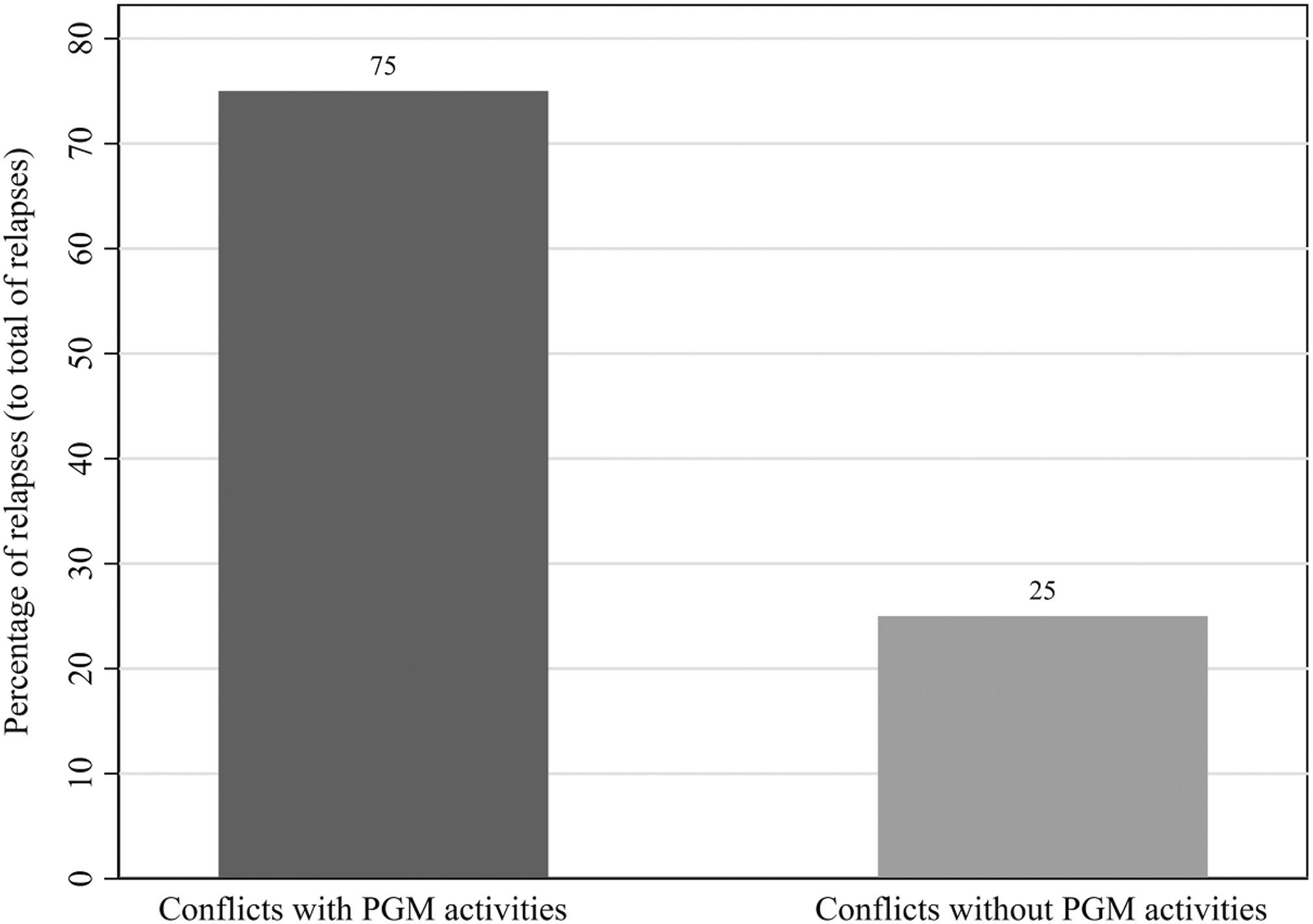
Distribution of post-conflict relapses
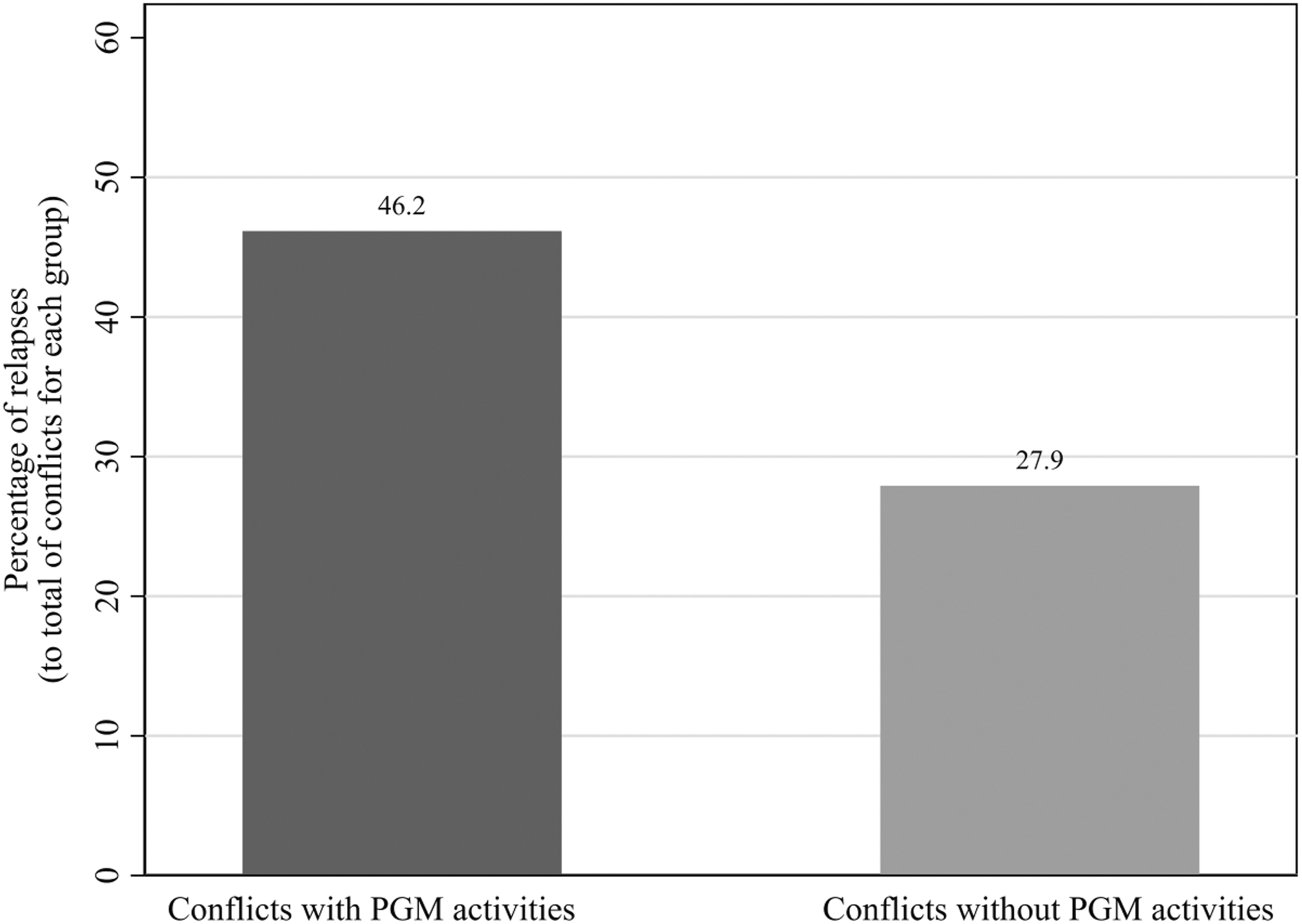
Relative proportions of conflict relapses
PGMs were active as counterinsurgents in 78 (65%) of 121 conflicts. Our condition for conflict recurrence is fulfilled in 48 cases (40%). As shown in Figure 1, 75% of conflict recurrences took place after conflicts with PGM activities. Figure 2 shows that 46% of conflicts with PGMs recurred, while only 28% of conflicts without PGM activities were reignited. 11 As the link between conflict recurrence and PGMs might be driven by other factors, we control for several factors in our multivariate analyses.
Control variables
Drawing on previous research, we control for three sets of possible confounders. We account for the characteristics of the preceding conflict, for the conditions of the post-conflict environment, and for factors that are generally considered to increase the risk of armed conflict.
We account for characteristics of the preceding conflict that could also influence the use of PGMs. We control for the Duration of the conflict (see Mason & Fett, 1996: 552) based on the UCDP Armed Conflict Dataset (Gleditsch et al., 2002; Pettersson & Eck, 2018) and for the Logged estimation of battle deaths (see Quinn, Marson & Gurses, 2007: 178; Walter, 2004: 373) for each conflict episode (Lacina & Gleditsch, 2005). 12 We control whether conflicts ended with a Bargained solution by including a binary variable from the UCDP Conflict Termination Dataset (Kreutz, 2010) and for the degree of Ethnic fractionalization at the end of the original conflict (Kaufmann, 1996: 137), measured with the Ethnic Fractionalization Index from the Ethnic Power Relations Dataset (Wimmer, Cederman & Min, 2009).
Carey & Mitchell (2016) find that PGMs are most prevalent in Irregular conflicts (Balcells & Kalyvas, 2014). These are characterized by incumbents having substantially more resources compared to the rebels. To avoid the link between PGM deployment and conflict recurrence being driven by inherent characteristics of irregular conflicts, we control for them with data from Balcells & Kalyvas (2014). As these data are limited to conflicts with a minimum of 100 battle-related deaths, we hand-code this variable for all conflicts with 25 to 99 battle-deaths. Searching newspaper articles from major world publications with LexisNexis, we code each conflict following the coding procedure proposed by Kalyvas & Balcells (2010). 13
To capture the post-conflict environments, we control for the average Military expenditure (see Collier & Hoeffler, 2006) as percentage of GDP in the five-years post-conflict window (World Bank, 2017). Using information from the United Nations Department of Peacekeeping Operations (UN Peacekeeping, 2017), we account for Peacekeeping with a binary variable for official UN peacekeeping missions within the five-years post-conflict window (Fortna, 2004). We include a dummy variable for Post-conflict justice (see Lie, Binningsbø & Gates, 2007) from the Post-Conflict Justice Dataset, indicating whether any form of post-conflict justice took place within the five-years post-conflict period (Binningsbø et al., 2012). To avoid these factors being driven by the recurrence of the conflict, we code these variables only for the time span up to the recurrence.
To account for general conflict risk factors, we include Logged GDP per capita at the end of the original conflict (World Bank, 2016). To account for a non-linear impact of regime type (e.g. Hegre et al., 2001), we control for Democracy with Polity from Polity IV (Marshall & Jaggers, 2013) and included the square of this variable. Basic descriptive statistics for all variables are shown in Table A.III in the Online supplement.
Multivariate analysis and results
We use logistic regression models and cluster standard errors for the country variable to control for country-specific effects in states with several conflict recurrences, such as in Burma or India, to take into account that model errors are correlated within clusters but uncorrelated across clusters (Cameron & Miller, 2015: 317). 14 The results are shown in Table I. Only a few variables reach conventional levels of statistical significance. Post-conflict justice measures statistically significantly reduce the risk of conflict recurrences. Post-conflict states that are able to implement such measures might be willing and capable to restore the rule of law. 15 Bargained solutions also lower the risk of conflict recurrence. Peace is more likely to last when a mutual agreement for conflict resolution can be declared. In line with the findings from Collier & Hoeffler (2006), post-conflict military expenditure heightens the risk of conflict recurrences.
Logistic regression models
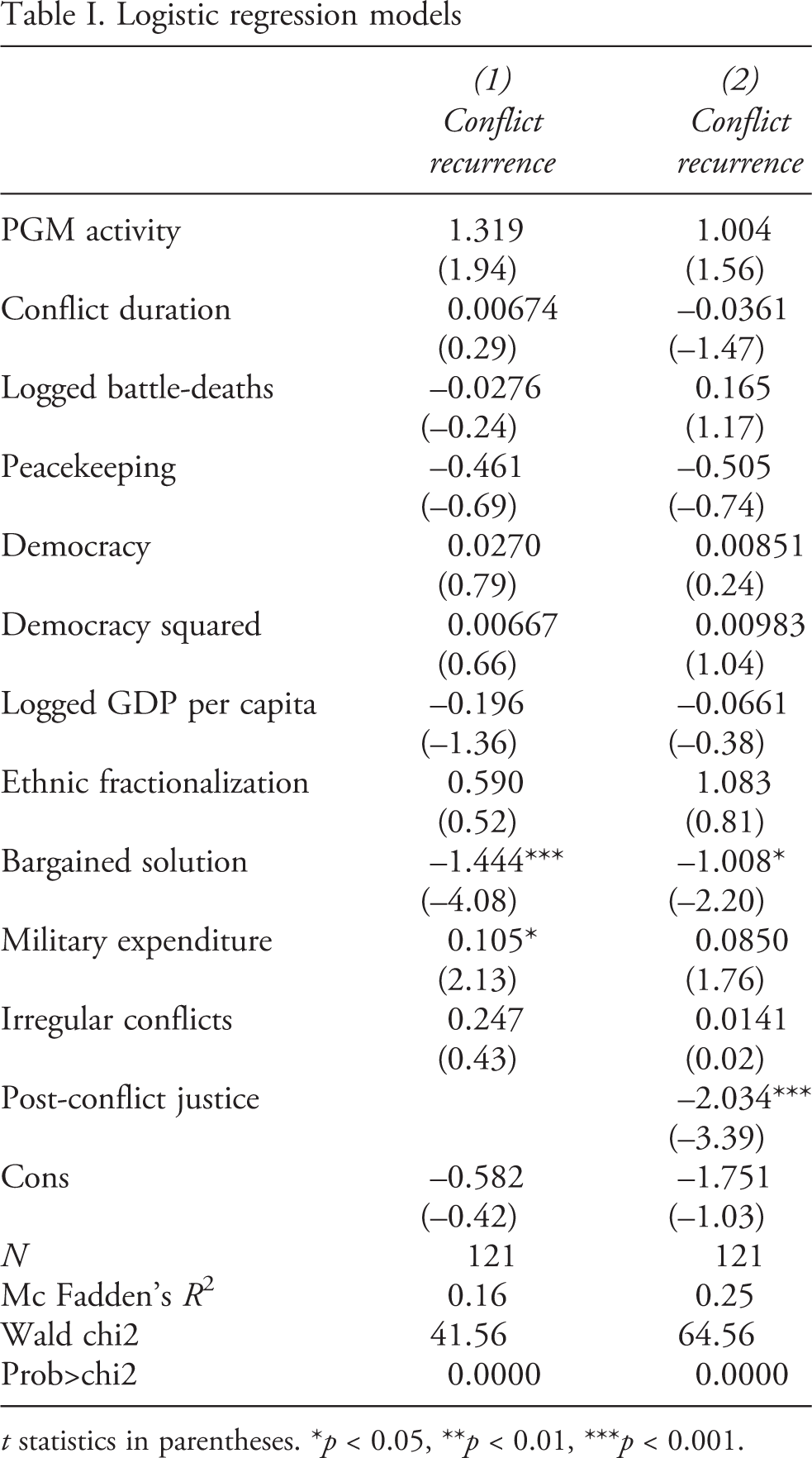
t statistics in parentheses. *p < 0.05, **p < 0.01, ***p < 0.001.
Simulating of the effect of PGM activity on conflict recurrence
Based on the logistic regression models, we simulated the effect of PGM activity on conflict recurrence. Control variables were entered subsequently and generally found not to change the predicted effects except for post-conflict justice. Therefore, we run our models with and without the post-conflict justice variable. 16
Summary results statistical simulation
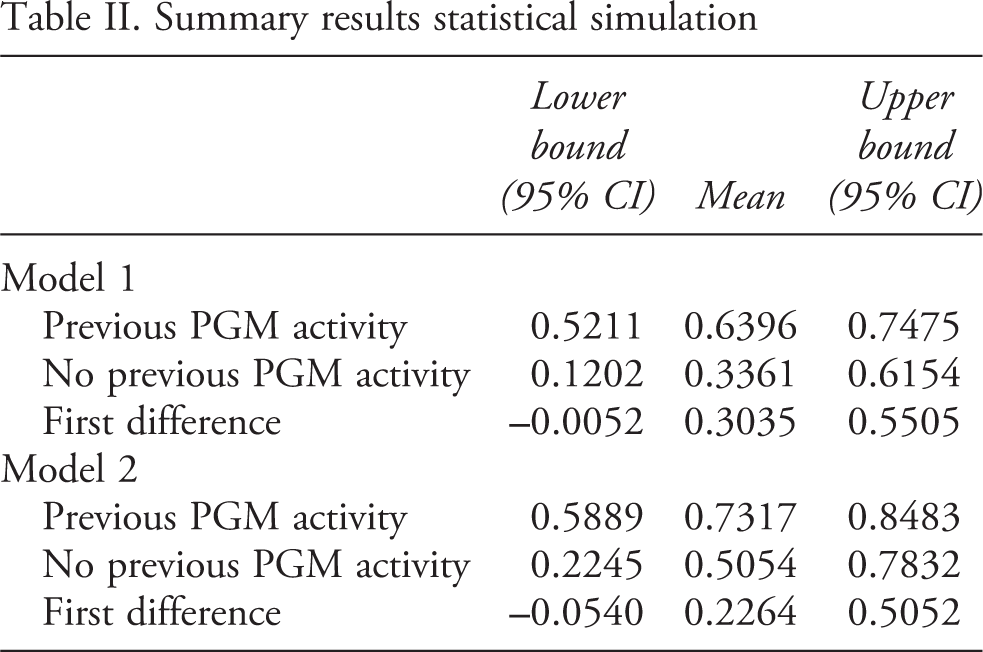
Table II summarizes the results of the simulation. For Model 1, the risk of conflict recurrence is 64% (95% confidence interval: 52%, 75%) when PGMs were active. Without PGMs, the risk drops to 34% (95% confidence interval: 12%, 62%). To find out whether the first difference for the explanatory variable PGM activity is substantively meaningful, we simulate it 10,000 times. We obtain 9,733 values higher than zero. The first difference is bigger than zero with a probability of 0.97. 17 The simulated probabilities average expected values and the 95% confidence intervals are illustrated in Figure 3.
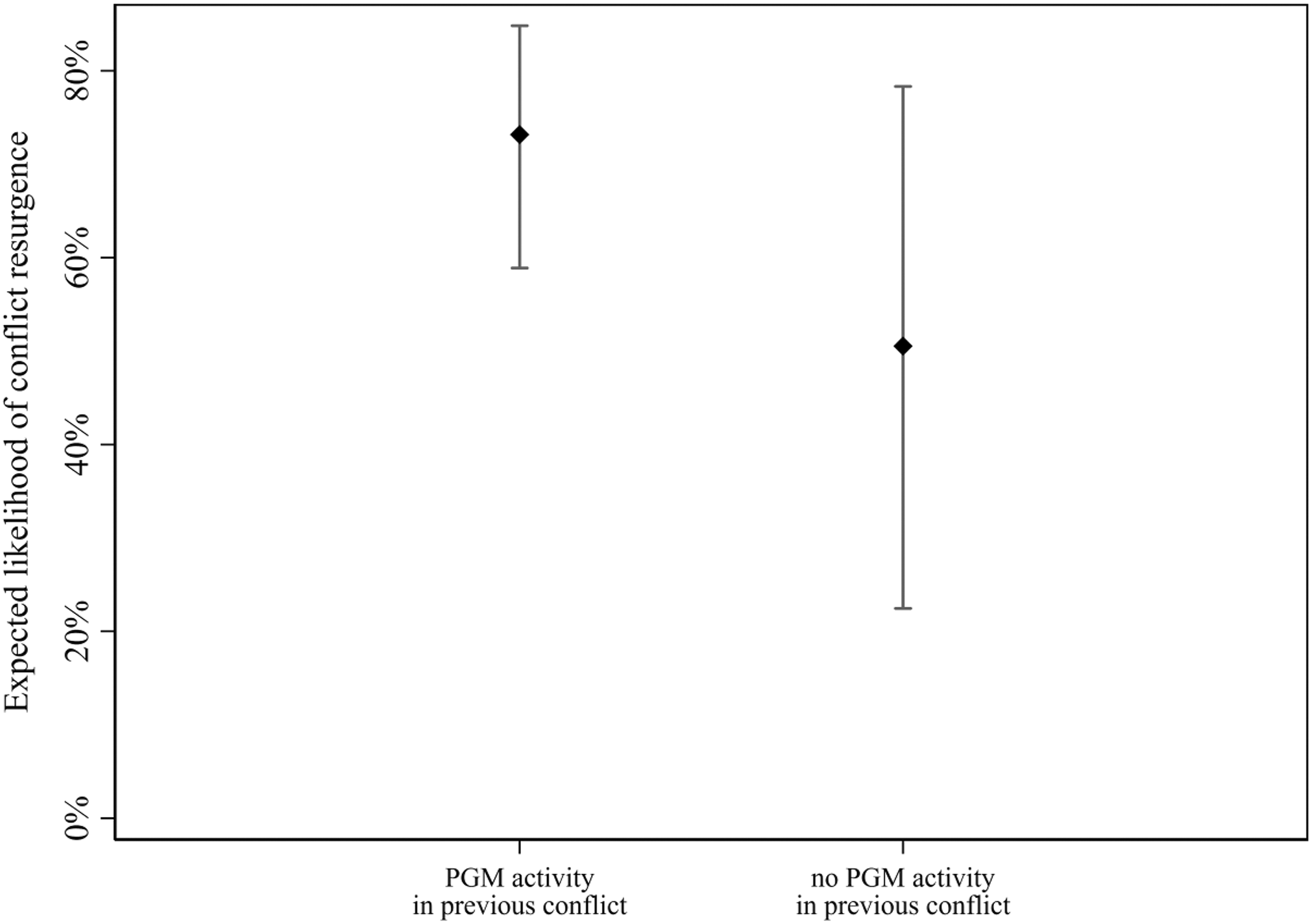
Figure 4 displays the results of the statistical simulation for the second model. The probability of conflict recurrence ranges between 0.56 and 0.85 with PGMs and from 0.23 to 0.78 without PGMs. Running 10,000 simulations of the first difference, 9,401 parameters were larger than zero. Consequently, the first difference is higher than zero with a probability of 0.94. To avoid that our results are a product of the five-years post-conflict window, we re-estimated the simulation models with the post-conflict time period ranging from two to ten years. The results of the re-estimated simulations models are presented in Table A.IV in the Online supplement. Our findings are robust Simulated probabilities of post-conflict relapse (based on Model 1) Simulated probabilities of post-conflict relapse (based on Model 2)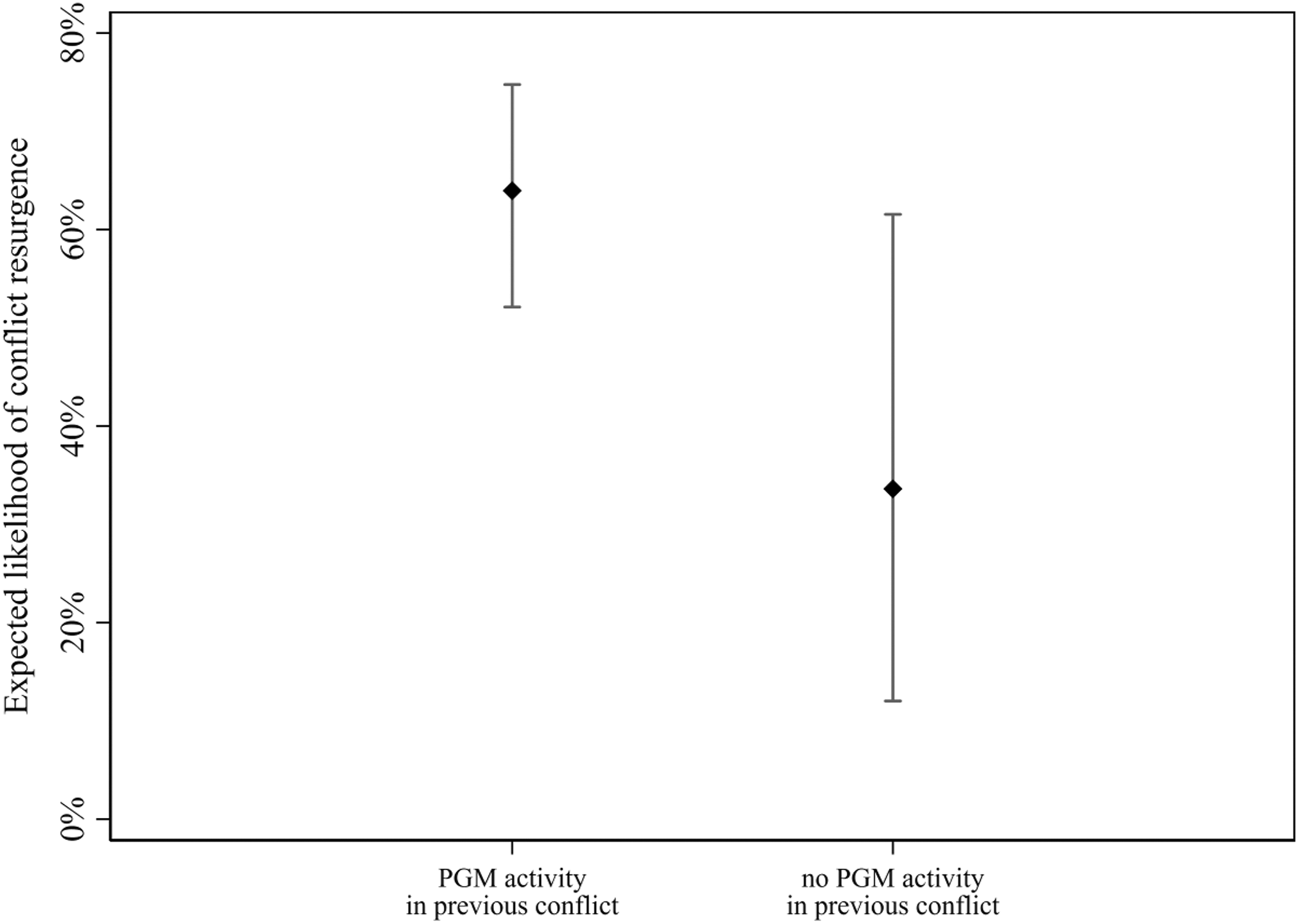
Propensity score matching
These analyses suggest that conflicts that involve PGMs are more likely to recur. But PGM activity could be a surrogate for characteristics of particularly conflict-prone societies. The existence of spoilers could be a symptom of specific distributions of power that make peace agreements particularly fragile (Greenhill & Major, 2006). PGMs would not determine conflict relapses but instead the prevailing opportunity structure would determine PGM activities.
18
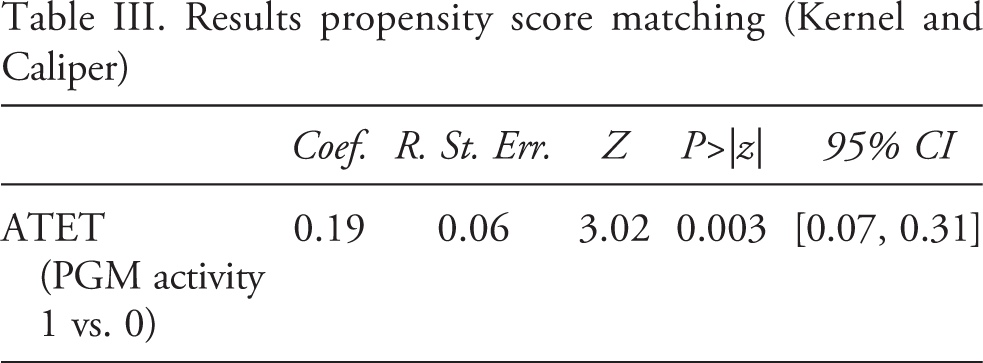
To account for such an endogeneity Kernel propensity score matching Caliper propensity score matching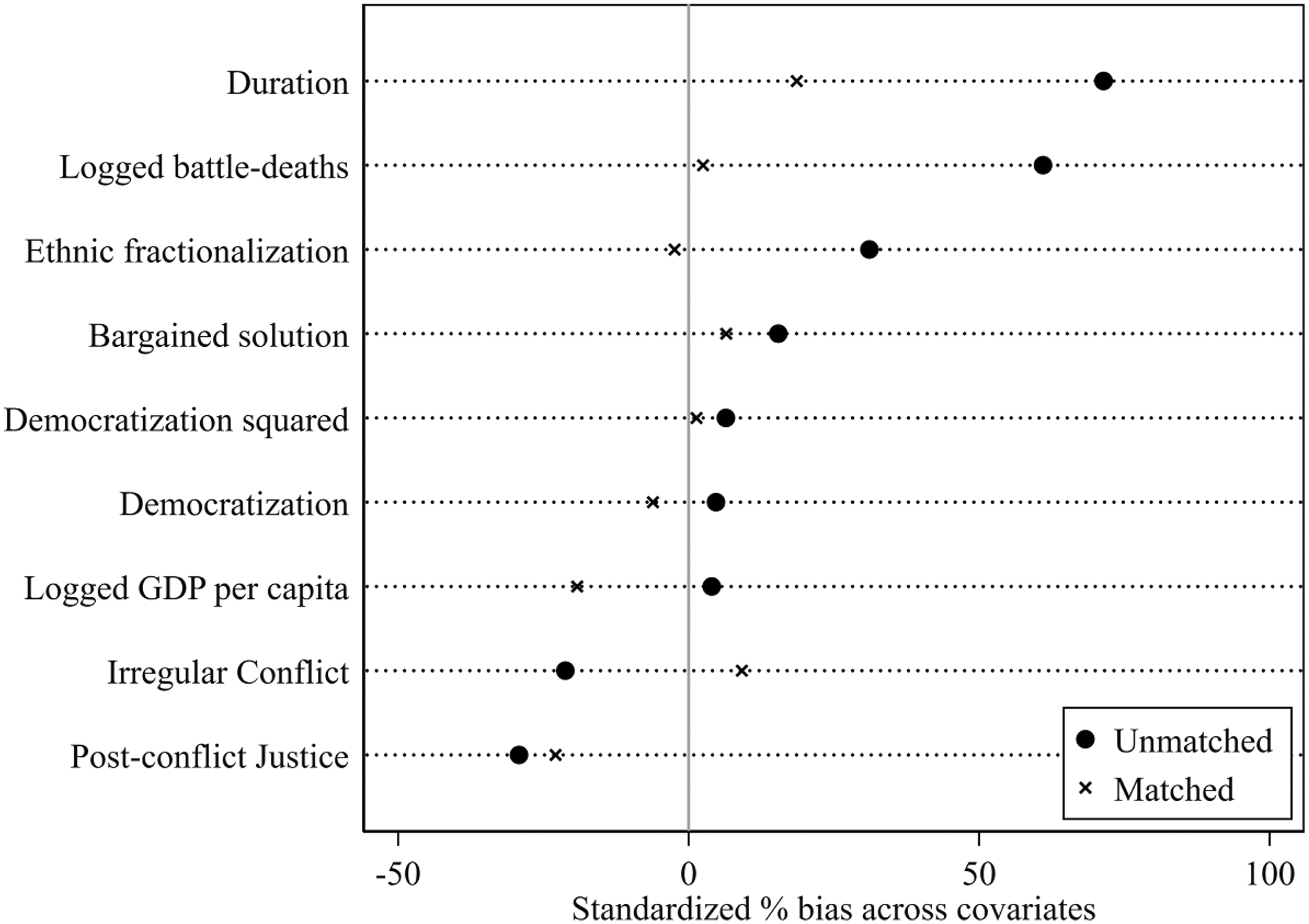
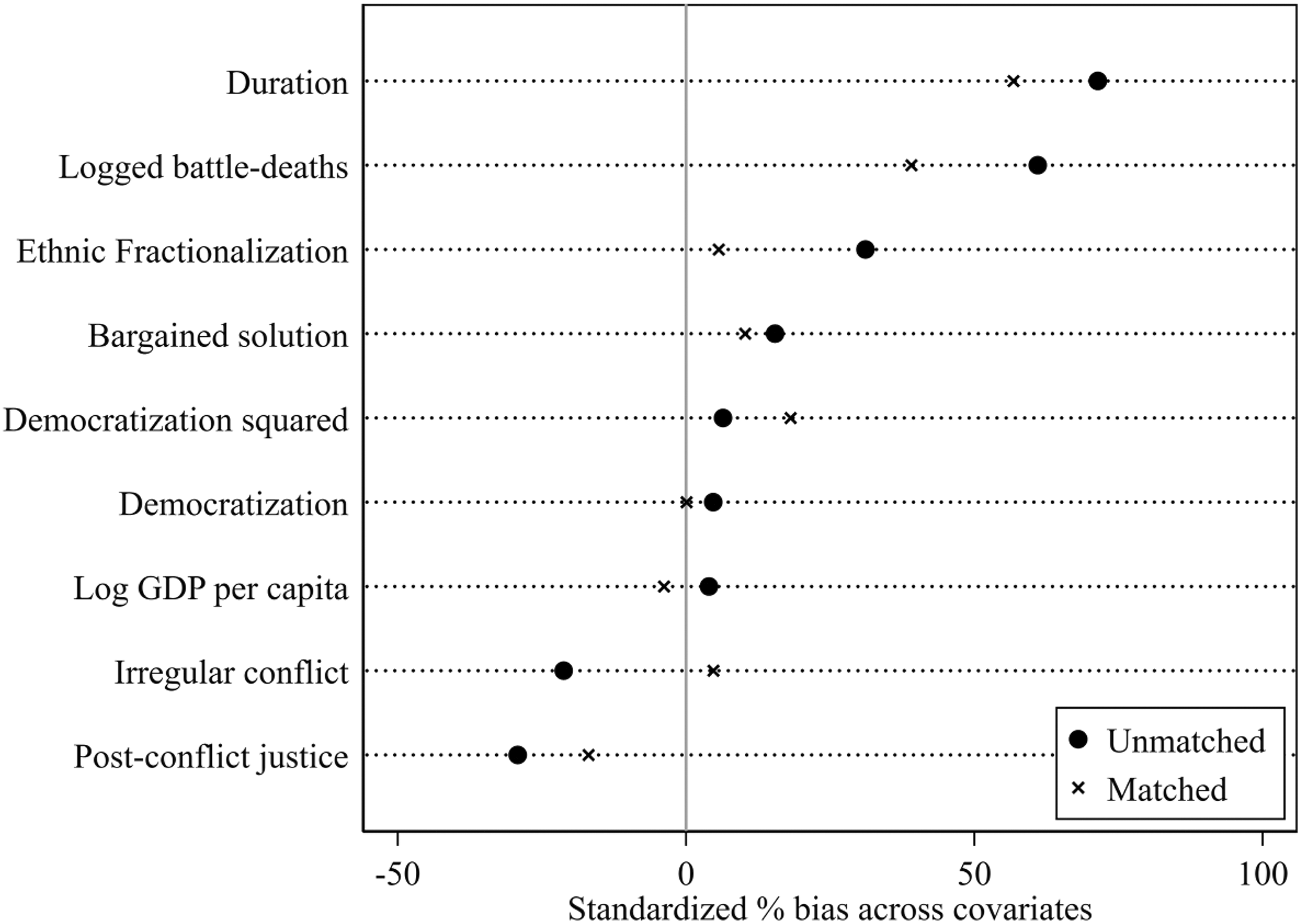
The improved balance of the covariates after matching is illustrated in Figure 5 for kernel propensity score matching and in Figure 6 for caliper propensity score matching. While it was not possible to create perfect balance, we were able to substantially reduce bias among most covariates. Only the variables Ethnic fractionalization and Post-conflict justice remain statistically significant after matching; however, the bias of those covariates can be reduced by 92% and 22%, respectively. In the full sample, the average bias among covariates in terms of standardized differences was 28%. With kernel propensity score matching the mean bias was reduced to 10%. Likewise, the median bias was reduced from 22% to 7%. Caliper propensity score matching reduced the mean bias to 17% and the median bias to 10%. 19
Results propensity score matching (Kernel and Caliper)
Conclusion
Pro-government militias are a common feature of civil wars, but we know little about how they shape post-conflict stability. While insurgents or regular government forces might have an interest in the resurgence of violence, we have outlined why militias that are protected by the government and help fight rebels are particularly likely to have an interest in renewed conflict. Due to their irregular nature, they enjoy relatively free reign over how they contribute to the government’s overall goal, which allows them to use the conflict and their position of power to their own advantage. Unlike rebel groups or regular state forces, PGMs are likely to have gained little but lost much in the post-conflict period. They are usually excluded from peace negotiations and disarmament programs. Therefore, they are likely to increase the risk of conflict recurrence beyond the risk posed by government or rebel forces.
To empirically test our argument, we identified armed conflicts in which pro-government militias participated in the fight against the rebels and tested whether the same set of actors, including the PGMs, fought each other again during the subsequent five years. Our findings suggest that conflicts with PGM activities are indeed more likely to recur. Our study highlights an important pattern of post-conflict stability by accounting for the common strategy to use militias in armed conflicts. While we have narrowed our research on militias that actively fought against insurgents, these groups still vary in their membership profile, size, and origin. PGMs with a relatively homogenous membership are likely to be better able to overcome the collective action problem to trigger renewed conflict, while small PGMs will find it more difficult to have a significant impact. While the variety of PGMs in our study might make it more difficult to identify an overall pattern, our results demonstrate that despite these differences PGMs generally enhance the risk of conflict recurrence across diverse post-conflict environments. As more data become available over longer time periods, more fine-grained analyses can help uncover what types of anti-insurgent PGMs are most likely to trigger the outbreak of previously concluded armed conflicts and what internal group dynamics or preferences are most prevalent.
Our results have important implications for international peacebuilding endeavors. Considering the increased risk for conflict relapse, peace negotiations between governments and rebels are unlikely to deliver sustainable stability if they ignore the demands and needs of militia members. DDR programs are unlikely to be successful if they do not include militiamen and provide sufficient resources for their disarmament and reintegration. Our findings suggest that the perception of PGMs as ‘cheap instruments for the projection of state power’ (Jentzsch, Kalyvas & Schubiger, 2015: 764) is short-sighted. The advantages of a cheap force multiplier during conflicts may come at the expense of government’s loss of control in the long run. People may suffer from the empowerment of those informal actors far beyond the termination of the conflict. Our study shows that it is essential to take into account informal actors deployed on behalf of the state since ‘[state] agent’s selfish motivations for violence persist across time, culture, and countries’ (Mitchell, 2004: 5).
Footnotes
Replication data

Acknowledgement
We thank Thomas Gschwend for his valuable advice on our statistical simulation.
Funding
This project received funding from the European Research Council under the European Union’s Seventh Framework Programme (FP7/2007-2013)/ERC Grant Agreement no. 336019. CVS was funded by the German Academic Scholarship Foundation and JIS by an ESRC doctoral studentship (ES/J500112/1).