




Abstract
This article offers a scoping review and thematic synthesis of qualitative research on the relationship between precarious employment and mental health. Systematic searches of primary qualitative research in western economies, focused on insecure contracts and a broad conceptualisation of mental health, identified 32 studies. Thematic synthesis revealed four core experiences of precarious employment: financial instability, temporal uncertainty, marginal status and employment insecurity, each connected with multiple, interrelated experiences/responses at four thematic levels: economic, socio-relational, behavioural and physical, leading to negative mental health effects. Reported mental health outcomes could be predominantly understood as reductions in ‘positive mental health’. Findings are theoretically located in models of work-family conflict and latent deprivation; insecure work constrains access to benefits of time structure, social contacts, social purposes, status and identity, which correlate with psychological wellbeing. Frequently failing also to provide the manifest (financial) benefits of work, insecure employment poses mental health risks on both fronts.
Keywords
Introduction
This article offers a scoping review and thematic synthesis of findings of qualitative research on the relationship between precarious employment and poor mental health. Quantitative research on this topic is plentiful (Hünefeld et al., 2020; Rönnblad et al., 2019; Utzet et al., 2020; Virtanen et al., 2005), with overall findings of a positive causal association between precarious employment and poor mental health (De Witte et al., 2016). However, there have been many calls for further research to elucidate the causal pathways underlying these correlations (Benach et al., 2016; Matilla-Santander et al., 2020; Valero et al., 2021). For example, Bolibar et al. (2021: 3) note that ‘despite the growing evidence of the association between precarious employment and health . . . the explanatory mechanisms underlying this relationship, both in biomedical and socioeconomic terms, have not yet been sufficiently studied’.
Qualitative research is essential to understanding the complex and contingent relationships between employment status, mental health and broader social wellbeing, illuminating precisely how and why it is that precarious employment has negative implications for mental health. The primary contribution of this article is to synthesise existing empirical qualitative evidence on relationships between precarious employment and mental health, thus providing a preliminary response to the perceived lack of evidence on causal pathways and offering a concise overview for scholars seeking to advance research in this area.
This review forms part of a wider programme of mixed-methods research on relationships between precarious employment and mental health in the UK context. 1 This starting point shaped the parameters of the review, as we briefly outline here. The very notion of precarious employment must be contextualised historically and geographically, being a construct ‘with its own political, economic and cultural specificity’ (Muntaner, 2016: 2). Contemporary conceptualisations of precarious employment are ‘embedded within an individualistic, Western context’ (Allan et al., 2021: 10) and concern relatively recent shifts (back) towards contingent work in industrialised countries (Mosoetsa et al., 2016; Muntaner, 2016; Quinlan et al., 2001). In the Global South, informal work makes up a far higher proportion of labour, and legal and social protections are significantly different (Mosoetsa et al., 2016; Muntaner, 2016). Extrapolating without consideration of spatial and temporal difference may thus lead to an ‘emptiness’ of analysis (Hussain, 2018: 117). Moreover, conceptualisations and manifestations of distress also differ between cultural contexts (Kohrt et al., 2014; Mendenhall and Kim, 2021). For these reasons, with the UK as our starting point, our focus was restricted to Western economies sharing a degree of structural and cultural similarity, namely Europe, North America, Canada and Australasia (see O’Sullivan et al., 2019).
Defining precarious employment
In its narrowest conceptualisation, the notion of precarious employment is equated to ‘atypical’ employment that differs from the ‘Standard Employment Relationship’ of full-time, stable and socially protected employment with a single employer (Bosch, 2004), 2 encompassing a variety of insecure contractual statuses, including temporary agency, casual, fixed-term, zero-hours, gig or platform work, freelancing and self-employment. However, there is growing consensus that precarious employment is best conceived as multidimensional, involving core components of employment insecurity, income inadequacy and lack of rights and social protection (Bodin et al., 2020; Kalleberg and Vallas, 2017; Kreshpaj et al., 2020). Some conceptualisations also include low workplace social support, lack of access to training and development, higher exposure to occupational health hazards, and low work status (Tompa et al., 2007). As Pirani (2017: 235) explains ‘the concept of precariousness puts the accent on the dark side of atypical work’.
Beyond employment-centred concepts, there is a broader notion of precarity, summarised by Campbell and Price (2016: 315–316) as, ‘a generalised set of social conditions and an associated sense of insecurity, experienced by precarious workers but extending to other domains of social life such as housing, welfare provision and personal relationships’. This concept has both socio-political and ontological dimensions (Alberti et al., 2018; Castel, 2000; Dörre, 2014; Han, 2018; Standing, 2011).
While recognising the limitations of research that focuses narrowly on structural employment relationships (see Alberti et al., 2018; Allan et al., 2021; Vives et al., 2020), this review does take as its starting point objectively insecure forms of employment, namely temporary agency, fixed-term, casual, zero-hours and gig work. Following Benach et al. (2014: 237), we consider workers in these roles to be ‘in an objective state of job insecurity’ to the extent that they lack a permanent contract guaranteeing long-term employment and, in many cases also lack a guarantee of consistent hours or pattern of work. A relationship between subjective job insecurity and mental health is well established (Llosa-Fernández et al., 2018), but may equally be experienced by workers in ostensibly secure (permanent) employment (Julià et al., 2017; Vives et al., 2020). In this review, we sought to identify specifically what it is about insecure contractual status (as opposed to subjectively perceived job insecurity) that produces negative mental health outcomes. By looking in detail at qualitative evidence, we sought to elucidate the pathways through which insecure contractual status leads to poorer mental health. As such, the review attempted to separate out contractually insecure forms of employment from both broader notions of precarity, subjective job insecurity and poor-quality work in general (see Kreshpaj et al., 2020).
The ambiguous character of precarious employment
Although we here define precarious employment as objectively insecure contractual status, non-permanent employment does not, in and of itself, imply a lived experience of precarity (Allan et al., 2021; Allmendinger et al., 2013; Campbell and Price, 2016; Dörre, 2014), nor necessarily lead to negative mental health consequences. The extent to which insecure contractual relationships affect mental health varies according to whether that employment form is voluntarily chosen and the contextual factors framing that choice, including biography, aspirations and the presence of financial and social ‘buffers’ of support. As Campbell and Price (2016: 316) note, ‘[a variety of] workers are engaged in precarious work, but the experience and the potential impact are likely to differ in complex but socially patterned ways’.
Several typologies have been proposed to classify this spectrum from those who actively embrace this style of employment to those who feel trapped and wish to escape it (Araújo et al., 2016; Clarke et al., 2007; Keuskamp et al., 2013; McGann et al., 2016; Manolchev et al., 2018; Mrozowicki and Trappmann, 2021; Pocock et al., 2004). For some workers, objectively insecure employment may have negligible or even positive effects on their mental health, if it has good fit with their personal context, career and lifestyle aspirations (Adler, 2020; Bill, 2012). Studies have also shown gender-related differences in mental health outcomes, with males being more negatively affected by precarious work than females (Carrieri et al., 2014; Demiral et al., 2022). Essentially, precarious employment is a ‘person-in-context’ phenomenon (Tompa et al., 2007), with effects on mental health modulated by that context. Our focus here is on drawing together qualitative evidence to understand how and why, for some people, insecure work is detrimental to mental health. Our review question is: What is known, from primary qualitative research, about the contexts and pathways connecting precarious employment and poor mental health?
Defining mental health
In contemporary usage, the term ‘mental health’ is applied to an expanding range of experiences and phenomena. Mental health is used to refer both to negative states (mental disorders, mental health conditions, mental health problems) and to states of ‘positive mental health’ or ‘mental wellbeing’ (Iasiello et al., 2019). Quantitative studies measuring correlations between precarious employment and mental health typically use standardised self-report instruments measuring symptoms of clinical depression and/or anxiety or psychological distress more broadly conceived. Utzet et al. (2020) reviewed 53 quantitative studies of precarious employment and mental health; all used subjective self-report measures, common instruments being the General Health Questionnaire, Short-Form Health Survey, the Mental Health Inventory and the Hospital Anxiety and Depression Scale.
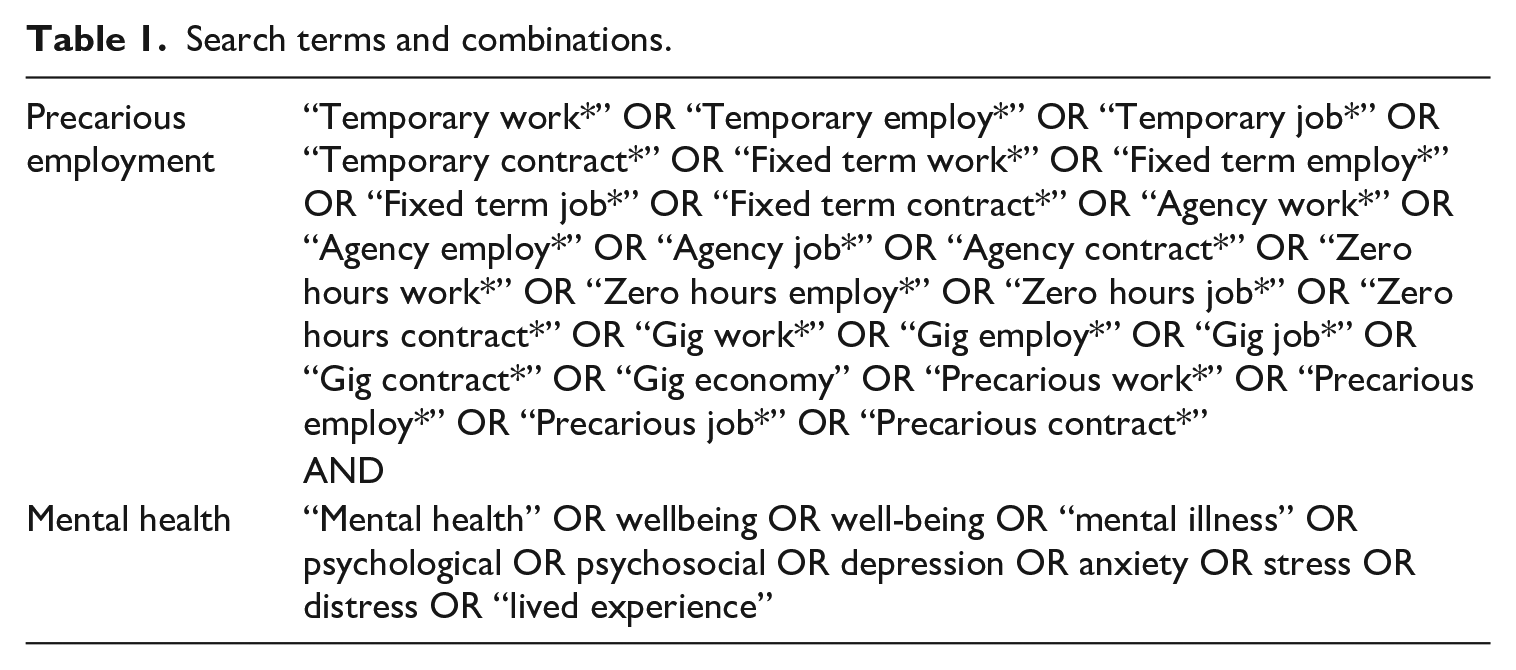
In this review, we took a deliberately broad conceptualisation of mental health, which encompassed the main diagnostic concepts used within quantitative studies (i.e. stress, anxiety, depression) but also included wider socio-cultural understandings of mental wellbeing and distress, moving away from clinical or medicalised conceptualisations to encompass contemporary (Western) social and cultural understandings. Search terms used to capture this diversity of understandings of mental health are detailed in Table 1. As we discuss below, this broad conceptual scope enabled us to consider, as part of this review, how qualitative research (to date) has conceptualised mental health in relation to precarious work, in terms of definitions and directional effects.
Search terms and combinations.
Method
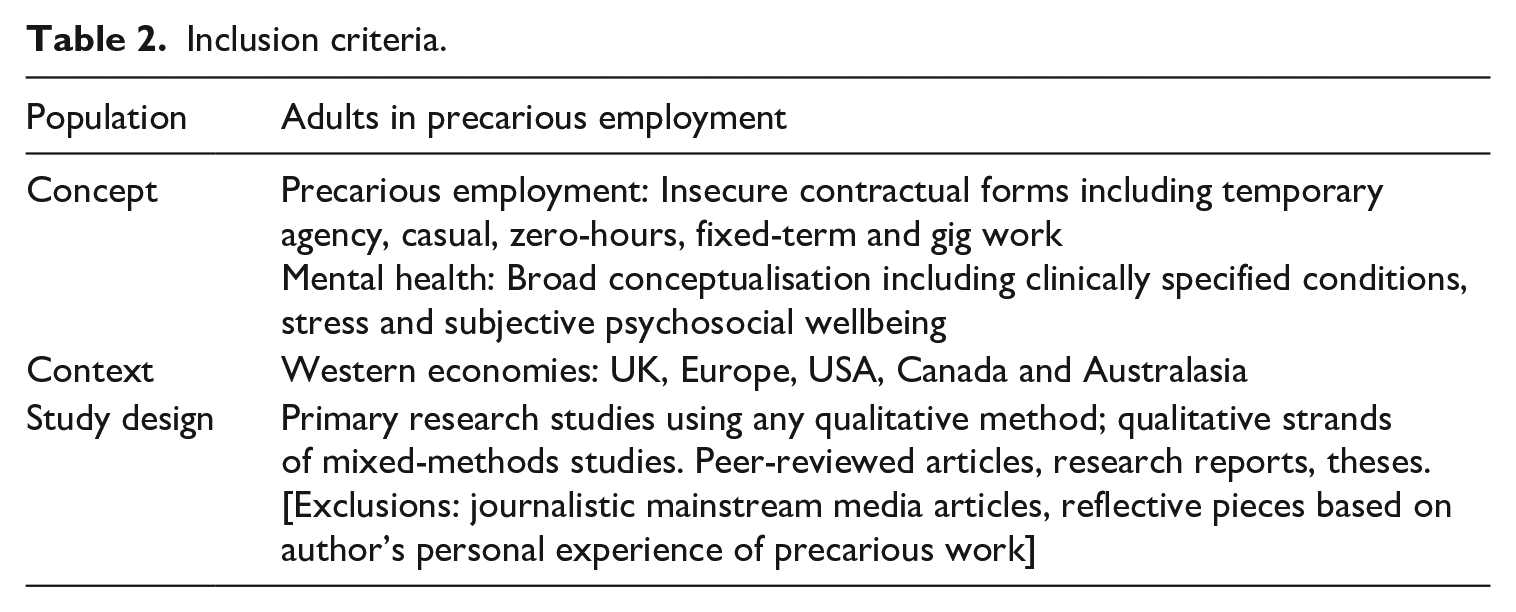
The review was conducted according to JBI guidance for scoping reviews (Peters et al., 2020) and is reported in accordance with the PRISMA-ScR (Tricco et al., 2018). Following the Population, Concept, Context (PCC) format (Peters et al., 2020), our inclusion criteria are summarised in Table 2.
Inclusion criteria.
Search strategy
Searches were conducted on 24 to 25 November 2020 in the following databases: Proquest (incorporating Proquest Central, Proquest Dissertations and Theses Global, Publicly Available Content Database, IBSS, Social Science Database, ASSIA, Sociological Abstracts, Sociology Databases); OVID (incorporating PsychInfo, Social Policy and Practice, EMBASE); and Web of Science Core Collection. Table 1 shows the terms and combinations used. Timeframe was 1980 to present; language limited to English.
Results
Database searches returned 3798 results, reducing to 2467 following deduplication. Screening by title and abstract resulted in 145 items retained for full-text review. Full-text screening removed 117 items (reasons shown in Figure 1), reducing the number of eligible items to 28 studies that substantively addressed the topic of mental health in relation to insecure employment. A further seven eligible items were identified through our existing collections, secondary references, grey literature and ongoing contents alerts. In total, 35 items, reporting 32 unique studies, were incorporated to the review (asterisked in References). Figure 1 summarises the search process.
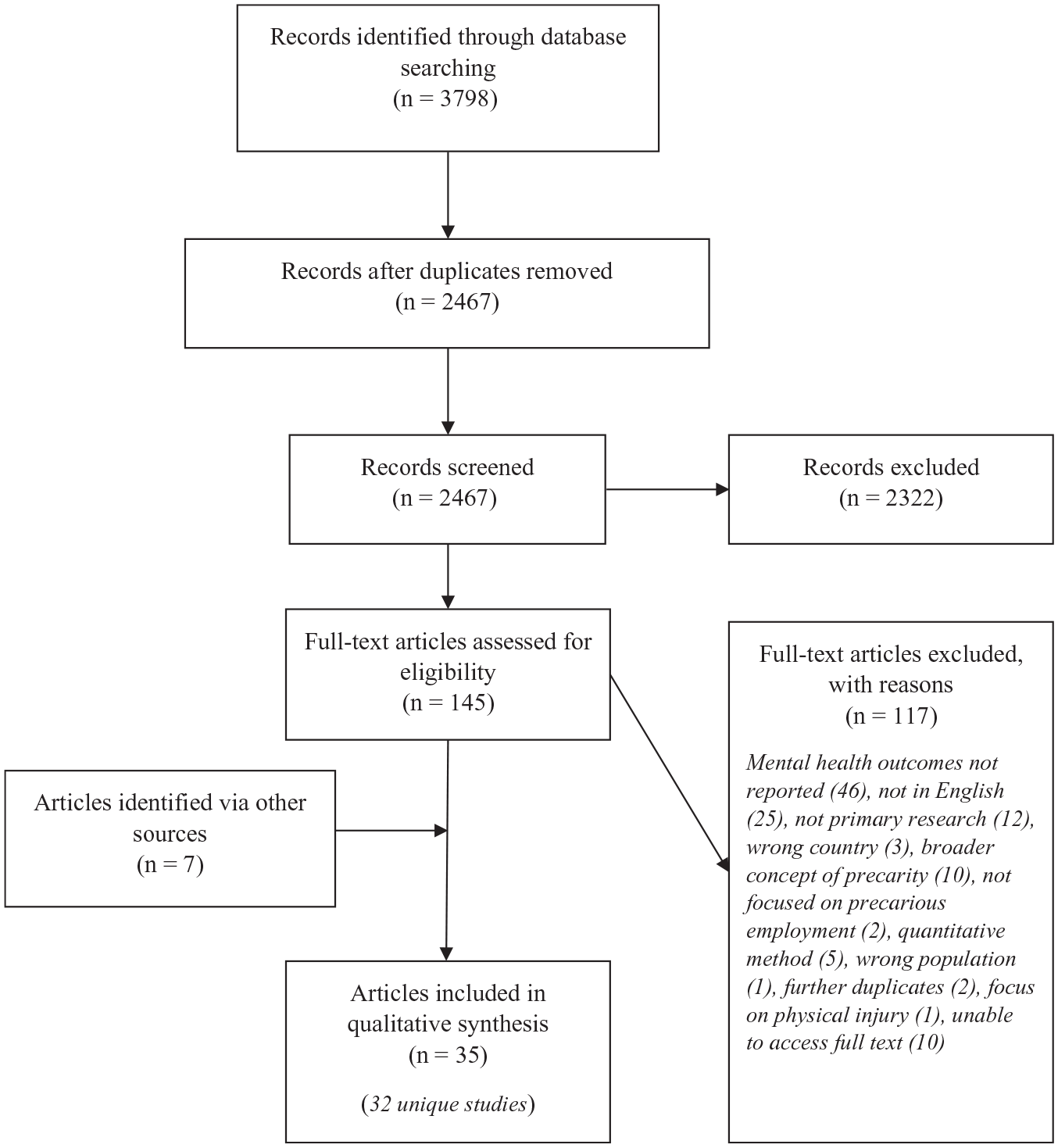
PRISMA-ScR flow diagram of screening and exclusion process.
Description of included studies
Studies were published between 2004 and 2021, mainly from 2012 onwards. A majority were conducted in Canada (10), with smaller numbers in the UK (6), USA (5), Australia (4), Sweden (2) and one study each from Belgium, France, Ireland, Italy and Portugal. Several studies considered multiple insecure employment forms. Where focused on specific contract types, most common was temporary agency, followed by fixed-term and casual work. Notably, gig work and zero-hours contracts were the focus of only one study in each case. Some studies focused on specific populations (e.g. young people, migrant workers) or sectors (e.g. higher education, music industry, social care) but many took broad population samples and covered a variety of sectors. A detailed overview of the 35 papers is provided online as a technical appendix.
Mental health measures, concepts and outcomes
In all studies, mental health outcomes were based on qualitative participant self-reports, as elicited in the research encounter. No studies used standardised diagnostic measures to determine participant mental health. Rather, findings were based on subjective accounts of negative psychological states. Whilst we do not consider this a limitation of the data (given the subjective nature of all psychological experience and ongoing debates about the utility of diagnostic measures (Allsopp et al., 2019; Boyle and Johnstone, 2020)), this indicates a clear departure from the methods of quantitative studies.
Notably, no studies focused exclusively on individuals with pre-existing mental health diagnoses. Indeed, very few mentioned that any participants had received formal diagnoses or treatment. As such, our scoping review suggests that the current qualitative evidence base predominantly reflects unidirectional effects of precarious employment on mental health, rather than how lived experience of mental health problems may lead to precarity of employment.
Almost all studies reported experiences of stress and anxiety, and to a lesser extent depression. Given the absence of clinical samples or standardised measurements, these seemed predominantly to be lay uses of terms, referring to various types and degrees of worry and low mood, rather than reports of formal diagnoses. Alongside this were references to a multitude of other negative psychological states including: frustration, dissatisfaction, sadness, tearfulness, low self-esteem/self-worth, self-doubt, hopelessness, meaninglessness, pessimism, exhaustion, anger, irritability, shame and guilt (see technical appendix for detailed overview). Overall, we found that extant qualitative literature on this topic reflects a predominantly psychosocial, rather than clinical or medicalised, conceptualisation of mental health and wellbeing. As we will discuss below, qualitative research to date appears predominantly to signal detrimental effects on ‘positive mental health’ or ‘mental wellbeing’ rather than associations with diagnosed mental ‘illness’ or ‘disorder’.
Quality assessment
In accordance with scoping review methodology (Peters et al., 2020; Tricco et al., 2018), studies were not formally evaluated or excluded on the basis of methodological quality. Rather, inclusion was guided by the extent to which each added knowledge that enabled us to address our central review question (Thomas and Harden, 2008). Of the included items, 24 were peer reviewed articles, six were non-peer reviewed research reports and five were unpublished doctoral theses. The sample sizes ranged from six to 94 (see appendix). Whilst sample size does not determine the quality of qualitative research (adequacy depends on scope and method of inquiry), the majority of included studies had sample sizes that would generally be considered robust in qualitative interview-based research (Baker and Edwards, 2012; Bonde, 2013). There was variability in the depth of reporting/discussion of participants’ mental health experiences. Some papers contained relatively little detail, despite mental health/wellbeing featuring in their title or keywords, thus presenting a limitation to the review.
Thematic synthesis of findings
Findings of the 35 papers (reporting 32 studies) were analysed and integrated using thematic synthesis (Thomas and Harden, 2008). Thematic synthesis is a rigorous and transparent method of analysis that, while offering a higher level of conceptualisation, remains grounded in the original material and provides accessible information for policy and practice (Barnett-Page and Thomas, 2009; Thomas and Harden, 2008). Analysis proceeded iteratively, supported by NVivo12, beginning with descriptive coding of the findings of individual studies, remaining close to their original codes/themes, followed by organisation of related codes under broader thematic headings, as presented below.
Our analysis sought to identify the specific pathways through which the experience of insecure employment leads to negative mental health effects, thereby adding qualitative explanation to the correlations demonstrated by quantitative studies. The model arising from our thematic synthesis is show in Figure 2. On the left of the figure, we identify four ‘core experiences’ of precarious employment: financial instability, temporal uncertainty, marginal status and employment insecurity. The reviewed studies reveal how each of these leads to a number of intermediate ‘resultant experiences and responses’, which we have categorised thematically as occurring at the economic, socio-relational, behavioural and physical levels. These resultant experiences and responses (which in psychological terms may be called ‘stressors’) are, via various forms of conflict and deprivation, steps along the pathway to negative mental health effects of multiple types. These include stress, anxiety and depression, but also (in keeping with our broad definition of ‘mental health’) other negative affective states such as low morale, low self-esteem, frustration and guilt.
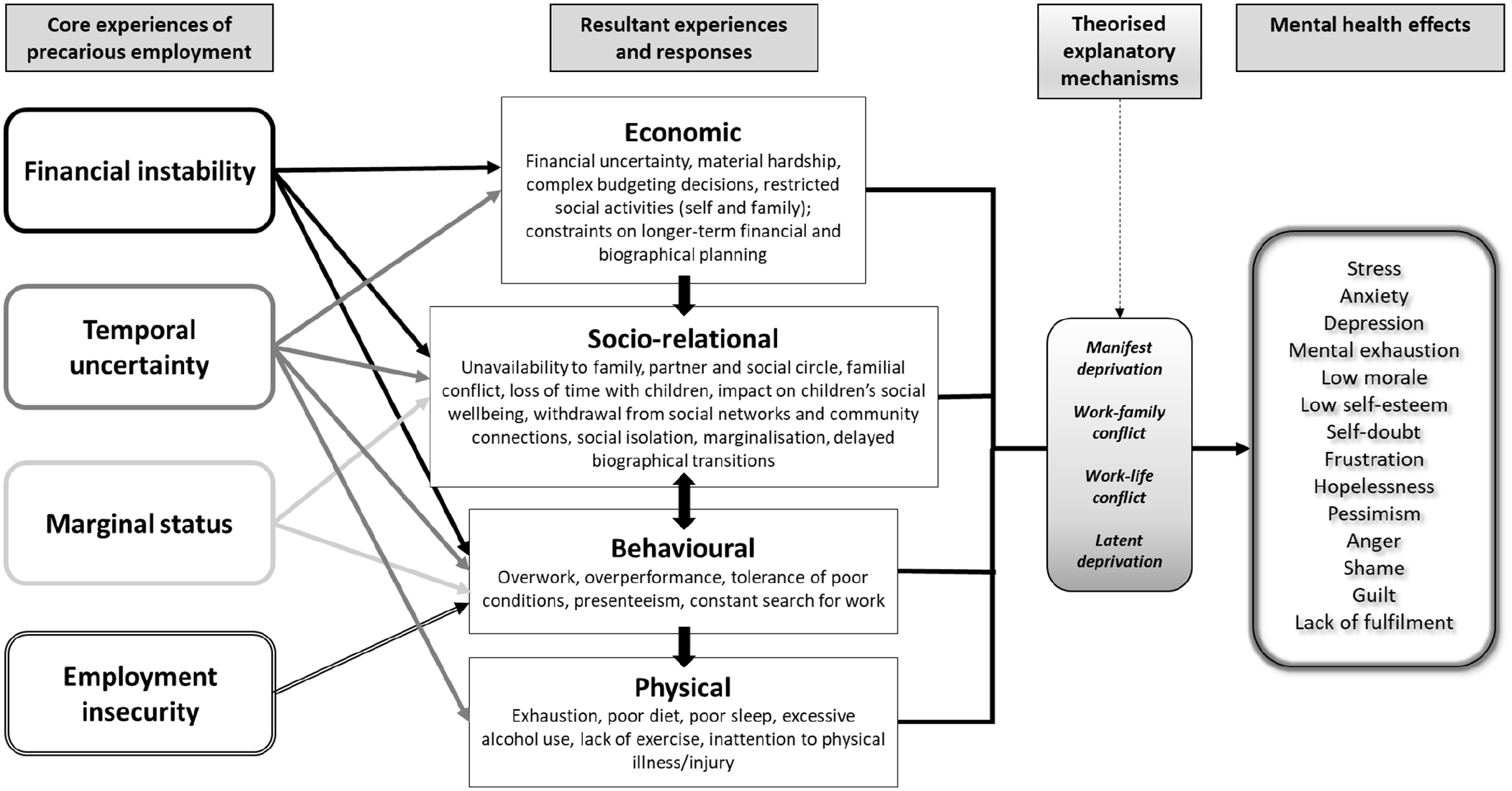
Theoretical model of pathways between precarious employment and mental health.
In the sections that follow, we structure the findings around the four ‘core experiences’ but note the overlapping and bidirectional nature of many of their effects. We then discuss our interpretation of how these core and resultant experiences/behaviours in turn lead to negative mental health outcomes, drawing on sociological theories of work-family conflict and latent deprivation.
Financial instability
The first core experience of precarious employment was financial instability. People in casual, zero-hours or gig work faced uncertainty about their overall level of income and the schedule or flow of that income; in other words, earnings could be both inadequate and unpredictable. Whilst quantitative studies have identified financial strain as a significant mediator of precarious employment and mental health (Ferrante et al., 2019), qualitative studies emphasised the stress and anxiety additionally caused by instability or unpredictability of income, over both the short and long term (Apouey et al., 2020; Asanin, 2007; León-Pérez et al., 2021).
At the economic level, fluctuations in amount and schedule of income (especially when coupled with low rates of pay), required complex budgeting decisions about how to prioritise day-to-day expenditure. People could be forced into debt, use of credit or informal borrowing, and were unable to plan for their long-term financial future through savings, pensions or home ownership (Bosmans et al., 2017; Malenfant et al., 2007; Pocock et al., 2004).
Financial instability had direct and indirect effects on people’s social relationships. Monetary worries caused tension within families and relationships (Asanin, 2007; Cuervo and Chesters, 2019). People restricted their own and their children’s social activities due to lack of financial resources (Lewchuk et al., 2013; Toivanen et al., 2020). Feeling unable to meet the social or material needs of dependent children was distressing and could lead to feelings of guilt and failure as a parent (Bobek et al., 2018; León-Pérez et al., 2021; Lewchuk et al., 2013; Toivanen et al., 2020).
Even for those with relatively well-paid positions and longer-term contracts, precarious employment could be an obstacle to financial independence, with socio-relational impacts. Ongoing dependence on others (particularly one’s parents) created tensions within household relationships (Araújo et al., 2016) and led to a feeling of ‘forced infantilisation’ (Bobek et al., 2018). Clarke et al. (2007) cited instances of women entering into or remaining in potentially harmful relationships, due to financial insecurity.
Turning to behaviours, in order to counter the risk of insufficient income, people made themselves continually available for work, feeling they were ‘always on call’ and unable to turn down any offer of work (Bosmans et al., 2017; Macassa et al., 2017; McGann et al., 2016; Toivanen et al., 2020). People enlisted with multiple employers or agencies, to maximise earning potential and minimise risk of unemployment (Araújo et al., 2016; Bosmans et al., 2017; Gross and Musgrave, 2017; McGann et al., 2016; Malenfant et al., 2007; Premji, 2018), rarely taking time off or having holidays (Gellatly, 2007; Pocock et al., 2004). This had a recursive effect on social relationships; feeling a need to be continually available for work, people curtailed their social lives, leading to isolation and weakening of friendships and social networks. Family time was negatively impacted, leading to familial conflict and negative impacts on children’s social wellbeing and behaviour (Lewchuk et al., 2013; Malenfant et al., 2007; Premji, 2018).
On the physical level, several studies identified presenteeism (continuing to work despite illness or injury) as a consequence of financial insecurity. People felt they could not afford to sacrifice income, especially where contracts did not offer sick pay (Bobek et al., 2018; Bosmans et al., 2016, 2017; McGann et al., 2012; Pocock et al., 2004). Furthermore, people delayed attending to ongoing health problems or injuries (Henninger et al., 2019; McGann et al., 2012), particularly where they did not have access to health insurance or free healthcare, hence could afford neither the time off work nor the costs of consultations or treatments (Asanin, 2007; Bobek et al., 2018; Clarke et al., 2007; Premji, 2018), risking exacerbation of illness or injury through neglect.
Temporal uncertainty
The core experience of temporal uncertainty can be thought of in both short and long-term perspectives. In the short term, where the pattern of daily, weekly or monthly working hours was variable, and outside the worker’s control, people faced temporal uncertainty in their everyday lives. People could be given very short notice of shifts and sometimes not told how long a shift would be until it was underway (Bosmans et al., 2017; Clarke et al., 2007; Lewchuk et al., 2013; Macassa et al., 2017; Premji, 2018; Saldaña Lopez, 2019). Where people enlisted with multiple employers, the dovetailing of different shifts and availabilities added a further dimension of temporal stress (Araújo et al., 2016; Henninger et al., 2019).
Regarding the social-relational, these short-term temporal uncertainties caused difficulties planning other areas of life, including family time, social life and attending to personal needs such as routine medical or haircare appointments (Lewchuk et al., 2013; Macassa et al., 2017; McGann et al., 2012, 2016; Ravalier et al., 2019; Toivanen et al., 2020; Zeytinoglu et al., 2005). Where shifts were fluctuating or at short notice, parents found it difficult to plan childcare (Bosmans et al., 2017; Clarke et al., 2007; Crozier, 2009; Lewchuk et al., 2013; McGann et al., 2016; Zeytinoglu et al., 2004, 2005). Inconsistent hours, coupled with low earnings, made it difficult to engage in a regular arrangement with a registered provider, hence people could be reliant on informal childcare (Bobek et al., 2018; León-Pérez et al., 2021; Premji, 2018).
Owing to scheduling uncertainty and fear of missing an opportunity to work, people avoided committing to social engagements, which could lead to loneliness and social isolation (Bobek et al., 2018; Bosmans et al., 2016; Clarke et al., 2007; Gellatly, 2007; Lewchuk et al., 2013; Pocock et al., 2004). An inability to make or stick to plans caused tensions within families, with feelings of guilt, particularly where children were involved (León-Pérez et al., 2021; Pocock et al., 2004; Premji, 2018; Toivanen et al., 2020). Furthermore, unpredictable schedules when engaged in precarious employment could restrict people’s ability to contribute to their local communities e.g. through voluntary activities (Lewchuk et al., 2013), which are known to support positive mental health (Aked et al., 2008). Fluctuating work patterns also had physical impacts, disrupting people’s ability to maintain healthy sleeping and eating habits (Vorell and Carmack, 2015), which are important factors in supporting mental wellbeing.
There was also a longer-term socio-relational aspect to temporal uncertainty, relating less to the immediate organisation of one’s life, but to capacity to control or plan for one’s future, which could lead to people feeling ‘stuck’ and demoralised (Clarke et al., 2007; Gross and Musgrave, 2017). Long-term temporal uncertainty affected decision-making around key biographical transitions such as leaving the parental home, homeownership, marriage and parenthood (Araújo et al., 2016; Bobek et al., 2018; Cuervo and Chesters, 2019; Henninger et al., 2019; Lewchuk et al, 2013; Macassa et al., 2017; Toivanen et al., 2020). Delays to these social markers of adulthood could lead to feeling trapped in a childlike status, dissonant with desired identity and bringing associated feelings of inadequacy (Bobek et al., 2018). Temporary and fixed-term contracts also entailed uncertainties about one’s longer-term geographical location, preventing people from ‘putting down roots’ in a community, leading to isolation and lack of social integration (Cuervo and Chesters, 2019).
Marginal status
A third core experience emerging strongly from the qualitative literature was that of marginal status. People in precarious work, especially temporary employment, experienced a peripheral, inferior or devalued status within the workplace. Temporary workers reported being allocated the most unpleasant or menial tasks, provided with inadequate training and equipment, lacking feedback and professional development opportunities, having unreasonably high demands made and given insufficient breaks. Marginal status had social-relational consequences, with workers feeling left out of information networks and decision-making processes, being excluded from formal and informal social occasions, and encountering hostility from permanent employees (Bosmans et al., 2016, 2017; Crozier, 2009; Henninger et al., 2019; Keke, 2014; Lewchuk et al., 2013; Lopes and Dewan, 2018; Loveday, 2018; Macassa et al., 2017; McGann et al., 2012, 2016; Pocock et al., 2004; Seifert et al., 2007; Toms, 2012; Vorell and Carmack, 2015; Zoeckler, 2018).
Workers on short contracts or agency placements had to adjust frequently to new working environments, processes, cultures and colleagues, which could be stressful and exhausting (Bosmans et al., 2016, 2017; Crozier, 2009; Loveday, 2018; Macassa et al., 2017; McGann et al., 2012; Premji, 2018; Vorell and Carmack, 2015). This had both social-relational and behavioural consequences, such that people perceived it as difficult, or even pointless, to establish friendships within the workplace. This in turn compounded a sense of isolation, lack of integration and social support, with psychological consequences of stress and low morale (Malenfant et al., 2007; Seifert et al., 2007; Vorell and Carmack, 2015).
Employment insecurity
The final core experience was employment insecurity. In this review, we deliberately excluded studies focused on subjective job insecurity. However, the included papers nevertheless confirmed (unsurprisingly) that perceived insecurity was a key experience connecting objectively insecure contracts with poor mental health (see also Thomson and Hünefeld, 2021). By examining qualitative evidence, this review was able to add a more fine-grained explanation of the behavioural and relational effects brought about by perceived job insecurity, which lie along the pathway to negative mental health outcomes. Behaviourally, employment insecurity resulted in overwork and overperformance, in order to demonstrate value and reliability to the employer (Bosmans et al., 2017; Loveday, 2018; Macassa et al., 2017; Malenfant et al., 2007). As with financial instability, people felt they must be available for work at any moment, accepting any shifts or placements offered, regardless of personal inconvenience, ill health or injury, for fear of not being offered work in future (Bosmans et al., 2017; Clarke et al., 2007; Henninger et al., 2019; Lewchuk et al., 2013; Lopes and Dewan, 2018; Loveday, 2018; Macassa et al., 2017; McGann et al., 2016; Malenfant et al., 2007; Pocock et al., 2004; Toivanen et al., 2020; Toms, 2012).
Employment insecurity led workers to ingratiate themselves with managers and colleagues through subservience, conflict avoidance, emotion suppression and overperformance, so as to be positively evaluated and hence secure future work (Macassa et al., 2017; Malenfant et al., 2007). People tolerated poor working conditions or did not report bullying, safety concerns or other grievances, due to fear that they would be dismissed or not rehired (Bosmans et al., 2016; Henninger et al., 2019; León-Pérez et al., 2021; McGann et al., 2012, 2016; Ravalier et al., 2019; Saldaña Lopez, 2019; Toms, 2012). Competition could also arise between casual workers vying for limited contracts, resulting in guardedness and a lack of workplace solidarity (Seifert et al., 2007).
Overall, workers felt powerless, unable to exercise choice or control over the content, scheduling, or continuity of their employment (Bosmans et al., 2016; Lewchuk et al., 2013; Lopes and Dewan, 2018; Malenfant et al., 2007; Ravalier, 2012; Toivanen et al., 2020). Furthermore, employment insecurity meant people were in a ‘constant search for work’ (Araújo et al., 2016; Bosmans et al., 2017; Clarke et al., 2007; Lewchuk et al., 2013; Macassa et al., 2017; Malenfant et al., 2007). Coupled with overwork and unpredictable availability, this preoccupation placed further socio-relational strain on family and personal relationships (Crozier, 2009; Lewchuk et al., 2013; Premji, 2018; Toivanen et al., 2020).
Finally, temporary employment status affected people’s long-term ability to establish and progress in a chosen career. Cycling through short contracts impeded professional development, and fragmented and discontinuous positions could lead to deskilling (Asanin, 2007; Henninger et al., 2019; Lopes and Dewan, 2018). These effects hindered ability to perform one’s job to a high standard, affecting pride, conscientiousness and job-satisfaction (Lopes and Dewan, 2018; Seifert et al., 2007), in turn leading to stress, anxiety, depression, frustration, self-doubt, low morale, pessimism and loss of self-esteem (Araújo et al., 2016; Asanin, 2007; Bosmans et al., 2017; Gross and Musgrave, 2017; Loveday, 2018; Malenfant et al., 2007; Musumeci and Ghislieri, 2020; Premji, 2018; Toivanen et al., 2020).
Discussion: From insecurity, uncertainty and marginalisation to poor mental health
The relationship between precarious employment and poor mental health is typically conceived as a stress pathway (Allan et al., 2021; Tompa et al., 2007), chronic stress being a recognised factor in the development of mental health conditions (Khan and Khan, 2017). Allan et al. (2021: 8) describe the causal pathway as being one of ‘the constant uncertainty and stress inherent’ in precarious employment. Uncertainty is positively correlated to mental health problems including anxiety, depression, stress and distress (Massazza et al., 2022). The present review sheds more detailed qualitative light on the nature of and responses to the uncertainties of precarious employment, typologising the core and resultant intermediary experiences and responses that comprise the multifaceted and compound stressors of precarious work. In this section, we draw on sociological theories of latent deprivation and work-family conflict, in combination with extant epidemiological evidence, to explain how these experiences and responses in turn contribute to poor mental health.
Low and inadequate wages are well-recognised features of insecure employment and, for many precarious workers, financial strain, poverty and material deprivation are key pathways to poor mental health (Ridley et al., 2020). However, our review of qualitative studies highlights that, beyond absolute income level, stress and anxiety can result from complex budgeting decisions of managing uncertain income schedules, both in the short and longer term. A recent Canadian pilot of ‘universal basic income’ (Ferdosi and McDowell, 2020) found reductions in depression, stress and anger, particularly among employed participants. They conclude that, by ‘smooth[ing] out the variance in income’ (p. 2), universal basic income could be an important policy tool in improving the mental health of people in precarious employment.
The reviewed qualitative evidence also sheds important light on the role of temporal uncertainty in relation to mental health, and the significant socio-relational consequences that follow. Whether or not work is adequately paid, uncertainties of time, in the short and long term, affect people’s ability to plan their lives, impacting familial and social relationships, community engagement and biographical trajectories. Those in precarious employment are thus deprived of both the ‘temporal and economic resources needed to plan their lives’ (McGann et al., 2016: 774). Quantitative research has more recently begun to focus on the negative wellbeing impacts of temporal uncertainty (Felstead et al., 2020; Lee and Kawachi, 2021) and to explore the concept of ‘social precarity’, with Matilla-Santander et al. (2021) demonstrating an association between precarious employment and inability to participate in social activities.
It is no surprise to find that overall employment insecurity affects mental health. However qualitative research usefully illuminates the specific behavioural responses to insecurity that compound stress and distress. Overwork, tolerance of poor conditions, coupled with the constant search for work, lead to physical and emotional exhaustion, familial tensions and social withdrawal. Employment insecurity, financial instability and short-term temporal uncertainty also – for a combination of reasons – cause people to work through physical illness or injury, not attending to health issues in a timely manner.
These findings can be considered in relation to theories of work-family (or more broadly work-life) conflict (Greenhaus and Beutell, 1985). The socio-relational theme (Figure 2) indicates how work-family conflict can be generated by both the financial and temporal aspects of insecure work, as well as overall employment insecurity, through the ‘role pressure incompatibilities’ (Greenhaus and Beutell, 1985) of time demands, work strain and work-related behaviours such as overwork, preoccupation with job searching and being ‘always on call’. Work-family conflict is strongly correlated with decreased mental wellbeing among employees (Borgmann et al., 2019; Frone, 2000) and quantitative studies show that for people in non-standard or insecure work, work-family conflict is associated with significantly higher risk of psychological distress (Lee et al., 2022; Mutambudzi et al., 2017).
The reviewed qualitative evidence also underscores the common experience of marginalisation among precarious employees, with workers in causal and temporary roles feeling undervalued, socially excluded and exploited within the workplace. Recent quantitative studies have shown a positive association between precarious employment and workplace bullying and discrimination (Kvart et al., 2021) and between temporary employment and loneliness at work (Moens et al., 2021). Experiences of marginalisation, discrimination and exploitation had psychological consequences including stress, frustration, sense of injustice, feelings of isolation and lack of belonging.
Taken as a whole, the review findings may be theoretically located in Jahoda’s (1982) explication of the latent benefits of work. Our analysis indicates that people in insecure work may (to a greater or lesser extent) be deprived of the latent benefits of time structure, social contacts, social purpose, status and identity (Jahoda, 1981), which are causally related to mental wellbeing (Selenko et al., 2011). Whilst latent deprivation theory was originally posited in relation to unemployment, this review suggests that insecure work may similarly deprive people of the latent benefits of work that are connected to positive mental wellbeing. This proposition finds partial support in quantitative analyses (Selenko and Batinic, 2013; Vander Elst et al., 2016). Qualitative studies in the present review (Lopes and Dewan, 2018; Loveday, 2018; Seifert et al., 2007; Vorell and Carmack, 2015) revealed that professionals in temporary and casual roles are subject to the negative effects of (long-term) temporal uncertainty, marginal status, and employment insecurity, despite their roles being relatively well-remunerated. That people in well-paid but insecure roles experience similar detrimental effects on mental health corroborates the role of latent deprivation, highlighting the need to consider the potential harms of precarious employment beyond factors of low pay and poor physical working conditions. We might also draw upon Warr’s (1987) framework of job-related affective wellbeing, which positions environmental features including control, clarity, skill development, good social relations, fair treatment and valued positions as core to mental health. Again, our review indicates that all these psychologically supportive features may be denied to those in insecure work.
We noted in the introduction the complexities in conceptualising ‘mental health’. Reflecting on this body of reviewed research, it seems that extant qualitative evidence predominantly signals an inverse relationship between insecure work and ‘positive mental health’, the latter being conceptualised as a distinct state/experience from mental ‘illness’ (Jahoda, 1963; Keyes, 2005) and involving positive self-regard, self-actualisation, autonomy and mastery (Jahoda, 1958). The experience of insecure work constrains people’s ability to maintain or attain a state of good mental health, as these facets of positive mental health are impeded by the marginalising and temporally-destabilising effects of insecure work. As Jahoda, (1963: 1067) describes, a state of mental health involves an individual being ‘free to strive for a full and satisfying life’. Insecure work appears, in various ways, to constrain the attainment of this ‘full and satisfying life’.
Research gaps
Our search results suggest that qualitative research to date has predominantly focused unidirectionally on precarious employment as a precursor or ‘cause’ of mental health problems. Two studies noted a small number of participants with pre-existing mental health problems, for whom the flexibility of temporary, casual or gig work was facilitative of (re-)entry to paid employment alongside fluctuating capacity for work (Crozier, 2009; Keuskamp et al., 2013; see also Broughton et al., 2018). However, our searches revealed no studies that took, as their starting point, populations with mental health diagnoses. This indicates a research gap regarding the experience of precarious employment among people living with long-term mental health problems, amongst whom perceptions of causal pathways, (dis)advantages and psychological outcomes of insecure work may differ. Additionally, given the extent of recent interest, we were surprised to find only two qualitative studies focused specifically on the mental health effects of gig work or zero-hours contracts (Apouey et al., 2020 and Ravailier et al., 2019, respectively), indicating areas that may also benefit from further qualitative inquiry.
Limitations
Our searches were not exhaustive, were restricted to English language and social distancing restrictions (at the time of study) prevented access to material only available in hardcopy. Theoretically informed decisions were made to limit the forms of precarious employment considered in accordance with scoping review methodology, where relevance and conceptual saturation are of primary importance (Arksey and O’Malley, 2005; Thomas and Harden, 2008). The geographical limitation to Western economies limits the transferability of findings, although (as noted in Method) a contextualised approach is methodologically appropriate to the topic of precarity. The methodologies of the included studies did not enable us to disaggregate experiences by demographic variables such as age, gender, or specific job sector. However, the review brought to light particular challenges faced by parents (especially mothers) of young children, and people with migrant status, for whom issues of legal status, racial discrimination and disrupted professional identity present additional stressors. Finally, the relative scantness of detail, within some papers, on participants’ reported mental health experiences is a limitation on the depth of analysis.
Conclusion
This review has consolidated qualitative evidence on why and how insecure employment is often harmful to mental health, elucidating causal pathways and emphasising the role of temporal insecurity (long and short-term), marginalisation and the behavioural responses to employment insecurity that compound mental health effects. The conceptualisation of mental health reflected in qualitative studies to date is a broad psychosocial and largely non-clinical framing, with the effects of precarious employment predominantly manifesting as detriment to ‘positive mental health’. Commonly reported outcomes include stress and anxiety but also a range of other negative emotional and psychological states not necessarily representing a diagnostic category. Our findings can be theoretically located in concepts of work-family conflict and latent deprivation, whereby insecure work constrains access to benefits of time structure, social contacts, social purpose, status and identity, which correlate with psychological wellbeing. Frequently failing also to provide the manifest (financial) benefits of work, insecure employment poses mental health risks on both fronts.
Our resulting framework has similarities to previous, theoretically-derived models (Allan et al., 2021; Benach et al., 2014; Bodin et al., 2020; Tompa et al., 2007), but our focus on empirical qualitative evidence has shed greater light on aspects of temporal uncertainty and the experience and implications of marginal status, as well as foregrounding the complex web of compounding, overlapping and bidirectional effects. Our analysis of behavioural responses accords with Lewchuk et al.’s (2008) empirically-derived Employment Strain Model, particularly the components of ‘employment relationship uncertainty’ and ‘employment relationship effort’.
From this scoping review alone, we cannot make policy recommendations. However, our explication of the intermediate steps on the pathway between insecure employment and poor mental health begins to enable the identification of possible points of intervention. Findings indicate that – beyond offering living wages and the social protection of sick pay – improvements to precarious workers’ mental health may be generated through offering more predictability in hours, 3 and through improving the quality of workplace relationships and resources for those who may otherwise feel on the peripheries of work groups. Greater confidence in the regularity of hours may counter responses of overwork and presenteeism, as well as reducing stressful complexity and uncertainties around budgeting and caring. More equitable and supportive workplace relations may counter feelings of social isolation and tendencies to suppress needs and concerns.
We concur with Benach et al. (2014: 244) that policy-focused research on precarious employment and health is essential, ‘not only because it represents an interesting line of inquiry, but also because ill-health causes avoidable human suffering and new knowledge has the potential to inform prevention or intervention strategies’. It is hoped that this qualitative synthesis of the key areas of difficulty for those in precarious employment offers a useful entryway into future research and dialogue between academics, policymakers and employers.
Supplemental Material
sj-pdf-1-wes-10.1177_09500170221128698 – Supplemental material for How Does Precarious Employment Affect Mental Health? A Scoping Review and Thematic Synthesis of Qualitative Evidence from Western Economies
Supplemental material, sj-pdf-1-wes-10.1177_09500170221128698 for How Does Precarious Employment Affect Mental Health? A Scoping Review and Thematic Synthesis of Qualitative Evidence from Western Economies by Annie Irvine and Nikolas Rose in Work, Employment and Society
Footnotes
Acknowledgements
We are grateful to the journal editor and two anonymous peer reviewers for their critical engagement with earlier drafts of this manuscript, which led us to improve the conceptual clarity and theoretical framing of our review.
Funding
This work was supported by the Economic and Social Research Council (ESRC), Centre for Society and Mental Health at King’s College London [ES/S012567/1]. The views expressed are those of the authors and not necessarily those of the ESRC or King’s College London.

Supplemental material
Supplemental material for this article is available online.
Notes
References
Supplementary Material
Please find the following supplemental material available below.
For Open Access articles published under a Creative Commons License, all supplemental material carries the same license as the article it is associated with.
For non-Open Access articles published, all supplemental material carries a non-exclusive license, and permission requests for re-use of supplemental material or any part of supplemental material shall be sent directly to the copyright owner as specified in the copyright notice associated with the article.
