




Abstract
The current study aimed to understand the perceptions of kindergarten and primary (Grades 1 and 2) educators in Ontario, Canada, regarding their students’ developmental and academic skills and their own mental health during the 2021 to 2022 school year. Participants comprised 402 Ontario educators who completed an online survey. Educators perceived their students to be struggling in many areas. Results revealed that educators perceived their young students to be struggling in areas of their development, including overall and academic skills (both literacy and mathematics). Compared to their kindergarten educator counterparts, primary teachers were more likely to report that their current students were behind, both academically and developmentally. A third reported moderate levels of anxiety, while two-thirds reported moderate levels of depression. Anxiety was also found to be associated with educators’ perception of their students’ physical and socioemotional skills. Our findings suggest increased support is needed for young children’s developmental and academic progress who experienced many disruptions to their learning, as well as increased mental health support for educators.
Introduction
The coronavirus disease 2019 (COVID-19) pandemic and related shutdowns have been the topic of much research and discussion over the last few years, including disruptions in children’s education. Many parents, educators, and students had concerns regarding the return to in-person learning in the 2021 to 2022 school year and the potential negative associations between the previous two years of disrupted schooling and children’s learning. More specifically, there were concerns around learning gaps, developmental skills, and the mental health of students as they returned to in-person classrooms after experiencing many interruptions to their learning (Betthäuser et al., 2023; Suroyo et al., 2021). These issues might be particularly salient for the youngest learners, who spent the majority of their academic career up to that point in online or restricted in-class learning. In light of these concerns, we were interested in gaining a better understanding of the teaching and learning that took place in the classroom during the 2021 to 2022 school year for the youngest learners (kindergarten, Grade 1, and Grade 2), including teachers’ perceptions of their own mental health and of their students’ abilities. Fundamentally, our research is guided by the Bronfenbrenner’s ecological systems theory of human development (Bronfenbrenner, 1994) in exploring the association of context (pandemic disruptions and teacher mental health) on children’s outcomes insofar that we expected to detect associations of children’s perceived learning with their age, pandemic disruptions, and teachers’ own health. Bronfenbrenner’s theory centers a developing child within social systems that exert varying amount of influence on the developmental progress, from the most proximal to more distal ones. In our conceptualization, child development, measured for three distinct age groups, is seen through the educators’ perception, in turn influenced by their own mental health. The distal influences (also called macrosystem) are operationalized as COVID-19 pandemic disruptions. One of the key features of the Bronfenbrenner’s model, likely responsible for its longevity and continuing relevance, is the conceptualization of a layer of interactions between levels of influence, also called a mesosystem. In this study, we will explore the extent of the influences between educators’ mental health and their perception of child development, in the context of the proximal factors such as child age, and systemic, such as the school shutdowns.
Review of Literature
Developmental and Academic Gaps
Educators and researchers alike have shared concerns around the COVID-19 pandemic-related school closures and how they might be associated with the learning loss of students. A recent study, tracking reading test scores of millions of American students in Grades 3 to 8 across the first two years of the pandemic, found significant reading declines during this time (Kuhfeld et al., 2022). Research from Hungary, examining the effects of remote learning on academic achievement of students in Grades 2 to 8, found that the younger children in the sample (kindergarten to Grade 4 students) had a larger learning loss than older students after the COVID-19 pandemic-related school closures (Molnár & Hermann, 2023). Others have also reported COVID-19 related losses in young children in the areas of motor and cognitive development, internalizing behavior, and attitudes towards learning (González et al., 2022). In line with this, results from a study in Indonesia highlight lower academic achievement and life skills in children in Grades 1 to 6 after the pandemic shutdowns (Suyadi et al., 2023). These researchers stress that the effects of this learning loss may be far-reaching, including a decline in academic achievement, student ability, and the overall well-being of children in the future.
Other research, however, has found contradictory evidence. For instance, young children in Denmark did not show evidence of major learning loss (Birkelund & Karlson, 2023). It is worth noting that school closures were shorter for younger (8 weeks) compared to older (22 weeks) Danish students, and they were also shorter than in many jurisdictions in Canada and the United States. Any learning loss that did occur happened after the first round of school closures, and the losses did not widen with further shutdowns (Birkelund & Karlson, 2023). Research from the Netherlands found similar findings: even though young students (Grade 1–3) experienced an initial loss in learning after the first lockdown, they were able to catch up after subsequent lockdowns (Oostdam et al., 2023).
These disparities in findings could be attributed to differences in the number and length of school closures. Given the lengthy school closures in some jurisdictions, it is important to examine the impact of the COVID-19 pandemic on children’s developmental and academic outcomes. This is especially important for the youngest learners, as they spent the majority of their early academic careers online and/or with several public health-related restrictions when learning in person, potentially associated with a disadvantage academically and developmentally. One of the jurisdictions with the largest number and length of school closures was the province of Ontario, Canada. In Ontario, schools were closed for a total of 20 weeks (with 3 province-wide school closures) between March 2020 and May 2021, where students were at home learning remotely (Gallagher-Mackay et al., 2021). This put immense pressure on the Ontario school system, as both teachers and students were faced with new challenges, such as having to work from home, limited extracurriculars and family communication, and the need to adapt quickly to virtual learning (Timmons et al., 2021).
While studies have examined the impact of online learning in Ontario, Canada, on students, educators, and their families (e.g., Gallagher-Mackay et al., 2021; Spadafora, Reid-Westoby, et al., 2023), to our knowledge, there is little evidence on the association between the COVID-19 pandemic-related school closures and children’s developmental and academic outcomes in this province. An Ontario, Canada, study predicted that the extended periods of time out of school would result in decreased academic achievement of primary grade students with an expected learning gap of up to 1.5 years between same-grade peers (Aurini & Davies, 2021). Using pre-pandemic data across 196 countries to simulate the potential consequences of early childhood education (i.e., children aged 3–4 years), McCoy et al. (2021) anticipated that there would be millions of pre-primary children falling behind in their early development and academics. Kuhfeld et al. (2022) also estimated that students returning to the classroom after school closures in the fall of 2020 would start the year with just over 60% of the learning gains in reading and under 50% of the learning gains in math compared to a typical school year. These findings did not include the fact that school closures continued to occur in the subsequent school year. Therefore, work still needs to be done to examine the outcomes that occurred in the following school years (i.e., 2021–2022) and beyond.
The Early Years
While the COVID-19 pandemic-related shutdowns created difficulties for teaching and learning that were challenging at all levels, the youngest learners experienced unique struggles (e.g., Suroyo et al., 2021). Given the length of the school closures, many young students spent the majority of their first few years of schooling learning online. Due to limited independence, they were particularly reliant on parents or other adults in the household for assistance with their online learning (Spadafora et al., 2022). Parents were required to balance their home life responsibilities with the task of ensuring their young child could log in, pay attention in class, and complete their various learning activities (Ribeiro et al., 2021; Spadafora et al., 2022). Further, many families had to balance multiple children who were all participating in online learning during this time, which often meant that time and resources (e.g., electronic devices) were spent on older children instead of the younger ones (Spadafora, Reid-Westoby, et al., 2023; Steed & Leech, 2021). Educators and parents also reported a lack of communication between parents and teachers (Dor, 2023), as well as a lack of independence of kindergarten learners (Spadafora, Reid-Westoby, et al., 2023), resulting in an adult needing to be present to help children engage and participate in online learning. In some cases, this meant the child simply did not participate (Catalano et al., 2021; Chiu, 2022; Ford et al., 2021).
As indicated earlier, the disruptions in these young children’s education have been associated with learning losses, which have the potential to affect their future academic trajectories and even their employment prospects (Betthäuser et al., 2023). Early developmental outcomes are predictors of later academic skills as they act as a foundation for further success and optimize positive behavior in the classroom (Ahmed et al., 2019; McClelland et al., 2006). Research has found that children who do not attend kindergarten are less likely to develop important learning-related skills, such as listening to the teacher and following instructions, and are more likely to have poorer academic achievement (Calman & Crawford, 2013; McClelland et al., 2006), as well as reduced social skills (McClelland et al., 2000) in later years. It is therefore possible that young children who were in kindergarten during the pandemic, which was mostly in a virtual environment, may be more susceptible to falling behind developmentally and academically due to the lack of opportunities for social interactions, the inability to pay attention to online lessons, and/or the failure to effectively learn the material being taught remotely than children in previous cohorts (Timmons et al., 2021).
In a study conducted in May to July 2020, kindergarten educators, including teachers and early childhood educators (ECEs) in Ontario, Canada, reported concerns about the learning that occurred during this time and were unsure of the potential effects that this interrupted learning might have in the future, especially upon the return to in-person learning (Spadafora, Reid-Westoby, et al., 2023).
Educator Mental Health
In addition to children’s developmental and academic outcomes, another factor that was associated with the COVID-19 pandemic-related shutdowns was educator mental health. Based on pre-pandemic research, teachers have poorer psychological well-being when they experience feelings related to stress and burnout (Burić et al., 2019). Early work from the COVID-19 pandemic lockdowns found that teachers in England experienced elevated levels of anxiety when pandemic-related shutdowns were announced, and when they found out they would be returning to the classroom (Allen et al., 2020). In fact, our own previous work showed that educator levels of depression and anxiety during online learning in the spring of 2020 were higher than general population averages (Spadafora et al., 2022). Pre-pandemic research has also established that higher levels of teacher stress and burnout can be associated with having more negative emotions towards their students (Burić et al., 2019; Fiorilli et al., 2017; Klusmann et al., 2016), potentially affecting their evaluation of them. There currently isn’t any evidence of the existence of this association post-pandemic. This study intended to examine whether educator mental health was associated with their ratings of their students’ skills. This was an important factor to consider, particularly in light of emerging evidence of population-wide decreases in levels of good mental health during the COVID-19 pandemic shutdowns (e.g., Yarrington et al., 2021).
Current Study
The current study was undertaken to examine the learning that took place in the 2021 to 2022 school year for the youngest learners, those in kindergarten, Grades 1 and 2, through the perceptions of their teachers. This group of children spent the majority (if not all) of their early academic career in distance- or modified in-class-learning, and thus was of a special interest to us. We asked educators in Ontario, Canada, who were teaching kindergarten, Grade 1, or Grade 2 classes to complete an online survey. Ontario was chosen as the focus of the study as schools in this province were closed the longest in the country (StatsCan, 2021). The survey focused on educator perceptions of the developmental skills and academic achievement of their current cohort of students compared to pre-pandemic cohorts, as well as their reports on the landscape of learning and their own mental health during this time.
We aimed to address the following research questions: 1. How are educators rating the overall developmental and academic skills of their current cohort of students, compared to pre-pandemic cohorts?
Based on other emerging research on learning loss post school shutdowns (e.g., Kuhfeld et al., 2022), we hypothesized that overall, educators would rate the developmental and academic skills of the current cohort lower compared to pre-pandemic cohorts. 2. Are there differences between how primary (Grade 1 and 2) and kindergarten educators’ (kindergarten teacher and ECE) rated the skills of their cohort of students?
While this question was exploratory, we predicted that the primary (Grades 1 and 2) teachers would rate skills more poorly than kindergarten educators, since those students spent more time in online and disrupted learning. 3. How are educators rating their own mental health during the 2021 to 2022 school year?
In line with our previous research on kindergarten educators during the school shutdowns (Spadafora et al., 2022), we predicted that educators would rate that their mental health was lower during the 2021 to 2022 school year than they rated it was prior to the pandemic. 4. Is self-reported educator mental health during this time related to their ratings of the developmental and academic skills of their students?
We hypothesized that educator mental health would be positively associated with educator ratings of the developmental and academic skills of their students.
Method
Study Design
The current study was a cross-sectional, online survey of kindergarten (including both kindergarten teachers and ECEs) and primary educators (Grades 1 and 2) in the spring of 2022, two years after the first round of school closures in Ontario, Canada. In the province of Ontario, the kindergarten curriculum is delivered by a team of educators in each classroom, comprised of a teacher and an ECE. The kindergarten teacher is responsible for assessments and evaluation, and knowledge of the curriculum, while the ECEs promote overall child development through planning age-appropriate activities (Government of Ontario, 2019). For our study, we collected responses from any educators in a kindergarten or Grade 1 or 2 classroom in the 2021 to 2022 school year. Moreover, there are no standardized assessments of student academic progress until Grade 3. Therefore, our mode of data collection closely matches student assessment through report cars conducted for the early grades.
Participants and Procedure
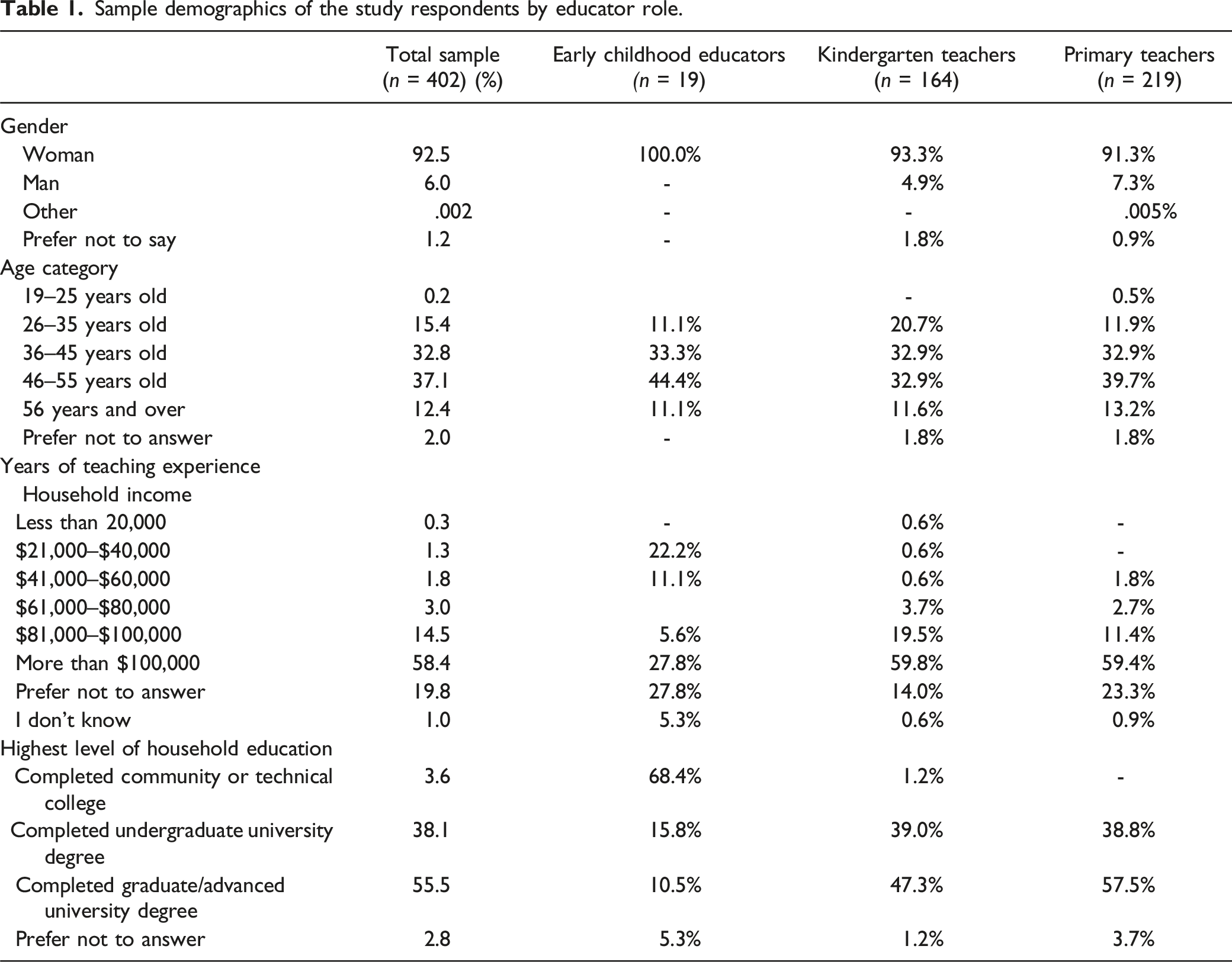
The sample for the current study comprised 402 Ontario educators: 40.8% were kindergarten teachers, 4.7% were early childhood educators (ECEs), and 54.5% were primary (Grade 1 or 2) teachers. Three quarters (76.6%) were teaching full-time, while 22.4% were working part-time. Participants completed a web-based survey between mid-May to July 2022. Due to the complexity of the education system (e.g., four different types of publicly-funded school districts and multiple teacher unions) and strict privacy laws in Ontario, we were unable to contact teachers directly to invite them to participate in this study. Instead, educators were recruited through the three teacher unions in the province of Ontario (including the public, Catholic, and French teachers’ unions) which include the majority of members. Invitations to participate were sent out through email and social media channels. All participation was voluntary, and educators provided consent to participate in the study before beginning the survey. Interested educators completed the survey electronically using an anonymous survey link. The respondents came from 60 of the 72 Ontario school districts. This method proved successful in a previous study (e.g., Spadafora et al., 2022). All methods and procedures were approved by the University’s Research Ethics Board and by the three educator unions.
Sample Demographics
Sample demographics of the study respondents by educator role.
Of the respondents, 91.5% said that their current format of instruction was “all in person,” 4.2% said they were engaged in hybrid instruction, and 2.7% said they were teaching using all online, synchronous instruction. Educators also reported how many times they had to switch from one instructional model to another (e.g., in person to online): 9.3% said they did not have to switch models, 44.6% said they had to switch once, 29.1% said twice, 8.3% reported switching 3 times, and 8.8% said they switched 4 or more times during the current school year.
Measures
Demographics
Participants completed personal demographics including their age range (19–25 years, 25–35 years, 36–45 years, 46–55 years, 56 and over), gender (“Man”; “Woman”; “What term describes your gender?“), and their household income bracket: “$21,000 to $40,000; $41,000 to $60,000; $61,000 to $80,000; $81,000 to $100,000; More than $100,000; Prefer not to answer; I don’t know. Educators also reported the highest level of education attained in their household (“Completed community or technical college,” “Completed undergraduate university degree,” Completed graduate/advanced university degree,” “Prefer not to answer”).
Teaching Experiences During the COVID-19 Pandemic
The survey questions were compiled through a collaboration between researchers and the teachers’ unions, with the overall goal being to gather actionable information about the impact of the COVID-19 pandemic that would be useful to educators, school boards, and researchers. All survey questions were approved by the educator partners for their clarity and understandability.
Educators reported on their teaching experiences during the 2021 to 2022 school year. They reported on the types on instruction they employed over the 2021 to 2022 school year and answered questions such as “Do you think that the COVID-19 pandemic affected your overall well-being?” (Yes; No-my well-being was about the same).
Educators were also asked the following: “Please rate the general developmental skills of children in your current classroom in relation to your observation of children the same age in cohorts prior to March 2020.” Educators then selected their response from a 5-point scale where 1 = much lower than earlier cohorts and 5 = much higher than earlier cohorts for each of the following sets of skills: overall skills, academic skills, physical skills, and socio-emotional skills. Mean scores were computed for each type of classroom (kindergarten/primary) and each question.
They were also asked to estimate the average academic achievement of their students in literacy and mathematics in comparison to cohorts they taught prior to the pandemic-related school closures. Educators were asked to “Please estimate the average achievement of your students in English/French language literacy and mathematics as of today,” followed by “Please estimate the average achievement of your students in English/French language literacy and mathematics at this point in the school year in a normal, pre-pandemic year.” The response options were: Far below grade level (i.e., by more than one grade), Somewhat below grade level, At grade level, Somewhat above grade level, Far above grade level (i.e., by more than one grade).
Educator Mental Health
Two well-established scales were used to measure educators’ symptoms of anxiety and depression.
Generalized Anxiety Scale
(GAD; Spitzer et al., 2006). This scale measures the severity of anxiety symptoms in participants. It asks them “Over the last two weeks, how often have you been bothered by the following.” Participants respond to this 7-item scale from 0 = not at all to 3 = nearly every day. Scores of 15 or higher indicate severe anxiety, 10 to 14 constitutes moderate anxiety, 5 to 9 represents mild anxiety, and 0 to 4 indicates minimal levels of anxiety. For this study, we report mean overall scores, and use a cut-off score of 10 to create a binary variable indicating at least moderate levels of anxiety (Spitzer et al., 2006). The sample-derived internal reliability for this scale, using Cronbach’s alpha, was .91.
Centre for Epidemiological Studies Depression Scale
(CESD-10; Radloff, 1977). This is a 10-item scale that asks participants to rate how often they have felt symptoms of depression over the past week. Participants responded on a scale from 0 to 3, where 0 = rarely or none of the time, and 3 = most or almost all of the time. Higher scores indicate higher levels of depression. A score of 16 or higher is used to identify those at risk for clinical depression, while a score of 10 to 15 indicates moderate levels of depression (Lewinsohn et al., 1997). For the current study, we use mean overall scores, as well as a cut-off of 10 to indicate at least moderate levels of depression. The sample-derived internal reliability for this scale, using Cronbach’s alpha, was .90.
Analytical Plan
First, we examined descriptive statistics (e.g., frequencies, percentages, means, and standard deviations), of educator responses to how they rated the developmental skills and academic achievement of their current cohort of students, and their mental health. We used independent samples t-tests to compare ratings these ratings between primary (Grade 1 and 2) teachers and kindergarten educators. When comparing academic achievement ratings of cohorts of children attending school before March 2020 and ratings of their current cohort of students we utilized one-sample t-tests. Lastly, to investigate the association between teacher mental health and ratings of students’ academic achievement and skills, we first examined bivariate correlations and then used linear regression (using listwise deletion) to examine those variables that were significantly associated at the bivariate level. In these multivariate analyses, we controlled for educator age (as a proxy for years of experience) and respondent gender. These were important covariates to include as previous research has found associations between higher levels of reported teacher effectiveness and years of experience (e.g., Wolters & Daugherty, 2007), and that women tend to report higher levels of both depression and anxiety (e.g., Faravelli et al., 2013). All variables met assumptions of normality and linearity. All statistical analyses were performed using the IBM SPSS software, version 28 (IBM Corp Released, 2021). We used a Bonferroni adjusted p value of .01 as the statistically significant threshold for our results.
Results
Educator Rating of Their Students’ Developmental and Academic Skills
Kindergarten educator and primary teacher ratings of their current students’ skills compared to pre-pandemic cohorts of students.
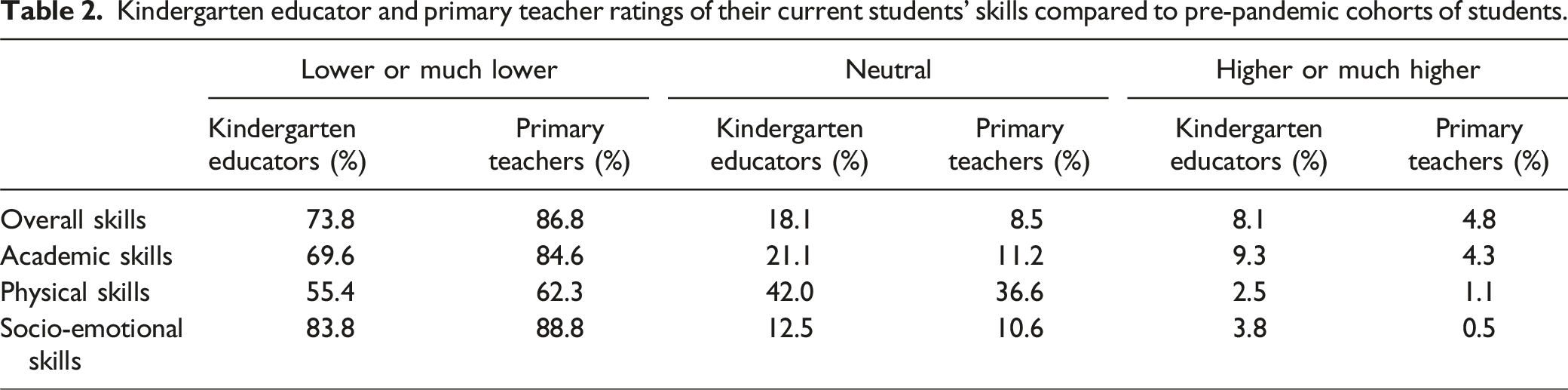
Both kindergarten and primary educators were most likely to rate children’s socio-emotional skills as “Lower or much lower,” followed by overall skills, then academic. The percentages of educators rating physical skills in this category were the lowest. Slightly different pattern was observed among ratings of children’s skills as “Higher or much higher”—the fewest kindergarten educators considered children’s physical skills in this category (2.5%), while only 0.5% of primary educators did so for children’s socio-emotional skills.
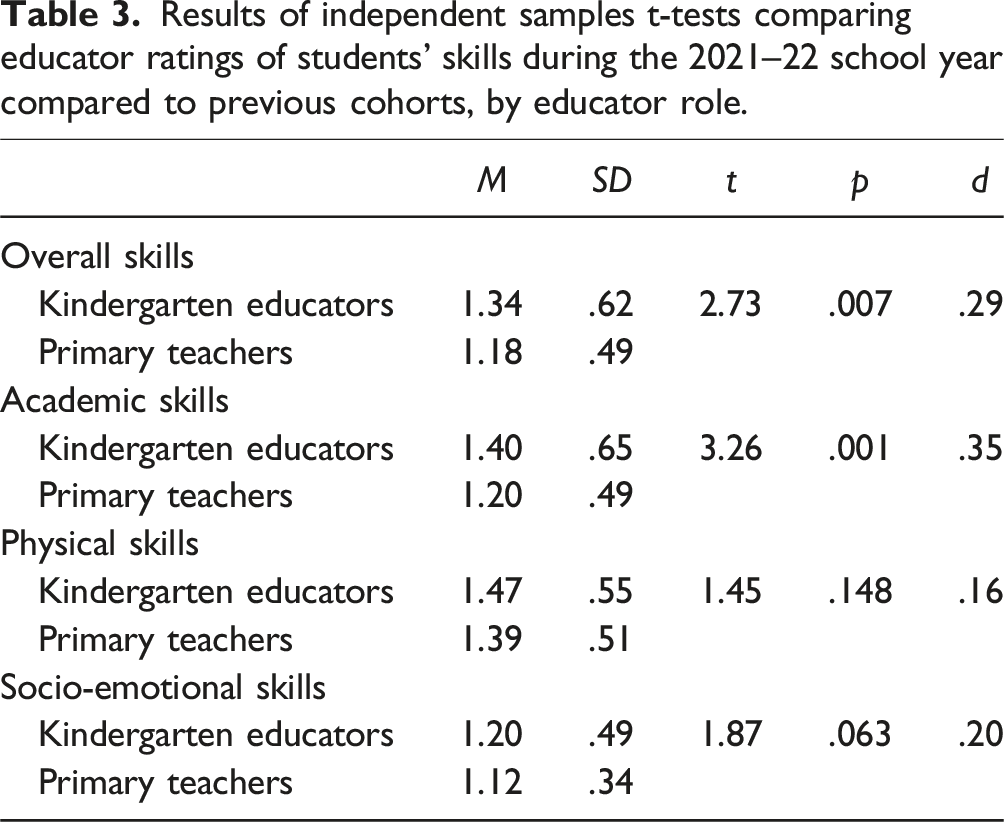
Results of independent samples t-tests comparing educator ratings of students’ skills during the 2021–22 school year compared to previous cohorts, by educator role.
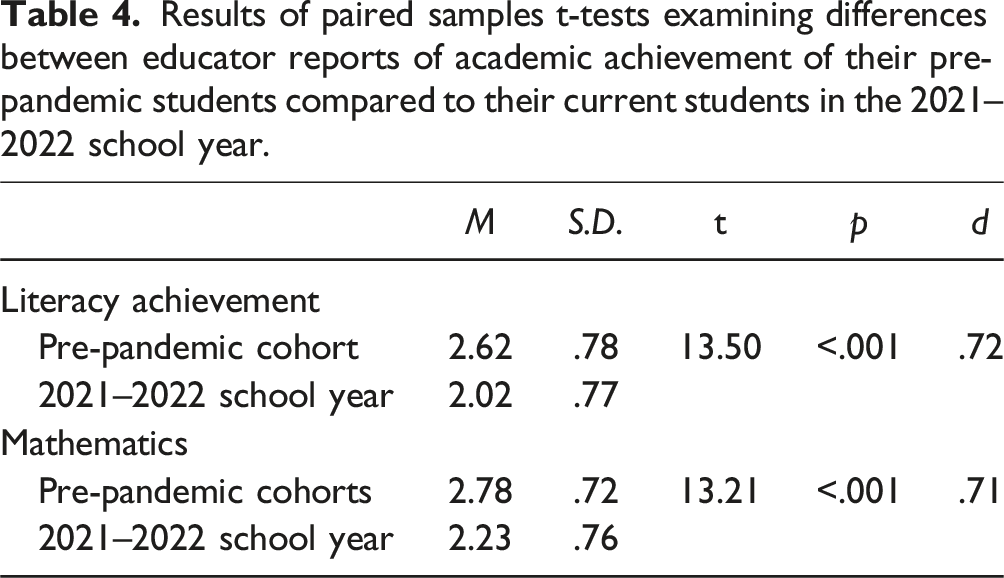
Results of paired samples t-tests examining differences between educator reports of academic achievement of their pre-pandemic students compared to their current students in the 2021–2022 school year.
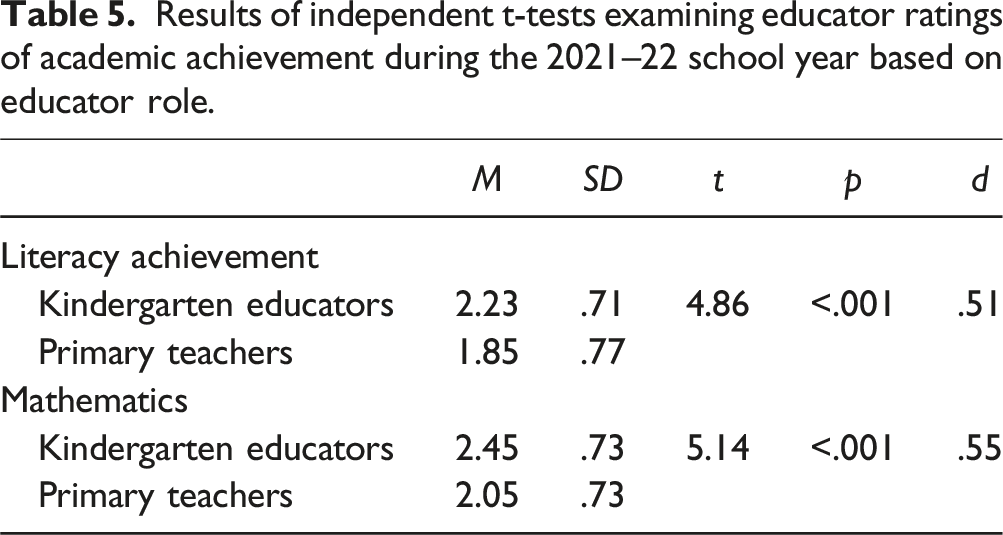
Results of independent t-tests examining educator ratings of academic achievement during the 2021–22 school year based on educator role.
Educator Mental Health
The majority of educators (87.6%) indicated that they felt the COVID-19 pandemic affected their overall well-being. Of those who indicated their overall well-being had been affected, 43.7% said it had been affected negatively and 52.7% said somewhat negatively. A very small percentage of educators (2.4% and 1.2%) said their well-being had been affected somewhat positively and positively, respectively.
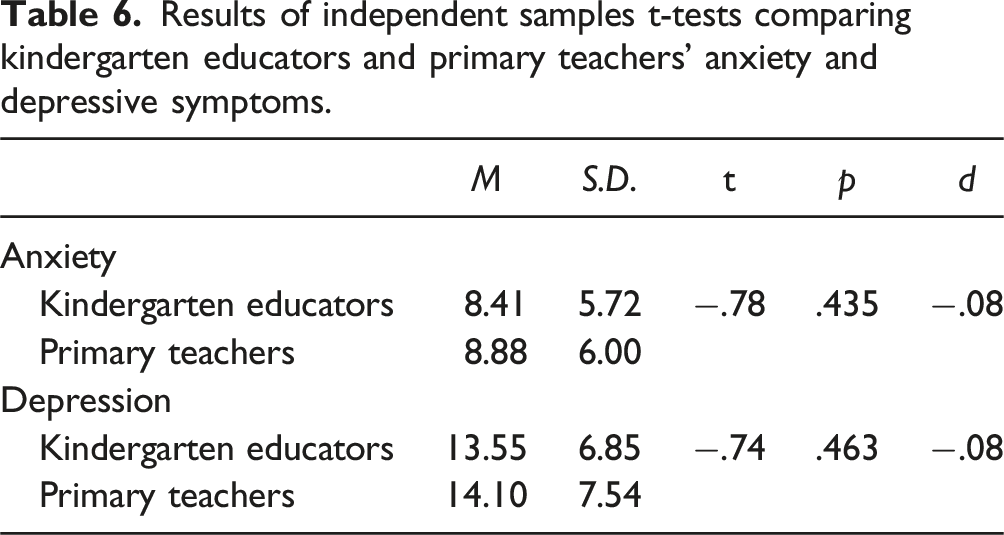
Results of independent samples t-tests comparing kindergarten educators and primary teachers’ anxiety and depressive symptoms.
Association Between Educator Mental Health and Their Ratings of Students’ Skills
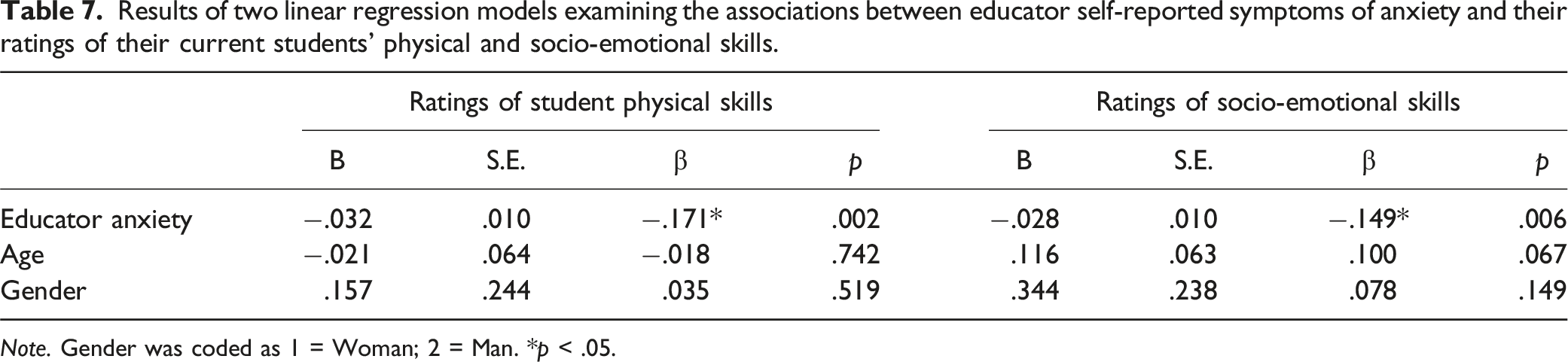
Lastly, we wanted to explore whether there were any associations between educators’ anxiety and depression scores and the ratings of their students’ developmental and academic skills reported above (overall, academic, physical, and socio-emotional skills) during the current school year. Bivariate correlations revealed that there was a small negative association between educator anxiety levels and their ratings of physical (−.11; p < .05) and socio-emotional skills (−.15; p < .01). No associations were found between depression scores and educator ratings.
Results of two linear regression models examining the associations between educator self-reported symptoms of anxiety and their ratings of their current students’ physical and socio-emotional skills.
Note. Gender was coded as 1 = Woman; 2 = Man. *p < .05.
Discussion
The purpose of our study was to examine educators’ perceptions of developmental and academic skills of kindergarten to Grade 2 students in Ontario, Canada, during the first fully in person school year after two years of disrupted education (2021–2022), in the context of their own mental health. Overall, our results reveal that educators perceived their young students to be struggling in several different areas of their development and academics. The majority of educators felt their students were not at the same skill level developmentally nor academically as students in previous school years. This finding is in line with other international research that highlights that students are falling behind after experiencing interrupted learning and a lack of social interactions (Chaabane et al., 2021; Grewenig et al., 2021; Hoffman & Miller, 2020). For example, both low and high achieving elementary and high school students in Germany were found to spend significantly less time learning during distance education and instead took part in activities that could be detrimental to their learning and development (e.g., playing computer games) (Grewenig et al., 2021). Further, in their systematic review, Chaabane and colleagues (2021) found that families had less access to support and resources during distance learning, and that there was a significant decrease in physical activity, which could help explain the educator ratings observed in our study.
A unique contribution of our study was the ability to compare perceptions of educators teaching different grades: kindergarten versus primary (i.e., Grades 1 and 2). Across several developmental and academic areas, a greater proportion of primary teachers rated their students’ skills lower compared to their kindergarten educator counterparts. This makes sense given that the cohorts of students that would have been in Grade 1 or 2 during the 2021 to 2022 school year would have spent much of their schooling not only with many months of online learning, but also with limited social interactions and extracurricular activities (e.g., Gallagher-Mackay et al., 2021), thus potentially limiting their ability to optimally develop social, physical, and cognitive skills.
With regards to mental health, many educators reported experiencing symptoms of anxiety and depression. Interestingly, levels of anxiety and depression in the spring of 2022 were higher than those previously reported by a group of kindergarten educators sampled in the spring of 2020. Specifically, in 2020, 24.5% and 50.4% of the educator sample reported at least moderate levels of both anxiety and depressive symptoms, respectively (Spadafora et al., 2022), compared to 34.9% and 64.6% of the current sample. While our studies were not longitudinal in design, the poorer mental health found within our Ontario educator sample in 2022 compared to 2020 suggest that perhaps the COVID-19 pandemic-related shutdowns and public health restrictions may have taken a toll on educators. In a pre-pandemic study, when faced with increased feelings of stress and burn out, teachers have been shown to have poorer mental health and psychological well-being (Burić et al., 2019). Recent research has also indicated that educators reported increased anxiety and teacher burnout as a result of teaching during the COVID-19 pandemic (Pressley, 2021; Sokal et al., 2020; Weißenfels et al., 2022). Further, Oberle and colleagues (2020) found teachers having higher levels of burnout was associated with poorer social-emotional competence of their students, further highlighting the importance of teacher mental health support. Our study emphasizes that after two years of interrupted teaching and pandemic-related shutdowns, some teachers may be experiencing poorer mental health.
Despite the high percentage of educators reporting moderate levels of symptoms of anxiety and depression, there were few significant associations between educator mental health (anxiety and depression levels) and their ratings of student academic and developmental skills. Levels of depression were not associated with educator ratings of their students’ skills, however, anxiety was. Educators who experienced higher levels of anxiety were more likely to rate their current cohort of students as being developmentally behind on physical and socioemotional skills compared to previous cohorts. Previous research found that teachers with higher levels of stress may be more likely to report negative feelings, such as anger and frustration, towards their students (Burić et al., 2019; Fiorilli et al., 2017; Klusmann et al., 2016). It is worth noting, however, that the effects observed in the current study were relatively small (Funder & Ozer, 2019). It is impossible to ascertain whether perhaps educators teaching children with poorer skills were more anxious because of their perceived higher burden of responsibility to help them catch up, or their anxiety was leading them to perceive children’s skills more poorly. Nevertheless, the finding that the effect of this association was small, and that there was no association with educator depression, indicates that educators’ mental health, on average, does not interfere with their ability to rate their students’ abilities. Thus, considering our theoretical approach reflecting the Bronfenbrenner’s theory, our study showed that children’s skills were more strongly influenced at the proximal and distal levels (child age and pandemic closures) than by the educator mental health, conceptualized as the interactive, or mesosystem, level of influence.
Strengths, Limitations, and Future Directions
There are several limitations to the current study. First, our results were cross-sectional and were a snapshot of one point in time, though notably, an important point considering the course of the pandemic. We were unable to directly compare the results from the current study to any pre-pandemic data or during online learning. Instead, we relied on educator reports of their perceptions of previous cohorts of students compared to their current cohort. It is worth noting that there is a long tradition of relying on teacher reports and perceptions in educational assessments. Second, because we relied on a newsletter mailing and social media for recruitment, we cannot establish the representativeness of our sample. However, we had participants from over 80% of the school districts in the province, spanning the different types of publicly-funded schools (English and French public, as well as English and French Catholic). Our questions relating to students’ skills were intentionally broad to facilitate cohort-level comparison, rather than attempts to assess individual skills; nevertheless, we acknowledge that such breadth might have created variation in interpretation by the educators. We also acknowledge that the goal of our study was to gain a preliminary overall understanding of the student learning and development outcomes upon returning to in-person classrooms through the eyes of the educators. We did not examine these perceptions in relation to student demographics such as gender, socioeconomics, race, ethnicity, or any special educational needs. Future research, and in particular detailed quantitative tracking of students’ skills from pre- to post-pandemic years, both tracking individual trajectories and using cohort comparisons, should determine whether some marginalized groups were more greatly impacted than others. While our previous work found that the impact of the COVID-19 pandemic and, in turn, online learning, was widespread (Spadafora, Wang, et al., 2023), it is possible that some groups were able to transition more smoothly than others when returning to the classroom setting. Aspects such as classroom size and access to learning resources both during the COVID-19 pandemic-related school shutdowns and when returning to the classroom could also have impacted study results and could be examined in future studies. Greater impact of changes in the mode of learning are likely among children with disabilities and/or those in families with fewer resources with regards to access to resources and supports during remote learning (Chaabane et al., 2021). Future research will also need to use diverse methods, such as qualitative interviews or focus groups, and continue to measure changes in child development and academic skills as we continue to monitor the potential impact of the COVID-19 pandemic for years to come. Continued longitudinal research is needed to determine if there will be long-lasting learning losses as a result of the COVID-19 pandemic-related shutdowns or if student academic and developmental outcomes will return to pre-pandemic norms.
Implications
Our findings have some crucial implications. While majority of discourse on pandemic losses focuses on children’s academic achievement, our study shows that deficits in socio-emotional skills are seen even more frequently by front-line educators. This is particularly important as few school districts if any collect systematic data on children’s socio-emotional skills past kindergarten age, even though many implement standardized academic achievement tests. Moreover, small so far, but growing evidence points to children experiencing pandemic restrictions prior to school entry as not being immune to some developmental losses. Our study adds to this emerging body of evidence, albeit with caveats due to lack of representativeness of the sample. Our findings also provide preliminary evidence to support further research in this area, for example, to examine school-level variables or neighborhood and socioeconomic factors that might exasperate these effects. In practice, our results confirm and reinforce the need for classroom-level educator supports to facilitate the growth and development of their students, and that in the post-pandemic time, these supports may have to be greater as children grow. Children’s education and social development trajectories need to be monitored through later grades to establish whether the perceived increases continue or were a passing phenomenon. Taken together, our study highlights the need for increased support and vigilance over the developmental and academic progress in the cohorts of students that spent most of their early school years with many disruptions to their learning and emphasize the importance of their educators’ well-being, regardless of its association with perception of student skills. The practice recommendation directly associated with our study is that we must continue to support educators, particularly of the students who entered the post-Covid years in early primary grades, to continue to bridge the gaps that have occurred as a result of the COVID-19 pandemic-related school shutdowns. The support, especially from the mental health perspective, needs to extend to educators.
Conclusion
Results from the current study suggest that overall, educators overwhelmingly perceived their young students’ developmental and academic skills to be lower two years into the COVID-19 pandemic, compared to previous cohorts of students the same age; a finding that will likely be increasingly corroborated with quantitative data from direct assessments of children’s learning. For example, a recent report from the Canadian province of Manitoba showed fewer kindergartners demonstrating adequate school readiness skills in 2023 than indicated by pre-pandemic national normative data (The Early Development Instrument Report, 2022/23: Manitoba Provincial Report). Since in our study primary grade educators (Grade 1 and 2) rated greater proportions of their students as having lower skills than pre-pandemic cohorts than kindergarten ones, we could expect that older children may experience greater losses.
Footnotes
Acknowledgments
We would like to thank the Association des enseignantes et enseignants franco-ontariens (AEFO), Elementary Teachers’ Federation of Ontario (ETFO), and Ontario English Catholic Teachers’ Association (OECTA) for their interest and support, and promotion of our study among their members. We are very grateful to all educators who completed the survey.
Declaration of Conflicting Interests
The author(s) declared no potential conflicts of interest with respect to the research, authorship, and/or publication of this article.
Funding
The author(s) received no financial support for the research, authorship, and/or publication of this article.
