



Abstract
This study examined cultural orientations (vertical and horizontal collectivism and individualism) and their relations with cognitive and emotional empathy toward students among 188 Palestinian-Arab teachers in Israel. A mixed-methods study that included quantitative analysis and qualitative interviews with 30 teachers, revealed that this traditional and mostly collectivist population manifested a duality of orientations that is context-dependent and is associated with differences in empathy. The findings suggest that horizontal collectivist orientation is associated with higher cognitive and emotional empathy, while vertical individualism hinders both empathetic dimensions. The findings enrich previous cross-cultural studies and have implications regarding teachers’ training programs.
Keywords
Cultural orientations and their relations with teachers’ empathic abilities are crucial in understanding how Palestinian-Arab teachers in Israel approach empathy in educational contexts. Previous research in cross-cultural psychology and educational approaches has explored the distinctions between collectivist and individualist orientations and their implications for social behavior (Gay, 2018; Wilcoxen et al., 2021). However, there is a significant gap in the literature concerning how these cultural orientations specifically influence the cognitive and emotional dimensions of empathy among teachers, particularly within the Arab-Palestinian context in Israel.
We address this gap by adopting a cultural perspective, focusing on the interplay between collectivist and individualist orientations and their relations with key dimensions of empathy, including cognitive empathy (perspective-taking [PT]) and emotional empathy (empathic concern [EC]). Recent research has emphasized the importance of understanding the cultural factors that shape empathy, especially in diverse educational settings (Li & Costa, 2023). However, the relations between cultural orientations and these empathic abilities remain underexplored, particularly among Palestinian-Arab teachers in Israel.
Employing a mixed-methods approach, this research combines quantitative analyses with qualitative methods, including vignette-based semi-structured in-depth interviews. These methods provide a nuanced understanding of how teachers’ cultural orientations relate to their expressions of empathy in daily classroom contexts. By addressing this critical gap in the literature, the study not only enriches the academic dialogue but also offers practical insights for educational practices in culturally diverse settings.
Literature Review
Empathy in Education
Empathy is broadly defined as the ability to understand and share the emotions of others (Batson, 2009), or as emotional participation in another’s experience (Eisenberg & Strayer, 1990). It is a multidimensional construct, encompassing both cognitive and emotional components, as described by Davis (1980). Davis’ (1983) Interpersonal Reactivity Index (IRI), includes four empathy dimensions, two of them—PT and EC—are the most relevant in the educational context. PT refers to the cognitive ability to adopt another person’s viewpoint, which enables teachers to better understand the emotional and educational needs of their students. This understanding improves communication and supports more effective teaching strategies. EC reflects the emotional capacity to care for others, fostering supportive and compassionate teacher–student interactions.
PT and EC enhance teachers’ ability to connect with their students and create a responsive, emotionally supportive learning environment. Studies in the educational context showed that both dimensions significantly contributed to the emotional support teachers provide, leading to a more positive learning experience for both students and teachers (Barr, 2011; Kunter et al., 2013). Note that the other two IRI dimensions: fantasy (the ability to identify with fictional characters) and personal distress (self-focused anxiety in response to suffering of others) are less applicable to education, as they do not directly contribute to effective teacher–student relationships.
Understanding the role of empathy in education in a specific context also necessitates examining cultural factors, such as individualism and collectivism, which significantly shape interpersonal dynamics. These cultural orientations influence how empathy is expressed and experienced by educators, thereby impacting their interactions with students.
Cultural Orientation in Education
Cultural orientation refers to the values, beliefs, and practices that shape individuals’ perceptions and interactions within their social environment. According to Gay (2018), teachers’ cultural orientation plays a crucial role in the educational process, influencing how they perceive, engage with, and respond to students. Hofstede (1986) emphasizes that educators’ cultural perception significantly affects their expectations of student behavior, communication styles, and instructional strategies. The primary dimensions of cultural orientations are individualism, which highlights personal autonomy, and collectivism, which emphasizes group belonging and interdependence (Hofstede, 2001; Triandis, 1995). Singelis et al. (1995) introduce additional dimensions of “horizontal” and “vertical” to provide more nuances to cultural orientations. This distinction is relevant to the definition of authority relations in a particular culture. Vertical collectivism (VC) is associated with obedience to authority and adapting norms of higher-status individuals, while horizontal collectivism (HC) focuses on fraternity and harmony within in-groups. Horizontal individualism (HI) refers to the desire for uniqueness, while vertical individualism (VI) is concerned with improving individual status through competition, achievement, and power (Singelis et al., 1995). These cultural orientations, which are systems of values and perceptions, may relate to the way empathy is expressed in educational contexts.
Cultural Orientations and Empathy
Cultural orientations may influence the way people experience and express empathy in different social contexts. Individual behaviors and social interactions are often shaped by cultural norms that people adopt and internalize. Empathy is influenced by culture and related values, especially the individualistic/collectivist norms of societies (Chopik et al., 2017; Jami & Walker, 2022). The relationship between cultural orientations and empathy has been extensively studied, yet findings are sometimes contradictory. Collectivist cultures, which emphasize interdependence and social harmony, tend to foster affective forms of empathy that focus on emotional engagement with others to maintain group unity (Kitayama et al., 2000; Triandis, 1995). Indeed, it is generally believed that collectivist societies tend to exhibit higher levels of empathic responses, as these cultures place greater importance on social relationships and maintaining social cohesion (Chopik et al., 2017; Schwartz et al., 2010).
However, other studies suggest that empathy is not necessarily heightened in collectivist cultures compared with individualistic cultures. For example, Cassels et al. (2010) found that participants from Western cultures reported higher levels of empathy, particularly in the cognitive domain, due to their ability to distinguish between their own emotions and the emotions of others. The researchers argued that in individualistic cultures, the focus on personal autonomy and independence allows individuals to develop better cognitive empathy, enabling a deeper understanding of others’ perspectives without losing personal identity boundaries.
Another contradiction can be found in the studies by Jami and Walker (2022), who found higher levels of empathy among Western participants compared with East Asian participants. The researchers explained that East Asian cultural norms, characterized by high interdependence, create confusion between self and others’ emotions, leading to higher levels of personal distress and lower levels of EC. Conversely, Western participants, living in individualistic societies, demonstrated higher emotional independence and were better able to distinguish between their own emotions and those of others, resulting in higher levels of cognitive empathy.
Another study by Dalsky et al. (2008) found a positive correlation between collectivism and sympathy, with Japanese participants reporting higher levels of sympathy compared with their American counterparts. The researchers explained this result by stating that in collectivist cultures like Japan, an individual’s well-being depends on the well-being of the group, thus enhancing the ability to feel sympathy toward others. In contrast, other studies like those by Henrich et al. (2010) suggest that living in individualistic cultures promotes greater personal autonomy and positive self-perception, which may lead to less focus on the needs of others and consequently lower levels of affective empathy.
The discrepancies in the previous studies may be due to methodological differences. Some studies have measured affective empathy, while others have focused on cognitive empathy, which may explain the inconsistencies.
The inconsistency in findings is also related to differences in how empathy is defined. While Chopik et al. (2017) defined empathy as “a tendency to be psychologically attuned to the emotions and perspectives of others,” Cassels et al. (2010) defined it as “the ability to perceive what others are feeling and appropriately share the same emotional state.” This lack of consistency in definitions makes it difficult to compare findings across different studies. In addition, external factors, such as exposure to other cultures may influence cultural orientations and empathy but have not been sufficiently explored. For example, other studies (Jami & Walker, 2022) focused solely on the participants’ country of residence without examining whether participants were monoculture or bicultural.
To understand how cultural orientations influence empathy, it is essential to consider the horizontal and vertical dimensions of both collectivism and individualism, as these relate to power dynamics and social status within cultures. HC emphasizes equality, sociability, and cooperation, which may promote empathy by fostering concern for others and a sense of equality among group members (Oishi et al., 1998; Triandis & Gelfand, 1998).In contrast, VC, which stresses hierarchy and conformity, may limit the capacity for empathy due to its focus on maintaining social order and authority (Triandis & Gelfand, 1998).
On the contrary, HI emphasizes personal autonomy and equality, potentially enhancing cognitive empathy, as understanding and distinguishing between one’s own and others’ emotions become paramount (Markus & Kitayama, 2014). VI, which emphasizes hierarchy, competitiveness, and personal achievement, may restrict emotional empathy, as the focus shifts toward personal success rather than concern for others (Triandis & Gelfand, 1998).
Many studies in this field have not explicitly addressed the horizontal and vertical dimensions of cultural orientations, which could help explain the variability in findings concerning the relationship between empathy and cultural orientation. Some research focused on general collectivism and individualism has found conflicting results regarding empathy levels across different cultures (Cassels et al., 2010; Jami & Walker, 2022).
In light of these contradictory findings and the methodological limitations in previous research, our study will focus on providing a more comprehensive understanding of the relationships between the four dimensions of cultural orientations—collectivism and individualism, both horizontal and vertical—and cognitive and emotional empathy dimensions. Specifically, we aim to investigate the connections between these cultural dimensions and the two primary components of empathy: EC and PT. This approach will allow us to expand on the existing research and clarify how cultural dynamics influence empathetic behavior across different orientations.
The discussion on cultural orientations and empathy has highlighted how cultural values shape empathic responses across different contexts, particularly in a society like the Arab-Palestinian society in Israel, which has been extensively studied culturally, but not in terms of empathy as we aim to explore here. This discussion provides a foundation for further investigation into how these dynamics manifest within this unique cultural framework.
Cultural Orientation in the Arab-Palestinian Society in Israel
Th
According to Pieterse’s (2001) concept of cultural hybridity, Arab-Palestinian society navigates and integrates multiple cultural identities, blending traditional collectivism with emerging individualistic tendencies. This hybridity reflects the society’s ongoing negotiation with its cultural identity amid globalization, dominant Israeli culture, and persistent socio-political tensions. These cultural influences create a dynamic environment where traditional and modern values coexist and sometimes clash, particularly in areas, such as education, family dynamics, and social behavior (Abu Asbah, 2018).
The socio-cultural changes and the transition from a traditional to a modern society have intensified the tension between old and new values, leading to a social crisis characterized by the disintegration of social cohesion, internal conflicts, and value polarization (Abu Asbah, 2018). The clash between modern and traditional values intensifies the value crisis, creating insecurity and confusion among students and teachers. This tension is particularly evident in educational systems adopting multicultural values, where it complicates integration and deepens the disconnect between students’ identities and their socio-cultural environment.
The interplay between traditional collectivism and emerging individualism in Arab-Palestinian society is closely linked to how teachers express empathy in their professional interactions.
Cultural Orientation and Empathy Toward Students Among Arab-Palestinian Teachers in Israel
The relationship between cultural orientations and the expression of empathy among Arab-Palestinian teachers is reflected in the dominance of values that influence how empathy is expressed toward students. Teachers who emphasize VC values tend to prioritize authority and hierarchy, leading to a stronger focus on maintaining classroom discipline and less on building warm and personal relationships with students. As noted by Alian and Safadi (2013), authority figures in Arab schools view control and discipline as key indicators of teacher success. Consequently, caring for students, which reflects the empathetic dimension, is considered less important in the evaluation of outstanding teachers. Previous research has also highlighted that discipline issues have become a central challenge in Arab schools, explaining the emphasis on authority (Ilaiyan, 2013). Therefore, it is reasonable to assume that teachers in Arab schools are less encouraged to adopt HC values in the school context (Hativa, 2003), which could promote greater empathetic concern for students, mutual support, and warmer relationships.
As suggested by studies on empathy in collectivist societies (Realo & Luik, 2002), an Arab teacher with an authoritative, hierarchical, and collectivist orientation may struggle to adopt the student’s perspective and understand the intellectual processes the student is undergoing. Therefore, in Arab society in Israel, it is likely that a teacher with a VC orientation may believe that a “good” student is conformist and disciplined. A creative and self-assured student who demonstrates enthusiasm in discussions may be perceived by the teacher as disrespectful, thus undermining the teacher’s exclusive professional authority (Jiraisi, 2013). In these circumstances, the teacher may find it difficult to understand the student’s independent perspective and develop cognitive empathy, although this does not preclude the possibility of developing affective empathy by focusing on the well-being of the group and general harmony (Chopik et al., 2017).
Regarding individualistic values, teachers who emphasize independence and self-fulfillment, both for themselves and their students, may face challenges in the Arab education system. The authoritative and centralized management style limits teachers’ ability to express themselves independently and to develop an educational approach that encourages personal autonomy (Alian & Safadi, 2013).
Furthermore, the modernization process experienced by Arab-Palestinian society in Israel, along with academic training in Israeli colleges with a Western agenda, may lead to a duality between traditional values and the individualistic values to which teachers are exposed during their studies (Eilam, 2003). As Weinstock et al. (2015) describe, Arab society is undergoing a gradual transition from a traditional communal orientation toward a more modern social orientation. During their training, teachers are introduced to values, such as autonomy, critical thinking, and self-expression, which often contradict the traditional values of authority and discipline. This duality may lead them to develop more complex approaches, combining empathetic concern for students from the in-group with an understanding of the individual perspective of each student (Abu Asbah, 2018).
Based on this dynamic, the current research focuses on exploring the relationships between the four dimensions of cultural orientations—collectivism and individualism, both vertical and horizontal—and the cognitive and emotional empathy of teachers in the Arab-Palestinian society in Israel. The study seeks to answer the following research question:
Research Hypotheses
According to the literature review presented above, we hypothesize that:
Method
Research Design
This study utilized a mixed-methods approach (Creswell & Plano Clark, 2023) to explore the relationship between cultural orientations and empathy dimensions among Arab-Palestinian educators in Israel. The quantitative phase focused on gathering self-reported data through online questionnaires, while the qualitative phase employed semi-structured interviews using vignettes to enrich and contextualize the quantitative findings. This design allowed for a comprehensive examination of the research questions by integrating statistical analysis with personal and cultural narratives.
The study received approval from the Ethics Committee of the University of Haifa (No. 440/21). All participants provided informed consent, and confidentiality was maintained throughout the study. Participants were informed of their right to withdraw from the study at any time without consequences.
Quantitative Phase
Participants
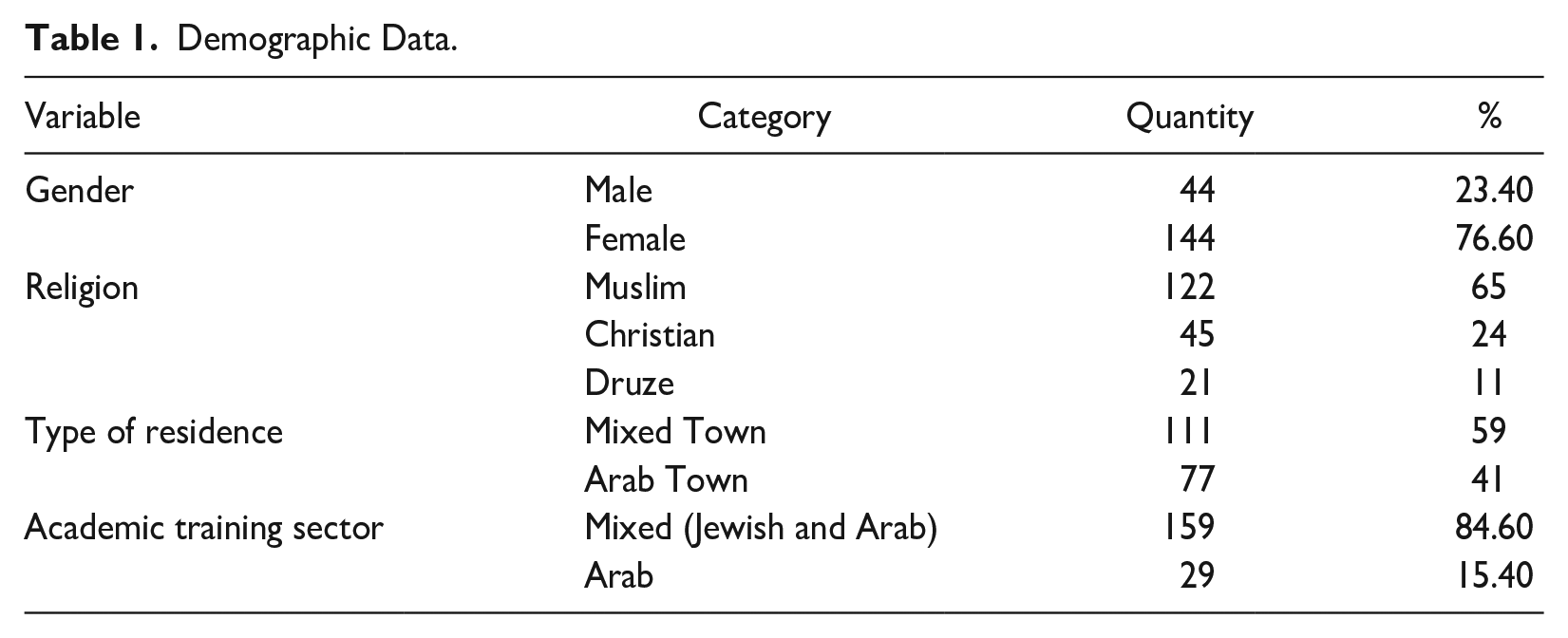
The final sample included 188 teachers from Arab-Palestinian society in Israel, aged 24 to 65 years (M = 42.18, SD = 9.70). The categorical demographic data appear in Table 1.
Demographic Data.
Instruments
Demographic Questionnaire
Included questions about the categories presented in Table 1.
Cultural Orientation Questionnaire
The “Individualism and Collectivism Cultural Orientation Scale” by Triandis and Gelfand (1998) was administered. The questionnaire includes 16 items rated on a 9-point Likert-type scale The items measure four dimensions: VC, α = .60 (e.g., It is my duty to take care of my family, even when I have to sacrifice what I want); HC, α = .53 (e.g., When I cooperate with others I feel good); VI, α = .61 (e.g., It is important that I do my job better than others); and HI, α = .54 (e.g., I prefer to be self-reliant rather than depend on others).
Multidimensional Teacher Empathy Questionnaire
The questionnaire is based on the IRI (Davis, 1983) adapted by Hen (2010) for school situations by embedding characters of teachers and students instead of random characters. It includes 14 items rated from 1 to 5, pertaining to the emotional scale of EC (e.g., When I see an exploited student, I feel the need to protect him; α = .49;) and the cognitive scale of PT (e.g., Before I criticize a student, I try to imagine how I would feel if I were in his or her place; α = .56). Note that the low internal consistencies are discussed below.
Procedure
Data were collected using the Qualtrics platform, ensuring data security and compliance with GDPR (General Data Protection Regulation) guidelines. Due to the unavailability of suitable Arabic translations, the questionnaires were translated into Arabic, the participants’ native language, by two independent translators using the back-translation method, and were then evaluated by subject matter experts and through cognitive interviewing with Arabic speakers (Beaton et al., 2000). The questionnaires were administered sequentially to participants, with detailed explanations provided about the transitions between different questionnaires and specific Likert-type scales, to ensure full understanding and prevent confusion.
Out of 210 distributed questionnaires, 22 were disqualified due to incomplete responses, leaving a final sample of 188 teachers. Questionnaires were distributed via links shared in WhatsApp groups of national Arab educational instructors, who have access to all schools in the Arab society in Israel. In addition, the questionnaires were distributed to school principals and various teacher groups on social networks. By that, a geographically and professionally diverse sample was obtained, addressing the challenge of reaching teachers in remote areas.
Qualitative Phase
Participants
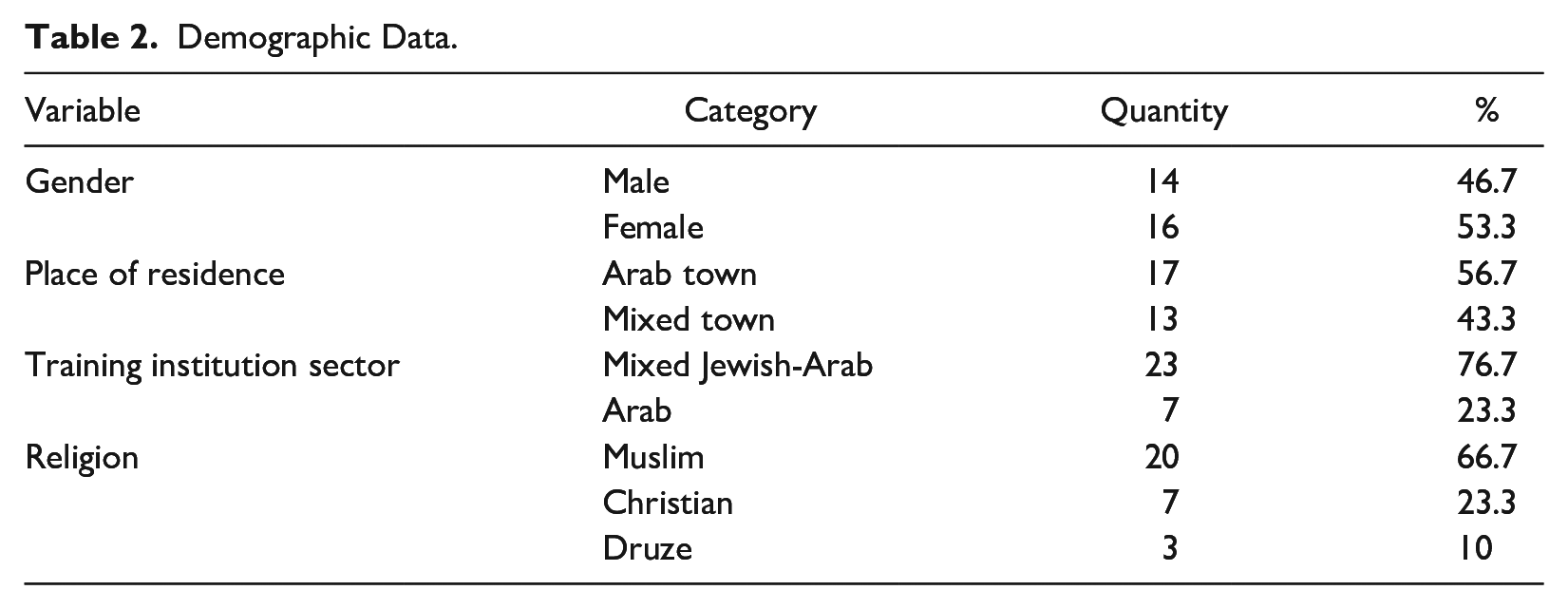
The qualitative interviews were conducted with 30 teachers who volunteered after completing the quantitative questionnaires. Their ages ranged between 24 and 65 years (M = 42.18, SD = 9.70). The categorical demographic data are described in Table 2.
Demographic Data.
The Interview
Semi-structured in-depth interviews were designed to elicit responses that would reveal the teachers’ empathy and how it is influenced by their cultural orientation. Vignettes were selected through a structured process that included interviews with educational experts, focus groups with teachers, and classroom observations, ensuring the vignettes were authentic and relevant to daily classroom challenges (see Table 3).
The Vignettes Used in the Study.
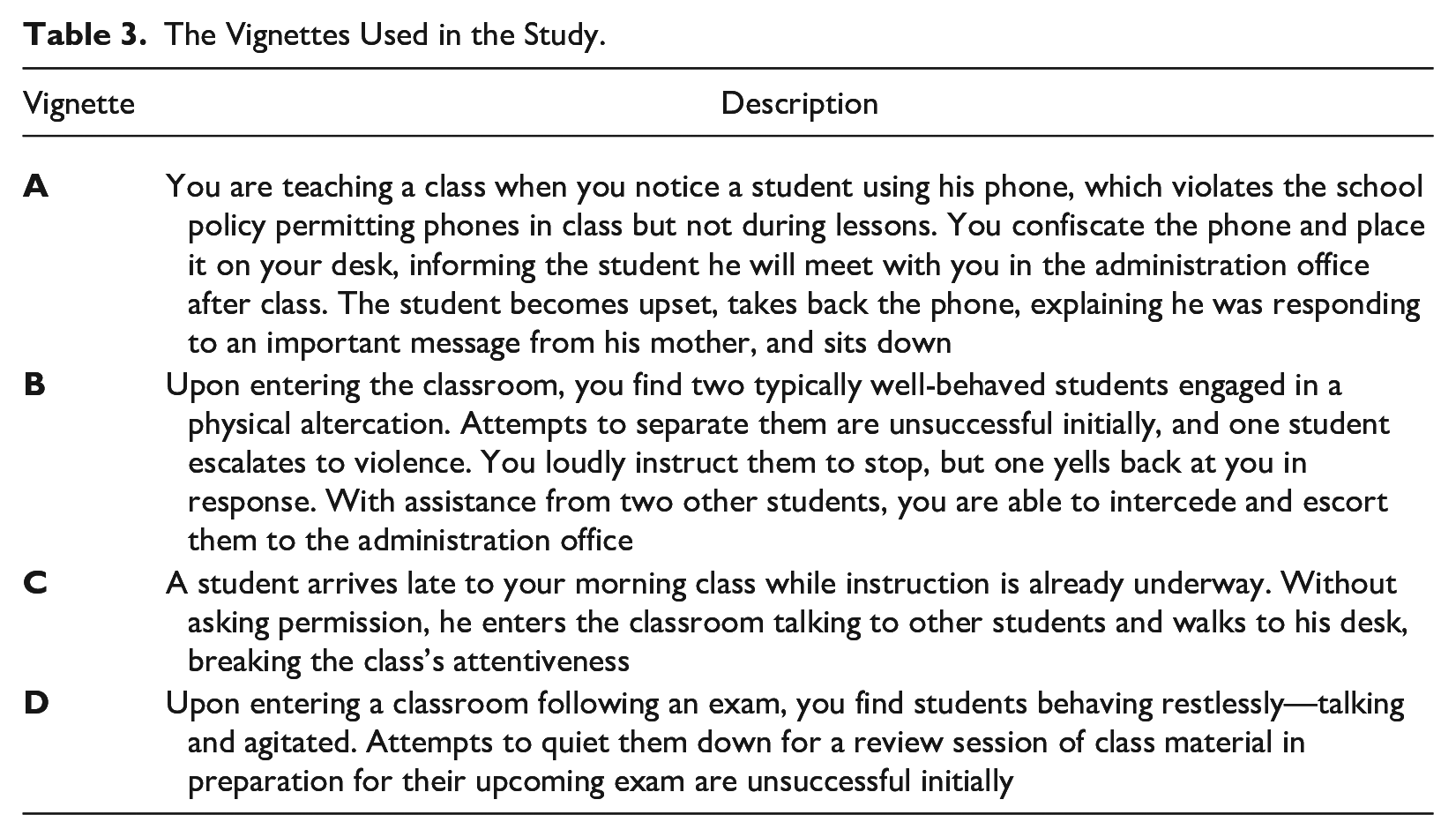
Following each vignette, participants were asked: (1) How would you feel in that moment? (2) What thoughts would go through your mind? and (3) How would you respond to this vignette? All participants responded to all vignettes.
Qualitative Data Collection
Each interview lasted approximately 45 minutes, with some conducted face-to-face and others via Zoom. Interviews were recorded, transcribed, and translated by the researchers for the purpose of writing this article, ensuring accuracy and consistency throughout the process. Based on the approach of single translation (Neuman et al., 2011), where the translation is performed from the source language to the target language by a single translator, the researchers adopted the dynamic equivalence approach. To enhance the reliability of the results, the researchers re-evaluated the translations with native speakers of the target language, which allowed for the reduction of personal biases and increased transparency in the translation process.
Qualitative Data Analysis
The qualitative data were analyzed using thematic analysis based on the six-phase process outlined by Braun and Clarke (2022). First, during the “familiarization” phase, we thoroughly read the data to identify key themes and understand the participants’ experiences, emotions, and attitudes. In the “initial coding” phase, we created flexible codes based on prominent features, continuously comparing them with emerging categories. In the “searching for themes” phase, we organized the codes into initial themes based on recurring patterns. The “reviewing themes” phase involved checking the themes to ensure they accurately reflected the data and presented clear connections. In the “defining and naming themes” phase, we clearly defined each theme, focusing on significant interpretations of the findings. In the findings phase, we presented the key themes with supporting examples to illustrate the core insights drawn from the data. The findings were peer-reviewed to ensure reliability and validity, and pseudonyms were assigned to participants to maintain confidentiality.
When mentioned, gender is represented by M for males and F for females, age is reported by a number (e.g., M, 45 indicates male, 45 years old).
Findings
Cultural Orientations Among Teachers
Quantitative Results
The descriptive analysis indicated that VC and HC were the most dominant cultural orientations among the teachers, reflected in their relatively high mean scores. HI also demonstrated a high mean score, comparable with HC, while VI had the lowest mean score in the sample.
The correlation analysis (Table 4) revealed significant positive relationships between the two collectivist orientations (HC and VC) and between the two individualistic orientations (HI and VI). In addition, an unexpected positive relationship was found between VC and the individualistic orientations (HI and VI).
Descriptive Statistics and Correlations Among the Cultural Orientations (N = 188).
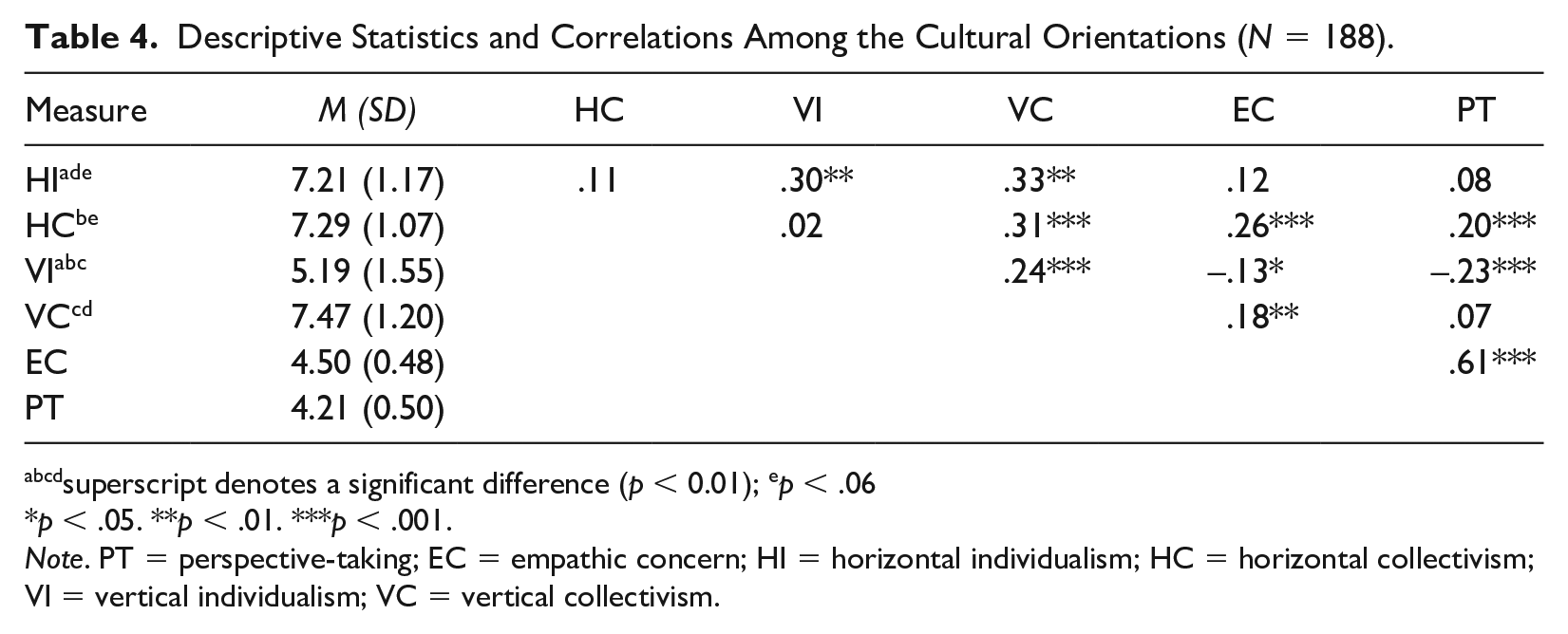
superscript denotes a significant difference (p < 0.01); ep < .06
p < .05. **p < .01. ***p < .001.
Note. PT = perspective-taking; EC = empathic concern; HI = horizontal individualism; HC = horizontal collectivism; VI = vertical individualism; VC = vertical collectivism.
Qualitative Findings
The qualitative analysis of interview data confirmed the findings of the quantitative phase, where both collectivist orientations (VC and HC) emerged as dominant cultural orientations among the teachers. In the qualitative responses, many teachers expressed values consistent with VC, emphasizing hierarchical relationships and discipline, while others demonstrated HC, highlighting group harmony and mutual support.
In the qualitative findings, the complex interplay of mixed orientations was evident, where integrated approaches were expressed. For example, several teachers who leaned toward VC also exhibited elements of HC and individualism, illustrating a nuanced and context-dependent approach to their cultural values. These qualitative insights deepen our understanding of how these mixed orientations manifest in teachers’ interactions with students.
Table 5 presents the dominant cultural orientations in the qualitative responses of the teachers. The number of teachers who exhibit dominant responses corresponding to that orientation is indicated, along with examples from the responses that illustrate the relevant orientation.
Dominant Cultural Orientations in Qualitative Responses.
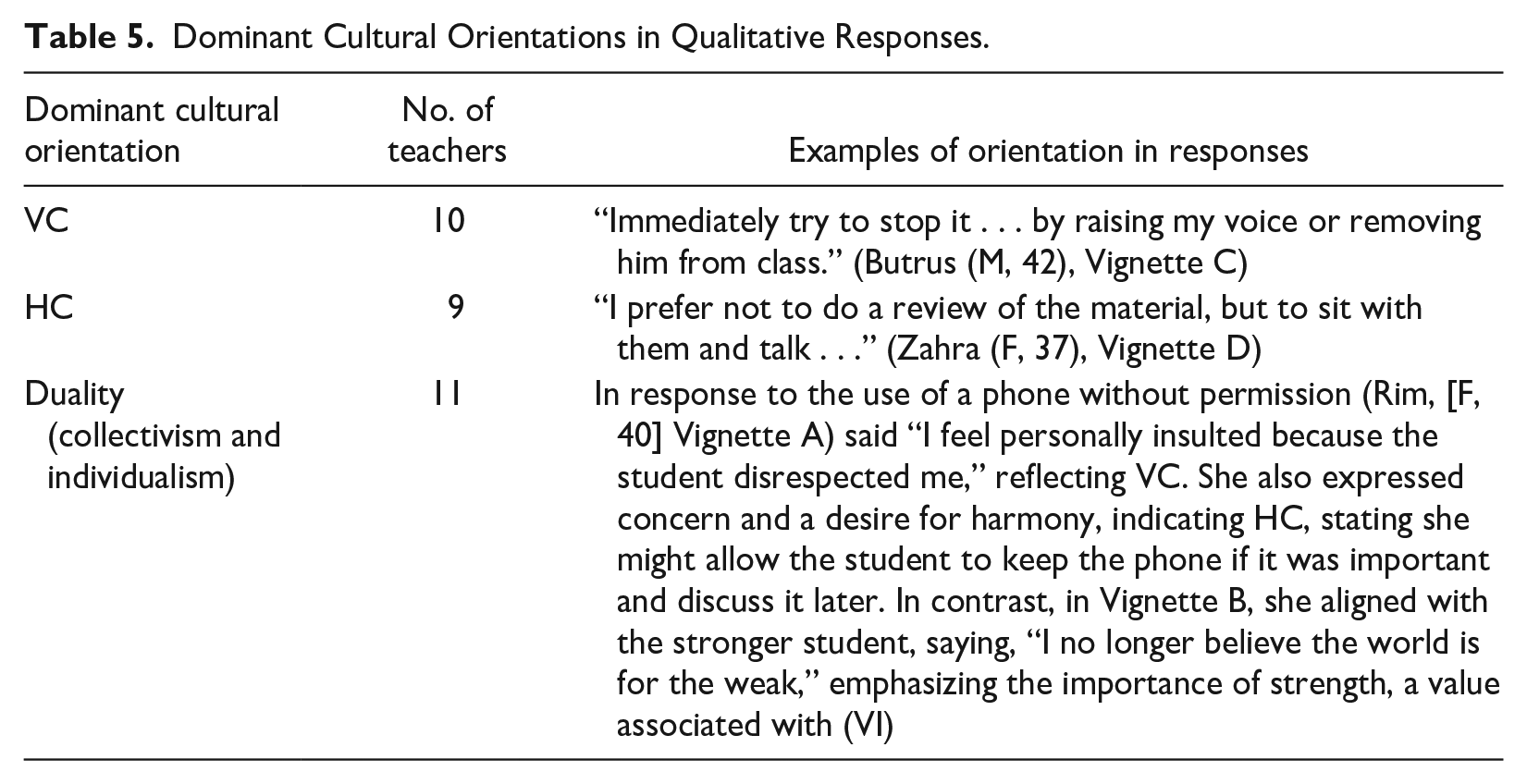
The dominance of both VC and HC indicates the importance of these cultural values in the way teachers interact with their students. In addition, the observed duality between different cultural orientations highlights the fluid and context-dependent nature of these values, wherein teachers navigate multiple orientations simultaneously. In the following section, we examine how these orientations impact the cognitive and emotional dimensions of empathy among teachers.
Vertical and Horizontal Collectivist Orientation and Empathy Dimensions
Quantitative Results
The research hypotheses focused on the relationships between cultural orientations and empathy dimensions. Before testing these hypotheses, we examined the relevance of demographic variables to empathy. Most demographic variables showed no significant relationships with empathy dimensions, except for the training institutions: Teachers studying in mixed (Jewish-Arab) institutions demonstrated significantly higher levels of EC and PT compared with those studying in Arab institutions (see the Electronic Appendix). As a result, training institutions were included as a control variable in subsequent hypothesis testing.
The hypotheses were tested using simple correlations (see Table 4) and hierarchical regression models. In the regression models, demographic variables (gender, age, and training institutions) were entered in the first block as control variables, while cultural orientations were entered in the second block (see Table 6).
Hierarchical Regressions Predicting Empathy Dimensions by Cultural Orientations (N = 188).
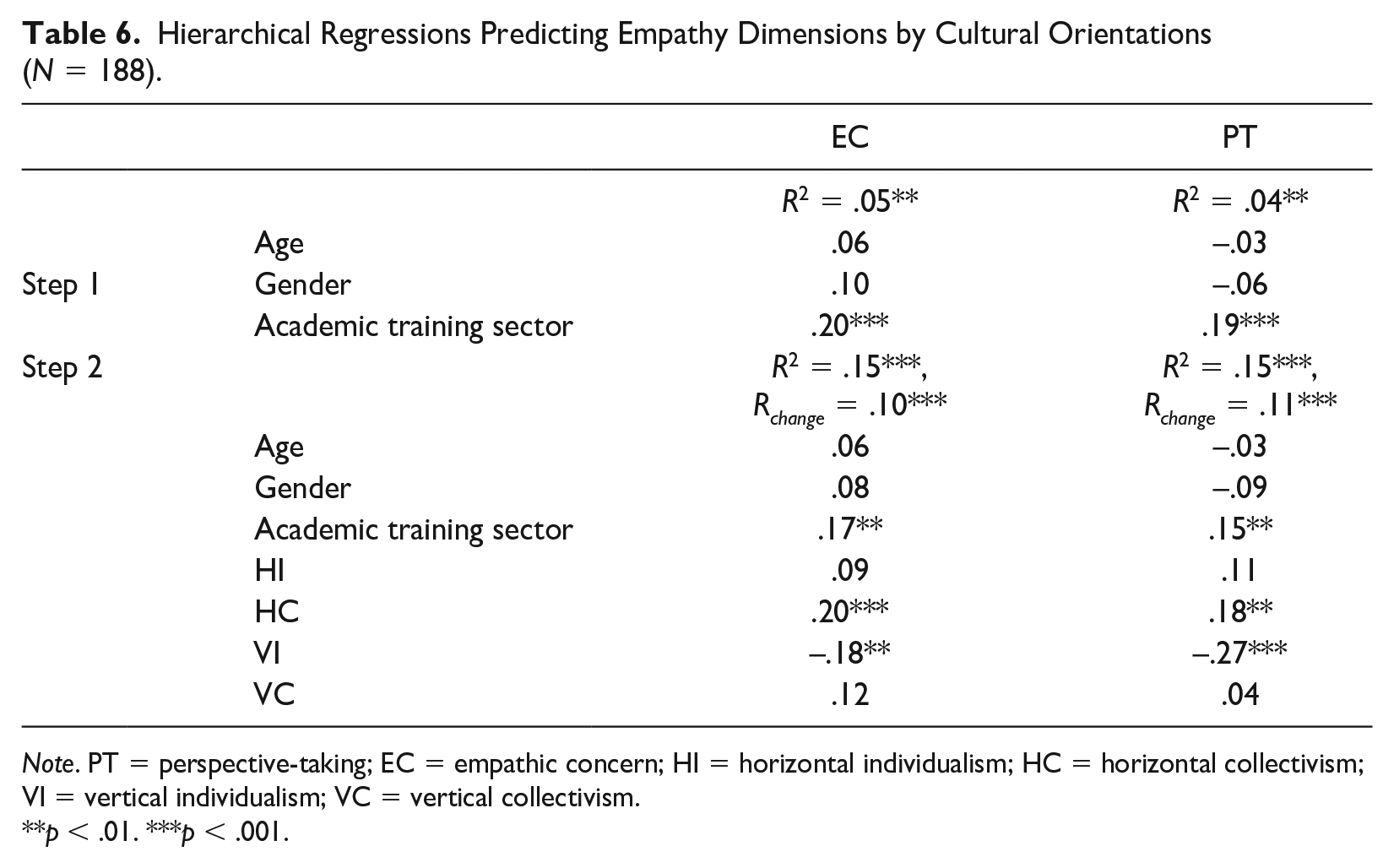
Note. PT = perspective-taking; EC = empathic concern; HI = horizontal individualism; HC = horizontal collectivism; VI = vertical individualism; VC = vertical collectivism.
p < .01. ***p < .001.
Table 6 shows that the cultural orientations added significantly to the explained variance for both empathy dimensions. HC was a positively significant predictor of both EC and PT, but unlike the hypothesis, VC was not a significant predictor of empathy. VI was a negative significant predictor of the empathy dimensions, as expected, but HI was not, unlike the hypothesis. Note that the simple correlations showed almost the same relations between cultural orientations and empathy. The one exception was that VC correlated positively with EC, and disappeared when the other orientations were included in the prediction. A trend that negates the hypothesis.
As highlighted and confirmed by the regression analyses and the simple correlations, HC is a positive predictor, and VC is a negative predictor of both dimensions of empathy among Arab-Palestinian teachers. To gain a deeper understanding of these relationships and the underlying mechanisms, further investigation is necessary. To this end, we extend our research using a qualitative approach to examine these correlations in greater depth.
Qualitative Insights
The relationship between VC and empathy among Arab-Palestinian teachers in Israel reveals a complex dynamic. Our quantitative analysis found no significant correlation between VC and emotional or cognitive empathy, and even positive simple correlation between VC and emotional concerns. However, the qualitative analysis provides richer insights into how VC is manifested in educational context, and show that teachers with a VC orientation tend to prioritize authority and conformity, which may impair their ability to engage empathetically with students. For example, Butrus (M, 42) demonstrates a tendency toward authoritative reaction and immediate punishment to stop classroom disruption. His response to vignette C, relating to a student arriving late to class and disturbing the lesson reflects that.
Immediately, immediately, immediately try to stop it whether by raising my voice, removing him from class so he can catch up on the material we learned alone, or stopping immediately or exiting the classroom. It’s hard, but I finally got them concentrated—taking them out of concentration isn’t easy for a teacher. From experience, I understand it’s very difficult so I would give him a choice between two things and stop it immediately, not letting it deteriorate further, not even opening a dialogue, either yes or no, and continue teaching.
A VC orientation is evident in several aspects of the above answer: the teacher is an authority figure, and thus the student must comply; non-compliance leads to sanctions and punishments; the student should consider the class’s welfare and not distract peers, fostering conformity and a fear of situations where the teacher might lose control over the students. Butrus prefers immediate and decisive action, such as raising his voice or removing the student from the classroom to stop disruptions, emphasizing visibility and immediate problem-solving. These reactions can be closely linked to collectivist cultures, which emphasize the needs and goals of the group over the individual, and encourage behaviors that meet societal expectations, sometimes at the expense of in-depth analysis or individualized attention to students.
Butrus’ response lacks expressions of empathetic involvement, both cognitively and emotionally. He prioritizes the immediate cessation of disruption over understanding the student’s reasons for their actions, indicating a lower tendency for cognitive empathy. This approach aligns with the understanding that a VC orientation may limit the PT of others due to its emphasis on authority and order (Chopik et al., 2017; Realo & Luik, 2002).
In terms of emotional empathy or empathetic concern, Butrus’ approach seems limited. His focus on quick action and enforcing rules, with little consideration for the student’s emotional state or the underlying circumstances that might have led to their behavior, indicates a lack of empathetic concern for the student’s situation. This aspect is consistent with the characteristics of VC orientation, where group harmony and adherence to norms are often prioritized over individual emotional considerations (Singelis et al., 1995).
The response of Zeinab, F, 40) to vignette A, which describes a student’s use of a telephone in class without permission, also shows the teacher’s dealing with the student’s lack of discipline.
When I was a student, we didn’t have phones. This epidemic has not yet reached our schools, I am against using the phone for the younger generation, it is possible for the older generation only when necessary. Unfortunately, today we use it differently . . .In my opinion it should be forbidden to bring a phone to school and if there is one it should be confiscated, this is my personal opinion.
The teacher’s response to the vignette indicates a VC orientation by the teacher’s expectation of obedience, asking for permission to use the phone in an unconventional way, and receiving punishments for breaking rules while conforming to the principles.
The adoption of a hierarchical, authoritative approach among teachers represents the VC cultural orientation, wherein teachers are seen as figures of authority and respect, and a more liberal approach might be perceived as weakness or lack of control (Hofstede, 1986). Often, these teachers may believe that an authoritative approach ensures better classroom management and facilitates thorough and in-depth coverage of the curriculum. This aspect is particularly significant in the Arab-Palestinian Israeli educational system.
On the contrary, the HC orientation presents a contrasting perspective, emphasizing group harmony and mutual support, which fosters different connections with empathy dimensions. The quantitative analysis revealed positive relations between HC and empathy. This orientation, which emphasizes group harmony, sharing, and mutual support, appears to foster a greater ability of teachers to identify with and respond to their students’ emotions and needs.
A HC orientation was prominently observed in the responses provided by the teachers. For example, Zahra (F, 37) in her response to vignette D, which refers to the students’ emotional turmoil following a test with another teacher, shows sensitivity and understanding to the emotional distress of the students after a challenging exam. She is willing to forgo her planned lesson for an open discussion with them.
If this is a common feeling among most of the students in the class, then I prefer not to do a review of the material, but to sit with them and talk, so they can speak and express themselves . . .So, I prefer to give up this lesson from an educational standpoint, and allocate 10 minutes . . . or even if the whole lesson passes, no problem, the main thing is that the students feel comfortable . . . I try to help them as much as possible. This help is available if it’s the case for the whole class, and not just for two or three students who struggled with the exam, and the rest of the class is fine.
Zahra emphasizes the importance of group harmony and is willing to “sacrifice” a lesson for it. She decides not to confront the class but to adopt various methods to ease them, starting with a conversation and using communicative means that bring them closer and allow the students to express their feelings (Cooper, 2011). She empathizes with her class’s distress but never forgets that ultimately, she is supposed “to teach” them, hence justifying her deviation from her role by stating, “If the student is not comfortable mentally, they cannot learn.” This response highlights characteristics of HC, emphasizing group harmony and mutual support, revealing high cognitive empathy in understanding the motives of the group of students, and also showing empathetic concern for their mental well-being (Cooper, 2011).
The complex influence of different cultural orientations on empathic behaviors among Palestinian-Arab teachers in Israel reveals a multifaceted dynamic. Quantitative findings indicate that these teachers navigate between VC values and other cultural orientations, balancing traditional collectivist values with individualistic ones. The positive correlations found between VC and other orientations suggest that the teachers maintain a strong commitment to their cultural roots while adapting to new social norms.
The qualitative analysis reinforces this complexity, demonstrating how teachers blend different orientations within the same vignette. For example, Shadi (M, 42) exemplifies multiple orientations in his responses to vignette A.
At first, I was angry, frustrated, thinking how rude the boy was to take the phone off my desk. But then, on second thought, I realize maybe he needs the phone now. Kids are connected to their phones like they are to air, so I wouldn’t say “just take it,” but I would prefer that he inform me that he received a message from his mother and needs to respond, and that would have spared me the frustration.
Shadi’s response reflects a duality between vertical and HC orientations. In the first part of his reaction, when he says, “At first, I was angry, frustrated, thinking how rude the child was to take the phone off my desk,” we can see the influence of a VC orientation. A teacher acting according to vertical values views their authority and order in the classroom as central, where any deviation from normative order (such as taking the phone without permission) is perceived as a breach of authority that triggers anger and frustration. As his response continues, however, when he states, “. . . but then, on second thought, I realize maybe he needs the phone now. Kids are connected to their phones like they are to air . . .,” there is a shift toward a HC orientation. Here, he moves from a position of anger and enforcement of authority to an understanding and empathic stance toward the student, which characterizes HC orientation, emphasizing care for others and group harmony. The teacher begins to consider the student’s needs, trying to understand the situation from the student’s perspective and contextualizing the behavior in light of social norms. This demonstrates cognitive empathy—the ability to understand the student’s point of view—and EC—the compassionate feeling toward the student, aimed at helping him within the classroom setting.
In addition, duality and transitions between orientations were particularly observed in teachers’ responses across different vignettes. For instance, Shadi’s response reveals a duality between cultural orientations and dimensions of empathy. In vignette A, previously discussed, Shadi demonstrates a balanced approach, combining the preservation of authority with a non-confrontational, dialogical approach, reflecting both VC and HC orientations, while showing an understanding of the student’s perspective without compromising his authority. In vignette D, where Shadi is not directly involved in the students’ distress, he offers a more collaborative and horizontal approach, representing a HC orientation. When he suggests, “Maybe they should have time to calm down with some circle activities in the classroom,”” he emphasizes the importance of creating harmony in the classroom and attending to the students’ needs, thereby expressing EC and demonstrating an ability to take the students’ perspective on their feelings of stress and their need for space to relax.
In contrast, in vignette C, Shadi demonstrates an authoritative approach derived from a VC orientation when he chooses to remove the disruptive student from the classroom against the school administration’s directives, saying, “I’m sending him out of the class, I don’t want him in the class.”” This action reflects an empathic failure and is aimed at punishment. On the contrary, when asked, “Is it allowed by school policy to remove a student from the classroom?”” his response, “It’s not allowed by the rules, but what I believe in is what I do. It doesn’t matter what the principal’s instructions are, I do what I think is right,”” reflects a HI orientation emphasizing personal autonomy and self-judgment over adherence to external authority. This shift between orientations illustrates how Shadi attempts to balance maintaining authority and group care with personal autonomy and self-expression. Shadi’s complex response highlights a rich dynamic of changing values, adapted according to the situation and context in which he operates.
Discussion
In this chapter, we will discuss the main topics outlined by the findings.
Cultural Orientations Among Arab-Palestinian Teachers in Israel
In the quantitative findings of the study, VC was the most dominant orientation, followed by HC. These trends were strongly reflected in the qualitative findings, indicating the prevalence of traditional collectivist values in classroom management. Interestingly, HI also showed a high average in the quantitative data and was evident in the qualitative findings, but mostly reflected in attitudes but not in behavior toward students. Thus, a penetration of modern individualist values within the Palestinian-Arab society in Israel as a result of the modernization process (Pieterse, 2001) was evident.
VC, emphasizing respect for authority, hierarchy, and discipline, was found to be the most significant orientation in both the quantitative and qualitative findings. This aligns with research literature that portrays Palestinian-Arab society as one where authority and hierarchical social structure are highly valued (Abu-Baker, 2012; Dwairy, 2015). Many teachers perceive their role as being authority figures in the classroom, which explains the dominance of VC (Abu-Asba, 2014).
HC, emphasizing cooperation and equality among group members, was also prevalent among the teachers. These teachers tend to prioritize harmony in their relationships with students and emphasize cooperation in the classroom. These findings align with studies that found that in HC societies, social harmony and mutual support are highly valued (Schwartz et al., 2010).
The fact that HI also showed a high average in the quantitative findings is an interesting discovery, as it reflects the influence of modern values on Palestinian-Arab society in Israel. HI represents the impact of Western values entering traditional society, particularly among young and educated teachers who are exposed to these values through the process of modernization and their academic training (Abu Asbah, 2018; Eilam, 2003). This highlights the broader societal transition, where traditional collectivist values are gradually giving way to individualistic orientations, especially among younger generations (Weinstock et al., 2015). On the contrary, in the qualitative findings, there was variation in the contexts in which individualist orientations appeared. These orientations appeared less frequently and were not associated with empathy toward students. Instead, this group of teachers expressed individualist approaches primarily in their relationships with school management or in dealing with power issues, rather than in direct teacher-student interactions.
The research literature also points to a possible gap between reported values and those applied in practice, particularly in societies where there is tension between traditional and modern values (Abu Asbah, 2018). Teachers may report individualist values (as found in the quantitative findings) due to their aspiration for these values, as they view independence and self-fulfillment as important, influenced by the individualist training they received. However, in practice, when faced with complex educational situations, they revert to collectivist values that help them maintain order and discipline in the classroom. This is particularly true in the Palestinian-Arab society, where teachers are expected to meet social expectations that emphasize respect for authority and the importance of hierarchy, as noted in various studies on the model teacher in the eyes of Arab school principals in Israel, emphasizing the importance of teacher authority in classroom management, with less focus on promoting caring relationships with students (Alian & Safadi, 2013).
The Relationships Between Cultural Orientations
Our quantitative findings indicate a relationship between VC and the three other orientations: HC, VI, and HI. The connection between VC and HC is not surprising as reflected in our findings and can be explained by the need to maintain social harmony while upholding social order in a collectivist society. This allows teachers to maintain their authority while fostering close relationships with their students. The relationship between VC and VI is an interesting result that raises questions about the processes occurring in educational contexts where personal authority and achievement play a significant role. Shavitt et al. (2011) argue that in cultures that emphasize hierarchy, power functions in two ways—it serves to maintain the group’s well-being and acts as a means of achieving personal status. This could explain why teachers in the Palestinian-Arab educational system combine values of authority and group importance with a desire for personal success and professional empowerment.
The relationship between VC and HI may seem contradictory, but it can be explained in the context of complex cultural influences. HI emphasizes personal independence, while VC emphasizes authority and hierarchy (Shavitt et al., 2011). Our findings indicate that teachers can balance personal independence with the need to maintain authority within a hierarchical social structure. This balance may occur when teachers find ways to maintain autonomy and independence in different contexts while maintaining social order and hierarchical power in the classroom, as in the example of teacher Rimon.
Context-Dependent Duality in Cultural Orientations
The findings of the current study reveal a clear duality in the cultural orientations of Palestinian-Arab teachers, where their responses shift between VC and HC depending on the vignette in which they operate. This phenomenon aligns with Abramson’s (2012) perspective, which emphasizes that cultural orientations change according to the social and cultural context in which an individual is situated. The teachers oscillate between VC orientation, which emphasize authority and hierarchy, and HC orientation, which stress cooperation and equality, depending on the vignette presented to them.
The variation in teachers’ responses from one vignette to another reflects a context-dependent decision-making process. For instance, in situations where a teacher perceives a direct threat to their authority, they tend to adopt a vertical orientation that emphasizes the need to maintain status and control. In contrast, in situations where there is no direct threat, the teacher may adopt a more horizontal and cooperative approach, emphasizing harmony and equality. This phenomenon indicates the teachers’ flexibility in adapting to different contexts, as they must make educational decisions based on the systemic demands and pressures of the educational environment and society in which they operate.
The Relationships Between Cultural Orientations and Empathy Dimensions
The research findings revealed unique patterns in how teachers with collectivist orientations—both vertical and horizontal—develop EC and PT with their students. In addition, significant differences were found between the two cultural orientations in their influence on these two dimensions of empathy.
In line with our first hypothesis, the quantitative and qualitative findings showed no significant correlation between teachers with a VC orientation and the cognitive dimension of PT in classroom interactions with students. As emphasized by Chopik et al. (2017), characteristics, such as the emphasis on authority, hierarchy, and conformity associated with this orientation may reduce teachers’ ability to understand the unique perspectives of students. This is primarily because teachers focus on expecting conformist behavior from students, often overlooking individual differences in perspectives and emotions. The research literature indicates that the tendency to emphasize tight social bonds and hierarchical social structures may lead teachers with a VC orientation to view themselves and their students as part of a unified system where everyone is expected to fulfill their role for the common good (Markus & Kitayama, 2014). This interdependence and lack of differentiation creates assumptions about behavior and emotions, due to blurred personal boundaries. As noted by Cassels et al. (2010), collective cultural norms can lead to confusion between the self’s emotions and those of others, causing teachers to assume that students share the same thoughts and feelings. This may impair the teacher’s ability to understand each student’s personal experiences and unique emotions, reducing the incentive to listen or try to understand each student’s perspective as an independent individual. This is particularly evident in societies where obedience and respect for authority are expected, such as in Palestinian-Arab society in Israel, where teachers face social pressures to maintain authority in the classroom (Alian & Safadi, 2013).
As a result, teachers tend to prefer solutions based on authority and discipline over approaches that enable deep emotional and intellectual understanding (Chopik et al., 2017). In addition, the expectation of conformity and focus on authority leads teachers to see students as part of a broader system, rather than as separate individuals (Markus & Kitayama, 2014). This collectivist perception, where the individual is seen as part of a larger collective, causes teachers to prioritize the collective welfare of the students, which limits their ability to develop a deep emotional understanding of each student’s personal perspectives.
Moreover, the research findings showed a complex relationship between VC and EC. In the quantitative phase, a simple correlation was found, but when background variables—particularly the academic institution where the teachers were trained—were included in the regression analysis, this connection disappeared. This may be attributed to the academic institutions in Israel, which place significant emphasis on Western and individualist values, such as critical thinking, autonomy, and self-expression, which differ from traditional collectivist values. Teachers trained in these institutions may internalize new values that do not align with the emphasis on authority and hierarchy found in VC, thus weakening the connection between VC and EC (Eilam, 2003).
On the contrary, the qualitative findings showed weaker connections to EC, suggesting that although the Arab education system is based on authority and hierarchy and tends to prioritize discipline and conformity (Alian & Safadi, 2013), it allows teachers to express concerns for students. However, these concerns are often limited and not based on a deep personal understanding of the students. It is primarily expressed through maintaining classroom order rather than fostering personal emotional connections. Furthermore, it is important to emphasize that teachers with this orientation may perceive their concern as part of their role in ensuring the welfare of the entire class rather than focusing on the well-being of the individual. This concern is not centered on the personal emotions of the students but on the collective well-being of the class. In this way, teachers with a VC orientation may be less able to develop personal relationships with students, but their concern is expressed to some extent, primarily in maintaining the welfare of the entire class and discipline (Alian & Safadi, 2013).
In addition, as we hypothesized, a strong connection was found between HC orientation and EC. Teachers with this orientation emphasize equality and cooperation among group members, which allows them to demonstrate a higher level of personal EC for their students. These teachers tend to develop deeper emotional connections with their students, enabling them to care not only for the class as a group but also for the personal needs of each student. According to previous studies (Shavitt et al., 2011), cultures that promote equality and mutual understanding contribute to the development of significant EC.
Contrary to the original hypothesis, the findings showed that HC was significantly associated not only with EC but also with PT, unlike VC. This finding can be explained by the core characteristics of HC, which emphasize equality, cooperation, and interpersonal interaction. The values of equality and personal connection that characterize this orientation support the creation of an environment where teachers can understand the unique emotions and experiences of students. In this way, teachers succeed in taking the perspective of their students, seeing them not just as part of the group but as individuals with unique emotions and perspectives (Chopik et al., 2017; Realo & Luik, 2002). Previous studies (Shavitt et al., 2011) indicate that in cultures where the emphasis is on equality and social relationships, there is a tendency to develop a deeper understanding of others.
The quantitative and qualitative findings regarding HI did not show a positive correlation between HI and the dimensions of empathy (EC and PT), contrary to the third hypothesis. This gap may stem from the fact that teachers reported HI values due to their aspiration for equality and mutual understanding, but these values were not implemented in their interactions with students. Qualitative findings showed that only a small number of teachers tended toward this orientation, and it appeared primarily in professional contexts and personal expression, rather than in teacher–student interactions. Research literature highlights a gap between reported and practiced values, particularly in societies where there is tension between traditional and modern values (Abu Asbah, 2018). In complex educational situations, teachers tend to revert to collectivist values that help them maintain order and discipline in the classroom (Alian & Safadi, 2013).
Regarding VI, although the quantitative findings showed a negative correlation between VI and empathy dimensions, it was not sufficiently present in the qualitative findings. When it did appear, it was mainly expressed in terms of power dynamics and personal expression, rather than in interactions with students. Teachers with this orientation focused more on personal achievements and status, and less on emotional understanding of students, aligning with the research literature on the subject (Chopik et al., 2017).
Research Limitations
This study has several methodological limitations that must be considered, particularly regarding the measurement tools. The low Cronbach’s alpha values observed in the study may indicate limitations in the cultural and linguistic adaptation of the questionnaires for the participants. Complex constructs, such as empathy and cultural orientations, may not have been fully captured by these tools, affecting their reliability (Clark & Watson, 2019). Therefore, it is crucial to develop culturally adapted questionnaires to ensure accurate measurement in diverse populations.
Another limitation stems from the sampling process. While the sample was heterogeneous in terms of demographic characteristics, it was not sociologically representative of the broader population of Palestinian-Arab teachers in Israel, which limits the generalizability of the findings. In addition, there were practical challenges during data collection, as some interviews were conducted face-to-face while others took place via Zoom due to logistical constraints. The inconsistency in interview settings may have impacted the depth and quality of the responses, as the dynamics of face-to-face interviews differ from those of virtual ones (Archibald et al., 2019). These limitations highlight the need to improve sampling and measurement procedures in future studies to ensure more reliable and accurate results.
Implications
The findings of this study have several important implications for educational practice and policy. First, the demonstrated link between cultural orientations and empathy suggests that teacher training programs should incorporate a deeper understanding of how cultural values shape teacher–student interactions. Programs designed to foster empathy should take into account the cultural context of the teachers, encouraging them to balance respect for authority with the development of personal, empathetic relationships with their students.
Second, the role of multicultural environments in fostering empathy points to the importance of promoting diversity in teacher training institutions. Exposure to different cultural values and educational approaches can help teachers develop the emotional and cognitive tools necessary for understanding and responding to their students’ diverse needs. Policymakers should prioritize initiatives that encourage multicultural education and cross-cultural dialogue as a means of enhancing the empathetic capacities of teachers.
In conclusion, the findings of this research underscore the critical role cultural orientations play in shaping empathy among teachers. By acknowledging and integrating these orientations into teacher training and educational policy, it is possible to foster more empathetic, culturally responsive educators who are better equipped to meet the needs of their students in a multicultural society.
Supplemental Material
sj-doc-1-jcc-10.1177_00220221251320354 – Supplemental material for Exploring the Relationship Between Cultural Orientations and Empathy Among Arab-Palestinian Teachers in Israel: A Mixed-Method Study
Supplemental material, sj-doc-1-jcc-10.1177_00220221251320354 for Exploring the Relationship Between Cultural Orientations and Empathy Among Arab-Palestinian Teachers in Israel: A Mixed-Method Study by Kholoud Shanbour—Srour, Tsafrir Goldberg and Jenny Kurman in Journal of Cross-Cultural Psychology
Footnotes
Declaration of Conflicting Interests
The author(s) declared no potential conflicts of interest with respect to the research, authorship, and/or publication of this article.
Funding
The author(s) received no financial support for the research, authorship, and/or publication of this article.

Supplemental Material
Supplemental material for this article is available online.
References
Supplementary Material
Please find the following supplemental material available below.
For Open Access articles published under a Creative Commons License, all supplemental material carries the same license as the article it is associated with.
For non-Open Access articles published, all supplemental material carries a non-exclusive license, and permission requests for re-use of supplemental material or any part of supplemental material shall be sent directly to the copyright owner as specified in the copyright notice associated with the article.
