




Abstract
Engaging in music practice is often assumed to increase empathy and prosociality. However, data in support of this relationship are limited, leaving unclear which components of empathy (cognitive empathy, emotional contagion, and emotional disconnection) and prosocial behaviors, if any, would be affected. Here, we recruited musicians with more than 2 years of musical experience (n = 80) and nonmusicians (n = 89) to measure empathy (using subjective and objective measures) and prosociality (using economic games). We hypothesized that musicians would score higher than nonmusicians on empathy and prosociality, and that musicians who practice more would show greater effects. Using classical and Bayesian analyses of variance (ANOVAs), we found no difference between musicians and nonmusicians in empathy and prosociality, and no correlation with the amount of practice. Exploratory analyses revealed associations between the age of onset of music practice and empathy, suggesting that it is not music practice per se but specifically its initiation in early life that could be linked to empathy. These findings challenge the common assumption that music practice in general increases empathy and prosociality and invites to explore in which specific contexts music practice does so (e.g., particular age ranges or group-based settings).
Keywords
Music has emotional power (Koelsch, 2014; Zentner et al., 2008) and an ability to bring people together (Boer & Abubakar, 2014). For this reason, music practice, the active playing of a musical instrument or singing, solitarily or within a group, has been hypothesized to contribute to the development of empathic skills and to boost prosocial behaviors. However, empirical data in favor of this relationship are currently less conclusive than often assumed and it remains unclear whether these prosociality changes are linked to empathy or not. In this study, we tested musicians and nonmusicians in a set of empathy and prosociality questionnaires and tasks to investigate whether music practice is associated with greater empathy and prosociality.
Empathy refers to the ability to perceive and be sensitive to the feelings of others (Decety, 2015). In this study, we consider empathy as three interrelated phenomena, namely, cognitive empathy (understanding the mental states of others), emotional contagion (feeling the same emotion as others), and emotional disconnection (differentiating other individuals’ emotions from our own) (e.g., Decety & Jackson, 2004; Decety & Michalska, 2010). This model is supported by data from cognitive neuroscience (Decety et al., 2012), behavioral neurology and developmental psychology (Cheng et al., 2014) that point toward the existence of these three dissociable facets of empathy (e.g., Carré et al., 2013).
Prior research has proposed links between music and empathy. Greenberg and colleagues (2015) provided a theoretical framework that certain kinds of music may be suited to promote empathy at least in clinical populations such as those on the autism spectrum. However, it remains unclear whether this association would be similar for individuals in the general population. Another line of research has documented how individuals with higher empathy tend to show greater emotional responses to music (Egermann et al., 2013; Vuoskoski & Eerola, 2012; Wöllner, 2012). Finally, a study by Novembre et al. (2019) showed that individuals with high levels of empathy synchronize better with one another in a joint music-making task than pairs of individuals with low empathy levels. Taken together, these results propose links between music and empathy, but it does not necessarily follow that music practice would be associated with greater empathy as we ask here.
The question whether music practice is related to empathy has been addressed in cross-sectional studies (comparing individuals who previously did or did not engage in music practice) and intervention studies (testing a group receiving music training against a control group).
Cross-sectional studies have yielded divergent results. For example, an unpublished thesis by Çetinel (2017) found that participants with music training had higher empathy than participants with no music training, using the Empathy Quotient (EQ, Baron-Cohen & Wheelwright, 2004), a self-report questionnaire yielding a single score. Cho (2021) found that nonclassical music majors scored higher on empathy (measured by the EQ) than classical majors and the general college student population. However, it remains unclear whether individuals from the general population with musical background (music majors or not) show higher empathy than those without, which is the question we address in this article. Importantly, other studies failed to find such differences in empathy between musicians and nonmusicians. For example, Parsons and colleagues (2014) did not find any statistical difference on empathy (as measured by the EQ) between musicians (with at least 4 years of formal music training) and nonmusicians in a group of parents. In fact, although they did not report statistical tests, we reconstructed that they would have found nonmusicians actually show higher empathy than musicians in a group of nonparents by calculating an independent samples t-test based on the means and standard deviations reported in the original article (their Table 1; t(53) = 2.57, p = .013). Similarly, Correia et al. (2022) found no differences between musicians and nonmusicians in an emotion recognition task. In sum, studies that investigated empathy differences between musicians and nonmusicians cross-sectionally to date have found conflicting results.
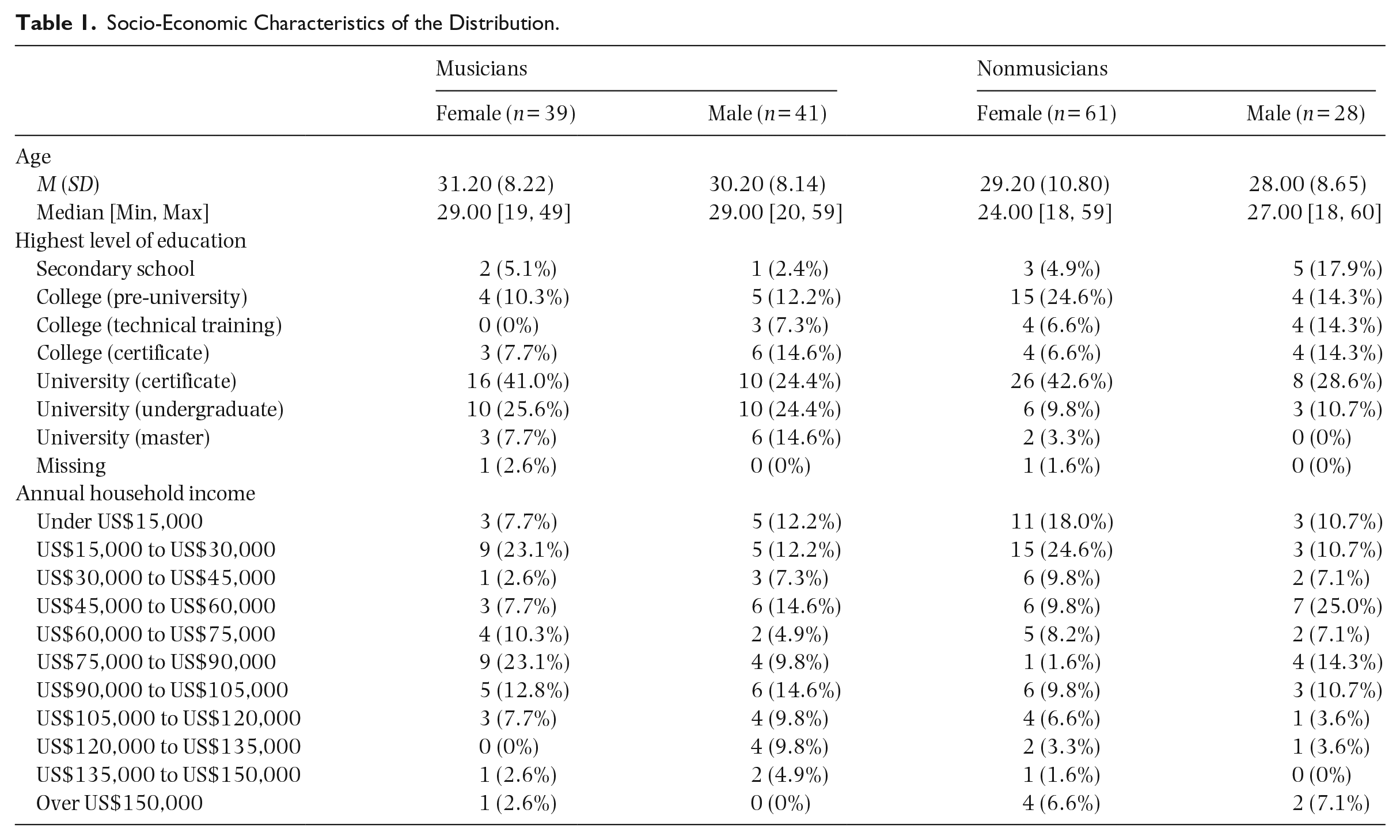
Socio-Economic Characteristics of the Distribution.
Intervention studies had participants engage in music practice and observed its effects on empathy compared to nonmusical control groups. Rabinowitch et al. (2012) enrolled children in a year of musical activities and compared them with children who engaged in games or no activities. Afterwards, the music group showed a statistical trend toward higher empathy as measured using an emotional contagion questionnaire than the control groups. Two further nonstandard empathy tests were administered and only one showed a difference between the music and other activity groups. Sellari et al. (2011) also found that children showed greater empathy (in a task presumably measuring cognitive empathy and emotional contagion) after participating in a musical training program. Moreover, Kalliopuska and Ruókonen (1986) found that children participating in musical activities for 3 months showed a significant increase in empathy levels (measured by an emotion recognition task) compared to the control group who did not participate in musical activities. Note however that these authors also reported not finding a significant difference in another unpublished empathy scale. A replication study by Kalliopuska and Ruókonen (1993) found similar increases in empathy in a music training group and no change in a control group, but this difference was weakened in a 9-month follow-up. This indicates the possibility that music practice may have only short-lived influences on empathy. Most intervention studies tested music practice in a group setting, where participants had the opportunity to engage and communicate with one another, therefore practicing interpersonal skills such as coordination and perspective-taking related to empathy. Thus, the observed effects might be attributed to the group musical dynamic, or even the group setting itself in some cases, rather than intrinsic aspects of music practice. Also, these studies were to our knowledge all performed on children and it remains possible that these changes are limited in duration. Finally, it remains unclear which component(s) of empathy would be affected (cognitive empathy, emotional contagion, emotional disconnection, or all of these) since the tests typically did not distinguish them.
Some studies support the claims about music training effects on empathy by citing studies showing that engagement in musical activities might enhance prosocial behaviors (e.g., Wu & Lu, 2021). Prosociality is a related but distinct concept from empathy. Prosocial behaviors are voluntary actions intended to the benefit of others (Eisenberg, 1982), such as sharing, helping, and comforting, even at a potential cost to oneself (Dunfield, 2014). Schellenberg et al. (2015) investigated both empathy and prosocial behavior in children participating in group music training compared to a control group not involved in the musical program. After 10 months, they did not find any difference in empathy between the groups (as measured by an emotional recognition task), but children in the musical group showed greater improvement in prosocial behaviors than children in the control group. Additionally, Kirschner and Tomasello (2010) reported that children participating in a joint music-making activity increased helping behaviors compared to children in a nonmusical control group. Similarly, Ilari et al. (2020) reported that active musical participation in children was positively correlated with sharing and helping behaviors. These intervention studies mostly focus on the role of music practice on prosocial behavior in children. As for adults, Kou et al. (2020) suggested that engagement in arts (e.g., music, dance, theatrical performance) is positively correlated with prosocial behaviors. Again, these studies mostly involve settings in which participants have the opportunity to socially engage with one another, which could explain part of the observed effects on prosociality. Here, we aim to study if these effects can be specifically related to the music practice itself. Moreover, these studies measured prosociality, not empathy. The link between empathy and prosociality remains debated. Although the empathy-altruism hypothesis (Batson et al., 2015) holds that prosocial behavior is a consequence of empathy, it is by no means generally accepted that prosociality effects are caused by empathy, and little is known about the link between empathy and prosociality in the context of music practice. Finally, one way to measure prosociality that has not, to our knowledge, been used in the context of music practice, is using economic games (Thielmann et al., 2021). Such games present participants with simplified and adaptable real-life situations in which they need to choose between their own and others’ interests, which have been suggested to effectively capture prosocial tendencies (Baumard et al., 2013; Haesevoets et al., 2022; Peysakhovich et al., 2014; Thielmann et al., 2021).
Taken together, various lines of research investigating the connections between music practice, empathy and prosociality have yielded an incomplete picture, which this study is designed to address. The objective of this article is to investigate the links between music practice in general and empathy as well as prosocial behaviors (measured through economic games). We recruited musicians and nonmusicians who completed self-reported questionnaires as well as objective empathy and prosociality tasks. This study addresses a number of gaps in the literature. First, it remains unclear which components of empathy, if any, are affected by music practice (cognitive empathy, emotional contagion, emotional disconnection) because the tests typically have not distinguished them. Here we measure all three components of empathy. Second, in cases where studies did not find effects of music practice on empathy, it remains possible that this was due to limited statistical power, not an absence of effects. To account for this, we use Bayesian statistics, which allow us to quantify evidence in favor, not just against, the null hypothesis (van de Schoot et al., 2021). Third, most prior studies have used subjective measures of empathy, which are known to be affected by social desirability bias (Van de Mortel, 2008) and hence are not objective evidence. Here, we use subjective as well as objective measures of empathy, such as tests where participants are asked to indicate which emotion is experienced by a person shown. These tests have the advantage that the accuracy of participants’ answers can be assessed, which is plausibly less affected by response biases. Fourth, prior cross-sectional studies have dichotomized the distinction between musicians and nonmusicians. Apart from definitional problems (where to draw the boundary between the two groups), this fails to acknowledge that music practice falls along a continuum. In this study, we address this by not only dichotomizing music practice between musicians and nonmusicians for direct comparison with the literature using the same distinction, but also assessing the total number of hours a participant practiced music and testing whether this was related to empathy and prosociality. Finally, it remains unclear if the observed effects of intervention studies on empathy and prosociality are due to music practice in itself or specifically to group musical engagement. In this article, we will investigate whether any form of music practice is associated with empathy and prosociality. We hypothesized that music practice is associated with empathy and prosociality, and more precisely that (a) musicians would score higher on all three empathy components and prosociality than nonmusicians, and (b) the more musical experience a musician has (in terms of number of hours of practice), the higher their empathic and prosocial abilities would be. In an exploratory manner, we hypothesized that musicians who started practice music earlier in life might have greater empathy than those starting later in life (i.e., a negative correlation between empathy and age of onset of music practice) as suggested by prior studies (Cho, 2021; Kawase et al., 2018). The analyses were controlled for gender, as women tend to score higher on empathy measures than men (Baron-Cohen & Wheelwright, 2004; Christov-Moore et al., 2014; Dinić et al., 2016; Surchat et al., 2022).
Methods
Participants
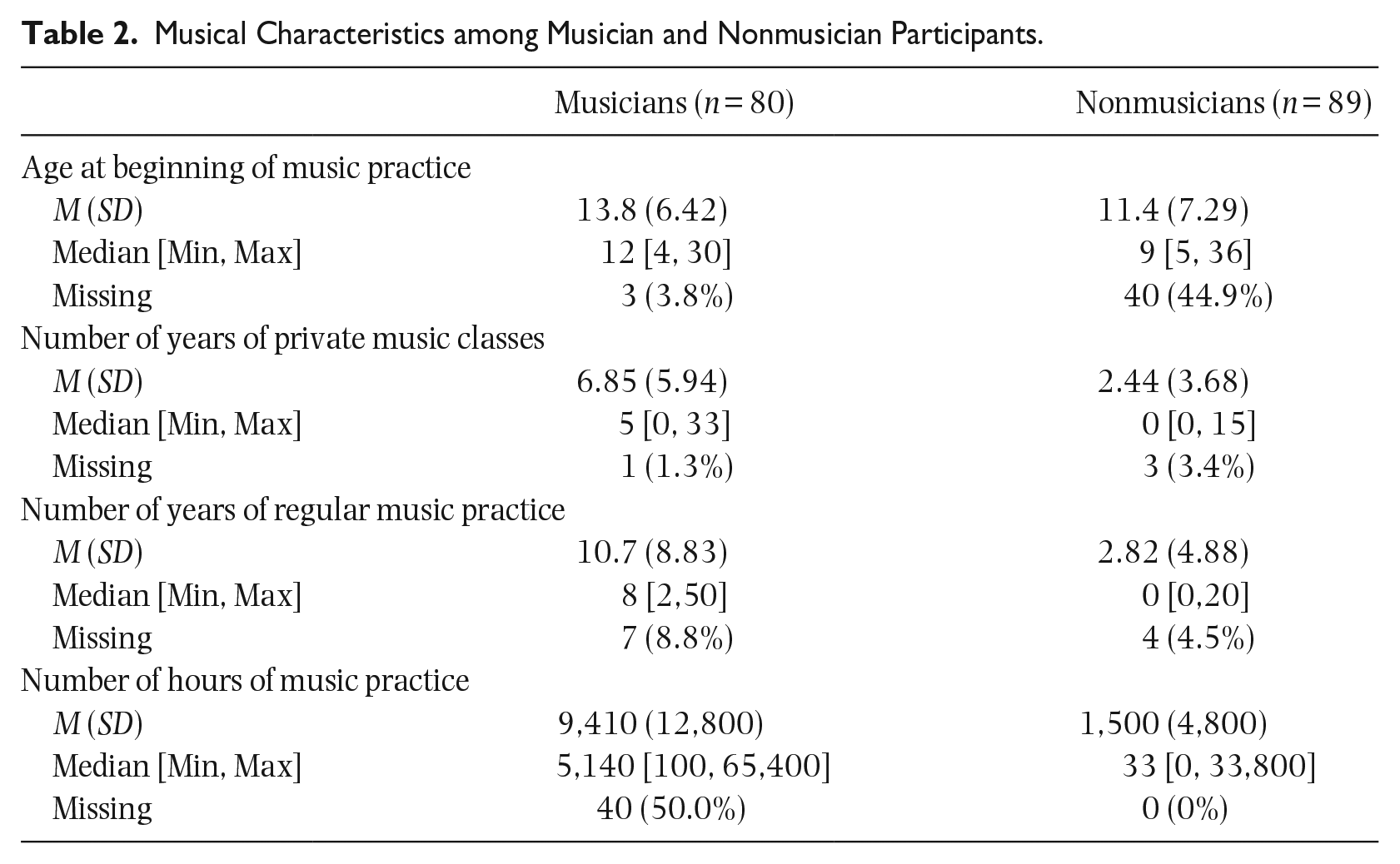
We recruited participants via social media and flyers on campus of the University of Montreal to participate in an online study. Originally, 266 participants responded. However, after validity checks, some participants were excluded (details below). Our final sample consisted of 169 participants, aged between 18 and 60 years, including 80 musicians and 89 nonmusicians recruited between January and March 2023 (see Table 1). Participants were required to have good or corrected vision and be able to understand English or French. All participants signed an information and consent form, and the study was approved by the research ethics committee of the University of Montreal. Eight CAD$40 gift cards were randomly distributed among participants who completed the study. For this study, a participant was considered a musician if they (a) had at least 2 years of music training and (b) still regularly practiced one or more instruments, averaging at least one practice session per week. This criterion is in accordance with previous literature on musicianship (e.g., Hansen et al., 2013; Wallentin et al., 2010) and was chosen to balance inclusivity with specificity, while focusing on current music practice to capture potential links that might be limited in time. Age and income did not significantly differ between musicians and nonmusicians. In contrast, the groups were not balanced in terms of gender (Fisher’s exact test p = .01), with more females than males in the nonmusician group compared to the musician group. In the musician group, the mean age for beginning music practice was 13.8 years (SD = 6.42), and the mean lifetime number of hours of music practice was 9,410 hours (SD = 12,800) (see Table 2), calculated based on reports for each 5-year interval of their life (e.g., “How many hours of music practice did you have between the ages of 10 and 15?”).
Musical Characteristics among Musician and Nonmusician Participants.
Procedure and material
Measures were conducted on the LimeSurvey platform (LimeSurvey GmbH, n.d.). Participants completed the study in French or in English, and were told the research was investigating “emotional and social expression” instead of “empathy and prosociality” to conceal the purpose of the study. Participants were not aware that musicians and nonmusicians would be compared as the recruitments were performed separately. Data for this study is available from https://osf.io/khb3x/.
Music-related measures
Ollen musical sophistication index (OSMI)
Participants’ musical training was measured using the OMSI (Ollen, 2006), a 10-item questionnaire with short responses and multiple-choice questions (e.g., “How many years of private music lessons have you received?”). This questionnaire was used to classify participants as musicians or nonmusicians and collect information related to music practice, such as the number of years of musical lessons. Our team added a question regarding the number of hours of music practice, which was collected per chunk of 5 years (e.g., “How many hours of music practice have you had between 10 and 15 years old?”), and two questions included for exploratory reasons, regarding the type of instrument played (instruments participants currently play as well as instruments they stopped playing), and if they considered themselves a formally trained or self-trained musician (or a nonmusician), which were not included in the main analysis.
Empathy measures
Basic Empathy Scale in Adults (BES-A)
The BES was originally developed by Jolliffe and Farrington (2006) to measure adolescents’ empathy on two components and was adapted to the adult population by Carré et al. (2013) using a novel factor structure incorporating the three components of empathy (cognitive empathy, emotional contagion, and emotional disconnection). It consists of a 20-item questionnaire based on a 5-point Likert scale ranging from “strongly disagree” to “strongly agree.” Six items assess emotional contagion (e.g., “I tend to get scared when I am with scared friends”), eight items consider cognitive empathy (e.g., “I have difficulty understanding when my friends are happy”, reverse coded), and six items assess emotional disconnection (e.g., “My friends’ emotions don’t affect me much”). This questionnaire has good reliability and validity (Cronbach’s alpha between .69 and .82 for the three components of empathy; Carré et al., 2013) and has been validated in both French and English.
Reading the mind in the eyes test (RMET)
The RMET is a task requiring participants to identify mental states from photographs of pairs of eyes by choosing from four alternative answers (Baron-Cohen et al., 2001). This task measures the cognitive component of empathy by assessing participants’ ability to correctly identify the emotional expression depicted in the photographs. The proportion of correct responses was computed across the 36 items. This task has been validated in French and English (Baron-Cohen et al., 2001; Prevost et al., 2014).
Multifaceted empathy test (MET)
The MET involves 40 photographs of individuals displaying various emotions in a scene (Foell et al., 2018). The first part of the task requires participants to identify people’s mental states based on four choices, measuring cognitive empathy. We computed the proportion of the 40 images correctly identified. In the second part, participants see the same photos again and rate on a scale of 1 to 9 how much they feel the emotions experienced by the person in the photograph, reflecting emotional contagion. Half of the pictures depict positive emotions and the other half depict negative emotions. This task has been validated in English (Foell et al., 2018) and translated in French and used by other researchers (Grynberg et al., 2017).
Prosociality measures
Economic games
A series of seven economic games was presented to participants (Peysakhovich et al., 2014), quantifying cooperative and norm-enforcing responses toward noncooperative players, closely linked manifestations of prosocial behaviors (Declerck et al., 2013). In each game, participants were presented with a scenario in which they were required to split up fictional points between themselves and other fictitious players of the game. As an incentive, participants were informed that the more points they allocated to themselves, the higher were their chances of winning a gift card (for details, see Supplementary Material, Table S1).
Other measures
Other measures included an in-house socio-economic questionnaire (regarding age, gender, educational level, and income) and two additional measures for exploratory purposes which were discarded from the main analysis as they are not directly related to the variables of interest (see Supplementary Material).
Data analysis
Since the study was conducted online, we performed validity checks. Specifically, participants’ data were included in the study if they responded correctly to over 50% of the economic games’ comprehension questions and either scored higher than 44% or 41% of correct responses, respectively, for the RMET and the MET, which corresponds to scores more than 3.29 standard deviations below the average previously established in the literature (Foell et al., 2018; Megías-Robles et al., 2020). This resulted in the exclusion of 98 participants.
Moreover, some entries of the number of hours of music practice were found unreliable, which could be due to ambiguities in the phrasing of the question (“How many hours, per 5 year period, have you practiced musical instrument(s)?”). To ensure data accuracy, we retained only responses from musicians reporting more than 100 hours of music practice in their life, equivalent to approximately 1 hour of music practice per week over 2 years. Out of 80 musician participants, 40 reported fewer than 100 lifetime hours of practice despite indicating weekly practice for at least 2 years (average of 10.7 years) in other responses. We considered they had misunderstood the question, and their data were excluded from analyses involving this variable.
The first set of analyses tested whether musicians differ from nonmusicians in empathy and prosociality. For this, two-way analyses of variance (ANOVAs) were conducted to measure the difference in empathy and prosociality as a function of music practice (musician/nonmusician) and gender (male/female). Our main interest was the effect of music practice; the gender factor was included to control for previously documented effects of gender on empathy. Since classical ANOVAs cannot be used to support the null hypothesis (i.e., that groups do not differ) we also ran Bayesian ANOVAs with the same two factors: music practice and gender, using the BayesFactor R package (Morey & Rouder, 2022) to contrast the evidence for various models. Specifically, to test whether there were effects of gender or music practice or both, three contrasts were computed for each dependent variable (empathy and prosociality components): (a) a model with gender main effect against a model without (gender effect), (b) a model with gender and music practice main effects against a model with only a gender main effect (music practice effect), and (c) a model with the interaction between the gender and music practice effect against a model with gender and music practice main effects (gender + music practice effect). These analyses yielded a Bayes Factor (BF10), which corresponds to the ratio of evidence for the two models; for example, the evidence in favor of the music practice + gender model (e.g., where musicians differ from nonmusicians) vs. the evidence in favor of the gender-only model (e.g., where musicians do not differ from nonmusicians). Specifically, BF values greater than 1 indicate the strength of evidence in favor of the music + gender model; while for values smaller than 1, the smaller the value, the stronger the evidence in favor of the gender-only model (Rouder et al., 2009, 2012). Benchmark scores are: BF10 between 1 and 1/3 are considered weak, between 1/3 and 1/10 are considered substantial, and less than 1/10 are considered strong evidence in favor of the null hypothesis (Jeffreys, 1961; van Doorn et al., 2021). The larger this value, the more evidence favoring the alternative hypothesis, with benchmarks BF10 between 1 and 3 considered weak evidence, between 3 and 10 substantial, and over 10 considered strong evidence in favor of the alternative hypothesis (Jeffreys, 1961; van Doorn et al., 2021).
The second set of analyses tested whether the amount of music training predicted empathy and prosociality. For this, Spearman and Bayesian correlations were computed between the number of hours of music practice and each empathy and prosociality measure. Spearman correlations were conducted because of their robustness to nonnormal distributions. The Bayesian correlations yielded a Bayes Factor (BF) where values larger than 1 correspond to evidence in favor of a correlation and values smaller than 1 correspond to evidence of no correlation. The benchmarks are the same as for the Bayesian ANOVA indicated above.
To analyze the economic games, we ran a principal component analysis (PCA) to identify two main factors (cooperation and norm-enforcing), as found previously (Peysakhovich et al., 2014). See Supplementary Material (Table S2 and Figure S1) for more details. Specifically, PCA was performed on a matrix where the rows corresponded to the subjects and the columns to the economic games’ decisions. All data analyses were conducted via the R statistical tool (R Core Team, 2023). 1
Results
Empathy measures
Classical ANOVAs
To test whether musicians score higher on empathy measures than nonmusicians, we ran two-way ANOVAs. No statistically significant interactions between the effects of music practice and gender were found (Fs < 2.25, ps > .14) (Figure 1, see Table 4). The main effect of music practice was significant only for cognitive empathy as measured by the MET, F(1,165) = 5.56, p = .02, ε2 = .03, suggesting that nonmusicians score significantly higher than musicians. No other main effect of music practice was significant (Fs < 3.74, ps > .06). The main effect of gender was significant for all empathy scores (Fs > 6.16, ps < .01), indicating that women score higher than men on these measures, except for emotional contagion as measured by the MET (F = 1.20, p = .27) (see Table 3 and 4). 2
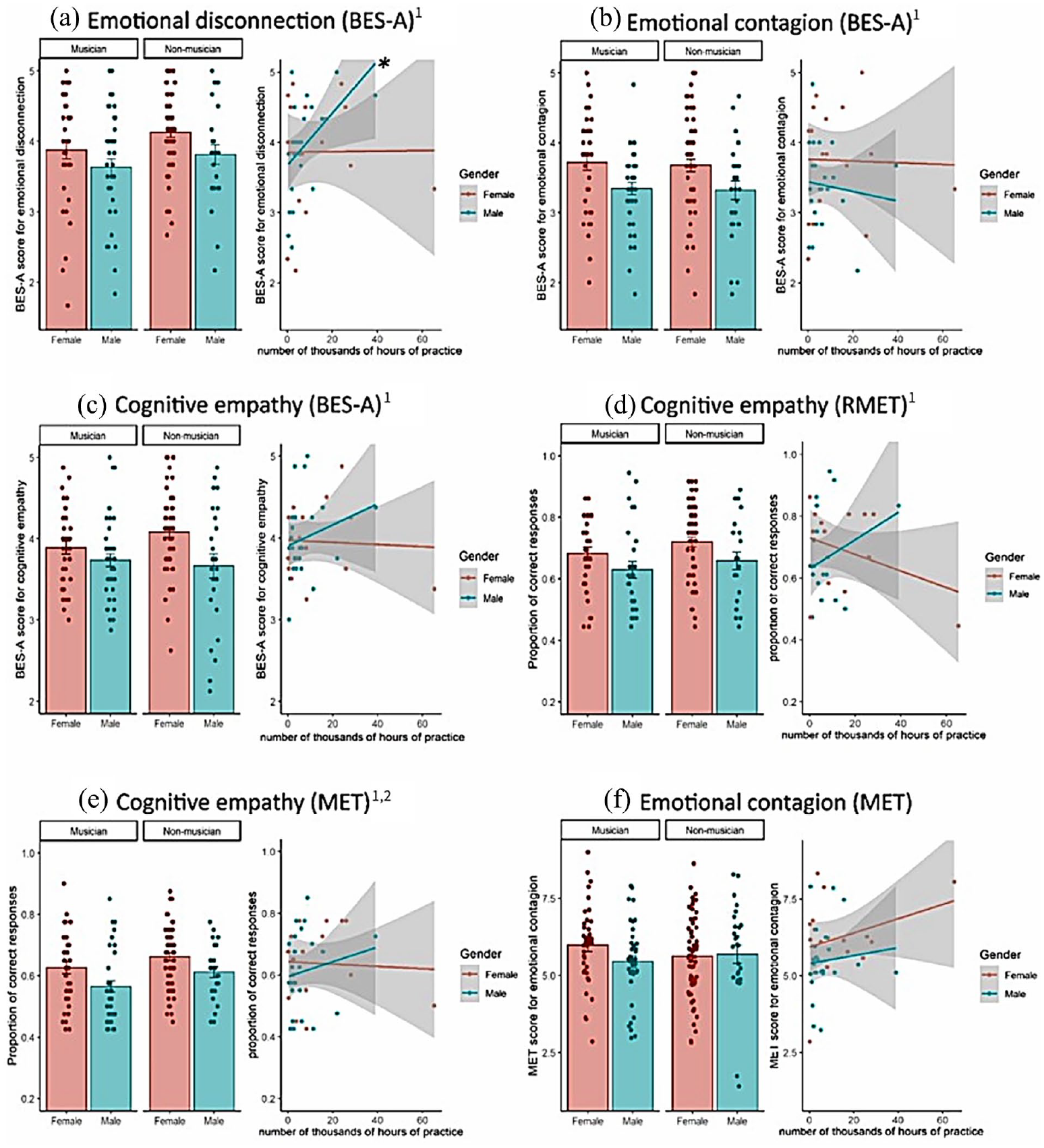
Representation of the Links between Musicianship and Empathy Components. (a) Emotional disconnection as measured by the BES-A, (b) Emotional contagion as measured by the BES-A, (c) Cognitive empathy as measured by the BES-A, (d) Cognitive empathy as measured by the RMET, (e) Cognitive empathy as measured by the MET, and (f) Emotional contagion as measured by the MET.
Empathy and Prosociality Scores across Musicianship and Gender Groups.
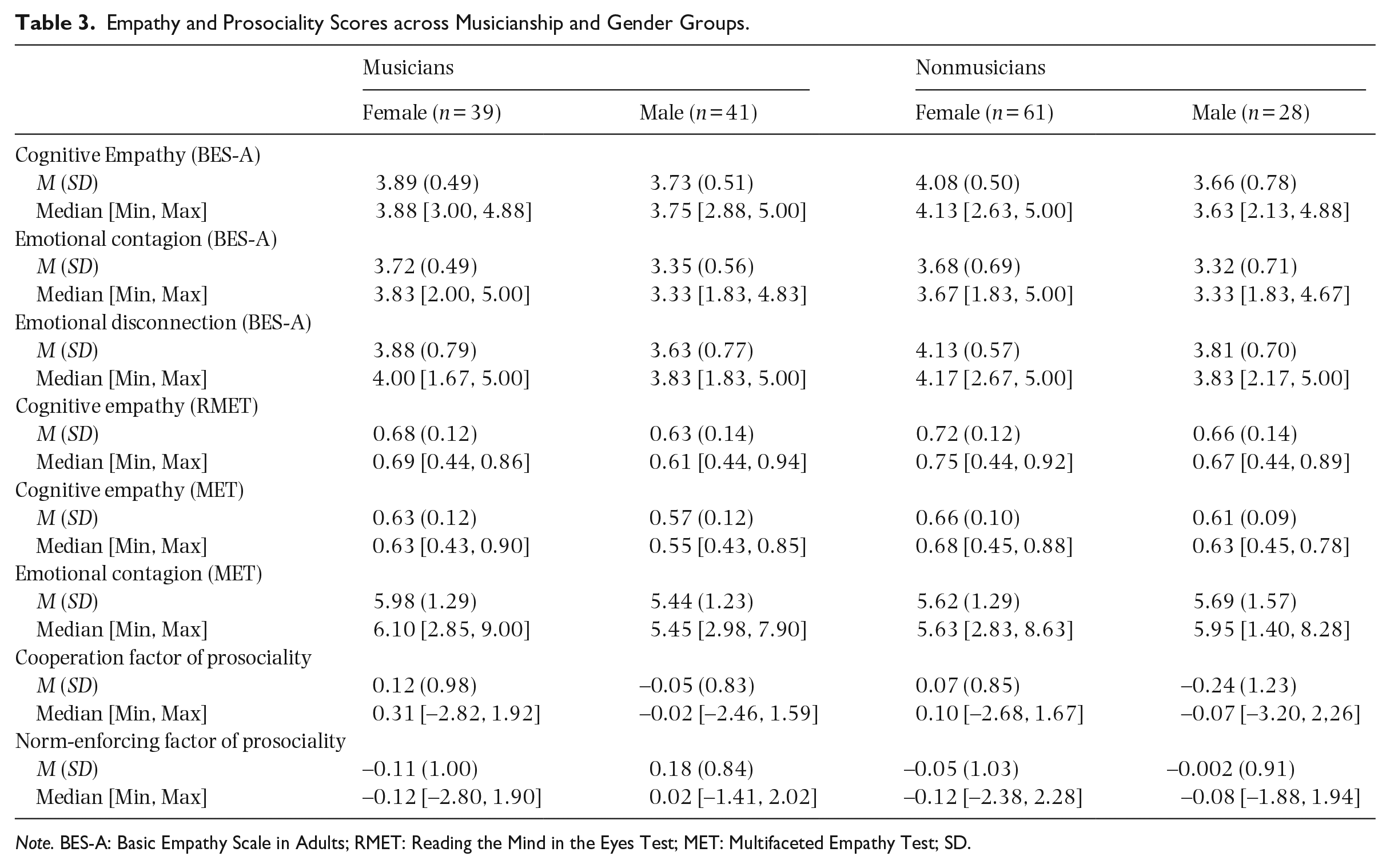
Note. BES-A: Basic Empathy Scale in Adults; RMET: Reading the Mind in the Eyes Test; MET: Multifaceted Empathy Test; SD.
Classical and Bayesian Analysis of Variance.
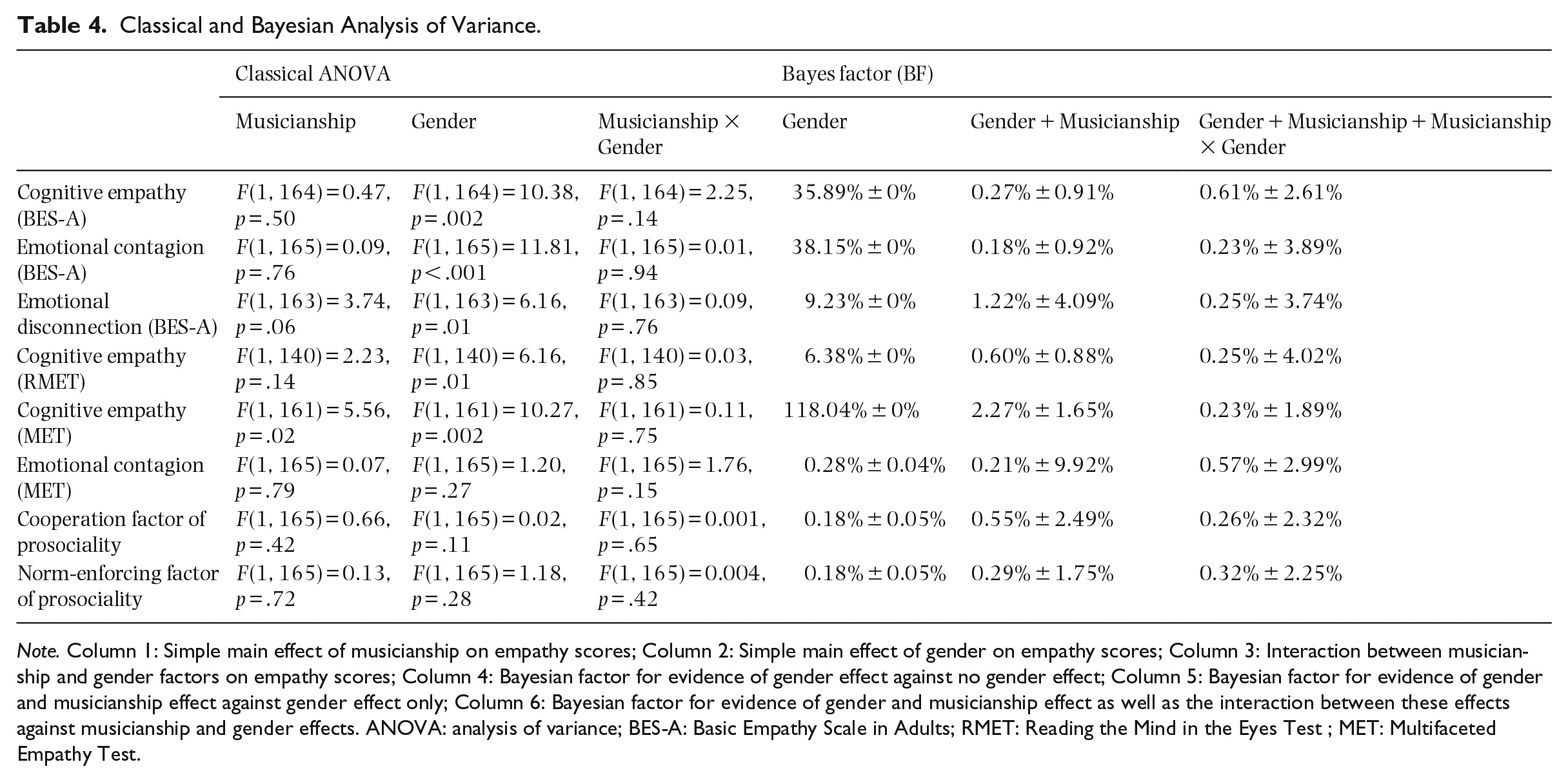
Note. Column 1: Simple main effect of musicianship on empathy scores; Column 2: Simple main effect of gender on empathy scores; Column 3: Interaction between musicianship and gender factors on empathy scores; Column 4: Bayesian factor for evidence of gender effect against no gender effect; Column 5: Bayesian factor for evidence of gender and musicianship effect against gender effect only; Column 6: Bayesian factor for evidence of gender and musicianship effect as well as the interaction between these effects against musicianship and gender effects. ANOVA: analysis of variance; BES-A: Basic Empathy Scale in Adults; RMET: Reading the Mind in the Eyes Test ; MET: Multifaceted Empathy Test.
Bayesian ANOVAs
The Bayesian ANOVAs indicated moderate evidence that the musicians were not different from the nonmusicians for cognitive empathy measured by the BES-A (BF = .27) and emotional contagion measured by the BES-A (BF = .18) and the MET (BF = .21). In contrast, all other measures remain undecided (.60 < BFs < 2.27) (Table 4). There was moderate to strong evidence for a gender effect on all measures (118.04 > BFs > 6.38) except the MET emotional contagion (BF = .28) for which there is evidence against a gender effect. Moreover, there is moderate evidence against an interaction between gender and music practice for emotional disconnection and emotional contagion as measured by the BES-A and cognitive empathy as measured by the RMET and the MET (.23 < BFs < .25), as decisions for cognitive empathy as measured by the BES-A and emotional contagion as measured by the MET remain uncertain (.57 < BFs < .61).
Classical correlations
We examined the potential correlation between empathy scores and music training based on the number of hours of music practice (see Table 5). Emotional disconnection as measured by the BES-A positively and significantly correlated with the number of hours of practice for male musician participants only (r = .50, p = .02). No other correlation was significant for the female and male groups (ps > .14).
Correlations between Musical Characteristics and Empathy and Prosociality Measures.
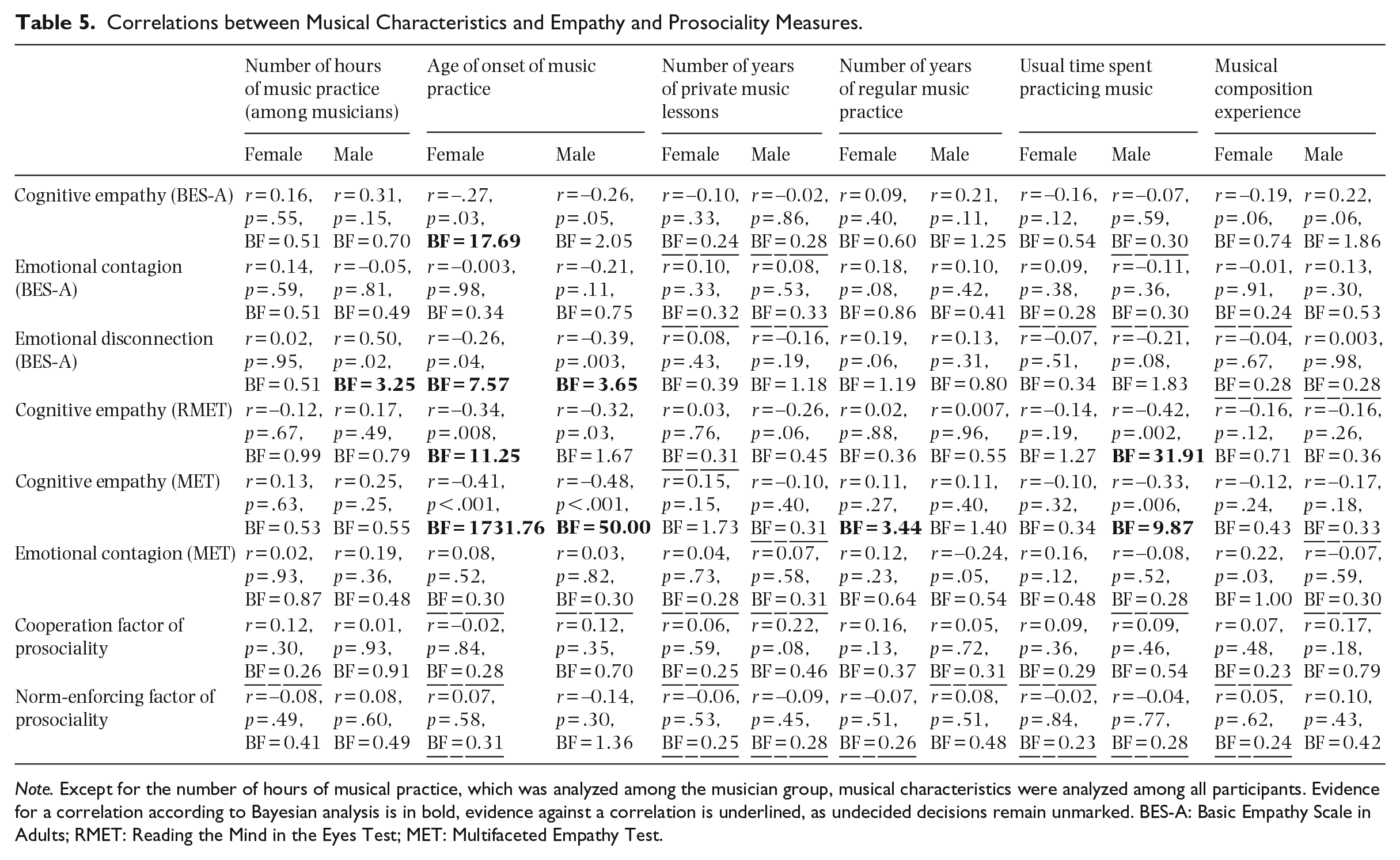
Note. Except for the number of hours of musical practice, which was analyzed among the musician group, musical characteristics were analyzed among all participants. Evidence for a correlation according to Bayesian analysis is in bold, evidence against a correlation is underlined, as undecided decisions remain unmarked. BES-A: Basic Empathy Scale in Adults; RMET: Reading the Mind in the Eyes Test; MET: Multifaceted Empathy Test.
Bayesian correlations
Bayesian correlations indicated moderate evidence for a correlation between emotional disconnection as measured by the BES-A and the number of hours of music practice for male participants (BF = 3.25). In contrast, other measures’ correlations with the number of hours of music practice remain undecided (.48 < BFs < .99).
Exploratory analyses for age of onset
The age at which participants initiated music practice (age of onset) significantly and negatively correlated with all empathy measures of cognitive empathy and emotional disconnection (rs < −.26, ps < .05), but did not significantly correlate with emotional contagion measures (ps > .11). Bayesian analyses also revealed moderate to strong evidence for a correlation between age of onset and emotional disconnection measure (7.57 > BFs > 3.65), all cognitive empathy measures for female participants (BFs > 11.25) and cognitive empathy as measured by the MET for male participants (BF = 50.00). However, there is moderate evidence against a correlation between the age of onset and emotional contagion as measured by the MET (BF = .30), whereas the correlation for all other empathy measures remains undecided (.34 < BFs < 1.67) (details in Table 5).
Prosociality measures
Classical ANOVAs
We performed two-way ANOVAs to explore whether musicians would score higher on prosociality measures than nonmusicians. Factors were music practice and gender, and dependent variables were the cooperation and norm-enforcing factors. There was no statistically significant main effect of music practice and gender, as well as no statistical interaction between music practice and gender on prosociality factors (Fs < 2.60, ps > .11; see Table 3 and 4). 3
Bayesian ANOVAs
Bayesian ANOVAs indicated moderate evidence against an effect of music practice on norm-enforcing (BF = .29), but an undecided effect on cooperation (BF = .55). Moreover, we found moderate evidence against an effect of gender (BF = .18) and of the interaction between gender and music practice (.26 < BFs < .32) on both prosociality factors (see Table 4).
Classical correlations
Spearman correlations were conducted to explore the possible correlation between prosociality factors and music training (see Table 5). There was no significant correlation between these factors and musicians’ number of hours of music practice (ps > .42).
Bayesian correlations
Bayesian correlations revealed moderate evidence against a correlation between the number of hours of music practice and cooperation for female participants (BF = .26), but evidence for all other correlations regarding prosociality remains undecided (.41 < BFs > .91) (see Table 5). See Supplementary Material (Figure S2) for a visual illustration of the observed links between music practice and prosociality.
Discussion
This study investigated the links between music practice, empathy, and prosociality. We analyzed the responses of musicians and nonmusicians on questionnaires and tasks regarding empathy and prosociality through classical and Bayesian statistical approaches. For the majority of the tests conducted we found no evidence of an effect of music practice on empathy and prosociality and no evidence of a correlation between the number of hours of practice and empathy and prosociality. The hypothesis of a link between music practice, empathy, and prosociality was not confirmed, which suggests a more complex relationship than previously thought.
Revisiting the link between empathy and music practice
This study indicates, for the first time, using Bayesian statistics, evidence in favor of the idea that there is no difference in empathy between musicians and nonmusicians. The only effect of musicianship was found on cognitive empathy as measured by the MET through classical ANOVAs, but was opposite in direction, with nonmusicians showing greater empathy than musicians. Taken together with a mixed set of prior results in the literature, this suggests that music practice does not yield an overall effect on empathy, as is often assumed, but only in specific cases. Possibly, there are particular kinds of music practice or ways to engage in it that could boost empathy.
A possible explanation for the prior mixed results of the relation between music practice and empathy has to do with the age at which this practice is done. Indeed, most studies that have explored the relationship between music practice and empathy have been performed on children (e.g., Rabinowitch et al., 2012; Sellari et al., 2011) and found evidence that practicing music at a young age was associated with an increase in empathy. However, these effects were not systematic and seem to weaken with time (see Kalliopuska & Ruokonen, 1993), suggesting that they would not persist in adulthood, consistent with what we found here. Importantly, we did find a correlation between the age at the beginning of music practice and cognitive empathy and emotional disconnection. Despite the fact that our study provides no evidence of difference of empathy between adult musicians and nonmusicians, these results could suggest a difference of empathy between early and late learners: the earlier a person takes on music, the more empathy gains they might achieve (as suggested by Cho, 2021). Practicing music at a young age could be beneficial in terms of empathy but the persistence of these effects might depend on other developmental and environmental factors through the course of life. Further investigations, such as longitudinal ones, are needed here to investigate this relationship with long-term perspectives from childhood to adulthood.
Furthermore, previous studies, particularly intervention studies, involve live and interactive group musical activities, leading to the practice of interpersonal skills closely related to empathy, such as interpersonal synchronization and perspective-taking. Thus, links between music practice and empathy might be mediated by interpersonal mechanisms. It is possible that most musicians in our sample primarily engaged in solitary music practice, which does not involve interpersonal interactions and the practice of social skills. However, while intervention studies have the capacity to control multiple factors such as the musical environment, their applicability is limited to specific instances of music practice and brief training periods. In contrast, our study explores the broader association between music practice and empathy and prosociality, by considering music as it is practiced in its natural setting over extended periods of time.
A moderate correlation was found between the number of hours of music practice and emotional disconnection in men. Given that no other significant correlation was found between music training and empathy, we consider it likely to be a spurious finding. In other words, the number of hours of music practice did not seem to be linked with empathy skills among musicians. Previous studies have often focused on the comparison between categories of music training (musicians and nonmusicians; Çetinel, 2017; Hou et al., 2017), or on an intervention model (evaluating empathy skills before and after a musical activity; Rabinowitch et al., 2012), while the amount of musical experience has not been extensively investigated. Our results suggest that music practice may not be related to higher empathic skills, no matter the amount of practice.
Prosociality and music practice
No difference was found between musicians and nonmusicians regarding cooperation and norm-enforcing. Moreover, no correlation was found between these prosociality factors and the number of hours of music practice among musicians, suggesting that music practice in general and prosociality are not linked. These findings appear at odds with prior reports that music practice boosts prosociality (Ilari et al., 2020; Kirschner & Tomasello, 2010; Schellenberg et al., 2015). However, we seem to be the first to use economic games to study prosociality effects of music, which perhaps taps into a different aspect of prosociality than previously done. Similarly, the relationship between prosociality and music practice has mainly been studied in children. Thus, our results together with the literature suggest that music practice may yield transient increases in prosociality. Consequently, considering prosociality has been shown to develop during childhood, it is plausible that music practice in adulthood is not linked with prosociality. More importantly, the nature of musical activities might modulate this relationship. Indeed, a handful of studies focusing on music-making and prosociality have engaged participants in interactive and collaborative music environments (Ilari et al., 2020; Schellenberg et al., 2015). Nonetheless, as outlined in relation to empathy, our study might include musicians practicing music in various environments, such as solitary music practice. Thus, it is plausible that the various musical environments considered in our study influence the relationship between music practice and prosociality. Importantly, we do not claim that music practice, in general, has no connection with empathy and prosociality, but rather that these connections might happen in specific forms of music practice, such as in an interpersonal setting. In conclusion, this line of research in adults is quite scarce, and, particularly through the lens of economic games, remains limited.
Limitations
First, the online nature of our study brings methodological challenges. More and more studies are now conducted online and emphasize the reliability of the collected measures when comparing in-lab and online settings (Nussenbaum et al., 2020; Schidelko et al., 2021; Uittenhove et al., 2023). In fact, it has been shown that, with effort, it is possible to maintain credibility and quality of data collected online (Rodd, 2024). Moreover, we performed validity checks. In this study, we had to exclude a considerable number of participants as their answers in tasks and questionnaires were doubtful. Despite this, the remaining data can be considered reasonably reliable, as supported by the presence of an expected gender effect and a two-factor structure of prosociality aligned with prior literature. Second, the number of hours of music practice as a metric to evaluate music training was not presented clearly to participants. Data inspection revealed participants reported the total number of hours of practice over different periods of time. The data entered into the analyses were restricted to those cases where the data was plausible. Also, this measure does not fully capture what music practice means and a more diverse set of musical characteristics (such as the number of years of practice, the genre of music played and whether a musician makes music alone or in a group setting) could more accurately represent musicians’ skills and their potential impact on empathy and prosociality.
Conclusion
Musicians did not differ from nonmusicians in empathy or prosociality, and there were no associations between the amount of music practice and empathy and prosociality. We found exploratory associations between the age of onset of music practice and empathy, suggesting that it is not music training per se but specifically training early in life that is associated with empathy. These findings contribute to a more comprehensive understanding of the relationship between these factors and pave the way for more exploration to uncover new avenues for interventions and education harnessing the power of music. The next steps in this research domain could involve investigating the effects of diverse music practice environments.
Supplemental Material
sj-docx-1-pom-10.1177_03057356241312213 – Supplemental material for A new look at the potential links between music practice, empathy, and prosociality
Supplemental material, sj-docx-1-pom-10.1177_03057356241312213 for A new look at the potential links between music practice, empathy, and prosociality by Dorothée Morand-Grondin, Beatriz Oliveira, Floris T. van Vugt and Simon Rigoulot in Psychology of Music
Footnotes
Acknowledgements
We want to thank Prof. Sébastien Hétu (University of Montreal) for helpful discussions about prosociality and for sharing the economic games’ setup used in our study.
Declaration of conflicting interests
The author(s) declared no potential conflicts of interest with respect to the research, authorship, and/or publication of this article.
Funding
The author(s) disclosed receipt of the following financial support for the research, authorship, and/or publication of this article: This work was supported by a pilot grant from Center of Research on Language, Brain and Music (CRBLM, Montreal, Canada) obtained by the authors SR and FTVV (grant number 203287).

Supplemental material
Supplemental material for this article is available online.
Notes
References
Supplementary Material
Please find the following supplemental material available below.
For Open Access articles published under a Creative Commons License, all supplemental material carries the same license as the article it is associated with.
For non-Open Access articles published, all supplemental material carries a non-exclusive license, and permission requests for re-use of supplemental material or any part of supplemental material shall be sent directly to the copyright owner as specified in the copyright notice associated with the article.
