




Abstract
Coordination on mass protest plays an important disciplining role in ensuring compliance with electoral rules, with elections serving as a public signal of the incumbent’s popularity. But the link between the informativeness of the election and the enforceability of electoral rules hinges crucially on the veracity of the electoral process. We model how doubt about electoral integrity influences compliance with electoral rules. Our analysis explains why electoral rules in advanced democracies are less resilient, and incumbents less willing to step aside, than suggested by the standard model of electoral turnover. We clarify how incumbent behaviour responds to changes in the cost of protest, and external overtures that make stepping down more attractive. Our findings contribute to the debate on the role of equilibrium multiplicity in models of mass uprisings.
Introduction
Motivation
Although the peaceful transfer of power following an election result is a hallmark of democracy, there are many instances where losing incumbents refuse to depart gracefully and try to hold on to their positions. The refusal by President Trump to cede office following the 2020 US Presidential election is, perhaps, the most egregious example. But other leaders around the world have similarly rejected democratic election results, stepping down only after widespread condemnation and protest by citizens. 1
Ex post coordination on mass protest plays an important disciplining role in ensuring ex ante compliance with electoral rules by incumbent politicians (Fearon 2011). 2 Such protest is most effective when election results are highly informative. By serving as a public signal of the incumbent’s popularity and ensuring approximate common knowledge amongst citizens, the election result serves as a focal point, allowing citizens to coordinate well enough to punish leaders that violate electoral rules (Little et al. 2015). 3 It implies that in well-functioning democracies, where elections are a precise indicator of the incumbent’s popularity, the transfer of power is smooth. In less mature democracies, where election results are a noisy measure of sentiment, incumbents may be less likely to cede office.
But the link between the informativeness of the election result and the enforceability of electoral rules depends crucially on the perceived fidelity of the electoral process. If there is mistrust in electoral institutions, concerns about voting arrangements, or meddling by foreign powers, then citizens may doubt the integrity of the electoral process. Uncertainty about the true data-generating process behind the election result impinges on their ability to coordinate on protest. Citizens become unsure about the true popularity of the incumbent and about what others believe. With less common knowledge about where her sentiment sits in relation to others’ sentiments, a citizen is less able to accurately predict the size of protests. By diminishing citizens’ ability to threaten costly, large-scale protests, doubts over electoral probity embolden an incumbent to subvert electoral rules.
In this paper, we extend the electoral turnover model of Little et al. (2015) to allow for electoral process uncertainty. Drawing on the recent “second-generation” global game framework of Morris and Yildiz (2019), we assume “fat tails” in the distribution of electoral results. The presence of fat tails increases a citizen’s strategic uncertainty. In this setting, rank beliefs provide the basis for protesting. A citizen’s rank belief is the posterior probability she assigns to another citizen observing a lower sentiment and, accordingly, reflects the expected protest size if she believes that her own sentiment is the median sentiment in the population. When a citizen observes a large positive or negative sentiment, she ascribes the discrepancy between her sentiment and the election result to a shock to fundamentals (the electoral process). Her rank beliefs become diffuse, and she considers herself the median citizen. Following a large negative sentiment, protesting then becomes uniquely rationalisable as long as it is p − dominant, i.e. protesting is a best response to a conjecture placing probability p on the event that the incumbent steps down. 4 But when her sentiment is close to the election result, the citizen attributes the discrepancy to idiosyncratic noise. The mass of citizens likely to attack is indeterminate and there are multiple equilibria.
Results
Our analysis yields two main insights. First, the link between the informativeness of an election and the pattern of turnover in democratic and semi-democratic regimes is not sharp, as in Little et al. (2015). Our model smooths the distinction between democratic and semi-democratic regimes, placing them on a continuum. Arguably, this is more realistic. When there is genuine uncertainty about the electoral process as a result of fat-tailed electoral noise, the interval of election results with multiple equilibria shrinks, resulting in a much smaller window of strongly enforceable electoral rules. This means that electoral rules in advanced democracies are less resilient, and incumbents less willing to step aside, than suggested by the standard model of electoral turnover. In weak democracies, where doubt about electoral integrity is commonplace, it is even more likely that incumbents ignore the election result. But our model suggests that in such regimes there is, nevertheless, a small range of strongly enforceable rules that serve as a focal point for citizens, enabling the threat of protest to discipline the incumbent. Electoral contests, thus, sometimes lead to smooth transitions of power in less advanced democracies and the rejection of electoral rules in countries with strong democratic traditions.
Second, our model sheds new light on how incumbents respond to changes in citizens’ costs of protest on one hand, and direct inducements on the other. Whereas Little et al. (2015) suggest that incumbents are equally responsive to changes in citizens’ relative protest costs as they are to changes in incumbent parameters, our analysis suggests that incumbents are driven predominantly by their own payoff parameters. Since the strategic uncertainty introduced by fat-tailed electoral noises is foremost in citizens’ minds, it dominates the effects of small increases in citizen costs. Changes in citizen costs need to be especially large to induce changes in incumbent behaviour. Inducements that deter electoral rule-breaking by external forces – e.g. bribes by foreign governments – may be more effective at loosening an incumbents’ grip on power than the enabling of mass protest. Our analysis helps explain the smooth transition of power in the Gambia after Yahya Jammeh was offered safe passage by the international community. And it clarifies why Kenyan president Kibaki’s violent suppression of voters following the 2007 election led to his retention of power, while Kyrgyz president Akayev’s more limited response resulted in his ouster.
Proofs and additional comparative static results are contained in an online appendix.
Doubts Over Electoral Integrity
A key assumption in our analysis is that the noise in the electoral process is fat-tailed. One reason for fat tails in the distribution of election results is model uncertainty (Morris and Yildiz 2019). Citizens may simply not understand the true underlying data generating process embodied in their electoral system. Suppose, in a simple scenario, that the electoral process generating an election result follows a normal distribution. Although the mean of the distribution is known with certainty, citizens may be unsure about its variance (since the mean is easier to estimate than the expected squared deviation from the mean). And if this variance is drawn from a chi-squared distribution then, mechanically, the posterior distribution of election results is a Student’s t distribution, which has fat tails.
Evidence suggests that even in advanced democracies with long histories of clean contest, such as Australia and the UK, over a third of all citizens misunderstand electoral processes and regard general election outcomes as fraudulent and maladministered (Karp et al. 2018; UK Electoral Commission 2017). Similarly, in the US, citizens said they were simply unsure whom they would trust to tell them the legitimate results of the 2020 US Presidential election. 5 Widespread litigation over processes concerning the receipt of postal ballots, gerrymandered districts favouring incumbents, and restrictions on polling stations in minority areas served to undermine perceptions about the US electoral process (Norris 2020).
A second source of electoral uncertainty may arise from its links to aggregate economic variables such as GDP growth rate. Redl (2020) shows that closely contested election results are positively linked to macro uncertainty driving business cycles. As Correa et al. (2021) argue, aggregate grievances, a source of variation in election outcomes, can inherit the well-established heavy tails of aggregate economic variables such as the growth rate, consumption rate and stock prices. 6
A further reason for assuming fat tails is that it assigns shorter odds to extreme election outcomes (or large shocks) that can beget Knightian uncertainty. These extreme outcomes can be the natural consequence of increasing connectivity. 7 Small measurement errors can lead to large deviations of forecasts from aggregate outcomes as the impact of errors accumulates across a vast network. Social media interactions can also make information that is initially believed by a small number of people go viral, particularly when it is amplified through large-influencer channels (Norris, 2020). Cameron et al. (2016) identify a statistically significant relationship between the size of online social networks and election results, which becomes pivotal in closely contested elections. Geruso and Spears (2020) highlight the possibility of disputed election risk – a change of just 537 votes in Florida would have reversed the outcome of the 2000 US Presidential election, even though half a million votes separated the two candidates nationally. The result was uncertainty, litigation, and an outcome widely regarded as having been influenced by judicial decisions of the US Supreme Court than indicative of the popularity of the winning candidate.
Finally, the existence — or perceived existence — of electoral fraud naturally increases the density of tail events in election outcomes. Ballot stuffing and contrived reporting change the shape of both vote and turnout distributions, and introduce a high level of correlation between them. Klimek et al. (2012) find that anomalies in electoral data from Russia (2011, 2012), and Uganda (2011) contained evidence of incremental and extreme fraud. The threat of electoral tampering contributes to electoral process uncertainty, leading voters to place a non-trivial probability on elections results that deviate markedly from an incumbent’s true popularity. 8
Heavy-tailed distributions are used regularly by professional election forecasters as the basis for modelling election outcomes (Silver 2016). Lane (2021) confirms that both Democrat and Republican vote shares in the US tend towards a Pareto (fat-tailed) distribution. Heavy tails have also been identified in Brazilian (Costa Filho et al. 1999), Mexican (Morales-Matamoros et al. 2006) and Indian (Gonzalez et al. 2004) national vote-share distributions.
Our assumption that election results are drawn from a fat-tailed distribution must also be contrasted with the distribution of individual sentiment, which we assume to be thin tailed. This suggests that citizens are qualitatively less uncertain about their own sense of public sentiment than about election outcomes. This assumption is plausible especially when citizens learn about the distributions governing private sentiment and public election results from past realisations. Individual shocks and polling surveys generate a rich, cross-sectional dataset, while there is only a single time series about election outcomes. Irrespective of the actual distribution of private sentiment, our results are obtained as long as individuals perceive private sentiment to have thinner tails than the election process. This may arise in situations where citizens display a towards-the-median bias — that is, citizens believe that they are closer to the median than they actually are. Evidence of such bias in income distribution has been found in cross-country data from the International Social Survey Programme (Chen and Suen 2017). Respondents in lower percentiles over-estimate, while those in higher percentiles under-estimate, their relative positions. Factors such as homophily and social learning (Kets and Sandroni 2019; Barbera and Jackson 2020) further serve to reinforce the perceived low variability of citizens’ sentiments about an incumbent’s average popularity.
A citizen uses private and public information to form beliefs about the incumbent’s popularity. Upon observing her private sentiment about the incumbent, given that expected deviation from average sentiment is zero, the citizen expects that the incumbent’s true popularity is equal to her own sentiment. When the election result is released, the citizen blends this public signal with her own private sentiment, updating her posterior. When a citizen’s private signal is only slightly larger or smaller than the election result, the density of private sentiment exceeds electoral noise density, and she attributes the discrepancy to her own subjectivity. But when the election result deviates substantively from the citizen’s sentiment, the large density of the tails of the electoral process causes her to assign most of the noise to the election process, and she no longer believes it to be an accurate representation of the incumbent’s popularity. This produces doubts over others’ sentiments in relation to her own, pinning down protest or stay silent (depending on her own sentiment) as a unique course of action.
By incorporating a new, more generalised set of informational assumptions into the standard protest setting, we underscore the critical role that higher-order reasoning plays in the enforceability of electoral rules. Knightian uncertainty, the link between electoral processes and fat-tailed macro variables, social interaction effects and the risk of meddling by foreign powers or electoral fraud all suggest that the second-generation global game provides a more realistic setting under which citizens and incumbents operate. While our results provide novel predictors of incumbent behaviour, the framework is robust to a perturbation that takes private information precision to the limit and collapses the game into earlier global game models of protest.
Related Research
The results in Little et al. (2015) are based on ‘first-generation’ global games (Morris and Shin 2003). By contrast, we follow the ‘second-generation’ framework of Morris and Yildiz (2019) in exploring how large shocks shape the link between the information-generating properties of elections and when electoral rules are enforceable. 9 A large literature applies global game techniques to understand regime change (e.g., Bueno de Mesquita (2010), Edmond (2013) and Hollyer et al. (2015)). Bueno de Mesquita (2014) argues that the assumptions driving equilibrium uniqueness in global games may not be appropriate for modelling uprisings. He emphasises the importance of introducing uncertainty (restoring equilibrium multiplicity) as a means of making sense of the spontaneous nature of protests (Schelling 1960; Kuran 1989).
Our paper also contributes to the literature on the informational role of elections. Gehlbach and Simpser (2015) present a model of electoral manipulations in which the election outcome provides information that influences subsequent actions. Little (2012) explains why incumbents choose to implement election monitoring in games with electoral fraud and highlights the informational benefit which elections provide to moderately insecure incumbents. Londregan and Vindigni (2008) show that plebiscites provide useful information to authoritarian governments and can impact public perceptions. And Rozenas (2016) highlights how office insecurity incentivises an incumbent to incur electoral risks in exchange for communicating information about their societal support.
Model
An incumbent politician must decide whether to step down immediately following an election or to stand firm and challenge the outcome. Standing firm raises the spectre of protests by citizens to oust him from office. But uncertainty about the size of the protest means that the politician has an opportunity to wait out the uproar before deciding whether to concede. We denote the incumbent by I and there is a continuum of citizens of unit mass, j ∈ [0, 1].
Figure 1 depicts the timing of events. While the incumbent does not know his true popularity, he can infer it from the outcome of the election. The election result, e, is a noisy public signal of the true popularity of the leader, Sequence of events.

Each citizen also receives a private signal about public sentiment towards the incumbent,

Having observed the election result at t = 1, a citizen’s attitude towards the incumbent and her beliefs about the sentiments of other citizens determine if she is willing to protest should the incumbent attempt to remain in office. Equations (1) and (2) imply


The incumbent also observes the election result at t = 1 and must decide to either cede office or stand firm. This decision is made independently of the electoral rule which determines whether or not he “wins” the election. If the incumbent claims victory, the game continues and citizens decide whether or not to protest. At t = 2, the size of the protest movement is observed, and the incumbent again has the opportunity to cede power; if so, the protest succeeds.
The incumbent’s payoff depends on the size of the protest and the timing of his decision to cede office. Specifically,

We normalise the incumbent’s partial payoff from staying in office till the end of the game to be 1, so he receives y < 1 from stepping down at t = 1. The cost of protest to the incumbent, C I (ρ, ω), is continuous, strictly increasing in ρ, and strictly decreasing in ω. If he concedes at t = 2, these costs are mitigated to γC I (ρ, ω), where γ < y. This ensures that if the protest is sufficiently large, the incumbent prefers to step down at t = 2. An increase in γ captures heightened retribution for refusing to step down at t = 1. Conditional on the incumbent refusing to leave in the first period, higher levels of γ make holding on to office until the end of the game relatively more attractive. We therefore interpret γ as the external tolerance for non-compliance with electoral rules (e.g., by the military or foreign governments). For any positive level of protest, the incumbent prefers to step down immediately. But given his uncertainty about the true level of his popularity, ω, and hence the scale of the protests, he may hold firm even after losing the election in the hope of retaining office to the end of the game.
Citizen Payoffs.

To ensure that the game has well-defined dominance bounds, we make the following assumption:
b1 < c < b3 − b2.
The benefit from participating in a successful protest exceeds the benefit from a failed protest, i.e. b3 > b1. Further, the cost of protesting is significant – ‘moderates’ who participate in a failed protest would have been better off being silent, i.e. b1 < c. But protesting is worthwhile for those who take part in a successful protest, provided they are not strongly in favour of the incumbent, i.e. b3 − b2 > c.
We seek the perfect Bayesian Nash equilibria of the game. Proceeding backwards, we first determine whether the incumbent steps down after observing the protest movement. We then solve for citizen j’s optimal strategy, taking as given that the incumbent has not stepped down at t = 1. Finally, we determine the incumbent’s decision to cede before protests occur.
Analysis
Conceding After the Protest
If the incumbent chooses not to step down at t = 1, then the size of the protest is realised. He steps down after observing protest size ρ if and only if
Denote ρ* as the smallest size of protest at which the incumbent steps down (i.e., the level of ρ at which
Citizens’ Protest and Rank Beliefs
Since citizens’ payoffs depend on the actions of others, those with an antipathy to the incumbent will only choose to protest if they believe a sufficient proportion of others will join in the protest. Suppose each citizen assigns some probability q to the event that the incumbent is forced to step down at t = 2. A citizen will protest if and only if
The right-hand side of (7) is increasing in q and is bounded below by
A citizen prefers to protest whenever

The right-hand side, denoted β(z), reflects citizens’ reluctance to protest. It is an increasing function in z
j
and lies between 0 and 1 for all 
In the first-generation global game, for a fixed threshold
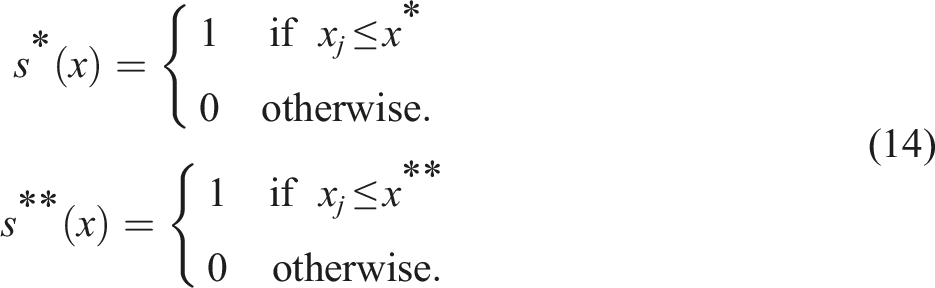
But when there is doubt about electoral integrity, moderate citizens no longer have monotone beliefs about those who observe higher or lower sentiment, meaning that, from their perspective, the protest size is indeterminate. As a result, q ≥ β(z j ) is a necessary but insufficient condition for the characterisation of switching points. We also require monotone strategies of the kind in Van Zandt and Vives (2007) and so we must consider citizens’ rank beliefs.
Following Morris and Yildiz (2019), rank beliefs provide the basis for determining how a citizen thinks her payoffs from protesting relate to others’ payoffs. The citizen’s rank belief is the probability that she assigns to the event that another citizen’s sentiment towards the incumbent, x
k
= e + z
k
, is lower than her own, i.e.
Since citizens’ idiosyncratic sentiments towards the incumbent, ν j , are thin-tailed, observing a private signal which is close to the election result causes citizens to attribute any difference between the two to the thin-tailed component, ν j . As a result, their rank beliefs are relatively high for small positive deviations, z j > 0, and relatively low for small negative deviations, z j < 0. On the other hand, when x j is significantly larger or smaller than the election result, citizens attribute a greater proportion of the deviation to noise in the election process, ν e . A large positive sentiment leads citizens to expect that ν e is strongly negative and a large negative sentiment leads them to expect that ν e is strongly positive. But this does not tell them very much about their positions in the population. Thus, while their beliefs about the incumbent’s true level of popularity is always increasing in z j , their uncertainty about their ranking relative to other citizens also increases in the magnitude of z j .
The rank belief function encapsulates these higher-order beliefs. It is the posterior a citizen has over the event that another citizen observes a lower sentiment and, accordingly, reflects each citizen’s expected protest size if her own sentiment, x
j
= e + z
j
, were to serve as the cutoff point. Citizens know that the incumbent will yield if the protest size exceeds the critical value ρ*(ω). Let 
Since interim beliefs about ω are increasing in x
j
, and since ρ* is increasing in ω, 
Condition (13) alone is insufficient to make protest a uniquely rationalisable response. Since β(z
j
) is also a function of z
j
, individual payoffs associated with protesting also need to be positive, i.e., condition (8) must also be satisfied. For analytical tractability, we assume that Extremal cutoffs when the electoral process follows a fat tail. Protesting is uniquely rationalisable when z ≤ z** and staying silent is uniquely rationalisable when z > z*. Both actions are rationalisable in the interval (z**, z*], which is smaller than the range of the dominance bounds, 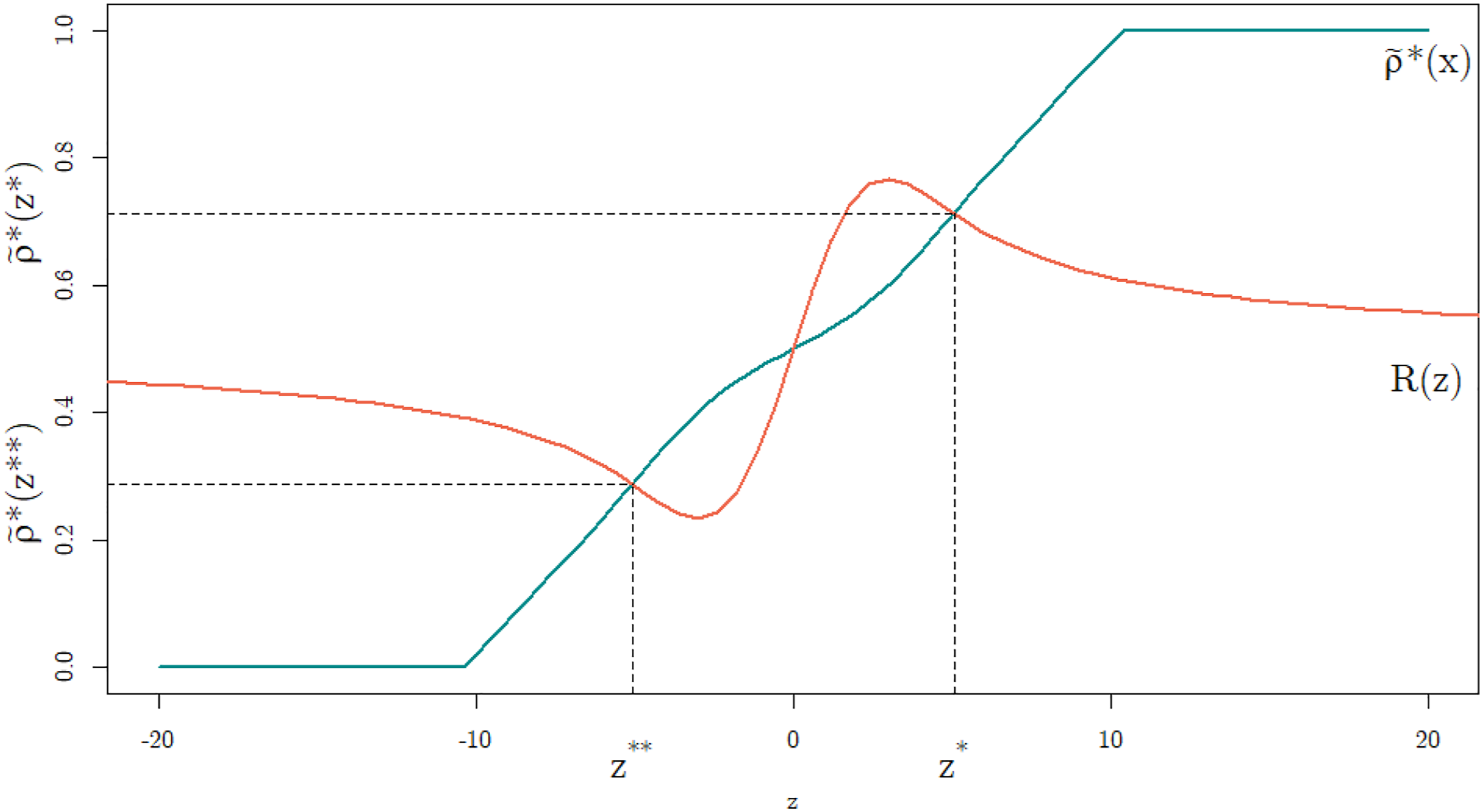
We next define the threshold election results, e, corresponding to x* and x**. Conditional on ω, individual sentiment follows a normal distribution with mean ω and variance 1. The cumulative distribution function with respect to the argument x** is the aggregate protest function which, from the perspective of the incumbent, is given by 

When there are fat tails in the election process, there are two equilibrium cutoff points for the citizens. Whenever x ≤ x**, citizens prefer to protest and anticipate that the incumbent will be forced to step down at t = 2. Whenever x > x*, citizens prefer to stay silent and believe that the incumbent will stand firm. For all x ∈ (x**, x*], both actions are rationalisable.
The protest size is decreasing in e, while ρ*(e) is increasing in e and over this region, resulting in locally unique thresholds e** and e*. But for all e ∈ (e**, e*], there are multiple equilibria. If all citizens played strategy s*, the incumbent’s best response would be to step down, since the expected protest size would always exceed the incumbent’s critical level, ρ*. But if all citizens follow strategy s**, the incumbent would prefer to stand firm since the protest size is expected to be relatively small.
Stepping Down Early
If the incumbent concedes immediately, he gets a sure payoff of y. But if he stands firm at t = 1, it is optimal for him to stay in office to the end if and only if ρ < ρ*. So his expected payoff at t = 1 before observing the level of protest is
The election result, e, signals to the incumbent (i) his expected level of popularity; and (ii) the protest size, assuming all citizens follow strategies s** and s*. If the election result is so strong that he is certain that protests will be minimal, then the incumbent will not step down as his expected payoff is close to 1 rather than y. But if large protests are expected, the incumbent is better off conceding immediately to guarantee himself a payoff of y, as this is better than what he would otherwise receive (i.e., y − γC I (⋅) if stepping down at t = 2 or 1 − C I (⋅) if not stepping down at all).
When the election result, e, is at an intermediate level, however, the incumbent faces a tradeoff. If he concedes immediately, he could forego the opportunity to stay in power if realised protests were smaller than ρ*. Although there are multiple equilibria for some levels of e, the expected level of protest for any fixed cutoff point is always decreasing in e. At one extreme, e is so high that citizens never protest, unless they are extremely opposed to the leader and protesting yields a positive expected payoff. When e is sufficiently high, the incumbent always stands firm. Define the associated critical election result as Conditional on ω, the aggregate protest size takes the form of a normal distribution which is dependent on cutoff points x** and x* respectively. The incumbent conditions expected protests and the critical protest size on the election result, e. The critical protest size is strictly increasing in e. The incumbent steps down whenever e ≤ e** and stands firm whenever e > e*. There is a multiplicity of rationalisable responses for all e ∈ (e**, e*]. In this example, the citizen cutoff points are x** = −5 and x* = 5.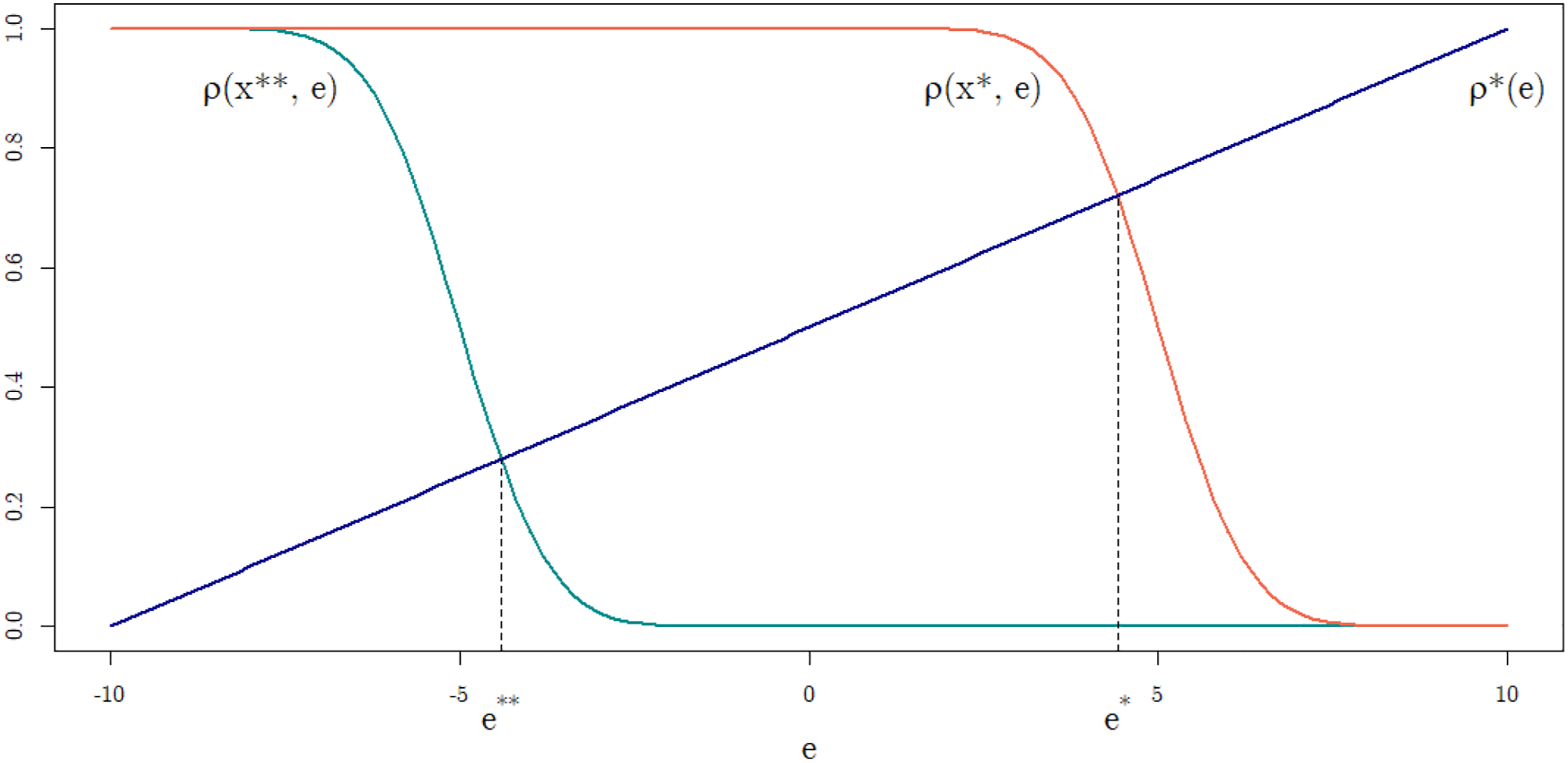
We characterise the incumbent’s decision at t = 1 as follows:
The incumbent’s payoff from standing firm at t = 1 for a given citizen strategy, s, and optimal yielding decision at t = 2 is strictly increasing in the election result and approaches y − γC
I
(1, ω) < y as e → −∞ and 1 − C
I
(0, ω) > y as e → ∞. There exists a lower critical election result, e** such that the incumbent always yields if e ≤ e**, and an upper critical result, e* such that he always stands firm if e > e*, and both these events occur with positive probability.
Electoral rules
Range of strongly enforceable electoral rules
We focus on legislative electoral rules that are enforceable, i.e., “followed” by the incumbent because they align with his equilibrium responses in the game described above.
A threshold electoral rule, e
r
is
To evaluate the outcome of an election, the realised result, e, is compared with the electoral rule, e r . For example, if e r = 0.5 and the incumbent receives a vote share of e = 0.55, we say that he has officially won the election. But, as established in Lemma 1, this does not necessarily mean he will choose to stay in office. Threshold rules which fall outside the intermediate range (e**, e*) are not enforceable. If e r ≤ e**, and election result, e is realised such that e < e r , the incumbent will “follow” the rule (an official loss) and step down. However, if the costs or benefits associated with stepping down or standing firm change, or if the level of uncertainty associated with the electoral process changes, then there may be a range of election results where e r < e < e**. In this case, despite the official result showing a win, the incumbent’s preference is to step down because he anticipates that, were he to remain in office, the protest would be large enough that stepping down provides a higher expected payoff.
When fat tails are introduced, the range of strongly enforceable rules, d (e**, e*) = |e** − e*|, is smaller than the range,
(i) If there is uncertainty about electoral integrity, i.e. if g(ν
e
) has fat tails, and there are multiple equilibria for the range of results (e**, e*), then there exists a subset of election results such that any electoral rule that falls within this subset is strongly enforceable. (ii) The range of strongly enforceable rules is always smaller than the range of a game with thin tails,
Part i of Proposition 1 states that the introduction of a fat-tailed distribution into the election game produces a multiplicity of equilibria, thereby securing a range of electoral rules which are strongly enforceable. In what follows, we abuse notation slightly by using d (e**, e*) to denote the range of strongly enforceable rules when – in fact – it is the subset d (e** + ɛ, e* − ɛ) that is strongly enforceable. 16 When e is in the strongly enforceable range (e**, e*), citizens use the electoral rule as a focal point so that they can coordinate on an aggressive strategy when the election result is below the rule and a passive strategy when it is above the rule. Part ii states that this range is smaller than that of the thin-tailed election result. A loss of confidence in the electoral process triggers a unique response by citizens for a greater range of regime sentiments, and this weakens the robustness of an election rule to changes in parameters.
Figure 4 illustrates this result. In both panels, the curve traces the expected payoff to the incumbent from standing firm at t = 1 and choosing the optimal action at t = 2. The incumbent steps down immediately after the election result is realised if and only if the curve is below the payoff he would receive were he to step down at t = 1 (y), which is given by the horizontal line. The darker shaded area shows the range of election rules which are strongly enforceable under a fat-tailed election process, while the lighter shaded area shows strongly enforceable electoral rules in a thin-tailed election process. Incumbent’s payoffs from standing firm at t = 1 with a strongly enforceable electoral rule, e
r
, (top panel) and an unstable electoral rule (bottom panel). The range of election results which are strongly enforceable when elections are drawn from a thin-tailed distribution is 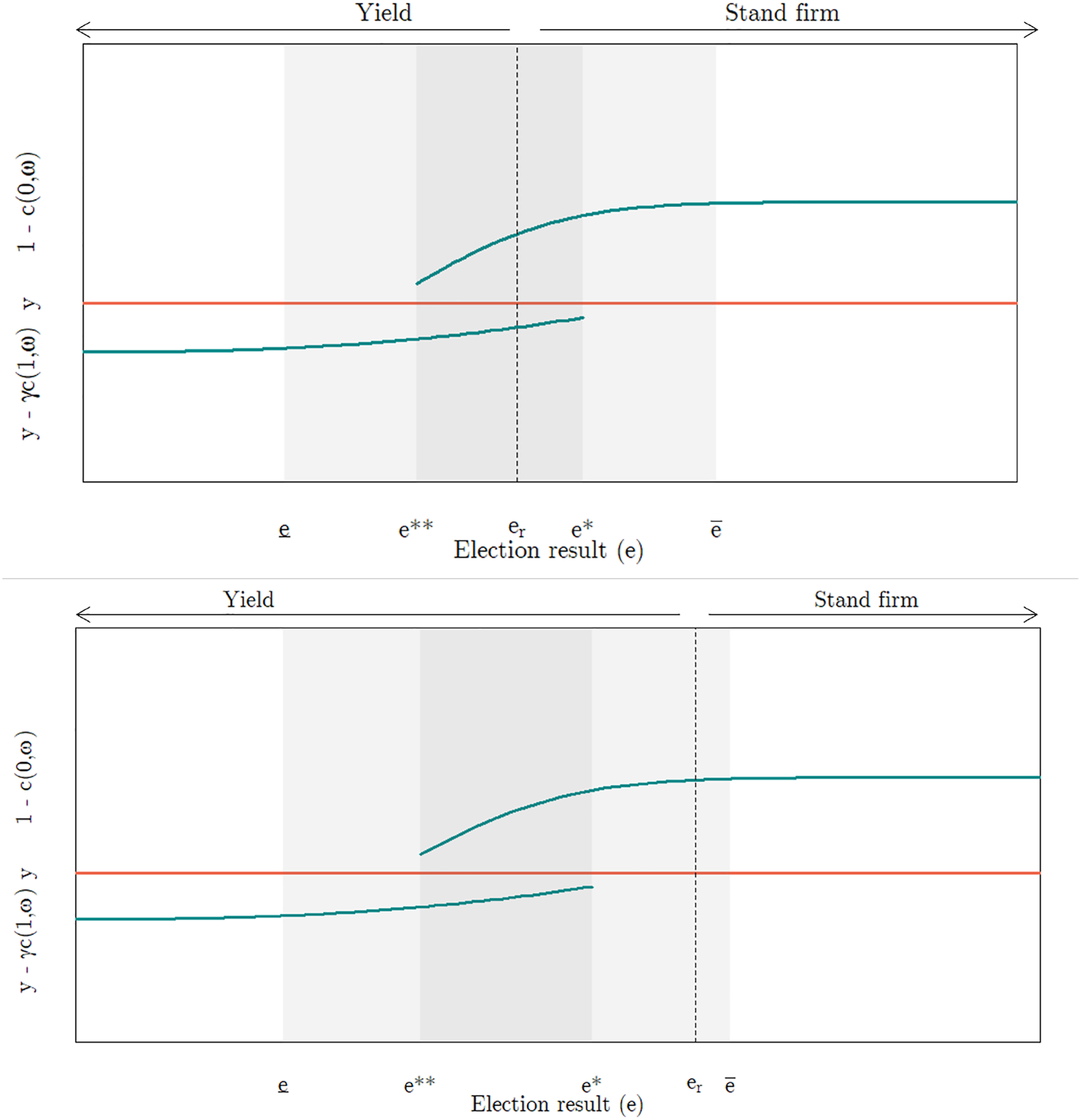
The top panel illustrates a case where the electoral rule is strongly enforceable under both a thin-tailed and fat-tailed election process. This can be seen by the fact that
In the bottom panel, the electoral rule is strongly enforceable under a thin-tailed election process, but it is not enforceable when the election process is fat-tailed. By definition of an enforceable rule, the incumbent should choose to “follow” the rule no matter what the outcome of the election is. However, by the equilibrium described in Proposition 1, the incumbent acts consistently with the rule only if it is situated within the range (e**, e*). We call any electoral rule which falls outside the range (e**, e*) unstable.
One implication of the result illustrated in the bottom panel is that there is a positive probability that an election result is realised which causes the incumbent to “break” the electoral rule. If e is realised such that e ∈ (e*, er) and if it is drawn from a fat-tailed distribution, then the incumbent has officially lost the election, but finds it optimal to stand firm at t = 1. This response is rational and on the equilibrium path: The incumbent anticipates that the size of the protest which follows his decision to stand firm is not large enough to induce him to step down immediately. He knows that citizens’ uncertainty about others’ sentiment levels acts as a dampening force on the coordination required to mount a successful protest, granting him the opportunity to stay in office through to the end of the game.
Limiting Case
To draw a connection between our model and Little et al. (2015), we next characterise the game in the limit as doubt about electoral integrity disappears and the election process becomes thin tailed. First, we reduce the fatness of the tails of G ( ) by increasing the degrees of freedom, n. As n → ∞ the rank belief function becomes monotonic increasing in z, reaching a maximum of 1 and a minimum of 0. In this case, provided that variance in private regime sentiment is relatively large, the smallest and largest solutions to condition (13) converge to dominance bounds
The unique equilibrium case is obtained when the election noise is fixed and the variance in individual sentiment becomes infinitely small so that 
(i) As the tails of g(ν) become thinner and as idiosyncratic precision becomes infinite, there is a globally unique citizen cutoff point, x
U
. For any level of true incumbent popularity, ω, there is a unique election result, e
U
, comprising an “election shock”,
Proposition 2 States that there is a globally unique election result, e
U
, which binds in equilibrium for sufficiently precise idiosyncratic noise. When the tails of g(ν) are thin and there are multiple equilibria, there is a range of election results
Inducements, Cost of Protest and Incumbent Behaviour
How do changes in the model’s parameters determine whether the incumbent faces a strongly enforceable electoral rule (as in the top panel of Figure 4), or an unstable electoral rule which will not be followed with positive probability (as in the bottom panel of Figure 4)? When confidence in the electoral process falters (i.e., elections are fat-tailed), changes in payoff parameters do not always result in a movement of the cutoff points. 18
Increases in Incumbent Payoff Parameters
Changes in the tolerance parameter, γ, and the partial benefit from stepping down early, y, directly influence the equilibrium condition, (13). Therefore, increases or decreases of any magnitude in parameters which affect the incumbent’s critical protest threshold, ρ*, automatically shift the electoral bounds and may influence the size of the range of strongly enforceable rules. Consider the partial benefit to the incumbent from stepping down before the final stage, y. An increase in this parameter captures higher rewards to the incumbent from respecting election outcomes.
Using the implicit function theorem, we can evaluate the effect of an increase in y as follows:
An increase in y shifts schedules ρ* and
An increase in the partial benefit from stepping down early, y, causes an increase in cutoff points, since both z** and z* rise. The result is a rightward shift in the range of strongly enforceable rules. (e**, e*). An implication is that the incumbent is relatively less likely to claim victory after losing an election. Conversely, an increase in the tolerance parameter, γ, makes stepping down at t = 2 more costly for a given protest size, relative to staying in office to the end of the game. This causes a decrease in cutoff points z** and z*. The range of strongly enforceable rules shifts leftwards, and the incumbent is relatively more likely to refuse to step down after losing the election.
Our results clarify how incumbent payoff parameters shape the equilibrium strategies of citizens and the incumbent. The transition of power in the Gambian elections of 2016 is instructive. On 1 December 2016, The Gambia held a presidential election in which the incumbent, Yahya Jammeh, lost to his opponent Adama Barrow by a four-percent margin (Hartmann 2017). Jammeh initially conceded defeat, but 1 week later he made another public speech in which he contested the results and asked for new elections. 20
Jammeh’s rejection of the results suggests that the electoral rule employed in the Gambian elections may not have been strongly enforceable, providing Jammeh with the opportunity to attempt to hold on to his seat in office. However, the response of the international community and, in particular, the Economic Community of West African States (ECOWAS) succeeded in prompting Jammeh’s eventual concession. ECOWAS (with the support of the United Nations Security Council) mobilised troops to threaten military invasion while at the same time negotiating with Jammeh the terms of his departure (Lawrence 2017). The military threat imposed a cost on Jammeh for trying to prolong his stay in office and made stepping down early relatively more attractive (i.e., γ, the tolerance parameter, was lowered). Moreover, his exit from the country was negotiated such that he would face no prosecution for past violations and would be permitted to take most of his belongings valued at over USD 11 million with him (i.e., y, the benefit from stepping down early was increased substantially). Although it was not an ideal democratic outcome, by influencing incumbent payoffs directly, The Gambia was able to secure a somewhat smooth transition of power. Indeed, it is widely argued that Gambians themselves were not able to hold their leader to account without international support providing an easy and safe exit for Jammeh. 21 In our model, these kinds of ex post benefits (an increase in y) provide a greater incentive for the incumbent to respect the election result.
Increases in Citizen Payoff Parameters
In our model, the cost of protest, c, can be interpreted as the scale of post-election government violence as in Egorov and Sonin (2020). Since citizens’ reluctance to protest, β(x), depends on c, we evaluate the marginal effect of an increase in protest costs on the positive-payoff condition in (8) using the implicit function theorem, i.e.
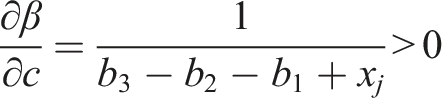


But this does not automatically mean that citizens’ propensity to protest is diminished. As long as
Let When protest costs increase, the net benefit from protesting following any given election result is lowered. But at the lower cutoff point x**, provided that We illustrate Proposition 4 in Figure 5. The top panel depicts a small change in cost (i.e., Whereas first-generation global game models such as Little et al. (2015) and Edmond (2013) predict that changes in the cost of protesting always shift the election thresholds Proposition 4 sheds light on how the severity of government-sanctioned violence contributed to very different outcomes following disputed elections in Kyrgyzstan and Kenya. The failure of President Askar Akayev to suppress protesters following the disputed 2005 elections in Kyrgyzstan set off the “tulip revolution”.
24
Akayev responded to the protests by deploying soldiers in a series of mostly non-violent arrests. Viewed through the lens of our model, this may have represented an effort to decrease e** by increasing protest costs. But these measures were insufficient to deter protesters, ultimately leading Akayev to cede office and leave the country (Radnitz 2006). On the other hand, the severe crackdown on protesters initiated by President Mwai Kibaki following the 2007 elections in Kenya – which led to the deaths of over 1000 people – enabled him to retain his seat in office in what ultimately became a coalition government with the main opposition leader.
25
In our model, where Kibaki might have otherwise been forced to step down against the threat of large-scale protest despite an official win, the increase in post-election violence towards protesters (i.e., a large increase in c) decreases e** sufficiently to restore multiplicity, causing protesters to coordinate on the electoral rule and accept the election outcome. Taken together, Propositions 3 and 4 highlight how it is incumbent payoff parameters that define the critical election thresholds e** and e* – not citizen payoff parameters. Changes in citizen costs need to be especially large to induce a change in incumbent behaviour. Strategic uncertainty introduced by the fat-tailed electoral process is foremost in citizens’ minds, and it dominates the effects of small increases in citizen costs. As a result, lower tolerance of electoral rule-breaking by external forces – e.g., foreign governments or the military – may be a more effective means of loosening an incumbents’ grip on power than the enabling of mass protest. Our model suggests that changes to the cost of protest may have a much more nuanced effect on incumbent behaviour than implied by a first-generation global game perspective.
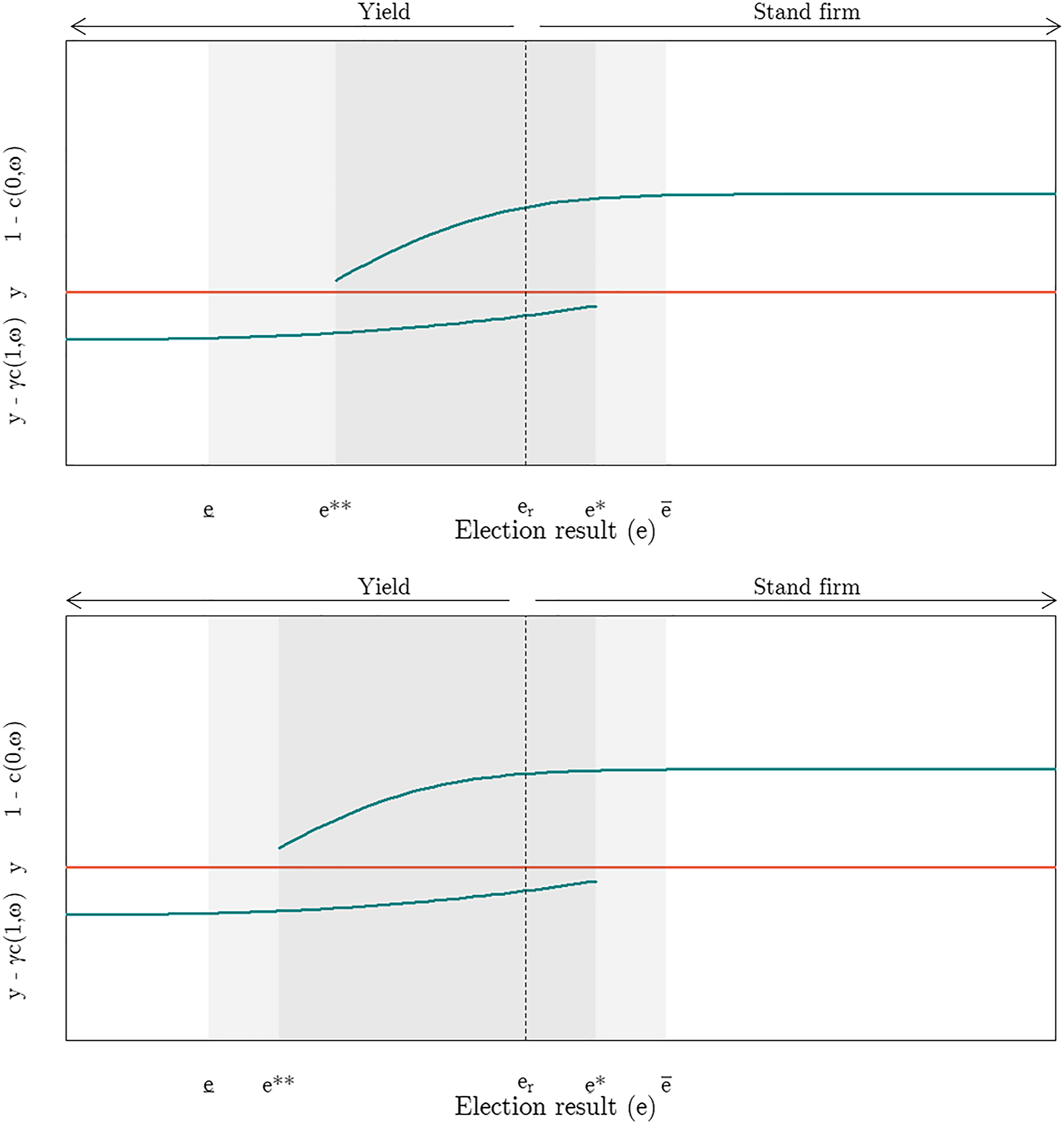
Response of electoral bounds to changes in the cost of protest, c. In the top panel, the increase in c is small so that
Conclusion
An important reason for compliance with electoral rules is that, because an election generates public information about the incumbent’s popularity, citizens are well informed about the beliefs of others to coordinate on mass protest and, thereby, punish those who do not step down.
But is it really the case that citizens are more certain about what others are thinking after an election result? In this paper, we show that the link between the informativeness of elections and the enforceability of electoral rules depends on the fidelity of the election process. When citizens develop doubts about the integrity of the electoral process – perhaps because of litigation over voting processes or foreign interference – their beliefs about what others are thinking may become diffuse. With less common knowledge about where her sentiment sits in relation to others, a citizen is less able to accurately predict the size of protests and so their disciplining role is diminished.
Our results indicate that in environments characterised by strongly democratic processes, in which electoral rules are always followed, an increase in concern about electoral fidelity may embolden an incumbent to subvert electoral rules. By contrast, when the environment is more akin to electoral authoritarianism, doubt about electoral integrity expands the range of electoral rules that can act as a focal point for citizens and sharpens the disciplining role of protests. The analysis thus suggests that the relationship between the informativeness of an election and the pattern of turnover in democratic and semi-democratic regimes lies on a continuum. Furthermore, incumbent behaviour is more responsive to direct inducements or large changes in the costs of protest. Although our model misses many aspects of democratic competition, it provides a way of capturing how different characteristics of the electoral system can create doubt about the informativeness of the election. The media, the ease of translating election results, electoral reforms, and the quality of electoral institutions all play roles in shaping the ability of citizens to coordinate against leaders who outstay their welcome.
In applying the second-generation global game model of Morris and Yildiz (2019) to the study of regime change and the informational content of elections, our analysis provides a middle ground between the complete information world of spontaneous protest and multiple equilibria (Schelling 1960) and first-generation global game models of regime change with incomplete information and a unique equilibrium (Morris and Shin, 2003). By relaxing the assumption of common knowledge of uniform rank beliefs, we highlight a different way to link the information generating properties of elections and the compliance with electoral rules. To the extent that the assumptions underpinning the first generation of global games are considered unsatisfactory for modelling mass uprisings (Bueno de Mesquita 2014), the second-generation approach, with its emphasis on electoral integrity, maintains the attractive features of global games whilst capturing the benefits of multiplicity. Further applications of this approach to other contexts would seem to be a fruitful area for future research.
Supplemental Material
Supplemental Material - Electoral Integrity, the Concession of Power, and the Disciplining Role of Protests
Supplemental Material for Electoral Integrity, the Concession of Power, and the Disciplining Role of Protests by Chanelle Duley and Prasanna Gai in Journal of Conflict Resolution
Footnotes
Acknowledgements
We thank two anonymous referees, Kartik Anand, Natasha Hamilton-Hart, Sayantan Ghosal, Nicolas Inostroza, Philipp König, Marcus Miller and participants at the North American Summer Meeting of the Econometric Society (NASMES), Montréal June 2021, the European Summer Meeting of the Econometric Society, Copenhagen, August 2021 and the NIESR Workshop on the Political Economy of Populism, London, September 2021, for helpful comments.
Declaration of Conflicting Interests
The author(s) declared no potential conflicts of interest with respect to the research, authorship, and/or publication of this article.
Funding
The author(s) received no financial support for the research, authorship, and/or publication of this article.

Supplemental Material
Supplemental material for this article is available online.
Notes
References
Supplementary Material
Please find the following supplemental material available below.
For Open Access articles published under a Creative Commons License, all supplemental material carries the same license as the article it is associated with.
For non-Open Access articles published, all supplemental material carries a non-exclusive license, and permission requests for re-use of supplemental material or any part of supplemental material shall be sent directly to the copyright owner as specified in the copyright notice associated with the article.
