




Abstract
Local ceasefire agreements are prevalent in modern civil wars, but we know little about their impact. This study analyzes geo-referenced data on 145 local ceasefire agreements declared during the Syrian Civil War, 2011-2019, exploring their short- and long-term effects on the intensity of armed violence. Drawing on scholarship on gradual confidence-building processes, we theorize the conditions under which local ceasefire agreements may generate trust and reduce conflict intensity. Using interrupted time-series analysis and spatial panel regression, we examine factors relating to the design and strategic context of ceasefire agreements. We find that local ceasefire agreements can trigger both escalation and de-escalation in the short term. De-escalatory outcomes are more likely in the long-term, when ceasefire signatories share a history of previous interaction, and when ceasefires are implemented in a stepwise fashion. We also find evidence of spatial diffusion: local ceasefire agreements in one area reduce conflict intensity in neighboring areas.
Introduction
Parties in armed conflicts are often locked in a fundamental predicament: while they may want to seek ways out of a costly situation, any conciliatory move may be perceived as a sign of weakness, leading the other side to exploit it for their strategic benefit. Given that parties have incentives to de-escalate conflicts but disincentives against taking conciliatory steps (on this, see Clayton et al. 2022), it is puzzling how they can work out ways to achieve de-escalation. Local ceasefire agreements provide an opportunity to investigate such dynamics of strategic interaction in the midst of war.
This study explores the short- and long-term impact of local ceasefires on conflict intensity, using evidence from the Syrian civil war. We conceptualize local ceasefires as temporary agreements that aim to suspend hostilities within a section of the larger battlefield, while fighting may go on elsewhere. Despite the professed aim of such agreements, it is an open question whether parties follow through and do indeed cease their fire. Parties may agree to ceasefires for strategic reasons, to free up troops for attacks elsewhere or to consolidate capabilities ahead of intensified fighting. Indeed, the extent to which local ceasefire agreements can function as a conflict-reduction mechanism and help to reduce intensity of conflicts is the focus of this study.
Previous research has suggested that trustworthy signals of conciliatory intent can be sent while still controlling the risk of being exploited by the other side. By using a step-by-step approach of gradual confidence-building, parties can learn from their interaction in a manner that moves a conflict to a lower level of intensity (Axelrod 1984; Etzioni 1962; Mitchell 1986; Mitchell 2000; Osgood 1962). Building on theoretical propositions about gradual confidence-building processes, we argue that, depending on previous interaction and agreement design, local ceasefires can function as step-by-step measures of de-escalation, lowering the intensity of local armed violence. We also argue that the effect of ceasefires may diffuse to nearby locations. Our theory is consistent with the view of ceasefires as strategic tools and it recognizes the difficulties of making ceasefire agreements stick. We therefore expect considerable variation in outcomes and that some ceasefires are followed by escalation.
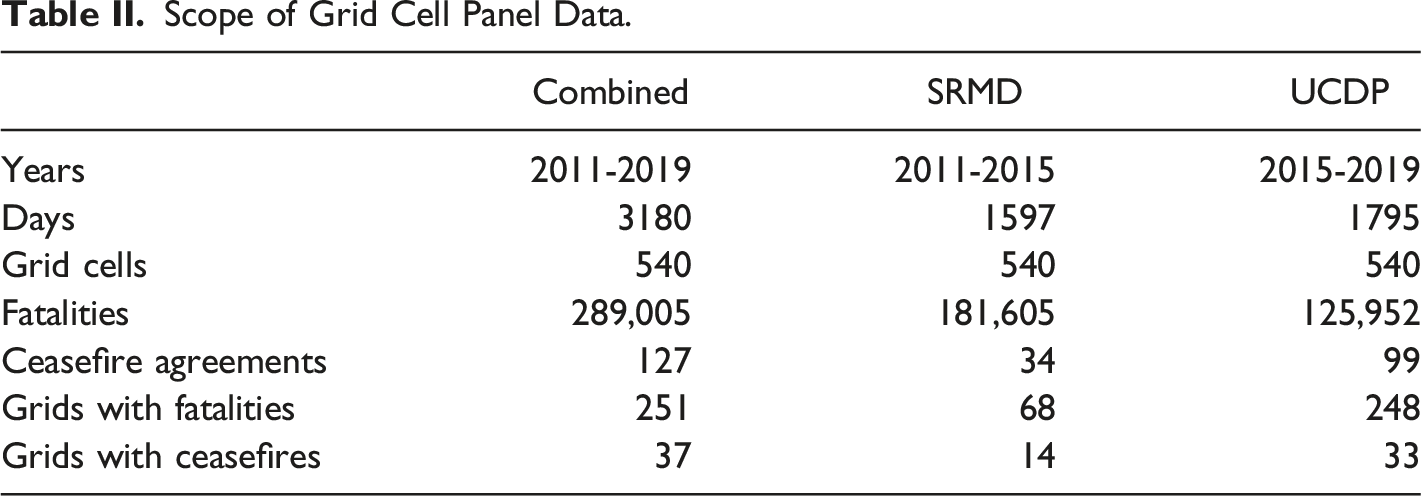
We test our theoretical expectations using an expanded and updated version of the local ceasefire dataset presented in Karakus and Svensson (2020), evaluating 145 local ceasefire agreements declared during the course of the Syrian civil war, 2011-2019. We analyze the data from two approaches. Focusing on temporal differences in local battle-related deaths, we use time-series intervention analysis to assess the impact of individual local ceasefires on conflict intensity within the immediate agreement area. To examine ceasefires in a larger strategic context, we employ a spatial panel approach, disaggregating ceasefires and fatalities in Syria across 540 grid cells observed daily through the course of the war.
We find that the impact of ceasefires varies: Some agreements are followed by de-escalation and others by increased levels of fighting. However, the de-escalatory pattern is predominant and strengthens with longer evaluation periods. Our spatial panel data confirm that ceasefires tend to have a de-escalatory impact, on average, and also that ceasefire characteristics matters. Local ceasefires that are preceded by successful previous interaction or incorporate provisions for stepwise implementation are more likely to lead to a reduction of violence. Our evidence also points to significant spatial dependencies in the Syrian civil war, indicating that violence is clustered in time and space and that the effect of local ceasefires diffuses to nearby locations. Taken together, these findings corroborate the theoretical claim that gradualism provides a possible pathway to de-escalation in armed disputes.
By conceptualizing local ceasefires, defining them in relation to the wider group of ceasefire and security arrangements (Clayton and Sticher 2021; Clayton et al. 2022; Forster 2019), and investigating their role in local conflict dynamics, we hope to set the stage for further research. The nascent literature on ceasefires has made important conceptual and empirical advances (e.g. Åkebo 2017; Clayton and Sticher 2021; Fortna 2004). However, despite the accumulating evidence that violence in civil conflict is shaped by subnational dynamics (Kalyvas 2006; Justino et al. 2013), research on ceasefires has remained focused on national-level processes and outcomes, largely overlooking the local level where wars are fought and ceasefire agreements are commonly declared. In fact, as demonstrated by Clayton et al. (2022), 30.7% of all ceasefires are local (localized) ceasefires. Together with Duursma (2022), this article represents an attempt at systematically assessing the impact of local ceasefire agreements, which can help us to understand how conflicts can be managed and belligerent relationships transformed amid fighting. In contrast to external interventions, local ceasefires represent a mechanism that is often driven and controlled by the parties themselves. Further research on local ceasefires is therefore an important complement to research on externally facilitated, national-level peace processes.
Beyond the wider aim of systematically examining local ceasefire agreements, the study also adds to the literature on the Syrian civil war. A substantial amount of previous research has gone into analyzing peacemaking efforts in Syria (Crocker et al. 2015; Gowan 2013; Greig 2013; Hill 2015; Hinnebusch and Zartman 2016; Lundgren 2016, 2020). However, much of this research has been conducted on the national, aggregated level, and predominantly focused on efforts by international actors, such as the United Nations or the Arab League. While some research has analyzed lower-level negotiations in Syria (Araabi and Hilal 2016; Cengiz 2020; Karakus and Svensson 2020; Sosnowski 2020; Turkmani et al. 2014), no previous study has modeled local ceasefires in a spatial context or systematically investigated their impact on conflict intensity.
From a policy perspective, local ceasefires have been a central component in the UN’s and other actors’ attempts to mitigate the humanitarian consequences of the Syrian crisis. Understanding the impact of local ceasefires is therefore not only an academic concern, but also of political and humanitarian interest. Our findings on the diverse effects of ceasefire agreements and the inefficiency of mediation caution against ill-considered peacemaking interventions. Ceasefires are not risk-free measures that can be exogenously imposed; their tight connection to local dynamics and interactions suggest that their practical implementation requires careful consideration.
Theoretical Framework: Local Ceasefires and Their Impact
A growing field of research has explored the dynamics and outcomes of ceasefires – arrangements between warring parties to stop armed activities against each other. The concepts of armistices, truces, cessation of hostilities, and ceasefires have frequently been used interchangeably to describe situations of formal or informal agreements between combatants to let their weapons be silent (Chounet-Cambas 2011). Conceptual work by Åkebo (2017), Clayton and Sticher (2021), and Clayton, Nathan and Wiehler (2021), incorporating insights from practitioners (e.g. Brickhill 2018), has helped clarify the conceptual terrain, distinguishing ceasefire arrangements of different levels of specificity, scope, and enforceability.
Conceptualizing Local Ceasefires
We define local ceasefires as temporary agreements between two or more combatants to suspend hostilities within a limited section of the larger battlefield. These agreements are local because they pertain to the fighting in a specific location, or a few locations, not to the entirety of the military contest between the parties, nor necessarily to other combatants active in the agreement area. This does not exclude the possibility that they may have a wider effect or that they mirror general tendencies on the wider battlefield. These agreements can emerge from local initiative and authority, in that they are typically negotiated and agreed to by local commanders and tend to evolve with the local military and political dynamics, but they can also originate from, or have the blessing of, superior officers or political leaders. Conversely, they may occasionally – as was the case with many local ceasefires attained during the Christmas Truce during World War I – represent attempts to deviate from the preferences of such principals (Axelrod 1984, 74).
We thus understand local ceasefires to be a member of the wider class of ceasefires, characterized by their spatial limitations, shorter timeframe, lower degree of formality, and less expansive provisions. Defined this way, local ceasefires largely overlap with what Clayton and Sticher (2021, 5), in their three-tiered ceasefire typology, label “cessation of hostilities,” agreements that aim to bring about “a narrow suspension of conflict violence” and “do not require time-intensive or costly accompanying measures,” with the added criterion that local ceasefires cover only a portion of the overall battlefield. As such, local ceasefires contrast against ceasefires that are more expansive in terms of scope, formality, and intended ambition. Unlike “preliminary ceasefires,” the second type in Clayton and Sticher’s typology, they typically would not include formal provisions to regulate the behavior of the parties, such as monitoring or verification mechanisms, although they may regulate the way in which the implementation is carried out. And unlike “definitive ceasefires,” the third and most robust category defined by Clayton and Sticher, they are not expansive security arrangements that incorporate provisions for disarmament and demobilization.
An example of a local ceasefire in Syria is the agreement negotiated between Hayyat Tahrir al-Sham, an Islamist militant group that incorporates the former al-Nusra Front, and the National Liberal Front, part of the Turkish-backed Free Syrian Army, in and around the town of Miznaz, Aleppo governorate, on October 6, 2018. 1 The ceasefire agreement was geographically limited (to the Miznaz/Al-Mashtal area), temporary, and the stipulated provisions (release of detainees and a military withdrawal) applied only to combatants in the concerned area. This local ceasefire can be compared to national-level ceasefires, such as the April 2012 ceasefire negotiated as part of Kofi Annan’s UN peace plan, which was geographically expansive (it applied to all of Syria), was intended for the long-term, and incorporated a detailed list of provisions aiming to regulate the nature and implementation of the agreement.
The Impact of Local Ceasefires
In the literature on ceasefires, a key interest concerns their impact on combatant behavior. This stems from the recognition that ceasefires represent critical points in the life of a conflict, where its dynamics may change. The main area of interest has been in identifying the conditions under which ceasefire arrangements can facilitate peace, with particular attention paid to conflict dynamics and qualities of agreement design. This literature has focused on ceasefires in interstate armed conflicts (Fortna 2004; Smith 1997), but also considered them in the context of civil wars (Åkebo 2017; Clayton and Sticher 2021). Emphasizing the end stages of the conflict cycle, this literature conventionally views ceasefires as components of peace agreement frameworks (Bell and Badanjak 2019) or as one of several alternative paths to conflict termination (Kreutz 2010). Empirical findings suggest that, compared with victories and peace agreements, conflicts that end in ceasefires are more prone to reoccurrence (Wallensteen 2019), especially if ceasefire arrangements do not address underlying incompatibilities (Touval 1995), lack adequate enforcement mechanisms (Fortna 2004), or rest on artificial incentives brought about by short-term external interventions (Werner and Yuen 2005).
Much of this literature emphasizes national-level processes, but following a general scholarly trend of greater attentiveness to the microdynamics of civil wars (Justino et al. 2013; Kalyvas 2006), there has been an increasing interest in investigating conflict resolution and conflict management at the local level. This includes studies of how local peacebuilding initiatives can be supported by international actors, such as the UN or foreign donors (Autesserre 2017), the impact of subnational peacekeeping deployment patterns (Fjelde et al. 2019; Ruggeri et al. 2017), and, importantly for our focus here, an emergent literature on local ceasefires (e.g. Karakus and Svensson 2020; Turkmani et al. 2014). The turn to more disaggregated perspectives, both theoretically and empirically, reflects a realization that the aggregated level of analysis – for example, at the country-level – carries the risk of overlooking important local dynamics and variations.
While research has started to pay more attention to the dynamics of local, war-time negotiations and peacemaking, the findings have not coalesced in support of any particular theoretical framework of direction of effects. The available evidence suggests that conflict management has varying effects at the local level. On the one hand, research shows that peacekeeping tends to have a positive, conflict-reducing effect at the local level (Fjelde et al. 2019; Ruggeri et al. 2017). On the other hand, studies of local peacebuilding have shown that the effect of external interventions sometimes can have detrimental effects, leading to increased local tensions and fueling local violence (Autesserre 2017). Drawing on this ambivalence, we set forth an argument that emphasizes variability in outcomes and identifies three factors that are likely to determine whether ceasefires are followed by de-escalation.
Why Ceasefires May Lead to De-escalation
The premise of our argument is that local ceasefire agreements can have either escalatory or de-escalatory effects. Depending on the strategic context, the manner in which parties reach agreement, and their motives, ceasefires may lead to more intense fighting or, alternatively, provide a way of reducing violence.
It is important to recognize that ceasefire agreements can be used strategically, as tools of war, to increase belligerents’ ability to attain their goals. Kolås (2011) suggests that ceasefires should be seen as part and parcel of the dynamics of conflict, which sometimes portend increased levels of fighting, either between signatories or between signatories and other actors. Ceasefires inspired by “devious objectives” may help to consolidate military capacities and territorial control, providing actors with opportunities to rebuild their strength to concentrate their military resources against other rival parties (Beardsley 2009; Clayton et al. 2022; Richmond 1998).
In such a vulnerable and precarious situation, how could local ceasefires lead to reduced conflict intensity? One mechanism through which local ceasefires can pave the way for de-escalation is by creating and facilitating processes of trust-building. Previous research has suggested that reciprocal and predictable efforts at conciliation can serve as smaller steps in a confidence-building process and thereby help to establish cooperative behavior even in the midst of antagonism and violence (Axelrod 1984; Mitchell 1986; Osgood 1962). Whereas it is debated which specific sequential trajectory is most effective, such as tit-for-tat (Axelrod 1984), graduated reciprocation in tension-reduction (‘GRIT’) (Osgood 1962), gradualism (Etzioni 1962), or larger conciliatory signals (Mitchell 2000), the step-by-step approach identifies the possibility of reducing conflict intensity by confidence-building conciliatory interactions. A local ceasefire can be a steppingstone to such confidence-building processes. Specifically, local ceasefires can extend and reinforce learning provided by previous interactions, contributing to further confidence-building and making de-escalation more likely (see Bara and Clayton 2022). For this reason, ceasefire agreements struck between parties that have a shared history, including previous ceasefire agreements, should have a higher likelihood of representing promising confidence-building, compared with agreements struck without previous interaction.
If local ceasefire agreements are preceded by previous ceasefires between the same parties, they are more likely to reduce conflict intensity. A second mechanism emerges from an application of the logic of signaling. Local ceasefires have the potential to signal conciliatory intent, showing that one side is reliable, trustworthy, and capable of controlling military activity within a specific territory. Whether or not such signals are credible depends on the context and the nature of the signal (Mitchell 2000), more specifically on the costs it imposes on the parties, in terms of reputation or strategic opportunities. Because costly signals are more credible, a willingness by one side to accept some type of vulnerability vis-a-vis the other side – to put one’s neck out – is more likely to represent a credible signal of conciliatory intent (Kydd 2010). Following this logic, local ceasefires that imply higher costs provide a better opportunity for learning, helping actors discern if the other side’s actions reflect credible conciliatory intent. Local ceasefires that are designed in a manner that increases transparency, exposing potential violations, will be costly for an actor with non-conciliatory intentions. It follows that, in order for local ceasefires to generate trust, they should be designed to increase both the predictability and the conciliatory cost for the prospective participants. This function is enhanced if ceasefires are implemented in a stepwise manner. By breaking down agreements into smaller stages of sequential implementation, the interaction and thus possibilities for learning become more frequent (Axelrod 1984, 132). Stepwise implementation implies that a ceasefire is rolled out as a gradual and interactive process, rather than as a wholesale package implemented in one go. Compared to agreements lacking such provisions, ceasefire agreements incorporating stepwise implementation serves to increase predictability and transparency, decreasing the risk that the parties will go back to the battlefield prematurely due to misunderstandings.
Local ceasefire agreements with stepwise implementation are more likely to reduce conflict intensity. The de-escalatory dynamic of local ceasefires also has a potential spatial dimension. Parties in conflict learn, not only from previous interactions, but also from what is happening in nearby locations. Conciliatory interactions between different actors can diffuse to other contexts and create spatial dependencies (see Bara and Clayton 2022). For example, Axelrod (1984) analyzed measures of restraint during the First World War and identified how reciprocal conciliatory interactions could spread across locations of the battlefield: “the progress achieved in one small sector of the front could be imitated by the units in neighboring sectors” (79). Axelrod’s work thus pointed to the spatial diffusion of successful strategies of reciprocal, conditional and conciliatory behavior (158). Similarly, work by Dorussen, Gartzke, and Westerwinter (2016) has shown that territorial interdependence and geographically networked actors can lead to diffusion of violence as well as its containment. We expect that these insights about spatial dependencies in armed conflict are applicable to the context of local ceasefire agreements as well. Consequently, we theorize that dynamics of spatial diffusion will make it more likely that reduced tension in one area spreads and contributes to de-escalation in proximate areas.
Local ceasefire agreements in one location will reduce conflict intensity in neighboring locations.
Data and Research Design: Measuring Local Ceasefires and Battle-Related Deaths
To examine the impact of ceasefires in Syria, we combine geocoded data on fatalities, sourced from two different datasets, with data on geocoded data on 145 local ceasefire agreements declared between 2011 and 2019 (Figure 1). (a): Local ceasefire agreements in Syria, 2011-2019. Data: Extended version of Karakus and Svensson (2020). (b): Fatalities in Syria, 2011-2019. Data: Syrian Revolution Martyr Database; UCDP. Each grid cell represents 0.25 × 0.25 decimal degrees.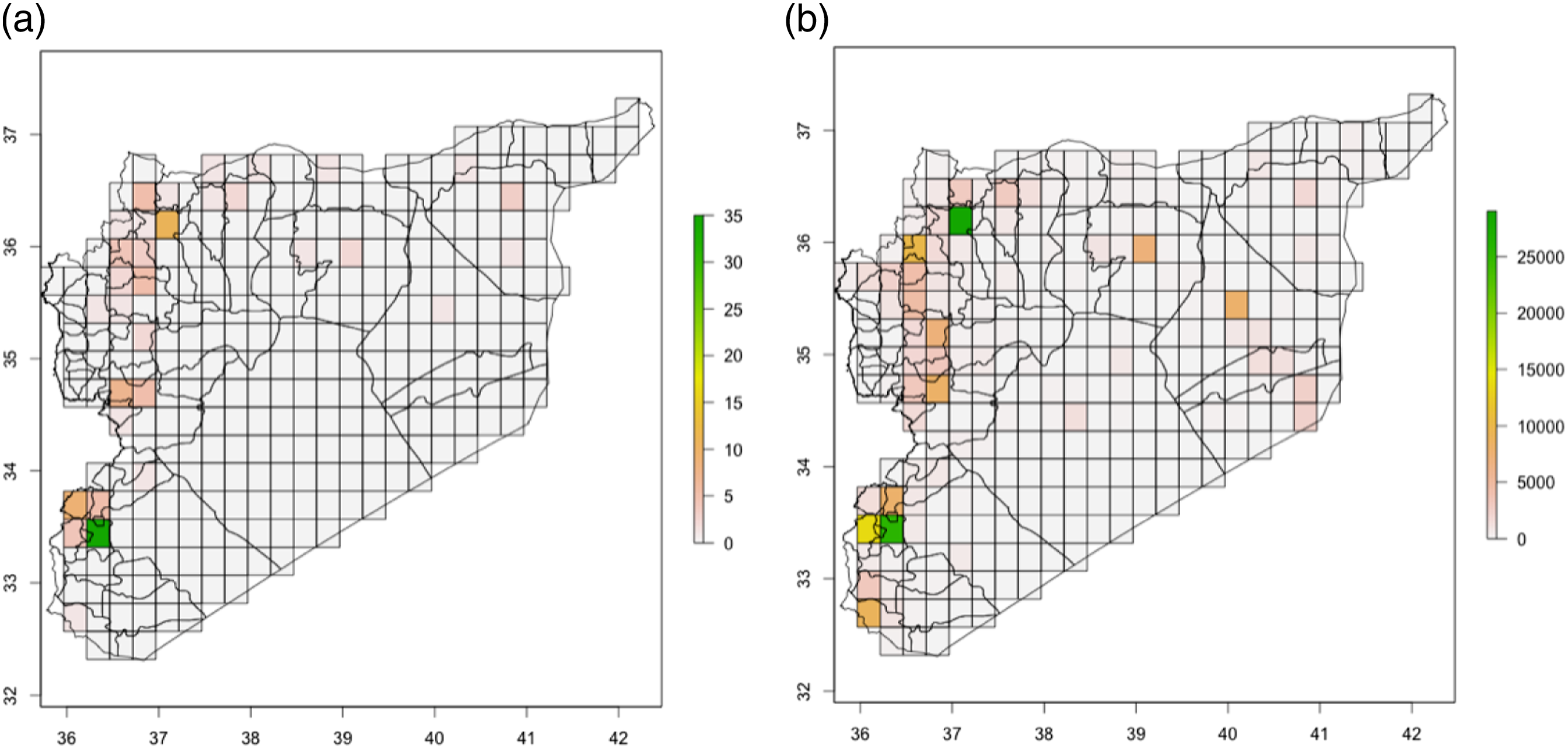
Data on Local Ceasefire Agreements
We use data from Karakus and Svensson (2020), which provide information on local ceasefire agreements in Syria 2011-2017. 2 We extend them via independent data collection to attain a comprehensive temporal cover, 2011-2019. We gathered data from regional and international publications, scholarly journals, and reports from non-governmental organizations, most notably the Syrian Observatory for Human Rights (SOHR). 3 For each ceasefire agreement, we recorded the involved parties, location, date, design of agreement, implementation procedures, primary motives, and other characteristics. For some agreements, information was readily available; for others we attained only limited data, as the combatants either actively discouraged media access or conditions of war made reporting difficult. For example, information flows and media coverage were at times curtailed in areas occupied by the Islamic State (IS), while the Syrian government is known to have restricted media access, in particular for Western journalists. 4 Since journalists and other sources may avoid risky areas, we recognize that our list of ceasefire agreements may not be exhaustive. At the same time, belligerents in Syria have shown that they consider the announcement of local ceasefires as important, often publicizing such agreements well beyond the local area to which they apply. This tendency of wide dissemination likely counteracts reporting bias stemming from journalistic security constraints.
To ensure valid ceasefire records and avoid rumors and strategic misrepresentation, we cross-referenced information on each ceasefire against several sources, and especially against rival parties’ statements and social media postings. 5 In our experience, the best method for verification was to monitor the news (especially from SOHR) and social media postings about a given agreement and its implementations in the days and weeks following its initial announcement. We include both written and verbal agreements. Some agreements were published in written Arabic form, with seals of signatories, which facilitated the extraction of relevant data on the involved parties and agreement design. 6
Data on Fatalities
We source data on fatalities from two main datasets, each covering a different period of the conflict. 7 For the early part of the war, we draw on data from the Syrian Revolution Martyr Database (SRMD) (“Syrian Shuhada”), an organization that tracked fatalities in the Syrian conflict from 2011 through the first half of 2015 based on medical records and local reports. 8 A large proportion of the observations in the SRMD data are sourced from the Violations Documentation Centre in Syria (VDC), a non-governmental organization operating on the ground in Syria, and the Damascus Center for Human Rights studies (DCHRS) a non-affiliated, non-governmental organization based in Syria and the United States. The SRMD data contain finely disaggregated geocoding, listing each fatality with coordinates, date, and other biographic variables. For the second half of the war, 2015-2019, we rely on UCDP georeferenced data (Sundbergh and Melander 2013), which contains data on fatalities, tagged with spatial and temporal attributes, sourced from media reports. These two datasets allow us to study ceasefires during nearly the entire conflict. In recognition of their different sourcing strategies, we complement analysis of the amalgamated data with analysis of each underlying dataset.
The collection of data inside Syria is unlikely to capture all fatalities perfectly. Disturbances in data collection may arise from inaccessibility, distrust between communities and the collecting organization, and other factors (see Price and Ball 2015). In addition, data collection is likely to be partly shaped by the political orientation of the collecting organizations. Both VDC and SRMD are associated with the opposition and may therefore have better access to certain regions and communities, and may be more or less likely to report fatalities or perpetrators of certain types. Similarly, UCDP relies on media sources, which may reflect reporting biases (Weidmann 2015).
At the same time, the reported data provide a reasonable and useful approximation of temporal violence patterns, for two key reasons. First, collection biases are likely to be time-invariant. Assume, for example, that an organization holds anti-regime views, leading it to underreport certain fatalities. This certainly introduces bias, but as long as the organization is consistently biased, it does not amount to a significant concern for the analysis of temporal trends. Second, inspection of the data suggests that variation in fatality statistics matches well with what we know about the intensity of the Syrian conflict based on qualitative information. For example, fatalities recorded in the Qadam neighborhood of Damascus remain at zero until July 2012, when they rise precipitously, precisely at the time we know from qualitative sources that fighting broke out in this area. 9
Finally, it is possible that data collection is affected by ceasefire agreements, leading to measurement error in the dependent variable and the attendant risk of biased regression coefficients. Theoretically, the most likely effect of ceasefires on data collection is to increase its accuracy and completeness: When ceasefire agreements are in place, it will be easier for journalists and medical staff to collect and disseminate information. This means that the likelihood that a given fatality is recorded increases, compared with non-ceasefire conditions. If measurement accuracy is positively correlated with ceasefire agreements (due to increased reporting accuracy by medical staff and media) and positively correlated with fatalities (when ceasefire agreements are in place, a greater proportion of fatalities are accounted for), it will produce an upwards bias in regression estimates. Negative regression coefficients for ceasefire agreements will then be biased towards zero, implying that we may underrepresent the true effect. Given that we expect to observe negative coefficients, there is less reason to be concerned that measurement error would lead us to overstate the effect of ceasefire agreements on conflict intensity.
Empirical Analysis: Time-Series and Spatial Panel Data Analysis
We analyze our data using two analytical approaches. In the first, we analyze the impact of individual ceasefires using interrupted time-series analysis, comparing the daily count of fatalities during a ceasefire against the daily count in the non-ceasefire condition that preceded it. In the second, we analyze the impact of ceasefire agreements and their characteristics in a pooled manner, employing spatial panel data regression, comparing both longitudinally and across locations.
While the first approach allows us to pinpoint the geographic scope of a ceasefire more narrowly, it does not allow us to take into consideration variation in ceasefire characteristics or how local bargaining in the ceasefire location is affected by strategic action across the wider battlefield, such as the impact of other ceasefires, nearby fighting, or general conflict trends. The second approach, by modeling local ceasefires within the nation-wide fatality-generating process, allows us to do that, at the price of sacrificing the granularity of the first approach. By combining the two methods and their respective strengths, we generate more informative evidence overall.
We use the terms “impact” and “effect” in recognition that our research design is observational, implying limitations for causal identification. We do not view ceasefires as exogenously imposed policy solutions but as agreements that emerge from negotiations between the parties. In other words, ceasefires are endogenous to the political context at the local level at a given time. While a ceasefire agreement may help to “lock in” a new equilibrium, making non-compliance costlier, any long-term changes in conflict intensity are best viewed as flowing from the entirety of factors governing the parties’ interactions in a given locale. Our analysis using the first approach will allow us to identify whether such changes are escalatory or de-escalatory and, in the second approach, how agreement characteristics shape divergent outcomes during the agreement period.
The Unconditional Impact of Local Ceasefires: Time-Series Analysis of Individual Ceasefires
In the first approach, we start by extracting separate daily time series on fatalities for each of our ceasefire locations. We include fatalities that occurred within a certain radius specified based on the demographic and geographic characteristics of each location, ranging from 2.5 km for the most densely populated urban regions to 25 km for the more sparsely populated desert regions. Each ceasefire-specific time series covers 90 days before the ceasefire, the day of the ceasefire, and 90 days thereafter; in other words, a 6-month period for each ceasefire.
These data cover 88 separate time-series of 181 days, for a total of 15,928 daily observations with a total of 53,960 fatalities.
10
Figure 2 illustrates two example time series, allowing for a visual comparison of the count of fatalities before and after local ceasefire agreements. Daily count of fatalities in Daraa and Barzeh, 3 months before and ceasefire agreements were declared in each location. Agreement dates marked with vertical lines.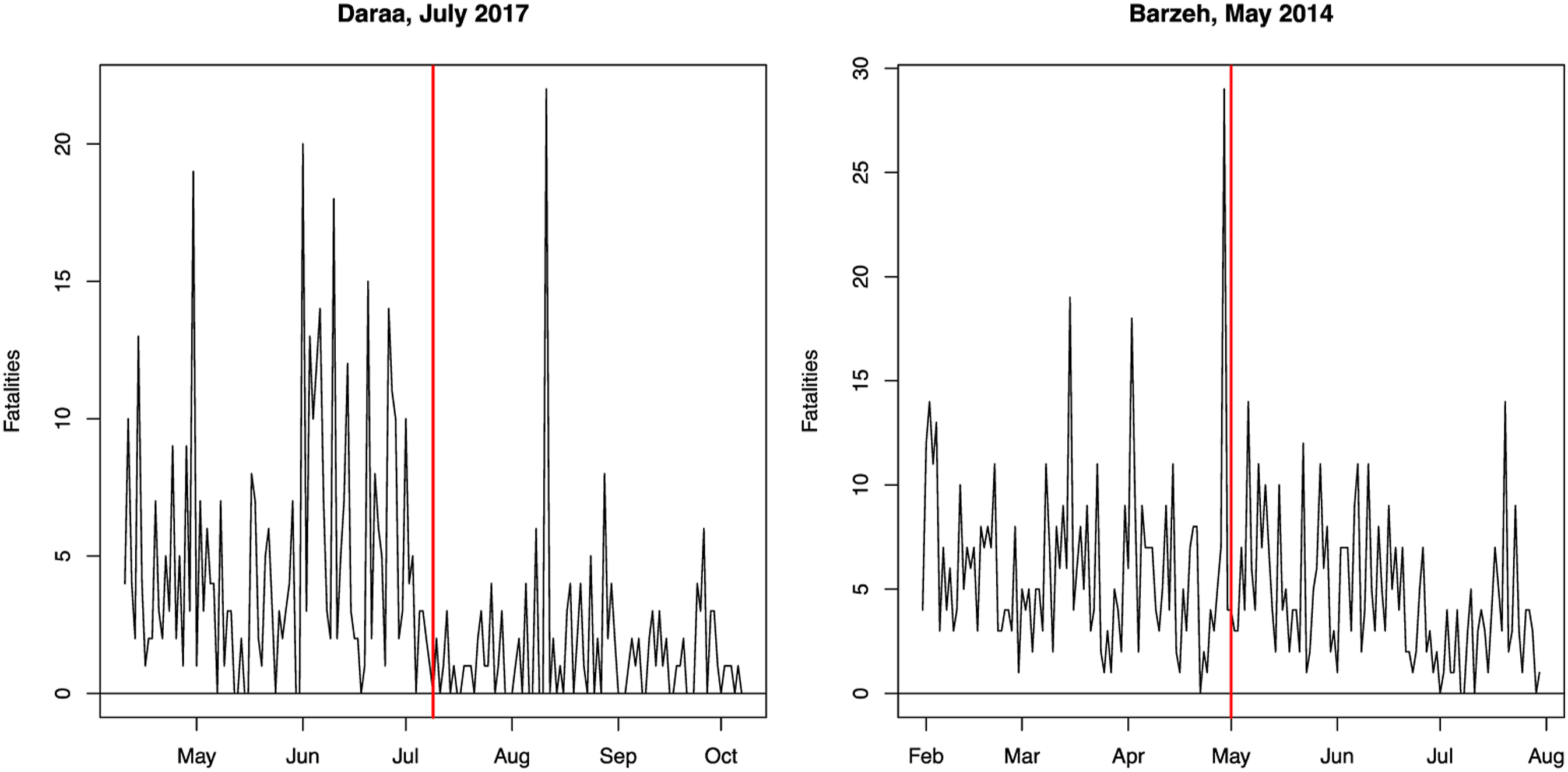
To estimate the impact of ceasefire agreements, we carry out interrupted time-series (or intervention) analysis. Relying on commonly used methods for intervention analysis (Box and Tiao 1975), we analyze impacts for different time intervals and tailor our statistical technique to match the time interval of interest. For analysis of the immediate, day-to-day impact, we rely on segmented OLS. This method is suitable to identify whether there is a breakpoint, an abrupt change in the time series, at the time of the ceasefire agreement. Next, we analyze the impact of each ceasefire during its agreement period, the period to which the signatories commit to cease hostilities. This can range from very short periods of time, such as a day or two, to a month, which we employ for all agreements that stipulated an open-ended end date. Here, we use an autoregressive integrated moving average (ARIMA) count model, which adjusts for the serial dependence and trends frequently observed in time series. 11 We use a binary post-ceasefire treatment indicator (coded as 1 for days in the declared agreement period) to estimate ceasefire effects.
Finally, for analysis of ceasefire effects in the long-term, we again rely on ARIMA regression and again code a binary post-ceasefire treatment indicator (coded as 1 for the first 90 days following an agreement) to estimate whether or not there is a more durable impact.
Analyzing each of the 88 time-series three times with different models yields a total of 264 models. We summarize our results of the ceasefire agreement impact analysis in Figure 3 and Table I. Figure 3 reports the 88 ceasefire-specific coefficients (with 95% confidence intervals), ordered from the most to least de-escalatory, across the three-time windows. Two key patterns stand out. First, there is considerable variation in the estimated effect of ceasefires on the intensity of fighting. Evaluated at the 0.05 significance threshold, some ceasefire agreements are associated with de-escalation, that is a downwards shift in the fatality-generating process; others with escalation, that is an upwards shift in the fatality-generating process; whereas many do not bring about a statistically significant shift in either direction. Estimated ceasefire coefficients (“treatment”) across 88 ceasefire agreements; Estimates based on 3 × 88 ceasefire-specific segmented OLS and ARIMA models; Estimates in each panel represent impacts in the immediate term, during the agreement period, and in the long-term, respectively. Whiskers indicate 95% confidence intervals. Impact of 88 Declared Ceasefire Agreements in Different Time Intervals. Note: De-escalation and escalation categorization based on negative and positive coefficients, significant at p < 0.05. All others listed as “no significant change”. Each line in table contains all ceasefires in sample.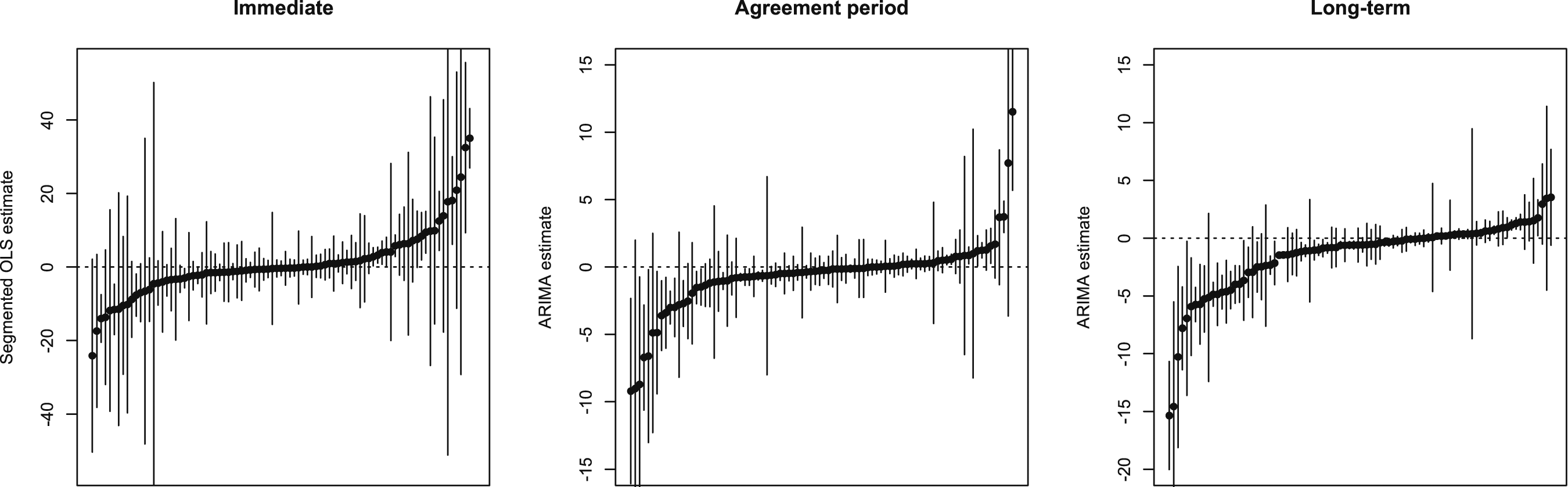
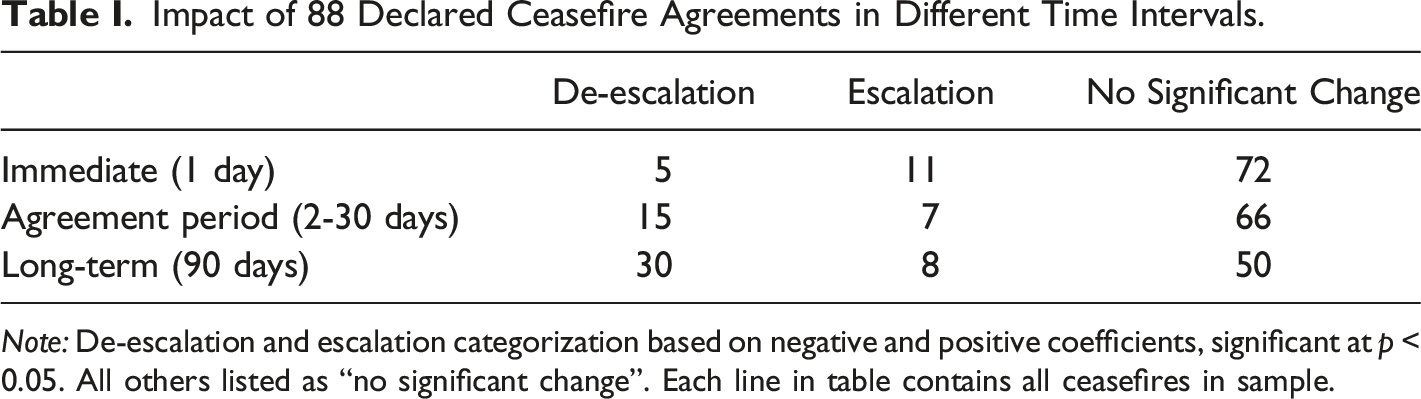
Second, the estimated impact of local ceasefires varies with the time interval of evaluation. As the time interval expands, a higher number of ceasefires is associated with a statistically significant downward shift in the fatality-generating process, increasing from 5 (out of 88) in the immediate term to 30 in the long term (Table I). An opposite trend is observed with regard to escalation. In other words, while the ceasefires in our sample appear somewhat more likely to be followed by escalation in the very short term, they are notably more likely to be followed by de-escalation in the long term.
Overall, we interpret these results as evidence that should lead us to understand local ceasefires as significant events in the dynamics of civil war. While many ceasefire agreements do not have a significant impact either way, the number that do have such effects is considerably higher than would have been expected based on chance alone, especially in the longer time windows. 12 This suggests that, as expected, local ceasefires agreements are frequently associated with shifts in the violence-generating process.
The Conditional Impact of Local Ceasefire Agreements: Accounting for Heterogeneity and Spatial Dependencies
The analysis thus far has been insensitive to ceasefire heterogeneity and spatial dependencies. For an analysis of whether ceasefire agreements affect conflict intensity, at all, this approach is reasonable. In the second stage of our analysis, we incorporate measures of ceasefire characteristics and spatial lags, to enable an evaluation of our hypotheses about previous interaction (H1), agreement design (H2), and spatial diffusion (H3), focusing on the agreement period.
Scope of Grid Cell Panel Data.
To capture previous interaction between the same parties, we include the variable previous ceasefire agreement, coded as one for agreement days involving dyads that were parties to earlier ceasefires in the conflict. For example, Hayyat Tahrir al-Sham and Ahrar al-Sham declared ceasefires six times in Idlib and Aleppo between 2017 and 2019. To capture differences in the outcome of previous interaction, we include the variable previous durable ceasefire agreement, coded as one if the observed agreement was preceded by a previous agreement between the same parties and that agreement led to a statistically significant reduction in battle fatalities during the agreement period.
To reflect variation in ceasefire design, we distinguish agreements stipulating stepwise implementation from agreements lacking such provisions. For example, this category includes the local ceasefire agreement in Ram Hamda, Idlib, negotiated between Hezbollah and Ahrar al-Sham in September 2015, which stipulated implementation in “two phases, the first to start immediately after the official announcement of the agreement between both parties” and then “with the end of the first phase, begin the second phase, which includes the release of 500 detained men and women” (SOHR 2015).
To evaluate the effects of ceasefire agreements on nearby locations, we include the variable ceasefire agreement (spatial lag), equaling the count of ceasefire agreements in contiguous grid cells recorded as formally active on the day of observation. For any observed cell, the contiguous cells include the eight directly adjacent cells, also known as the Moore (or “queen”) neighborhood. To represent contemporaneous ceasefires elsewhere in the country, we code the variable ceasefire agreement (elsewhere in country) as one if there is a ceasefire agreement in any other grid cell on the observed day.
Beyond the privileged explanatory factors, we employ three dichotomous variables to control for additional sources of heterogeneity. We distinguish mediated ceasefires as those reached through the facilitation of a third party using non-violent means. An example is the ceasefire mediated by the Syrian Red Crescent between Ahrar al-Sham and regime forces in Zabadani in December 2017. We also code whether ceasefires incorporate provisions for evacuation, the removal of one side, typically by relocating insurgent forces and their families to Idlib province or to northern Syria (cf. Sosnowski 2020, 282). 15 Finally, we identify humanitarian ceasefire agreements as those incorporating provisions relating to humanitarian objectives. For example, the ceasefire struck between Islamic State forces and opposing Islamist rebels in Aleppo in June 2015, which sought to “facilitate the receiving of fuel and oil and cover the needs of civilians,” is included in this category.
To account for general spatial dependencies in local warfare and the attendant fatality-generating process, we include a spatially lagged dependent variable, fatalities (spatial lag), equaling the count of fatalities in the neighboring grid cells on the day of observation. We expect that active warfare will concentrate to areas along or in proximity of the front, the string of areas where armed forces engage in combat to settle contests for local domination. Due to such frontline dependencies, fighting in one area is likely to intensify as fighting in neighboring areas intensifies, and abate as it abates. 16
We employ a multilevel time-series count model (Gelman and Hill 2006). To model spatial and temporal autocorrelation, we include random effects for grid cells and weeks. We model the fatality counts as draws from a negative binomial distribution, which is a generalization of the Poisson distribution that adds a parameter to model possible over-dispersion. While the conditional variance does not differ from the conditional mean (p = 0.16), statistical tests indicate that the raw fatality distribution is over-dispersed and fit statistics suggest that the negative binomial models fit our data better than Poisson (Cameron and Trivedi 1990). We therefore rely on the negative binomial regression as our preferred approach, reporting results for Poisson regression in the Online Appendix.
Since several of our key explanatory variables represent characteristics of agreements and the involved parties, they are observed only when ceasefires are coded as one. Such “nested” variables are entered into the below regressions as interactions with the ceasefire variable. The sign and magnitude of the interaction coefficient for a given characteristic show the effect of that characteristic relative to ceasefire agreements lacking the characteristic. Since the constituent terms of the nested characteristics variables have no meaningful interpretation (nor are they estimable), they are excluded from the specification. 17
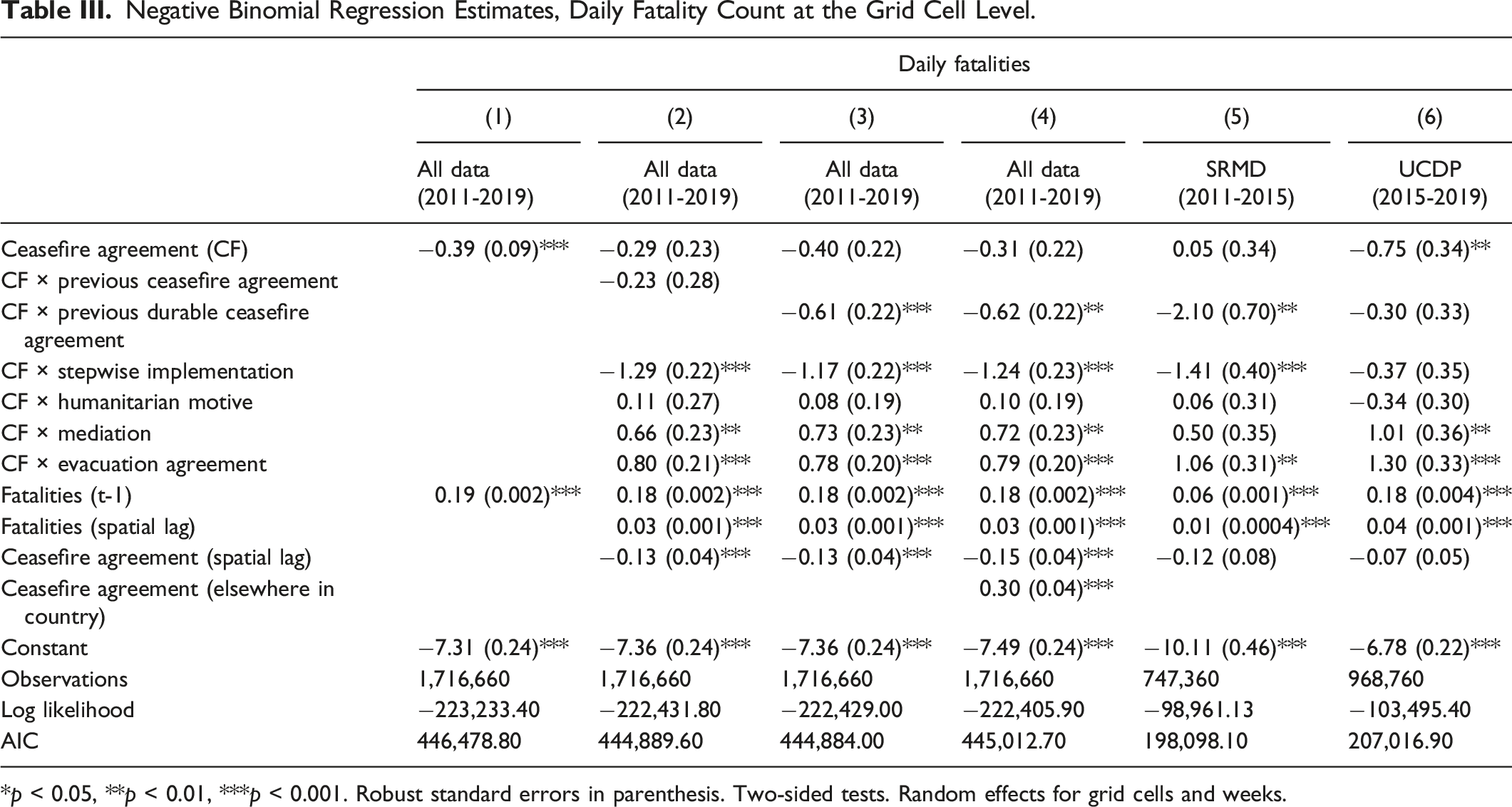
Negative Binomial Regression Estimates, Daily Fatality Count at the Grid Cell Level.
*p < 0.05, **p < 0.01, ***p < 0.001. Robust standard errors in parenthesis. Two-sided tests. Random effects for grid cells and weeks.
The results reveal several important insights. First, we note that the coefficient for ceasefires is negative and significant at p < 0.001 in the minimal Model 1, suggesting that grids with ceasefire agreements experience a reduction of the fatality count during the ceasefire agreement period. The estimated coefficient corresponds to a 33% reduction of the daily mean of fatalities in grid cells with ongoing ceasefire agreements compared with periods lacking such agreements.
Second, the average effect of ceasefires observed in Model 1 represents the net of a series of partly divergent effects. This becomes apparent in Model 2, which shows that the effect of local ceasefire agreements is conditional on previous interaction, varies with ceasefire design, and diffuses to contiguous locations.
Lending mixed support to H1, we find that previous interaction between ceasefire signatories is negatively associated with the count of fatalities under some circumstances. As can be seen in Model 2, the coefficient on the previous interaction variable is negative but the estimate is too noisy to support the conclusion that it represents a systematic effect. In other words, we cannot conclude that previous interaction between the same parties makes new attempts at ceasefires more likely to succeed. However, if we look only at ceasefire agreements struck between parties that have a history of durable agreements, we note that the coefficient is positive and significant at the p < 0.01 level (Model 3). Substantively, a new ceasefire agreement struck between two parties with previous successful interaction will lead to about 64% fewer daily fatalities during the agreement period, all else equal. This is an important qualification from the perspective of the step-by-step approach, where parties are expected to learn from previous interactions. The finding is consistent with the notion that parties that are locked in enduring conflict may find it easier to reduce violence, locally, if they have a history of such limited cooperation.
Consistent with H2, we also find that stepwise implementation of local ceasefires predicts a more pronounced reduction of fatalities, compared with ceasefires lacking such provisions. The coefficient on the relevant interaction is negative and significantly different from zero in our main models. Based on Model 2, we would predict that a local ceasefire implemented stepwise would result in an additional fatality reduction of about 73%. This corroborates the theoretical belief that gradual trust-building processes, promoted via stepwise implementation of local ceasefires, have a higher likelihood to result in a real change in conflict dynamics than ceasefires that are implemented in one single, major step.
Our findings are consistent with the expectation (H3) that ceasefire agreements affect neighboring areas. The coefficient on the spatial lag variable is negative and significant at the p < 0.001 level in the models fitted on the entirety of the data, indicating that the presence of a ceasefire agreement in one grid cell is associated with a reduction of the fatality count in the observed cell. This observation provides support of an indirect spatial effect, and suggests that parties learn not only from previous interactions but also from their neighboring environment. It is possible that some of the observed association here is a function of the direct effect of ceasefire agreements rather than their spatial diffusion. If an agreement is struck at a location bordering two cells, for example, its effect on fatalities would potentially be observable in both cells. However, as indicated in our analysis above, many local ceasefire agreements cover areas that are distinctly smaller than our 22.5 km × 27.5 km grid cells. For them to have an observable effect across the eight bordering grid cells, covering an area of 67.5 km × 82.5 km, would likely require dynamics of spatial diffusion. Moreover, the estimates of the spatially lagged fatalities variable are positive and highly statistically significant, indicating that the intensity of fighting in a grid cell covaries with that of the grid cell’s neighbors. Like with the ceasefire agreement, this implies that fighting during the Syrian civil war exhibits spatial dependencies that shape escalatory and de-escalatory trends.
The coefficient on the variable representing the impact of ceasefires in grid cells other than the one observed, elsewhere in the country, is positive (Model 4). This indicates that actors may have used ceasefires to reallocate forces to fight elsewhere.
If we compare across the different underlying datasets, as we do in models 5-6, we note both consistencies and patterns of variation. For the variables relating to the basic dynamics of the data (the temporal and spatial fatality lags), both datasets return coefficients with the same sign and level of significance, suggesting that our models capture properties of the fatality-generating process that remain fairly stable over time and – since warfare has shifted around the country – space. At the same time, we note occasional deviation from this pattern, pointing to intriguing counter-patterns that might be informative about how the Syrian war – and the role of local ceasefire agreements – has changed over time. We note, for example, that while stepwise implementation is associated with lower fatalities in the earliest period of the war, this association is weaker (p = 0.29) in the later part of the war (2015-2019) covered in the UCDP data. This suggests that ceasefires during this part of the war – which contains some of the most intense and uncertain periods, as well as the emergence and consolidation of the Islamic State and a robust Russian intervention from 2015 – followed a partly different dynamic than the years that came before.
With regard to our control variables, we note that mediated ceasefire agreements are less likely to lead to conflict abatement than other agreements. Given the presumed goal of mediation, this finding is surprising, but it is consistent with existing evidence on mediation selection effects (Gartner 2011). It is likely that mediators turn to particularly difficult situations, characterized by higher mistrust and strategic disincentives for collaborative efforts, increasing the risk that local ceasefire agreements are violated and ineffective. An alternative explanation may lie in the negative effect sometimes observed for external interventions, which may reduce the sense of local ownership (Nathan 2006) or bring about artificial incentives for agreeing to a ceasefire (Beardsley 2009).
The coefficient on evacuation agreements is positive and of greater magnitude than the ceasefire coefficient, suggesting that the effect of the latter dominates: Where evacuation agreements are struck, violence does not abate, at least during the agreement period. Two possible explanations seem likely. First, it is possible that evacuation agreements tend to be followed by counter attacks by non-evacuating affiliated forces, which would likely raise the fatalities count. Second, if evacuation agreements tend to be struck in grid cells that are unusually violent, but the agreement covers only a portion of the cell area, it is possible that the fatality count stems not from the parties in agreement, but from other actors fighting in the same area.
The coefficient on humanitarian ceasefires is nonsignificant so we cannot reject the null of no relationship with fatalities. This result may reflect a measurement asymmetry, in that several humanitarian ceasefires have very short agreement periods, sometimes as little as 12 h, 18 while fatalities are measured on a 24 h basis. If ceasefire agreements represent brief interludes, sandwiched between periods of more intense fighting, one may need more granular data to identify their effect.
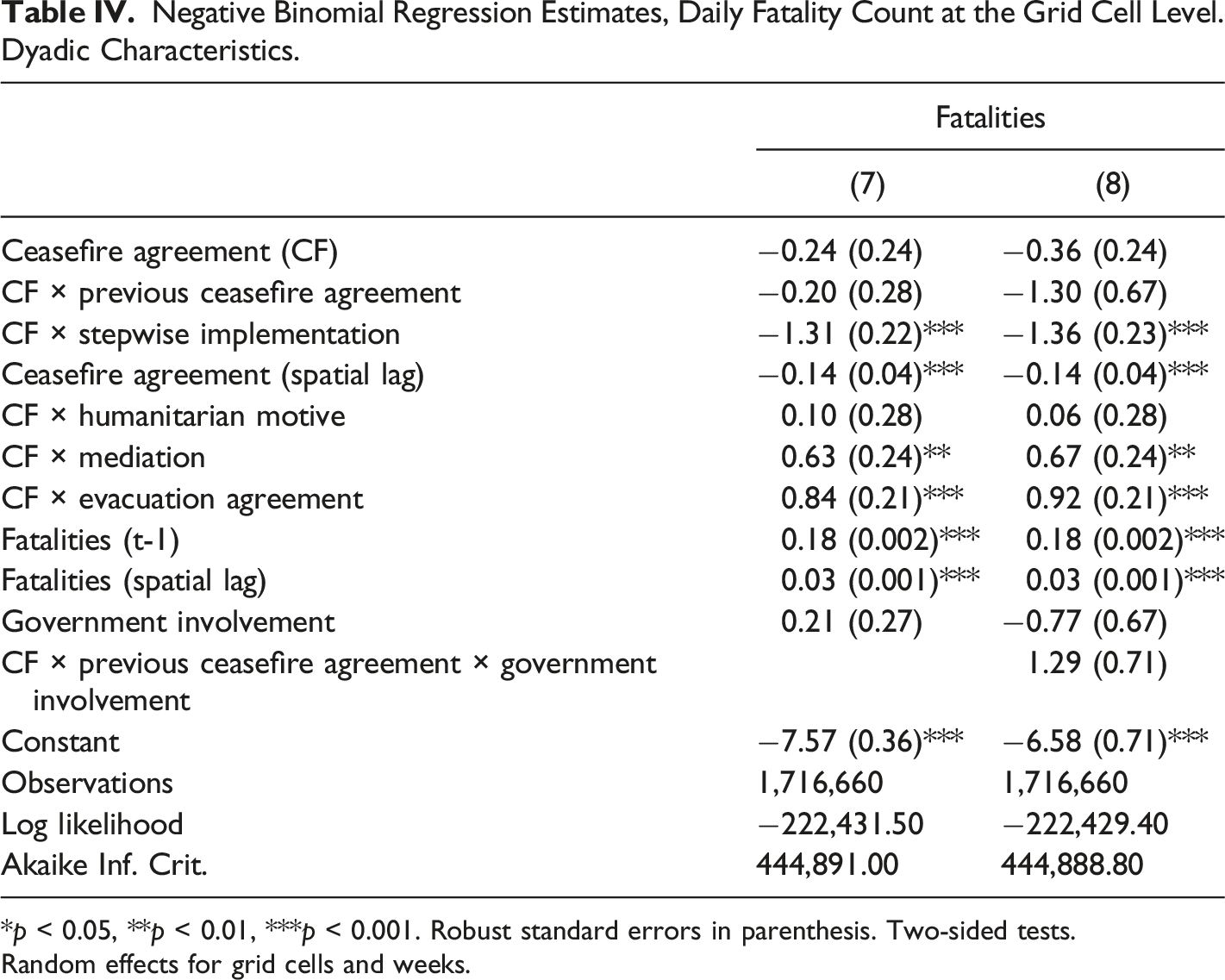
Beyond what has been reported here, the Online Appendix reports results based on modeling excluding grid cells without any fatalities (including most of the largely uninhabited desert areas of Syria) (Table A1), with alternative distributional assumptions (Poisson) (Table A2), controlling for nation-wide ceasefires brokered by the UN and other international actors (Table A3), and alternative lag structures (Table A4). We also report (Table A5) models in which we include variables for previous ceasefires in the same location, regardless of participants, finding that such ceasefires are negatively associated with the daily fatality count.
Negative Binomial Regression Estimates, Daily Fatality Count at the Grid Cell Level. Dyadic Characteristics.
*p < 0.05, **p < 0.01, ***p < 0.001. Robust standard errors in parenthesis. Two-sided tests.
Random effects for grid cells and weeks.
Finally, we note that the weekly random effects (Figure A2) map the intensity of fighting in Syria, showing the well-known pattern of a less intense first year, followed by a spike of violence during 2012 and continued violence at a high but slowly decreasing level. The grid random effects plotted in the second panel of the same figure correspond to the geographic pattern illustrated in Figure 1, with about two fifths of Syria exposed to varying degrees of violence, and three fifths to none at all (most of which are uninhabited lands).
Conclusion
Our investigation into data on local ceasefire agreements in Syria yields three key findings. First, there is a high degree of divergence in outcomes. Ceasefire agreements are followed by both de-escalation and escalation of violence. This divergence is particularly pronounced in the short-term; in the longer perspective, and once spatial dependencies are considered, de-escalation is more common than escalation.
Second, we found that ceasefire agreement outcomes are conditioned on previous interaction, agreement design, and spatial dependencies. Agreements struck between belligerents with a history of previous negotiations are more likely to reduce fighting. Agreements that are implemented in steps, rather than wholesale at the outset, stand a higher chance of reducing the intensity of fighting. Agreements that were reached in one area also helped to reduce conflict intensity in neighboring areas.
Third, we conceptualized local ceasefires as means in a step-by-step approach to confidence-building and conflict intensity reduction. Importantly, these agreements often reflect local bargaining by disputants, suggesting that local initiatives – not external interventions – play an important role in signaling and learning between conflict parties. While selection effects cannot be ruled out, it is noteworthy that ceasefire agreements reached via external mediation are less likely to reduce the intensity of fighting.
These findings suggest that cooperative behavior, while limited and with limited consequences, can emerge even in the midst of an extremely complex civil war. Central to this process seems to be the possibility for gradual and mutual learning in which the parties can observe the current and previous behavior of their counterparts. The conceptualization of impact here is narrow: reductions in battle-related deaths. We recognize that local ceasefires could potentially have other effects, for example by providing safe space that can be used by other actors to mobilize for further progress towards peace, or be used strategically as a tool of war.
The generalizability of the results deserves consideration. Do the findings of this study travel beyond Syria? While the Syrian civil war, like all wars, is shaped by its unique context and dynamics, there are reasons to believe our findings can be informative about local ceasefires in the wider universe of armed conflicts. First, local ceasefires are frequently agreed on in similar ways and under similar circumstances, suggesting that the patterns identified in Syria could be observed elsewhere. Second, while Syria’s civil war is unusually fragmented and has had a very high number of local ceasefires, rebel fragmentation is not unique to the Syrian context but increasingly prevalent in contemporary civil wars (Walter 2019). Third, whereas the level of external support is also higher than in many other conflicts around the world, internationalization is a typical feature of contemporary intrastate wars. UCDP reports that in 2019, internationalized conflicts reached their highest incidence since the Second World War (Pettersson and Öberg 2020). Fourth, Syria’s conflict has been marked by the presence of radicalized Islamic actors, another characteristic prevalent in contemporary civil wars (Crenshaw 2017). Taken together, these patterns suggest that the Syrian conflict resonates with several larger trends in the wider population of intrastate wars.
In a more case-specific light, this study adds to the understanding of the Syrian civil war. Previous research (e.g. Sosnowski 2020) points to the importance of adopting a nuanced perspective on the role of ceasefire agreements in the Syrian context, cautioning that they do not necessarily reflect peace-promoting efforts, but rather are a part of the belligerents’ strategic repertoire. We have demonstrated that there is much to this line of thought, and indeed, some of the local ceasefires in our data seem to have increased, rather than decreased, the levels of conflict intensity. This was particularly clear for ceasefires that stipulated the evacuation of one of the signatories.
While we find support for some conventional explanations regarding successful ceasefire arrangements, the study also points to the need to refine theorization of local ceasefires and the conditions under which they can contribute to decreased levels of violence. This research should address both fundamental questions, such as when and where local ceasefires occur, and questions regarding the mechanisms that govern outcomes of local ceasefires, including assessing how spatial diffusion may be shaped by actor characteristics. Another priority for research is to deepen our understanding of the relationship between local ceasefires and the national battlefield in civil wars, as well as the linkages between national-level negotiations and local processes.
Supplemental Material
Supplemental Material - Local Ceasefires and De-escalation: Evidence From the Syrian Civil War
Supplemental Material for Local Ceasefires and De-escalation: Evidence From the Syrian Civil War by Magnus Lundgren, Isak Svensson, and Dogukan Cansin Karakus in Journal of Conflict Resolution
Supplemental Material
Supplemental Material - Local Ceasefires and De-escalation: Evidence From the Syrian Civil War
Supplemental Material for Local Ceasefires and De-escalation: Evidence From the Syrian Civil War by Magnus Lundgren, Isak Svensson, and Dogukan Cansin Karakus in Journal of Conflict Resolution
Supplemental Material
Supplemental Material - Local Ceasefires and De-escalation: Evidence From the Syrian Civil War
Supplemental Material for Local Ceasefires and De-escalation: Evidence From the Syrian Civil War by Magnus Lundgren, Isak Svensson, and Dogukan Cansin Karakus in Journal of Conflict Resolution
Supplemental Material
Supplemental Material - Local Ceasefires and De-escalation: Evidence From the Syrian Civil War
Supplemental Material for Local Ceasefires and De-escalation: Evidence From the Syrian Civil War by Magnus Lundgren, Isak Svensson, and Dogukan Cansin Karakus in Journal of Conflict Resolution
Supplemental Material
Supplemental Material - Local Ceasefires and De-escalation: Evidence From the Syrian Civil War
Supplemental Material for Local Ceasefires and De-escalation: Evidence From the Syrian Civil War by Magnus Lundgren, Isak Svensson, and Dogukan Cansin Karakus in Journal of Conflict Resolution
Footnotes
Acknowledgements
The authors thank the editor of JCR, reviewers, participants at the PRIO/ETH Oslo Ceasefire Conference and other authors in this JCR special section for excellent comments and constructive suggestions that significantly improved this manuscript.
Author’s Note

Declaration of Conflicting Interests
The author(s) declared no potential conflicts of interest with respect to the research, authorship, and/or publication of this article.
Funding
The author(s) disclosed receipt of the following financial support for the research, authorship, and/or publication of this article: The research for this article was partly funded by the Swedish Research Council (Grant 2020-01796).
Supplemental Material
Supplemental material for this article is available online.
Notes
References
Supplementary Material
Please find the following supplemental material available below.
For Open Access articles published under a Creative Commons License, all supplemental material carries the same license as the article it is associated with.
For non-Open Access articles published, all supplemental material carries a non-exclusive license, and permission requests for re-use of supplemental material or any part of supplemental material shall be sent directly to the copyright owner as specified in the copyright notice associated with the article.
