




Abstract
Sandwich structures composed of top and bottom face sheets and an inner core are commonly used for energy-absorbing applications, mainly because of their superior stiffness-to-weight ratio and crashworthiness. Despite extensive studies on the ballistic behavior of monolithic and composite materials, limited research has focused on hybrid sandwich structures combining lightweight and ductile materials like thermoplastic polyurethane (TPU) with high-strength aluminum. This study aimed to numerically establish the ballistic limit velocities and the penetrating and perforation resistances of composite sandwich structures to address this gap. The sandwich panels were manufactured from thermoplastic polyurethane (TPU) and aluminum (Al) 2024-T351 as core and face sheets/skins, respectively. The panels were subjected to an impact to investigate the effects of various thicknesses of their face skins and core on high-speed impact resistance. From the results obtained, it was evident that the numerical models simulated experiments with high accuracy. The impact and damage resistances of the composite sandwich structures increased with the thicknesses of their core and face sheets. The resistance of the structure increased by 19% by increasing the thickness of face sheets from 1.2 to 2.0 mm. Similarly, the resistance of the composites can be increased by 44% by increasing the core thickness from 20 to 50 mm. Therefore, it can be established that the impact resistance of the composite sandwich structures depended on the thicknesses of their core and skins. The investigated performances of the different composite sandwich structures should guide their choice for various industrial applications.
Highlights
• Thicker composite sandwich structures (CSS) had higher ballistic limit velocities. • Global deformation of CSS decreased with increasing impact velocity. • The largest global deformation of CSS occurred at the ballistic limit velocity. • Energy absorption and impact resistance of CSS increased with the core thickness. • Impact and damage resistances increased with the face sheets and core thickness.
Introduction
Sandwich-structured composites, often known as foam-cored sandwiches, are manufactured from two thin, but strong face skins separated by a lightweight foam core. 1 These composites are commonly used in aerospace and naval structures, due to their high-energy absorption capabilities, great structural efficiency and substantial durability. 2 High strength metals, such as aluminium, titanium and steel or fibre reinforced polymers are used as the face skin materials, whereas wood, metal foams, polymers and metal honeycombs are commonly used as the core materials.3,4 High-speed impact analyses have widespread applications in various industries and the military, where defensive layer versatility and effective protection are crucial.
Several studies have been conducted on the design and development of sandwich-structured composites that can withstand high-intensity impulsive loads,5–10 with the results showing that sandwich-structured composites dissipate projectile impact energy more effectively than monolithic armour plates of the same aerial density.11–13 Børvik et al. 14 investigated the residual velocity and ballistic limit velocities of Al 5083-H116 armour plates under ogival-nose-shaped armor-piercing match (APM2) projectiles, demonstrating good agreement between closed-form analytical predictions and experimental results. Gara et al. 15 studied the impact behaviour of alloy aluminium (Al)2024-T351 using finite element (FE) analysis performed in LS DYNA software, and the simulation results on the residual velocities had a perfect agreement with the analytical models. Kiliç and Ekici 16 utilized the Lagrangian framework in conjunction with smoothed particle hydrodynamics (SPH) to numerically evaluate the ballistic limit thickness of Secure 500 armor steel, achieving a high degree of correlation between the computational predictions and experimental observations. Tria and Trębiński 17 developed a finite element (FE) model to simulate the impact of a 7.62 mm armour-piercing (AP) projectile on 30 p.m. armour steel, employing a modified Johnson-Cook material model. Their findings demonstrated the model’s robustness and efficacy in accurately evaluating the adequacy and predictive capabilities of such simulations.
Moving forward, highly stiff, fatigue resistant and shock-resistive materials are used to manufacture aerospace and aeronautic components, such as aircraft wings, tension members and fuselages. Aluminium 2024–T351 has high strength, fracture toughness, fatigue resistance and thermal shock resistance.18,19 It has lower density than steel, proven longevity, and tolerance to contact with the sun and humidity. It also reparable and easy to inspect. 20 Thermoplastic polyurethane (TPU) is a versatile polymer in the polyurethane family. It is highly ductile and exhibits exceptional stress-strain recovery in both tension and compression. Jamil et al. 21 reported that the energy absorption abilities increased with the impact energy. 22 TPU can withstand intense, impulsive loads and recover after being subjected to extreme loading conditions. The lightweight core increases the structures to withstand buckling and bending loads. 23
The numerical simulation of impact experiments on various metallic plates under impact loading has been extensively studied,20,24–27 with results consistently demonstrating the high accuracy of numerical methods in replicating impact responses. Previous investigations, such as those by Gara et al., 15 predominantly examined the ballistic behaviour of monolithic aluminium alloys through finite element analysis. However, these studies did not explore hybrid composite sandwich structures incorporating lightweight and ductile materials like thermoplastic polyurethane (TPU) as the core. This research addresses this gap by analysing the combined effects of TPU cores and aluminium face sheets, materials known for their distinct energy absorption characteristics under high-speed impacts. The novelty of this work lies in assessing how variations in the thickness of the core and face sheets influence the impact response and failure mechanisms. These findings provide valuable insights applicable to industries such as aerospace and defence. For comparison, while Jamil et al. 21 evaluated sandwich structures with TPU cores under blast conditions, they did not comprehensively investigate high-speed ballistic responses. By focusing on the penetration and perforation resistance of these structures under projectile impacts, this study significantly advances the understanding of their dynamic behaviour. This research employs FE analysis to investigate the high-speed impact responses of TPU-core and aluminum 2024-T351 sandwich composites. It advances lightweight, energy-absorbing structures for aerospace and defense by optimizing ballistic performance through thickness variations, offering accurate simulations and reducing reliance on resource-intensive experiments. Validation of the numerical model was achieved using experimental data available in the literature. Key objectives include evaluating the effects of varying thicknesses of face sheets and cores on the structural impact responses, as well as analyzing the plastic deformation, stress concentration, and failure mechanisms of the sandwich composites under impact loads. These findings elucidate performance scalability through systematic thickness variation, offering new perspectives on enhancing impact resistance in advanced composite materials.
Materials and FE modelling
The TPU was simulated using the ductile failure criteria, which is accessible in ABAQUS/Explicit. The mechanical response of the TPU was simulated under in-plane tensile load prior to the impact simulations, with the associated load-displacement graph being shown in Figure 1. Load versus displacement graph of TPU under tensile load.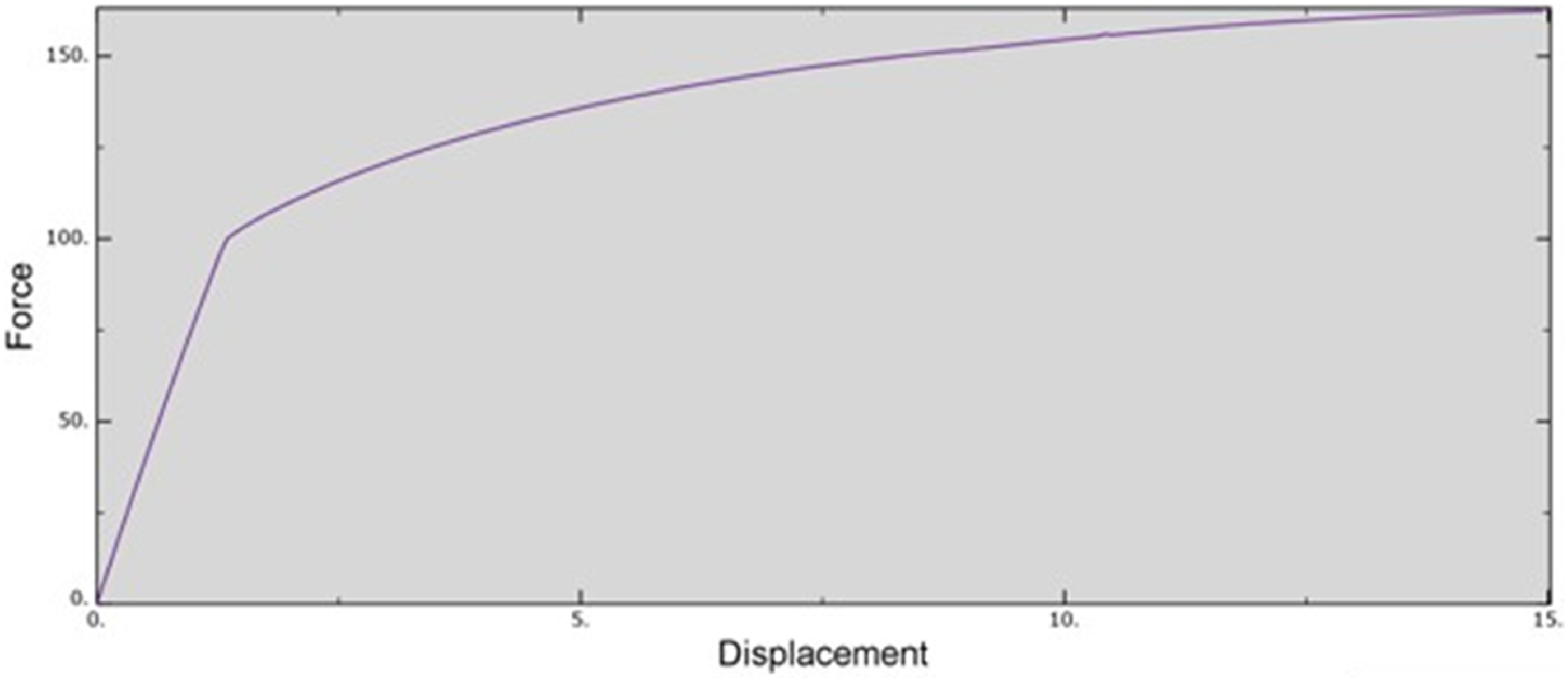
The selected face sheet thicknesses (1.2 mm, 1.5 mm, and 2.0 mm) and core thicknesses (20 mm, 30 mm, and 50 mm) align with ranges established in previous studies on ballistic and blast-resistant sandwich panels, ensuring relevance to aerospace and defense applications.5,14,21 Additionally, these dimensions allow for systematic evaluation of the trade-offs between weight and structural performance, as described in foundational works on sandwich panel optimization. 23
The sandwich-structured composite samples were 400 × 400 mm in dimensions, according to NATO standard 4569.
29
The face sheets had three different thicknesses of 1.2, 1.5 and 2.0 mm, and the core had three different thicknesses of 20, 30 and 50 mm (Figure 2). There was no adhesive or chemical material between the face sheets and the core material, because they were mechanically bonded with each other. In this study, the projectile was regarded as a hard rigid body. The projectile used in this study was modelled as analytical, having a mass of 52.5 g and diameter of 20.0 mm, with the projectile dimensions being obtained from,
30
as depicted in Figure 3. Visual representation of various (a) face sheet and (b) core thicknesses used. (a) A schematic diagram and (b) computer-aid designed (CAD) model of 12.7 mm AP projectile with a mass of 52.5 g, mesh size: 0.5 to 1 mm.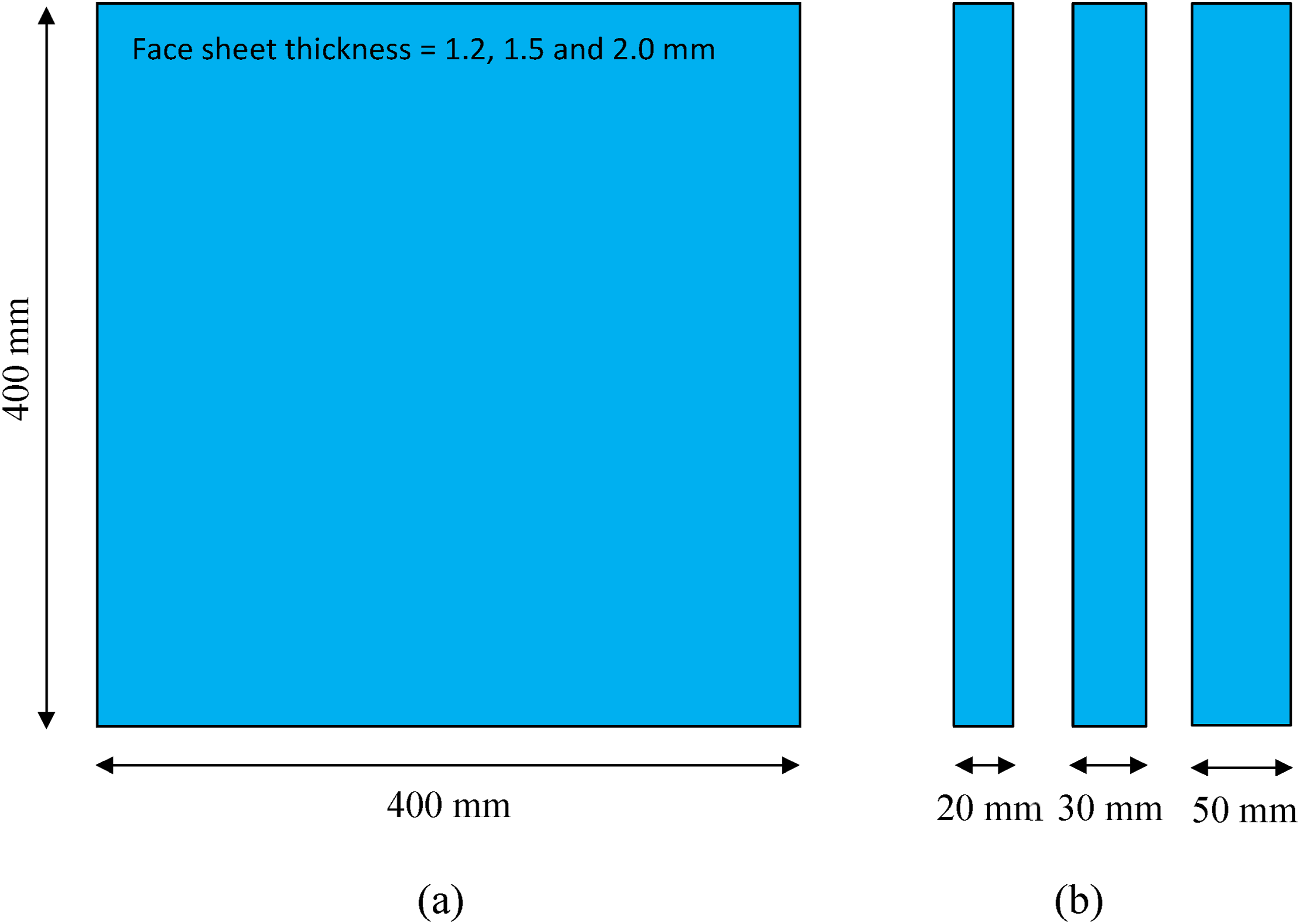
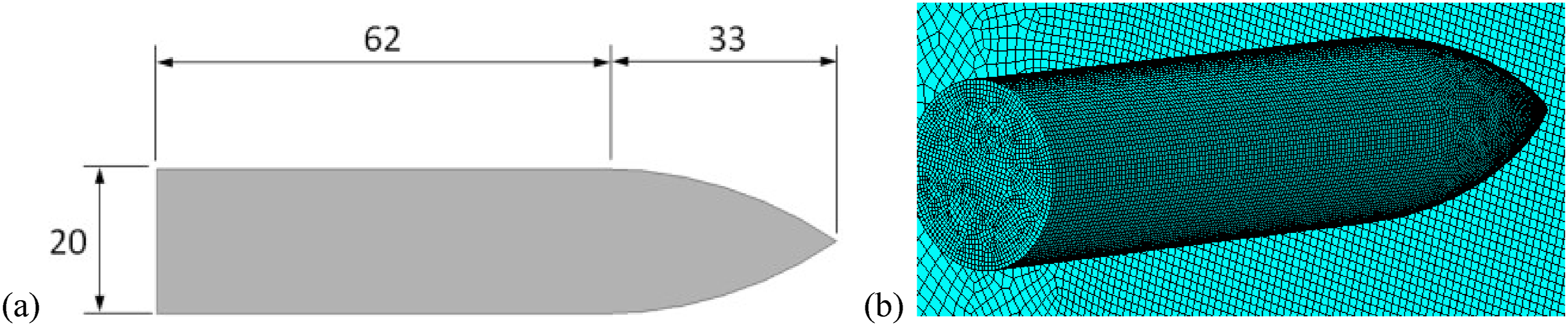
The meshing module used 8-node linear brick with reduced integration (C3D8R), and hourglass control elements were employed to mesh aluminium face sheets, TPU and the projectile (Figure 4). The element size for the face sheets ranged from 1.0 to 5.0 mm, whereas the element size for the thickness of the plate was 1.0 mm. Similarly, the element size for the core material ranged from 1.0 to 5 mm, whereas the element size for the plate thickness was 5.0 mm. The size of projectile elements ranged between 0.5 to 1.0 mm along the length of the projectile. In each cross-sectional direction, the element size was small in the impact zone and gradually increased away from the impact region. The external edges of the sandwich structure were firmly clamped or fixed, and all degrees of freedom were zero. The Abaqus kinematic contact algorithm was used to assign contact between the projectile and the target structure. General contact (explicit) was used between the face sheets and the core material, and surface-to-surface (explicit) contact was assigned (face sheets and core) between the projectile and the composite structure. To account for potential delamination between the TPU core and aluminium face sheets, a surface-to-surface contact definition with hard contact in the normal direction and tangential friction was employed in Abaqus/Explicit, ensuring realistic interface behaviour under high-impact conditions. The projectile surface was defined as a master surface, while the face sheets and core were defined as a nodal-based slave surface. The projectile was normal to the plate, with its tip touching the face sheet. The contact definition was hard contact for normal objects. The initial velocity of the projectile varied with each new case. Similarly, the configuration of sandwich structures also varied in different cases. Mesh on sandwich structure with projectile (a) assembly visual (b) close up view of impact region.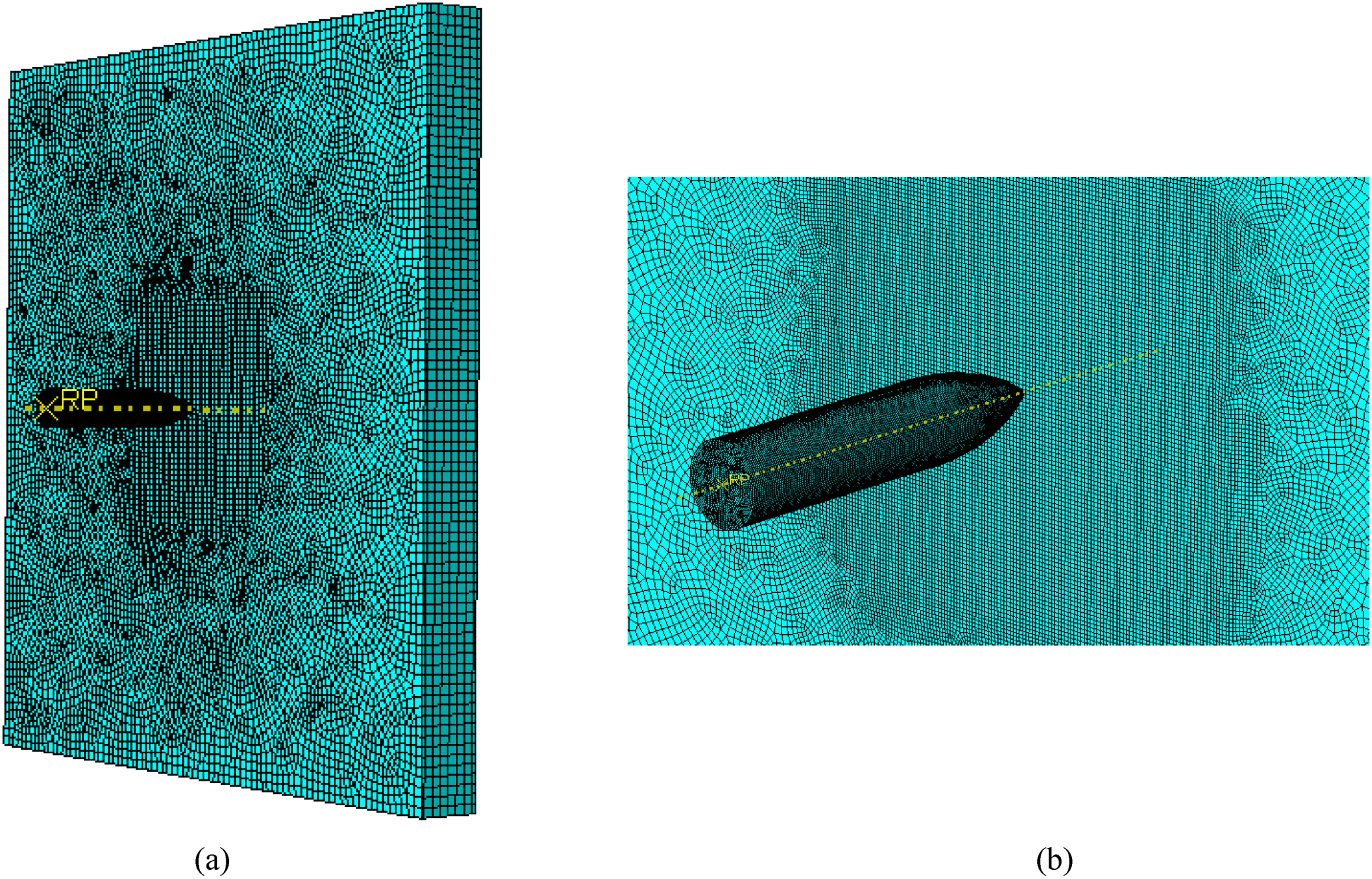
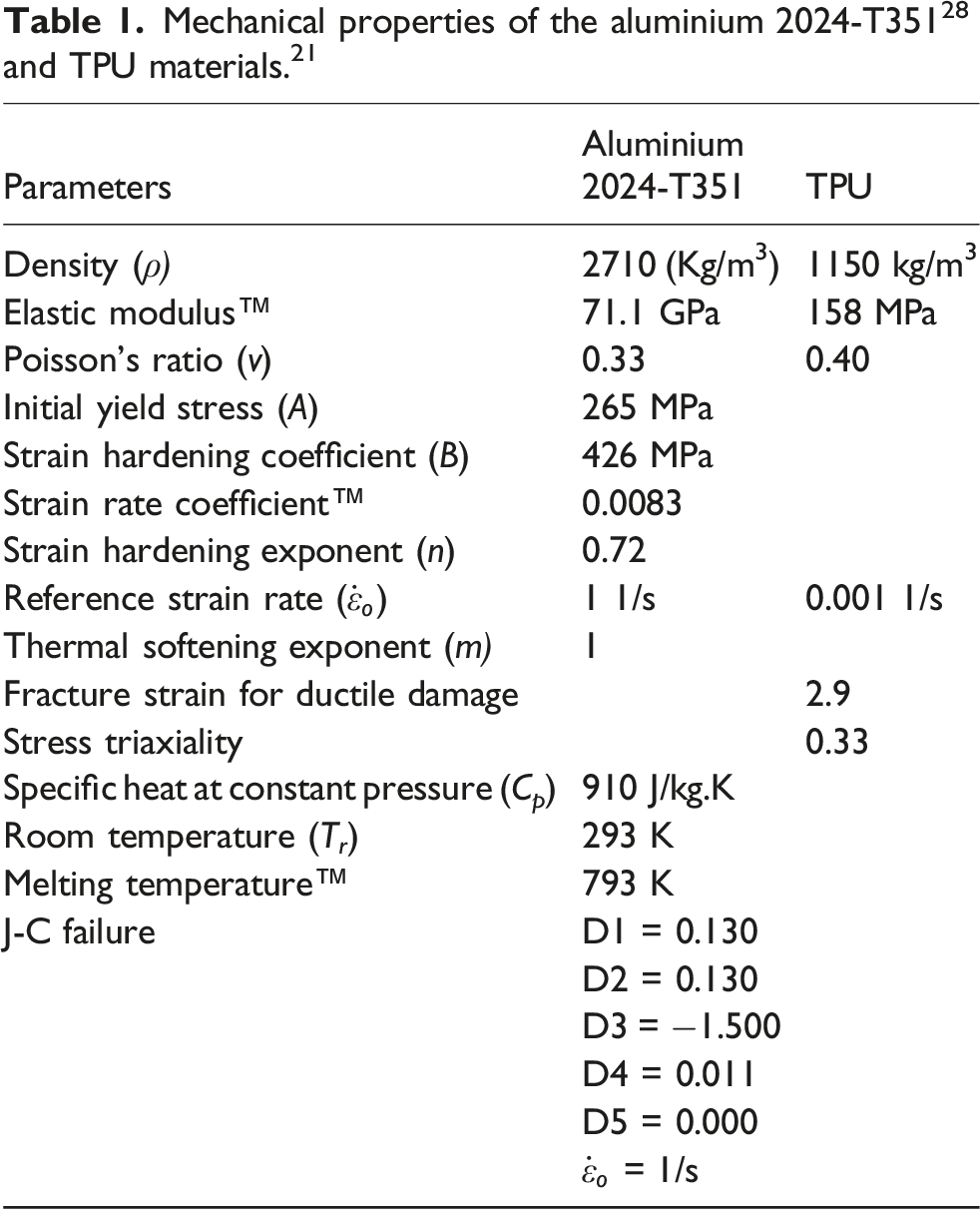
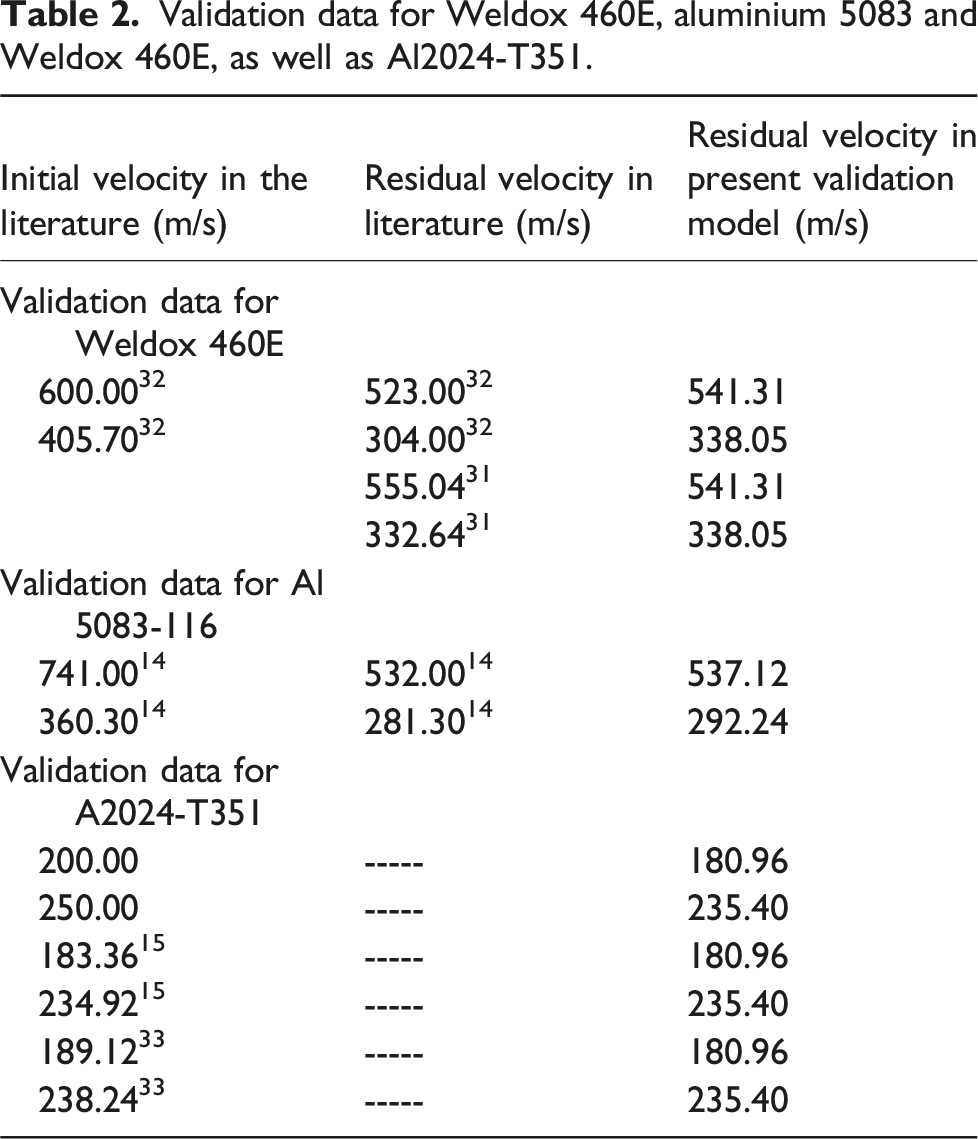
Based on the work of Borvik on perforating AA5083-H116 aluminium armour plates with ogive-nose shape rods, 7.62 mm APM2 rounds was used as a model. 14 For aluminium 2024-T351, material parameters and Johnson-Cook’s plasticity and failure model parameters were taken from Refs. 18-20,26. A validation study was conducted for aluminium 2024-T351 to confirm the material parameters presented in Table 1, and the simulation results were quite reasonable and comparable with the available data in Gara et al. 15 Before the impact simulations, the mechanical response of the TPU was simulated under in-plane tensile loading, and the simulated mechanical response verified the data available in the literature. 21
The material properties used in the finite element model are summarized in Table 1, which provides detailed values for Young’s modulus, Poisson’s ratio, density, and other relevant parameters for the aluminium plates and TPU material. The aluminium plates were modelled with a Young’s modulus of 70 GPa and a Poisson’s ratio of 0.33, while the TPU material exhibited nonlinear elastic behaviour as defined in Table 1.
Model validation
Validation data for Weldox 460E, aluminium 5083 and Weldox 460E, as well as Al2024-T351.
Configurations of the composite sandwich structures.
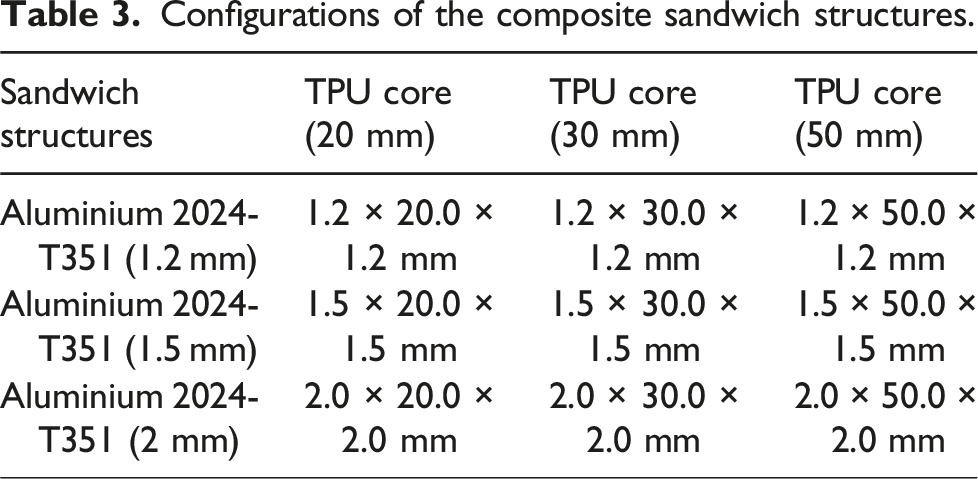
For the convenience of explanation, these configurations were divided into three cases, each of which was further segmented into three categories, as follows:
Case 1: Included 1.2 mm thick face-sheet panels with the three core thicknesses of 20, 30 and 50 mm, with each configuration named types 1, 2 and 3, respectively.
Case 2: Included 1.5 mm thick face-sheet panels with the three core thicknesses of 20, 30 and 50 mm, with each configuration named types 1, 2 and 3, respectively.
Case 3: Included 2.0 mm thick face-sheet panels with the three core thicknesses of 20, 30 and 50 mm, with each configuration named types 1, 2 and 3, respectively.
Results and discussion
There were nine distinct sandwich structure configurations, with impact velocities ranging from 68.60 to 360.30 m/s. The ballistic limit velocity (VBL), the minimum velocity required for a projectile to fully perforate a target, was used to assess the perforation resistance of the panels. 34 In each case, VBL was determined as the highest impact velocity (V i ) at which the residual or rebound velocity (V r ) equals zero.
Influence of core thickness
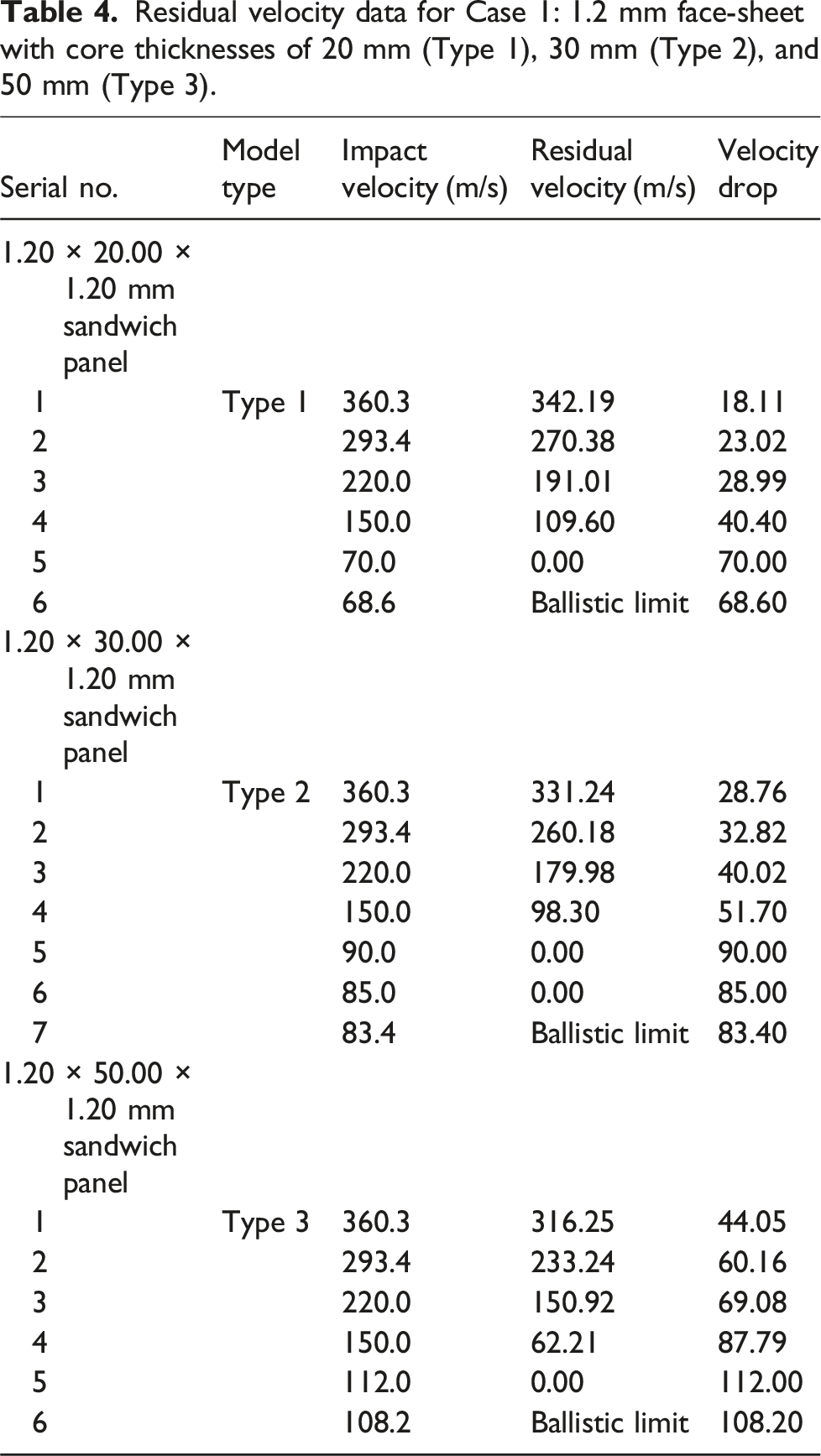
Residual velocity data for Case 1: 1.2 mm face-sheet with core thicknesses of 20 mm (Type 1), 30 mm (Type 2), and 50 mm (Type 3).
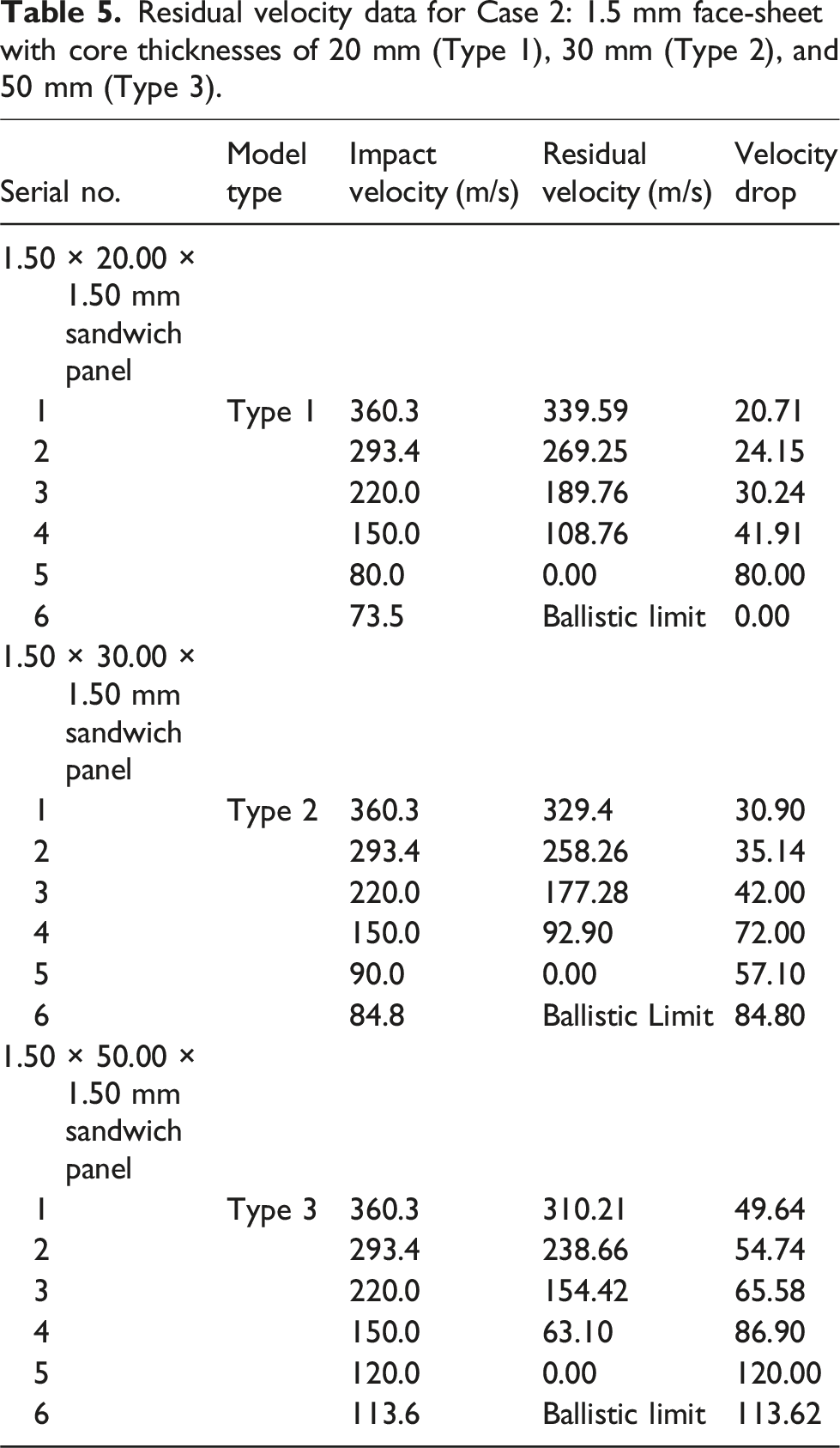
Residual velocity data for Case 2: 1.5 mm face-sheet with core thicknesses of 20 mm (Type 1), 30 mm (Type 2), and 50 mm (Type 3).
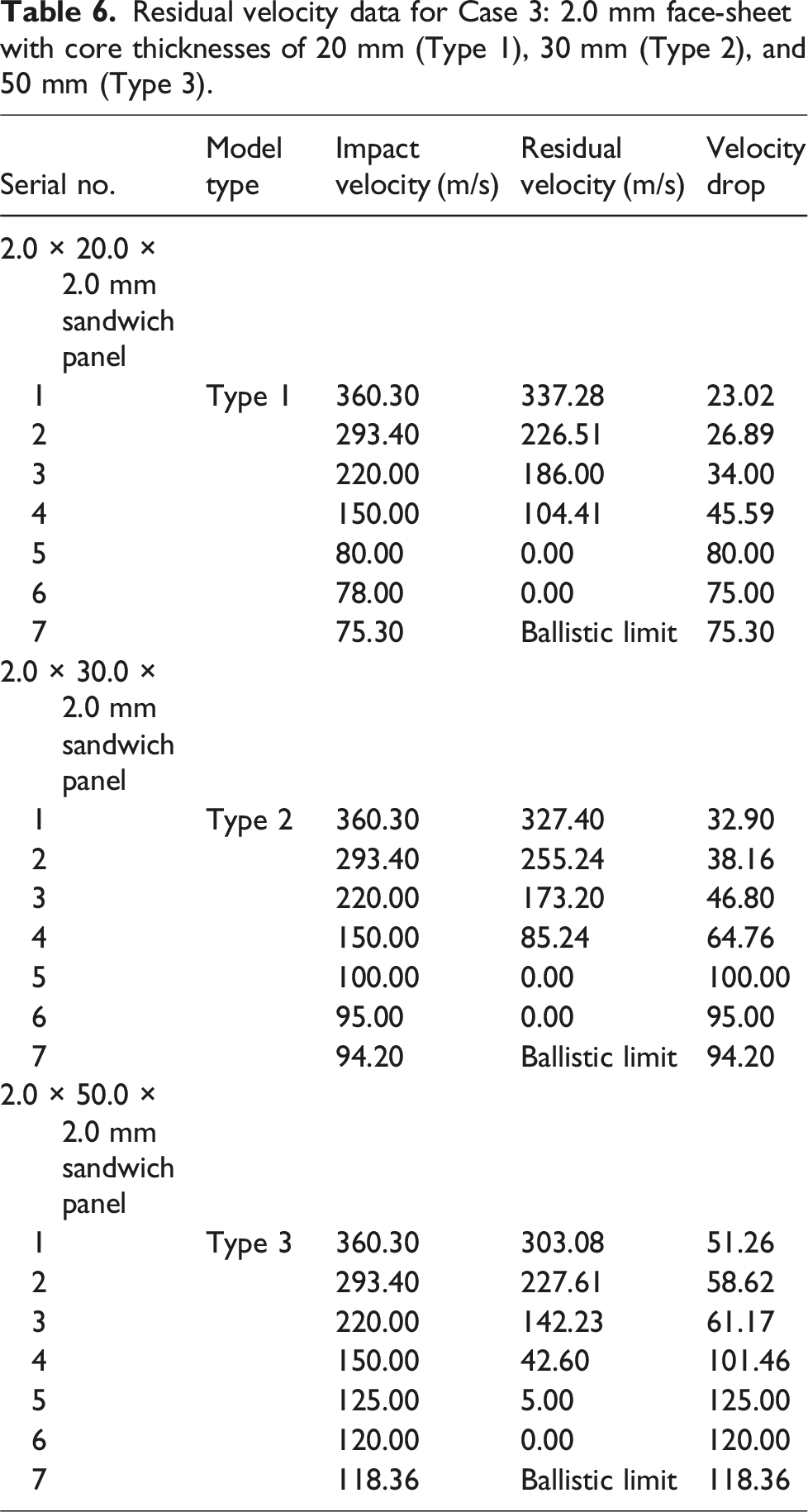
Residual velocity data for Case 3: 2.0 mm face-sheet with core thicknesses of 20 mm (Type 1), 30 mm (Type 2), and 50 mm (Type 3).
Influence of face sheet thickness
Face sheets are typically constructed from strong materials to withstand impulsive loads and support bending stresses in the structure. Upon projectile impact, the upper face sheet experienced compressive loading, while tensile loading occurred in the bottom face sheet. Compressive forces caused damage and de-bonding between the upper face sheet and the core, while the bottom face sheet remained intact under tensile loads. Thicker face sheets exhibited reduced distortion under bending deflection compared to thinner ones. Thinner face sheets were more susceptible to penetration at high speeds before deformation distributed across a broader area. Increasing the face-sheet thickness from 1.2 mm to 1.5 mm and 2.0 mm improved impact resistance by 13.2% and 19.1%, respectively. Panels with thicker face sheets and cores achieved the highest ballistic limit velocity.
Structural response to failure and perforation resistance
According to United States (US) Army standards, perforation occurs when a bullet embeds in the target but allows light to pass through. In contrast, the US Navy defines perforation as the bullet fully emerging from the target,
37
as shown in Figure 5. This study adopts the US Navy standard (full target penetration) to evaluate deformation following impact. Perforated panel according to the US Army standards.
Three standard failure conditions were identified: projectile rebound, projectile embedment, and projectile perforation of the sandwich panel. The geometric properties of the sandwich structures and the impact velocity significantly influenced penetration and failure mechanisms. Ballistic limit velocities were determined for each configuration, and structural behavior in terms of failure modes and damage resistance was analyzed. Figure 6 illustrates the projectile’s progression through the composite sandwich structure at various time intervals. Upon impact, the projectile pushed the front face sheet backward, bending the panel. It then pierced the front face due to compressive forces, causing core de-bonding from the front sheet while the back sheet remained attached. As penetration continued, the projectile passed through the core, bending the back face sheet slightly before fully perforating the structure. Complete de-bonding of the face sheets from the core was observed after perforation, a common phenomenon across all tested configurations. A half-cut view of a fully perforated sandwich structure is shown in Figure 7. Progression of projectile at various time intervals. Half-cut view of fully perforated sandwich panel.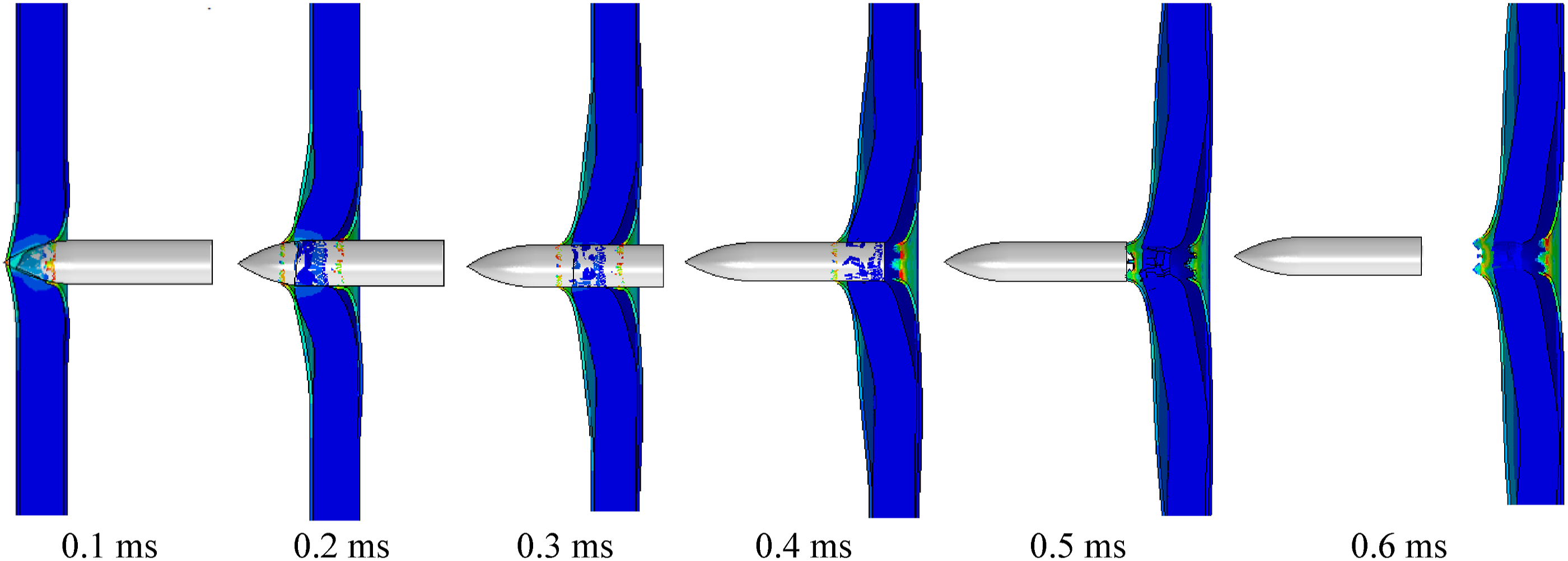
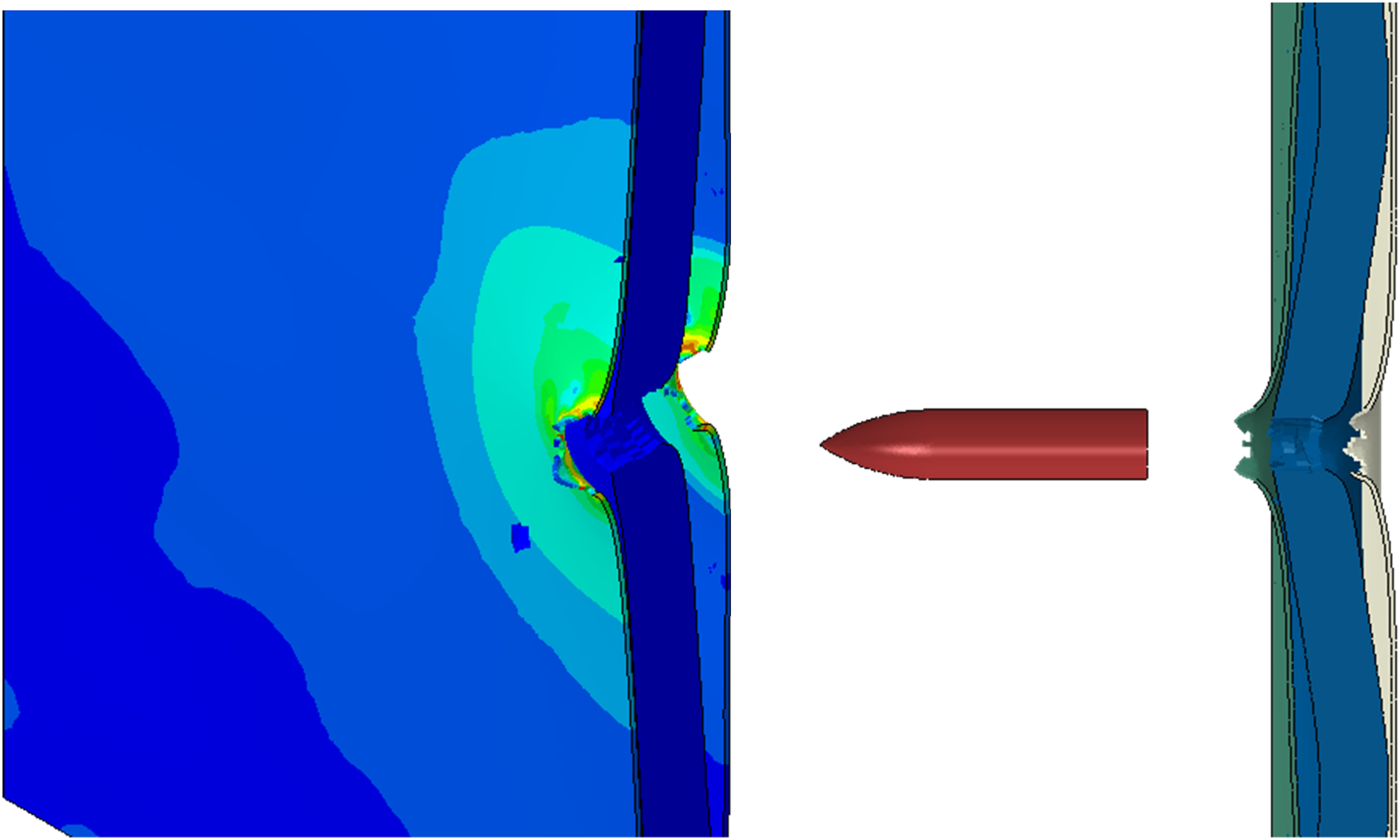
The impact velocity of the projectile significantly influenced target deformation. Global deformation decreased with increasing impact velocity, with higher deformation observed at lower velocities. The maximum deformation occurred at the ballistic limit velocity. Nine different sandwich panel samples were evaluated against a 12.7 mm AP projectile, categorized into three cases based on core and face sheet thickness:
Case 1: All constructions resisted ballistic impacts. Residual velocity and velocity drop data are presented in Table 4. Among the structures, the Type 3 panel (dimensions: 1.2 × 50.0 × 1.2 mm) exhibited the highest ballistic limit velocity, followed by Types 2 and 1. Increased core thickness improved ballistic resistance, with structures featuring a 50 mm core achieving the highest ballistic limit velocity and maximum damage resistance.
Case 2: These structures outperformed those in Case 1 in damage resistance and reaction. Increasing the face sheet thickness from 1.2 mm to 1.5 mm enhanced ballistic response, improving impact resistance by up to 13.2%. Similar to Case 1, structures with a 50 mm core demonstrated the highest ballistic limit velocity and damage resistance. Residual velocity and velocity drop data are provided in Table 5.
Case 3: Sandwich structures in this case exhibited the best overall reaction and damage resistance. Increasing the face sheet thickness to 2.0 mm resulted in a 19.1% improvement in impact resistance, while core thicknesses of 30 mm and 50 mm improved resistance by 32.6% and 43.6%, respectively. These structures demonstrated high ballistic limit velocities and maximum damage resistance. Residual velocity and velocity drop data are shown in Table 6. Both materials displayed ductile hole growth upon failure, with the ogival-nose projectile causing material displacement and petal formation in thin face sheets. Petalling resulted from circumferential strain, leading to radial cracking and rotation of target material into multiple petals, observed on the front side of fully perforated face sheets (Figure 8(a)). At high velocities, the TPU core behaved as a highly ductile material, fragmenting under impact. Core material fragmentation in fully perforated constructions is depicted in Figure 8(b). Petal formation on composite sandwich structure during impact (a) face skin fragmentation (b) TPU core fragmentation.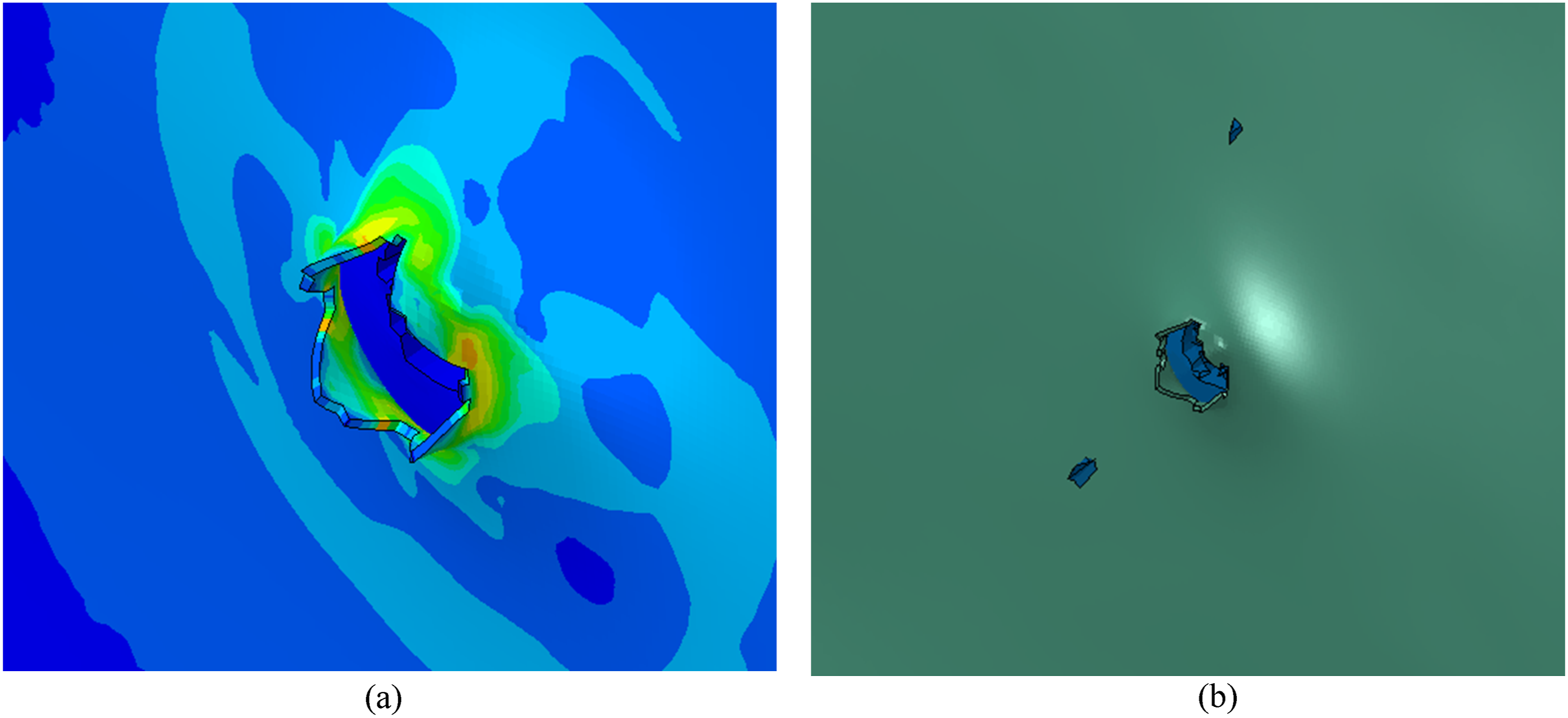
Conclusions
FE analysis tool with Abaqus/Explicit has been used to numerically investigate the high-speed impact response of various aluminium 2024-T351/TPU foam-based sandwich composite structures, using an ogival nose shape bullet (projectile). The computational simulations demonstrated a high degree of accuracy, with error margins between 1% and 11%, and significantly reduced the time and resources required for experimental testing, offering a cost-effective and efficient alternative for evaluating the impact performance of advanced composite structures.
The computational simulations offered significant advantages over traditional experimental procedures. While experimental tests are resource-intensive and time-consuming, the simulations enabled rapid analysis of multiple configurations and variations in material properties, providing valuable insights into the ballistic performance of the sandwich panels without the need for extensive physical testing. This approach saved substantial time and effort, particularly in terms of the number of prototype tests required.
The ballistic limit velocities increased with the thickness of the sandwich panels. The sandwich panel with a face skin thickness of 2.0 mm and core of 50 mm exhibited the greatest ballistic limit velocity, as it provided better energy absorption and resistance to the projectile impact. Additionally, global deformation of the structure decreased with increasing impact velocity, with the largest global deformation occurring at the ballistic limit velocity.
Composite sandwich panels with a thicker core absorbed more energy and recorded higher impact resistance than those with a thin core. Similarly, thinner face skins reduced the protective efficacy of the sandwich panels, diminishing their energy absorption and impact resistances. However, their performance improved with increasing target thickness. The dispersed and localized distortion of the sandwich panels diminished at high speeds and increased with panel thickness. Both impact and damage resistance were enhanced by increasing the thicknesses of the face sheets and core.
Summarily, the ballistic impact resistance of the composite sandwich structures increased by 13.2% and 19.1% with face sheet thicknesses of 1.5 mm and 2.0 mm, respectively, relative to 1.2 mm. Ballistic resistance was improved by 32.6% and 43.6% by increasing the core thickness from 20 mm to 30 mm and 50 mm, respectively. Therefore, the effective military or defense application of the composite sandwich structures depends on their high-speed or ballistic impact properties or responses. The use of computational simulations not only provided a highly accurate and reliable method for design optimization but also reduced the time and resources typically required for experimental testing, enabling faster and more cost-effective development of advanced composite materials.
Footnotes
Declaration of conflicting interests
The author(s) declared no potential conflicts of interest with respect to the research, authorship, and/or publication of this article.
Funding
The author(s) received no financial support for the research, authorship, and/or publication of this article.

Data availability statement
The data that support the findings of this study are available from the corresponding author upon reasonable request.