



Abstract
Aiming at the problem of water vapor condensation caused by the unit cell sealing of traditional grid core materials, a thermoplastic CF/PEEK sandwich structure with cross-grid cores was proposed. The finite element analysis model of high-speed impact and progressive damage of sandwich panels with cross-grid cores is established. The model is used to study the high-speed impact response characteristics of sandwich panels, to explore the influence of panel geometric parameters on its high-speed impact resistance, and to discuss the energy absorption of panels at different impact velocities. In addition, compared with the traditional honeycomb sandwich panel, the advantages and disadvantages of energy absorption efficiency and impedance impact are compared. The results show that the thermoplastic CF/PEEK sandwich structures with cross-grid cores were proposed to have an attenuation effect on the impact and can provide some protection for the object located behind the panel. The main contributors to its impact energy absorption are the front and rear panels. Once a certain speed limit is reached, the energy absorption rate of the front and rear panels is basically the same. The maximum strain at the front of the sandwich panel is about 5%. In addition, the sandwich structure has a better impedance effect on high-speed impact load.
Introduction
Sandwich panels typically consist of two thin face sheets and a lightweight core, offering advantages such as low weight, high strength, high stiffness, and cost-effectiveness. 1 These structures have garnered significant attention in the development of lightweight applications. In recent years, they have been widely utilized in aerospace, rail transit, and other fields. 2 Among these, composite sandwich structures with grid cores are particularly notable for their simple spatial distribution, relatively straightforward preparation process, low production cost, and multifunctional lightweight design. These characteristics, combined with their integrated design advantages, make them one of the most promising new lightweight structures. Furthermore, grid-core sandwich structures have found extensive use in aircraft applications due to their exceptional properties, including light weight, high bending strength and stiffness, strong anti-instability performance, fatigue and aging resistance, as well as sound absorption, sound insulation, and thermal insulation capabilities. 3 Research on the application of composite grid sandwich structures in transportation has been ongoing, with examples including the upper and lower stages of rockets, as well as adapters. 4 Notable applications also include the ESA project’s satellite center barrel, boom, and satellite platform, as well as the C919 fuselage panel, vertical tail panel, and the 'Sea-wing' deep-sea glider body. These structures are designed to achieve lightweight objectives while maintaining structural integrity and performance.
Aircraft and high-speed trains are susceptible to high-speed impacts from foreign objects such as birds, hail, and gravel, which pose significant threats to their structural safety. High-speed impact events are typically studied by simulating the collision of lightweight projectiles with material surfaces at high velocities, such as bird strikes or gravel impacts. 5 Unlike low-velocity impacts, which primarily result in delamination and matrix cracking, high-velocity impacts are characterized by fiber fracture and penetration. Damage from low-velocity impacts often remains below the specimen’s failure threshold and is frequently overlooked, making it a potential hazard. Therefore, investigating high-speed impacts is essential to ensure structural integrity and safety. Numerous scholars6,7 have developed numerical models to simulate high-speed impacts on composite sandwich panels, analyzing damage mechanisms under various failure criteria and evaluating the impact performance of these structures. For instance, Tang et al. 8 utilized the ABAQUS/Explicit module to establish a high-speed impact simulation model for a sandwich structure composed of carbon fiber-reinforced polymer (CFRP) face sheets and an aluminum foam core. They numerically simulated the impact process under different conditions, revealing the protective performance of the CFRP/aluminum foam sandwich structure. Their results demonstrated that the sandwich structure exhibits superior protective performance against flat projectiles compared to spherical projectiles. Similarly, Khodaei et al. 9 employed Abaqus/Explicit software to develop a numerical model for high-speed impacts on honeycomb-core composite sandwich panels, investigating the damage mechanisms under various failure criteria. Zhang et al. 10 investigated the influence of the adhesive layer on energy absorption through experimental and numerical studies of honeycomb sandwich panels subjected to varying impact velocities. They analyzed the respective contributions of the face sheets and honeycomb cores to the energy absorption process. Their findings indicate that the adhesive layer has a non-negligible effect on energy absorption, while the honeycomb core plays a dominant role in this process. Chatterjee et al. 11 proposed a novel sandwich composite panel (SCP) featuring a core composed of a fused bi-dimensional mat composite made of E-glass, sandwiched between layers of aramid fiber mats. This design was shown to effectively dissipate energy under ballistic impact, with the laminate absorbing more energy per unit mass compared to hollow composites after high-velocity impacts. Mishra et al. 12 introduced a novel sacrificial cladding designed to resist impact loads. Through numerical simulations, they analyzed the deformation patterns, displacement responses, impact forces, and energy absorption of the proposed sandwich panels under both low- and high-velocity impacts. Their results demonstrated that axial tubular core panels exhibit superior energy absorption performance compared to horizontally oriented tubular core panels, regardless of impact velocity. Additionally, numerous scholars13,14 have conducted high-speed impact tests on composite sandwich panels to explore their impact properties. Warren et al. 15 performed hypervelocity impact tests on honeycomb sandwich panels filled with shear-thickening fluid. They observed that none of the panels were completely perforated, indicating that the inclusion of shear-thickening fluid significantly enhances the anti-penetration capability of sandwich structures. Other researchers 16 have combined numerical analysis with experimental methods to examine the effects of various physical conditions on the impact performance of composite sandwich panels. Song et al. 17 investigated the dynamic response of CFRP/Nomex sandwich panels under ice ball impacts at different speeds and angles using both experimental and numerical approaches. Their results revealed a linear relationship between impact dents, kinetic energy, and impact angle, with the proposed theoretical model validated through experimental and numerical studies. Furthermore, Alonso 18 developed an energy-based theoretical model to analyze the ballistic response of composite shell and foam core sandwich structures, with experimental results confirming its reliability. Lin 19 evaluated the impact resistance of composite panels by comparing the ballistic limits and energy absorption effects of projectiles penetrating two different composite panels. Other studies20,21 have explored the factors influencing the impact performance of composite sandwich panels from various perspectives. AL Ali et al. 22 examined the performance of multilayer sandwich structures under impact, particularly the effect of increasing the number of core and shell layers on specific energy absorption capacity. Prashanna Kumaar et al. 23 studied the ballistic performance of sandwich structures with Miura-origami-pattern-inspired cores (MPiC) under low to high-velocity impacts. Zhou 24 investigated the performance variations of corrugated sandwich structures under different impact conditions, focusing on the influence of impact energy and repeated impacts on structural performance, providing valuable insights for structural design.
Traditional Fiber Reinforced Composite (FRC) sandwich structures, with their panels serving as the primary component to resist impact, often consist of thin-walled members. These panels have relatively weak impact resistance. When subjected to local impact loads, damage tends to spread outward, increasing the area of structural failure. In severe cases, this can lead to the overall failure of the structure. However, the truss structures are mostly closed systems, making it difficult for condensed moisture to escape, which increases the weight of the sandwich panels and shortens the service life of the structure. These factors hinder its practical application.
In light of the aforementioned challenges, and inspired by the exceptional functional and structural characteristics of tracheid microstructures, this study proposes a sandwich structure with cross-grid cores. To achieve optimal structural performance, a MATLAB-based optimization algorithm is employed to optimize the geometric parameters of the core structure, ensuring the best possible parameter matching.
For the proposed cross-recessed thermoplastic composite grid sandwich structure, a finite element analysis (FEA) model is developed to simulate high-speed impact and progressive compression damage. The model incorporates the three-dimensional Hashin failure criterion and a stiffness degradation method based on fracture toughness, enabling the simulation of progressive damage in the sandwich panel under high-speed impact. This approach allows for an in-depth investigation of the high-speed impact response characteristics of the sandwich structure. The energy absorption capacity of the structure is analyzed under varying impact velocities, and the influence of geometric parameters on its high-speed impact performance is systematically explored.
The primary objective of this analysis is to identify geometric parameters that satisfy both lightweight design requirements and impact performance criteria. By revealing the effects of various factors on the structure’s impact resistance during high-speed deformation, this study aims to provide valuable guidance for the parameter design of grid-based sandwich structures.
Numerical simulation
FEM model
High-speed impact, also known as ballistic impact, has attracted great attention in the field of aerospace and rail transit. People have done a lot of research on high-speed impact. High-speed impact generally uses light-weight projectiles to impact objects at a very high speed. The high-speed impact behavior of composite materials is mainly studied by the method of air gun shooting projectiles, as shown in Figure 1. A specific fixture is used to apply pressure along the direction of the vertical structural panel to fix the sandwich panel specimen. The air gun is used as the driving force to carry out the dynamic loading of the projectile, so that the projectile impacts the specimen. The local material of the composite grid sandwich panel placed on the fixed fixture is destroyed by the extrusion shear of the projectile. Schematic of high-speed impact test of grid sandwich core.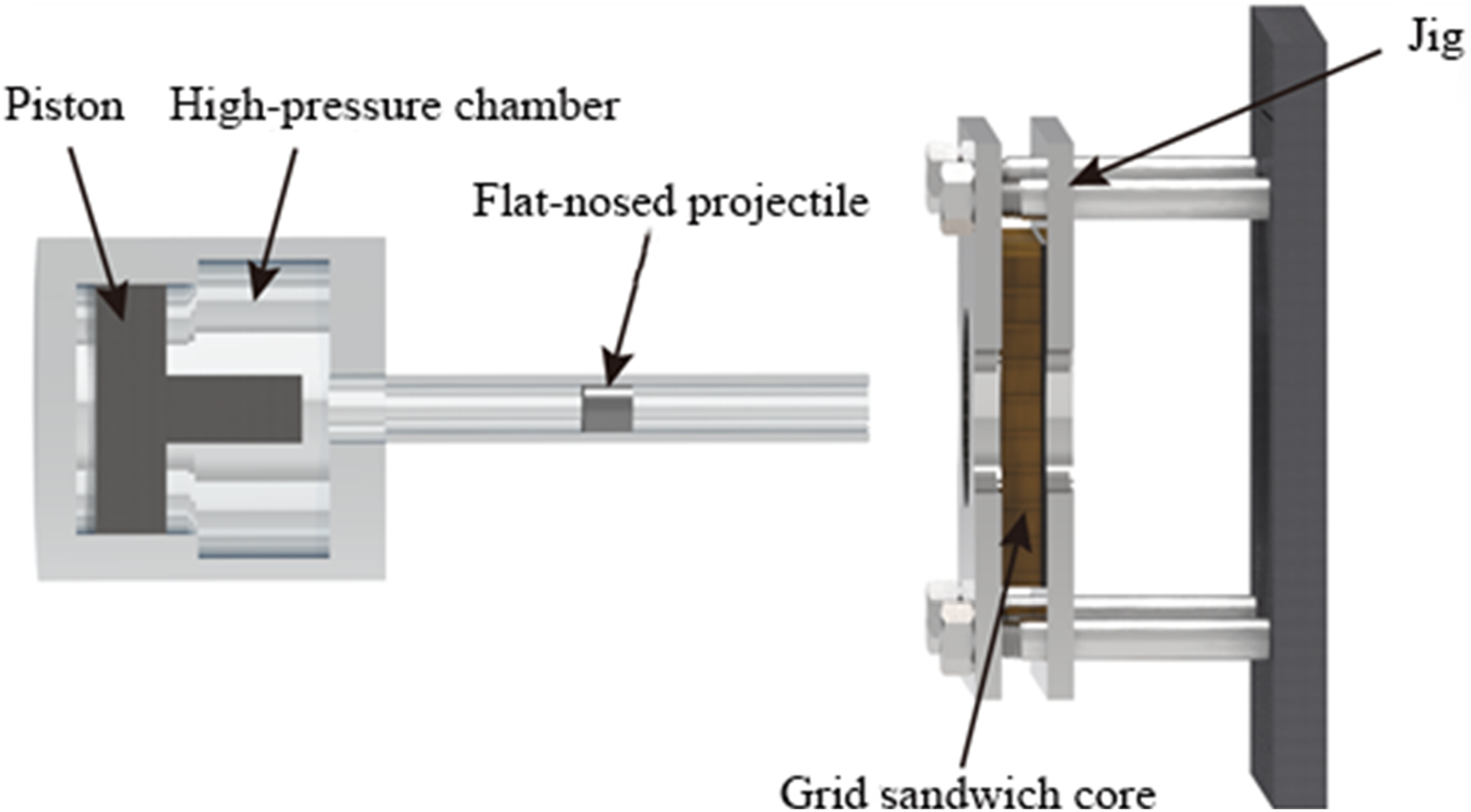
In order to explore the high-speed impact response of the new CF/PEEK grid sandwich structure, the finite element software ABAQUS was used to simulate the air gun impact test. The simulated cylindrical projectile mass is 21.5 g, the diameter is 15.3 mm, the ratio of length to diameter is 1:1, the length and width of the sandwich structure with cross-grid cores compression model are 130×130 mm, the thickness of the core layer is 15 mm, the thickness of the upper panel and the lower panel is 1 mm, the core strip and the panel are made of four layers of CF/PEEK prepreg, and the fiber stacking sequence is [0°/ 90°/ 0°/ 90°]. The geometric structure and parameters of the new sandwich panel with cross-grid cores are shown in Figure 2(a). The core unit cell of the sandwich panel is shown in Figure 3. The geometric parameters of the core are the optimal solution based on MATLAB multi-objective optimization,
25
as shown in Table 1. Simulation and geometric model of sandwich panel with cross-grid cores. (a) Geometric model of sandwich panel. (b) Schematic diagram of impact finite element model. (c) geometric model of cross grid core. The core unit cell of the sandwich panel with cross-grid cores. Geometric parameters of core. Note: 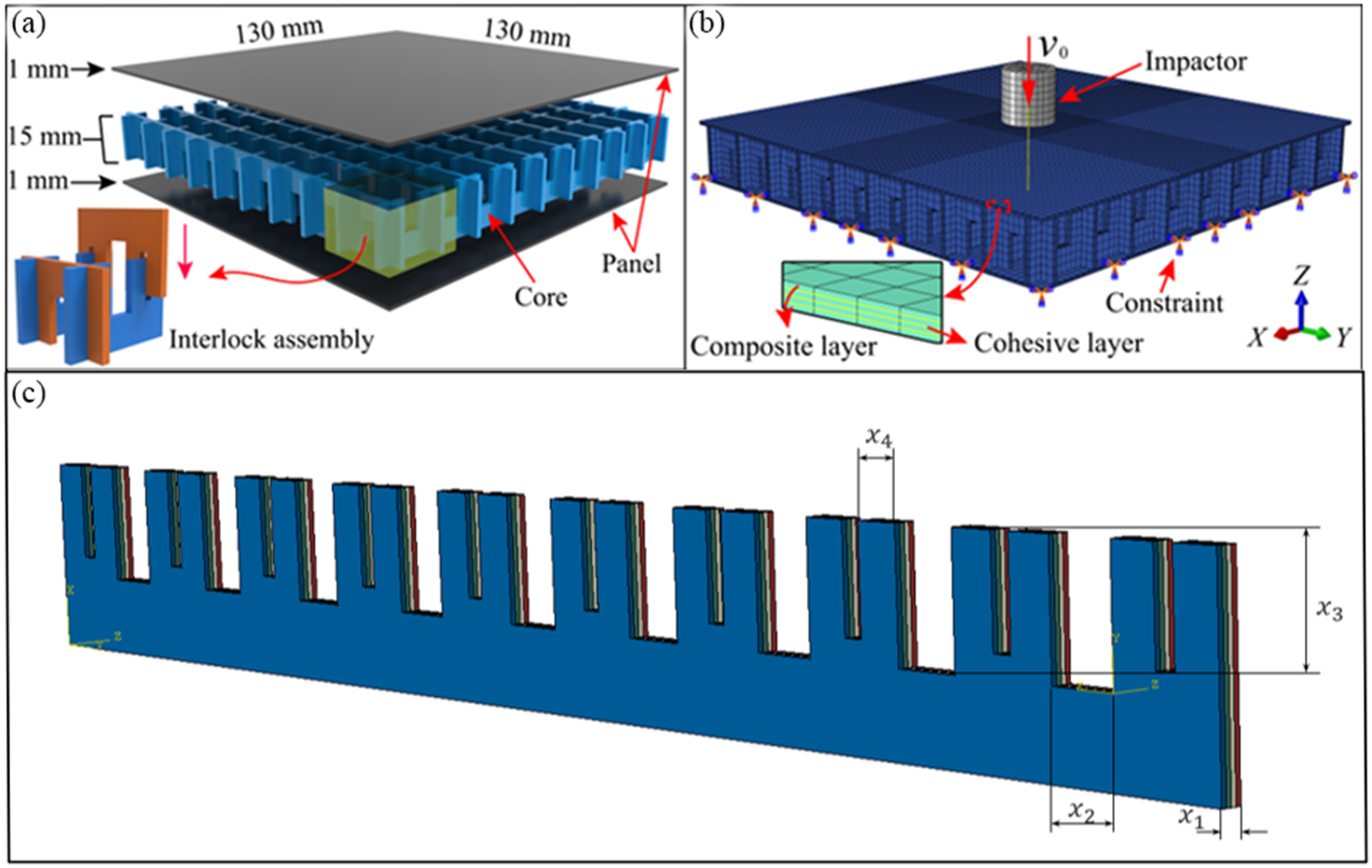
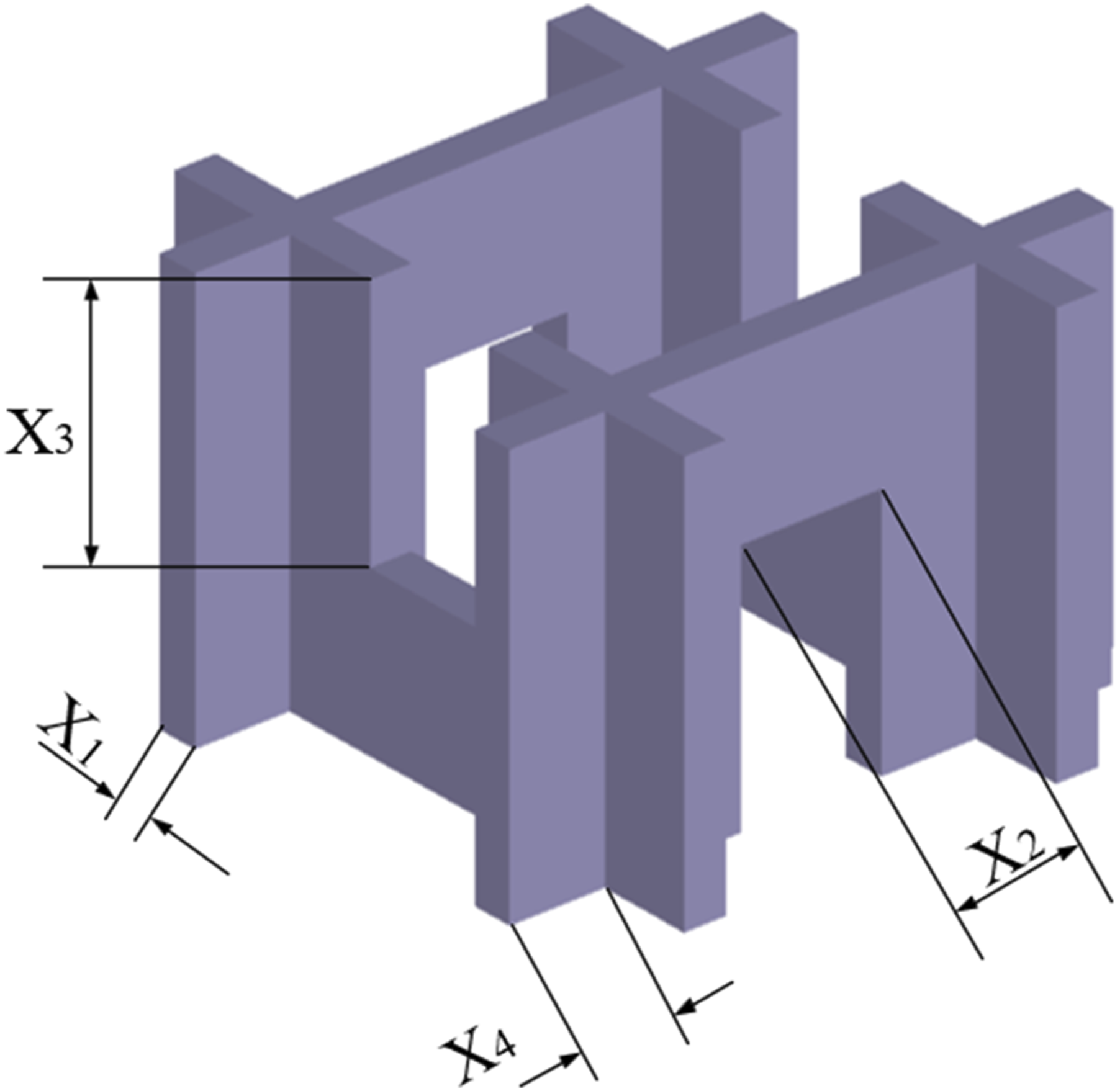


The relative density of the sandwich panel with cross-grid cores is calculated according to the structural parameters in Figure 3:
In this formula,
The cylindrical projectile with small deformation in the erosion process is defined as a discrete rigid body, and its degree of freedom in five directions is constrained so that it can only move in the Z direction. A layer of 0-thickness cohesive element is inserted between the layers of the upper and lower panels, which is connected with the adjacent layer units. Assuming that the contact between the panel and the core and the contact between the core inserts are perfect, the binding constraint is used to simulate the ideal connection; in this paper, multiple sets of geometric parameters are tested to compare the simulation results of applying fixed constraints to the upper and lower panels with those of fixing only the lower panel, and it was found that the simulation results were almost the same. In order to improve the computational efficiency, only fixed constraints are applied to the bottom end of the lower panel to simulate the influence of the fixture, and the degrees of freedom in six directions are constrained. Aiming at the unreasonable penetration phenomenon in the impact contact process and making the contact sufficient, the sandwich structure adopts the general contact, and the interaction between the projectile and the sandwich panel is defined by the face-to-face contact. The normal direction is defined as hard contact, and the friction in the tangential direction is considered and the friction coefficient is set to 0.3. The unit type of the sandwich structure is C3D8R, the unit type of the projectile is R3D4, and the unit type of the cohesive unit is COH3D8 viscous unit, all of which are display units. The impact finite element model is shown in Figure 2(b).
Progressive damage of composite materials under high-speed impact
Progressive damage model
For fiber reinforced composites subjected to the high velocity impact, the failure modes mainly include fiber failure, matrix failure and delamination failure, as shown in Figure 4. Failure mode of fiber reinforced composites under high-speed impact.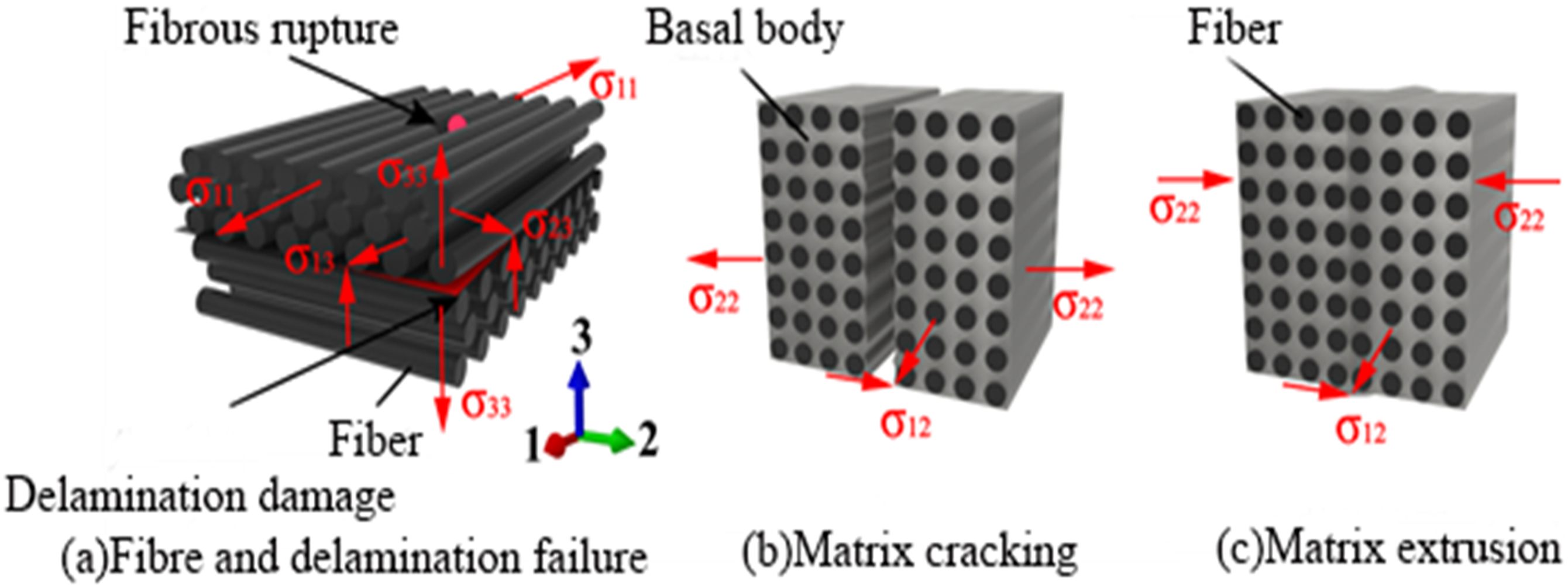
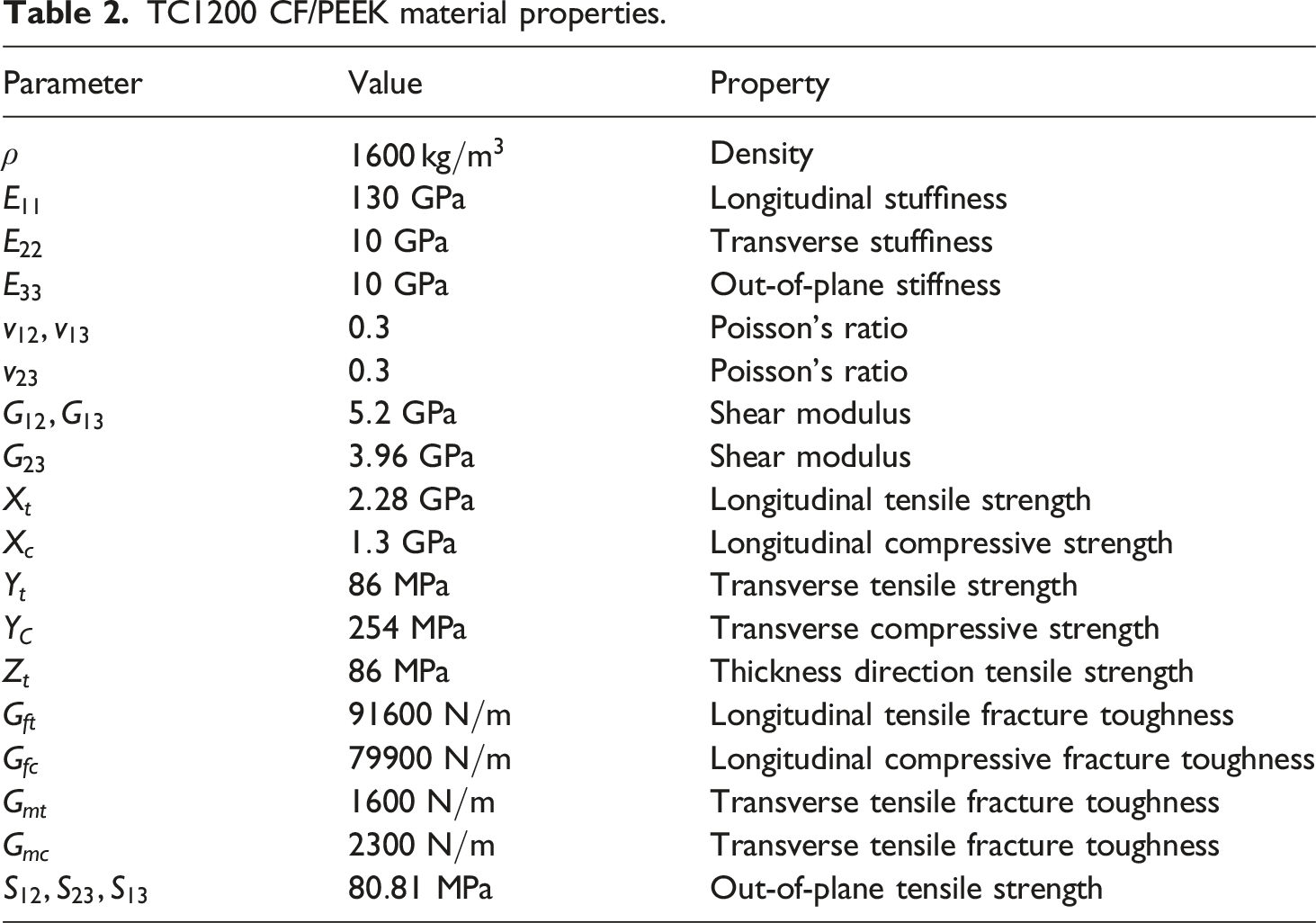
These failures often interact with each other, resulting in complex damage phenomena in composite materials. Therefore, choosing the appropriate damage criterion is the key to evaluate the structural performance. In this study, CF/PEEK was used as a structural manufacturing material. In view of its sensitivity to various types of damage, a three-dimensional Hashin failure model considering both fiber and matrix damage and a layered damage failure model are selected in this paper. The three-dimensional Hashin failure criteria include tensile and compressive failure in the fiber direction and tensile and compressive failure in the matrix direction. The specific expressions are as follows 26 :
Fiber tensile fracture failure:
Fiber compression failure:
Matrix tensile failure:
Compression failure of the matrix:
Quorum:
In order to effectively avoid the difficulty of computational convergence caused by the singularity of material stiffness matrix in high-speed impact simulation, this paper adopts the equivalent strain linear reduction method based on fracture energy damage expansion. When the failure criterion is satisfied, the material does not fail immediately, but carries out an asymptotic failure process. The specific formula is as follows
27
:


The basic analysis process of the asymptotic damage model is as follows: when any one of the damage failure factors Flow chart of progressive damage analysis of sandwich panel.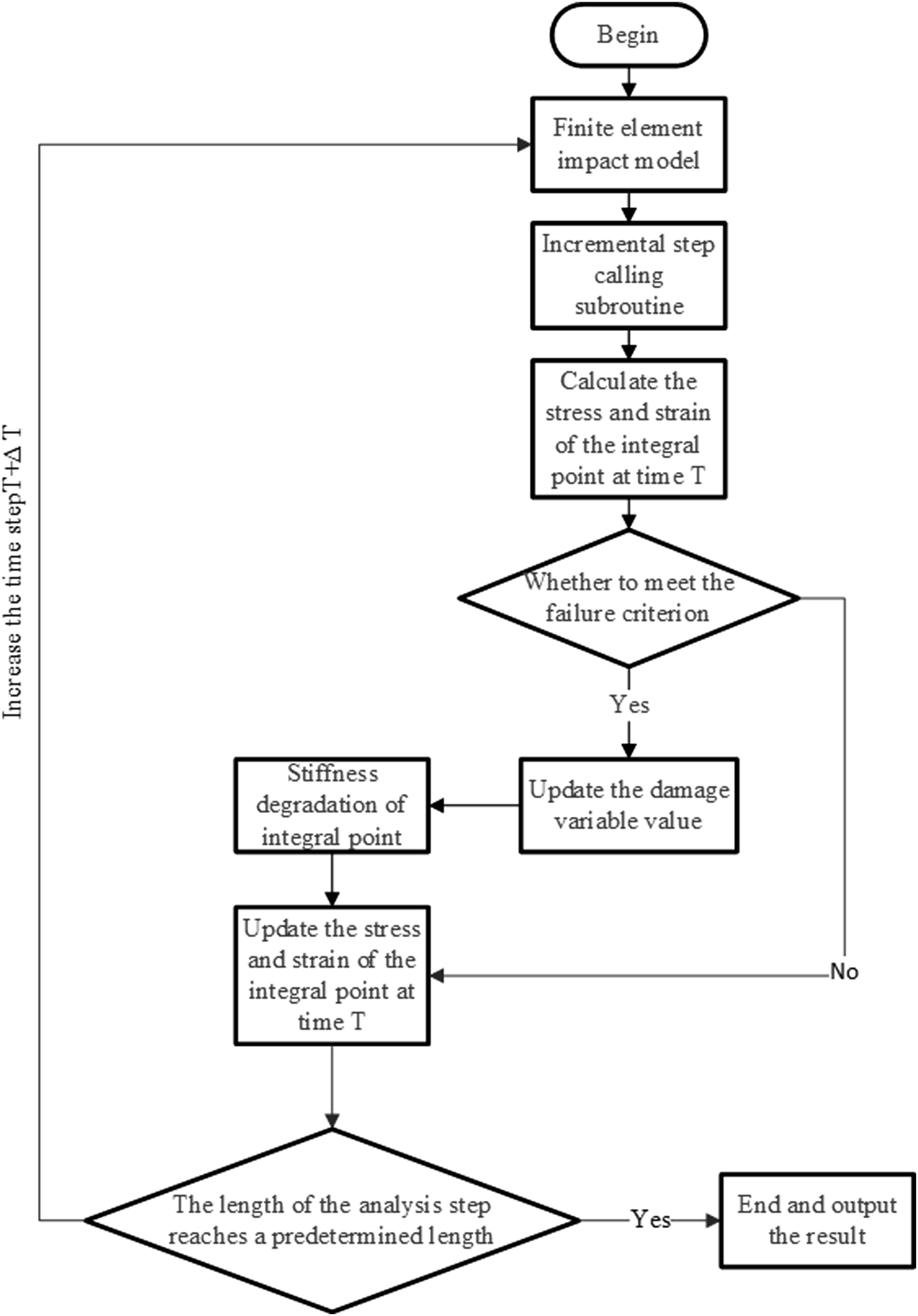
Delamination damage failure model
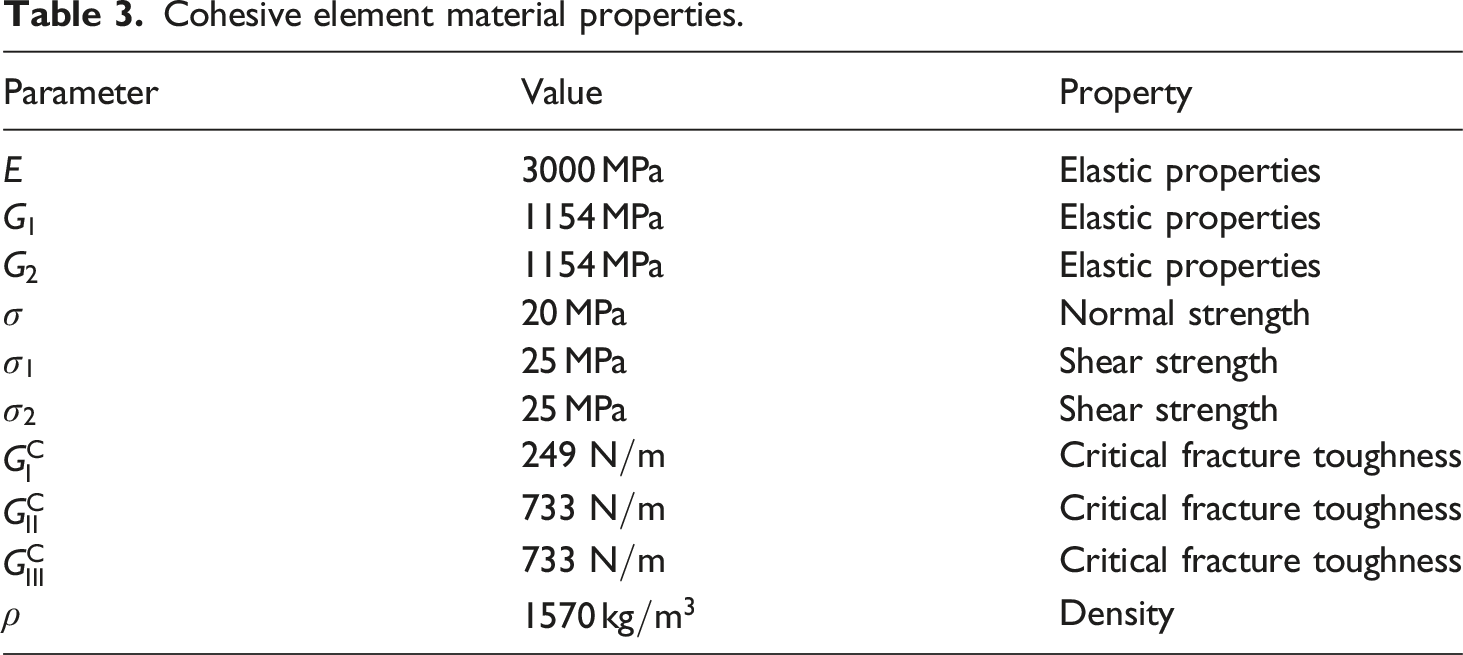
In order to more intuitively show the high-speed impact damage between layers, this paper introduces the Cohesive element in the cohesion model between layers to simulate the delamination damage failure, and uses the quadratic nominal stress criterion Quads to determine the initial damage between layers. The expression is as follows
29
:


Cohesive element material properties.
Model accuracy verification
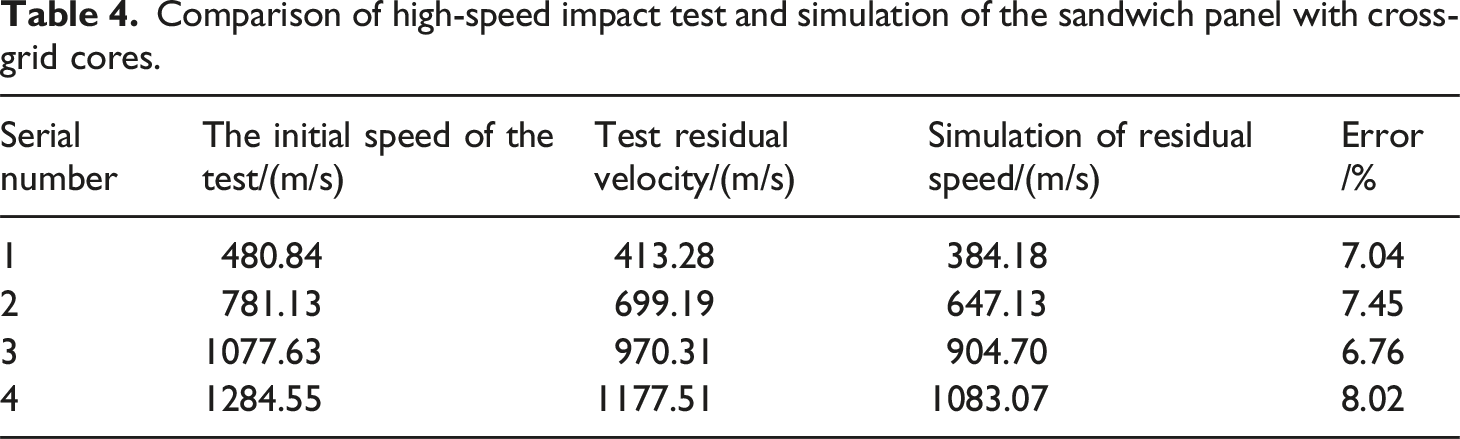
Comparison of high-speed impact test and simulation of the sandwich panel with cross-grid cores.
Mesh sensitivity analysis
The mesh size has a great influence on the simulation results. In theory, although the use of coarse mesh size has a short calculation time, it increases the error of the calculation results. On the contrary, the denser the mesh size, the more accurate the analysis results, but it will lead to an increase in calculation time. For the impact dynamics analysis which is highly sensitive to the mesh size, it is very important to select the mesh size with high computational efficiency and small result error. In order to improve the calculation efficiency and ensure the calculation accuracy, the mesh size of the impact contact area and the high-sensitivity fiber expansion area is densely drawn in this paper, and the mesh size of the other low-sensitivity areas is relatively coarse. The recommended global mesh size is 2 mm. To eliminate the influence of mesh size on the convergence of the results, the center 30 mm × 30 mm selects the influence area and its extension area mesh size control and the sandwich panel under the maximum impact load of different mesh size influence speed Sensitivity analysis of impact mesh size.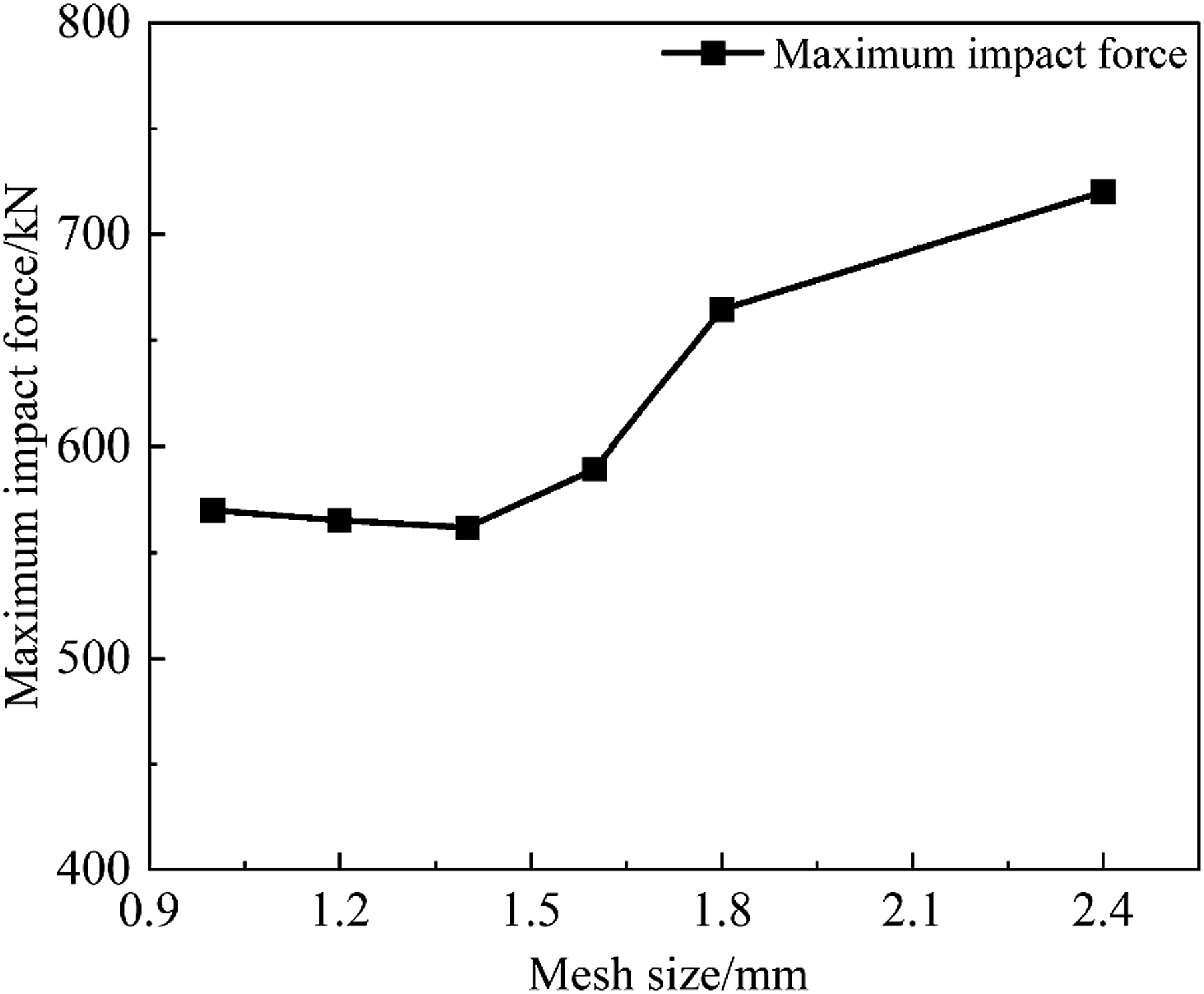
Result and discussion
The projectile impact is a high-speed impact, which is different from the local damage caused by low-speed impact, and causes penetration damage to the sandwich panel. The energy absorption characteristics of the sandwich structure are different under different impact velocities of the projectile, and the contribution of the components and geometric parameters of the sandwich panel to the impact performance of the sandwich structure is different. Therefore, based on the core structure parameters shown in Table 1, the high-speed impact response characteristics of the sandwich structure with cross-grid cores are studied, and the energy absorption of the sandwich structure at different impact speeds is discussed. The specific energy absorption and ballistic limit speed are used as indicators, and the panel thickness, core layer height, and grid thickness are used as variables to explore the influence of the geometric parameters of the sandwich panel on its high-speed impact resistance, to obtain a better design size of the sandwich structure so that it can improve the energy absorption capacity and meet the lightweight requirements.
High-speed Impact failure Mode Prediction
As shown in Figure 7(a), under the high-speed impact load of the projectile, the sandwich panel with grid core usually undergoes local shear penetration failure, and various mixed damages such as fiber fracture and matrix failure occur inside the material. The energy change of the sandwich structure has the conversion of the initial energy generated by the high-speed impact the kinetic energy of the sandwich structure the deformation energy of the structure, as shown in Figure 7(b). Firstly, the initial velocity Sandwich panel with grid core under high-speed impact.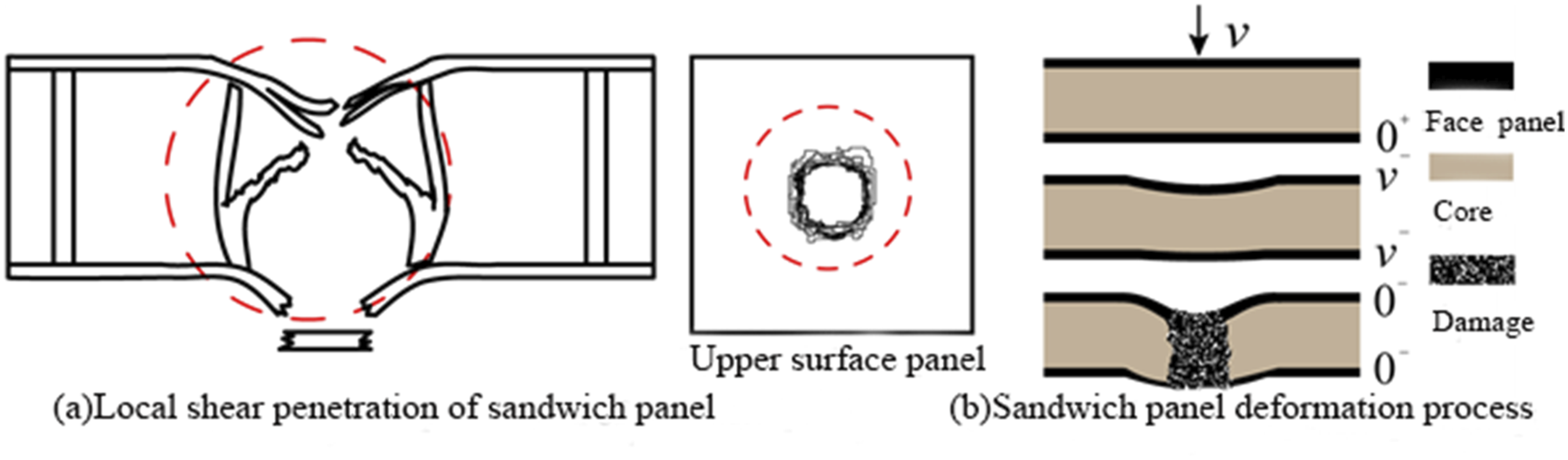
High-speed impact response of sandwich panel with cross-grid cores
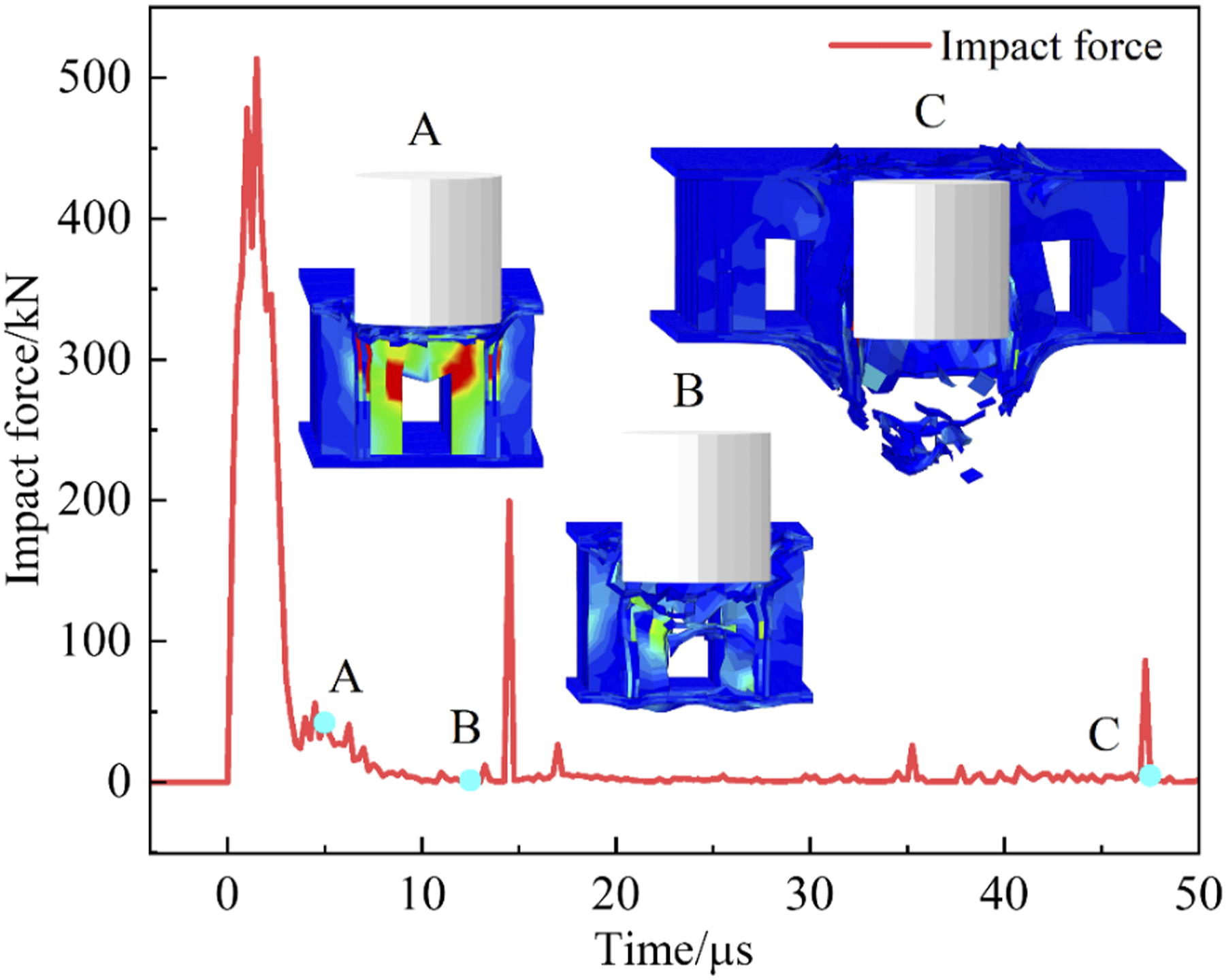
In order to study the high-speed impact response of the sandwich structure with cross-grid cores, the initial velocity of the projectile is given to impact the sandwich panel vertically at 450 m/s. Figure 8 shows the process of the projectile eroding the sandwich panel with cross-grid cores. Figure 9 shows the time history curve of the impact load. It can be seen from the figure that the projectile mainly erodes the sandwich panel through shear failure. The impact process can be divided into three stages: shear and buckling failure of the upper panel and the core, crushing failure of the lower panel, and complete penetration of the sandwich panel. In the first stage, the projectile completes the perforation of the 1 mm thick CF/PEEK upper panel, and the material in the penetrating part was broken off, and the damage profile was approximately the same as the shape of the projectile. Due to the fiber tensile and shear failure, the panel warps away from the impact direction, and the core is subjected to shear and compression failure. The contact part with the projectile is cut off, and the non-contact part with the projectile is buckled due to compression. The impact load rises at first and then continues to fall. Currently, the upper panel and the core impact part near the upper panel are nearly ineffective, so the contact force goes from high to low from point A to point B, and finally approaches 0. In the second stage, in a very short period of time, the core part near the lower panel destroys and fails, the lower panel undergoes buckling damage, and the impact load reaches a second peak and then decreases rapidly. As the impact progresses the rear panel is compressed, the material at the compression site is dislodged, the lower panel delaminates, and the damage profile is approximately circular. The compression failure causes warping along the impact direction. Due to the tensile tearing of the material, a damaged contour larger than the shape of the projectile is formed. So far, the impact part of the sandwich panel has basically failed. At this point, the projectile remains within the sandwich panel until point C. In the third stage, the projectile with a length of 15.3 mm completely penetrates the sandwich panel with cross-grid cores. As a result, during the impact from point B to point C, the sandwich panel is only subjected to the peak impact load when the lower panel is fully penetrated, and at other times the contact force is almost zero. So far, the impact perforation process has been completed. Process of projectile eroding sandwich panel (a) Cross-section process diagram; (b) The upper panel result diagram; (c) The results of the lower panel. Impact load time history curve.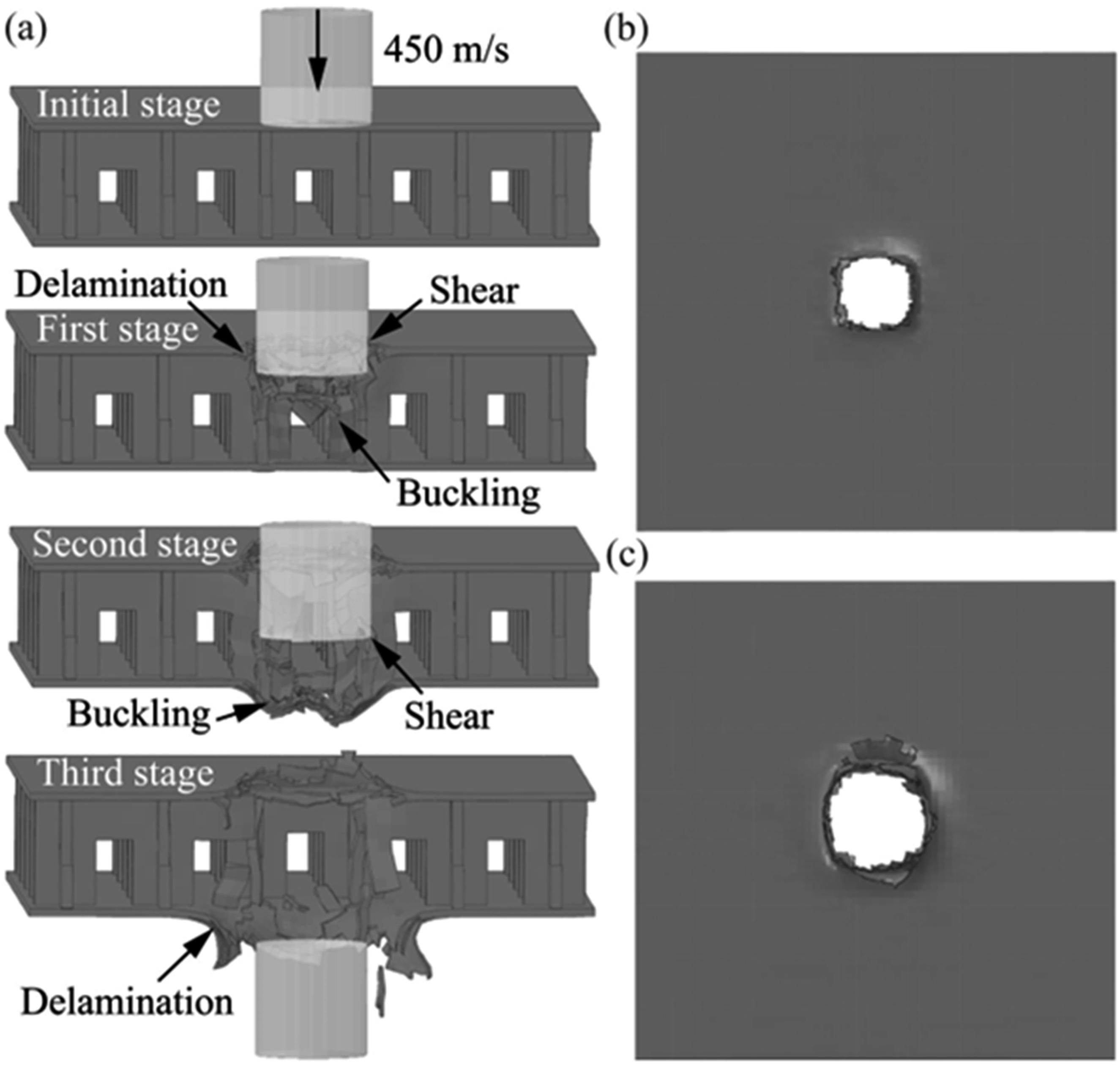
To reveal the impact attenuation effect within the sandwich panel with cross-grid cores, two measurement points (MPOS I and MPOS II) are set between the panel and the core layer. MPOS I is utilized to record the impact compressive stress time history between the upper panel and the grid core, while MPOS II is employed to obtain the impact compressive stress time history at the contact interface between the grid core and the rear panel. When the projectile strikes the sandwich panel with cross-grid cores, the interface of the projectile contacts the front panel. As shown in Figure 10, the impact pressure is then transmitted throughout the entire sandwich structure via the front panel. By comparing the impact of compressive stress at these two locations, the analysis can determine the sandwich panel’s attenuation effect on the impact. Time history curve of impact compressive stress.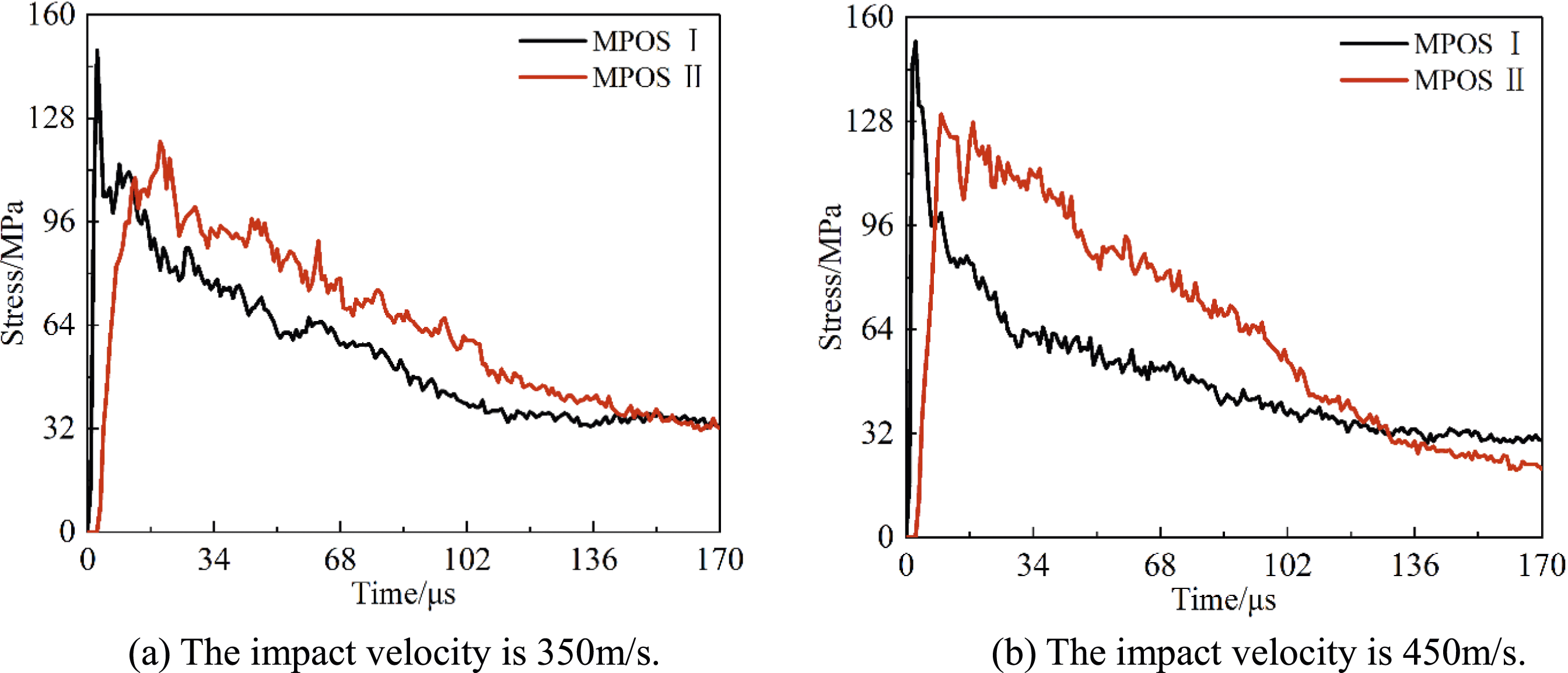
High-speed impact performance of the sandwich structure under different impact velocities
The impact resistance of the sandwich panel is characterized by its ballistic limit velocity 


Different projectile velocities have different penetration ability to the sandwich structure and different damage degrees to the sandwich panel. Therefore, the impact performance of the sandwich structure with cross-grid cores under different initial velocities is analyzed. Figure 11 shows the energy absorption of the sandwich panel with cross-grid cores and the energy absorption rate of each component under different impact velocities. It can be observed that there is an approximately linear relationship between impact velocity and energy absorption. With the increase in impact velocity, the energy absorption of the sandwich structure also increases. It shows that the energy absorption capacity of the sandwich panel does not reach the limit within the selected speed range, and the high-speed impact resistance is better. The energy absorption of the sandwich structure is mainly contributed by the front and rear panels. At different impact velocities, the energy absorption rate of the front and rear panels is significantly higher than that of the core. This shows that the front panel and rear panel are the main components to resist high-speed impact. Energy absorption and energy absorption rate of sandwich panel.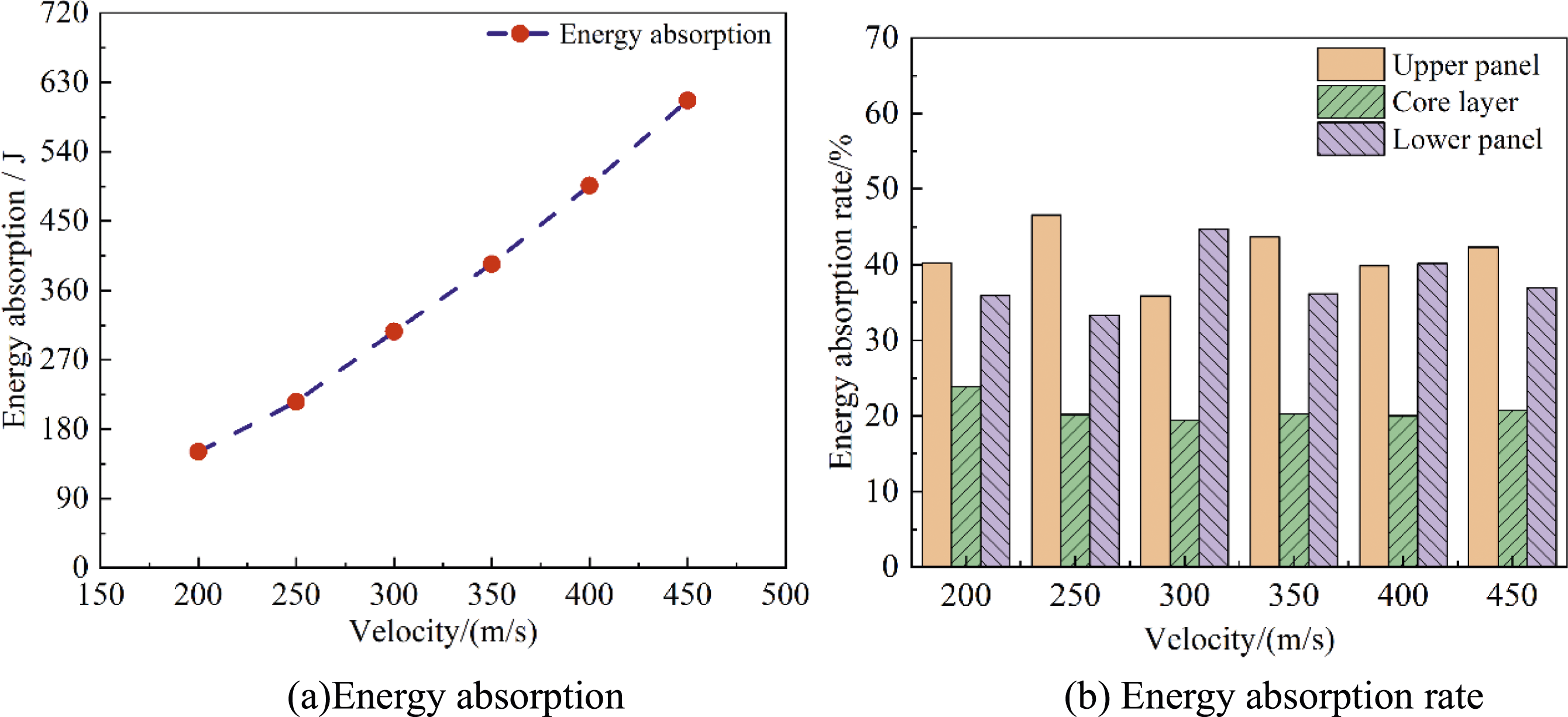
High-speed Impact Performance of Sandwich Structures under different geometric Parameters
The ballistic limit velocity and specific energy absorption of the sandwich structure with different panel thickness, grid wall thickness and core heights are discussed. To reduce the analysis time and improve the efficiency of multiple sets of tests, the projectile incident velocity Ballistic limit velocity and specific energy absorption of sandwich panels with different geometric parameters.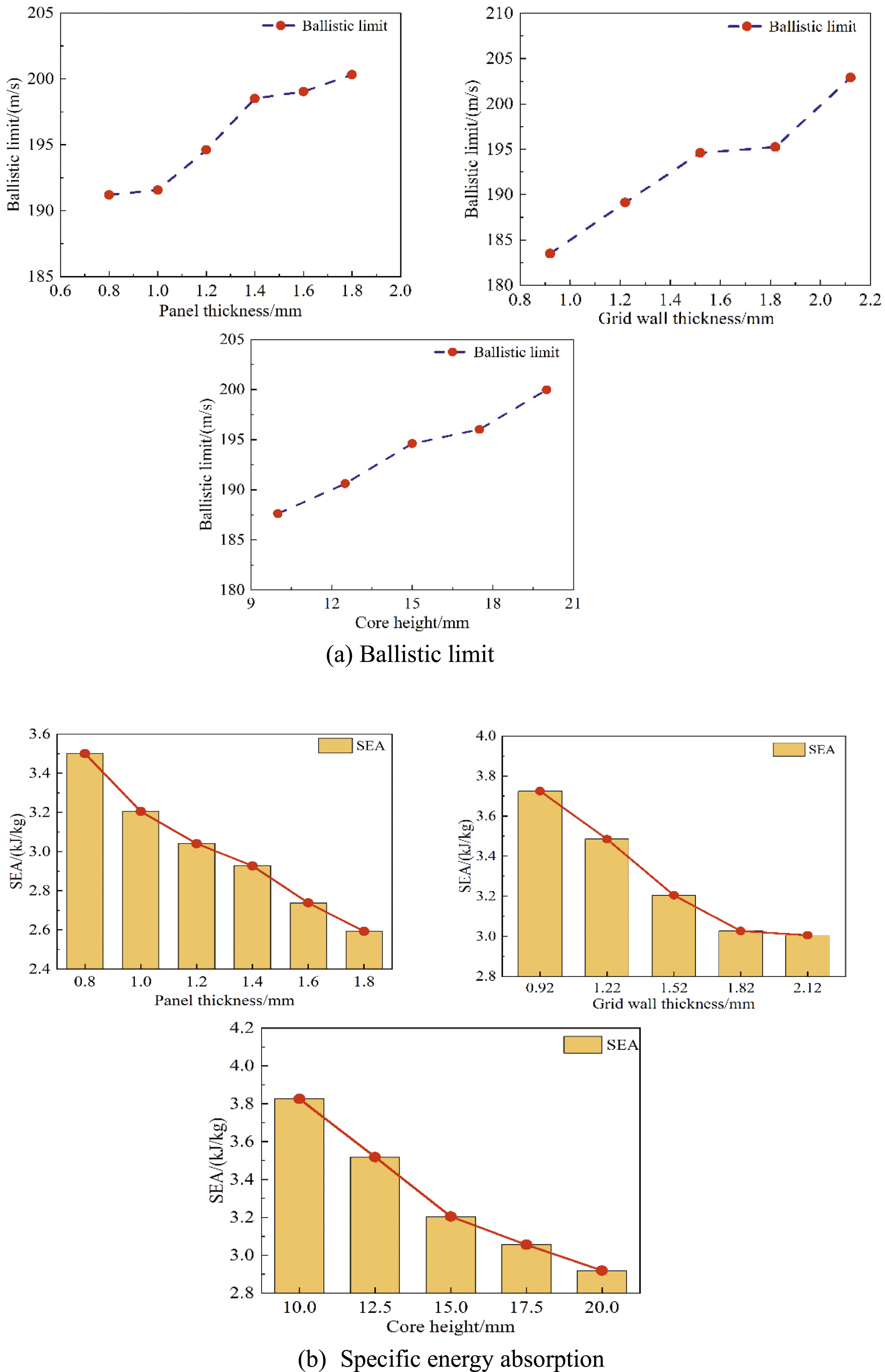
As illustrated in the figure, the specific energy absorption of the sandwich structure exhibits a linear decrease of 25.9% as the panel thickness increases. Initially, the ballistic limit velocity remains nearly constant, but it begins to rise as the panel thickness is further increased. However, beyond a certain point, the ballistic limit velocity shows only a marginal increase of 4.8%, indicating diminishing returns. These results demonstrate that while increasing the panel thickness enhances the high-speed impact impedance of the sandwich structure, it also leads to a reduction in energy absorption efficiency. From this set of tests, it is evident that a panel thickness of 0.8 mm represents an optimal balance, as it yields the highest specific energy absorption while maintaining a ballistic limit velocity comparable to that of thicker panels. This thickness is therefore identified as the most suitable geometric parameter to meet both lightweight design and impact performance requirements.
With the increase of the thickness of the grille wall, the specific energy absorption of the sandwich structure decreases first and then remains basically unchanged, decreasing by 19.3%, which is smaller than that of the panel. The ballistic limit velocity of the sandwich structure continues to increase, increasing by 10.6%, which is larger than that of the panel. The main reason is that the panel is the main energy absorption part of the impact, the core is the main supporting part of the sandwich structure, and the impact position is located at the support of the embedded bar. The increase in the wall thickness of the embedded bar leads to the increase of the stiffness at the impact, and the impact impedance will be larger. However, when the wall thickness of the insert reaches a certain limit, the increase of its value has little contribution to the energy absorption rate of the sandwich panel. Considering the specific energy absorption and ballistic limit speed of the sandwich structure, the optimal wall thickness parameter of the embedded strip is 1.22 mm from the test group.
With the increase of the height of the core, the specific energy absorption of the sandwich structure decreases by 23.7%, and its ballistic limit speed continues to increase by 6.6%, with a small increase. It can be seen that the change of the core height has a great influence on the energy absorption efficiency of the sandwich structure with cross-grid cores, but the increase of its height cannot effectively improve the anti-penetration ability of the sandwich structure. Considering the specific energy absorption and ballistic limit speed of the sandwich structure, the optimal core height of 12.5 mm was selected from the test group.
Comparison of high-speed impact performance with honeycomb sandwich panels
Figure 13 and Figure 14 show the comparative study of the specific energy absorption and ballistic limit speed of the traditional honeycomb configuration and the sandwich structure with cross-grid cores. To accurately compare, two high-speed impact simulation models of sandwich panels with the same shape size and relative density are established. We keep the relative densities of the honeycomb core and the cross-grid core consistent by changing the thickness of the grid wall to change the volume occupied by the core material to control the relative density of the core layer. The number of layers of the upper and lower panels is fixed to four layers. The results show that with the increase of the relative density of the core layer, the specific energy absorption curves of the two sandwich panels decrease first and then tend to be gentle, and the ballistic limit velocity increases slowly. This is because under the action of high-speed impact load, the main damage of the core layer of the lattice sandwich panel is the local fracture of the contact surface between the lattice web and the projectile body and the adjacent surface, and the slow increase of the relative density of the core will not make the interaction area between the sandwich panel and the projectile body change greatly. Comparative analysis of high-speed impact specific energy absorption. Comparative analysis of high-speed impact ballistic limit velocity.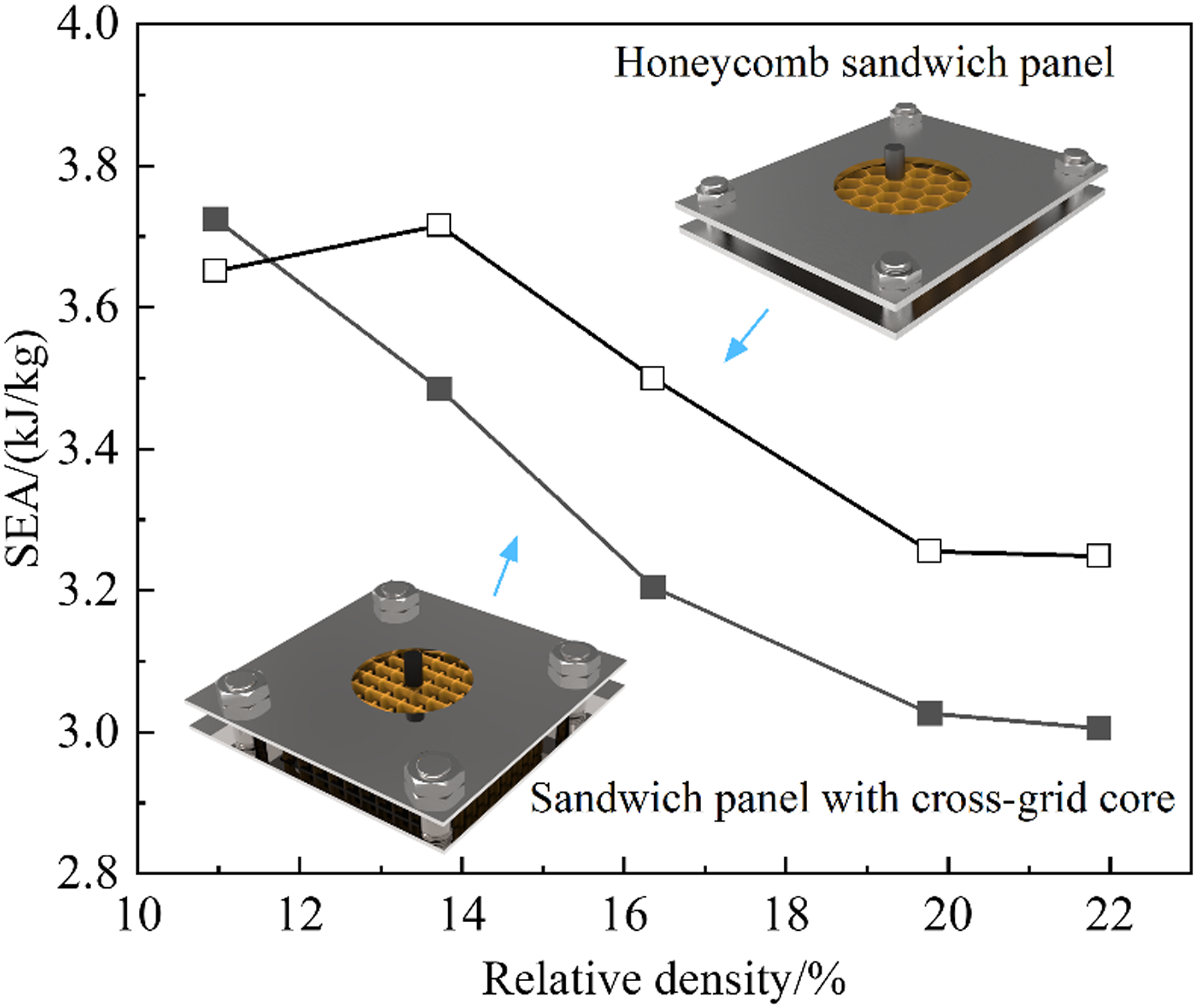
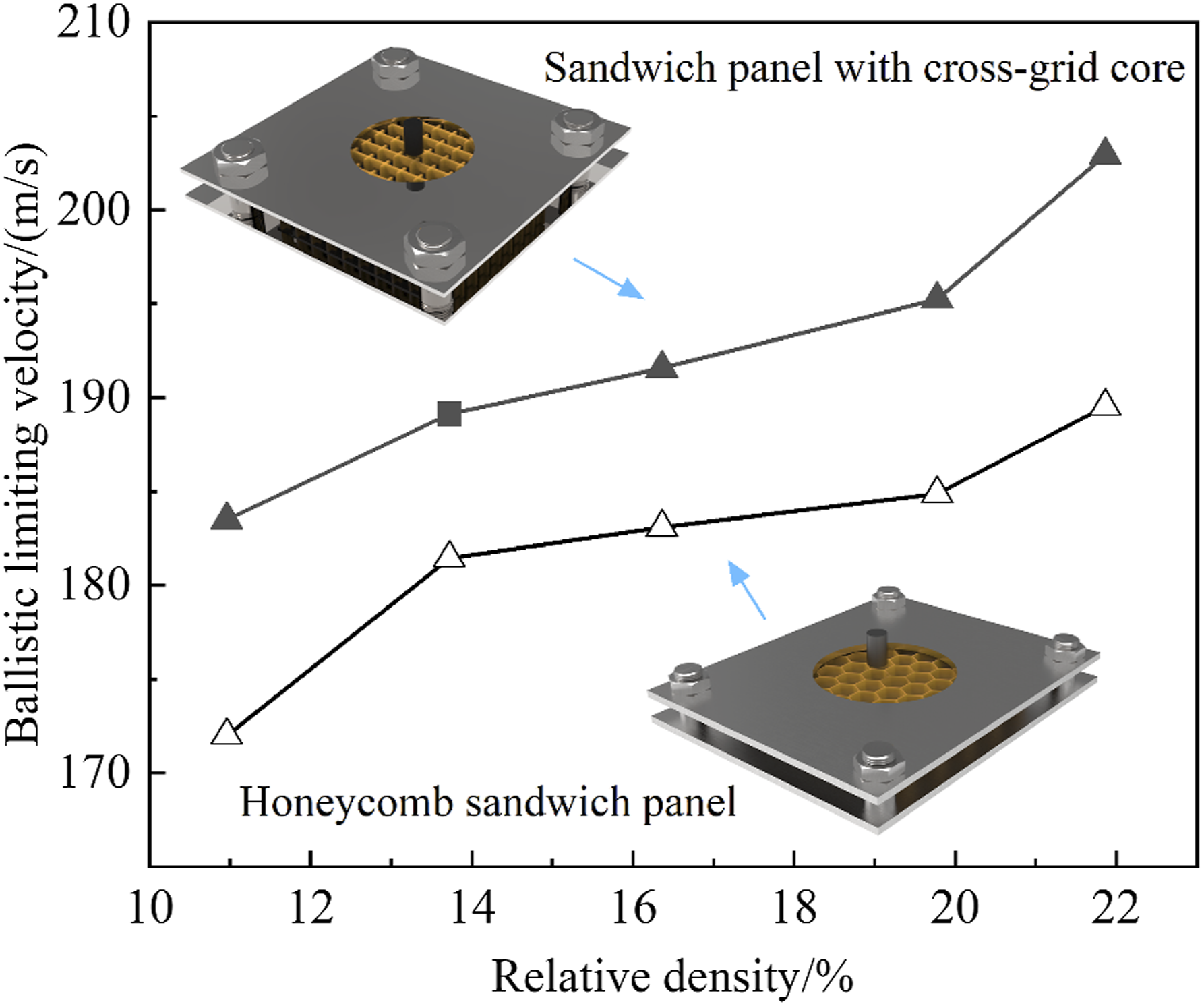
Compared with the traditional honeycomb sandwich panel, the sandwich panel with cross-grid cores does not improve the energy absorption efficiency, and only shows excellent performance at low relative density. However, at the same relative density, the ballistic limit speed of the sandwich panel with cross-grid cores is higher than that of the traditional honeycomb sandwich panel, indicating that the sandwich structure with cross-grid cores has a better impedance effect on high-speed impact load. In terms of energy absorption efficiency, the traditional honeycomb sandwich panel shows more excellent energy absorption characteristics.
Conclusion
In this paper, the high-speed impact mechanical properties of a sandwich structure with cross-grid cores are simulated and analyzed. The high-speed impact response characteristics of the sandwich panel with cross-grid cores are studied, and its energy absorption at different impact speeds is discussed. The specific energy absorption and ballistic limit speed are used as indicators, and the panel thickness, core height and grid thickness are used as variables. The influence of the geometric parameters of the sandwich panel on its high-speed impact resistance is explored. The conclusions are as follows: (1) The projectile mainly erodes the composite sandwich panel with cross-grid cores through shear failure. The impact process can be divided into three stages: shear and buckling failure of the upper panel and core, crushing failure of the lower panel, and complete penetration of the sandwich panel. The grid sandwich structure has a certain attenuation effect on the impact and can provide some protection for the objects behind the panel. (2) The sandwich structure with cross-grid cores has good high-speed impact resistance. Its energy absorption is mainly contributed by the front panel and the rear panel. Its energy absorption rate is higher than that of the core part, which means that the panel material and structure are more effective in energy dissipation. With the increase of impact velocity, the energy absorption rate of the core part of the sandwich structure remains basically unchanged, and the energy absorption rate of the rear panel is lower than that of the front panel, which shows the different effects of velocity on material behavior. When reaching a certain speed limit, the energy absorption rate of the rear panel is basically the same as that of the front panel. The change in the energy absorption rate of the rear panel illustrates the different effects of speed on the material behavior, which may be related to the material and geometric structure characteristics. (3) Through the high-speed impact simulation of sandwich panels with different geometric parameters, it is found that the specific energy absorption of sandwich structure decreases linearly with the increase of panel thickness. With the increase of the thickness of the grid wall, the specific energy absorption of the sandwich structure decreases first and then remains basically unchanged. With the increase of the height of the core, the specific energy absorption of the sandwich structure decreases. (4) Compared with the traditional honeycomb sandwich panel, the sandwich panel with cross-grid cores has a better impedance effect on high-speed impact load. In terms of energy absorption efficiency, the traditional honeycomb sandwich panel shows better energy absorption characteristics. This shows that the advantages and disadvantages of different structures in different performance indicators depend on their material properties and design principles.
Footnotes
Declaration of conflicting interests
The author(s) declared no potential conflicts of interest with respect to the research, authorship, and/or publication of this article.
Funding
The author(s) disclosed receipt of the following financial support for the research, authorship, and/or publication of this article: This study is financially supported by Universities Natural Science Research Major Project of Jiangsu Province (Grant No. 21KJA460004) and Technology Project of Key Research and Development Plan of Jiangsu Province (Grant No. BE2023014-3).
