



Abstract
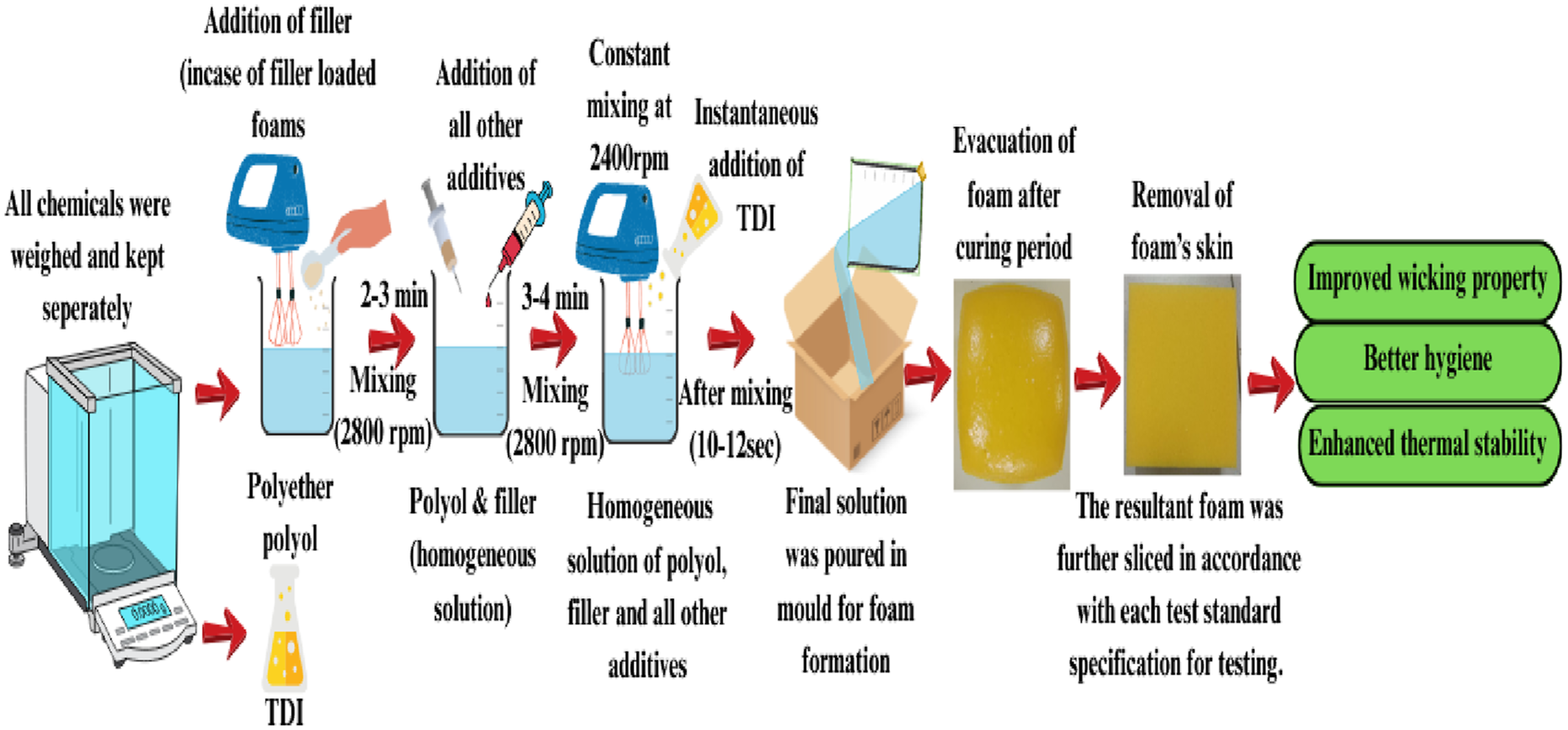
PU foam, a soft, affordable, and easily accessible mattress material, has both advantages and disadvantages. Despite having wider pores and a more open-cell structure it commonly faces criticism for causing body heat and retaining moisture, which can lead to bacterial growth and allergic reactions. This study investigates the impact of bamboo and gelatin filler loading on the wicking property of the foam by using a discontinuous foaming process. Foams with gelatin and bamboo fillers were prepared at 2%,4% and 8% by weight concentrations, respectively, along with a standard 32-density foam without filler. Improvisation of 10 mm in the wicking height of foam was observed with dosage increment of bamboo filler. However, an increase in gelatin filler concentration resulted in an increase in foam porosity and elongation with a slight improvement in wicking ability. According to this research findings, the bamboo powder can be utilized as a filler to enhance wicking properties in flexible polyurethane foam. The investigation highlights the crucial role of filler nature, composition and concentration in influencing foam behaviour and durability. This research contributes valuable insights into the ongoing efforts to refine and innovate mattress design for enhanced user experience, hygiene and well-being.
Get full access to this article
View all access options for this article.