




Abstract
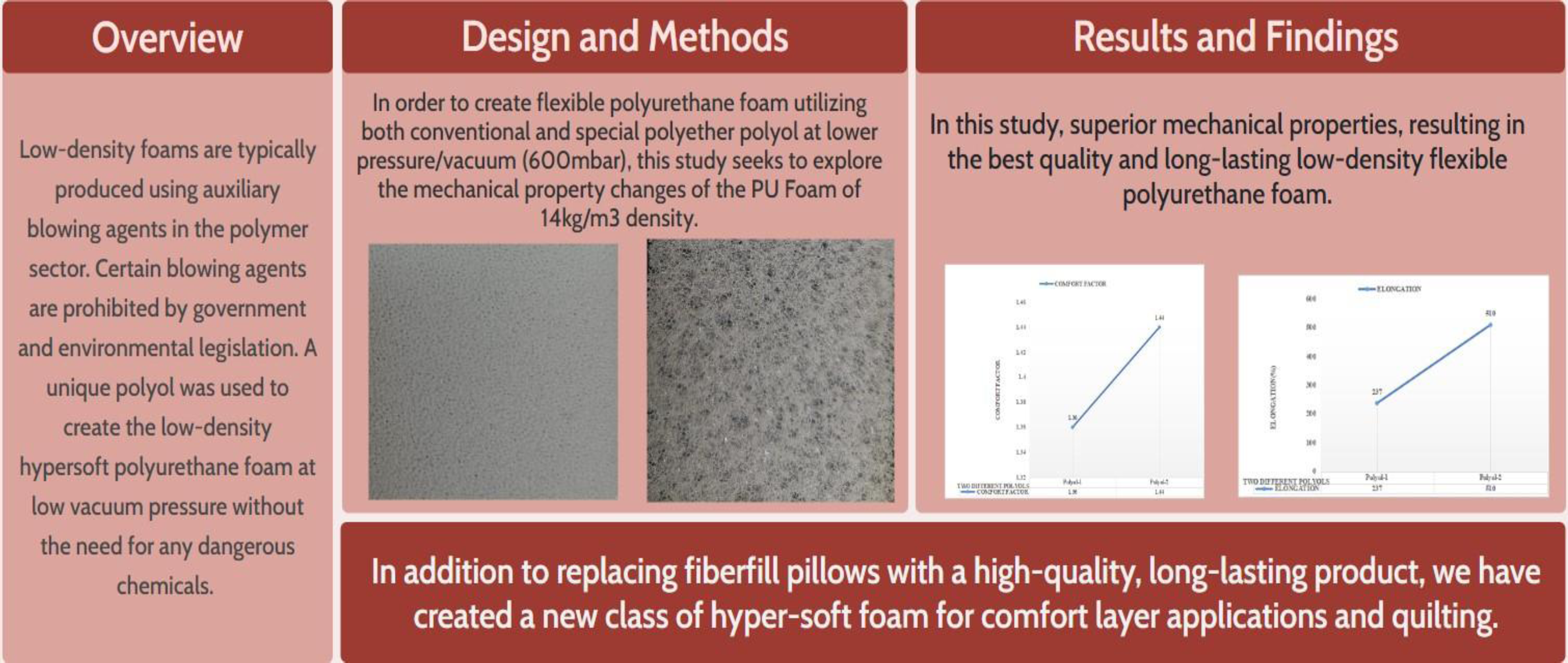
This study demonstrates the technical viability of producing low-density flexible polyurethane foam (14 kg/m³) at low vacuum pressure (600 mbar) using both conventional polyether polyol (Polyol-1) and a special polyether polyol (Polyol-2) with variable pressure foaming (VPF) technology. The foam made with Polyol-2 exhibited superior mechanical properties, including increased elongation, resilience, and softness, compared to Polyol-1. SEM analysis revealed that Polyol-2 foam had a more open, irregular cell structure, contributing to improved elasticity. TGA analysis confirmed that the foam produced from Polyol-2 exhibited greater thermal stability at low vacuum pressure. FTIR characterization confirmed the distinct chemical structure of Polyol-1 and Polyol-2 foam. Low-density foams in the polymer sector are often produced using conventional processes that rely on auxiliary blowing agents such methylene chloride, acetone, pentane, carbon dioxide, trichloroethane, and chlorofluorocarbon. Unfortunately, a lot of these chemicals are restricted because of environmental issues, such as health hazards and ozone layer depletion. In the present research the foams were produced without auxiliary blowing agents (ABA), addressing environmental concerns. This research highlights the potential of Polyol-2 foam for comfort layer applications, offering enhanced mechanical properties, durability, and sustainability over conventional foam production methods.
Keywords
Get full access to this article
View all access options for this article.