




Abstract
The study assessed the roles of women and the ownership of land trends in Lesotho, particularly during the 2015/2016 drought in Lesotho. A mixed-method approach, which combined both qualitative and quantitative research approaches, and a semi-structured questionnaire was used to collect data. The collected data included demographic information, household assets, gender roles in agricultural activities, and decision-making in the household to explore feminization of agriculture and its impact on household food security in Lesotho, particularly Maneo village in the Mohales’ Hoek district. The results showed that even though the women were the majority of farmers, they were not involved in decision-making, did not own the land, lacked farming implements, used poor and archaic farming methods, and were subjected to institutionalized gender discrimination. This resulted in a food deficit, worsened by the drought in the southern districts, particularly in Maneo village. Despite the fact that land was owned by men, the women worked hard without having any rights to land ownership. This contributed to women’s poverty. The study recommended including gender role assessments and clarity on gendered policies addressing discrimination in Lesotho, especially for women.
Keywords
Introduction and background
According to the Food and Agriculture Organization (FAO, 2018), rural women in many African countries engage in 60% of family farming activities (growing vegetables, preserving harvested food and rearing small livestock) and have the added responsibility of preparing nutritious meals for their families. The FAO (2016) stated that changes in food insecurity trends show that women represent 50% of agricultural labour in Africa. Still, they have little to no influence over resources and norms, choice of jobs, and crops. This limits their earning potential in agriculture and hence, the feminization of agriculture. In recent years, frequent droughts and floods, poor farming methods, high food prices and global financial crises worsened food insecurity in the Southern African Development Community (SADC) region (Nhamo et al., 2019). Many people are left without food, and this necessitates humanitarian support. For example, the region had to meet its cereal requirements through imported food and food-aid (Nhamo et al., 2019). High HIV/AIDS prevalence in the region worsens the situation as it leads to loss of agricultural labour, and many people rely on farming to sustain their lives.
Lesotho’s food security was very low, as manifested during the 2015/2016 drought. According to the United Nations Resident and Humanitarian Coordinator in Lesotho Report (2019), Lesotho, like other parts of Southern Africa, experienced the effects of extraordinary El Niño consequences followed by two successive years of drought and erratic rains. According to the Lesotho Vulnerability Assessment Committee Report (LVAC, 2016), the number of food-insecure people in the country increased from 463,936 in 2015 to 532,502 in 2016. Lesotho’s agricultural system is patriarchal, and subsistence farming is the dominant farming practice, which depends solely on rainfall (Hoag, 2017; Muimba-Kankolongo, 2018). This has resulted in poor harvests exacerbated by archaic farming methods, tools and infertile soils. The situation triggered the government to declare an emergency on 22 December 2016. In 2017, the food-insecure people regressed to 306,946, which was still significant when taking Lesotho’s population of about 2.2 million into account.
In Lesotho, the response to the El Niño induced drought of 2015/2016 continued beyond August 2017 (United Nation Development Program (UNDP), 2017). Humanitarian activities were carried out to build resilience. The first urban and rural vulnerability assessments in Lesotho were done in June 2017, which projected that 306,946 people would have been food insecure between September 2017 to March 2018. Of these, 224,664 people were from rural areas and 822,278 from urban areas. The number of food-insecure people comprised 14% of Lesotho’s population. The hardest-hit areas were the southern districts of Lesotho, namely Mafeteng, Mohales’ Hoek and Quthing districts. The drought resulted in socio-economic challenges like poor harvest, rising food prices, limited labour opportunities, and poor access to water resources. Notably, the drought in Lesotho increased the out-migration of men, who were the rightful owners of agricultural means of production, to the mines and other livelihood options in South Africa. Consequently, women had to take up the leading role in agriculture despite not owning the land and the means of production. Against this background, the study explored the feminization of agriculture and its impact on household food security in Lesotho, particularly in the southern districts. 1
The theoretical and conceptual background of gender dimensions in agriculture
The study considered various gender dimensions in agriculture to understand how women in developing countries are affected by gender issues resulting in economic and social inequalities and the exclusion of women in agriculture, resulting in food insecurity in Lesotho. Even though rural women contribute more to agriculture in developing countries, like Lesotho, they have less or little say and access to productive resources such as assets, inputs, land, education, financial services and opportunities than men (Coello et al., 2015; Raney et al., 2011). Besides the gendered nature of Lesotho’s social landscape and the defined roles of rural women, they had to assume other gender roles when drought increased the out-migration of men. Most of the Basotho men migrate to South Africa to work in the mines (Crush, 2012; Crush et al., 2010). This leaves women with the burden of ‘heading the family’, which is always unpaid even with their essential contribution to agriculture (Raney et al., 2011). Women have also been found to be 4% to 25% less productive than male farmers, depending on the country and the crop (UN Women, 2015). This situation is all the more serious since research shows that female farmers are just as efficient as male farmers, but produce less because of lack of access to resources and opportunities (Raney et al., 2011). The rural men in Lesotho working in South African mines and industries remit part of their earnings back home. Women have no choice but to take up agricultural labour along with their traditional roles to care for their families. Common agricultural practices like crop and livestock farming shift to women. However, recent retrenchments in South Africa have forced men to return home and reclaim their societal gender roles (Matsie, 2010).
Gender social roles from a feminist perspective were examined and included experiences, interests, chores, and feminist politics in society. There are masculine tendencies to overpower feminist perspectives as postulated by Innatists who view women biologically weaker than men. Women are therefore discriminated against, sexually objectified, oppressed and undervalued. It is well known that in rural Africa including Lesotho, patriarchal tendencies are still rooted in society. Women are placed in the domestic sphere. According to Chwarae (2015), women’s main roles are household care, and ensuring that everybody in the home is provided for in terms of food and hygiene. African rural women, particularly in Lesotho, depend on natural resource-based livelihoods to serve their families and communities with household necessities. This becomes a difficult task during disasters, especially during a drought when food and water are usually scarce, and households face drastic supply and demand shocks and stresses.
The land, which is the most important natural capital, belongs to men. Traditionally, women depend on male family members for economic support and representation. Women could not own or inherit property according to the old common law (Laws of Lerotholi ‘Melao ea Lerotholi’; Maunatlala and Maimela, 2020).
Gender inequality and food insecurity
Gender inequality is a result of persistent discrimination based on gender. This has influenced food insecurity in Lesotho. Women face discrimination because they are deemed culturally less than men within the Lesotho social system. This is despite the Lesotho Legal Capacity of Married Persons (No 6 of 2006), which elevated women’s status and rights to their spouses (Government of Lesotho, 2006). With this gendered nature, the women become economically weaker than their male counterparts, and subsequently, food production and acquisition is compromised, resulting in food insecurity. Men and women play different roles to secure food for their families. The role of women is to produce, process and prepare food for the household (Kalansooriya and Chandrakumara, 2014). Women are household managers and food providers for their families, which makes them key players in overcoming food insecurity at the household level. Rural women in several African nations, including Lesotho, engage in 60% of family farming operations, 50% of agricultural labour and have the additional burden of providing nutritious meals for their families (FAO, 2018). They have little to no control over resources, conventions, jobs and crop selection.
According to Hlalele and Letsie (2011), gender inequality in Lesotho exists and is not declining despite the government’s efforts to address gender equity and equality. In the 1990s, women lobbied for political representation in decision-making through women-led organizations and female members in political parties. Of note is the 1995 Beijing conference where it was expressed that all women’s human rights and fundamental freedom are essential for empowerment (Doran et al., 1995). These efforts have resulted in quotas for women in local government elections, but not for general assembly seats, although there is a possibility to include proportional representation (PR) parliamentary seats. Female representation in the Lesotho cabinet has remained at 22% for 2015 and 2017 (Gender Links for Equality and Justice, 2017). There were only five female cabinet ministers and three deputy ministers out of 36 cabinet members. Lesotho parliament has 120 seats, 27 (22.5%) are occupied by women. Such trends are similar in many parts of Africa and globally. The study also revealed that despite being the majority of farmers, women were not involved in decision-making, did not own land, lacked farming implements, practised poor and archaic farming methods, and faced institutionalized gender discrimination. This resulted in a food deficit exacerbated by the drought in Lesotho’s southern districts, particularly in Maneo village (study area).
Deeply rooted gender roles and stereotypes easily become accepted into cultural values which leads to tolerated practices without gauging the consequences. Leduka et al. (2015) argued that female-headed households in Maseru, Lesotho score higher on the mean household food insecurity access scale (HFIAS) than other household types. However, this does not show the relationship between gender and food security.
The UNDP (2018) statistical updates on Human Development Indices (HDI) and indicators like the gender development index (GDI) determine gender inequality in health services. The index measures male and female life expectancy at birth, expected schooling years, aging and economic resources based on gender national income (GNI) per capita. The 2017 Lesotho’s HDI was 0.519 for women and 0.516 for men, resulting in a GDI of 1.004, which ranked the country 135 out of 160 countries on the gender inequality index (GII). In 2018, Lesotho’s global gender gap index of 0.6930 placed it in the 81st position in contrast to the 2010 report of 0.7678, which placed it in the eighth position. Thus, the country deteriorated by 73 positions in global rankings. It is clear that in 2010, Lesotho was one of the best African countries regarding gender gap indices, which Allen (2011) attributed to the men leaving their families to work in South African mines. The UN FAO and the World Bank Report estimated about 100,000 to around half a million Lesotho emigrants in South Africa in 2010.
Braun (2010) argues that despite retrenchments from South African mines, a significant number of men from poorer rural areas are still migrant labourers in non-mining sectors such as agriculture in South Africa and other areas in Lesotho. Due to this situation, some women enjoy autonomy within the household. Returning migrant men reduce women’s roles in agriculture to marketing and selling agricultural products, carrying water, and collecting wood or rearing poultry and small animals (Braun, 2010). Men engage in more income-generating farming activities such as raising livestock (part and parcel of agriculture) and other labour, with women engaging in less income-generating activities; thus, men gain more financial independence than women.
Household decision-making is a complex process that depends on many factors. These include location, cultural practices, education, earning power, employment status and age (Schneebaum and Mader, 2013). The study was carried out in a peri-urban area where many people depended on farming as a source of food security. Women make most individual decisions on everyday purchases and children’s needs, while men focus on financial control.
Schneebaum and Mader (2013) stated that an individual’s earnings, education, age, culture and social standing play a significant role in how decisions are made at a household level. For instance, men make decisions about livestock sales and keep households’ bank accounts to boost their earning power. This supports the cultural norm that men are heads of households and therefore deserve the best share of household earnings. Schneebaum and Mader (2013) further stated that the gender with the higher education, earnings, employment or hold rights to possessions will make more decisions than the other partner in a financially depressed household. In contrast, O’Neil and Domingo (2016) stated that decisions are usually made jointly where both partners have equal or equivalent education, earning power and employment status. According to this study, women were not involved in decision-making, did not own means of production, and faced institutionalized gender discrimination. This resulted in a food deficit in Lesotho’s southern districts, particularly in Maneo village, which was exacerbated by the drought.
The study area
The study area of Maneo village is located in Mohales’ Hoek and falls under the Thaba-Mokhele council and Mpharane constituency (Figure 1). Mohales’ Hoek, Mafeteng and Quthing form the southern districts, which were more affected by the 2016 drought than other districts in Lesotho. The village is predominantly peri-urban (LVAC, 2016), with some rural areas on the council’s boundaries. This made it suitable for the study, as it portrayed both urban and rural characteristics of gender and food security issues in Lesotho.
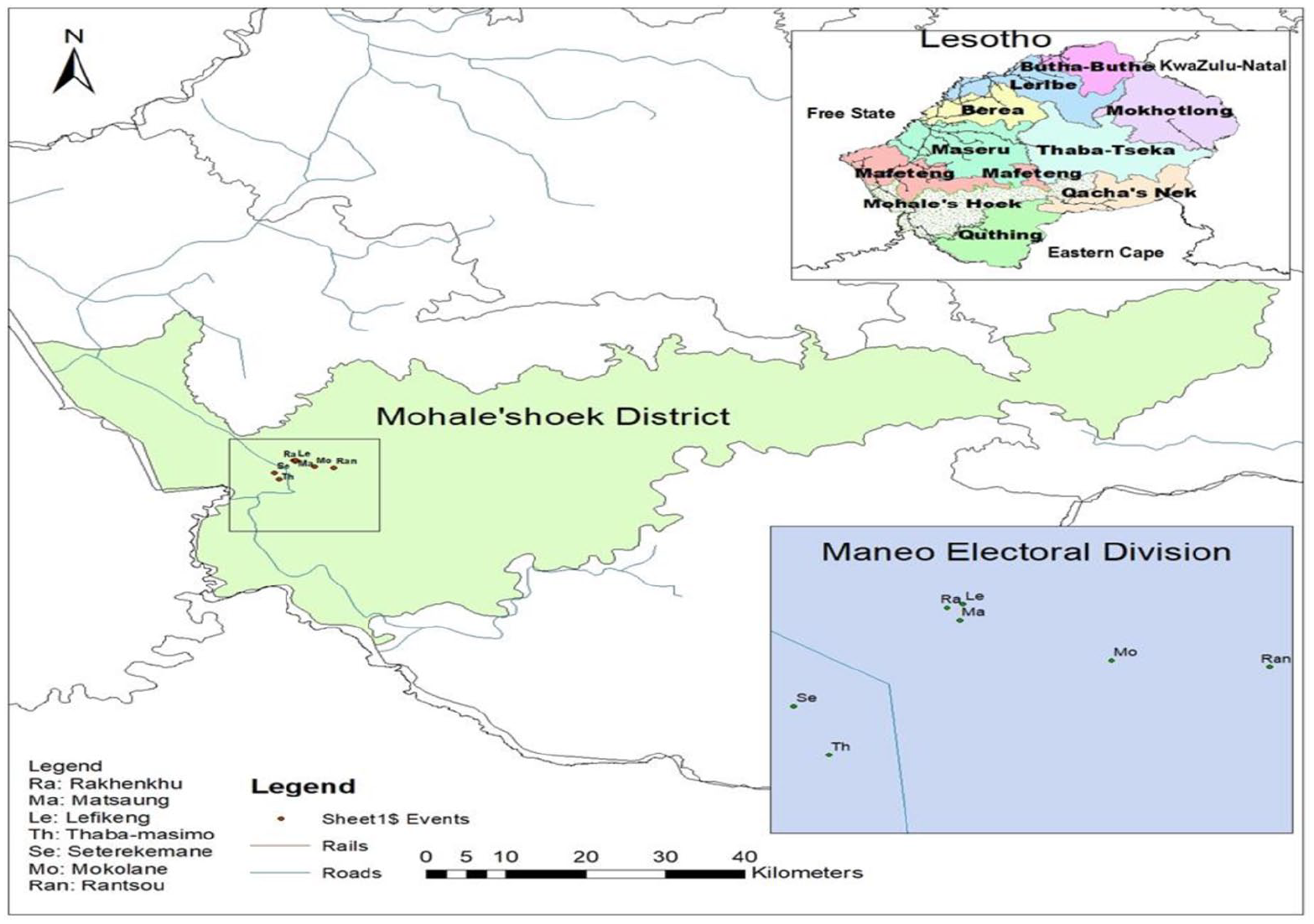
Maneo Electoral Division map in Mohales’ Hoek District.
Materials and methods
The mixed-method approach combines qualitative and quantitative research approaches to collect relevant data employed. Through this mixed method, the following information was gathered: demographic information, household assets, gender roles in agricultural activities and household decision-making. According to Lieber (2009), qualitative approaches offer the advantage of giving researchers the context of the research environment and the human element, resulting in comprehensive data that quantitative methods cannot establish. Quantitative approaches, however, are concerned with gathering information and determining the relationship between variables. Combining the two techniques gives comprehensive, in-depth study data with relevant conclusions and recommendations (Bahta and Myeki, 2021).
A semi-structured questionnaire was also used to collect data on the demographic information, household assets, gender roles in agricultural activities and decision-making in the household. The questionnaire was piloted, revised and modified to incorporate necessary changes before the main study. Two research assistants were recruited, trained, made aware of the objectives and how they were expected to ask the questions. The researcher and research assistants were conversant in the Sesotho language. This was necessary to make sure that the questions asked were explained further in the local language if the need arose. The researcher and assistants asked the participants questions and captured their answers on the questionnaire. At times, the researchers had to repeat the questions when participants misunderstood what was asked. The data were collected during September, which was the planting period in Lesotho. In some villages, data collection was done before and after people had returned to and from farm work.
Maneo village comprises over 1500 households with an estimated average number of five people per household and an approximate population of 7500 (LVAC, 2016). The study included household adults who were 18 years or older and married couples/breadwinners/family decision-makers, regardless of gender. A random sample of 160 households was chosen, representing 11% of the total households. Random sampling was most suitable because some participants were either unavailable or unwilling to participate.
Ethical clearance was obtained from the University of the Free State (UFS-HSD2018/1206). Participants took part voluntarily after the ethical principles were publicly declared. All participants completed and signed a consent form before actively participating in the study. The data were analysed using an SPSS software programme with the interpretations and analyses presented in segments following the questionnaire structure. Observed change factors and variables related to how gender roles affected household adults’ food insecurity were revealed according to different questionnaire sections. The results are presented in tables, graphs and charts covering demographic information, household socio-economic aspects, household assets, gender roles in agricultural activities and household decision-making powers.
Results and discussions
Socio-demographic characteristics of the participants
Most households comprised four to six members, which was slightly higher than Lesotho’s 3.7 average household size recorded in the 2016 census by the Lesotho Bureau of Statistics (BOS, 2016). This is in line with the LVAC (2018) report on the average household size in Lesotho. Most household heads had a primary education, followed by no secondary and tertiary education. Economically active household heads were primarily unemployed and those working received a monthly wage of between R101.00 and R1000.00 from self-employment formal and informal employment. 2
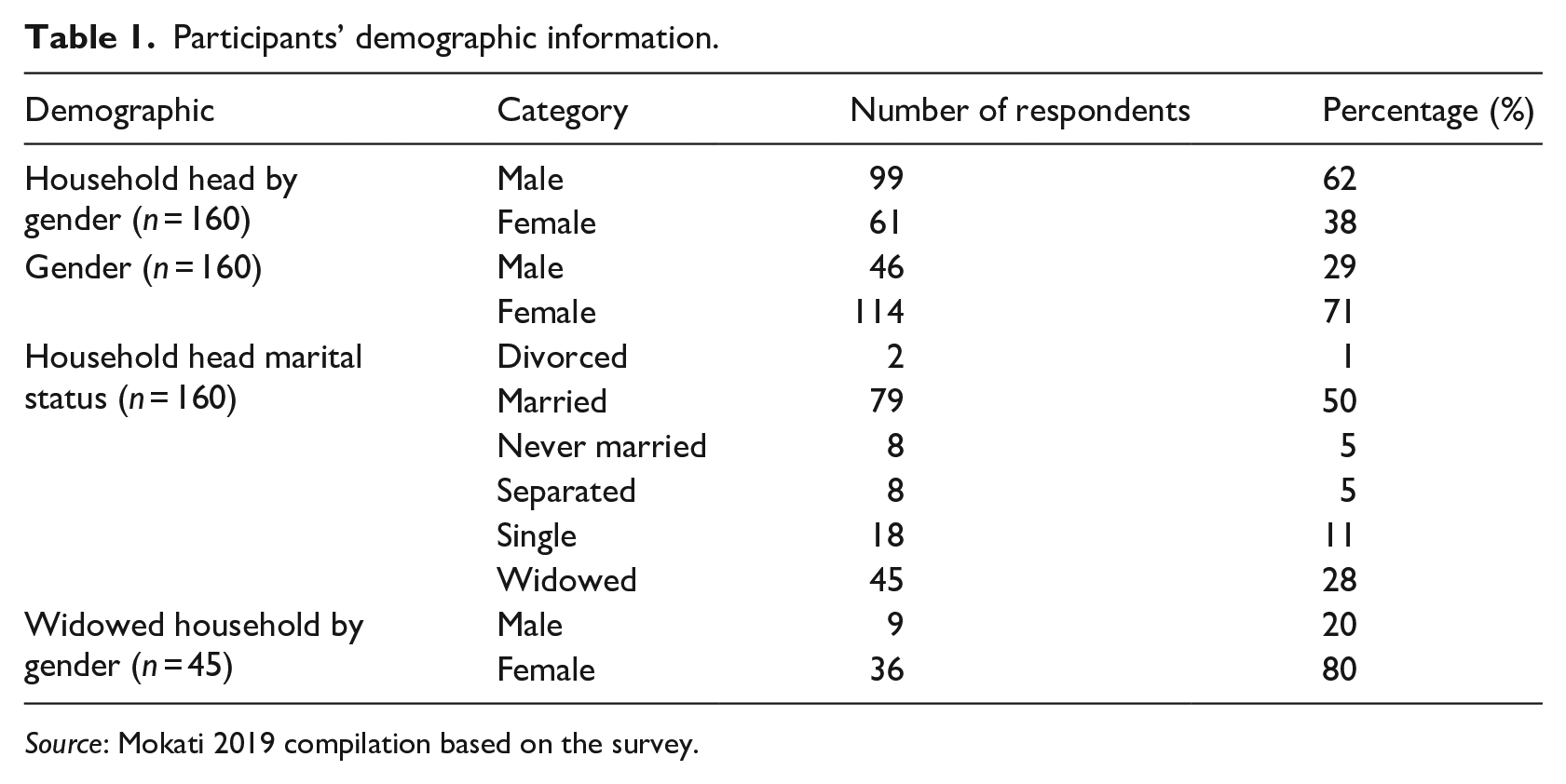
The demographic information of the participants is indicated in Table 1. In total, 71% women and 29% men participated in the study. The general gender distribution in Lesotho is men comprising 49% and women 51% of the population (BOS, 2016). Men, especially rural men in Lesotho migrate to South Africa for jobs thereby leaving women behind (Crush, 2012). This, however, does not mean that women control the means of production as it was established through an informal inquiry that many men were out working in the fields. Some men were employed in South African construction works and others were in Maseru and other towns looking for jobs.
Participants’ demographic information.
Source: Mokati 2019 compilation based on the survey.
Most women were just standing in for men as household heads, as the actual household heads were indicated as 62% men and 38% women. Even though more women participated in the study, more men were household heads. Men were the predominant homeowners, and owned the fields where crops were grown and the livestock to support household food security. Therefore, although women played key roles in household administration (90%), they did not own or control means of production and were subordinate to absent husbands working in the mines and other workplaces in South Africa (Crush et al., 2010).
Half the household heads (50%) were married, followed by widowed (28%) and single (11%). Both never married and separated individuals comprised 5% each. Only two of the participants were divorced. The widowed household heads totalled 45, of which 36 were women. Widowed women are regarded as part of the most vulnerable groups in society, especially in Sub-Saharan Africa and in rural regions where women depend on husbands for survival (Dunga, 2017). Muleta and Deressa (2014) state that widowed female household heads are more vulnerable than widowed male household heads with regard to food insecurity as well as other forms of vulnerabilities like poverty, hunger and lack of support from responsible agencies during disasters. In times of disasters or catastrophic events, widowed female household heads, as with children, other women, disabled and elderly people, find it difficult to fend for themselves without support.
According to Chwarae (2015), many women in Lesotho live within a patriarchal culture that keeps them oppressed and subject to abuse, poverty and disease, as former laws deprived them of many rights. The situation persisted, especially in rural areas, even after the Legal Capacity of Married Persons Act (LCOMP; Act No 9 of 2006) repealed spousal powers that husbands had over the person and property of his wife and inheritance laws. In addition, before the Land Act No. 8 of 2010, women were not legally protected to own and inherit the land (Fogelman, 2016). Women were considered minors until 2006.
Household assets
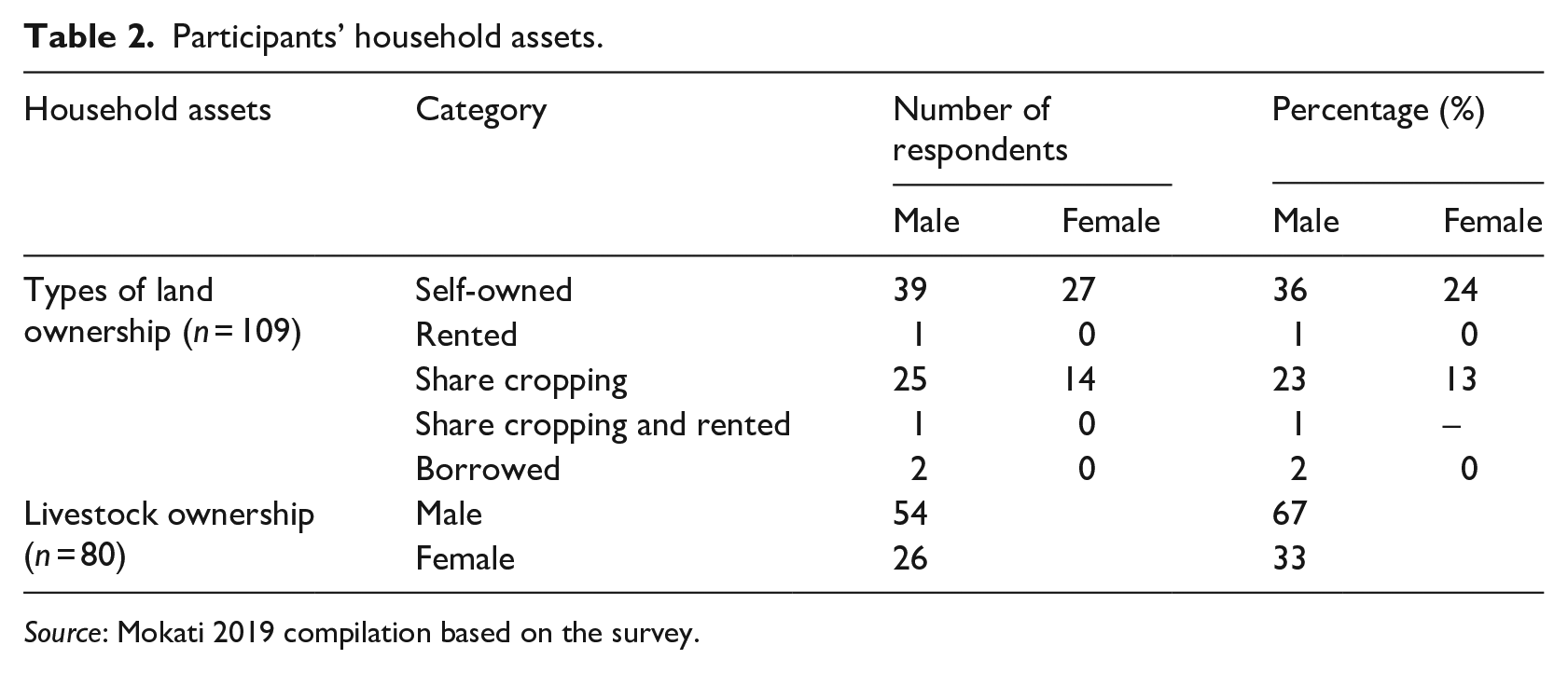
Household assets are essential in ascertaining food insecurity in communities. The participants’ various household assets are listed in Table 2. The main household assets were farming land and livestock, and to some extent, farming implements, which are the backbone of many African households and Lesotho in particular. Men were the primary owners of farming resources. About 68% of the households had access to land, 61% owned land, 24% shared cropping land, and 3% borrowed, rented, or combined share cropping land. The area practices more subsistence farming than commercial farming, a prevalent phenomenon in Lesotho, resulting in high food insecurity (Mekbib et al., 2012).
Participants’ household assets.
Source: Mokati 2019 compilation based on the survey.
Besides cropping, the participants practised both small and large livestock farming (50). More men (67%) than women (33%) owned livestock. Mekbib et al. (2012) reiterated that livestock farming plays an important economic and social role second to crop production. Furthermore, large stock like cattle are raised to support subsistence livelihoods as they provide milk, dung for fuel, meat and can be used as draught animals (Freeman et al., 2008). This is different from some countries and cultures like Botswana, where women and children own most of the small livestock like poultry (Oladele and Monkhei, 2008). In Ethiopia, women own more chickens than men (Yisehak, 2008). Small livestock is used for wool and mohair production, especially for those staying near Lesotho’s hills and mountain zones (Jordaan, 2004).
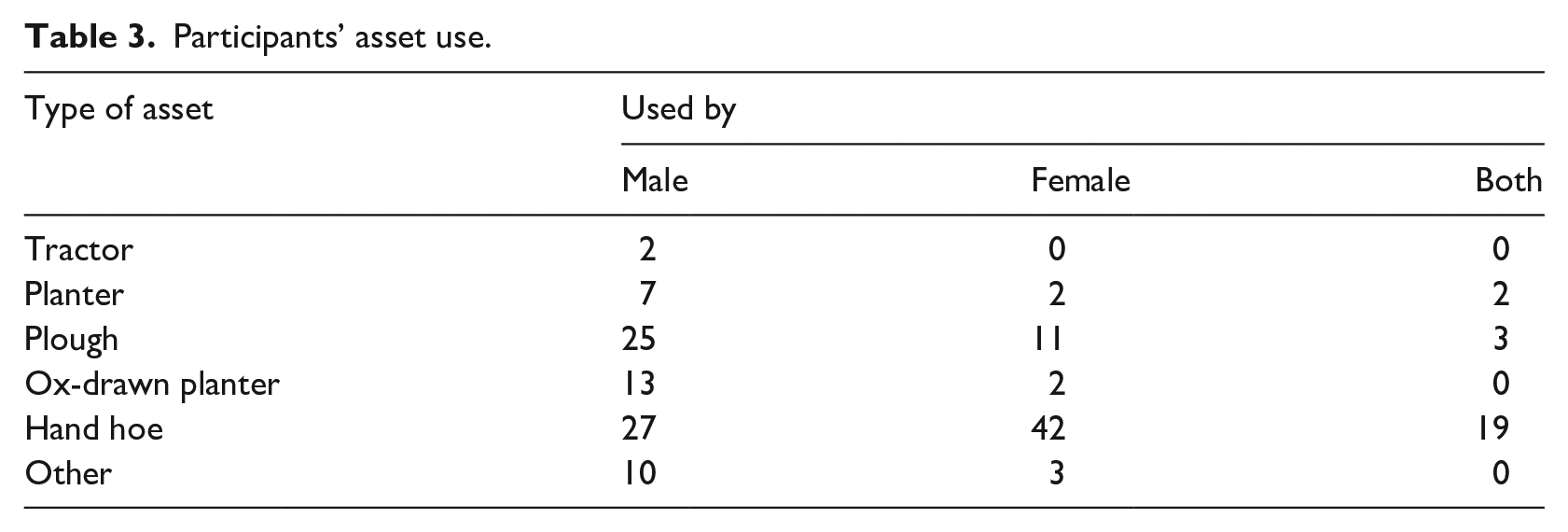
Commonly used farming implements were tractors, planters, ploughs, hand-hoes and ox-drawn-planters. Ownership and use of farming implements were assessed by gender. According to the UNDP (2012), agriculture and food security are gender-biased, and even though women play an essential role in agricultural production, food processing and marketing to secure food for their households, they do not have control over the process. Formal ownership of farming tools or assets indicated that men owned the majority of important agricultural assets (Figure 2), which was a basis for gender disparity. Only hand-hoes (27%) were owned by more women than men. Some farming tools like hand-hoes did not have certificates, but receipts and ownership belonged to whoever purchased the tool.
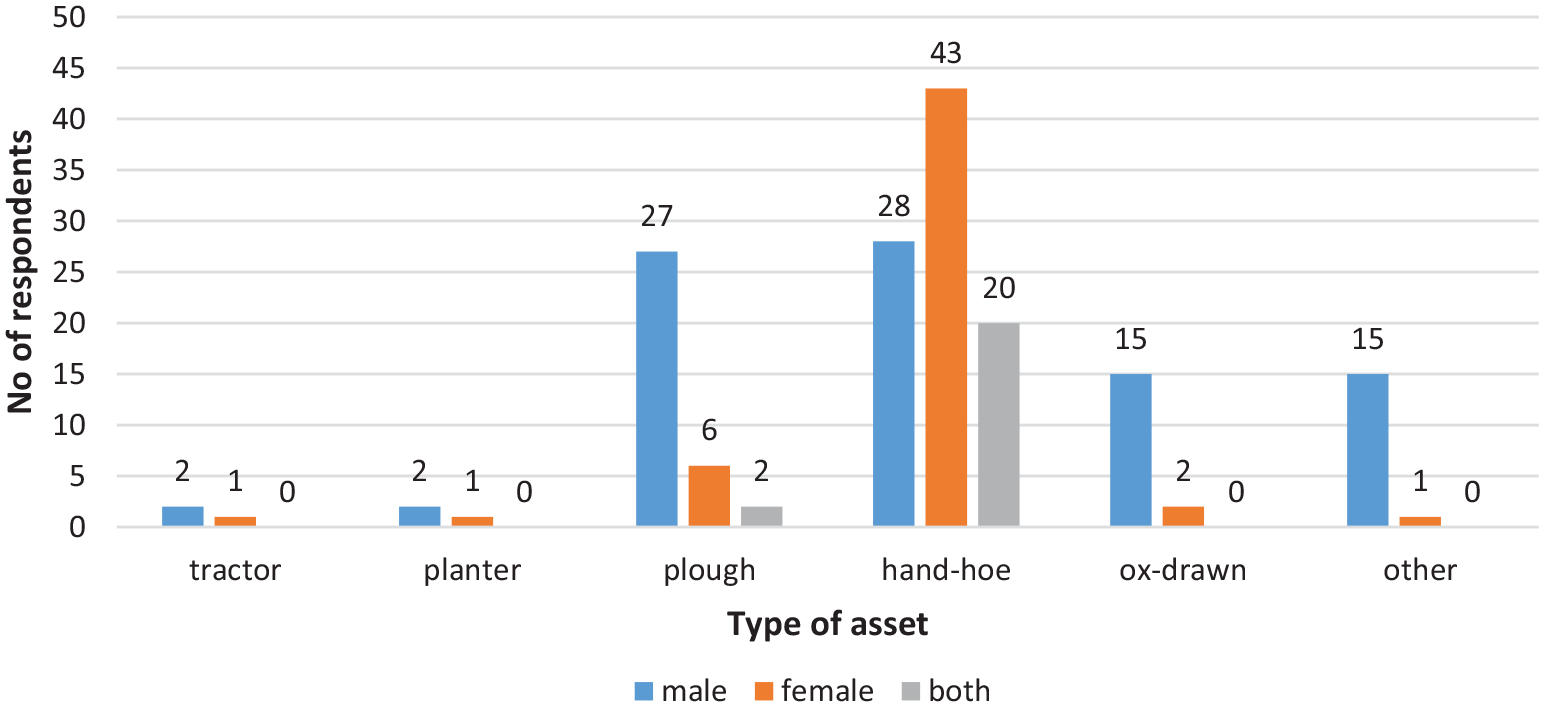
Ownership and registration of assets.
The number of women engaged in food security activities was higher than that of men. However, women’s rights were marginalized as reflected by the ownership of household production assets like land, livestock and farming tools, which were mostly registered and controlled by men. Widowed women were the only group with registered assets. Many women had reported ownership that forced them to seek male consent to gain control and use the assets freely. The utilization of farming implements for food production is important when assessing food insecurity in a community. The most common tool used by women to produce food was hand-hoes. According to Berhe et al. (2001), cited in FAO (2008), the hand-hoe is a universal hand tool used in many operations ranging from land clearance and digging to rigging and weeding. The plough was the second frequently used asset, while an ox-drawn planter was the third and more commonly used by men (Table 3).
Participants’ asset use.
Decision-making in the household
Decision-making is an important indicator when it comes to food security in households. Decisions included finance, type of food to be grown, prepared or purchased, as well as sale and pricing of crops and livestock (Table 4). The content of Table 4 is not limited to the above mentioned, but also includes food purchase, what to cook, livestock pricing and sale, crop pricing and sale, crops to plant, household tasks, household finance and household bank account holder.
Participants’ household decision-making (N = 160).
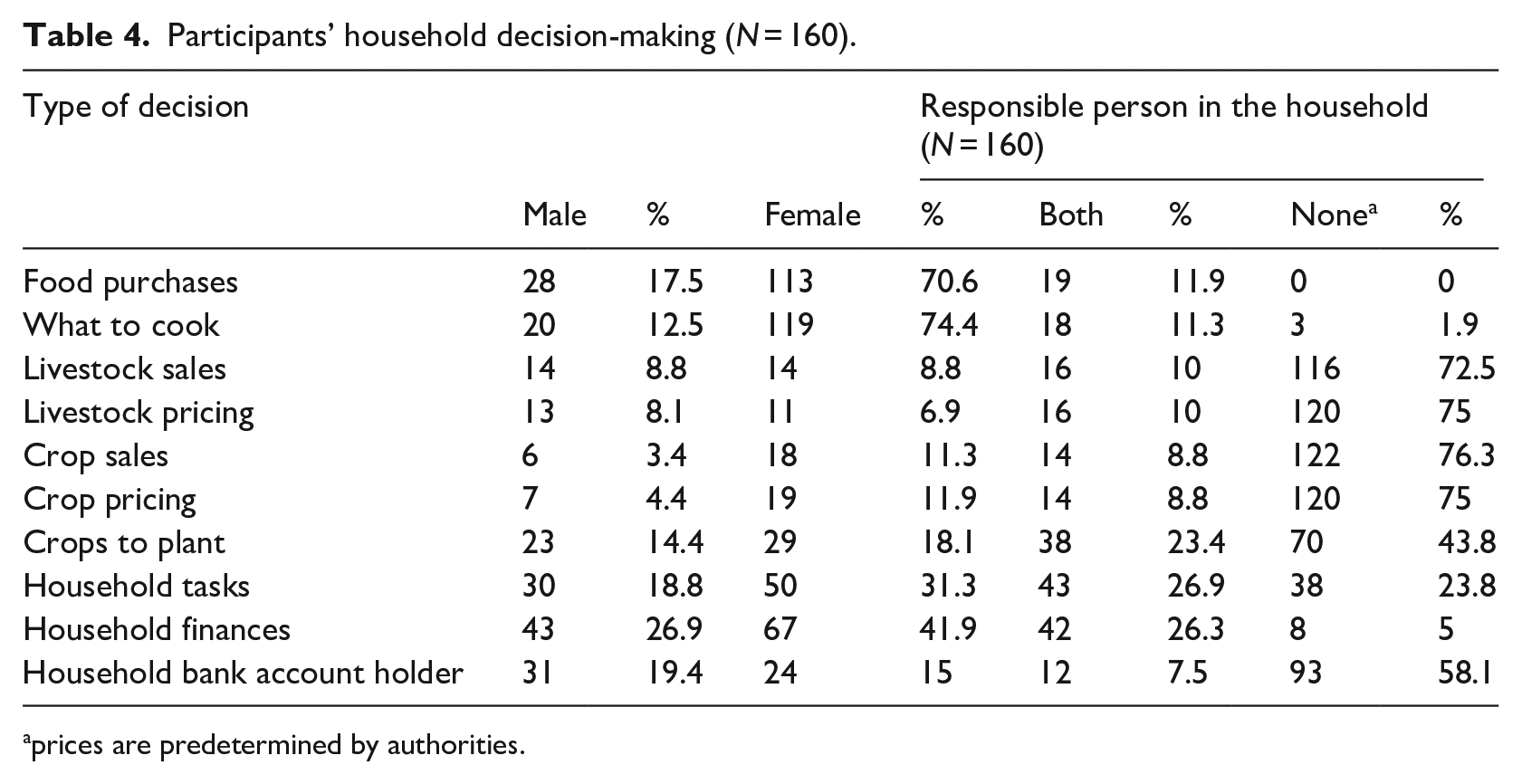
prices are predetermined by authorities.
The higher records of ‘None’ responses in Table 4 regarding livestock sales of 72% and livestock pricing of 75%, crop sales of 76.3%, and crop pricing of 75% were because the participants were not involved in the activities or were absent. The study also found that women made most of the decisions related to food use at the household level and that men controlled banking accounts. Women made most decisions ranging from livestock and crops sales to pricing and assigning household duties and others. Although most women did not control the household banking account, they had a say on how, when and what the finances were used for. A noticeable changing trend was observed concerning decision-making about livestock sales. This change was due to the diversification of activities. This implied that more women were engaged in income-generating farming activities such as establishing and improving livestock and poultry. Gender studies in Lesotho showed that livestock care and management used to be reserved for males.
The findings are in line with Oladele and Monkhei (2008) that show women’s positions in agriculture can be strengthened by giving them control of assets. Control of assets can increase their bargaining power, decision-making and family expenditure on essential issues like children’s education and health. Wanjala (2014) and Von Maltitz and Bahta (2021) reiterated that gender inequalities are due to limited interaction between legal rights and social norms, forming critical indicators of women’s empowerment.
The varying education, employment, age and earning power of household heads were similar to Nosheen et al. (2009). Women from developing countries in Asia and Africa were more involved in decisions related to family, farming, social and economic matters, but men were the main decision-makers. There were noticeable decision-making role changes regarding livestock sales, which used to be reserved for men and currently shared between men and women in the study area.
Conclusions and recommendations
Men and women play different roles to secure food for their families. The role of women was to produce, process and prepare food for their households in Maneo village. Feminization of agriculture was evident as women were household managers and food providers for their families, which made them key players in overcoming food insecurity at the household level. However, despite this, it was clear that food security depended on the gendered nature of the community in southern districts, particularly in Maneo village (study area). The study established that many factors contributed to imbalances regarding the roles played by men and women to secure food for their families during drought. Furthermore, the study established that household head age, marital status and education played a significant role in how people owned farmland and livestock, and made important decisions within the household.
The study showed that the majority of people living in Maneo village depended on seasonal livestock and crop farming jobs to sustain their livelihoods. The use of animal power was the most practised and affordable crop production means. Most household heads were men (62%) and 38% were women. Married and widowed household heads with 50% and 28% respectively, dominated participation in the study, suggesting that widowed women were more exposed to food insecurity and gender inequality than men. Food security studies indicated that widows, orphans, disabled and elderly people were classified as vulnerable groups.
Most households comprised four to six members with an average of five members per household. This was similar to the LVAC (2018) report on the average household size in Lesotho. Most household heads had a primary education, followed by no schooling, secondary and tertiary education. Economically active household heads were mostly unemployed and those working earned a monthly wage of between R101.00 and R1000.00 from self-employment, formal and informal employment. The number of women engaged in food security activities was higher than that of men. However, women’s rights were marginalized, as reflected by the ownership of household production assets like land, livestock and farming tools, which were mostly registered and controlled by men. Widowed women were the only group with registered assets. Many women reported ownership that forced them to seek male consent to gain control and use the assets.
The study also found that women made most of the decisions related to food use at the household level and that men controlled the means of production. Women made most decisions ranging from livestock and crops sales to pricing and assigning of household duties and others. Although most women did not control the household banking account, they had a say in how, when and what the finances were used for. A noticeable changing trend was observed concerning decision-making about livestock sales. Gender studies in Lesotho showed that livestock care and management used to be reserved for men.
Men dominated ownership of production assets such as land, tools and their use. For instance, they held larger acreage of farmland, and had most of the farming tools like tractors, ploughs and planters registered under their names. Women had limited rights to free use and control of land while men exercised complete rights and control. More men owned livestock than women for all types of livestock in the study area. The only women with registered assets were from widowed female household heads. The study observed asset ownership gave gender dominance and shared control between men and women living in Maneo village.
The following recommendations are made:
Within the context of the study, women play an important role in the agricultural sector; therefore, the government should encourage programmes that empower women in various aspects of land ownership, access to farm equipment (means of production), and decision-making in their day-to-day activities such as finance, purchase, sale and pricing of crops and livestock, agricultural management, and should form part of production decision-making.
Women should be sensitized to exercise their rights regarding entitlements and ownership of land, supported by the Land Act of 2010 (Government of Lesotho, 2010), which allows them to register land in their names. Men should be educated about these laws.
Programmes should be designed to train and capacitate both women and men to support women claim their rights regarding household assets or property.
There is a need to train women about developments related to gender, governance and human rights. Training can be done through government and non-governmental organizations working on social behaviour change that promote gender equality and equity. Legally registered organizations working with women and children like Lesotho Council of Non-government Organizations (LCN), Lesotho National Council of Women (LNCW), Lesotho National Women Parliamentary Caucus (LNWPC) and similar bodies, can advocate for women’s rights to be implemented at all levels of society.
Footnotes
Funding
The author(s) received no financial support for the research, authorship, and/or publication of this article.
