



Abstract
Despite the significant role of employee digital attitudes in influencing workplace digital change, research in this area remains fragmented and we lack a comprehensive understanding of the causes and effects of these attitudes. To bridge this gap, we propose an Integrated Digital Attitudes Framework (IDAF), which illustrates the multilevel contextual factors influencing, and the wider outcomes of, employee digital attitudes. Through a systematic review, we examine the current body of literature on the causes and effects of employee digital attitudes, assessing their alignment with IDAF. We also conceptualize employee digital attitudes into four main categories, laying the groundwork for future research. Our aim is to enhance the understanding and promotion of inclusive and sustainable digital change through the lens of IDAF, offering a comprehensive model to guide both academic research and digital implementation in organizational settings.
Employee Digital Attitudes: A Review and Framework for Future Research
Modern digital change is complex and far-reaching, involving a wide array of technological, organizational, and job shifts (Ancillai et al., 2023; Fréour et al., 2021). Its extensive and transformative nature necessitates considering digital change in conjunction with the broader organizational context (Dąbrowska et al., 2022; Kanitz & Gonzalez, 2021; Nadkarni & Prügl, 2021). Not only does this broader context influence the process of digital change, but the outcomes of the digital change process will also influence a wider array of outcomes beyond simply whether a technology is used or not (Hanelt et al., 2021; Verhoef et al., 2021). For instance, digital change has the potential to modify jobs, streamline processes, and restructure organizational hierarchies (Ancillai et al., 2023; Fréour et al., 2021). In this paper, we use “digital change” as an umbrella term that includes different forms of technological implementation, from digitalization to comprehensive digital transformation. This inclusive term recognizes the varied and interconnected nature of digital advancements that organizations experience today, while recognizing the increasing drive towards larger-scale digital change. Traditional digital change frameworks, such as the Technology Acceptance Model (TAM; Davis, 1989; Venkatesh & Bala, 2008), were developed to predict individual-level information technology adoption in the context of digitalization. While these models were valuable in earlier contexts of single technology implementations, they are increasingly limited in capturing the full spectrum of influences and outcomes that are crucial for modern digital change.
To address these limitations, we propose an Integrated Digital Attitudes Framework (IDAF) that synthesizes three key theoretical frameworks: Conservation of Resources (COR) theory (Hobfoll, 1989, 1998), the Job Demands-Resources (JD-R) model (Bakker & Demerouti, 2017; Demerouti et al., 2001), and TAM (Davis, 1989; Venkatesh & Bala, 2008). As shown in Figure 1, IDAF emphasizes that contextual resources at different organizational levels can promote employee digital attitudes, which can lead to engagement in digital change initiatives, technology acceptance or resistance, behavioral intentions towards technology, and job-related outcomes. Thus, IDAF recognizes the interconnectedness of technology, individual psychology, and the organizational context in modern digital change. It offers a comprehensive framework for understanding the relationships between diverse employee digital attitudes, contextual resources, and wider outcomes. The forthcoming sections elaborate on IDAF's theoretical foundations, drawing on a few illustrative examples from the literature. Following this, a systematic literature review is presented that examines the current body of literature on the causes and effects of employee digital attitudes, assessing their alignment with IDAF. The rationale for combining the development of a framework with a systematic review in this paper is grounded in the need for a more integrated understanding of employee digital attitudes, including their antecedents and effects. IDAF provides an initial framework for capturing the wide-ranging digital attitudes, and the full spectrum of influences and outcomes that are crucial for modern digital change. The systematic review then serves as a critical step in assessing how well current evidence aligns with IDAF, identifying both supported components and important gaps. This combination enhances the contribution of this paper by not only advancing theoretical integration but also providing a more strategic guide for future empirical research. To provide an up-to-date synthesis of the causes and effects of employee digital attitudes, we formulated three research questions:
(RQ1) What are the existing conceptualizations and operationalizations of employee digital attitudes? (RQ2) What are the outcomes of employee digital attitudes? (RQ3) What is known about the contextual resources that affect employee digital attitudes and their outcomes?
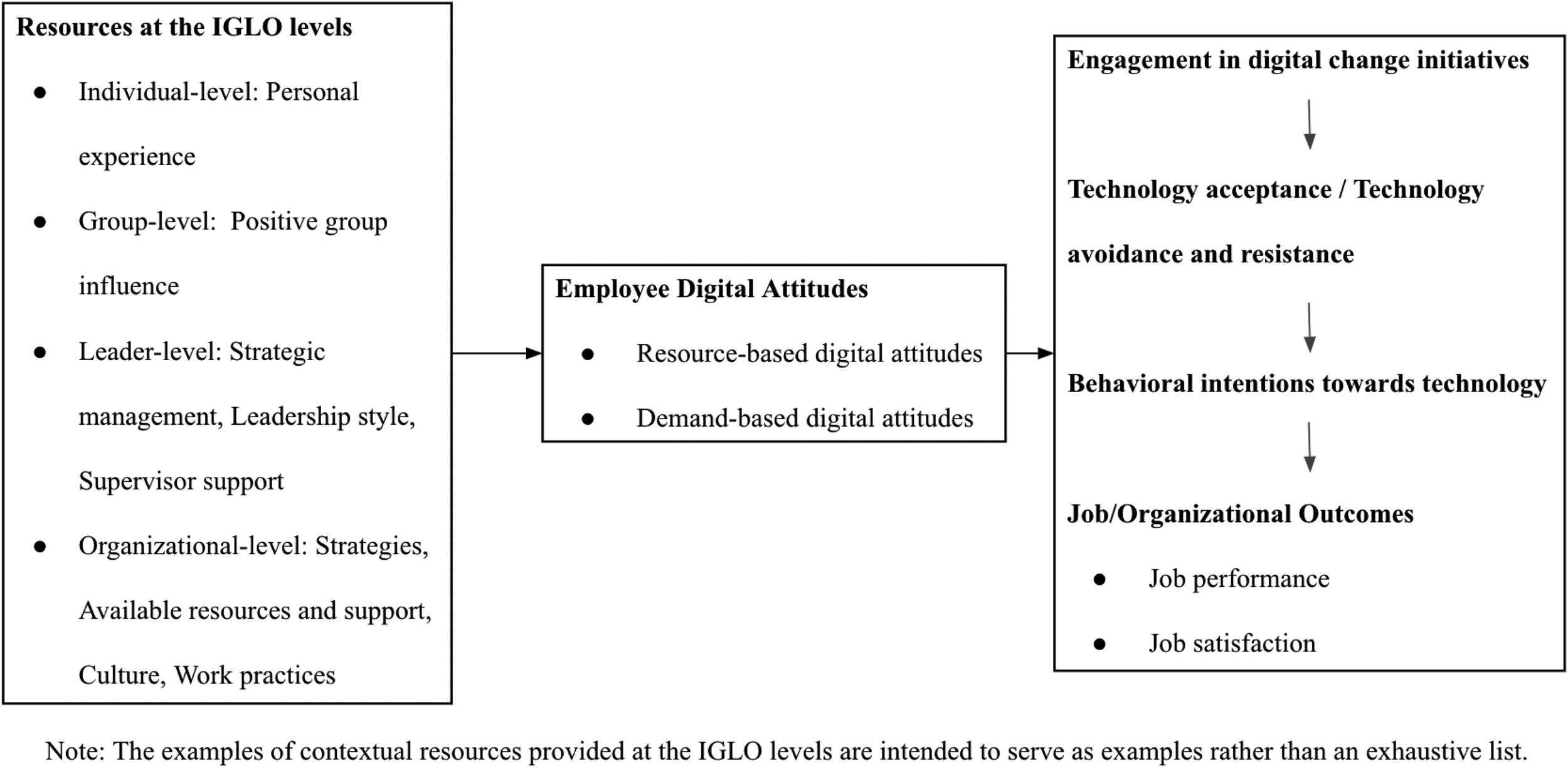
Integrated Digital Attitudes Framework (IDAF).
Technology Acceptance Model
The use of technology can provide new opportunities for organizations such as enhanced productivity and sustainability (Fatorachian & Kazemi, 2018). However, without positive digital attitudes for change, digital change efforts are likely to stall or under-deliver (Schneider & Sting, 2020; Solberg et al., 2020). In line with organizational studies highlighting the impact of employee attitudes on organizational change (e.g., Avey et al., 2008; Bouckenooghe, 2010; Hussain & Hafeez, 2008), negative employee digital attitudes such as perceived technology threats, fueled by fears of job loss, can lead to underutilization of technology, hindering the full potential of digital change (Craig et al., 2019). Additionally, a body of work has largely demonstrated that positive employee digital attitudes are crucial for technology acceptance and the likelihood of embracing technology and digital change (Ågnes, 2022; Di Pietro et al., 2014; Santini et al., 2019; Solberg et al., 2020).
The growing interest in digital attitudes has led to the exploration of various perspectives, from affective reactions to technology (Mohr & Kühl, 2021) to beliefs about personal growth (Solberg et al., 2020) and competence in learning technology (Chen & Zhou, 2021; Edison & Geissler, 2003). TAM research focuses on a limited subset of digital attitudes (e.g., computer self-efficacy and computer anxiety; Venkatesh & Bala, 2008), thereby limiting our understanding of how diverse employee digital attitudes impact digital change efforts and broader outcomes. To capture the full spectrum of employee attitudes to technology and digital change that are represented in the literature, we propose an extended definition of digital attitudes as “emotions, beliefs, and perceptions towards technology and digital change.” This definition includes a wider range of digital attitudes. To date, no study or review has provided a comprehensive analysis of the wide-ranging attitudes employees hold toward technology and digital change. The first aim of this literature review is to bridge this gap by synthesizing disparate perspectives, identifying key constructs that can guide future research, aiming to understand and leverage employee digital attitudes for facilitating digital change efforts. This inclusive approach allows the review to include studies that explore digital attitudes from different perspectives, offering a holistic view of how employee digital attitudes influence multifaceted digital change and wider workplace outcomes.
Digital attitudes have been linked to technology-related outcomes, such as technology acceptance, behavioral intention to use, and actual use of technology, as outlined in TAM (Venkatesh & Bala, 2008). However, TAM primarily focuses on immediate technology adoption and use, and does not explicitly consider longer-term and wider job and organizational outcomes. Given that modern digital change initiatives not only impact how technology is used but also reshape work and the wider organizational context (Hanelt et al., 2021; Heracleous & Gledhill, 2024; Verhoef et al., 2021), it is crucial to recognize the broader implications of digital change initiatives for employees and organizations. Drawing from the participatory intervention literature, we can illustrate how interventions bring about changes in outcomes (e.g., Nielsen & Abildgaard, 2013; Semmer, 2011). This literature proposes that through participation in an organizational intervention, employees are more likely to engage in intervention activities and accept the change that the intervention brings about (Nielsen & Randall, 2012). Drawing from this literature, we can infer that participation and engagement in an organizational intervention involving digital change is an important precursor to technology acceptance. Furthermore, according to Nielsen and Abildgaard's (2013) intervention evaluation approach, proximal and distal outcomes emerge at various stages of the change process. Applying this approach to digital change, we can infer that the immediate acceptance of technology and intention to use technology are proximal outcomes that occur early, while job performance and job satisfaction are distal outcomes that develop later. In digital change contexts, research has examined job outcomes, such as job performance and job satisfaction, as consequences of technology adaptation behaviors, including technology use and adoption (Bala & Venkatesh, 2016). This extended perspective highlights the chain effects of proximal and distal outcomes. Specifically, positive engagement in digital initiatives can enhance employees’ acceptance of technology and encourage their use of technology in their daily work (Rasmussen-Moseid & Botero, 2020; Solberg et al., 2020; Straatmann et al., 2023). As employees become more comfortable with the technology and use it consistently, these early positive outcomes set the foundation for subsequent distal outcomes. For instance, increased technology acceptance and use can improve job performance as employees gain proficiency and productivity with the technology (Bala & Venkatesh, 2016). Additionally, as employees experience the benefits of digital change, they are more likely to feel a greater sense of satisfaction with their jobs (Bala & Venkatesh, 2016). In line with TAM, we propose that employee engagement in digital initiatives not only boosts technology acceptance but also reduces resistance, ultimately influencing employees’ behavioral intentions and broader organizational outcomes.
Finally, while later versions of TAM acknowledge contextual factors, such as the opinions of others (subjective norms) and perceptions of available resources and support (external control beliefs), as predictors of technology acceptance (Venkatesh & Bala, 2008; Venkatesh & Davis, 2000; Venkatesh et al., 2003), TAM does not specify the organizational levels at which these influences occur, nor does it fully account for the multilevel organizational factors impacting employee digital attitudes and outcomes. A small number of digital change reviews have advanced our understanding of how diverse contextual factors influence digital transformation. While these reviews consider contextual factors, they focus on specific areas. Some reviews focus on factors such as transformative leadership, work environment, and company culture (Dąbrowska et al., 2022; Nadkarni & Prügl, 2021), while others take a socio-technical perspective, reviewing how technology impacts and is impacted by social factors within an organization (Hanelt et al., 2021; Verhoef et al., 2021). Despite these contributions, the literature has largely overlooked how a range of contextual factors at different organizational levels can shape employee digital attitudes and outcomes.
To address the limitations of existing literature in capturing the full spectrum of influences and outcomes of employee digital attitudes, we integrate broader psychological and organizational frameworks (COR and JD-R) with TAM into IDAF.
COR Theory and JD-R Model
IDAF recognizes the context in which employees are embedded as a key determinant of employee digital attitudes and the subsequent success of digital implementation and broader outcomes. Drawing upon COR theory and the JD-R model, we classify contextual features and digital attitudes as either demands or resources, providing a robust conceptual foundation for understanding their impact on digital change outcomes. Resources are defined as “anything perceived by the individual to help attain his or her goals’’ (Halbesleben et al., 2014, p.6). As well as resources, IDAF draws upon the JD-R model that includes demands, which are defined as aspects of work that require effort and therefore are associated with physical and psychological costs (Demerouti et al., 2001). Job resources are proposed to play a crucial role in a motivational process leading to positive job outcomes such as employee engagement, whereas job demands are involved in a health-impairment process, which leads to negative job outcomes such as exhaustion (Demerouti et al., 2001). COR theory highlights gain spirals, in which acquiring or investing in resources can lead to further resource gains for individuals (Hobfoll, 2001). For instance, providing employees with organizational support was found to enhance their personal resources, such as resilience—a psychological capability that enables employees to recover from adversity and effectively manage crises (Brunetto et al., 2023). These resource gains, in turn, enhanced employees’ work engagement (Brunetto et al., 2023). Similarly, transformational leadership has been found to reduce employees’ personal stressors, such as financial stress, anxiety, and workplace loneliness, thereby protecting employees from emotional exhaustion and work disengagement (Kloutsiniotis et al., 2022).
In line with COR and JD-R models, IDAF offers insights into how contextual resources and digital attitudes influence broader job or organizational outcomes. In the context of digital change, employees with more contextual resources to support their work goals are likely to develop more resource-based digital attitudes and experience motivational processes that lead to greater engagement with technology and work in general. For example, organizational support, such as training initiatives, can strengthen employees’ beliefs in their ability to use new technologies and shape their perceptions of the opportunities these technologies offer for personal growth and career advancement, which, in turn, foster greater technology use and enhanced job satisfaction and performance (Bala & Venkatesh, 2016).
To classify and order the contextual resources that may affect employee digital attitudes and digital change outcomes, we apply the individual, group, leader, organizational (IGLO) framework (Day & Nielsen, 2017; Nielsen et al., 2017, 2021). A meta-analysis by Nielsen et al. (2017) found that resources at these different organizational levels can be linked to performance and well-being outcomes and suggested that organizational interventions need to address these multiple levels. Achieving sustainable and inclusive digital change interventions requires coordinated resources across all levels to help employees navigate the change and enhance job outcomes (Dąbrowska et al., 2022; Nadkarni & Prügl, 2021). By integrating IGLO into IDAF, we can categorize contextual resources based on their source level, that is, whether the resources are inherent in the individual, reside within the social context such as the work group and team leader, or are afforded by the way work is organized, designed, and managed (at the organizational level). This structured approach captures the full spectrum of contextual factors, providing a comprehensive understanding of the drivers of employee digital attitudes.
The following systematic review examines existing research on the causes and effects of digital attitudes to determine consistency with IDAF. This review begins by systematically reviewing existing research on employee digital attitudes. This involves sifting through diverse perspectives on what constitutes digital attitudes. By synthesizing and categorizing these viewpoints, the aim is to create a more coherent and unified understanding of the digital attitudes that employees possess and that are important in the context of digital change. This foundation then allows for a systematic analysis of the relationships between these different digital attitudes and the factors influencing, and outcomes of, digital change initiatives. Such knowledge is important for designing targeted interventions that tailor contextual resources to address specific employee concerns and motivations regarding digital change (Jacob et al., 2020; Santini et al., 2019; Solberg et al., 2020).
Method
We searched four databases—ABI/INFORM, Academic Search Complete, Business Source Premier, and PsycInfo. These databases were chosen to ensure comprehensive coverage across the fields of business, management, economics, and psychology. We focused on peer-reviewed academic journals published in English between 2016 and 2024, aligning with the emergence of modern digital change inspired by Industry 4.0 (Schwab, 2016). The term Industry 4.0 gained widespread academic and practical recognition in 2016, following the publication of The Fourth Industrial Revolution by World Economic Forum Founder and Executive Professor Chairman Klaus Schwab. Industry 4.0 refers to the fourth industrial revolution, characterized by the integration of advanced digital technologies into manufacturing and industrial processes (Schwab, 2016). Given this milestone, we selected 2016 as the starting point for this systematic review to ensure the analysis captures the most relevant digital attitudes studies in the context of modern digital change.
We refined the initial search criteria and search terms through team consultations and by performing initial searches of the literature on digital attitudes. We started with the Solberg et al. (2020) paper as a key exemplar of the type of literature we aimed to explore, as it explicitly examined attitudes toward modern digital changes and explored a broad range of digital attitudes, aligning with the focus of our study. From this paper, we defined initial search terms on the interrelation between digital attitudes and technology acceptance. We also drew on the project team's experience of searching for literature in an occupational context, drawing on terms from previous systematic literature reviews. The initial searches were then used to identify other terms that were relevant and helped us take a more inclusive approach, given the multidisciplinary nature of the evidence base. We organized the final search terms according to the CIMO framework, referring to the Context in which the construct is examined, the construct of Interest, the Mechanisms through which the construct influences important outcomes, and the Outcomes of the construct (Denyer et al., 2008). First, to ensure that only articles related to the workplace context were selected, we limited the search focus by using the following keywords: Occupation*, Organization*, Organisation*, Work*, Job*, Business*, Enterprise, Industr*, Corporat*, Vocation*, or Employ*. Second, to limit the search to studies that dealt with digital change, we included the search terms Digital* or Technolog*. Third, as different digital attitudes could conceptually overlap in meaning or could be related theoretically, we sought to include an array of existing digital attitudes (Mindset*, Affinity, Attitude*, Reluctance, Technophobia, Competenc*, Self-efficacy, Self efficacy, Personal innovativeness, Learning goal orientation, Threat, Belief, Literacy, or Identity). Next, we further limited our search so that the focus was placed on specific mechanisms of technology use, with those being Adoption, Ease of use, Usefulness, Engagement, Acceptance, Resistance, Usage, Avoidance, Commitment. Finally, we also limited our search by including some search terms that were related to digital change in our initial searches of the literature (Transformation, Agil*, Cultur*, innovat*, Adapt*, Collaborat*, or Maturity).
We followed the Preferred Reporting Items for Systematic Reviews and Meta-Analysis (PRISMA; Tricco et al., 2018) for the study selection process (see Figure 2). Our search of these databases revealed 3,588 records in total.
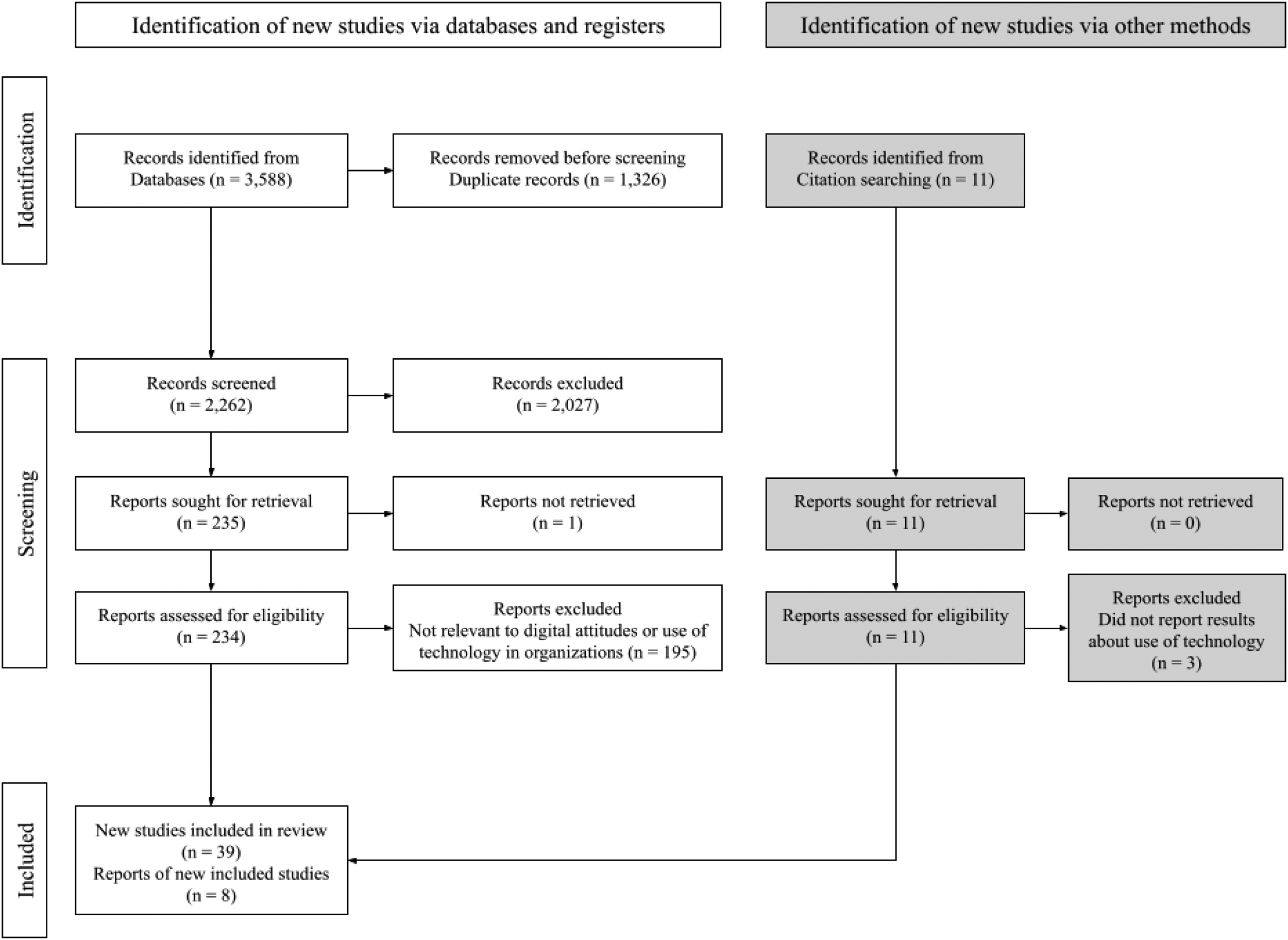
Preferred Reporting Items for Systematic Reviews and Meta-Analysis (PRISMA) Workflow Diagram.
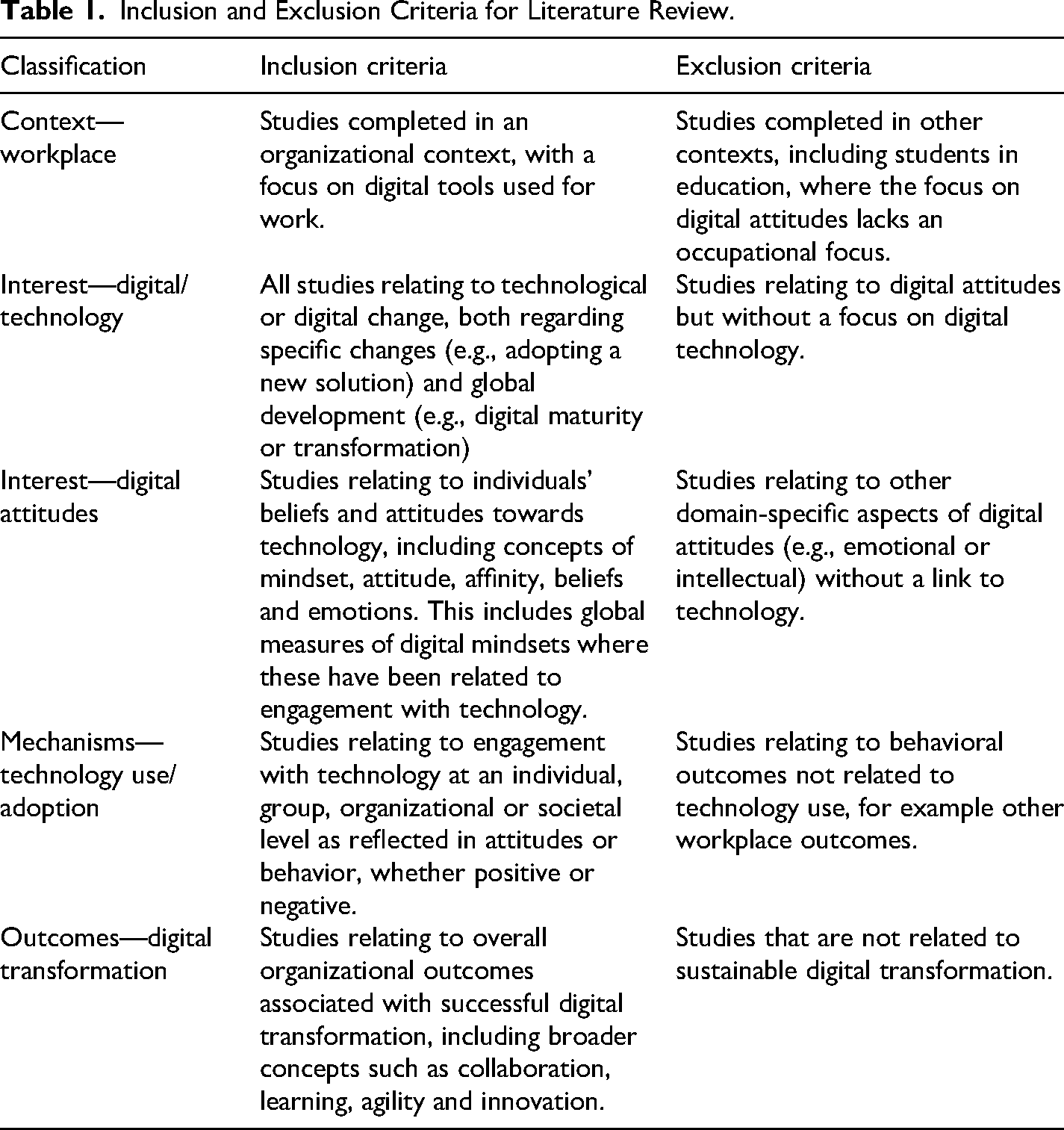
A research team member deduplicated 1,326 studies using the Zotero referencing software (Zotero, 2020). Two researchers conducted independent screening at each stage (title, abstract, and full text) to minimize bias (Rousseau, 2024) and agreement was assessed by comparing decisions and rationale to reach a consensus. The titles and abstracts of the remaining 2,262 articles were screened according to the inclusion and exclusion criteria outlined in Table 1. This initial screening reduced the selection to 234 articles, which were then subjected to a full-text review using the same criteria. After the full-text screening process, 39 articles were retained for inclusion. Additionally, 8 more articles were identified through hand searches and citation analysis, bringing the final number of articles included in the review to 47. Hand searching was a valuable supplement in the systematic review, enhancing comprehensiveness by identifying relevant studies missed in database searches due to variations in terminology (Hiebl, 2023; Kunisch et al., 2023). However, hand searching has limitations, including potential selection bias and the additional time required. To mitigate bias, two researchers independently assessed the relevance of hand-searched articles based on the predefined inclusion and exclusion criteria, reaching consensus through justification comparison for inclusion and the relevance to the overall research question.
Inclusion and Exclusion Criteria for Literature Review.
One author developed an extraction tool, in consultation with the wider research team, to guide the data recording process. Key details from each article were extracted and entered into a spreadsheet, then discussed with the author team to ensure clarity and consistency. The recorded information included study aims or hypotheses, country of data collection, industry, study design (e.g., cross-sectional, longitudinal, literature review), and data collection methods (e.g., survey, interview). Additional details on the study sample, theories used, measures employed, and their availability were also recorded. A summary of the findings, key recommendations, and limitations was recorded, with a discussion of how these limitations related to our study objectives. Finally, we recorded how digital attitudes were conceptualized, any implications for technology and organizational outcomes, and whether the study addressed contextual resources at the individual, group, leadership, and organizational levels (see Table 2). The interpretation of the findings was carried out by examining how the papers presented different digital attitudes, contextual resources, and outcomes. We synthesized the findings by aggregating the key findings from the various papers, organizing them into IDAF. We describe the nature of the studies that we extracted and synthesized in the following section.
Overview of Papers in the Review.

Note. IGLO represents Individual, Group, Leadership and Organizational-level factors; AI: artificial intelligence.
Results
To review the current body of knowledge on the causes and effects of digital attitudes to determine consistency with IDAF, we analyzed forty-seven studies. Within these studies, forty-one included a conceptualization and measure of digital attitudes. Thirty-two studies looked at the outcomes of digital attitudes. Thirty-one studies focused on contextual factors that influence digital attitudes and their outcomes.
Defining Digital Attitudes
In answer to RQ1, we found that forty-one studies conceptualized digital attitudes and developed or tested measurement scales for these attitudes. A key observation from the review was the overlap evident between different digital attitude constructs. The proliferation of similar concepts, as noted by Le et al. (2010), can hinder cumulative knowledge and theory development. From our synthesis, we grouped these digital attitudes into four main categories: Technology congruence (fifteen studies), learning and growth orientation (twenty-four studies), competence perception (nine studies), and technology apprehension (fourteen studies). These definitions and measures of digital attitudes focused on individual-level personal resources (or lack of resources) to capture the essence of digital attitudes (see Table 3).
Summary of Digital Attitudes Categories.
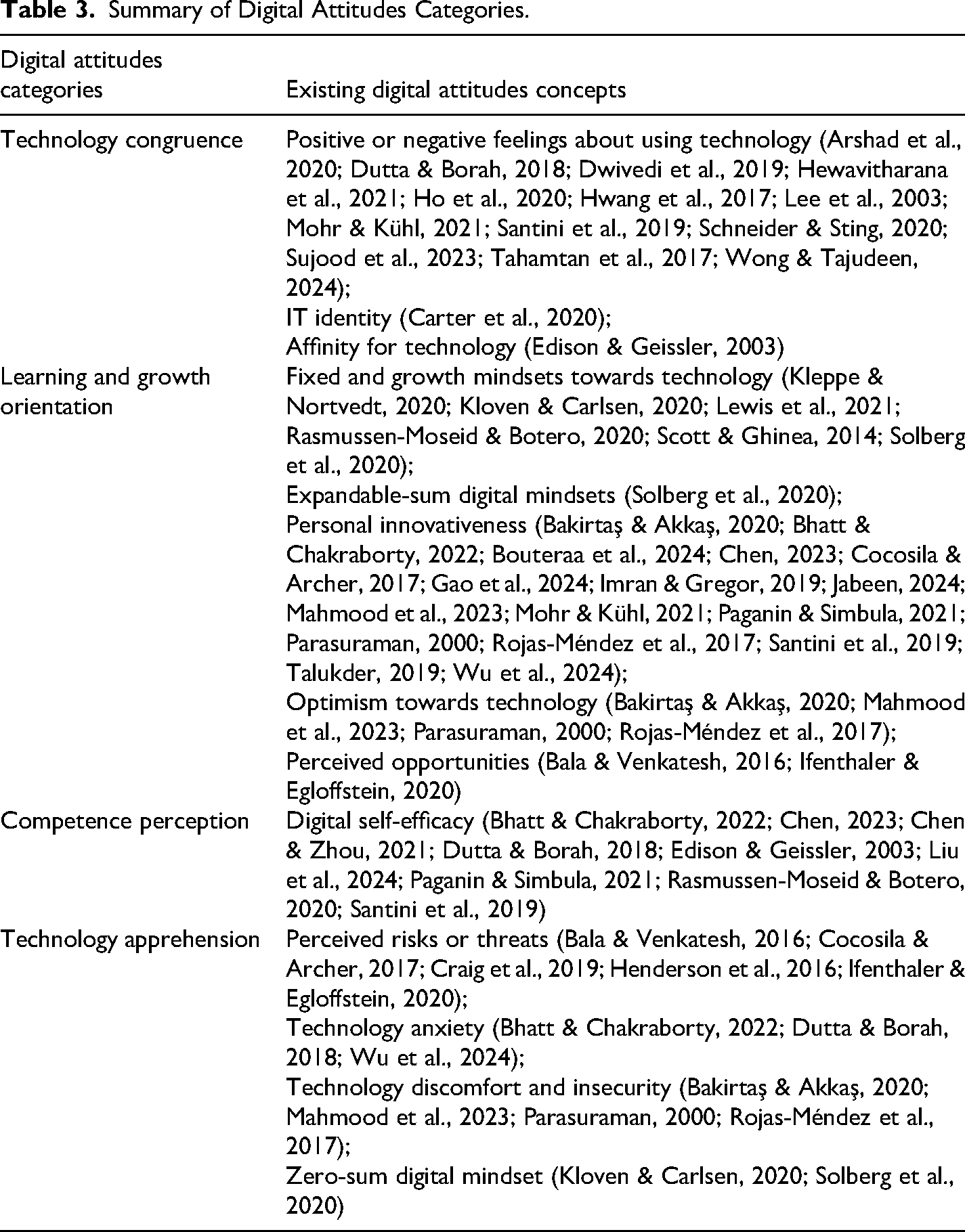
Technology Congruence: Technology congruence as a personal resource, was assessed by the way employees evaluate their overall affective reaction or connectedness to technology. Leveraging constructs from Davis (1993) and Venkatesh et al. (2003), technology congruence attitudes were defined and measured as an individual's positive feelings about using technology such as Information Systems (IS), Information Technology (IT), and Artificial Intelligence (AI) (Arshad et al., 2020; Dutta & Borah, 2018; Dwivedi et al., 2019; Hewavitharana et al., 2021; Ho et al., 2020; Hwang et al., 2017; Lee et al., 2003; Mohr & Kühl, 2021; Santini et al., 2019; Schneider & Sting, 2020; Sujood et al., 2023; Tahamtan et al., 2017; Wong & Tajudeen, 2024). IT identity (Carter et al., 2020) and Affinity for Technology (Edison & Geissler, 2003) also served as examples of attitudes within this category, capturing emotional responses (emotional energy, relatedness, and dependence) and positive affection to technology, respectively.
Learning and Growth Orientation: This resource-based digital attitude focused on how employees feel about their current technological abilities and their ability to learn new digital skills and benefit from digital advances. Within this category, fixed and growth mindsets towards technology, inspired by Dweck's (2008) scale, showed that individuals can have domain-specific (technology) mindsets (Kleppe & Nortvedt, 2020; Kloven & Carlsen, 2020; Lewis et al., 2021; Rasmussen-Moseid & Botero, 2020; Scott & Ghinea, 2014; Solberg et al., 2020). Fixed and growth digital mindsets referred to fundamental beliefs about the extent to which an employee feels their basic technological abilities can be changed (Solberg et al., 2020). This perspective was further expanded by integrating concepts from game theory (von Neumann & Morgenstern, 1944), measuring expandable-sum digital mindsets, which were beliefs that resources can be increased, indicating that gains are possible for all parties involved (Solberg et al., 2020). Moreover, personal innovativeness was aligned with learning and growth orientation, emphasizing individuals’ willingness to try out a new technology (Bakirtaş & Akkaş, 2020; Bhatt & Chakraborty, 2022; Bouteraa et al., 2024; Chen, 2023; Cocosila & Archer, 2017; Gao et al., 2024; Imran & Gregor, 2019; Jabeen, 2024; Mahmood et al., 2023; Mohr & Kühl, 2021; Paganin & Simbula, 2021; Parasuraman, 2000; Rojas-Méndez et al., 2017; Santini et al., 2019; Talukder, 2019; Wu et al., 2024). Optimism towards technology was measured as a form of learning and growth orientation (Bakirtaş & Akkaş, 2020; Mahmood et al., 2023; Parasuraman, 2000; Rojas-Méndez et al., 2017), reflecting a positive view of technology and a belief that it offers people increased control, flexibility, and efficiency in their lives. Similarly, a learning and growth orientation attitude was operationalized as capturing employees’ expectations of technology to provide opportunities such as economic and societal growth as well as professional development (Bala & Venkatesh, 2016; Ifenthaler & Egloffstein, 2020).
Competence Perception: Competence perception as a personal resource was another way that digital attitudes were conceptualized, addressing beliefs about ability to perform using technology and to overcome obstacles during digital change. Digital self-efficacy was seen as a competence perception that refers to an employee's beliefs about their capability to effectively use technology and of being able to control challenging demands during digital change (Bhatt & Chakraborty, 2022; Chen, 2023; Chen & Zhou, 2021; Dutta & Borah, 2018; Edison & Geissler, 2003; Liu et al., 2024; Paganin & Simbula, 2021; Rasmussen-Moseid & Botero, 2020; Santini et al., 2019). Self-efficacy was the only competence perception construct we found in our review.
Technology Apprehension: Technology apprehension as a personal demand was conceptualized as a digital attitude. Whether defined and measured as perceived risks or threats (Bala & Venkatesh, 2016; Cocosila & Archer, 2017; Craig et al., 2019; Henderson et al., 2016; Ifenthaler & Egloffstein, 2020), anxiety (Bhatt & Chakraborty, 2022; Dutta & Borah, 2018; Wu et al., 2024), discomfort and insecurity (Bakirtaş & Akkaş, 2020; Mahmood et al., 2023; Parasuraman, 2000; Rojas-Méndez et al., 2017), this apprehension reflected individuals’ reservations towards technology. A zero-sum digital mindset was considered as a technology apprehension concept (Kloven & Carlsen, 2020; Solberg et al., 2020), as it emphasized individual concerns about organizational resource allocation and potential resource losses in the face of digital change.
In conclusion, this review identified four distinct digital attitude categories—technology congruence, learning and growth orientation, competence perception, and technology apprehension—which illuminated the challenges and opportunities that employees encounter when adopting technology in digital change contexts.
Outcomes of Digital Attitudes
In answer to RQ2, we found that thirty-two studies explored the impact of digital attitudes on different outcomes. Most of these studies reported the importance of digital attitudes on understanding technology-related outcomes such as engagement in or commitment to digital change initiatives (four studies), technology acceptance or technology avoidance and resistance (eleven studies), and behavioral intentions towards using technology (seventeen studies). Only one study investigated the influence of digital attitudes on broader job or organizational outcomes.
Engagement in or Commitment to Digital Change Initiatives: Engagement in, or withdrawal from, digital change initiatives was investigated as an outcome of two digital attitude categories: Learning and growth orientation and competence perceptions. A positive learning and growth orientation, such as a growth mindset or expandable-sum mindset, increased the extent to which employees engaged in digital change initiatives (Solberg et al., 2020). Similarly, employees’ perceptions of competence (digital self-efficacy) and fixed digital mindsets were related to their engagement in digital change initiatives (Rasmussen-Moseid & Botero, 2020). A further two studies explored the impact of learning and growth orientation on outcomes relating to commitment to technological change within organizations such as change readiness and affective commitment. Change readiness was defined as an individual's “beliefs, attitudes and intentions regarding the extent to which changes are needed and the organization's capacity to successfully undertake those changes” (Armenakis et al., 1993, p. 681), whereas affective commitment to change was seen as “a desire to provide support for the change based on a belief in its inherent benefits” (Herscovitch & Meyer, 2002, p. 475). A growth mindset was positively related to readiness for digital change (Kloven & Carlsen, 2020) and a fixed mindset was negatively related to affective commitment towards change (Kleppe & Nortvedt, 2020).
Technology Acceptance or Technology Resistance and Avoidance: Technology acceptance was examined as an outcome influenced by all four digital attitude categories. Technology acceptance was identified by measuring perceived usefulness and perceived ease of use in these studies (see Davis, 1989). Technology congruence attitudes (positive affective reactions to technology) emerged as facilitators of employee technology acceptance (Dutta & Borah, 2018; Lee et al., 2003), while technology apprehension attitudes (such as perceived threats) exhibited adverse effects, dampening technology acceptance (Dutta & Borah, 2018; Henderson et al., 2016). Furthermore, growth-oriented digital attitudes, characterized by personal innovativeness and optimism, fostered enhanced technology acceptance (Bakirtaş & Akkaş, 2020; Cocosila & Archer, 2017; Mohr & Kühl, 2021; Santini et al., 2019; Talukder, 2019). Additionally, perceptions of higher competence (digital self-efficacy) correlated positively with technology acceptance (Chen & Zhou, 2021; Dutta & Borah, 2018; Paganin & Simbula, 2021; Santini et al., 2019). However, responses to technology were not solely characterized by its acceptance. One study also identified technology resistance and avoidance behaviors, which were influenced by technology apprehension. High perceived threats were found to increase resistance to IT (Craig et al., 2019).
Behavioral Intentions towards Technology: Employees’ behavioral intentions towards technology was another key outcome related to all four digital attitude categories. Employees’ behavioral intentions included the likelihood that a person would adopt, explore, or use a technology (Davis, 1989; Venkatesh et al., 2003). Personal innovativeness (Bhatt & Chakraborty, 2022; Bouteraa et al., 2024; Chen, 2023; Gao et al., 2024; Imran & Gregor, 2019; Jabeen, 2024; Mahmood et al. 2023; Paganin & Simbula, 2021; Wu et al., 2024) and perceived opportunity (Bala & Venkatesh, 2016) were found to increase intentions towards using technology, underscoring the role of learning and growth orientation attitudes in fostering proactive engagement with technology. Competence perceptions/self-efficacy (Bhatt & Chakraborty, 2022; Chen, 2023; Liu et al., 2024) and technology congruence (Carter et al., 2020; Dwivedi et al., 2019; Sujood et al., 2023; Tahamtan et al., 2017; Wong & Tajudeen, 2024) were resource-based attitudes that also positively influenced intention to use technology. Conversely, technology apprehension, characterized by perceived threats, was seen as a job demand, negatively affecting technology use (Henderson et al., 2016; Mahmood et al., 2023; Wu et al., 2024), technology adaptation and adoption behaviors (Bala & Venkatesh, 2016; Bhatt & Chakraborty, 2022).
Job or Organizational Outcomes: The relationship between digital attitudes and outcomes is likely to extend beyond technology acceptance or use in modern digital change initiatives. Bala and Venkatesh's (2016) theoretical framework proposed indirect effects from two digital attitude categories (learning and growth orientation and technology apprehension) on job performance and satisfaction (via exploration or exploitation behaviors), however these indirect effects were not formally tested.
On examining the findings related to digital attitudes and outcomes in our review, we found that, except for one study that theoretically examined the impact of two digital attitude categories (learning and growth orientation, and technology apprehension) on broader job outcomes related to digital change, there was a predominant focus of digital attitude studies on the narrow relationship between one or two types of digital attitudes and outcomes related to technology acceptance, adoption, and use. Upon synthesizing the findings related to employee digital attitudes, we noted a consistent association between employee attitudes rooted in learning and growth orientation and all outcome types (technology-related and job outcomes). This highlighted the pivotal role of fostering a positive orientation towards learning and growth in navigating digital change effectively within organizations. Additionally, employee competence perceptions were found to correlate with technology-related outcomes. Moreover, the other two digital attitude categories showed relationships with employees’ technology acceptance and their behavioral intentions towards technology.
Contextual Resources, Digital Attitudes, and Outcomes
In answer to RQ2, we found that thirty-one studies in our review explored how contextual factors at different organizational levels influenced employee digital attitudes and their outcomes. These studies also revealed that contextual resources directly influenced technology-related outcomes. To systematically analyze these diverse contextual resources, we employed the IGLO framework (Day & Nielsen, 2017; Nielsen et al., 2017, 2021). This framework offered a valuable lens for understanding how various organizational elements, from individual differences and group influence to leadership and organizational support, could contribute to shaping employee responses to digital change and various change outcomes.
Individual-level Factors: Nine studies explored the impact of individual factors on employee digital attitudes and their outcomes. Personal experience was an important individual factor, with past positive experiences promoting technology congruence attitudes (Tahamtan et al., 2017) and enhancing technology acceptance (Dutta & Borah, 2018). Age and gender influenced the four digital attitudes categories (Bakirtaş & Akkaş, 2020; Edison & Geissler, 2003; Rojas-Méndez et al., 2017), technology acceptance (Dutta & Borah, 2018), and behavioral intention to use technology (Paganin & Simbula, 2021), although the results were mixed. While one study (Bakirtaş & Akkaş, 2020) found no significant age effect, another two studies (Edison & Geissler, 2003; Rojas-Méndez et al., 2017) reported that younger people had more positive digital attitudes (higher competence perception, higher learning and growth orientations, higher technology congruence, and lower technology apprehension). Other individual factors such as perceived behavioral control (i.e., the perceived ease or difficulty of performing a behavior, Mohr & Kühl, 2021) and personality types (openness to experience, conscientiousness, extraversion, agreeableness, and emotional stability, Ramírez-Correa et al., 2019) were related to technology acceptance and behavioral intentions towards technology at work. Goal orientation (a motivational orientation that influences how individuals approach, interpret, and respond to achievement situations) was also a key individual factor for employees’ behavioral intentions towards use of technology (Guo et al., 2019). To summarize, except for four studies that explored the influence of individual factors on digital attitudes, the majority of studies focused on the direct impact of individual factors on technology-related outcomes.
Group-level Factors: Thirteen studies investigated the impact of group factors on employee digital attitudes and technology-related outcomes. Social influence emerged as a significant factor influencing technology congruence attitudes (Dwivedi et al., 2019), technology apprehension attitudes (Wu et al., 2024), technology acceptance (Cocosila & Archer, 2017; Dutta & Borah, 2018; Santini et al., 2019) and behavioral intention to use technology (Bouteraa et al., 2024; Carter et al., 2020; Chen, 2023; Dwivedi et al., 2019; Ramírez-Correa et al., 2019; Wu et al., 2024). Social influence is defined as the extent to which the views of important others such as peers and leaders sway an individual's acceptance and use decisions (Venkatesh et al., 2003). A similar group influence concept, subjective norms (perceived pressures from group members to perform a given behavior) was found to relate to the extent to which individuals use or avoid technology (Hewavitharana et al., 2021; Rasmussen-Moseid & Botero, 2020; Sujood et al., 2023). Moreover, group facilitators such as coordination and collaboration between health care professionals were identified as crucial for fostering intentions towards adopting and using technology (Jacob et al., 2020). In conclusion, these studies primarily examined the direct influence of group dynamics on technology-related outcomes, and only two findings explored the direct impact of group dynamics on digital attitudes.
Leadership-level Factors: Seven studies highlighted leadership factors as important for employee digital attitudes and technology-related outcomes. Management support positively affected technology acceptance (Chen & Zhou, 2021) and technology use (Gao et al., 2024; Hwang et al., 2017). Transformational leadership was found to foster adaptive culture and e-business adoption in large manufacturing firms (Alos-Simo et al., 2017). This suggested that transformational leadership can be considered as a nurturing resource, which motivated employees to be highly engaged in their work during digital change. Moreover, clear communication channels and feedback mechanisms between leaders and employees were highlighted as crucial elements in fostering effective technology implementation (Toves et al., 2016). Through interactive information-sharing sessions and human-oriented support, leaders were found to facilitate the use of technology (Andersen, 2016). The leader's role extended further into creating environments conducive to innovation as well as into encouraging employees with low involvement to participate in technology change because employees who perceived higher management support were found to have higher perceived technology opportunities and lower perceived technology threats (Bala & Venkatesh, 2016). To summarize, while one study investigated the impact of leadership support on learning and growth orientation and technology apprehension attitudes, the majority of studies focused on its direct influence on technology-related outcomes.
Organizational-level Factors: Eighteen studies investigated how organizational factors affected employee digital attitudes and outcomes. Organizational and technical resource availability were considered key drivers of digital attitudes and technology-related outcomes. Studies found that when employees perceived high availability of organizational and technical support, they experienced increased technology congruence (Dwivedi et al., 2019), technology acceptance (Cocosila & Archer, 2017; Dutta & Borah, 2018; Paganin & Simbula, 2021; Santini et al., 2019; Talukder, 2019; Toves et al., 2016), and behavioral intentions towards using technology (Bouteraa et al., 2024; Dwivedi et al., 2019; Hewavitharana et al., 2021; Jabeen, 2024; Ramírez-Correa et al., 2019; Wu et al., 2024). Providing professional training and education was found to increase learning and growth orientation (perceived opportunity, Bala & Venkatesh, 2016), and decrease technology apprehension (perceived threats, Bala & Venkatesh, 2016). Technology training provided by the organization was also found to increase employee technology competence (digital self-efficacy) and to subsequently increase their technology use (Liu et al., 2024).
Four studies explored organizational culture as an important organizational resource that affected employee digital attitudes and their outcomes. Different types of organizational cultures and climates have been investigated within the literature on digital attitudes, including performance climate (one study), innovation climate (two studies), autonomy climate (one study), and adaptive culture (one study). A performance climate, characterized by organizational egocentric motivation and results-orientation (Nerstad et al., 2018), was positively associated with technology apprehension attitudes such as zero-sum digital mindset (Kloven & Carlsen, 2020). In contrast, an innovation climate (Guo et al., 2019; Jacob et al., 2020), which fosters innovative behavior (Bock et al., 2005; Durcikova & Fadel, 2016), and an autonomy climate (Guo et al., 2019), which emphasizes employee self-determination in work procedures and goals (Durcikova et al., 2011), were both linked to greater behavioral intentions for innovative technology use. Additionally, an adaptive culture, which continuously adjusts to change by promoting values of adoption and proactive engagement, was found to positively influence behavioral intentions, such as e-business adoption (Alos-Simo et al., 2017). Overall, the findings suggest that supportive organizational cultures that prioritize learning, development, and adaptability create a more conducive environment for technology implementation than a performance climate. In these supportive cultures, employees are more likely to increase behavioral intentions toward technology adoption. To summarize, while four studies found that organizational resources had an impact on the four digital attitude categories, the remaining studies focused on how organizational factors directly influenced technology-related outcomes.
Discussion and Avenues for Future Research
Through a systematic literature review, we synthesized existing research on employee digital attitudes to assess the support for the proposed IDAF. This section will discuss areas where IDAF finds strong empirical backing and will identify areas for further research. We will start with an overview of employee digital attitudes, followed by a discussion of the framework's core components, including both the consequences (effects) and underlying influences (antecedents) of these attitudes.
Digital Attitude Categories
To initiate our evaluation of the support for IDAF, we first sought to clarify the diverse spectrum of technology-related emotions, beliefs, and perceptions that collectively constitute employees’ digital attitudes. In answer to RQ1, we synthesized diverse perspectives and categorized digital attitudes into four main groups: Technology congruence, learning and growth orientation, competence perception, and technology apprehension. While our review attempts to distinguish between these concepts, it is likely that these attitudes are not mutually exclusive. Eighteen studies (Bakirtaş & Akkaş, 2020; Bala & Venkatesh, 2016; Bhatt & Chakraborty, 2022; Chen, 2023; Cocosila & Archer, 2017; Dutta & Borah, 2018; Edison & Geissler, 2003; Ifenthaler & Egloffstein, 2020; Kloven & Carlsen, 2020; Mahmood et al., 2023; Mohr & Kühl, 2021; Paganin & Simbula, 2021; Parasuraman, 2000; Rasmussen-Moseid & Botero, 2020; Rojas-Méndez et al., 2017; Santini et al., 2019; Solberg et al., 2020; Wu et al., 2024) in our review indicated that employees often hold mixed emotions, beliefs, and perceptions about technology simultaneously, and combinations of these digital attitudes predicted responses to technology and digital change. However, existing digital attitude studies predominantly focused on one or two categories of employee digital attitudes, offering limited insights into the full spectrum of digital attitudes. A holistic understanding of all categories of employee digital attitudes is essential for navigating the complexities of modern digital change and achieving favorable outcomes. This aligns with research in organizational change, which highlights the value of adopting a multidimensional view of employee attitudes—including ambivalence—toward organizational change to more accurately predict their behaviors (Oreg & Sverdlik, 2011; Piderit, 2000). Such holistic understanding helps to identify interventions that can support employees and facilitate digital change effectively. Our synthesis of resource-based and demand-based digital attitudes can contribute to developing a comprehensive conceptualization of digital attitudes. This, in turn, can facilitate the creation of a measurement instrument that delineates the unique and combined contributions of these distinct digital attitudes, offering broader utility than a single measure alone. Such an instrument should also incorporate a range of contextual factors that influence various emotions, perceptions, and beliefs about technology and digital change.
Moreover, further research is needed to untangle the relationships between these digital attitudes and to understand their specific effects on digital change. For example, future studies could investigate whether employees who perceive themselves as competent technology users (within the competence perception category) experience reduced technology anxiety. This perception of competence might mitigate fears of failure or frustration with technology (within the technology apprehension category). Understanding these interrelationships can provide insights into how different digital attitudes influence employees’ responses to technology acceptance and adoption.
Integrated Digital Attitudes Framework
IDAF offers a unified perspective to comprehend the impact employee digital attitudes have on digital change efforts and broader outcomes (effects), and the contextual factors that influence employee digital attitudes and outcomes (antecedents). While existing research supports aspects of IDAF, the current literature offers limited insight into the multilevel causes and broader effects of employee digital attitudes.
Effects of Digital Attitudes: In answering RQ2, this review highlights that existing studies have predominantly focused on the technology-related outcomes associated with different digital attitude categories. Most research has examined the relationship between one or two digital attitude categories and the acceptance, adoption, and use of specific technologies. The positive impact of resource-based digital attitudes (technology congruence, learning and growth orientation, and competence perceptions) on technology acceptance reinforces the idea that employees’ positive digital attitudes can be seen as personal resources that help to minimize the barriers towards adopting technology. Notably, only one study considered the broader organizational impacts of digital attitudes on job satisfaction and job performance, although it did not test the direct relationship between the two digital attitude categories (learning and growth orientation, and technology apprehension) and the two job outcomes (Bala & Venkatesh, 2016). In the context of modern digital change, where technology increasingly affects job roles and organizational processes (Hanelt et al., 2021; Verhoef et al., 2021), it is important that future studies set out to measure and understand these broader job or organizational outcomes. Technology-related outcomes alone cannot serve as the endpoint of digital change, given its extensive impact on employees and organizations. By assessing and analyzing technology-related outcomes and broader outcomes comprehensively, deeper insights can be gained into the effect of employee digital attitudes on digital change and the organization. This understanding can inform strategies for managing digital change more inclusively and sustainably, optimizing workforce engagement, and fostering a culture of innovation and adaptation within the organization (Verhoef et al., 2021).
Furthermore, our synthesis of employee digital attitudes and their effects revealed that, with one exception (consistent association between employee attitudes rooted in learning and growth orientation and all outcomes), each digital attitude category influences a subset of employee behavior and outcomes. Employee competence perceptions were found to correlate with all technology-related outcomes (Bhatt & Chakraborty, 2022; Chen, 2023; Chen & Zhou, 2021; Dutta & Borah, 2018; Liu et al., 2024; Paganin & Simbula, 2021; Rasmussen-Moseid & Botero, 2020; Santini et al., 2019). The two other digital attitude categories (technology congruence and technology apprehension) were related to technology acceptance (Dutta & Borah, 2018; Henderson et al., 2016; Lee et al., 2003) and employees’ behavioral intentions regarding technology (Bala & Venkatesh, 2016; Bhatt & Chakraborty, 2022; Carter et al., 2020; Dwivedi et al., 2019; Henderson et al., 2016; Mahmood et al., 2023; Sujood et al., 2023; Tahamtan et al., 2017; Wong & Tajudeen, 2024; Wu et al., 2024). Technology apprehension was also proposed to be related to job outcomes (Bala & Venkatesh, 2016). Future research can further investigate the unique impacts of each category of digital attitude on digital change outcomes. By understanding the “why” behind employee reactions, organizations can develop strategies that not only mitigate negative impacts but also leverage positive attitudes to create an engaging digital change.
Antecedents of Digital Attitudes: In answer to RQ3, we synthesized contextual resources at the IGLO levels that influence digital attitudes and their outcomes. While contextual resources were mostly examined in relation to technology-related outcomes rather than with employee digital attitudes directly, some effects of contextual resources on attitudes have been supported by the literature. Individual-level resources were found to be related to the four digital attitudes categories (Bakirtaş & Akkaş, 2020; Edison & Geissler, 2003; Rojas-Méndez et al., 2017; Tahamtan et al., 2017). Group-level resources such as group influence, were found to be related to technology congruence attitudes (Dwivedi et al., 2019) and technology apprehension attitudes (Wu et al., 2024). Leader behaviors were related to learning and growth orientation and technology apprehension attitudes amongst employees (Bala & Venkatesh, 2016). Finally, our review highlights the important role of organizational-level resources in influencing different categories of digital attitudes (Bala & Venkatesh, 2016; Dwivedi et al., 2019; Kloven & Carlsen, 2020; Liu et al., 2024). These findings underscore the importance of investment in IGLO-level resources and the creation of an enabling environment to foster positive digital attitudes among employees. Such IGLO-level resources also lead to significant improvements in technology-related outcomes, including higher technology acceptance and adoption rates (Chen & Zhou, 2021; Cocosila & Archer, 2017; Dutta & Borah, 2018; Santini et al., 2019). Furthermore, although existing research in our review only examined the effect of one or two contextual factors in isolation, the logic of IDAF, aligned with COR, suggests that the cumulative impact of multiple contextual resource gains or losses will be stronger than the effect of a single resource. This cumulative perspective recognizes that resources at the IGLO levels are interrelated and can amplify each other's effects. Guided by the framework, research can test and model how IGLO contextual resources work simultaneously in promoting positive digital attitudes and facilitating digital change initiatives. Researchers can capture the interplay between resources at different levels and their combined impact on digital attitudes and outcomes. Clearly identifying these conditions in IDAF can help individuals and organizations better utilize resources to promote positive digital attitudes and outcomes related to digital change.
Mediation Effects of Digital Attitudes: The current body of literature tends to focus on only a small subset of IDAF. Most studies examine direct relationships (e.g., the impact of digital attitudes on technology-related outcomes) without considering the broader interplay between multiple factors within IDAF. This limited scope leaves gaps in our understanding of how these relationships operate within the broader context of digital change. Therefore, there is a pressing need for further research that investigates IDAF fully. Modern digital change is a complex, multifaceted process that involves numerous factors and their interactions (Dąbrowska et al., 2022; Kanitz & Gonzalez, 2021; Nadkarni & Prügl, 2021). By expanding the scope of digital attitudes research to include a more comprehensive array of their relationships with contextual resources at different organizational levels and wider outcomes, future research can develop a deeper and more holistic understanding of the system of influences and outcomes that are crucial for modern digital change. This broader perspective will help to capture the complexity and interdependencies that are inherent in digital change processes, thereby providing more robust insights and guidance for organizations embarking on these initiatives. IDAF can guide future research that focuses on understanding antecedents and effects of digital attitudes. Researchers can conduct thorough examinations of IDAF to capture the intricate relationships between digital attitudes, contextual resources, and various outcomes to gain a more comprehensive understanding of expansive digital change. This will involve looking beyond isolated factors and relationships to explore the dynamic interplay of multiple elements within the framework.
Contextual Resources and Outcomes
The dominant logic in IDAF posits that multilevel contextual resources influence employee digital attitudes, which in turn influence technology outcomes and wider job and organizational outcomes. Future research can take this expansive approach to fully capture the relationships of influences and outcomes of digital attitudes within IDAF. This comprehensive perspective is essential for effectively managing and optimizing digital change initiatives. However, consistent with later versions of TAM and several of the studies within our review, the IGLO contextual factors may also act as direct predictors of technology-related outcomes (Chen & Zhou, 2021; Cocosila & Archer, 2017; Dutta & Borah, 2018; Santini et al., 2019). For instance, even if employees do not have positive attitudes towards a technology, but important others within their organizational context think they should use it and provide influence and support for them to do so, then they will use it anyway (Venkatesh & Davis, 2000). However, this raises the question of how sustainable such technology outcomes are if the adoption is reluctant. Moreover, broader job and organizational outcomes, such as job satisfaction and performance, are unlikely to improve in the context of digital change if digital attitudes are negative (Bala & Venkatesh, 2016; Elias et al., 2011; Igbaria & Tan, 1997), particularly if technology use is a substantial part of the work. For more inclusive and sustainable change to be achieved, organizations need to employ a participatory approach (Nielsen & Abildgaard, 2013; Nielsen & Randall, 2012) and ensure that the implementation of technology is undertaken within a context that aims to promote and enhance resource-based digital attitudes. Engaging with technology in this way positively influences employees’ work experiences (Di Pietro et al., 2014; Giovanni Mariani et al., 2013; Jelinek et al., 2006
Future research can examine different pathways to determine whether there is full mediation (digital attitudes completely explain the influence of IGLO factors on outcomes), partial mediation (attitudes explain some of the influence), or no mediation (IGLO factors directly impact outcomes regardless of attitudes). To thoroughly understand these pathways, future research can employ longitudinal designs to track variables over time in digital change contexts. Ethical considerations for such studies include ensuring informed consent, maintaining participant confidentiality, and minimizing biases in data collection and interpretation. Observing these relationships over extended periods can reveal whether and how: (1) digital attitudes mediate the effects of IGLO factors on digital outcomes; (2) both digital attitudes and IGLO factors’ influence evolves over time; and (3) changes in digital attitudes lead to the chain effects on outcomes due to IGLO factor interventions. This would offer valuable insights for leveraging IGLO factors and digital attitudes to facilitate inclusive and sustainable digital change.
Practical Implications
A practical implication of IDAF is that organizations can use this framework to guide their consideration of targeted interventions at IGLO levels to promote positive employee digital attitudes and outcomes, thereby fostering sustainable and inclusive digital change. A holistic understanding of all categories of employee digital attitudes is essential for organizations to effectively support their employees in digital change contexts. This comprehensive understanding enables the identification of tailored interventions that address the specific needs and concerns of employees. This may involve enhancing employee perceived competence through targeted training programs, aligning technology with employee needs and workflows to increase their technology congruence and reduce apprehension, and fostering a growth mindset through a culture that promotes continuous learning and development.
Limitations and Conclusions
Despite the strengths of this review (developing and examining support for IDAF, and providing a categorization of digital attitudes), several limitations must be acknowledged. Firstly, we included only English-language literature. Most of the studies analyzed data collected from Western countries, such as the US and various European nations. Consequently, the findings may predominantly reflect phenomena influenced by Western culture and societal contexts. Additionally, due to the heterogeneity of the studies included in this literature review and the limited number of quantitative studies on digital attitudes, we were unable to conduct a meta-analysis. Therefore, we cannot draw definitive conclusions regarding the exact importance, frequency, and effects of each contextual resource mentioned. Overall, while existing research supports aspects of IDAF, it highlights a key limitation on capturing contextual resources at IGLO levels, diverse digital attitudes, and wider job outcomes. IDAF provides an initial framework for understanding employee digital attitudes, their antecedents, and effects. We hope that this framework inspires future research to explore innovative ways of nurturing and supporting employees so that they can thrive and sustain satisfying careers in the context of modern digital change. Organizations can use it to guide their consideration of targeted interventions at IGLO levels to promote employee digital attitudes and outcomes, thereby fostering sustainable and inclusive digital change.
Footnotes

Author Contribution
Carolyn Axtell, Karina Nielsen, Jo Yarker, and Nathan Palmer had the idea for the article and conducted the initial work, including the development of initial search criteria and search terms. Nathan Palmer and Jo Yarker performed a literature search. Hui Zhang, Nathan Palmer, and Jo Yarker conducted data analysis. Hui Zhang wrote the first draft of the manuscript and all authors commented on previous versions of the manuscript. All authors read and approved the final manuscript.
Funding
The authors disclosed receipt of the following financial support for the research and/or authorship of this article: This research was funded by the Engineering and Physical Sciences Research Council and Made Smarter Innovation (Grant Ref: EP/V061798/1).
Declaration of Conflicting Interests
The authors declared no potential conflicts of interest with respect to the research, authorship, and/or publication of this article.