




Abstract
Research involving multistakeholder collaborative partnerships is growing, as both academia and funding agencies align their objectives with societal challenges and undertake research in the context of application. In particular, the UN sustainable development goals mandate green process innovation research that transcends disciplinary boundaries. Responding to this opportunity, this article explores the question: how can researchers, as societal stakeholders, collaborate in the design and implementation of a green process innovation research initiative and produce actionable research-based contributions to knowledge? Drawing upon our shared experience of realizing green process innovation, we describe and conceptualize the collaborative inquiry process, reflecting on the interplay of modes of knowledge production and the complementarity of researchers’ roles. We conclude by noting how researchers collaborating in a green process innovation initiative can shape the environment in which Transdisciplinary research (TDR) develops and play different roles enabling breadth and diversity of interaction, depth of disciplinary integration, and production of different types of knowledge.
Introduction
Green process innovation aims to reduce energy consumption during the manufacture of a product or delivery of a service. In particular, green process innovation can focus on reducing air or water emissions, lessening water consumption, improving resource and energy efficiency, or switching from fossil fuels to bioenergy (Xiea et al., 2019). Conceptually, the scope of green process innovation includes institutional pressures, inputs, strategic responses, organizational learning, transformative processes and outcomes (Khan et al., 2021). It is of particular relevance to addressing the UN sustainable development goals (SDGs). Agreed upon in 2015 (UN, 2015), the 17 SDGs collectively provide an integrated and interrelated framework, with associated targets and indicators of progress toward global sustainability. Each SDG is framed individually and addresses a specific issue such as climate change, biodiversity loss or exploitation of natural resources. The required green process innovations developed and implemented in response need to combine both eco-friendly benefits and innovative performance (Paparoidamis et al., 2019). As such, progress stems from collective, collaborative, and coordinated effort (Downing et al., 2021; George et al., 2016). To date, however, the global response to these challenges has been slow and only partially effective (OECD, 2020). The OECD has noted continuing and urgent calls for new scientific knowledge, for innovative technological and social capacity to use this knowledge for actionable solutions, and for policymakers to turn it into actions. In practical terms, to steer socio-ecological systems toward sustainability and support for climate action, we need collaboration between different scientific domains and society at large including public and private bodies, policymakers and individuals (Brandt et al., 2013; Cohen et al., 2021; Dzebo et al., 2018; Nerini et al., 2019; OECD, 2020; Soergel et al., 2021; UN, 2015). Hence our focus in this article is on researchers from different domains as societal stakeholders engaging in collaborative inquiry as an engine for green innovation.
Inquiring into complex phenomena of societal interest requires new research designs, methods of knowledge production and learning mechanisms. In particular, “action-oriented knowledge for sustainability emerges when working in integrated ways with the many kinds of knowledge involved in the shared design, enactment and realization of change” (Apetrei et al., 2021, p. 93). Much research is designed, developed and implemented in conformance with discipline-specific research quality criteria (OECD, 2020). However, collaborative research that crosses disciplinary and practice boundaries and produces different kinds of knowledge, requires different kinds of interaction and different degrees of integration. These differences are not to suggest that such research is to be avoided. Rather, it is to suggest the real potential for an exciting synthesis of different approaches to knowledge coproduction and collaborative inquiry towards a research-based response to complex issues.
The OECD perspective challenges green process innovation research to engage with society, cross geographical borders and transcend disciplinary boundaries. This article responds in part to that challenge and explores the question: how can researchers, as societal stakeholders, collaborate in the design and implementation of a green process innovation research initiative and produce actionable research-based contributions to knowledge? It develops and draws upon our shared experience of realizing green process innovation in practice through producing different types of knowledge enabled by collaborative inquiry.
Theoretical Foundations
Our research question is located in the context of water management where taking climate action is in response to several sustainable development goals: SDG 6 focuses on ensuring the availability and sustainable management of water and sanitation for all; SDG 7 focuses on ensuring access to affordable, reliable, sustainable, and modern energy for all; SDG 12 encourages more sustainable consumption and production patterns; SDG 13 promotes urgent action to combat climate change and its impacts. These goals and the associated green process innovation responses are linked: consumption and production drive energy production which requires water and influences climate change while water availability suffers because of climate change. Moreover, water production, treatment, distribution and sanitation consume energy. Responding to these changes demands different types of knowledge, knowledge production, and collaboration. Here, SDG 17 focuses on implementation through a partnership where there is a role for collaborative inquiry which integrates knowledge from different stakeholders (Castillo-Villar, 2020; UN, 2015).
Combatting Climate Change: A Network Perspective
Combatting climate change requires traditional disciplines to work together to facilitate an integrated and coordinated response to its impacts (Serrao-Neumann et al., 2015). It also requires academic researchers to engage with diverse stakeholders to produce useful actionable knowledge (Shani & Coghlan, 2021) relevant to the parties involved. For example, Wu et al. (2022) highlight how engaging with multistakeholder collaborative networks in green process innovation can lead to effective responses to sustainability challenges and climate change. Individual stakeholders may need to boost their innovation capacity by tapping into the ideas, knowledge, and expertise of other stakeholders (Juntunen et al., 2019). Here, effective stakeholder engagement requires distinct levels of operational and engagement management capabilities. Taking a network perspective, Chen et al. (2021) argue for a dynamic network capability when engaging in a major innovation in a changing context. They propose that this capability facilitates generative learning, whereby the actors both unlearn and engage in exploratory new learning. Further, dynamic stakeholder capabilities enable contrasting ways of seeing the world so as to reframe problems, combine competencies in new ways, cocreate innovative solutions, and learn from stakeholder engagement activities (Watson et al., 2018). Finally, Yström et al. (2019) suggest how a learning approach can mitigate some of the challenges associated with collective knowledge production and collaboration.
Knowledge Production
Combatting climate change also requires different kinds of knowledge produced (and coproduced) in different ways (Bolger et al., 2022; OECD, 2020). Gibbons et al. (1994) distinguished between Mode 1 and Mode 2 knowledge production approaches. They describe Mode 1 research as characterized by producing universal knowledge through building and testing theory within a disciplinary field by drawing causal inferences from the data to test hypotheses which are validated by logic, measurement and consistency of prediction and control. The explanatory knowledge is generated in a disciplinary context. In such respects, Mode 1 captures the normal meaning of the term “science.”
In contrast, knowledge coproduced in action is defined as Mode 2 (Mohrman et al., 2008), and emerges through engaged scholarship (Van de Ven, 2007) and action modalities (Raelin, 2020). Gibbons et al. (1994) describe five main characteristics that distinguish it from Mode 1. Mode 2 knowledge is generated in the context of the application. Mode 2 knowledge production is reflexive, through a dialogic process and, by being sensitive to the research process itself, it works with organizational diversity. The quality controls are grounded in how the research approach is collaborative and produces consequential outcomes. Mode 2 knowledge producers are concerned with addressing concrete issues and producing generalizable knowledge only as a byproduct. As Shani and Coghlan (2021) demonstrate, Mode 2 is essentially a collaborative process of knowledge coproduction. Finally, Mode 2 knowledge is transdisciplinary and mobilizes a diverse range of theoretical perspectives and practical methodologies to address practical and theoretical issues.
Although we take modes 1 and 2 as a given for the purposes of this article, it is interesting, briefly, to reflect on current debates. Set in the context of deliberations about the nature of management research and the relations between theory and practice and rigor and relevance, there has been discussion and reflection on the application of the Mode 1 and Mode 2 constructs to management and organizational research (Coghlan et al., 2020). It is acknowledged how MacLean et al. (2002) argue that the social sciences have an established tradition of Mode 2 research, particularly in research conducted through action research, clinical inquiry, and other participatory inquiry approaches. Coghlan et al. (2020) report also on how Huff (2000) and Huff and Huff (2001) float the notion of a Mode 1.5 or Mode 3 as an alternative based on three assumptions: (a) disciplinary knowledge and theoretical models can be useful in novel situations where Mode 2 is not possible or desirable; (b) research institutions, if financially secure, can focus on research that consultants or companies cannot produce; (c) business schools can offer a setting where synthetic knowledge can be generated from the interaction of individuals with diverse businesses, consulting, public and university experience. These assumptions help to underpin the relevance (and possibility) of Mode 2 in the present study.
Transdisciplinary Research
Transdisciplinary research (TDR) is a collaborative mode of knowledge production, integrating different skills, which is effective in addressing sustainability challenges from necessarily different perspectives. Its effectiveness stems from its closeness to real-life problem contexts and practice-based expertise (Polk, 2015). There has been a proliferation of contributions about transdisciplinarity during the last 2 decades. It has come to be known and referenced in the natural and social sciences, and the humanities, as well as numerous professions. These contributions include conceptual and analytical frameworks, a diversification of methods and approaches in precise localities, specific cases showing the creative, reflexive and transformative capacity of transdisciplinary inquiry, and concerns about the asymmetries of power and control of participants during the process of knowledge coproduction (Lawrence, 2015).
In 2020, the OECD published a study, Addressing societal challenges using TDR (OECD, 2020). It presented a systematic analysis of methods and practices for TDR at the project level across different communities and countries. The study provided clarity on the rationale for TDR, characteristics of projects requiring TDR, and research system challenges for the effective implementation of transdisciplinarity. It noted that transdisciplinary efforts can vary widely along six key dimensions: (a) breadth/diversity of interdisciplinarity; (b) depth of disciplinary integration; (c) degree/quality of interaction with nonacademic participants; (d) composition of nonacademic partnerships; (e) timing of participatory engagement; and (f) types of knowledge being emphasized. However, the OECD noted that “…even with optimum project design, conducting (transdisciplinary research) means overcoming numerous barriers embedded in most research systems” (p. 28). Further, Popa et al. (2015) proposed that TDR would benefit from relating reflexivity “to collective processes of problem framing and problem solving through joint experimentation and social learning that directly involve the scientific and extra-scientific expertise” (p. 45). Polk (2015) explored five research projects and observed a high level of stakeholder participation and commitment to the research processes, knowledge integration and reflexive learning across diverse sectors and disciplines. However, Polk also noted practical barriers stemming primarily from institutional, organizational, and cognitive differences among the participating organizations: “while (transdisciplinary) co-production increased the usability of the results in terms of their relevance and accessibility, it paradoxically did not ensure their anchoring in respective institutional and political contexts where societal change occurs” (p. 110). These challenges to conducting TDR resonate with those reported by the OECD (2020).
Integrating the Literature-Based Perspectives
The brief review of thinking in the areas of knowledge production and transdisciplinarity underscores the relevance of the focus of this study and prompts the opportunity to frame the linkage between the two perspectives in a novel way. Linking back to the earlier discussion of knowledge production, Scholz and Steiner (2015) distinguish two modes of transdisciplinarity: “Mode 1” transdisciplinarity is motivated by a general search for a “unity of knowledge”; “Mode 2” transdisciplinarity is characterized by the inclusion of diverse stakeholders in collaborative problem-solving applied to tangible, real-world problems. What is interesting for the purposes of this article is the identification of the stakeholders. Typically, nonacademic, practitioner or societal stakeholders are recognized as part of the normal discourse in a TDR initiative. Such a blend of stakeholders is consistent with the six characteristics identified by the OECD (2020). However, prominent in one of these characteristics, depth of disciplinary integration, is our research question: how can researchers collaborate in the design and implementation of a green process innovation research initiative and produce quality research-based contributions to knowledge? Integration in an innovation or product development setting can be by hardware, software or humanware (Gehani, 1992). However, this view on integration leaves unstated what is being integrated or, said differently, what kinds of knowledge are being generated and integrated through prototyping, simulation or interaction among stakeholders. In this article, we take the view that, in TDR, modes 1 and 2 knowledge are being integrated which opens a novel definition of a boundary being crossed when collaborating in a TDR initiative: that between the modes 1 and 2 knowledge producers.
Research Design
The aim of this study is to explore how researchers as societal stakeholders can collaborate in the design and implementation of a green process innovation research initiative and produce quality research-based contributions to knowledge. The research question emerged from a reflection on Dŵr Uisce, a recently completed EU-funded research initiative, supported through the ERDF Interreg Ireland-Wales Co-operation Programme 2014–2020. The initiative featured a network of practitioners and researchers (the coauthors) drawn from five discipline groups: engineering, environmental science, geography, computer science and management. All network members collaborated in green process innovation actions focused on reducing the carbon footprint associated with water production and distribution.
The Dŵr Uisce initiative has been described in detail elsewhere (de Almeida Kumlien et al., 2020; Wu et al., 2022). In brief, three themes defined the EU-funded research initiative: (a) technology platforms; (b) policy support and guidance; and (c) dissemination and collaboration. Specific work packages (WPs) are associated with each theme. In brief, the initiative aimed to explore the potential of new technology in water systems to recover renewable energy at low cost and with low environmental impact. In addition to the technologies, the initiative developed a smart specialization cluster (SSC)—a network of researchers and organizations ambitious to deliver a more energy-efficient water sector. The expectation was that the SSC would develop new innovative supply relationships between higher education institutions, water and energy practitioners, government, local authorities, and industry in the Ireland-Wales region. Toward this end, the SSC codeveloped green process innovations at four demonstration sites: two micro-hydropower (MHP) installations and two drain water heat recovery (DWHR) systems—to demonstrate energy recovery to members of the cluster and society at large.
To appreciate the relevance of the Dŵr Uisce initiative, our motivation stemmed from the recognition of a need to reduce the energy burden of the water sector which accounts for 8% of global energy use (UN Water, 2014). Regrettably, with climate change, this energy use is likely to increase due to factors such as water scarcity, population growth, and increased treatment requirements caused by deteriorating water quality. In response, the Dŵr Uisce initiative aimed to improve the energy efficiency of the water sector by means of innovative technologies, environmental assessment, policy guidance, and societal engagement. The initiative has involved active collaboration between researchers at Trinity College Dublin (Ireland) and Bangor University (Wales), water providers and water users in Ireland and Wales. The initiative began in 2016 and ended in June 2023. The codeveloped technologies include a low-cost MHP energy recovery system based on an in-pipe pump-as-turbine (PAT; Novara & McNabola, 2021); a DWHR system (Singh & McNabola, 2022); and, a set of techniques for energy and environmental assessment (Schestak et al., 2020), benchmarking (Walker et al., 2022) and generating societal awareness of water-energy nexus opportunities and challenges (Gallagher et al., 2018). The systems and techniques have been tested and put into operation in practice, including at demonstrator sites, which has extended the opportunity for knowledge coproduction and sharing to include hands-on experience of use in practice in the contexts of application.
Designing the Collaborative Inquiry into the Green Process Innovation Research Initiative
To address our question in this article, we explore the Dŵr Uisce research initiative as a “live” case study (Coughlan & Coghlan, 2021; Coughlan et al., 2021). In essence, we were undertaking a collaborative inquiry into the way in which a collaborative TDR initiative into green process innovation was undertaken. Writing the case as it unfolded, we sought to study the development of our initiative in its natural setting. We were guided in this collaborative inquiry by Coghlan et al. (2020) who focused on how knowledge is produced and noted that “Mode 1 and Mode 2 are not an either or alternative. Each in its own way emphasizes different forms of knowing for different purposes and in different settings” (p. 93). They proposed a framework which described six macrophases in the implementation of knowledge production that “rises above” modes 1 and 2. Table 1 summarizes our adaptation of that framework for our purposes in this inquiry.
Macrophases in the Implementation of Knowledge Production (Based on Coghlan et al., 2020).
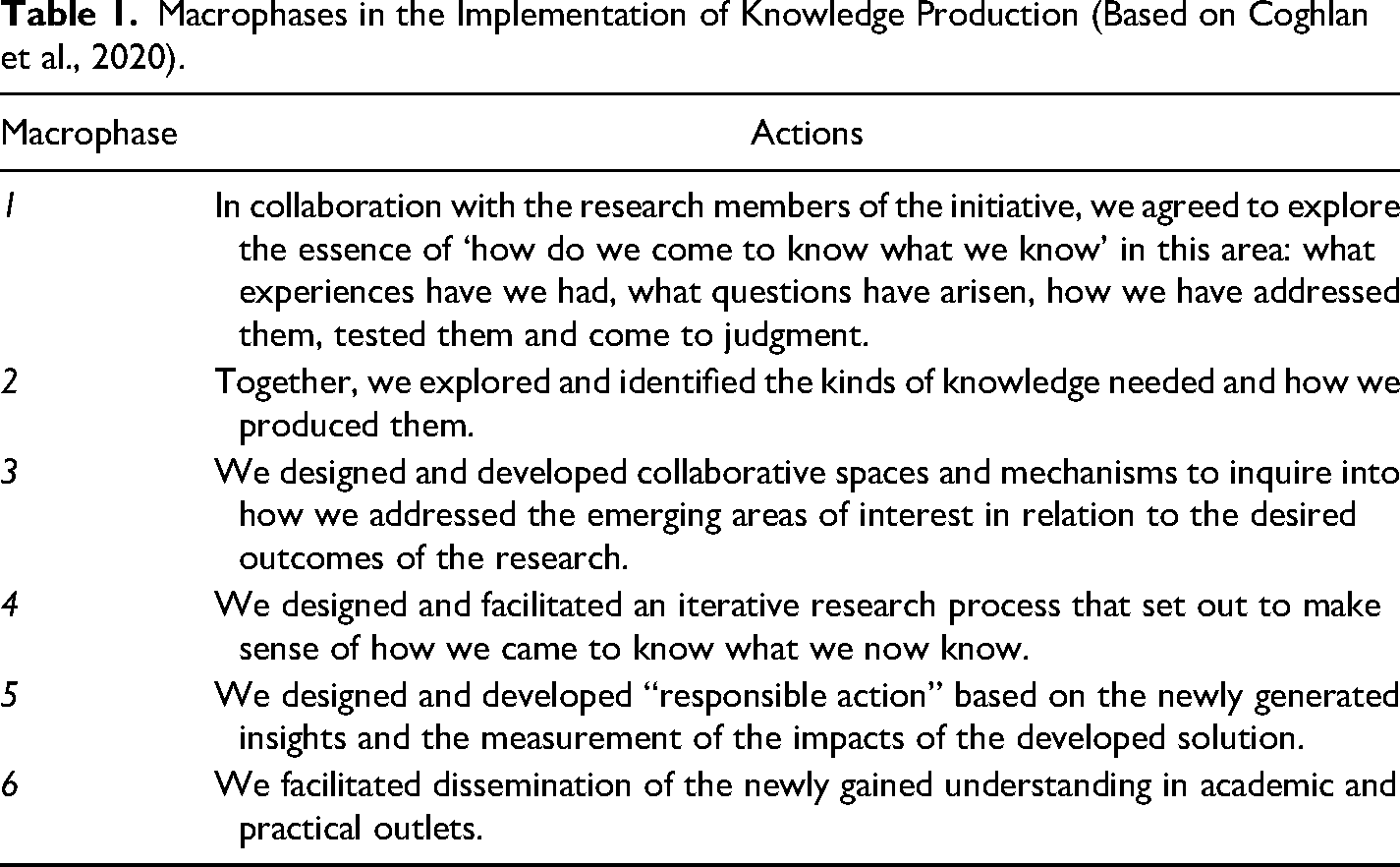
In
In
Moving to
In
In
At a second workshop in early 2022, we represented the matrix to the team, this time supplemented by visualizations of the data developed by the computer scientists. The team validated the amended matrix as the basis for this paper. The dataset comprised 91 sets of entries, each including activities under each of the eight WPs. For each activity, the data fields in the matrix described the aim, objectives, execution and contributions to other work carried out in the initiative. In order to inquire further, we set up filters to query the dataset. So, to explore by WP, we used the filter to select and analyze all the activities of a specific WP. Referring to the initiative timeline by month, we could explore the temporal flow of the development and progress of the research carried out. In a similar way, by using other indexed fields, we could inquire into publications produced by the team or all the events that took place. Finally, to evaluate the evidence of transdisciplinarity, fields capturing discipline integration and level of engagement with stakeholders were also included.
We began to identify the impacts of the collaborative inquiry undertaken. For each researcher, the matrix represented a mechanism to describe and reflect on their work, its relevance to the other disciplines and to the initiative aims. For the initiative output, it represented a comprehensive archive with details of research objectives, outcomes, and impact. For our understanding of the management of a green process innovation research initiative, the matrix represented a tool for demonstrating collaborative inquiry, transdisciplinary engagement and output.
We are now in
Researching Green Process Innovation
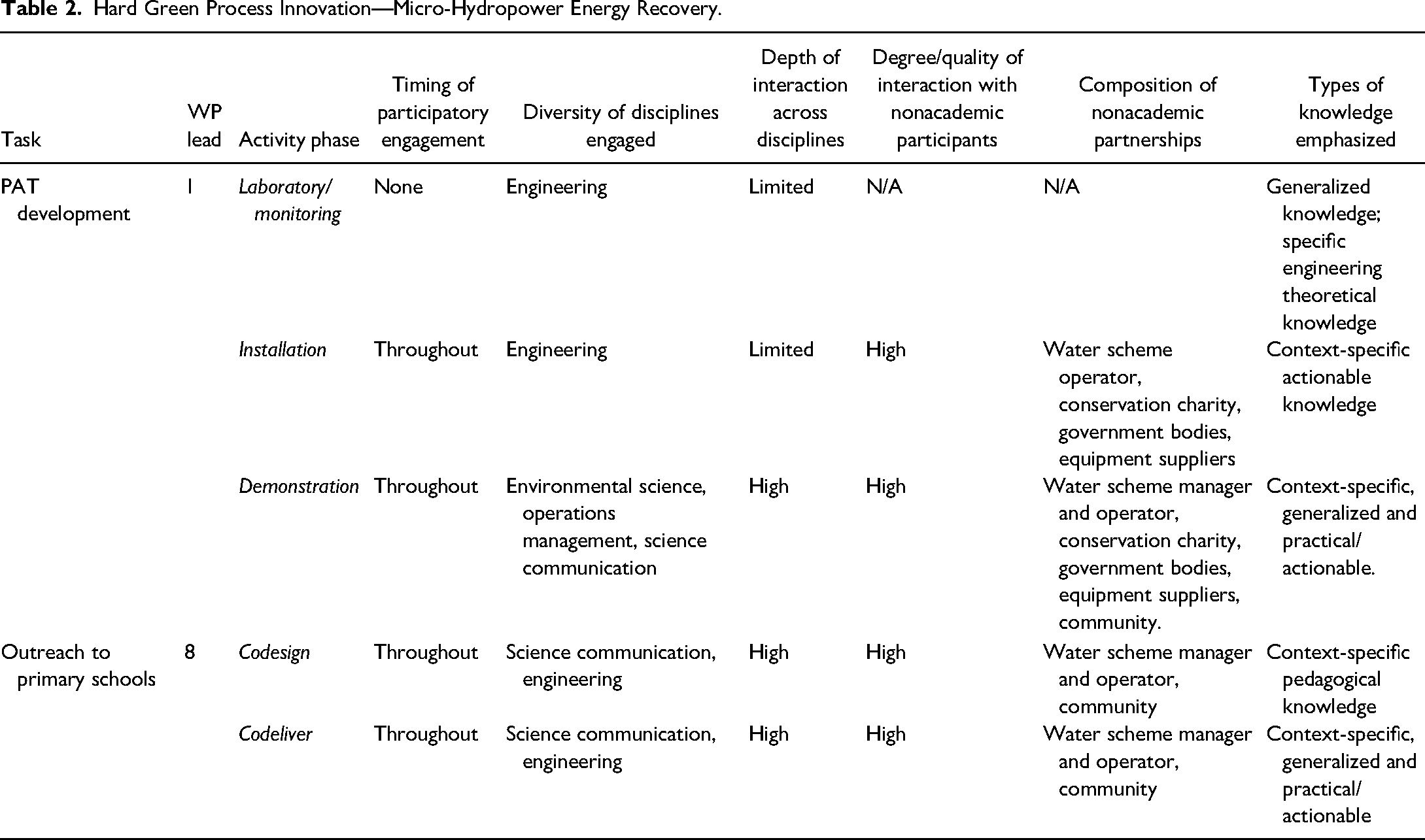
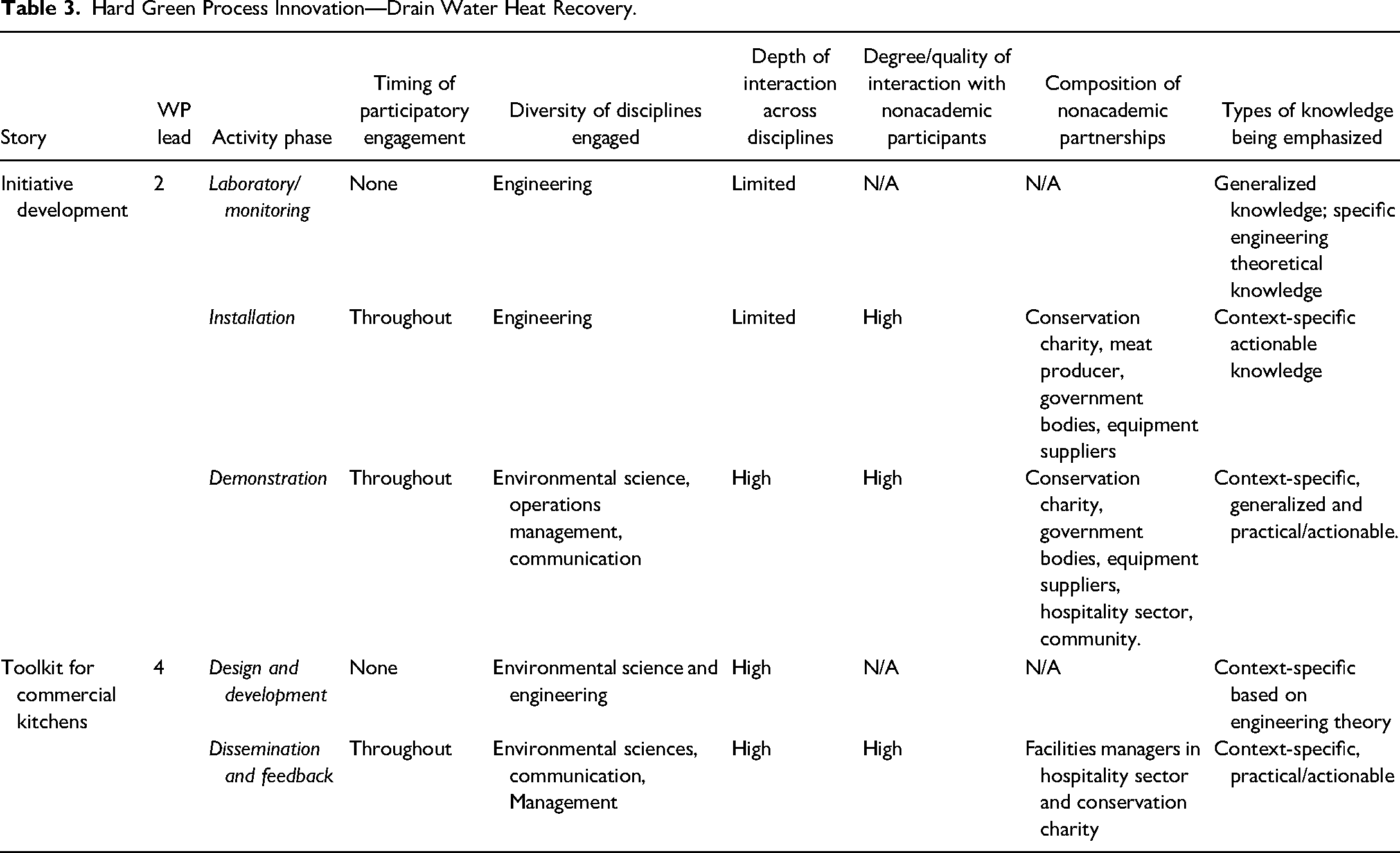
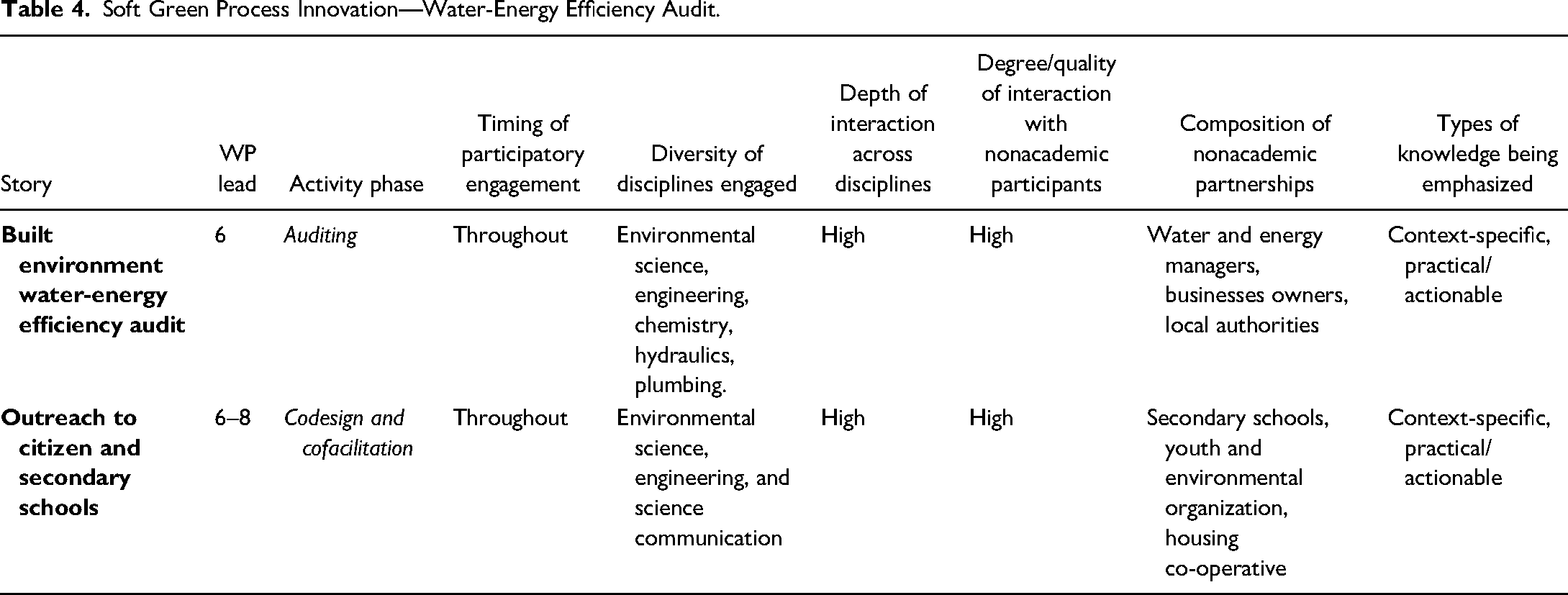
In the following section, we present three different extracts from the dataset: the first two focus on hard green process innovation and the third focuses on a soft green process innovation. Here, we see hard innovation in terms of physical infrastructure, while soft innovation focuses on creating an innovation orientation and positive behaviors (Ahmed, 1998). Each extract illustrates different combinations and patterns of collaborative TDR. Tables 2–4 summarize the data for each innovation, organized according to the six OECD characteristics of a TDR initiative. Each field in the tables is derived from one or more fields in the matrix. We discuss then how the researchers collaborated in the design and implementation of each innovation in turn.
Hard Green Process Innovation—Micro-Hydropower Energy Recovery.
Hard Green Process Innovation—Drain Water Heat Recovery.
Soft Green Process Innovation—Water-Energy Efficiency Audit.
Hard Green Process Innovation: MHP Energy Recovery
We describe in Table 2 the evolution of the research in Work Package 1 (WP1) where the objective was to develop and demonstrate MHP energy recovery in water networks. The engineering researchers undertook an extensive experimental laboratory program focused on a small magnetic-sealed radial pump to gain confidence in the hydraulic and electrical aspects of PAT operation. This phase informed the subsequent design of a larger PAT test rig. To translate their research into practice and to prove the viability of the green process technology developed, the engineering researchers then identified the potential for energy recovery in the context of application at the water treatment plant of Blackstairs Group Water Scheme (BGWS), a community water scheme located in rural Ireland. Here, they collaborated with the BGWS manager and the plant operator. They codeveloped, piloted, and installed the innovative energy recovery system in the terminal section of the supply pipeline to exploit the potential for energy recovery. If operated on a 24-h basis all year round, the MHP system could produce over 24,000 kWh of clean renewable electricity worth over €4,000 and reduce consumption of energy from the grid by 20–25% (Novara & McNabola, 2021). This transdisciplinary engagement included designing, planning, and deploying the MHP demonstration site in collaboration with nonacademic stakeholders. The timing of participatory engagement with the nonacademics was from the initiation of the installation and was maintained through to demonstration.
Shortly after commencing the BGWS development, the engineering researchers codeveloped and installed a similar PAT-based energy recovery system in collaboration with National Trust Wales (NTW), a conservation charity. Operating in a different context, this MHP system generated electricity from a nearby stream, providing heat and light to an adjacent historical building, taking it “off-grid.”
Generalized engineering discipline-based knowledge was instrumental during the laboratory phase. The high level of participatory engagement was reflected in the types of knowledge produced in the installation and demonstration phases. The novel practical and applied knowledge became fundamental to understanding how the PAT system performed in the context of application. Collaboration with the site owners and operators has continued with real-time monitoring of system performance and regular monthly updates shared among the partners. In turn, this knowledge has fed back into a theoretical engineering framework as evidence-based data to strengthen the integrity of the system design and operation.
In order to future-proof the energy recovery system design, the outputs of another WP, WP7, were used in a complementary way. The objectives of WP7 were to assess the impacts of climate change on future streamflow in river catchments across the national border in another part of the Ireland-Wales region and to develop policy recommendations for climate change adaption in the sector. Here, the environmental scientists forecasted that the decline in summer and autumn flows may outweigh winter and spring increases (Dallison et al., 2021). Combined with the knowledge generated in WP1, this finding has practical implications for the design and operation of PAT-based systems over the coming years.
Finally, in addition to the green process innovation delivered, there were additional outcomes and impacts derived from collaborating across disciplinary boundaries with team members in WP8 Dissemination and Communication. Planned demonstration of the installations to individuals and organizations within the broader Dŵr Uisce initiative cluster was central to the dissemination of insights to practitioners. However, taking a science communication perspective, these outcomes formed the basis for an evidence-based outreach educational program to primary schools in the BGWS community area. This activity has since been expanded to the school and community served by another group water scheme with plans to expand the outreach nationally.
Hard Green Process Technology: DWHR
The thermal energy used for heating water in households, commercial establishments and industrial processes forms a large part of overall energy consumption. Yet, a substantial part of that thermal energy expended to heat the water remains embedded in wastewater discharged for treatment after use and this heat is lost slowly to the environment while the wastewater is transported and treated. This embedded heat can be as high as 15–30% of total heating demand in households and represents a serious inefficiency in existing heating systems (Nagpal et al., 2021). Recovering the energy embedded in wastewater using a DWHR system can play a significant role in reducing the carbon emissions associated with water heating by reducing overall energy demand and providing a new source of renewable heating.
We describe in Table 3 the evolution of the research in WP2. Here the objective was to develop and demonstrate DWHR in water-intensive processes and commercial kitchens in Ireland and Wales. Such kitchens can be found in hotels, restaurants, cafés, and canteens, which use significant amounts of hot water in food preparation, cooking, and cleaning. Based on monitored primary data, the engineering researchers explored the feasibility and extent of DWHR in commercial kitchens in the region. They identified significant potential for economical energy recovery (Spriet & McNabola, 2019). One of the monitored commercial kitchens was at the Tearooms in a popular tourist site operated by NTW. The engineering researchers considered the site layout to be suitable for the installation of a DWHR system. In collaboration with NTW, the site was selected as a pilot site for the installation of a system.
While the engineering researchers focused on the technological potential of DWHR, the Dŵr Uisce initiative provided a unique opportunity to evaluate the environmental potential of this green process innovation. Environmental scientists engaged in WP4 collaborated with the engineering researchers in WP2 to evaluate the environmental performance, including the burden and benefits, of DWHR. This complementary study (Schestak et al., 2020) was facilitated by the primary data availability and operating experiences at the demonstration site and monitoring of other commercial kitchens in the region. As a result, the environmental scientists derived new life cycle inventory data and undertook original heat recovery estimates. Results from previous studies within the initiative (Schestak et al., 2020; Spriet & McNabola, 2019) revealed that financial and environmental viability was likely for the large majority of commercial kitchens in the region. However, the environmental scientists and the engineering researchers concluded that the suitability of a particular kitchen for DWHR ultimately depended on four main factors: (a) the water consumption and kitchen size; (b) the type of energy source replaced through heat recovery; (c) the equipment needed, and (d) the type of material used. In order to facilitate practical decision-making and uptake of DWHR by commercial kitchens, the environmental scientists developed an easy-to-use Heat Recovery Toolkit to guide commercial kitchens on heat recovery estimates, technology selection, financial and environmental savings, and payback.
More recently, the environmental scientists and engineering researchers led dissemination events for the wider practitioner community generating awareness of the potential usefulness and usability of the DWHR green process innovation. Currently, engineering researchers have begun a new cycle of research into the potential for heat recovery from drain water residing in the grease traps (Singh & McNabola, 2022). The research will contribute to further developments of the Heat Recovery Toolkit.
In essence, the engineering-led DWHR research in WP2 has enabled environmental and economic impact assessment activities and outputs from WP4. Participatory engagement began once the engineering researchers concluded their rigorous desk study and laboratory research of DWHR which was validated by peer-reviewed publications. The nonacademic practitioners then contributed to the codesign and codevelopment of the DWHR installation at the demonstration site. Subsequently, the environmental scientists engaged with both engineering researchers and practitioners to codevelop and disseminate the Heat Recovery Toolkit and to receive feedback. This example illustrates in-depth discipline research and transdisciplinary integration of engineering and environmental science in collaboration with kitchen operators. The research study has demonstrated the potential for DWHR in the hospitality sector, combining the design, development and installation of the DWHR demo site with the environmental science leading to the design and development of the Heat Recovery Toolkit for commercial kitchens (Schestak et al., 2021).
Soft Green Process Technologies: Energy Auditing and Rating
The objective of WP6 was to audit energy consumption in the water industry in Ireland and Wales and to develop an energy rating system for the water sector, enabling cross-comparison and prioritization of interventions. We describe in Table 4 how the environmental scientists developed and undertook an audit and benchmarking study to quantify water and energy use in different built environment settings, including office buildings, leisure centers, and pubs.
The audit contributed to understanding the potential for cost, water, and energy savings, and reductions that could be achieved through water-related energy management. In particular, this study investigated how users could reduce their carbon footprint by reducing their water consumption and, by extension, their water-related energy use and associated emissions. As part of the audit and benchmarking of 14 local authority-run leisure centers in Wales, the researchers assessed how water was used, areas where water and water-related energy use could be saved and associated emissions could be reduced, how these savings could be achieved, and how the audit could be used to improve the eco-footprint and wider environmental performance of the centers. Various stakeholders such as managers, energy officers, and operational staff played a fundamental role in supporting, exchanging, questioning, and sharing their practical knowledge on the functioning of the systems in place. There was integration across disciplines including environmental science and engineering, chemistry, plumbing, and site management. Context-specific and practical actionable knowledge resulted. Correspondingly, environmental scientists are further developing audit tools to accommodate the evident variations in leisure center operational resource use, running costs, and efficiencies.
A related activity involved a citizen science initiative for households in the region. The objective of this study was to improve the understanding of water-related energy use in the domestic setting. The study consisted of two key parts: a cross-sectional survey that assessed the current public perception of household water and water-related energy use, followed by a longitudinal study where participants audited their water use at home to assess the actual current household micro-component water use and associated water-related energy use. The first phase was completed with the involvement of 265 households. The second phase is ongoing at the time of writing and will be completed over the coming months. The findings of the study will be used to quantify the potential for household water-energy efficiency improvements to reduce emissions and costs, and to develop contemporary best practice guidelines for climate action associated with efficient household water use.
As these audit and benchmarking activities were implemented, the environmental scientists and science communication researchers codeveloped and delivered outreach initiatives for citizens and secondary school students. This outreach was characterized by high levels of participatory engagement with community leaders and with teachers in relation to pedagogy and learning methodologies.
Reflection
In this reflection, we explore the modes 1 and 2 knowledge production processes in evidence and the interplay between them leading to integrated actionable knowledge. Further, with TDR at the core of sustainability science, we outline how learning emerged from the research to underpin the research-based practical responses to SDGs.
The strategic imperative for the initiative was to improve the long-term sustainability of water supply, treatment and end-use in the region through developing green process innovations, undertaking economic and environmental impact assessments, and developing policy and best practice guidelines to facilitate the implementation of integrated low-carbon and smart energy solutions for the water sector. As such, the initiative responded to several sustainable development goals, including SDG 6—Clean Water and Sanitation; SDG 7—Affordable and Clean Energy; SDG 9—Industry, Innovation and Infrastructure; SDG 12—Responsible Consumption and Production; and SDG 13—Climate Action (Dreyer-Gibney et al., 2020). With a specific focus on the water-energy nexus, the initiative was anchored by SDG 17 with its objective to strengthen the means of implementation and revitalize the Global Partnership for Sustainable Development (UN, 2015).
Modes 1 and 2 Knowledge Production
Substantively different kinds of green process innovation knowledge have been produced and coproduced by the researchers—drawn from different discipline groups—and practitioners. Coghlan et al. (2020) discuss that, while modes 1 and 2 are grounded in distinct and often opposing philosophical principles, they may be used together. In this study, there is clear evidence of Mode 1 knowledge production as summarized in Table 5.
Mode 1 Knowledge Production in the Dŵr Uisce Initiative.
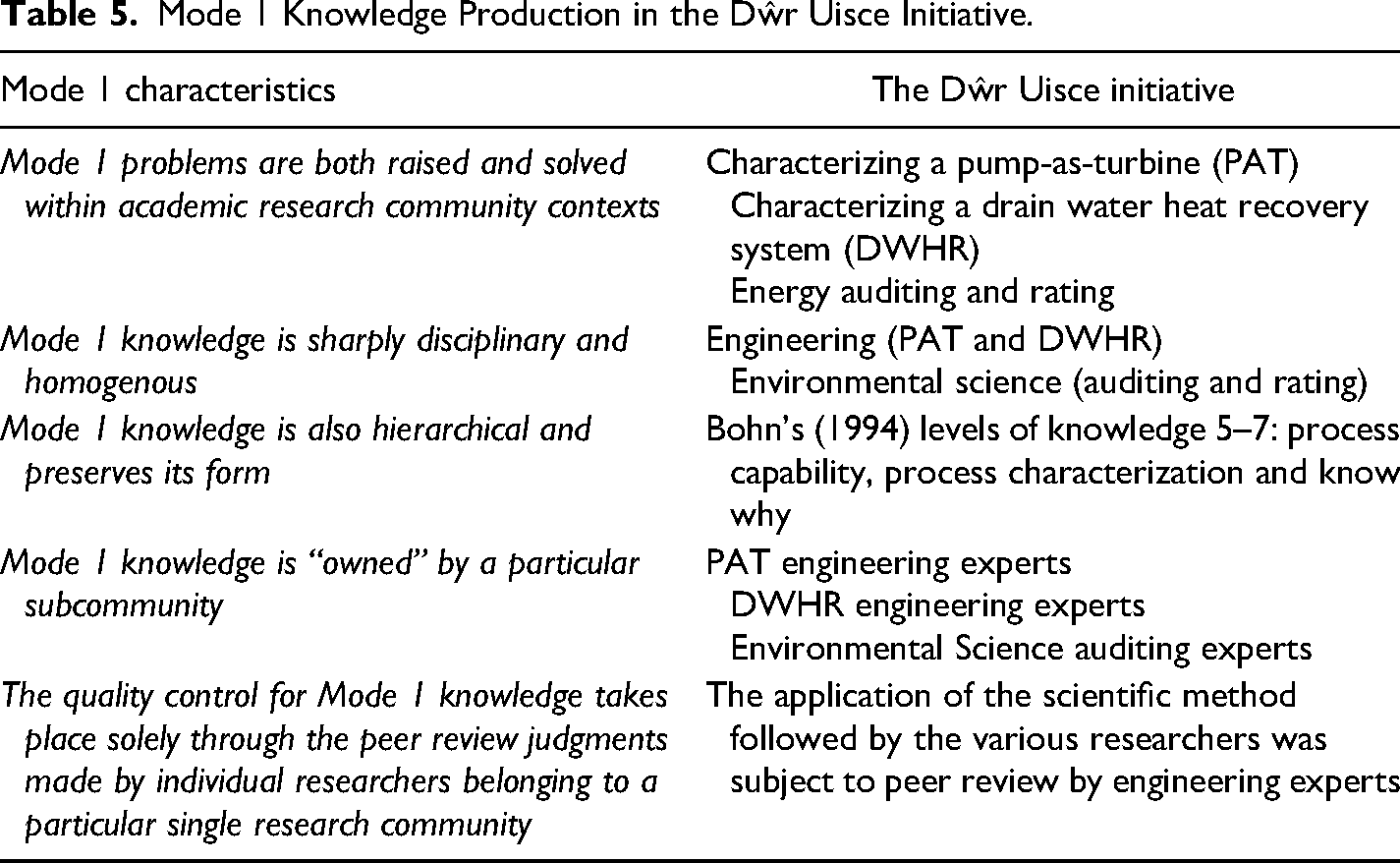
The challenges facing MHP energy recovery based on an in-pipe pump-as-turbine, a DWHR system, and a set of useful and usable techniques for energy and environmental auditing and rating were recognized within the respective disciplines. There was an established literature in each but limitations to those literature. Addressing the challenges required research designs which were valid for the disciplines. The outputs were reviewed internally, written up and submitted for external review before publication in discipline-appropriate outlets. In each, the homogeneity of the knowledge was its strength—there was a science behind each challenge to which the Dŵr Uisce researchers responded. The nature of the overall Dŵr Uisce initiative was such that implementation in practice was an ultimate objective. As such, the Mode 1 knowledge produced formed discrete bases for green process capability, characterization and know-why. The knowledge was interpretable solely by the respective subcommunities of engineering and environmental science domain researchers or families (Hansen & Madsen, 2019) and it contributed to their processes of theorizing. Ultimately, the quality control was exercised by the discipline-based reviewers for the works submitted for review ahead of presentation and publication.
These observations from the initiative are consistent with Gibbons et al. (1994, pp. 2–3) who noted that “For many, Mode 1 is identical with what is meant by science. Its cognitive and social norms determine what shall count as significant problems, which shall be allowed to practice science and what constitutes good science. Forms of practice which adhere to these rules are by definition scientific while those that violate them are not.” They continue to observe that Mode 1 problems are both raised and solved within academic research community contexts. Mode 1 knowledge is sharply disciplinary and homogenous, and it is “owned” by a particular subcommunity. It is also hierarchical and preserves its form, and the quality control for Mode 1 knowledge takes place solely through the peer review judgments made by individual researchers belonging to a particular single research community.
The research to produce Mode 1 knowledge in response to each challenge could be seen as a legitimate initiative in its own right, leaving to chance the interpretation and application of the outputs by others outside of the subcommunities. However, designed as a TDR initiative, the Dŵr Uisce initiative did not take that chance. Table 6 summarizes the evidence of Mode 2 knowledge production in the initiative.
Mode 2 Knowledge Production in the Dŵr Uisce Initiative (Based upon Coughlan et al., 2021).
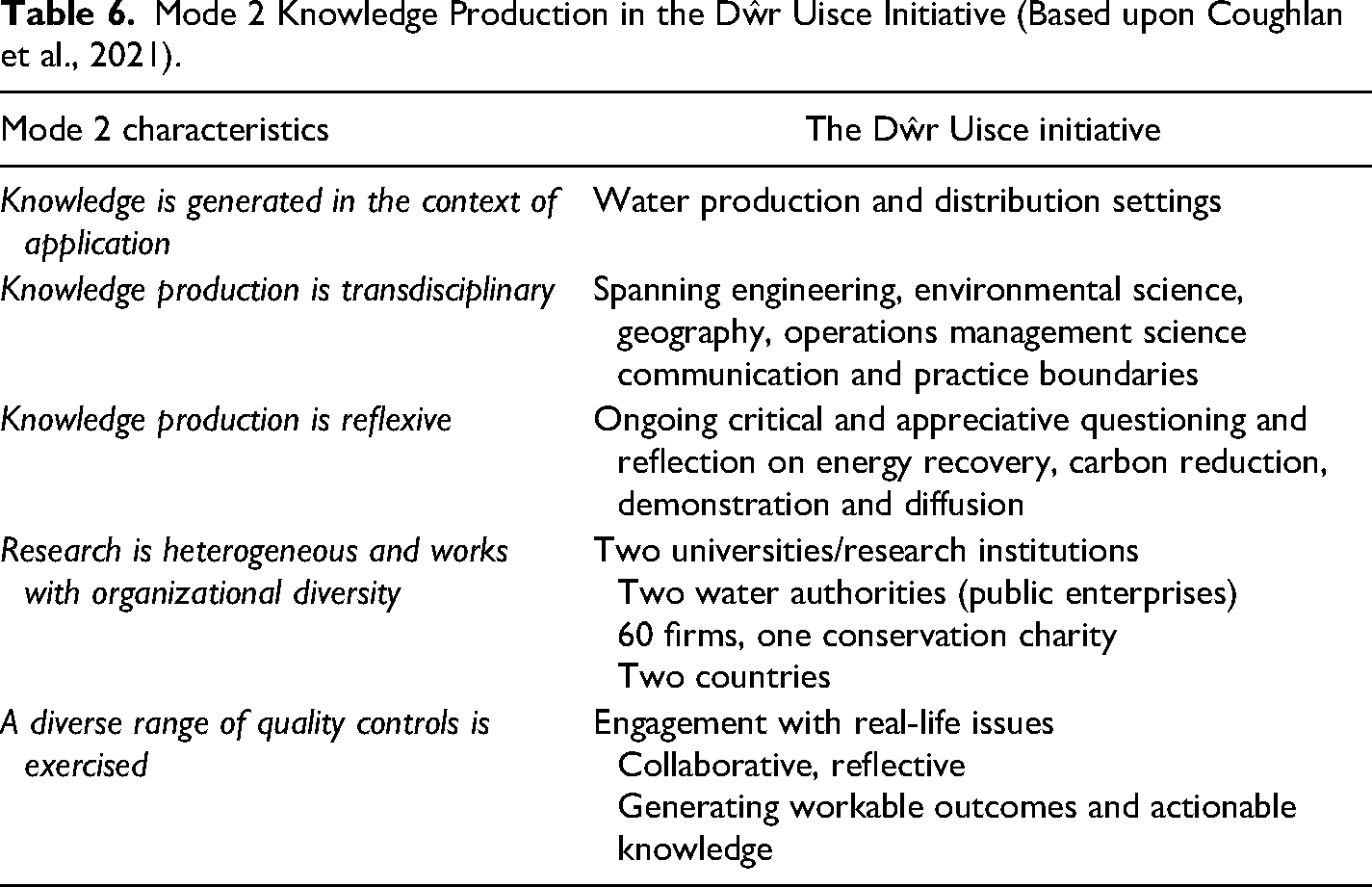
Throughout the Dŵr Uisce initiative, Mode 2 knowledge production enhanced the Mode 1 knowledge produced through engaging with a transdisciplinary community in the context of the various applications to address the overall research question. The collaboration among different disciplinary researchers led to the codevelopment of innovative systems, tools, and techniques to exploit the potential of the technology solutions. The knowledge produced spanned the various disciplines and functions in practice. Boundary spanning was evident in the integration of the research objectives and the translation of the codeveloped insights into language, hard and soft technologies which could be accessed, interpreted and used in practice. In particular, the commitment to demonstrate and disseminate the PAT and DWHR systems led to the implementation of practice-ready solutions, accessible by users and broader society.
Learning From the Research
From the outset, the Dŵr Uisce initiative provided the structures, procedures and cognitive orientation to encourage the multistakeholder collaborative network to facilitate green process innovation and learn from addressing the sustainability challenges from necessarily different perspectives.
Starting as a strategic network (established to engage in the improvement of environmental practice and performance in Ireland and Wales) the network came to act both as a learning network (becoming the source of green process innovation) and as a transformational network (leading to sustainable environmental change). This transition was supported by structural, procedural, and cognitive learning mechanisms (Coughlan & Coghlan, 2011). To address the sustainability challenges, the initiative was structured according to three themes: (a) technology platforms; (b) policy support and guidance; and (c) dissemination and collaboration. Central to the themes was the establishment of a heterogenous cross-border SSC under the umbrella of which all initiative activities would fall. Procedurally, the researchers routinely generated discipline-specific data individually (by discipline) and circulated the data among the multidisciplinary team for critical and appreciative questioning and collective reflection. Cognitively, all were oriented towards capturing and sharing their experiences and reflections on their disciplinary and transdisciplinary tasks and interactions.
Theoretical Contribution
With TDR at the core of sustainability science, we visualize the environment in which the collaborative TDR initiative developed before conceptualizing the interaction and integration of the researchers, and their associated roles in undertaking this process. Our particular contribution from a theoretical perspective is to interconnect these three constructs to research green process innovation across borders and boundaries through collaborative inquiry.
Visualizing the Environment
In order to visualize the environment in which Dŵr Uisce, as a collaborative TDR initiative, developed, we draw an analogy with a flowerpot as an ecosystem in which seeds are planted, grown and cared for. The analogy has roots: the EU framework of competencies in education for sustainability uses a similar visualization to describe its components and how they interact with each other (Bianchi et al., 2022). A flowerpot can be thought of as an anthropic ecosystem where abiotic (or “nonliving”) factors (sunlight, nutrients availability, water) and biotic factors (or living organisms) influence each other and determine the interactions within and between them. In the flowerpot, the abiotic factors are the pot, the soil, the sunlight, and the water. The biotic factors are the seeds, flowers and pollinators. As illustrated in Figure 1, the flowerpot sits on top of a substrate, an earlier (here, Hydro-BPT) research initiative that formed the basis for the Dŵr Uisce initiative proposal and plan (the actual pot with soil). The pot contains (and constrains) the Dŵr Uisce initiative plan: inside the fertile environment (soil) and ideas (seeds) represent the “starting point.” However, the pot does not remain static: as the initiative grows, it generates and needs more soil. The abiotic factors: water and sun become relevant. Funding (as water) keeps the initiative going (or the plant hydrated), while the funding program (as the sun) channels the energy. The researchers involved in the initiative are stitched into the fabric of the pot. Each is represented by their T-shape (Moghaddam et al., 2016) of discipline and interaction capabilities. In the analogy, the T-shapes are upside-down and represented by the roots: they grow deeper as the knowledge and experience in the researcher's discipline of work deepens and they grow wider, as the skills and capabilities of the researcher develop by interacting with other researchers and disciplines. The strength of the pot and its ability to grow are linked intimately to the growth and development of the researchers’ capabilities. The flowers with their different parts—roots, stems, leaves, flowers, fruit—represent all the activities under each initiative WP. As they develop and grow, some flowers sustain each other, similar to how some researchers, through their research, support and enable the work of others or other WPs. The bees, as pollinators, are the practitioners who collaborate in the activities or exploit the outcomes of the initiative. The pollinators allow for the emergence of fruit, which would not have been possible without these interactions. The result of all these transdisciplinary interactions is a canopy with fruit which is more extensive than a single flower would be.
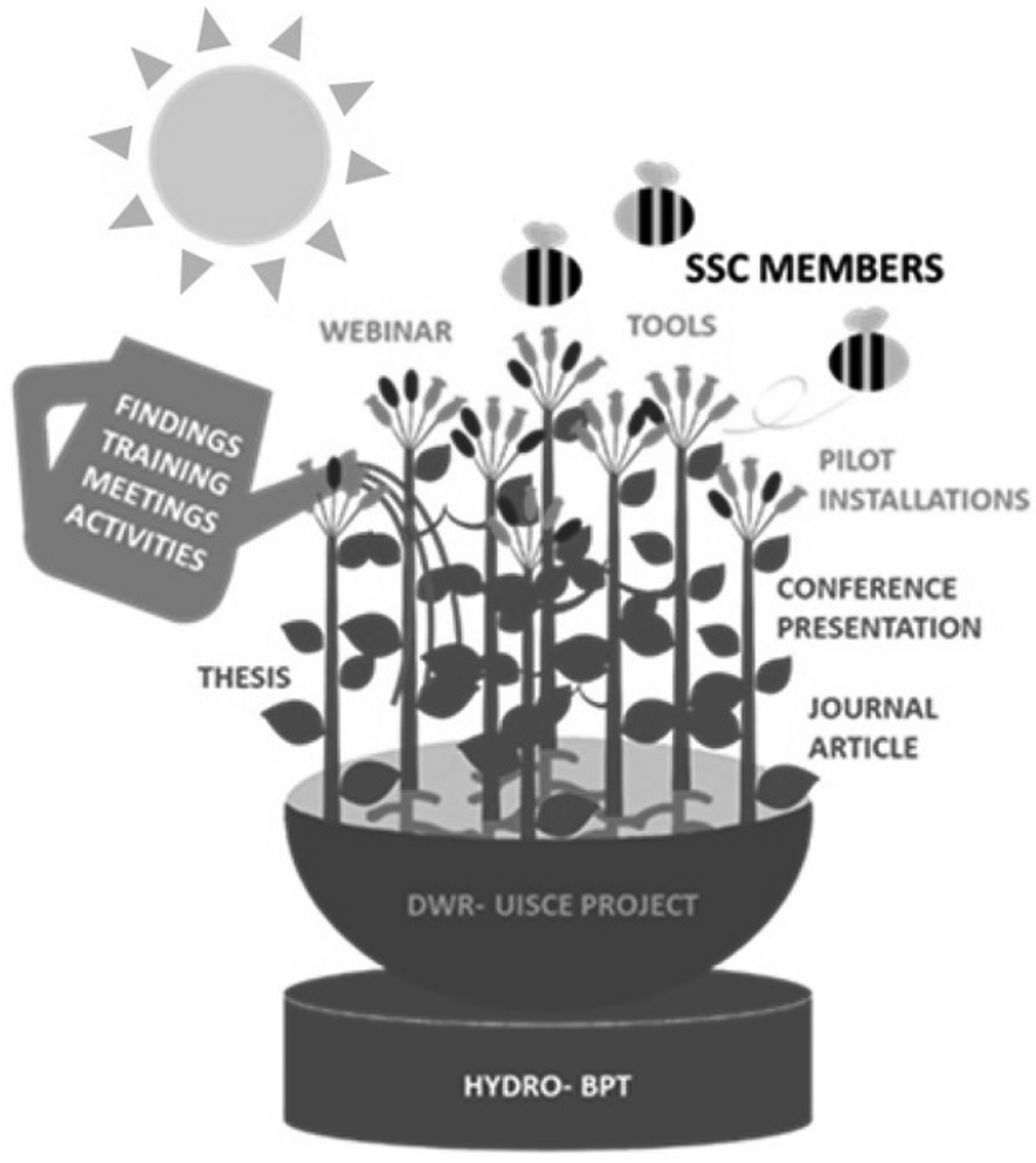
Visualizing the environment for the collaborative transdisciplinary research process.
In summary, through this novel analogy, we can describe and visualize the environment in which temporal, capability and spatial elements of a TDR initiative develop and support the interactions in the collaborative TDR process.
Interaction and Integration in the Collaborative TDR Process
Having visualized the environment in which the TDR initiative developed, we look now to conceptualize the pattern of interaction and integration through which the researchers from different disciplines transcended boundaries and integrated modes 1 and 2 knowledge progressively. Figure 2 illustrates combinations of different modes of knowledge production embedded in the collaborative TDR process. In brief, the combinations involved cycles of producing Mode 1 knowledge from one disciplinary perspective (engineering) through simulation, building on that knowledge in the laboratory and demonstration contexts of application to develop Mode 2 knowledge and combining that knowledge with Mode 1 knowledge produced from a different disciplinary perspective (environmental science). The resulting integrated actionable knowledge reflects the progressive pattern of a collaborative TDR-based approach to theoretical development and practice guidance for green process innovation (Apetrei et al., 2021; Brandt et al. 2013; OECD, 2020).
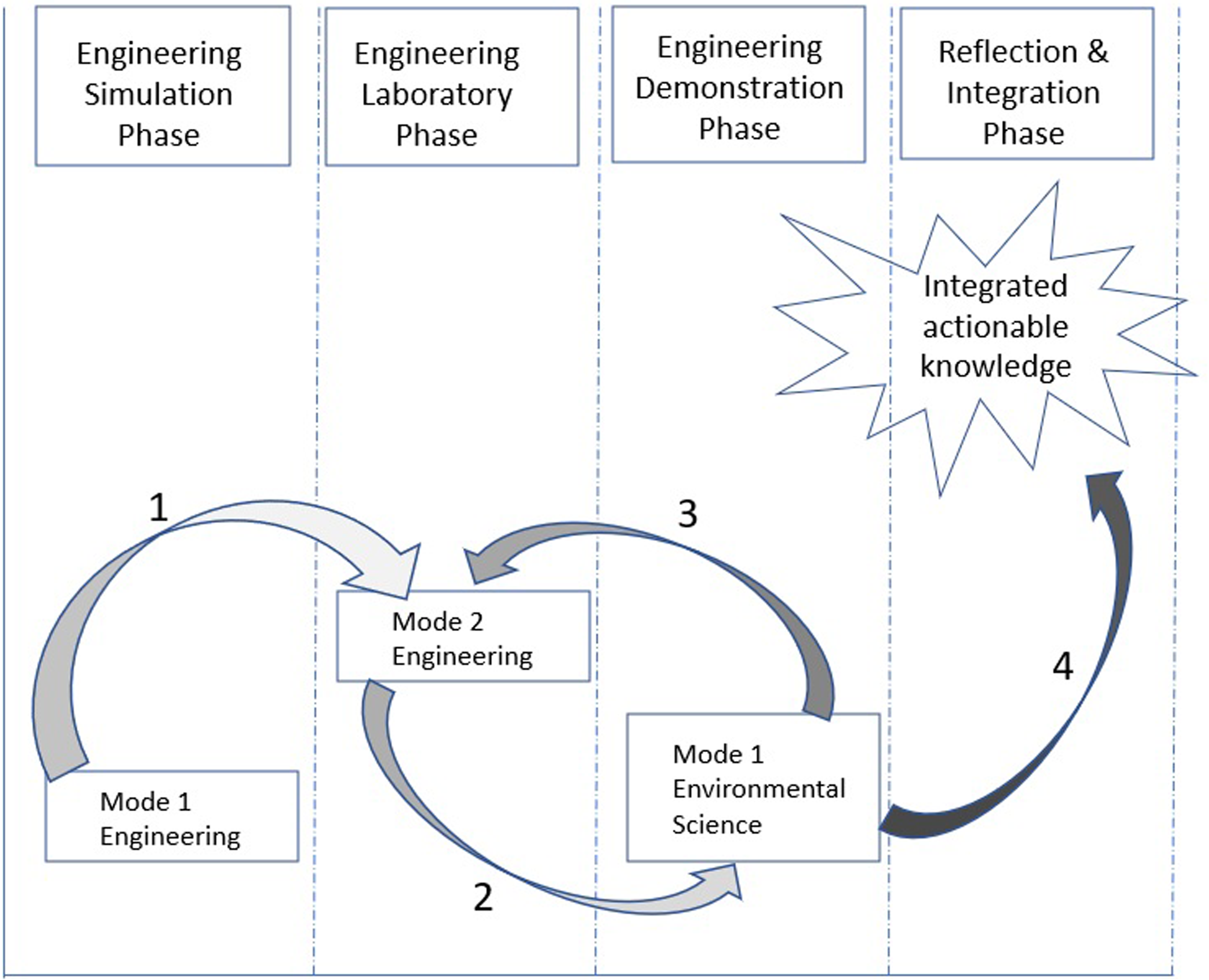
Combining collaborative Mode 1 and Mode 2 knowledge production leading to integrated actionable knowledge.
Doing, knowing, learning, and innovation are interwoven (Rigg et al., 2021). Drawing on Gehani (1992), the pattern of interaction can be characterized as “parallel rugby”—a team sport in which players with complementary capabilities collaborate and integrate. The discipline researchers engaged in Mode 1 knowledge production within their disciplinary groups where they interacted with different engineering colleagues simultaneously and from the beginning of the simulation and laboratory phases. Thereafter, they produced Mode 2 knowledge, collaborating simultaneously with researchers from different disciplines until the end of the laboratory and demonstration phases. Throughout, they integrated the knowledge produced through hardware, software, and humanware. As hardware, the laboratory and demonstration pieces of technology embodied, integrated and formed boundary objects (Rigg et al., 2021) for sharing scientific and operating data, insights, and other resources with other researchers and, ultimately, practitioners. Through the way in which the Dŵr Uisce initiative was managed, the researchers engaged in collective decision-making supported by open communication and information sharing across discipline boundaries. Finally, through periodic real and virtual colocation, mutual respect and patience, team members shared, communicated and exchanged evolving ideas in a nonconfrontational manner.
To conceptualize interaction and integration in a TDR initiative in this way is to bring a practice perspective to learning and innovation, which conceptualizes them as entangled in the everyday activities of organizing and working (Gherardi, 2012; Rigg et al., 2021). Here, the researchers create new knowledge as they work to address issues they confront in practice.
Roles in a TDR Initiative
In this funded project there were recognizable formal roles, including principal investigator, WP leader, and researcher built into the project structure. However, all had to span national borders and disciplinary boundaries to execute the work plan. Consistent with SDG 17, the key role played by the researchers was to mobilize and share knowledge, expertise, technologies, and funding to support the achievement of the project goals. Going deeper, Cross et al. (2013) describe five boundary-spanning roles: (a) connector, (b) expert, (c) broker, (d) energizer, and (e) resister which they relate to the strategies of managing boundaries, forging common ground, and discovering new frontiers.
In this TDR initiative, the roles of connector, expert and broker were of particular relevance. The principal investigators acted as the connectors, recognizing interdependencies and linking tasks with researchers. They built a climate characterized by safety, respect and trust so as to enable the engagement, interdependence, and reinvention necessary to achieve the project objectives. The WP leaders were the experts who led in the production of Mode 1 knowledge while exploiting the interdependence among WPs in order to advance the production of Mode 2 knowledge. At the task level, the WP leaders acted also as brokers (Snow et al., 1992), attending to the implementation of each WP.
Implications for Research Management Practice
Managing the TDR process involves addressing the practical challenge of collaborating across borders and domain boundaries on multidimensional issues to produce actionable knowledge. It requires researchers to shape consciously the environment in which the collaborative TDR initiative is developing in order to enable the breadth and diversity of collaboration, the depth of disciplinary integration, the degree and quality of interaction among participants, the formation of partnerships, the timing of collaborative engagement, and the production of the various types of knowledge required. In addition, and playing different roles, the researchers, from the outset, need to track and reflect on the timing, sequence, context and purpose of their collaborative actions in order to achieve impactful actionable knowledge. Such shaping, tracking and reflection extend the scope of the research to include the process of collaboration in addition to the substantive outcomes of that collaboration. Especially in a project that evolves over an extended period of time, the evidence of such research management practice can be seen in the openness of researchers to take on different roles and to collaborate constructively in critical engagements across domain boundaries, and in their, dare we say, obvious enjoyment of each other's intellectual company.
Keeping track is relevant as the project and network evolve. In a TDR initiative, the research group may form a strategic network at the beginning of the project. The selection of the stakeholders can be related to the disciplinary links perceived at the outset. However, as the project evolves, there is a need for evolution from tolerance to appreciation and creation and for researchers in their differing (and overlapping) roles to prompt, provoke, and integrate. It is more than holding modes 1 and 2 together, it is also about bringing and holding together researchers from different disciplines.
As such, interaction among the researchers as societal stakeholders needs to be frequent, data-driven, reflective and respectful. The atmosphere needs to be one of collaboration and trust where stakeholders can be open, curious, and willing to explain, listen and to absorb. Timing of interaction needs to be driven both by the activities in the initiative and the opportunity to share insights periodically at research team meetings, initiative webinars and academic conferences. Publications, presentations, and citizen science outreach follows in order to generate awareness and debate about the new ideas among researchers and users. The continuing involvement of the collaborators in further initiatives provides learning opportunities for researchers to advance theoretical knowledge and for practitioners to advance practical knowledge.
Limitations and Opportunities for Further Research
This study has been a stimulating journey of inquiry into the ways in which a multidisciplinary group of researchers has engaged in collaborative TDR. The time span of the study has matched that of the project in which the researchers engaged and, so, represents a longitudinal engagement. However, while insightful, there are limitations to the work. First, the study focuses on a single project with activity-specific characteristics which might not be replicated in other collaborative transdisciplinary initiatives—funding source, extended timeline, a mix of disciplines and practitioners, and commitment of all to collaboration. Second, the voice of the practitioner in this article is relatively muted. Yet, the practitioner can be a critical partner and may present with differing commitments to action and learning. Finally, the climate for collaboration was influenced by the prior experience that some members of the multidisciplinary group of researchers had built up together—it was not their first project. Each of these limitations prompts consideration in a further study which might compare and contrast different initiatives, include more actively the voice of the practitioner, and explore the maturity of the interrelationships among the researchers. However, these opportunities do not take from the essence of the study as presented. Said differently, we would not have recognized these limitations if we had not developed this article!
Conclusions
Multistakeholder collaborative partnerships involving universities and practitioners have been growing in numbers over the last few years, as both academia and funding agencies align their aims and objectives according to societal challenges, UN SDGs, and the associated need to involve society (Bolger et al., 2022; Castillo-Villar, 2020). As a consequence, universities and public research institutions are turning to collaborative TDR to generate new rigorous scientific knowledge that promotes innovation and societal benefit and contributes to the progress of the SDGs. In this article, we have developed and drawn upon our shared experience when realizing a green process innovation to describe and conceptualize the process of implementing a TDR initiative through shaping the environment, enacting different roles and integrating modes 1 and 2 knowledge. For us, the initiative continues. We have an extensive data set which we continue to explore in order to develop this conceptualization further.
Footnotes
Acknowledgments
We acknowledge the input of former team members from Trinity College Dublin and Bangor University, Wales: Ana de Almeida, Lucy Corcoran, David Ferras, Irene Fernandez, Tracy Lyndon, Himanshu Nagpal, Annum Rafique, Vanaja Siva, Jan Spriet, Nilki Weerawardana, and Szu-Hsin Wu. Finally, we acknowledge the inputs of Peter Butcher and Aida Merida who assisted with the data visualization tasks.
Declaration of Conflicting Interests
The authors declared no potential conflicts of interest with respect to the research, authorship, and/or publication of this article.
Funding
The authors disclosed receipt of the following financial support for the research, authorship, and/or publication of this article: This work was supported by the Ireland Wales Co-operation Programme ERDF 2014-2020, (grant number Project number 80910).
