



Abstract
This study explores if and how migrating social workers’ gender, country of origin and time living in the United Kingdom relate to their job and life satisfaction, and to building a new social network post-migration. Online questionnaires and semi-structured interviews were carried out with participants from Australia, Canada, India, Romania, South Africa, the United States and Zimbabwe. We found a statistically significant connection between the length of time in the United Kingdom and satisfaction from working as social workers and living in the United Kingdom. All our participating groups were generally only mildly satisfied professionally, but satisfied with living in the United Kingdom.
Background
The status of the United Kingdom (UK) as a receiving country for international social workers is evidenced by registration figures from the General Social Care Council (GSCC), which was the social work regulator until it was replaced by the Health and Care Professions Council (HCPC) in 2012 and in 2019 by Social Work England. According to its data, 10 percent of the workforce in England received their training and social work qualifications abroad (Hussein et al., 2010) and these figures were echoed by other scholars (Beddoe and Fouché, 2014; Fernández-Reino and Rienzo, 2021). HCPC data provided in response to our own FOI request (FR07188) indicate that between 2014 and 2019, out of a total of 30,298 social work registrations, 5249 (17%) were trained abroad. For the past 10 years, social workers have remained on England’s ‘shortage occupation’ list, with no apparent change envisaged, ensuring the migration of social workers will continue.
Labour migration in the United Kingdom has a recognisable pattern that is traceable to colonial links (from countries that are a part of the Commonwealth) and is based on established economic networks and geographical ease. Studies have indicated the importance of migration networks in facilitating and easing migration, but we know very little about the impact of such networks on migrating social workers (Tinarwo, 2011). There are generally also limited data on the motivations and experiences of internationally qualified social workers (Bartley and Beddoe, 2018; Hussein, 2011, 2018; Hussein et al., 2010; Lyons and Huegler, 2012; Walsh et al., 2009). Several studies examined some of the challenges that foreign-qualified social workers may experience when they migrate to other countries (Brown et al., 2007; Devo, 2006; Lyons and Littlechild, 2006; Peter et al., 2022; White, 2006). However, these studies did not distinguish between social workers from different countries and were relatively insensitive to culture. This is important as the culture internalised by social workers in their country-of-origin shapes how they perceive and respond to the culture in their destination country, including the local professional culture. A key theoretical term that guided us was National Habitus. Following the sociologist Pierre Bourdieu, who used the term habitus to explain the unique cultural characteristics of different class groups within France, other scholars further developed the concept and used it to discuss the distinct culture of national groups. Quoting Bourdieu, Garrett (2018), writes: ‘Habitus is “society written into the body”: the body does not memorise the past, it enacts the past, bringing it back to life’ (pp. 126–127). This unique national habitus that is manifested in embodied ways of perceiving, communicating and behaving is often what singles out migrating social workers, especially during the early stages. Garrett (2018) also notes in this regard that ‘we are not automatons or mindless vehicles of our governing habitus. Rather, habitus acts as a very loose set of guidelines permitting us to strategize, adapt, improvise . . . to situations as they arise’ (p. 128). This theoretical term will help us understand some of the potential challenges experienced by our participants and which are caused by the cultural differences between the culture in their country of origin and the country of destination. Such differences require adjustment, which needs awareness and can take a significant amount of time.
One major difference between countries is regarding legislation. In the United Kingdom, the welfare system is ‘rights based’ and certain kinds of services and support are still considered a right that individuals have, and which is enshrined in law. Being aware of their rights, service users justifiably demand them and are less grateful to social workers who are perceived as simply following the law and merely ensuring service users have their rights fulfilled. Contrary to that, in countries where rights are less well protected by law, whatever the State gives is more likely to be received as a gift and with gratitude (Hakak and Anton, 2020).
A large part of the social worker’s role in the UK is to safeguard vulnerable children and adults. This statutory role supported by legislation is entrusted in the hands of social workers and often brings them into tension with individuals and families. This is especially so when the social worker prioritises protecting an individual and when this requires taking steps contrary to the wishes of the individual and/or their family. It contributes to the negative image of social workers (Okitikpi, 2011). In many other countries in which social workers’ roles are less closely shaped by legislation and are less focused on risk prevention, social workers are also less likely to fulfil a ‘social control’ role and are therefore also less likely to get into conflict with their service users.
Another major difference between countries is regarding the image of the social work profession. In the UK, social work, similarly to other care professions, is perceived as feminine and attracts a much smaller number of men, and consequently, gender bias may lead it to be treated less seriously (Department for Education [DFE], 2022; HCPC, 2019; Skills for Care, 2022). Although we were not able to find the literature to support or refute this claim, according to our participants, for a variety of cultural, social and economic reasons, in addition to the legal reasons mentioned above, in some countries the profession has a more positive public image, and as a result, more men are attracted to it. The fact that more male social workers migrate to the UK, especially from outside of the European Union, was also mentioned previously by other scholars (Hussein and Clarke, 2011; Moriarty et al., 2012). Therefore, a key question to explore is the impact of gender on migrating social workers. Considering that in both the UK and Australia (Labour Market Insights, 2021), which we examine here, social work is perceived as a feminine profession, what is the impact of this fact on migrating male and female social workers? As social work in the UK is suffering from high rates of attrition (Ravalier, 2018) and recruitment is difficult, a more nuanced understanding of the factors impacting job and life satisfaction among migrating social workers is important.
Another theoretical perspective we will utilise is Critical Race Theory. Racism, far from being only visible in its extreme forms, is often made to seem ‘normal and not aberrant’ (Delgado, 1995: xiv). For critical race theorists, ‘the strategy becomes one of unmasking and exposing racism in its various permutations’ (Ladson-Billings, 1998: 11). Equating racism with individual acts of racial hatred can obscure its structural and institutional grounding: In racialised societies, racism is – except in its most extreme forms – so ordinary, so business-as-usual, that its very existence is routinely denied. This denial entails strategic colour-blindness: a deliberate misrecognition of racialised relationships and practices . . . Schools, universities and welfare systems and police forces deny their institutional racism by depicting their own cultures and practices as race-neutral and meritocratic. (Warmington, 2020: 24)
How does the country of origin impact the way migrating social workers are received? Does race and ethnicity have any impact? Are migrating social workers being perceived as experts who can enrich local practice with new approaches and perspectives? Or are they seen as a necessary compromise, and are mainly judged by the length of time they require to adjust to local practice? Does this change based on their country of origin? How does the country of origin and/or gender correlate with their job and life satisfaction and how does it change with time spent in their destination country?
Hence, via a mixed-methods approach, this study aims to explore potential differences between gender, country of origin, and time living in the UK/Australia in relation to job and life satisfaction, and social network.
Method
We utilised a mixed-methods approach combining an online questionnaire and semi-structured interviews as part of a triangulation design (Creswell and Plano Clark, 2006), also described as a Cross-Cultural Parallel Design. In this kind of design ‘both qualitative and quantitative strands are independent of one another (though obviously related by research purpose) and synthesized at the stage of inference or interpretation’ (Schrauf, 2018: 485). Participants needed to fulfil the following inclusion criteria: (1) social worker, (2) currently living in the UK or Australia, (3) for those currently in the UK, they had to be originally trained in either Australia, Canada, India, Romania, South Africa, the United States (US) or Zimbabwe. Those currently living in Australia had to be originally trained in the UK. (4) Participants were not included if more than a year has passed since they stopped practising in their destination country. These countries were chosen as the largest numbers of migrating social workers are arriving in the UK from them. We then decided to also include social workers migrating from the UK to Australia (Aus) as a case of migration in the other direction. While we aimed to recruit widely from across the UK, most of our participants were either based in England or originating from it. A small minority were either based in Scotland or originating from it.
We recruited our participants using a variety of means including LinkedIn, which enabled us to contact social workers directly based on where they trained and where they practise. Through Facebook, we were able to connect with groups of social workers who migrated to the UK from India, the US and Canada, and with a group of British social workers who migrated to Australia. We were invited to join a group of Zimbabwean social workers in the UK on WhatsApp. We also used our links with local authorities as well as snowballing. In addition, we were aided by the UK Malayali Social Workers Forum and the Zimbabwean UK Social Workers Association. We sent a letter or a message inviting participation through each of these platforms, organisations or contacts, and those expressing an interest in response were sent our participant information sheet and a link to the questionnaire. Those indicating their willingness to participate were able to choose to take part by completing the online questionnaire and/or taking part in an interview. Altogether we had 243 participants completing the online questionnaire of which 80 were interviewed. Ethical approval was received from Brunel university’s Ethics Committee.
Quantitative approach
A questionnaire was designed specifically for the study to align with the interviews, exploring perceptions of job satisfaction, social network and life satisfaction of social workers who migrated to the UK/Aus. An identical but separate questionnaire was sent to social workers based on their country of origin and country of destination. To identify sub-group differences, we assessed demographic characteristics (i.e. gender, age, country of origin and time living in the UK/Aus). Gender was assessed via the item: ‘what best describes your gender?’ (0 = male; 1 = female; 2 = I prefer not to say). Age was assessed via the item: ‘which of the age groups below applies to you?’ (1 = 20–30 years; 2 = 31–40 years; 3 = 41–50 years; 4 = 51 years and over; 5 = I would rather not say). Time living in the UK/Aus was assessed via the item: ‘For how long have you been living in the UK/Aus?’ (1 = Under 1 year; 2 = 1–5 years; 3 = Over 5 years; 4 = Over 10 years).
Following that, participants were asked to answer several items reflecting job satisfaction, social network and happiness living in the UK/Aus. These concepts were explored through a qualitative approach using semi-structured interviews but were also triangulated with several quantitative items in the questionnaire. These were measured using 3-point and 5-point Likert-type scales. The social network was reflected by the item: ‘Do you feel that you are valued by your colleagues or managers because of your training and experiences from abroad?’ (1 = strongly disagree; 5 = strongly agree). Participants were also asked if they were able to form a network of friends since arriving in the UK/Aus? (1 = not at all; 5 = very much). These two items are not assumed to reflect one statistical construct, but are rather reflecting two different interesting aspects. Happiness living in the UK/Aus was measured via the item: ‘Would you say you are happy living in the UK/Aus?’ (1 = not at all happy; 5 = very happy). Job satisfaction was reflected by the item: ‘Are you satisfied with your professional life as a social worker in the UK/Aus?’ (1 = very satisfied; 3 = not satisfied).
The questionnaire was administered to a few social work colleagues at the researchers’ XXXX university to pilot the test for feasibility and face validation. The received feedback was discussed widely in team meetings and a decision was taken to revise the questionnaire to address the emerging issues (e.g. questionnaire being too long, and some questions being irrelevant).
For the analyses, the Excel data were exported to IBM SPSS Statistics 25. Descriptive statistics and frequencies were calculated for all demographic variables as well as the scale items reflecting job satisfaction, social network and happiness living in the UK/Aus. To test whether there are differences among these scale items as regards countries of origin and time living in the UK/Aus, multiple analyses of variance (ANOVA) were conducted. For gender (which was dichotomised – male/female – based on the data), an independent samples t-test was conducted for each scale item. When statistical differences between groups are observed, Bonferroni post hoc analyses were conducted to identify which specific significant differences are between groups. Despite the Likert-type scale being an ordinal scale, it is argued that many studies consistently show that parametric statistics are robust with respect to violations of its assumptions (Norman, 2010).
Qualitative approach
Individual semi-structured interviews – with an average duration of approximately 90 minutes – were conducted between February 2019 and July 2020 using an interview guide. Most of the interviews were conducted in person before the COVID-19 pandemic started. A small minority were conducted after the start of the pandemic and were therefore carried out online using Microsoft Teams or Zoom. The purpose of the study was explained to the participants and a Participant Information Sheet was sent to them. Those agreeing to participate were asked to sign a consent form and to give their permission to record the interview before it started. The interview guide entails various open-ended questions to explore perceptions regarding their job satisfaction, social network and life satisfaction, including the interviewees’ motivation for migration and their experiences of the process. We asked broad questions that helped us to understand their journey since arriving in the UK/Aus, and how positively or negatively they perceived it. For example, we asked participants to describe any professional or personal challenges they experienced since arriving in the UK/Aus, how they understood these and how they responded to them. We asked about the interviewees’ ability to adjust professionally and socially. For example, ‘can you please describe any key differences between the way social work is practised in your home country and how it is practised in the UK/Aus? Please describe the positive or negative impact this had on you?’ We also asked our interviewees to describe if and in what ways their previous professional experience was recognised and valued by their colleagues, and if and how they were able to utilise it. We wanted to learn if participants have noticed any differences in the ways of communication accepted in their home country compared with England and how, if at all, it impacted their ability to form friendships and close relations. We asked questions in relation to our interviewees’ personal as well as professional lives, and we invited and encouraged them to provide extensive answers, rich with descriptions and examples. The semi-structured approach enabled us to add probing questions depending on our participants’ responses. All the recordings were then transcribed verbatim, and the responses were anonymised. To organise and interpret our data, we used Braun and Clarke’s (2006) six-phase guide to thematic analysis. In the first stage, we transcribed the interviews and started getting familiarised with the data. We then collated the qualitative data from the questionnaires and reread all the qualitative data. Generating the codes represented by keywords was the second stage. In the third stage, we looked for themes across the many codes identified. Next, we reviewed the themes and then named them. This helped us reduce the number of themes and identify the key ones. Producing the report by filtering it through the concepts and ideas in the literature review was the final stage.
Results
Demographic statistics
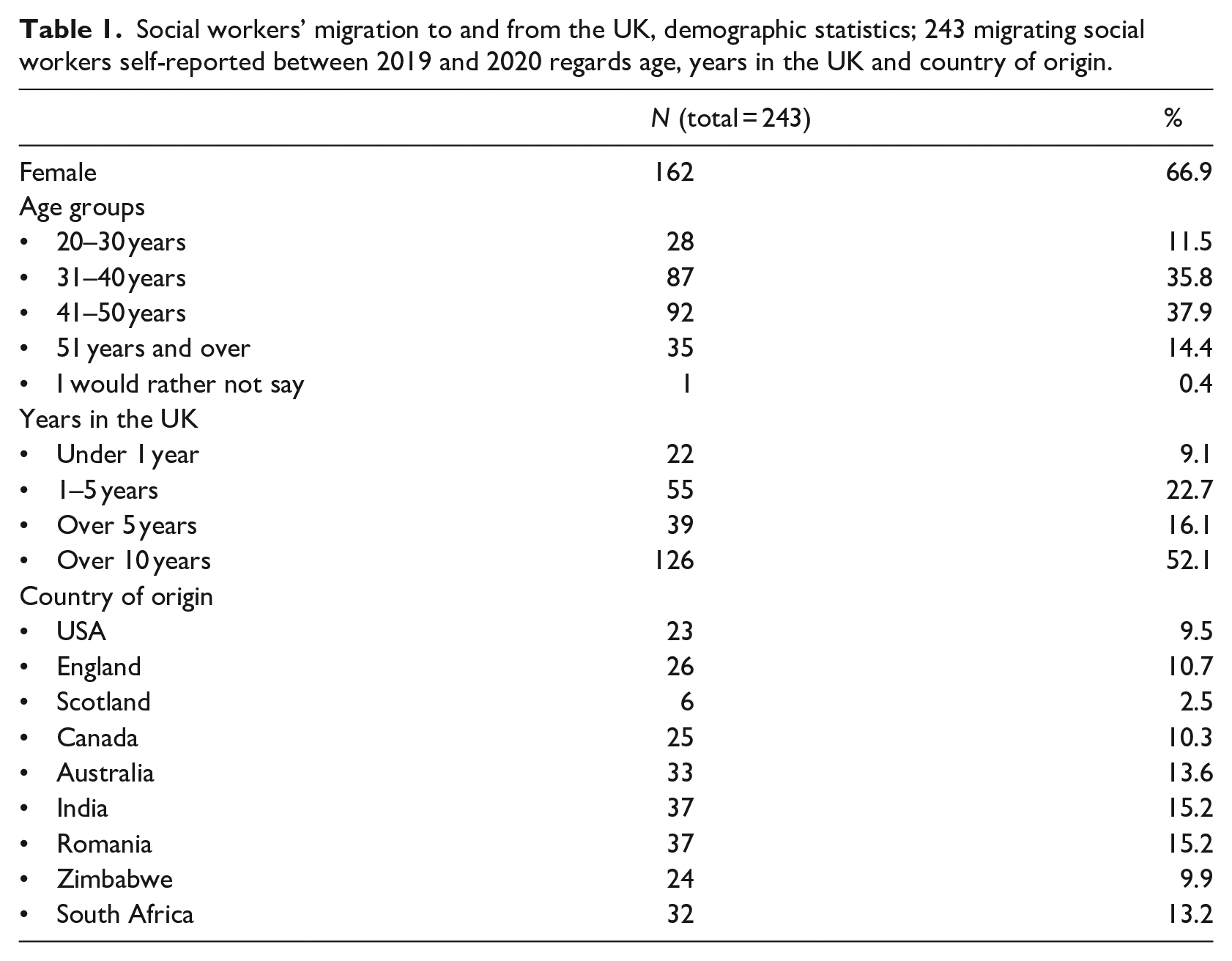
This study included 243 participants, ranging from nine countries. See Table 1 for the description and frequencies for the demographic variables of participants. Most of the participants were female (66.9%) and have been living for over 10 years in the UK or Australia (52.1%).
Social workers’ migration to and from the UK, demographic statistics; 243 migrating social workers self-reported between 2019 and 2020 regards age, years in the UK and country of origin.
Job satisfaction, social network and happiness living in the UK/Australia
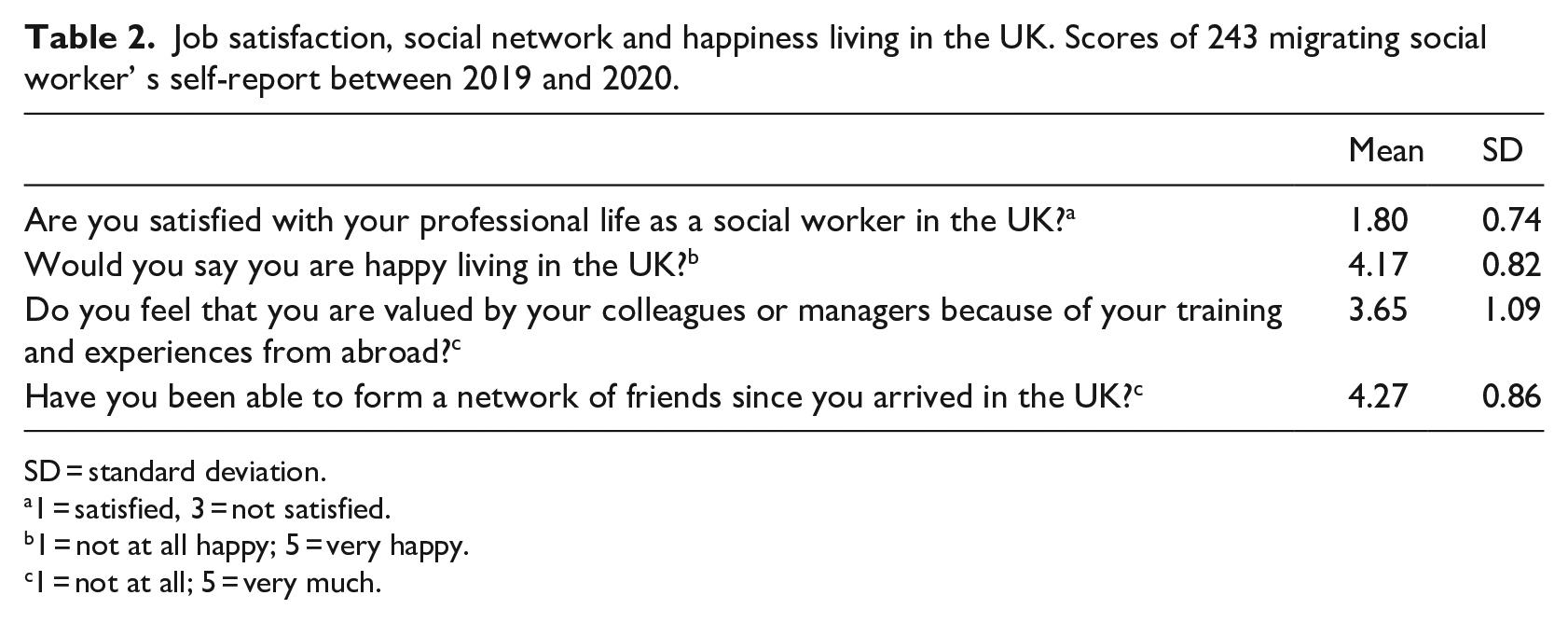
Descriptive statistics for the items related to building a new social network and satisfaction from living and working as social workers in the UK are outlined in Table 2. Our participants were tending to be slightly positive regarding satisfaction with their professional life (M = 1.80, SD = 0.74). In most cases, the migration was experienced as offering new opportunities for professional development. Our participants were also generally positive about living in the UK/Australia. An Indian social worker said, ‘we can offer our family a higher standard of living in the UK compared to what was possible for us in India’. While those arriving from Australia, Canada and the United States were often earning less in the UK, they valued the proximity to Europe enabling easy travel. A Canadian social worker said, ‘I love travelling so for me, one of the great advantages of living in England is the proximity to Europe. In the last five years, I visited most of the countries in Europe’.
Job satisfaction, social network and happiness living in the UK. Scores of 243 migrating social worker’ s self-report between 2019 and 2020.
SD = standard deviation.
1 = satisfied, 3 = not satisfied.
1 = not at all happy; 5 = very happy.
1 = not at all; 5 = very much.
In line with the quantitative results, most participants also mentioned that they feel valued by their colleagues, though this was less common among participants from the Global South. While participants did tell us about the cultural adjustments they had to make after moving to the UK/Australia, most were able to form new relationships and build social networks. For some, these networks included mostly other foreigners.
Gender differences in job satisfaction, social network and happiness living in the UK/Australia
While in the survey sample for Zimbabwe and India, women were a tiny minority, in all the other samples they were a very clear majority. Despite these differences, the study found no statistically significant differences between male and female participants in terms of their job satisfaction, social network and happiness living in the UK or Australia. During the interviews, gender differences were rarely highlighted as a reason for negative or positive discrimination. The UK especially was perceived as advanced in offering a more equitable approach in relation to gender compared with countries in the Global South.
Countries of origin and professional satisfaction
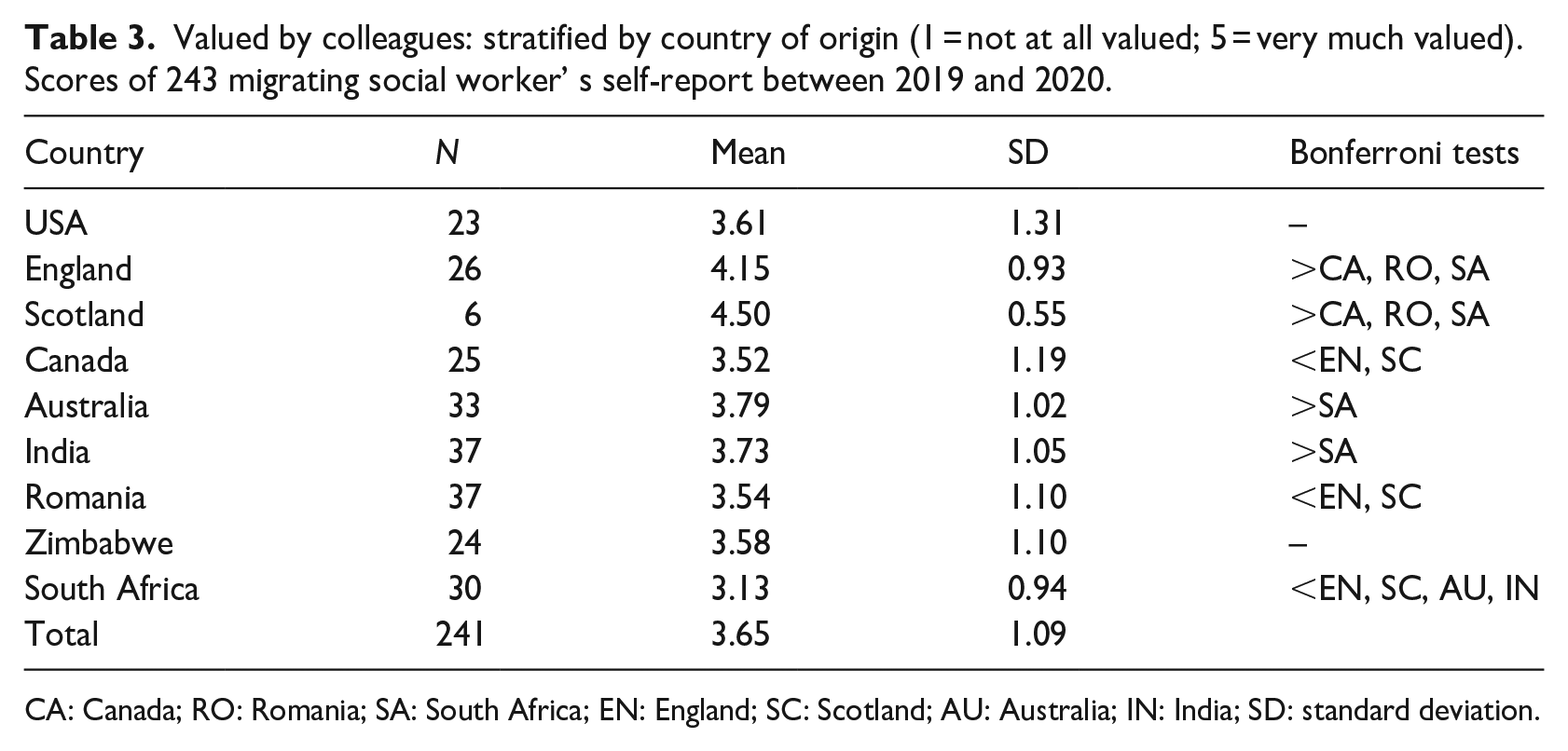
No statistically significant differences were found in terms of job satisfaction between our participants based on their countries of origin, though we did find differences regarding feeling valued by colleagues/managers (see Table 3). British social workers in Australia were also the most likely out of all groups to feel that they are valued by their colleagues/managers. This is likely to be resulting from the fact that the UK maintains its status, at least in Australia, as having a leading educational system and social work practice, which makes it easier for British migrants to adjust well and feel valued. A Scottish social worker shared: ‘I am always asked how things worked in Scotland and what learnings could be used to influence my work in Australia’. Social workers migrating to the UK were very unlikely to receive such enquiries. While overall, social workers from all countries were generally satisfied professionally in their country of destination, our qualitative data indicated that the group that was the least satisfied professionally was American social workers. In response to the questionnaire question, ‘what made the strongest negative impact on you so far?’, the most common answer (38.5%) for American social workers was ‘not being able to identify with how social work is practised in the UK’. American social workers are trained with a much stronger emphasis on clinical and therapeutic skills. Those migrating to the UK found the transition to a role largely focused on case management as a form of deskilling. For these reasons, more than a few of them retrained in the UK as psychologists or psychotherapists so that they can do work closer to what they used to do in their home country.
Valued by colleagues: stratified by country of origin (1 = not at all valued; 5 = very much valued). Scores of 243 migrating social worker’ s self-report between 2019 and 2020.
CA: Canada; RO: Romania; SA: South Africa; EN: England; SC: Scotland; AU: Australia; IN: India; SD: standard deviation.
Contrary to that, Romanian, Indian and South Africans were the most professionally satisfied groups. While the differences between the groups were too small to be statistically significant, we know that for these three groups, migrating to the UK enabled developing professionally, as well as improving their financial situation. Romanians were the most satisfied group, again with only small differences compared to Indian social workers. While Romanians reported experiencing different forms of discrimination, they were also aware that as white Europeans, they did not experience discrimination based on their skin colour. Romanians also indicated in response to our questionnaire that Brexit (‘British exit’, the withdrawal of the UK from the European Union) was the factor most negatively affecting their experience in the UK. We can assume that prior to Brexit, their levels of satisfaction would have been significantly higher.
Countries of origin, social network and happiness living in the UK/Australia
According to our quantitative data, happiness living in the UK/Aus was not significantly different among the countries. While participants from all groups also indicated that they are relatively happy about living in the country they migrated to, the happiest group seem to be the British who migrated to Australia. Many of them reported that the transition enabled them to earn more, develop professionally and improve their quality of life. Many spoke about the Australian quality of life as better in terms of the weather, time outdoors and general work–life balance. The least happy (though still positive about living in the UK) were South African social workers in the UK. Many of them were black and 55 percent of them arrived in the past 5 years. They shared with us their experiences of discrimination from managers, colleagues and service users. Here is what one of them shared with us in this regard: The biggest challenge that I experienced is racism. I worked in a predominantly white area in England. I experienced racial abuse from service users; generally, many service users resent social workers. Being a black social worker in a white area presents a huge opportunity for layered resentment from service users. Most of the abuse is subtle e.g. service users demanding to be allocated another social worker because their child with ADHD cannot relate with a black social worker. Service users raising false allegations against you, making you feel unwelcome and unwanted in their homes and pretending like they do not hear/understand your accent . . . If you raise concerns (with your managers), they always reason it out and make you feel like you are chasing shadows – that you are misunderstanding situations because you ‘want to feel racially abused’ . . . Your lived experiences are minimised, and the communication is that ‘you need to be more resilient and get on with it’. In my view, resilience is deliberately misused to oblige migrant social workers to accept unacceptable treatment from service users to prove that they are resilient. At a policy level, the council that I worked for had very good-sounding policies and procedures for racism and discrimination, but from my personal experience, the policies are a tick box with very little commitment to address racism when it happens. Management will find a way of blaming you for the way you feel.
On top of the negative public opinion in relation to social work in the UK and the resentment of many service users towards social workers, another layer of resentment is added due to racial prejudice. The experience of other social workers racialised as Black or people of colour who are working in white areas often echoed such experiences and for that reason, most of them work in urban centres where Black and people of colour are more accepted. These experiences were compounded by managers who tried to push the blame onto the social worker for the racism they experienced. While these experiences have directly impacted their professional satisfaction, they were very likely to impact how they felt about living in the UK.
Through our qualitative interviews, we learned that social workers from Australia, Canada, the USA and the UK experienced fewer challenges in finding work as social workers in the UK/Aus. Compared with them, social workers from the Global South or those from countries where English isn’t the main language experienced more challenges. They were also much less likely to migrate before they secured a social work position. Many social workers coming from the Global South or from countries where English is not the main language experienced significant difficulties getting their qualifications and work experience recognised. Many also reported different forms of discrimination.
Brexit was another key factor which impacted especially Romanian social workers and to a lesser degree also Canadians, Australians and Americans. We also learned that in addition to American social workers, many other migrating social workers found it difficult to adjust to how social work is practised in the UK. For example, Indian and Zimbabwean social workers have a strong community social work background. They find it difficult to adjust to the lack of community orientation and work in British social work. These professional challenges directly impact their job satisfaction and general well-being.
Differences in the number of years living in the UK
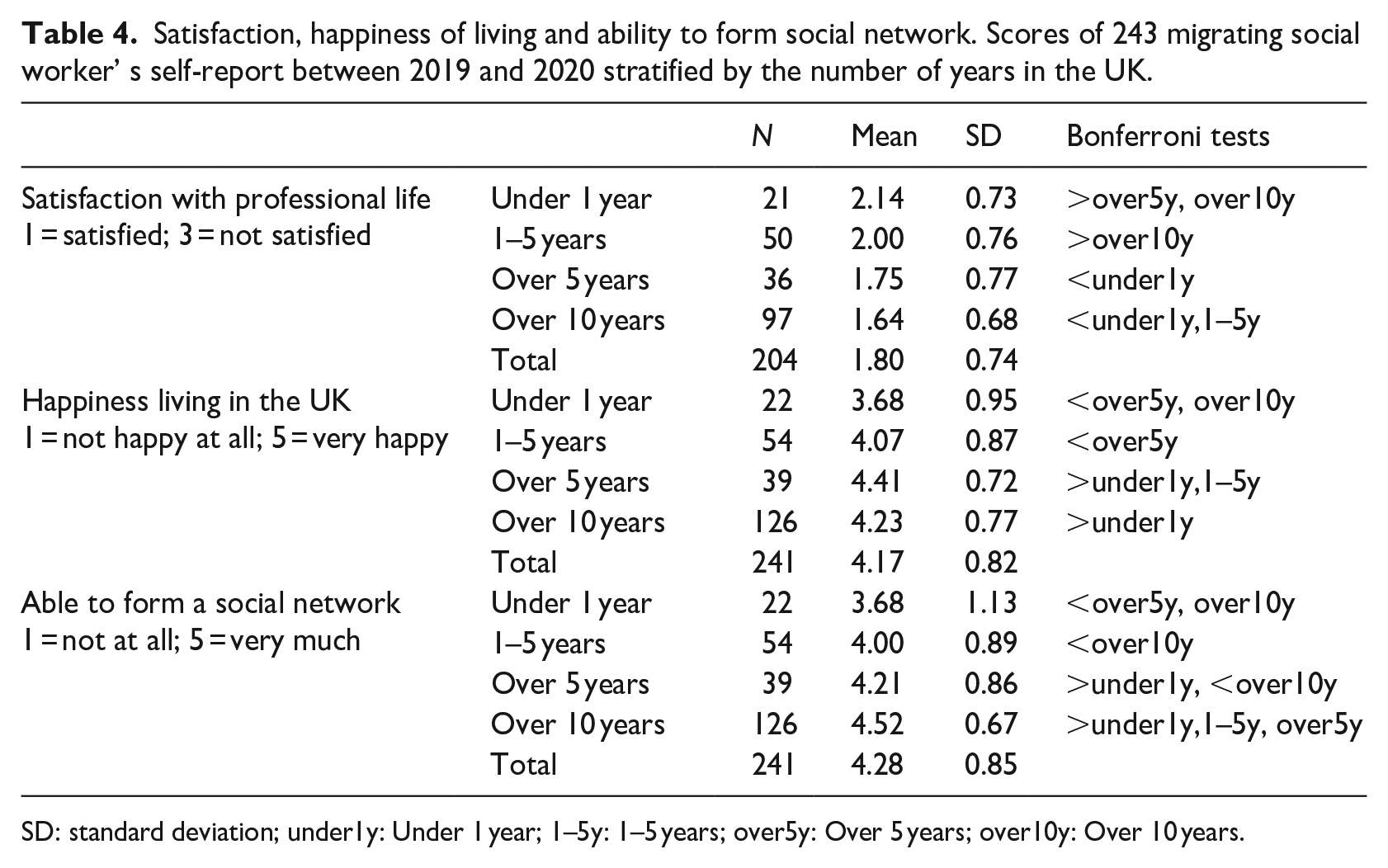
Our quantitative data clearly indicate that our participants’ satisfaction with their professional life, their life in the UK and their ability to form a network of friends improved with time. As shown in Table 4, those who were in the UK/Aus for over 10 years were the most satisfied and able to form a network. During the research, we learned that social workers from India and Zimbabwe had especially strong formal support networks (the UK Malayali Social Workers Forum and the Zimbabwe UK Social Workers Association). Our participants told us about the different adjustments they needed to make as part of their migration and some of these required a significant length of time. We can also assume that those who were very unhappy with their professional and personal lives and/or were unable to form a network of friends left the UK and were not included in our sample. Here is what one of our Romanian participants said: Personally, the move had a negative impact initially as at the time I had a young baby and was not able to claim Child Tax Credit (CTC) and Working Tax Credit (WTC) – this disadvantaged me greatly and I felt a great sense of isolation. I did not have time and opportunities to build social networks (as I always worked) and this impacted the support I had around – this was not something I anticipated. Professionally, I felt deskilled and inferior. It took me a lot of time to build my confidence and work to my full potential. The local council I joined had a great training programme and I could not fault the support provided.
Satisfaction, happiness of living and ability to form social network. Scores of 243 migrating social worker’ s self-report between 2019 and 2020 stratified by the number of years in the UK.
SD: standard deviation; under1y: Under 1 year; 1–5y: 1–5 years; over5y: Over 5 years; over10y: Over 10 years.
While migration is described here as having an initial negative impact, time and the support that was provided enabled improving things and building confidence. Here is how this process was described by an Australian social worker: Transition to the UK was initially very difficult and tiring: adapting to a new social work setting and moving into a new home with new people. Personally, it was initially difficult to make friends, and be away from family. However, once I started travelling and developing my own friendships both at work and outside of work, my personal life improved. This had a positive effect on my work. At the time I had regular supervision, a good manager and made friends at work which assisted me to feel more at ease every time a new challenge was thrown at me.
Other social workers told us about the compromises they initially had to make, including accepting jobs in areas they did not want to practise in, being far away from their homes or at a much junior level than they used to be. Others shared their difficulties in deciphering the local culture and developing a new network of friends, but as time passed, most of our participants overcame these challenges. One aspect that did not improve with time is the way our participants assessed whether they were valued by their colleagues due to their previous experience. As time passes, these previous experiences and training are likely to become less central to our participants and so there is no reason to expect that this aspect will improve. In addition, especially the last decade was marked by a rise in intolerance towards immigrants culminating in Brexit. This might have had an impact on our results too.
Discussion
Our quantitative data showed that our participants were overall generally mildly satisfied with their professional life and were satisfied to a greater degree with their life in the UK/Australia. While we did not find statistically significant differences in the levels of satisfaction between participants based on their countries of origin, our qualitative data did highlight significant differences between the groups’ experiences. Our findings indicate that social workers from Australia, Canada, the UK and the United States experienced fewer challenges in finding work as social workers in the UK or in Australia. Compared with them, social workers from the Global South or those from countries where English is not the main language experienced many more challenges and were much less likely to migrate before they secured a social work position. Many of them also shared experiencing different forms of discrimination. These personal experiences are likely to have an accumulative and significant personal impact over time. However, critical race theory (Delgado, 1995; Warmington, 2020) can help us understand these experiences, not as individual incidents of racial hatred, but as resulting from deeply embedded societal structures which are shaping many aspects of our participants’ personal and professional lives, both in the UK and in Australia.
Brexit also impacted negatively, especially Romanian social workers, and to a lesser degree also on Canadians, Australians and Americans. We also learned many migrating social workers found it difficult to adjust to how social work is practised in the UK. American social workers, who are trained with a much stronger emphasis on clinical and therapeutic skills, find the transition to a role largely focused on case management as a form of deskilling. Similar experiences were shared by Canadian and Australian social workers. On the contrary, Indian and Zimbabwean social workers have a strong community social work background. They find it difficult to adjust to the lack of any community orientation in British social work. These professional challenges directly impact their general well-being. Our quantitative findings did not show any differences between genders regarding satisfaction – both professionally and with their life in the UK. This also was not raised as an issue in our qualitative data. We did, however, find statistically significant differences between our participants based on their number of years in the UK and regarding feeling satisfied professionally and with living in the UK, as well as regarding being able to form a network of friends. The longer our participants stayed in the UK, the more satisfied they became and the more likely they were to develop a new network of friends. The differences between the national habitus (Garrett, 2018) of our participants’ country of origin and their country of destination required years of adjustment. The more time they spent in the new country, the greater their awareness grew and the more likely they were able to adjust to the local culture. These findings were strongly supported by our qualitative findings and many participants described a long and gradual adjustment to different aspects of living and working as social workers in the UK, including building social networks (Hakak et al., 2023; Hakak et al., 2022; Hakak et al., 2021; Hakak and Francis, 2021; Hakak and Willett, 2020; Hakak and Anton, 2020).
While our qualitative findings strongly support the view that significant differences exist between migrating social workers depending on their country of origin regarding their satisfaction with working as social workers and with their lives in the UK, our quantitative data do provide support for these findings, but this is not statistically significant. This might be due to the limitations of our questionnaire. One limitation is that the quantitative items are few and may not reflect the complex construct well enough. Constructs such as job satisfaction may be better reflected by multiple items and ideally, would be reflected by validated instruments. This may explain that nuanced findings were identified in the qualitative approach, such as country differences in happiness or job satisfaction, but were not clearly reflected in the statistical analyses.
Future studies are needed to confirm these findings and shed light on the nuanced constructs discussed, by including validated instruments with multiple items reflecting a construct. The findings of this study highlighting some of the challenges faced by migrating social workers could help recruiters, employers and other professional bodies to better address the challenges and difficulties experienced by different groups of migrating social workers. This should guide the induction and support provided. Improving migrating social workers’ ability to adjust to a new role in a new country will improve retention as well as the service they provide to service users.
Footnotes
Acknowledgements
The authors thank the research participants for sharing their views and the anonymous reviewers of the journal for their extremely helpful and supportive feedback.
Declaration of conflicting interests
The authors declared no potential conflicts of interest with respect to the research, authorship, and/or publication of this article.
Funding
The authors received no financial support for the research, authorship, and/or publication of this article.
