




Abstract
This article presents personal stories from a participatory biographical arts-based study with a specific category of racialised migrants: individuals seeking asylum in the North East of England. Responding to the important questions posed by this special issue, the article explores individual experiences of navigating the UK's hostile environment with a focus on the threefold punitive ‘threat’ of dispersal, detention, and destitution ( Bloch and Schuster, 2005). Adopting an intersectional lens, the discussion highlights the impact of such policies and their compound effect of creating (un)safe and exclusionary everyday spaces, while also outlining the potential for resistance as illustrated by participants’ actions and their creative (re)actions as part of the study's arts-based approach.
Introduction
The UK has extensively been criticised for cultivating a ‘hostile environment’ through the adoption of asylum policies aimed at identifying, controlling, and reducing the number of individuals seeking asylum in the UK (Goodfellow, 2019, see also editorial introduction). The use of deterrence immigration policies in the UK is not a new phenomenon. In fact, it has been part of the UK's immigration framework for more than one hundred years (Hynes, 2009). However, during the mid-1990s several pieces of legislation were introduced with a more direct focus on controlling rising numbers of asylum seekers who were perceived as ‘economic migrants in disguise’ (Michelle and Forrester-Jones, 2022: 1). Successive governments have introduced increasingly punitive border controls and policies for racialised migrants seeking asylum that further restrict their welfare rights and make life in the UK without a right to remain, increasingly difficult (Mayblin, 2019).
The UK's hostile environment policy is a ‘sprawling web of immigration controls embedded in the heart of our public services and communities.’ (Liberty, 2019: 7). As highlighted in the editorial introduction, such a move towards internal border control-mechanisms and away from typically ‘hostile’ spaces such as asylum interviews or detention centres (Taylor, 2022), signifies the devolution of immigration policy to ‘everyday bordering’ practices (Yuval-Davis et al., 2018). This results in the hostile environment being a continuous, ever-present experience that both practically and symbolically, shapes one's experience of seeking asylum (O’Neill et al., 2019).
It is the layers of this complex interplay of ‘policy-imposed liminality’ (Hynes, 2022: 15) and everyday restriction that the article aims to address through presenting the stories (verbal, textual and visual) of those whose lives are immediately affected by such policies. The data presented in this article is drawn from a participatory biographical arts-based study with racialised migrants seeking asylum in the North East of England. Adopting an intersectional conceptual lens offers possibilities for the article to explore the everyday impact of immigration policies in participants’ lives, and the ways in which their different positionalities, characteristics and priorities intersect with and shape such experiences. Secondly, the article explores how participants make sense and critically reflect on the impact of such policies using participatory arts-based approaches and reveals the transformative potentialities such methods can unlock (Stavropoulou, 2019).
The article begins by contextualising the study within the history of the UK's immigration policies. The methodology section outlines the rationale for adopting a participatory arts-based approach and presents important ethical considerations when conducting participatory research. An intersectional lens is employed to explore personal experiences of seeking asylum in the UK with a focus on the policies of dispersal, detention, and destitution. Individuals’ stories explore the impact of hostile policies in their everyday lives whilst also highlighting their agency and conscious decisions to push back against policy-imposed processes of isolation, exclusion, and restriction.
Researching the everyday impact of the UK's ‘hostile environment’
An extensive body of academic and policy research has documented the enduring impact of the UK's immigration policies on asylum seekers’ lives (Hynes, 2009; Zetter et al., 2005; O’Neill et al., 2017; O’Neill et al., 2019). Denial of employment and reduced income forces many individuals into destitution which can lead to mental health challenges, experiences of exclusion, and street homelessness (Crawley et al., 2011). Others are forced into precarious employment in ‘super-exploitable workforce’ environments with inadequate employment rights and protections (Griffiths and Yeo, 2021; Lewis et al., 2017). While waiting for their asylum claims to be processed, they can apply for shared accommodation, which if made available, is offered on a no-choice dispersal basis across the UK. Dispersal of asylum seekers became official policy by the Immigration and Asylum Act in 1999 as a structural change ‘to share the burden’ in response to concerns about the spatial concentration of asylum seekers in London and the South East (Darling, 2016). Dispersal primarily occurs in areas with available social and private housing, and in areas which are usually defined by housing deprivation, poverty, and social exclusion (Zetter and Pearl, 2000; O’Neill et al., 2017). Consequently, their positioning is deliberate insofar as it further accentuates their exclusion and serves as a bordering mechanism separating them from their personal networks of support and connections (Hynes, 2009). Following the 2014 and 2016 Immigration Acts, private asylum accommodation has become even more precarious with the ‘right to rent’ scheme assigning private landlords as ‘border guards’ and forcing them to check their tenants’ documentation under threat of penalties (Cassidy, 2019).
Detention remains one of the principal methods of the UK's immigration system, existing ‘at the harsher end of the border control continuum to help solve the problem of migrants that the British state wants to expel.’ (Turnbull, 2017: 143). The UK's contemporary immigration detention system originates from Britain's colonial history and its racialised post-World War II immigration policies directed at controlling non-white former colonial populations (Turnbull, 2017: 145). Existing research has outlined the relationship between race and immigration (Erel et al., 2016), focusing on the racialised logic of the ‘hostile environment’ and the ways in which UK immigration policies build upon and reconstruct such racialisation processes (Shobiye and Parker, 2023).
The article focuses on the threefold punitive ‘threat’ of dispersal, detention, and destitution (Bloch and Schuster, 2005) to examine the everyday impact of the ‘hostile environment’. Embracing the centrality of lived experience, the study's participatory arts-based approach becomes a vehicle to explore experiences of seeking asylum. The research contributes to a growing body of arts-based research that explores the everyday impact of the UK's asylum system through participatory artistic approaches (Erel et al., 2018; Haaken and O’Neill, 2014; O’Neill et al., 2019). Moving beyond language constraints between researcher(s) and participants, such methods can open methodological avenues to engage in sensual, tacit, and embodied forms of knowledge and meaning-making (Kaptani and Yuval-Davis, 2008). Although arts-based research may not always be able to provide practical solutions to improve participants’ living realities, it can nevertheless, offer ‘points of resistance’, and support the expression of personal counter-narratives through storytelling (Lenette, 2019: 43).
Such a process of resistance is evident in O’Neill et al.'s (2019) study of women asylum seekers and migrant mothers with no recourse to public funding. Through participatory arts-based and ethnographic methods this work explored experiences of statelessness as shaped by the UK's hostile environment. It foregrounds the stories, voices and artwork produced by the women to highlight the multiple ways in which ‘necropolitics’ (Mbembe, 2003) are embedded in the fabric of everyday life of women migrants. They conclude with a reminder that for research to be truly committed to social justice it must also provide alternative modes of knowledge such as feeling and thinking, that can support visceral understanding, empathy, and solidarity (O’Neill et al., 2019: 143).
While embracing a similar approach to exploring the impact of the UK's hostile policies in everyday life using participatory and co-creative approaches, this study differentiates itself by using intersectional theory to closely reflect on how participants’ unique positionalities influence their experiences of the UK's hostile environment. Focusing on participants’ stories and responses to research processes, also creates space to conceptualise ‘resistance’ – as a personal, conscious decision to ‘push back’ against dominant structures. As Lilja and Vinthagen (2018: 211–212) note: Resistance changes societies and individuals. It is connected to formations of the ‘self’, agency and various self-reflective practices. (…) Thus, resistance must be understood through how it is intertwined with power, affects, agency, temporalities, spaces and other forms of resistance.
Within this context, ‘resistance’ is dynamic, transformative, and all-encompassing (Lilja and Vinthagen, 2018). In this study, resistance manifests itself in everyday life through the participants’ decisions to challenge and oppose such hostile policies that restrict their civic, social, and physical mobility, and as part of the creative process.
Conceptual framework
An intersectional approach reveals that immigration policies are experienced by racialised migrants in different ways given their biographies and personal identifications. Rooted in Black Feminist movements, the term was coined by American legal race scholar and civil rights advocate Kimberlé Crenshaw in 1989. Applying black feminist theory to anti-discrimination law, Crenshaw suggested that gender and race cannot be separated in black women's lives, as they become subject to both sexism and racism. According to Crenshaw (1989: 139) the term intersectionality reveals the ‘multidimensionality’ of marginalized subjects’ experiences.
For some, intersectionality's potential to illuminate structural complexity in experiences of oppression(s), is met with scepticism (Bastia, 2014). Critics comment on ‘the endlessness of differences’, as ‘a weak point in intersectional theory’ (Ludvig, 2006: 247). Also, intersectionality's reliance on ‘binary identities to explain multiple forms of discrimination’ while drawing the issue of scale in terms of who is recognised as being intersectional (Nash, 2008: 9). Despite such analytical challenges, intersectionality remains a useful analytical tool to explore migratory experiences because it recognises the compound effect of interconnected issues such as race, ethnicity, gender, age, or religion instead of aggregating them (Lenette and Boddy, 2013). In doing so, it challenges the limitations of an essentialist position that understands all members of a particular social group as the same (Hankivsky and Cormier, 2011). Adopting an intersectional lens therefore counteracts the homogenising effect of a shared universal ‘refugee’ experience; paying attention to how individual experiences shape racialised migrants’ asylum-seeking trajectories.
In migration studies, research adopting intersectionality as a conceptual framework highlights its potential for nuanced and complex understandings of personal asylum-seeking experiences (Lenette and Boddy, 2013). Shobiye and Parker (2023) note the analytical value of an intersectional approach to examine the impact of UK hostile policies in the lives of asylum-seeking mothers. Their article outlines the function of the ‘hostile environment’ as a racialised, gendered system perpetuating processes of legalised hostility and exclusion as systemic coercive control. Building upon research in migration studies, this article foregrounds the centrality of personal stories and asylum seekers’ intersecting identities of gender, age, nationality, ethnicity, and race, that shape and define precarious situations, and examines the impact of hostile policies by establishing a dialogue between immigration policies and lived experience(s).
Methodology
The research presented in this article is drawn from a doctoral participatory arts-based study engaging individuals with lived experience of seeking asylum in the North East of England. The methodology demonstrated a commitment to participatory, co-creative ways of knowledge production ‘with rather than about migrants’ (Jeffery et al., 2019: 7). By combining ethnography (ethno) with participatory arts (mimesis) (O'Neill et al., 2002), the project facilitated the production of a safe, potential ethno-mimetic space that supported the creative re-presentation of autobiographical migratory experiences.
The study took place over a period of eighteen months (September 2016 – February 2018) and involved interaction with seventy-five individuals who had applied for asylum in the UK. Research collaboration emerged with a core group of twelve individuals over a two-year period. Core group members completed between one and two rounds of biographical narrative interviews and some supported different phases of the research including co-analysis of biographical data and preparing material for public exhibitions. The core group was of mixed gender, 8 men and 4 women. Their ages ranged from mid 20s to late 50s and their countries of origin included Syria (3), Albania (3), Nigeria (1), Iran (2), Eritrea (1), Sri Lanka (1) and Congo (1). The length of time in the UK ranged from 71 days to 8 years. The reasons for which they sought asylum varied from political persecution to fears of being persecuted due to their sexuality or avoiding forced marriage and escaping marital abuse. The research involved working closely with four different organisations, whose expertise and resources (e.g., venue access) was pivotal to the study, especially in relation to participant recruitment and dissemination processes. The project was also supported by an advisory group with a range of migratory experiences and professional knowledge of supporting newly arrived communities.
Ethnographic participant observation combined with biographical narrative interviews was conducted across several community venues including refugee-support drop-in sessions, English language conversations, and participatory creative projects. A biographical interview is an in-depth interview where the interviewee shares his or her life story. As part of the study, individuals shared narratives about their countries of origin, their journey to the UK and their experiences of seeking asylum. The study's visual ethnographic phase included a series of ten creative workshops both in group and one-to-one settings engaging thirty participants in total. The workshops and one-to-one creative sessions took place after the period of participant observation, which allowed adequate time for: project briefing, explanation of workshop aims and objectives, development of creative ideas and establishment of a relationship of trust. Participants were first asked to share artwork that visually represented their experiences of seeking asylum through creative methods including photography, drawing and collage. They were then invited to participate in photo-elicitation dialogues during which they reflected on what their artwork meant for them. Some of the participant-produced artwork was showcased during two Refugee Week celebration events in 2017 and 2018 (Figure 1) and exhibited at one of the involved project venues.
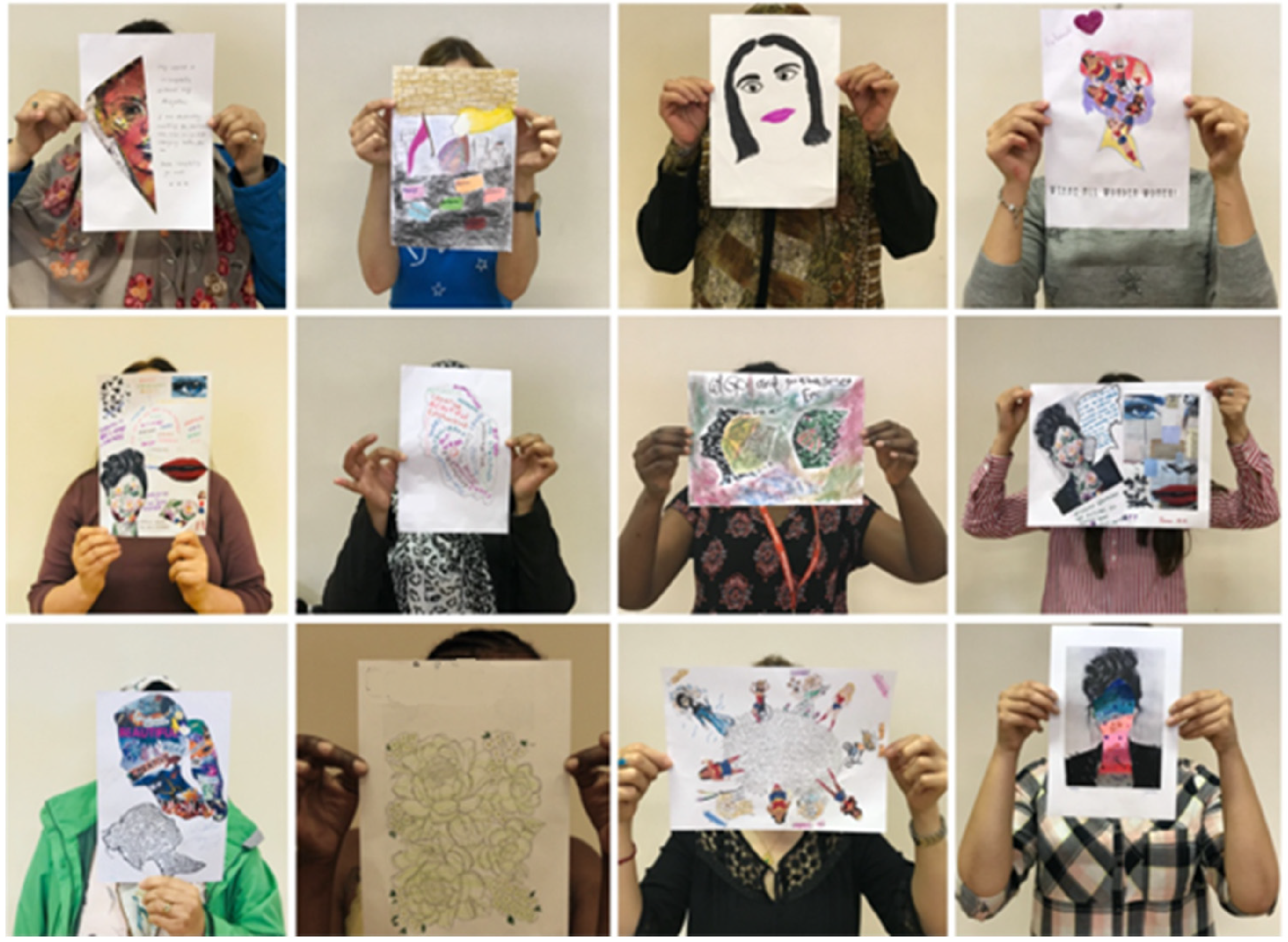
Not all participants felt comfortable to engage with creative methods as they found the ‘expectation of creating art’ challenging (Stavropoulou, 2019). In some cases, we explored alternative creative endeavours such as imagining ‘snapshots’, sourcing online content (creative commons licensed), and sharing images from their smartphone photo galleries. In this way they were still able to participate, if they wished so, on their own terms. Finally, semi-structured interviews were conducted with support workers, creative practitioners, solicitors, and volunteers engaged in refugee support work.
A thematic analysis approach was employed across biographical and visual data, to examine how hostile policies create a compound effect of oppression(s) for individuals seeking asylum. Theories of symbolic interactionism (Blumer, 1969) and interpretive phenomenology (Smith and Osborn, 2008) informed the reflective analysis of how individuals make sense of their changing social realities within such (un)safe policy-constructed spaces.
Ethical approval was sought from Durham University's Research Ethics Committee, with continuous support and guidance by the doctoral supervisory and advisory teams. When engaging in participatory research with individuals with migratory experiences it is important to be aware of the risk of re-enacting the same unequal power relations that shape and underpin policies of migration control (Cabot, 2019). To mitigate against this, extra attention was given to ensure that participants did not feel rushed or coerced into participating in the study (Cooke and Kothari, 2001), and clearly communicating that their participation would not aid or negatively affect their personal situation in any way. As one participant explained: ‘We don’t like to feel like lab rats. If you decided to take part it needs to happen with respect and not to make you feel used or rushed’. Allowing enough time to build trust and rapport was essential before extending an invitation to participate in the research activities. Some individuals refused to participate due to concerns around privacy, fears of negative implications on their claims or prior personal commitments, whereas others saw the study ‘as an opportunity to tell our truth and hopefully others will listen’. For others, the creative activities served as a ‘space to say something, to speak about yourself’ or ‘to escape for a while’. Reflecting on the study's participatory arts-based approach, Azadeh, who is a professional artist born in Iran, argued that art can serve as a powerful vehicle for socially-engaged action by communicating powerful messages, while remaining subtle enough: ‘Every human being is creative. They may not touch those senses, but they are all creative and it is a very gentle, subtle, humane way of passing your thoughts.’ To counteract the risk of re-exposing participants to a traumatic experience (Fine et al., 2013), including reinitiating an interview environment that reminded them of their legal interviews, care was embedded in creating a welcoming research space through hosting sessions in familiar spaces. This included providing refreshments and snacks, when possible, and ending interviews with debriefing conversations. Following conversations around ethics, anonymity, and privacy, all participants were given pseudonyms. The right to silence was safeguarded at each step, realising that not all stories are meant to be shared.
Analysis
This section presents participants’ experiences related to three immigration policies: dispersal, detention, and destitution. Weaving together participants’ stories, experiences, and artwork reflections, it outlines the ways in which individuals seeking asylum attempt to ‘push back’ against hostile policies and shows how this resistance can be supported and shared with wider audiences through participatory arts-based research processes.
‘No choice’ dispersal
The experience of having ‘no choice’ (Hynes, 2009) and feeling disoriented because of the dispersal process, was shared by Ali who left Eritrea in 2016 to escape the inscription system. As he explained, ‘I had no choice about it. I was very scared and confused. I was living there with six other men all from different countries. No one spoke my language’. Ali also described how his initial confusion was soon met with a sense of discomfort forcing him to limit the time he spent in his shared accommodation. He commented on the practical, cultural, and emotional difficulties of sharing a domestic space with ‘actual strangers who do not speak your language or understand your culture. Especially when you are traumatised and unsure about what happens next’. His experience captures the ways in which asylum policies fail to acknowledge asylum seekers’ precarious emotional and mental states and can further aggravate trauma.
When Riana, a solicitor from Albania, arrived at her new shared accommodation, she was surprised at the state of it: I thought am I at house or storage? The guy from Jomast laughed and said “Say you are, you have a roof”. Alright I just went inside for one week it was horrible and I called the guy and said “May I do some rules for the home? Because I can’t stay like this”. So I spoke to the ladies and said we wash everything, clean, tidy. The house became nice and we had good relationship with girls.
Riana's experience was common amongst women participants, not only in terms of the ‘poor quality’ of their shared accommodation (Allsopp et al., 2014) but also their conscious decisions to ‘clean up and make it feel like home’. Her ‘home-making’ intervention can therefore be seen as an embodied act of resistance towards the dehumanizing living conditions asylum seekers experience in shared accommodations and the imposed loneliness among strangers as described by Ali. Moreover, Riana's intervention becomes a way of building community as she focuses on establishing ‘good relationship’ with her housemates. Riana's story also reflects a wider experience across participants who described how they were treated with disrespect or threats of being reported when communicating any complaints or concerns, thereby being subjected to systematic silencing. For example, some participants expressed concern that making a complaint could make them appear ‘ungrateful’ or a ‘troublemaker’, and potentially jeopardize their asylum claims.
In January 2016, the issue of unsafe accommodation featured on the front page of UK Press, following an investigative piece about the ‘red door’ incident of asylum accommodations in the city of Middlesbrough. The doors had been painted red by housing contractor, Jomast, to help identify and monitor asylum accommodations (O’Neill et al., 2017). However, such an identification mechanism unavoidably resulted in instances of racist behaviour, abuse, and vandalism (Darling, 2016). The ‘red doors’ incident was mentioned during one of the creative sessions by Aliana, from Cameroon, who was seeking asylum after escaping an abusive marriage. Aliana produced a drawing of a door with the words ‘GO HOME’ (Figure 2) as a reference of negative responses to asylum seeking communities.
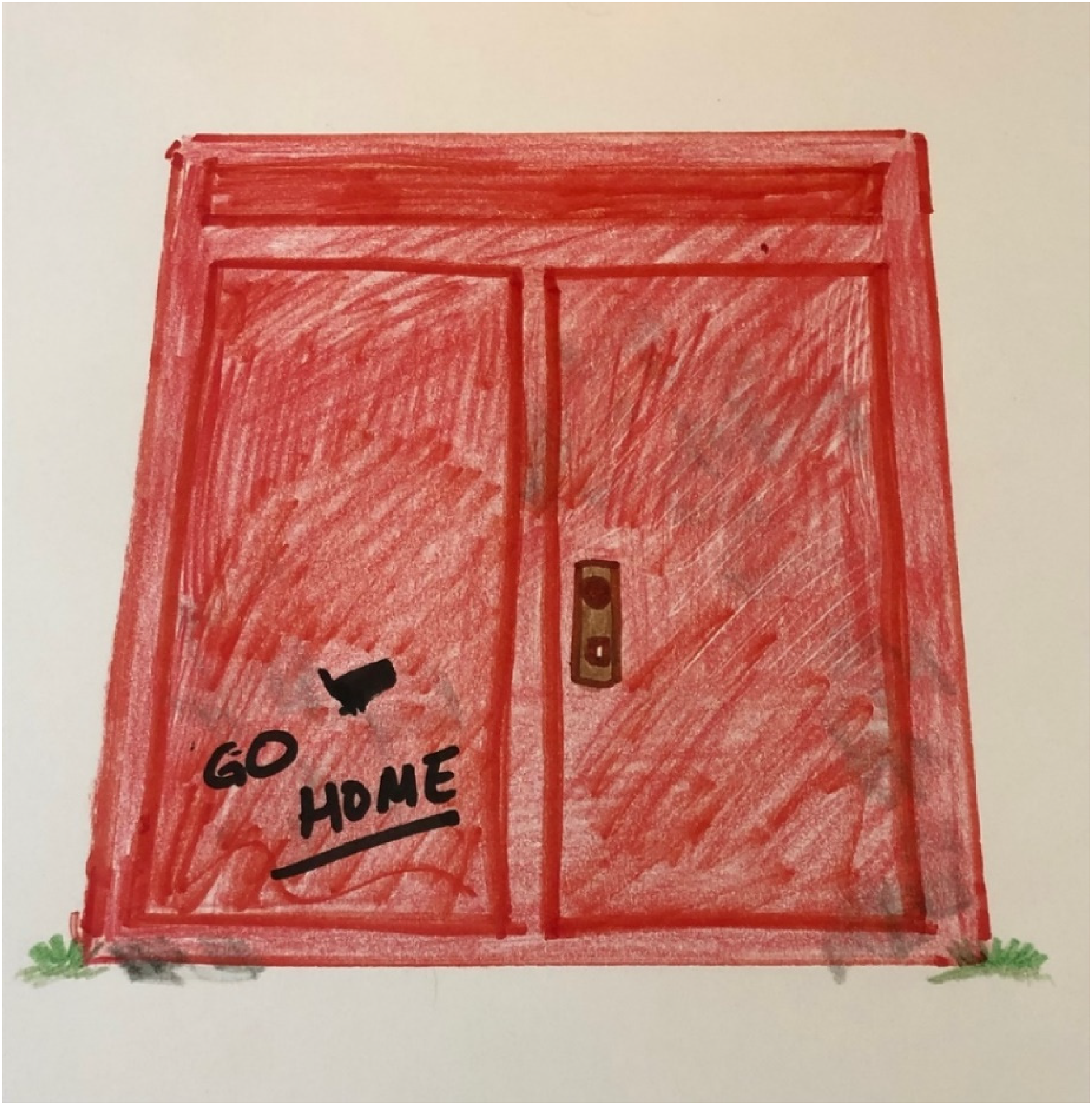
Reflecting on her drawing she explained that: I drew a red door because the front door used to be painted red. A lady told me it was so people knew we were asylum seekers. Now it is repainted but you cannot cover what this means. (…) The colour red is bright. It make[s] you see it. They want to see us. Red also reminds me of blood. Violence. Like what I escaped. It is dangerous, like people knowing where you live and what you are: an asylum seeker. For me this is times two. Because of my skin, people will automatically assume that I am [an asylum seeker] when looking at me. (Photo-elicitation response)
In Aliana's case, her skin colour functions as another identification mechanism; her words ‘for me this is times two’ outlines the compound, intersectional effect of race, ethnicity, and her immigration status. Similarly, the symbolic violence of such an act has a double effect on Aliana as an echo of her prolonged abuse; ‘Red also reminds me of blood. Violence. Like what I escaped’. Through her drawing, Aliana resists and articulates the punitive function of the ‘red doors’ emerging through a three-fold punitive strategy of monitoring, classification, and identification - as an ‘asylum seeker’.
The experience of asylum accommodation as an (un)safe space was also recounted by Meru, from Albania, who had also escaped a prolonged abusive relationship: You never know who might be knocking on the door and what they want when they come in. Next time maybe they come for me (…) I live with eight people, it is difficult but what can I do. I share a room. I am not a young woman, I need my time and space.
Meru described needing more ‘alone time’ both physically as well as mentally. She added that some days she ‘just can’t get out of bed’. Meru is also found at the crossroads of different intersectional points of oppression shaped by her gender, age, and her racialised identity as an Albanian national. As she describes, she is not a ‘young woman’; she is a transnational mother separated from her children and an Albanian woman who has escaped an abusive domestic space only to find herself in a new (un)safe space. Meru explained that being from Albania ‘means my case might take longer because Home Office don’t know how bad situation is for ladies in Albania’. Several Albanian participants facing prolonged waiting periods attributed the delay in inadequate information about the ‘dangerous situation’ for women in Albania in relation to domestic abuse and hate crimes – a reality which as Riana, also pointed out, is not reflected in the Home Office's official country guidance to support asylum determination claims. Meru's interview excerpt also brings into focus the centrality of nationality as a defining parameter of experiencing the UK's immigration system in relation to a hierarchy of deservingness (Ravn et al., 2020), which questions which asylum seekers are recognised as more deserving of welfare support.
Participants’ narrated experiences highlight how dispersal and housing policies function as structural violence (Galtung, 1969), effectively limiting the mobility of asylum seekers as well as subjugating them in new physical and mental spaces of surveillance. For participants like Aliana and Meru, the UK's ‘no choice’ asylum system re-exposed them to the memory and trauma of living in an unsafe, violent domestic space (Cassidy, 2019). Their intersectional experiences also confirm previous research addressing the lack of support for dispersed women who have experienced gendered violence (Canning, 2020). As the following section will explore, restriction of mobility combined with prolonged waiting can become a powerful constraining method - often encountered in immigration detention processes.
Real and symbolic experiences of detention
Across the study, only a few participants had experienced detention. During that time, they experienced high levels of anxiety and uncertainty, underpinned by a feeling of confusion as their initial expectations of receiving support were instead met with enforced custody. This was the experience of Youssef from Syria, who was detained upon arrival to the UK. Youssef describes the experience as the ‘biggest humiliation’; he felt angry and confused at the lack of support and his treatment as ‘a criminal’: I was confused. It was the biggest humiliation of my life to be honest. Because you are going somewhere asking for help, you know what I mean? You don’t need help physically, but you need help.
Another participant, Lucas, also described his experience of being detained as ‘one the most confusing moments’ of his life. Back in his home country in Cameroon, Lucas had been advised that in the UK he would be able to request asylum and access protection. Instead, he recounts being interrogated and feeling pressured to complete his asylum interview in detention despite the doctors providing medical evidence of him ‘being unfit’ because of his mental health. His experience highlights an important contradiction inherent within the asylum determination process: the need to produce an intelligible account of persecution despite experiencing high levels of distress and trauma (Paskey, 2016). Similarly, other participants commented on how they felt emotionally and mentally ‘unfit’ during their initial conversations with border control professionals who treated them ‘like common criminals’.
For Riana, her treatment as a ‘common criminal’ started as she crossed the border: They saw my passport and places I’ve been – “have you been in Russia?”, they asked. They treated me like a spy and put me in handcuffs. That night, around 2am I stayed at the airport and was waiting. They came and took my handcuffs, and I was so stressed thinking about why and what is going to happen and why are they treating me like that? (…) They put me in a room alone for five days to make me feel pressured and see if I was lying. It was horrible.
Riana stayed in solitary confinement for five days before being placed into detention for three weeks until she was released with the help of her solicitor. Although she was not aware of the UK's legal system, her legal background offered her a privileged understanding of asylum determination processes. During the study's creative sessions, Riana produced an auto-biographical portrait (Figure 3) that tells her story. At the centre of the drawing, the letter ‘R’ in capital represents her initial while the peripheral drawings such as the scales, all relate to her legal education and practice.
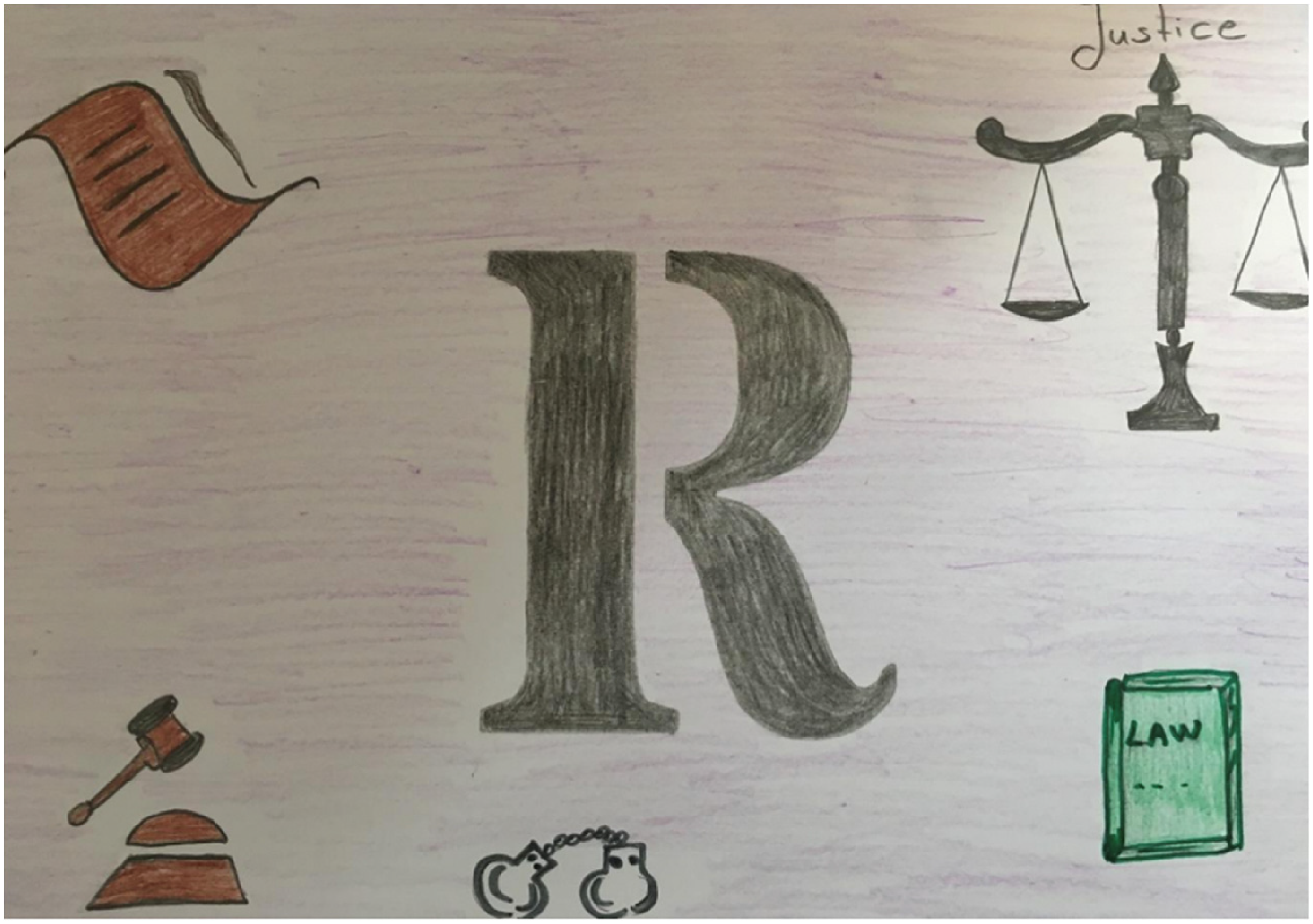
As she explained, I used to be a lawyer, so I have a better understanding of how the system works here. For some of the ladies I help it is completely new and they don’t know what to do in order to help their cases. (Photo-elicitation response)
Riana's artwork illuminates two processes of resistance; on one hand, her experience of seeking asylum does not become defined by her status as an ‘asylum seeker’ and instead, she ‘holds on’ to her identity as a lawyer. Riana powerfully resists the dehumanising impact of hostile policies that intentionally strip individuals seeking asylum of their social networks, skills, and personal identifications. Secondly, her lived experience of navigating the UK's asylum system re-constructs her as ‘an expert by experience’ and gives her a new role: helping others. In providing support to others, she is also creating a new support network for Albanian women seeking asylum, serving as an additional act of challenging ‘no choice’ asylum processes.
Tied to processes of detention is the passing of time, which as Turnbull (2016: 62) observes ‘poses special challenges for incarcerated individuals’ as within custodial settings, time is negated; it becomes about ‘doing’ or ‘killing time’ (2016: 62). Within migratory experiences, time becomes an ‘exercise of power’ by states (Khosravi, 2014) defined by uncertainty about the outcome of one's situation. Similarly, participants who had been waiting for prolonged periods regarding their asylum claims, described how such suspended waiting periods served as a ‘different kind of prison’ (Stavropoulou, 2019: 103). Participants who had been waiting between two to five years, explained how they were not able to move on with their lives due to their lack of refugee status. Sanya from Albania, who had been waiting for a decision regarding her asylum claim for four years, reflected on the experience of waiting and explained that ‘living like this is no life’. Her drawing (Figure 4) shows a woman crying and underneath her tears you can see the words ‘unknown future’.
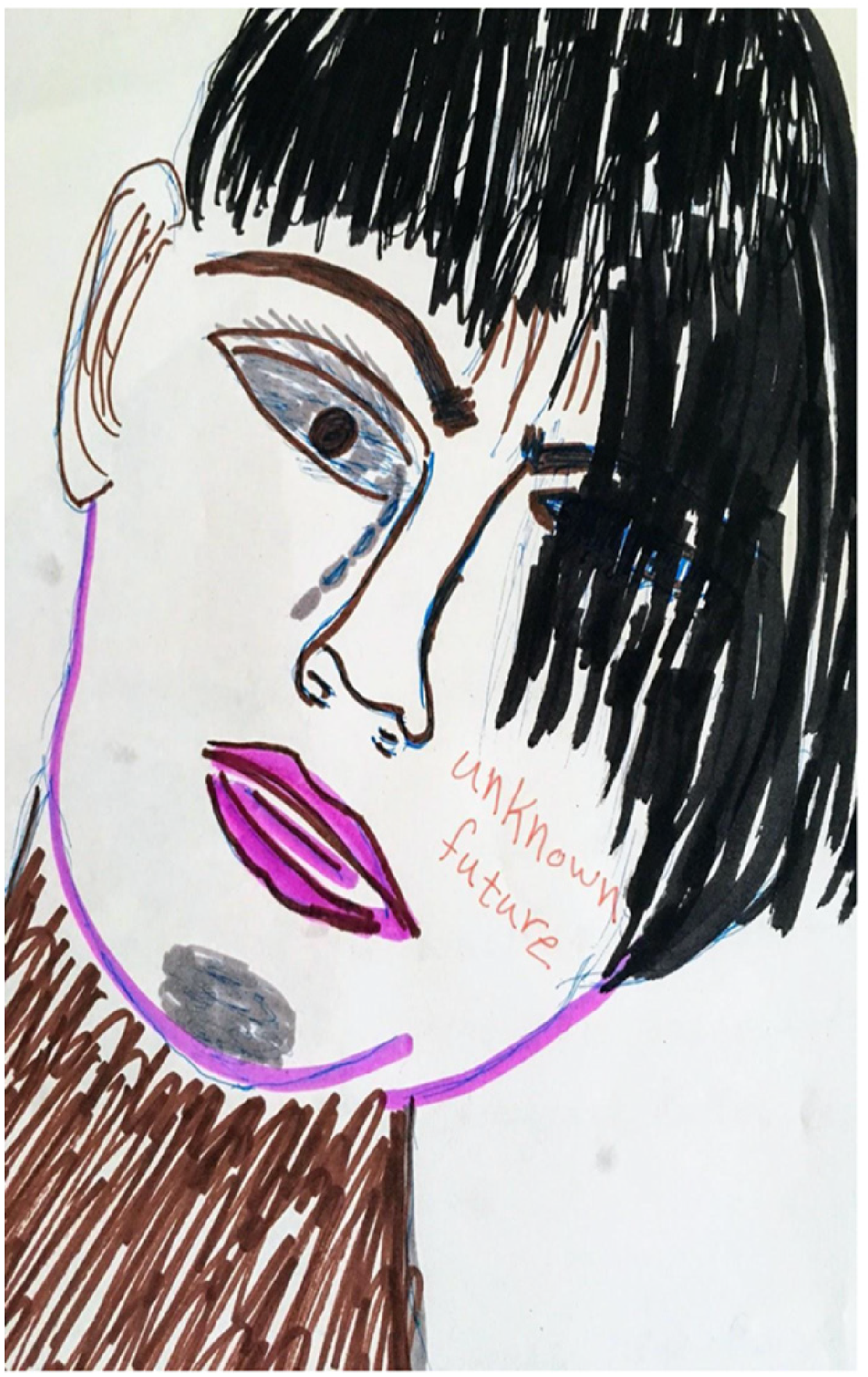
Using her own voice, she explained what her drawing represented: This is me every day. I don’t know what will happen next, I am afraid of the future. You can only see one eye, the one that is crying. The other one is hidden because I cannot see what will happen. (Photo-elicitation response)
Sanya's artwork reveals the embodied and emotional experience of the UK's immigration policies as a symbolic form of detainment defined by a loss of control of time and the ability to know, plan, and anticipate ‘what will happen’ next. The image of her hidden eye metaphor also alludes to the idea of being blindfolded, a method employed in punitive institutions such as high security prisons. While ‘waiting’, Sanya has been involved in different community projects supporting asylum-seeking communities. As she explains, From making tea to welcoming people, I try to help others the way people helped me. It is good because I get out of the house, and I feel I have a purpose to do something that makes a difference.
Sanya's decision to volunteer and help others becomes her personal resistance act, allowing her to ‘push back’ against a restrictive system that systematically prevents civic participation. As an act of resisting ‘waiting’ as ‘empty time’ (Rotter, 2016), many participants found ways to become actively engaged in different activities and aspects of their new communities through volunteering, community organising and leadership roles. Such activities were understood both as a way of passing time and improving their mental well-being, ‘giving back’ to the communities and organisations that have supported them, as well as developing new skills. Lina from Albania, explained how volunteering allowed her to help others while also gaining work experience: ‘I hope that by working here as a volunteer I can then be ready in the future to work properly’. Although volunteering can be understood as a conscious decision to resist inactivity, it also reinforces the allowed nature or volunteering as opposed to paid employment; thereby effectively drawing the line on what type of civic spaces and activities can be accessed.
Detention – whether in physical, emotional, or symbolic form, can serve as a ‘blindfolding’ experience which robs individuals of their power to plan and resume control of their lives. Such an experience however is not solely contained behind closed doors; it also permeates different facets of everyday life as an asylum seeker due to prolonged waiting periods embedded in asylum determination processes. Such symbolic experiences of confinement are further heightened by experiences of destitution, as this next section will address.
Experiencing destitution
A major everyday challenge for all participants was the experience of living with limited financial resources and the inability to engage in paid employment. All participants described how their reliance on their weekly allowance restricted their day-to-day life in terms of what kind of resources or activities they were able to afford. They also reflected on how such an inability to be financially independent impacted their mental health (Weller et al., 2019). According to Asan from Iran, the inability ‘to work, eat, travel, see your family’ is ‘living torture’. In his opinion it is because ‘they don’t see us as people but as garbage’. Asan's comment represents a wider reflection across participants about their ‘lives not being as important’ in the immigration context. Asan's use of the word ‘garbage’ also highlights the underlying threat of being ‘disposable’ as individuals live with the constant fear of detention and deportation.
For Lina, living in destitution meant not being able to meet individual needs: Money it is not enough (…) For me that I have a disability I need to pay for example taxi to hospital for my appointment. And they say “sorry we cannot give you money for taxi we only pay for public transport”, but how can I take public transport?
Lina was born with a genetic disfiguration in her limbs, making it difficult to walk. Growing up in Albania she experienced discrimination and abuse in response to her disability while being kept ‘locked’ in her room when visitors came. In Lina's case – as a woman with a disability she faces different financial needs including private transport for her medical appointments. Lina spoke about her experience of destitution and the financial hardship women asylum seekers experience during the ‘Sanctuary in Parliament’ event in November 2017. ‘Sanctuary in Parliament’ is an annual event organised by City of Sanctuary (CoS), a cross-national movement committed to welcoming individuals seeking humanitarian protection, which brings together CoS community groups from around the UK and MPs to discuss key issues faced by people seeking asylum. Her decision to speak in public, despite concerns over anonymity, can be understood as a ‘loud’ act of resisting to be defined by her status as a disabled ‘asylum seeker’ and actively pushing back to reclaim control and ‘help change things for people like me’.
In one of her art pieces (Figure 5), Lina pieced together an invitation to others to be more ‘welcoming’ – both in immigration policies as well as in public behaviours towards disabled women asylum seekers.
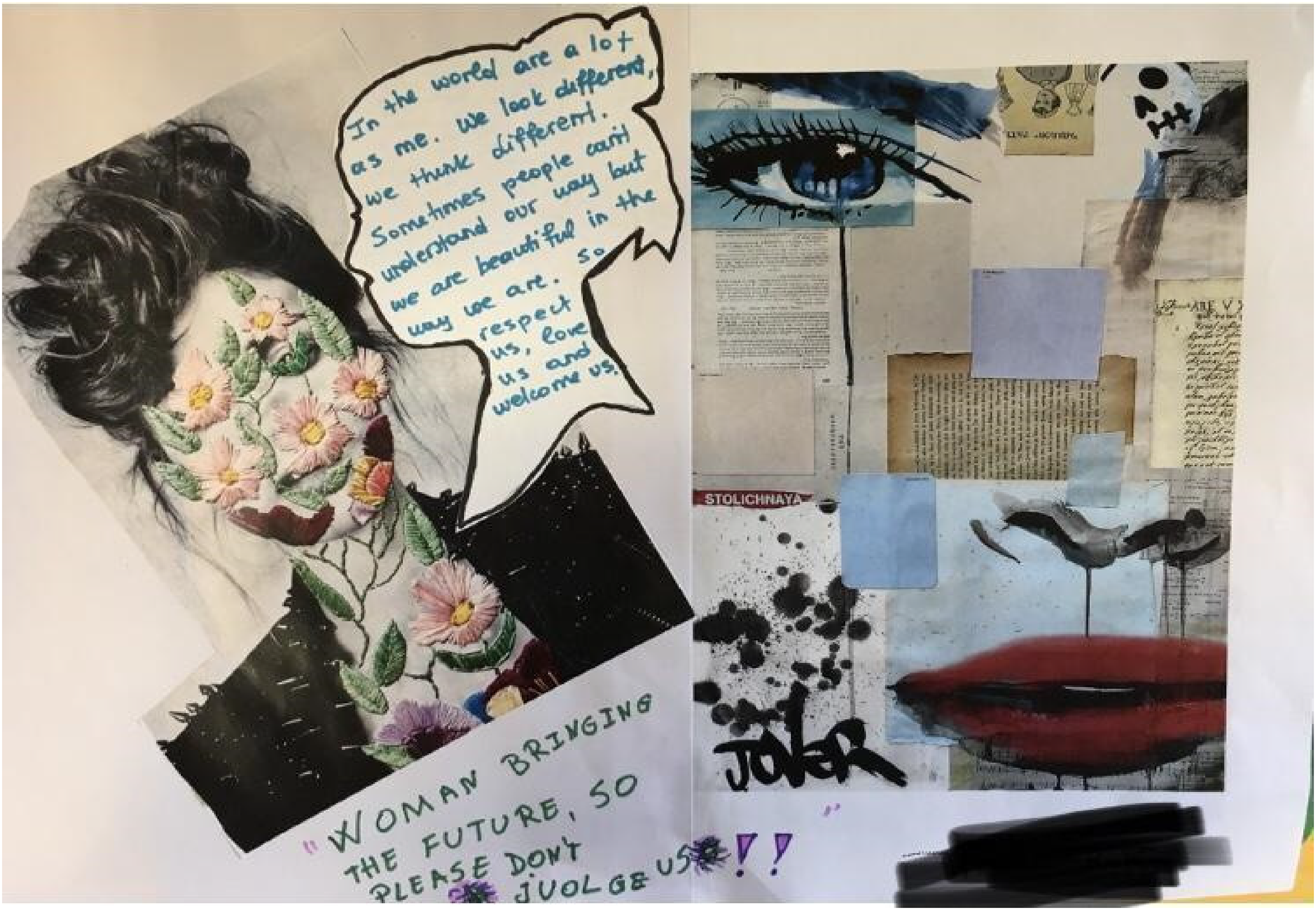
Lina's collage brings together three different female forms – each of them unique and multi-synthesized, constructed by different elements that highlight women's diverse nature. The text found within the outline of a woman's head reads: In the world are a lot as me. We look different, we think different. Sometimes people can’t understand our way but we are beautiful in the way we are. So respect us, love us and welcome us.
Lina explained how her artwork addresses the treatment of women asylum seekers who experience disabilities; it is a message to promote acceptance and respect not because of how ‘you look but because of who you are’. More importantly it is a critique of the UK's immigration policy – despite being a country that recognises women's rights, it effectively restricts women asylum seekers’ rights: Even in this country that there is freedom and women's rights I thought it would be more helpful for asylum seekers who are women. Here some people when they hear that you are asylum seekers they will say “why are you here?” and “you are taking our benefits” many, many things like this. (Photo-elicitation response)
Lina's response also highlights an important analytical point in relation to the symbolic violence imposed at individuals seeking asylum who become constructed as potential ‘welfare cheats’. Caleb also explained how he often had to defend himself against verbal accusations of ‘coming to our country and taking our resources’. As Caleb explained: I’ve had reasons to tell people that I am over 2000 percent, not 200 percent not 20, over 2000 percent worse-off being in the UK than being in my country when in your area of economy, intellectual and other, what about development. The only thing I feel grateful, and that I know I would not have back home, is life. Most of economically I don’t have anything.
Caleb's response dynamically challenges media-fuelled public misconceptions of asylum seekers ‘targeting’ the UK as a desirable asylum destination country due to welfare support. Caleb was seeking asylum on the grounds of his sexuality, as homosexuality is illegal in Nigeria and can be punished by death. His interview response also addresses the ‘dead end’ forced choice asylum seekers are called to make between ‘certain death’ or ‘a life in destitution’ in the UK.
Lina and Caleb's experiences highlight the double effect of hostile policies as practical and symbolic exclusionary mechanisms, which effectively trap individuals seeking asylum in liminal ‘in between’ spaces defined by alienation and dehumanisation. An intersectional analysis has highlighted the compound and prolonged effect of experiencing the UK's hostile environment and the ways in which individuals’ positionalities and personal circumstances shape their experiences of such policies. The presented stories also outline the potential for resistance emerging through individuals’ decisions to improve their personal situations and in doing so effectively ‘push back’ against policy-imposed processes of exclusion and deprivation. Moreover, through the study's participatory arts-based approach, individuals were encouraged to share and transform painful experiences into powerful acts of resistance. As described by one individual, art can become ‘a fighting tool’ and extend an invitation to ‘speak your truth’. Another individual commented on how ‘seeing my pictures on the wall made me feel proud of sharing my story with my new community’. For one research collaborator, the process of art-making ‘felt strange at first but then allowed me to share my story in a different way’. Consequently, prioritising time for elicitation and conversation about research-produced artwork was fundamental to the arts-based approach, as to omit to do so could potentially result in separating the produced image from its creator (Haaken and O’Neill, 2014) and limit the space for meaning-making.
Conclusion
This article has presented experiences of individuals navigating the UK's hostile environment using a participatory biographical arts-based approach, with a focus on the threefold punitive ‘threat’ of dispersal, detention, and destitution (Bloch and Schuster, 2005). My research builds on an extensive body of work, some of which tends to treat racialised individuals seeking asylum in the UK as a homogenous group (Shobiye and Parker, 2023). Realising that ‘one policy does not fit all’, I suggest that an intersectional approach to examining the everyday impact of such hostile policies can enrich our understanding of how individuals experience, navigate, and make sense of such policies as defined by their unique positionalities, identities, and stories.
Focusing on the three policies of dispersal, detention, and destitution, the article provides an in-depth analysis of the ways in which the UK's ‘hostile environment’ creates a system of ‘policy-imposed liminality’ (Hynes, 2022: 15) across all everyday facets. Individuals’ stories reveal the embodied impact of such policies through living in (un)safe spaces, experiencing financial precarity, emotional upheaval and imposed social isolation, and highlight their failure to respond to intersectional and unique needs of individuals seeking asylum. Despite experiencing a ‘different kind of prison’ (Stavropoulou, 2019: 103), individuals’ experiences also highlight processes of resistance. Such resistance operates on two levels: as the (re)action of individuals seeking asylum to the UK's hostile policies through their symbolic artwork that accomplishes social critique as shown in Lina's artwork advocating for a more ‘welcoming’ treatment of disabled women asylum seekers; and secondly, as acts of resistance that ‘push back’ against exclusive policies and create new spaces of belonging through building networks of support and sharing expertise with others, as described by Riana.
Through combining personal stories with participatory creative methods, the study facilitated an ethno-mimetic methodological space to re-imagine lived experiences of seeking asylum through creative means. In doing so, it simultaneously explored the transformative potential of introducing participatory arts-based methods in research processes to ‘create a space to say things that can’t be said.’ (Pahl et al., 2018: 154). Nevertheless, such a space can only occur when realising the fundamental role of participating individuals as ‘knowledge holders’ (Lenette, 2019) and active co-producers of knowledge. When engaged in participatory research it is therefore important to work towards ensuring that decision-making processes during research collaborations remain transparent and include space for dialogue and reflection around complex issues of ownership, accessibility, and representation (Jeffery et al., 2019). As this article has demonstrated, participatory arts-based research can serve as an important (re)action towards opening up more caring, fair, and co-creative research spaces. However, this requires an ongoing critical and reflexive understanding of participation as a shared space that ‘welcomes all’.
Footnotes
Acknowledgments
Thank you to Tracey Reynolds, Umut Erel and Maggie O’Neill for the opportunity to contribute towards this special issue and for their careful reading of my work. Thank you also to the peer-reviewers for their valuable feedback. More importantly, thank you to all those involved in this research – your bravery and resistance shines through your stories and experiences.
Funding
This research was funded by a Leverhulme Trust Doctoral Scholarship through Durham University's Centre for Visual Arts and Culture (CVAC).