




Abstract
Due to the COVID-19 pandemic, youth unemployment has been growing with increased risks of social exclusion. Vocational rehabilitation helps young people to plan their future and find their way into education and working life. New methods based on the needs of young people are needed for youth vocational rehabilitation, whose target group is young people aged 16–29. This article describes the design and development process of a virtual reality escape game for vocational rehabilitation. The study uses a design-based research methodology. As a result of the research process, a new and innovative tool, an escape game played with a virtual headset and controllers, was developed for young people needing support with life management skills. The results of testing sessions held as part of the process showed that young people, social workers and rehabilitation professionals found gaming useful for vocational rehabilitation. As a practical implication, the virtual reality escape game can be used with young people to identify and develop life management, study and work skills. However, more research is needed on its use and effectiveness in vocational rehabilitation.
Keywords
Introduction
Due to the COVID-19 pandemic, the most vulnerable groups, including youth, are at higher risk of social exclusion (Unt et al., 2021). The social effects of the pandemic on young people include social isolation from family, relatives and friends; a drop in families’ income; strained social relationships; increased risk of domestic violence; and increased responsibility for their studies due to distance learning. Coping with these challenges requires resilience and social work plays a significant role in supporting and empowering those whose lives have been most affected by the pandemic (O’Leary and Tsui, 2021, 2022). The immediate psychological effects of the COVID-19 pandemic on adolescents include experiencing symptoms such as difficulties concentrating, restlessness and feelings of loneliness (Orgilés et al., 2020). The pandemic has also increased youth unemployment. According to an International Labour Organization report (Barford et al., 2021), globally, more than one in six young people have stopped working or were made redundant since the pandemic began. This can have long-term effects on young people’s lives. Unemployment and being outside the educational system are risks of social exclusion (Organisation for Economic Co-operation and Development (OECD), 2021). Young people who are excluded from employment and education may suffer from difficulties in relationships, lack of social participation and poor physical and mental health (Bynner and Parsons, 2002), and they are at risk of psychiatric disorders, substance abuse and suicidal behaviour (Benjet et al., 2012). Common to young people who are not studying, working or in training (Mawn et al., 2017; OECD, 2021) are poor social skills, passivity, problems in managing daily life (Gutiérrez-García et al., 2018; Kiss et al., 2021), major motivational challenges and disengagement, which all together prevent young people from accessing education or employment (Katznelson, 2017). In addition to the disadvantages for individuals, unemployment has major economic implications (Mawn et al., 2017). Therefore, reducing youth unemployment has individual and societal implications. Social workers support people facing life challenges and enhance their well-being (IASSW, 2022). It is common among social work clients to suffer from the consequences of unemployment; thus, tackling unemployment plays an essential role in vocational rehabilitation and social work practice.
In Finland, the Social Insurance Institution of Finland (SII) provides special vocational rehabilitation services for young persons without a doctor’s statement or diagnosis. Vocational rehabilitation provided by SII is regulated by legislation (Åkerblad et al., 2021), and the SII must identify a person’s vocational rehabilitation needs and prospects (Alaranta, 2006). The initiative for rehabilitation can be taken by the persons themselves or cooperation parties such as social welfare, labour administration authorities, health care services or, for young people, school (Alaranta, 2006). SII provides the following vocational rehabilitation services: vocational rehabilitation assessment, education and training, vocational rehabilitation courses and training tryouts. Services aim to help people find employment, stay employed and return to work regardless of illness or impairment. Vocational rehabilitation services are guided by service descriptions, ensuring rehabilitation quality (Åkerblad et al., 2021). The purpose of vocational rehabilitation services for young people is to help them plan their future and find their way into education and working life. In Finland, this service offered by the SII is intended for people aged 16 to 29. It is suitable for those who need support in dealing with various everyday situations and help planning for the future. During the time young people attend vocational rehabilitation, they are paid a rehabilitation allowance (SII, 2021).
The development of new methods for vocational rehabilitation is essential since, despite significant social investments and development work, many young people are still not employed, studying or in training (OECD, 2021). In addition, fieldwork requires methods that utilise technology to empower young people and give them concrete tools to overcome the social and psychological long-term consequences of the COVID-19 pandemic (O’Leary and Tsui, 2021). Previous studies have shown that gaming could be one potential method (e.g. Bozgeyikli et al., 2018; Korhonen and Halonen, 2017) for individually planned rehabilitation (SII, 2021) to promote learning, well-being or life management skills (Bonnechère, 2018; Korhonen et al., 2019; Susi et al., 2007). Games whose purpose is not only to entertain but also to promote, for example, learning, well-being or life management skills, are called serious games (SGs) (Susi et al., 2007). The advantage of SGs is that they are highly motivating and engaging and promote positive feelings (Anastasiadis et al., 2018; De Gloria et al., 2014). SGs enable contextualisation of the player’s experience in challenging and realistic environments (De Gloria et al., 2014) and practise problem-solving and decision-making (Susi et al., 2007). Playing SGs could facilitate social change since games may influence the players’ motivation towards a desired social and attitude change (Klimmt, 2009).
Motivational factors in SGs could contribute to young people’s vocational rehabilitation. Gaming creates a flow experience in which the subjects are entirely engaged with a gaming activity, and their sense of self, time and place is blurred, while their experience is enjoyable and intrinsically rewarding (Csikszentmihalyi, 2002). When optimising a game, the user experience plays a key role (Perttula et al., 2017). The user experience (UX) is ‘a consequence of the user’s internal state . . . the characteristics of a designed system . . . and the context . . . within which interaction occurs’ (Hassenzahl and Tractinsky, 2006: 95). It is about meeting the user’s needs and goals (Hassenzahl et al., 2021). Experiences can be expressed in terms of perceived pragmatics (e.g. simple, easy to use, useful) and hedonic qualities such as stimulation and identification (e.g. innovation, creativity, fun) and attractiveness (e.g. pleasantness, goodness, motivation) (Hassenzahl, 2004; Hassenzahl et al., 2021). The consequences of user experience include overall judgements of product, choices and behaviour (Mahlke, 2008). Participatory and human-centred design methods are used to design good experiences (ISO 9241-210, 2019; Sanders and Stappers, 2008).
However, even though SGs may lead to beneficial psychological and behavioural changes (Fleming et al., 2017) in the lives of young people, there are still a limited number of existing games targeting the life management skills (Korhonen et al., 2019). This article focuses on developing a new and innovative method for the vocational rehabilitation of young people. The virtual reality escape game (VREG) was developed in the Mystery 24/7 project in Finland in 2020–2021. A design-based research (DBR) methodology was used (Amiel and Reeves, 2008; Wang and Hannafin, 2005) since it is well-suited for developing innovative technologies (Design-Based Research Collective, 2003; Sandoval and Bell, 2004) and games for serious purposes (Koivisto et al., 2018; Schmitz et al., 2015). The project aimed to create a VREG for young people to improve life management, study and work skills. The idea was that professionals working with young people, such as social workers and rehabilitation professionals, could use the VREG as a tool in vocational rehabilitation. The project’s overall aim was to reduce young people’s risk of exclusion.
This article is structured as follows: first, the aim, methods and ethical considerations are presented. After that, we describe the phases of the DBR process, including user needs analysis, development of the VREG in a multi-professional team, description of the VREG, testing the game in practice and refinement of the game. Finally, the DBR process results are discussed, implications for practice are presented and conclusions are drawn.
Aim of the study
This study aimed to design and develop a VREG for young people to support vocational rehabilitation and to describe the game’s design and development process.
Methods
This project used a DBR methodology to develop a VREG for vocational rehabilitation in multidisciplinary collaboration to improve practices in working with young people (Amiel and Reeves, 2008; Wang and Hannafin, 2005) and was conducted between January 2020 and December 2021. DBR is a systematic methodological approach that aims to improve real-world practices (Wang and Hannafin, 2005). The DBR seeks to build a strong connection between research and real-world problems (Amiel and Reeves, 2008). DBR is a process that involves the interactions of humans in complex social and cultural situations aiming to solve real-world problems in collaboration with researchers and practitioners through cyclical research processes. DBR differs from laboratory experiments, in which researchers try to control variables and characterise a complex situation (Collins et al., 2004). DBR leads to the development of knowledge that advances pragmatic and theoretical aims (Design-Based Research Collective, 2003; Wang and Hannafin, 2005).
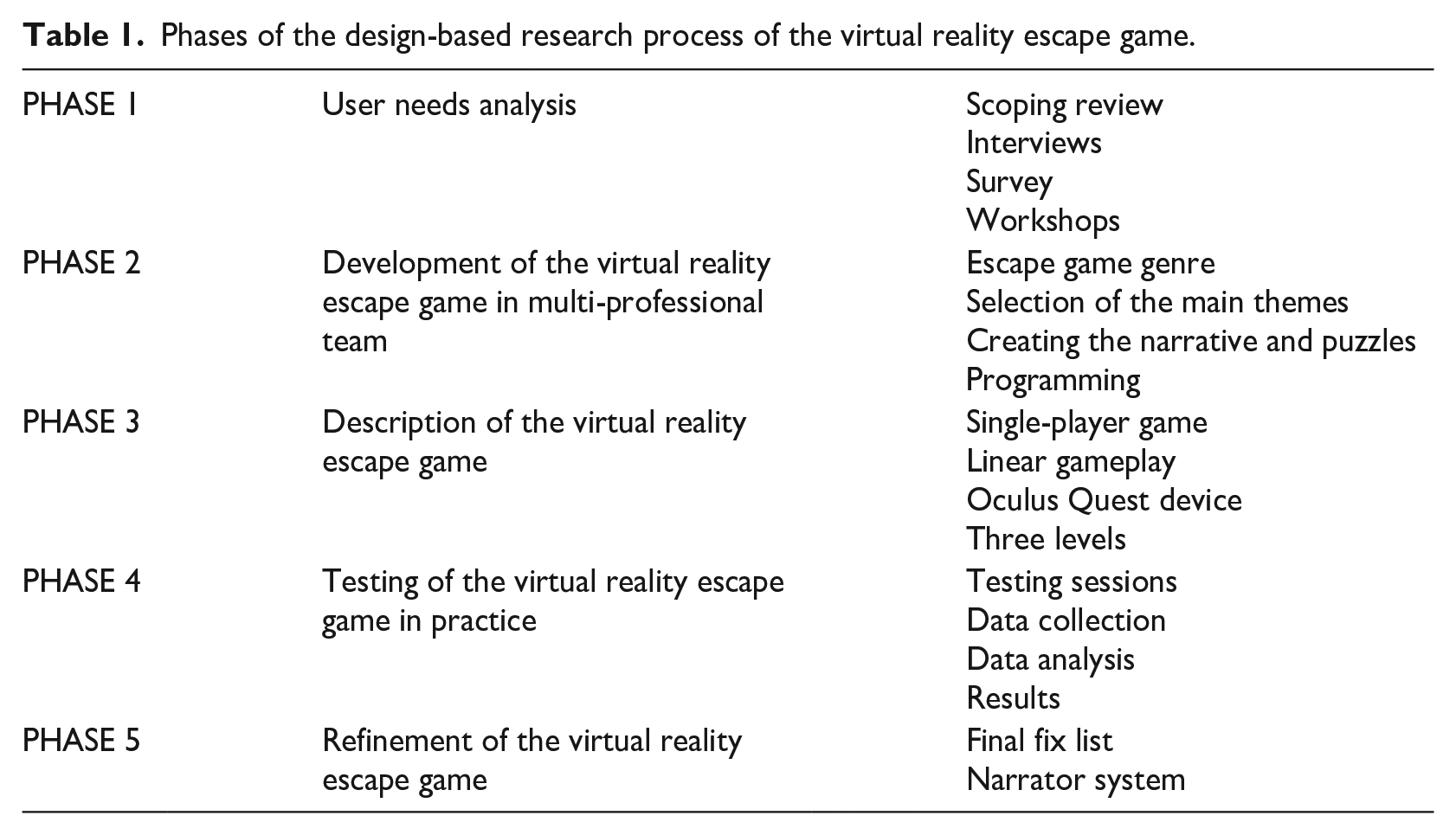
An effective design process requires expertise from all relevant disciplines (Sandoval and Bell, 2004), and researchers are committed to performing research in complex real-world contexts (Amiel and Reeves, 2008). They work together with practitioners to produce a change in practice contexts, and the value of the knowledge gained through the iterative research process depends on the partnership of the participants (Design-Based Research Collective, 2003). Co-creation was used as an approach for the development process (Mattelmäki and Sleeswik Visser, 2011). Co-creation refers to a process in which users and experts design services and products together (Cottam and Leadbeater, 2004). It is important to place the end-users at the centre of the design process to more closely address their needs. At the beginning of a user-oriented design process, the aim is to identify important everyday problems for the user to make the planned product or service as functional as possible (Design Council, 2020). Co-creation enables interaction between different professional and user perspectives (Cottam and Leadbeater, 2004). In this project, multidisciplinary collaboration was conducted among researchers, educators, students from universities of applied sciences, young people, social workers and rehabilitation professionals, as well as game designers and developers through iterative cycles of user needs analysis, development, testing and refinement of a VREG (Amiel and Reeves, 2008; Design-Based Research Collective, 2003). Phases of the process are presented in Table 1.
Phases of the design-based research process of the virtual reality escape game.
Ethical considerations
This study followed the ethical guidelines provided by the Finnish National Board on Research Integrity TENK (2019). Permission for the study was obtained from all participating institutions. Ethical approval was obtained from the Human Sciences Ethics Committee of the Helsinki Region Universities of Applied Sciences (7.4.2020). This study was guided by general ethical principles, including respect for ‘the dignity and autonomy of human research participants’ and to conduct research ‘so that the research does not cause significant risks, damage or harm to research participants, communities or other subjects of research’. In addition, the study followed the principles of treatment and rights of research participants, such as informed consent, voluntarily participation, discontinuing participation and receiving information (Finnish National Board on Research Integrity TENK, 2019).
At all phases of the study, participants were informed verbally and in writing about the study. They were told that participation was voluntary, that they could withdraw from participation at any time and that participating in the research would not affect the services they receive. Written informed consent was obtained from all participants and the data were processed anonymously.
User needs analysis
In the first phase of the design and development process, the user needs analysis for the VREG for the vocational rehabilitation of young people was conducted by carrying out a scoping literature review and holding interviews and workshops with young people, social workers and rehabilitation professionals. The scoping review revealed that no such games that utilised VR technology or the idea of an escape game in social rehabilitation had been reported (Mäkinen et al., submitted).
To understand the target group of young people, their everyday life, daily challenges and the need for a VREG, interviews and an Internet survey were conducted by 12 physiotherapy students in January 2020 under the supervision of two physiotherapy lecturers. Three social workers, rehabilitation professionals and 12 adolescents participated in the interviews. Altogether, 105 replies were received to the web-based survey. The physiotherapy students presented the results to the multi-professional game development team as seven fictional characters representing the users who might be using the game. These fictional characters helped the game developers understand young people’s everyday lives. Especially, the signs or risks of marginalisation were recognised. It was also emphasised that new methods of interaction with these young people are needed to understand their everyday life situations and need for support.
To create themes and initial ideas for the puzzles for the VREG that would correspond to the young people’s personal lives and interests, four workshops for the social service students (n = 40) were held from January to March 2020. Two social work lecturers and an expert on employment services guided these workshops. Students were involved in the user needs analysis since enabling them to engage directly with service users can develop students’ confidence and self-esteem as future social workers, and also help them understand their potential impact on collaborative relationships with service users (MacDermott and Harkin-MacDermott, 2020). The workshops considered the challenges young people may have in their daily lives. These challenges were combined into larger themes including health, social problems, social relationships, personal finance, time and everyday management skills, future planning, the ability to study or work and substance abuse. Four social services students continued a user needs analysis in discussions with young people on the digital distribution platform Discord. As a result, additional themes were created for the game such as global problems and getting into debt.
In addition, four workshops for social workers and rehabilitation professionals were organised with a special interest in the question of how VREGs could be beneficial for the vocational rehabilitation of young people. In June 2020, nine professionals participated in virtual workshops where virtual canvases were created to address issues related to the usefulness of the game. In addition, 10 social workers and rehabilitation professionals participated in workshops organised in southern and northern Finland in September 2020. Focus group interviews were conducted and they were audio-recorded with the participants’ permission.
Content analysis of the virtual canvases and audio recordings revealed that VREG could be beneficial in understanding the world of young people, awakening thoughts and opening conversations, as well as for perceiving the life situation of a young person and in setting goals for rehabilitation. Playing the game could benefit young people by enabling them to be active, articulate their own experiences of their situation, understand the consequences of their choices and allow for reflection.
Development of the VREG in a multi-professional team
The goal of the Mystery 24/7 project was to develop a motivating and attractive tool for young people, and therefore, it was decided to use the escape game genre. An escape game is where people try to solve a certain number of different problems, tasks and puzzles within a time limit and deduce the right solutions to get to the next task (Nicholson, 2015). Virtual reality (VR) technology was chosen because of the immersion, presence and interaction (Mandal, 2013) it enables to get young people excited about the game’s topics that meet the goals of vocational rehabilitation. VR refers to a three-dimensional computer simulation that mimics reality, creating a realistic, authentic and immersive experience for the user (Gaba, 2007). Senses, for example, sight, touch and the sense of balance, are offered for the user to create a feeling that the situation really exists and the artificial reality is true (Virtual Reality Society, 2017).
In the next phase of the design and development process based on the user needs analysis, a multidisciplinary team selected the main themes for the individual levels of the game. The themes included (1) finding and moving to a new home, (2) applying for a job or a place of study and (3) managing the chaos of everyday life. These themes correspond well not only to the goals of vocational rehabilitation but also to those of social work because supporting people in everyday life is a crucial part of social work practice. A script was prepared for each of the three themes. Consideration was given to how these issues could be treated as puzzles to be solved in the game world. A workflow chart was used as a basis for the game design and the key themes were dissected into smaller detailed gameplay elements. The focus on designing these game components was on integrating fun mechanics that would also highlight informative and more serious issues. Examples of these fun mechanics include super-efficient futuristic vacuum cleaners and replacing serious-ending conversations with anime-type boss battles. Boss battles are considered the final challenge in a game level that tests how well players have learned the issues presented in the game or level.
A narrative was composed to link the separate puzzles and to keep the player active in the game. Active problem-solving and independent decision-making in the game can also help young people in real everyday situations, as the game enables them to practise and gives them feedback. Different users were considered when planning the tasks so that the game would meet the needs of as many young people as possible. Different types of puzzles were created for each theme. The puzzles were grouped by topic into larger themes as recognised in the user needs analysis (i.e. time and daily management skills, future planning, personal finance) that guided the work. Each theme included several separate puzzles that required logical thinking, counting and other problem-solving skills, which are essential in everyday life. Puzzles included escape game mechanics such as seeking numbers for the codes and problem-solving tasks.
The players needed to not only learn the functionalities of the game but also how to operate the VR devices. The instructions in the virtual world were created using images, text and different highlighting systems. The game’s graphic style was based on two key factors. Some of the issues in the game could be difficult for players, so an overly realistic graphical style was not selected for the game. Using more cartoonlike graphics made the overall feel of the game lighter and provided the option to easily include unrealistic elements into the game environment. Second, the performance requirements for mobile VR are much stricter compared to computer-based VR, so this had a large effect on the type of graphics to use. Cartoonlike simplified graphics provided the option to include more objects and details in the virtual world.
Social work and rehabilitation experts designed the detailed content for the game at a general level, and these plans were transformed and adapted as gameplay elements by the game development team. The programming of the game began simultaneously with creating the narrative, allowing reflection between content developers and software developers. Cooperation between all the development parties was highly frequent in all development phases and teams actively communicated via a communication platform with each other weekly throughout the project until the game was complete.
Description of the VREG
The VREG developed based on the previous phases is a single-player game with linear gameplay and varying tasks and puzzles (Figure 1). Linearity in this gameplay context means that all the tasks and puzzles are pre-determined and programmed for the players, and completing these tasks leads to other pre-determined tasks or puzzles. Although players can perform unnecessary tasks, the story will only progress by performing certain tasks. The game was designed for Oculus Quest devices, a VR device developed by Meta Platforms Inc. The Oculus Quest system consists of a VR headset (head-mounted display) and two handheld controllers (see Figure 2). The graphics and other game elements were designed so that the game would work on mobile VR sets. In the game, the player adopts a role of a youth facing everyday challenges. The game is presented in first-person view. Players can interact with the world with VR controllers, move around different virtual environments and solve puzzles and perform various tasks. Although the issues presented in the game can be serious, they are presented in the game with a light, humorous touch.
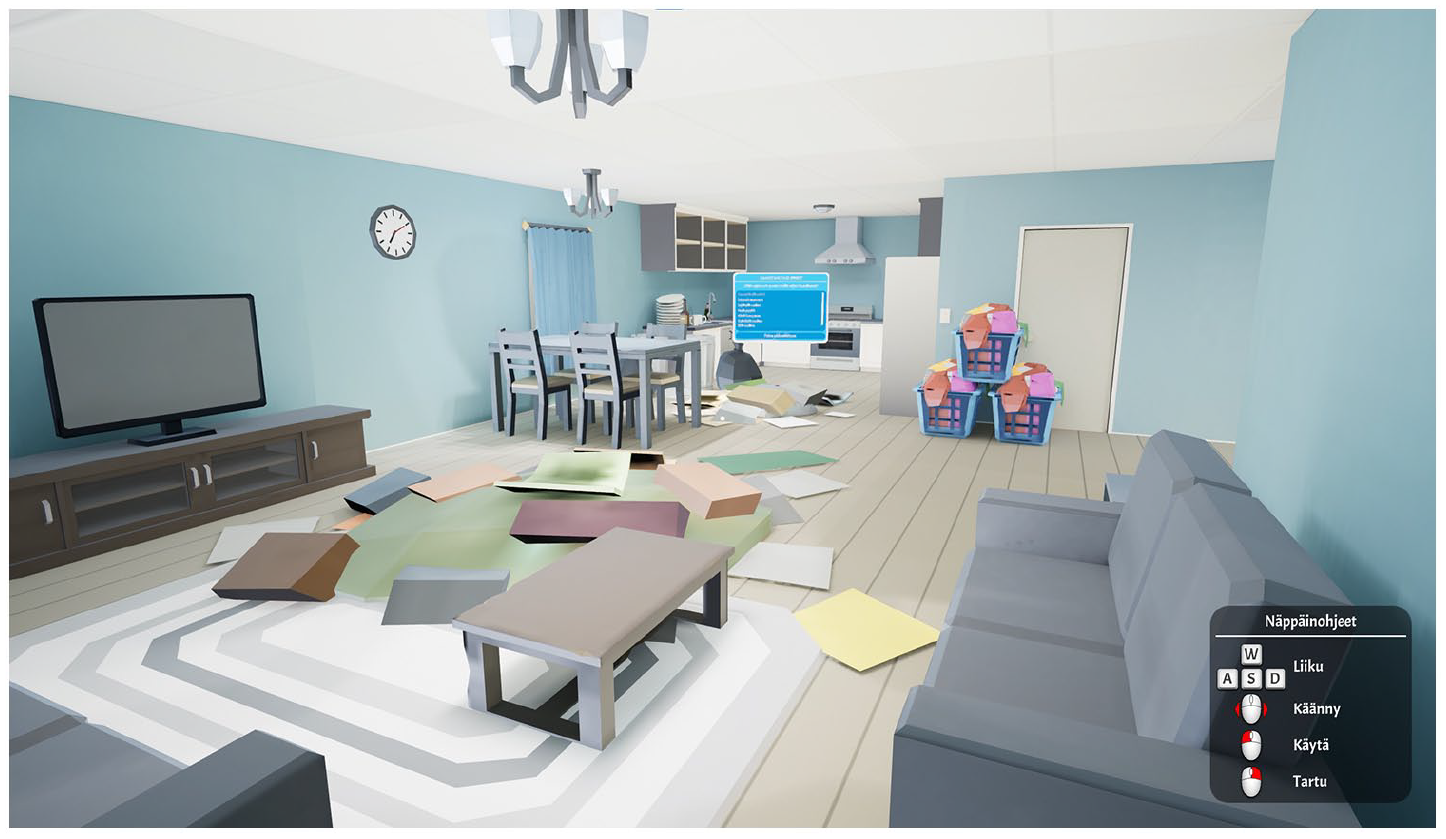
Screenshot of the third level of the virtual reality escape game.
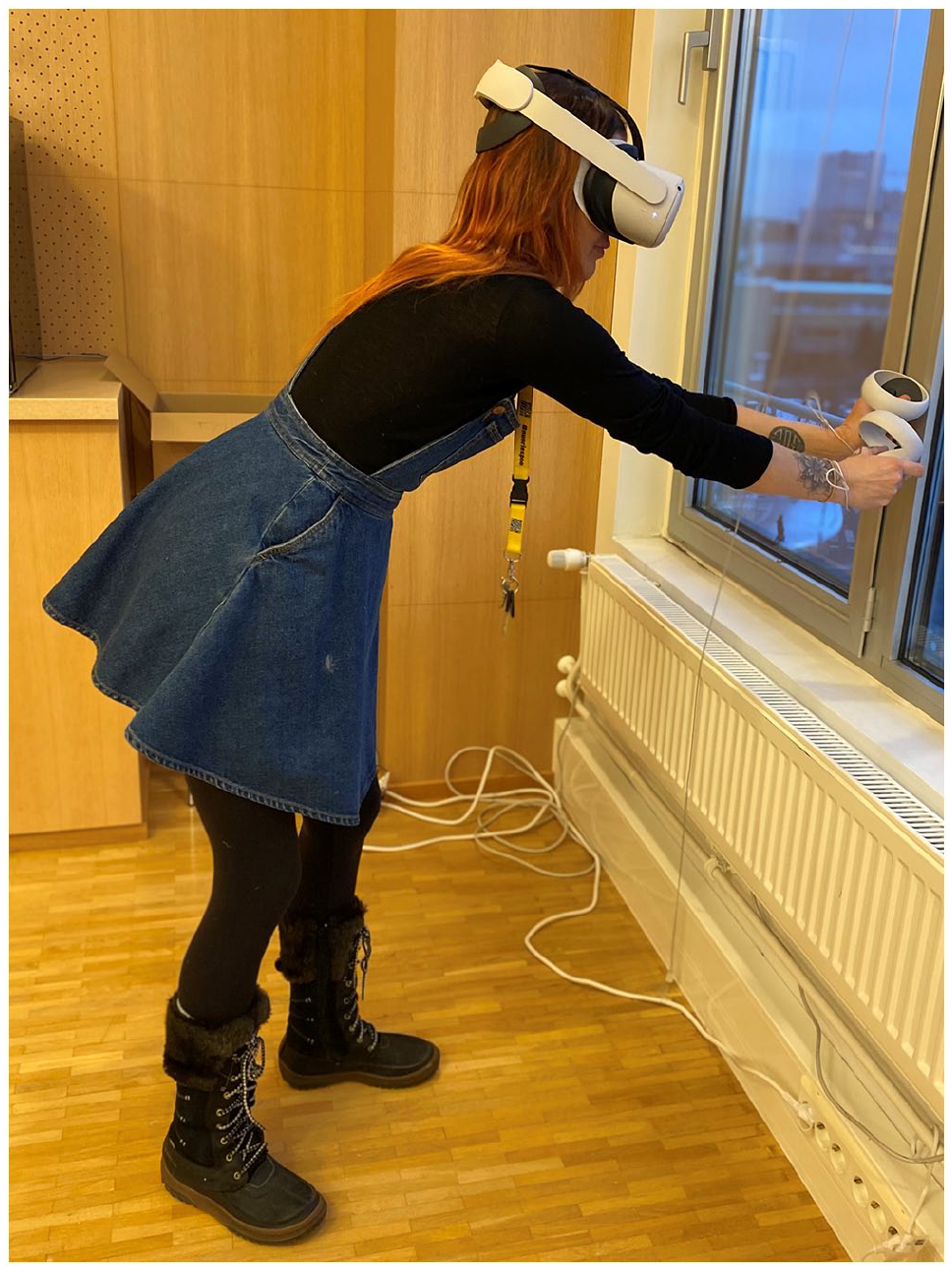
Young woman testing the virtual reality escape game.
At the beginning of the game, the tutorial instructs the player to use the controls and navigate inside the game. After the tutorial, the player selects game level. The difficulty level of the game increases from level to level. The levels can be played in the order chosen by the player. In the first level, finding and moving to a new home, the player receives a notification from the landlord that their lease is coming to an end. The player’s task in the first level is to find a new apartment as soon as possible. The player must complete morning routines to be ready for an interview. The player must also find and send the required documents to receive financial support for renting the new apartment. There are various puzzles at the level related to these functions. The level ends with a boss battle, an interview, where what is learned in the level is utilised.
In the second level, the player must solve problems related to finding and obtaining a job or a place to study. The level also deals with the management of personal finances. The level ends with a boss battle. In the third level, managing the chaos of everyday life, the player must perform daily tasks such as cleaning, laundry or shopping. This all leads the player to plan their time use during the day and the final boss battle at the end of the level.
Testing of the VREG in practice
Next, the testing sessions of the VREG, the data collection and analysis and the results of the testing sessions are described.
Testing sessions
Testing sessions for the VREG were conducted in May and June and again in August and September 2021 in southern and northern Finland. Altogether, 20 testing sessions were organised in which young people, social workers and rehabilitation professionals working with them participated voluntarily. The number of participants in the testing sessions amounted to 46 young people and 25 professionals. At the beginning of the session, participants were told that they would have an opportunity to participate in a study by filling out a questionnaire after playing. They were informed verbally and with an information sheet on the purpose of the study and that participation in it was entirely voluntary. It was also highlighted that it was possible to play the game even if they did not want to fill out the questionnaire.
Before the participants played the game, the instructor gave a quick tutorial on the use of the Oculus Quest headset and hand controllers. After this, the participants played the game for as long as they wished. During the gameplay they received instructions if any problems arose with the VR technology or proceeding in the game (Figure 2).
Data collection during testing sessions
Purposive sampling was used including participants of the testing sessions (Gray et al., 2018). The data in the testing sessions were collected with an electronic questionnaire which included questions concerning demographics, previous gaming activity, previous VR experience, gaming experience and usefulness of the VREG. The last two aspects were asked with open-ended questions. Answering the questionnaire was voluntary and those who were willing to answer filled out the questionnaire during the testing session after playing the game.
User experience was measured using the AttrakDiff 2.0 questionnaire with 28 items evaluated on a 7-point semantic differential scale (Hassenzahl, 2004). AttrakDiff 2.0 is a widely used and validated method for studying user experience with interactive products (Hassenzahl et al., 2000; Sassatelli et al., 2020; Takahashi and Nebe, 2019).
Data analysis
The questionnaire was analysed with descriptive statistics. The items in AttrakDiff 2.0 were summarised as four factors named (1) pragmatic quality (PQ: e.g. simple/complicated, practical/impractical), (2) hedonic quality identification (HQI: e.g. stylish/tacky, isolating/connective), (3) hedonic quality stimulation (HQS: inventive/conventional, repelling/appealing) and (4) attractiveness (ATT: e.g. ugly/attractive, repulsive/inviting) (Hassenzahl, 2004). Internal consistency was acceptable for HQI (α = .77), HQS (α = .75), ATT (α = .68) and low for PQ (α = .50). Human-technical (r = .34, p < .05) and practical-impractical (r = .031, p = .05, ns) items had a low correlation with the total PQ. By excluding them from analysis, the internal consistency of the PQ improved (α = .60). In previous research, human-technical and impractical-practical items have been reported to cause low consistency of PQ (Hassenzahl et al., 2015). The analysis of the qualitative research data collected from the open questions followed the thematic analysis (Braun and Clarke, 2006).
Testing session results
Participants’ background information
In total, 25 target young people filled in the questionnaire. The majority of the respondents were in the age group of 18–24 years (68%). Most of the respondents were male (64%). Regarding their education, 64 percent of the respondents had a vocational education, 20 percent had upper secondary education and 12 percent had a matriculation examination. One-quarter of the respondents reported dropping out of one or more schools.
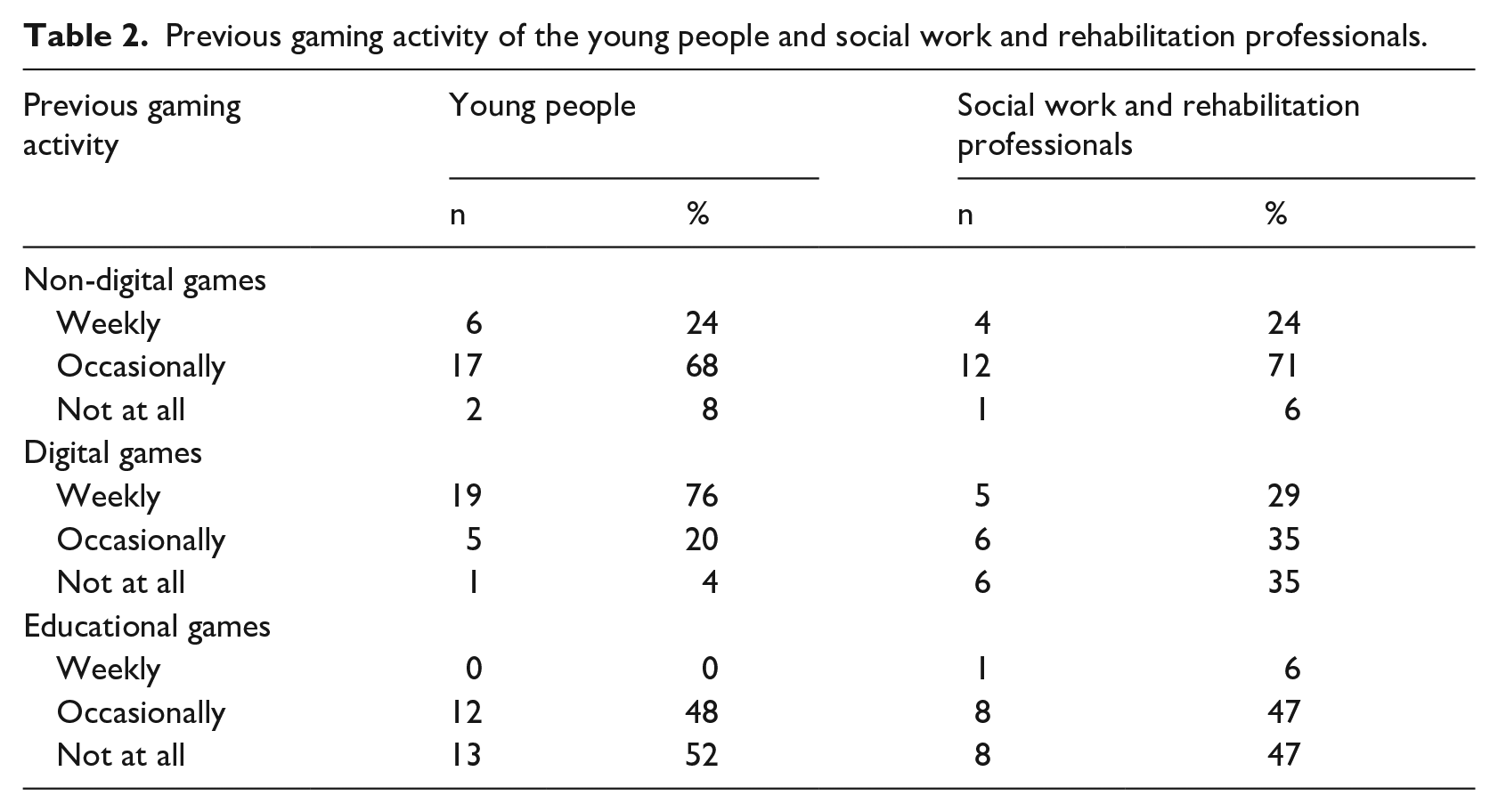
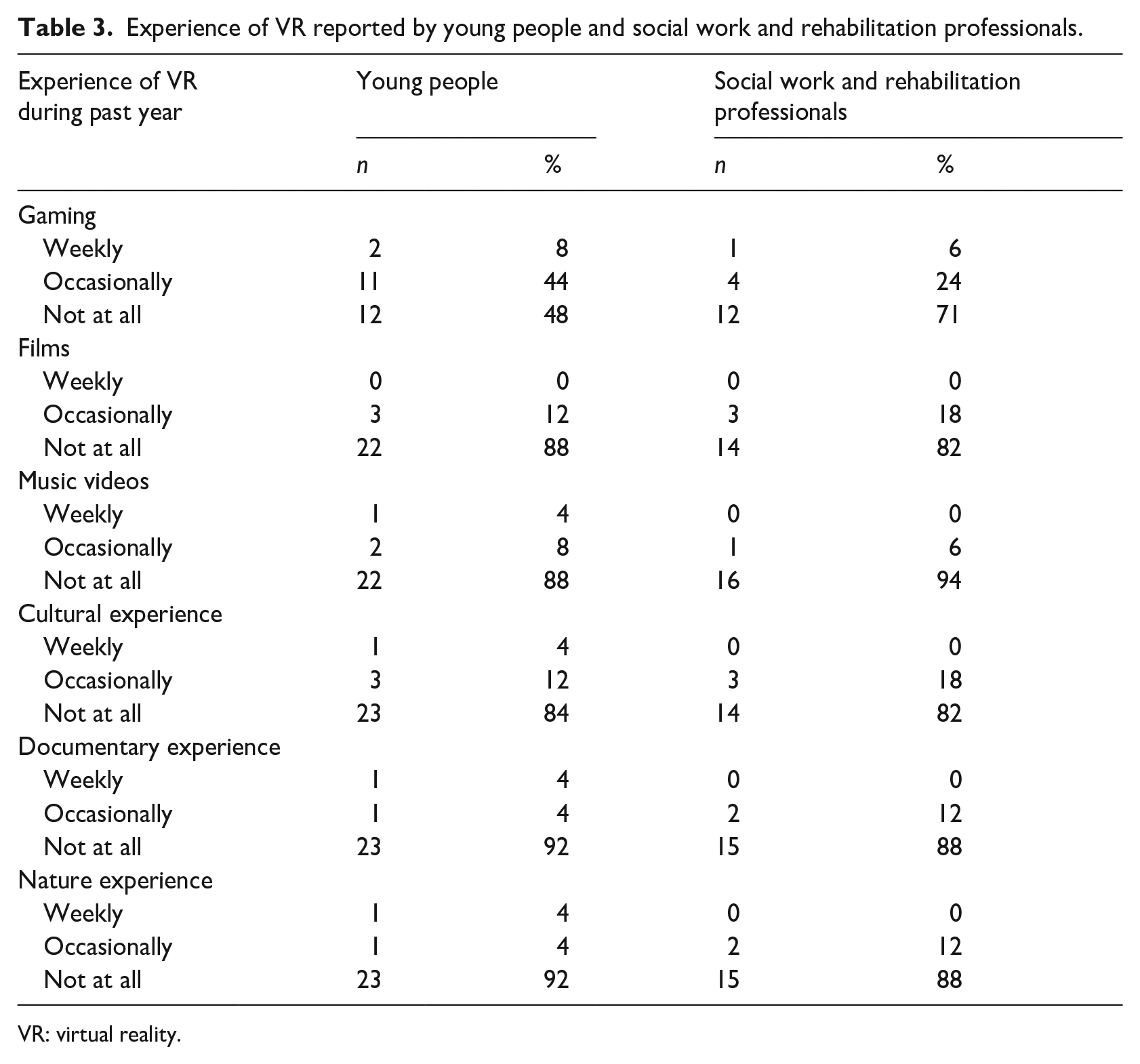
Almost 80 percent of the young respondents reported playing digital games weekly (Table 2). Slightly more than half of the respondents had played games with a VR headset weekly or occasionally (Table 3).
Previous gaming activity of the young people and social work and rehabilitation professionals.
Experience of VR reported by young people and social work and rehabilitation professionals.
VR: virtual reality.
In total, 17 social workers and rehabilitation professionals answered the questionnaire. Most of the respondents were in the age group of 30–40 years (60%) and most were women (77%). In total, 35 percent of the respondents were social service professionals, 18 percent were community education professionals and 12 percent were youth workers. Of the respondents, approximately 70 percent had from 1 to 5 years of coaching experience. Of the professionals, 29 percent reported playing digital games weekly (Table 1). Most of the respondents had no experience using a VR headset (Table 3).
Perceived gaming experience by young people, social workers and rehabilitation professionals
Based on the analysis, two main themes, fun and frustration, were identified in the gaming experience perceived by young people, social workers and rehabilitation professionals (Table 4). Tasks such as boss battles, mini-games, cooking, cleaning and sorting the rubbish were experienced as the most fun elements in the game. Interaction with the virtual world, including grabbing objects with controllers, navigating on foot and teleporting in the game environment, was also experienced as fun and fascinating. Another fun aspect was that players could do whatever they wanted in the game. One of the young people felt that it was fun to do everyday things in a different dimension, while some found it entertaining to do things they would not normally do, such as intentionally burning bills and food.
Virtual reality escape game experience of young people and social work and rehabilitation professionals from testing sessions.
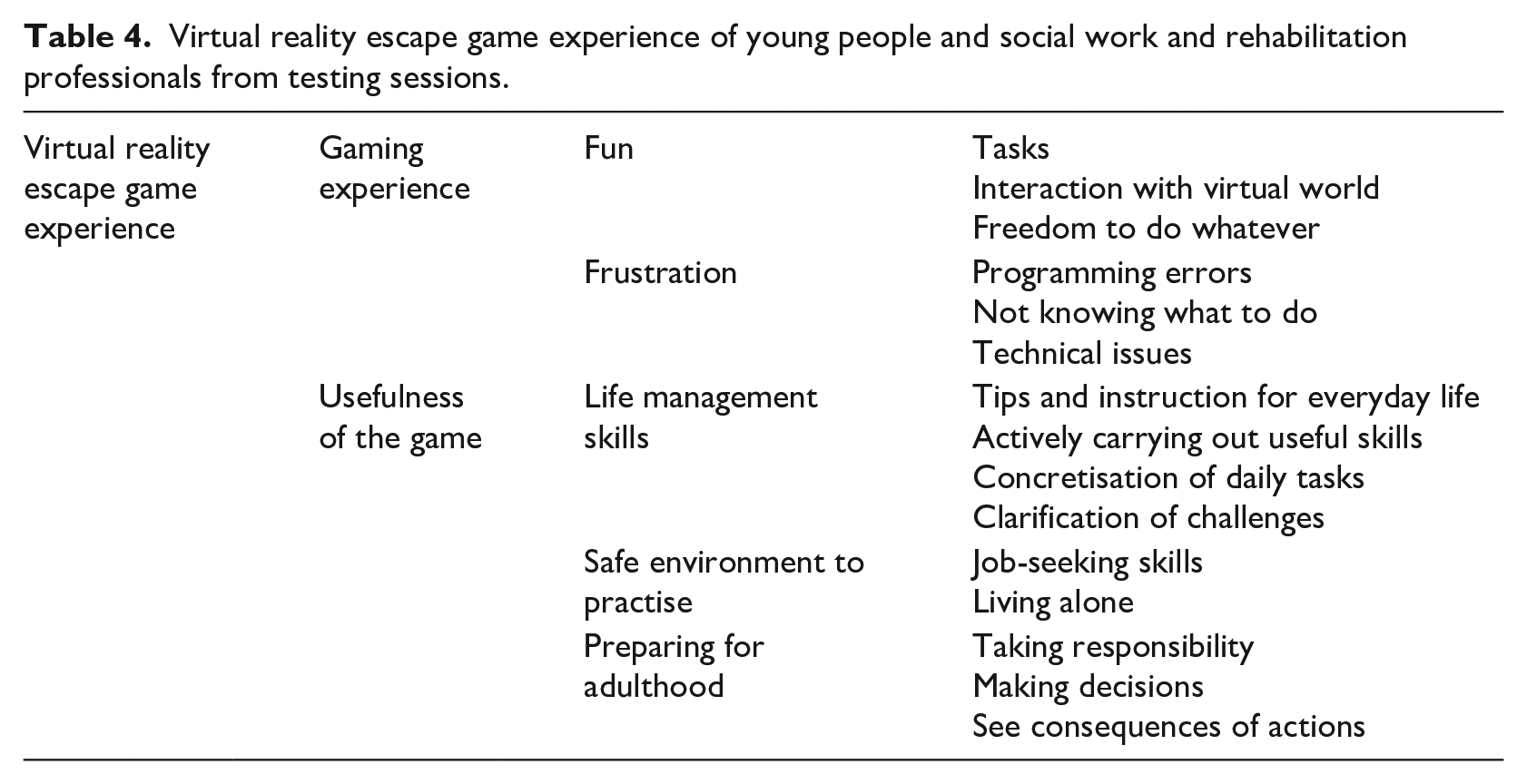
The young people and the professionals experienced frustrating programming errors (bugs). Another frustrating factor was not knowing what to do in the game. This was because the game did not provide clues or feedback on what should be done, and the interface’s rigidity and lack of user-friendliness. In addition, technical issues frustrated the players, such as the challenges of using the controllers and remembering or dropping objects.
The young people and the professionals also hoped for changes to the game, including more straightforward instructions, task options, challenges and freedom to do things in the game. They also wanted new features such as a narrator, chat, sound and music.
Perceived usefulness of the game for youth vocational rehabilitation by young people, social workers and rehabilitation professionals
The young participants, social workers and rehabilitation professionals identified several potential target groups for the VREG. These were, for example, young people looking for a place to study or a job, moving into their own home for the first time; young people with difficulties in life management, or who have special needs, learning disabilities, anxiety issues; or young persons at risk of social exclusion. Based on the analysis, three main themes, life management skills, a safe environment to practise and preparing for adulthood, were identified regarding the usefulness of the game (Table 4). The game was perceived as useful for life management skills since it provided tips and instructions for everyday life and life management; it enabled actively carrying out useful skills, concretised typical daily tasks and clarified the young persons’challenges for themselves and the professionals working with them. One young person felt ‘a little good about the fact that maybe these everyday tasks aren’t really that complicated’. The game was perceived as useful for enabling young people to practise job-seeking skills and living alone in a safe environment. It was found to be useful for preparing for adult life by teaching one to take responsibility and make decisions about one’s own life and seeing the consequences of their actions. The usefulness of the game was based on the fact that it was innovative, visual and motivating and allowed young people to learn useful skills easily. Through gaming, tasks and practices could be better remembered, and thus young people could be encouraged to do the same in real life. The professionals felt that the game could act as a conversation opener, help to understand a young person’s world and bring up some new information about the player. They also thought the game could be used to set goals with the young person. One interesting comment was that using the game could help the young person trust authority.
User experience
Playing the VREG provided a mildly positive user experience for both the young people and social workers and rehabilitation professionals (Figures 3 and 4). There were no significant differences in any of the user experience factors between these groups (Mann–Whitney U: p > .05). Attractiveness (representing the overall user experience) was positively rated (means: 1.1–1.4) and was seen as especially pleasant, inviting and appealing on an item-level examination. Both hedonic quality factors – stimulation and identification – were also positively experienced. Playing was reported to be stimulating (means: 0.8–1.0) and it was highlighted in items such as being creative, innovative and captivating. However, the game was also found to be slightly undemanding (means: from −0.6 to −0.4). For positively experienced aspects (means: 0.6–0.9), the game was perceived as presentable, bringing users closer to people and integrating on an item level. It was evaluated as being close to neutral or neutral for two items (unprofessional/professional; cheap/premium, means: 0–0.3). Playing was also found to be positive in terms of its PQ (means: 0.6–0.7) and this underlined manageable and clearly structured characteristics while the game was seen to be neither particularly unpredictable nor predictable.
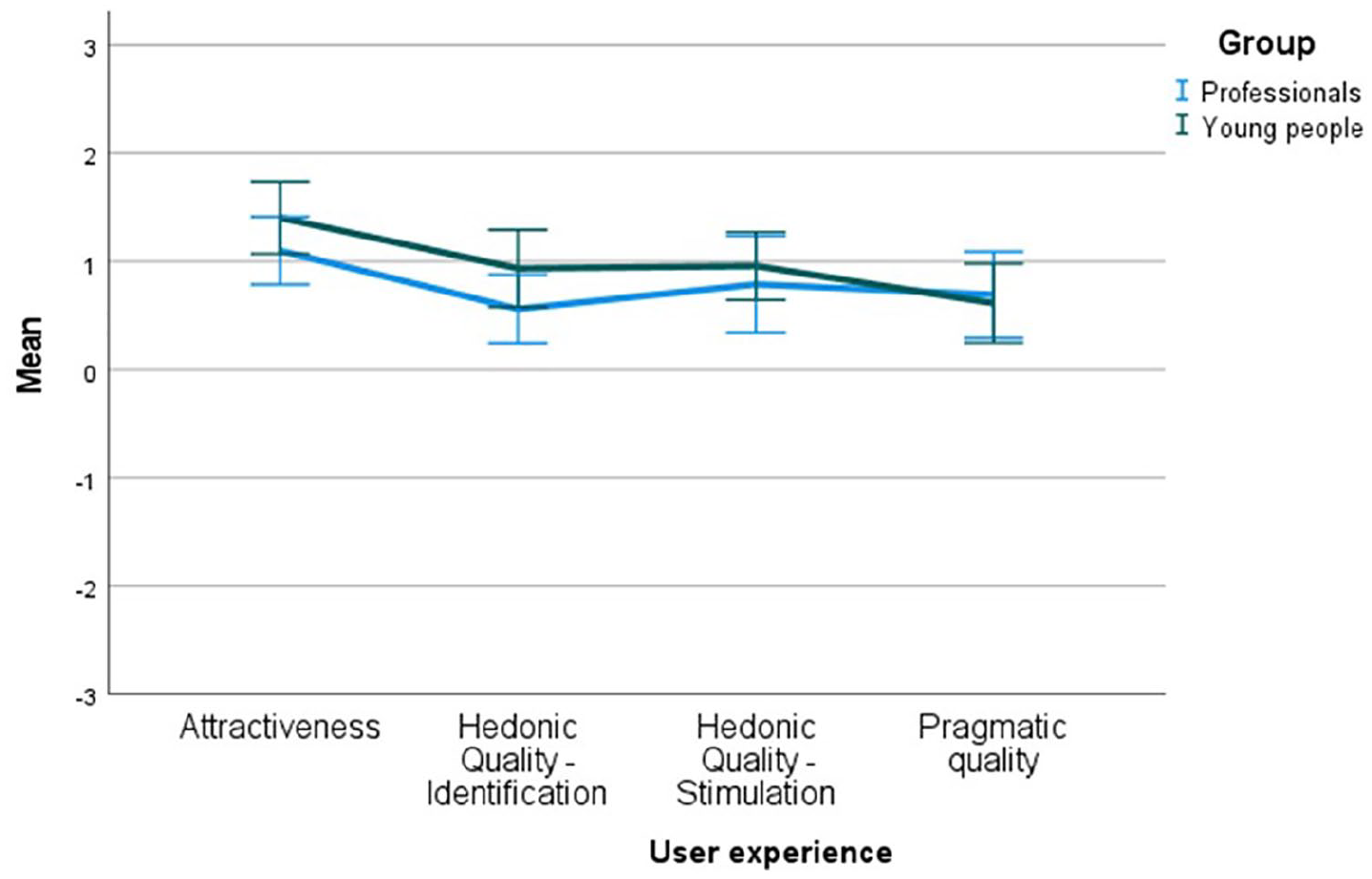
Mean user experience of playing the VREG for young people and social work and rehabilitation professionals. The error bars show 95 percent CI of the mean.
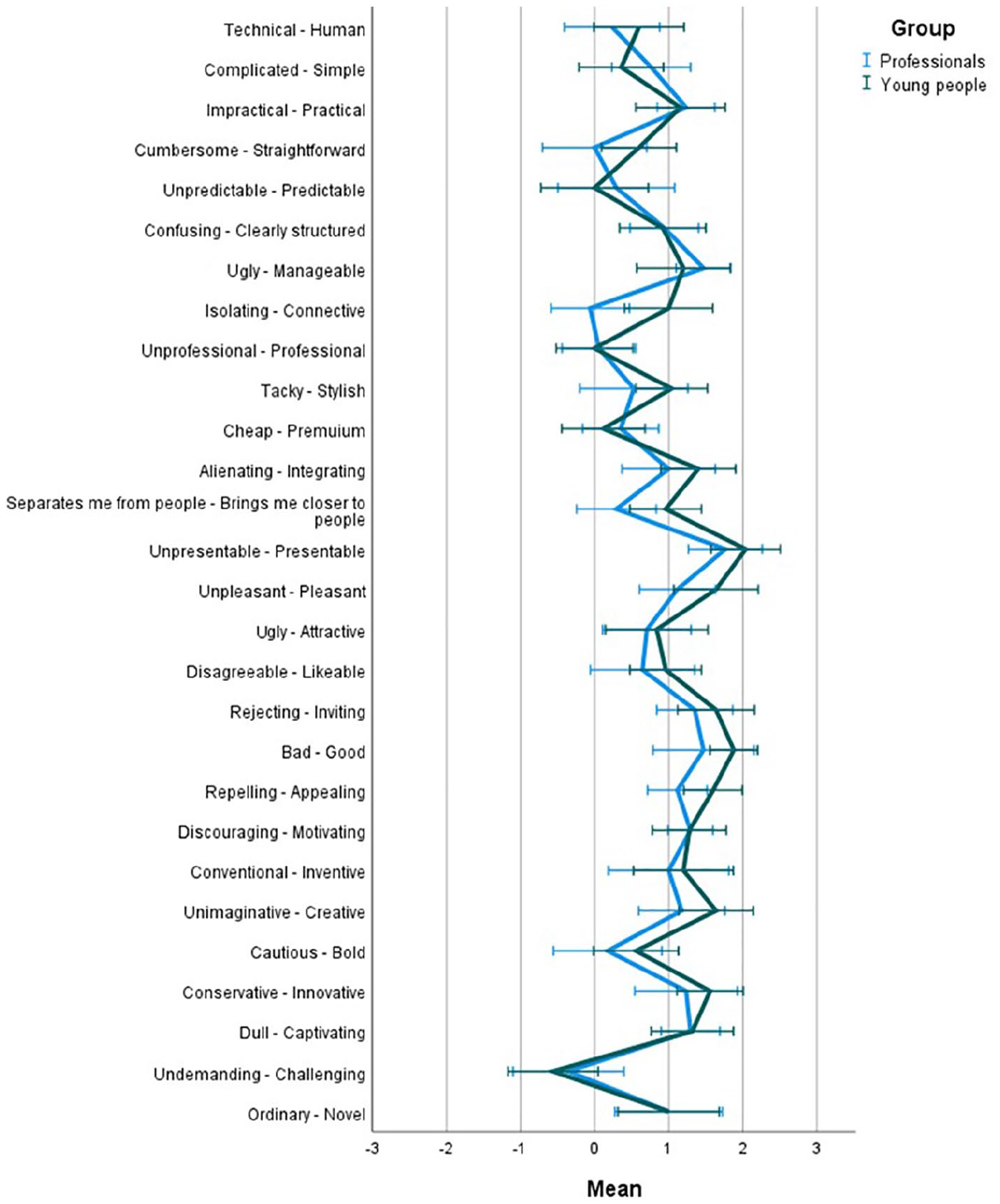
Mean user experience per item for the young people and social work and rehabilitation professionals who participated in the study after playing the VREG. The error bars show 95 percent CI of the mean.
Refinement of the VREG
Testing the VREG in practice produced the final ‘fix list’ for game development. The issues gathered in this list were fixed as accurately as possible within the constraints of the budget during the final development phase. End-user testing demonstrated the problem with instructing the players with the general game flow. During the first end-user testing phase, it was realised that the virtual environment itself can be so different and distracting especially to new users that instructions given by images, text and different highlighting systems were not enough to keep the players directed during the game experience. This motivated the creation of a whole new narrator system that included all the gameplay phases and all areas of the game. The implementation of a narrator system included both instructive and narrative elements. The narration system was created to deepen the story elements and gave the narrator the option to comment on the actions of the player.
Discussion
This study aimed to design and develop a VREG for young people to support vocational rehabilitation and to describe the design and development process of the game. A variety of methods are needed for young people to acquire the skills that will enable them to get a job or a place to study, which are important factors in preventing social exclusion (Bynner and Parsons, 2002; OECD, 2021). The VREG was developed to meet this need, as there have been few such games in the past (Korhonen et al., 2019; Mäkinen et al., in press). The VREG is a new and innovative method, and the game has aroused positive interest among the target group of young people and professionals.
Developing SGs in social work requires a deep understanding of the subject area and, thus, requires that specialists in this area are included in the design and development process (Design Council, 2020). In this study, subject specialists from working life and educational organisations participated in the design and development throughout the iterative process. This was one major contributor to the fact that the game was perceived useful for vocational rehabilitation based on end-users’ feedback. The study took place during the COVID-19 pandemic, which posed some challenges for the involvement of end-users, the cooperation of the game development team and the testing of the game. However, the co-creation workshops allowed for both the user-centred design of the game and strengthening collaboration with stakeholder networks (Mattelmäki and Sleeswik Visser, 2011). Since the overall development process was dependent on the end-users’ experiences of the game, testing the game with actual players was an important key factor during the final stages of development.
The results from the testing session showed that the goal of developing a motivating and attractive tool for vocational rehabilitation was achieved. Young people, social workers and rehabilitation professionals thought the game was fun, the tasks were meaningful and the virtual world was fascinating. The escape game genre (Nicholson, 2015) proved to be a good choice because end-users thought finding the right solutions and solving tasks were fun. In addition, players immersed themselves in the game’s stories and tasks, compounded by the interaction with the virtual world and the ability to grab items with controllers and move around in the virtual home environment (see Gaba, 2007; Mandal, 2013). The purpose of the testing sessions was to reveal the game development targets, for example, programming errors, and to develop new game features.
The Mystery 24/7 project aimed to develop a tool to meet vocational rehabilitation goals (SII), and in this respect, the project was a success. Testing the game in practice showed that it was useful for learning to deal with various everyday tasks, making decisions and taking responsibility, thus helping young people plan their future and find their way in education and working life (SII). The results encourage testing the game more widely in the social work field. Interestingly, the results of the testing sessions corresponded to the results of the workshops organised for professionals during the needs analysis phase. This shows that the professionals could foresee the game’s potential benefits for the target group’s young people. The problems with COVID-19 delayed the initial end-user testing. Still, once the testing was safe, the final stages of development heavily concentrated on making the necessary gameplay changes based on feedback. It would have been impossible to identify the issues connected with usability without the essential feedback from the actual target audience.
The results of user experience evaluation showed that the game provided a mildly positive user experience for both the participating young people and social workers and rehabilitation professionals. This indicated the good quality of the prototype and the user’s capability to achieve goals with it. However, there is still space for improvement in the pragmatic and hedonic qualities of the user experience. For example, the game was found to be mildly undemanding and neutral on the predictable–unpredictable scale. For an optimal playing experience, the skills and challenges need to be in balance (Csikszentmihalyi, 2002; Perttula et al., 2017). By redesigning a game to be a little bit more challenging, a higher quality of user experience might be achieved.
An important factor to take into account is that end-user testing was not performed with the final version of the game. Therefore, some of the user comments considering the bugs and usability problems were already known and being fixed. Overall, refinement of both the story elements and instructions heavily benefitted the game and helped in the creation of a more balanced experience. The experiences of the young people, social workers and rehabilitation professionals of gaming and the usefulness of the game as well as the user experience show that the game developers have succeeded in integrating the entertaining components of the game with useful and informative aspects (Susi et al., 2007). Escape games and VR itself can be attractive to young people and engage them in rehabilitation by experiencing flow and having an enjoyable and intrinsically rewarding experience (Csikszentmihalyi, 2002). Therefore, VREG could be one potential method of vocational rehabilitation.
This study provided an important opportunity to advance theory and practice concerning the design and development of VREGs for vocational rehabilitation. However, the value of the theory depends on how it can improve practice (Wang and Hannafin, 2005). In addition to the VREG, a technical guide and a handbook for social workers and rehabilitation professionals were developed in the Mystery 24/7 project to support the implementation of the game to vocational rehabilitation and other youth works. Hence, professionals can use an innovative and engaging method when working with young people.
Practical implications for using the VREG
The VREG can be used in various ways and situations with young people to identify and develop life management, study and work skills. Implementing the game in the vocational rehabilitation process can improve young people’s perceptions of their strengths and thus enhance their ability to make future plans. The game can be used to increase a young person’s understanding of the importance of studying and working and to strengthen their ability to see themselves as students, employees or job seekers. Through the experiences evoked by the game, the young person can set goals for finding a job and a place to study. The VREG can also be used in contexts other than vocational rehabilitation: with mental health or substance abuse rehabilitators, long-term unemployed persons and migrants in youth centres, schools, cultural centres, child protection institutions and mental health clinics where young people face similar challenges in managing everyday life and making plans for the future. Social workers could use this game technology with young people affected by the COVID-19 pandemic since playing the game may offer a sense of achievement, thus improving the young person’s self-confidence and empowering them to cope with challenging life situations. If a young person finds playing the game pleasant, it may also improve interaction and cooperation between the client and the professional by helping the young person take a more positive attitude towards the professional.
Conclusion
This article has shown that a VREG can be a potential method for the vocational rehabilitation of young people and, thus, for its part, reduce the risk of social exclusion for them. Developing the game’s content and technical solutions was very successful, although game development is always an ongoing iterative process. According to the results of the testing sessions, the game is motivating, engaging and useful for the purpose for which it was developed. However, more research is needed on the use of the game in real long-term interactions between a young person and a professional, as well as on the game’s effectiveness in vocational rehabilitation. In conclusion, the contribution of this study is essential to young people who are looking for their place in the world and need support to achieve a positive outlook on the future.
Footnotes
Funding
The author(s) disclosed receipt of the following financial support for the research, authorship and/or publication of this article: This study was funded by Kela, The Social Insurance Institution of Finland.
