




Abstract
The United Nations International Children’s Emergency Fund (UNICEF) initiatives of Child-Friendly Cities have operated in more than 3000 cities around the world. However, the concept of making the city child-friendly has not been extensively recognized in China. This article aims to report a regeneration project in a migrant workers’ community, the Mingdong, and is used to illustrate the reactions of residents to youth participation (youth civic engagement) and the project through an international workshop. The article concludes with a discussion of how social workers help in the social development of migrant communities by promoting youth participation, community social awareness and social cohesiveness.
Keywords
Introduction
Children, regardless of the nature of their birth and background, need positive environments to support their growth and development. The United Nations Convention on the Rights of the Child first confers rights for children to specific types of space and to specific processes (United Nations, 1989), which becomes an important factor in the growing interest in child-friendly planning practices. As a result, the topic of developing child-friendly cities has been integrated into the UN’s Sustainable Development Goals since 1996 (UNICEF, 2019), but has also become one of the main branches of ongoing global discourses in the regeneration and development of cities or communities (Nam and Nam, 2018; Nan, 2020). Within the existent literature on Child-Friendly Cities (CFCs), work has examined natural environments, medical environments, transportation, infrastructure and urban amenities that substantially meet the requirements of children (ARUP, 2017; Kyttä, 2004). In addition, innovations in policy-making were highlighted as relevant components in the delivery of CFCs. Policy implementation and innovative practices, such as mandatory government budgets, continuously underpin the programmes which integrate the CFC into urban planning and community development (Nan, 2020). Furthermore, engagement of children and youth in decision-making has been extensively recognized as a practical tool to promote democratic community building, establish an atmosphere of social learning, and enhance child development and social cohesion that reinforces the ideas of social sustainability. Many researchers in the field of CFC, youth civic engagement and youth participation campaign for children to have rights to advocate for their interests and welfare, as well as their right to be part of a city’s or community’s administration (Ballard et al., 2021; Cushing, 2015; Severcan, 2014; White, 2021; Wise, 2001). However, investment in CFC and youth participation has been hindered by context-specific uncertainties including the willingness of practitioners to engage, degrees of social concern and contradictions in policy-making (Cahill and Dadvand, 2018). These led the CFC to be a slogan of the urban campaign without actual progress in development, which requires a practical method to identify and reconcile the interests of multiple stakeholders in CFC development.
Our study about the CFC in the development of a migrant workers’ community gains insight from an extensive discussion of Healey’s (1997) Collaborative Planning in the delivery of communities and also discusses child-friendly public participation and community renewal as part of wider discourses of social sustainability. To examine the rationale of Collaborative Planning, many studies have illustrated the existence of symmetry of power relationships, the diversity of communicative patterns, the identification of stakeholders and the timing of collaborative activities through both empirical evidence and theoretical discussion (de Oliveira and Partidário, 2020; Hu et al., 2013; Zhou et al., 2019). However, practitioners and local developers have always experienced difficulties when it has come to delivering community projects because of different aspects about social and financial sustainability (Liu et al., 2019; Zhu et al., 2020). At a local level, social interaction in the field of community development remains varied in China. Many private investors were not stimulated by the policies and ideas presented.
This article discusses a cooperative project on child-friendly community renewal in China by the International Society of City and Regional Planners (ISOCARP) and UNICEF. A review of the Young Planning Professionals (YPPs) workshop is presented and located within a wider discussion of child-friendly participation in an old neighbourhood and community renewal. A migrant workers’ community was selected to achieve the goal of child-friendly community renewal through promoting the physical environment and public facilities, as well as through encouraging greater youth participation and community cohesion. The final section reflects on the empirical evidence and offers recommendations for community administrators, planners and other social workers in future community renewal projects.
Literature review
Rural–urban migrants in China
Rural migrant workers play essential roles in urban development but met difficulties of social inclusion in urban areas during the process of urbanization in China. The progress of urbanization soared after 1996, and it is estimated that it will reach 65.5 percent by 2025 (Wang and Yu, 2020). A greater number of rural migrants are now living in the urban community than there were 5 years ago. However, and despite this, rural migrants continue to face institutional barriers (hu kou system) with regard to securing education, medical treatment and housing (Cui and To, 2019). The hu kou system, as a mean of population registration, leads to disparities of basic public services between rural migrants and local citizens.
Existing studies suggest that the difficulties which urban migrant workers face include housing liveability, affordability and safety (Lu et al., 2018; Ming and Zeng, 2014; Zhu, 2009). These issues hinder migrant workers’ ability to adapt to urban life. Many studies on migrant workers’ communities have focused on social integration through community participation which is designed and dominated by adults. However, there has been but limited attention to the rights of young people and migrants’ children. In the study by Sun et al. (2018), migrant children reported lower scores for quality of life than their urban counterparts. Carrillo (2013) suggested that the community participation in migrants’ communities was conducted in a limited manner due to the uncertainties and diversity of the social environment, including social network, neighbourhood relationship, participation manner and approach, equality in policy-making and social attention.
Moreover, many studies have raised the issue that an increasing number of migrant workers prefer to find jobs in their hometowns rather than in big or economically developed cities. Thus, there is a shortage of rural–urban migrant workers in China (Li and Zhang, 2015; Niu, 2015). Decision-makers have met difficulties in attracting young rural migrants to work and live in big cities because the younger generation pays more attention to the welfare and facilities which relate to their future urban lives and career development, but also for their children. Growing social attention on facilities, services and opportunities for migrant children may help parents to make a firm decision to live in an urban community. Ultimately, migrant children’s negative experiences in urban communities and cities can result in migrant workers’ communities having reduced vitality and also result in a decreasing number of rural–urban migrants.
Collaborative planning and workshop
Collaborative planning, first debated by Judith Innes in 1995 and Patsy Healey in 1996, drew upon three primary influential theories (Allmendinger, 2009; Healey, 1997; Innes, 1995). The theory first gained insight from the work of Habermas, who sought to reconstruct the ‘unfinished project of modernity’ (Allmendinger, 2009: 197).
In practice, the theory has led to many outcomes across the globe over the last 20 years. For example, workshops have been extensively recognized as a practical path by which to ensure collaborative planning and public participation in the discussion of alternative futures for local and/or regional development in developing countries (Bower et al., 2017; Li et al., 2020). Practitioners have arranged workshops in consensus building and the establishment of enhanced communication channels (Li et al., 2020), in producing diverse scenarios for future development (Bower et al., 2017), in developing measures for regional management (Löschner et al., 2016) and in achieving a long-term platform of cooperation (Nygrén, 2019).
Empirical studies have identified the effectiveness of certain types of workshops, including collaborative workshops, scenario workshops and participatory workshops in actual community social projects across different timescales. Long-term mechanisms of decision-making, such as ‘1 + 1 + N’ in Beijing, and Community Planners in Shenzhen (Li et al., 2017; Wu and Wang, 2013), have been discussed to establish a collaborative relationship between community administrators, residents, planners and social workers. These practitioners of community development have generated solutions tailored to a number of community issues within the scope of the law and regulations (Li et al., 2017). Furthermore, short-term workshops or charrettes, led by social work professionals and academics, have led to a shift from communicative to collaborative approaches with regard to programmes to improve living environments and public utilities (Li et al., 2020). However, existing practitioners have met difficulties in attracting developers, investments and other dynamic third parties to support a self-sustained process of revitalizing the old community.
Differences in youth participation between China and western countries
Youth participation, including theoretical and empirical aspects, was discussed in only a limited manner before the 2010s in Chinese academia (Zhang, 2011). Early studies highlighted that the planning of urban areas, community and schools should be conducted by combining children’s rights of development, living and protection (Ding, 2009; Zhou, 1998). Children’s development and urban lives have gained prominence among social work professionals in the last 5 years or so. This was because the time that children spent on physical activities had decreased since 1990 (Wang and Cheng, 2009; Zhong et al., 2016). The fitness and physical health of younger generations becomes an important reason to improve urban and community facilities.
Furthermore, mental health started to be considered in the design of open public spaces. Children have unique feelings and perspectives on spaces, safety and social networks (Zheng et al., 2019). Youth participation in decision-making and place-making could facilitate a robust social network within the community and also promote the social inclusion of children (Zhu and Zhai, 2019).
Practitioners have started to engage with youth in community planning in big cities, such as Shanghai. A majority of youth participation practices were reported as children’s consultation. Children were invited to advocate their welfare concerns and also their comments regarding community facilities and amenities (Sun, 2020). According to Hart’s (1992: 8) ladder of youth participation, existing practices of youth participation remain at the low level of participation, that is, ‘consulted and informed’. Individuals and institutional developers of the community showed limited interest in delivering community renewal projects (Xu, 2019). More empirical studies should be encouraged to support youth participation and indicate feasible ways of engaging stakeholders in community renewal.
Youth participation has a relatively long history in western countries compared to China (Harris and Roose, 2014; Manning and Edwards, 2014; Timmerman, 2009). Western social work professionals believe that youth participation is a ‘remedy’ to social, economic and political problems in developing countries (Cahill and Dadvand, 2018). These concepts are derived from discourses on children’s rights and development (United Nations, 1989).
With regard to pedagogy, early western pedagogies extended the role of youth participation as a solution to youth education (Timmerman, 2009; Weinstein and David, 1987). Youth participation is considered as a means to develop ‘skills that can be used in communication and negotiation’ to increase dialogues between children and adults (Timmerman, 2009: 573). This meaningful experience helps the younger generations to develop a sense of self-management (Cahill and Dadvand, 2018). It has also shed light on the importance of training young generations as democratic citizens in developed countries. It is to be expected that the relevance of investing in youth participation, including the benefits for residents and society as a whole, has been recognized by decision-makers to some degree in the field of community social work.
Materials and methods
Background of the YPPs event
Compared to normal community renewal projects in China, the YPPs workshop in Mingdong was promoting a novel prototype as it was organized under an international collaboration between international and domestic nongovernmental organizations (NGOs), as well as local authorities (including ISOCARP, UNICEF, Urban Planning Society of China and the Ningbo Urban Planning Bureau). The workshop was also supported and managed by young planners from around the world. This event aimed to provide opportunities for international young planners to engage children in actual community planning and achieve ‘Child-friendly Urban Planning’ (ISOCARP, 2019).
The YPPs event took place between 26 and 30 August 2019 and was ‘a crucial component of ISOCARP’s dedication to promote and enhance the planning profession and commitment to facilitate knowledge for better cities with the young generations’ (ISOCARP, 2019). ‘Child-Responsive Urban Planning’ is an important theme used by ISOCARP and UNICEF to facilitate discussions of ‘vibrant, fair and friendly cities’ and also to achieve the United Nations Sustainable Development Goals and also help to complete the agenda proposed by the United Nations Development Programme: ‘Transforming our World: The 2030 Agenda for Sustainable Development’ (ISOCARP, 2019).
Background of the study area: Why migrant community?
Mingdong community is one of the largest migrant workers’ communities in Ningbo. The city, as one of the most economically developed cities along the Southeast coast of China, attracted 500,000 migrants in 2018 and 2019 (Data resource: Zhejiang Statistical Bureau, 2020). Decision-makers have recognized the relevance of promoting the happiness of citizens of all ages for many years, but only started investigating the idea of Ningbo as a child-friendly city recently (Zhenhai Women’s Federation, 2019).
Mingdong is selected as a case study area for the YPPs workshop because a great number of migrant workers and low- and middle-income families live in Mingdong (ISOCARP, 2019). Indeed, Mingdong community, built-in 1996, has 120,000 square metres of construction areas with 56 residential buildings, 170 households and 550 residents (Figure 1). Mingdong also has the largest primary school for migrant workers’ children in Ningbo. The total area of Mingdong covers 17.59 hectares and is surrounded by a shopping mall, a supermarket, schools, a sports centre and other urban public facilities. In the northeast of the community, a park called Minglou offers an area of 6830 square metres for local residents to enjoy.
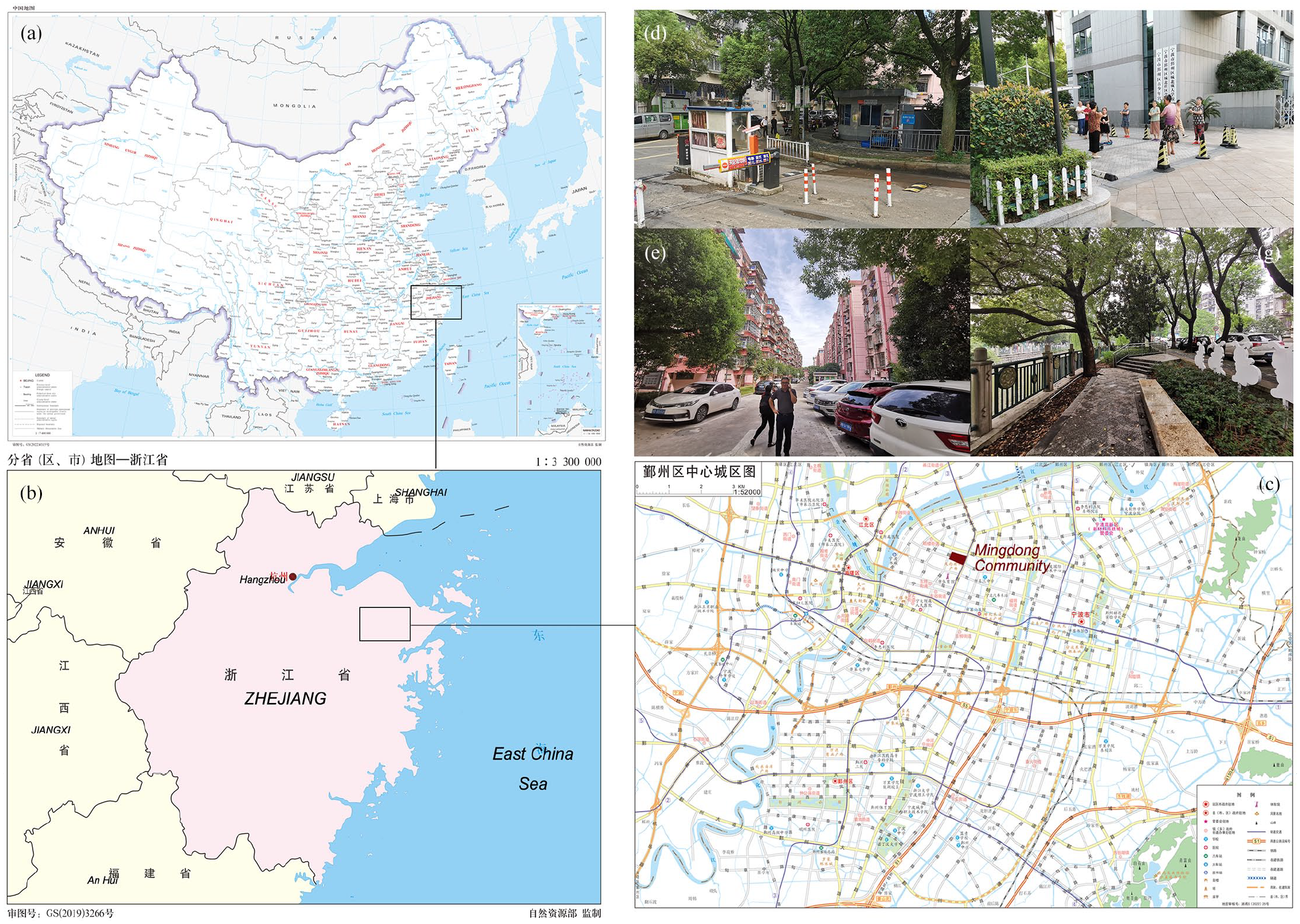
Mingdong community: (a) map of China; (b) map of Zhejiang Province; (c) map of Yinzhou (Source of Maps: Ministry of Natural Resources of People’s Republic of China (MNR), 2022); (d) the south entrance of Mingdong; (e) residential area; (f) a group of local residents dancing at the south entrance of Mingdong; and (g) riverbank road in Mingdong (Source of images: all authors).
A prototype for youth participation: Young Planning Professionals’ (YPPs) workshop
The priorities of youth participation in Mingdong community renewal projects include playability, mobility, safety and sociability. The four priorities gained insight from the 10 principles (Children’s Right, Housing and Land Tenure, Public Amenities, Public Spaces, Transportation Systems, Integrated Water and Sanitation Management Systems, Food Systems, Waste Cycle Systems, Energy Networks, and Data and ICT Networks) of localizing children’s rights in community planning according to a handbook on child-responsive urban planning (UNICEF, 2018).
To facilitate youth (children under 18 years old according to UNICEF’s definition) participation in the project of community renewal, a prototype for youth participation was developed based on Hart’s (1992: 8) work on children’s Ladder of Participation. The model implies an inherent hierarchy of progression from ‘manipulation’ to ‘child-initiated, shared decisions with adults’. However, Hart’s model has been criticized for its disregard for the context where participatory activities occur (Lightfoot and Sloper, 2001). In this approach, Hart’s model was changed into a progressive three-step participation model: Youth Consultation, Discussion and Decision (Figure 2):
Youth consultation was an adult-initiated approach to share the child-friendly goals of community renewal and to collect youth residents’ perceptions of community lives.
Young persons were empowered to identify the negative and positive spaces of Mingdong community in the open discussion with adults.
Young participants drive the process of design-making for ideal child-friendly homes and community facilities without the participation of adults. Young participants were empowered to decide the type and scale of facilities and services in community renewal projects. All ideas were presented and shared by young participants at the end at the youth decision stage.
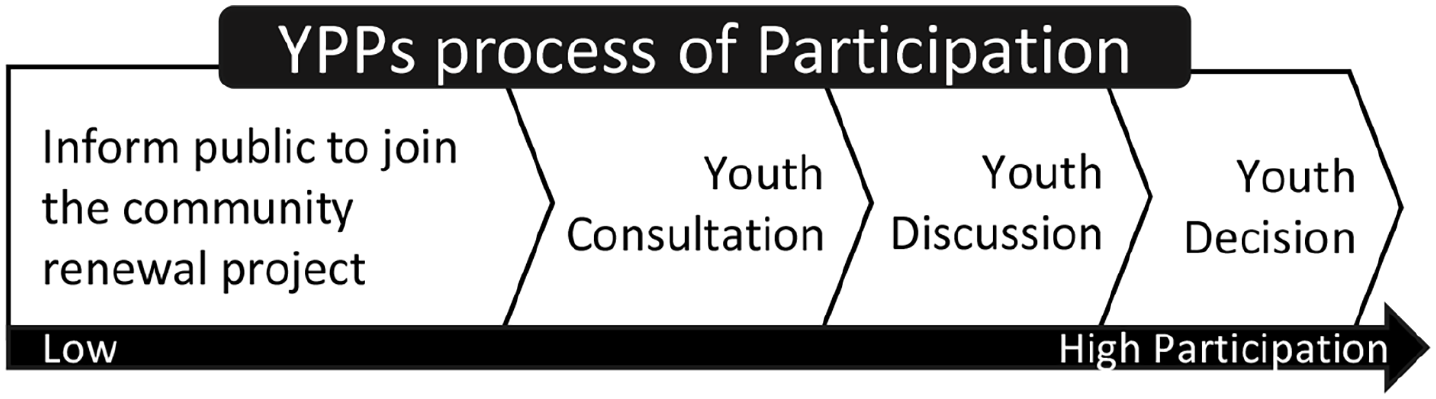
A progressive process of youth participation in YPPs (Source: Edited by Authors).
Analysis: Youth participation in an international workshop
The Ningbo YPPs project was carried out by four international teams and a series of intense studio workshops to understand the socio-cultural and environmental context of Mingdong. Each team has domestic and international young planners, which also helps in the oral communication with residents. All participants from the local community were volunteered. Children under 18 years old were invited randomly by the Mingdong community office.
Youth participation I: Youth consultation
On 26 August 2019, YPPs established an initial understanding of Mingdong community with the introduction of a Mingdong community officer along with a field survey. This provided data and images for the subsequent workshops and spatial analysis with respect to the built environment, road systems, public services and facilities, green and grey infrastructures, and the area’s socio-economic background.
Based on the first-round site survey, public interaction was conducted by engaging 15 young persons (and some of their parents) in discussing the merits and demerits of the existing community. It was to encourage young participants to share their daily lives and activities, including play venues, time they spent outdoors, the daily routes they took and their interactions with transport to underpin further dialogue in the next step.
The workshop provided international perspectives and understanding of how to create child-friendly communities. The notions of the child-friendly community were framed based on the work of UNICEF (2018), Shaping urbanization for children, which may not have been specifically formed to cope with Chinese children’s requirements, but they could be re-examined and interpreted through workshops that acknowledged the Chinese context.
The workshop also provided an environment for group advocacy, which develops the speaking skill of participants. It has been suggested that residents prefer to advocate their welfare in groups rather than as individuals within the Chinese context (Leung, 2007). Although accompanied by their parents, some young participants were reluctant to share their experiences of living in the community at the beginning of the event. The extroverts among the young people encouraged participants, both extroverts and introverts, to participate more actively in the same group discussion. Moreover, most young participants had a limited understanding of the consultancy process. By recording and commenting on the opinions of extroverts, the latter speakers gradually understood that their perceptions would be taken into consideration.
Youth participation in community planning is not always encouraged by parents. It follows, ceteris paribus, that individuals’ reasons for joining in the group consultation event in Mingdong varied, from social practice, to language learning experiences, and international friendship. For example, according to a 15-year-old boy’s testimony, the initial reason for him joining the consultation process was to practise his oral English, so that he is not embarrassed when speaking with English native speakers. In addition, and according to the testimony of a volunteer, a senior in a local high school, another reason for engaging in the YPPs event was that it would give her a social experience to use in her college application. Many young participants’ parents were present and believed that the YPPs event offered their children a good opportunity to gain social experience over the summer holiday.
Youth participation II: Youth discussion
All children who participated in section I were invited to join youth discussion; however, only four children were available to join section II. Two groups of youth (an 11-year-old boy and a 12-year-old girl, siblings; and two 15-year-old boys who were classmates) were volunteered to join the collaborative participation project in Mingdong (Figure 3). The collaborative participation of youth was conducted in the same place in the Centre of Age and Community on 27 August 2019.
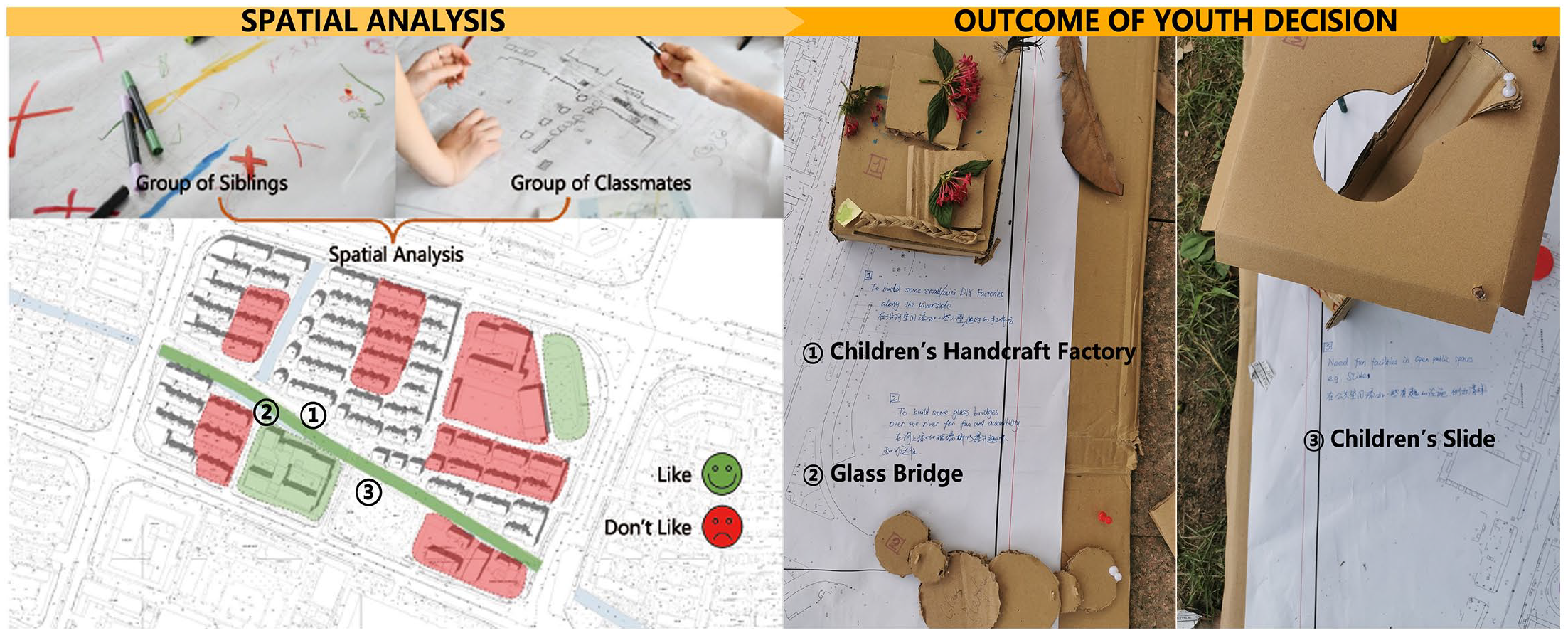
Spatial analysis and outcome of youth decision (Source of images: Authors).
The young people were encouraged to express both their negative and positive views on community environment and facilities, and also to propose, or imagine a ‘dreamland’, for how the community could be made child-friendly. Stationery including coloured pen was provided for the participants which they could use, artistically, to mark on the map of Mingdong the places of their likes and dislikes. Thus, this gave rise to a spatial map with interesting and uninteresting areas. Afterwards, all the young people presented their ideas on promoting attractiveness and security in their community.
Collaborative participation provides opportunities for young persons to systematically think and record their actual requirements of living, playing, and studying within the community rather than what adults provided in Mingdong. Based on the participatory atmosphere established in the previous group consultations, the young people showed more willingness to participate in communicative actions. Furthermore, young residents should be involved in the delivery of a child-friendly community, including input with regard to plan-making, as well as outdoor and indoor participatory activities.
Eventually, participants built a consensus that developers should pay attention to recreation facilities, such as the attractiveness of facilities on the riverbank, and the road system, such as the lack of bridges within Mingdong. These ideas were further illustrated in the third step of youth participation.
Youth participation III: Youth decision
The third step of the workshop was initiated by young persons, sharing their decisions with adults. The ideas were formed and illustrated visually without the intervention of adults. All four children were invited (only two were available) to present their ideas via model making in this section which was conducted in Mingdong Park in the afternoon of 27 August 2019. Cardboard and tools were provided to make models of facilities in their ‘dreamland’ based on the consensus on negative places achieved in previous steps. Also, the participants were encouraged to use local and natural materials in the park, such as stones, flowers and leaves, to contribute to their presentations. Participants generated ideas and set up projects in the decision-making and model-making processes without the participation or expertise of adults.
In this section, the participants were also empowered to determine projects of community renewal, as well as the process of decision-making and methods of illustrating their ideas. After 2 hours of activities, three projects were proposed by the two participants to improve the attractiveness of Mingdong community (Figure 3):
A children’s handcraft factory (Do-it-yourself factory) was designed to achieve the vision of increasing children’s activities and play venues in the community.
A glass bridge was to provide an alternative path within the community and to experience the flow of the river and also to create connection between the two sides of the river.
A children’s slide was made to symbolise the vision of increasing children’s facilities within the community.
In addition, participants expressed great enthusiasm for making models. They also introduced their plans for pedestrians and turned on pop music during the process of model-making.
Finally, all ideas proposed by the children were further organized and integrated into the community planning by YPPs. The entire process of youth perception helped the Mingdong neighbourhood to identify the issues with regard to child-responsive planning, and an attempt was made to address these issues through design proposals by hosting children and taking inputs from the diverse set of experts.
Reports of YPPs and youth participation
After 2 days of on-site surveys and workshops, the sponsors jointly published a newsletter, ‘Amazing Newsletter’, in both English and Chinese (ISOCARP, 2019), which provided domestic and foreign readers with an overview of the YPPs event in Ningbo, including making the community child-friendly, advocating children’s right and highlighting the importance of youth participation in Mingdong.
In addition, the YPPs event was reported by the local planning authority, for example, Zhenhai Urban Planning and Survey Research Institute of Ningbo, Xiamen Urban Planning and Design Institute, as well as within provincial and national sectors, for example, the Department of Natural Resources of Zhejiang Province and Urban Planning Society of China. This brought the attention of the event to different groups including political, professional and academic readers in China.
Social media also play a growing role in making people part of community development initiatives. ISOCARP established a Facebook homepage for the YPPs event to encourage alternative ways of publicity and expression. The homepage featured documentaries of YPPs activities and youth participation in Mingdong community and therefore provided professionals and academics with evidence of planning practice and research. In addition, the Urban Planning Society of China published the YPPs event through Weibo, which provides information for Chinese readers.
Challenges of youth participation in Mingdong
There are certain challenges related to the background of local residents. In this migrant workers’ community, most residents believe that community renewal is the duty of local administrators and planners, but they also have limited interest in achieving the vision of being a child-friendly community. However, some individual businesses and social organizations, such as local tutoring centres and primary schools, are willing to engage in youth participation but have limited legal support or guarantees. Young persons and other residents have shown low awareness of engaging in the delivery of a child-friendly community. This is because of the lack of guidance on shifting public opinion and social consensus in the field of making the city and community child-friendly.
Furthermore, local community officers or administrators met difficulties in keeping the consistency of development goals between a child-friendly community and upper-level urban planning within the top-down planning system in China. This can lead to funding problems. Projects and budgets for community renewal have been set by upper-level administrative officers in advance. Local community leaders have limited discretion with regard to pouring money into projects to promote habitability and the security of children in Mingdong if the specific community renewal project has not been added to the annual project lists by upper-level administrators.
Discussion and conclusion
To enhance child-responsive community development as a part of child-friendly cities initiatives in Mainland China and other countries which have not initiated CFC development, an international workshop that encapsulates a CFC initiative can offer threefold benefits. In particular, for social workers working with migrant communities, the international workshop is effective in addressing needs of youth participation management, social adaption of migrants and issues of social cohesion. It thus provides a practical case of the UNICEF agenda and youth civic engagement, the cultivation of a child-friendly atmosphere, and a starting point of sustainable social participation to help the development of children with different backgrounds.
First, the international set-up provides a context in which higher levels of child participation can be proposed than would otherwise be feasible in a local context due to administrative and cultural constraints. In Mingdong, international collaboration between different organizations promoted the renewal project by introducing the themes of child-friendly participation and youth participation, which gained prominence from policy and decision-makers. Youth participation and the international workshop become a path for social cohesion and the further integration of migrant workers, an approach which could eventually support the social sustainability of community development.
The international workshop also provides a prototype for social work professionals in the future delivery of services to migrant communities. It brought professional and influential perceptions to achieving a child-friendly community and activated community participation and stakeholders’ interests in social and economic aspects of community renewal. The long-term engagement of planners, academics and community social workers would consistently help community administrators to practically understand community residents and institute community governance by combining the perceptions of multiple stakeholders. Moreover, Mingdong community provided an empirical experience of implementing the UNICEF handbook and advocating migrant children’s rights and youth participation in community development. In so doing, it put forward the priorities of a child-friendly migrant workers’ community in China and also contributed to furthering the agenda of social sustainability under global collaboration.
Second, the initiative can forge a sense of community among migrant workers and their children, who feel confident in investing more in their new residential area. The international workshop was an arena in which a sense of public participation was fostered. The process of the on-site survey and youth participation encouraged social discourse in Mingdong. Participants become initiators of social discourse by talking about the events and posting through social media. The step-by-step nature of youth participation gradually established the confidence of the young persons and their parents to support the construction and administration of community renewal. This contributed to the cultivation of a climate of public participation and child-friendly, even all age-friendly, community within the discourse of social cohesion during the process of community regeneration.
The international workshop provides insights into the methods which can be used to tailor issues of youth participation in diverse older neighbourhoods and especially migrant worker communities in China and other developing countries. Participants of the international workshop can bring international priorities of child-friendly concepts into local communities and establish new discourses about migrant child-friendly communities that conform to both UNICEF CFC goals and UN Sustainable Development Goals (SDGs). The relevance of living conditions and education opportunities for migrant children in community renewal projects was recognized by decision-makers in community renewal projects through a combination of domestic and international knowledge and perspectives (United Nations, 1989). However, at a local level, many developers of community renewal projects use simplistic views on youth participation when trying to achieve economic and social sustainability goals and fail to integrate the ideas of planners, the public and youths into practice. This further impacts on the social cohesion, social adaptation and stability of continuous policy implementation.
Third, an international event, including social media and other derivatives of the event, can attract the attention of politicians and investors who would not otherwise be interested in migrant communities because of a lack of property ownership and high mobility. The youth participation and international workshop added social capital between local residents in Mingdong. The capital could strengthen the relationship between residents with different background and also become a new growth area for investors to invest in community renewal projects. This accommodates the top-down need of bringing private investment into community renewal. Local decision-makers in Ningbo tend to deliver projects in the old community through Public-Private Partnership (PPP). Government officers showed a willingness to bring business and industry sectors into local communities. In 2020, Ningbo Municipal government issued a Three-Year Action Plan for Old Community Renewal (2020–2022) which stated that there would be a shift of funding resources from individuals to organizational sectors (Ningbo Government, 2020). Local business and industries, including banking, insurance, real estate and other institutional investors, were encouraged to invest in community projects.
International collaboration and youth participation can be seen as a catalyst for seeking and engaging stakeholders in community renewal projects. The YPPs event provided alternative methods for community renewal projects to gain the attention of political and social sectors. With the progress of activities in the workshop, politicians could strengthen the engagement of the political sector in the delivery of community renewal projects. Investors could establish a strong relationship with local communities through a continuous participation programme, such as YPPs, community planners and young planners from local planning schools. A growing number of potential consumers of community industries, for example, mother and baby products, daily groceries and financial products, could also be engaged and support the circular and inclusive economy for sustainable community development (Aldrich and Meyer, 2014; Mandrysz, 2020). The operators of community business gained both economic and social interests through participatory events – this also helped to alleviate concerns about the over-commercialization of community activities in actual renewal projects (Liu et al., 2012; Yan, 2016). Moreover, children gain more opportunities to re-connect with the whole society which was sacrificed and locked down during the COVID-19 pandemic (O’Leary and Tsui, 2021, 2022).
Generally, this article develops scenarios that respond to Xu’s (2019) comments regarding the absence of individuals and institutional developers in community renewal projects. Moreover, the vision of developing community has expanded into aspects of social inclusion and youth development, which articulates the goals of community renewal with the UN SDGs. It is an approach which also helps rural migrant workers to establish a robust and a productive relationship with local communities; something which social work professionals have failed to previously generate.
Community administrators could learn from the experiences of Mingdong with regard to how to collaborate in future with local planning authorities, planning schools and other community social workers to facilitate international and cross-organizational collaborations in community renewal projects. An open and effective relationship between youth and adults, migrant workers and community administrators, and multiple stakeholders is essential in achieving sustainability with respect to political, economic and social dimensions in migrant workers’ communities. International workshops can lubricate the process of youth participation and stakeholder engagement as well as help to further empower the social attention given to ensuring that such development, in both China and other countries, is child-friendly.
Supplemental Material
sj-docx-2-isw-10.1177_00208728221143648 – Supplemental material for The child-friendly cities concept in China: A prototype case study of a migrant workers’ community
Supplemental material, sj-docx-2-isw-10.1177_00208728221143648 for The child-friendly cities concept in China: A prototype case study of a migrant workers’ community by Xinkai Wang, Aya AN Elkhouly, Prasenjit Shukla, Wenwen Jiang, Xiupeng Zhang, Qianxi Zhang, Shanshan Wu, Mindong Ni, Shuying Fan, Zeynep Günay and Jens Aerts in International Social Work
Supplemental Material
sj-pdf-1-isw-10.1177_00208728221143648 – Supplemental material for The child-friendly cities concept in China: A prototype case study of a migrant workers’ community
Supplemental material, sj-pdf-1-isw-10.1177_00208728221143648 for The child-friendly cities concept in China: A prototype case study of a migrant workers’ community by Xinkai Wang, Aya AN Elkhouly, Prasenjit Shukla, Wenwen Jiang, Xiupeng Zhang, Qianxi Zhang, Shanshan Wu, Mindong Ni, Shuying Fan, Zeynep Günay and Jens Aerts in International Social Work
Footnotes
Declaration of conflicting interests
The authors declared no potential conflicts of interest with respect to the research, authorship, and/or publication of this article.
Funding
The authors disclosed receipt of the following financial support for the research, authorship, and/or publication of this article: Zhejiang Department of Education General Research Program (Grant No. Y202044472); Ningbo Planning Program in Philosophy and Social Sciences (Grant No. G21-3-ZX29); Zhejiang Planning Program in Philosophy and Social Sciences (Youth Project) (Grant No. 21NDQN296YB; 22NDQN291YB); Zhejiang Soft Science Research Program (Key Project) (Grant No. 2022C25070); Zhejiang Natural Science Foundation Project (Youth Project) (Grant No. LQ19E080010); and Ministry of Education Humanities and Social Science Research (Youth Project) (Grant No. 19YJC760122).

Supplemental material
Supplemental material for this article is available online.
Author biographies
References
Supplementary Material
Please find the following supplemental material available below.
For Open Access articles published under a Creative Commons License, all supplemental material carries the same license as the article it is associated with.
For non-Open Access articles published, all supplemental material carries a non-exclusive license, and permission requests for re-use of supplemental material or any part of supplemental material shall be sent directly to the copyright owner as specified in the copyright notice associated with the article.
