




Abstract
The new crown pneumonia (COVID-19) epidemic in 2020 has spread globally, causing schools around the world to stop routine teaching. Educational institutions in various countries have adopted online teaching methods in response to this crisis. This research, carried out in Human Institute of Information Technology with a number of teachers and students as its subjects, sets out to give statistical analysis upon the students' selections of online teaching platforms as well as their evaluations of online teaching. At the same time, based on the online teaching practice of “Building Structure”, a certain quantity of research upon the online teaching practice is completed among the students who began their college studies in engineering cost in the year of 2018. According to all these studies, it is evident that multiple factors such as teachers' ages, professions, and the features of various online teaching platforms, can determine which one is used by different individuals. The evaluation results suggest that online teaching is necessary under the impact of the epidemic despite the fact that students may face a series of problems for lack of self-control and other possible reasons. Through practice, an innovative teaching and evaluation method can partially solve the problems found in online teaching and provide useful ideas for creating higher quality teaching on the Internet.
Introduction
As the novel coronavirus pneumonia (COVID-19) epidemic is spreading around the globe in 2020, people are forbidden to gather anywhere in great numbers and leave their homes without urgent needs in order to reduce its devestating effects. In particular, all Universities and colleges, where too much congregating is possible, must be closed owing to its higher risk of infection . Until the seventh of April, there have been 1.58 billion higher education students left at home for the postponement of school, accounting for 91.3% of all students in school. 1 Faced with the sudden impact of the epidemic, online teaching has become a substitute method for universities and colleges in all nations to work as normal.
The reality is that online teaching which is made possible by the application of information technology has been practiced in some countries and regions in response to any possible emergency. However, so little attention was given to these emergencies owing to the fact that they only affected a tiny part of the world. For example, Teachers at the University of Canterbury continued their teaching using a method named “Flexible Blended Learning” for two years right after an earthquake happened in Christchurch in 2011; 2 During the period from 2015 to 2017, the protest against higher tuition fees lasted a long time among college students in South Africa. Atthat time, almost all institutes of higher were closed because each of them were affected individually by the issue. In order to ensure the whole year' teaching could be finished, the University of Cape Town, noted for its traditional teaching method, ordered that all the work be done online in response to the impact of the protest. 2 This can prove that normal teaching can still continue online for most schools as an effective measure against any emergency and social conflict.
Many scholars have conducted extensive research on other forms of teaching that do not take place in the classroom under the impact of numerous public emergencies. For example, Natalie B. Milman called this type of teaching using electronic information technology under special teaching conditions as urgent distance teaching and learning. 3 Many scholars have also tried to use specific terms to describe the teaching activities carried out by electronic information technology in emergency situations— Emergency Remote Teaching. 4 In the practical context of China, more scholars call it “online lessons” or “emergency online teaching”.
In dealing with any possible emergency, “Emergency Online Teaching” has become the top choice for educational institutions in order to ensure the possibility of continuing their teaching. Whereas, most of the research related to this practice is still in a theoretical level. This article presents a statistical analysis of the platform selection and teaching mode of “emergency online teaching” through questionnaire surveys, and also studies the evaluation of students' online teaching. More importantly, it provides reference for the selection of online platforms, the evaluation methods, and practice approaches in accordance with relevant teaching practice.
Statistical objects and methods
This research chose teachers and students of Hunan Institute of Information Technology as the subjects of the survey. A uniformly designed questionnaire was used to collect statistics on the current situation of students' online learning and teachers' online teaching during the epidemic. The questionnaires were sent to both teachers' and students' groups in order to carry out the survey and later the results were released online. Finally, a total of 1120 valid student questionnaires and 156 valid teacher questionnaires were taken back.
The questionnaire for the teachers contains three parts: personal information, selection of teaching platform, and evaluation of online teaching. The student questionnaire contains four parts: personal information, study habits, selection of online platforms, recognition of online teaching as well as feedbacks on online courses.
Comparison and statistical analysis of online teaching platforms
The development of online emergency teaching mainly depends on that of electronic information technology, especially the application of Internet technology. At present, online teaching platforms mainly include Tencent Classroom, Tencent Conference, Tencent QQ, DingTalk, Yu Classroom, China MOOC, Super Star Learning via mobile phones or computers. Table 1 compares their different functions.
Common online teaching platform function table.
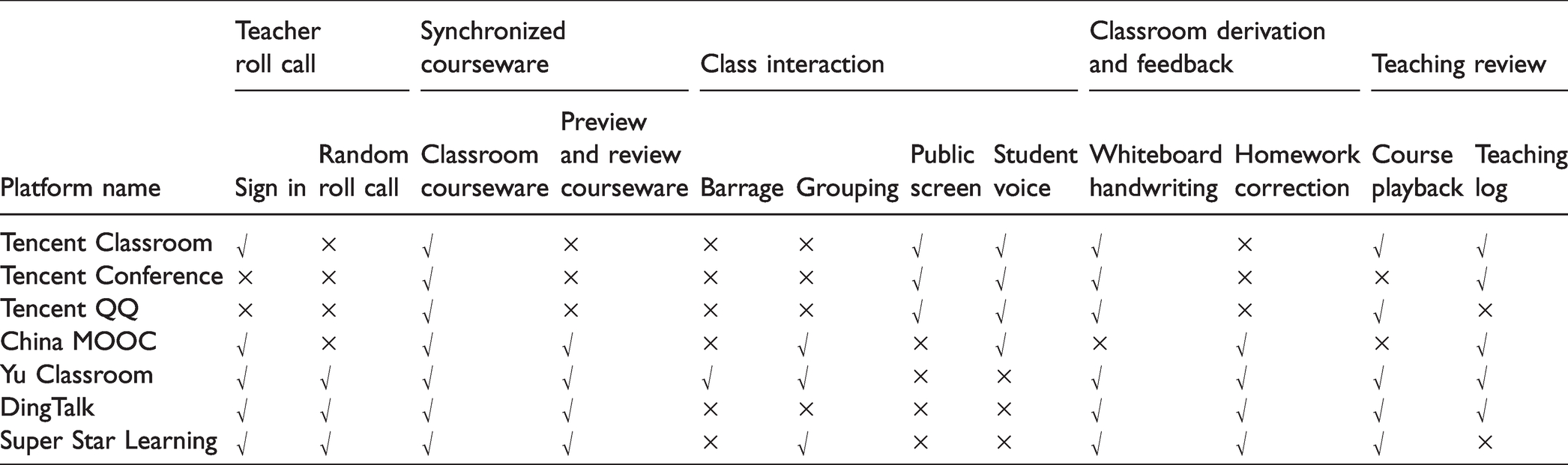
According to the statistics shown in the table above, Yu classroom teaching platform contains all aspects of functions. By comparison, the Chinese MOOC platform lacks more functions that are essential to online teaching. Tencent, with a full range of online teaching functions, is somewhere between the two mentioned above. Considering its wide application, it has lower costs for online study, which can be an obvious advantage for learners.
Analysis on the factors of teachers' teaching platform selection
From the survey results in Figure 1, it can be seen that the teachers of Hunan Institute of Information Technology mainly consider three factors when choosing a online platform. First, they must know which platform is easy to use. Next, they do care whether the chosen platform can guarantee so much interaction between teachers and students. Last, feedbacks after class cannot be neglected as well. All of them are partially related to the teacher's ages. As their ages increase, they become apt to use the platforms that can bring great convenience and less interaction with their students can be found during the teaching. The classroom interaction factors are just the opposite. Its importance gradually decreases with age. As for feedbacks giving, the data reach a peak among teachers ranging from 35 to 40 years old and later begin to fall gradually.
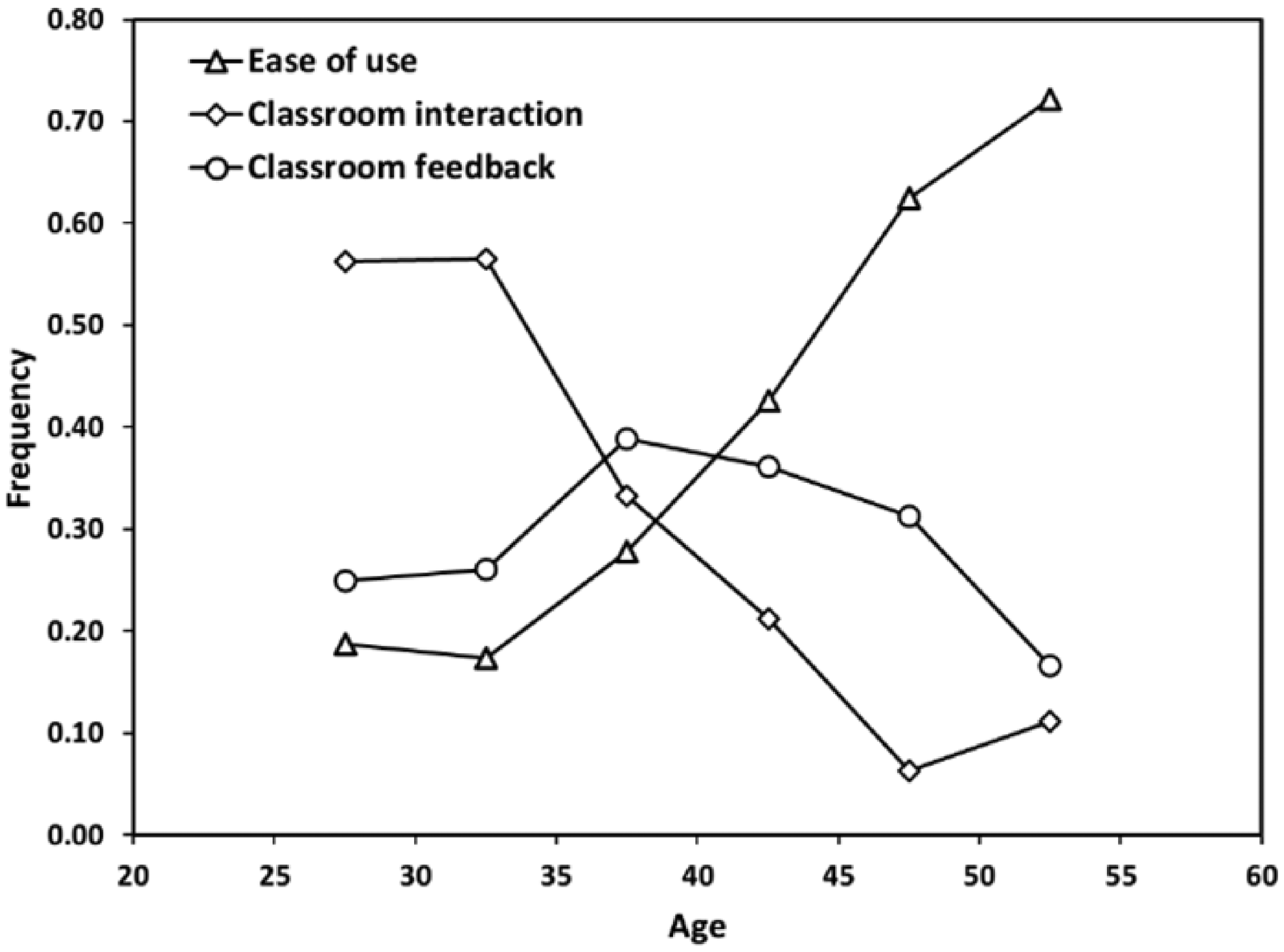
Curves of relationship between selection factors of teaching platform and age.
This shows that teachers’ choice of online teaching platforms is affected by age. Teachers over 45 pay more attention to the convenience of these platforms. They also hope to reduce the cost of platform learning and even class interaction. This is quite opposite to younger teachers, about 25 to 35 years old. The reason may be that middle-aged and elderly teachers have higher learning costs on information-based teaching platforms. Moreover, the age gap between young teachers and students is small, so they pay more attention to communicating with students. Meanwhile, it is clear that teachers aged from 35 to 45 put higher value upon students' feedbacks as a way to evaluate their teaching effects, which plays an important role in selecting a proper online teaching platform.
The statistics in Figure 2 show that Tencent classroom and Tencent QQ are very popular among teachers aged 25–35 and 45–55, while Rain classroom is the top choice for those aged from 35–45. In a deeper level, These former two Tencent platforms can meet the requirements of their own users by bringing more convenience and even greater interaction between teachers and students. The Yu Classroom is welcomed by the specific age group because of its feedback services. At the same time, comparison shows that Tencent Conference, DingTalk, Super Star Learning and other platforms have fewer users. The Chinese MOOC platform still attracts a certain quantity of teachers, but it has not become a mainstream choice because of its complexity and difficulty in using live broadcasting.
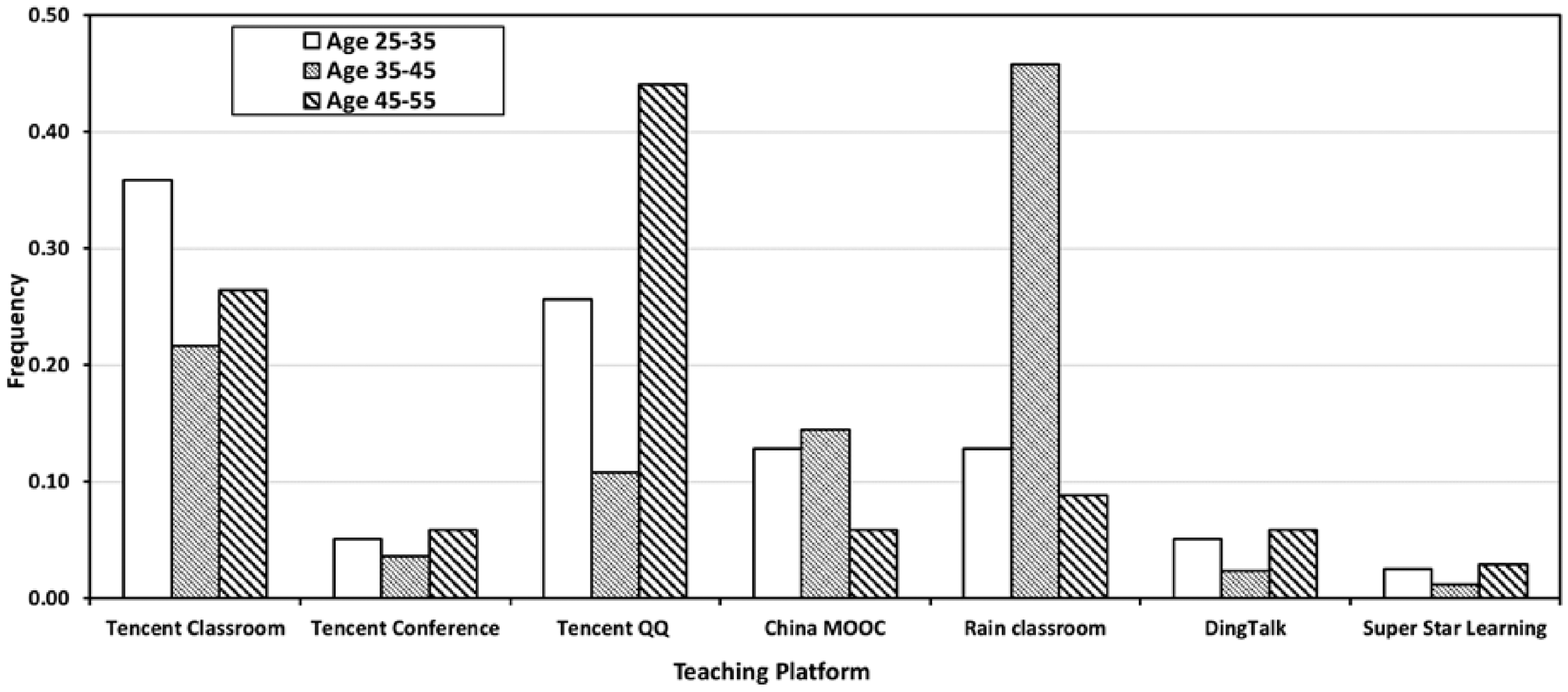
Histogram of the relationship between teaching platform choice and age.
Moreover, in order to grasp a more accurate understanding of the factors that influence the teacher's choice of online platforms, we also processed all the data upon various professions and platform selection. According to the statistics shown in Figure 3, we find that a higher percentage of teachers studying liberal arts choose the two platforms of Tencent Classroom and Tencent QQ than teachers devoted to science and engineering. On the contrary, the latter group rely upon other platform s in a larger number chiefly because they are more willing to accept higher costs on these platforms. At the same time, this also shows that Tencent Classroom and Tencent QQ do have a greater advantage in terms of platform learning costs. According to the statistics of this survey, this advantage can be a determinant factor for teachers to choose them so as to fulfill their basic work.
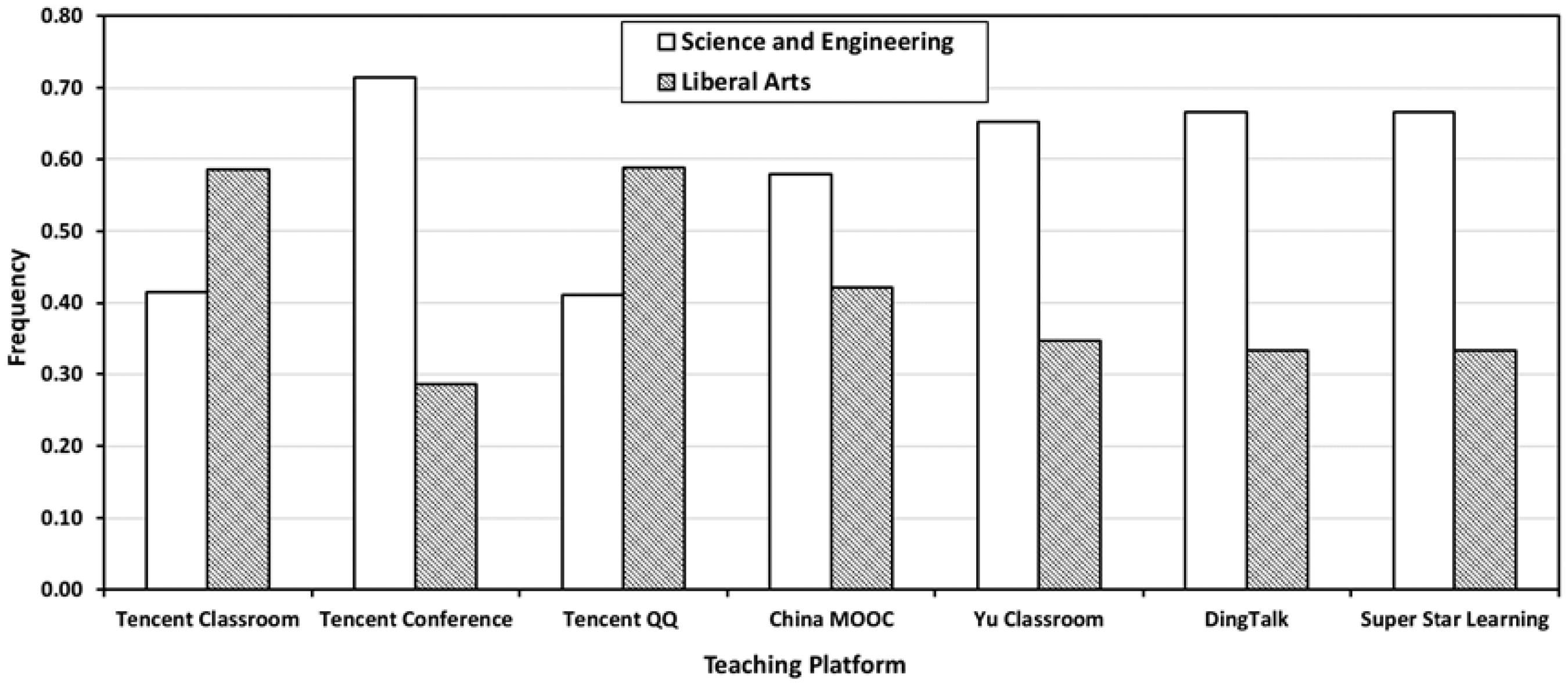
Bar graph of teaching platform selection and teacher professional proportion.
Summary
The final results in Figure 4 illustrate that those online platforms like Tencent Classroom, Tencent QQ, and Rain Classroom are the most popular among all. Among them, the former two are more convenient for teachers and more likely to help them with their basic teaching job so it has the largest number of users. The last one can ensure good teaching effects and cannot be a better choice for teachers who are acceptive of high learning costs. Other platforms kneel down before the three mentioned above in popularity for lack of sufficient convenience in use as well as functions in teaching.
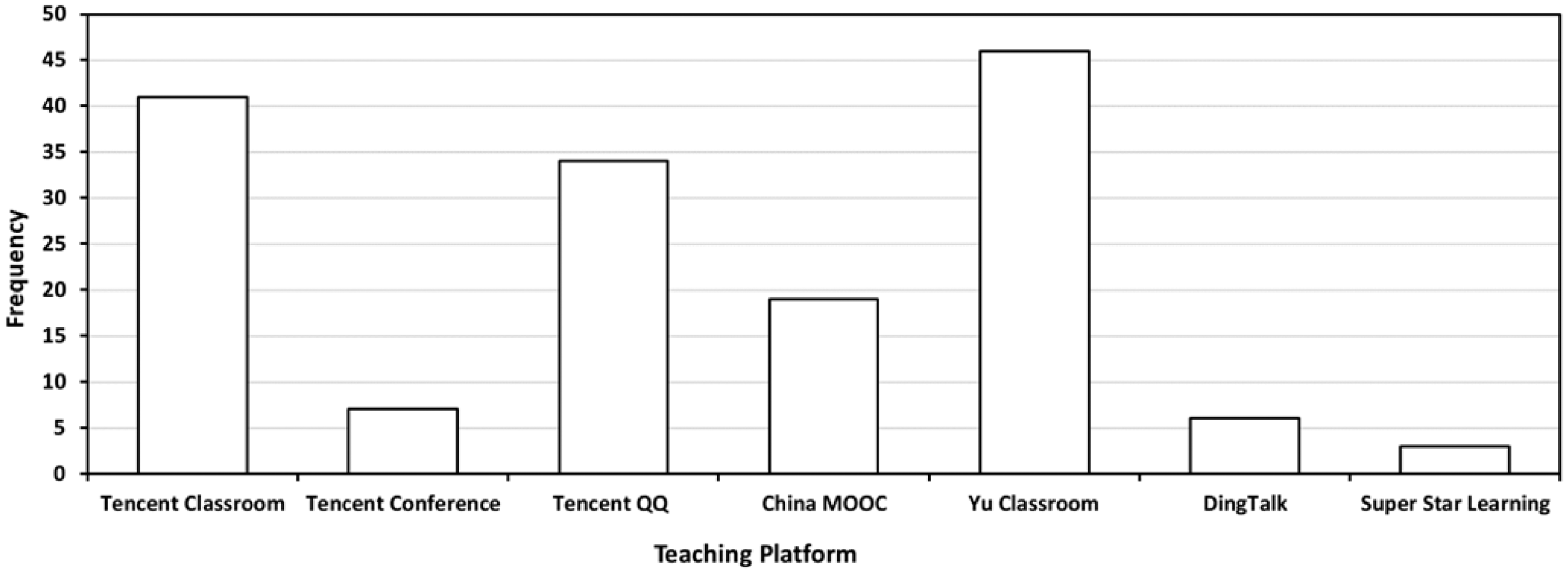
Bar graph of data summary of teaching platform.
Therefore, a series of improvements, such as the increase of convenience and basic teaching functions, must be done for other teaching platforms to gain more users. Particularly, the former must be given more attention than the latter which is considered as the premise. For example, the school's educational administration system and the teaching platform data can be connected. The other teaching functions should be further expanded on the premise of satisfying the basic teaching function, which include the integration of learning evaluation indicators, the creation of personalized student status feedbacks and so on. All these efforts can provide convenient teaching conditions to improve the quality of online teaching.
Analysis of students’ evaluation of online teaching
As the main subjects of online teaching, students provide us wth a key factor to understand the effect of online teaching against emergencies according to their requirements and evaluation of online teaching. In order to accurately study students’ online teaching evaluations in the context of this epidemic we collected relevant statistics from the survey centering upon the functional requirements of the online teaching platform, the difficulties encountered in online teaching, the advantages of online teaching, and the evaluation of the advantages and disadvantages of online teaching.
Student recognition of online teaching
The survey results showed that 97.58% (1,093 students) of the students believed that this online emergency teaching was necessary. Nearly 92.5% (1036 students) of students are satisfied with the effect of this online teaching. At the same time, the survey results also showed that only 11.6% (130 students) of the students are fully concentrated throughout the course. The rest 79.7% (893 students) are very attentive for the most part of the course, while only 8.6%(97 students) stayed engaged for a short period of time. In addition, about 7.9%(89 students)said they would divert their attention from the class to other distractions like switching to a movie or something. Anyway, this shows that students' recognition and acceptance of online emergency teaching is relatively high during the epidemic. But it is inevitable that there will be a certain degree of skipping class, which may have a certain negative impact on the effect of online teaching.
Analysis of the advantages and disadvantages of online teaching
We conducted a questionnaire survey on the advantages of online teaching from three aspects: the flexibility of online teaching, repeatability of viewing, and the promotion of teaching reform. The result is shown in Figure 5. The statistical results show that 82.9% (929 students) of students think that online teaching is more flexible than classroom teaching. An estimated 15% (168 students) accepted this and another 2.1% (23 students) expressed no obvious difference between online and offline teaching. In terms of repeatability, 88.9% (996 people) believe that reproducibility is the main advantage of online teaching over offline teaching. While 10% (112 students) partially agreed with this, the remaining 1.1% (12 students) didn't approve. In terms of the promotion of teaching reform, only 11.3% (127 students) agreed that this is a major advantage of online teaching. As many as 65.7% (736 students) of the students held the opposite opinion, and the remaining 23% (257 students) remained neutral.
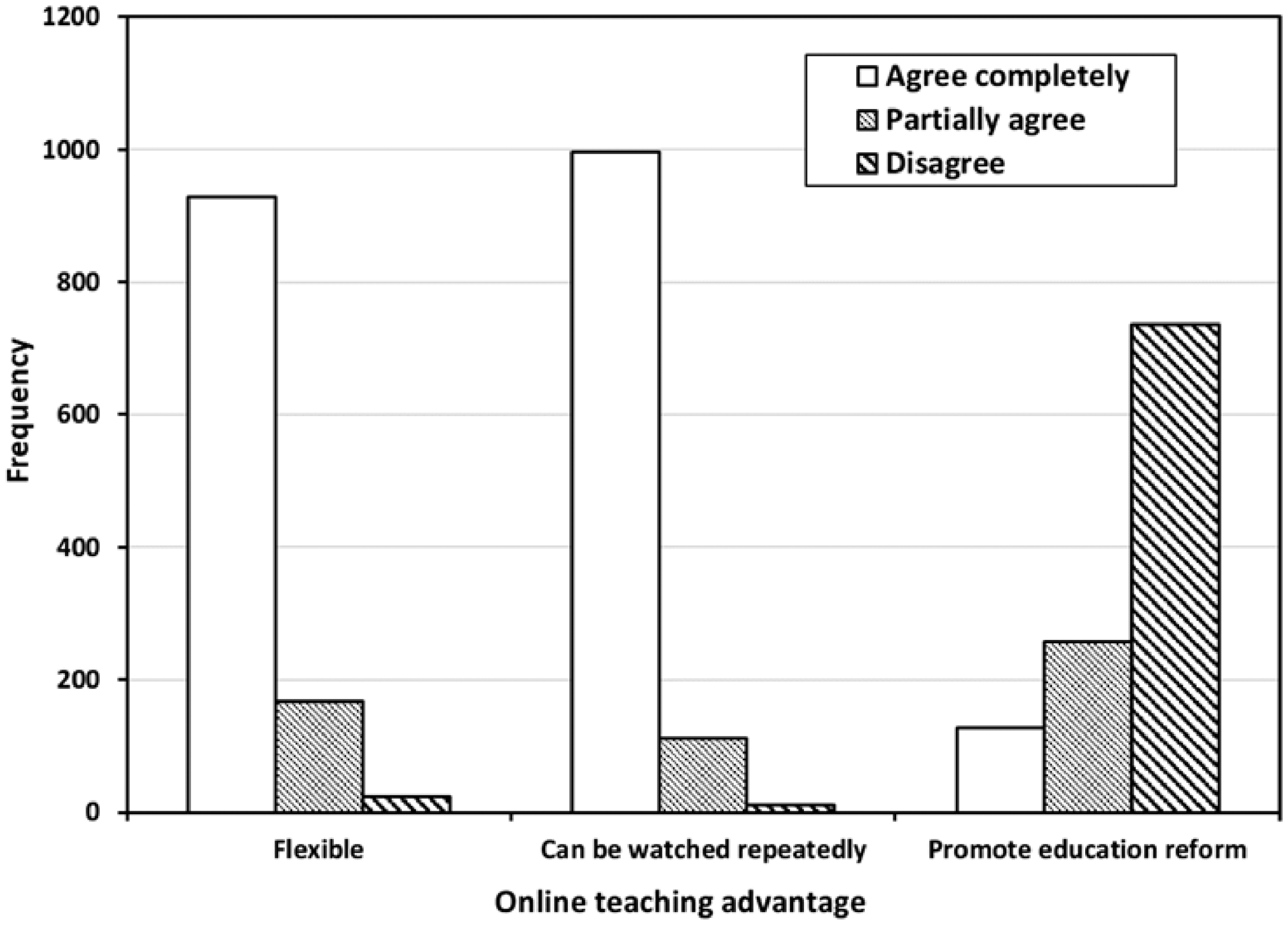
Statistics chart of online teaching advantages.
The survey on the disadvantages of online teaching was conducted in four aspects: network problems, interactive effects, visual impairment, class atmosphere. The survey results are shown in Figure 6. Statistics show that 56% (627 students) and 46% (515 students) of the classmates believed that the online class atmosphere and network problems were the main disadvantages of online teaching. Also, 48% (538 students) of the students did not think that visual impairment was a problem of online teaching. In light of interaction, 53% (593 students) of students held a neutral attitude.
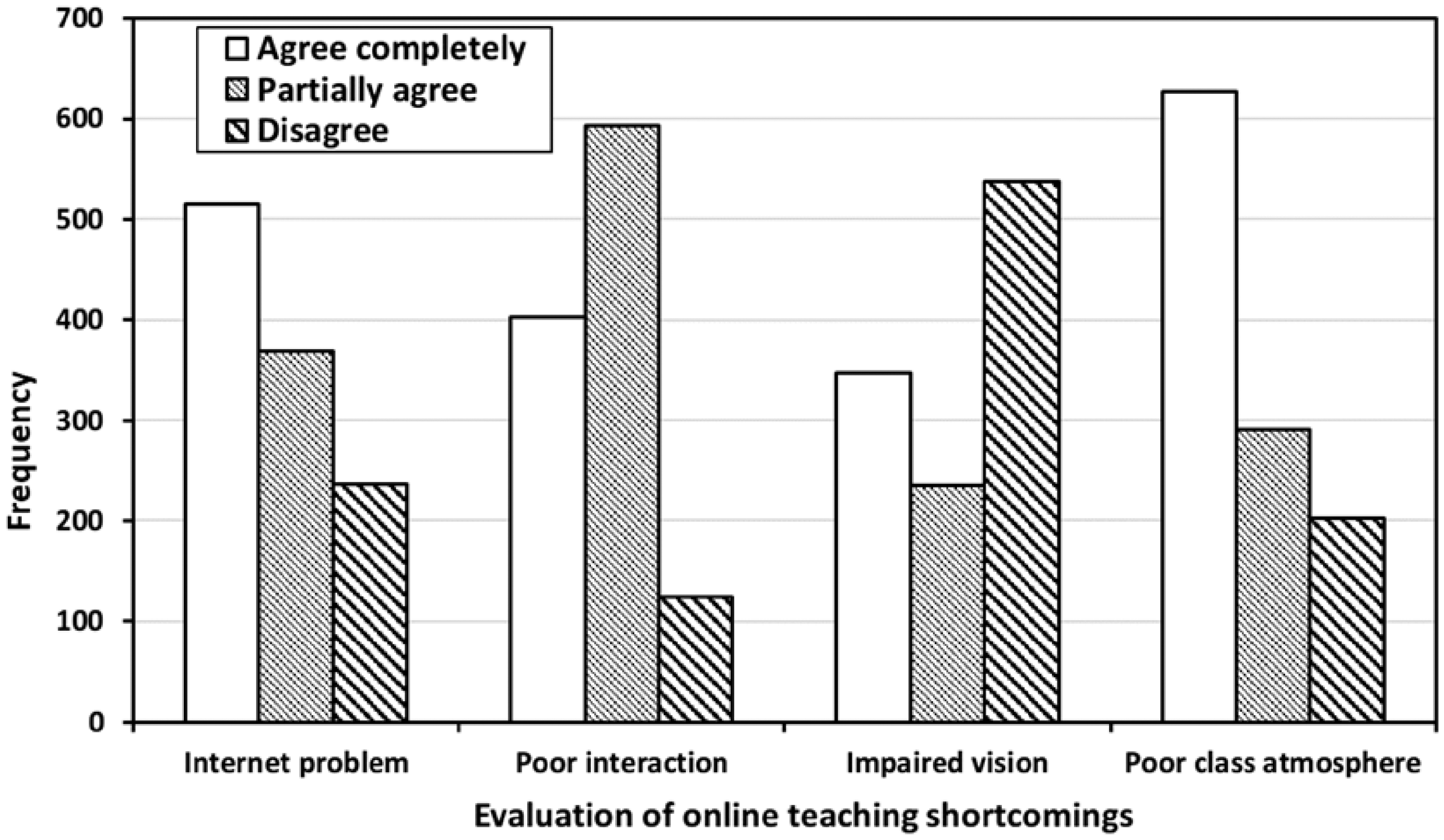
Statistical chart of online teaching shortcomings.
Judging from the above statistics, it is obvious that students are more concerned about some factors related to themselves and less concerned about issues such as teaching reform in the analysis of the advantages of online teaching. This may have a certain relationship with the students' subjective thinking. It seems that there are big differences in visual impairment and interactivity in the analysis of the shortcomings of online teaching. And the views on network issues and class atmosphere are relatively consistent. This shows that network fluctuations and class atmosphere will seriously affect the quality of online teaching without students' intuitive feelings.
Difficulties of online learning and evaluation of teaching mode
In order to better analyze the difficulties of students in the process of online learning, we conducted a survey in terms of self-control, attention, and duration. The survey results are shown in Figure 7. According to the survey results, 47.8% (535 students) of students believed that the main difficulty of online learning could lie in lack of self-control. About 28.5% (319 students) of students think that distraction was the main difficulty. There were 21.7% (243 students) of classmates struggling with the great length of online learning. The remaining students chose other reasons.
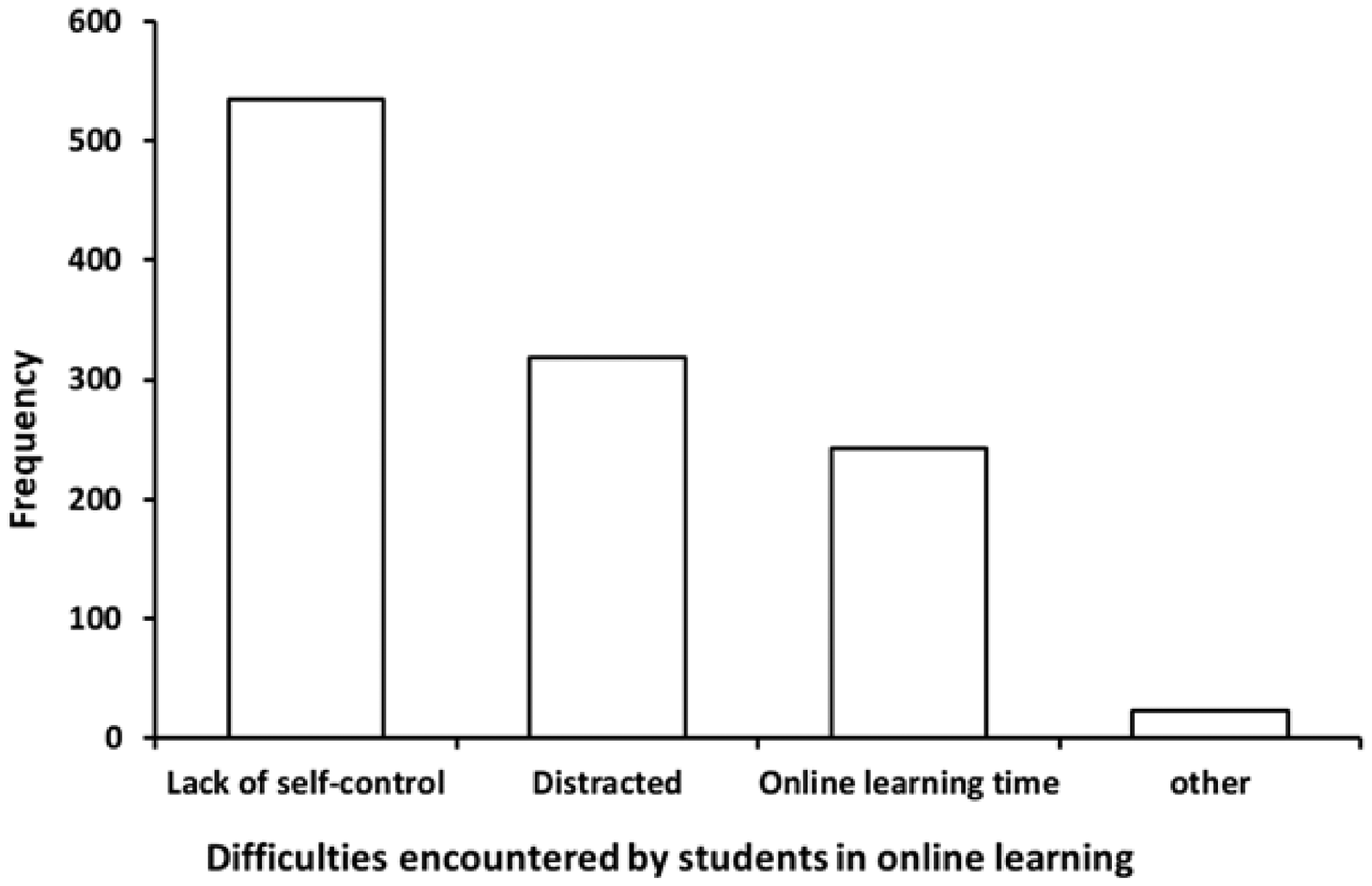
Statistics chart of difficulties encountered in online learning.
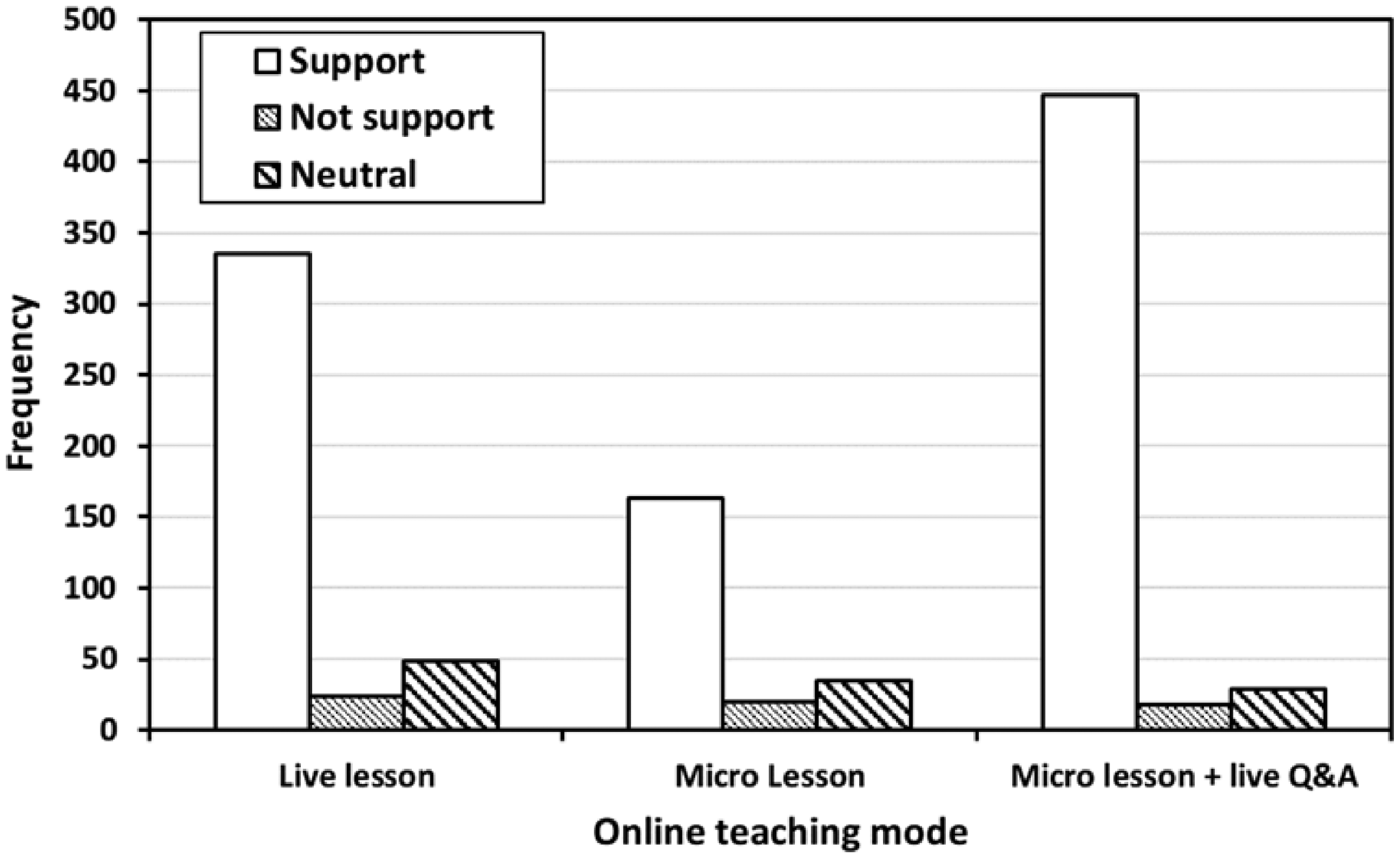
Statistics chart of online teaching mode selection.
Regarding the choice of teaching mode (Figure 8), 40% (448 students) of the students thought that the “live broadcast + Q&A” teaching mode was the best mode. About 30% (335 students) thought that online teaching should be fulfilled by adopting the mode of live lessons. The supporters of micro-classes were relatively few at only 14.5% (163 students). Another 10.1% (113 students) of the students were neutral and the remaining students objected.
Through the above investigation and analysis we can see that the main problem faced by students in online learning is self-control. In terms of teaching mode, students recognized the “live class” and “micro-class + live Q&A” mode. Only a small number of students can accept the online teaching mode of mere micro-classes. This shows that online teaching must not only deal with students' self-control but also the impact of teachers' choice of teaching modes on students. At the same time, the choice of online teaching mode will in turn affect the difficulties that students may encounter in the process of online learning which will affect the final teaching effect. Therefore, a reasonable match should be made according to the characteristics of the subject and the curriculum to ensure the best teaching effect in the selection of teaching mode.
Summary
According to the above analysis students have a higher degree of recognition of the necessity of online teaching. Analysis of the advantages of online teaching, students are more concerned about aspects that are closely related to themselves. Students are less concerned about the innovation of teaching mode caused by online teaching. And network problems and class atmosphere problems are the focus of students' attention in terms of shortcoming analysis. At the same time, the main difficulties encountered by online teaching students are regarded as self-control problems. This also shows that it is necessary to reform the teaching mode and teaching method in order to ensure that the teaching quality of online teaching does not decrease without the classroom teaching environment. Only in this way can we overcome the negative impact of the students' lack of self-control.
Online teaching practice
Affected by the general environment and emergencies online teaching practices have developed rapidly at home and abroad. For example, Zeng 5 and others built SPOC online teaching resources for chemistry, materials, environment, pharmacy and other majors through recording micro-videos and other content. Greatly improve the learning efficiency. Chen Jianbo 6 and others introduced the concept of cloud courses in the teaching of architectural mechanics, and actively explored the online and offline hybrid teaching model based on cloud classroom. This mode effectively improves the teaching effect of the course.
This study completed the online teaching tasks of the courses “Building Structure” and “Engineering Quota Principles” in Class 1 and 2 of the 18th-level Engineering Cost Major based on the teaching requirements of the school under the impact of the epidemic. In order to better study the influence of online teaching mode on teaching quality we reconstructed the teaching process of the “Architectural Structure” course. The “Principles of Engineering Quota” is taught in the traditional teaching mode. And use this course as a control group to analyze and research online teaching practice.
Teaching process reconstruction
According to the characteristics of the course “Architectural Structure” we reorganized the teaching structure and completed the whole task. Choose Yu Classroom and Tencent Classroom as teaching platforms. Pre-class preview uses Rain Classroom as a pre-class preview platform. Make full use of the functional advantages of Rain Classroom to improve the efficiency of pre-class preparation. Use Tencent Classroom as a teaching platform in the class. Take 15 minutes as a subsection to complete a small cycle of explanation, thinking, discussion, and summary of a knowledge point. Make classroom teaching have rhythm and regularity to overcome the difficulties encountered by students in online teaching. After class, Rain Classroom distributes after-school practice questions and Tencent Classroom's playback function to achieve the teaching purpose of after-class review.
Teaching result evaluation method
At present, many scholars at home and abroad have conducted research on the evaluation methods of undergraduate teaching.
7
We also adjusted the evaluation method of teaching results and adopted an evaluation system different from traditional teaching to evaluate students' final grades in order to evaluate students' learning more accurately. We use three dimensions to measure the teaching evaluation system: activity, homework completion, and final test. Among them, activity is the quantitative value of the number of times that students log in to the system and the number of downloads. The specific calculation method is as follows:

Because the data of these three dimensions can be automatically generated by the teaching platform, the final evaluation of students can be quantitatively analyzed. At the same time different assignments can be weighted separately according to the importance of teaching tasks and assignments. If the final score distribution is unsatisfactory, you can adjust the score to meet the distribution requirements by adjusting the weight. The formula for calculating the final grade can be calculated using the following formula:

The specific calculation formula used in this research is as follows:

Online teaching practice comparison
There are a total of 113 students in the two classes of 18-level engineering cost majors, including 57 students in class 1 and 56 students in class 2. We conducted a questionnaire survey among the two classes in order to analyze the difference in practical teaching quality between the courses of “Building Structure” and “Principles of Engineering Quotas”. Conducted surveys in terms of teaching mode, learning effect, and academic performance evaluation. The survey results show that 86.7% (98 students) think that the teaching mode of the “Architectural Structure” course is more in line with the characteristics of online teaching in the choice of the two teaching modes. 8.8% (10 students) of the students thought that there was no significant difference in the teaching mode between the two courses. The remaining 4.5% (5 students) think that the teaching mode of “Engineering Quota Principles” is more appropriate. This shows that the “Architectural Structure” course which has been reconstructed in teaching mode has been recognized by most students. It is superior to the traditional teaching model in the teaching process and is more in line with the needs of online teaching.
In terms of learning effects, 77.8% (88 students) believed that the teaching mode of the “Architectural Structure” course can overcome the difficulties of online teaching and achieve better learning effects. 15% (17 students) think that the difference in learning effect between the two courses is not big. The remaining 7.2% (8 students) think that the learning effect of the course “Principles of Engineering Quota” is better. The statistical results show that in terms of learning effects the “Architectural Structure” course has reorganized the teaching structure of the course and realized the purpose of small task phased teaching which can obviously overcome the problems of learning time and lack of self-control encountered by students in online learning. It can be significantly improved teaching quality compared with simply copying traditional teaching to online mode.
In terms of the final score evaluation, 83.2% (94 students) of the students thought that the teaching score evaluation method of “Building Structure” was more reasonable. 11.5% (13 students) think that the evaluation system between the two courses is not much different. 5.3% (6 students) think the evaluation method of the course “Principles of Engineering Quota” is better. The above survey shows that the “Building Structure” course evaluation method has a higher degree of recognition in the performance evaluation method. It is superior to the course of “Engineering Quota Principles” in the rationality and fairness of achievement evaluation.
Summary
According to the above analysis, the difficulties encountered by online teaching students are not unsolvable. Reasonable teaching model reorganization and fair teaching evaluation system can overcome some difficulties encountered in the current online teaching process to obtain better teaching quality. At the same time, the survey results also show that the teaching process under the new teaching model is more recognized by students.
Conclusion
This research takes the teachers and students of Hunan Institute of Information Technology as the survey objects. Conducted a survey and analysis of online teaching of Hunan Institute of Information Technology in the spring of 2020. The survey results show that online teaching is necessary as an alternative to traditional teaching methods in emergencies. 8 However, online teaching also faces many difficulties to be solved. The choice of teaching platform, the reconstruction of teaching mode, and the guarantee of teaching quality are the main problems faced by teachers. Insufficient self-control, the choice of teaching mode, and the way of evaluating final grades are the difficulties faced by students. Both of them are independent and interrelated. This research establishes a new teaching mode suitable for small tasks in online teaching based on the reorganization of teaching structure. And achieved good results in practice. Practice has shown that the innovation of teaching mode and evaluation method can solve the current difficulties faced by online teaching to a certain extent and achieve the purpose of improving teaching quality and reducing students' learning difficulties.
Footnotes
Declaration of Conflicting Interests
The author(s) declared no potential conflicts of interest with respect to the research, authorship, and/or publication of this article.
Funding
The author(s) declared the following potential conflicts of interest with respect to the research, authorship, and/or publication of this article: The work described in this paper was fully supported by a grant from the Teaching Reform Research Project of Hunan Provincial Department of Education “Exploration and Practice of Cultivation Mode of Engineering Cost Talents in Undergraduate Institutions under the Background of New Engineering”(No. 1193),and the Teaching Reform Research Project of Hunan University of Information Technology (No. XXY018YB20)
