




Abstract
The direct power command (DPC) of the doubly-fed induction generators (DFIG) has garnered increasing attention due to its simplicity, ease of implementation, and fast dynamic response that distinguished it from other controls. Recently, nonlinear controllers have been suggested to improve the DPC robustness, in particular the minimization of the DFIG power fluctuations. In the present research work, two different controls are used to regulate the DFIG power, where the first is a traditional DPC and the second is the DPC based on neural super-twisting algorithm (NSTA) controllers. The NSTA controllers were used instead of hysteresis comparators in the DPC technique, and the pulse width modulation (PWM) technique was used as a suitable solution instead of the switching table to better manage the state of switches and simplify the control system. The proposed controls were investigated and implemented using Matlab software and Dspace 1104 card with different tests to determine the best control. Experimental and simulation results show the good efficiency of the NSTA controller in improving energy and current quality. Also, the comparison is made between both techniques and the other controls in terms of reducing current harmonic distortions and ratios of the DFIG power fluctuations.
Keywords
Introduction
Traditionally, the direct power control (DPC) strategy is considered one of the linear strategies that have gained widespread in the field of control, as it has been relied upon in several different fields, such as renewable energies, and this is due to several characteristics that distinguish it, such as ease of implementation and not using the mathematical model of the machine. In principle, the DPC strategy is very similar to the direct torque control (DTC) strategy, the difference between them lies in the amounts controlled. As is known, the DPC strategy controls the active and reactive power (Ps and Qs) of the machine without using internal loops, which makes it the most suitable and best in the field of controlling electrical machines.
The use of the DPC technique for doubly-fed induction generators (DFIG) is common due to its simplicity and its fast dynamic responses.1,2 However, the conventional hysteresis comparator (HC) is the most commonly used in such generators. This strategy was used to control the synchronous generators, 3 photovoltaic systems, 4 and asynchronous generators. 5 This strategy does not use the pulse width modulation (PWM) technique or space vector modulation (SVM) to generate control pulses for inverter operation, as this strategy is mostly applied to the rotor side converter (RSC) of DFIG. In addition, this strategy relies on power estimation to calculate the Qs and Ps errors. The latter is used by the switching table to generate the tensions necessary to operate the inverter. The conventional DPC technique is an uncomplicated and robust control that is associated with problems of the Qs and Ps ripples and low currents qualities. 6 These problems and defects are detailed in the works.7–9
Numerous scientific investigations have been carried out by simulation and experimentation to enhance the performance and efficiency of the DPC technique. One of the first solutions proposed is the application of the SVM technique. 10 In this work, two proportional-integral (PI) controllers were used to regulate the Qs and Ps of the DFIG. In addition, the SVM technique was utilized to produce the pulses needed to operate the RSC of the DFIG. Simulation results prove the good efficiency of the DPC-SVM technique, the DFIG energy fluctuations are reduced and the current quality is increased compared to the conventional DPC technique using a switching table (ST). In Abad et al., 11 the Qs and Ps ripples and switching losses are minimized using a predictive controller. The proposed strategy differs from the traditional strategy in terms of principle, simplicity, ease of implementation, cost, performance, results obtained, and durability. The predictive DPC (PDPC) is characterized by complexity, which makes it difficult to achieve it experimentally, and this is unacceptable, as the system costs increase, and therefore the cost of energy production and consumption. In addition, the maintenance process is difficult and expensive due to the complexity of the control, which is not desirable in the industrial field. On the other hand, the PDPC strategy is considered complex and difficult to implement compared to the DPC strategy, as the PDPC strategy depends on the mathematical model of the machine, which makes it affected in the event of a malfunction in the system. The PDPC strategy uses the same estimation equations found in the DPC strategy, which is an undesirable matter that contributes to an increase in the ripples and the THD of current value in the event of a malfunction in the system. In the PDPC-SVM strategy, a phantom swap time with low memory is used and no sector selection is required. So the traditional technique’s simplicity and ease of implementation are not discriminated against by this strategy. The Matlab environment was used to verify the validity and robustness of the PDPC strategy, and several tests were used for this purpose. The obtained numerical and graphical results demonstrate the efficiency, effectiveness, and performance of the PDPC strategy compared to both DPC and DPC-SVM in terms of improving system characteristics such as energy ripples and the value of total harmonic distortion (THD) of current. But it gives better results than DPC and DPC-SVM. 12
In comparison to the DPC technique based on PI controllers, the fractional-order PI (FOPI) controller shows lower power ripples with a fast dynamic response of DFIG energies. 13 The DPC-FOPI strategy is different from the DPC strategy in terms of performance and durability, as this strategy is considered simple and easy to implement compared to other strategies. In this strategy, the same estimation equations found in DPC are used, which makes it give unsatisfactory results in the event of a malfunction in the machine. In the DPC-FOPI strategy, the PWM strategy is used to control the RSC of DFIG. This strategy was relied upon for its simplicity and ease of implementation. Also, to reduce the cost of producing and consuming electrical energy. The DPC-FOPI strategy was implemented in a Matlab environment using a variable wind speed (WS) for this purpose, where several different tests were used, such as a durability test. The necessary graphical and numerical results were extracted for a comparative study between the two strategies used in controlling DFIG. All test results confirm that the DPC-FOPI strategy has distinctive performance compared to the traditional strategy. However, the problem of energy ripples and the THD value remains present, which limits the spread of this strategy, which is undesirable. In, 14 a new DPC technique based on the use of synergetic command (SC) was proposed, where two HCs were dispensed with and the PWM technique was used to command the RSC of DFIG. In the DPC-SC strategy, capacity estimation was used, and the same equations as in the traditional strategy were used. The DPC-SC strategy aims to calculate reference values of effort based on a power error using two SC techniques, where simplicity and ease of implementation are among the most prominent features of this proposed strategy. This proposed strategy is characterized by the presence of a small number of gains, which makes it easy to adjust and change the dynamic response of power with ease, which is desirable. The DPC-SC strategy was implemented in the Matlab environment, where a 1.5 MW DFIG was used in different working conditions, and the results obtained were compared with the traditional strategy. The use of the SC technique reduces power ripples significantly while increasing the quality of current by decreasing the value of THD of current. Also among the advantages of this control is obtaining a constant switching frequency of the inverter compared to the DPC technique. Another nonlinear technique represented in the third-order sliding mode command (TOSMC) was used to overcome the defects of the DPC strategy of DFIG-based multi-rotor wind turbine (MRWT) systems. 15 A TOSMC strategy is used to calculate the reference values for the rotating voltage of the machine. These reference values are used to generate the necessary control pulses using the PWM technique. The DPC-TOSMC technique is simple and can be accomplished easily as the dynamic response can be tuned using only a few parameters. Also, the TOSMC technique has the advantage of not being related to the mathematical model of the system, which makes the TOSMC strategy give very satisfactory results in the event of a system malfunction. The negative of the DPC-TOSMC strategy lies in estimating capabilities, as using estimation makes the strategy tied to the machine parameters (Rs), which is an undesirable thing that helps raise the ripples and the THD of the current in the durability test. A simulation was used to implement the proposed strategy using 1.5 MW DFIG-MRWT in different operating conditions. The graphical and numerical results show the superiority of the DPC-TOSMC strategy over the traditional strategy in terms of ripple reduction ratio, THD value of current, overshoot, and steady-state error (SSE) of DFIG power in all tests. However, in terms of response time to capabilities, the DPC-TOSMC strategy provided unsatisfactory results in all tests compared to the traditional strategy, which is undesirable.
Nonlinear strategies have become feasible to remedy the DPC shortcomings. With the advent of new nonlinear strategies, the DPC technique has become more flexible and can be used to control several generators. Compared to the SC, the use of the super-twisting algorithms (STAs) is less effective in minimizing energy ripples and increasing the currents and voltage quality of DFIG-based wind turbine systems. 16 As is known, the STA strategy is among the nonlinear controls that are characterized by ease of implementation and great robustness against changes in machine parameters. In addition, it is characterized by not relying on the mathematical model of the system under study, which makes it give satisfactory results in the durability test compared to several other controllers. Its application in systems depends on identifying the error only, as it can be applied to complex systems with ease. Furthermore, the STA has low gain, making it easy to adjust and change the dynamic response. In, 17 a sliding mode command (SMC) method is suggested to regulate the DFIG power with the application of the SVM strategy to control the inverters. This strategy can improve the dynamic response, reduce power ripples, reduce the THD value of the current, and increase the system’s robustness and longevity at the moment of failure compared to the DPC technique. However, some disadvantages of using the SMC technique lie in the complexity, as the DPC technique becomes more complex and related to the mathematical model of the machine, and this is not desirable. Using the SMC strategy depends on knowing the mathematical model of the machine accurately, which is an undesirable matter that contributes to raising ripples in the event of a malfunction in the machine. The SMC strategy has an undesirable feature that distinguishes it from other strategies, which is the phenomenon of chattering, as this phenomenon contributes to creating several unwanted problems in the machine and the network. The phenomenon of chattering contributes significantly to reducing the system’s lifespan, periodic maintenance, and thus costs. Using the SMC technique to control DFIG is unlikely due to the reasons mentioned, and therefore it is necessary to search for another solution that has high characteristics such as simplicity, durability, efficiency, outstanding performance, ease of implementation, and low costs.
In Benbouhenni, 18 a new outline of the DPC technique of a DFIG based on the MRWT system is presented. This new strategy is based on the use of a modified SMC (MSMC) technique and the PWM strategy. Owing to the modified SMC’s ease of use and simplicity of hardware implementation, the DPC-MSMC technique maintains the simplicity and ease of implementation that characterizes the DPC technique. Using the MSMC strategy makes the DPC strategy more durable and increases performance significantly, as it contains very few gains, which makes it easy to adjust and control. In addition, the use of the MSMC strategy is not linked to the mathematical model of the machine, which allows for good results in the durability test, which is desirable in the field of control. This proposed strategy was implemented in a Matlab environment using a variable WS, and the results obtained were compared with the traditional strategy. In this strategy, the maximum power point tracking (MPPT) technique was used to calculate the reference value for Ps, which makes current, torque, and Ps closely related to WS. The use of the MPPT technique contributes to increasing the energy gained from the wind and maintaining the safety of the turbine from strong winds. Also, this control minimizes the ripples of currents and powers significantly, noting that there is high durability at the moment of a malfunction in the machine, which is a good thing. It is noted that there is an estimate of the capabilities, where despite the assessment that the results were excellent, which indicates the efficiency and high performance of the modified SMC technique. Another new strategy was used in Benbouhenni and Lemdani 19 that has the same simplicity and high performance as the simplified STA (SSTA) technique. The SSTA technique was used in combination with the PWM technique to overcome DPC technique problems such as power fluctuations and current/voltage quality. In the DPC-SSTA strategy, an SSTA-type control is used to control power, where durability, ease of implementation, and simplicity are among the most prominent features of this control. Also, it contains a small number of gains, which makes the proposed strategy easy to adjust and control the dynamic response to power. Also, this proposed strategy does not depend on the mathematical model of the energy system, which makes it provide satisfactory results in the event of a malfunction in the machine or network. The negative of this strategy lies in the use of capacity estimation, as the same equations found in the DPC strategy are used. The SSTA controller is used to calculate voltage reference values. The latter is used to generate control pulses in the RSC of DFIG. The DPC-SSTA strategy was applied to a 1.5 MW DFIG-MRWT, where a variable WS was used for this purpose. The results obtained were compared with the traditional strategy in terms of ripple reduction ratio, response time, THD value of current, overshoot, and SSE of DFIG power. The simulation was used to implement the designed DPC-SSTA technique, where the efficiency SSTA technique was demonstrated by the results in overcoming the defects of the DPC technique of a 1.5 MW DFIG-MRWT. Another control that was used to overcome the disadvantages of the DPC technique of DFIG was the backstepping controller (BC). 20 In this strategy, the BC technique was used to replace traditional controllers, and the PWM strategy was used to generate control pulses in the RSC of DFIG. Using the BC strategy increases the robustness and performance of the DPC strategy of the DFIG, especially in the robustness test. But using this strategy increases the degree of complexity, difficulty of implementation, and cost, and makes the DPC strategy linked to the mathematical model of the system, which is undesirable. In addition, using the BC strategy increases the number of gains of the DPC strategy, which is undesirable and makes it difficult to control the dynamic power response. Also, the use of power estimation makes the DPC-BC strategy linked to the machine parameters, which is undesirable and contributes significantly to reducing the quality of power and current. However, the MATLAB simulation results proved high robustness and performance of the DPC-BC technique in improving the system characteristics significantly compared to the traditional DPC technique. Although nonlinear control methods have been widely utilized in the renewable energies field, they are distinguished by complexity and difficulty in implementation and application, like with the BC technique case, where the complexity of the generation system increases the cost of periodic maintenance and thus raises the cost of production and consumption of electrical energy. Additionally, the problem of energy ripples and low quality of the current remains, and this is undesirable. The above-mentioned strategies have a disadvantage in the use of estimation of energy, which produces more problems in the event of a malfunction in the machine.
New strategies were presented to overcome the disadvantages of nonlinear strategies, as these new strategies depend on combining controls to increase robustness and increase performance. Among these new strategies that have been suggested to remedy the DPC method disadvantages based on the idea of merging can be mentioned the combining of the SC method and SMC strategy in Benbouhenni et al., 21 the combination of STA and SC techniques in Benbouhenni and Bizon, 22 the combination of SMC technique and BC technique in Echiheb et al. 23 In these strategies, two HCs and a switching table are eliminated and the power estimate is maintained. The latter uses the same equations used in the traditional DPC strategy, where PWM or SVM techniques are used to generate the necessary pulses for the RSC of DFIG. All ball fusion strategies are used to reduce energy ripple with the use of a two-level inverter. These mentioned strategies depend on estimating capabilities, which makes them slightly affected by changing machine parameters, especially in the case of changing Rs of DFIG. In addition, the problem of complexity is among the drawbacks of these proposed strategies, such as the BC-SMC strategy, as this strategy is linked to the mathematical model of the machine, which makes it difficult to implement and contains a significant number of gains. Also, the simulation was used to implement the integration strategies on 1.5 MW DFIG by using a test for real varied WS conditions, a test of durability, and a test in the case of WS taking steps. These strategies based on the idea of consolidation to overcome DPC technique problems have a high performance in the case of uncertainty and turbulence. The main goals of these new strategies are to increase durability, minimize the THD value of current, reduce chattering problems, and reduce energy ripples. A robust DFIG-based wind system control using the fractional-order STA (FOSTA) technique is proposed. 24 The DPC strategy based on the FOSTA controller is completely different from the strategies mentioned above, as FOSTA is used to calculate voltage reference values based on the power error. The latter is calculated using power estimation, which requires measuring voltage and current only. So the proposed FOSTA technique is proposed and designed to remedy the inconveniences of the DPC technique. The PWM strategy is also used to generate the pulses necessary to operate the inverter to simplify control and reduce costs. The DPC-FOSTA of the DFIG strategy is complex compared to the traditional strategy and simple and easy to implement compared to the DPC-BC technique or DPC-BC-SMC strategy. Compared with the traditional strategy, the DPC-FOSTA strategy contains a significant number of gains, which makes it difficult to adjust the dynamic power response. The suggested DPC-FOSTA technique was evaluated and examined in several different tests employing Matlab/Simulink software. The simulation results prove that the DPC-FOSTA technique has a distinctive performance in terms of improving the system characteristics compared to the traditional strategy, as the quality of current and power are better in the case of the DPC-FOSTA technique, which is a good thing. However, the problem of ripples remains present, especially in the case of durability testing, which searches for the best strategy ongoing. With the same idea used in the previously mentioned reference, the fractional-order SMC (FOSMC) technique was used to overcome the problems of the wind power generation system, 25 whereby Matlab software was used to implement the designed control with a comparison with the DPC technique. The FOSMC strategy is a combination of both the SMC technique and the fractional-order technique. This strategy is used to control capabilities and improve the performance and durability of the SMC strategy. This strategy is linked to the use of the mathematical model of the studied system and the use of power estimation, which makes it provide unsatisfactory results in the event of a malfunction in the machine. Simulation results show that the FOSMC technique is better than the DPC technique in terms of energy ripple reduction and in minimizing the THD value of the current of the DFIG.
Intelligent and innovative methods such as the neural networks (NNs), the fuzzy logic (FL) technique, and the neuro-fuzzy algorithm have been utilized to enhance the performance of the STA technique, SMC technique, and TOSMC technique in scientific works.26–32 The use of these strategies gave very satisfactory results, as the use of smart strategies contributes greatly to improving the system characteristics and control strategies in particular. Both SVM and PWM techniques are used to control the RSC of DFIG, where a two-level inverter was used in these works to simplify the system and demonstrate the high efficiency of these mentioned strategies. Using these smart strategies does not require precise knowledge of the mathematical model of the system being studied, as these strategies rely heavily on experience. The advantage of these strategies is outstanding performance and accuracy, as is the case with the NN strategy. The simulated results of these strategies indicate that the use of smart strategies raises the performance of nonlinear controls and significantly overcomes the defects of the DPC strategy. However, using these smart strategies does not eliminate capacity estimation or significantly overcome power ripples, as the problem of power/current quality remains present. Also, using these strategies is somewhat complicated, as there are no mathematical rules that help in using both FL and NN techniques. These strategies rely heavily on experimentation in choosing the most appropriate number of rules and number of neurons. In Darvish Falehi and Torkaman, 33 a novel robust fractional-order STA control for supercapacitors-based power supply to provide steady and smooth DC voltage is presented. In this work, a new inverter structure is proposed, in which a special geometric progression can be provided for the DC voltage source, low switch count, and high step-down sinusoidal voltage. This proposed inverter has been compared to traditional and recently proposed inverters to verify its ability to improve the characteristics of the studied energy system. As for the strategy used, FOSTA was used to increase the degree of freedom of the system and its robustness against uncertainties, nonlinearities, and disturbances while providing a stable and smooth voltage. The results obtained were compared with the proportional-integral derivative (PID) controller, SMC technique, and FL strategy in terms of their ability to track. The proposed strategy was verified using the Matlab environment and showed its great ability to improve the characteristics of the DFIG-based wind turbine system well compared to traditional strategies. Another nonlinearity strategy was used for DFIG-based wind turbine to augment MPPT and fault ride-through (FRT) capabilities. 34 So a novel robust perturbation observer-based fractional-order SMC (RPO-FOSMC) for DFIG to extract the maximum power and improve the FRT capability. In this work, the RPO-FOSMC strategy is used to estimate and establish the robust nonlinear aerodynamics of a wind turbine, the uncertain dynamic parameters of an induction generator, and the stochastic properties of wind waves. The turbulence compensator provides suitable robustness concerning different uncertain models and achieves exceptional controllability during waves. Random wind. Also, a multi-objective grasshopper optimization algorithm (MOGOA) was implemented to increase the robustness and dynamic performance of the RPO-FOSMC strategy, where three distinct conditions were considered to compare and analyze the fast and robust dynamic performance of the optimized RPO-FOSMC versus other conventional approaches. The Matlab environment was used to implement and verify the proposed RPO-FOSMC strategy for controlling an energy system based on wind energy. The obtained simulation results revealed the efficiency and exceptional dynamic capacity of the proposed control strategy compared to traditional strategies, as it is noted that the quality of power and current are better in the case of the proposed strategy compared to traditional strategies. According to the work done in Darvish Falehi, 35 a DFIG-based wind turbine as a nonlinear, complex, and time-varying system involves many uncertainties, especially uncommon disturbances and non-model dynamics. Therefore, designing a high-performance and reliable controller for this system is a complex task. So, the FOSMC multi-objective optimization algorithm is considered a suitable and effective solution to accurately regulate the Ps and Qs of DFIG, where multi-objective gray wolf optimizer (MOGWO) is taken as a suitable solution to optimally adjust and determine FOSMC parameters. This proposed strategy overcame the uncertainties in the system and reduced the chattering amplitude significantly. The Matlab environment was used to implement the proposed control with variable WS for this purpose, where the simulation results conclusively proved the validity of the MOGWO-based FOSMC technique to accurately track the Ps and Qs of the DFIG compared to the traditional strategy. To accurately control the Ps and Qs of the DFIG, a robust controller must be implemented along with an effective strategy. Since the power generated by DFIG depends on the wind speed, both Ps and Qs were mainly tracked according to the steady-state entry wind and turbulent conditions. So to obtain a robust control the author in Darvish Falehi 36 presented a DPC strategy based on the non-integer and PID (NIOPID) controller to reduce the deviation of both active and reactive power simultaneously so that accurate tracking of these forces can be achieved, where the dynamic and transient stability of DFIG as the main objectives of this work performed. Compared to the DPC strategy, this strategy is somewhat complex with a significant number of gains, which makes it difficult to adjust the dynamic response. Due to the multi-objective nature of the design problem, a multi-objective technique is set to find out the optimal result, where the multi-objective particle swarm optimization (MOPSO) technique is used to detect nonlinear objectives to detect optimal parameters of the NIOPID controller due to its high performance. The proposed DPC-NIOPID strategy was implemented in the Matlab environment using several different tests to verify the performance and robustness of the proposed strategy compared to the traditional strategy. The simulation results have transparently validated the dynamic and temporal performance of NIOPID-based DPC compared with the traditional strategy. Also, the quality of the stream is high in the case of the proposed strategy compared to the traditional strategy.
In Benbouhenni et al., 37 a new nonlinearity strategy was used to control the power of DFIG-MRWT, which was DPC based on integral SC techniques. The proposed strategy is a modification of the traditional strategy, where the two HCs and ST are eliminated and replaced by two integral-SC and modified SVM techniques. High performance, durability, ease of implementation, low cost, and rapid dynamic response are the most prominent features of this proposed strategy. In this proposed strategy, the voltage reference values are calculated using the integral SC strategy, where power estimation is used for this purpose. The Matlab environment is used to verify the validity of the proposed strategy, and the results are compared with the traditional strategy. Numerical and graphical results demonstrate the superiority of the DPC strategy based on integral SC over the traditional strategy in terms of the overshoot, SSE, and ripples of the DFIG power. Another work was done in Benbouhenni et al. 38 to overcome the shortcomings of the DPC strategy of DFIG-MRWT, where the genetic algorithm (GA), terminal sliding surface, and PI controller were used for this purpose. The GA technique was used to determine the gain values for the proposed strategy and significantly improve performance, as this strategy was relied upon for its simplicity and high accuracy. The proposed strategy was applied to the RSC of DFIG, where the PWM strategy was used to generate the necessary pulses necessary for operation. The proposed strategy is characterized by simplicity, ease of implementation, high durability, and outstanding performance in overcoming the problems of traditional strategies. This proposed strategy depends on estimating capabilities, as it uses the same estimation equations used in the traditional strategy. To implement this strategy, the Matlab environment was used for this purpose, with various tests conducted on a 1.5 MW DFIG-MRWT to verify the behavior of the proposed strategy compared to the traditional strategy. The results obtained were compared in terms of power ripples, response time, THD of current, SSE, and overshoot of the DFIG power. The results of the completed comparison prove the superiority of the proposed strategy over the traditional strategy and some existing controls, and this is demonstrated by the high reduction ratios. In Benbouhenni et al., 39 the SC-PI controller based on the GA technique was used as a suitable solution to overcome the drawbacks of the DPC of 1.5 MW DFIG-MRWT strategy. The proposed DPC-SCPI-GA strategy is characterized by high robustness and its ability to significantly reduce undulations compared to the traditional strategy. In this proposed strategy, the PWM strategy is used to control the RSC of DFIG, where the reference voltage values are calculated using the SC-PI controller. The proposed control parameters are calculated using a GA technique to increase performance and obtain good results. In this strategy, power estimation is used to calculate the power error, where only voltage and current are measured. In addition, the MPPT strategy is used to calculate the reference value for active power, which makes the current and torque values closely related to the WS. The Matlab environment was used to implement the proposed control, where different working conditions for DFIG were used to test the performance of the proposed strategy compared to the traditional strategy. Also, a comparison with other works was made in terms of power ripple reduction ratios, response time, overshoot, and SSE of DFIG power. The results obtained and the comparison achieved prove the superiority of the proposed strategy over the traditional strategy and some controls in terms of current and power quality. However, the problem of ripples remains present, especially in the durability test, which searches for a more durable control and continuous performance. In the two works40,41, two controls with almost the same principle and idea were proposed, where fractional-order control (FONC) 41 and fractional-order fuzzy control (FOFC) 40 were used to overcome the disadvantages of the DPC of 1.5 MRWT strategy. These proposed strategies are different strategies from the rest of the controls mentioned previously, and even in the field of control, where according to the values of the gain, which represents the fractional calculus, we obtain the required control. So, these proposed strategies play the role of two different controls at the same time, where when the gain, which represents the fractional calculus, is equal to the value 1, we get the controls NN and FL, and when it is different from 1 and does not take the value 0, we get the strategies FONC and FOFC. These proposed strategies were applied to the RSC of DFIG only, where a diode was used to form a grid-side converter to reduce the cost of the overall system and demonstrate the extent of the ability of the proposed strategies to improve the quality of current and power. These proposed strategies use the PWM strategy to generate the pulses necessary to operate the RSC, as the PWM strategy was used to generate the reference value for the Ps. In the proposed strategies, voltage and current are measured to estimate powers, as the same estimation equations found in the DPC strategy are used. The Matlab environment was used to implement these strategies, where a variable WS was used, with a comparison with existing controls in terms of undulation reduction ratios, response time, SSE, and overshoot of DFIG power. The results obtained with the comparison performed confirm the efficiency, effectiveness, and ability of these strategies to improve the quality of power/current and to overcome the defects and problems of the DPC strategy. These proposed strategies have drawbacks, namely in estimating capabilities, which makes them affected in the event of a malfunction in the system or in the smart strategies used, as there are no mathematical rules that help in using these smart strategies. Therefore, experience and experimentation are relied upon in applying these strategies. In addition, using a larger number of rules in the FL strategy causes the system to become heavier and have a long dynamic response, which is undesirable in the field of control. A new nonlinearity strategy based on the use of the SC technique has been proposed as an alternative and effective solution to overcome the problems of the DPC technique of the DFIG-based MRWT system. 42 This strategy is modified synergetic control (MSC), which was used to replace traditional DPC controls. Moreover, the PWM strategy was used to control the RSC of DFIG-MRWT. This proposed DPC-MSC strategy is characterized by outstanding performance, simplicity, high durability, and ease of implementation. Also, it has several gains making it easy to adjust and change the dynamic response. The proposed DPC-MSC strategy does not depend on the mathematical model of the DFIG-MRWT, which gives the possibility of obtaining good results in the durability test. However, this strategy has a negative, which is that it relies on estimating capabilities, which makes it affected when a malfunction occurs in the system, which is not desirable. The Matlab environment was used to implement the proposed DPC-MSC strategy and verify its performance compared to the traditional DPC-SC strategy in improving the characteristics of the energy system, as a variable WS was used in this completed study. The simulation results obtained demonstrate the superiority of the proposed DPC-MSC strategy in terms of power and current quality compared to the traditional DPC-SC strategy and some existing strategies. Also, the proposed DPC-MSC strategy has a very fast dynamic response, as the response time obtained was better than the response time of the traditional DPC-SC strategy and some actions. Despite these results obtained, the problem of ripples remains present, especially in the durability test, where a high value of ripples and THD of current is observed, which is undesirable. Fractional calculus and SC technique were combined in order to overcome the problems of the DPC strategy of the DFIG-based MRWT system. 43 The proposed strategy is characterized by high robustness and ease of implementation, which makes it the appropriate solution to control the RSC of DFIG. In this proposed strategy, the PWM technique is used to generate the control pulses necessary to operate the inverter, simplify control, and reduce its cost. Also, power estimation is used to calculate the power error and thus the reference values of voltage, where the MPPT strategy is used to determine the reference value of Ps. So the value of the current and torque become related to the WS, which is desirable. This proposed strategy was implemented in a Matlab environment, where a variable WS was used for this purpose. The results obtained were compared with the traditional DPC strategy and some works in terms of ripple reduction ratio, THD of current, overshoot, response time, and SSE of DFIG power. The completed comparison showed the significant superiority of the proposed strategy over the traditional DPC strategy and some existing works, which is desirable. However, it is noted that the ripples and the THD of the current have increased in the durability test, which is undesirable in the field of control.
In this new research paper, we propose an experimental work of the DPC technique based on neural STA (NSTA) controllers with the PWM technique to command the DFIG power. The NSTA controllers can greatly improve generation system performance while overcoming DPC technique issues. The completed work differs from the work mentioned, as it relies on the use of a combination of neural networks and the STA controller to overcome the defects and problems of the DPC strategy of the DFIG. So the main contribution of the paper lies in the use of the NSTA controller and PWM technique to increase the performance of the DPC strategy. Also, another contribution is to implement the proposed strategy experimentally using Dspace 1104 with the use of variable WS for this purpose. Also, the simulation results employing Matlab/Simulink environment for the DPC-NSTA strategy are given compared to the DPC technique in terms of power ripples and THD value of current. In Figure 1, the basic steps necessary to implement the idea proposed in this work are highlighted, where Figure 1 is a schematic display that explains the purpose of this paper. The objectives achieved by this work can be summarized in the following points:
Experimentally verify the proposed strategy and verify the validity of the simulation results.
Significantly reduced energy ripples.
Reduce the THD of current.
Overcoming the problems and shortcomings of the DPC strategy of DFIG.
Reducing SSE values and overshooting of DFIG power.
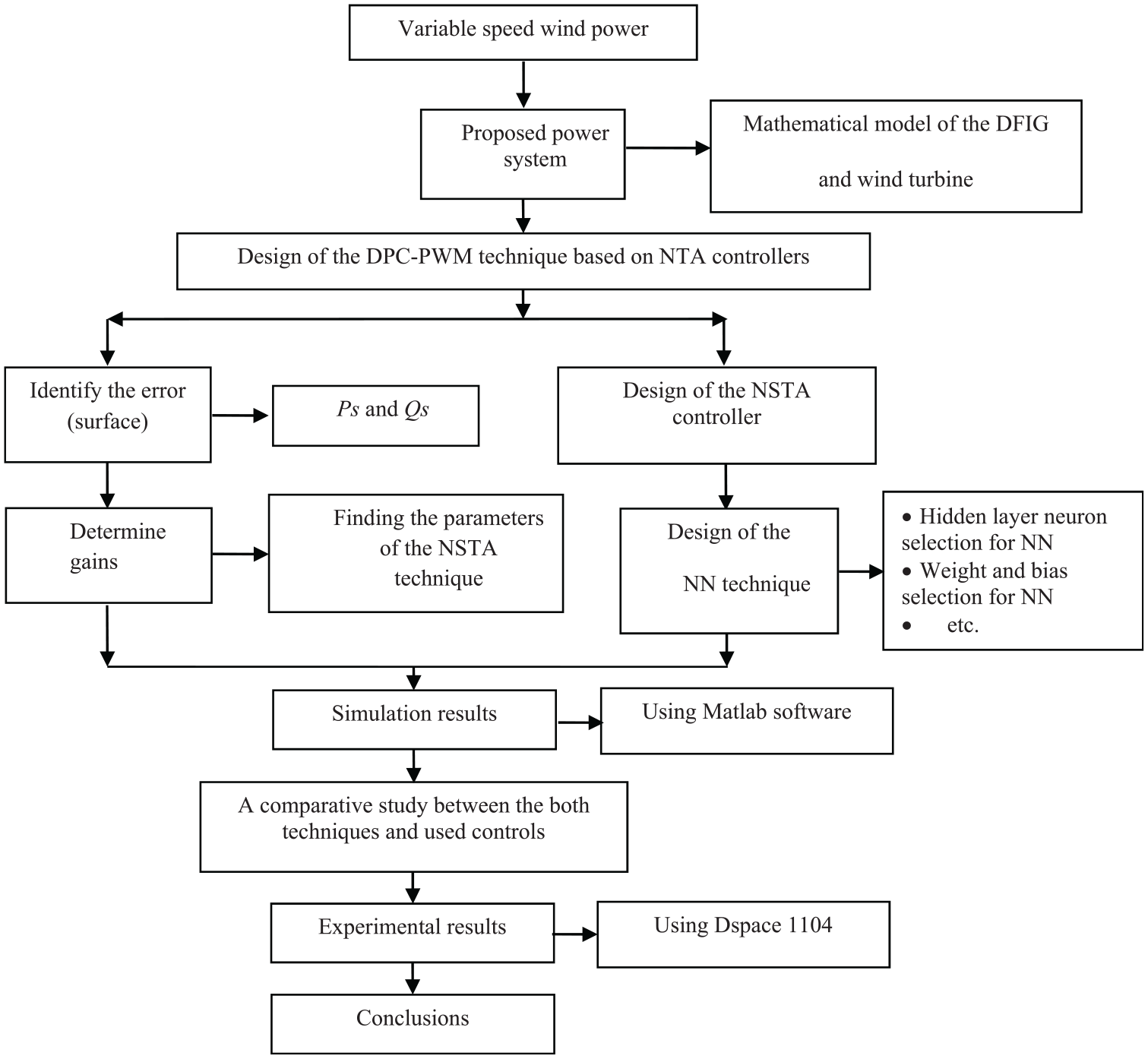
Diagram of research steps followed in this paper.
The main sections of this research article are as follows: Section 2 describes the design of the strategy for the DFIG control, and Section 3 displays the simulation of the DPC-NSTA technique with a comparison of the proposed control with some controls. The real-time experimental results are presented in Section 4. Finally, Section 5 presents the conclusions of this experimental work performed.
Proposed strategy for the DFIG
The control of the powers and energy generation system is among the important topics at the present time because of the rising need for energy and the desire of governments to get rid of the use of traditional energy sources that cause toxic emissions. Also, the lack of energy sources such as gas and the Arab-Israeli war in 1973 led developed governments to search for other alternatives to energy production. 44 The cost of energy consumption and production is also among the issues that governments suffer from, as the cost of producing electrical energy using traditional sources is expensive and increases the energy consumption bill. Also, the current economy of countries is largely linked to electrical energy. There are some governments that import electrical energy, which causes them indebtedness, which is undesirable.
Renewable energy sources are among the most prominent solutions that have been suggested by researchers as a better solution. These sources reduce the release of harmful gases and reduce the severity of the use of traditional sources. In addition, it helps spread the use of electric energy and reduces the production and consumption bill. 45 Renewable energy sources are free and clean sources. Solar power and wind power are among the most prominent and widespread of these sources. 12 These sources are available throughout the year and to benefit from them do not require high technology, as to benefit from solar energy, photovoltaic cells are used for this purpose, and turbines are used to benefit from wind energy and convert it into mechanical energy. As is known, electrical energy is generated using generators, where mechanical energy is converted into electrical energy with ease.
In this paper, we will be interested in wind energy in the production of electrical energy using DFIG, where Figure 2 represents the scheme of the system used to produce electrical energy using a turbine. This system is simple, inexpensive, conducive to environmental protection, and can be achieved with simple means. Also, it can be installed anywhere in the form of farms, as these farms are called wind farms. The proposed energy system relies on the use of a regular turbine to convert wind energy into mechanical energy, and two inverters are used to feed the generator. The latter has a capacity of 1.5 MW, and the resulting power is controlled by means of a control in these two inverters (RSC and GSC). The RSC is controlled by the proposed strategy based on the error in the powers. In the second inverter, which is the GSC, no control is used. It consists of diodes and therefore does not need any control strategy. This inverter was used to simplify the system and to show the extent of the proposed strategy’s ability to improve the quality of current and energy in the network. As shown in Figure 1, the stator part of the machine is directly connected to the network without any intermediary, which is one of the advantages of using DFIG. The latter is controlled by a new controller that is characterized by high durability and distinguished performance in reducing energy ripples and reducing the value of THD of current. This strategy is implemented in the simulation environment using a variable WS with the use of two different tests. The obtained simulated results are verified experimentally using Dspace 1104.
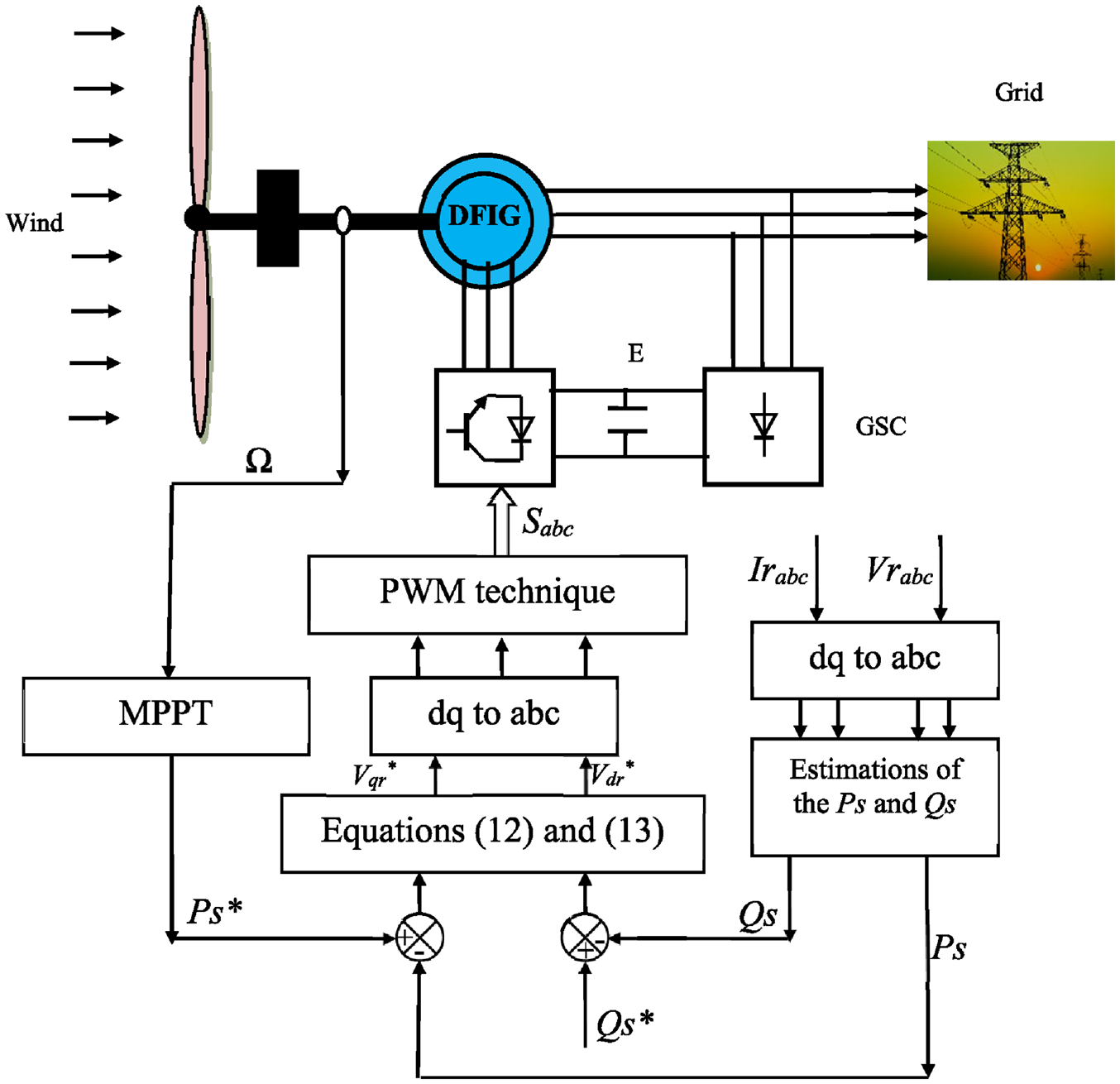
The designed DFIG control.
Accordingly, the control objectives of the proposal system as shown in Figure 2, can be listed as follows:
DFIG model
Traditionally, DFIG is among the most popular and widely used electric generators in wind farms due to its many characteristics, which are characterized by low cost, easy control, high durability, and low maintenance compared to other generators.42,46 Also, this generator has another feature that is not found in other types, which is controlling the power generated in the stator by feeding the moving part. Therefore, this generator is considered the most suitable for the energy system proposed in this paper, as it is necessary to know the mathematical model for this generator because it is responsible for generating power.
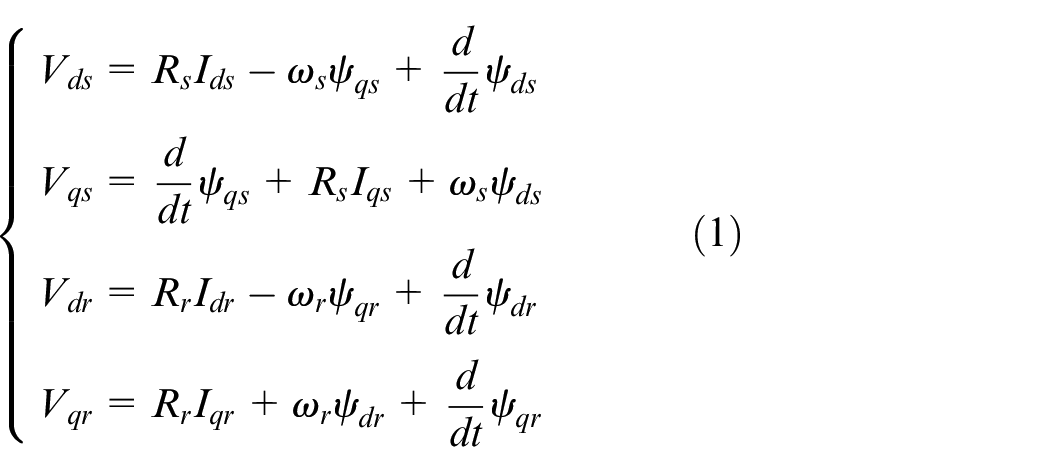
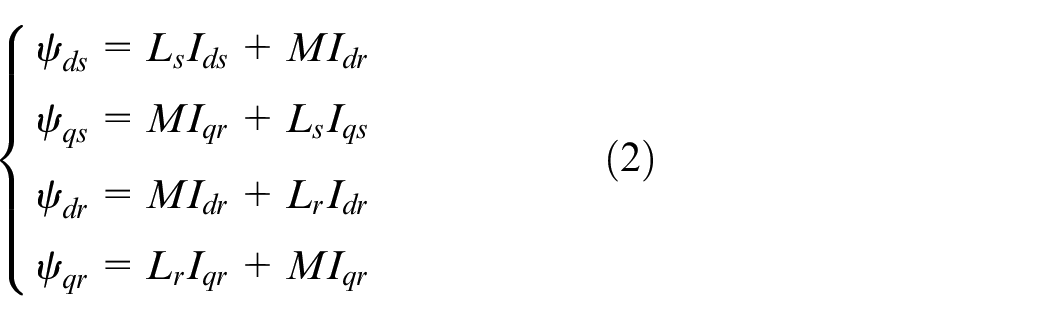
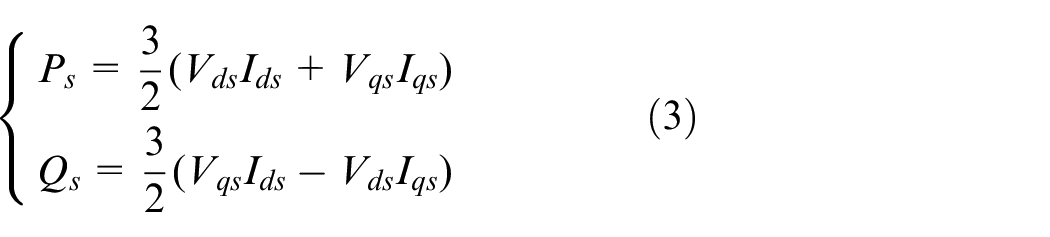
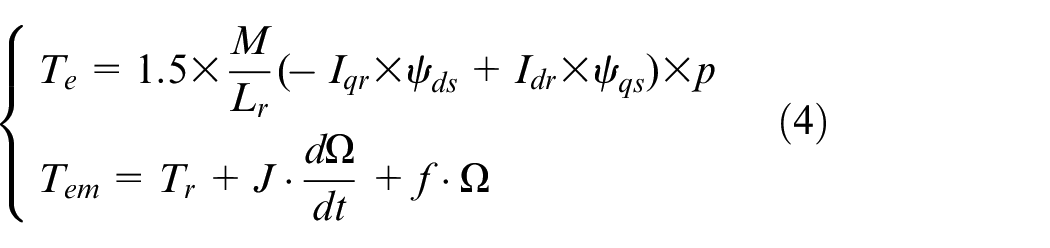
In DFIG control fields, it is necessary to know the mathematical model of the machine and to give the necessary equations to perform the control. Equations (1)–(3) are the equations that were used in this work.42,43
NSTA controller
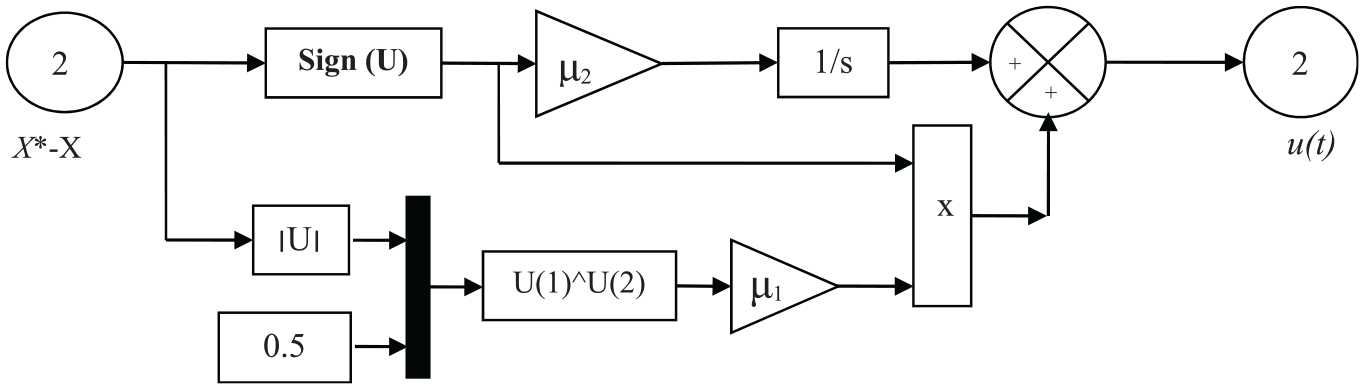
Traditionally, the STA technique is one of the solutions that was used to compensate for the SMC strategy and overcome its biggest problems. STA is considered one of the nonlinear strategies that gave very satisfactory results in the control field compared to several strategies, as the chattering phenomenon is significantly reduced. The advantage of this control is simplicity, ease of adjusting the dynamic response of the systems, and high durability compared to several other strategies. 48 This control has been used in many different fields. So STA can be used easily in the field of control, as it does not require precise knowledge of the mathematical model of the machine. To implement STA, only the error is known. In several scientific works, STA was used in place of traditional controllers, such as replacing the use of the PI controller in Xiong et al., 49 where its use in this way greatly improved the performance of the traditional strategy and the characteristics of the system in general. Equation (5) represents the mathematical model for this control. According to this equation, the STA strategy has a small number of gains, which is desirable in the field of control. It greatly helps the use of smart strategies such as the genetic algorithm in determining the optimal values of these gains and thus better results.

where, e(t) is the error (e = X* − X).
μ1 and μ2 are the gains of the STA technique. Through these gains, the dynamic response can be changed and adjusted.
This control can be expressed by Figure 3.
STA controller.
According to the work done in Sadeghi et al., 16 the use of the STA strategy does not eliminate energy ripples significantly. Also, the value of THD of current is rather large which is unacceptable. Moreover, the use of the sign(u) creates several problems and drawbacks. In the field of control, several strategies have been proposed to overcome the problems of the STA strategy, where FL was used as a suitable solution in Saihi et al. 50 in order to overcome the problems and disadvantages of this strategy. In this work, FL was used in place of the function, as this method gave very satisfactory results in terms of improving the characteristics of the studied system. In Debdouche et al., 51 the GA was used as an effective solution to overcome the problems of the STA strategy, where the GA was used to calculate gains with the aim of increasing the performance and robustness of the STA strategy used to control a photovoltaic system. According to the results obtained, the use of the GA led to a significant increase in the performance and effectiveness of the STA strategy, and this is observed through the rates of ripple reduction and the value of THD of current compared to the traditional technique based on PI controller. Another smart strategy was used in Gasmi et al. 52 to overcome the disadvantages of the STA of DFIG-based wind turbine, where this smart strategy is particle swarm optimization (PSO). The latter was used to calculate the parameters of the STA strategy, obtain distinctive performance and increase the efficiency of the system compared to the traditional strategy. Also, reducing power ripples and increasing the quality of the current. Using the PSO strategy significantly increased the performance of the STA control, and this appears through reducing the THD of current and the energy ripple values. However, in terms of response time, the STA-PSO strategy provided unsatisfactory results compared to the traditional control, which is not desirable. In this subsection, it is proposed to use another smart strategy in order to overcome the problems of the STA of DFIG-based wind turbine system, as the proposed solution is different from the other solutions mentioned above.
To avoid these problems and reduce their severity, NN techniques is suggested to use as an appropriate solution due to their simplicity and high accuracy. In addition, NN techniques are not related to the mathematical form of the system, which increases the robustness of the system in the event of a malfunction, and this is very important.
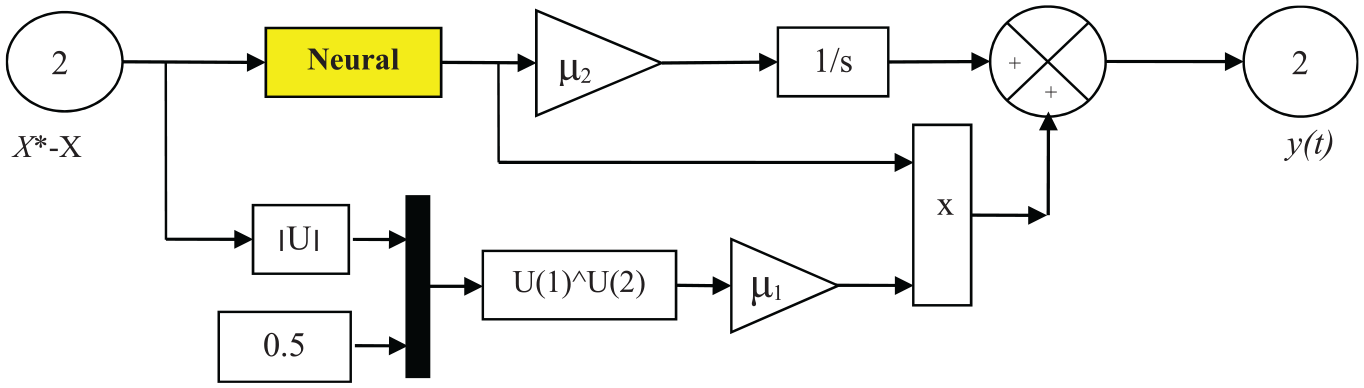
Neural STA strategy or NSTA technique is a new control that was recently proposed as a suitable solution to control DFIG power. The NSTA strategy is a variation on the traditional STA strategy, where the consolidation process is used for this purpose. To obtain the NSTA strategy, the equation (5) is used, where the same structure of the traditional controller and the same number of gains are maintained. This proposed intelligent nonlinear technique is a change in the traditional STA technique, and this is by changing the function sat(u) in NN techniques according to the equation:

where, y(t) is the output of the NSTA controller.
In this proposed strategy, the NN strategy was relied upon due to its many features, as this strategy is characterized by high robustness, accuracy, ease of implementation, simplicity, and quick dynamic response. Also, using this strategy does not require knowing the exact mathematical model of the system studied, but rather only knowing the number of entrances and exits. As is known, the NN strategy is not affected by internal or external factors of the system, which makes it give excellent results in the event of a malfunction in the system.
The NN techniques used in this part are of the type of fee-forward backpropagation network, where the Levenberg-Marquardt algorithm is used for learning. In addition, a single inner layer is used to avoid system complexity and reduce energy consumption. Also, the use of NN techniques leads to a rapid dynamic response compared to the traditional control.
The strategy proposed in this work, which is represented by equation (6), can be represented by Figure 4 in order to simplify understanding and clarify the strategy accurately, as this proposed strategy has only one input and one output, which makes it easy to use and implement experimentally.
NSTA controller.
In this work, it is designed to use this controller to control the DFIG power, where two of these controllers with the same characteristics of the NN technique used to implement the Qs and Ps controller. Accordingly, the properties of the NN technique used to implement the two controllers corresponding to Ps and Qs control are represented in Table 1.
Characteristics of the neural algorithms.
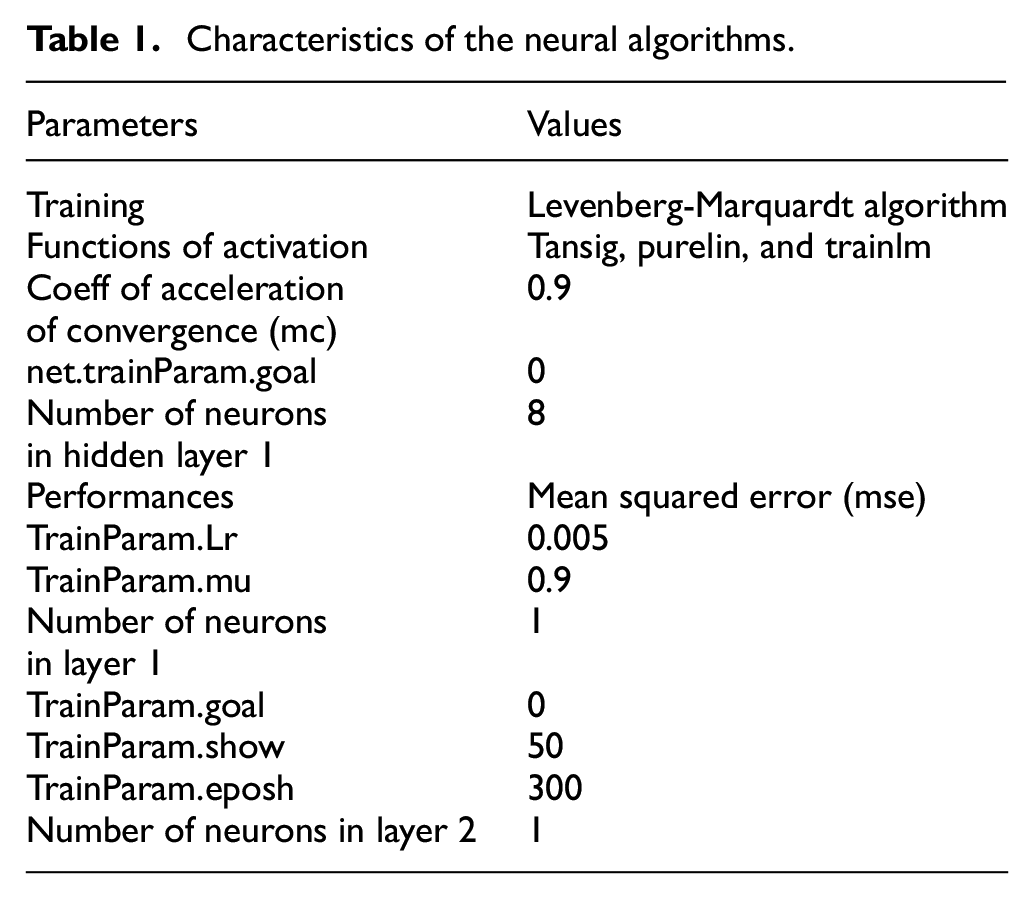
Figure 5 represents the internal structure of the NN algorithms used to improve the characteristics of the STA technique, as it consists of two layers represented in Figures 6 and 7. Also, the hidden layer is represented in Figure 8, as it contains eight neurons.
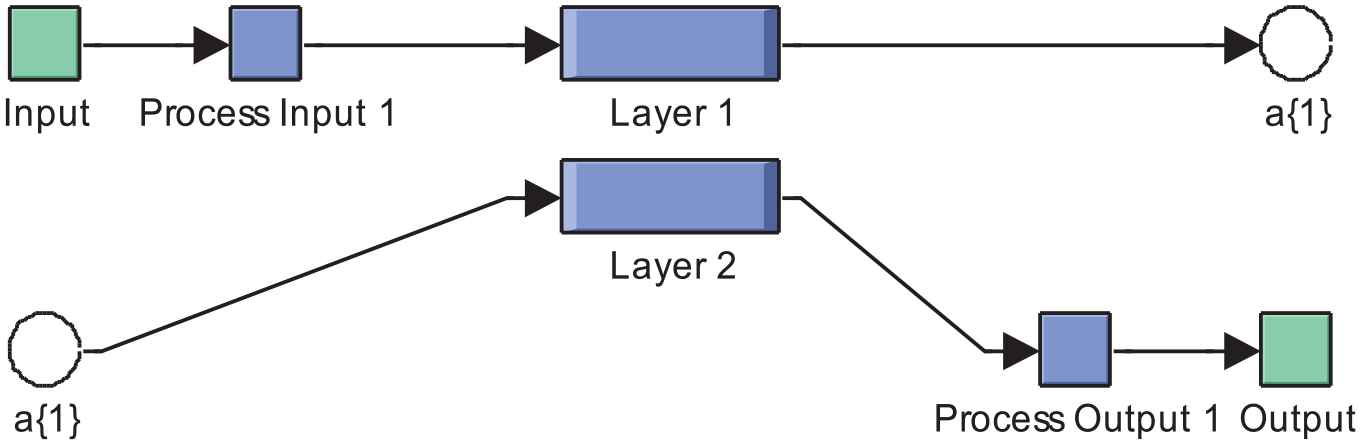
Neural controller of proposed technique.
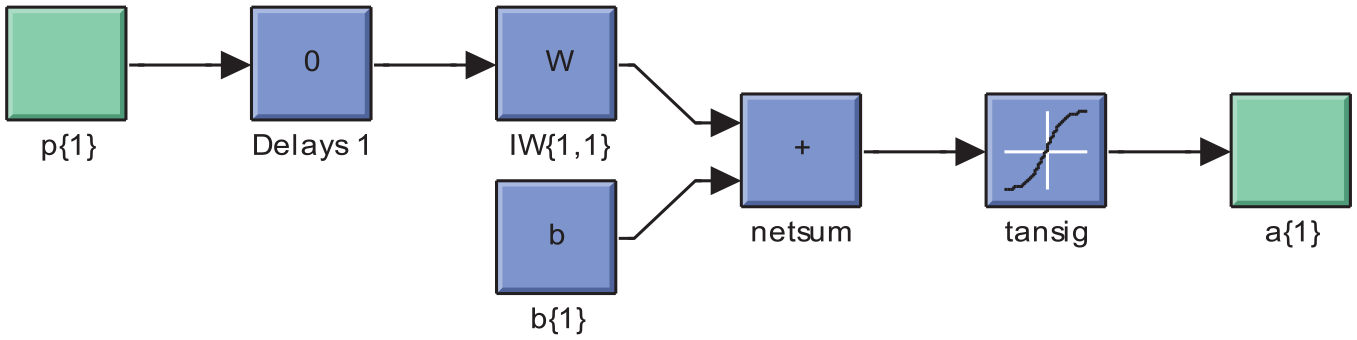
Layer 1.
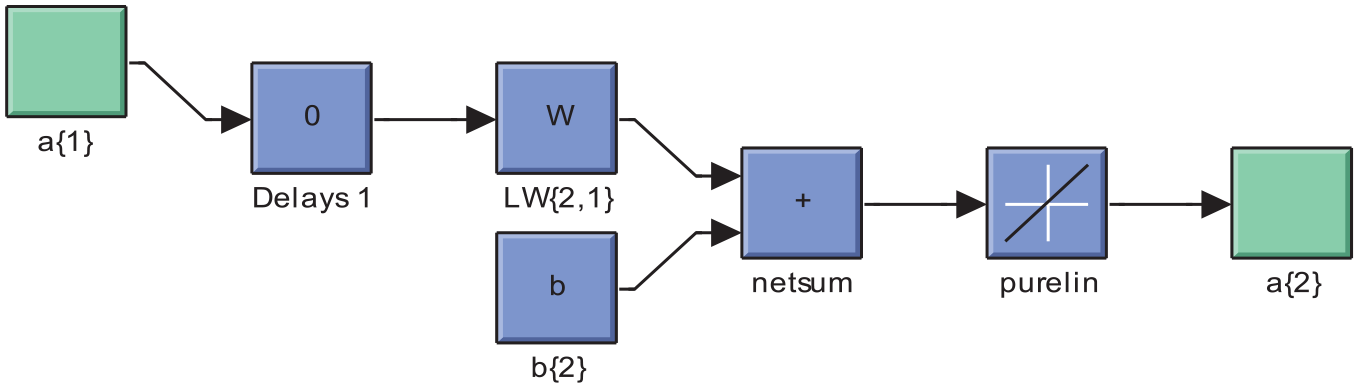
Layer 2.
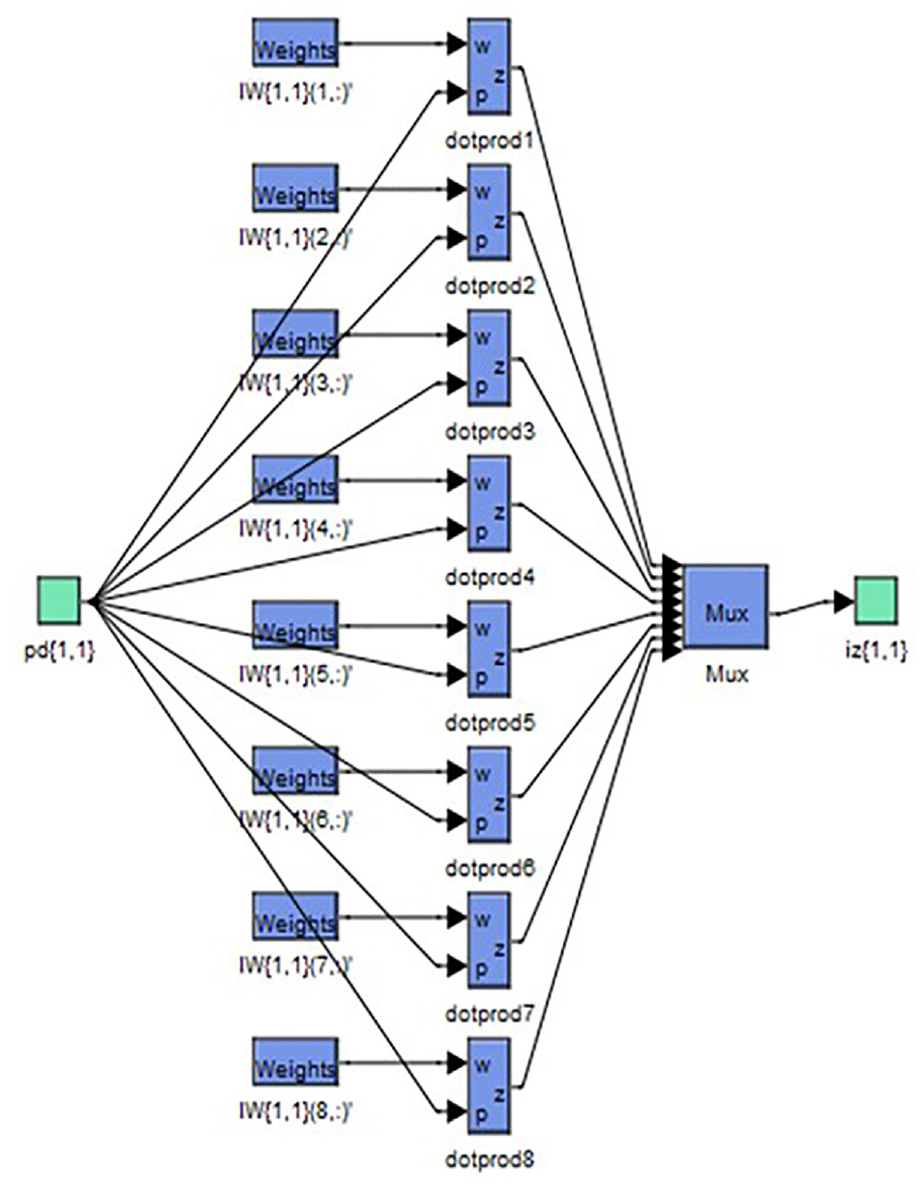
Hidden layer.
Proposed DPC strategy
DPC technique is one of the linear controls that has shown excellent advantages over several special strategies in terms of simplicity, dynamic response, and ease of implementation. This strategy has the disadvantages of high energy ripples, low current quality, and the use of power estimation. The latter causes defects when a malfunction occurs in the machine.
In this part, it is suggested to use an NSTA technique to overcome the shortcomings of the DPC method by removing two HCs and replacing them with two NSTA controllers. Besides NSTA technique, the PWM strategy is used for the RSC control. PWM technique was relied upon to simplify the system, reduce the complexity of the system, and thus reduce the cost. This proposed DPC strategy is represented in Figure 2. Moreover, this proposed intelligent nonlinear control is different from the strategies implemented in Benbouhenni et al.38,39 The proposed strategy was used to control the RSC of DFIG, where GSC has no control due to the use of diodes to design it. In the proposed strategy, the NSTA controller is used to determine the voltage reference values, and these voltage reference values are used to determine the control pulses in the RSC of DFIG (see Figure 9). Also, the reference value for Ps is calculated using the MPPT strategy, where the power value becomes closely related to wind speed. In addition, the value of torque and current become related to the WS, as the WS increases, the value of both torque and current increases. A similarity between this control and the DPC strategy lies in the use of the same estimation equations represented in the following equations:
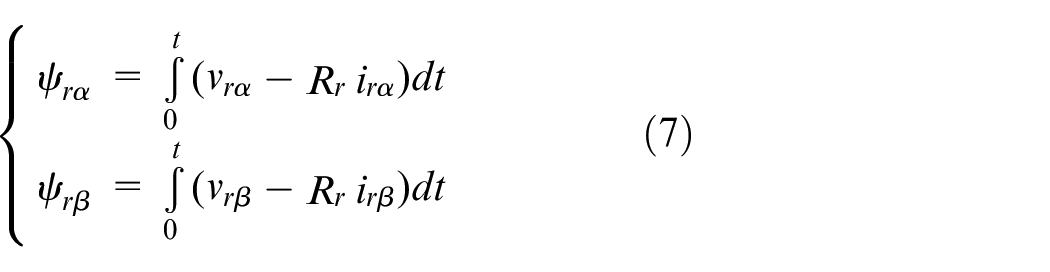
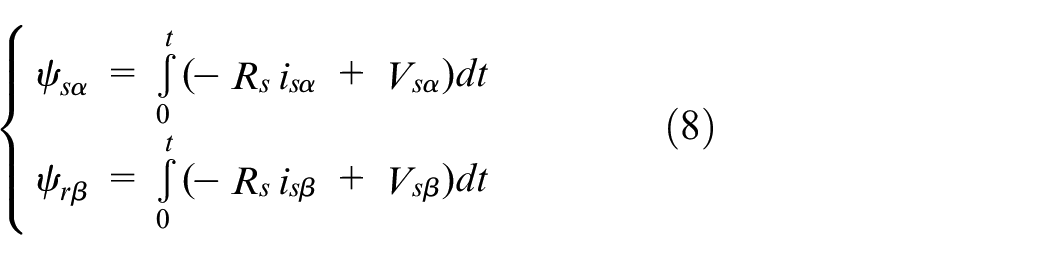
where, Rs and Rr are the stator and rotor resistances.
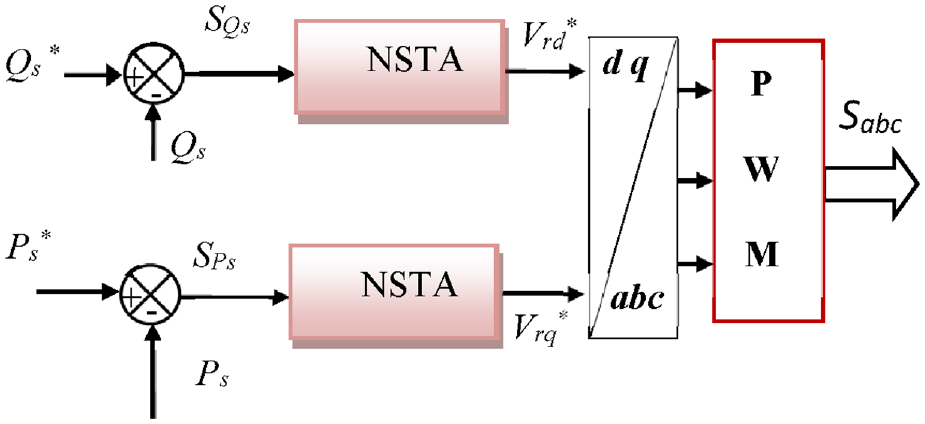
Block diagram of the internal structure of the RSC control.
The stator and rotar flux values are represented in equation (9).

where, ψs and ψr are the stator and rotor resistances.
Using equations (7)–(9) the Qs and Ps can be estimated according to equation (10).12,46
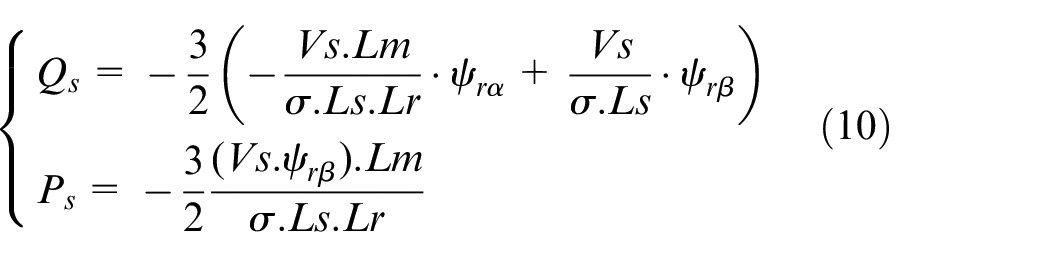
To implement the NSTA technique, the errors must first be identified. In this work, two errors were identified, namely an error in the Ps and Qs. Equation (11) represents the errors used to apply the strategy.

where, Ps* is the reference value of active power, Sp is the error of active power, Qs* is the reference value of active power, Sq is the error of active power.
The objective of the NSTA technique is to calculate the reference voltage values. Equation (6) is used for this purpose. The reference voltage values can be calculated according to equations (12) and (13). The properties of the NN techniques used are the same as those mentioned above.


The proposed strategy represented by equations (12) and (13), which aims to calculate reference values, can be clarified using the following Figure 10:
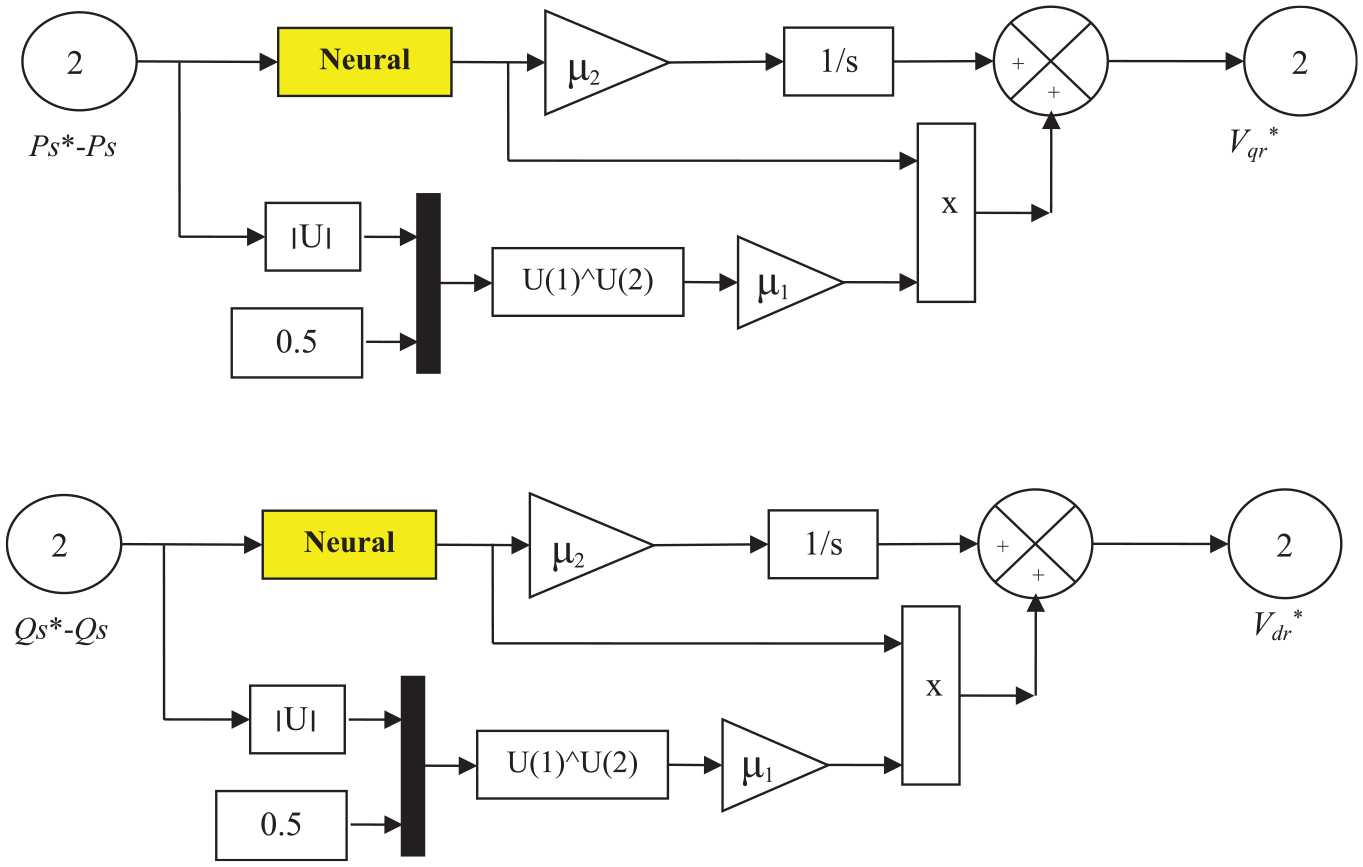
NSTA-Ps and Qs controllers.
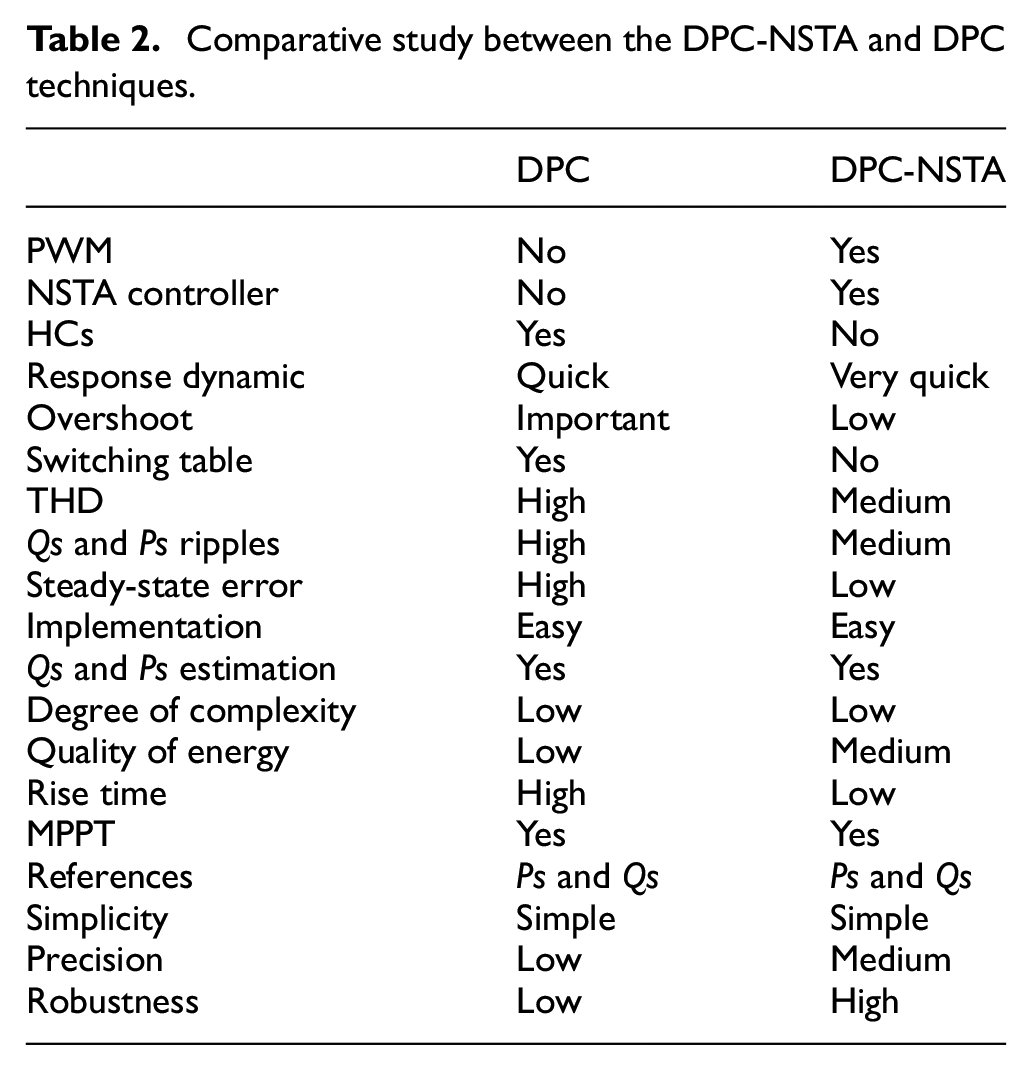
The proposed strategy has similarities and differences between it and DPC technique, as this comparison study between the two controls is recorded in Table 2. In addition, some characteristics deduced from the simulation section are recorded. Therefore, DPC-NSTA technique is much better than DPC technique in terms of durability, energy ripple reduction, etc. However, the two controls have similarities, such as simplicity and the use of the same estimation equations for capacities.
Comparative study between the DPC-NSTA and DPC techniques.
Simulation results
In this section, Matlab/Simulink software is utilized to implement DPC-NSTA technique in case of real varied WS and that is if there is or is not a defect in the DFIG compared to DPC technique. The following parameters are used: Pn = 1.5 kW, Rs = 1.18 Ω, Vn = 398 V, f = 50 Hz, Ls = 0.20 H, M = 0.17 H, Rr = 1.66 Ω, J = 0.04 kg.m2, Lr = 0.18 H, fr = 0.0024 Nm/s.42,43 To study the behavior of the DPC-NSTA strategy, two different tests are used, along with extracting the necessary numerical and graphical results to show the extent to which the DPC-NSTA strategy is superior to the DPC strategy in terms of the values of ripples, response time, SSE, and overshoot of DFIG power.
First test
In this test, a variable WS was used to study the DPC-NST technique behavior, the results of which are represented in Figure 11. Figure 11 depicts that the Ps (Figure 11(a)), torque (Figure 11(c)), and current (Figure 11(d)) take the form of changing WS. Also, larger fluctuations and ripples are observed in the case of DPC technique compared to DPC-NSTA technique, which demonstrates the efficiency of the suggested control to enhance the system’s properties. Figure 11(b) represents the Qs in the case of the two controls. This power takes a fixed value and is not related to the change of WS for two controllers with large ripples in the case of DPC technique compared to the control DPC-NSTA technique.
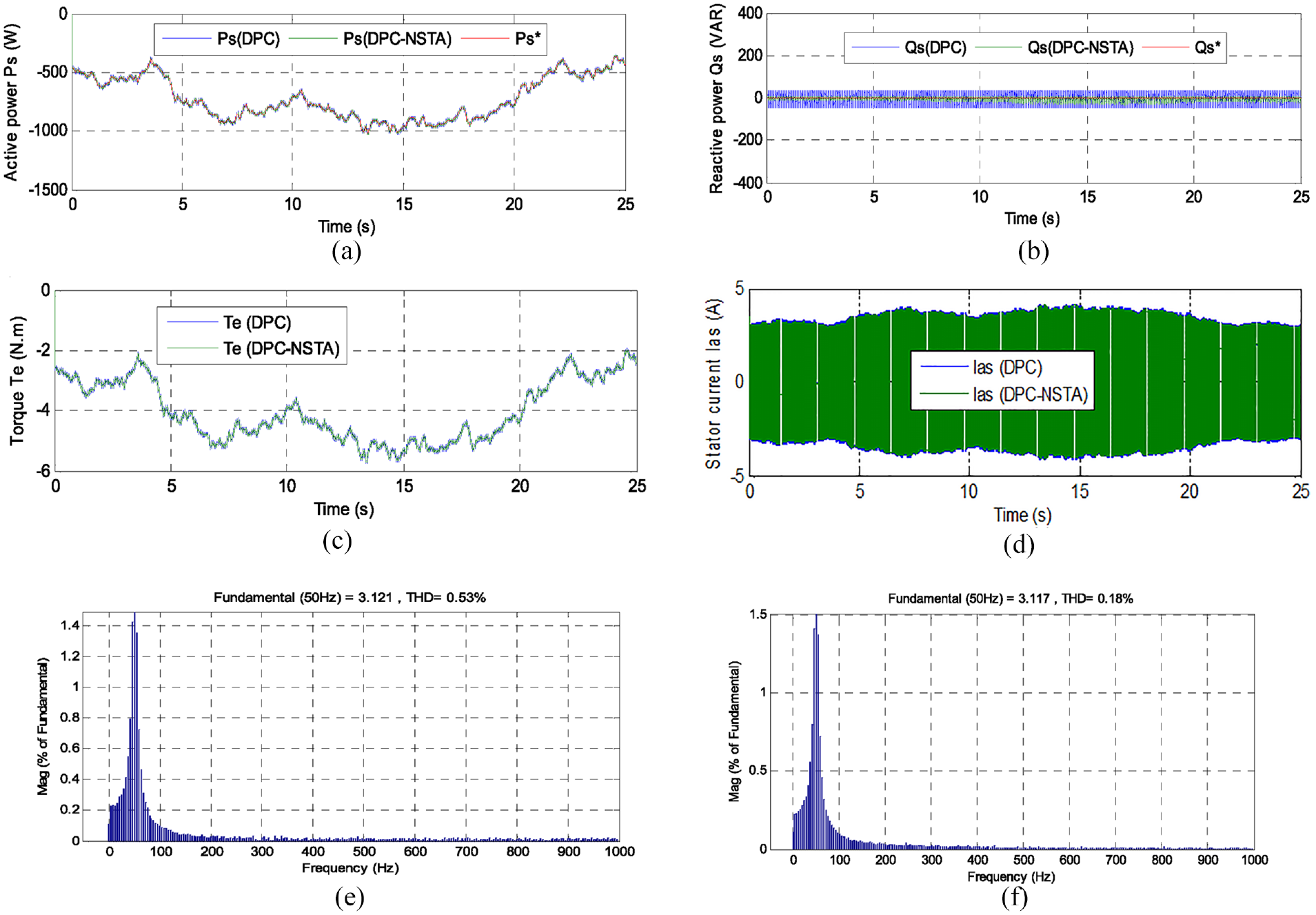
Results of the first test: (a) Ps, (b) Qs, (c) Te, (d) Ias, (e) THD (DPC), and (f) THD (DPC-NSTA).
The THD value of current for the strategies used is represented in Figure 11(e) and (f). From these figures, the value of THD was 0.53% and 0.18% for DPC technique and DPC-NSTA technique, respectively. The DPC-NSTA technique has to minimize the value of THD of current by an estimated rate of 66.03%, as this ratio proves that the quality of the current is high in the case of the DPC-NSTA technique compared to DPC technique. On the other hand, the amplitude of the fundamental signal (50 Hz) of current for the two controllers takes values of 3.121 and 3.117 A for both the traditional and the proposed strategy, respectively. Therefore, it can be said that the two controls have the same amplitude of the fundamental signal, which is a good thing for the proposed strategy and shows the extent of its performance and efficiency.
Figure 12 represents a zoom in the results of the first test, where it is noted that the ripples of torque, power, and current are less when using the proposed strategy compared to the traditional strategy, which proves the performance and effectiveness of the proposed strategy in improving the characteristics of the energy system.
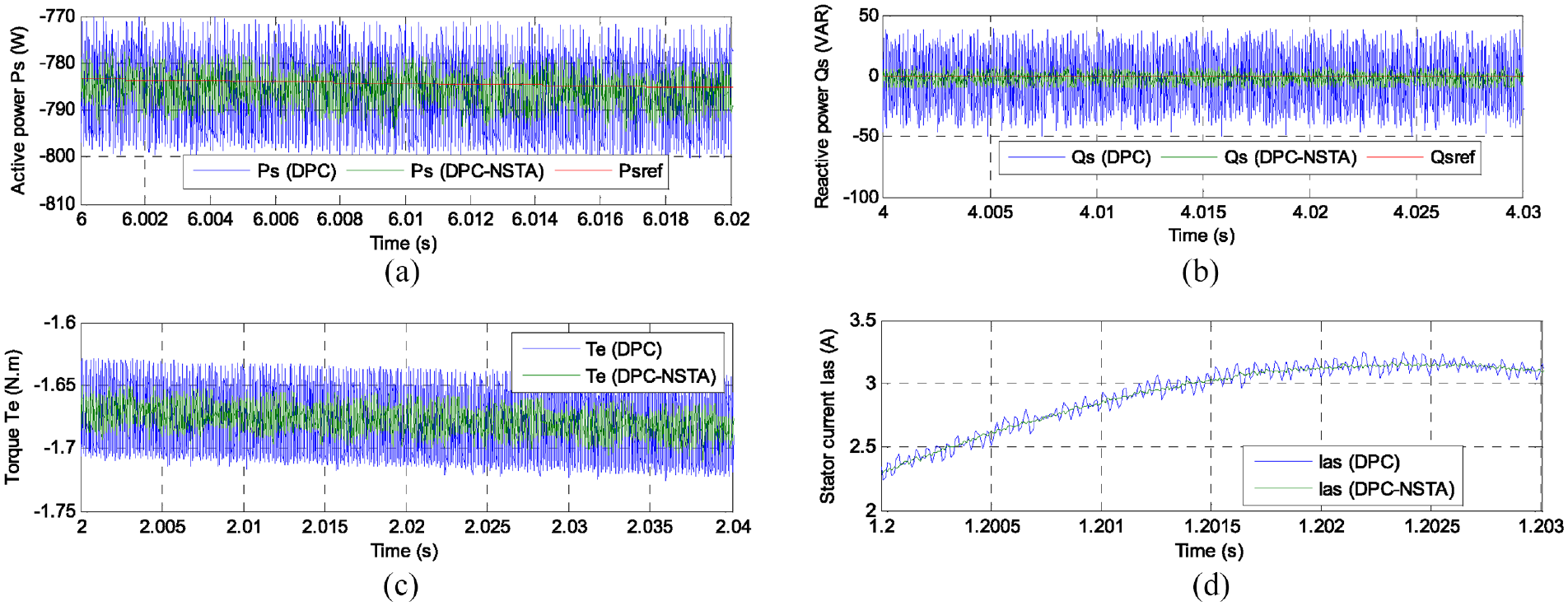
Zoom in the results of the first test: (a) Ps, (b) Qs, (c) Te, and (d) Ias.
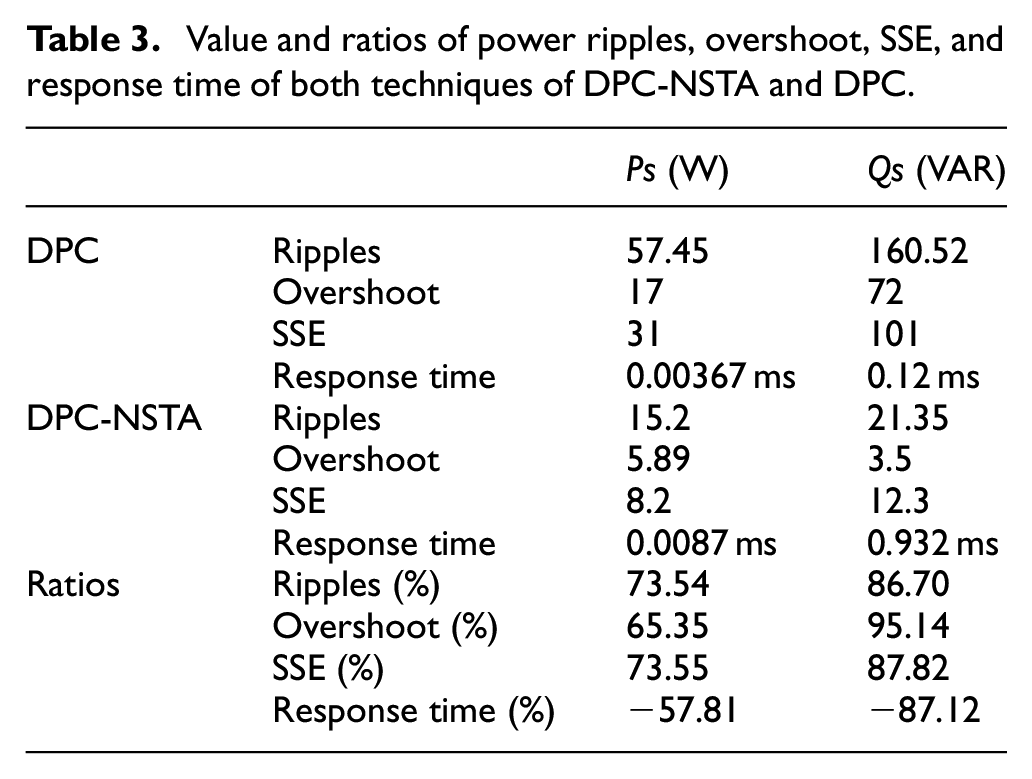
The numerical results of this test are shown in Table 3, where the necessary reduction ratios for ripple, response time, SSE, and overshoot were calculated. Through the existing values and ratios, it is noted that the proposed strategy provided satisfactory results compared to the traditional strategy in terms of ripples, overshoot, and SSE of DFIG energy. In the case of active power, the reduction ratios were 73.54%, 65.35%, and 73.55% for ripples, overshoot, and SSE, respectively. These reduction ratios were 86.70%, 95.14%, and 87.82% for ripple, overshoot, and SSE of reactive power, respectively. These high percentages indicate the performance and effectiveness of the proposed strategy in improving the system characteristics compared to the traditional strategy. However, this proposed strategy has a negative in terms of response time to capabilities, as it provided an unsatisfactory time compared to the proposed strategy. Accordingly, the traditional strategy provided a better time than the proposed strategy by percentages estimated at 57.81% and 87.12% for both active and reactive power, respectively.
Value and ratios of power ripples, overshoot, SSE, and response time of both techniques of DPC-NSTA and DPC.
Second test
In this test, the parameters of the DFIG are changed, whereby the resistors are multiplied by 2 and the coil values by 0.5. Also, the WS used in the first test is used. The results are represented in Figure 13. The numerical results of this test are listed in Table 4, where the necessary reduction ratios were calculated. Although the parameters of the machine change, the Ps (Figure 13(a)), torque (Figure 13(c)), and current (Figure 13(d)) take the form of WS change with the presence of ripples. These ripples are larger in the case of DPC technique compared to DPC-NSTA technique, which indicates that the DPC-NSTA technique was not affected much by changing the machine parameters, as is the case in the DPC technique. The same with the Qs represented in Figure 13(b), where the reference follows well for the two commands with ripples. In addition, it is not affected by WS change and its value remains non-existent and constant throughout the simulation period. Also, it is observed that the ripples are large in the case of DPC technique compared to the DPC-NSTA technique.
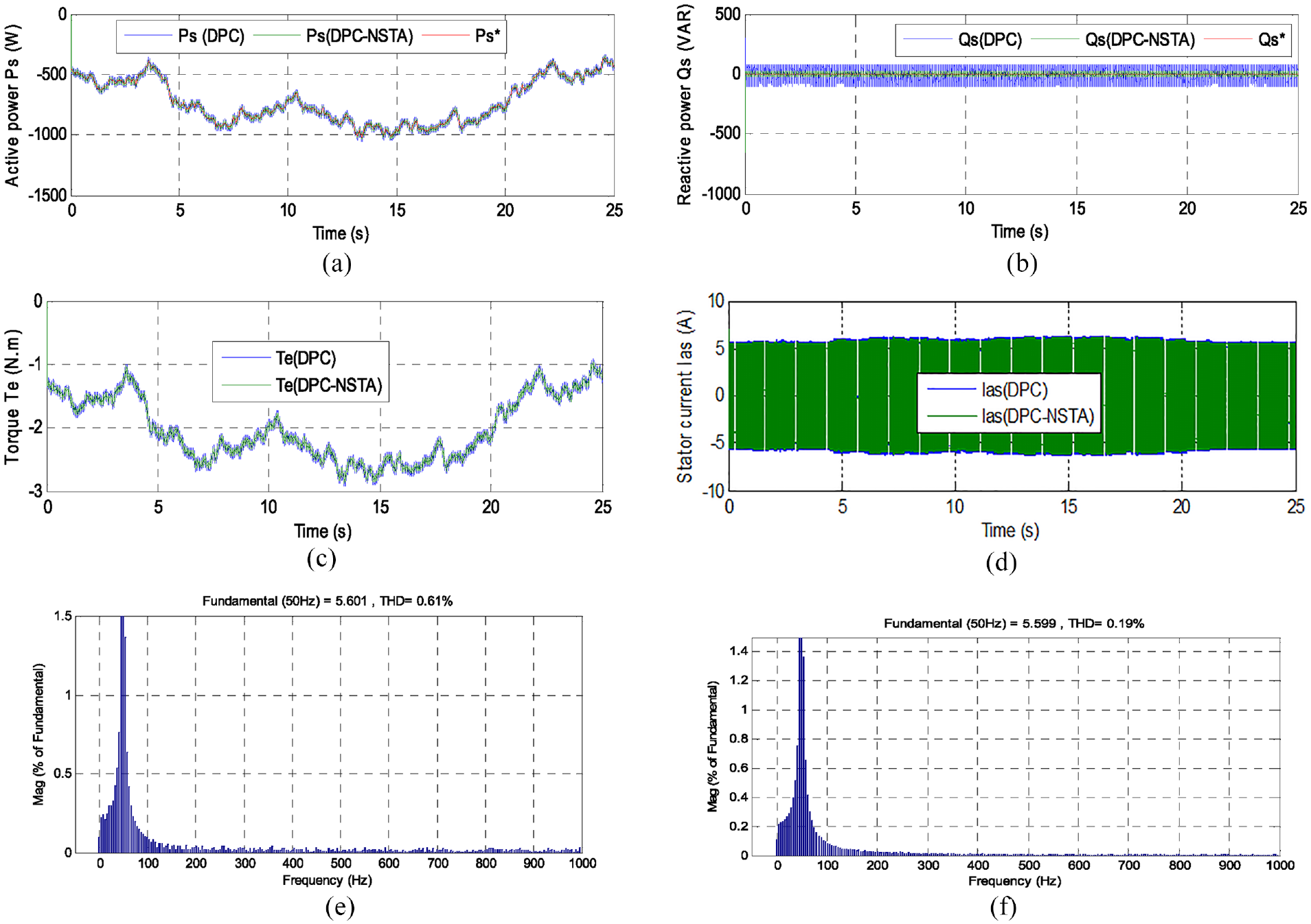
Results of the second test: (a) Ps, (b) Qs, (c) Te, (d) Ias, (e) THD (DPC), and (f) THD (DPC-NSTA).
Value and improvement ratios of overshoot, response time, SSE, and power ripples of DPC and DPC-NSTA.
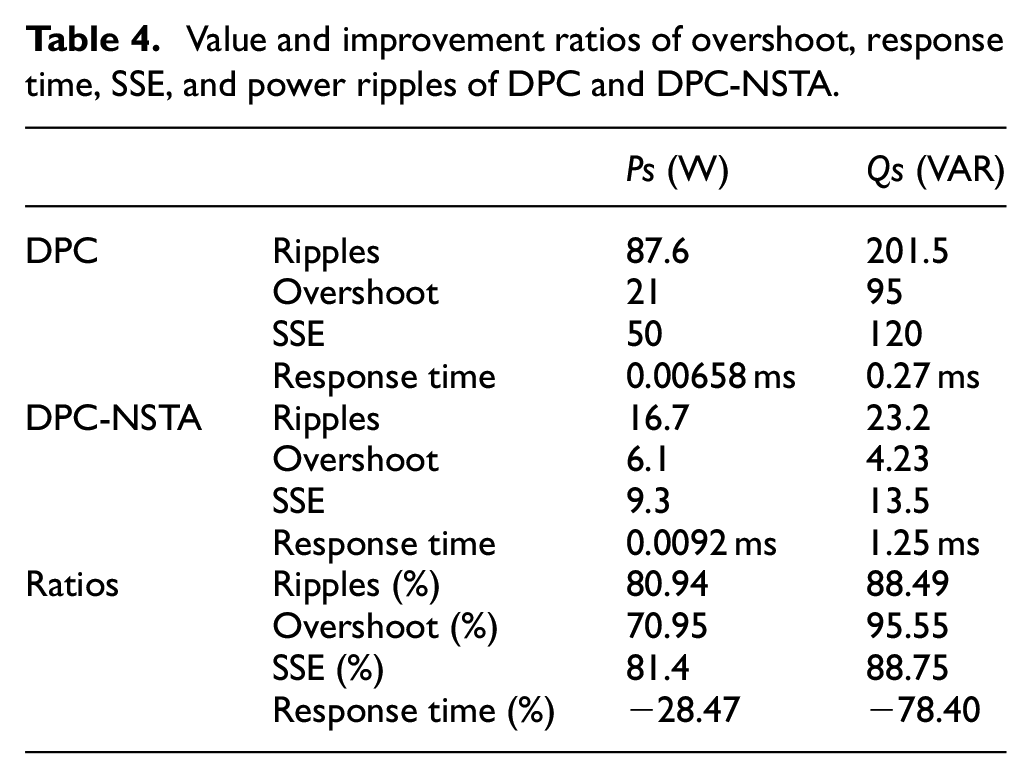
Figure 13(e) and (f) represent the THD of the current value for the strategies designed in this work. Therefore, the value of THD was 0.61% and 0.19% for DPC and DPC-NSTA techniques, respectively. So, DPC-NSTA technique reduced the value of THD of current despite the change of DFIG parameters by an estimated rate of 68.85%, which proves the high performance of the DPC-NSTA technique compared to DPC technique. From Figure 13(e) and (f), it is noted that the value of the amplitude of the fundamental signal (50 Hz) of current for the two controls is almost equal, as its value was 5.601 and 5.599 A for the traditional and proposed strategy, respectively. So the proposed strategy provided satisfactory results in terms of the amplitude of the fundamental signal of current.
Zoom the results of the second test are represented in Figure 14, where it is noted that the proposed strategy provided much lower ripples of torque, power, and current than the traditional strategy despite changing the machine parameters. These obtained results confirm the results of the first test, where the undulation rates are calculated in Table 4.
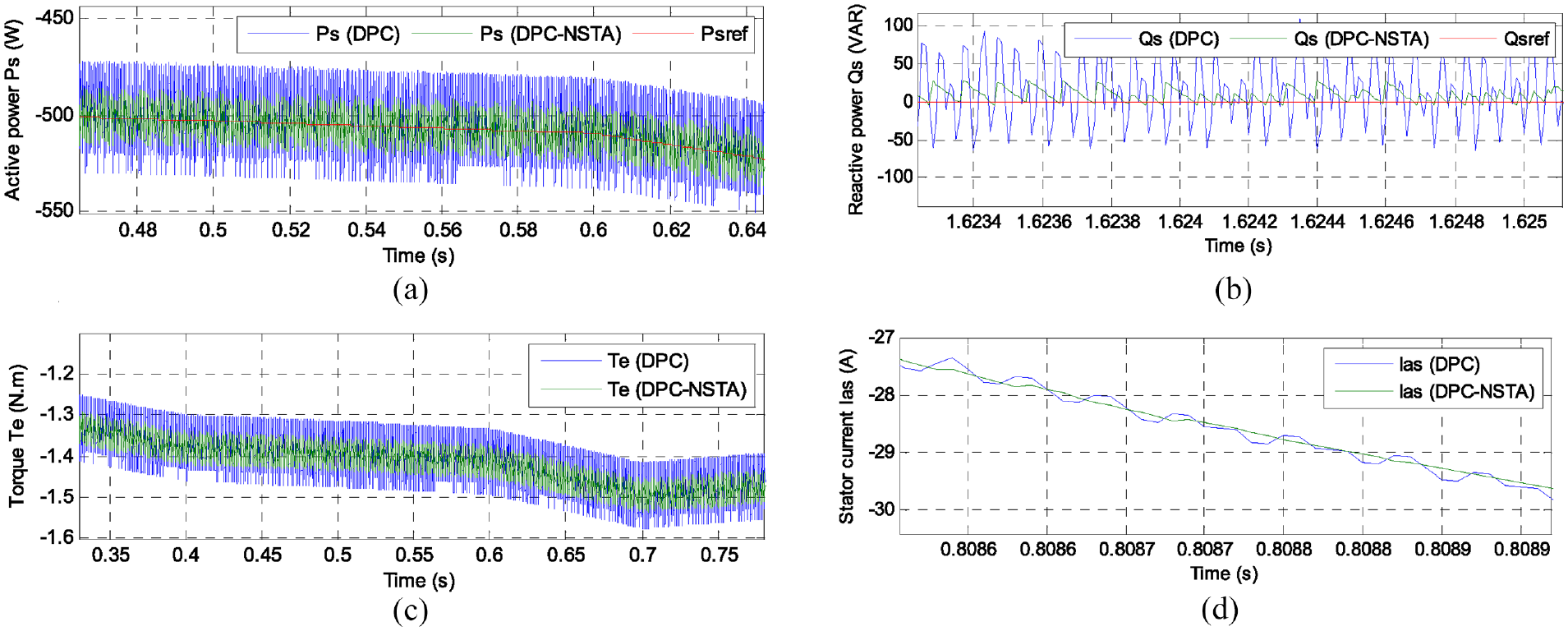
Zoom in the results of the second test: (a) Ps, (b) Qs, (c) Te, and (d) Ias.
In Table 4, the values and percentages of reduction for ripple, response time, SSE, and overshoot of DFIG power are given for the two controls. Through this strategy table, satisfactory results were provided in terms of ripples, overshoot, and SSE of DFIG power, and unsatisfactory results in terms of response time, and this appears through the calculated ratios. In the case of reactive power, the proposed strategy gave good results, as the percentages of reduction of ripples, overshoot, and SSE were estimated at 88.49%, 95.55%, and 88.75%, respectively, compared to the traditional strategy. The ratios were estimated at 80.94%, 70.95%, and 81.40% for ripple, overshoot, and SSE of active power, respectively. Despite the change in DFIG parameters, it is noted that the reduction rates are very high, which indicates the efficiency and effectiveness of the DPC-NSTA technique in significantly improving the characteristics of the energy system. In the case of response time to power, the proposed control provided unsatisfactory results compared to the traditional strategy, as the reduction rates were estimated at 28.47% and 78.40% for both active and reactive power, respectively, compared to the proposed strategy. This drawback can be overcome by using intelligent strategies to calculate the gains of the proposed control.
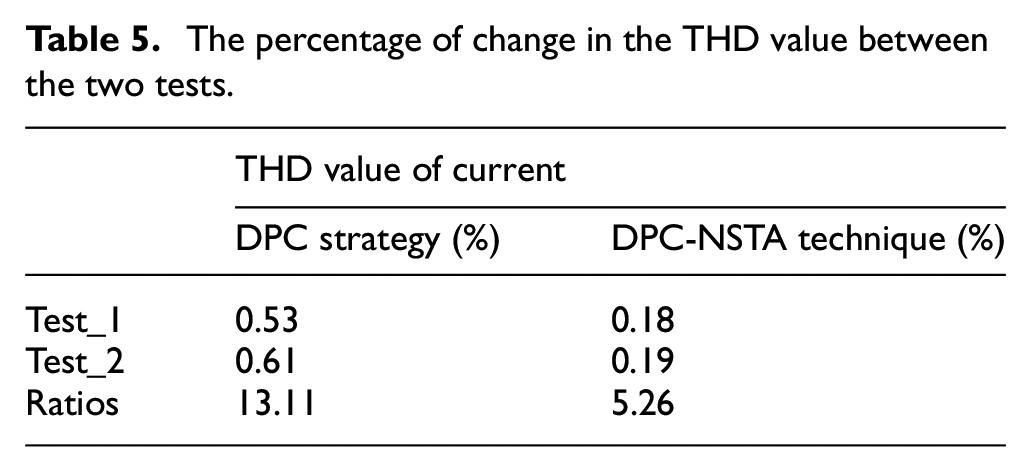
Table 5 represents the change in the THD value for a current for the two controls. It is noted that the THD value changed from the first test to the second test. So, it can be said that the THD value of a current is affected by changing the system parameter values. It is noted that the degree of impact is greater in the case of the traditional strategy compared to the proposed strategy and this appears through the calculated percentages of change, where the percentages of change were 13.11% and 5.26% for both the traditional and proposed strategies, respectively.
The percentage of change in the THD value between the two tests.
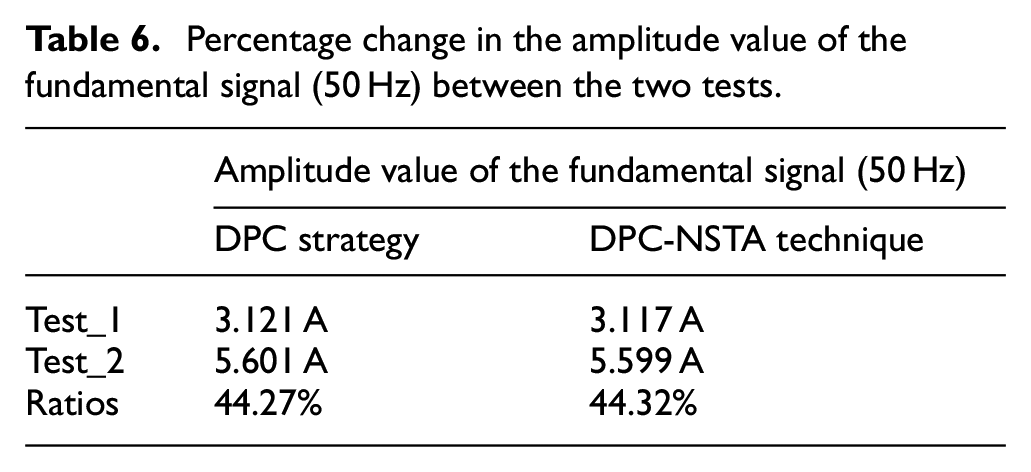
The same study done in Table 5 is done in Table 6 for the amplitude of the fundamental signal (50 Hz) of current, where it is noted that this amplitude in the case of the two controls used changes and is affected by changing the machine parameters. This effect is almost equal for the two controls, as the percentage of change was 44.27% and 44.32% for the traditional and proposed strategies, respectively.
Percentage change in the amplitude value of the fundamental signal (50 Hz) between the two tests.
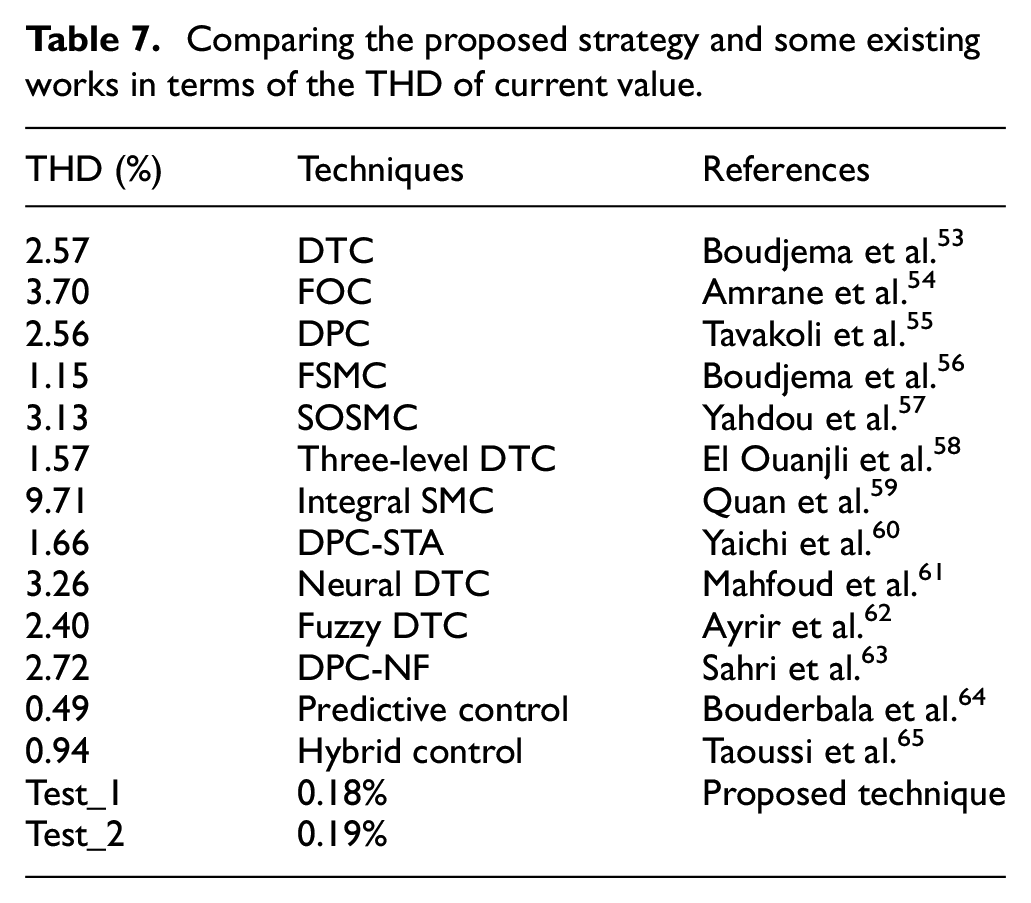
The simulation section ends with a comparison between existing works in terms of the value of THD of current, where Table 7 expresses this comparison performed. From this table, it is noted that the proposed strategy has a much lower THD value than several existing controls, which makes the quality of the current better in this proposed control, as this strategy can be relied upon in the field of control in the future. These results obtained by simulation will be confirmed experimentally in the next section.
Comparing the proposed strategy and some existing works in terms of the THD of current value.
Validation experimental
To test the industrial reliability of our DPC-NSTA technique, a computer containing the Matlab 2021b program is used, where the DPC-NSTA technique is implemented and embedded in the dSPACEDS1104 R&D controller board, which is developed and made by the German company “Dspace GmbH.” This embedded system board sends the necessary signals to the IGBT inverter in real-time, as shown in Figures 15 and 16. In addition, the DS1104 controller board collects from the wind turbine system all measurements requested by the designed strategy. Figures 15 and 16 show how the Dspace controller board communicates with a wind turbine based on a DFIG with the use of an IGBT inverter. As part of this project to realize an intelligent control system, experimental validation, and testing were carried out using a real experimental bench. Experimental tests and validation were carried out using the Dspace board and the real-time workshop (RTW) tool and the real-time interface (RTI). Thanks to this research work and its experimental realization, it can be said that this command is easy to realize, to implement, low cost, and does not require specialists or effort or a complex program. The DPC-NSTA technique can, therefore, be used more widely in the future by wind energy industrialists.
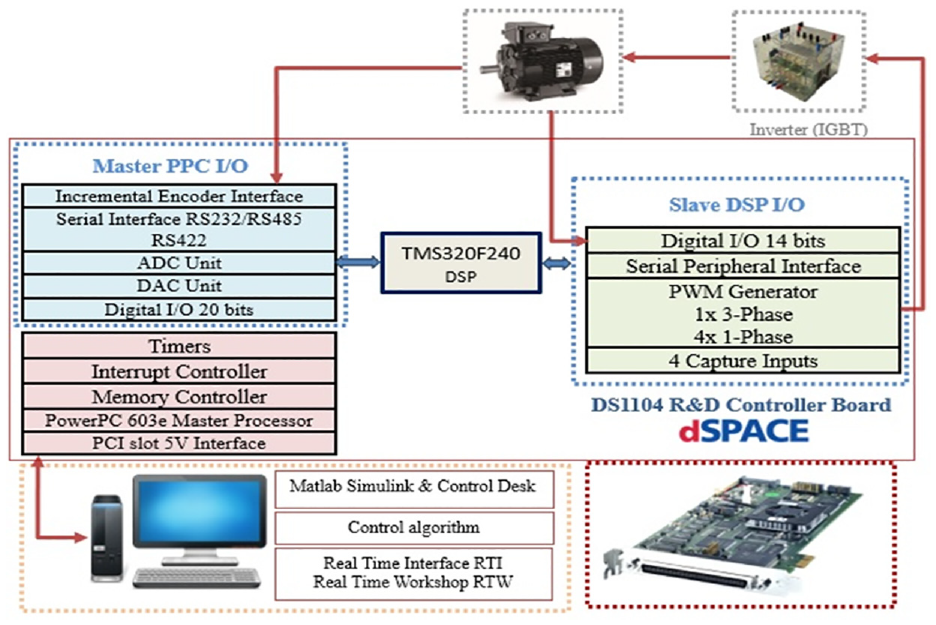
Implementation structure of DPC-NSTA technique.
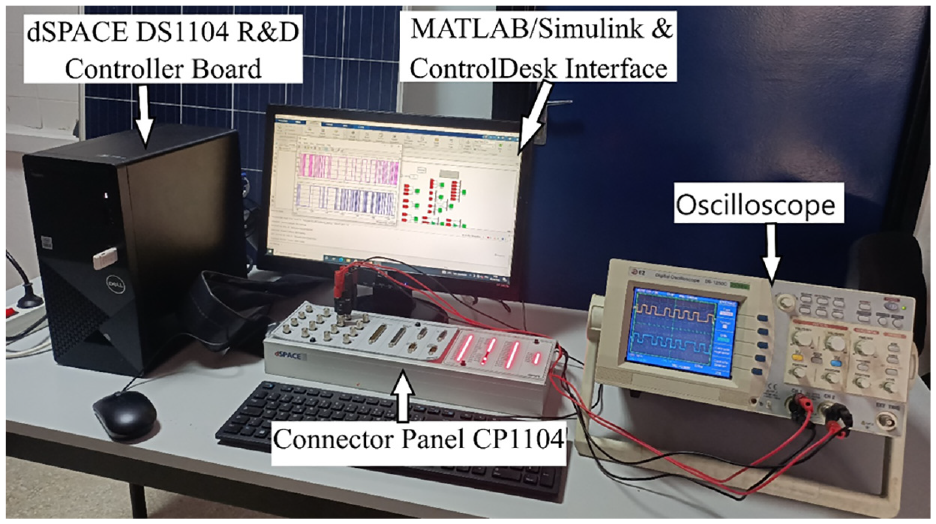
Hardware-software implementation of DPC-NSTA technique.
Using the same parameters used for simulation, the results represented in Figure 17 are obtained. The WS used in the experimental work is represented in Figure 17(a), as it takes a variable form. The Ps is represented in Figure 17(b) for the two controls. This ability follows the reference well for the two controls, with large ripples in the case of the DPC technique compared to the DPC-NSTA technique. In addition, the Ps change according to the WS. As for the Qs, they remain constant and are not affected by the change in WS, as fewer ripples are observed in the case of the DPC-NSTA technique as represented in Figure 17(c).
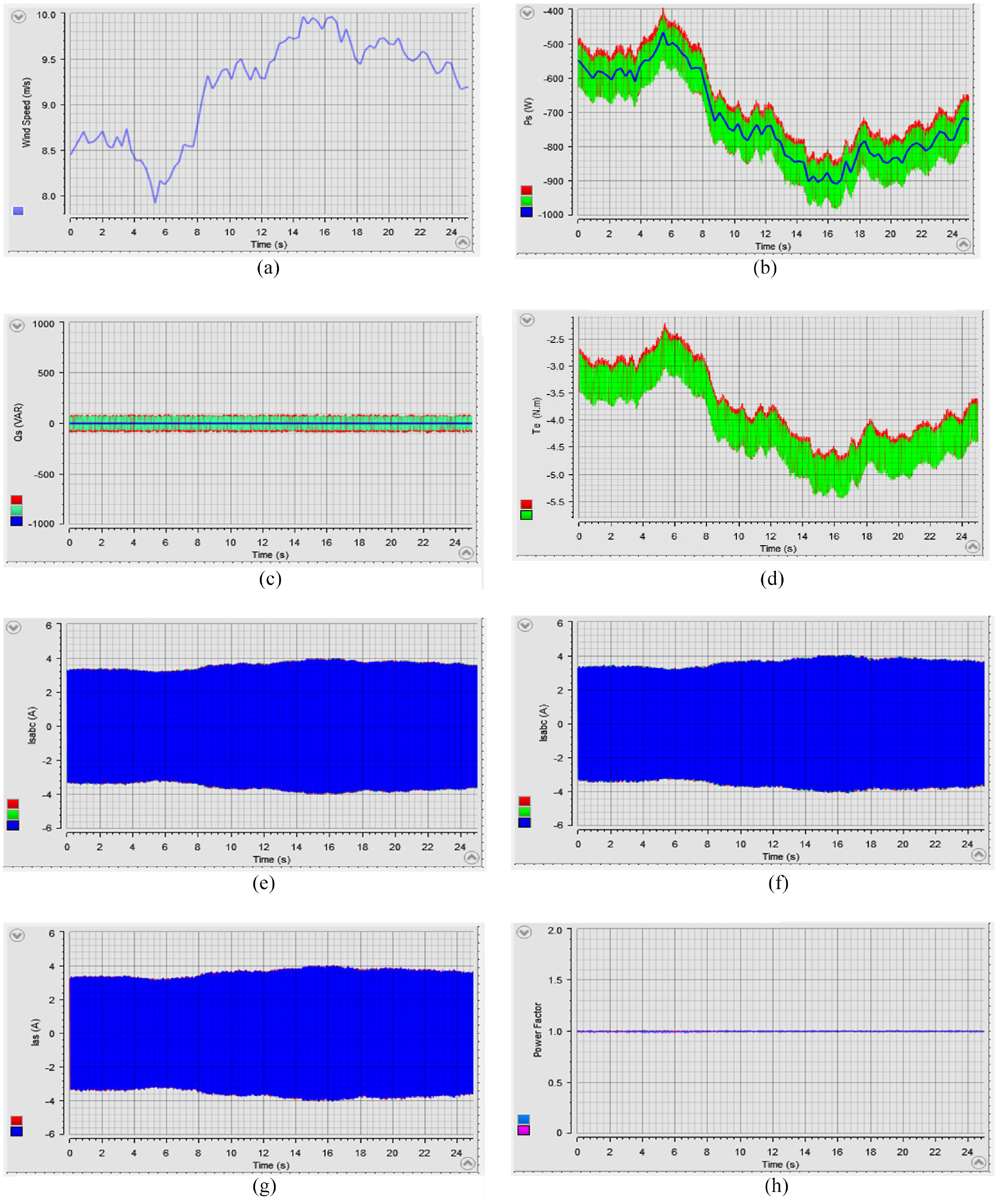
Experimental results: (a) wind speed profile, (b) Ps of DPC-NSTA and DPC, (c) Qs of DPC-NSTA and DPC, (d) torque of DPC-NSTA and DPC, (e) current (Isabc) of DPC-NSTA, (f) current (Isabc) of DPC, (g) current (Isa) of DPC-NSTA and DPC, and (h) power factor of DPC-NSTA and DPC.
The DFIG torque is represented in Figure 17(d) for the two controls. This torque has the form of changing the WS with the presence of ripples, as large ripples in the case of the DPC technique compared to the DPC-NSTA technique and are the same as the simulation results. The current for the two controllers is represented in Figure 17(e) and (f), where the current form takes the form of changing the Ps with the presence of ripples. Moreover, the current has a sinusoidal shape for the two controls with high quality in the case of the DPC-NSTA technique. Figure 17(g) represents a current in phase A for the two controls used in this work. The shape of the current is sinusoidal with its value related to the change in WS. Figure 17(h) represents the value of the power factor change for the two strategies together. It is noted from this figure that this factor is not related to the shape of the WS change, as it takes a constant value equal to 1 with the presence of ripples. The latter is less in the case of the DPC-NSTA technique compared to the DPC technique. The experimental results confirm the results obtained using simulation and prove the efficiency and high performance of the DPC-NSTA technique.
From the results obtained above, it can be said that the experimental results obtained using a generator with a capacity of 1.5 kW are very acceptable, as they are the same results obtained using simulation when compared. The results have proven that when using the DPC-NSTA strategy as a solution instead of DPC, the performance of networked DFIG shows outstanding performance in terms of reference tracking and high robustness against parameter changes. Also, high current and power quality are provided with reduced overshoot and SSE values.
Conclusions
This novel work proposes a real-time experimental implementation of the DPC technique based on NSTA techniques to control DFIG wind turbines. The NSTA method, based on the neural algorithm, aims to enhance the efficiency of the DPC technique while maintaining the ease of use and simplicity of implementation of the DPC technique. Also, minimizing energy ripples and improving current quality. The experimental results, with the Dspace 1104 R&D controller board, prove the validity of the simulation and the superior characteristics of the designed wind turbine control technique based on DFIG. The objectives of the proposed strategy are to reduce power ripples, increase system robustness, and minimize the value of THD of current under different operating conditions. The DPC-NSTA technique was verified using a Dspace 1104 card and 1.5 kW DFIG.
Simultaneously, simulations are realized in Matlab/Simulink and the performance of the suggested control is considered in the case of variable wind speed and machine malfunctions, where the behavior is compared with the conventional control. Experimental and simulation results reveal that the designed control has better performance in improving system properties with high durability in case of machine failure.
In the future, experimental work will be done for new strategies such as the combination of fuzzy logic and fractional-order command to control the DFIG-based power generation system.
Footnotes
Appendix
Declaration of conflicting interests
The author(s) declared no potential conflicts of interest with respect to the research, authorship, and/or publication of this article.
Funding
The author(s) received no financial support for the research, authorship, and/or publication of this article.

Data availability statement
Data sharing not applicable to this article as no datasets were generated or analyzed during the current study.