



Abstract
The analysis for estimating operator’s activity and quantity of information in control rooms of underground coal mines is presented in this paper. Monitoring of operators in control rooms was conducted in mines Rembas, Soko, Ibar, Jasenovac and Stavalj. The network models are used during the analysis of operator’s activity in control rooms. The result of the analysis is proposed critical path network model. The application of network models improves the quality and level of research, making it more efficient. Most of the analysed information are related to normal and alarm state data received from the mine shaft and operator’s response to this data. Results are given according to actual scope of work depending on the work dynamics in underground coal mines, via histogram of changes in average number of activities per 1 h for 24-h period, then number of operator’s activities per work hour and insight into the global view of technological process in the coal mine with focus on the work scope of mine workers. Analysis of operator’s activities presented in this paper determines the relations between devices in control rooms and operators’ capabilities in order to get better ergonomic design of control rooms.
Keywords
Introduction
Underground coal mines are places with a high degree of risk.1–3 That is why some authors have proposed factors and indicators that influence the high number of accidents, injuries and deaths in underground coal mines.4–6 From the analysis of these factors, it can be concluded that it is necessary to significantly improve the efficiency of the safety system in underground coal mines.7–12 The improvement of the security system is achieved by establishing adequate communications between control rooms and underground workplaces13–16; by establishing effective environmental monitoring17–19; by applying different methods of automation of production and transport20,21 and significant application of ergonomic principles in the analysis of human activities in this field.22–24 Analysis of the activities of operators in control rooms of a coal mine is very important to achieve optimal performance of the management system. That is especially important for prevention of potential accidents, which can be very dangerous and with a fatal outcome.25–29 Application of principles of ergonomic design of control rooms 30 significantly improves the operators’ focus on the right data when making appropriate decisions.31–33 All these improvement factors have a significant impact on increased workplace reliability and safety of operators in control rooms of underground coal mines.34–36
A study by Grozdanovic et al., 37 presents the control and management of technological processes in coal mines through the means for displaying the information flow. “Since the display board presents only static indicators of the mining process, the display system that consist of two monitors can be found on the control desk in coal mines. Most of the screen is used for displaying the linear schematic of the mine halls with a layout of the measuring device for monitoring relevant parameters. The second monitor shows information in the form of tables and diagrams”. Assessments of the impact of coal mine risk parameters on the environment are presented in Stojiljkovic et al. 18 and Grozdanovic et al. 38
Analysis of research papers shows that there are a few papers dealing with analysis of operator’s activity with purpose of preventing hazardous situations in mine. 22 Since one of the most important operator’s tasks in coal mine is to detect potential accident at early phase, it’s crucial that operators are provided with adequate information needed for an efficient response. In this context gathering, displaying and analysis of information are important for operators’ response after an incident. 39 Problems may arise because of inadequate design of monitoring systems in coal mines, which causes poor information flow and ineffective decision making by the incident management team.28,40,41 This is the reason why researches on the role of human factors in the management of underground coal mines are important. 25 Especially researches regarding the identification of key challenges in the management of collected information, which is often aggravated by poor design of control room elements leading to information not been adequately presented to operators.
Main task in coal mine control rooms (CMCR) is to provide: centralized, continual and clear display of information, on-time notification of miners about hazards in threatened areas of the mine, clear monitoring of situation development in underground mines, which is especially important during miner evacuations, and equipment monitoring.
The technical capacity of CMCR is utilized by operators. The operators responsibility is to take adequate actions based on feedback information he gets from events inside the mine. This concept of forming CMCR in coal mines and operator’s tasks resulting from its implementation clearly shows operator’s responsibility and job complexity.
Methodology
Research was conducted in control rooms in following coal mines in Serbia: Rembas, Soko, Ibar, Jasenovac and Stavalj. Representative sample consists of 30 male employees, between 18 and 50 years of age, which were working as operators in these control rooms. Monitoring was conducted by recording the number of activities in all three shifts, examining alarm reports, examining operator’s diary and by talking with operators.
During the analysis of ergonomic research of CMCR, the methods of network planning for the analysis of activities in ergonomic research are applied. These methods enable the analysis of the structure of research and the analysis of time. The analysis of the structure involves the establishment of a logical sequence and interdependency of individual activities within the ergonomic research. The analysis of time means defining the start and the end of all individual activities in the project of ergonomic research. The network model shows the sequence of activities and helps to identify the optimal sequence of the activities. The following methods are applied in this paper: work analysis of operator, recording all activities in three shifts (24 h), examining on-call miners’ dairies, examining alarm reports and talking with operators; measuring duration of normal and alarm calls and responses to these calls and analysis of coal mines’ measuring and signal equipment.
By analysing operators work in underground coal mines it was determined that he must have thorough knowledge of following: underground mine plan with all mining, preparation and main chambers; underground mine walk paths used by employees in normal and emergency situations; characteristics of chambers through which employees are passing in normal and emergency situations; underground mine ventilation system; layout of communication system speakers; layout of sampling locations for parameters monitored by remote control system; possible locations for mine gas occurrences; water drainage system; mine electrical power supply; transportation system for employees, ore and other materials and all other conditions needed for normal underground mining.
The instrumentation used for the performance of this study is located in the control room and in the pits of coal mines. In the control rooms of the mentioned coal mines in Serbia, specific equipment used by operators in their daily work was used (keyboards of speech systems, colour monitors, devices for recording conversations in alarm situations, etc.). An analysis of the alarm voice call from the mine was performed and the operator’s reaction time was measured with stopwatches that register hundredths of a second. The same action was repeated when the alarm from the measuring devices in the mine would go off. Practical experimental research was carried out in the real working conditions of the operator.
The analysis and description of the functionality of the measuring instruments found in coal mine pits42,43 contributes to a better understanding of the operators’ activities when they respond to the information they receive from those instruments.
Network planning technique
Evaluation and Review Technique (PERT) are used for the analysis of operator’s activity in control rooms of underground coal mines. PERT method introduces uncertainty in estimation of the time duration of each activity. It is assumed that the duration of the activities is defined by β distribution law, and timing of the completion or the enactment of certain events by normal distribution.
The main characteristics of β distribution for the duration of activity (i, j) is that the all values are in the range [aij, bij], where
aij– optimistic duration of the ergonomic research activity,
bij– pessimistic duration of the ergonomic research activity.
The ergonomic research activity durations are analysed and the following values for the events are calculated:


The first and latest time of occurrence of events is determined by the following formulae:


Where:
TEj– the first time of occurrence,
TLj– the latest time of occurrence.
Operator activity
Keyboards of alarm-voice communication subsystem – AVS are occupying most of the work surface (Figure 1). Each mine pit was a distinct keyboard. There are four keyboards in total; dimension of a single keyboard is 400 mm × 270 mm with layout of buttons, switches and signalling devices as shown in Figure 1.
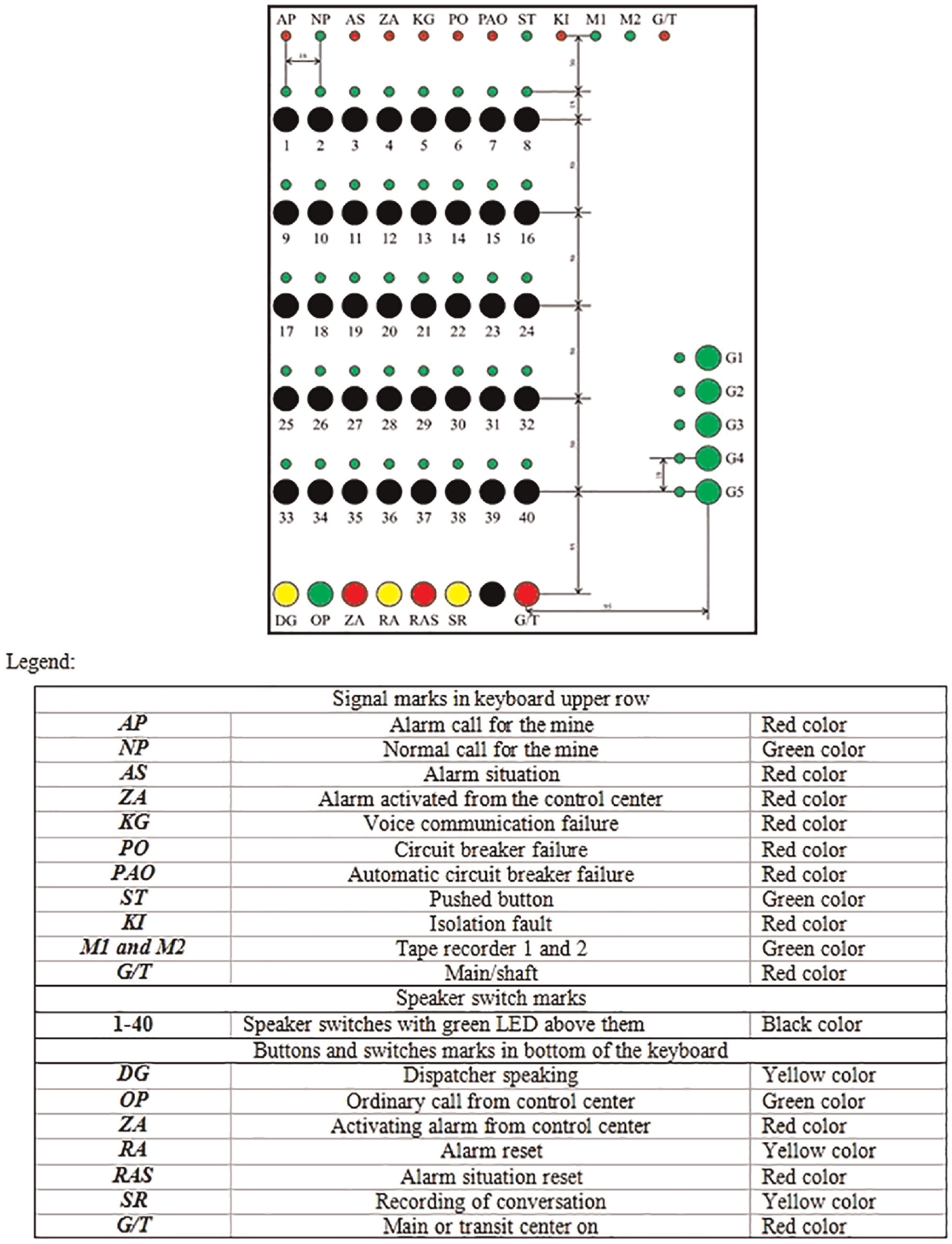
Keyboard for one shaft.
Groups of switches and signalling devices G1–G5 (green colour) enables connection of previously programmed group of speakers in the mine. Colour of the work surface is neutral.
Keyboards and signalling devices for establishing communication line between operators and employee inside the mine. Employee in the mine can establishing a communication line with the control room by pressing of either green button on the speaker for normal call or red button for emergency call.
Pressing of speaker’s green button turns on the green LED light marked with NP, the green LED light above the corresponding speaker’s switch and alarm sound is emitted. After registering the call operator communicates with the mine by doing the following:
He activates the switch on the control desk above which the green LED in on and this opens the communication line between the mine and the CR, that is, CR operator can hear a sounds from the mine;
Next he activates the yellow button marked with DG and after 3 s speaks to the microphone. Button DG must be pressed the whole time when operator speaks.
The speaker’s red button is used for alarm calls from the mine and in that case red LEDs marked with AP and AS and green LED above the appropriate switch 1–40 light up on the control desk. Operator in this case performs the same actions as in previous case. For each alarm call from the mine main computer IRI-2 emits an alarm sound that is cancelled by pressing the yellow RA button. When communication with the mine is finished operator resets the alarm by pressing the red RAS button.
Establishing of a communication though the control desk with speakers in the mine can be in normal and alarm situations.
Regular call with a specific speaker in the mine is done in following way:
Switch for a specific speaker (1–40) is activated which turn on the green LED above the switch and the green LED marked ST; then pressing of the green button OP sends a beeping sound from the selected speaker. After call is answered from the mine communication is established as described previously.
Alarm call from the control desk in done in following way:
Press and hold the red ZA button and activate the switch for a specific speaker, this turns on the following lights green LED above the switch, red LED marked AS and ZA and green LED marked ST and M1 or M2. Then the red ZA button is released and switch is turned off leading to a blinking of the greed LED above the switch. Speaker in the mine then emits an alarm sound indicating that someone should answer the call right away. Communication is further conducted as described previously. Resetting of this alarm is done by pushing the RA button, and resetting of alarm situation is done by pushing RAS button. In any alarm situation tape recorders M1 or M2 are automatically turned on and appropriate indicator for this recorders lights up.
If operator wants to record communication he needs to push the SR button.
Quantity of information analysis
Quantity of information that operator gets from CMCR depends on number of measuring and signalling devices in the underground mine, number of speakers, communication equipment, work dynamic of miners and dynamic of changes in technological process of underground mining. Number of operator’s activities consists of actions that he must take based on received information and actions that he takes after he received information. Quantity of information that operator receives from measuring and signalling devices and from speakers is equal to number of data that this devices are sending to the control rooms. Quantity of information in a time interval depends mostly on work dynamics and changes in technological process and work environment parameters. Number of operator’s activities in that time frame is depending on quantity of information received and actions following this, which must be done in that time frame. Process of reviewing the amount of information is illustrated in following scheme (Figure 2).
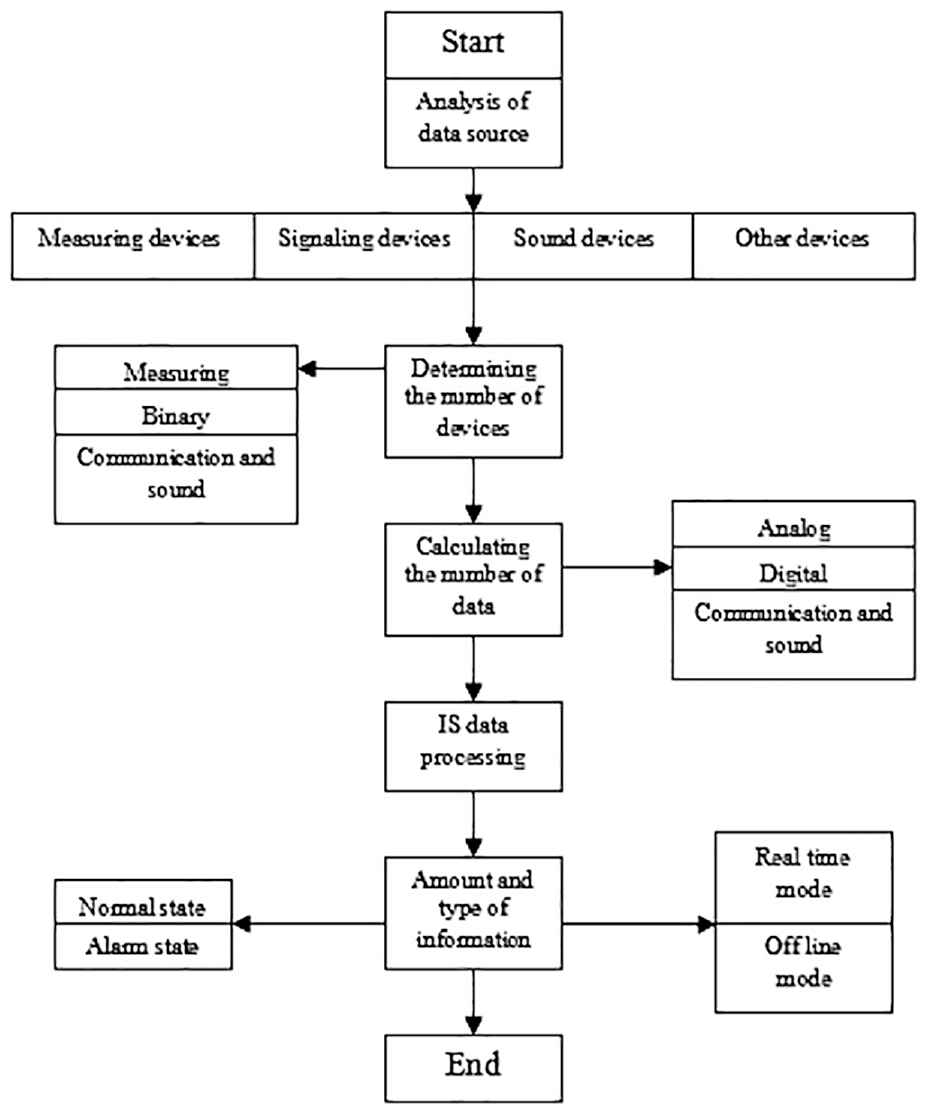
Block diagram – quantity of information analysis.
Number of data (ND) received for processing in CMCR is calculated by equation:
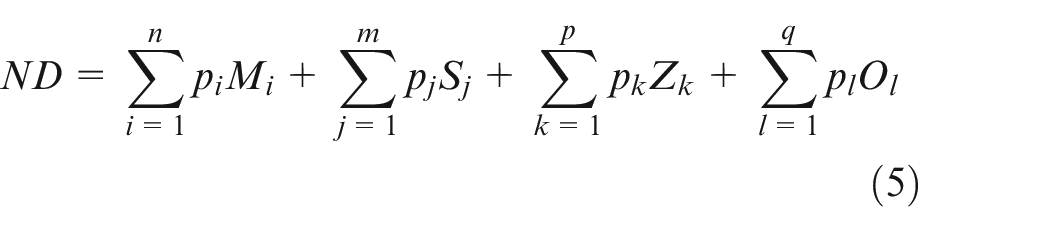
Where:
pi, number of data received from i measuring device;
Mi, i measuring device;
n, number of measuring devices;
pj, number of data received from j signalling device;
Sj, j signalling device;
m, number of signalling devices;
pk, number of data (different calls) made by k communication device;
Sj, k communication device;
p, number of communication devices;
pl, number of data received from l other device;
Ol, l other device;
q, number of other devices.
Operator gets information from video terminal and control desk. He performs his activities, depending on amount of information, by using keyboard of alarm-voice communication subsystem installed on the control desk, PC keyboard, phone, by giving information and instructions and by updating certain information in shift diary.
Results
In order to construct a network diagram, a list of activities must be developed, all identified activities must be described and the mutual conditionality dependence identified. Specific experimental research for forming histogram of changes in number of operators’ activities lasted for 72 h. For research of operator’s activity duration the following three groups of experimental research were formed: normal calls from the mine and by the operators; alarms from information system (IS) and alarm messages from operators, alarm calls from the mine and analysis of number of data and devices in the mines. Duration of this research was 63 h.
The analysis of activity duration using the critical path method
In Table 1, 32 operators’ activities were defined of which six activities were preparation activities for experimental research, 22 activities of conducted research and 4 activities for analysis of the conducted research.
The list of research activities.
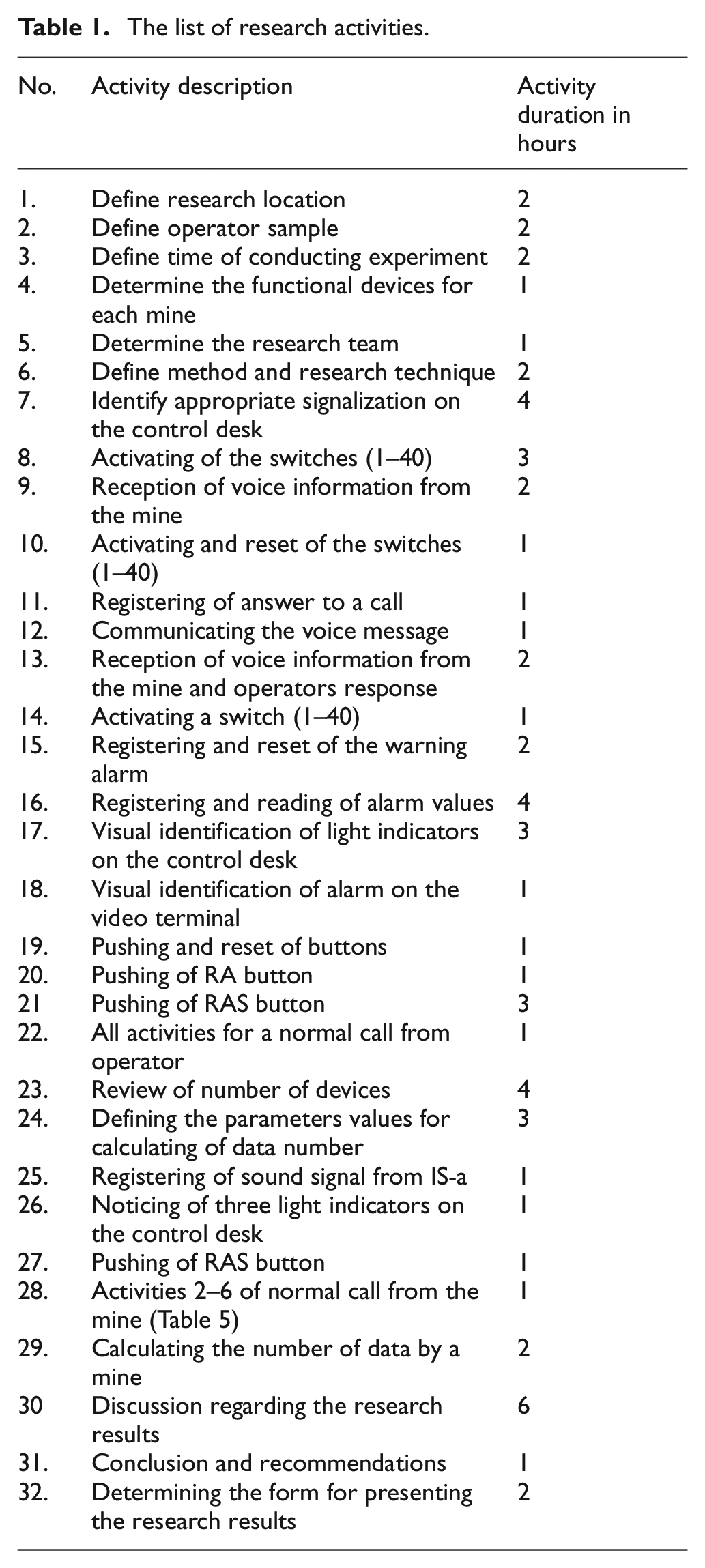
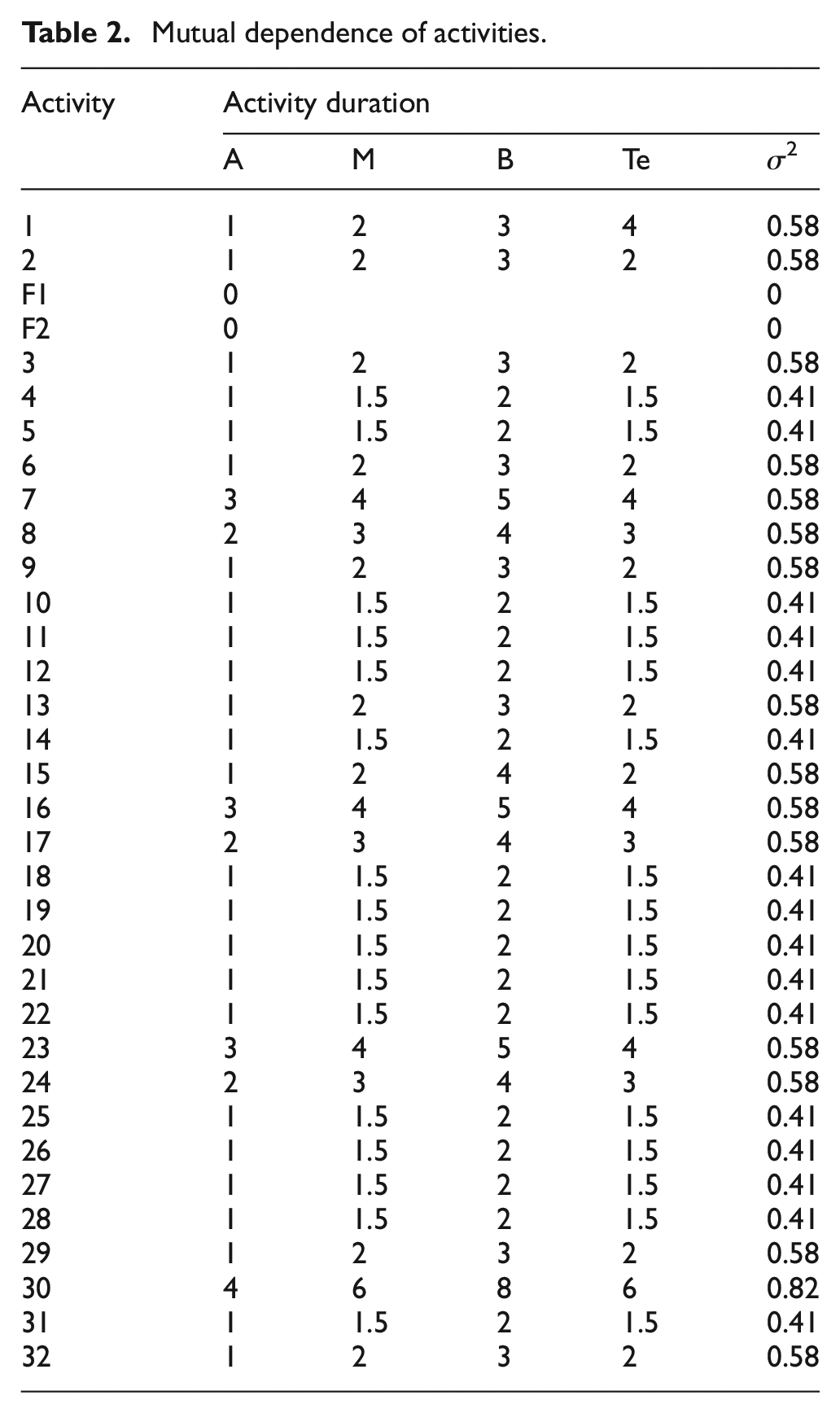
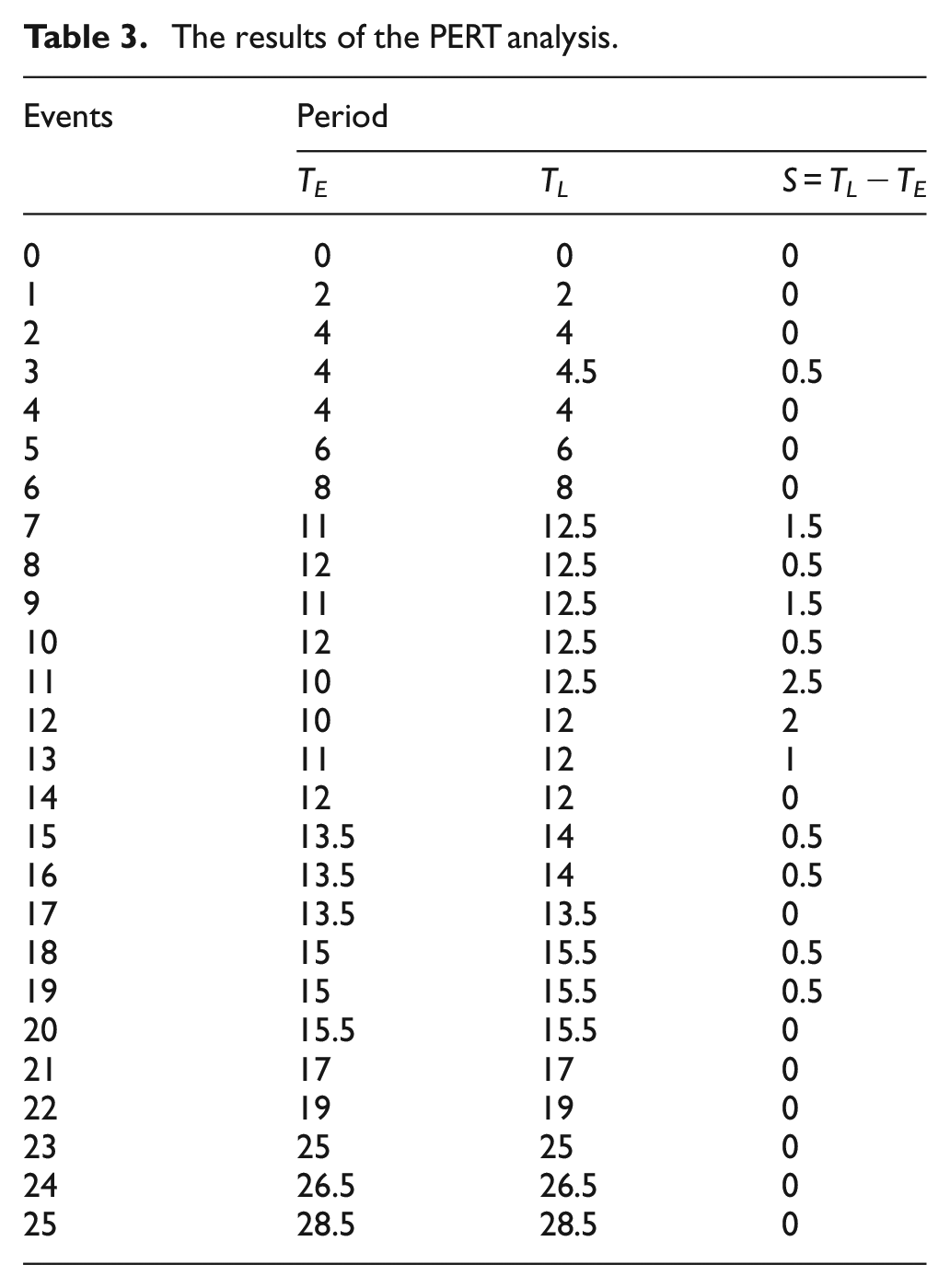
Tables 2 and 3 show mutual dependence of activities and results of PERT analysis. Figure 3 presents the full PERT network model of research.
Mutual dependence of activities.
The results of the PERT analysis.
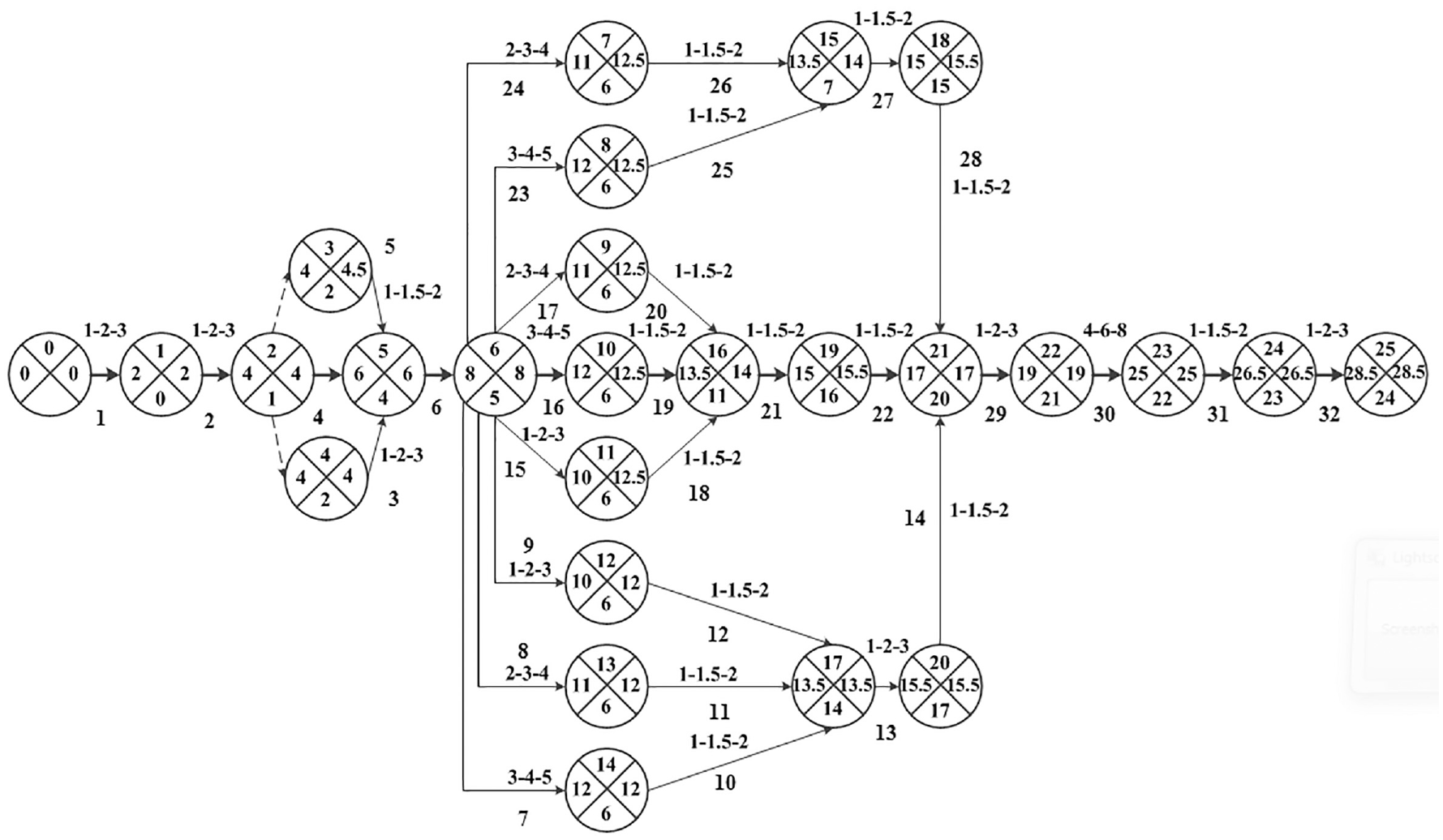
The full PERT network model of the research.
Analysis of operator’s activity
Operators in CMCR are working continuously in three shifts (07–15 h; 15–23 h; 23–07 h). Studies are showing that operator’s activities in 24 h period are influenced by changes in biological functions. Many biochemical and physiological activities (sight, sensitivity to pain, etc.) also vary. Number of operator’s activities depends on quantity of information that he receives from remote control system and activities that follow after this. In order to determine changes in number of activities during working time operator’s work in mines Rembas, Soko, Ibar, Jasenovac and Stavalj was monitored. Monitoring was conducted by recording the number of activities (NA) in all three shifts, examining on-call miners’ dairies, examining alarm reports, examining operator’s diary and by talking with operators (Figure 4).
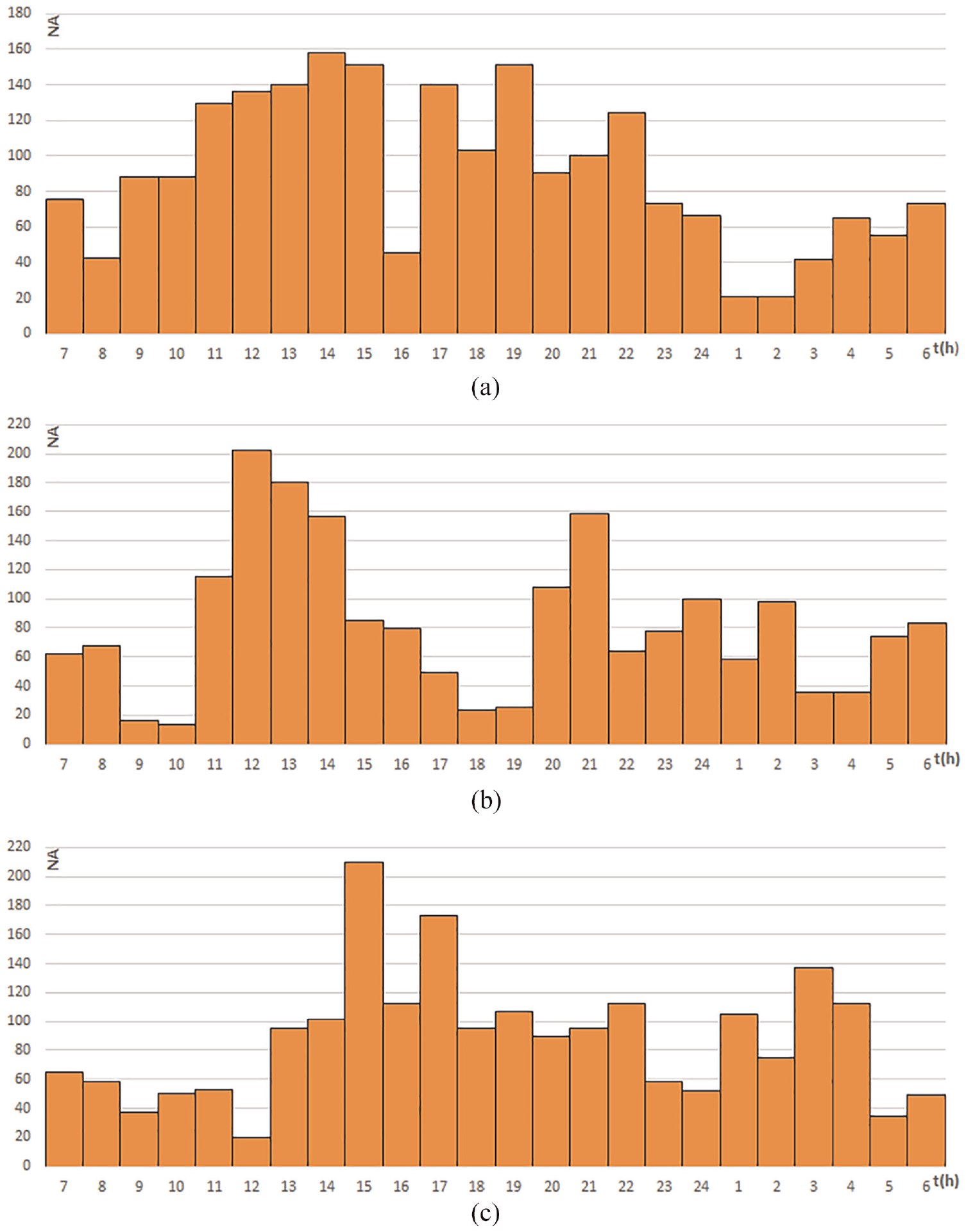
Changes in number of activities: (a) operator activities on first and second day, (b) operator activities on second and third day and (c) operator activities on third and fourth day.
During this analysis 15 diagrams were made, review of alarm reports for 1-month period, shift diaries and recorded messages was conducted and based on these data histogram was made showing the changes in average number of activities per 1 h for 24-h period. Histogram is shown in Figure 5.
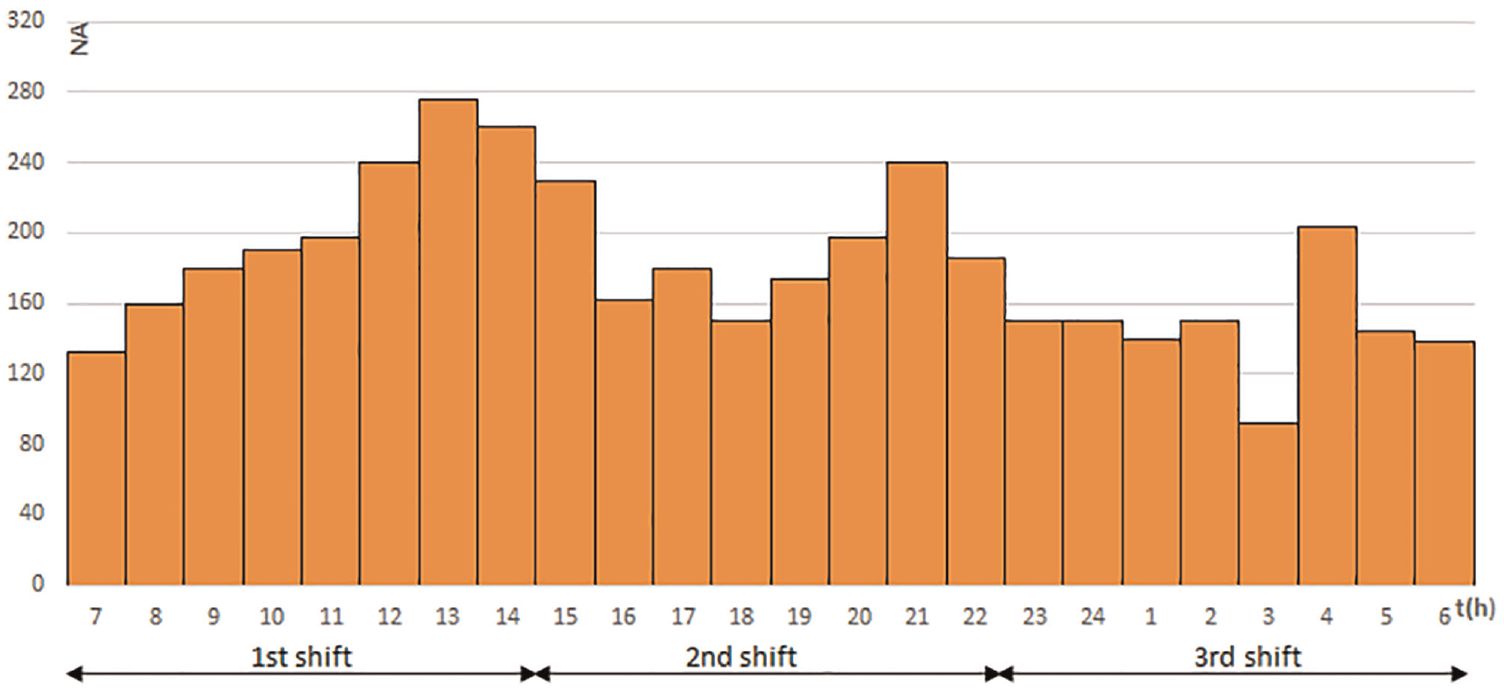
Changes in average number of activities per 1 h for 24-h period histogram.
For comparing operator activities histogram with relative operator’s workload diagram (Figure 6), which is a result of a study conducted by other researcher activities diagram (Figure 7) was made.
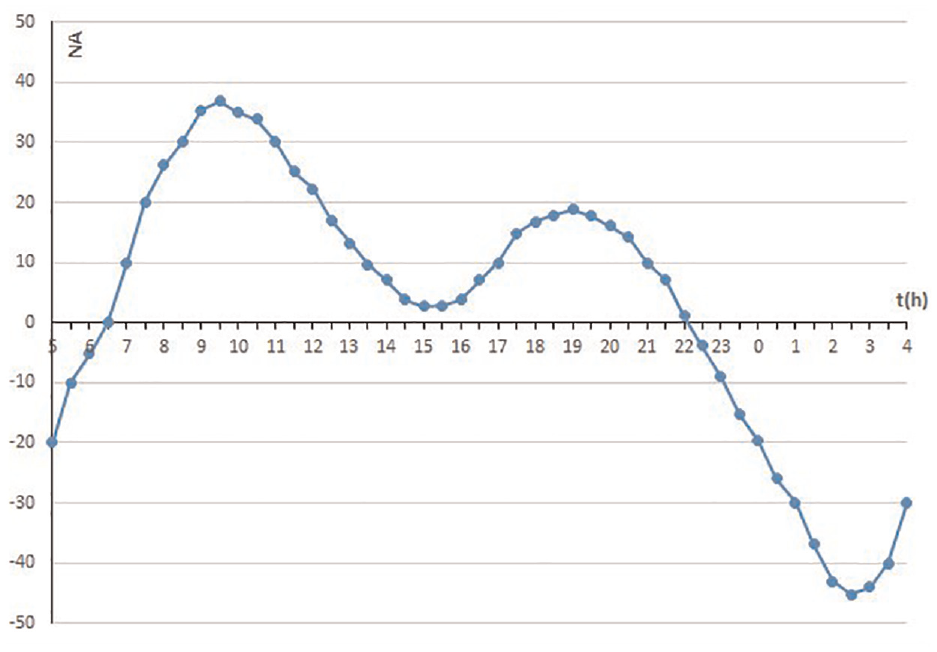
Relative workload capacity of human diagram.
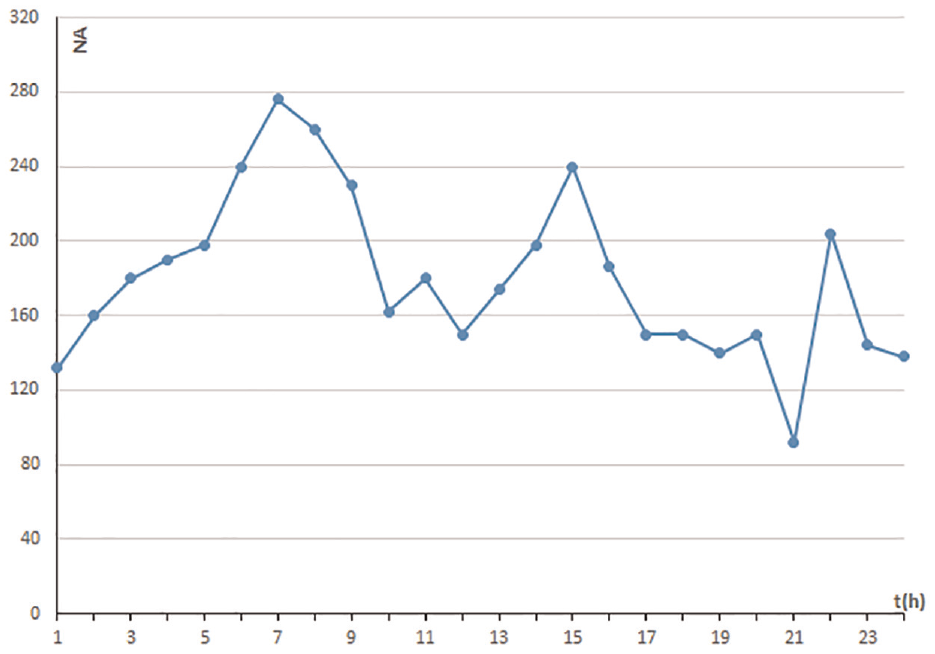
Operator’s activities diagram.
Calculating diagram coordinates was done by Lagrange interpolating polynomial given by:
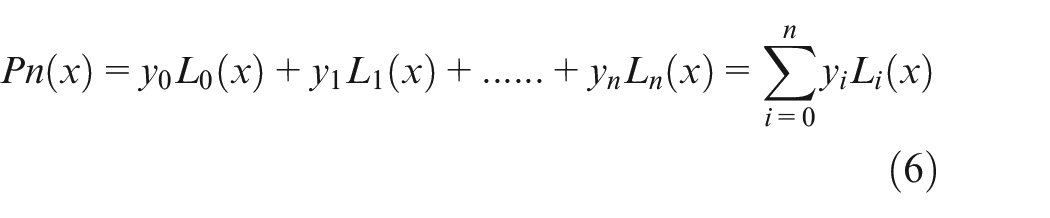
Where:
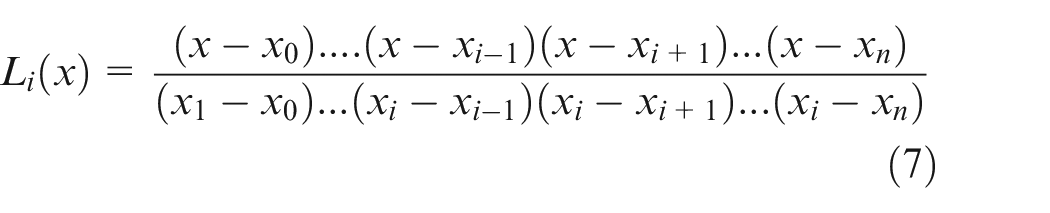
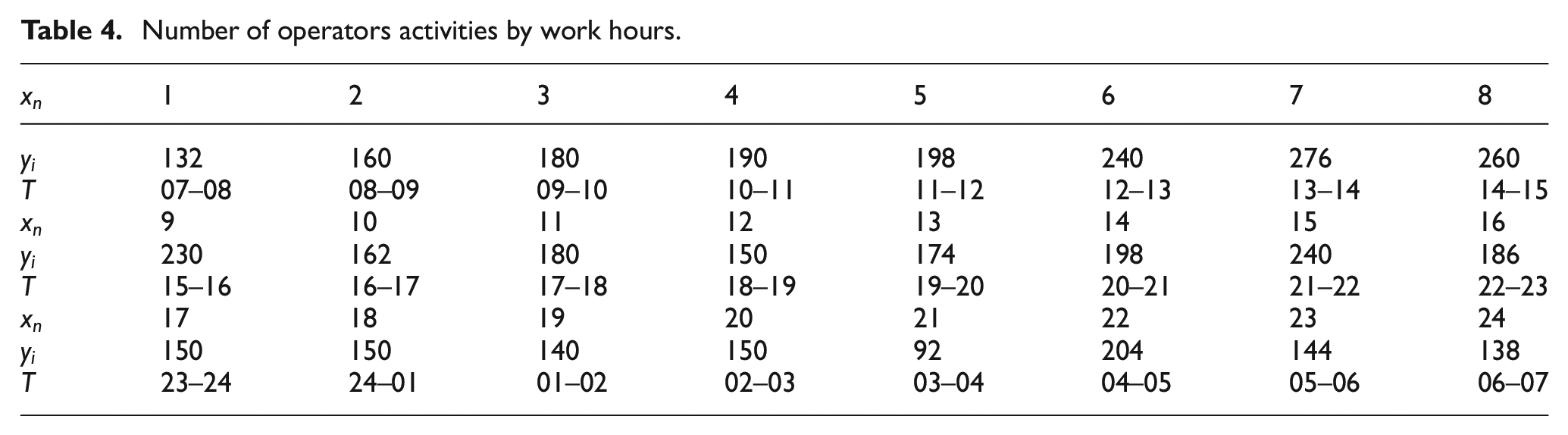
Exact polynomials values are in points where x values are in range of 1–24 (period of 24 h with 1-h step) while values are representing an appropriate number of activities according to Figure 5 histogram and Table 4. While analysing operator’s activities we looked at a technological process flow in underground mines, in general, with special focus on activities of shaft workers (ASW). Activities of shaft workers diagram is shown in Figure 8.
Number of operators activities by work hours.
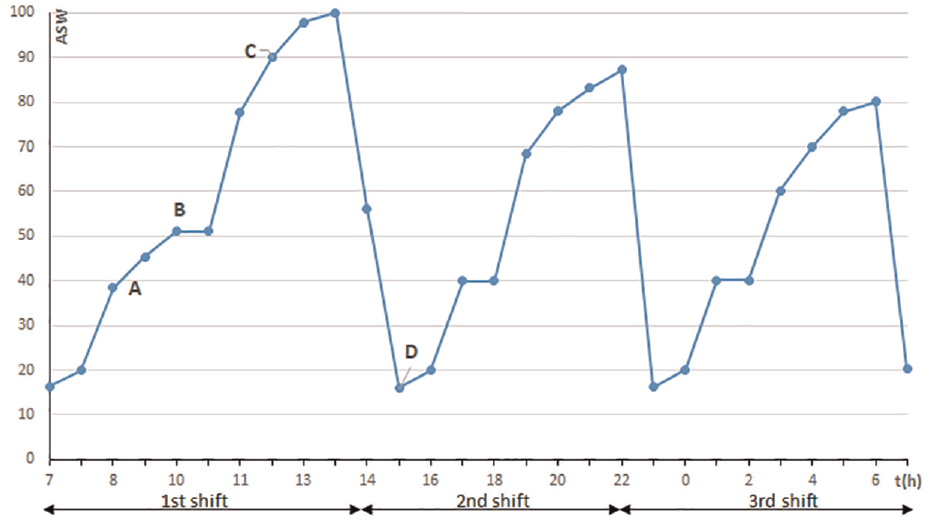
Activities of shaft workers diagram.
By comparing Figure 7 diagram with Figure 8 diagram we can see that number of operator’s activities is directly proportional to activities of shaft workers. Number of activities is highest in first shift. Reason behind incised operator’s activity lies in the fact that highest number of employees are inside the mine during first shift. These employees, from different professions such as electrical, mechanical, construction, carpentry and mining, are conducting prepare works necessary for normal mining operation during all three shifts. In second and third shift inside the mine are only employees working on exploitation, transportation and hoisting of ore and on-call employee from each profession mentioned previously.
Comparing Figures 6 and 7 diagrams clearly shows that number of operator’s activities in third shift is only slightly lower than number of operator’s activities in second and first shift even though his work capacity in third shift, according to Figure 6 diagram, is much lower compared to that in first and second shift. This situation can’t be solved by reducing the number of activities in third shift since underground mining technology is not allowing this. Solution for this problem can be found in frequent exams, additional training and testing of operators and better compliance between operators and information display.
Analysis of operator’s activity duration
The 28 operator activities related to operator-pit workers voice communication were monitored, namely: 6- call for the mine in normal conditions; 5- call by the operator in normal conditions; 5- information system alarm; 8- communicating the alarm message by operator; 4- call from the mine in alarm conditions. By analysing operator’s tasks (number and type of activities) data presented in following tables were derived.
Table 5 is showing operator’s activities deriving from received call for the mine in normal conditions.
Call for the mine in normal conditions.
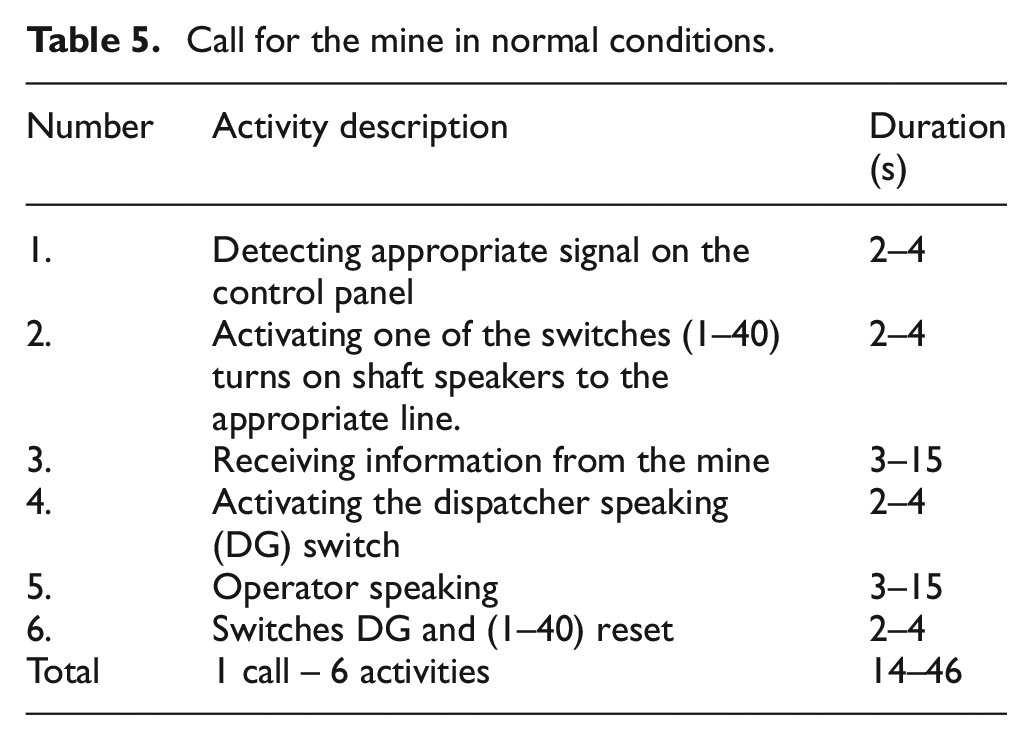
Table 6 shows operator’s activities that he must do when he communicate some message to employees inside the mine in normal conditions.
Call by the operator in normal conditions.
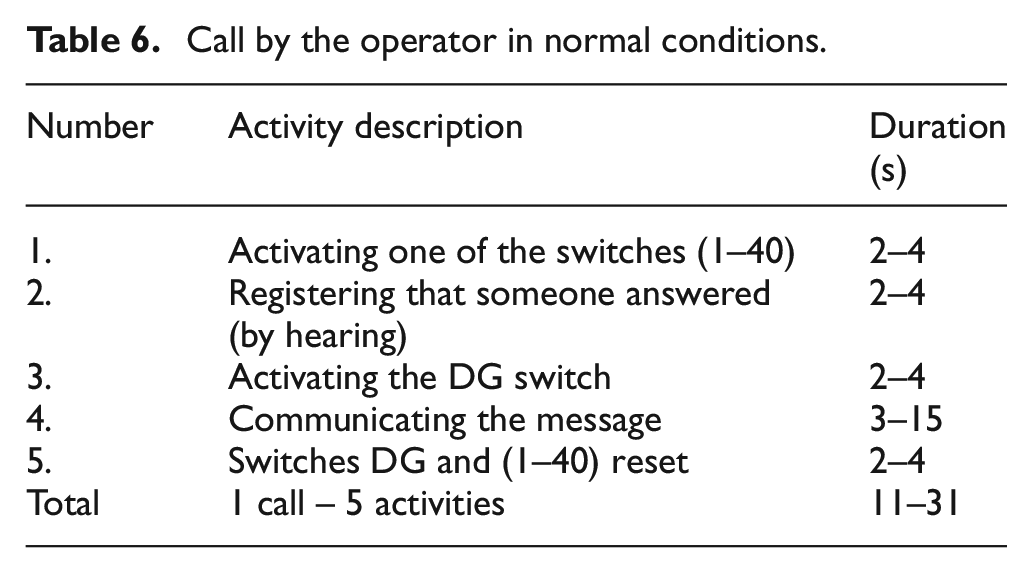
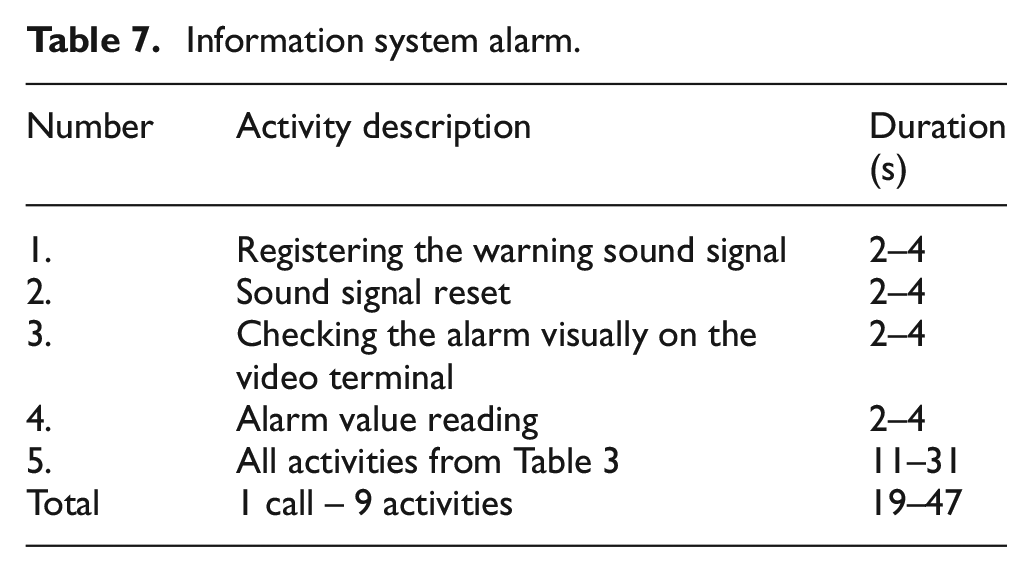
Table 7 shows activities performed by operator in case of low or high alarms for one of work environment or technological process parameters, in order to check conditions in the mine.
Information system alarm.
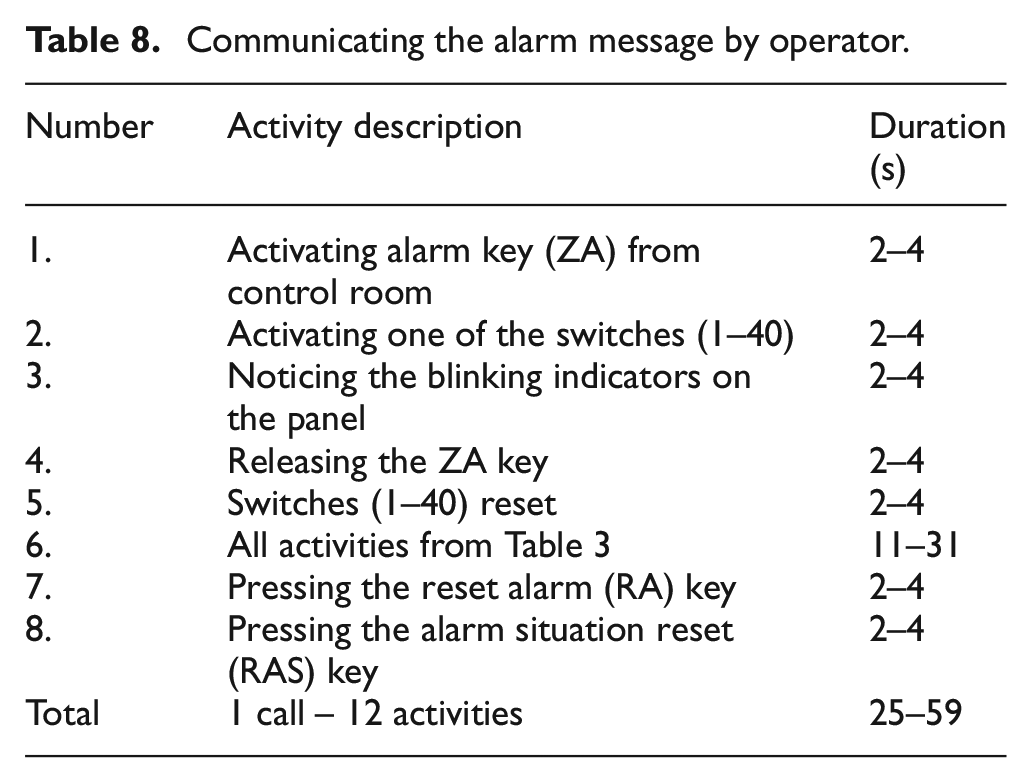
When based on gathered data or upon a request of technical or responsible person operator needs to forward alarm message to employees in the mine he perform activities shown in Table 8.
Communicating the alarm message by operator.
When ZA key is pressed tape recorders are automatically turned on.
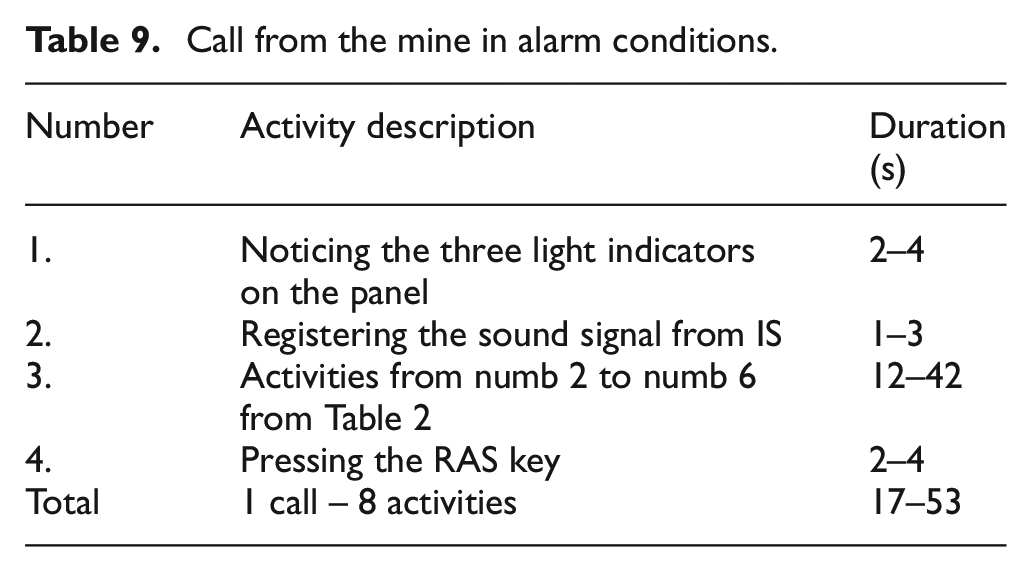
In case of hazardous situation inside the mine (fire, mine collapsing, injuries etc.) employees can send an alarm call by AVS system from the mine. All conversations, in this case, are automatically recorded on tape recorders. In this situation operator perform activities shown in Table 9.
Call from the mine in alarm conditions.
Situation when an operator receives an alarm signal is already described, and activities that are needed in that occasion are shown in Table 7. In these conditions operator often must give necessary instructions to employees in the mine (order to evacuate from threatened area of the mine, routes which they should take etc.). In that case he performs activities presented in Tables 7 and 8. Specifically he performs activities 1–4 from Table 7 and all activities from Table 8. In total: One alarm signal requires 16 operator’s activities, with total duration 33–75 s.
By analysing the way in which these activities are performed it’s determined that operator performs most activities while seating by the control panel and using his hands, eyes, ears and mouth with constant psychological strain to perform correct activities based on received information or responsible technical person orders.
Quantity of data in mines
For this paper analysis of equipment in Serbian underground coal mines was performed. Analysed equipment consists of measuring and signalling devices, devices for gathering data in the mine (substation of information system) and AVS’s speakers in order to calculate the number of data (ND) processed by information system in individual coal mines. It was determined that Serbian coal mines are equipped with remote control system for ventilation, gas and fire parameters and communication systems but not with signal-control devices for monitoring and controlling of technological process.
Table 10 shows the number of devices in individual coal mines planned by mine plans. 44
Number of devices by mine.
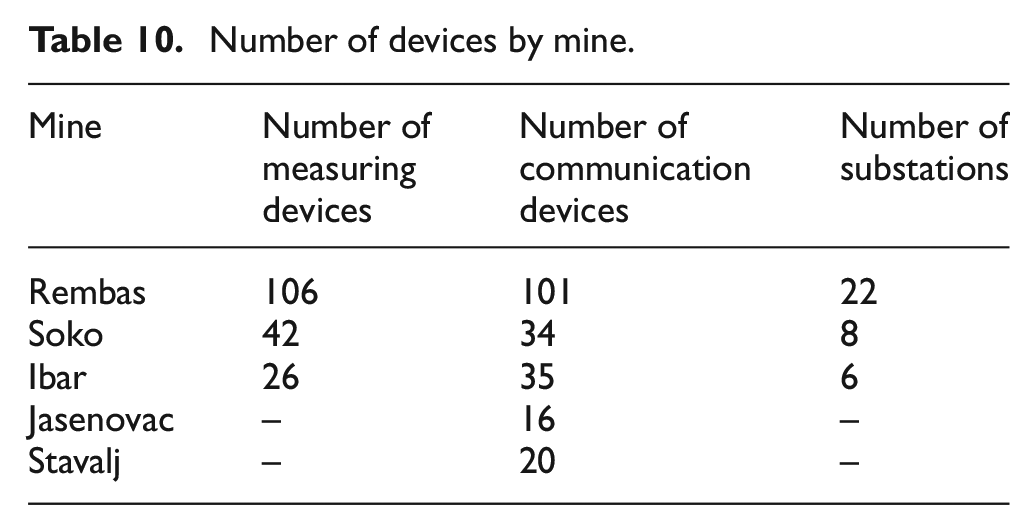
Number of data is calculated by equation (5) by using the following values for parameters pi, pj, pk and pl:
pi = 5 (current reading, early warning, alarm, faulty device and reading out of range);
pj = 0 (because there is no signalling devices);
pk = 2 (normal call and alarm call); and
pl = 2 (valid-invalid or works – does not work).
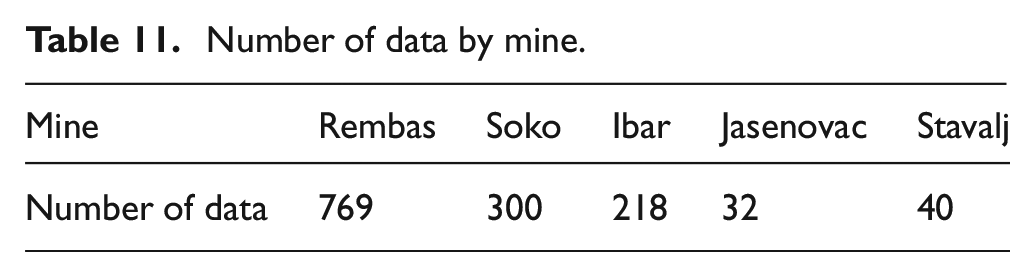
Results are shown in Table 11.
Number of data by mine.
Discussion
In this paper following is presented: critical path method; analysis of operator’s activities, analysis of duration of those activities and data in CMCR. Forming of model for the analysis of operator’s activity using the critical path method has very helpful for realization of this research. Table 2 shows that the estimated time is within the acceptable limits, except for activity 32, for which the variance value is slightly higher. As the variance is a measure of the roughness of the initial data (aij, mij, bij), the higher the variance value the greater the assessment uncertainty is. Table 3 also shows that the values for the expected duration of activity, and possibly the time of executing the activities are identical, as the values of aij and bij are symmetrical around the mij value. Particularly important is the determination of the temporal reserve S (Table 3), which represents the difference between the latest completion of immediately preceding activities and the earliest beginning of the activities that directly follow an activity. Time reserve can be positive or negative. Positive time reserve indicates the likelihood of finishing the research before the pre-defined period, while negative reserve time defines the lack of the planned capacity. For the events 0, 1, 2, 4, 5, 6, 14, 17, 20, 21, 22, 23, 24 and 25 the reserve time is 0, which indicates that the capacities are equal to planned, and that are the critical events. Events 7, 8 and 11 have the greatest time reserve, which can be allocated to activities that are on the critical path.
A framework for the application of standards, recommendations and research on displays in the function of control rooms design 45 provide the possibility of analysis and comparison with the concrete results presented in the paper.
Several standards that provide guidance on optimizing the interaction between operators and display 46 :- provides recommendations regarding topic such information receiving/processing and making an appropriate response based on this information 47 ; provides design requirements for the application of display in control rooms, and 48 provides recommendation regarding the following; selecting the appropriate display and control types, structuring and presenting information and establishing control and dialogue procedures.
Recommendations for the speed of the operator’s motor reactions and the time required for their execution were also used. The speeds of some motor reactions (cm/s) of the extremities of the human body are directly related to the type of movement and the recommended values are given in Table 55 49 and Table 3. 44
The response times of the sensors for measuring the concentration of oxygen, carbon monoxide, the temperature of the pit air and the speed of the air current for ventilating the mine are about 1 second, and for measuring the concentration of methane about 12 s. In practice, the operator has data from the pit continuously in real time and can immediately undertake the necessary activities are prescribed by the mine’s technical regulations. 44 The execution times of some operations (s) are given in Table 56 49 and Table 4. 44
Analysis and comparation with ergonomic recommendations 44 of the described handling method for keyboard, layout of the signalization, switches and buttons, colour and marking showed the following:
Layout of signalization, switches and button is in accordance with ergo-technical recommendations as they are organized in four section, relations between signalization, switches and buttons are clear and priority principle for use of switches and button on keyboard is met.
Markings of switches, buttons and signalization are enabling precise and quick identification. The keyboard is easy to use, and errors while operating it are infrequent. In everyday situations error in the use of the keyboard does not have a significant effect on systems functionality. During the alarm state, however, errors have a greater impact. In this state, errors can have influence over the determined functionality of the control desk (e.g. if the RAS button is activated by mistake, the tape recorders would be turned off, which is not allowed in the alarm state).
Grouping of switches (1–40) is done in accordance with functionality principle and order of use principle. However layout of speakers in the mine and their connection with switches is often not done according to the functionality principle. What is the main problem here? Layout of speakers in the mine is organized in such way that most of the speakers are installed in technological sections as excavation sites, preparation sites, transportation routes, and others. It’s logical, useful and functional that speakers group in such way are connected on switches that will make one group of related switches (e.g. six speakers from excavation site connected to switches 1–6 or 10–16 or similar). This is also useful for communication in normal situations, and is much more important in case of an alarm where there is an intense communication with threatened section of the mine. This makes operators work easier since he handles a group of switches that are easily identified. Analysis showed that this is not applied in practice, even not considered, especially for speakers that are added additionally.
Layout of indicator marked with AP to G/T is not in accordance with ergo-technical recommendations as there are 12 and should be arranged in two rows instead of one.
The distance between switches and buttons should be increased to 22 mm from 18 mm. The recommended distance is 22 mm.
Height of switches and buttons of 5 mm and push depth of 3 mm are according to ergo-technical recommendations.
Black colour of switches 1–40 is not in accordance to ergonomic recommendations. Other switches and buttons and other indicators are as recommended. 44
During this research significant amount of data was gathered which will be used for implementing specific solution for improving operators efficiency in CMCR.37,42,43,50–53
Conclusion
The experimental data presented in this paper resulted from a concrete insight into the work of operators in alarm and normal situations in coal mines in Serbia, so their reliability and validity were checked in the real working conditions of workers in the pit and operators in the control room. Practically, the operator has data from the pit continuously in real time and can immediately undertake the necessary activities that are prescribed by the mine’s technical regulations. Analyses of measuring instruments in coal mine pits contribute to a better understanding of the interaction of the operator in the control room of the coal mine with the instruments located in the coal mine pits. Analysing the way, the activities are carried out, it was found that the operator performs the largest number of activities sitting at the control desk, using his hands, eyes, sense of hearing and speech, with constant mental strain to accurately perform those activities that follow based on the information received from the IUS or the order of the responsible technical person.
In the control rooms of the mentioned coal mines in Serbia, specific equipment used by operators in their daily work was used (keyboards of speech systems, colour monitors, devices for recording conversations in alarm situations, etc.). An analysis of the alarm voice call from the mine was performed and the operator’s reaction time was measured with stopwatches that register hundredths of a second. The same action was repeated when the alarm from the measuring devices in the mine would go off. Practical experimental research was carried out in the real working conditions of the operator.
All operator activities related to operator-pit worker voice communication were monitored, but not all operator activities related to the development of the technological process in the mine were processed (e.g. a certain tool should be transferred from work site A to work site B, stop or start the transport system, turning off electricity in one part of the mine, etc.).
Appropriate standards and recommendations were used for the analysis of the operator’s activity, which enabled the results of the presented research to be comparable. Thus, the results obtained on the speed of some motor reactions of the operator and the time of execution of those operations, based on research in coal mines in Serbia, largely coincide with the values which are presented in the respective recommendations and standards.
Analysed operator’s activities shows that negative impacts are predominantly because technical and organizational limitations. Technical limitations are pointing to the problems related to information systems which didn’t allow operators to identify important information and to unreliable mean of communication that make it more difficult for operators to monitor and coordinate activities in regular and emergency situations. Organizational limitations are related to the inadequate training of operators for response in emergency situations and insufficient use of non-technical skills (decision making, situational awareness and communication, teamwork, leadership, stress and fatigue management).
This research provided data on number of operator’s activities by work hour in 24 h period; description and duration of activities related to call from the mine and from remote control system; response times and ways of response to this calls and number of devices and data by mine.
Therefore, the results presented in this paper focus on the analysis and better understanding of operator’s activity in CMCR in order to make an adequate design solution for information and management elements in CMCR which will lead to a more efficient operator’s response in both routine and emergency situations.
Footnotes
Declaration of conflicting interests
The author(s) declared no potential conflicts of interest with respect to the research, authorship, and/or publication of this article.
Funding
The author(s) disclosed receipt of the following financial support for the research, authorship, and/or publication of this article: This paper has been financed by the Ministry of Science and Technology Development of the Republic of Serbia, under the project TR 35005.
