




Abstract
Vietnam has enormous potential for solar power thanks to its favorable geographical location. In recent years, the Vietnamese government has strived to develop renewable energy. The objective of this paper is to measure the operational efficiency of solar photovoltaic (PV) power plants using data envelopment analysis (DEA) with the epsilon-based measure (EBM) model. The utilization of the EBM model is due to its advantage to integrate radial and non-radial measurements to get a more exact estimate of relative efficiency. Using the merits of the EBM model, a case study of 18 decision-making units (DMUs) in Vietnam is presented. In the proposed model, three input variables are selected, which are capital cost, installed capacity, solar irradiation, while energy production and consumer density are considered as output variables. Following that, the technique for order of preference by similarity to ideal solution (TOPSIS) method is used to assess the validity and applicability of results. The results illustrate that two methods reach common rankings, in which the priority rankings of the best performing DMUs are very similar. This shows that the applied models are robust in nature. This paper offers significant materials that serve as practical and timelier solutions for decision-makers in the operating and management strategies of the solar energy industry, also a critical guideline in many related decision-making problems for any other industries around the world.
Keywords
Introduction
The environmental problems have got more severe in recent years, in which air pollution, global warming, and epidemic diseases are rising negative impacts. CO2 emissions are a critical contributor to climate change, and the amount of CO2 emission relating to the world’s energy accounts for 31.5 GT in 2020. 1 Determining solutions for environmental problems by technology is focused on developing both the current and future. Renewable energy can reduce reliance on fossil fuels, impulse the economy, and contribute sustainable development of countries. 2 The hybrid renewable energy system can be used to solve local energy demand problems and reduce GHG emissions by utilizing regional resources availability such as abundant biomass and solar irradiation. 3 Governments all over the world consider renewable energy as a critical technology for reducing energy-related environmental problems, particularly CO2 emissions. According to the International Renewable Energy Agency, global renewable generation capacity accounted for 2799 GW in 2020, increased by 10.3%, while demand for all other fuels declined. In Figure 1, hydropower contributes more than 43% of renewable resources. 4 Solar energy accounted for 26% of the global total, with a capacity of 714 GW. Solar energy has continued to lead the capacity enlargement, with an increase of 127 GW, which is higher than 22% compared to the capacity in 2019. 4
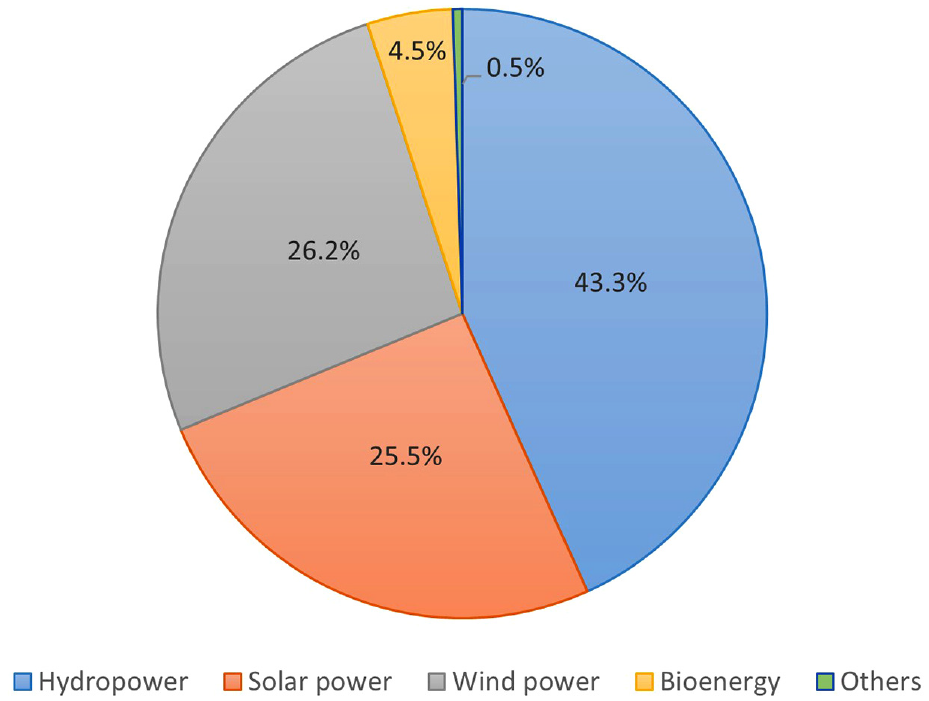
Renewable generation capacity by energy source.
Vietnam is one of the fastest-growing nations, leading to the energy for serving industrial production, agriculture, trade and services, and livelihoods increase, hence electricity demand has been growing in Vietnam over decades. Although the COVID-19 epidemic has had a serious effect on the world economy, the Vietnamese economy kept its foothold and developed 2.1% in 2020. Electricity demand grows at a rate of 1.8–2 times the GDP, which continuously increases by about 8.5% per year, creating enormous pressure on investment for the power generation, transmission, and distribution capacity (Figure 2). Besides, hydropower can satisfy about 40% of demand, but the potential has been closed upon fully exploited. If the electricity industry does not have a considerable investment, it will not meet the energy demand of the whole country. Although coal-fired thermal power has a low capital cost, the raw materials pollute the environment and depend on imports. Gas thermal power use LNG, so the price is high. Solar energy is a solution to reduce electricity bills and CO2 emissions. The solar power system is not only high profit but also convenient and fast installation, low maintenance costs, with a life span is about 25 years. It also could be invested many times, multiple periods to reduce financial pressure. Therefore, solar power could gain increasing attention for investment in the future. According to Riva Sanseverino et al. 5 the average PV power potential in Vietnam varied from 4 to 5 kWh/m2 per day (Figure 3), and the average annual hours of sunshine hours are from 1600 to 2600 h per year. Located in a subtropical monsoon climate and having its temperature averaging over 21°C throughout the year, 6 Vietnam is an attractive region to develop solar energy. The country’s solar PV capacity is 16,500 MW in 2020, which is escalated by 11,750 MW compared to its in 2019. 7 According to the renewable energy development strategy from the Vietnam government, electricity production from solar energy were set to reach 1400 GWh in 2020, 35,400 GWh in 2030, and 210,000 GWh in 2050, representing about 0.5%, 6%, and 20% of the total electricity production, respectively. 5 As the scale of investment expanded, the fascinating issue of the efficient operation of solar power has been raised to choose suitable technology for each target region’s particular environments and eventually realize an efficient investment. The operating efficiency evaluation of the solar power plants is supposed to be scientific and systematic to provide meaningful results which help policymakers give good decision-making for the next investment.
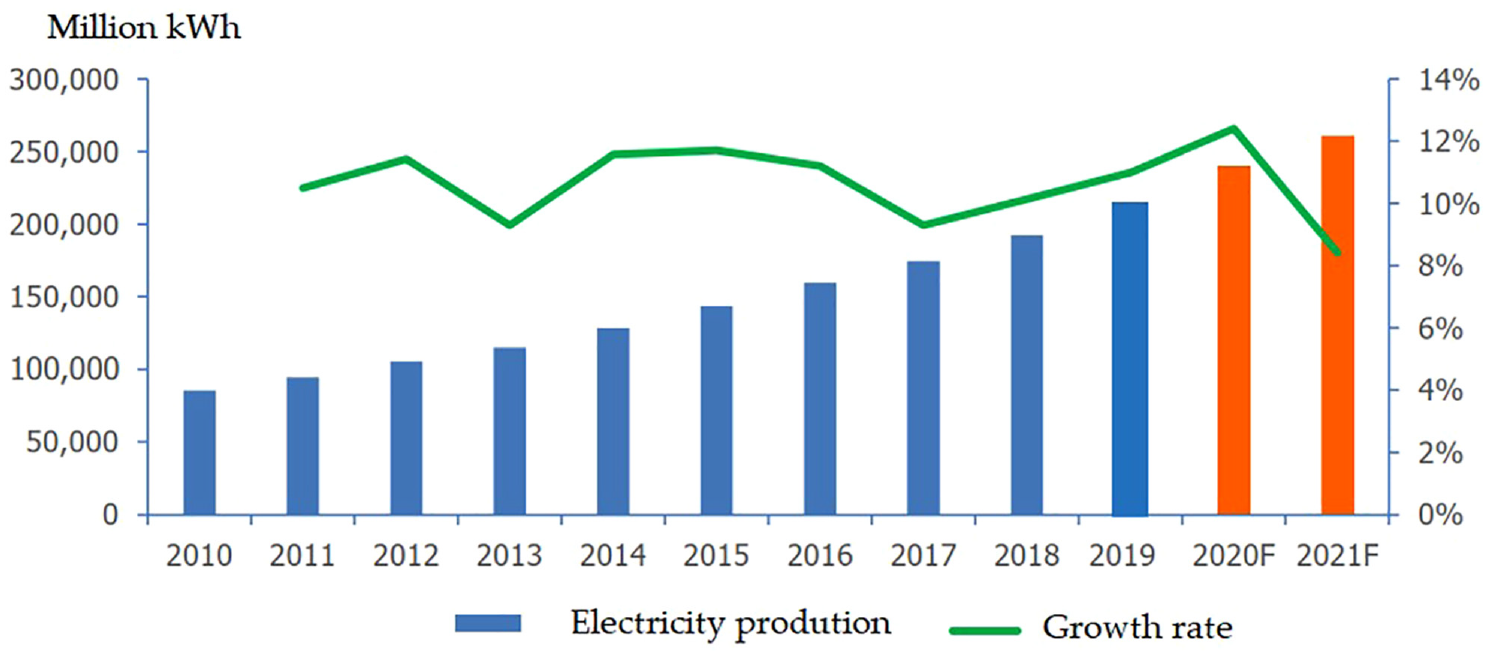
Electricity production in Vietnam.
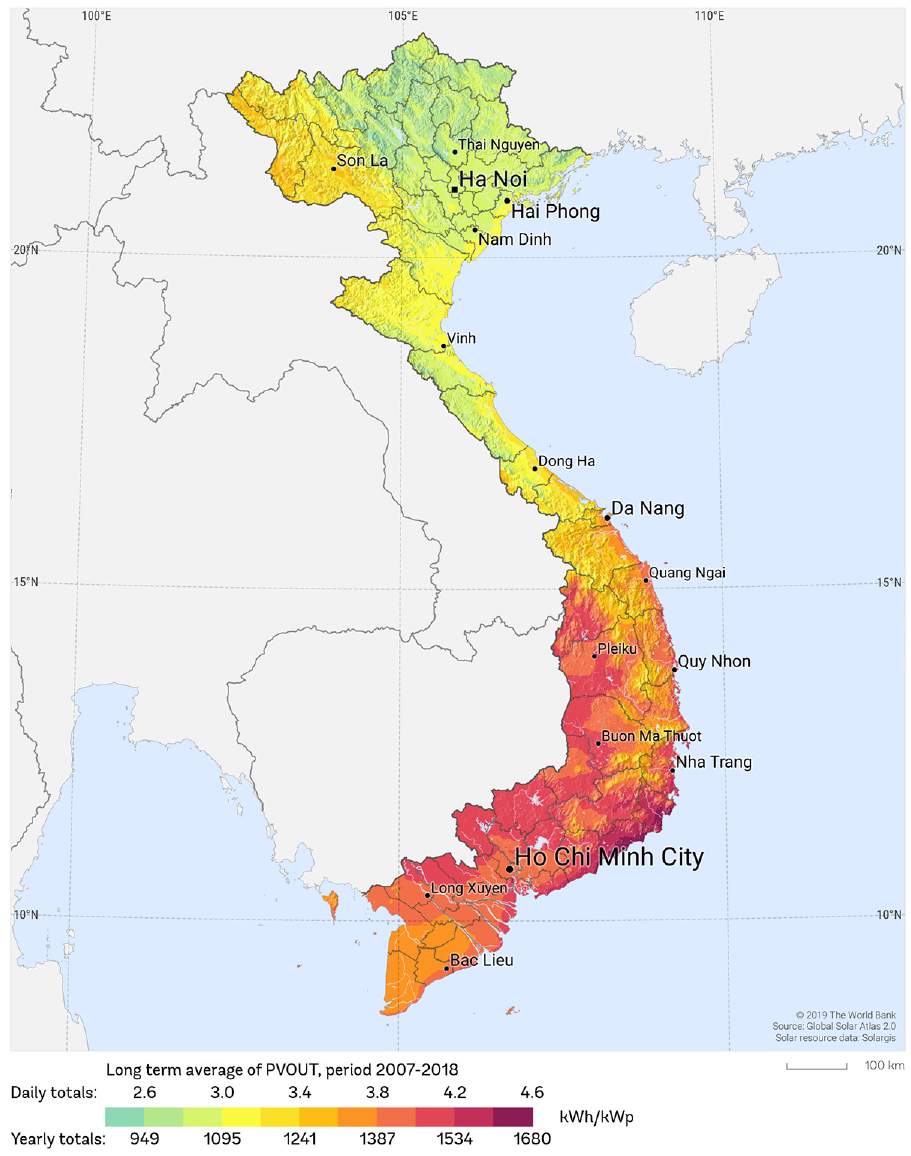
The solar radiation map in Vietnam.
It is conclusive that solar power can bring more benefits to economic, social, and environmental. However, solar energy also is faced many difficulties and challenges in operation. The power system always needs to retain some traditional generating sets to ensure electricity supply. The asynchronous development of solar energy and electrical power transmission system led to the curtailment of solar power to ensure safe operation of the electricity grid and security of the power system. It is one reason causing unstable operations in solar power plants. Besides, solar power projects are mainly concentrated in some central and southern provinces of Vietnam, in which the power consumption is not high. Therefore, it causes numerous challenges to load electricity from solar power plants to the national electricity grid and spread central to the north. For energy plants, performance appraisal is a subject of great interest when organizations are struggling to improve productivity. 8 The efficiency assessment of solar power plants is essential to propose an optimal plan in mobilizing power sources, ensuring safe, continuous, and stable power system operation. In this regard, evaluating the efficiency of the power plants is becoming vital for devising investment strategies.
Regarding efficiency measurement methods, the data envelopment analysis (DEA) has shown potential in evaluating the efficiency or inefficiency of decision-making units (DMUs) based on the relative performance of multiple inputs and outputs. DEA is a linear programing methodology for evaluating the efficiency of multiple decision-making units (DMUs) (e.g. programs, organizations, etc.) in charge of utilizing resources to accomplish interesting results. 9 DEA analysis was introduced in 1978 after the initiative by Charnes, Cooper, and Rhodes (CCR). 10 However, ideas on efficiency measures appeared more than 20 years earlier. Farrell 11 proposed Production Possibility Frontier (PPF) as a criterion for evaluating (relative) efficiency among firms in the same industry using two components: overall technical efficiency and allocation efficiency. The CCR method applied the non-parameter methodology to construct a PPF curve based on collected data of companies (DMUs). 10 Then the efficiency scores for those DMUs were calculated and compared using a variety of mathematical programing models. In 1984, Banker, Charnes, and Cooper (BCC) improved the CCR model to the BCC model by including variable returns to scale (VRS) situations in the calculation. 12 The resulting BCC model provided a more specific view of the efficiency of analyzed DMUs. Since then, the DEA method has been extended with various models and widely applied in efficiency analysis in many different fields, such as healthcare, banking, insurance, tourism, hotels, education, environment, agricultural, aquaculture, logistics, manufacturing, and energy. 13 Among all the applications, environment, healthcare, industry, finance, and energy are found to be the highest growth momentum.14,15 With the rapid development of the renewable energy industry, the DEA method has increasingly used popularity in the field of power. Table 1 lists methodologies DEA-related articles in the energy research Various DEA models were applied in the energy field such as CCR and BCC models, CRS, VRS, SBM, EBM, DEA window, DEA-Malmquist, DEA-Regression, DEA-(Fuzzy) AHP, DEA-(Fuzzy) TOPSIS, and so on.16–40
A summary list of methodologies applied in the energy field of previous studies.
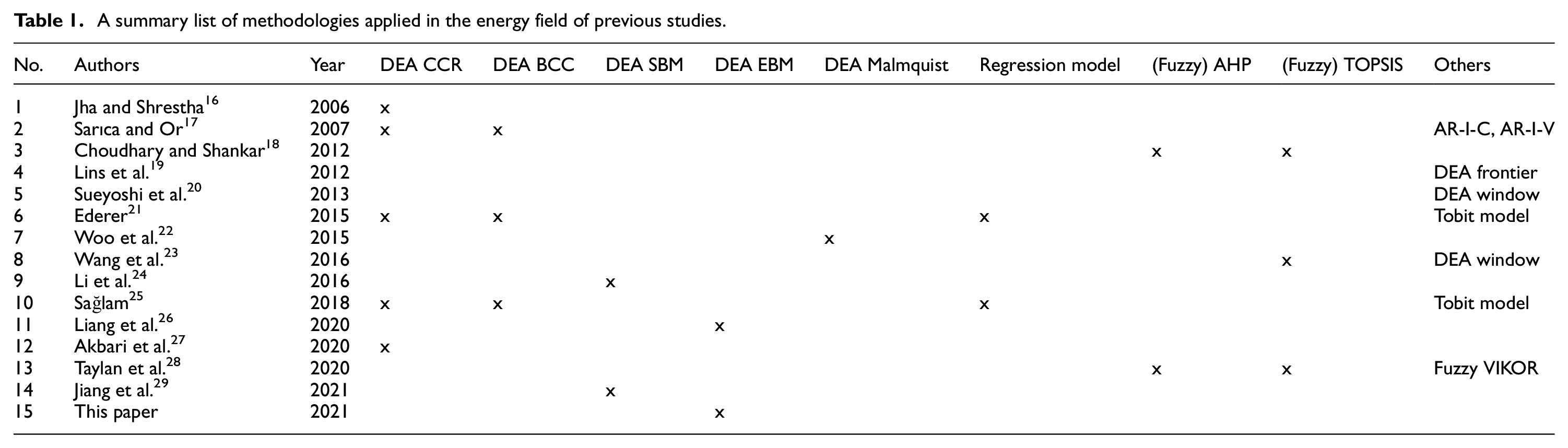
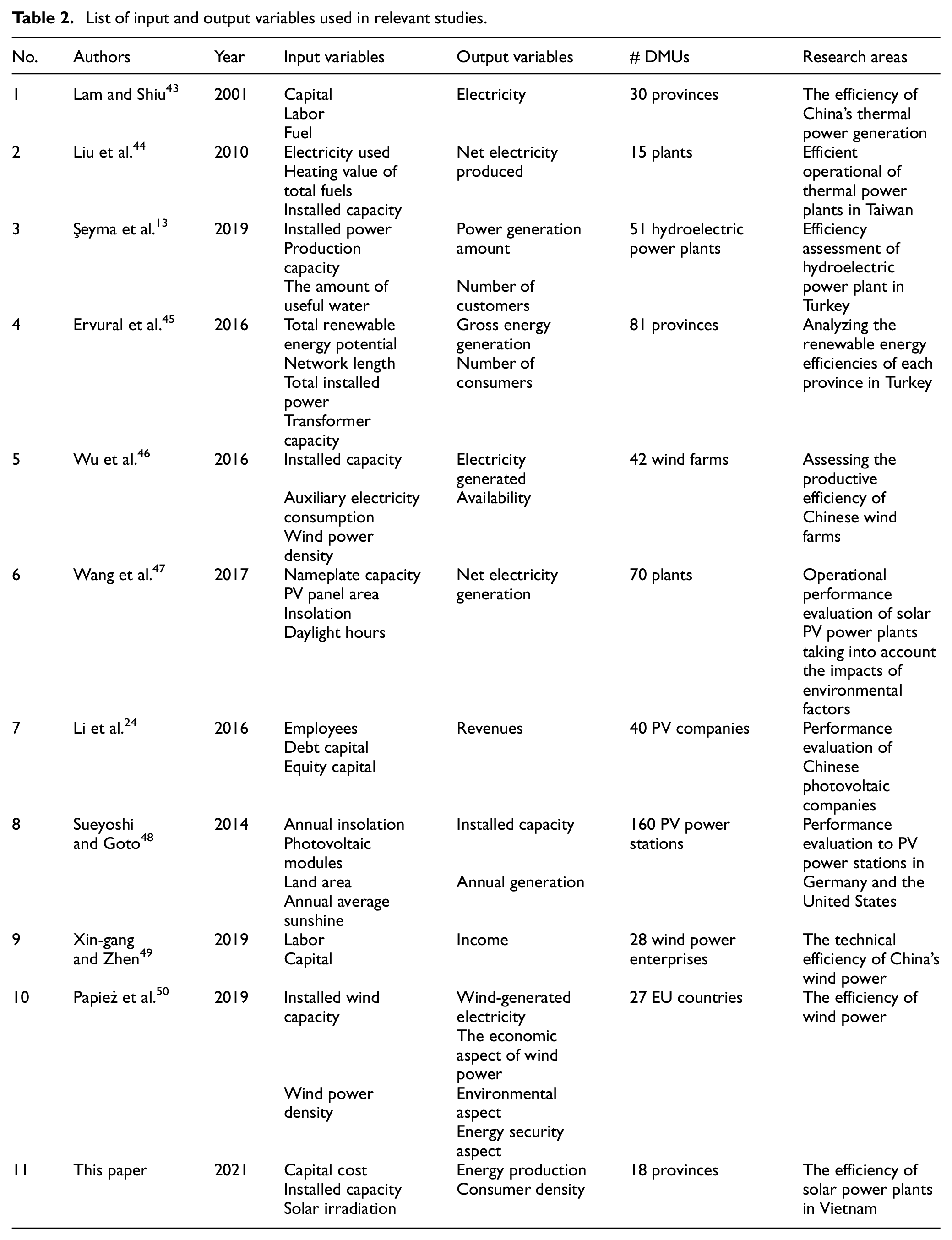
From Table 1, the input-oriented CCR model has been used to assess the overall efficiency score of the hydropower plants. 16 In the study of Sarıca and Or, 17 the performance of electricity generation plants in Turkey was analyzed and compared by using constant returns to scale and variable returns to scale DEA models. Choudhary and Shankar 18 presented a framework, that integrated STEEP-fuzzy AHP-TOPSIS methods to evaluate and select thermal power plant locations. Taylan et al. 28 also proposed an integrated fuzzy AHP, fuzzy VIKOR, and TOPSIS method to determine the priority of energy system investment in Saudi Arabia. The DEA-Tobit regression model has been used in the energy field as an efficiency measure tool. Ederer 21 combines DEA and Tobit regression models to evaluate the capital and operating cost efficiency of offshore wind farms in Europe. Similarly, Sağlam 25 used the DEA method to measure productive efficiencies of the wind farms and applied Tobit regression models to explore the reasons for inefficiencies. Lins et al. 19 used the DEA frontier method to assess the performance of Brazilian alternative energy resources by incorporating social, environmental, and technological variables. In order to detect efficiency trends of DMUs over time, the DEA window model is applied. Sueyoshi et al. 20 proposed a DEA window analysis for the environmental assessment of coal-fired power plants. Wang et al. 23 applied the DEA Window analysis and FTOPSIS method to assess the renewable energy production capabilities in 42 countries. Taking advantage of DEA approaches and the Malmquist productivity index, Woo et al. 22 investigated the renewable energy environmental efficiency in 31 OECD countries from both the dynamic and static perspectives. Jiang et al. 29 applied the dynamic DEA considering undesirable output-SBM model to identify effective renewable energy enterprises. Especially, DEA has also been widely used to measure the performance of solar PV plants. Li et al. 24 have proposed an input-oriented dynamic SBM model to measure the operational efficiency for 38 listed Chinese PV companies. Azadeh et al. 41 presented an integrated hierarchical DEA PCA approach to identify the optimal location for solar power plants. The current business performance of six PV firms in Taiwan was evaluated by integrating an AHP/DEA model. 42 For measuring the efficiency of solar power, Table 2 summarizes inputs and outputs used by various related studies and the present research.
List of input and output variables used in relevant studies.
Traditionally, the CCR model and BCC model are radial DEA models that ignore non-radial slacks while only focusing on the proportionate change of inputs and outputs in evaluating efficiency values. Meanwhile, the SBM model is a non-radial DEA model that fails to consider radial characteristics (does not concern a proportionate change in inputs and outputs) when evaluating the efficiency value of slacks projection. 51 To solve the defects, Tone and Tsutsui 52 proposed the Epsilon-Based Measure (EBM) model by integrating both the radial and non-radial models into a unified framework. The EBM model provided a more robust solution when considering both radial and non-radial characteristics of input and output variables. The EBM model is proposed for energy efficiency assessment in recent years. For example, Ren et al. 53 analyzed the impact of installed China’s solar photovoltaic system on CO2 emission reduction by using the EBM model based on linear and nonlinear factors. Besides, the DEA-EBM model is applied to analyze the differences between the efficiency of installed hydropower electricity generation capacity and CO2 emission reduction from provinces. 26 It is reduced that while radial and non-radial DEA models have been widely used in energy-related efficiency evaluation, the applications of EBM are still meager.
Hence, this study aims to measure the operational efficiency of the solar power plant in Vietnam using DEA with the epsilon-based measure (EBM) model. EBM model is an advanced DEA approach that combines radial and non-radial models. The radial model considers the proportional change of input and output variables, while the non-radial model relaxes the proportionality and considers the potential improvement in the variables, a so-called slack improvement. A case study of 18 DMUs, that is, solar power plants located in Vietnam, is presented to demonstrate the effectiveness of the robust EBM model. Based on the literature on previous studies, three input variables are selected, which are capital cost, installed capacity, solar irradiation, whereas energy production and consumer density are considered as output variables. The findings of this study will support the plant managers or decision-makers in understanding the current solar plant performance and developing feasible future enhancement solutions.
The paper research is organized as follows. Section 2 briefly summarizes the literature review on the methodology approach used for assessing the operational energy plants. In Section 3, DEA formulation with the epsilon-based measure model is presented. Section 4 presents the computation of the proposed DEA model based on real-world data from 18 provinces in Vietnam. In Section 5, the results obtained are interpreted. Finally, discussions and conclusions are drawn in Sections 6 and 7.
Materials and methods
Research process
The operation efficiency evaluation procedure for solar power plants of provinces based on the DEA-EBM model is described, as can be seen in Figure 4.
Part 1: Operation efficiency of solar power plants problem is defined. An overview and objectives of the research are given. This step focuses on previous research of other authors involving the energy efficiency evaluation in other countries and applied models.
Part 2: Data collections. The DMUs, input, and output variables are defined. This study analyses the operation efficiency of solar power plants from 18 different provinces in Vietnam.
Part 3: The diversity and affinity indices among input data are checked before applying the DEA-EBM model. Then the proposed approach is applied to give the operation performance of DMUs.
Part 4: The results from the analysis are discussed. Some recommendations are given for provinces to improve the operation efficiency of solar power plants, and conclusions are drawn.
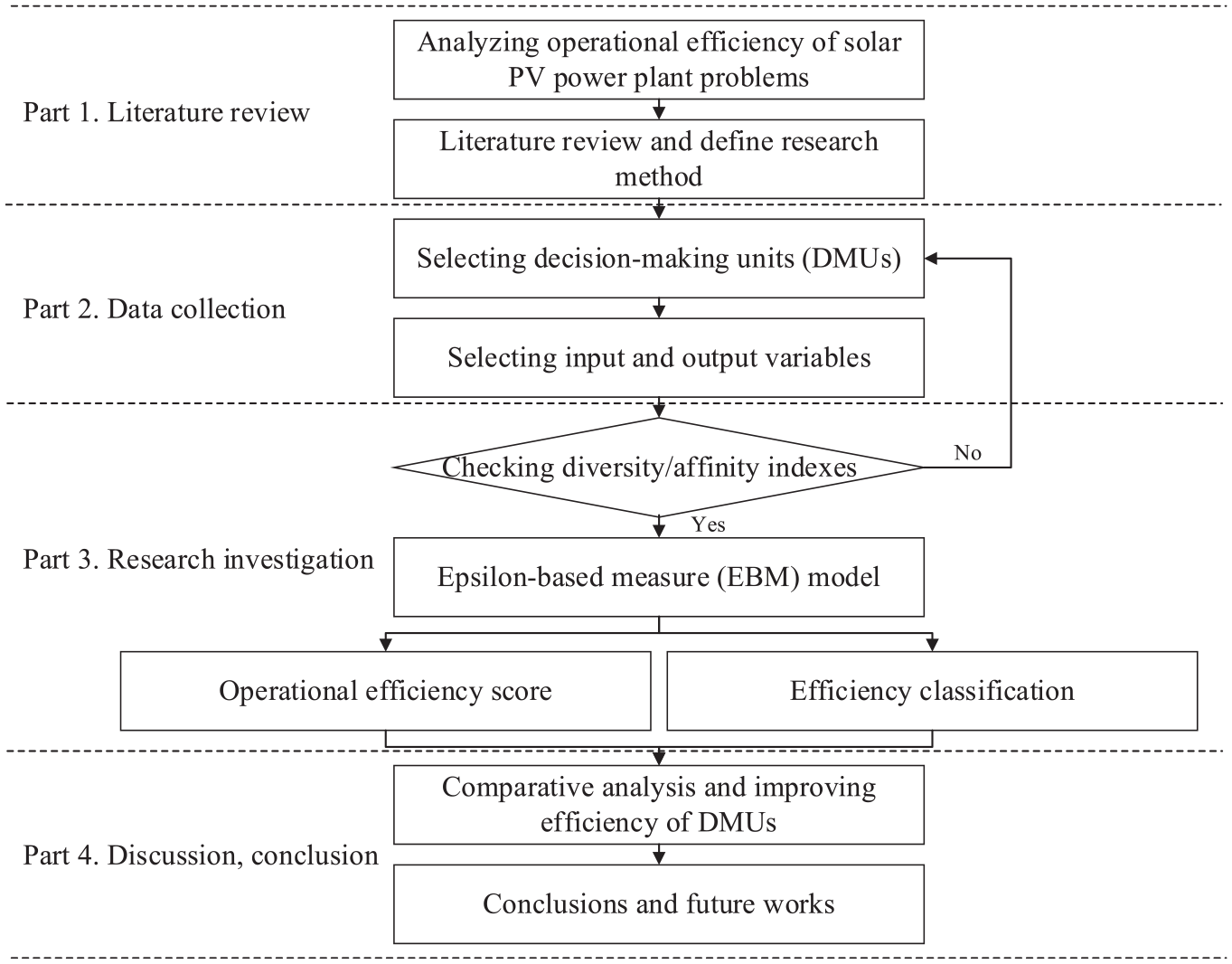
The process of research.
Data envelopment analysis (DEA)
DEA is a linear model which can calculate the relative efficiency of DMUs based on multiple inputs and outputs with different measurement units. The relative efficiency is expressed as a ratio of the weighted sum of the outputs to the weighted sum of the inputs. Efficiency score is measured on a scale of 0–1, that an efficiency score of 1 indicates the DMU is relatively efficient, and a value less than 1 indicates the DMU is inefficient. The efficiency score of a DMU will vary depending on the factors and DMUs included in the analysis. In order to measure efficiencies using DEA, it is critical to choose appropriate input and output factors, determine the total number of DMUs and ensure that the number of DMUs is at least twice the sum of the number of input and output factors (i.e. DEA constraint). A general DEA model can be described as follows. 54
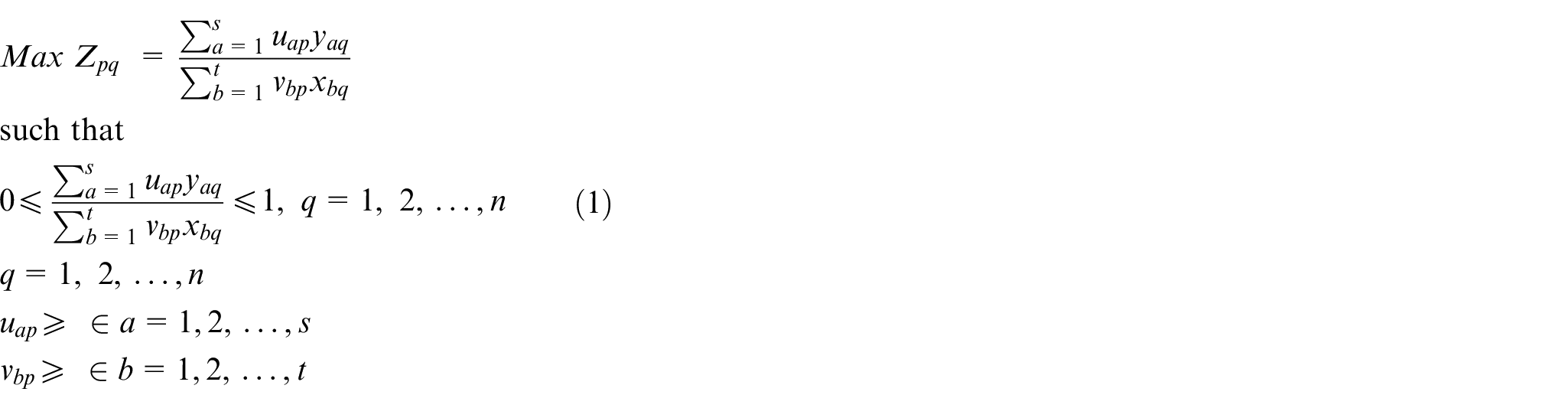
where
Epsilon-based measure (EBM) model
According to DEA, there are two different measurement types of technical efficiency. They are radial and non-radial. 55 Charnes-Cooper-Rhodes (CCR) and Banker-Charnes-Cooper (BCC) models are radial approaches, they only focus on the proportionate change of inputs or outputs and ignore the appearance of slacks variables. 56 Slack-based measure (SBM) model (i.e. non-radial models) was improved by CCR and BCC models, which face with slacks directly but do not concern a proportionate of input or output’s changing. 57 Hence, epsilon-based measure (EBM) model was invented as a solution for this shortcoming, which combines both radial and non-radial features. In the EBM model, a scalar measures “epsilon” that represents the diversity or the scattering of the observed dataset. Also, slack represents the potential improvement in the input and output variables for the inefficiency units compared to the benchmark target. 58
The EBM model considers
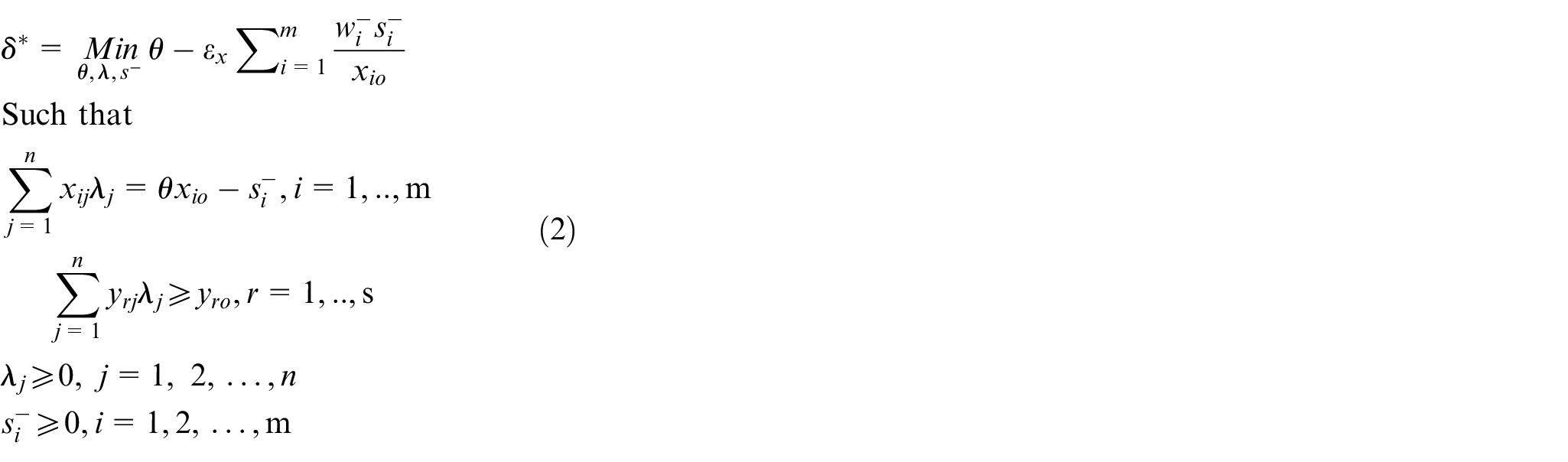
where
Let
The scattering of the dataset with low dispersion (
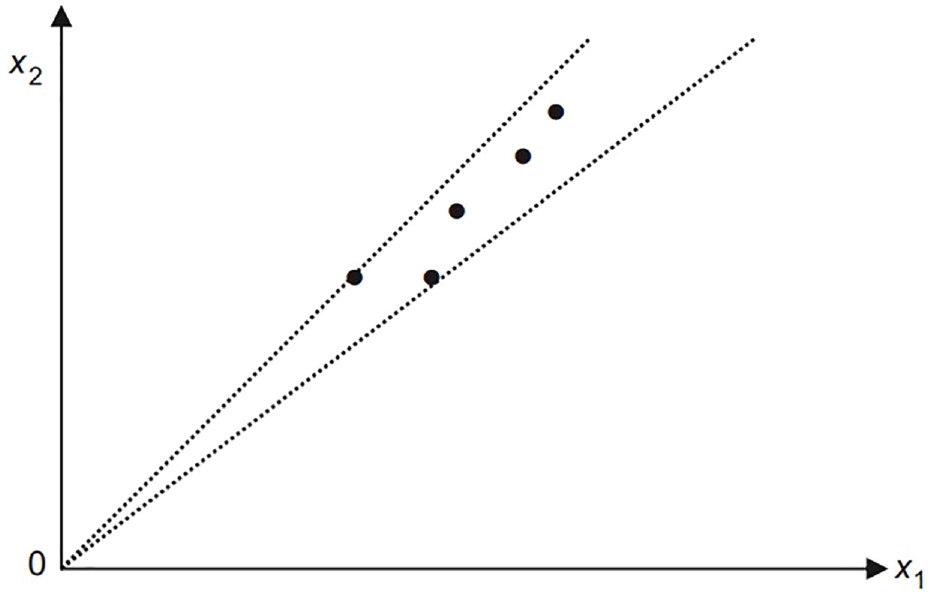
The scattering of the dataset with low dispersion (
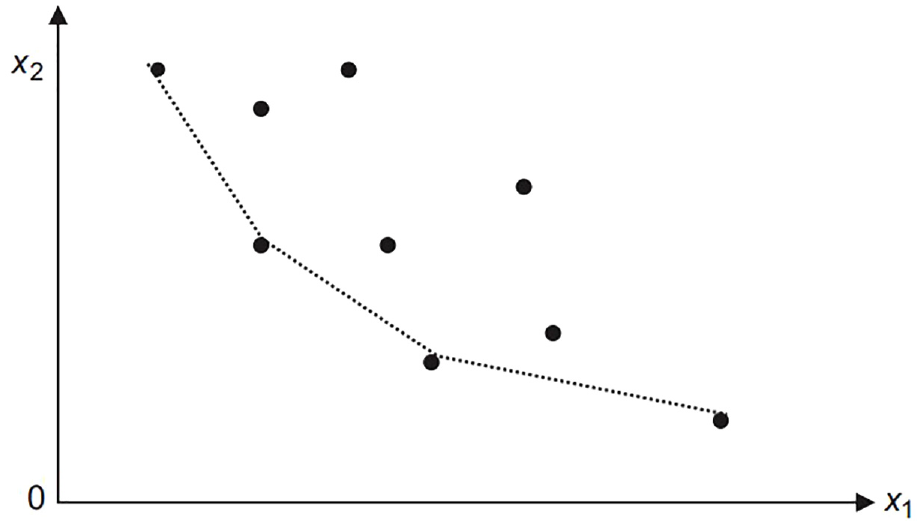
The scattering of the dataset with high dispersion
A case study in Vietnam
Selection of decision-making units (DMUs)
Due to the continuous growth of industrialization and modernization, the demand for energy keeps growing for all countries, leading to over-exploitation, and making the fossil fuel source scarcer. Vietnam has been one of Asia’s fastest-growing economies for decades, with an annual GDP growth rate of above 6%. The energy industry plays a crucial role in Vietnam’s development future, and access to reliable and affordable energy will be essential for long-term sustainable economic growth. Solar PV has good potential. Solar power projects are booming in Vietnam as solar power is attractive in the energy scenarios, as they have low maintenance and operation costs. Solar energy capacity is strongly related to the sunshine duration; therefore, it can reach peak capacity in hot sunshine. According to the National Load Dispatch Center (NLDC) of Vietnam, during the midday from 10:00 to 14:00 (especially weekends and public holidays), overcapacity demand frequently occurs. Meanwhile, from 5:30 to 6:30 in the evening.
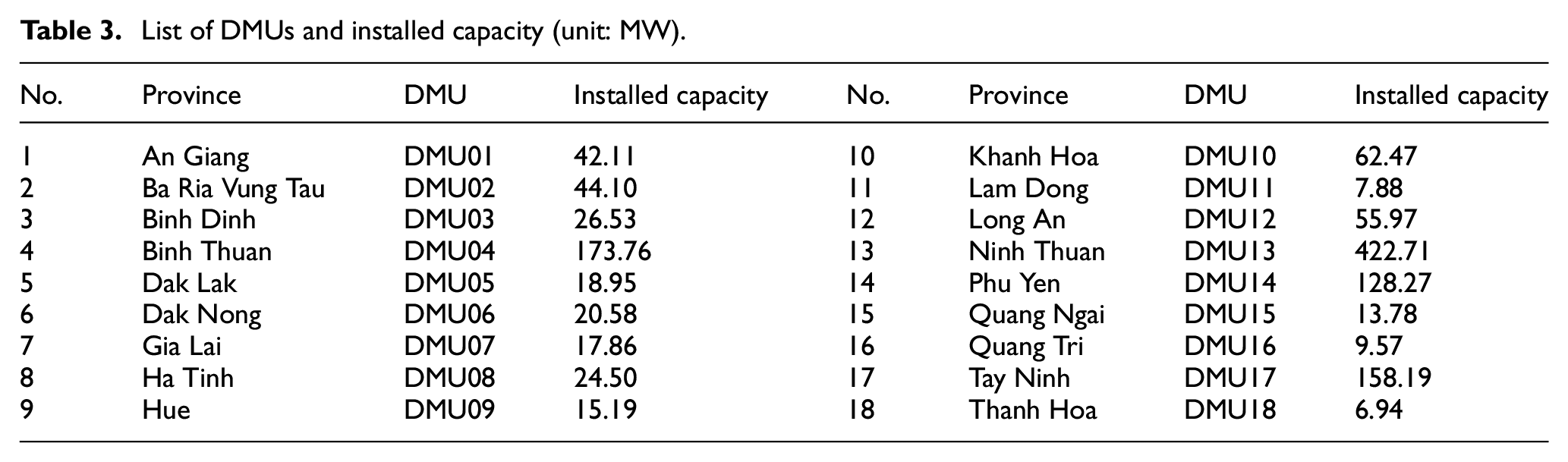
This paper presents a case study to exhibit the performance of solar power and to testify the applicability of the proposed method to the energy efficiency problem. The case study including in 18 administrative provinces (DMUs) in Vietnam (Table 3). The statistical data is available in 2020 when many solar power plants have gone into mass production over provinces. The input variables of solar power plants include capital cost, installed capacity, and solar irradiation. The output indices also include energy production and consumer density.
List of DMUs and installed capacity (unit: MW).
Selection of inputs and outputs
Various input and output variables were listed from previous studies in the literature (Table 2). This study used three input variables including capital cost, installed capacity, solar irradiation, the output indicator was energy production and consumer density. The definition is described as follows (Figure 7).
(X1) Capital cost (input variable in million USD): The total cost needed to invest for the solar power project.
(X2) Installed capacity (input variable in MW): The maximum design capacity of generated electricity from the actual installed systems.
(X3) Solar irradiation (input variable in kWh/m2/year): The amount of solar radiation per unit area received from the sun.
(Y1) Energy production (output variable in GWh/year): The total electricity was generated by solar power plants in every province.
(Y2) Consumer density (output variable in consumer per km2): The number of customers per km2 of the power generation.
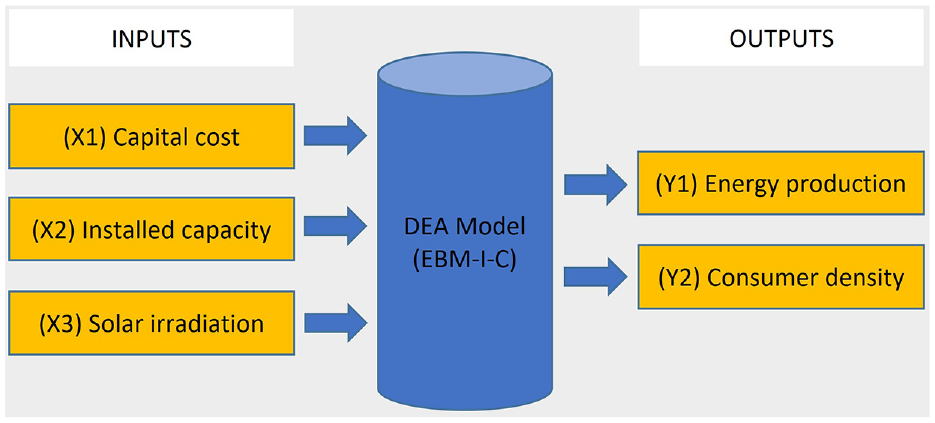
The input and output variables used in DEA model.
Data collection
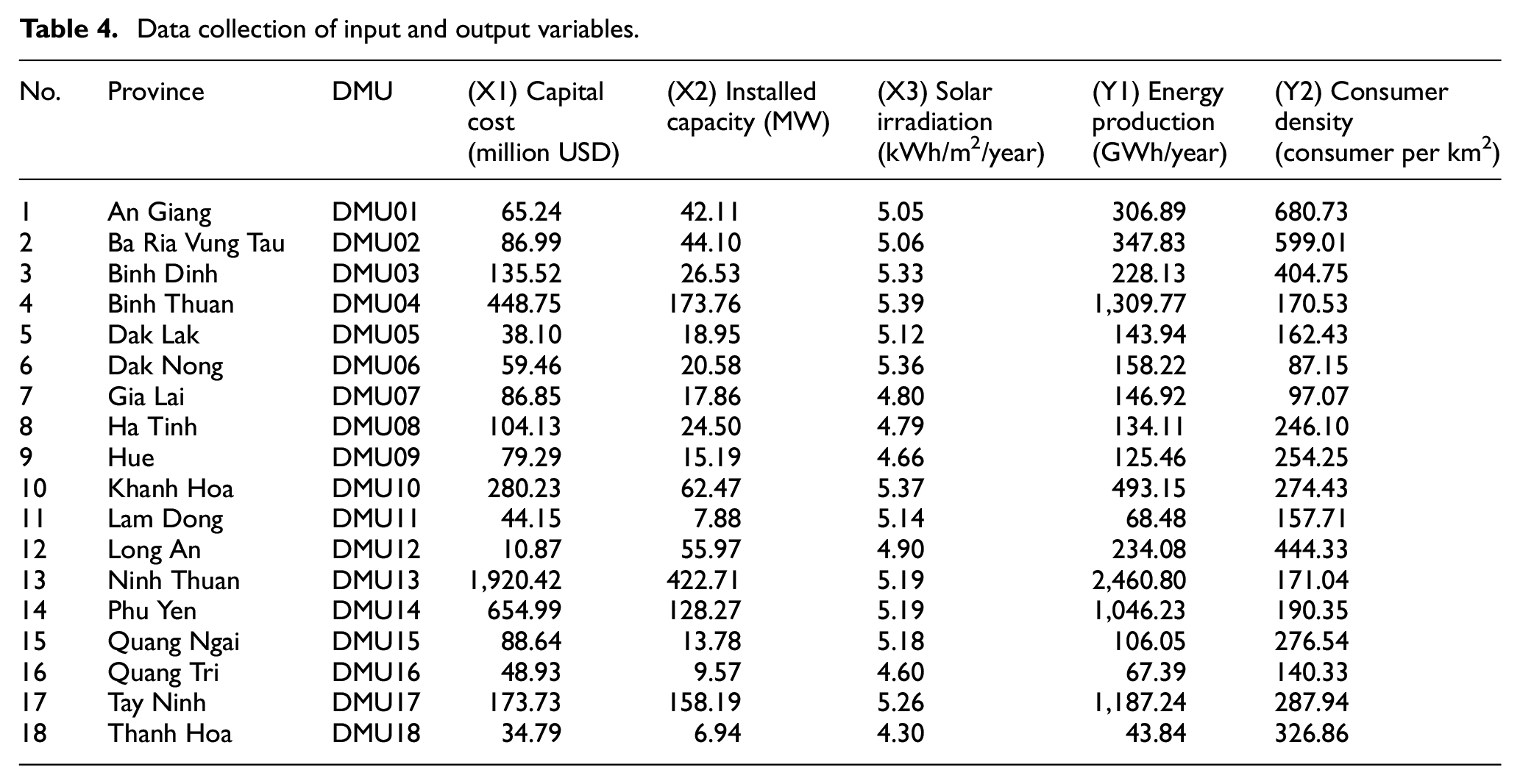
The data used in the research comprised information for 18 DMUs in the year 2020 (Table 4). The capital cost, installed capacity, and energy production are collected from the databases of Vietnam’s Ministry of Industry and Trade (MOIT). 59 The solar irradiation is calculated by using the PVSYST software. The consumer density is found in Vietnam’s General Statistics Office (GSO) report. 60
Data collection of input and output variables.
Results analysis
Statistical description
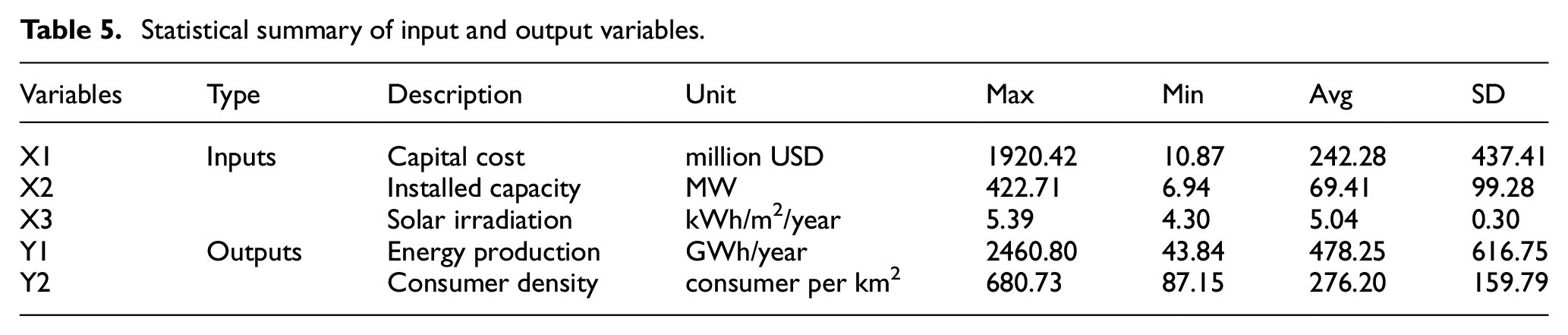
Table 5 shows the descriptive statistics of the data. There are significant differences in the investment scale of provinces. The capital cost and installed capacity in Ninh Thuan province is the highest with1920.42 million USD and 422.71 MW, while the lowest is in Long An province with 10.87 million USD and 6.94 MW, and 242.28 million USD and 69.41 MW on average. In the same region, solar irradiation is relatively equal among provinces. Because of the significant differences in the installed capacity, the energy production is quietly different, the maximum value reaches 2460.80 GWh in 2020, and the minimum is 43.84 GWh. Thanh Hoa has the largest consumer density with 680.73 people per km2, which is 7.8 times higher than that of the minimum.
Statistical summary of input and output variables.
Diversity and affinity verification
Before applying the EBM model, the diversity and affinity indicators on the input variables are calculated to ensure their relative importance for the efficiency evaluation of the DMUs. Table 6 shows the diversity matrix and the affinity matrix. The value of the diversity index and affinity index range from 0 to 0.22767 and 0.54467 to 1, respectively, which satisfied the condition of the EBM model.
Diversity and affinity indexes on input variables.
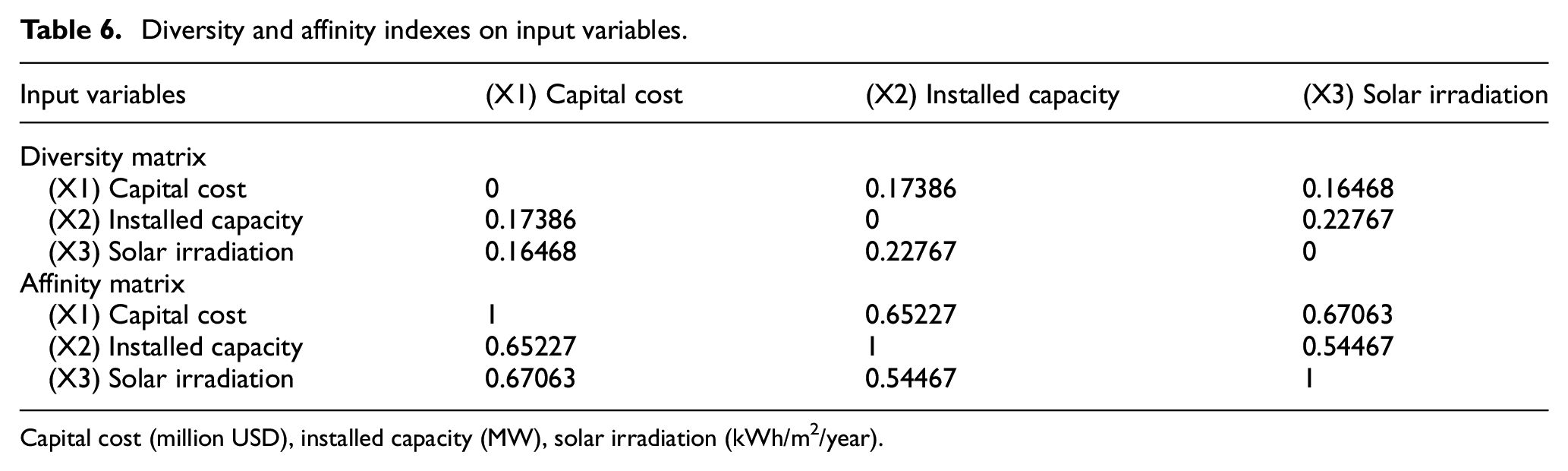
Capital cost (million USD), installed capacity (MW), solar irradiation (kWh/m2/year).
Efficiency ranking and classification
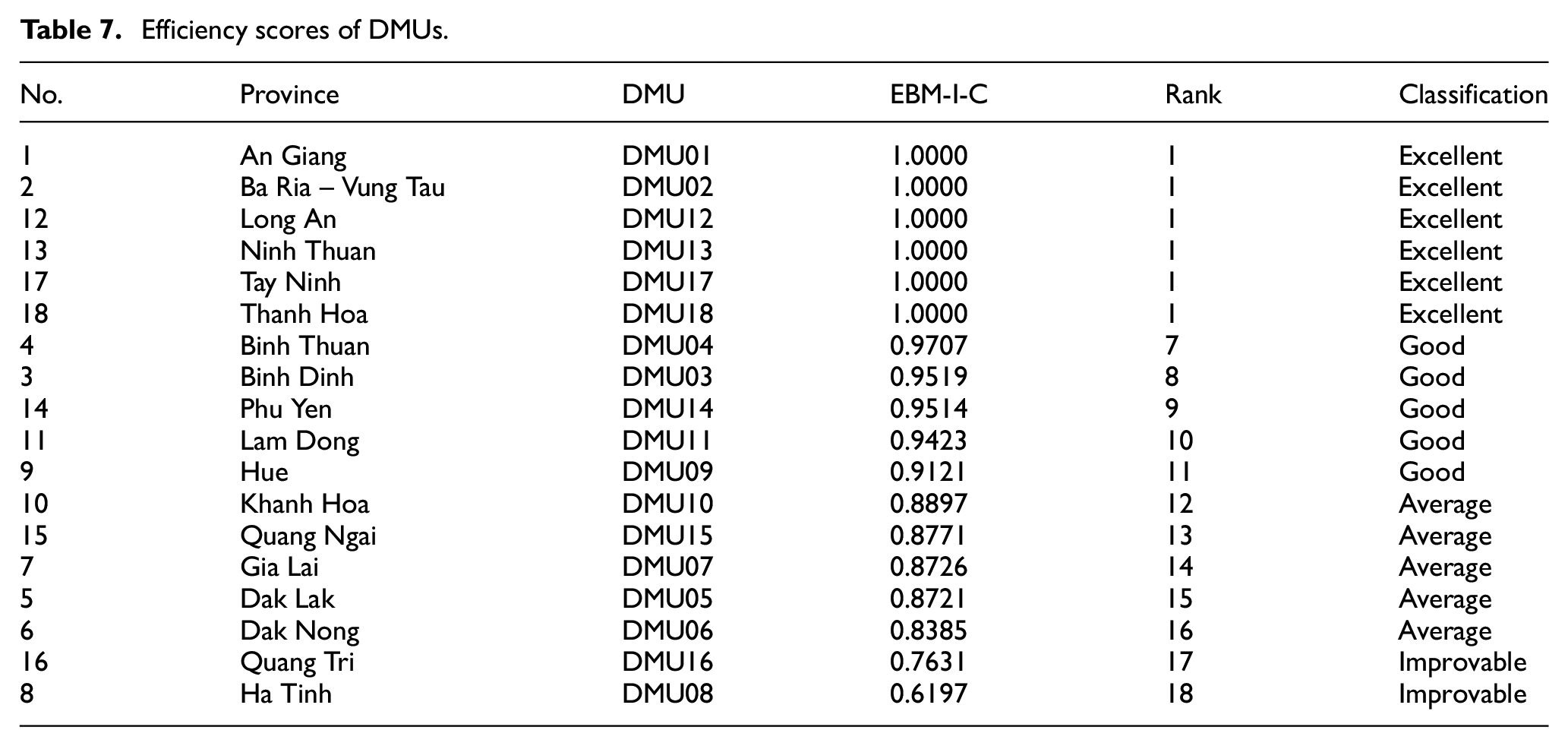
This study applies the input-oriented DEA-EBM model to measure the operating efficiency of solar power plants for each province. Table 7 presents the results of the operating performance of 18 DMUs. The efficiency score is equal to 1 means that DMU is considered efficient and the efficiency score less than 1 refers to a relatively inefficient DMU. In this study, we have 6 provinces that are indicated to be efficient, and 11 provinces are inefficient. The operational efficiency is classified into four groups, namely “Excellent” with score = 1, “Good” with 0.9 < score < 0.99, “Average” with 0.8 < score < 0.89, and “Improvable” with 0 < score < 0.79. As can be seen the Table 7, all the efficiency scores of DMUs are higher than 0.6197. Among the 18 DMUs, An Giang, Ba Ria – Vung Tau, Long An, Ninh Thuan, Tay Ninh, and Thanh Hoa have an efficiency score of 1 which indicates that they have a better performance than other provinces. There are 11 DMUs, whose efficiencies are higher than the average value of 0.8897. On the other hand, Quang Tri and Ha Tinh have the lowest score with an efficiency score of 0.7631 and 0.6197, respectively, that are in the category of “Improvable efficiency.”
Efficiency scores of DMUs.
Discussions
Comparative analysis of methods
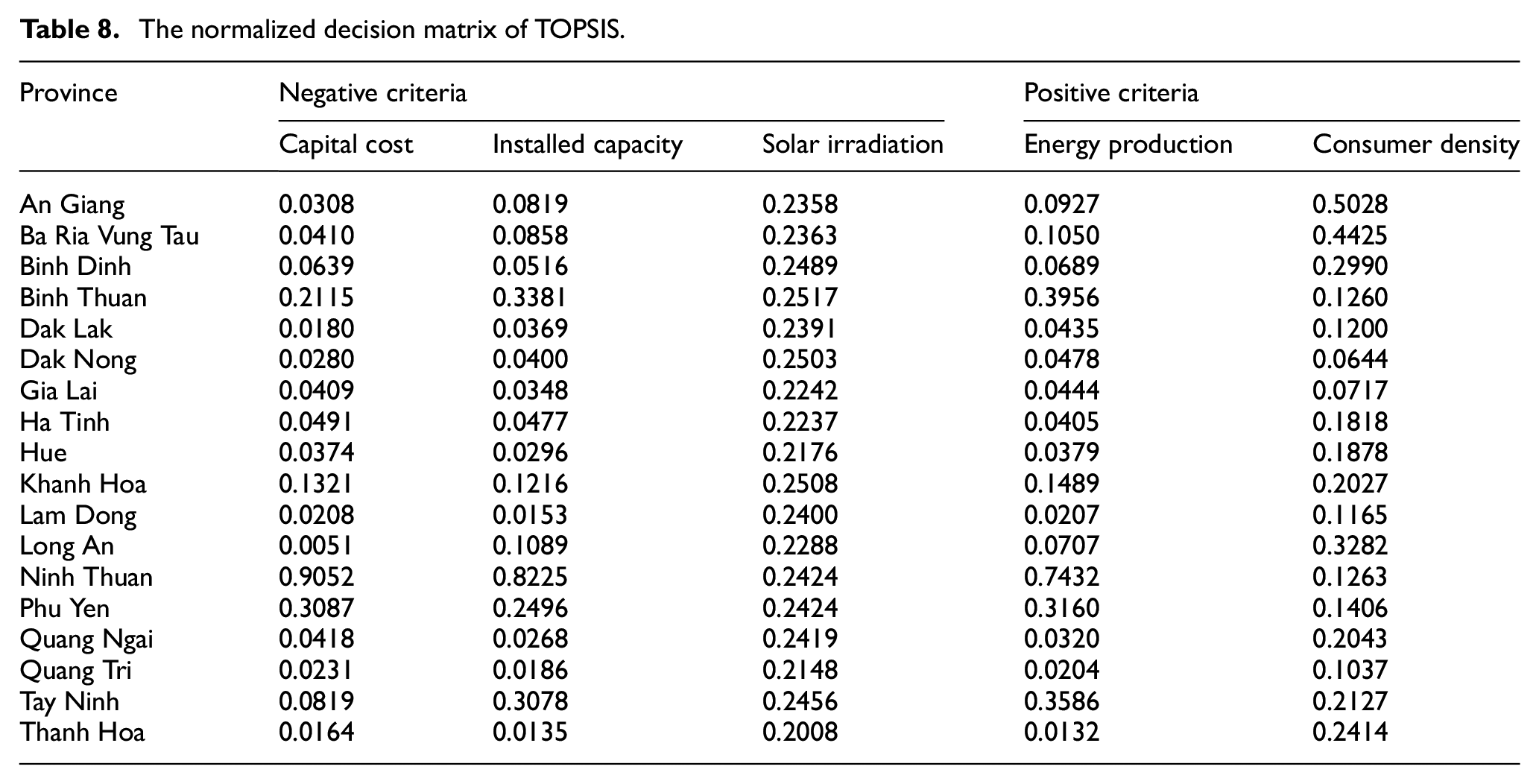
In this paper, the TOPSIS (Technique for Order of Preference by Similarity to Ideal Solution) method is used to assess the validity of the DEA’s results. TOPSIS was known as one of the classical MCDM (Multiple Criteria Decision-Making) methods which rank the alternative by calculating the distances to both the positive ideal solution and negative ideal solution simultaneously. The optimal alternative is determined by the highest closeness coefficient.61,62 According to the TOPSIS procedures, the normalized decision matrix is calculated in Table 8. The final ranking of the DMUs (alternatives) according to the comparative analysis is presented in Table 9 and visualized in Figure 8. From the results, the rankings of the DEA and TOPSIS methods are close to each other (i.e. slightly different ranking results) which means that they can be relied upon and used with a high degree of confidence. Besides, Spearman’s ranking correlation coefficient 63 is at .5082 between the results of the DEA and TOPSIS methods. Ninh Thuan (DMU13) archived the efficiency with a score of 1 in the DEA method, but it is ranked at the 18th position in the TOPSIS method with a score of 0.3159. Hence, this DMU needs to be more considered in efficiency management. According to the results of the two ranking methods, the top five most efficient alternatives are An Giang (DMU01), Ba Ria Vung Tau (DMU02), Tay Ninh (DMU17), Long An (DMU12), and Binh Dinh (DMU03). Therefore, it is evidence that the proposed model has good performance for measuring the operating efficiency of solar photovoltaic (PV) power plants with a case study in Vietnam.
The normalized decision matrix of TOPSIS.
Ranking of compared methods.
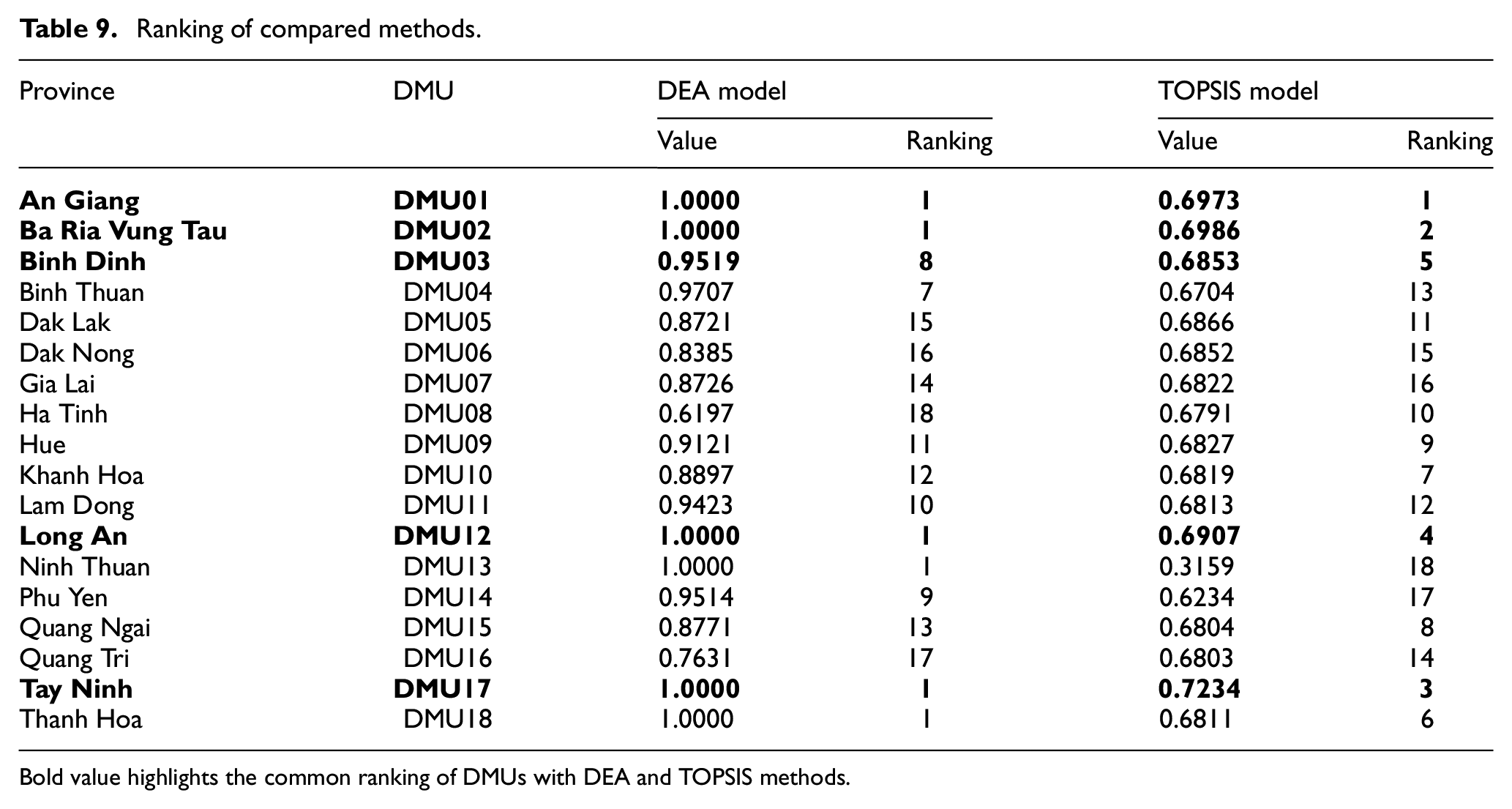
Bold value highlights the common ranking of DMUs with DEA and TOPSIS methods.
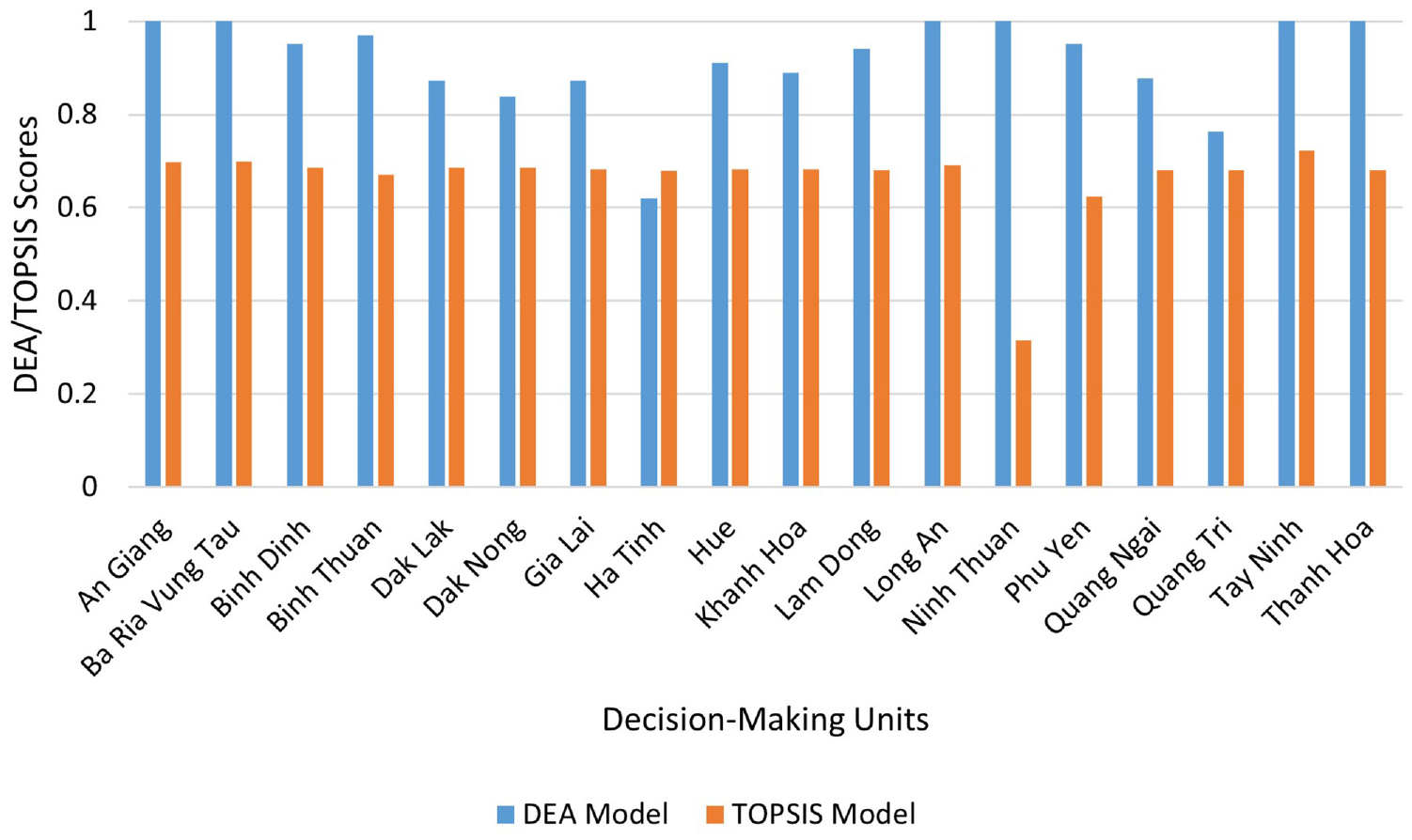
Comparative analysis of methods.
Comparison between efficiency and input variables
Figures 9 and 10 showed a comparison between the operation efficiency obtained capital cost and installed capacity (input variables). As a result, provinces invested with a huge amount of capital cost is also large installed capacity, are expressed with a high value of the operation efficiency as Ninh Thuan, Binh Thuan, Phu Yen, and Tay Ninh. Furthermore, these are the first provinces to invest in solar energy with many big projects, so capital cost is expensive. On the other hand, Long An and Thanh Hoa accounted for the high value of efficiency score despite their consumption of a small amount of capital cost by stable operation of few plants.
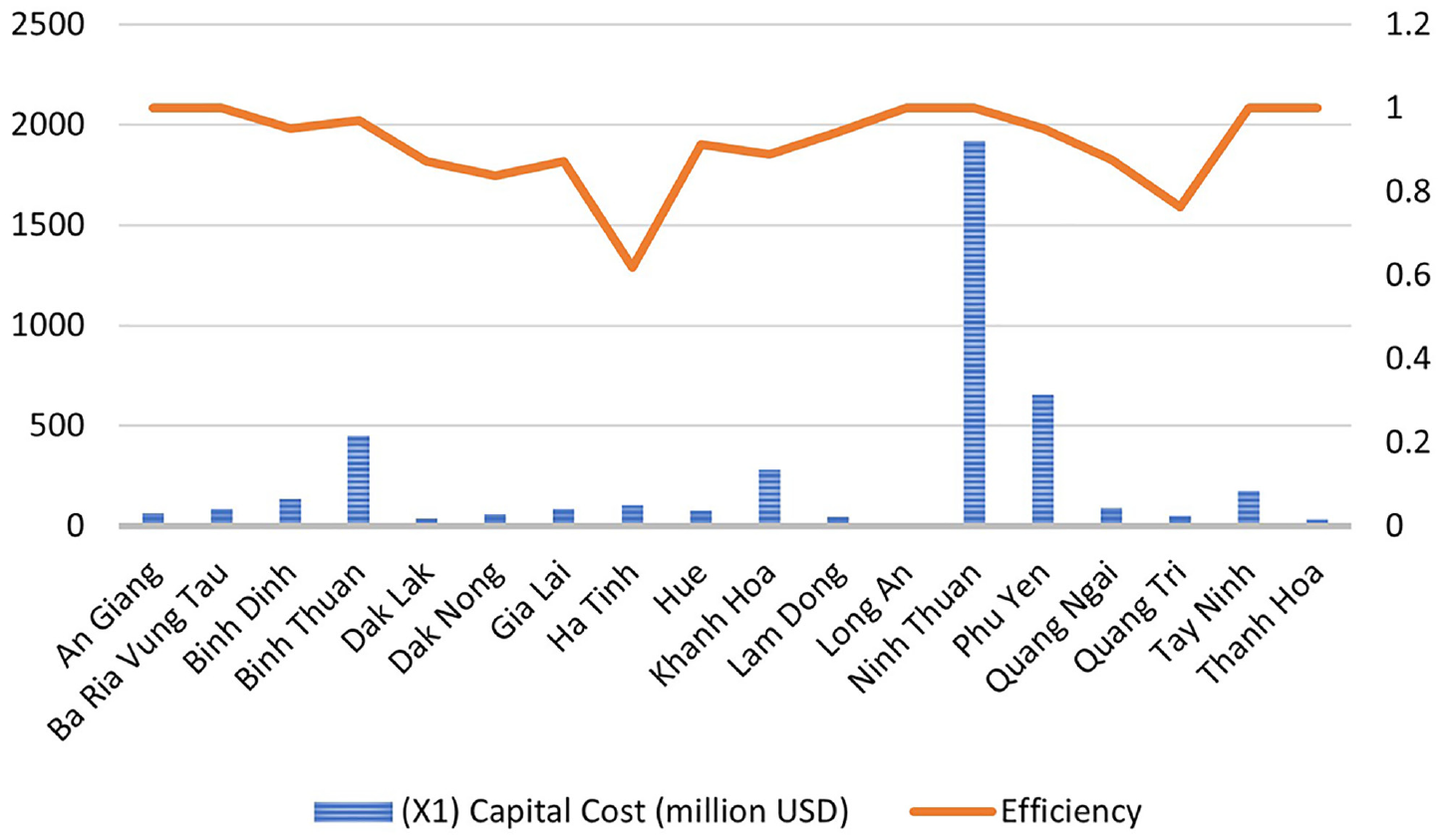
Comparison between efficiency and capital cost (input).
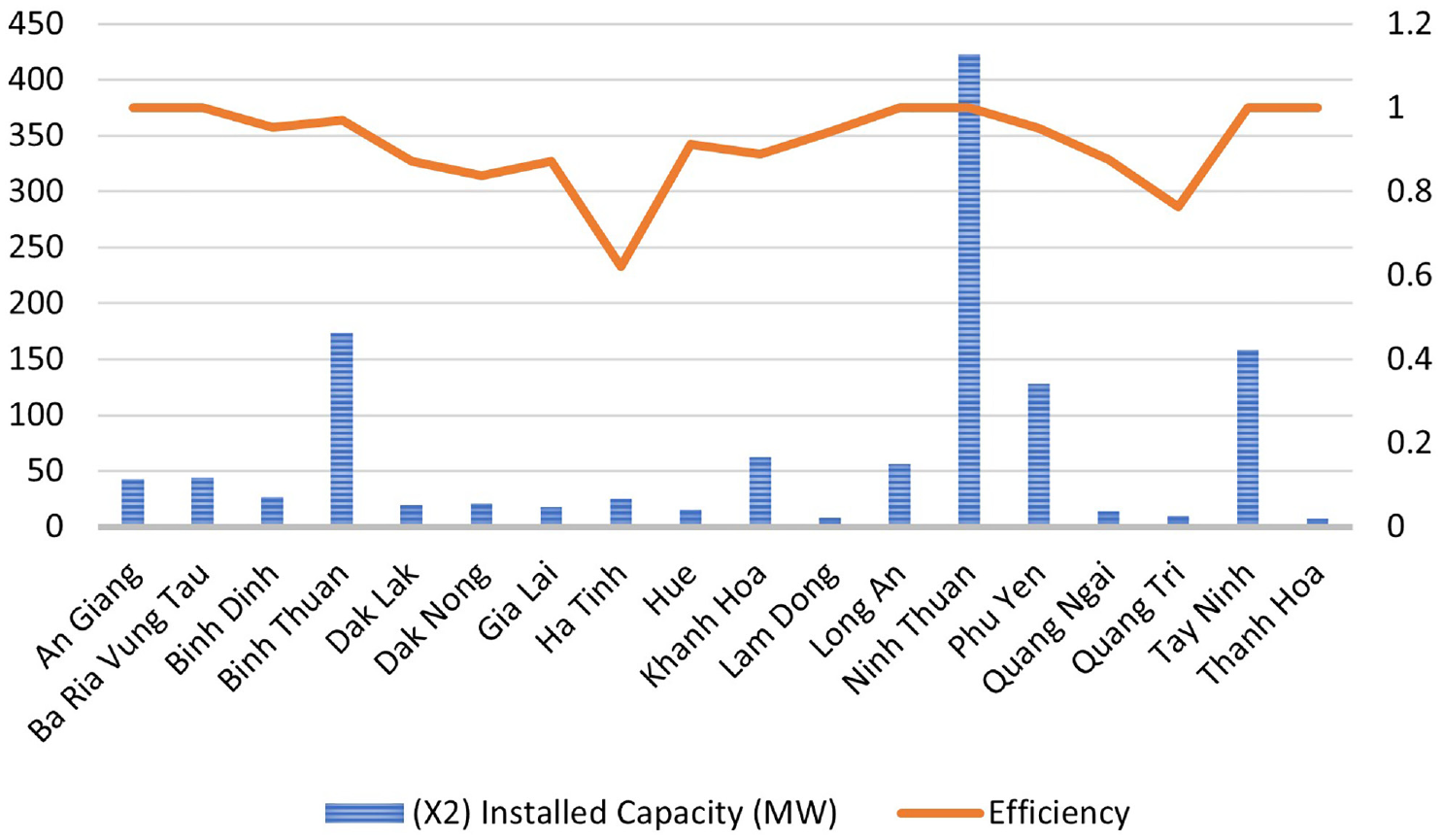
Comparison between efficiency and installed capacity (input).
According to Figure 11, most of the provinces located in the south of Vietnam have solar irradiation higher than 5.0, is listed top efficient DMUs, for example, Ba Ria Vung Tau, An Giang, Tay Ninh, Ninh Thuan. Lied in Central Highlands, Lam Dong, Dak Nong, and Dak Lak is a place where the weather is hot all year round, having solar irradiation ranging from 5.12 to 5.36 kWh/m2/year. However, these DMUs have less efficiency scores because of asynchronous investment. The efficiency values of Quang Tri and Ha Tinh are the lowest, having solar irradiation range from 4.6 to 4.79 kWh/m2/year, which is all located in the north of Vietnam.
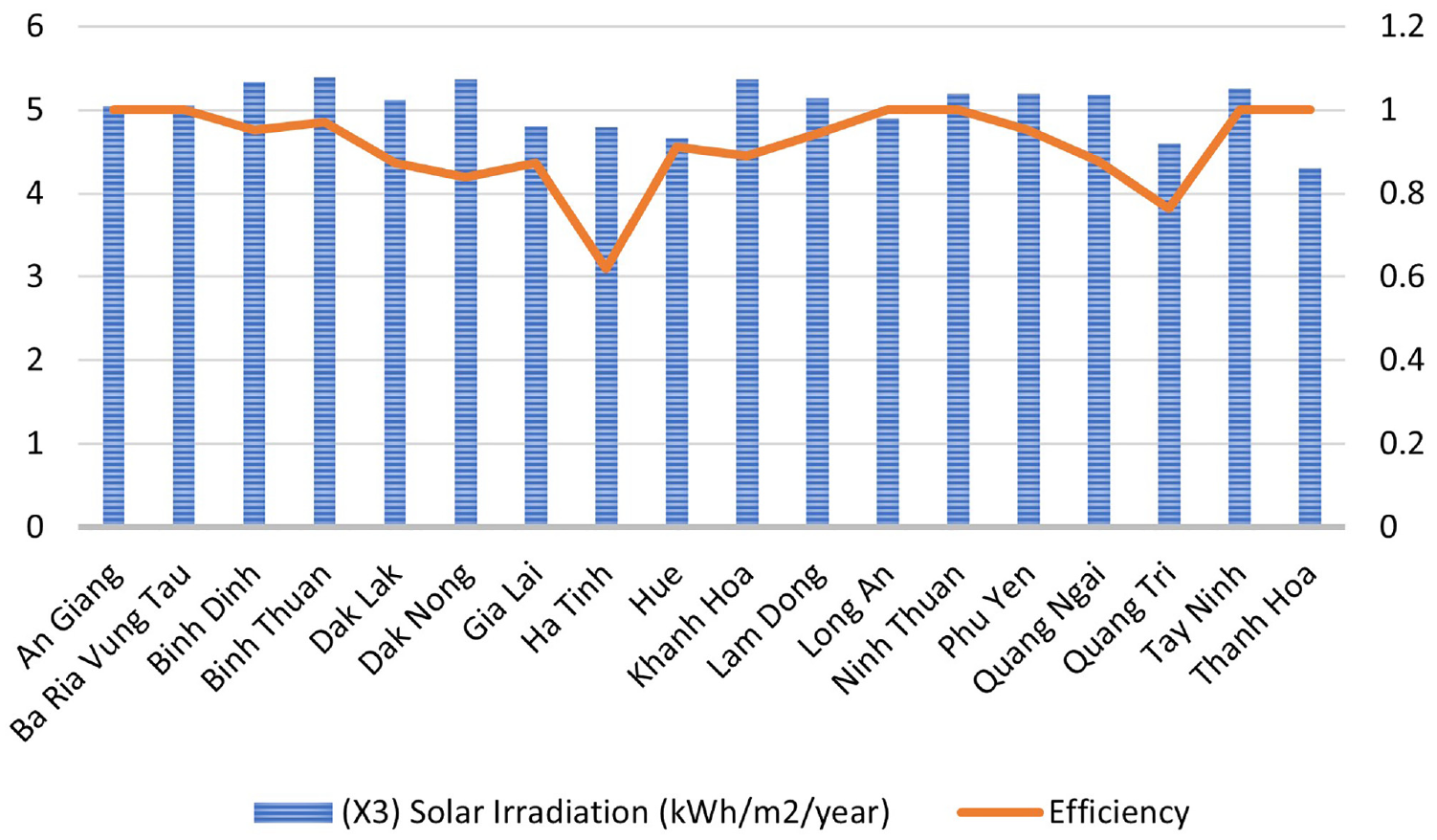
Comparison between efficiency and solar irradiation (input).
Comparison between efficiency and output variables
Figure 12 shows the relationship between efficiency and energy production. Like the same the relation between the installed capacity and operation efficiency, the DMUs get the top rank, have a good yield of energy. Figure 13 compares the efficiency and consumer density. The provinces that have high population density such as An Giang, Ba Ria Vung Tau, Long An, are high operation efficiency.
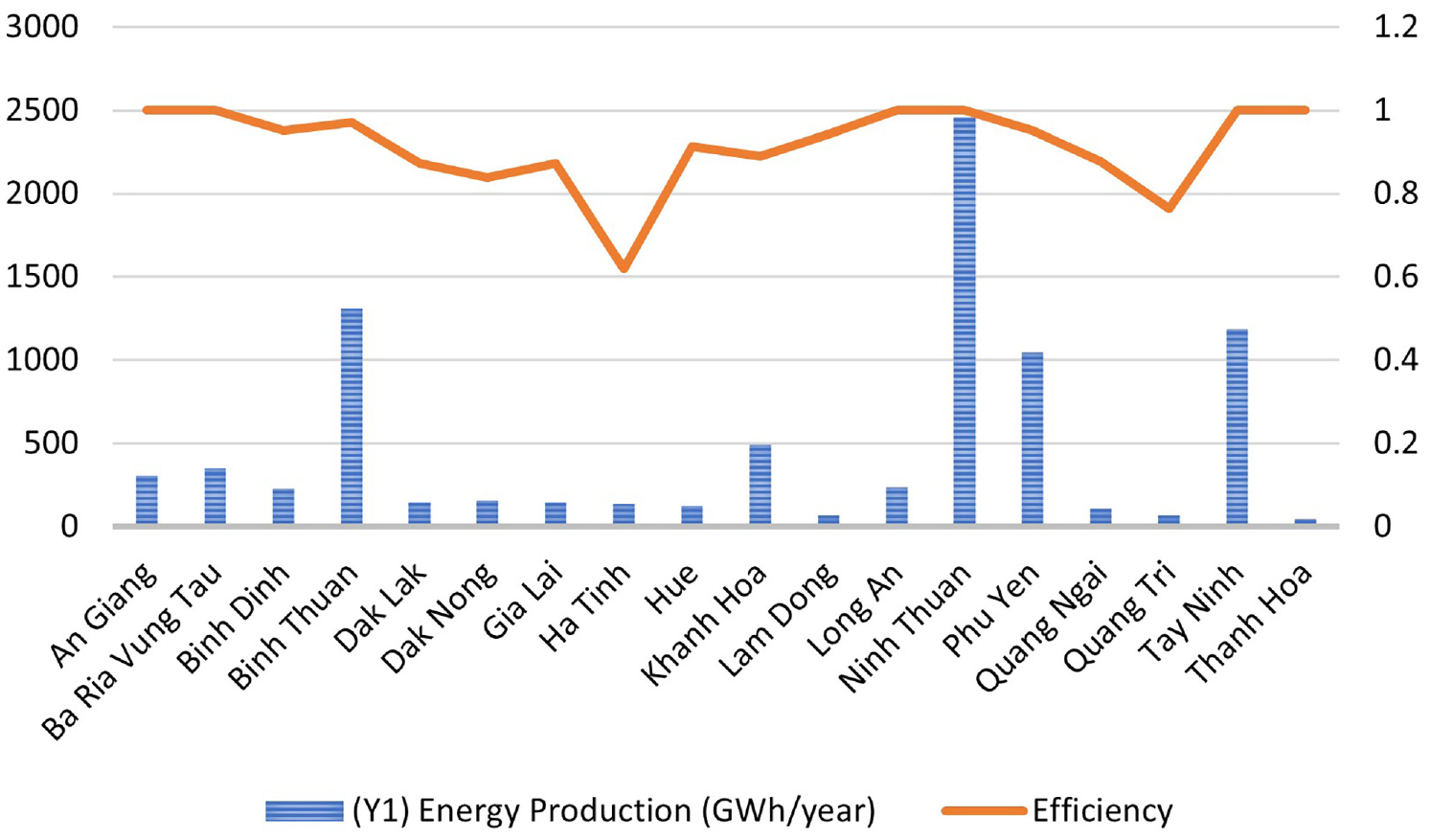
Comparison between efficiency and energy production (output).
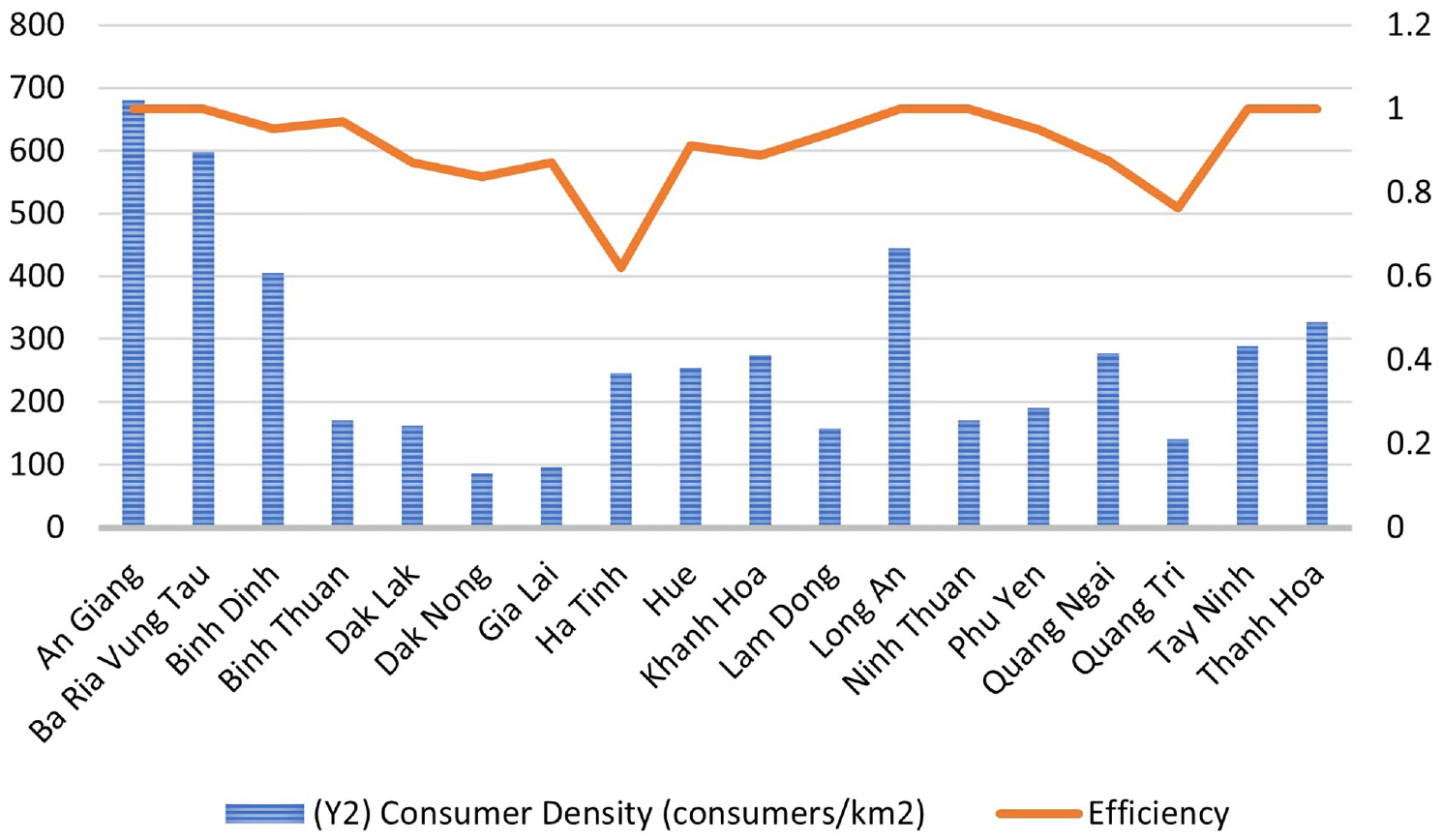
Comparison between efficiency and consumer density (output).
Improving efficiency of DMUs
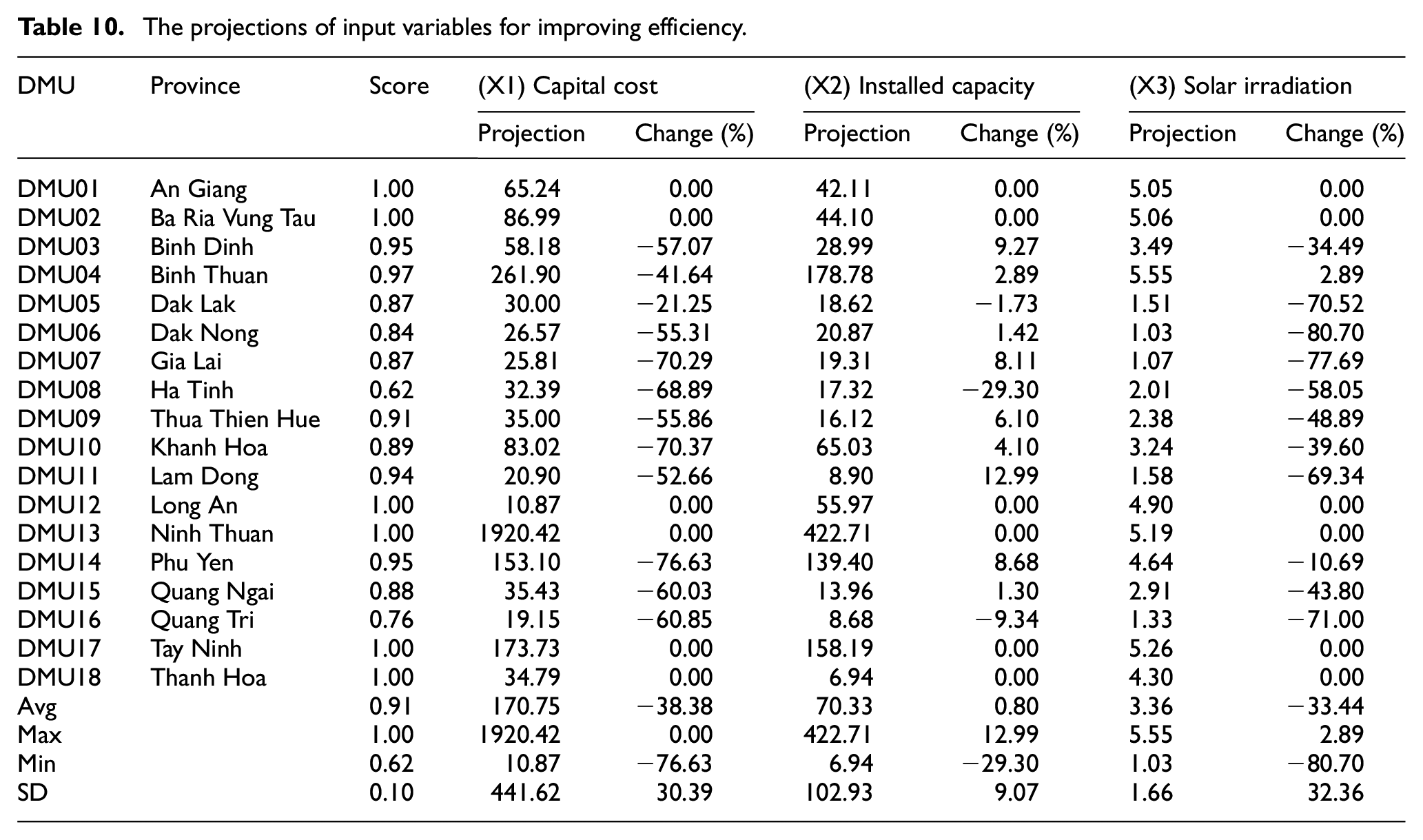
The DMUs are considered efficient when the efficiency value equals 1, otherwise, it is ineffective. Based on the projections of inefficient DMUs, we can find solutions to improve the operation performance of DMUs. The projections of input variables for improving efficiency are in Table 10. As the results, DMU08 (Ha Tinh) and DMU16 (Quang Tri) which had lower operation efficiency scores and ranks, should reduce all of the input variables capital cost, installed capacity, and solar irradiation more than 9% to reach the efficient frontier. On the other hand, the DMU04 (Binh Thuan) should reduce its capital cost by 41.64%, increase its installed capacity by 2.89%, and its solar irradiation by 2.89%, to become efficient. For DMU03 (Binh Dinh), a plan to achieve operating efficiency of 1, a reduction in capital cost of 57.07%, in solar irradiation of 34.49%, and an increase in installed capacity of 9.27% would be required. It is conspicuous that provinces can improve the operation performance of solar power. However, it is hard to come into practice, such as solar irradiation depending on geographical location and natural condition.
The projections of input variables for improving efficiency.
Map of solar power installed and efficiency by Vietnam is presented in Figure 14. The map depicts aggregated data from the Electricity and Renewable Energy Department, Ministry of Industry and Trade (Vietnam), which may be used to validate the proposed model’s results. Most projects are now located in Ninh Thuan (DMU13, 422.71 MW, efficiency score of 100%), Binh Thuan (DMU04, 173.76 MW, efficiency score of 97%), Tay Ninh (DMU17, 158.19 MW, efficiency score of 100%), and Phu Yen (DMU14, 128.27 MW, efficiency score of 95%).
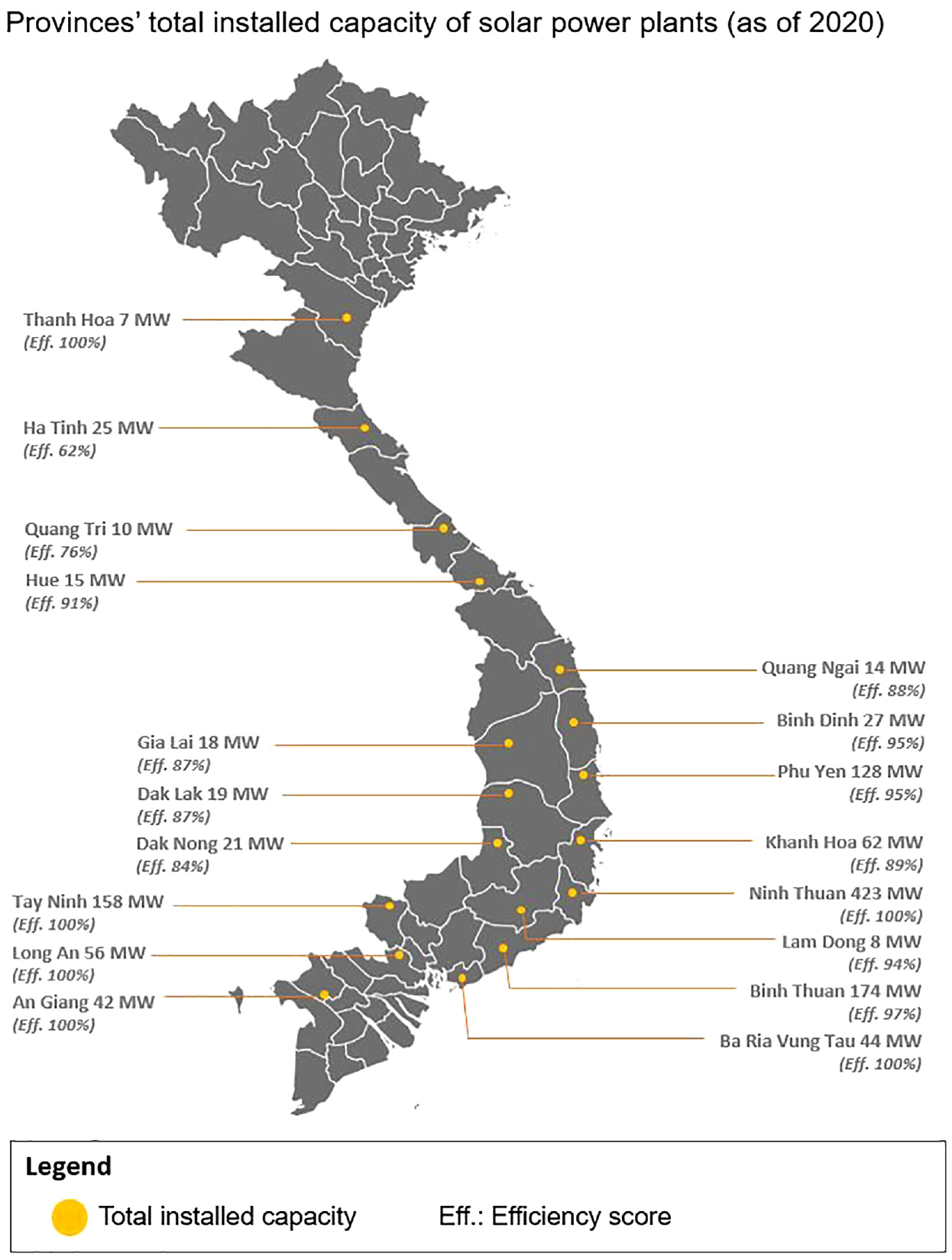
Map of solar power installed and efficiency by Vietnam.
Conclusions
The assessment of the operation efficiency of solar power plants is an effective management tool for improving their sustainability and orienting new investments. In this study, data from 18 solar power-producing provinces were extracted, and the DEA-EBM model was utilized to assess the operational efficiencies of the considered solar plants. Since the slacks in non-radial models may not be necessarily proportional to the inputs or outputs, the considered plants may lose proportionality in the original inputs or outputs. If the slacks are significantly different, it is difficult to determine the direction of efficiency improvement. Thus, the EBM model is a unique method to achieve a more precise measure of efficiency. In the present research, three input variables are selected, which are capital cost, installed capacity, solar irradiation, while energy production and consumer density are considered as output variables. The overall efficiency of Vietnam’s solar power industry in 2020 is high, with an average efficiency of 91%. Meanwhile, some provinces are faced with inefficiency problems such as Ha Tinh and Quang Tri, which are located in the north. Besides, solar power plants that are near the equator perform better. Ninh Thuan, Binh Thuan, and Tay Ninh that provinces have been invested aggressively in solar power with various ambitious projects such as Hoa Hoi, Hong Phong 1A–1B, and Dau Tieng 1–2–3. Based on the result analysis, this study provides an overview by shedding light on the operation efficiency of the solar power systems in Vietnam. Through the comparative analysis of the DEA and TOPSIS methods, the top five most efficient DMUs are An Giang (DMU01), Ba Ria Vung Tau (DMU02), Tay Ninh (DMU17), Long An (DMU12), and Binh Dinh (DMU03). Besides, the article addresses input variables affecting the performance of solar power plants and intends to provide significant materials for decision-makers in the long-run energy master plan.
Future studies should consider more variables that affect the operational efficiency of solar power plants, such as fuel cost, number of employees, energy loss, etc. Methodologically, the combination of quantitative and qualitative methods such as MCDM techniques such as VIKOR, ELECTRE, WASPAS, or fuzzy MCDM, and comparative or sensitivity analysis of such methods toward a robust approach can signify avenues for future studies.
Footnotes
Acknowledgements
The authors appreciate the support from the National Kaohsiung University of Science and Technology, Ministry of Sciences and Technology in Taiwan.
Declaration of conflicting interests
The author(s) declared no potential conflicts of interest with respect to the research, authorship, and/or publication of this article.
Funding
The author(s) disclosed receipt of the following financial support for the research, authorship, and/or publication of this article: This research was partly supported by the National Kaohsiung University of Science and Technology, and project number MOST 109-2622-E-992-026 from the Ministry of Sciences and Technology in Taiwan.
