This paper presents mutual time-varying delay-coupled temporal Boolean network model and investigates synchronization issue for mutual time-varying delay-coupled temporal Boolean networks. The necessary and sufficient conditions for the synchronization are given, and the check criterion of the upper bound is presented. An example is given to illustrate the correctness of the theoretical analysis.
Genetic regulatory networks are an important tool for describing life phenomena from the perspective of the gene interaction.1,2 So far, many models of the gene regulation networks have been proposed by scholars, for instance, Boolean network (BN),3 Gaussian graphical models,4 Bayesian networks,5 neural network,6 and so on. In these models, the mathematical model of the BN has simple expression and can describe abstract biochemical processes, which is a powerful tool in depicting genetic regulatory networks and causes widespread concern.7,8 The BN model has been of concern for scholars ever since it was proposed, which is widely used in many fields such as cell differentiation, immune response, biological evolution, neural network, and image processing.8
The BN model is a logical system, which is a discrete-time system. The value of the each (gene) node at moment is determined by the value of the adjacent gene nodes at moment. Different (gene) nodes have different update functions; this function is called Boolean function. The value of the each node is 0 or 1 at some point.9,10
Controllability is one of the important research contents in the theory of BN. In recent years, the controllability of BN has been becoming a research hotspot, and many outstanding achievements are accomplished, such as controllability of asynchronous BNs,11 controllability analysis of BNs,12 and BN being used to study the control of gene regulatory networks.13–16
The semi-tensor product (STP) is a generalization of general matrix multiplication, which effectively solves the matrix product problem with unequal dimensions. The STP is originally used to deal with high-dimensional arrays and nonlinear problems, and gradually expanded to the field of nonlinear control. In recent years, STPs have been applied to BNs and other fields. Recently, synchronization control has attracted wide attention. Synchronization refers to the variables of two or more systems maintaining a relative relationship with the change of time. Feedback controls the synchronization of BNs,17 controls the complete synchronization of BNs,18 delays synchronization of BNs,19 and so on. Synchronization occurs between two systems, and there is mutual coupling relationship between the two systems. There are some outstanding results on coupling synchronization, such as synchronization of probabilistic BNs with indirect coupling,20 partial synchronization of interconnected BNs,21,22 anti-synchronization of the two coupled BNs,23 synchronization of the two coupled deterministic BNs,24 synchronization of the switched BNs,25,26 complete synchronization of the two coupled BNs,25 synchronization of the two coupled BNs,27 and robust synchronization of the two Boolean control networks.28 This research focuses on synchronization of the BNs with delay coupling or without delay coupling. However, BNs are a system in which each BN is linked to the other. BN is divided into coupled model and uncoupled model. Most BNs are coupling. The delay couple is an inevitable phenomenon in BN, and delay varies over time. The research results do not take into account mutual time-varying delay coupling. There are few reports on synchronization of the mutual time-varying delay-coupled BNs. So it is a very meaningful work to study synchronization of the mutual time-varying delay-coupled BNs.
Motivated by the above, the model of the mutual time-varying delay-coupled BNs is presented and synchronization of the model is studied in this paper. The BN model with logical relation is transformed into a mathematical model of the algebraic operation by a STP. The necessary and sufficient conditions for the synchronization of the mutual time-varying delay-coupled BNs are obtained. The check criterion of the upper bound is presented.
The rest of the article is organized as follows. Section “Preliminaries” introduces STP of the matrices. In section “Main results,” a new model of the BN is presented first, and the necessary and sufficient conditions of the synchronization are derived. Section “Example” gives an example to verify the validity of the theoretical analysis. Section “Conclusion” concludes the article.
Preliminaries
In this paper, the STP is used for theoretical analysis and calculation. Some preliminaries on the STP are introduced in this section. The contents of the STP are introduced in detail in the literature.29,30
STP of the matrices
There are two matrices and , and the operation of the STP is defined as follows20
where ⊗ is the Kronecker product, and is the least common multiple of and . when . Then, the STP becomes an ordinary matrix multiplication. The symbol “⋉“ is omitted in the following sections. The following introduction of symbols can be used in this paper.
Introduction of symbols
⋉ is the operation of the STP.
is the k-dimensional identity matrix.
is the k column of the n-dimensional identity matrix.
is the identity matrix, .
is a column vector, .
is the set of columns of matrix , and is the i column of matrix .
Some related operations are summarized as follows:29,30
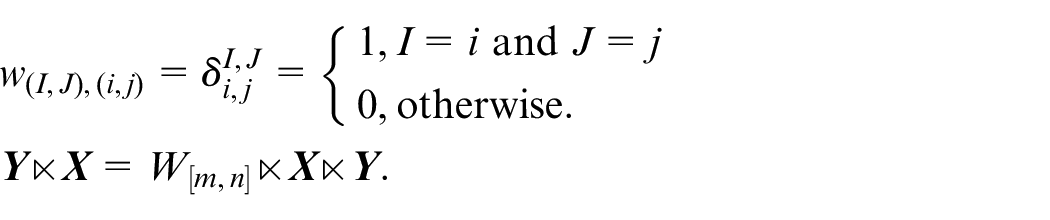
1. A swap matrix is defined as follows: is an matrix in which all rows and columns are labeled by index and columns and rows are arranged by index and . The value of the position is
2. The dummy matrix is defined as . for all .
Lemma 2.1
A logical function is .29,30 There is a structure matrix , where .
Main results
In this section, some necessary and sufficient conditions for synchronization of the mutual time-varying delay-coupled temporal BNs are to be established.
Algebraic expression of the mutual time-varying delay-coupled temporal BNs
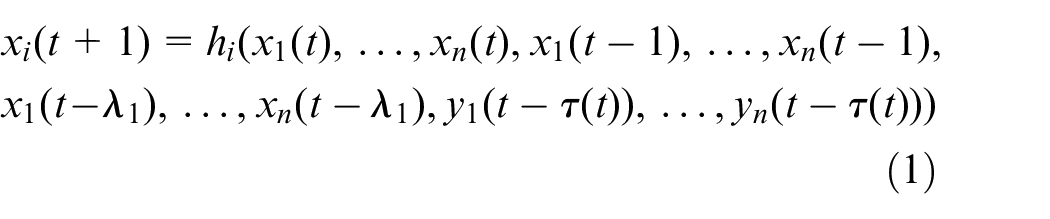
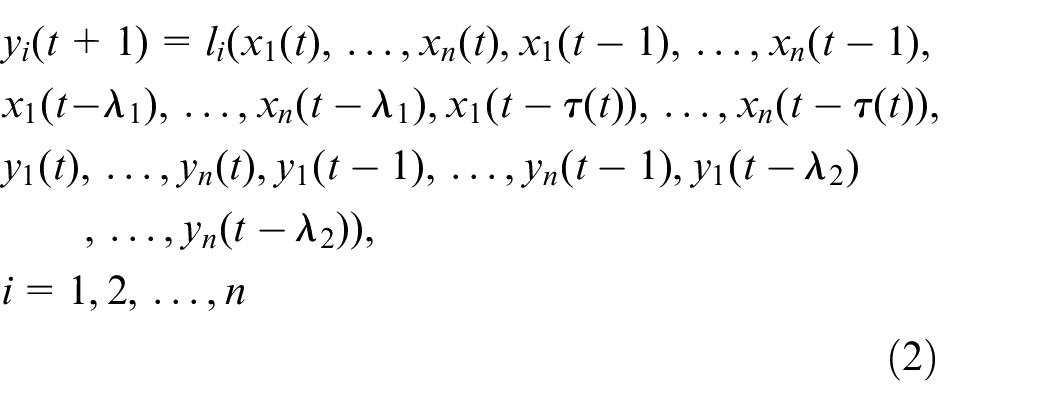
Two BNs with mutual time-varying delay coupling are described as follows
where are the ith nodes of BNs (1) and (2) respectively; and are Boolean functions; are time delays; are nonnegative integers; is the time-varying delay and ; and a is the positive integer
BN (1) can be expressed as follows
where is the structure matrix; multiplying equation (3) together yields
where . Then, the algebraic expression of BN (1) can be depicted as follows
where . Then, the algebraic expression of BN (2) is as follows
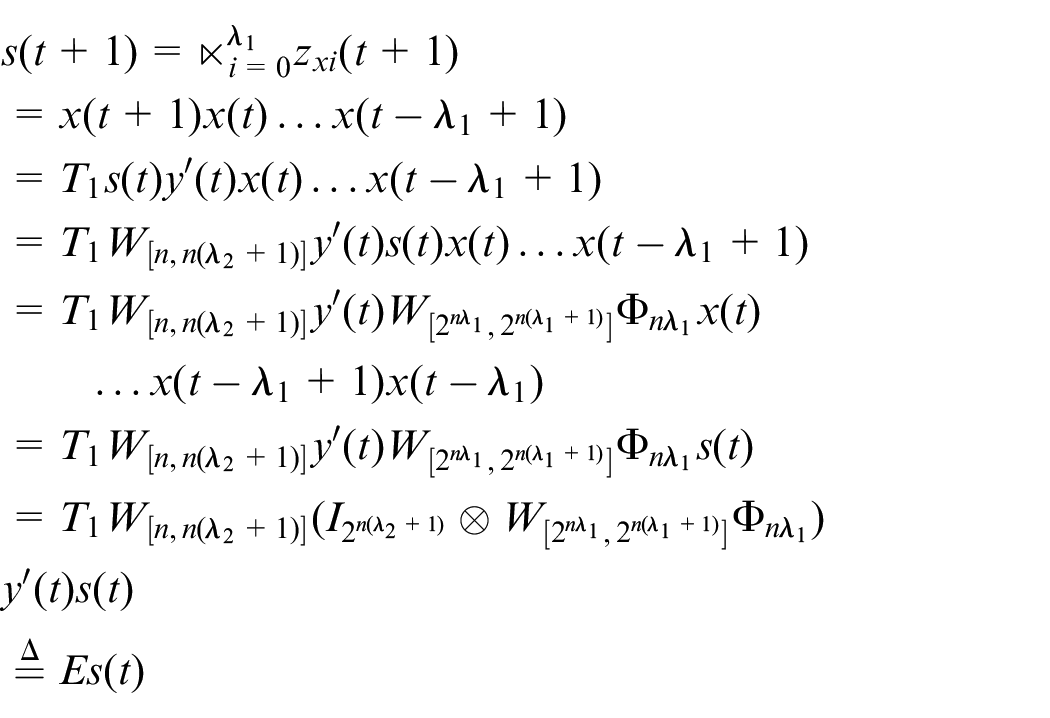
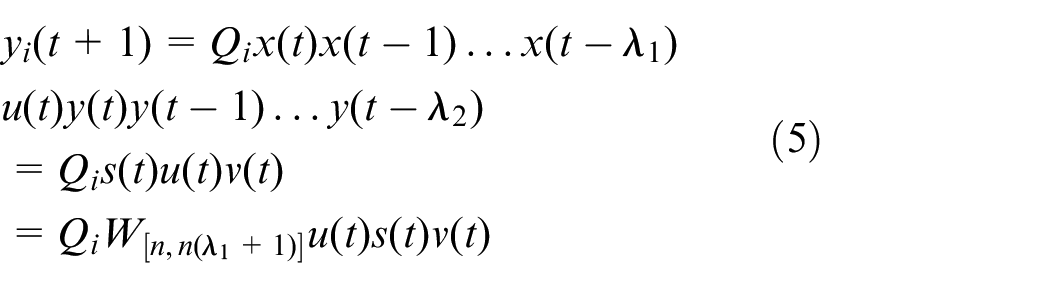
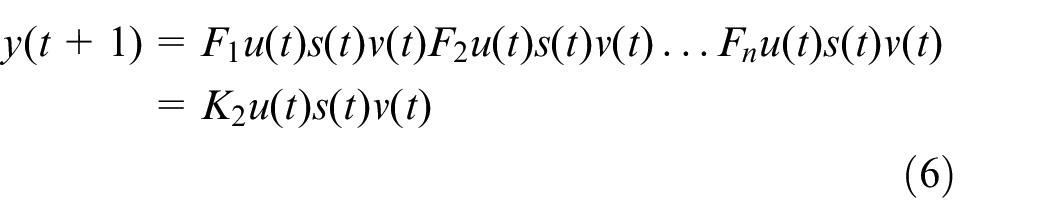
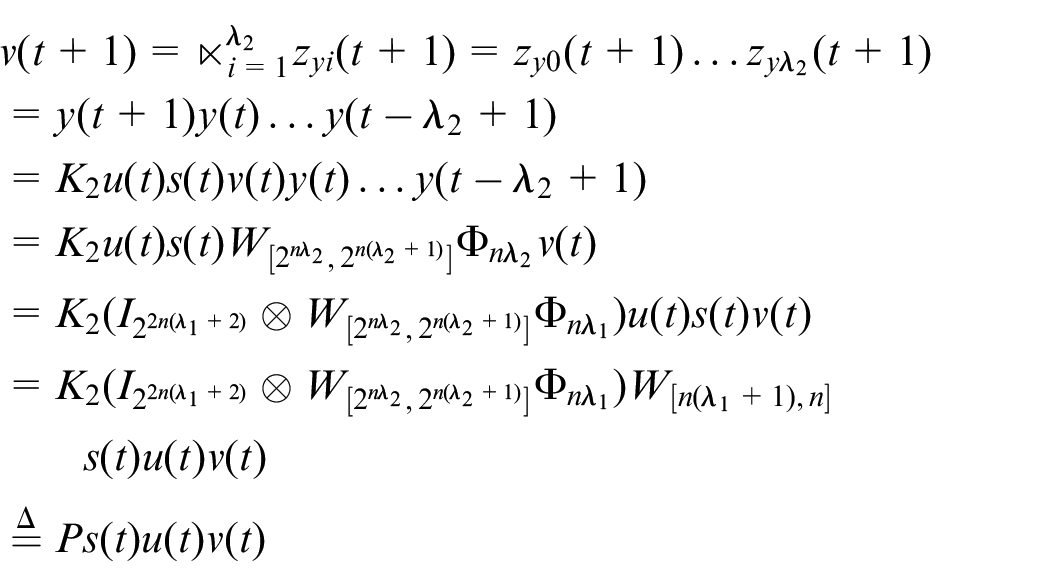
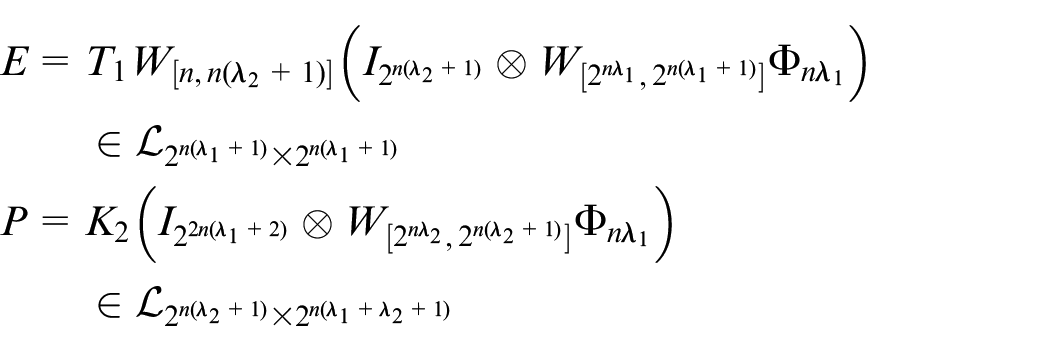
Then, the algebraic expressions of BNs (1) and (2) are as follows
where
Synchronization of the mutual time-varying delay-coupled temporal BNs
In this part, some necessary and sufficient conditions are established for complete synchronization of the mutual time-varying delay-coupled temporal BNs.
The definition of the complete synchronization is introduced as follows
Mutual time-varying delay-coupled BNs (1) and (2) achieve complete synchronization; if for any initial state there is a positive integer , then for all .
Lemma 3.1
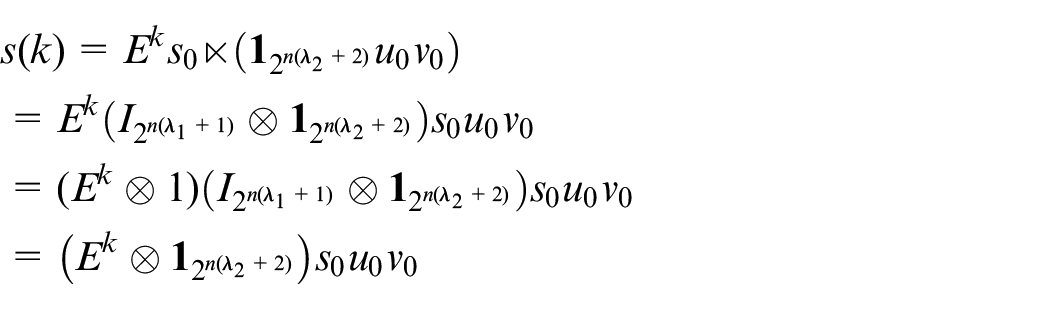
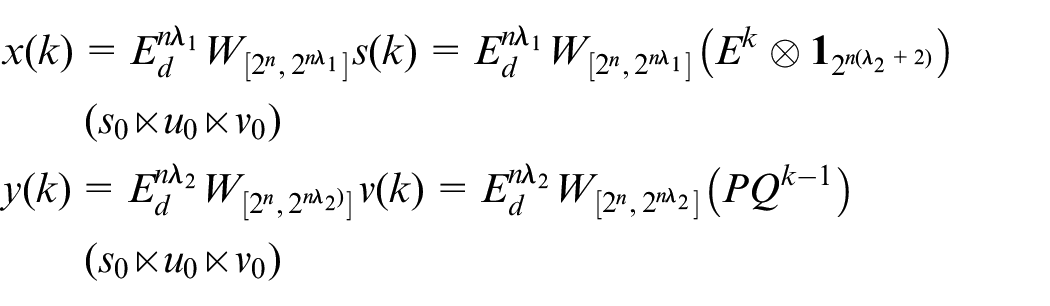
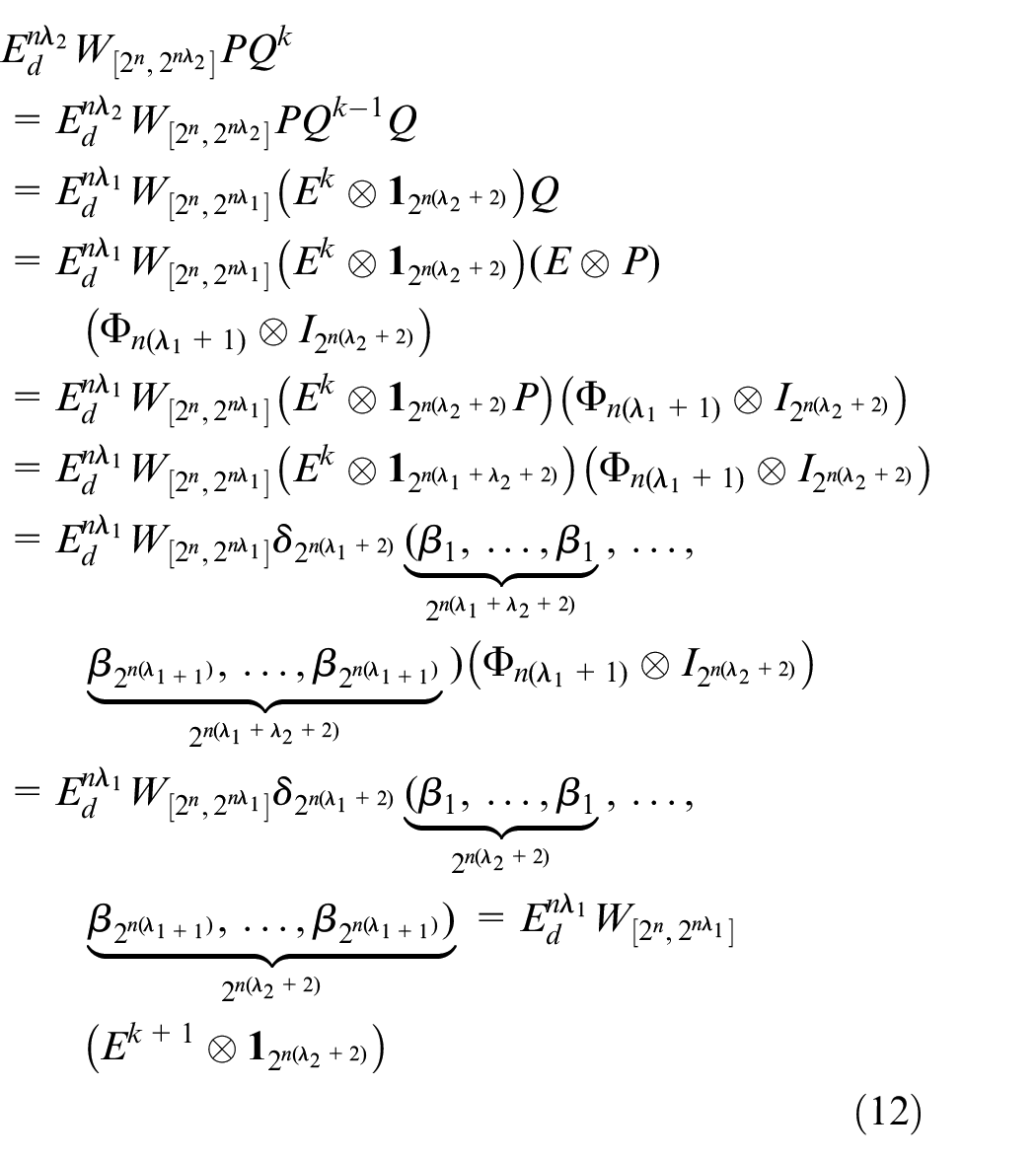
(a) If the initial value of equation (7) is , then
(b) If the initial value of equation (8) is , then
where is the structure matrix of the logical function. Therefore
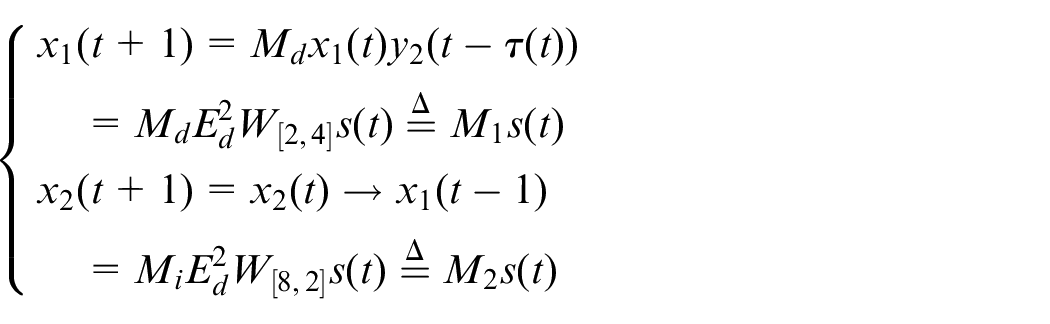
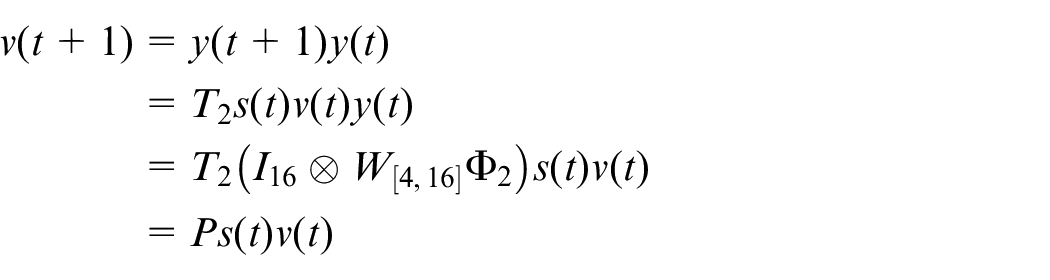
where . Then
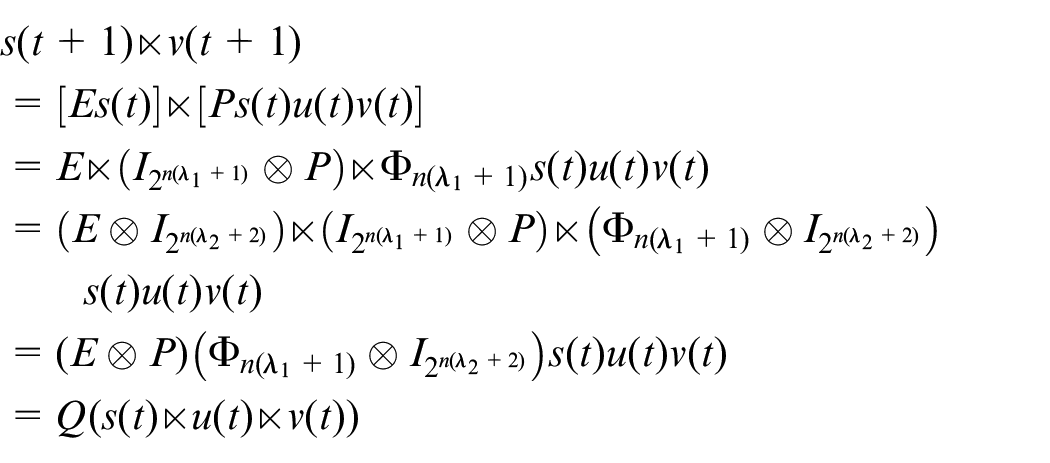
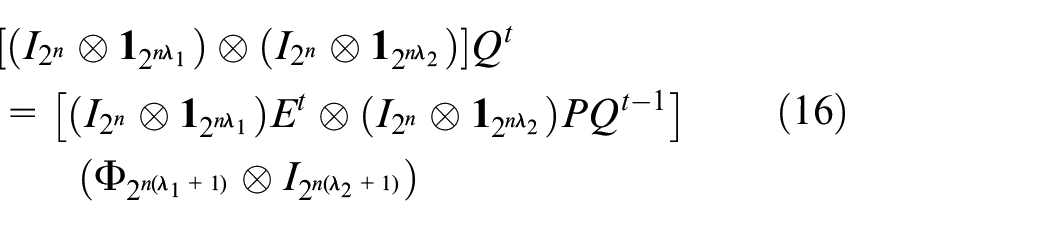
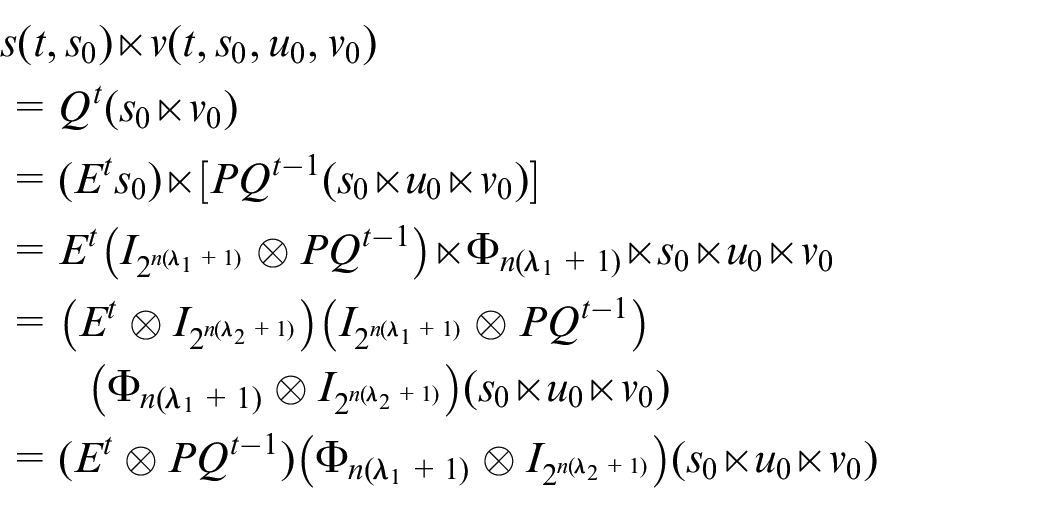
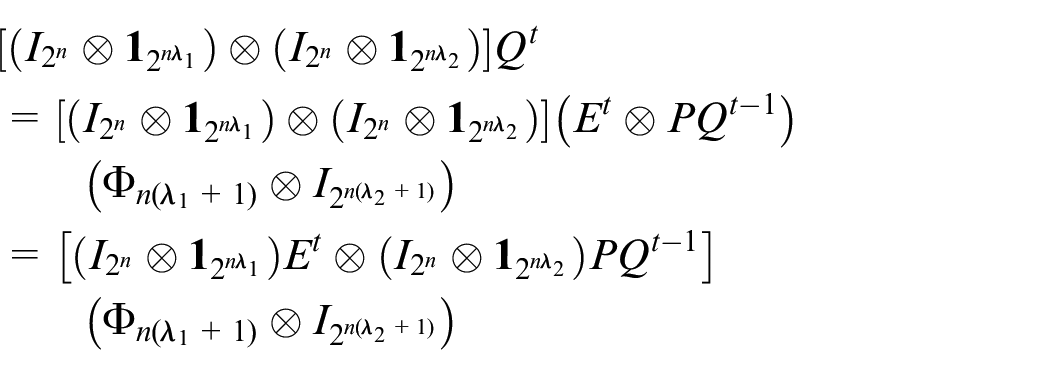
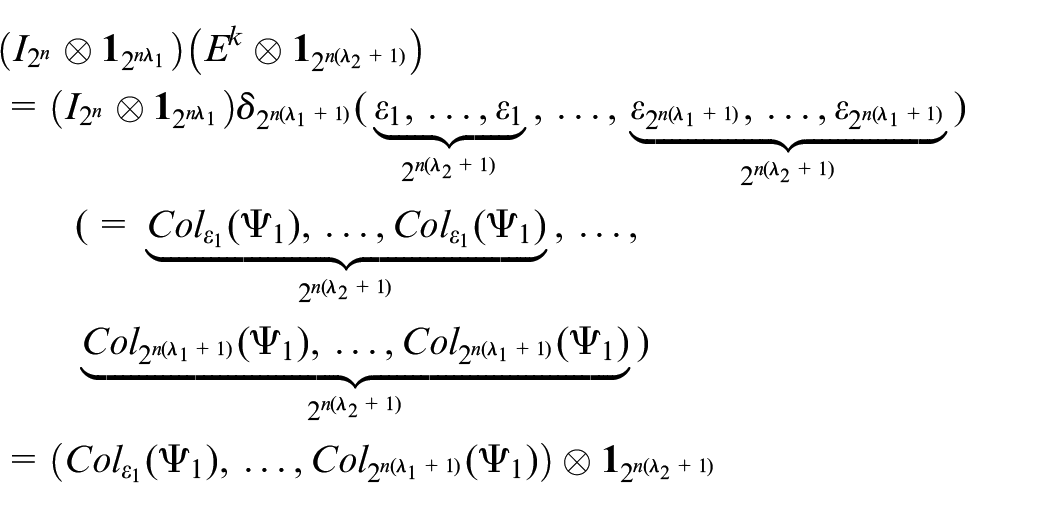
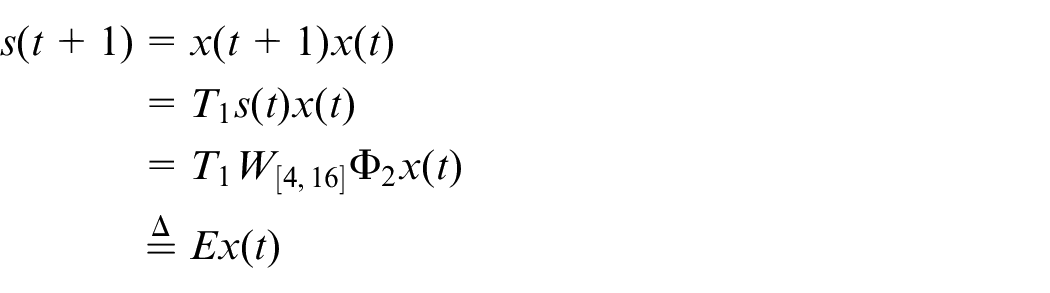
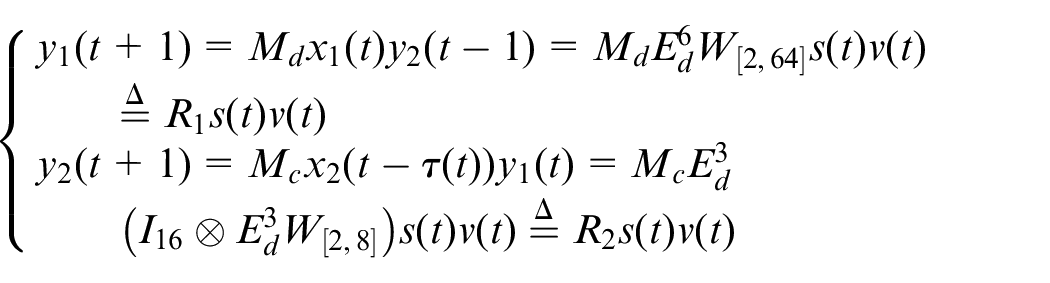
So, the algebraic expression of equation (21) is as follows
with
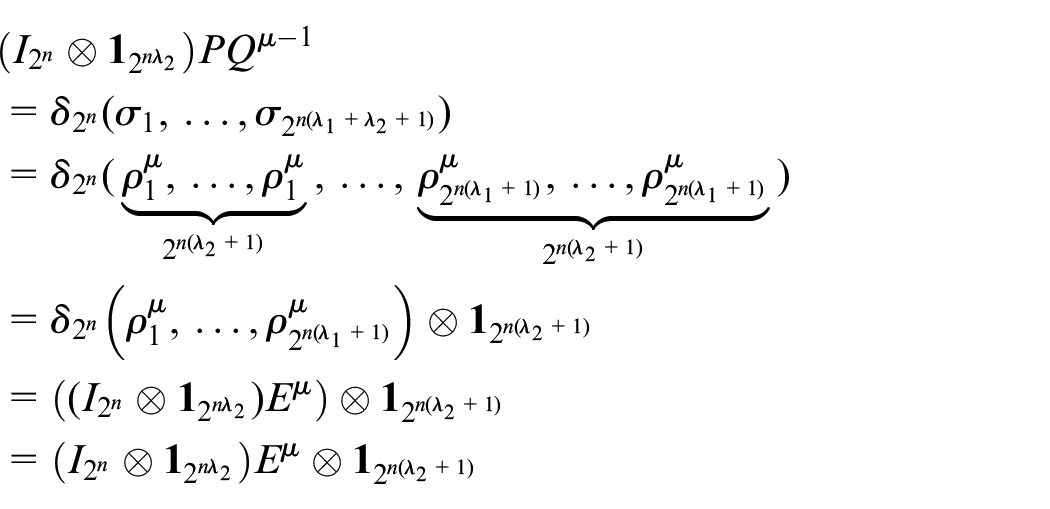
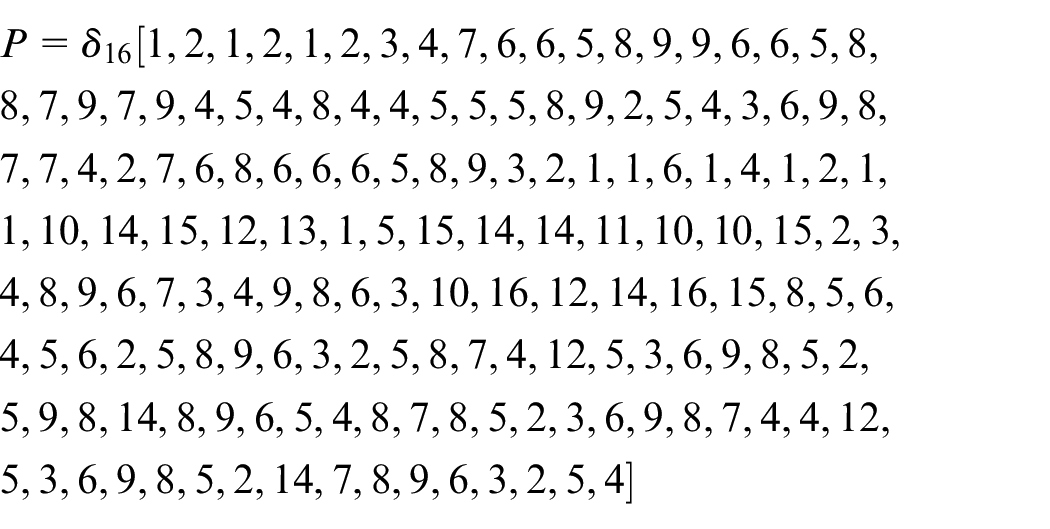
By computing, the following equation can be obtained
Then, BN (21) and BN (23) can complete synchronization according to Theorem 3.1.
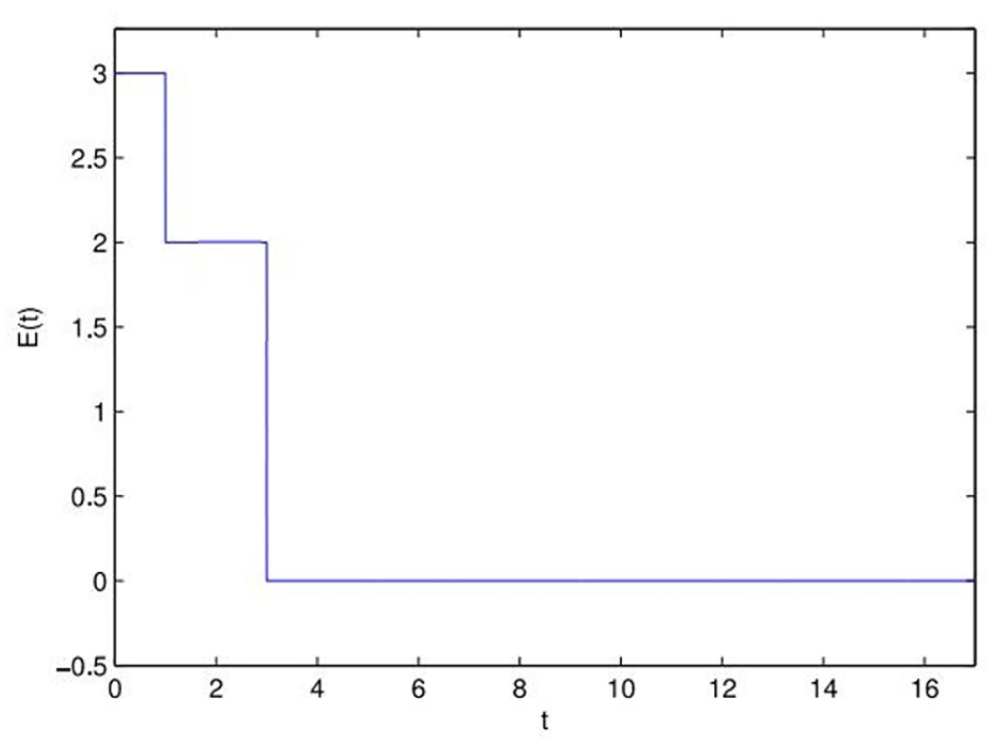
The synchronization error of BNs (21) and (23) is , where . Figure 1 shows the synchronization error when .
Total synchronization error of BNs (21) and (23) with initial states X0 = (1, 1, 0) and Y0 = (0, 0, 0).
Conclusion
The mutual time-varying delay-coupled temporal BN model is presented in this paper and its complete synchronization is studied. The necessary and sufficient conditions are given based on the algebraic expression of the BN. Moreover, the check criterion of the upper bound is presented. The mutual time-varying delay-coupled temporal BN model is more general than the delay-coupled temporal BN model.
Footnotes
Declaration of conflicting interests
The author(s) declared no potential conflicts of interest with respect to the research, authorship, and/or publication of this article.
Funding
The author(s) disclosed receipt of the following financial support for the research, authorship, and/or publication of this article: The first author would like to thank the support by the National Natural Science Foundation of China (No.: 61640223), the 13th Five-Year Science and Technology Project of the Education Department of Jilin Province (No.: JJKH20190646KJ), and Doctor Start-up capital of the Beihua University (No.: 199500096). The second author would like to thank the support of the key scientific research projects in the Science and Technology Development Plan of Jilin Province (No. 20160204033GX).
ORCID iD
Qiang Wei
References
1.
WanXBWangZDWuM, et al. State estimation for discrete time-delayed genetic regulatory networks with stochastic noises under the round-robin protocols. IEEE T Nanobiosci2018; 17(2): 145–154.
2.
KimKSayamaH. How criticality of gene regulatory networks affects the resulting morphogenesis under genetic perturbations. Artif Life2018; 24(2): 85–105.
3.
KaufimanSA. Metabolic stability and epigenesis in randomly connected genetic nets. J Theor Biol1969; 22(3): 437–467.
WangXYGaoS. Image encryption algorithm for synchronously updating Boolean networks based on matrix semi-tensor product theory. Inform Sciences2020; 507: 16–36.
9.
LiRChuTGWangXY. Bisimulations of Boolean control networks. SIAM J Control Optim2018; 56(1): 388–416.
10.
LeiXQCaiSMJiangSQ, et al. Adaptive outer synchronization between two complex delayed dynamical networks via a periodically intermittent pinning control. Neurocomputing2017; 222(c): 26–35.
11.
LuoCWangXYLiuH. Controllability of asynchronous Boolean multiplex control networks. Chaos2014; 24(3): 033108.
12.
RafimanzelatMBahramiF. Attractor controllability of Boolean networks by flipping a subset of their nodes. Chaos2018; 28(4): 043120.
13.
KobayashiKHiraishiK. Optimal control of gene regulatory networks with effectiveness of multiple drugs: a Boolean network approach. Biomed Res Int2013; 2013: 246761.
14.
ChengDZLiCXZhangX, et al. Controllability of Boolean networks via mixed controls. IEEE Contr Syst Lett2018; 2: 254–259.
15.
WangYHZhangXHaoYQ. Robust controllability and observability of Boolean control networks under different disturbances. Math Probl Eng2019; 2019: 1813594.
16.
ZhaoYChengDZ. On controllability and stabilizability of probabilistic Boolean control networks. Sci China Inform Sci2014; 57(1): 1–14.
17.
YangL. Sampled-data control for the synchronization of Boolean control network. IEEE T Cybernetics2019; 49(2): 726–732.
18.
LiuYSunLLuJ, et al. Feedback controller design for the synchronization of Boolean control networks. IEEE T Neur Net Lear2016; 27(9): 1991–1996.
19.
WeiQXieCJLiangY, et al. Delay synchronization of temporal Boolean networks. AIP Adv2016; 6: 015013.
20.
ChenHLiangJLuJ, et al. Synchronization for the realization-dependent probabilistic Boolean networks. IEEE T Neur Net Lear2018; 29(4): 819–831.
21.
ChenHLiangJLuJ. Partial synchronization of interconnected Boolean networks. IEEE T Cybernetics2017; 47(1): 258–266.
22.
WeiQXieCJKouXR, et al. Delay partial synchronization of mutual delay-coupled Boolean networks. Meas Control2020; 53: 870–875.
23.
LiFFYuZX. Anti-synchronization of two coupled Boolean networks. J Frankl Inst2016; 353(18): 5013–5024.
24.
TianHWangZSHouYF, et al. State feedback controller design for synchronization of master-slave Boolean networks based on core input-state cycles. Neurocomputing2016; 174(22): 1031–1037.
25.
XuXJLiuYSLiHT, et al. Synchronization of switched Boolean networks with impulsive effects. Int J Biomath2018; 11(6): 1850080.
26.
ZhangHWangXYLinXH. Synchronization of asynchronous switched Boolean network. IEEE-ACM T Comput Bi2015; 12(6): 1449–1456.
27.
WeiQXieCJ. Synchronization in mutual-coupled temporal Boolean networks. T I Meas Control2018; 40(7): 2211–2216.
28.
LiYYZhongJLuJQ, et al. On robust synchronization of drive-response Boolean control networks with disturbances. Math Probl Eng2018; 2018: 1737685.
29.
ChengDZQiHS. A linear representation of dynamics of Boolean networks. IEEE T Automat Contr2010; 55(10): 2251–2258.
30.
LiRHongYGWangXY. Observability of automata networks: fixed and switching cases. IEEE T Neur Net Lear2018; 29(4): 1388–1394.