




Abstract
The melting procedure with a direct contact of phase change material is taken into account to consider the porous medium in the presence of a uniform and transverse magnetic field. A permeable rotating disk is taken as a heater in the melting progression of solid phase change material. The three-dimensional melting layer takes place due to the accruing of the temperature difference among the porous disk and solid material. Movement is subject to the effect of pressure loading (counting the weight of solid), direct relation with solid and rotation due to centrifugal force. The removal of melting is controlled due to the joint exertions of the porous media, wall permeability and resistive force generated due to the applied magnetic field. The motion of the melting layer is assumed unsteady and governed the nonlinear similarity equations. Furthermore, magnetic field, porosity, external load and wall suction enhance melting and heat transfer rates at the thin melts film thickness. The melting rate, momentum and thermal boundary layers are estimated under the impact of Stefan number, magnetic field, porosity parameter and unsteadiness parameter. The Eckert number enhances the thermal boundary layer, and consequently the larger amount of melting received. The governing PDEs is highly nonlinear; thus for the solution we use analytical method of HAM and BVPh 2.0 package. The important outputs of the thickness of the thin layer during melting process in the presence and absence of wall suction are mainly focused.
Keywords
Introduction
Most of the useful products are produced due to the melting of solid materials, and these melts are used in many engineering, biological and industrial applications. Various procedures were adopted by the researcher for the melting procedure. The use of disk as a heater for the melting procedure in a direct contact with phase change solid material is the reliable and economical technique. This technique is frequently used in the field of science and technology like Jackson 1 had discussed the process of the metallurgy and welding, Pfann 2 had discussed crystal growth and Bejan3,4 had discussed heat energy storage system and lubrication. Measurement of high temperature in the welding process was studied by Arora et al. 5 The main issue is to remove the resultant melt at the time of melting process and to protect a huge heat conduction, which was studied by Moallemi et al. 6 Lacroix 7 had examined the melting phenomena inside a capsule in contact with phase change material for melting. He noticed that the close contact melting obtained due to the heat surface of the solid phase change material is more effective than the heat shifted by convection, which normally exists in much thicker layers of liquefied substances. In these circumstances, the heat transfer enhances and the melting time reduces. Measurement in high-temperature process for many industrial applications was studied by Graham. 8 The fascinating application of contact melting phenomena for the unsteady problem was discussed by Myers et al. 9 Saito et al. 10 examined the unsteady contact melting of a solid material with a hot plate, and they used the temperature gradient in the Stefan conditions. The experimental and analytical investigations to the closed contact melting were done by Moallemi et al., 11 Kumano et al. 12 and Bareiss and Beer. 13 The importance of the convection in the close contact melting and the concept of the inertia were introduced by Groulx and Lacroix. 14 Melting process in the existence of porous media was studied by Jourabian et al. 15 Taghavi 16 had introduced the idea of rotation and external pressure in the processes of contact melting.
The flow through rotating disk has many applications in the field of mechanical engineering and industrial process, especially in the geophysics, drilling devices, marine sciences, storage devices and so on. Karman 17 had studied the flow over a rotating disk for the first time and explained that the rotating disk manages the flow pattern and enhances the temperature field. Turkyilmazoglu 18 mentioned the formation of the boundary layer flow over the rotating disk. Appelquist et al. 19 commenced their arguments on the linear instabilities in the rotating disk during fluid motion. The flow of the micro polar nanofluid was caused by a rotating disk in the existence of magnetic field explored by Ramzan et al. 20 The nature of the oscillating magnetic field in the convective flow of a nanomaterial using a rotating stretchable disk was discussed by Hassan et al. 21 Reducing the amount of melting and enhancing heat transfer rates with thicker melt layers by increasing the magnetic field parameter were proven in the latest efforts of Malepati. 22 The mechanical behavior of micro-rotating disk was presented in the recent work of Bagheri et al. 23
The flow through magnetic hydrodynamic (MHD) is electrically conducting, which affects the behavior of flow, basically the apparent viscosity is developed in the fluid by implementation of MHD which realized reduction in the velocity of flow. There are many applications of MHD such as in the field of astrophysical phenomena, where the earth magnetic field protects us from radiations, MHD pumps, MHD generator and used in fluid mechanics and so on. Many researchers analyzed magnetic-effected problems such as water-based magnetite nanofluid discussed by Toghraie et al. 24 The effect of the magnetic field of fluid flow in a duct was studied by Mousavi et al. 25 The effect of MHD was numerically studied in porous medium by Sheikholeslami. 26 The use of a magnetic storage device to balance the power quality issues was discussed by Sivaperumal et al. 27 Magnetic effect on nanofluid in permeable cavity was discussed by Sheikholeslami. 28 Heat transfer in porous vessels in the presence of magnetic field was discussed by Rahbari et al. 29
At the initial stage, the flow in porous media had exposed the Darcy 30 law related to the linear flow velocity to pressure gradient through the porous medium. Porous medium is also symbolized by its permeability that measured the flow conductivity. The accumulation of the fluid and the porous medium is much attracted by the cause of hitch to flow diffusion appointed by local edges or local viscosity. The porosity is used in industrial and engineering fields like conduction in porous media, heat transfer process, forced and natural convection in porous media and so on. A lot of research work is present in the literature. The latest advancement in porous media gets to spread precocious models for the Darcy law as in Forchheimer’s equation 31 and Brinkman’s 32 equation. The effects discussed above are not taken into account in Darcy’s equation. The excessive extension in research about porous media on fluid flows was also discussed by Nield and Bejan 33 and Ingham and Pop.34–36 The fluid in porous ribs was discussed by Toghraie et al. 37 Multilayered porous media was introduced by Arasteh et al. 38 Analytical study of heat transfer with permeable wall was discussed by Fakour et al. 39 Heat transfer in porous media was studied by Moradi et al. 40 Hybrid nanofluid in double pipe of heat exchanger was studied by Shahsavar et al. 41 Heat transfer in porous medium was studied by Sheikholeslami et al. 42 Heat transfer in solidification in the porous energy storage system was studied by Sheikholeslami et al. 43 Heat effect on the phase change material was introduced by Sheikholeslami et al. 44 Unsteady analytical study of a spherical particle was studied by Rahimipetroudi et al. 45 Fakour et al. 46 discussed the heat transfer over an unsteady stretching sheet. To control the melting on a rotating permeable disk which was considered as a heater, a valid quantity of suction was incorporated without allowing the increase in melt layer film thickness, which is mentioned in the current study. The earlier study considered the steady case with wall suction, while the present work considered the unsteady that includes wall suction, magnetic field and porous media. The preferred work is supreme and effective melt removal, which make sure by preventing the enhancement of melt film thickness in melting process and protect as thin film thickness as possible. Thus, boundary layer approximations are used for modeling of melting phenomena under the effect of heat.
The extension and novelty of this research work are pointed out as follows:
We take over the model as unsteady and three dimensional. The three-dimensional work can also be used for cylindrical problems.
The magnetic field is imposed vertically to the flow pattern to enhance the thermal boundary layer and to control the melting rate, and this effect is same as in the published work.47–49
The viscous dissipation has been considered in the current study to improve the heat transfer augmentations.
Porous medium and wall suction mechanism are jointly taken to control the melt film thickness.
The important physical quantities of the drag force on the disk surface and melting interface are calculated for the limiting parameters in the published work, 22 whereas this study is extended for the other physical constraints such as Eckert number, magnetic field, porosity parameter and unsteadiness parameter.
The HAM technique50–60 and BVPh 2.0 package have been used for the solution of the nonlinear problem.
Formulation
The current study deals with the melting process of a solid in a contact with a permeable and rotating disk. The disk is considered to work as a heater and rotate with a constant angular velocity

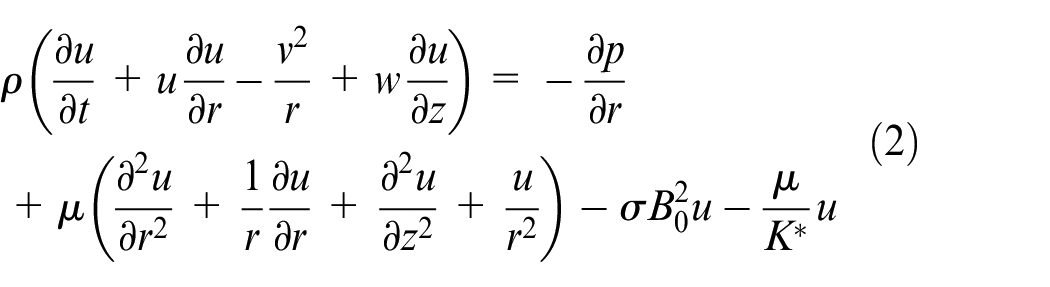
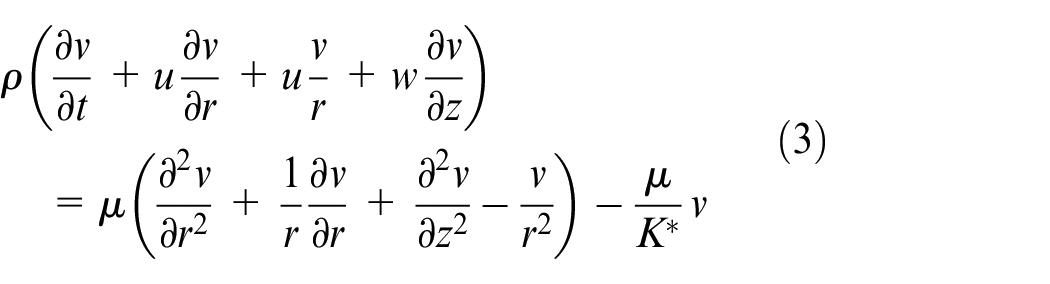
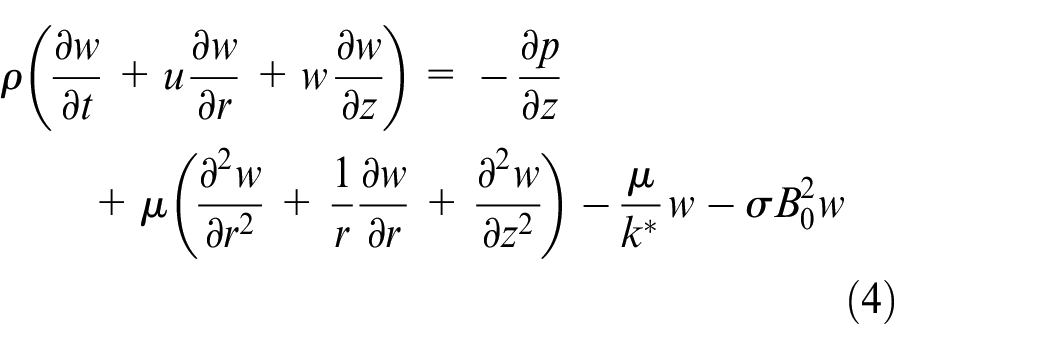
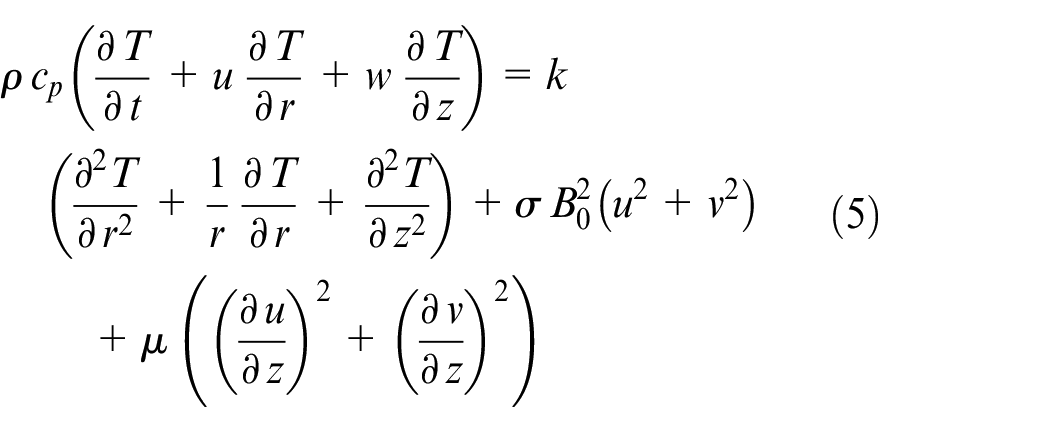
In the velocity field
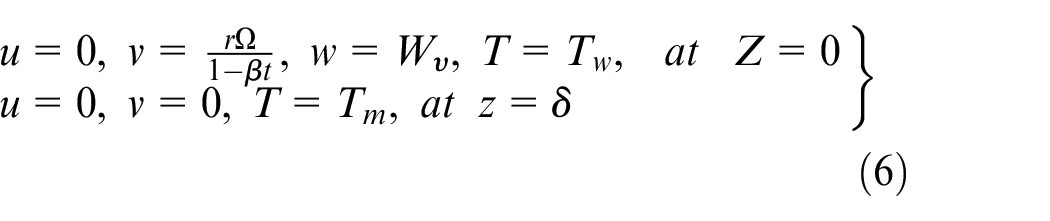
Furthermore, the melting procedure is furnished along the Stefan conditions via energy balance,

Here,
The transformations are chosen from the available literature 62
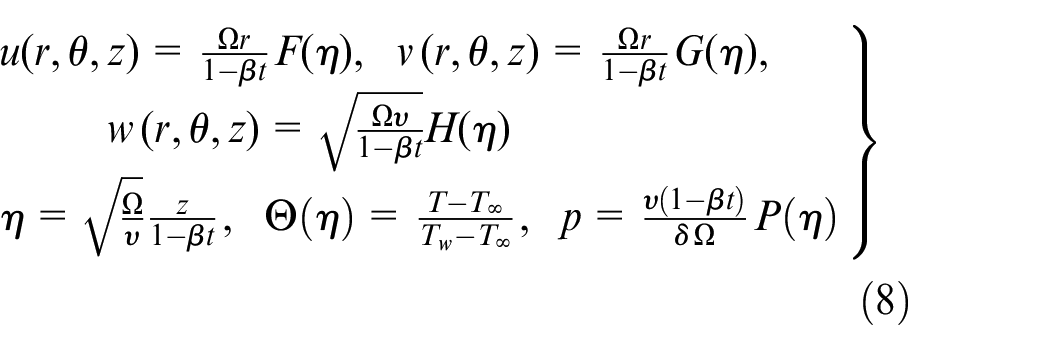
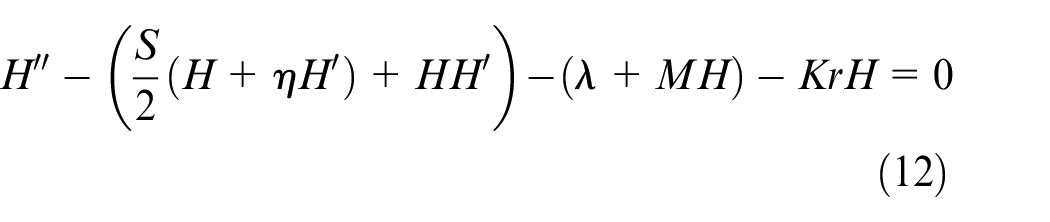
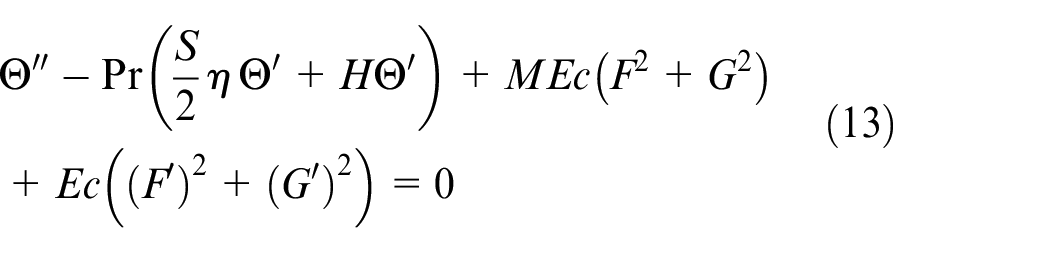
The governing equations after the transformation are altered into the set of nonlinear differential equations as



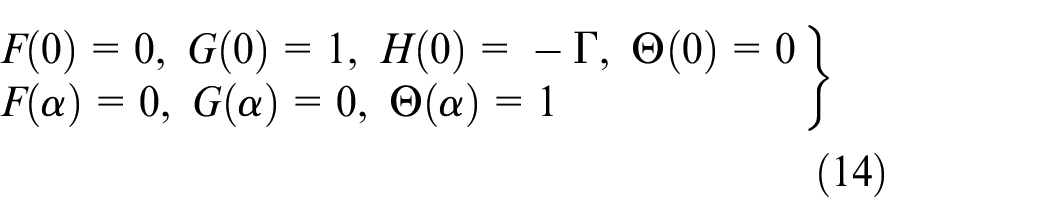
The boundary conditions after the transformation are settled as
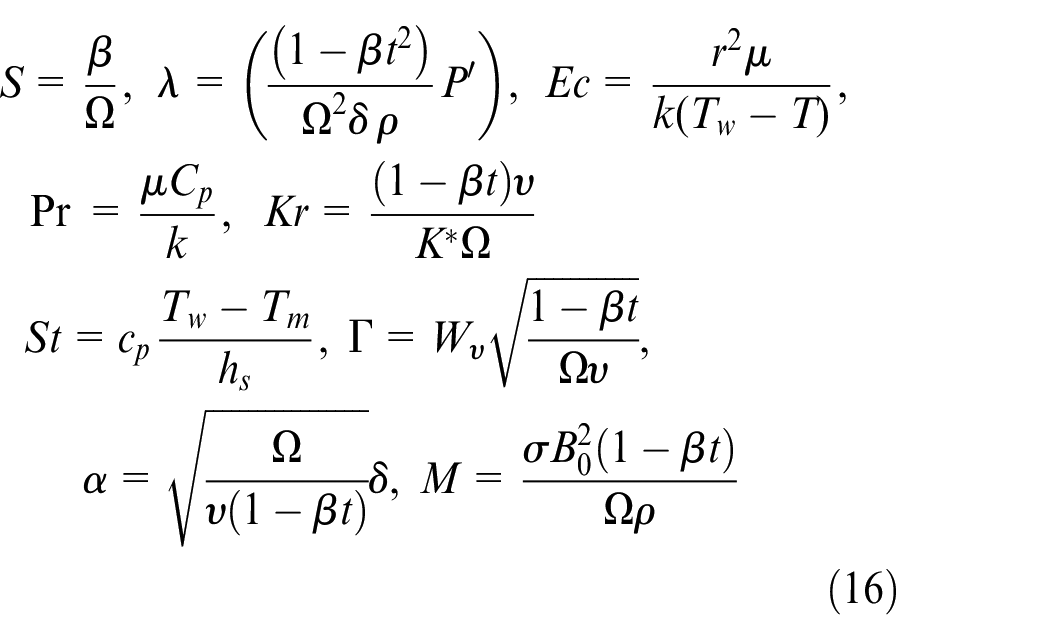
The valuable physical constraint of the Stefan number is defined as

The melting film thickness
Heat transfer rates of wall and melting are reduced due to heat fluxes at the melting surface and at the disk surface 61

Similarly, the shear stresses at the melting surface and at the disk surface lead to reduced wall heat rates and melting heat rates in the tangential direction

The melting rate of the solid at the interface can be considered as melt velocity of phase change material by way of

The above relation defends the ultimate key and important physical quantities of interest at the disk surface and melting interface
The Stefan number is calculated and obtained from equation (15)

It is a reasonable fact that the obtained solution of the Stefan constraint included the wall suction along magnetic field, and porosity fully leads the terms of solution and the term of thin film thickness in the absence of wall suction

Solution and average square residual error
Liao50,51 has introduced the average square residual error technique. The initial guesses are chosen as follows
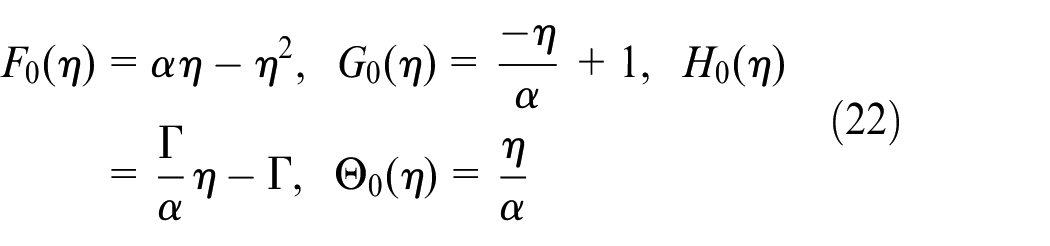
The initial guesses satisfy the initial and boundary conditions, while the average and square residual errors are calculated through the following technique
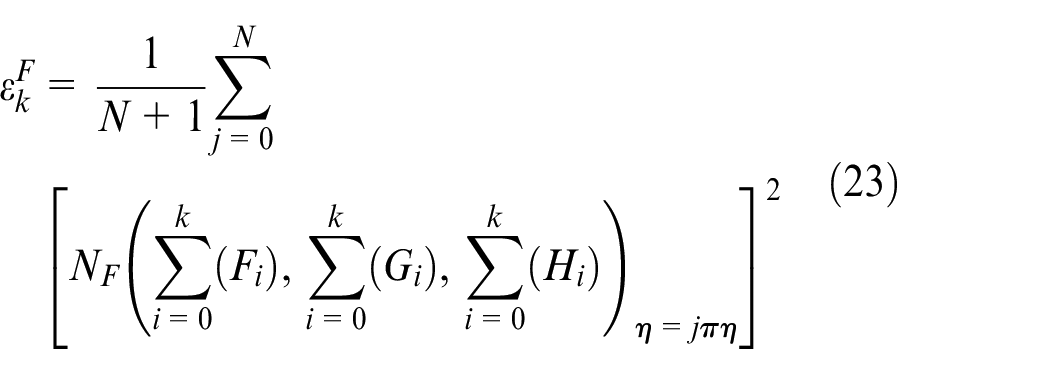
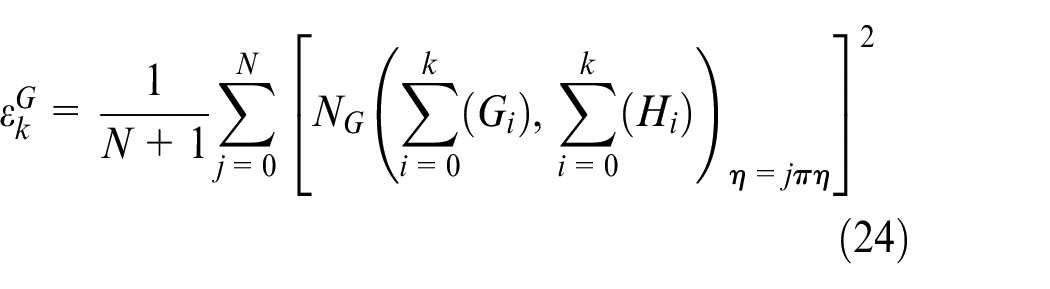

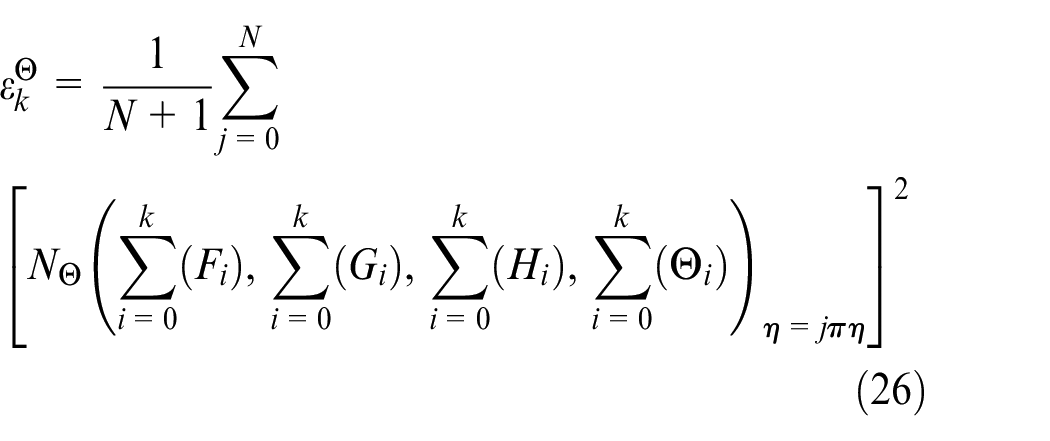
Liao50,51 defined the average squared residual error

Here,
Results and discussion
The thin layer of melting through direct contact of the solid material with the rotating and the permeable disk in the unsteady and three-dimensional space has been inspected. The solution of the nonlinear problem has been tackled through the BVPh 2.0 package. The sum of the total and square residual error has been analyzed. The film thickness in the absence of the wall suction and its impact versus the various constraints has been studied. The drag force coefficient and heat transfer rate at different values of the Stefan number have also been observed and displayed in the tables. The geometry of the problem is shown in Figure 1.
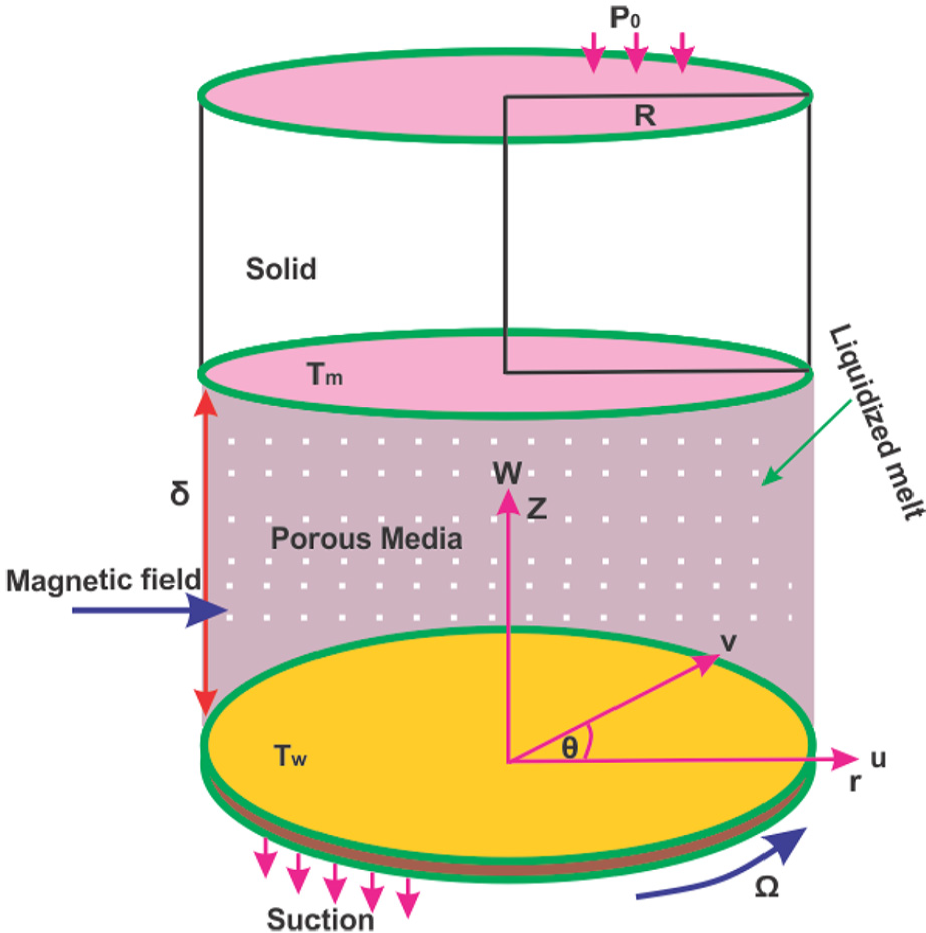
Geometry of the problem.
Figure 2 illustrates the effect of the magnetic parameter
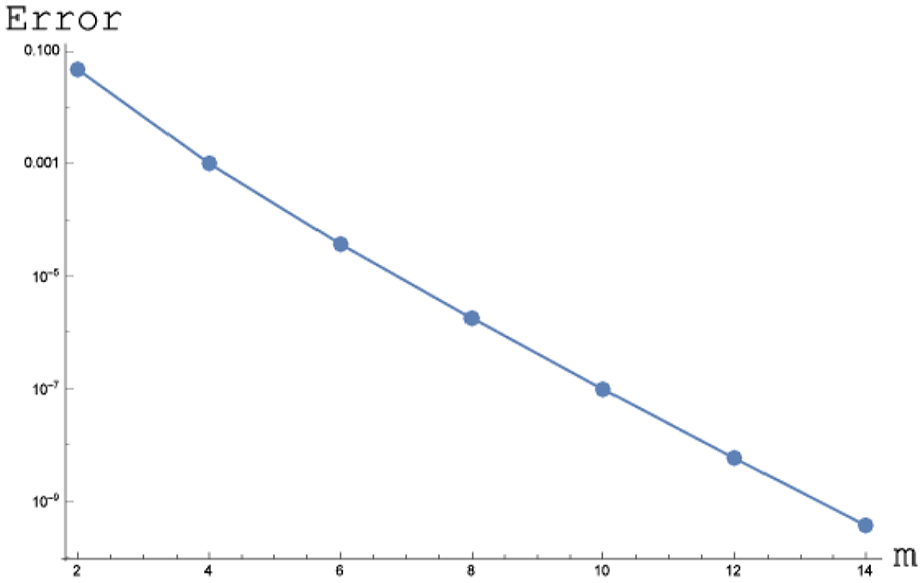
The total average squared residual error.
The influence of the unsteady parameter
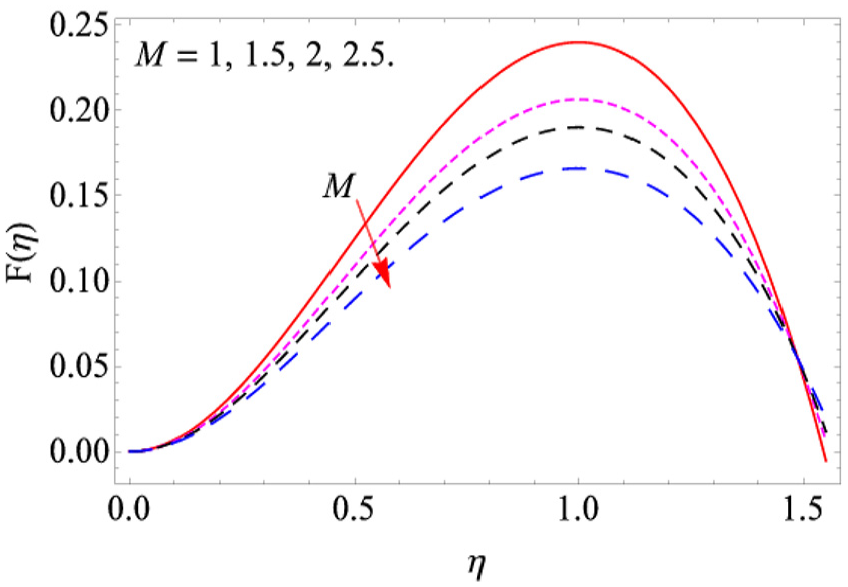
M versus F, when
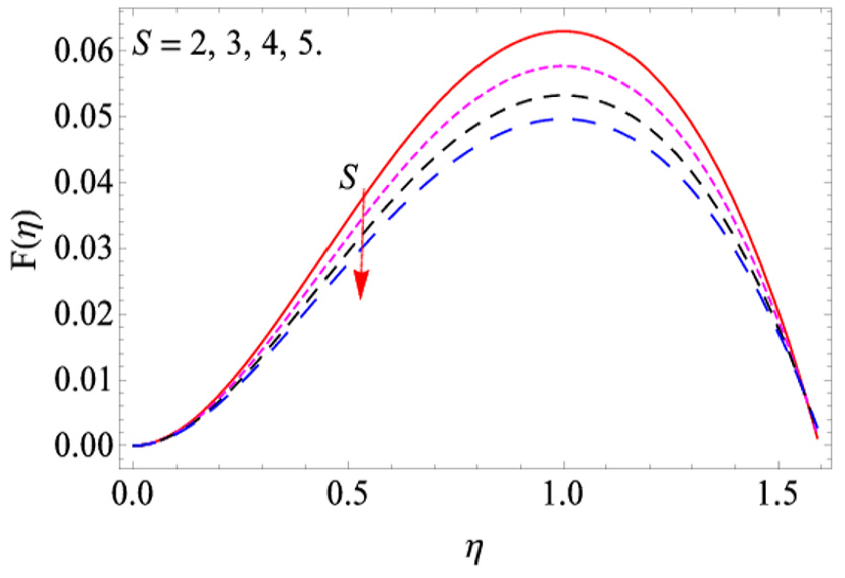
S versus F, when
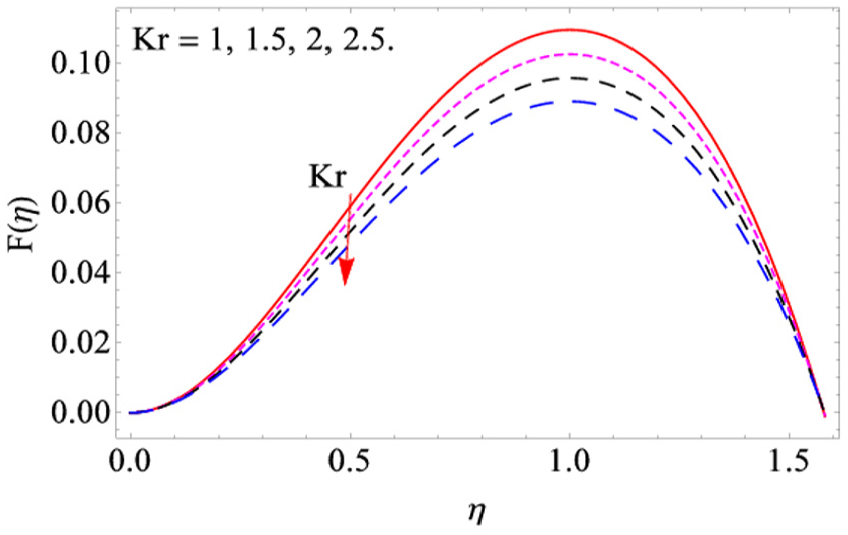
Kr versus F, when
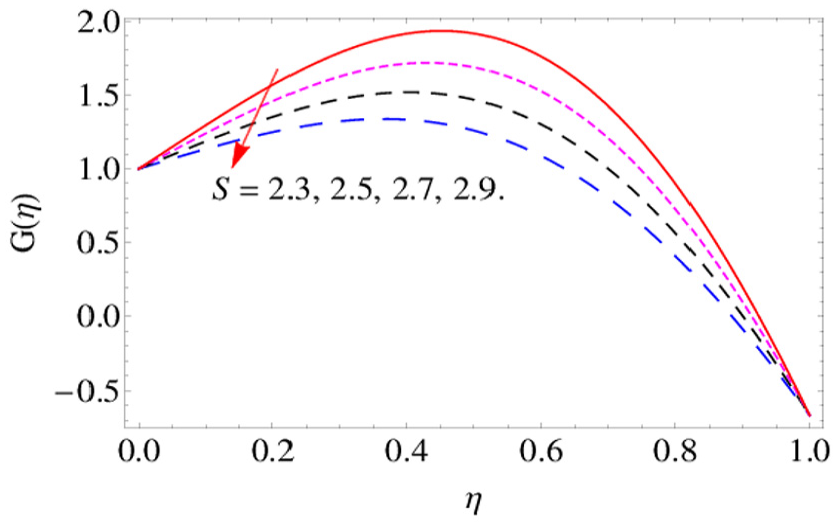
S versus G, when
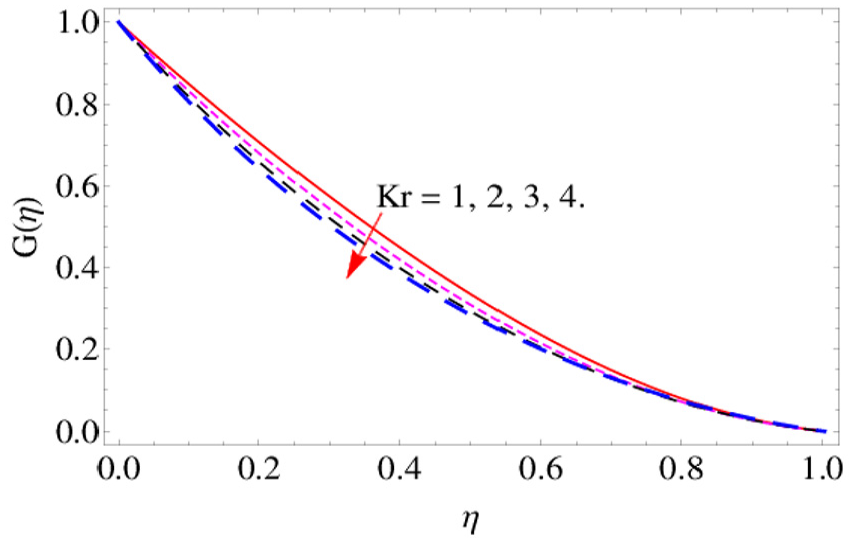
Kr versus G, when
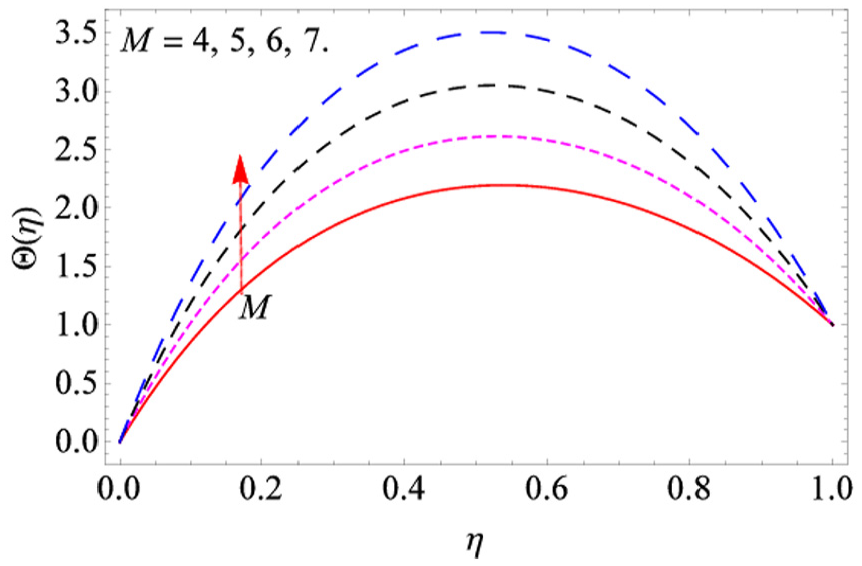
M versus
Figure 9 shows increasing and decreasing behaviors of temperature for higher and lower estimation of Eckert number
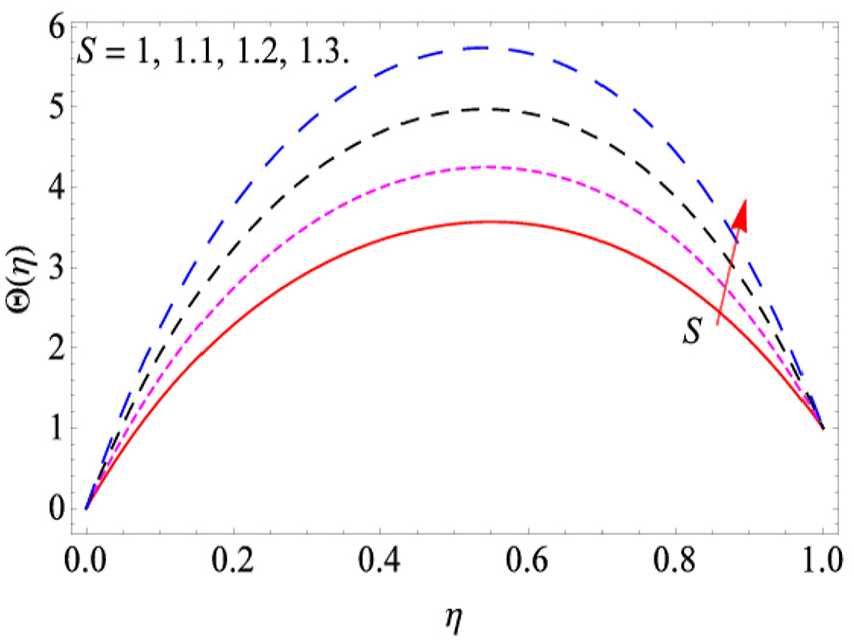
S versus
Figure 10 indicates the Prandtl number effect versus the temperature field. It expresses that Prandtl is estimated with higher value and produces a more decrease in temperature. In other words, the temperature is ordered to fall down when the instant Prandtl number Pr increases. Prandtl number Pr is directed toward one of the cooling or heating position.
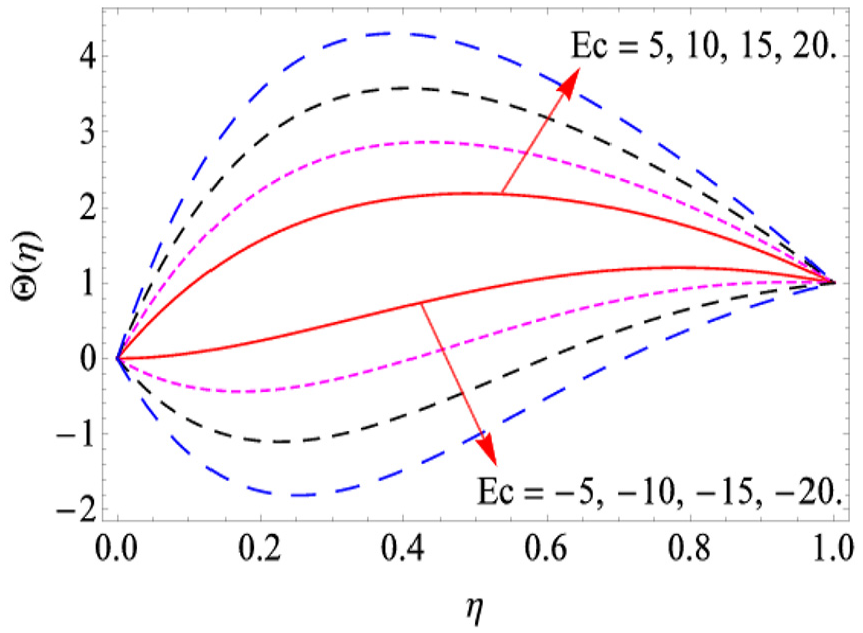
Ec versus
The impact of the suction parameters versus the radial, angular and axial velocities is shown in Figures 11–13. The increasing values of the suction parameter produce hurdles in the expansion of melting layer and consequently decrease the radial, angular and axial velocities. The temperature field expanded with the enlarging values of the suction parameters as reflected in Figure 14. Also, the graphical results are compared with the velocity profile and temperature distribution of Turkyilmazoglu. 61
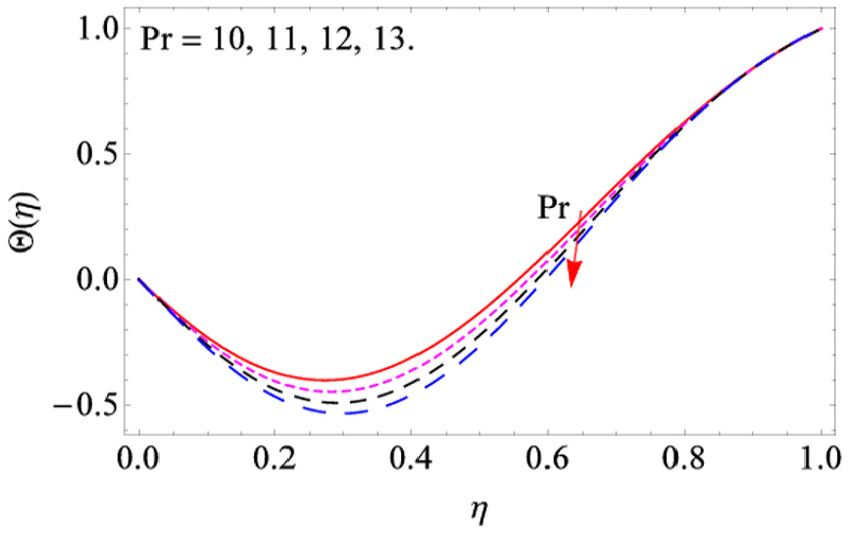
Pr versus
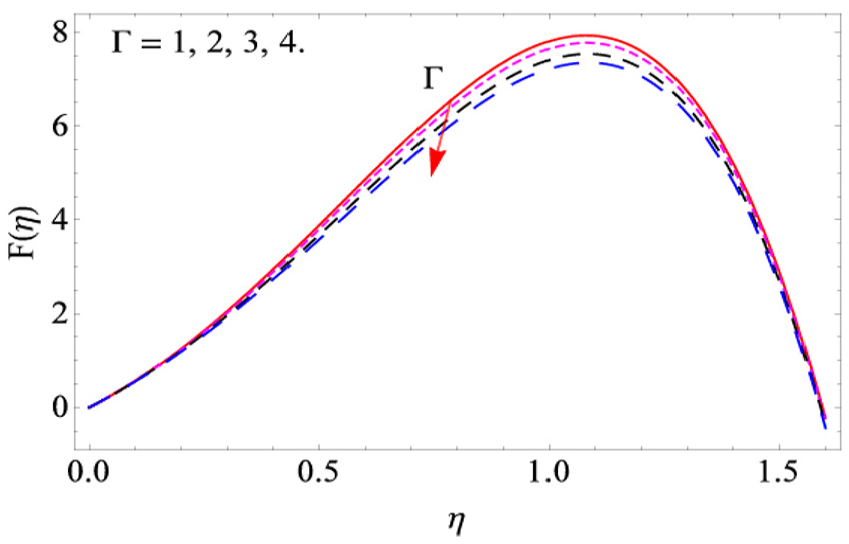
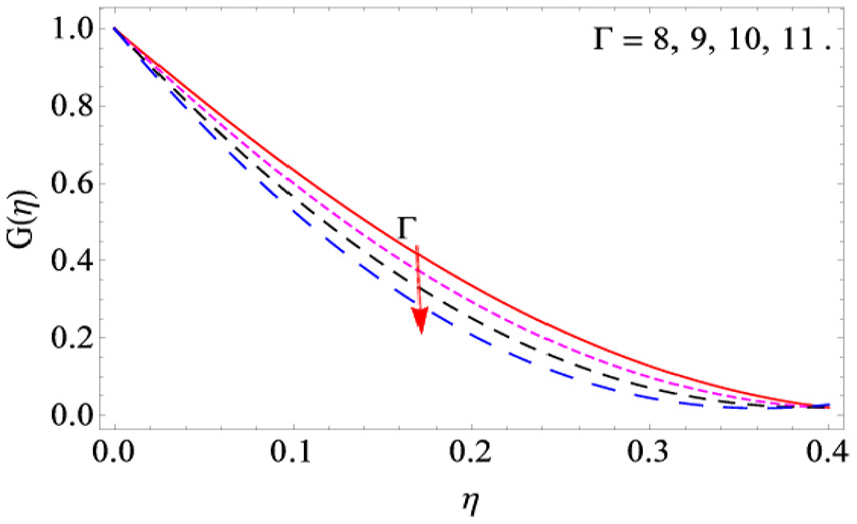
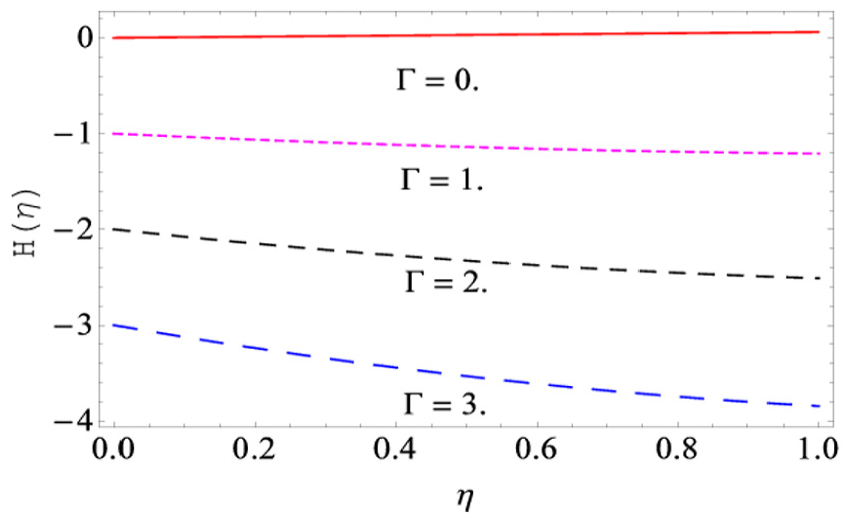
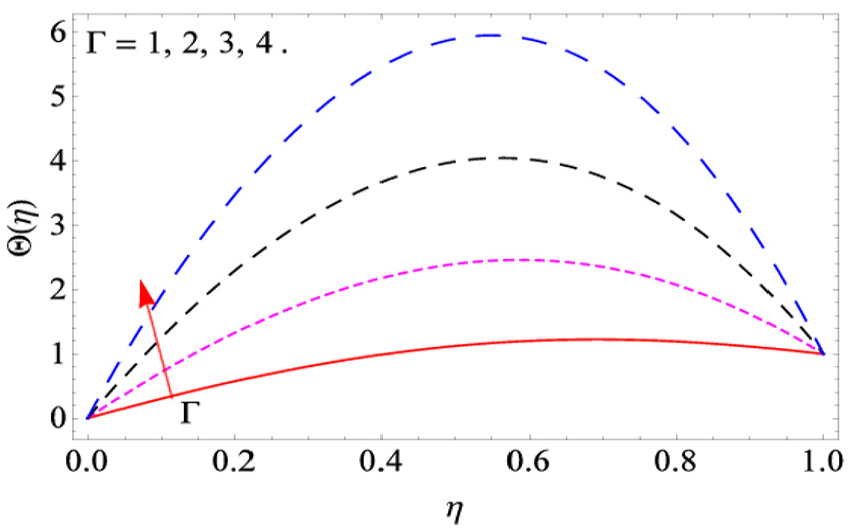
In the above discussion on the velocity profile and temperature distribution, it has been shown graphically that the magnetic field, porosity and unsteadiness parameter decrease the velocity of the flow due to which the melting liquid can easily control through suction. In fact, a large amount of melt can be saved with the joint influence of the magnetic field and porosity. The strengthening in a magnetic field, Eckert number, suction constraint and unsteadiness parameter expands the temperature profile, which will help in the melting process as shown in Figures 1–15.
Figures 16 and 17 indicate the melting rate in axial direction which enhance the rate with the rising value of suction and Stefan constraints. Figures 18–20 illustrate the melting rate at the disk surface and at the melting interface in angular direction and the effect matching of Turkyilmazoglu. 61 Figures 21–23 directed the heat transfer rate with different approaches of suction and Stefan number. Again the influence of the above figures agrees with of Turkyilmazoglu, 61 whereas Figure 24 shows the Stefan constraints to control the melting rate.
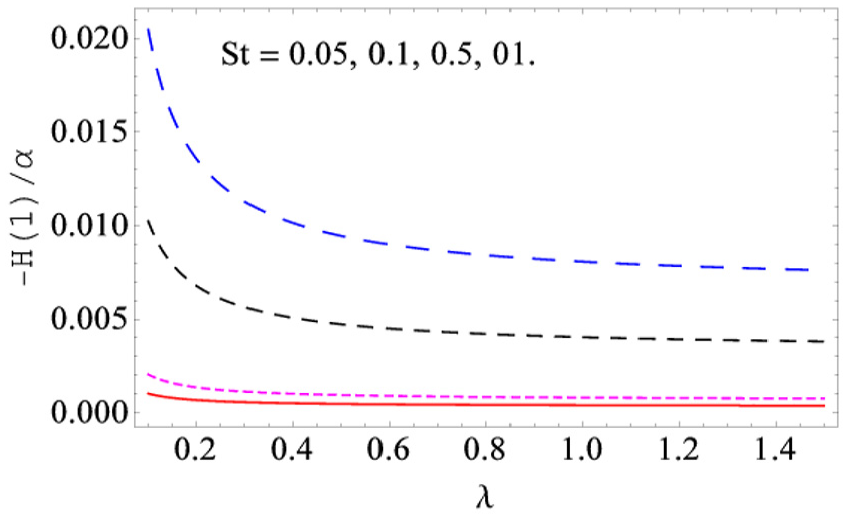
The melting rate versus
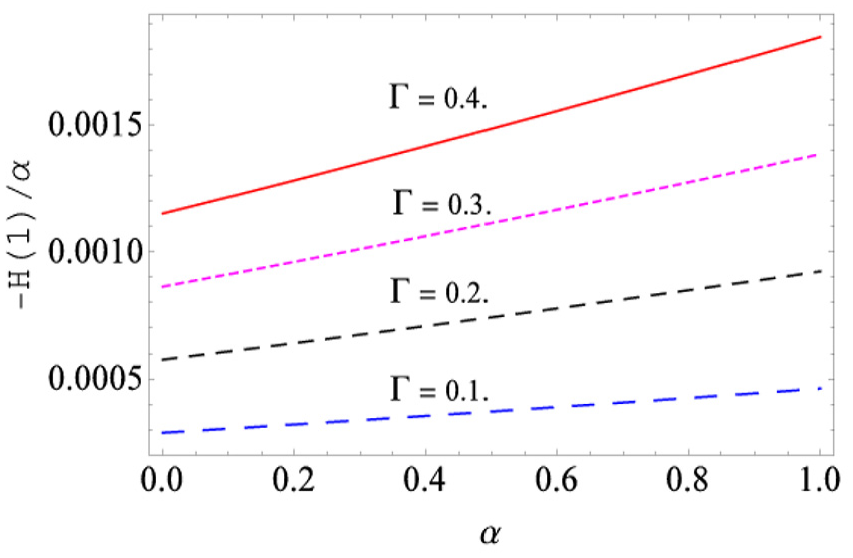
The melting rate versus
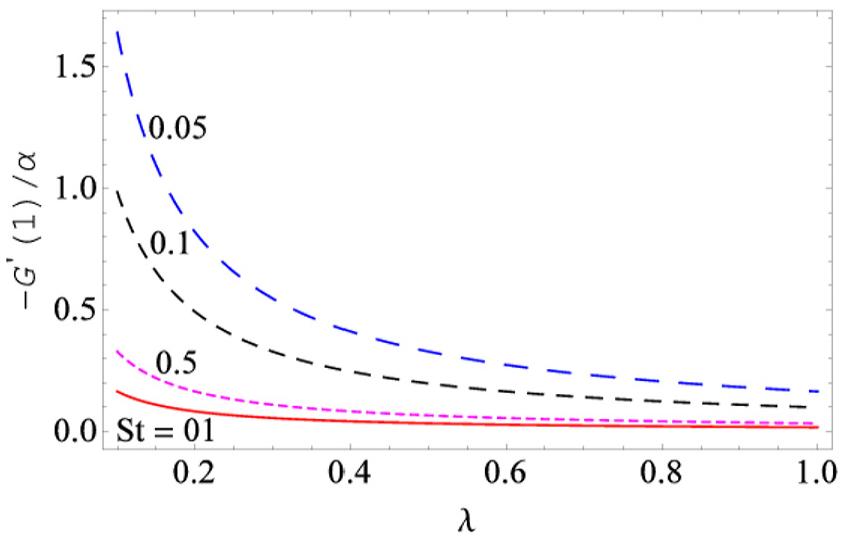
The melting rate versus
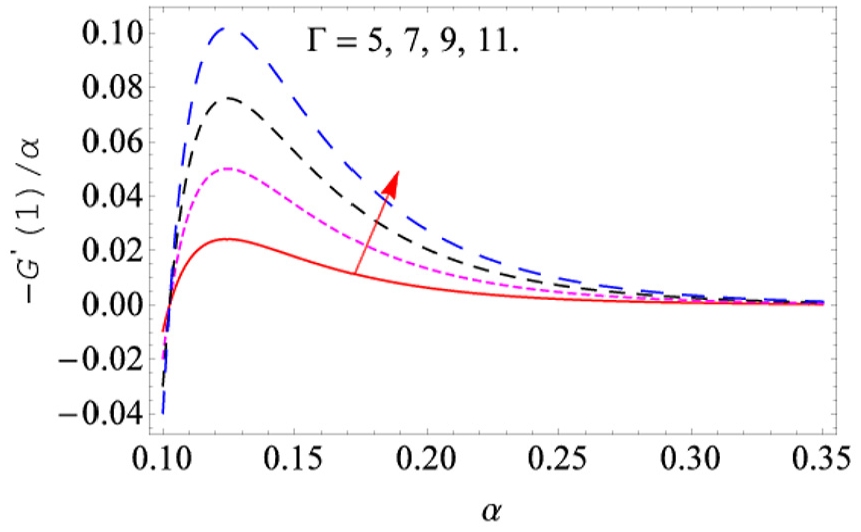
The melting rate versus
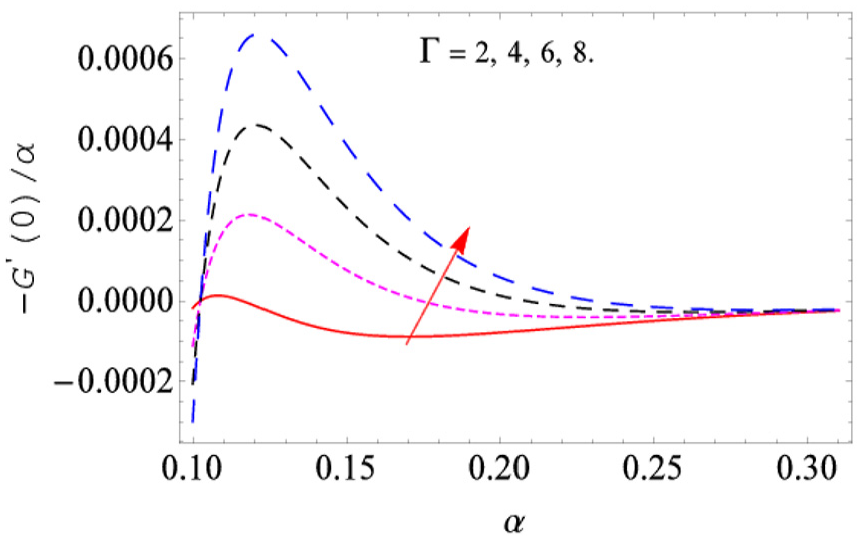
The melting rate versus
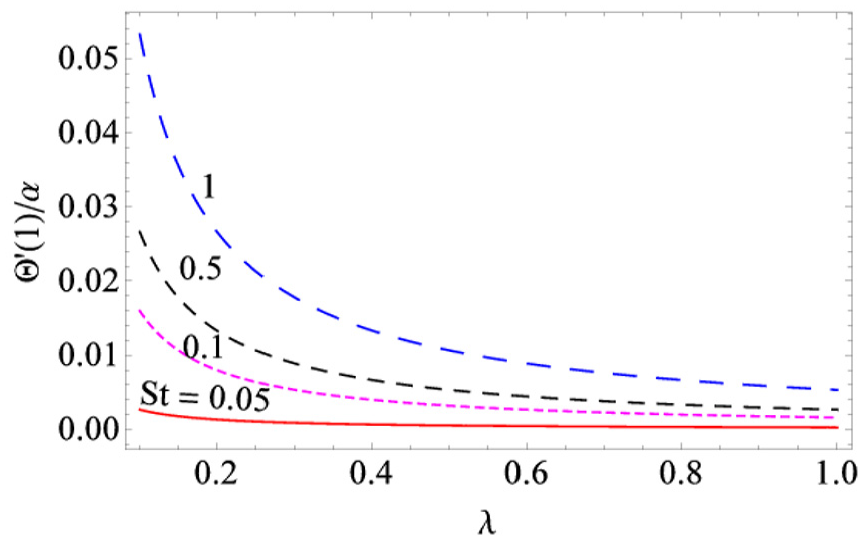
The heat transfer rate versus
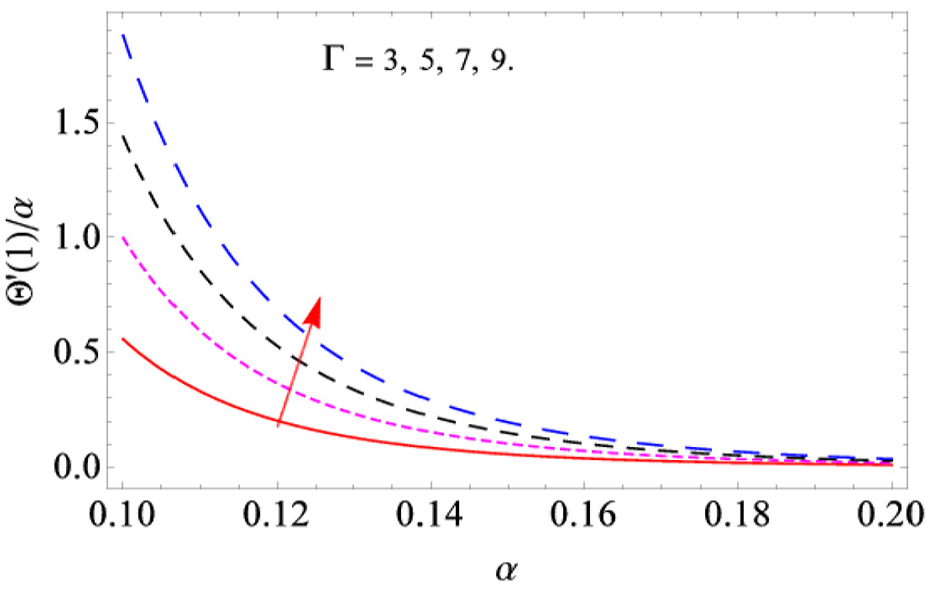
The heat transfer rate at melting interface versus
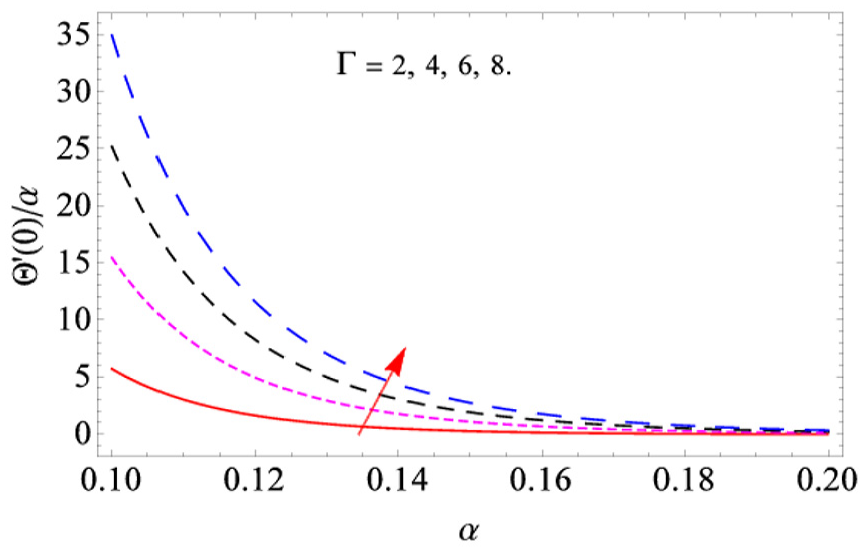
The heat transfer rate at the disk surface versus
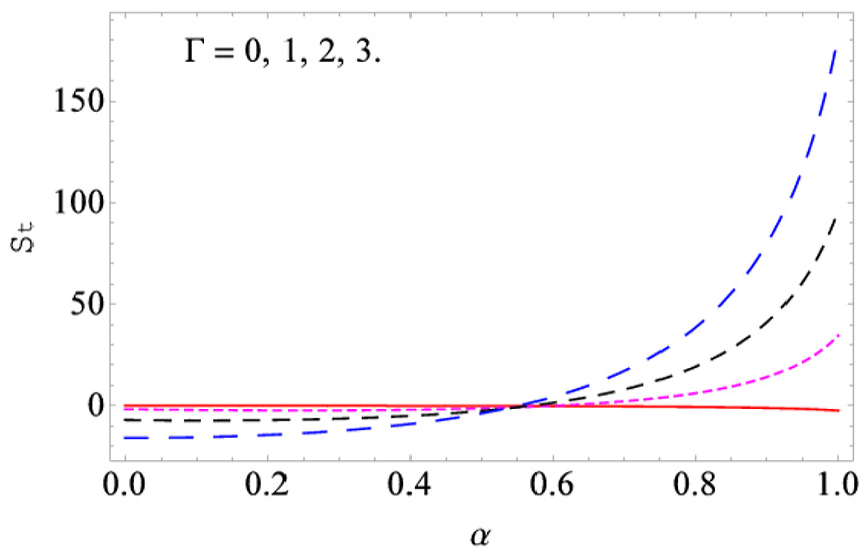
The Stefan graph versus
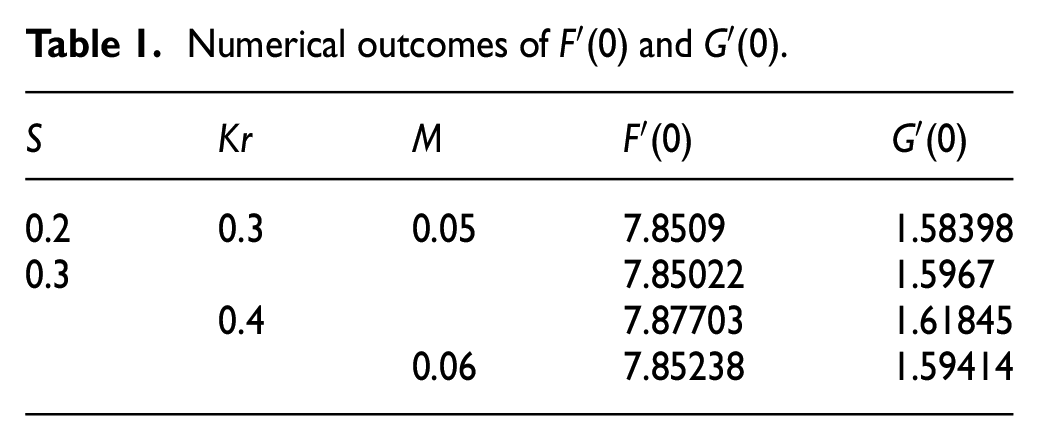
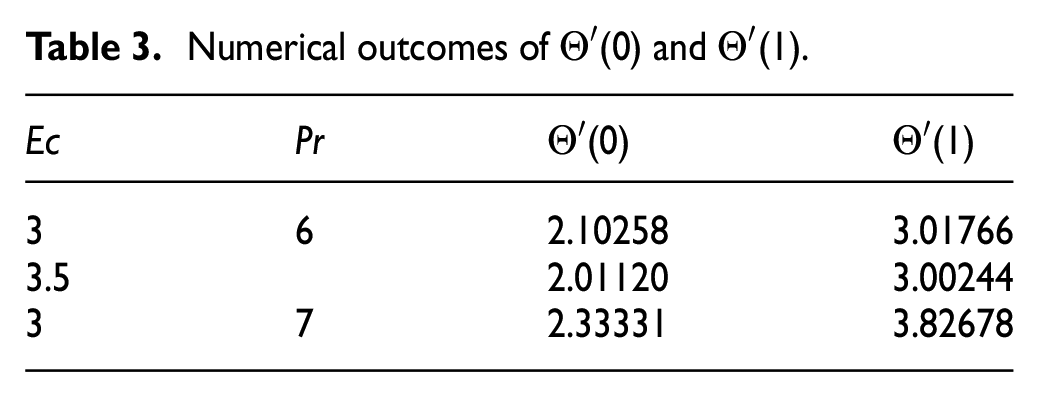
The numerical results of the drag force to find the melting rate at the location of rotating disk surface and at the point of melting interface are shown in Tables 1 and 2. The increasing values of the parameters
Numerical outcomes of
Numerical outcomes of
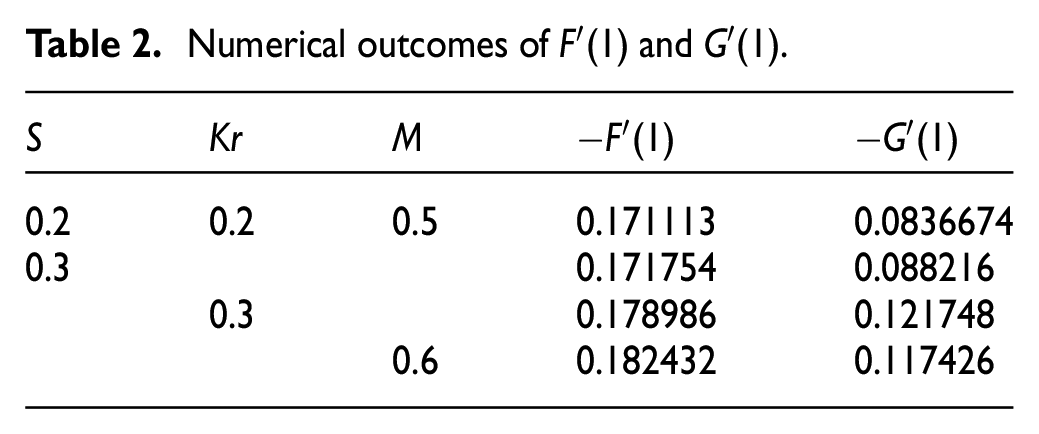
Numerical outcomes of
Conclusion
The melting of a solid material past over a permeable disk is studied. The medium is also considered porous in the presence of the transverse magnetic field applied to the flow pattern. Furthermore, the three-dimensional heated plate is rotating and unsteady. The previous study considered the steady case with wall suction, while the present work is considered the unsteady that includes wall suction, magnetic field, porous media and viscous dissipation. The BVPh 2.0 package has been used for the solution of the nonlinear problem up to the 20th order approximations. The parameters effect on physical melting flow, such as wall suction parameter, magnetic parameter, porosity effect, unsteadiness effect, skin friction coefficient, Nusselt number and temperature distribution effects, are shown and discussed.
The main findings are pointed out as follows:
The addition of the porosity is used to preserve a thin melt layer film thickness and also used to control the removed melt.
In the present study, the insertion of the unsteady parameter accomplishes the flow of melt layer downward more accurately.
The Stefan number jointly works with magnetic field and Eckert number to provide more specific heat, which facilitates for greater melting rate.
The wall suction works easily and preserves greater amount of melt at disk surface.
Footnotes
Appendix 1
Declaration of conflicting interests
The author(s) declared no potential conflicts of interest with respect to the research, authorship and/or publication of this article.
Funding
The author(s) received no financial support for the research, authorship and/or publication of this article.
