




Abstract
In our systematic mapping study, we examined 289 published works to determine which intelligent computing methods (e.g. Artificial Neural Networks, Machine Learning, and Fuzzy Logic) used by air-conditioning systems can provide energy savings and improve thermal comfort. Our goal was to identify which methods have been used most in research on the topic, which methods of data collection have been employed, and which areas of research have been empirical in nature. We observed the rules for literature reviews in identifying published works on databases (e.g. the Institute of Electrical and Electronics Engineers database, the Association for Computing Machinery Digital Library, SpringerLink, ScienceDirect, and Wiley Online Library) and classified identified works by topic. After excluding works according to the predefined criteria, we reviewed selected works according to the research parameters motivating our study. Results reveal that energy savings is the most frequently examined topic and that intelligent computing methods can be used to provide better indoor environments for occupants, with energy savings of up to 50%. The most common intelligent method used has been artificial neural networks, while sensors have been the tools most used to collect data, followed by searches of databases of experiments, simulations, and surveys accessed to validate the accuracy of findings.
Keywords
Introduction
Studies have shown that the operation of heating, ventilation, and cooling (HVAC) systems consumes 20%–40% of all energy used in commercial and residential buildings. 1 Considering that most people worldwide spend more than 90% of their daily lives indoors, efficient energy-driven HVAC systems play an increasingly important role in controlling energy consumption. 2 At the same time, the fact that roughly 80% of energy consumed is currently provided by fossil fuels further justifies the importance of ensuring energy-efficient HVAC systems in buildings.3,4
As the level of comfort demanded by building occupants increases, thermal comfort provided by a building’s heating and cooling processes is an important parameter to investigate in research addressing the energy efficiency of HVAC systems. The American Society of Heating, Refrigerating and Air-Conditioning Engineers 5 defines thermal comfort as an occupant’s satisfaction with the thermal environment, which implies that thermal comfort is associated with people’s contentment with the temperature of their environments. 6 In offices in particular, optimal environmental conditions are pivotal to the productivity of the employees. 7 Given the direct correlation between thermal comfort and productivity, 8 HVAC systems that provide a high level of comfort as well as save energy are especially important. 9
Since the introduction of HVAC systems in office buildings, various methods of controlling their operation have been proposed to reduce their overall energy consumption as well as to ensure the thermal comfort of occupants. Designing methods of controlling HVAC has always been an active area of research and development, typically with goals of optimizing operational efficiency and output. 10 Methods of controlling HVAC can be divided into two primary branches—local control and supervisory control—as shown in Figure 1.
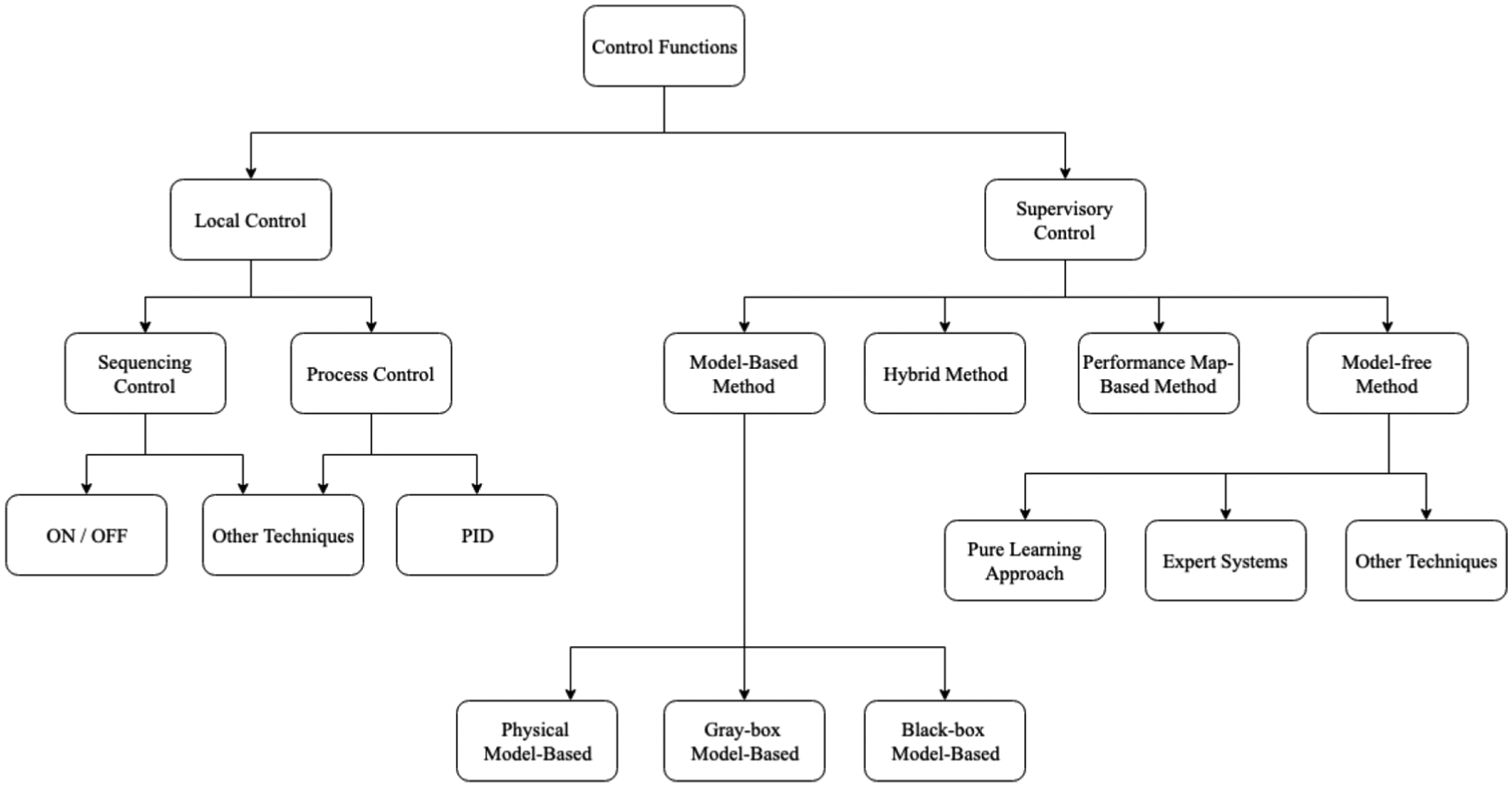
Classification of control functions in heating, ventilation, and air-conditioning systems.
Local control can be further divided into two branches: sequencing control and process control. Whereas sequencing control encompasses operations required to switch HVAC units on and off, 5 process control encompasses variables in executing a well-defined set of goals pursued regardless of disturbances, in a process of adapting variables of measurement or disturbances, if not both, in an HVAC system. 11 Settings for local control should be optimized to ensure the energy-efficient performance of an HVAC system overall. By contrast, the goal of supervisory control, or optimal control, seeks to optimize real-valued functions by methodically giving variables specific sets of values within a scope so that the overall system can monitor and control each local subsystem. 12
In methods of controlling HVAC systems based on black box models, the models do not hold any previous information about the systems. On the contrary, such models are developed based on observations of the systems and, by way of mathematics, can directly associate input variables with output. Typical representations of black box models are polynomial curve fit models and artificial neural networks (ANNs). In 1997, Burne described a way of estimating occupancy in an artificial intelligence model and ways in which that method can be used to allow control of thermal comfort and energy savings in HVAC systems. Implementing intelligent strategies of control in HVAC systems can achieve more energy-efficient results than using conventional methods. 13 In particular, using ANNs does not require detailed information about the relationship between input and output, 14 and methods of using ANNs to achieve thermal control afford better performance than traditional ones. 15
In this paper, we present the results of a systematic mapping study (SMS) in which we identified and categorized published works addressing research on HVAC systems focused on improving thermal comfort and energy savings, especially research examining techniques of computational intelligence. In general, one of the many benefits of studies such as ours is the identification of topics for further research. 16 More particularly, given the increased need for sustainable, comfortable indoor environments, it is important to systematically identify and classify research to provide an overview of trends in the use of intelligent computation methods employed in HVAC systems. 17
In what follows, “Terms and definitions” section defines the basic terms employed in research on improving the use of intelligent computational methods in HVAC systems. “Research method” section describes the method of SMSs, after which “Research results” section presents and analyzes the results of our SMS. “Threats to validity” section discusses threats to the validity of our study, and last, “Conclusion” section summarizes our study and recommends future avenues of research on improving the use of intelligent computational methods in HVAC systems.
Terms and definitions
This section defines some basic terms used in research on improving the use of intelligent computational methods in HVAC systems—for example, thermal comfort and energy management—as well as describes the concept of SMSs.
Technical terms
HVAC
Commonly used in vehicles and buildings, HVAC technology provides thermal comfort and acceptable indoor air quality. Typically, an HVAC system consists of an air-handling unit and one or more thermal zones, as shown in Figure 2. To meet required heating and cooling loads as well as provide thermal comfort, HVAC systems are controlled in terms of air supply temperature and flow rate. 18
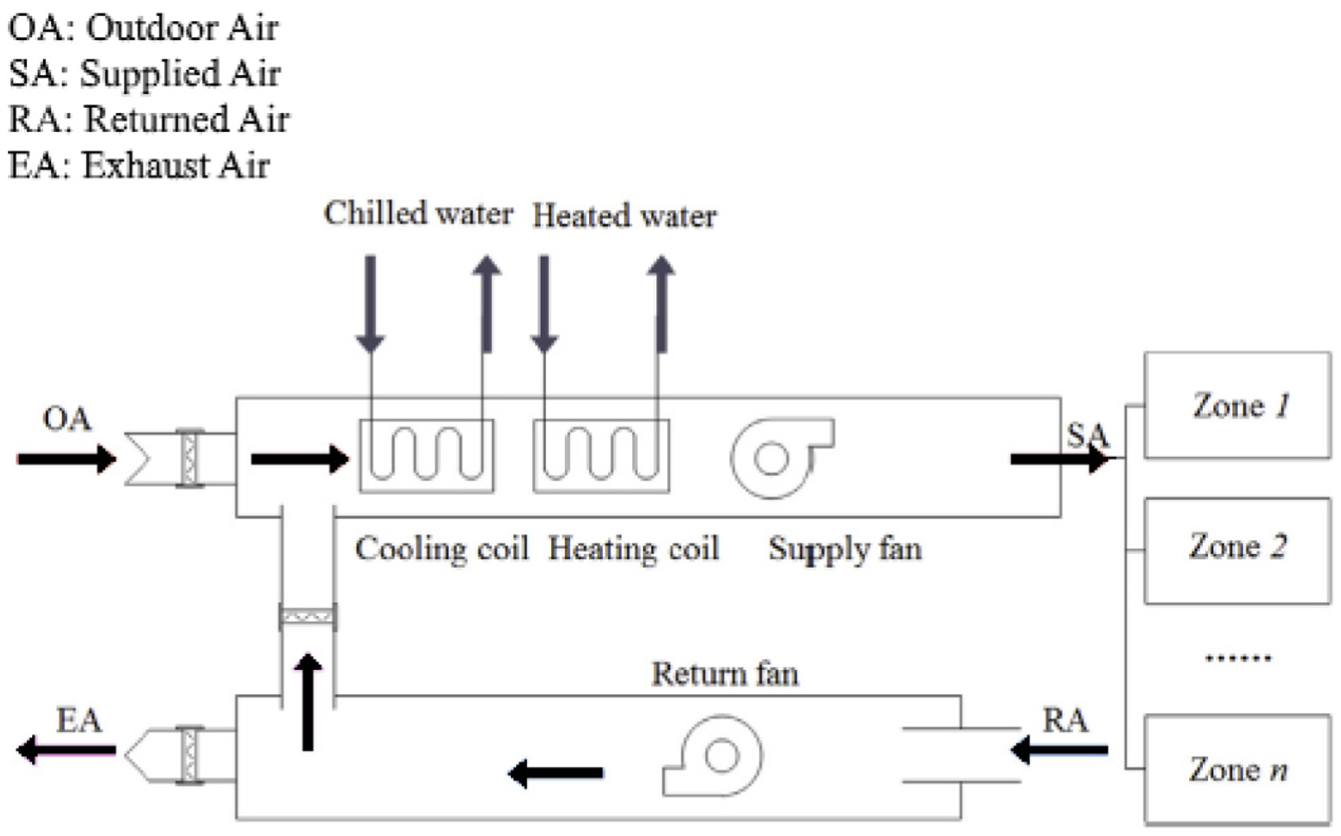
Schematic of a typical heating, ventilation, and air-conditioning system.
Thermal comfort
As mentioned earlier, thermal comfort refers to the satisfaction of individuals with the temperature within an environment, typically assessed by subjective evaluations. 5
Predictive mean vote
Predictive mean vote (PMV) is an index for predicting mean thermal comfort in large groups of individuals on a 7-point scale ranging from −3 to +3. Ratings on the scale are cold, cool, slightly cool, natural, slightly warm, warm, and hot. 18 The mathematical derivation of PMV appears in Appendix 2.
Predicted percentage of persons dissatisfied
To determine conditions for a comfortable indoor environment, an important step is predicting the perception of heat among individuals within an environment, for which the percentage of persons dissatisfied (PPD) can be calculated. In short, calculating PPD can indicate whether a population is satisfied or dissatisfied with the thermal environment. Drawing from studies on individuals within closed conditioned rooms in which the thermal environment can be fully controlled, Fanger 19 developed an equation for calculating PPD in association with PMV, as shown in Appendix 2.
SMS
Often used in medical research, 20 SMSs are a suitable way to associate specific problems, particularly widespread or dispersed ones, with a set of applicable solutions. 21 SMSs provide a categorical structure for classifying published reports and results of research, 22 typically in terms of several properties and categories. 10 Compared to literature reviews, SMSs accommodate a wider range of contexts and involve using statistical meta-analysis to detect more than individual, isolated works. 23 An SMS is generally conducted by following seven steps, also visualized in a flow chart in Figure 3:
Defining research questions on a topic;
Constructing a query with selected keywords representing the topic;
Searching online databases to identify published works on the topic;
Determining inclusion and exclusion criteria for the published works;
Eliminating published works according to those inclusion and exclusion criteria;
Developing answers to the research questions based on published works included in the sample; and
Analyzing and creating a systematic map to represent answers to the research questions 24
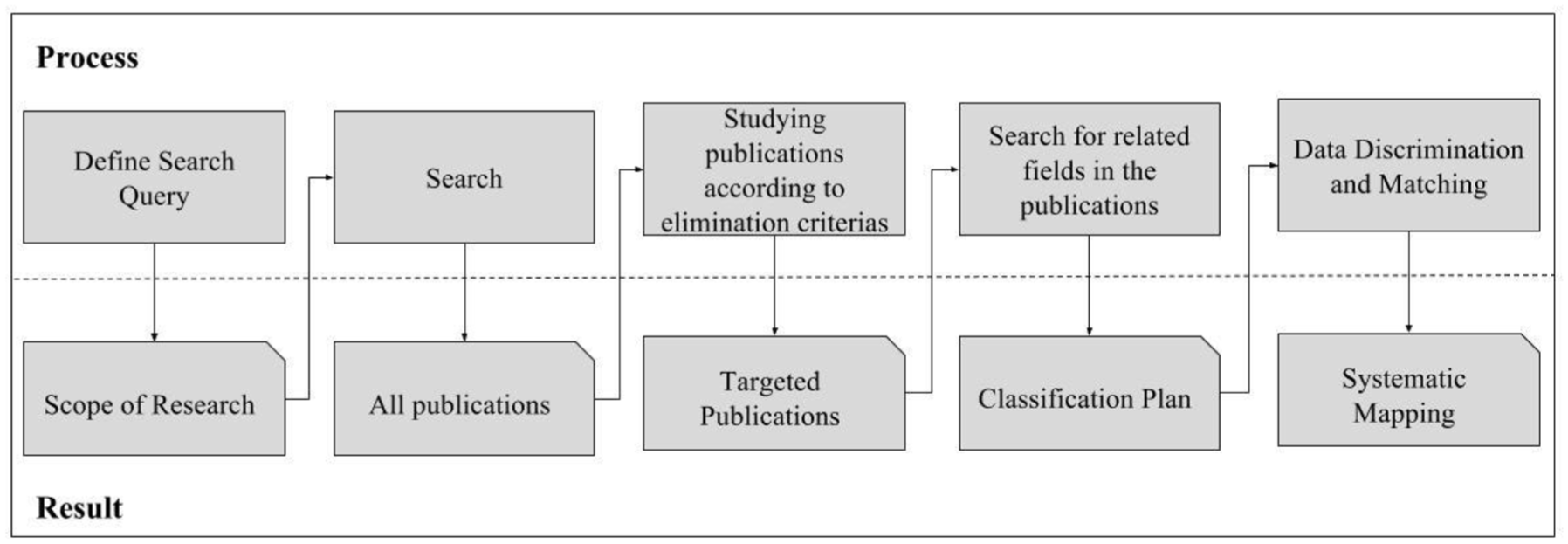
Steps of a systematic mapping study (SMS).
Research method
We conducted an SMS of works published from 2000 to 2019 addressing the use of intelligent computational methods in HVAC systems in order to identify methods that can be employed to ensure energy savings and thermal comfort.
Research questions
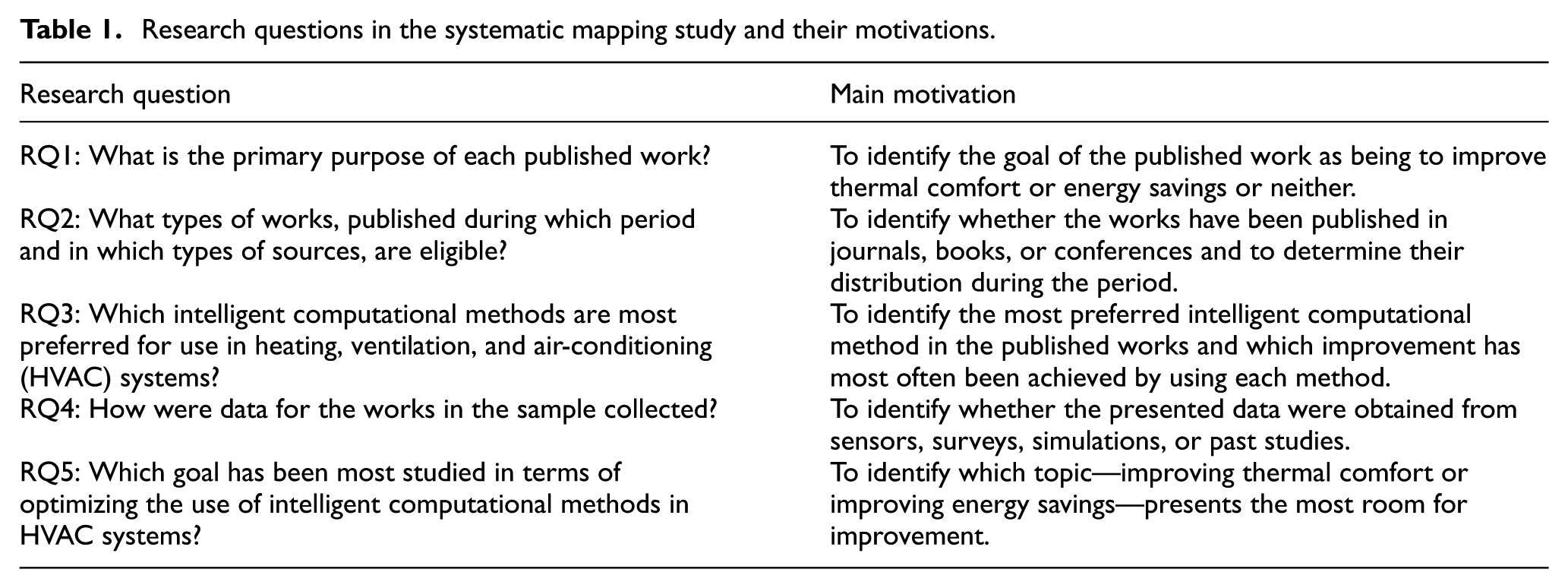
In any study, research questions need to establish the purpose of the study and each of its goals. The research questions for our SMS and their motivations appear in Table 1.
Research questions in the systematic mapping study and their motivations.
Search procedure
We selected a set of keywords to search for in various databases of published works in science and engineering. Once we determined the keywords, we performed searches of the relevant databases, guided by a query string consisting of the keywords. The query string generated for the study was (HVAC AND (“thermal comfort” OR energy OR efficiency OR saving)) AND (forecasting OR prediction OR classification)
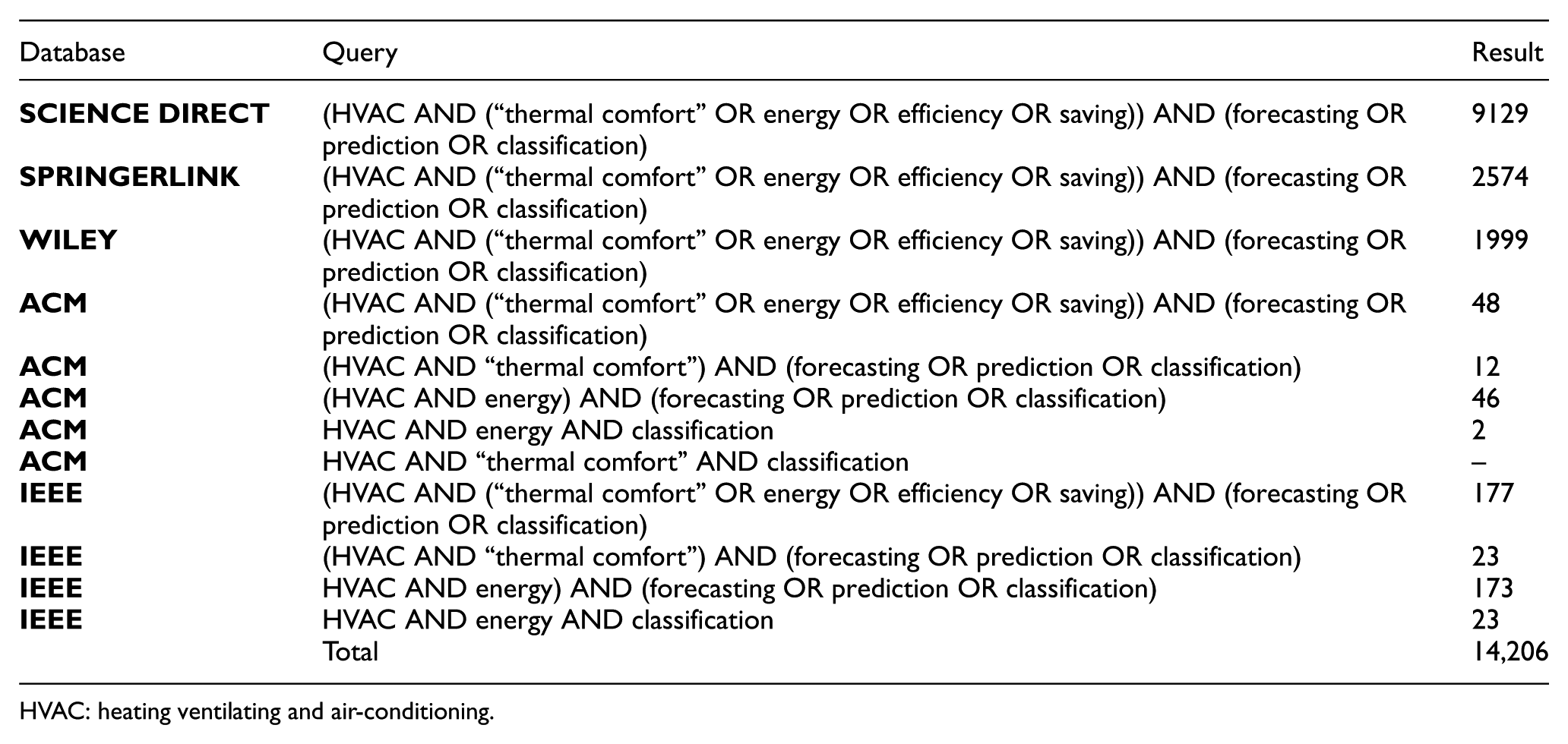
After formulating the query string, we searched the most prominent databases in engineering—the Institute of Electrical and Electronics Engineers (IEEE) database, Association for Computing Machinery (ACM) Digital Library, ScienceDirect, SpringerLink, and Wiley Online Library—for works and citations published from 2000 to 2019. Whereas searches of SpringerLink, ScienceDirect, and Wiley Online Library yielded numerous results, searches of the ACM Digital Library and the IEEE database did not. For that reason, the query string for those two databases was abbreviated using different combinations and run again. The number of results generated by the databases for the query strings appears in Appendix 1.
Data extraction
We identified 14,206 published works on intelligent computational methods used in HVAC systems. To parse the .ris files from the selected databases and convert them to .csv format, we developed a small executable program. We recorded five parameters: type of publication (e.g. journal or conference), title of the publication, title of the work, country in which the research occurred, and year of publication.
To identify articles specifically related to our topic, we applied various inclusion and exclusion criteria, as shown in Table 2.
Excluding and including criteria.
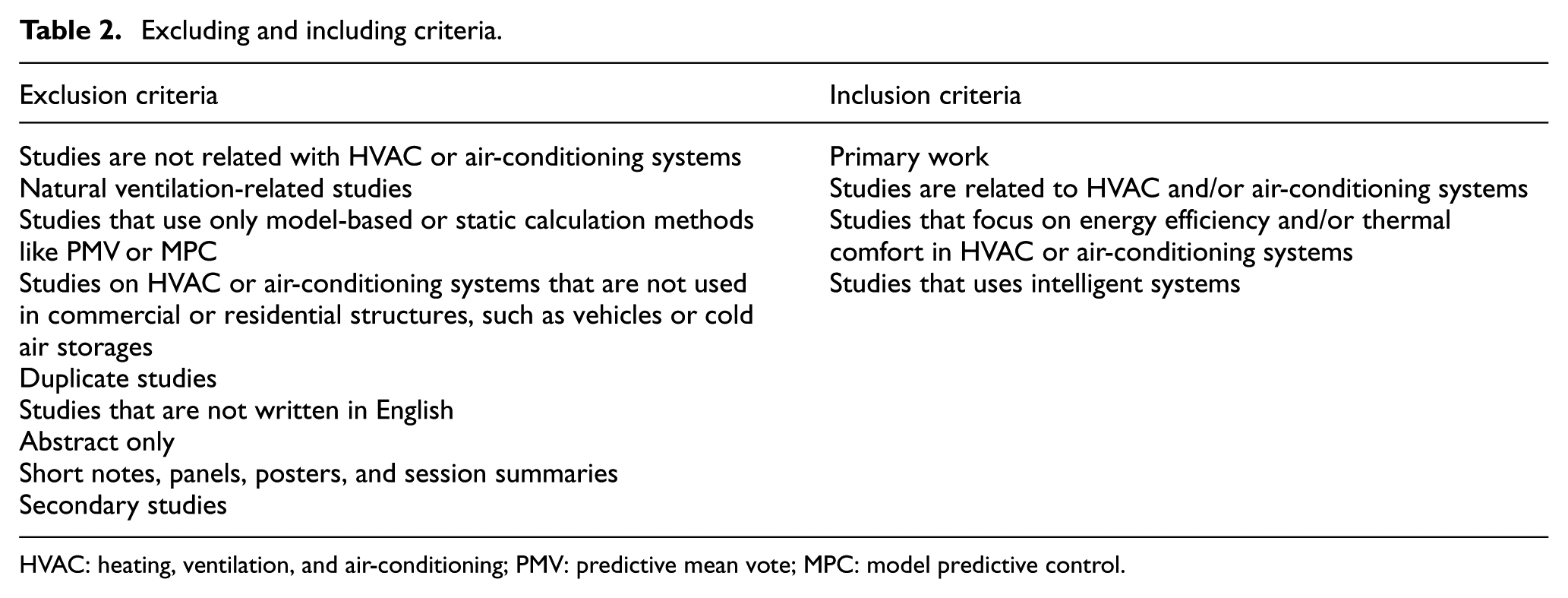
HVAC: heating, ventilation, and air-conditioning; PMV: predictive mean vote; MPC: model predictive control.
Ultimately, we identified 289 28 published works for analysis that met the inclusion and exclusion criteria. We evaluated the works with reference to the research questions developed for our SMS.
Research results
Figure 4 presents a pie chart organizing the answers to RQ1 for all published works in the sample. Occurring at a frequency of 42%, the most studied topic was energy savings, which 58% of the works aimed to enhance directly, whereas 10% examined predicting energy consumption, and 9% examined detecting faults in using sensors or HVAC systems to conserve energy. Meanwhile, 23% of works directly investigated thermal comfort and 7% focused on improving strategies for controlling HVAC systems.
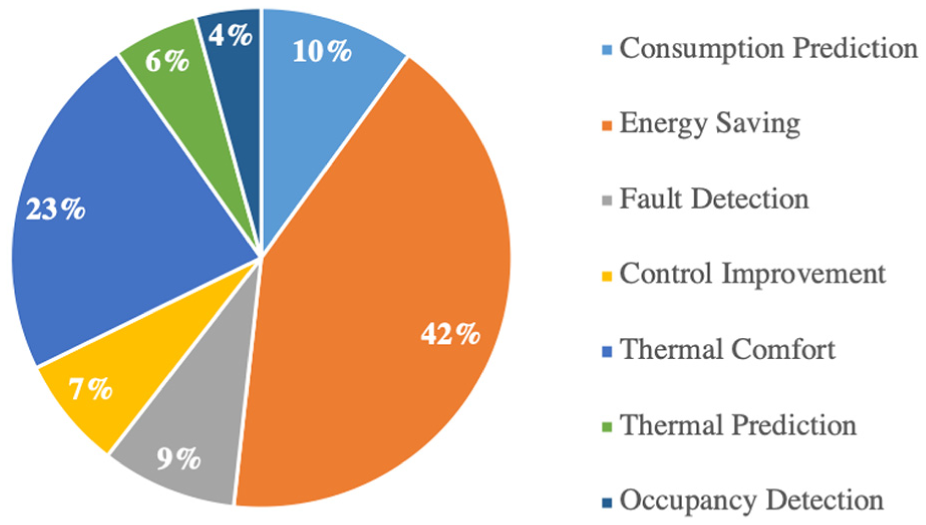
Purposes of the published works in the sample.
In response to RQ2, the graph in Figure 5 shows the distribution of the published works according to type of publication in which they appeared. Most works communicated their results in academic journals. Also presenting the distribution of the works by year of publication, the graph reveals an increase in the number of publications since 2009 and that machine learning in HVAC systems dominated publications in 2017.
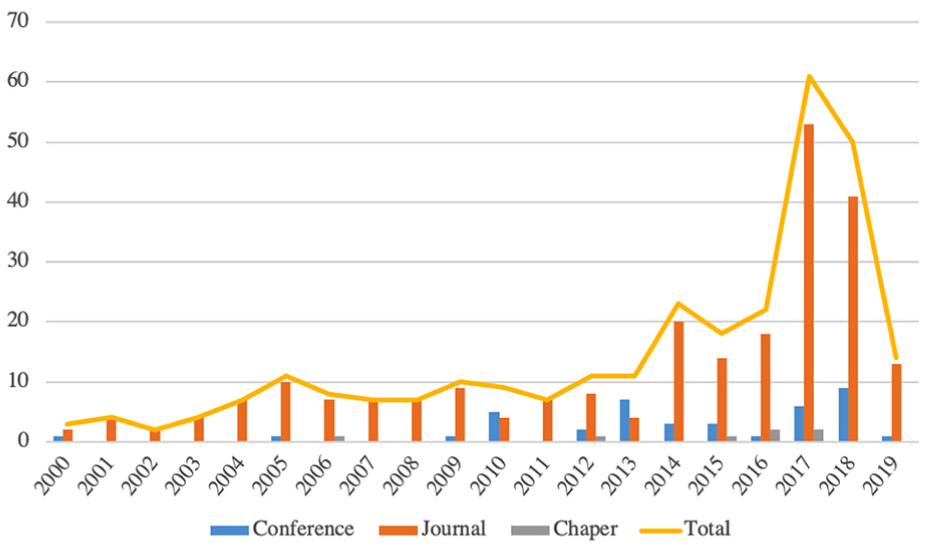
Types of publication by years.
Figure 6 presents a graph of the mean number of citations per study per year, which indicates a downward trend in the number of citations from 2000 to 2019.
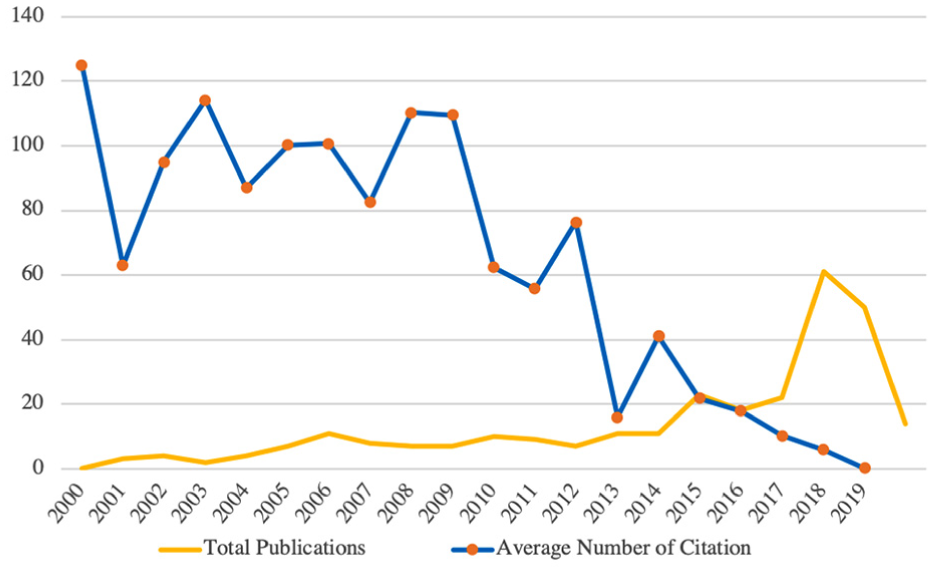
Mean number of citations versus total number of works by year.
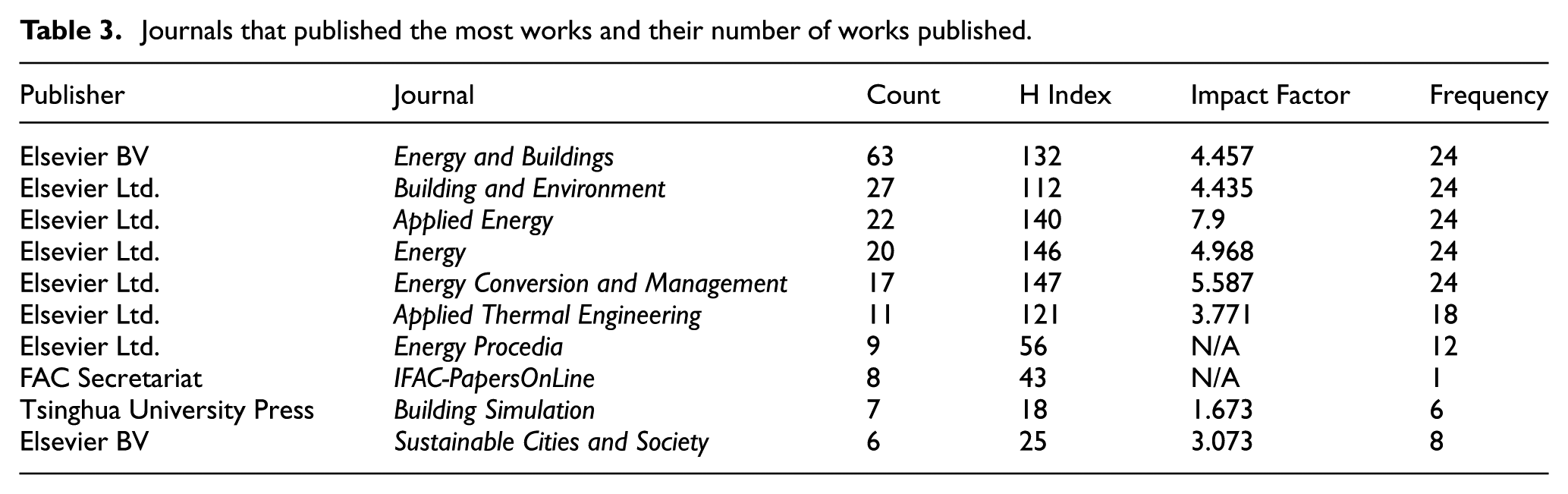
Table 3 lists the top 10 journals that have published the most works on optimizing HVAC by using intelligent computational methods and their features. As the table shows, Energy and Buildings has published the most articles (i.e. 63) addressing the intelligent control of HVAC systems since 2000.
Journals that published the most works and their number of works published.
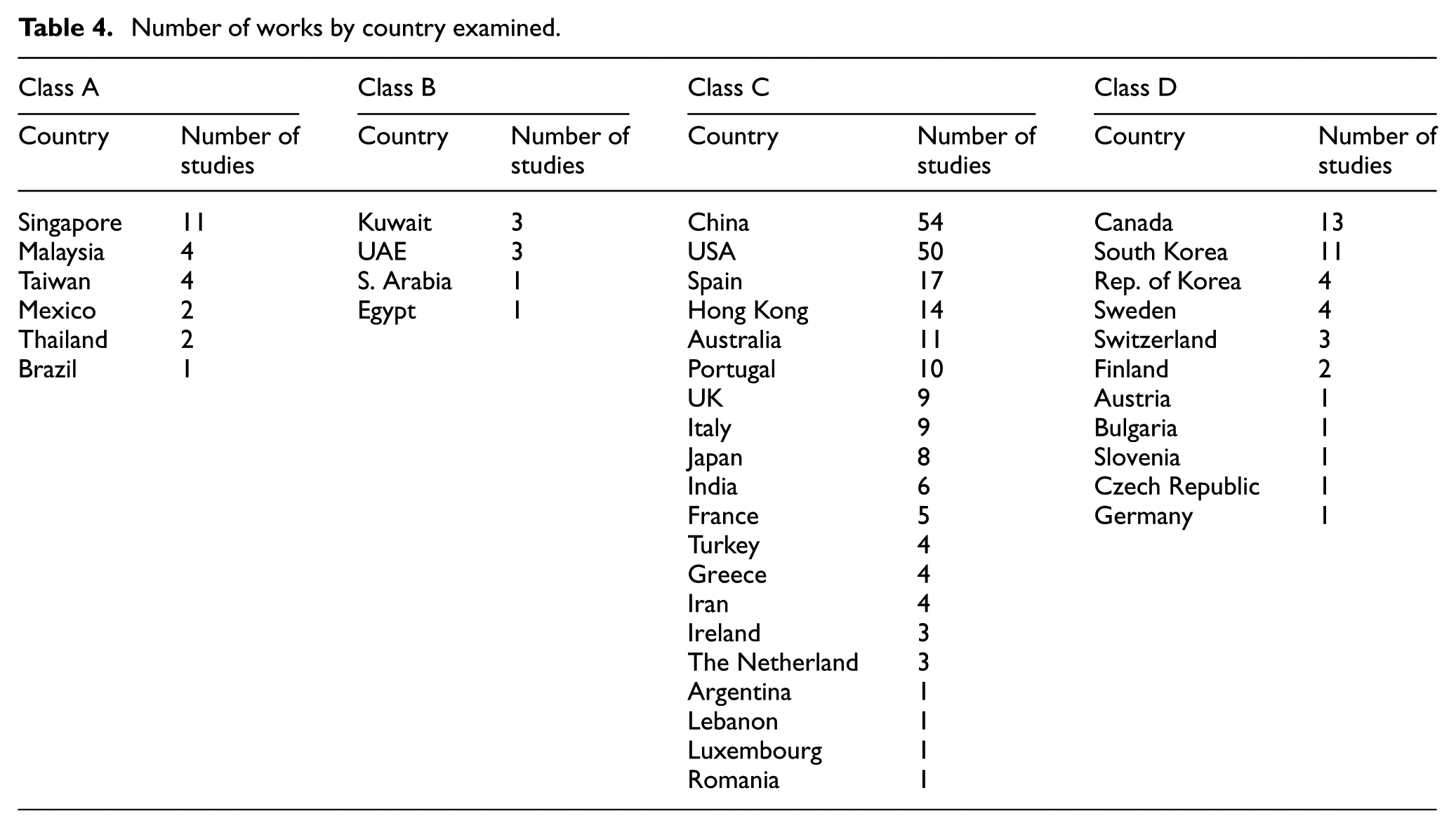
The pie chart in Figure 7 shows the distribution of countries examined in the published works by their climate class according to the Köppen climate classification. 25 The pie chart clearly reveals the considerable efforts of countries with Class C climates (i.e. humid subtropical, oceanic, and Mediterranean) to improve the thermal comfort provided by and energy consumption of HVAC systems. In fact, the top four countries represented in the sample have Class C climates. Of those countries, China produced the most works (i.e. 54, 18.7%), followed by the United States (i.e. 50, 17.0%). Countries with Class D climates (i.e. humid continental and subarctic) such as Canada and South Korea generated the second highest number of works; among them, Canada produced the fifth highest number of works. On the other end of the spectrum, countries with Class B climates (i.e. desert and semiarid) produced only 3% of all works in the sample; of them, Kuwait and the United Arab Emirates generated the most works, followed by Egypt and Saudi Arabia. The number of works per country based on the Köppen climate classification appears in Table 4, whereas the climate types themselves appear in Appendix 3.
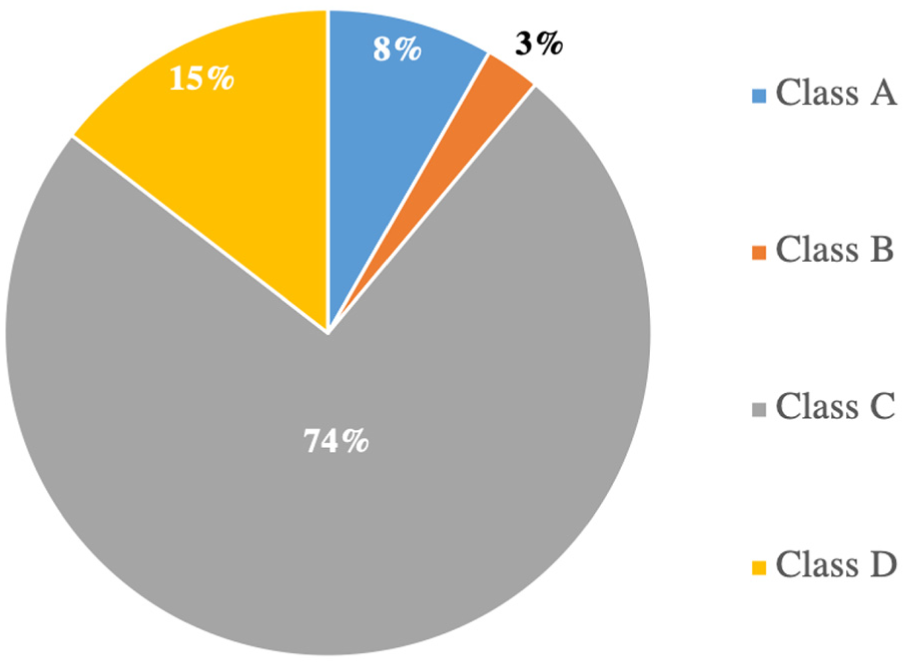
Distribution of countries examined in published works by climate class.
Number of works by country examined.
Regarding RQ3, which addressed preferred intelligent computational methods used in HVAC systems, researchers have most often analyzed energy consumption achieved by HVAC systems employing ANNs in the past 20 years. 26 The second most examined method was the radial basis function neural networks, while support vector machine was the preferred method for machine learning. Whereas most works targeting energy savings preferred multilayer perceptron, those concentrating on thermal comfort preferred to investigate Back-Propagation Neural Networks. Works on performance enhancement via error detection showed the greatest interest in Support Vector Machine, a type of machine learning method. Figure 8 illustrates the distribution of the applied methods examined in the works, among which ANNs were most preferred, with a 40% share, while all types of machine learning methods ranked second, with a share of 26%.
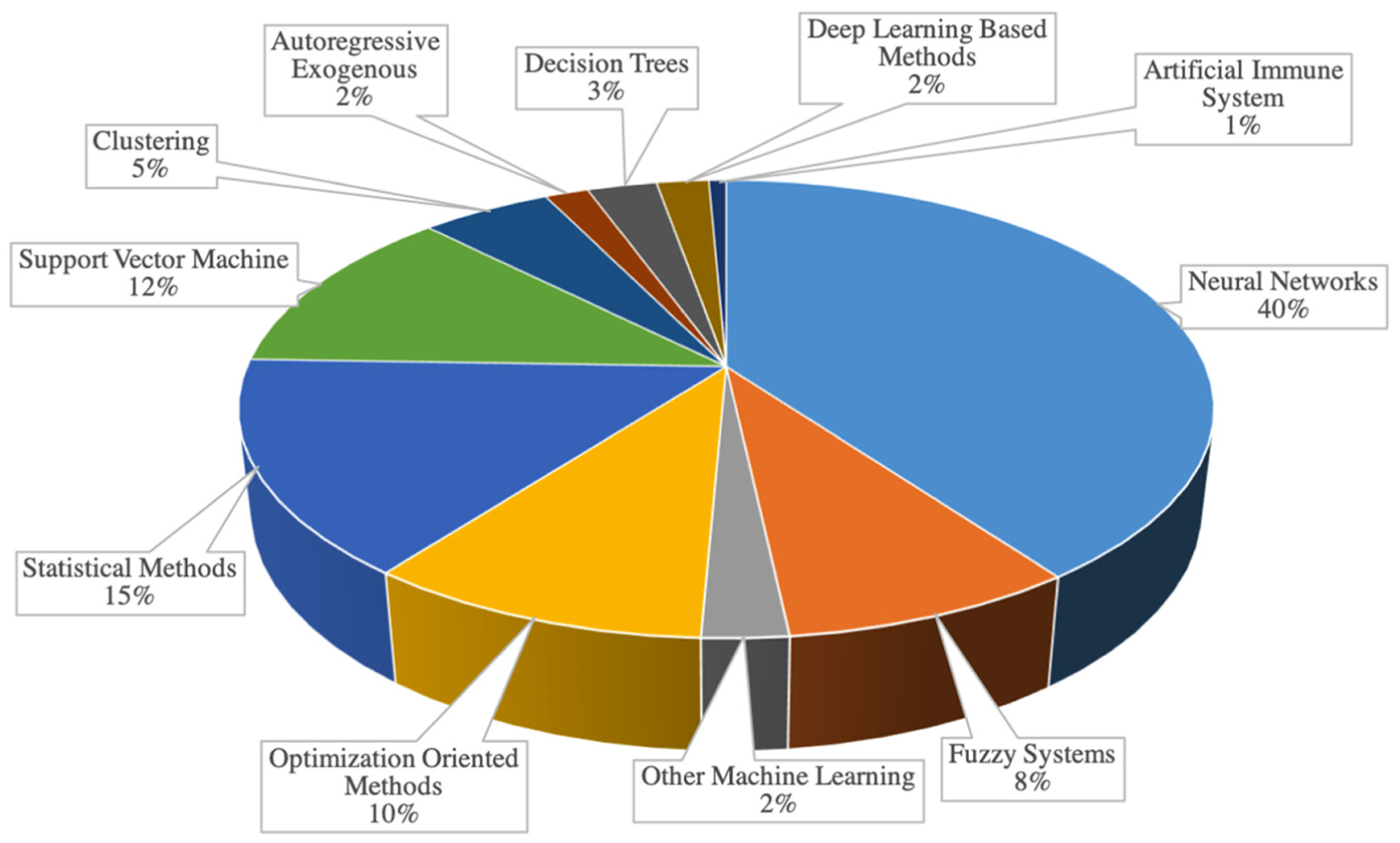
Intelligent computational methods used in heating, ventilation, and air-conditioning systems examined in the works.
As shown in Figure 9, we used a single X–Y bubble scatterplot to report the frequencies of methods examined, in which overlapping bubbles display the overlap of categories of methods, while the size of bubbles is proportional to the number of works addressing each category. Each bubble is associated with a paired goal of the works and a corresponding method. According to the figure, 51 of the problems with energy savings have been solved by using neural network methods, whereas solving or attempting to solve 26 of them involved other machine learning methods. By contrast, 36 of the problems with thermal comfort were solved using neural networks and 19 with machine learning. The figure also reveals that using neural network methods is the most common approach to solving problems related to energy efficiency in HVAC systems, which is soft computing.
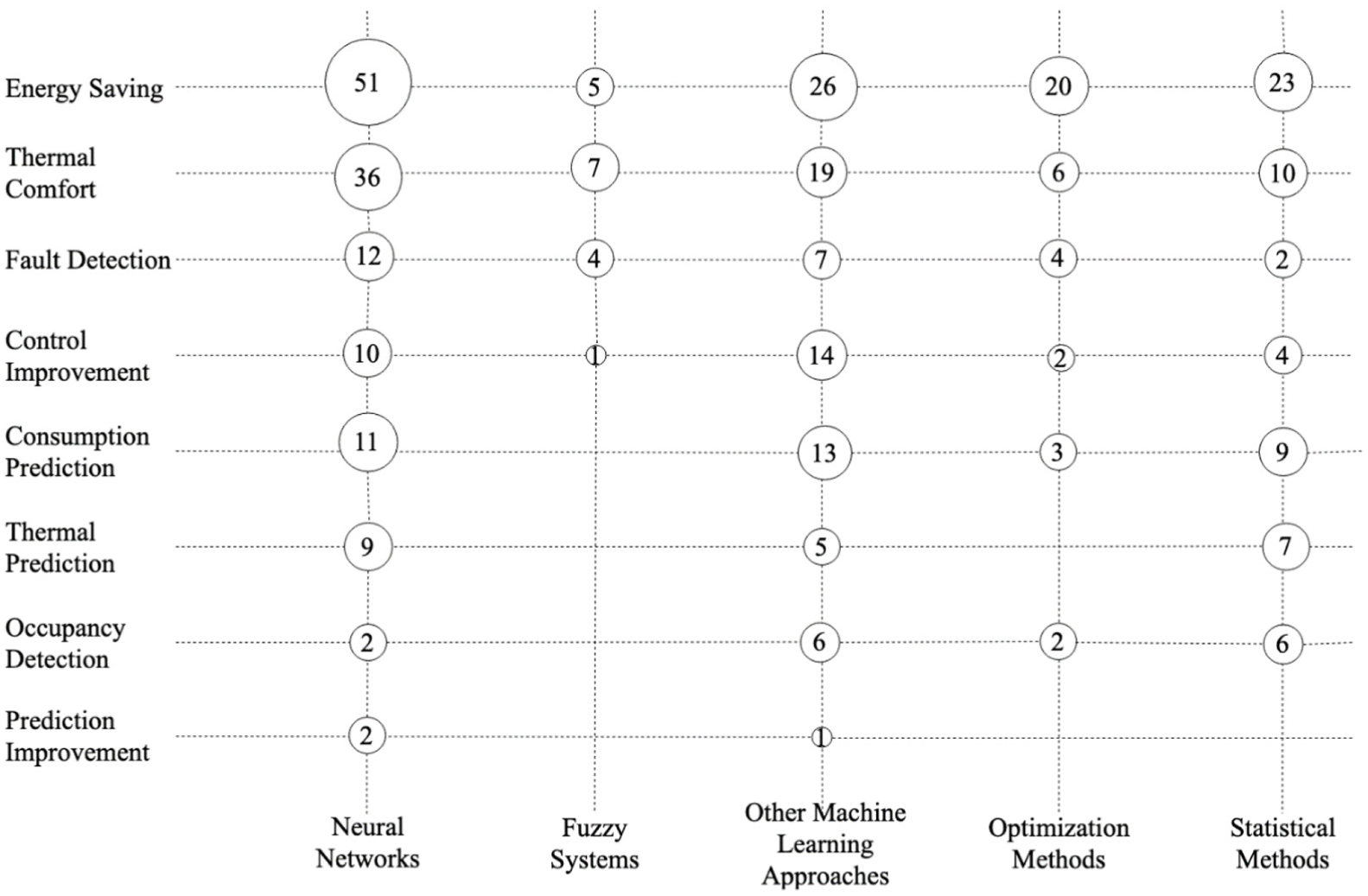
Visualization of a systematic map in the form of a bubble plot.
Concerning RQ4, data used in the works were collected via four methods. Whereas researchers who used real-valued data preferred sensors, databases, or questionnaires, others preferred simulations. As shown in Figure 10, the most preferred method of collecting data was using sensors, with a frequency of 64%. In particular, 56% of the works targeting improved energy savings and 65% of those targeting improved thermal comfort preferred to use sensors, likely due to the importance of gathering real-time data. Moreover, 9% of works involving the use of sensors and targeting improved thermal comfort also entailed conducting surveys among populations of occupants.
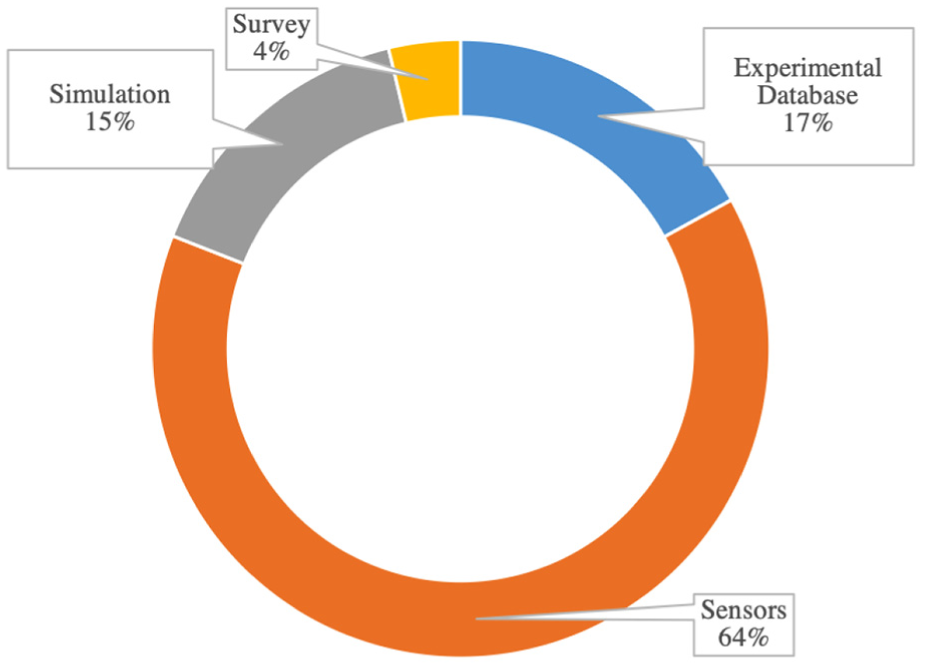
Methods of data collection used in the works.
Figure 11 shows the number of works using sensors to collect data by year, which happens to reflect the same trend shown in Figure 5. In short, the use of sensors to collect data about optimizing HVAC systems increased after the widespread introduction of devices accessing the Internet of Things.
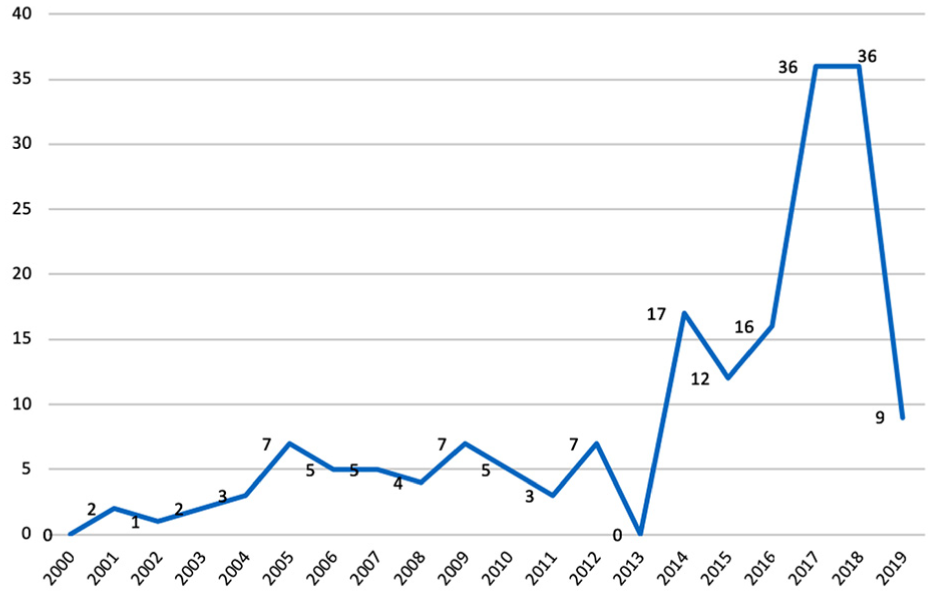
Works that collected data with sensors by year of publication.
In answer to RQ5, according to the results mentioned, energy savings, versus thermal comfort, is the most studied topic in research on HVAC systems, arguably due to a lack of energy resources on Earth. Based on very conservative assumptions, Fisk and Rosenfeld 27 estimated that improving the thermal environment in US office buildings would result in a direct increase in productivity of 0.5%–5%, accomplished by reducing the incidence of sick building syndrome, which costs US$12 billion to US$125 billion annually.
Threats to validity
The outcomes of our SMS may have been influenced by several factors, including our experience as researchers, the databases searched, the preferred search terms and keywords, and the period of publication chosen. This section discusses potential threats to the validity of our research and the measures that we took to mitigate them.
Internal validity
We formulated a comprehensive query string to identify published works for our SMS. The search terms specified for the various databases appear in Appendix 1. In addition, as discussed in the “SMS” section, we defined individual steps of the process of identifying published works in order to eliminate irrelevant ones.
Conclusion validity
The visual presentation of data analyzed was critical to our SMS. We dedicated “Research results” section for ensuring the validity of our conclusions so that readers can easily follow the data extracted from works in the sample. Our conclusions benefit from several graphs and visual representations that depict our findings.
External validity
The findings of our research contribute not only to knowledge on energy consumption but also to knowledge about machine learning, a subfield of computer science. To overcome potential difficulties of our multidisciplinary research, we formed a group of researchers from the fields of civil engineering and computer science.
Conclusion
In this research, we create an SMS that investigates studies between 2000 and 2019. The studies investigate intelligent computing methods for HVAC systems in commercial and residential buildings. More than 10,000 publications were obtained, from five different electronic databases, and evaluated within the scope of the predefined exclusion and inclusion criteria. In all, 289 publications were related to each other and were included in the SMS.
The fairly promising results show that the vast majority of studies target energy saving and achieve it between 2% and 50%. Most of the intentional energy-saving efforts directly target this, while the majority of those who see it as a secondary goal try to reach this goal by detecting the faults in the system. The second most studied topic was improving the thermal comfort of indoor environments.
A primary finding of our research is that 20%–40% of energy consumption in commercial and residential buildings is due to HVAC processes, which underscores the importance of research on using intelligent computational methods in HVAC systems to promote their energy efficiency. As a result, it is possible to use real values of variables hypothetically used in PMV calculations of data collected via wireless sensors, mobile devices, and wearable technologies. By using those methods, thermal comfort can be calculated and predicted more accurately. Energy consumption by HVAC systems can be reduced by detecting situations when the metabolic rate of occupants is high or when no occupants are present in the conditioned environment. Depending on the skin temperature of occupants due to their behaviors, ambient temperatures can be adjusted, and such information can be analyzed to predict the needs of occupants and pinpoint when and how HVAC systems should be used and controlled. This paper was a secondary study which tries to give high-level information about the usage of intelligent methods for energy saving and thermal comfort improvement in HVAC modeling and control strategies research area. In future, it can be worked on a tertinary study which aims to give information about the secondary studies that reviews the usage of intelligent methods in HVAC.
Footnotes
Appendix 1
| Database | Query | Result |
|---|---|---|
|
|
(HVAC AND (“thermal comfort” OR energy OR efficiency OR saving)) AND (forecasting OR prediction OR classification) | 9129 |
|
|
(HVAC AND (“thermal comfort” OR energy OR efficiency OR saving)) AND (forecasting OR prediction OR classification) | 2574 |
|
|
(HVAC AND (“thermal comfort” OR energy OR efficiency OR saving)) AND (forecasting OR prediction OR classification) | 1999 |
|
|
(HVAC AND (“thermal comfort” OR energy OR efficiency OR saving)) AND (forecasting OR prediction OR classification) | 48 |
|
|
(HVAC AND “thermal comfort”) AND (forecasting OR prediction OR classification) | 12 |
|
|
(HVAC AND energy) AND (forecasting OR prediction OR classification) | 46 |
|
|
HVAC AND energy AND classification | 2 |
|
|
HVAC AND “thermal comfort” AND classification | – |
|
|
(HVAC AND (“thermal comfort” OR energy OR efficiency OR saving)) AND (forecasting OR prediction OR classification) | 177 |
|
|
(HVAC AND “thermal comfort”) AND (forecasting OR prediction OR classification) | 23 |
|
|
HVAC AND energy) AND (forecasting OR prediction OR classification) | 173 |
|
|
HVAC AND energy AND classification | 23 |
| Total | 14,206 |
HVAC: heating ventilating and air-conditioning.
Appendix 2
where L is the total heat transfer around a person; M is the metabolic rate; W is the work done by a person; Pa is vapor pressure; tr is the average radiant temperature; ta is air temperature; fcl indicates what percentage of the whole body of an individual is under clothing; Icl is clothing insulation; and hc is convective heat transfer which can be calculated as follows
where V is the air velocity and tcl is the temperature with clothes. tcl can be calculated as follows
This measure suggests that 90% of the occupancy are comfortable with the thermal condition if the PMV value is between −0.5 and 0.5.
Appendix 3
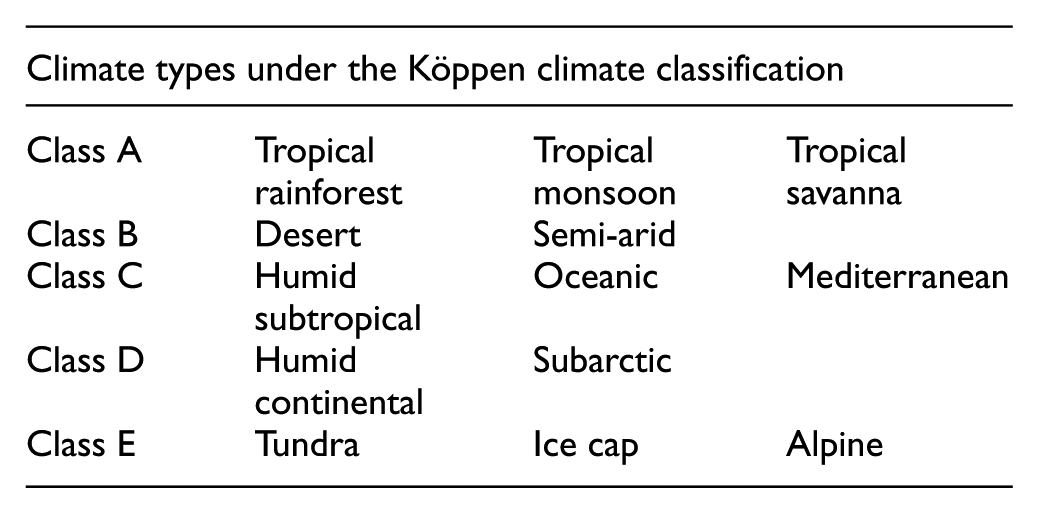
| Climate types under the Köppen climate classification | |||
|---|---|---|---|
| Class A | Tropical rainforest | Tropical monsoon | Tropical savanna |
| Class B | Desert | Semi-arid | |
| Class C | Humid subtropical | Oceanic | Mediterranean |
| Class D | Humid continental | Subarctic | |
| Class E | Tundra | Ice cap | Alpine |
Declaration of conflicting interests
The author(s) declared no potential conflicts of interest with respect to the research, authorship, and/or publication of this article.
Funding
The author(s) received no financial support for the research, authorship, and/or publication of this article.
