




Abstract
As an emerging research direction in the field of systems and control, distributed control or decentralized control has attracted great interests of researchers in the past decade. In this paper, a bibliometric analysis of the relevant publications is presented based on the data collected from the Science Citation Index Expanded Web of Science. In particular, we make a discussion on the trend of total publications, journal distribution, top research organizations (i.e. universities and institutes), and publication performance of nations, and the focus is on highly cited articles and authors, subject categories, and the future trend of hot topics. Some key bibliometric indexes such as single country articles, first author articles, and internationally collaborative articles are employed to give us a detailed picture about the intrinsic relationship and the state of the art of distributed control publications. Finally, the statistical analysis indicates that multi-agent systems are extremely popular in recent years and will dominate the future research on distributed control.
I. Introduction
For large-scale systems such as power systems, urban transportation systems, and economic systems, it is difficult to obtain the global state information and thus carry out the centralized control. 1 In addition, it is worth noting that centralized control of large-scale systems is computationally costly, and both system states and control signals are vulnerable to a variety of disturbances. As a result, distributed control or decentralized control provides an appealing option for large-scale systems due to its ability of dealing with dimensionality, uncertainty, and information structure constraints. 2 In addition, distributed control schemes require the availability of plenty of sensors, controllers, and actuation elements in order to achieve the information sharing and effective implementation. Thus, another driving force results from the rapid development of semi-conductor technologies, which greatly reduces the cost of microprocessors, sensors, and actuators. 1
Distributed control or decentralized control refers to the control scheme that only uses the locally available state or output information of subsystems to achieve the desired control objective of the whole system. Compared with centralized control strategies, distributed control or decentralized control possesses some prominent properties of handling issues of large-scale systems. 2 In terms of communication cost, distributed control approach is economical and easy to implement. In particular, it can remarkably enhance the robustness of the whole system while suffering from the uncertainties or external disturbances. It is also highly flexible to add new elements or subsystems and remove the existing ones without severely degrading the performance of the whole system.
Initially, distributed control is proposed to achieve the synchronization among different processes in computer operating systems. 3 In addition, the micro-electro-mechanical-system (MEMS) provides a powerful tool for the real-time distributed control of fluid flows. 4 Inspired by social insect behaviors, distributed control algorithms can be developed for groups of robots to carry out cooperative tasks. 5
In the past decade, distributed control or decentralized control has found plenty of applications in multi-agent systems, which involves leader-following control, 6 coverage control, 7 flocking control, 8 formation control, 9 and finite-time consensus, 10 to name just a few.
In this paper, we aim to make a bibliometric analysis of publications on distributed control or decentralized control from 1991 to 2015 in the Science Citation Index Expanded (SCI-EXPANDED) database. Such analysis allows us to obtain the time evolution of relevant publication indexes, identify hot research topics, provide a guideline for potential research directions, and even predict the research trend. The outline of the paper is given as follows. Section “Methodology” introduces the methodology of bibliometric analysis. Section “Performance of Publication” focuses on the publication performance mainly including publication outputs, web of science categories and journal distribution, country and institution, leading articles in 2015, and research focuses. Finally, we draw a conclusion in Section “Conclusion.”
II. Methodology
In this section, we introduce the methodology used in this article. Data were obtained from the online version of SCI-EXPANDED databases of the Thomson Reuters’ Web of Science Core Collection (updated on 10 August 2016). Keywords “distributed control,” “distributed controls,” “decentralized control,” “decentralized controls,” “decentralised control,” and “decentralised controls” were searched in terms of topics including publication title, abstract, author keywords, and KeyWords Plus, with the publication years ranging from 1991 to 2015. KeyWords Plus supplied additional search terms extracted from the titles of articles cited by authors in their bibliographies and footnotes in the ISI (now Thomson Reuters, New York) database and substantially augmented title-word and author-keyword indexing. 11 In total, 5165 articles satisfied the selection criteria. Another filter, the “front page,” 12 meant only the documents with the searching keywords in their front page including document title, abstract and author keywords were preserved. There are 4750 documents that met the selection criteria. The Web of Science Core Collection full record and number of citations in each year for each article were downloaded into Microsoft Excel 2013 and additional coding of the downloaded records was manually performed. 13 Impact factors (IF2015) were taken from the Journal Citation Reports (JCR) published in 2015.
In the SCI-EXPANDED database, the corresponding author was designated as the “reprint author.” It is worth pointing out that the term “corresponding author” was used in the article. 14 In a single author article where authorship was unspecified, 15 the single author was both first author and corresponding author. 14 Similarly, for a single institution article, the institution was classified as the first author’s institution and the corresponding author’s institution. 16 Articles originating from England, Scotland, Northern Ireland, and Wales were reclassified as being from the United Kingdom (UK). Articles from Hong Kong were included under the heading of China. 17 Articles from Yugoslavia were checked and reclassified as being from Serbia. Articles from Czechoslovakia were checked and reclassified as being from Slovakia and Czech Republic, respectively. 18 Articles from USSR were checked and reclassified as being from Russia. 14 Articles from Guadeloupe were checked and regarded as being from France. 14
III. Performance of Publication
A. Document type and language of publication
The distribution of document type identified by the Web of Science was analyzed as well. As we can see in Table 1 , articles were the most commonly contributed document type, and 4618 articles were analyzed in the following study. Probably, there is the overlapping statistics about document type since the percentage sum of article, proceedings paper, and other document types are larger than one. The publication language of the articles was dominated by English (4552; 99% of 4750) with citations per publication (CPP = TC2015/TP) of 14, followed distantly by German (21 articles; CPP = 1.4), French (14; 2.1), Spanish (10; 0.80), Polish (7; 1.9), Japanese (4; 0.50), Chinese (3; 1.3), Russian (3; 0.33), and one for Italian, Portuguese, Serbo-Croatian, and Slovene, respectively, without any citations.
Document type of relevant publications from 1991 to 2015.
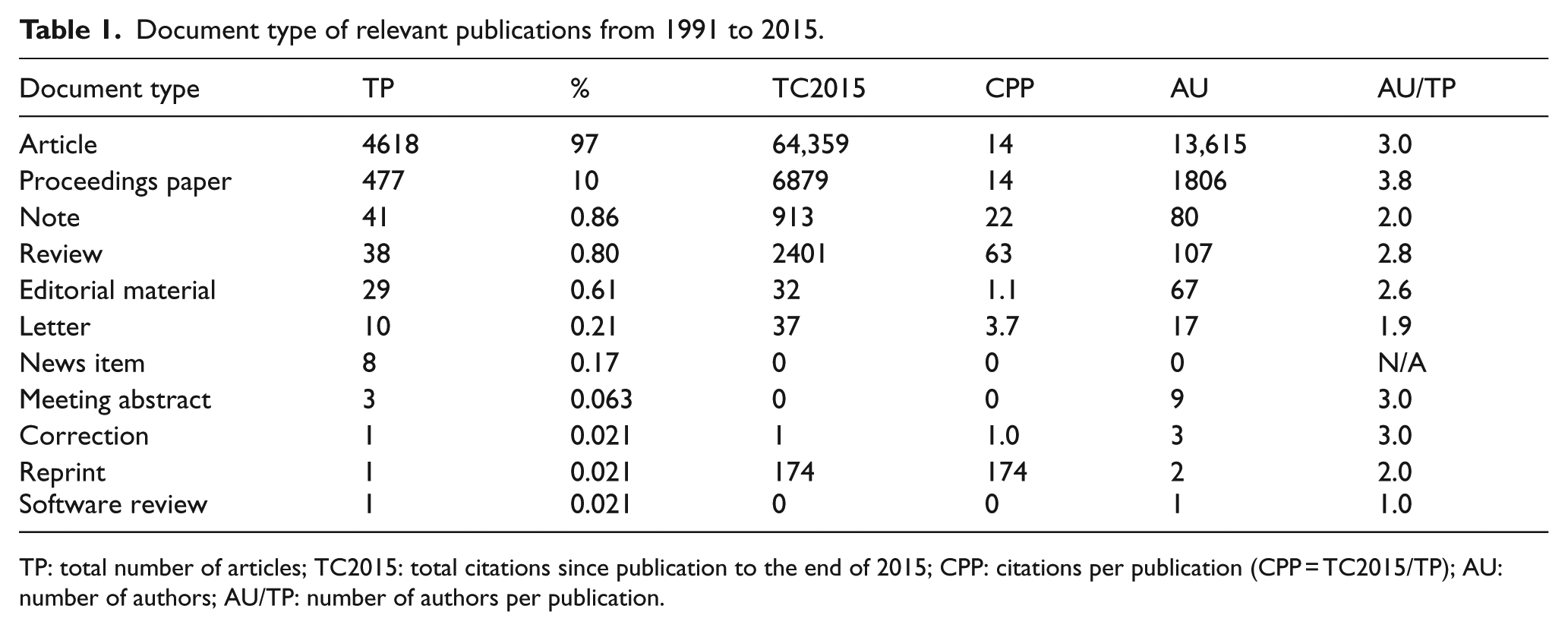
TP: total number of articles; TC2015: total citations since publication to the end of 2015; CPP: citations per publication (CPP = TC2015/TP); AU: number of authors; AU/TP: number of authors per publication.
B. Publication outputs
Ho et al.13,16,19 –22 investigated the relationship between the number of high citation articles and number of articles in a research field and their CPP by year. Figure 1 shows an overview of distributed control–related publications, the annual number of articles, and CPP during 1991–2015. As we can observe, the annual number of articles goes up gradually on the whole during this period, which indicates the increasing interest of researchers in the field of distributed control. In contrast, the CPP increases first and then reaches the peak during 2000–2006. Finally, the CCP declines sharply after 2008, which could result from the large amount of follow-up publications in recent years.
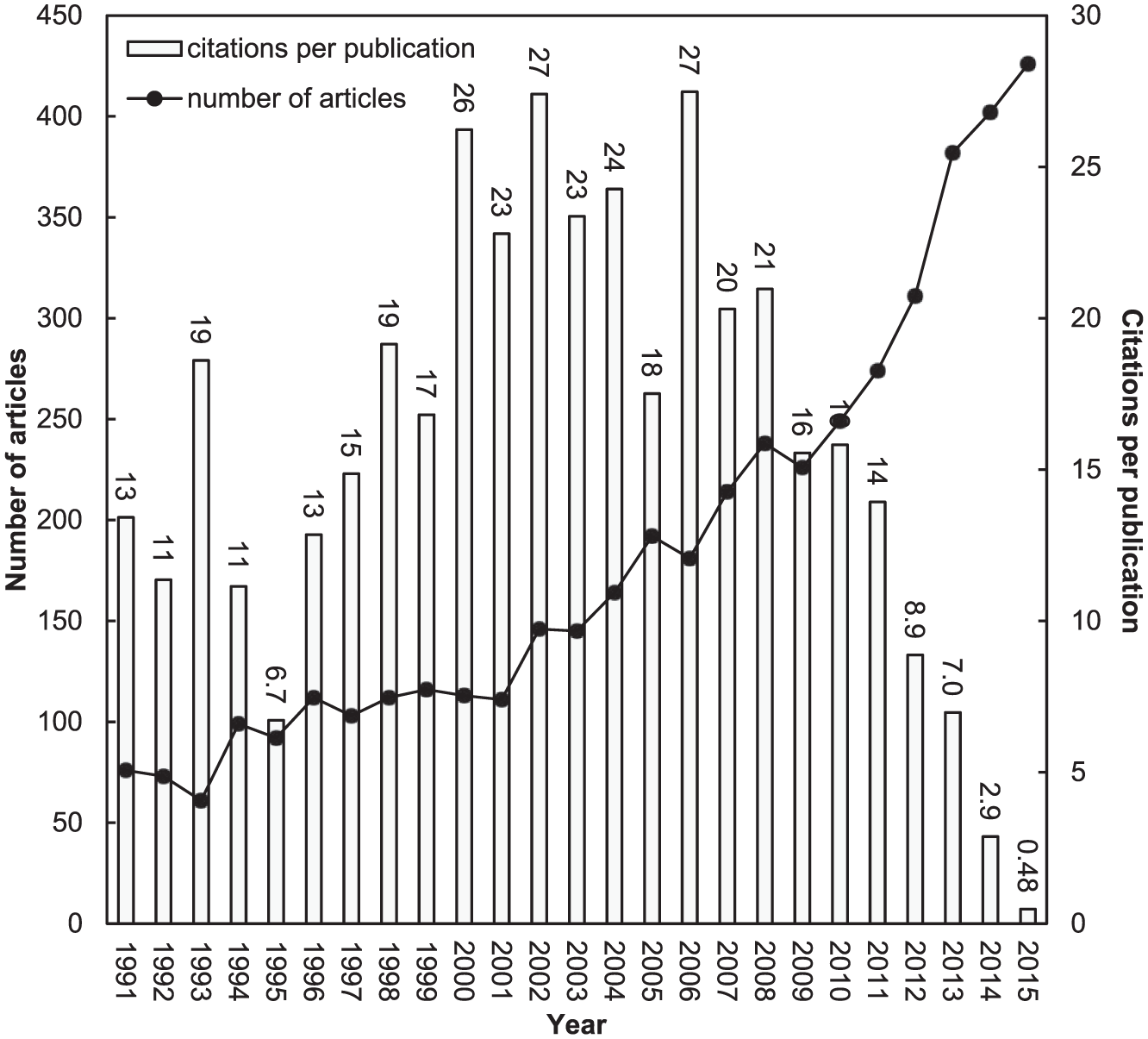
Annual number of articles and citations per publication by year.
C. Web of science categories and journals
According to JCR of 2015, it indexes 8864 journals with citation references across 177 Web of Science categories in SCI-EXPANDED. Based on the classification of Web of Science categories in SCI-EXPANDED in 2015, the publication output data of distributed control–related research was widely distributed across 114 categories. Two main categories included more than 1000 articles such as automation and control systems with 59 journals, which contributed the most of 1787 articles (39% of 4616 articles), and electrical and electronic engineering with 255 journals (1713 articles; 37%).
Altogether, 4618 articles were published in a wide range of 959 journals. Among these journals, 854 journals (89% of 959 journals) contained less than 10 articles. In total, 502 journals (52% of 959 journals) published only one article, 145 (15%) journals published two articles, and 70 (7.3%) journals published two articles. Table 2 shows the top 10 journals which accounted for 22% of the total articles. IEEE Transactions on Automatic Control (IF2015 = 2.777) published the most articles with 228 articles (4.9% of 4618 articles) followed by Automatica (IF2015 = 3.635), International Journal of Control (IF2015 = 1.880), IEEE Transactions on Control Systems Technology (IF2015 = 2.818), and Control Engineering Practice (IF2015 = 1.830). The journals with the highest IF2015 was Nature with two articles (IF2015 = 38.138), followed by Nature Nanotechnology (IF2015 = 35.267), Nature Cell Biology (IF2015 = 18.699), and Nature Communications (IF2015 = 11.329) with only one article, respectively. Notably, IEEE Transactions on Automatic Control and Automatica, as top journals in the field of systems and control, published the most articles on distributed control and decentralized control. This indicates that distributed control or decentralized control has become one of mainstream research areas in control science and engineering during the past two decades.
The 10 most productive journals with the number of articles, and impact factor during the period of 1991 to 2015.
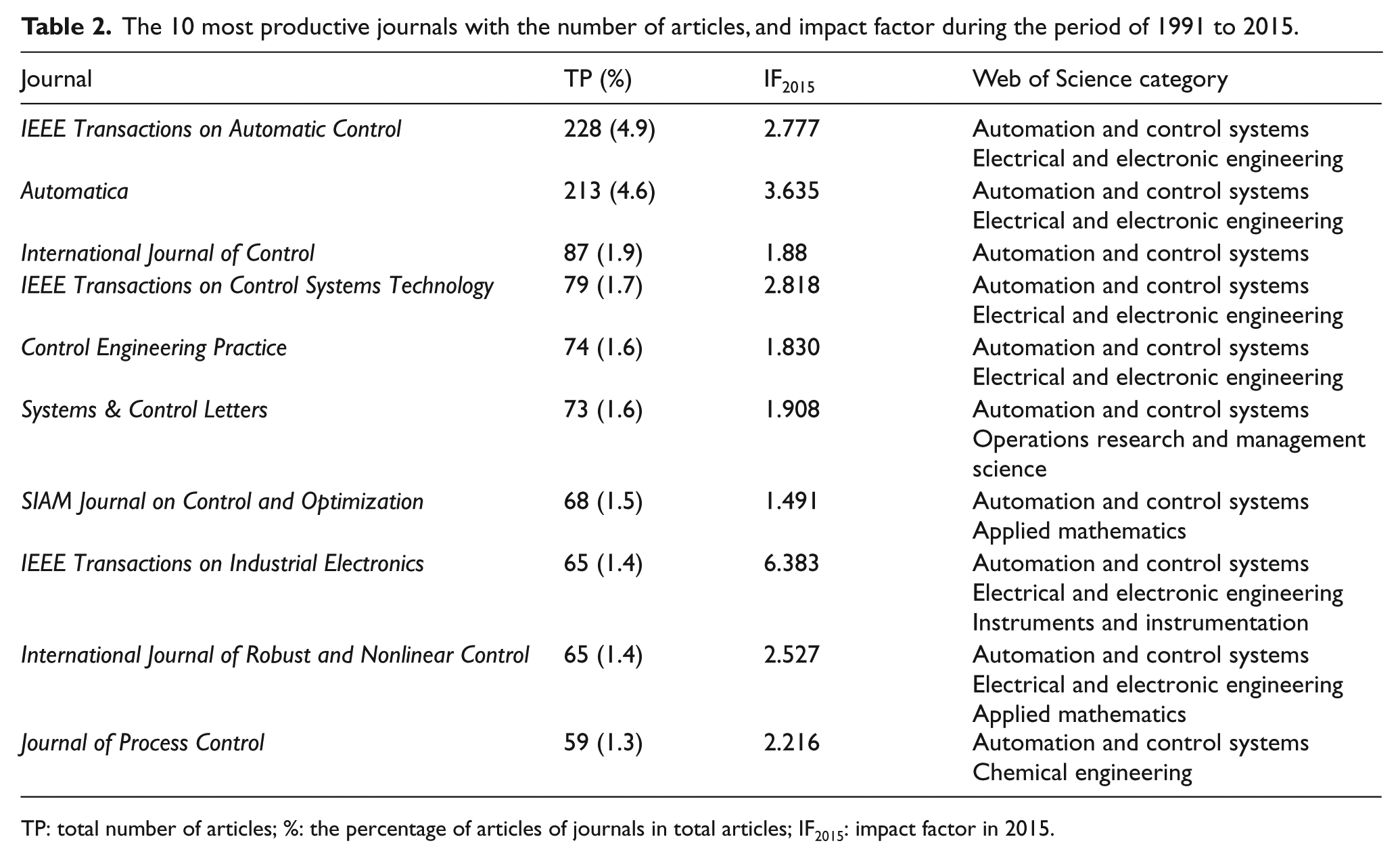
TP: total number of articles; %: the percentage of articles of journals in total articles; IF2015: impact factor in 2015.
D. Country and institution
In last decade, Ho and co-workers15,20,23 –25 proposed indicators such as total publications (TP), independent publications (IP), collaborative publications (CP), first authored publications (FP), corresponding authored publications (RP), single authored publications (SP), and CPP to compare publications of countries and institutions, respectively. It was reported that at the institutional level, the determined institution of the corresponding author might be a home base of the study or origin of the paper. 14
There were 71 articles without affiliation information in Web of Science. Of 4547 articles with author affiliations from 82 countries, 3497 (77% of 4547 articles) were single country articles from 64 countries and 1050 (23%) were internationally collaborative articles from 79 countries. The top 10 productive countries are listed in Table 3 with seven indicators. They published 3516 articles (77% of 4547 articles) with TC2015 = 55,177 (86% of 64,298 citations) and CPP = 16. Five European countries, two Asian countries, two American countries, and one Oceania country, were ranked on the top 10 of publications. There was no any African and South American country in the top 10. 26 The most productive African country was Egypt ranked 32th. The United States ranked top in the six indicators followed by China. The United States also had the highest CPP of 23 while China ranked seventh in the top 10 countries. The most cited single country article from the United States had TC2015 of 1243. Article entitled “Finite-time consensus problems for networks of dynamic agents” 10 published in IEEE Transactions on Automatic Control was the most cited single country article from China with TC2015 of 180.
The top 10 most productive countries.
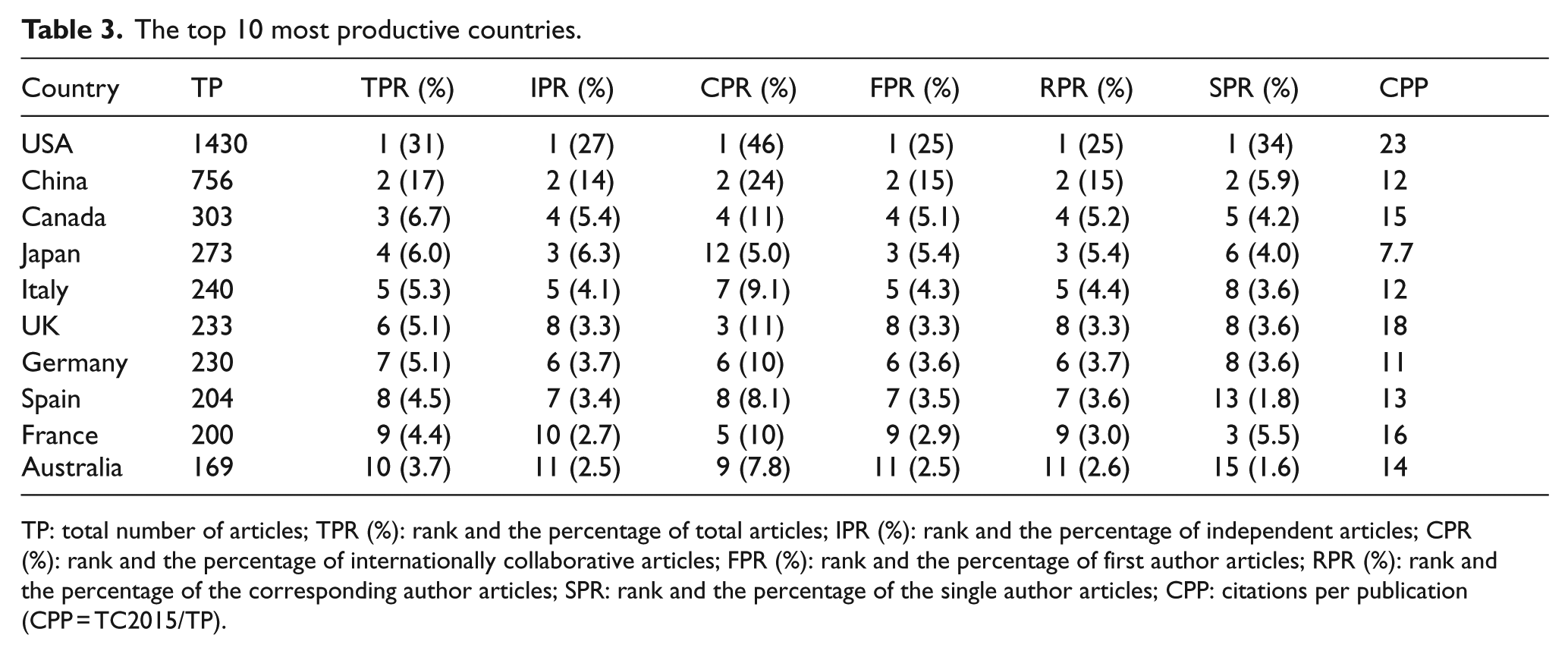
TP: total number of articles; TPR (%): rank and the percentage of total articles; IPR (%): rank and the percentage of independent articles; CPR (%): rank and the percentage of internationally collaborative articles; FPR (%): rank and the percentage of first author articles; RPR (%): rank and the percentage of the corresponding author articles; SPR: rank and the percentage of the single author articles; CPP: citations per publication (CPP = TC2015/TP).
Figure 2 shows the evolution and trends of the top G7 (the United States, the UK, Canada, Germany, France, Italy, and Japan) and China. Obviously, the G7 had high productivity in research publications, which included 2662 (59% of 4547 articles). The United States had a slightly increased trend. Excepting the United States, China had the same trend of publications with other countries from 1991 to 2003. Afterward, China had a higher increase trend from 2003 to 2011 and a dramatic growing trend from 57 articles in 2011 to 164 articles in 2015. In particular, it is worth pointing out that China outperformed the United States after 2013 in terms of annual article number.
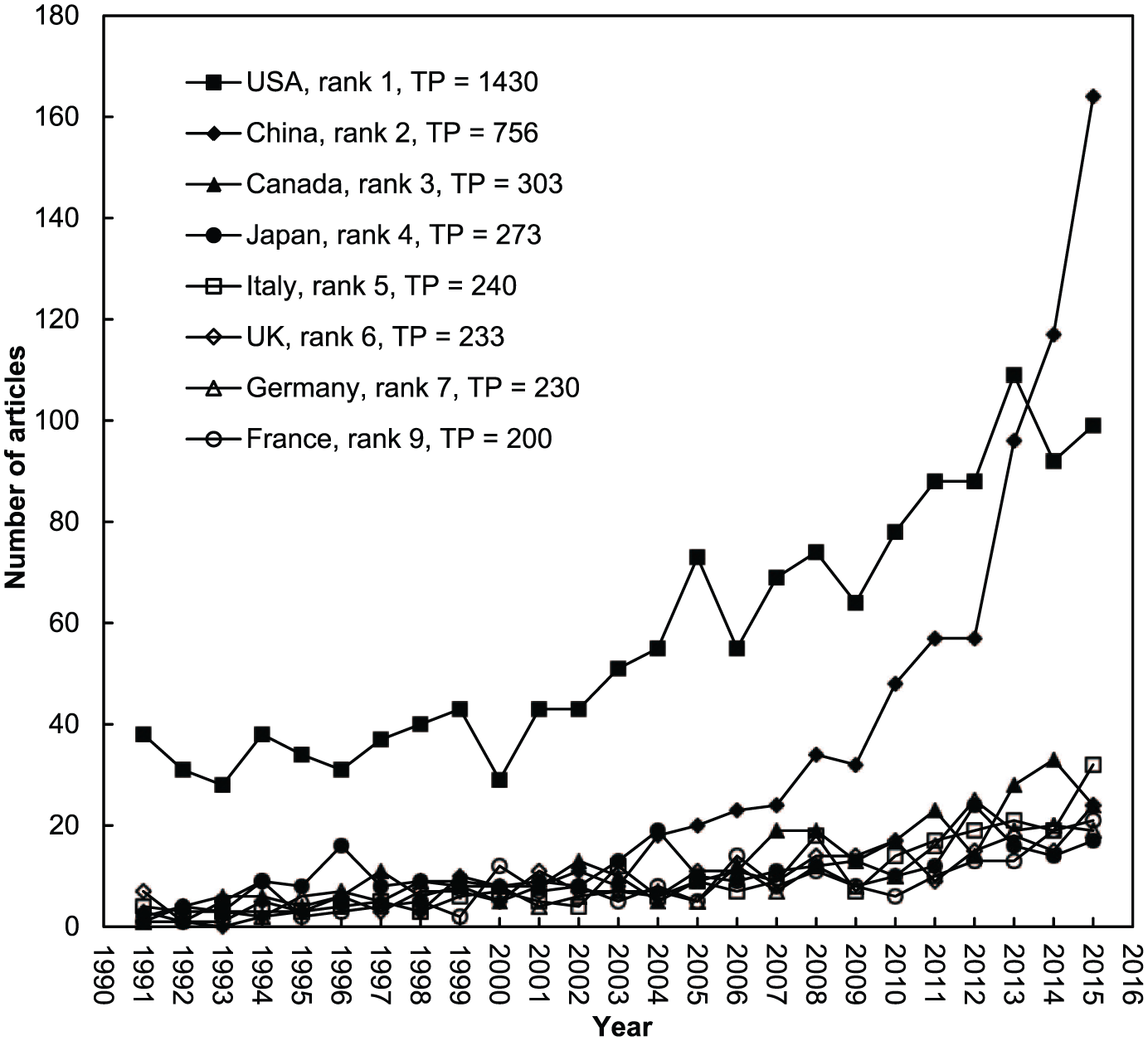
Publication trends of China and G7 during 1991–2015.
Of the 4547 articles with author affiliations in Web of Science, 2352 articles (52% of 4547 articles) came from independent institutions, 1051 (23%) articles from international collaboration, and 1145 (25%) articles from national collaboration. Table 4 shows the top 10 productive institutions published at least 40 articles and displays the rankings and percentages of seven indicators including total number of articles and numbers of first author, corresponding author, single institution, internationally collaborative, nationally collaborative, and single author articles. Four of the 10 (40%) most productive institutions were in the United States, three institutions were in China, two in Canada, and one in Singapore. University of Illinois in the United States ranked first in total number of articles and number of nationally collaborative articles. Nanyang Technological University in Singapore had the most institutionally independent articles, internationally collaborative articles, first author articles, and corresponding author articles. Zhejiang University in China and Politecn Milan in Italy also ranked the first in institutionally independent articles. Zhejiang University published the most of corresponding author articles. Only 6 of top 10 institutions had single author articles. University of Texas—Pan American in the United States published the most single author articles with eight. It is worth pointing out that Nanyang Technological University was merely ranked at the 100th place in terms of the percentage of nationally collaborative articles (NCPR). This is mainly due to the fact that there are only two research intensive universities in Singapore. In addition, the Chinese Academy of Sciences is ranked in the third place in terms of both total articles and the corresponding author articles. A bias appeared in Web of Science Core Collection because the Chinese Academy of Sciences has over 100 branches in different cities. 27 The publications of the institute were pooled as one heading and publications divided into branches would result in different rankings.
The top 10 most productive institutions (TP ≥ 40).
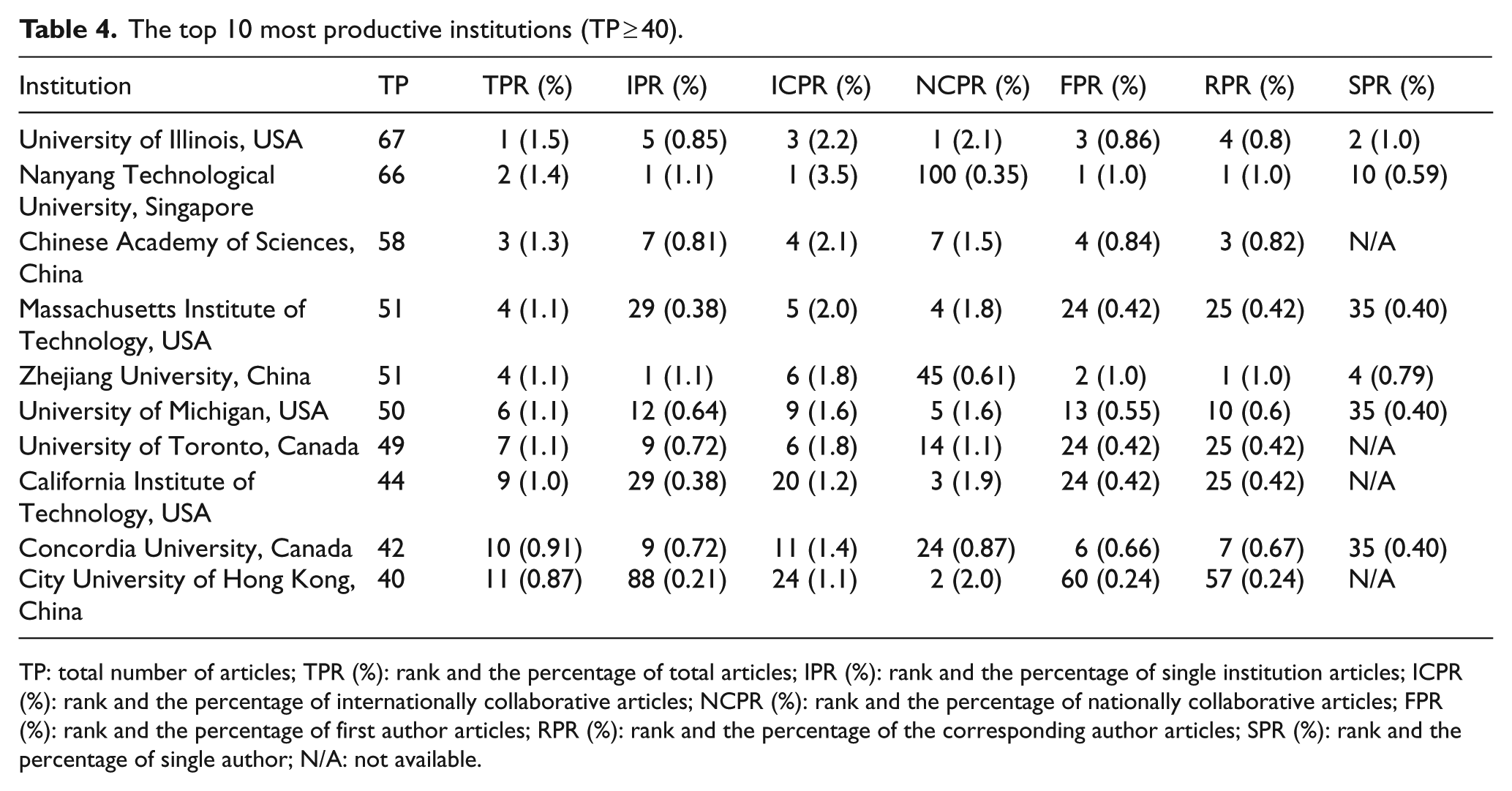
TP: total number of articles; TPR (%): rank and the percentage of total articles; IPR (%): rank and the percentage of single institution articles; ICPR (%): rank and the percentage of internationally collaborative articles; NCPR (%): rank and the percentage of nationally collaborative articles; FPR (%): rank and the percentage of first author articles; RPR (%): rank and the percentage of the corresponding author articles; SPR (%): rank and the percentage of single author; N/A: not available.
E. Leading articles in 2015
High citation articles provide an interesting and useful insight into which authors and topics are influencing a research discipline over time.28,29 However, the impact of an article with high citations might not be always high since its publication, and top articles on total citations could be low impact in recent years.14,18,30 Thus, number of citations in recent year (Cyear) of an article was notable for top articles. 14 In fact, top articles on TCyear and Cyear were never be the same.14,31 The top articles on number of citations in recent year (C2015) might be a new indicator to help researchers to understand recent research in a field.
The 10 articles (C2015 ≥ 50) with high impact in recent year are shown in Table 5 . Among the 10 articles, three were published in the Automatica (IF2015 = 3.635), two in IEEE Transactions on Industrial Electronics (IF2015 = 6.383) and IEEE Transactions on Automatic Control (IF2015 = 2.777), respectively, and one each in the IEEE Transactions on Fuzzy Systems (IF2015 = 6.701), IEEE Journal on Selected Areas in Communications (IF2015 = 3.672), and Journal of Synchrotron Radiation (IF2015 = 1.877). The article “Flocking for multi-agent dynamic systems: Algorithms and theory” by Olfati-Saber was ranked first in terms of both TC2015 and C2015. In this paper, the authors succeeded in applying algebraic graph theory to investigate the coordination control of multi-agent systems, which provides a mathematical framework for distributed control problems. In particular, there are four articles6,8,32,33 on distributed control of multi-agent systems among the nine articles listed in Table 5 . Moreover, three articles focused on the application of distributed control in intelligent microgrids, 34 macromolecular crystallography beamlines, 35 and generation inverters, 36 while the other six articles put more emphasis on algorithms and theory. Figure 3 shows the timeline of citation number of four articles ranked the top 10 in both TC2015 and C2015. Three articles6,8,37 exhibited the similar trend of annual citation number. The annual citation numbers of these three articles went up gradually and reached the maximum during 2013–2014; then they decreased slightly. As for the article, 35 its annual citation number kept rising on the whole. Obviously, the article by Olfati-Saber had attracted much more annual citations than other three articles since 2006.
The 10 most frequently cited articles in 2015 (C2015 > 50).
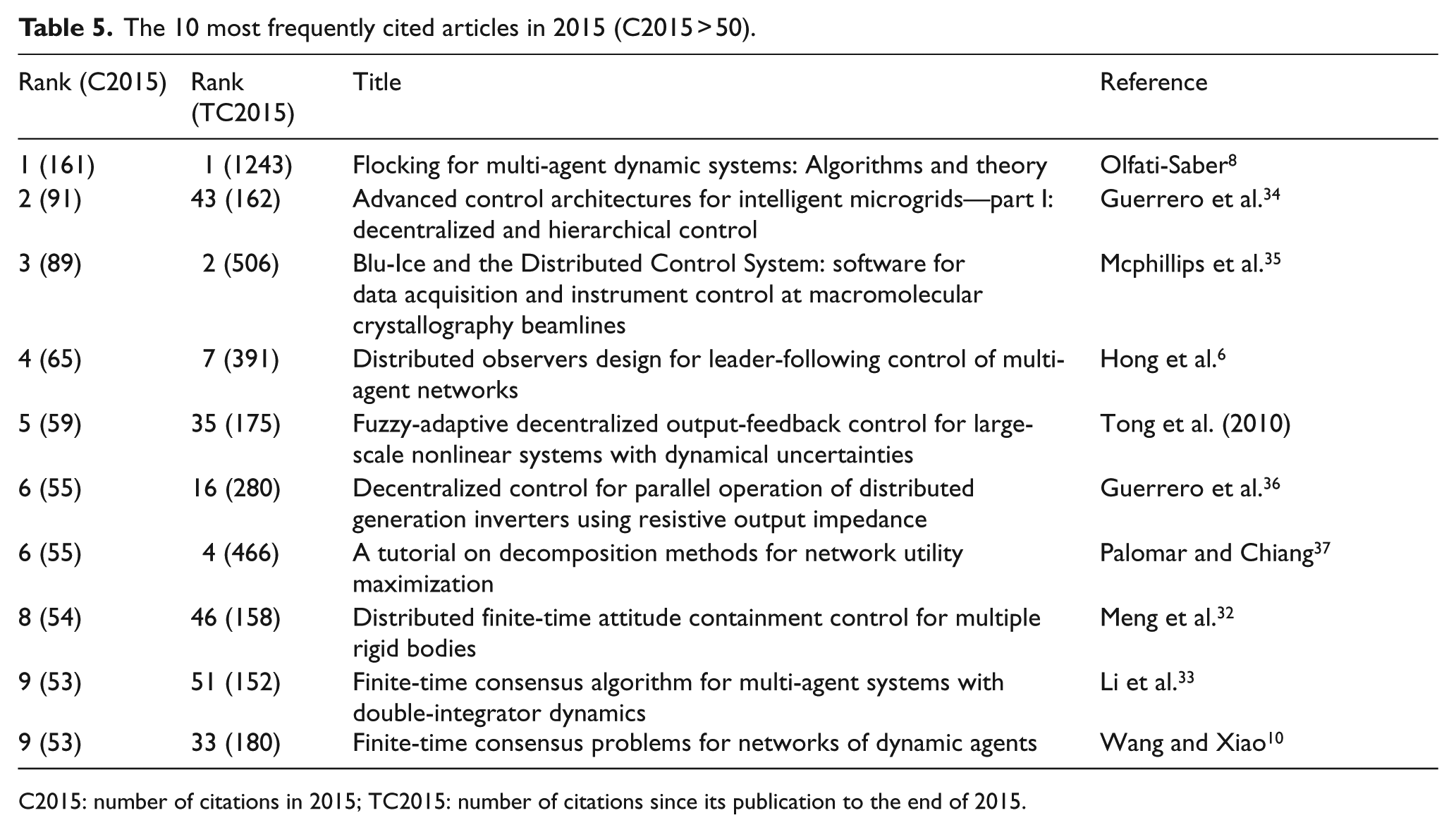
C2015: number of citations in 2015; TC2015: number of citations since its publication to the end of 2015.
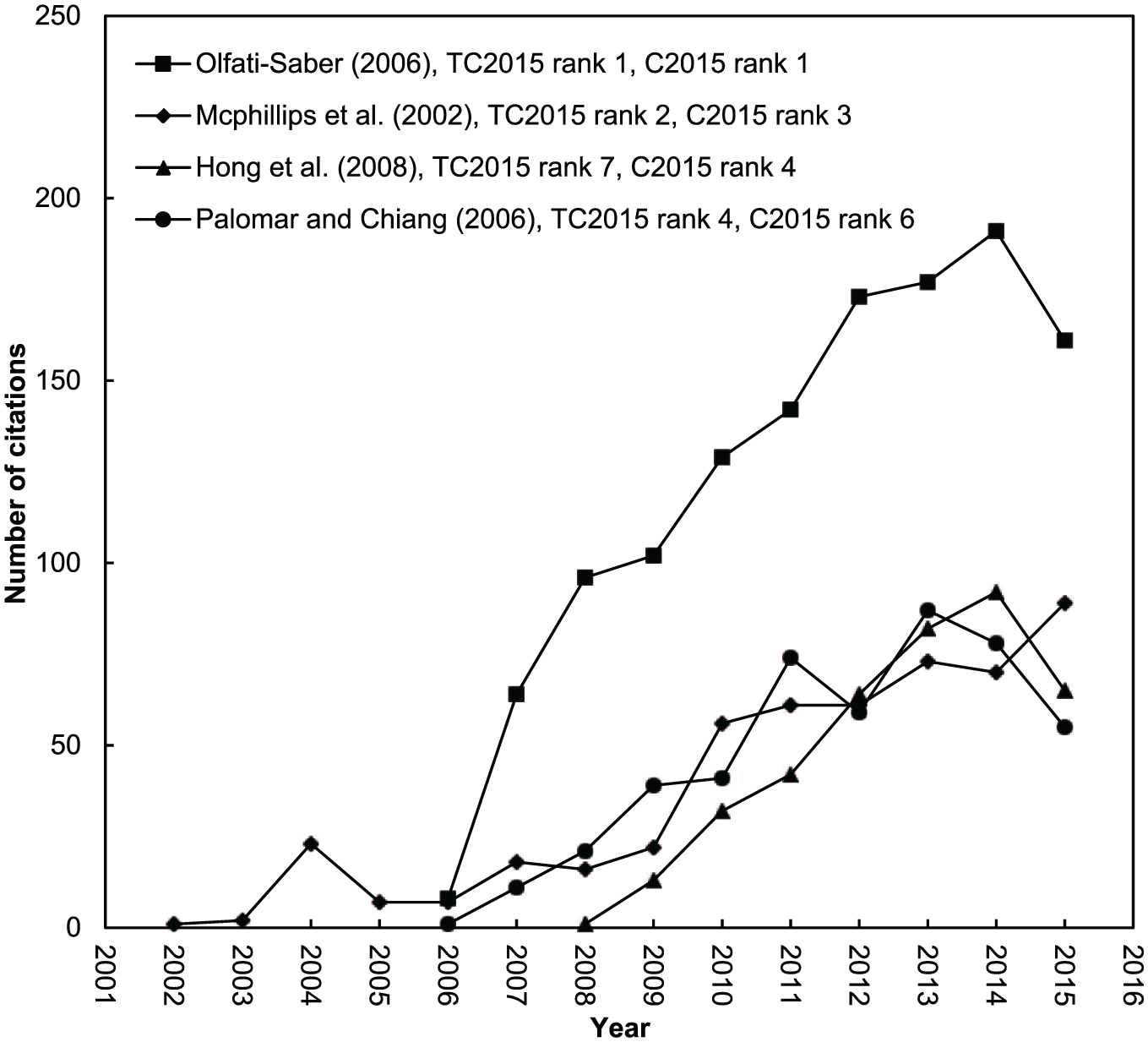
The four articles ranked the top 10 in both TC2015 and C2015.
F. Research focuses
Based on “front page” 12 and KeyWords Plus 11 of the publications, the hot topics were selected and analyzed in order to give us a general idea about the state of the art and research trends in the field of distributed control or decentralized control. According to the data analysis, distributed control or decentralized control had wide applications in the following four hot research fields: multi-agent systems, interconnected systems, large-scale systems, and networked control systems. Figure 4 depicts the timeline of four hot topics on distributed control. As we can observe, the annual number of articles on each hot topic increased gradually on the whole. Notably, the annual number of articles on multi-agent systems soared up to more than 50 in 2013 and kept on increasing dramatically afterward, which implies that multi-agent systems are becoming more and more popular to researchers and will promisingly continue the trend in the near future. In contrast, the other three hot topics (i.e. large-scale systems, interconnected systems and networked control systems) received the most attentions during 2012–2014 but faded slightly afterward.
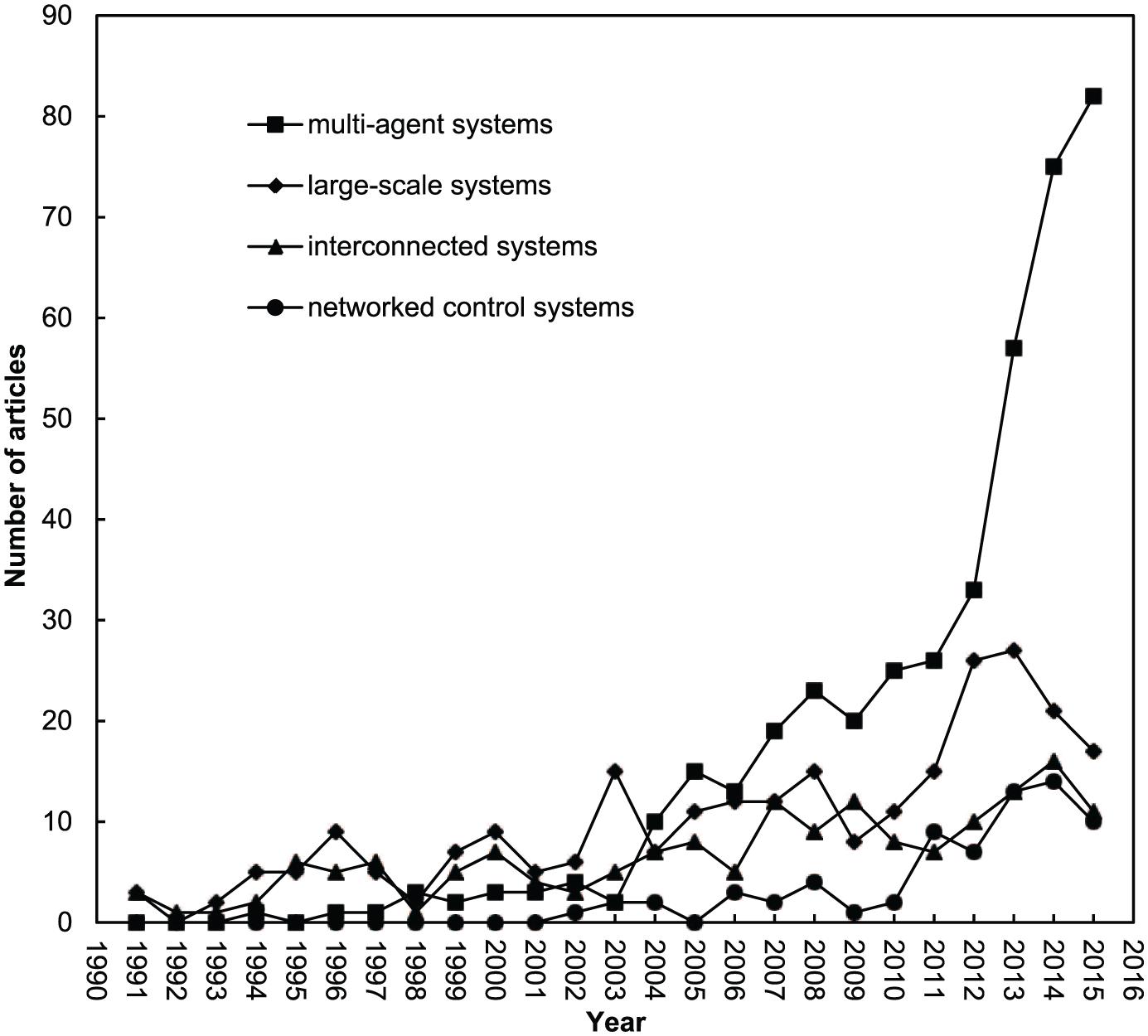
Hot topics and research trends of distributed control during 1991–2015.
IV. Conclusion
In this paper, we investigated the publications on distributed control or decentralized control during 1992–2015 from the perspective of scientometrics. Some well-defined indexes such as CPP, TP, CP, IP, FP, RP, and SP were employed to explore the publication outputs, which allows us to quantitatively assess the performance of countries, research organizations, journals, and leading articles. The analysis demonstrated that distributed control or decentralized control is still a popular research field and institutions from the United States (four universities ranked in top 10), China (two universities and one institution in top 10), Canada (two universities in top 10), and Singapore (one university in top 10) performed best in terms of total publications. Finally, we analyzed the current hot topics and pointed out that multi-agent systems are the promising direction for researchers in the field of distributed control or decentralized control by analyzing front page and KeyWords Plus of the publications.
