



Abstract
Historically, biomass energy is the oldest form of energy, for domestic purposes. Amongst biomass, crop-residue resources are abundant, especially in agriculture-dominated areas. Worldwide, of the total renewable energy potential, one-fourth of total renewable energy is being produced by biomass and waste. Within biomass, co-generation plants using process-based agricultural wastes are used for power generation. However, a major proportion of crop residues, that is, non-processed residues, are burnt in the open fields themselves, resulting in air pollution, greenhouse gases and climate change, deterioration of soil health due to loss of nutrients, moisture, etc. The present article assesses crop-residue generation, utilisation, and surplus-availability for energy generation in Amritsar district. Amritsar district is the second most populated among 22 districts of Punjab state. Agriculture is the main economic activity in the district, covering 82.2% of its geographical area. It has been estimated that a total of 2.5 million tonnes of crop residues are being generated annually within the Amritsar district. Out of the total residues, almost two-thirds of residues remain unutilised. The residues are being burnt, resulting in deteriorating air-quality, which could be used as a sustainable renewable energy source. The total surplus residue has the potential for 721 MW of power generation.
Introduction
Electricity is a prerequisite for a growing population, rapid urbanisation, increasing demands, and economic activities. Besides being one of the rapidly growing countries, India requires 800 GW of power generation capacity by 2031–2032 to maintain a growth rate of eight% (Hiloidhari, 2014; Sargsyan et al., 2011). With numerous initiatives, the installed power capacity has increased to 403 GW (by June 2022) from 16 GW in 1971 (Central Electrical Authority [CEA], 2014). Over the last decade, electricity demand has increased at a compound annual growth rate of 7.8% compared to population growth, that is, 1.6%, which depicts an exponential increase in energy consumption. It is mainly due to increased consumption rates, especially in urban areas, followed by rural areas. With the rapid increase, the country experienced shortages in electricity supply, especially during peak periods (Singh & Singh, 2015).
The country has adopted renewable and non-renewable energy sources for electricity generation to meet the growing demands. For the same, the Government of India has laid numerous policy initiatives, including fiscal and non-fiscal incentives, along with appropriate regulatory, administrative and legislative frameworks. Within renewable energy, solar and wind energy are prominent contributors. However, biomass energy is comparatively less developed, despite crop-residues’ enormous potential, especially in rich agricultural States.
Punjab is a dominant agricultural State and is considered India’s food granary. It is one of the rapidly urbanising States, with 37.5% urbanisation in 2011 (Census, 2011). It is among the five states which will be more than 50% urbanised by 2030 (McKinsey Global Institute, 2010). The installed electricity generation capacity as of March 2019 in Punjab was 13432 MW (CEA, 2019). Total installed electricity generation capacity was increasing at an annual growth rate of 10% (Kaur & Luthra, 2018). In line with the initiatives of the Government of India, the State has also put enormous measures to increase the renewable share of electricity. However, the use of crop residues for power generation is the least developed sector in the State (Kaur & Luthra, 2018). For the same, a detailed assessment of available and surplus crop residues has been done in the Amritsar district of the State.
Amritsar district, located northwest in Punjab, is the third-highest urbanised district with 53.64% of urbanisation after Ludhiana and Sahibzada Ajit Singh Nagar districts. Almost 82% of the area of the district is under agriculture, and 37% of workers are engaged in agricultural activities. It is the fifth largest electricity consumer in the State, and there is still a considerable gap in the actual supply and demand of electricity (Statistical Abstract, 2016). It has enormous surplus residues, which can be used as a sustainable energy-generation option.
The article attempts to estimate the district’s crop-residues availability, utilisation and surplus residues. It further assesses the power potential from the available surplus crop residues, which the farmers are presently burning as crop-residue management, which adds to the financial burden. They find burning a cheaper solution. It has been hypothesised that the crop residues, if utilised sustainably, would eliminate the associated issues and contribute to renewable energy generation in the district. For estimation of potential residues, only four crops have been selected, and these include wheat, rice, sugarcane, and maize.
Amritsar District—A Brief Profile
Amritsar district is a border district spread over an area of 2,683 sq kms with a population of 2.49 million (Statistical Abstract, 2016) (refer to Figure 1). The district has eight statutory towns, seven Census towns, and 743 villages. Amritsar city, the district headquarters, is globally recognised as the sacred religious centre of Sikhism, thanks to the ‘Golden Temple’ there. The district is divided into nine Blocks: Ajnala, Attari, Chogawan, Harsha China, Jandiala, Majitha, Rayya, Tarsika and Verka. The analysis in the present article is done based on these nine Blocks.
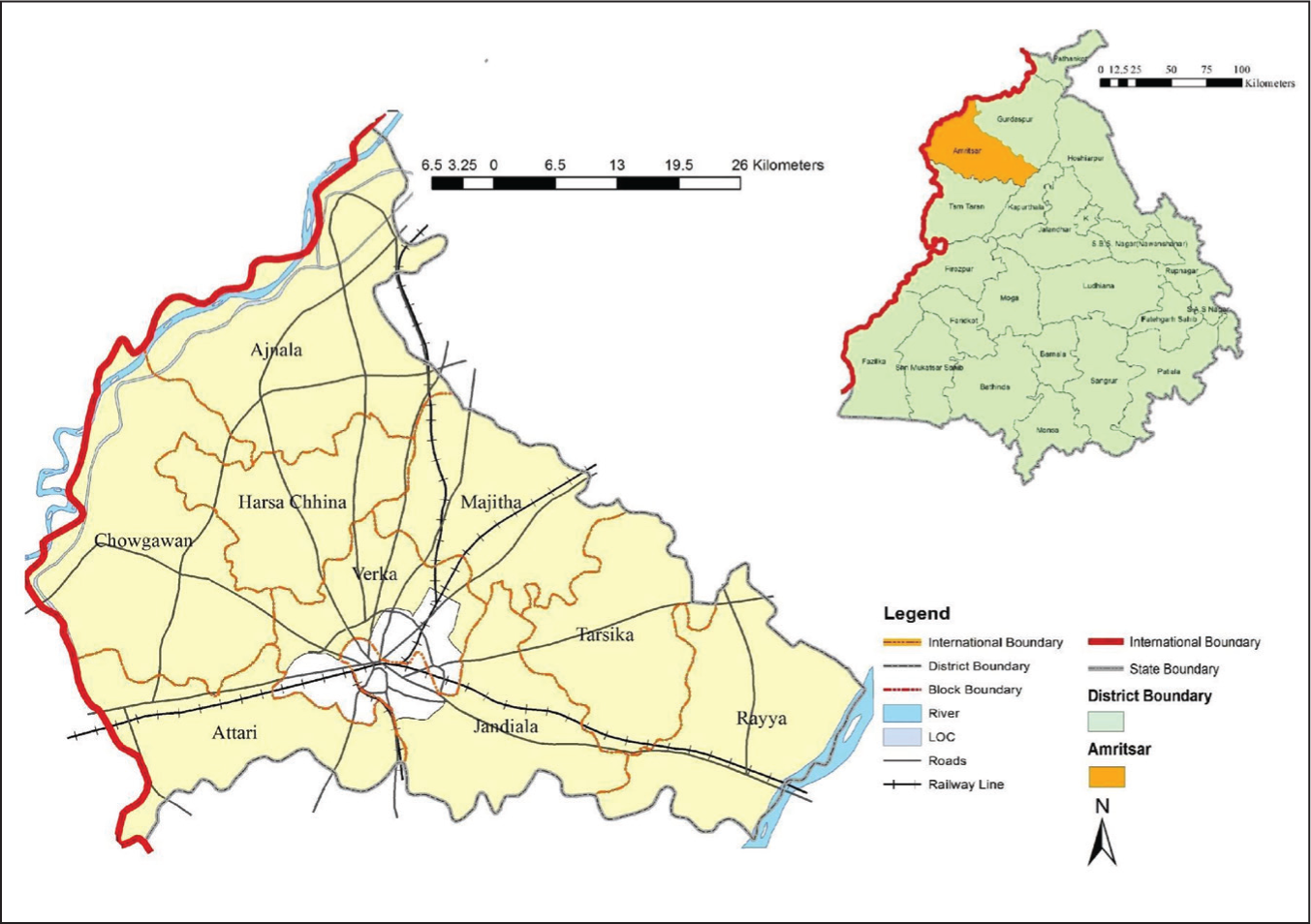
Agriculture is a predominant activity in the district and is spread across all Blocks. However, the Verka Block has the highest area under Amritsar city, followed by Jandiala and Attari. Both Ajnala and Chogawan have more than 300 sq. kms area under agriculture. These are the two largest Blocks of the district and share a border with Pakistan. Jandiala and Verka are the smallest Blocks and share boundaries with Amritsar city. Hence, the impact of the sprawl of Amritsar city is visible through population increment in villages of these Blocks.
The population in the district has a growth rate of 15.47%. Ajnala, the largest Block, has the maximum population, and Verka, the adjoining Block to Amritsar city, has a maximum population concentration with a growth rate higher than the district, that is, 41.55% and 17.12%, respectively.
Methodology
For assessing crop residues, residue utilisation, surplus residue and power potential from the surplus residue, the following methods have been adopted.
Data Mapping
For administrative boundary demarcations, the district map with Block boundaries and revenue village boundaries has been collected from the District Town Planning Department and is used as a reference map. It has been geo-referenced with the help of Google Earth Coordinates by identifying ground control points as the rail and road crossings. The map has been prepared using GIS as a tool. The base map and the data based on the following methodology have been used to generate different GIS-based maps.
Assessment of Crop Residues
For crop-residue assessment, data from various sources have been taken. These include a sample study of 63 villages in the district. The other sources include data from the Amritsar Agriculture Department, Amritsar district Census Handbook, Block-wise village directories and different research papers for reference values of RPR (residue-to-product ratio), dry-matter fraction and fraction burnt.
Selection of Crops
For assessment of crop residues, the village-wise areas under different crops have been taken from village directories of all the nine Blocks. Based on the gross sown area under different crops, four crops are selected out of 15 crops, which cover the maximum gross sown area. The four crops considered for further assessment of crop residues are wheat, rice, sugarcane and maize.
Crop Yield
The Block-wise crop yield data are gathered from the experimental research findings of Agricultural Department in Amritsar district. The Agriculture Department had conducted Block-wise crop cutting experiments on various crops in sample villages to determine crop yield. These per hectare values of crop yield have been considered to estimate the yields of different crops in different Blocks.
Crop-Residue Yield
Existing research results, along with crop-cutting experiment results of the Amritsar Agriculture Department have been adopted for residue-yield assessment (refer to Equation (1)). Crop-residue yield is dependent on three variables, that is, area under the given crop (A), crop yield (CY) of the specified crop and residue-to-product ratio of the selected crop. For estimation of crop residue yield the following formula has been used:

where Ry = total crop residue yield, that is, total residue potential (tonne)
A(i, j) = area under jth crop in ith village (ha)
CY(k, j) = crop yield of the jth crop in kth Block (tonne ha−1)
RPR(j) = residue to product ratio of the jth crop.
In Equation (1), the residue-to-product ratio is the quantity of residue available to the crop. For example, residue-to-product ratio of 1.5 indicates that 1.5 tonnes of residues are generated for every tonne of crop production/yield. These values for different crops are quantified through lab experimentation. For the same, already calculated values through experimentation by different research papers for different crops have been referred to in Table 1. The values highlighted in each category are adopted values for estimating the residue yield. The assumed values are average values of different research values of RPR.
Residue to Product Ratio of Different Crops.
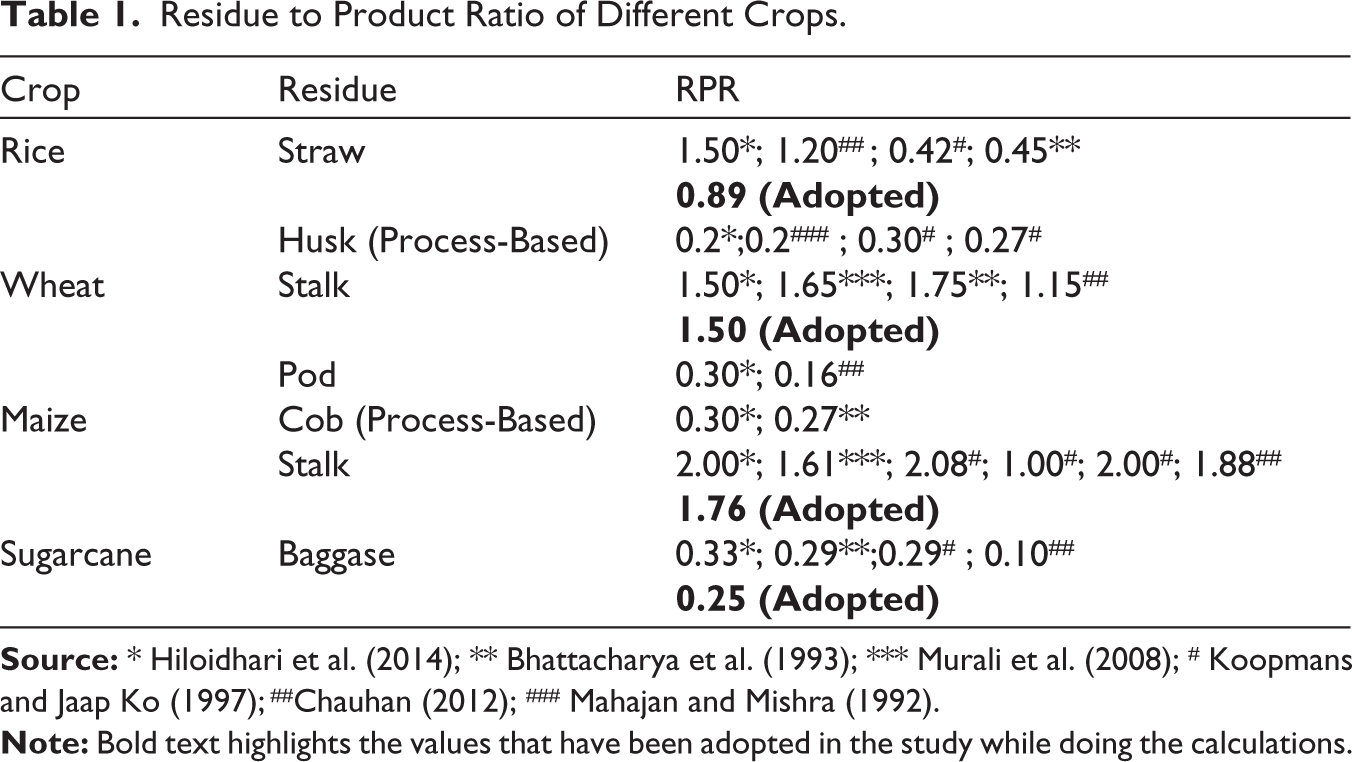
The processed residues like rice husk, wheat pod, and maize cob have market demand and are utilised in various industries. Therefore, these are excluded from the assessment. However, rice straw, bagasse, wheat and maize stalk have been considered to assess crop residues.
Residue Utilisation and Surplus Residue
For residue utilisation, residue burnt, and residue surplus, sample survey results have been taken along with inputs from the experts in the Agriculture Department. Equation (1) calculates total crop residue production. However, crop residue has various traditional uses as fodder for animals, fuel for cooking, and thatching. Therefore, actual surplus residue can be computed by excluding the residue utilisation for the above-said purposes (refer to Equation (2)).

where SR = surplus residue in tonne
Ry (i, j) as mentioned in Equation (1), residue yield of the jth crop in the ith village in tonnes
Ru(i, j) = residue utilisation of jth crop in the ith village in tonne
Using the above equation, total potential/surplus crop residues have been calculated.
Residue Utilisation
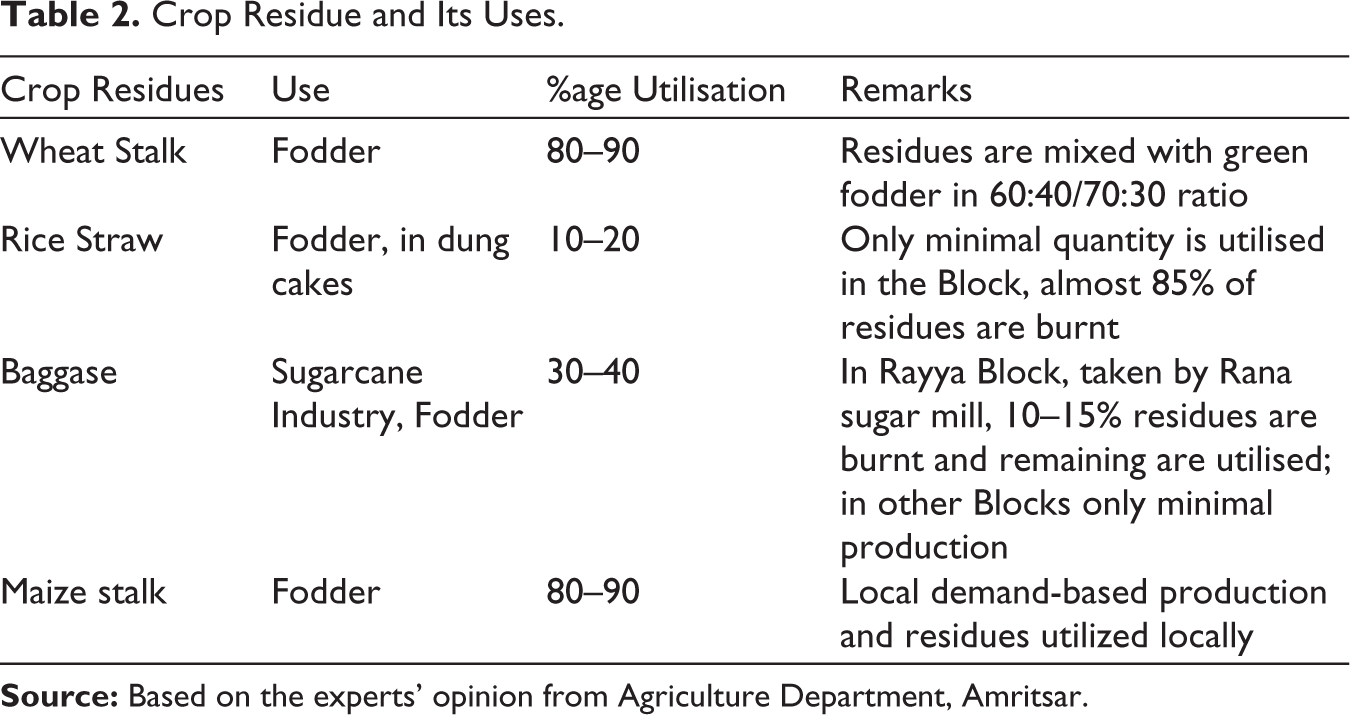
The crop residues are used for various purposes. These are used as fodder for animals, as traditional fuel for cooking, cogeneration industries, brickkilns, papermills, etc. In the Amritsar district, the prime use of residues is fodder, and a minimum quantity is used in making dung cakes. Most crop residues are either utilised by the households for livestock or sold to surrounding areas/villages. The primary survey has revealed that crop residues, especially wheat stalks, are primarily used as fodder for cattle (Table 2).
Crop Residue and Its Uses.
Data Validation
The computed data have been validated by a primary survey conducted in 68 sample villages (sample size is 9.11% of the total number of villages in the district) selected by using a stratified proportionate random sampling method. The coefficient of covariance between the observed and calculated values is 0.97 for total residue generation, 0.78 for residue utilisation, 0.91 for surplus residue and 0.81 for residue burnt.
Potential Power Assessment from Crop Residues
Total energy potential in megajoules (MJ) has been assessed from potential surplus crop residues along with the calorific value/heating value of the respective crops. Total energy potential has been further used to assess Block levels’ power potential (refer to Equation (3)).

where TEp = total energy potential (MJ)
SR(i, j) as mentioned in Equation (3), surplus residue in the ith village from the jth crop (tonne)
Cv(j) = calorific value/heating value of the jth crop (MJ tonne−1).
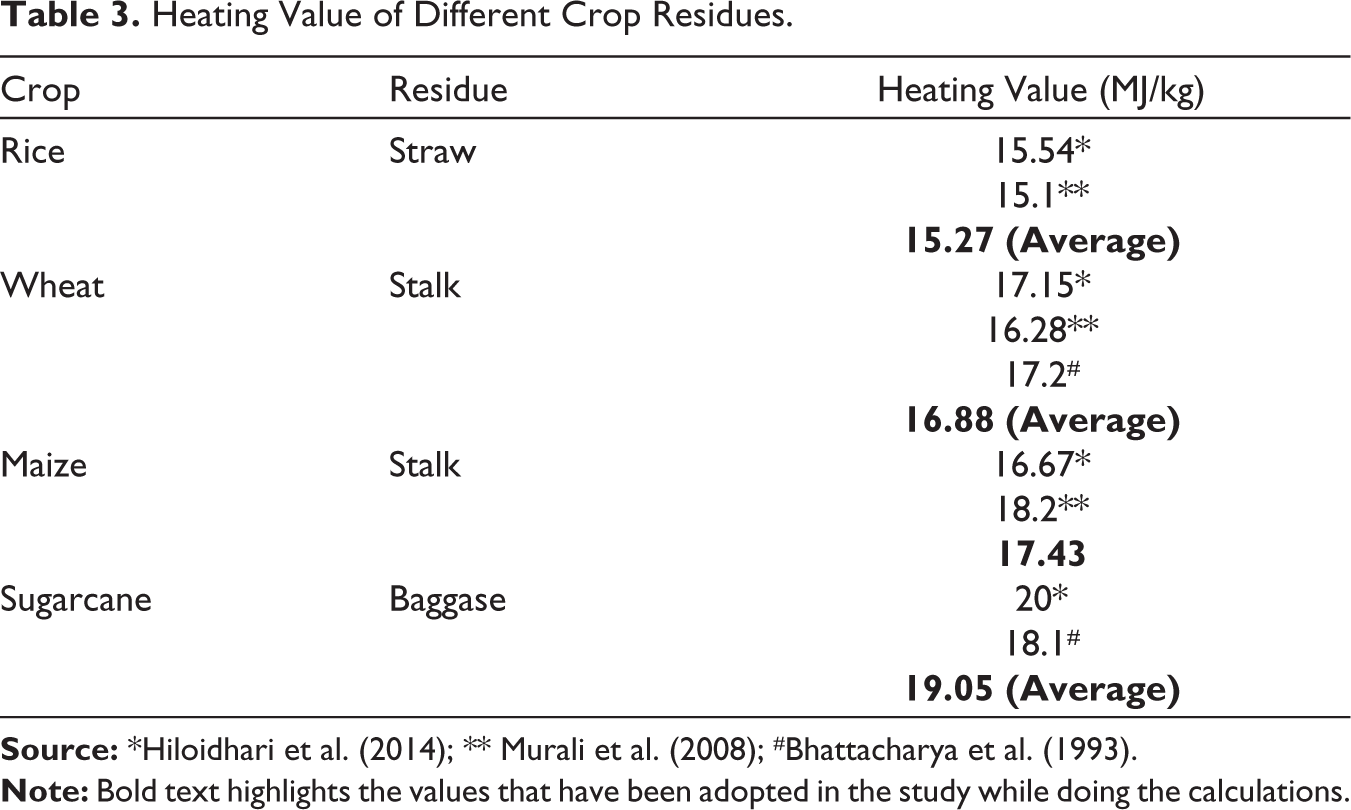
The potential power assessment has been worked out considering the surplus residues available in the district and the heating values of the respective crops. The heating values of different crop residues have been taken from already conducted studies. Based on different research studies, the average heating value of the respective crop has been adopted for assessing the energy potential of respective crops (Table 3).
Heating Value of Different Crop Residues.
For electricity generation, the combustion process has been adopted as this technology can take loose residues with moisture contents up to 50% (Hiloidhari & Baruah, 2011; McKendry, 2002; Singh & Singh, 2015). It is assumed that total feedstock in crop residues will be stored, depending on annual requirements as is done in case of other uses and will be available throughout the year. Therefore, seasonal variations of crop-residue availability have been ignored in computing electricity generation capacity. Moreover, uniform operating time throughout the year has been considered, and operational variations are ignored.
Conversion Efficiency
A power plant does not produce the same energy as the plant’s capacity because electricity generation depends on the conversion efficiency of the power plant. A plant’s capacity does not mean that it produces an equivalent amount of electricity as of capacity. The electricity produced by any power plant is dependent on conversion efficiency or capacity factor. The potential electricity calculates a plant’s conversion efficiency at full capacity over the entire year to actual electricity generated by the plant.
Conversion efficiency is a function of technology, maintenance required by the plant, feedstock characteristics and plant size. Biomass combustion plants have lower efficiency reportedly as compared to thermal power plants. Generally, these plants operate at efficiency ranging from 20% to 40% (Chauhan, 2012; Demirbas, 2001; Hiloidhari & Baruah, 2011; Singh & Singh, 2015; Yang et al., 2007,). Conversion efficiency increases as technology improves.
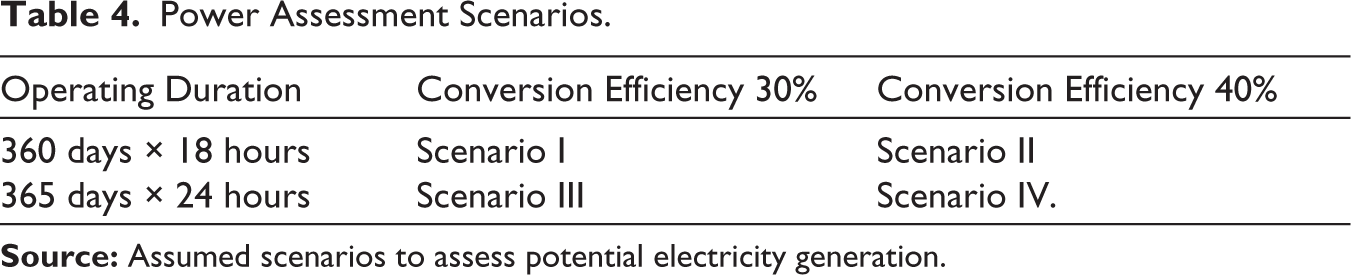
Power assessment has been done by developing four scenarios (Table 4) in which total energy potential has been converted into electricity using Equation (4). In the first scenario, conversion efficiency has been adopted at 30%, with a plant operating 360 days × 18 hours. The second scenario includes the same conversion efficiency, that is, 30%, but the operating duration is 365 days × 24 hours. In the third scenario, conversion efficiency increased to 40% with a plant operating duration of 360 days × 18 hours. The fourth scenario includes a conversion efficiency of 40%, but the operating duration is 365 days × 24 hours.
Power Assessment Scenarios.
Therefore, considering conversion efficiency and operating duration of biomass combustion plants, potential electricity generation has been calculated as per Equation (4).

where Ele. P = electricity potential in MW
TEp (i) total energy potential in the ith village (MJs) from Equation (3)
D = operating duration of crop residue biomass plant
Cef = plant conversion efficiency.
Using the above equation, electricity potential in MW has been estimated Block-wise.
Results and Findings
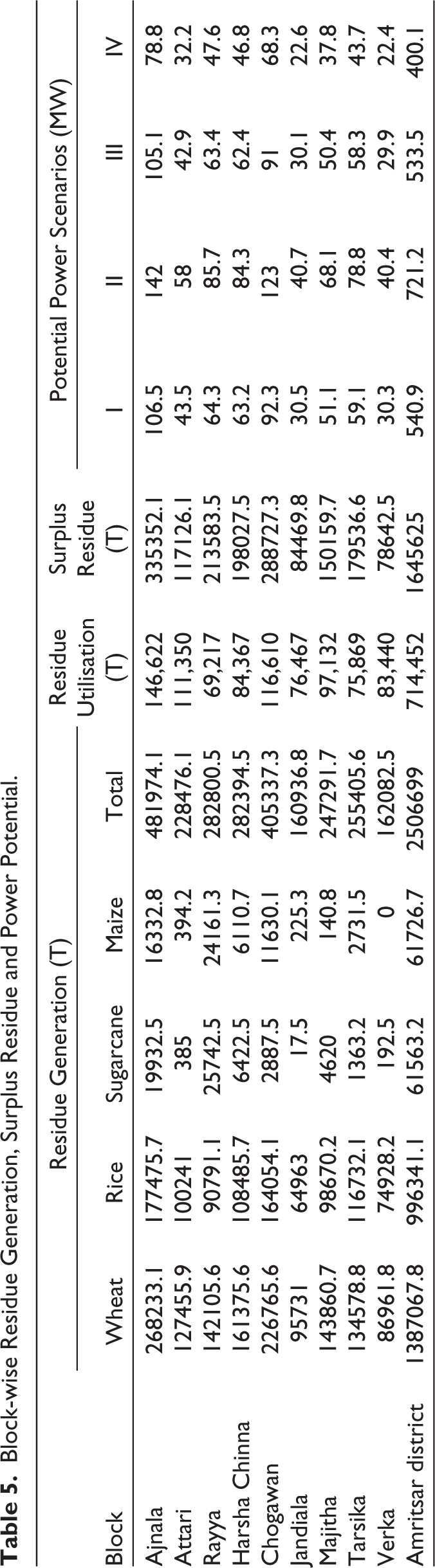
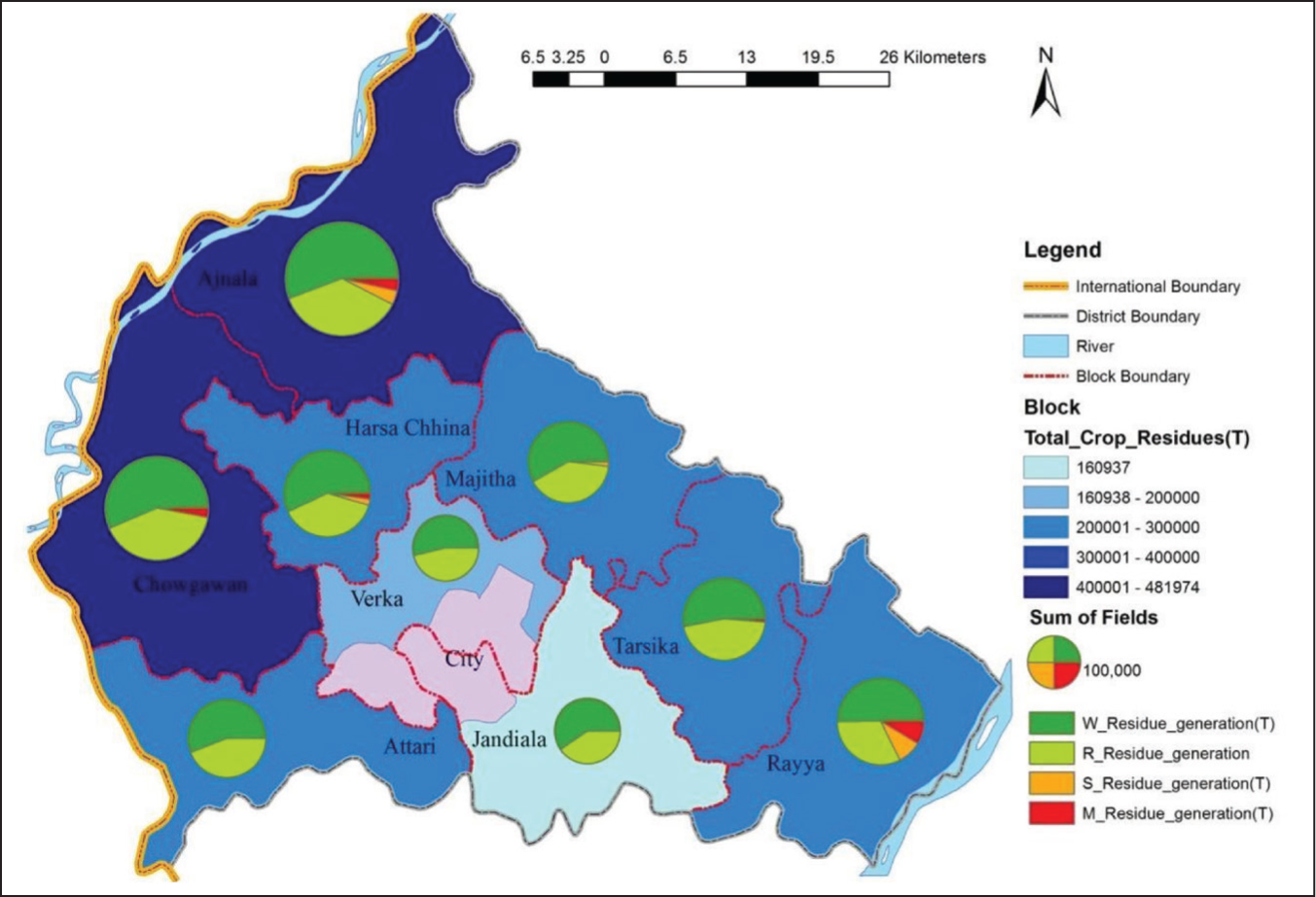
The district generates a total of 2.5 million tonnes of crop residues annually from the four selected crops (Table 4). Out of this, wheat contributes up to 55%, and rice contributes up to 40% in the total residue generation as these are predominant crops grown in the district. The four Blocks, Ajnala, Chogawan, Harsha Chinna and Rayya Block, contribute to 58% of residue generation in the district (Figure 2). Of the total residue generation, almost one-third of residues are utilised. Wheat-residue utilisation is highest as it is used as fodder for livestock, thus also having a market value ranging from ₹2,000 to 2,500 per acre. Only 20%–25% of the wheat stalk left in the field is burnt by farmers.
Block-wise Residue Generation, Surplus Residue and Power Potential.
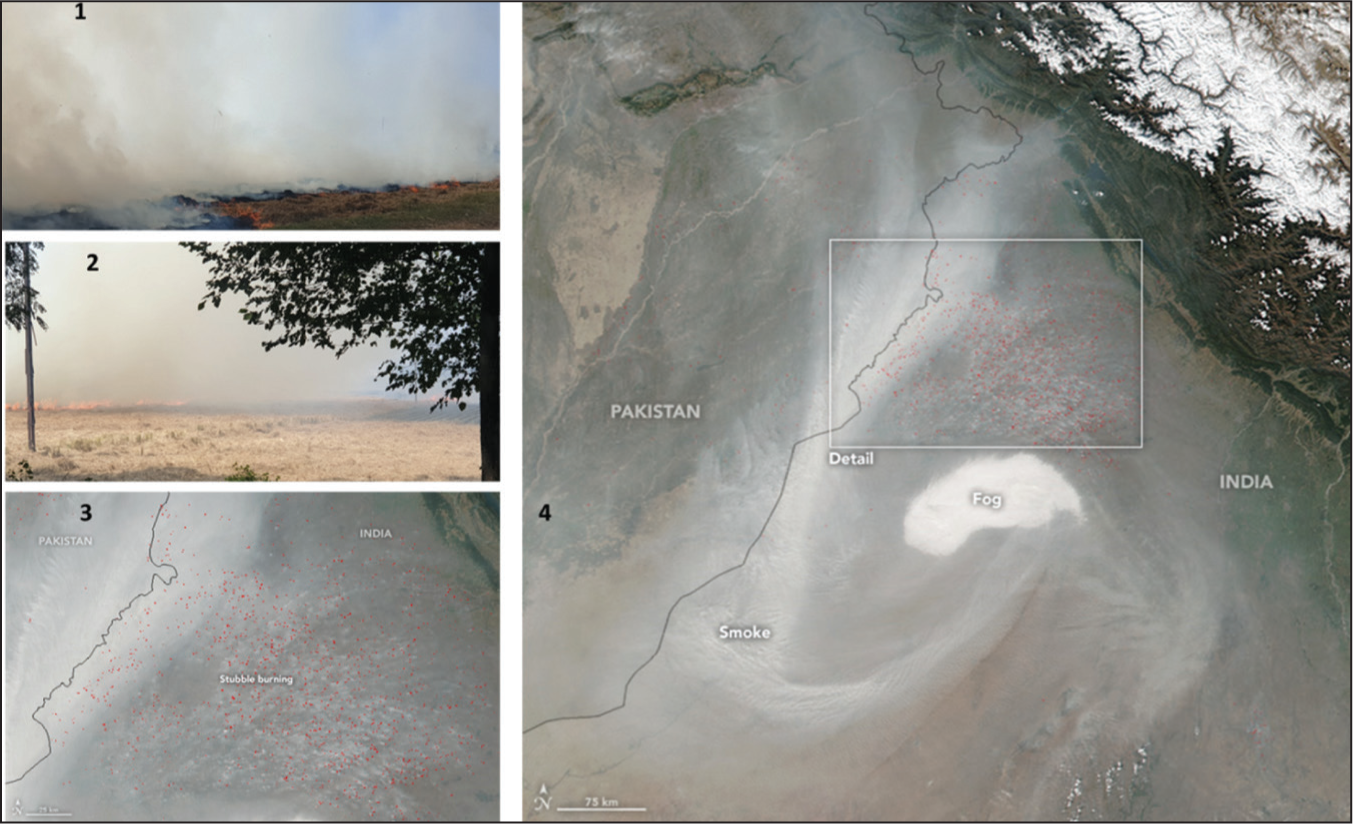
On the other hand, rice straw has no usability at the local level and is burnt in the areas accounting for up to 80%–90%. The highest field burning of residues is done in the rice-harvesting season. Various reasons for residue burning in the area include the mechanised process of grain harvesting, which leaves enormous residues in the field, a lesser gap between rice harvesting and next crop sowing, and higher costs associated with the removal of residues from the fields, etc. Due to these reasons, stubble burning is evident in the district, and Punjab, adding to enormous greenhouse gas (GHG) emissions.
The residue utilisation is highest in the Ajnala and Chogawan Blocks, followed by the Majitha Block accounting for up to 42% of total utilisation. The surplus residue quantity is highest in the Ajnala Block due to the higher area under agriculture. However, the percentage of total residue as surplus is highest in Rayya, Chogawan, Tarsika, and Harsha Chinna Blocks, accounting for up to 76%, 71% and 70%, respectively, due to less residue utilisation.
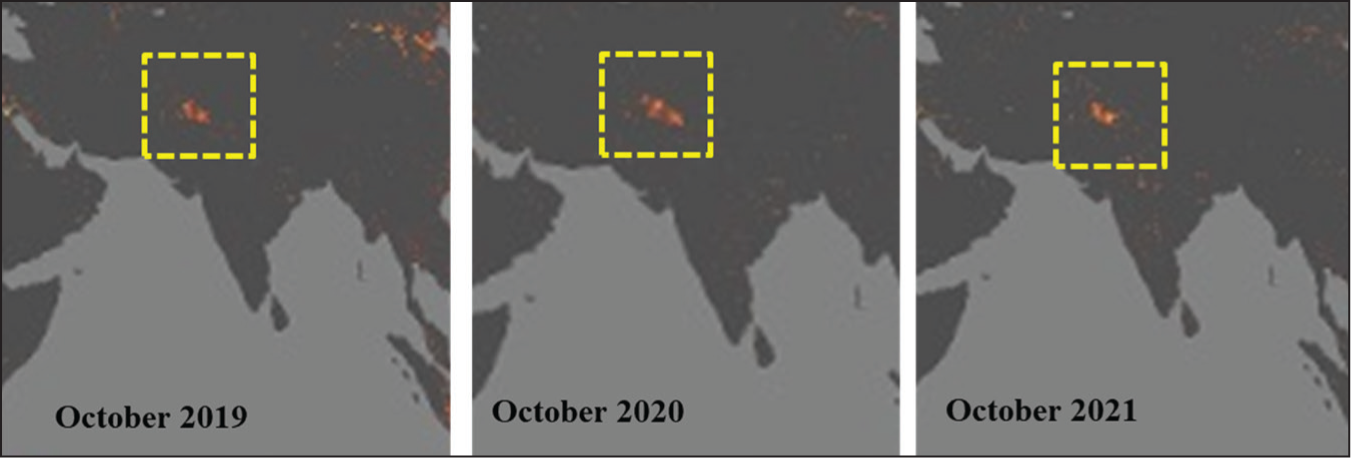
At present, almost 65% of total surplus residues are being burnt by farmers accounting for up to 1.6 million tonnes of residues. The stubble burning is common in the harvest season, especially the paddy, that is, from October to the beginning of November. Figure 3 shows the active fires in the field post-harvest. In Figure 3, 1 and 2 are photographs clicked during the field visit, and 3 and 4 are images retrieved from NASA depicting active fires due to stubble burning and smoke resulting from the open field fires. The global maps of the earth observatory of NASA also depict the active fires during October (Figure 4).
The Government has taken a number of measures to manage the residues. These include campaigns, training programmes and farm festivals educating about the best practices of managing crops to make the farmers aware of the severe impacts on the environment and human health. In addition to these, the government is providing different mechanised equipment for straw management. These machines are provided at subsidised rates to the farmers as well as Community Hiring Centres.
Moreover, the initiatives of high-yield varieties, staggered harvest, encouraging alternative usage of crop residues such as biomass power, co-firing in thermal power plants, waste-to-energy plants, etc., are taken to manage the residues. However, due to the costlier alternatives, the majority of the farmers still opt for burning.
Therefore, plenty of residues are available for utilisation of power. The same has also been encouraged by the government. Moreover, it is of no use to the farmers and is freely available feedstock to generate electricity. The majority of residues that are available for power potential are rice straw (72%), followed by wheat (27%) (Figure 5). However, a minimal contribution is being made by sugarcane residues (1%), and maize residue accounts for the least production having no surplus residues in the district.
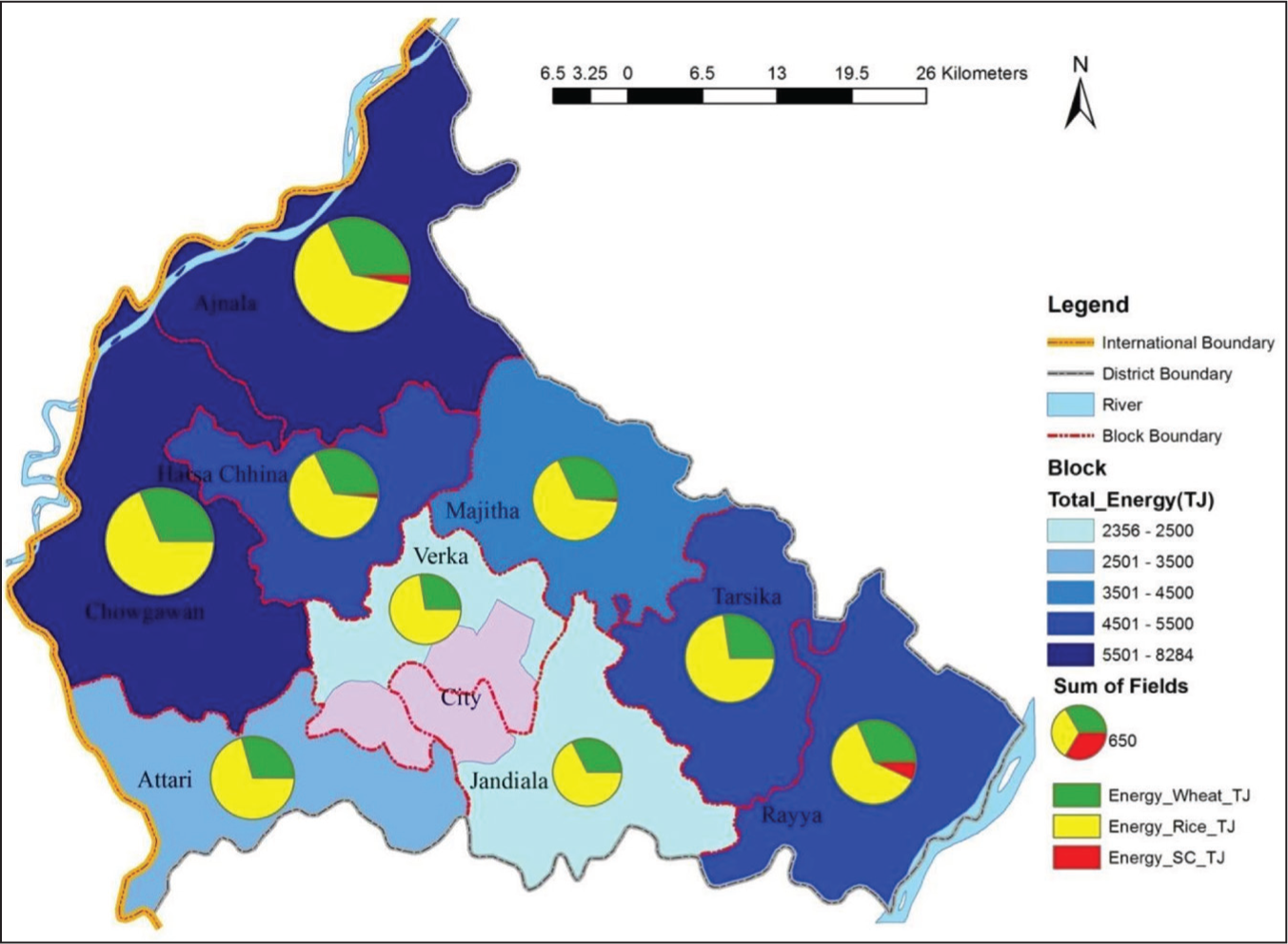
Almost half of the surplus residues are contributed by three Blocks, that is, Ajnala, Chogawan and Rayya. Verka and Jandiala Blocks have the least amount of residue-surplus (10%). In both Blocks, the residues available are utilised locally as fodder.
The total residue available for power generation is 1.64 million tonnes. For assessment of potential power generation, the combustion method has been considered as it is the most well developed, comparatively less costly method, and is rapidly used for conversion of biomass to power. To arrive at potential power generation, based on the type of residues, energy potential from each residue type has been assessed. The majority of residues that are available for power potential are rice straw followed by wheat.
Four scenarios have been considered based on plant efficiency and the operating duration of biomass plants. With plant efficiency of 40% and operating 360 days × 18 hours, that is, the second scenario, there is a potential of 721.2 MW in the district. The least power potential is in the IV scenario that is, 400 MW (refer to Figure 6).
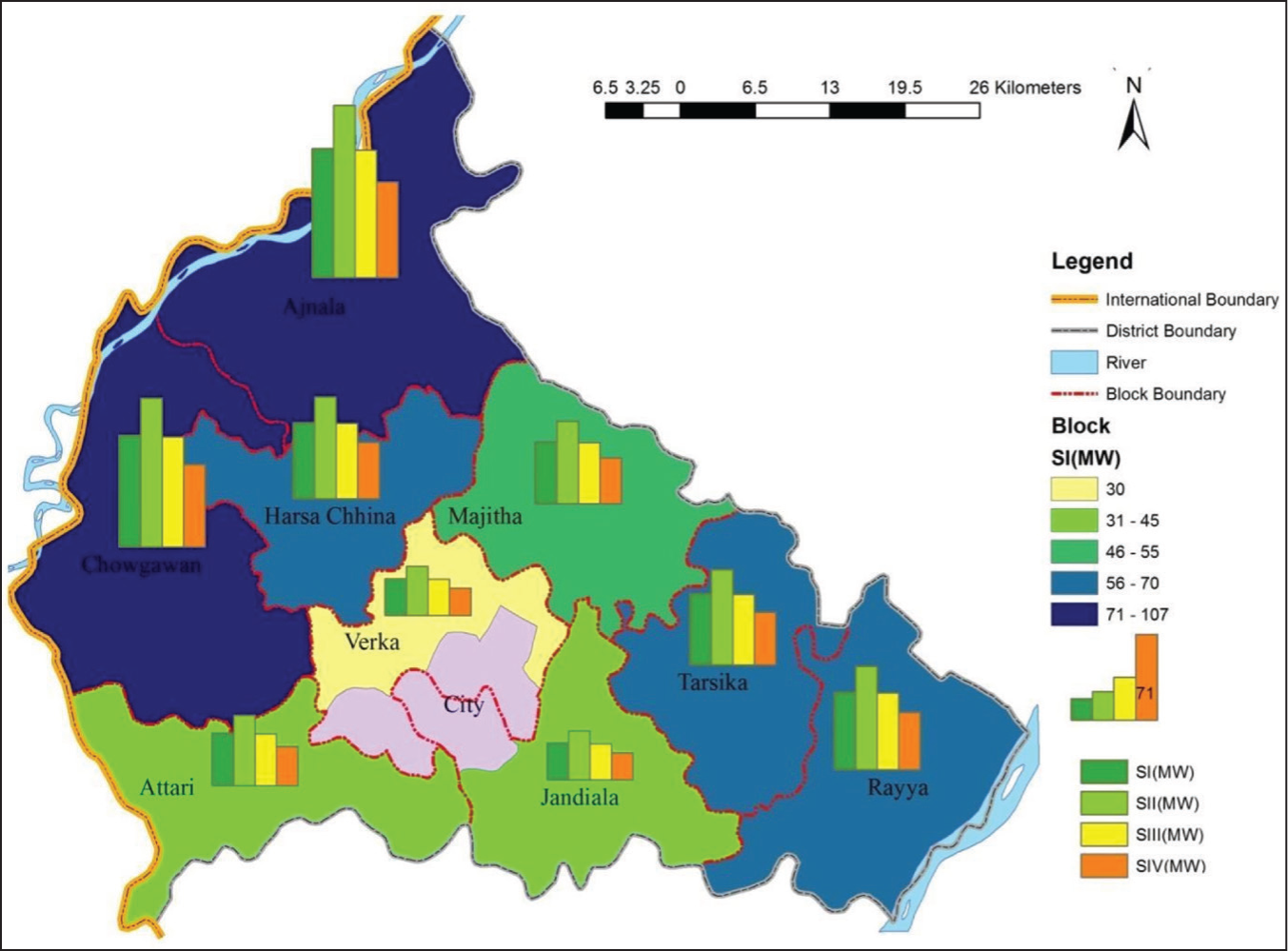
The potential power from biomass residues is more than the existing power requirement of the Block, which is 583 MW in the case of scenario II. Considering the district will consume the power produced locally, per capita electricity consumption will increase to 1902 kWh/person, which is currently 938 kWh /person. The biomass potential power generation locally, on the one hand, will help to manage the crop residues being burnt and will also help to reduce GHG emissions currently being added to the atmosphere.
Conclusion
The district has 2.5 million tonnes of crop residues, out of which 1.6 million tonnes of residues remain surplus which can be used to produce 721 MW of renewable biomass power. This surplus residue remains unutilised, and most of it is burnt in the fields, despite a number of government initiatives to manage these residues differently. These residues are burned due to the costlier process of residue management and no market demand for the residues. Ajnala and Harsha Chinna Blocks have the highest power potential at the Block level. In the fourth scenario, the power potential is the least, accounting for 400 MW. The potential power generation will also offset the GHG emissions, which are presently contributed by burning crop residues in the field.
Footnotes
Declaration of Conflicting Interests
The authors declared no potential conflicts of interest with respect to the research, authorship and/or publication of this article.
Funding
The authors received no financial support for the research, authorship and/or publication of this article.