



Abstract
Women who step into the spotlight may be burdened with managing their sexualised bodies, unlike men. This is true also in stand-up comedy, where more women than ever are entering the field. Investigating this unequally distributed body work, we use Sara Ahmed’s idea of the wilful subject to spot naturalised beliefs of women as unfunny who ‘will too much’. We do so through a qualitative study carried out with 26 professionals. We contribute by showing how ‘informal’ organisational body work, which comprises the purposeful efforts workers undertake on their and others’ bodies as part of informal role demands, is underpinned by diversity-related power dynamics. Anticipating how the burden of such ‘work’ does not fall equally on the shoulders of everyone is key in imagining more egalitarian futures of work. We demonstrate the embodied and political merits of wilfulness as an analytical tool focusing on the historically persistent labelling of women as wilful, a difficult-to-spot inequality, while taking into account how such wilfulness charges are mobilised by the target. Inspired by queering and cripping, we introduce the term ‘hagging’ to indicate women reclaiming positions of power and reappropriating their sexual objectification in male-dominated sexist environments.
Keywords
Introduction
Feminist scholars have been arguing for a more embodied theory of organisations and management ever since the seminal work of Acker (1990), which stressed the self-evident yet neglected notion that workers are not without a body (Harding et al., 2022). The absence of the body in organisational theory is problematic because it conceals underlying diversity-related inequalities (Gatrell, 2013; Mavin and Grandy, 2016), which is detrimental to theorising as it obscures systemic power dynamics like sexism (Ahmed, 2015; Bell et al., 2019). Hence, the recent call for advancing the study of ‘organisational body work’, defined as ‘the purposeful, organisationally embedded efforts to shape human bodies’ (Lawrence et al., 2023: 37).
Some organisational body work, when of a job-typical nature, takes quite an obvious form: the physical labour workers perform on their own (e.g. professional athletes) and on others’ bodies (e.g. massage therapists), or simply through their body (e.g. construction workers). In these forms of ‘obvious’ organisational body work, the segregation along socio-demographic lines, with gendered, classed and racialised specificities (Cohen and Wolkowitz, 2018), is also evident and easily spotted. Dirty physical labour like collecting garbage is, for instance, predominantly performed by low-class, marginalised workers (e.g. Shepherd et al., 2022). Other organisational body work may follow more informal role demands, is present also in ‘knowledge work’ 1 and may be less easily spotted. Such informal organisational body work refers to the embodied activities workers become expected to invest in that are not necessarily job-typical (e.g. keeping fit for company image, Butcher et al., 2023). Although it is reasonable to assume that unequal power dynamics alongside socio-demographic lines also play a role in these informal organisational body work forms – as minoritised workers have to battle the consequences of being in a ‘non-ideal’ body (Acker, 1990; Mavin and Grandy, 2016) – this remains ‘less obvious’ and is still an unchartered terrain.
To examine how minoritised workers, through informal organisational body work, cope with the intense scrutiny of their bodies that are seen as ‘out of place’, we adopt the perspective of (reclaiming) the wilful subject (Ahmed, 2014). The idea of the wilful subject is used to emphasise the societal designation of individuals – often women – as too willing, too loud 2 and too opinionated, ‘implying a problem of character’ (like being stubborn or contrary) (Ahmed, 2017: 66). Adopting the perspective of the wilful subject to address the power dynamics inherent in informal organisational body work may be valuable because of its political, agentic and embodied potential. First, Ahmed’s work is explicitly political and offers critical tools to understand systemic workplace inequalities (see also van Amsterdam et al., 2023). Second, because judgements of wilfulness have been a powerful straightening device in a historically sexist world (Ahmed, 2015), the lens of reclaiming wilfulness offers an agentic perspective on how minoritised workers cope with such normative pressures. Lastly, wilfulness often appears as an embodied act (e.g. rolling eyes) because our bodies and body parts are often less compliant than our minds (Ahmed, 2014), which means that the perspective of the wilful subject is particularly suitable for studying informal organisational body work.
Investigating (informal) organisational body work through the perspective of the wilful subject necessitates an empirical research field rich in organisational body work and populated by wilful subjects: the field of stand-up comedy (Gold, 2020; Tomsett, 2018). The sexist stereotype that ‘women are not funny’ (Cook et al., 2024), and preference for their obedient, docile, willing attitude (Ahmed, 2014, 2021), makes women’s stand-up comedy a critical case. Empirically, this study relies on in-depth, semi-structured interviews with 26 women comedians. It seeks an answer to the question: ‘How and why do women in stand-up comedy engage in informal organisational body work?’ Our contribution lies in highlighting the power dynamics within informal organisational body work through the lens of the wilful subject, meaning the purposeful efforts minoritised workers undertake with their bodies and others’ bodies following more informal role demands.
Job-typical and informal types of organisational body work
A recent consolidating conceptualisation of organisational body work defines it as ‘purposeful, organisationally embedded efforts to shape human bodies’ (Lawrence et al., 2023: 37), thereby emphasising the intentional efforts people undertake on their own and others’ bodies in the context of work. When studying organisational body work, the body as a tool in accomplishing a purpose is centralised, even if the nature and clarity of purposes vary. Some organisational body work literature suggests how gendered, racialised and differently abled bodies become particularly targeted with (certain forms of) body work (Cohen and Wolkowitz, 2018; Lawrence et al., 2023), meaning the work is ‘anything but evenly distributed in organizations’ (Zeyen and Branzei, 2023: 769).
A lot of organisational body work has an obvious character in the sense that it constitutes job-typical work executed through or with bodies. This is often segregated along gendered lines (Cohen and Wolkowitz, 2018). Masculinised job-typical organisational body work is typically a form of paid work performed through the body as part of control or personal protective work (e.g. police officers), bodily training activities (e.g. sports coaches) or high-status care work (e.g. surgeons). Feminised job-typical organisational body work is often a form of paid work performed through the body in the workplace that largely involves the nurturing, aesthetic or pleasuring physical touch and caring for others’ bodies (e.g. massage work, hairdressing). Such work is usually performed in private and domestic spaces. Apart from segregation along gendered lines, physical (dirty) labour tends to be performed by low-class and/or racio-ethnic workers, for instance, slaughterhouse work (Theunissen et al., 2023), cleaning work (van Eck et al., 2021) and refuse collecting work (Shepherd et al., 2022).
Other organisational body work takes a more ‘informal’ character resulting from informal role demands, and may consequently be less obvious to the observer. A first such form is the organisational body work aimed at transforming bodies, like cultivating a fit body in work contexts that are not directly related to fitness. A recent study by Butcher et al. (2023) of knowledge workers at an apparel HQ office provides a case in point. The office workers were nudged into participating in an extreme CrossFit programme and Paleo diet, surveilling one another’s bodies through moral judgements. Part of the health promotion initiative entailed recording ‘time to get up the company stairs’, keeping scores on the whiteboard and increasing competition between workers. Having an idealised CrossFit body became an informal precursor to demonstrating a hard-work ethic and moving up the career ladder. In sum, the body became a symbol of exceptional wellness to demonstrate organisational commitment and hyper-performance. Also, for self-employed workers, cultivating a fit, attractive body is a form of organisational body work that may enhance business success, as evidenced in a study of celebrity women entrepreneurs’ Instagram accounts (Heizmann and Liu, 2022). These entrepreneurs conformed to idealised notions of femininity, epitomised in a plethora of glamorous selfies, where the body becomes ‘a prop’ to gain followers. By displaying an impressive yoga pose on social media, they ‘inspire others’ to undertake similar body maintenance activities, reproducing the association between the thin, muscular, able body with the ‘self-efficacy and self-control’ that is believed to make entrepreneurs successful beings (Heizmann and Liu, 2022).
A second example of informal organisational body work is biting through bodily pain while at work, which although less transformational than cultivating a fit body, is purposive in the sense of bodily conservation, remaining present at work despite bodily discomfort. For instance, a recent study about elite chefs shows how they took pride in the cuts and burns on their arms, as this signalled commitment and endurance to others (Burrow et al., 2024). It was common for them not to leave their post in case of an injury, but rather to bite through their shifts. Enduring bodily pain became an informal role demand in order to thrive in their careers as chefs, as also noted among theatre actors (Cinque et al., 2021). Similar work is enacted when women ride out painful episodes of menstruating, maternal bodies or menopausal bodies in the workplace (Gatrell, 2013; Grandey et al., 2020). Throughout different periods of the employee cycle, professional women need to make investments to prevent their bodies from being seen as leaky, unbounded and unpredictable dangers that fall outside the norm of what is appropriate inside the workplace. Finally, another example of informal organisational body work aimed at conservation relates to the crafting work disabled people do on their bodies to withstand a full day in the office, despite being in pain, like increasing drug intake or having a health-restoring walk during lunch (Jammaers and Williams, 2020).
Although some of these examples hint that there might be a power dynamic intersecting with informal organisational body work too, as is the case for job-typical organisational body work, research remains unclear on the matter. Some studies reveal how (racio-ethnic) women in highly visible positions or male-dominated occupations use dress and hairstyle as tools to craft the body in alignment with hegemonic norms (Knight, 2016; Mavin and Grandy, 2016; Rydzik and Ellis-Vowles, 2019; van Amsterdam and van Eck, 2019). Building on these first insights, more detail and clarity are needed on how workers with bodies that deviate from the organisational norm cope, through organisational body work, with the intense scrutiny of their bodies. As such, we looked for a critical case where both job-typical organisational body work is prominent, and informal organisational body work may be expected. This led us to investigate the case of minoritised groups in stand-up comedy, in particular women, who, given the sexist stereotype that ‘women are not funny’ and preference to be docile, quiet beings, may be more inclined to engage in informal organisational body work to legitimise their presence in a highly male-dominated work environment.
The power dynamics inscribed in wilfulness
To shed a brighter light on the burden of (informal) organisational body work for minoritised workers through the case of women in stand-up comedy who work against the sexist stereotype that ‘women are not funny’, we need a lens sensitive to such issues. As a lens, we draw on the work of Ahmed (2014, 2015) on sexism and ‘the wilful subject’. Sara Ahmed’s work has been extensively used by organisation studies scholars to critically study affect and emotions (Dahlman, 2024; van Amsterdam et al., 2023), diversity work (Burchiellaro, 2021; Carrillo Arciniega, 2021; Kark et al., 2023; Liu, 2017), whiteness or sexuality in relation to the body and space (Christensen et al., 2022; Riach and Wilson, 2014; Vitry, 2021) and feminist research and activism (Bell et al., 2019, 2020). For example, van Amsterdam et al. (2023) use Ahmed’s work to understand how affect co-produces the differential treatment of fat women in the workplace. In particular, they show how fat 3 women often become a ‘bad fit’ in the workplace through the interaction of shame, organisational materials and fat bodies. To date, Ahmed’s work on the wilful subject has received less attention from organisational scholars.
Historically, the word ‘wilful’ has been used in Anglo-Saxon contexts to dismiss girls who were deemed too opinionated (e.g. Emmett, 2016). Wilfulness for boys came to signify a positive sign of strong will, knowing what one wants; but for girls, it was dismissed as a bad habit, ‘as a way some are just stuck (in a rut), as being unwilling to become willing subjects’ (Ahmed, 2014: 168). But Ahmed (2014: 134–137) urges us to reclaim that very word as ‘creativity’, as ‘being unwilling to obey’, as intentionally putting yourself behind your disagreement. The act of reclaiming the terms that have been used against marginalised groups has a long history within the domain of activism, like ‘queer’ and ‘crip’ (e.g. McRuer, 2006; Rand, 2014). In a similar vein, wilfulness can be thought of as ‘political art’, as ‘becoming crafty’ (Ahmed, 2014: 133). By creating a space or a stage of their own, women can create a ‘self-willed distance’, a ‘coming apart from a structured and oppressive environment’ (Ahmed, 2014: 157). Being diagnosed as wilful ‘can thus be willingly inhabited, as a way of creating a room of one’s own’ (Ahmed, 2014: 157). Sometimes, the mere act of being present where one is unexpected, seen as ‘out of place’, is wilful work. Wilfulness then becomes an act of feminist resistance to patriarchal norms.
Importantly, wilfulness is not only what subjects are assigned but also formative, shaping the bodies who receive the assignment (Ahmed, 2014). Wilfulness then becomes an embodied act, as exemplified most clearly through the practice of demonstrating or striking, where strikers willingly turn their bodies ‘into blockage points that stop the flow of human traffic, as well as the wider flow of an economy’, aiming for obstruction (Ahmed, 2014: 161). Protesters do not only accept their designation as wilful, they are ‘willing to carry the sign for others’, which enables the passing of a sign onto others (Ahmed, 2014: 162). ‘A history of wilfulness is a history of those who are willing to put their bodies in the way, or to bend their bodies in the way of the will’ (Ahmed, 2014: 161). To investigate the way power dynamics intersect with (informal) organisational body work, we will apply the lens of the wilful subject to the empirical case of women in stand-up comedy. We believe analysing women in stand-up comedy with the lens of the wilful subject will enrich our understanding of organisational body work by demonstrating the subtle, taken-for-granted ways through which even apparently bold and powerful women occasionally restrict their bodies to live up to informal demands of work that are rarely recognised despite the efforts they demand of women, but not men.
Method
Context of the study
Stand-up comedy offers an interesting case for this study, as comedians are seen as willingly provocative, loud and opinionated (Gold, 2020), and because art exists within the body of the performer (like dancers rather than painters). Bodily movements and dress serve the important function of making an immediate connection to the audience right from the onset – hence the popular opening line, ‘I know what you’re thinking’ (Tomsett, 2018: 11). Moreover, body talk is popular content for stand-up comedians, including for women who regularly cover topics like sex, menopause, genitalia, giving birth, body hair and age (Cook et al., 2024). Yet women in stand-up comedy
4
arguably face specific challenges because of societal preferences of women as quiet, willing to obey (Ahmed, 2021) and the deeply embedded stereotypical belief that ‘women are not funny’, delegitimising women professionals who engage in loud, opinionated and humorous acts in their work activities (Evans et al., 2019; Moake and Robert, 2022). Although research centring on the experience of non-binary and transgender comedians is still lacking, we expect this sexist background to hold true for all comedians not identified as cisgender men by audiences, regardless of their own preferred identification. To illustrate the persistence of such ideas, consider the following opening lines of Gervais’ (2022) recent SuperNature show, available worldwide on Netflix: Welcome to my show, um. It’s not a show. There’s no dancers or jugglers. It’s basically a bloke talking, um, which is essentially what stand-up comedy is, isn’t it? A bloke talking. ‘Sexist’ [points to someone in the audience as if they raise this as a comment]. Um. . . [audience laughing]. [Pause]. What about all the funny female comedians? Like um, [pauses] [audience laughing].
To date, we have a limited understanding of how women in stand-up comedy, who remain low in numbers (Keisalo, 2018), ‘put their bodies to work’ to deal with tensions arising from their unusual presence when on stage.
Data collection
The women in stand-up comedy in this study were purposefully and conveniently sampled between April 2020 and April 2022 in Belgium (interviews conducted by the first author), the Netherlands (interviews conducted by the second author) and Italy (interviews conducted by the third author), mostly by searching for recent stand-up comedy line-ups of all-women comedy events. This expansion of geographical borders allowed the collection of a critical mass of 25 interviews, with 26 respondents. 5 It should be pointed out that while being in different geographical regions, our respondents shared a profession in which they all performed in a male-dominated context. Nevertheless, there were a few differences 6 between countries that came up during the interviews (e.g. the un/acceptance of making offensive jokes), showing how, despite being European, the three countries differ in cultural norms and values. The latter is also reflected in their different positions on the EU gender barometer, with only 41% of Italians agreeing gender equality in the workplace has been achieved in their country, whereas this rises to 52% in Belgium and 61% in the Netherlands (European Commission, 2017).
The 25 interviews were collected online using Zoom, by the three authors mainly in Dutch, Italian and French. 7 Two were conducted in English since this concerned English-speaking expats living and working in the Netherlands. The same semi-structured interview guide was used for all the interviews, even if individual interviewers and respondents were free to take the conversation in the direction they desired. The interview guide consisted of four main parts, containing 23 different questions in total. The first part dealt with entering the field, and contained questions such as ‘Can you tell me how and why you entered the world of stand-up comedy?’ The second part concerned the performance itself (e.g. ‘How would you describe your comedy style?’). In the third part, a series of questions on the body were asked (e.g. ‘Can you remember occasions while working when you became aware of your body?’). The last part of the interview guide finally raised questions about the business of comedy (e.g. ‘Why, in your opinion, are there so few women in this business?’). Interviews lasted between 50 and 110 minutes and were all recorded and transcribed verbatim in their original language.
Prior to the interview, respondents were given the optional opportunity to provide a graphic representation of themselves on stage, in the form of a simple drawing, as a tool to stimulate conversation on the body and rely on more than words to understand organisational body work in the context of stand-up comedy (Thanem and Knights, 2019). These respondent-produced drawings allowed for a ‘redistribution of power’ in the research process as they enabled respondents to steer the discussion on their bodies, ultimately leading to a shared interpretation of the drawing (Ward and Shortt, 2018: 275). Twelve respondents provided such a drawing by email in advance of the interview, and these were mostly brought in during the third part of the interview to let respondents reflect on their body usage in their jobs. Figure 1 provides an example of such a sketch.
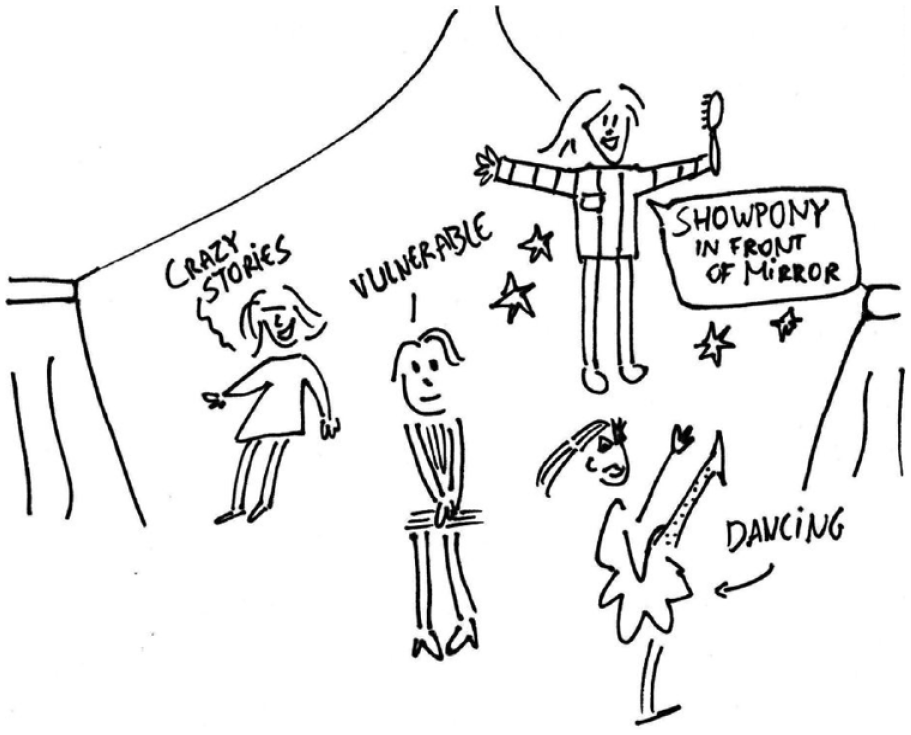
Drawing by Mandy (text translated to English).
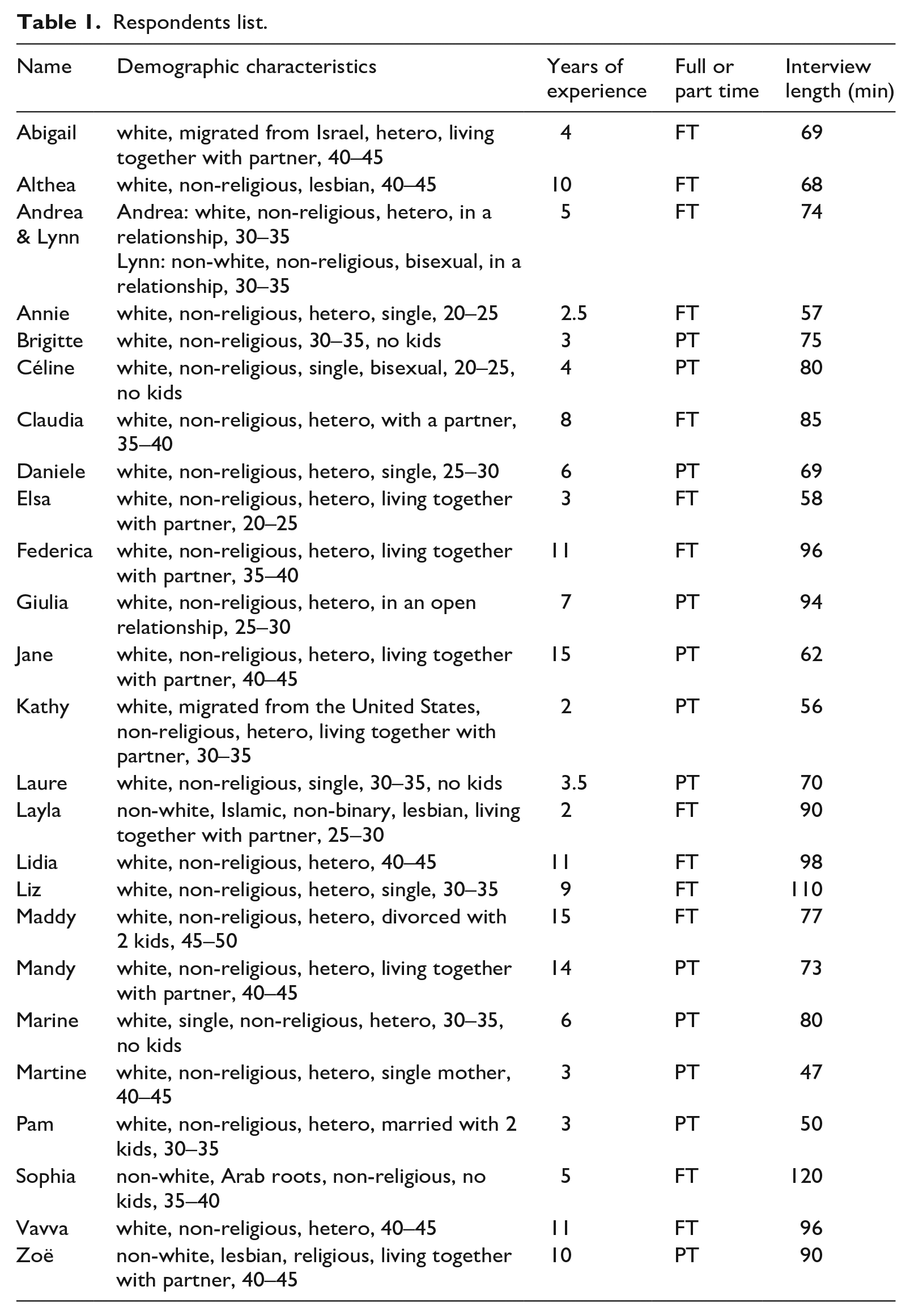
Of the 26 respondents (see Table 1), 11 performed predominantly in Belgium, nine in the Netherlands, and six in Italy. 8 Fourteen did stand-up comedy on a full-time basis as their main profession, while 12 combined it with another job. Seniority in the stand-up comedy field ranged from 2 to 15 years of experience and had an impact on where women performed (which affects how women in stand-up comedy present themselves, see Cook et al., 2024): from their own two-hour full show with a dedicated audience in a cultural centre to five minutes in a dark comedy cafe. The majority of women sampled in the study (14) were white cisgender women, whereas 12 women had a non-hegemonic aspect to their identity (owing to diversity in gender identity, sexual orientation, religion, ethnicity, or migration background). Respondents also varied in the degree to which they had received artistic training, ranging from art academy graduates to a few comedy workshops and full autodidacts.
Respondents list.
Since our call for respondents advertised research about ‘women and humour’, it could mean that the women in stand-up comedy who chose to stay away from this debate were left out of the sample. Such self-selection bias is potentially problematic to our conclusion drawing if these women in stand-up comedy adhere to very different forms of organisational body work. It is important to also point out that the nature of our data collection, in which we rely on comedians’ re-narration of their body work (like in Jammaers and Ybema, 2023), does not allow us to make statements about their in situ body work, or audience assessment of the comedians’ legitimacy, for which other methods (e.g. analysis of newspaper comedy reviews or comedy performance videos) are more suitable (Cook et al., 2024; Cooper, 2019).
Data analysis
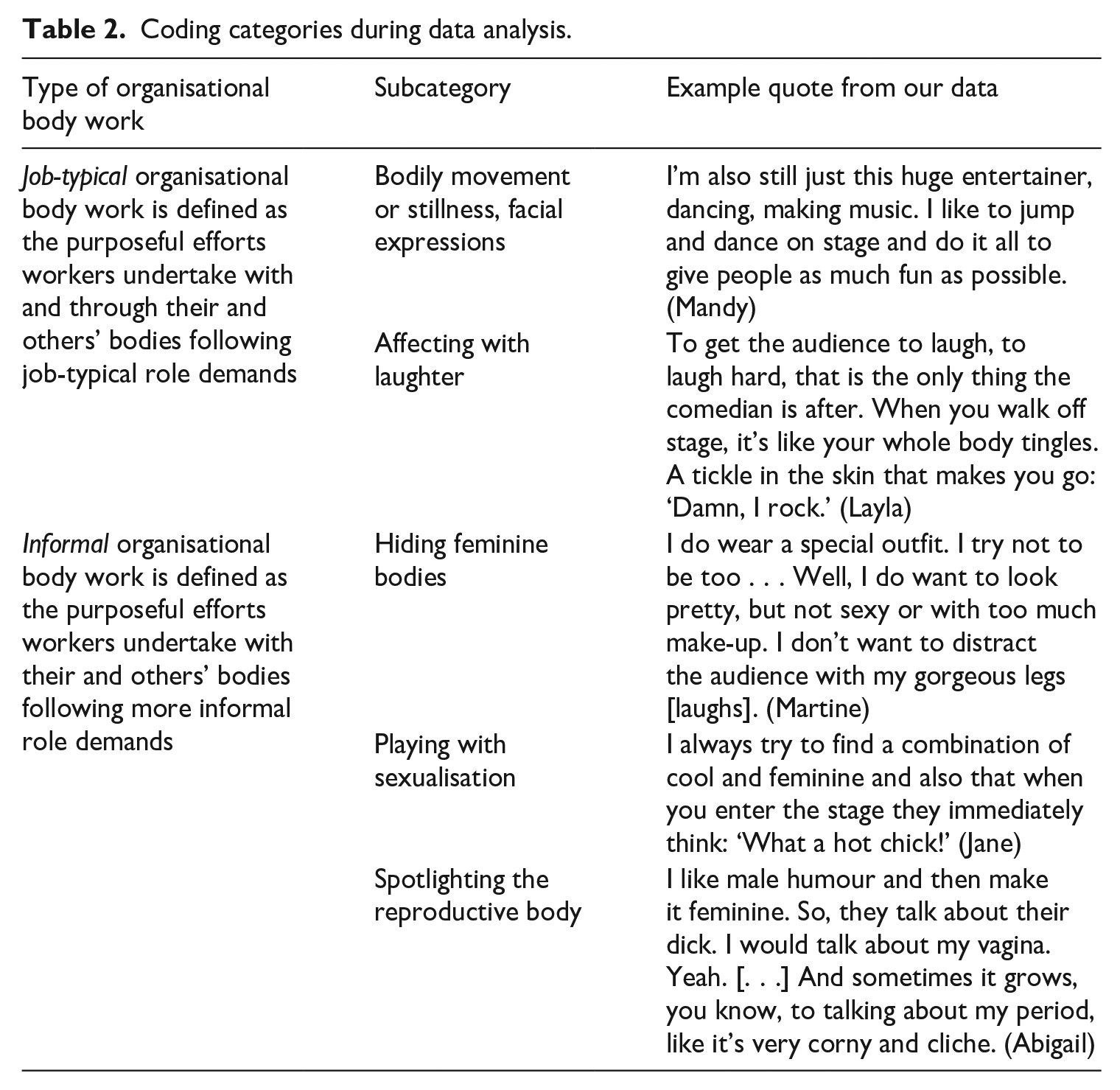
We turned to an abductive form of analysis (van Maanen et al., 2007), moving back and forth between our empirical material and literature on organisational body work and the ‘wilful subject’. We used three analytical ‘moves’, consisting of specific categorisation choices to achieve rigour (Grodal et al., 2021). As a first move, we approached the data with the question of how women put their body to work, looking for how the body became relevant in the daily comedy practice of women in stand-up comedy. Second, we distinguished between job-typical organisational body work, which is likely undertaken by all comedians and related to obvious job demands, and informal organisational body work, which is more implicit, ‘wilful’ and undertaken to craft legitimacy in a male-dominated space. We decided to drop the categories related to job-typical organisational body work to focus on the more surprising and salient categories of informal organisational body work. As a final move, we merged and split categories of informal body work, discussing these among the authors and in light of the concept of the wilful subject, until we reached the consensus that there are three main types of informal body work in our data: hiding feminine bodies to desexualise; playing with sexualisation by highlighting feminine bodies; and spotlighting the reproductive body to move beyond de/sexualisation (see Table 2). It is important to point out that respondents did not necessarily adhere to only one strategy, and strategies evolved throughout one’s career. In the results, we present the three types, after outlining the sexist context in which these informal forms of organisational body work were triggered. Although we analytically separate job-typical from informal organisational body work, as well as discursive from non-discursive uses of the body on stage in the analysis of the data for analytical clarity, in reality, these forms are intermeshed and together form a messy whole during the comedians’ performance. Indeed, informal organisational body work does not occur in a ‘vacuum’ but goes together with talk about the body and body usages that are very typical for the occupation of a comedian (e.g. making silly faces or using hilarious props on stage). Hence, the finding section contains glimpses of all these forms, although the main focus lies with informal organisational body work.
Coding categories during data analysis.
The sexist scene of women’s stand-up comedy
Before we describe organisational body work as the focal phenomenon of interest in this article, we set the scene of stand-up comedy as a job performed against a sexist backdrop. Respondents commonly described their job as deeply embodied. They would emphasise how the laughter of the audience was ‘a drug’ (Federica) they ‘craved for’ (Claudia), and the body was an important tool, as ‘a cool move can really empower a joke’ (Elsa), or stiffness helps contribute to a certain image on stage, as ‘some kind of UFO’ (Brigitte). Women’s bodies were, however, occasionally designated in very explicit ways as ‘abject’ on the stand-up comedy stage. Maddy shared that she was introduced by hosts ‘in the most horrible way’: ‘Here she is, tonight’s bitch, don’t expect her to make you laugh.’ Mandy had similar experiences as she recalls being announced as someone who ‘is at least a hot chick [in case she doesn’t know how to make you laugh]’. Daniele remembered ‘a guy old enough to be my father’ went ‘and now, a comedian I’d like to fuck’. Women in stand-up comedy described feeling ‘reduced to a piece of meat all the time between other [men] comedians’ (Céline), but audiences too had a role to play here.
The sexual objectification of women in stand-up comedy was even more explicit in the online space. Sophia explained how the anonymity and distance in the digital space caused a range of uncalled-for objectifying reactions, from ‘you are so beautiful’ to ‘death threats and dick picks’. Claudia confessed she keeps on getting comments about ‘being stupid, ugly . . . a whore’. Several accounts testified to the idea that women in stand-up comedy were being objectified and sexualised, in contrast to their intention. Consider the quote from Liz who felt frustrated about her work getting misread as pornographic: It’s not sexual! It’s not pornographic stuff. Sometimes I show skin, but it’s not . . . Still, I get really gross messages from dirty old men! The other day, I was getting my picture taken, and there was another [stand-up comedian] guy who was getting shot right after me. He yelled, ‘Jesus, Liz, it’s not porn!’ But I’m not doing anything! What am I doing?! And I get that a lot! Also when I post videos [of sketches], other comedians will send me: ‘I’m going to put this on YouPorn’ blah blah blah. (Liz)
In general, the vocational career choice as a stand-up comedian for women still confused others, as ‘we [ought to] carry greater burdens and responsibilities like reproduction’ instead of wanting ‘to do comedy and be the class clown your entire life, an immature thing to want for women’ (Laure). Giulia explained this feeling well when she stated ‘women often feel the need to first say sorry: sorry for being in a position of power, sorry for holding a microphone’. This is different for men, she argued, who just go ‘Aha! Great, a position of power, let me give it my all.’ Zoë too felt conscious about the specific position that she spoke from as a migrant, lesbian woman in stand-up comedy: A white guy with blond hair and blue eyes is just [seen as] neutral, at a distance, you know. He can joke about a hooker and a Surinam and Moroccan and everybody will go ‘Ha ha ha’. And he’s out of the picture. He has a neutral position. Whatever I say, I already have a specific position. (Zoë)
Indeed, it seemed women needed to first confirm to their audience they were aware of their unusual privilege and authority as a required (gendered) disclaimer in advance. Stereotypical ideas of women’s bodies as unlikely to supply good, proper and neutral humour were also reflected in programming practices of ‘one woman is enough to make an event seem inclusive, two is too much, too “fluffy”’ (Lidia) and all-women line-ups, which for Annie ‘sucked’ as they signified ‘ladies’ night’, ‘as if it’s not a “proper” comedy night’.
In sum, stand-up comedy for women was sometimes seen as ‘a consequence of an immature will, a will that has yet to be disciplined or straightened out’ (Ahmed, 2017: 66) revealing a sexist double standard. Naming sexism as a contemporary presence in stand-up comedy matters because it means refusing to give an event ‘the status of an exceptional event’ (Ahmed, 2015: 9; Bell et al., 2019). Still, the women comedians themselves needed to avoid openly speaking out against injustice (e.g. critiquing all-male line-ups) (Ahmed, 2017) or affective responses to ‘innocent’ sexist jokes (e.g. not laughing along when introduced by a master of ceremonies in a sexist way), which would turn them into ‘affect aliens’, those singled out for not being affected in the same way as those around them (Ahmed, 2023: 30). Both examples of naming sexism could result in the accusation of being overly sensitive hags or killjoys (Ahmed, 2023), contributing to the dreaded ‘cancellation culture’ (Gold, 2020). As their livelihood depends on being recognised as humourful, naming the problem of sexism would mean becoming the problem and being seen as old-fashioned, risking future employment opportunities in an already precarious line of work. Comedy is exactly about bringing joy, which meant they looked for other ways to navigate sexism. 9
Against this sexist background of stand-up comedy, filled with gendered stereotypical beliefs that ‘women are not funny’ and marked by the objectification of women’s bodies, it is perhaps unsurprising to find not only job-typical organisational body work but also informal forms that aim to legitimise women in stand-up comedy. We found three types of informal organisational body work that they engaged in: (1) hiding feminine bodies to desexualise; (2) playing with sexualisation by highlighting feminine bodies; and (3) spotlighting the reproductive body to move beyond sexualisation.
Informal organisational body work in stand-up comedy
Hiding feminine bodies to desexualise
Some women in stand-up comedy worked on desexualising their bodies by covering up feminine body parts others tend to sexualise. For instance, Abigail explained how she wore ‘mostly black clothes’ so that focus could go to ‘content not cleavage’, decreasing the visible sexualised aspects of her body. According to Kathy, such ‘neutral dress’ was ‘common among famous women in stand-up comedy’, ‘probably because YouTube comments are not so fun to read’. The desexualisation of their feminine bodies not only served to protect themselves from sexual comments but also their legitimacy as stand-up comedians. Andrea and Lynn recalled a technician commenting ‘oh such fine ladies’, and only ‘when we started playing he started to take us a little bit more seriously’. A similar resentment emerges from Céline’s story, who said comments after her show such as ‘you are pretty’ felt like an insult, as they said nothing about her performance. Jane explained this feeling further when commenting on the drawing she prepared for the interview (see Figure 2) and a comment she received after losing a comedy contest: The all-male jury told me ‘It was a pity you wore a dress in the finals, because your jumpsuit [that she had worn in the previous round] was much more powerful’. Maybe they were right . . . Yet I still think it is kind of stupid, because a man will never get the comment that a shirt is not working. Apparently, a female body distracts too much from what you are saying. (Jane)
The advice given here by professionals shows the contested nature of women’s bodies on stage. Although the advice Jane received aligns with the strategy of hiding, more respondents received the opposite advice, to address their lacking ‘womanhood’, and ‘put on more colour, be more feminine’ (Céline) or ‘show some neckline’ (Vavva). Federica was told ‘you’re a woman, you’re hot, just wear heels and a skirt’. This overwhelming and contradictory amount of unsolicited advice on women’s body usage on stage was not restricted to the presentation of the fleshy body during the act, but also covered how the body should be used as comedy content. Zoë, for instance, was told by a senior man colleague to start making jokes about her ‘dyke hair or her fat ass’.
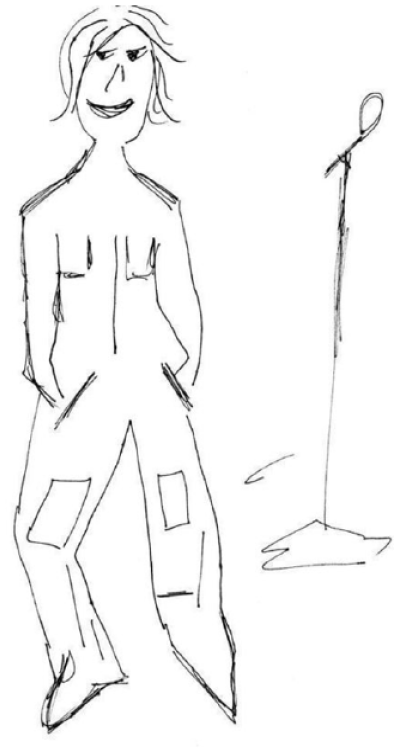
Drawing by Jane, illustrating her ‘less distracting’ jumpsuit that de-emphasised her femininity and was judged ‘more powerful’.
Not making oneself too attractive was also a strategy adhered to by Claudia, who always wore ‘a Disney T-shirt’ to perform, and Liz, who wore ‘like a kind of toddler suit’, tricking the audience into believing she is a cute young girl, but then ‘making vulgar jokes’. Jane chose to not wear heels as she felt that she ‘would become too intimidating for men’, whereas wearing sneakers allowed her to ‘become more approachable’. Pam explained: ‘I want to look cool, but not too sexy’ or even ‘asexual’, demonstrating the workings of desexualising. For Annie, not wearing lipstick was a conscious decision. She explained why while elaborating on her drawing (see Figure 3): I feel like, when you look pretty as a woman, you won’t get away with as much, there is less laughter. I’ve been discussing this with male colleagues, and they deny it, but it is my intuition. A fat stand-up comedian, take X, also gets away with more, people forgive the chubby guy more easily, or the sort of ugly person more. And it’s the same with make-up. (Annie)
Annie explains how not being seen as pretty for both men and women helps her to be acknowledged as funny. However, this becomes tricky for women in stand-up comedy who are also rated according to their aesthetic norms in every domain of life. Some respondents explicitly refused being nudged into desexualising organisational body work. Elsa gives an anecdote about a man walking up to her after the show commenting, ‘She’d better put on a bra next time’ as the presence of nipples was ‘extremely distracting’, making her answer, ‘You put on a bra yourself then.’ In sum, in this first type of informal organisational body work, women in stand-up comedy hid their feminine bodies in order to foreground the content of their act, de-emphasising the bodies performing them to proactively avoid sexualisation.
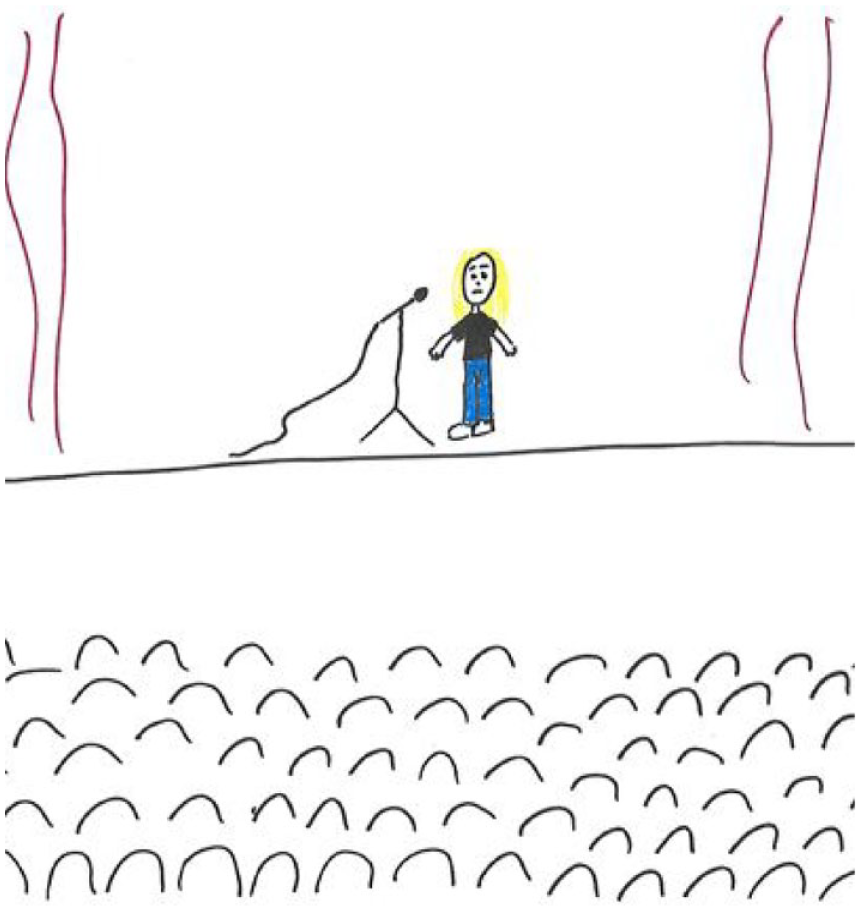
Drawing by Annie, illustrating the purposeful avoidance of ‘pretty-making’ on stage.
Playing with sexualisation by highlighting feminine bodies
While some women in stand-up comedy felt it was important to divert the focus from one’s sexualised body to craft legitimacy in a male-dominated environment, other respondents played with their sexualisation by highlighting their feminine body. Maddy, for instance, mentioned: I would pull up my dress at the beginning of the show and give it a good spin. That way everyone had seen my breasts and bottom, and we could leave that ‘woman body thing’ behind us for the rest of the show. (Maddy)
Andrea and Lynn, who perform as a duo, had a sketch in which ‘I play her clitoris at some point in the show. I wear a big sign that says I’m her clit.’ When showing her drawing (see Figure 4), Lidia explained that she purposefully presented a stereotypical feminine appearance, which is contrasted with the use of rude language: ‘It’s a mechanism: I tell you bad words, I tell you the things that you do not expect from a woman, but I tell you those things with the cute dress and high heels.’
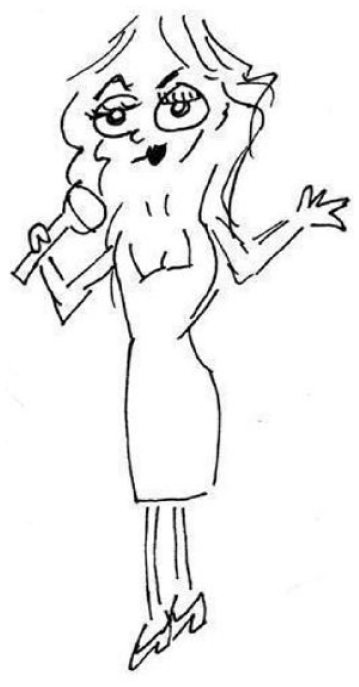
Drawing by Lidia, illustrating the strategy of presenting a stereotypical feminine appearance by showing cleavage and legs.
Other women in stand-up comedy engaged in stereotypically gendered body work by appearing feminine and prudish but also contrast it with unexpected sexual language. In explaining her drawing (see Figure 5), Kathy says the following: Sometimes I’m wearing like a pretty dress and then I’m like pretending to masturbate with a microphone or something like that. [Laughs]. I think it’s a bit fun to play with that. Like you come up looking like a, you know, like ‘I have a job, I work for a corporation’ and then you’re like making orgasm faces. (Kathy)
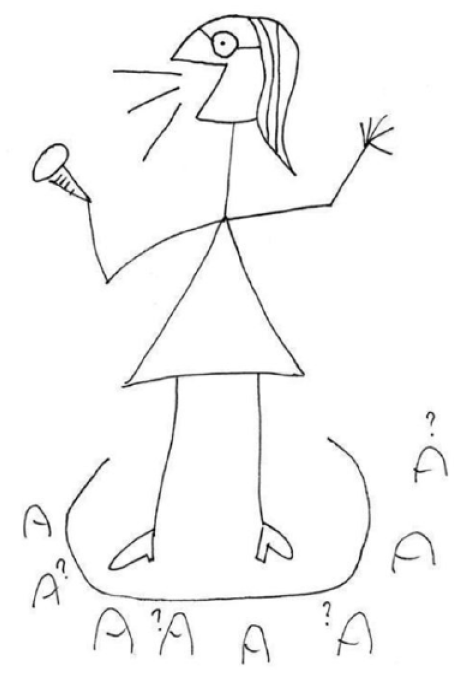
Drawing by Kathy, illustrating the strategy of highlighting the feminine body through dress while engaging in sex talk.
Both Lidia and Kathy play with their sexualisation by presenting their bodies in typical feminine ways, while contrasting this with ‘unladylike’ sexual acts such as using vulgar language and masturbating with the microphone. In addition to contrasting socially compliant feminine body work with explicit sexual acts, some explicitly present a sensual appearance to hit on men in the audience, thereby reversing the objectification towards men’s bodies. Like Mandy who crafted a persona named ‘Isabeau the ho’ that ‘could make a lot of men really shy’: I’ll say, ‘I prefer sex at first sight’ and then pick out a guy in the audience and stare at him. Then I move, you know, sensual like that [moving her hips and bending her head sideways]. The men then turn all red and the people around them find that totally funny of course. [. . .] Only, the more I did that, the more, especially other comedian women, would go like, ‘Oh she’s a slut’ or ‘She’s only successful because she looks hot.’ (Mandy)
Mandy engaged in body work that aimed to further sexualise her body, and although it created success in her shows, it also jeopardised her being taken seriously as a stand-up comedian. Importantly, it was other women who judged her most for it, indicating the naturalisation of sexist norms.
Others too felt delegitimised at times when using the organisational body work centred around creating a sexualised persona, like Brigitte who contemplated how: . . . each time I act a bit sensual or bring up something slightly sexual, I have the impression that one or two dudes in the audience will feel addressed or seduced somehow, and I hate it. That’s not what I want to accomplish with my comedy. (Brigitte)
The same sentiment of potentially misread body work arose when Daniele explained the ‘persistent stereotype that women do comedy as a form of real-life dating, to be hit on by men and find a comedian boyfriend’. In sum, in this second type of informal organisational body work, women in stand-up comedy use or exaggerate the sexualisation of their feminine bodies for comic effect. Comic effect was often accomplished by ridiculing their sexualisation through contrasting feminine looks with unexpected, ‘unladylike’ sexual acts or through reversing the objectification towards men.
Spotlighting the reproductive body to move beyond de/sexualisation
For many women in stand-up comedy, it felt like they had to either resist or make use of their sexualisation on stage: ‘That’s always the quandary: do you dress sexy or neutral and uptight? Are you the virgin or the slut?’ (Kathy). Federica experienced this as ‘a constant pressure, which becomes tiring and wears you out’, since ‘if you show some skin, you are too undressed. If you don’t, you are too dressed, and then again, you are a woman so why don’t you undress a bit more?’ In the following excerpt, Liz explained her way of moving passed this virgin/slut binary, while elaborating on her drawing (see Figure 6): I had this act where I pretended my body was leaking on stage, and I needed to fix it quickly with a tampon during the performance, which I did. I felt it was necessary to present that part of myself, a whole complete person. Yes, I am a woman, and women are beautiful beings, but they have more to offer than just sex: they have heads, they have periods. And I do all of that consciously wearing a jumpsuit that at times is flattering, and at other times is really not. (Liz)
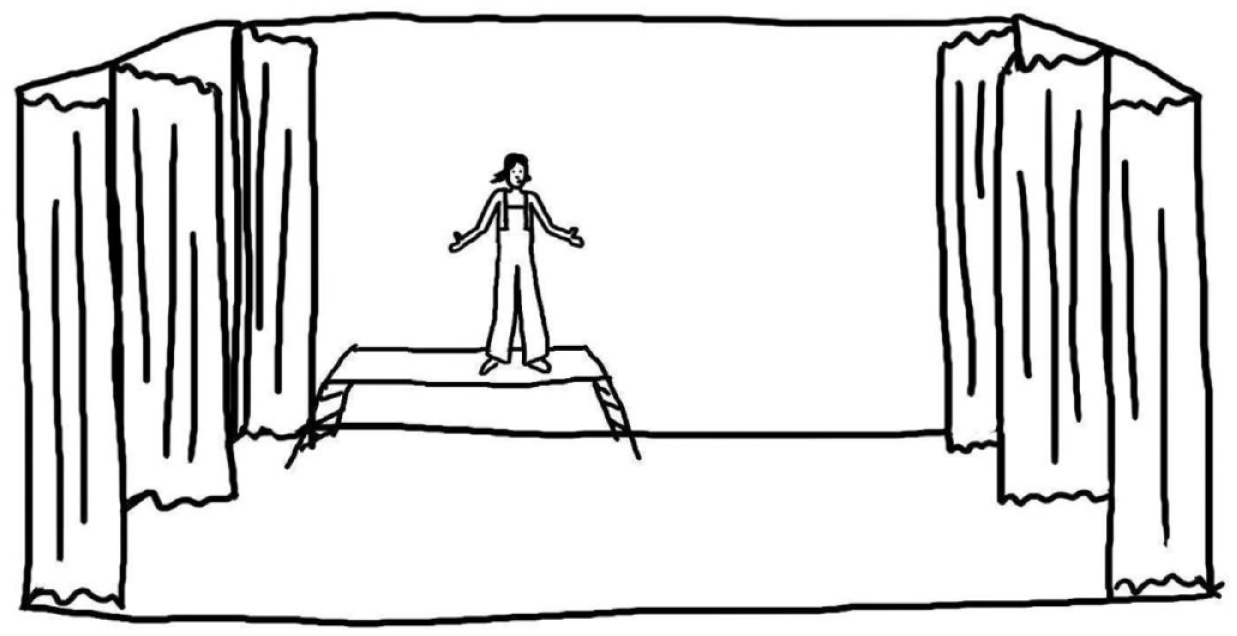
Drawing by Liz, illustrating the strategy of spotlighting a whole (bleeding), un/flattering person.
The quote exemplified that women in stand-up comedy may spotlight their feminine body on stage, not to present themselves as beautiful creatures who bedazzle their audience with their enchanting presence, but to present a holistic person, one who thinks, bleeds and jokes. Others too spotlighted the reproductive qualities of their body by ‘making faces’ with ‘post-labour tummy fat’ or ‘coming on stage expressing breast milk’, although Maddy reflected on how the latter did not receive the positive reaction from the audience she had hoped for, concluding ‘it was too ahead of its times’, illustrating how ‘zeitgeist’ could get in the way of certain body usages. Similarly, at an audition, Giulia was told she did not get the job ‘because I brought up menstruation and came across as rude and disgusting’. However, she added, ‘the job was offered to a male comedian who spent 20 minutes talking about how it would be if men had periods’. Such stories brought to light a double standard in the use of the ‘reproductive body’ for comedy content. This was similarly attested to in the following excerpt: We [women in stand-up comedy] are told to stop being vulgar, to stop talking about our ass. Try finding a male comedian who doesn’t talk about ass! We’re told we talk about the same things over and over: menstruation, feminism and whatnot. Men comedians have been telling us for over 50 years now about their horrifying mother-in-law, their nagging wives and their dicks. It bothers no one! (Sophia)
Again, we see an element of others’ advice on how to be taken seriously coming back, often advising against the body work of spotlighting the reproductive body on stage. Some respondents in fact, rather consciously, refrained from this type of body work, exemplified by Pam who argued: ‘I don’t want to bring up my kids, or giving birth, even if I’m sure there would be a market interest for it, because I find it an unsophisticated type of humour.’ Layla also felt ‘women are more than their periods. Please talk about something else, like your favourite Nespresso machine, or anything really’ even if they admitted understanding that straight women may feel ‘they need to cover the basics first, to habituate men’. In sum, in this third type of informal organisational body work, women in stand-up comedy spotlight their reproductive bodies to move beyond de/sexualisation. Although this type was less common than the prior two forms of body work, it offered an alternative for circumventing the virgin/slut trap.
Discussion
To further develop the framework of organisational body work beyond the established notion that job-typical organisational body work is divided along gendered, racialised and classed lines (Cohen and Wolkowitz, 2018; Lawrence et al., 2023), we set out to investigate how and why informal organisational body work intersects with diversity-related power inequalities, drawing on Ahmed’s concept of the wilful subject. Through the case of women in stand-up comedy, we contribute to embodied understandings of inequality in management and organisations (e.g. Harding et al., 2022; van Amsterdam et al., 2023; Zeyen and Branzei, 2023). Theoretically, we add knowledge to the phenomenon of organisational body work by uncovering the burden of informal organisational body work in light of wilfulness charges. In addition, we reflect on the usefulness of wilfulness as a lens to organisation studies and introduce ‘hagging’ – following queer and crip theory – as a potential pathway to influence the social and political identity of women in positions of power. Finally, we make some recommendations for future research.
The burden of informal organisational body work
This study showed how women in stand-up comedy engage in different types of informal organisational body work to navigate the frequently sexist environment of stand-up comedy, a burden they need to take on in order to keep chasing their vocational dream. We argue that these different forms of informal organisational body work may be triggered by societal and historically persistent constructions of ‘loud’ women being assigned ‘wilful’ (Ahmed, 2014). For women, taking up centre stage signifies becoming designated as wilfully swimming against the tide that prescribes women as supposedly quiet, docile beings as opposed to noisy, opinionated or hilarious. In addition, we found that taking up centre stage may come with being sexually objectified. This extra burden, we argue, is a form of unequally distributed power, as it is arguably not placed on cisgender men with similar career ambitions, who are instead free to do comedy from a ‘neutral’ position. Figure 7 offers a simplified overview of the concepts and their interrelationships that show how and why the phenomenon occurs.
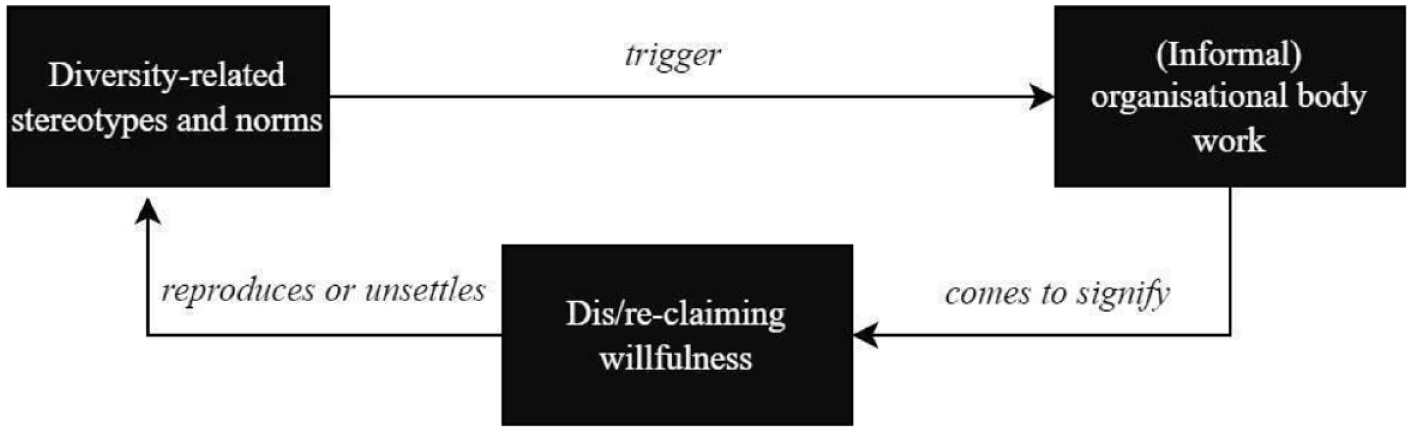
Schematic representation of the theoretical contribution.
Even if diversity-related stereotypes and norms necessitate individuals to perform certain informal organisational body work types, these individuals are not powerless. Indeed, wilfulness is not only what one is assigned, but also shapes the bodies that receive this assignment in formative ways (Ahmed, 2014), meaning women who take up centre stage today may still carry the label of being too wilful that has historically been assigned to them as a group. The women in stand-up comedy of this study engaged in acts to manage their label of wilfulness and deal with potential sexual objectification through particular informal organisational body work, which in turn affected diversity-related stereotypes and norms by either reproducing or unsettling them. Figure 8 maps the three types of informal organisational body work on a matrix indicating the extent to which each type dis/reclaims wilfulness and de/sexualises the body. In the following paragraphs, we describe how this is accomplished.
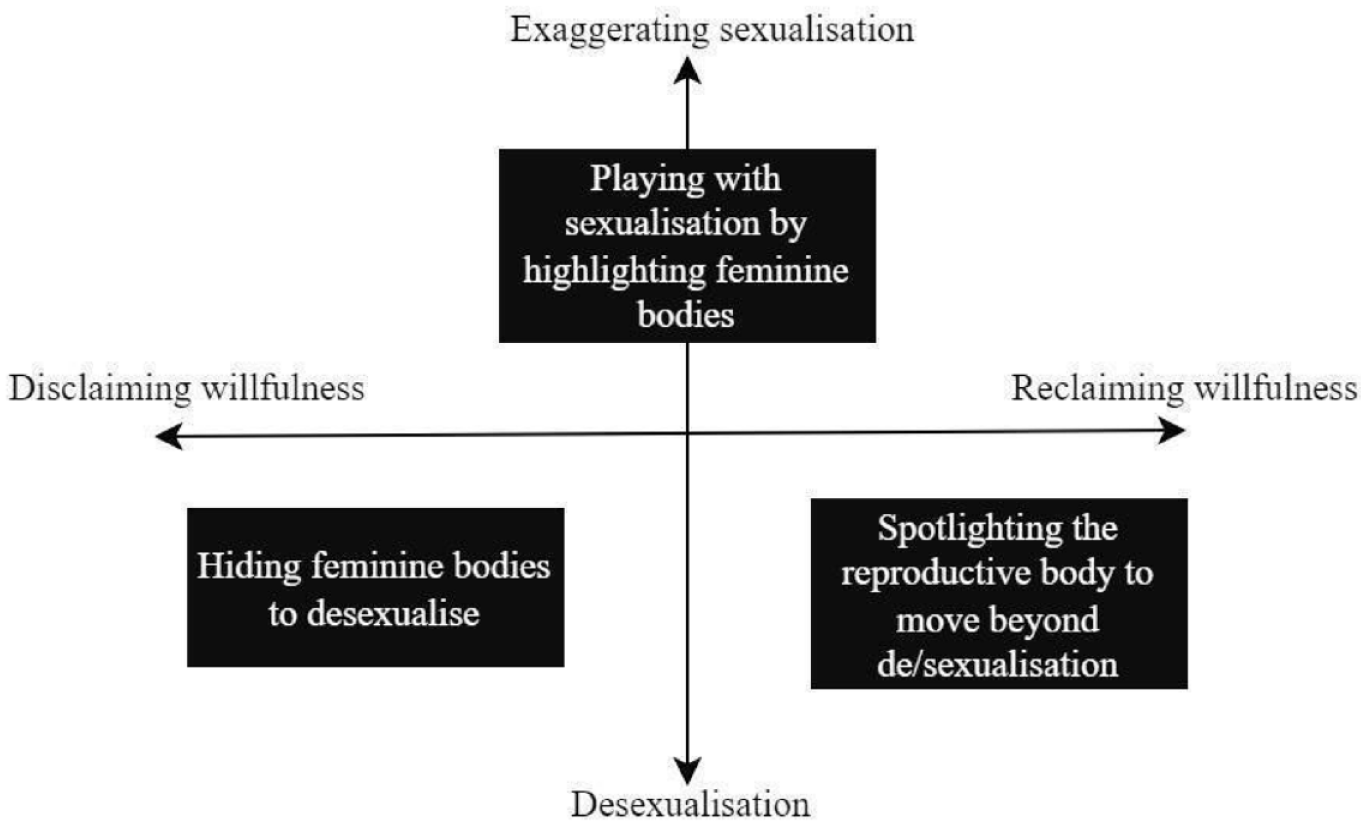
The wilfulness dis/reclaiming and de/sexualisation matrix.
The first type of informal organisational body work involved women in stand-up comedy covering up their feminine bodies to desexualise. Respondents expressed a fear that, when they conformed to gendered expectations of women to look feminine, pretty and sexy, it might offset being seen as funny. Therefore, some worked on ‘dressing down’ to divert the focus from their bodies to what they were saying. To balance out the tension caused by their socio-historical label as wilful subjects, their body work sought to restore balance and foster acceptance by hiding their femininity. We argue this indicates a strategy of disclaiming their wilful designation. Hiding their femininity becomes a ‘technique, a way of holding a subject to account, [. . .] a straightening device’ (Ahmed, 2014: 7) to follow in order to compromise for their wilfulness on stage and to be taken seriously.
The second type of informal organisational body work involved women in stand-up comedy playing with their sexualisation by exaggerating their feminine body in the way they moved, dressed and talked. Bodies were purposefully oversexualised for comic effect. In doing so, women in stand-up comedy embrace the societal expectation of women to be attractive, but mostly to ridicule it. Dressing up and presenting as very feminine in this case helped strengthen the performance, even if this strategy too was not without commentary and unsolicited advice, including from other women. Again, women are designated as wilful subject, but now seemingly adhere to the supposition to be sexy (Gatrell, 2013) mostly in order to reappropriate societies’ gaze on women’s bodies and determine for themselves how their bodies are to be sexualised. It cannot easily be judged whether this is overall a strategy of disclaiming, simply accepting or reclaiming their designation of wilful subject, which is why it is positioned in the middle of the disclaiming/reclaiming continuum in Figure 8.
Finally, a third type of informal organisational body work involved women in stand-up comedy foregrounding the menstruating or maternal body to opt out of the double bind in the virgin/slut binary and present themselves as a whole person, facing everyday (humorous) challenges related to their reproductive capacities. Women wilfully step into the spotlight to position themselves as more than attractive, resisting societal expectations and norms. This led to criticism, for women in stand-up comedy become ‘heard as the ones repeating ourselves’, always bringing up menstruation and feminism, concluding ‘we have to keep saying it because they keep doing it’ (Ahmed, 2023: 40). These instances showed how some respondents refused to attune their bodies to the male-dominated scene of stand-up comedy, not to ‘be determined from without, by an external force’ (Ahmed, 2014: 11). We argue that this indicates a potential strategy of reclaiming a wilful designation.
In sum, one could reason that, at least in our empirical data, the last type of foregrounding the menstruating or maternal body has the most straightforward potential for becoming a feminist tool to address the unequal distribution of power. The embodied act of playing with sexualisation can become a reclaiming of wilfulness when women position themselves as wilful subjects who desire rather than being the object of desire. This strategy’s potential to dismantle stereotypes is, however, a tricky one, as it is conditional on the ‘correct’ reading of an audience. Raising stereotypes, even if to ridicule them, has its risks and can be labelled as having ‘dubious’ emancipatory potential, ‘conditioned upon the audience’s perceptiveness and therefore perhaps a wishful agency’ (Jammaers and Ybema, 2023: 796). With regards to the first type of covering up, it neither seems to confirm (sexual) stereotypes nor actively unsettle them. Although this type can thus be seen as a way of complying with societal expectations and normative pressures that require women to ‘tone down’ and compensate for their wilfulness, this strategy mostly served as a way for women in stand-up comedy to protect themselves from unwanted sexual attention.
Next to other forms of informal organisational body work, of a transformational nature (e.g. cultivating a fit body, see Butcher et al., 2023; Heizmann and Liu, 2022) or a conservational nature (e.g. biting through bodily pain, see Burrow et al., 2024; Grandey et al., 2020; Jammaers and Williams, 2020), we present de/sexualising as informal body work that seems to be particularly relegated to women in highly visible, male-dominated occupations. Prior studies have already shown how the body plays an important role in the legitimacy crafting process of marginalised professionals (Mavin and Grandy, 2016; van Amsterdam and van Eck, 2019), but an integrative inquiry into the different forms of informal body work remained missing. Yet broadening our understanding of the repertoire of unrecognised and unpaid embodied labour to which minoritised and marginalised groups are subordinated is crucial in an economic system rife with invisible and systemic inequalities. Although in our study, sexism was the most prominent trigger, hints of other triggers, such as racialised and LGBTQI+ stereotypes, indicate how informal body work might not only be gendered but also related to other minorities’ abject status in the field of stand-up comedy and beyond. As explained by Ahmed (2023: 165), privilege works as ‘an energy-saving device’, ‘when the world is built for you, there is so much you do not have to think about, so much you do not have to do’. Expanding insights on how the burden of work does not fall equally on the shoulders of marginalised and privileged workers is a pivotal step in reimagining more egalitarian futures of work. As formal access to the comedy stage is slowly becoming attainable for a more heterogeneous group of comedians, we need to anticipate and circumvent the subtle forms of inequality they may encounter.
The usefulness of wilfulness to organisation studies
Despite the popularity of Ahmed’s concepts (e.g. affect, phenomenology of whiteness, diversity work) in organisations studies, wilfulness remains underused as an analytical tool to date. Still, wilfulness presents itself as a useful lens to study power dynamics in organisation studies. In organisational contexts where power takes a subtle, unequally distributed form – as was the case for women in stand-up comedy who, unlike men, were burdened with guessing what an appropriate embodiment looked like without ever getting it quite right (more cleavage, less leg, a bit more colour, a baggy jumpsuit) – the wilfulness lens can be particularly valuable to advance the conversation. Analytically, the concepts of wilfulness charges and their mobilisation help locate difficult-to-spot inequalities in the workplace that are rooted in taken-for-granted notions and become (re)inscribed in bodies over the course of a lifetime. We ‘innocently’ expect girls to be kind and to smile, an expectation that travels with them throughout their professional trajectory and ultimately causes ‘not so innocent’ patterns, for instance of compensatory strategies to balance out being loud and opinionated at best, or being pushed out of the business at worst.
Similar to queering, an ‘attitude of unceasing disruptiveness’ characterised by a ‘loud and proud assertion of difference’ (Parker, 2002: 148), or cripping, an attitude of ‘resistance against “compulsory ablebodiedness”’, which is founded on a ‘non-compliant, anti-assimilationist position that disability is a desirable part of the world’ (McRuer, 2006 cited in Hamraie and Fritsch, 2019: 2), we believe the wilfulness lens offers an agentic perspective that can unsettle long-accepted ideas and unquestioned habits in the workplace. Building on Ahmed’s idea of mobilising the charge of wilfulness as a feminist emancipatory tool, we put forward the term of ‘hagging’, as it helps specify how some women reclaim positions of power and reappropriate their sexual objectification in male-dominated sexist environments. Although hag was traditionally used to describe a witch who evoked a primal fear in others (Pickard, 2020), it is currently an evolving stereotype used to refer to women of all ages who hold a position of power and refuse subjectification to the sexist gaze. Hagging, then, we contend, refers to the practice of proudly claiming the label of hag as a woman who holds a position of power in male-dominated, sexist environments rife with negative diversity-related stereotypes. This, we argue, unsettles an existing social order that prescribes women as docile, quiet beings who are merely objects of desire. Different from Ahmed’s (2023) figure of the killjoy who speaks out against injustice and kills the joy in the room – something that would put women in stand-up comedy, who by definition ought to bring joy, in the corner – the hag focuses on asserting her legitimate position in the spotlight, either avoiding the sexist gaze (e.g. by hiding the feminine body), disturbing the sexist gaze (e.g. by spotlighting the reproductive body), or ridiculing the sexist gaze (e.g. by overdoing sexualisation for comic effect). Whether the hag is performing as entertainer, is active on the political stage or is leading a company, she swims against the tide because she proudly accepts her designation as loud, while refusing to be an object of desire. In that sense, she imposes her body as a blockage point in a male-dominated scene and thereby carries the sign of protest for other women (Ahmed, 2014). With the body being an important site of (unsuppressed) resistance (e.g. rolling eyes), the lens of wilfulness and the idea of hagging thus allow us to grasp a variety of embodied forms of both micro- and more macro-emancipation.
Future research recommendations
Finally, we reflect on possibilities for future research. This study took place in an ‘extreme’ work context of stand-up comedy where the use of humour is pivotal and occupation-inherent, yet we believe the finding of ‘bodily non-neutrality’ in who is identified as funny extends to other workplaces as well. Prior studies have indicated how humour usage in general workplaces works differently for men and women, as being funny remains more often associated with men (Evans et al., 2019; Hooper et al., 2016) who benefit from its positive effects in the context of work (e.g. social glue, stress reduction and so on) (Rosenberg et al., 2021). Women in our study were required to engage in additional labour (here performed through the body) before reaping the benefits of humour on an equal par with men, confirming the unequal nature of workplace humour. The opposite may also hold, meaning certain bodies may suffer from the expectation of being ‘naturally funny’, like fat women (see note 2) or people with dwarfism (Jammaers and Ybema, 2023; van Amsterdam and van Eck, 2019). Future research could focus on such bodies, seen as extremely suitable for humour usage, confining them in an equally uncomfortable space where they are denied the opportunity ‘not to be funny’. In addition, research should further investigate how other power inequalities (e.g. related to ableism, racism, ageism, sizeism and even anthropocentrism) may intersect with (the gendering of) informal organisational body work to fully acknowledge the vast amount of bodily labour minoritised or marginalised groups are subjected to for legitimacy gain. Finally, more research is required to uncover the conditions under which hagging occurs, to investigate the size of this phenomenon in a wider variety of business contexts, and to more fully understand its potentiality in changing existing social orders grounded in sexism.
Conclusion
Women who claim the spotlight are often charged as wilful, requiring the use of a gendered disclaimer before engaging in a humorous act, to apologise for becoming a loud, opinionated and hilarious wilful subject (Ahmed, 2014). Rather than naming sexism, which would jeopardise their claim to being identified as funny and risk being called a hag, women resorted to different forms of organisational body work as their abject appearance signified they could never ‘just be funny’. Still, the mere presence of women’s elevated bodies on stage, who have their voices amplified and performance spotlighted, and who are given authority to speak and make others laugh, is paving the way for women to move from the status of cheeky wilful girls (Ahmed, 2017) who defy being rendered invisible to being recognised as legitimately hilarious women in the workplace.
If you are charged with willfulness, accept and mobilize that charge! (Ahmed, 2023: 181)
Footnotes
Acknowledgements
We would like to express our deepest gratitude to all our anonymous respondents for sharing their stories, to Virginie Van Twembeke for her help with the data collection and to Floris De Krijger for his friendly review of an early draft of this article.
Funding
The authors received no financial support for the research, authorship and/or publication of this article.
