



Abstract
Policies can fail when frontline staff feel they have limited influence on policy implementation (powerlessness) or that policy has little or no personal meaning (meaninglessness) – they become alienated from the policy – but how does this alienation develop? In this article we ask whether policy alienation might be viewed as a process that develops over time: a process that ebbs and flows, interacting with the policy landscape as it shifts, rather than a psychological state. Feelings of alienation can be shared across groups of actors, as they collectively shift and initiate change. This study uses participant observation and interviews with front-line employees as they navigate a UK government policy introducing telehealthcare to improve health management of patients with chronic conditions. We find that: (i) cumulative misalignment between different policy implementation contexts allows policy alienation to develop over time; (ii) the shared experience of alienation in co-worker groups contributes to further misalignment; and (iii) front-line staff use their discretion to respond to policy alienation, which has the power to enhance or destroy policy implementation. We offer an alternative perspective for understanding how policy alienation can be prevented and policy implementation can be enhanced.
Keywords
Introduction
Many public policies do not get successfully implemented. Explanations of why policies fail to progress include: absent incentive structures (Béland et al., 2016); the policy’s illusionary nature (Fotaki and Hyde, 2015); resistance from different stakeholder groups (Davidescu et al., 2018; McConnell, 2010); poor communication or policy support (Borrelli, 2018; Hudson et al., 2019); a lack of evidence (Puliyel, 2011); or public professionals becoming alienated from the policy programme (Lavee et al., 2018; Tummers et al., 2015). It is public service professionals (or so-called ‘street-level bureaucrats’ [SLBs]: Lipsky, 2010) that are charged with enacting public policy. Policy depends on the actions and decisions of these SLBs, and their commitment and engagement are critical to success (Hudson, 1997; Keiser, 2010; Thomann et al., 2018).
The work of SLBs is situated far from the centre of political power, and close to service users and citizens of the country. As such, they have a crucial role to play in controlling resources and providing opportunities for citizen engagement (Lavee et al., 2018; Maynard-Moody and Musheno, 2000). Lipsky (2010) argues that SLBs need discretion over when and how a policy should be implemented. SLBs’ work is largely governed by rules and procedures that never universally fit, therefore discretion is inevitable to navigate interaction with citizen-clients. However, Maynard-Moody and Musheno (2012) argue that SLBs’ decisions are guided by their personal beliefs, values and norms, and these can override adherence to any rules, procedures or training, and therefore understanding the psychology of SLBs is integral to policy progress (see Fotaki and Hyde, 2015).
Current theory of policy alienation attempts to bring together social psychological literature on how street-level workers’ disconnection from policy relates to policy failure (Tummers et al., 2015). Policy alienation is considered from an individualistic perspective within two psychometric dimensions: powerlessness and meaninglessness (Tummers, 2013). By tackling the psychological constructs encompassing alienation, this approach views policy alienation as a state of being, with no explanation of how alienation emerges – that is, the process of ‘becoming’ alienated. This article argues that policy alienation emerges and changes over time as the policy landscape shifts.
Like alienation theory, policy implementation literature takes a fairly static view of policy success (McConnell, 2010) and how implementation support might be achieved across different policy contexts (Hudson et al., 2019). Policy is situated between the different ideals of stakeholder groups and is constantly shifting (Candel and Biesbroek, 2016; Smith, 1973). Interactions between levels of context (i.e. political and organisational) are acknowledged (see Dopson et al., 2008; van Engen et al., 2016), but the reality, that these contexts are interrelated and dynamic (Spyridonidis et al., 2015), is often underplayed. When taking a processual perspective, discrepancies and time lags of policy enactment become the rule rather than the exception (Candel and Biesbroek, 2016). These contextual shifts can result in a receptive or non-receptive context, with episodes of misalignment (or cohesion) emerging (see Pettigrew et al., 1992). We define misalignment as inconsistency between policy goals and meanings at different contextual levels. Misalignment creates cognitive dissonance for SLBs when the changing external context in which they interact does not fit with their inner psychological context, that is, how they see their values and their work (Meister et al., 2014).
As policy seeks to tackle more complex and integrated economic and societal problems (so-called ‘wicked problems’), the horizontal and vertical integration of policy becomes crucial (Candel and Biesbroek, 2016). In this context, opportunities for misalignment are heightened and how agents work together becomes increasingly relevant to policy implementation success. Recent studies have found that SLBs engage in collective sensemaking (Siciliano et al., 2017); therefore, alienation may not just reside within the individual but can be informed by and reside within working groups. This article examines the group context of SLBs to understand how policy alienation develops. By taking a relational approach, we aim to more fully understand the social and relational dynamics of SLB collective sensemaking, and the impact of this on policy alienation processes. Specifically, we ask: as policy contexts shift, and shared episodes of misalignment culminate, how does policy alienation as a process, situated at a group level, impact on policy progress over time? To answer our question, we report findings from an 8-year study of UK government policy introducing telehealthcare – a range of information technologies that gather and transfer information from patients with chronic health conditions automatically to monitoring centres that then prompt carer attention (e.g. a pendant alarm that detects falls and bed occupancy; see Hendy et al., 2012).
We make three key contributions to policy alienation literature, as well as to policy implementation literature more widely. Firstly, by understanding episodes of shared misalignment in policy implementation we conceptualise policy alienation as a process rather than a state. This perspective helps policy makers by allowing us to explore important questions such as how the spread of alienation can be prevented, and whether there is a tipping point after which this becomes impossible. Secondly, our process theory approach reveals that SLB agency plays a more complex role in policy alienation than previously assumed. We illustrate that SLBs’ responses to episodes of misalignment contribute to the spread and shared development of policy alienation. Thirdly, by focusing on group context, we highlight the importance of interpersonal relationships. We clarify that understanding these peer-to-peer relational dynamics provides a more multi-level view of the potential impacts of policy alienation on behaviour.
An agency-based perspective on policy alienation
Policy formation and policy implementation are often separate processes. Policy, by nature is idealistic, with public expectations and social demands within our media age, making the risk of inflating policy goals likely (Fotaki and Hyde, 2015). A policy’s aspirational qualities can then transgress into overinflated implementation expectations (Fotaki and Hyde, 2015; Smith, 1973). Political commitment to a policy can be widespread, but this may not lead to consistent application of the policy as practice (Jordan and Lenschow, 2010). Determining policy success or failure is largely a political occupation, with macro-political agendas shifting priorities and determining the pace of change (Candel and Biesbroek, 2016). Under this constant flux, ‘success’ is hard to define, as stakeholders differentially judge whether and when a policy has achieved its goals (McConnell, 2010). In this article, we view policy implementation as a process.
By grounding our theoretical roots in a process philosophy, we position change and movement at the cornerstone of implementation. The notion of policy implementation as an evolving process is not new (e.g. Smith, 1973), but most recently we are influenced by Candel and Biesbroek’s (2016) perspective that processual understanding is underpinned by four key principles: (i) that policy implementation is asynchronous, fraught with discrepancies and time lags as different parties make partial moves towards implementation; (ii) the policy process is non-linear – there may be movement away from the desired objectives as well as toward them, and these objectives may change; (iii) different parties in the implementation process have mutual dependencies – their actions impact other parts of the system; and (iv) that actors play a crucial role in shaping policy and institutional change. When we focus on process rather than outcomes (success/failure), this raises questions about how implementation develops over time. To understand policy through this theoretical lens requires a focus on the longitudinal and evolving nature of policy. We need to observe episodes of misalignment (or cohesion) between different parties as they come together or diverge.
Underlying policy failure perspectives is a debate about who should be blamed when policies are not implemented: policy makers or policy implementers. Whatever the answer, studies have found that the engagement rather than the alienation of SLBs is crucial (Lavee et al., 2018; Maynard-Moody and Musheno, 2012; Thomann et al., 2018). Here, alienation is an intellectual concept, rooted in Karl Marx’s (1971) writings and refers to estrangement from one’s work. Alienation concepts have recently been applied to understanding the success or failure of specific policies (Tummers et al., 2012b; 2015). According to Tummers (2013), policy alienation is a cognitive state of psychological disconnection, with two core dimensions. SLBs experience powerlessness, when they feel they have no influence over policy implementation at strategic, tactical or operational levels (for example, they are unable to provide input based on their experience, or that there are little/no opportunities for flexibility in implementation). SLBs experience meaninglessness when they question the expected outcomes of the policy, believing the policy has little benefit for their clients or value to society (Tummers, 2013). When SLBs experience this disconnection (alienation) from policy, their behavioural support for implementation and their motivation will wane (Thomann et al., 2018; Tummers et al., 2015; Van der Voet et al., 2017), leading to policy failure. Research on policy alienation refers to experience and involvement in implementation, suggesting a culminating and dynamic concept; however, most work relies on cross-sectional survey data to explore these relationships.
Policy alienation is traditionally conceptualised as an individual-level construct (Tummers, 2013), but the perspective that SLBs operate as part of a social system has become increasingly popular (Gofen, 2014; Keiser, 2010; Moulton and Sandfort, 2017; Siciliano et al., 2017). SLBs are socially skilled agents that can leverage influence to enable change (or inertia) (Moulton and Sandfort, 2017).
What is best for the organisation or the policy may not be best for the SLB and their immediate work group. Hendy and Barlow (2012) demonstrated how street-level champions actively withdrew from promoting a telehealthcare policy within their organisations when they felt this compromised the professional status of their group – leading to poor uptake of the innovation by service users. When we view SLBs as active agents, we acknowledge that they make choices (how much effort to apply, how much enthusiasm to demonstrate, and how much to question and attempt to shape policy implementation; see Cohen and Gershgoren, 2016). These agentic responses have a role in constructing policy meaning, and therefore the opportunity to contribute to perceived shared meaning. We argue that rather than discretion, SLBs have agency. Rather than decision-making choices about rule application, SLBs engage in pragmatic improvisation, creating solutions in the space between normative order and the immediate client situation. Agency is inherently social, and the SLB’s exchange of stories and reflections with others shape shared experience (Maynard-Moody and Musheno, 2012). This agentic response of SLBs, and how this relates to feelings of alienation, is relatively unexplored.
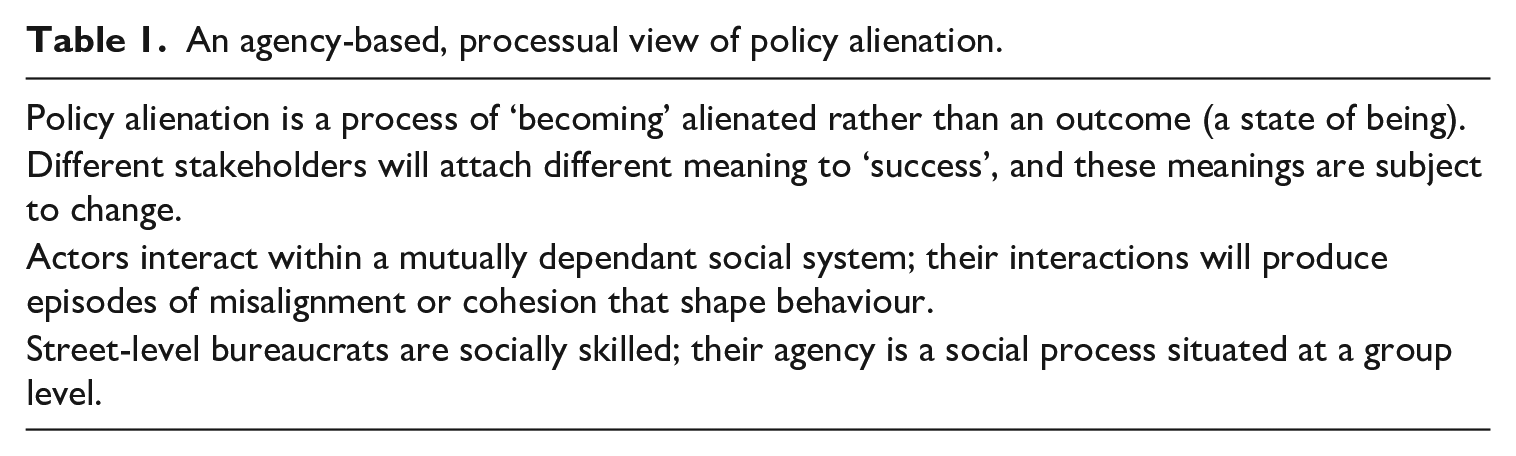
From this perspective, SLBs’ individual beliefs about a policy assimilate over time within their social network (Siciliano et al., 2017) and will be influenced by the perceptions of others and the agency goals of their group (Keiser, 2010). A modern-day reality is that people are more connected and committed to their work groups than to the parent organisation, and this is where meaning and a sense of self and purpose are usually embedded (Moreland et al., 2001). In the health and social care domain (where our study is located), professional groups have significant collective power to resist or support change, and often enact this power when change is not in their best interest (Strong and Robinson, 1990). Siciliano et al. (2017) have argued that the group level (network) is a more appropriate level of analysis to study SLB beliefs about policy reform, and we support this proposition by exploring the importance of group-level context on the development of policy alienation. From our process perspective, policy alienation is more usefully viewed as a process of ‘becoming’ rather than an outcome (a state of being). In taking this stance, we acknowledge that becoming alienated may be asynchronous, messy and non-linear. The main points of our agency-based, processual view of policy alienation are summarised in Table 1.
An agency-based, processual view of policy alienation.
Methods
UK telehealthcare policy 2006–2014
The study concerns UK national policy regarding telehealthcare. Telehealthcare systems combine information technology and service delivery innovation, suggesting a technical fix to healthcare access issues (Hendy et al., 2012). Telehealthcare solutions are politically attractive, appearing to offer links between clinicians and patients separated by time and space (Hendy et al., 2012; May et al., 2003). The UK government provided approximately £175m to help introduce telehealthcare to the UK between 2006 and 2014 (Barlow et al., 2012), devolving monies to local government departments responsible for care commissioning and service delivery.
Our analysis is focused on two of these local government organisations, which are both telehealthcare national frontrunners with a reputation of early success. 1 Interaction between these pilot organisations was high, with knowledge-sharing networks and R & D funding opportunities encouraging collaboration. Therefore, organisational experiences were somewhat shared, and our cases reflect the wider community. At the beginning of our study, national telehealthcare policy adoption was in flux. This suited our research question because policies evolve in early implementation stages (Weiss, 1986), and the likelihood of shifts was high.
At the time, healthcare professionals had diverse views and knowledge about the benefits and risks associated with telehealthcare, and the quality of evidence was variable (Chrysanthaki et al., 2013). When the final results of the world’s largest trial of telehealthcare (Whole System Demonstrator – WSD) emerged, some work showed success in lowering mortality (see Stevenson et al., 2012), and other work showed no real reduction of service use (Stevenson et al., 2013) or cost effectiveness (Henderson et al., 2013). This impacted national implementation, with no significant central funding since.
Data collection
At the outset of our study, we were interested in understanding how telehealthcare policy was interpreted within organisations over time. From this perspective, we anticipated that there would be shifts in thinking in both the policy and the local environment. Over the course of the study, we observed examples where policy environment shifts led to a greater cohesion between policy makers and organisational actors. For example, in 2006, the Preventative Technologies Grant funding was introduced, with the funding recognising experimentation and innovation, providing status and power to pilot organisations. This sparked organisational interest in telehealthcare, and all parties coalesced around a shared vision of becoming innovators. However, we also observed how later shifts in the policy environment and the street-level context led to episodes of misalignment and, over time, policy alienation. Policy alienation then became our primary focus.
With the exception of early explorative works (Tummers et al., 2009; Tummers et al., 2012a), most previous policy alienation research has focused on constructing quantitative measurement instruments (Tummers, 2012). Although this approach has been useful in understanding the impact of alienation on policy success, it is less helpful when examining how policy alienation evolves. Our longitudinal process research approach (Langley, 1999) offers a unique opportunity to elucidate temporal and multi-level context mechanisms underpinning a sequence of events (Langley, 1999). Our ethnographic research design embedded us in the policy context surrounding our organisations. As interpretivist and reflexive researchers (Hibbert et al., 2014), we acknowledge our role in shaping the research data and the risks attached (Finlay, 2002), but through this relationship building we were able to explore the deep underlying nuances between action and meaning that would not have been revealed otherwise. As advised by Hibbert et al. (2014), we also used our relationships to engage in ‘otherness’ by actively seeking alternative views within the telehealthcare community, so increasing the contextual richness of our analytic conversations.
Our interest was primarily SLBs, but we deliberately maintained a holistic process research approach (Dawson, 1997), exploring the perspectives of a wide pool of interconnected informants. Firstly, we explored accounts of policy experts and national leaders who contributed to formal policy production, and advocated telehealthcare as a priority. Secondly, senior leaders and key decision makers from our two organisations were targeted. Senior leaders traditionally play a significant role in determining implementation tactics by granting discretion to SLBs (Howlett, 2004). Senior leaders orchestrated organisational culture (Schein, 2010) by defining the values for measuring performance (Barrett and Fudge, 1981). We suspected that the policy enactment would be different for groups within the organisation; therefore, the policy and organisational senior leaders’ perspective was key for understanding the multi-level context. Thirdly, we captured the perspectives and experiences of SLBs, singly and within their work-group context. In our study, SLBs were project leaders, early adopters and front-line professionals from pilot projects for telehealthcare. The official roles and titles of our SLBs varied: some had a social work background; others were applied health professionals or project managers. The number of SLBs available for data collection was limited in the early stages, with all those sampled being self-selected champions (see Hendy and Barlow, 2012). Initially, we focused on SLBs with project roles, identified as key informants on telehealthcare pilots by our organisational contacts.
As our study evolved, it became apparent that the groups surrounding these individuals, working together on the pilot projects, were important to progress. It was through these groups that we were able to observe dynamics and meaning making. To encompass these group dynamics, from year 2 onwards, SLBs included all public professionals who were situated within the implementation work groups; these included district nurses, general practice physicians, occupational therapists, health visitors, technology engineers and project managers. The role of SLBs was to facilitate the use of telehealthcare technology. This involved a range of tasks including purchasing technological products, distributing these, demonstrating and helping patients to use them, solving problems, and providing organisational evidence of effectiveness. Throughout the research, staff changed roles and, in some cases, left. Owing to our involvement in wider telehealthcare networks, we were able to continue to follow up through informal interviews as well as incorporating their successors into our data. Understanding the circumstances for these departures and what happened next was helpful in dissecting nuances in experiences.
Along with exploring perspectives from different agents, our research strategy was guided by a need to understand how the relationship between actors shaped their understanding about policy, and how discourse and behaviour (of policy makers and policy implementers) shifted over time (Pettigrew, 1992). Over 8 years, we collected three eclectic data sources: policy documents, individual interviews and group observations (Langley, 1999) (summarised below in Table 2). Available documents included publicly available government and think-tank papers, management reports, and project meetings. Initially, we conducted six informal scoping interviews to understand policy content and aims. These scoping interviews informed the semi-structured interviews that followed. Over 6 years, we conducted 68 formal interviews. Interviews lasted approximately 1 hour each, and were audio-recorded and transcribed. The questions iteratively developed as ideas emerged, aiming to elicit how informants saw themselves relative to ongoing policy, the messages they perceived, their relationship with the organisation, and how their experiences evolved.
Data collection.
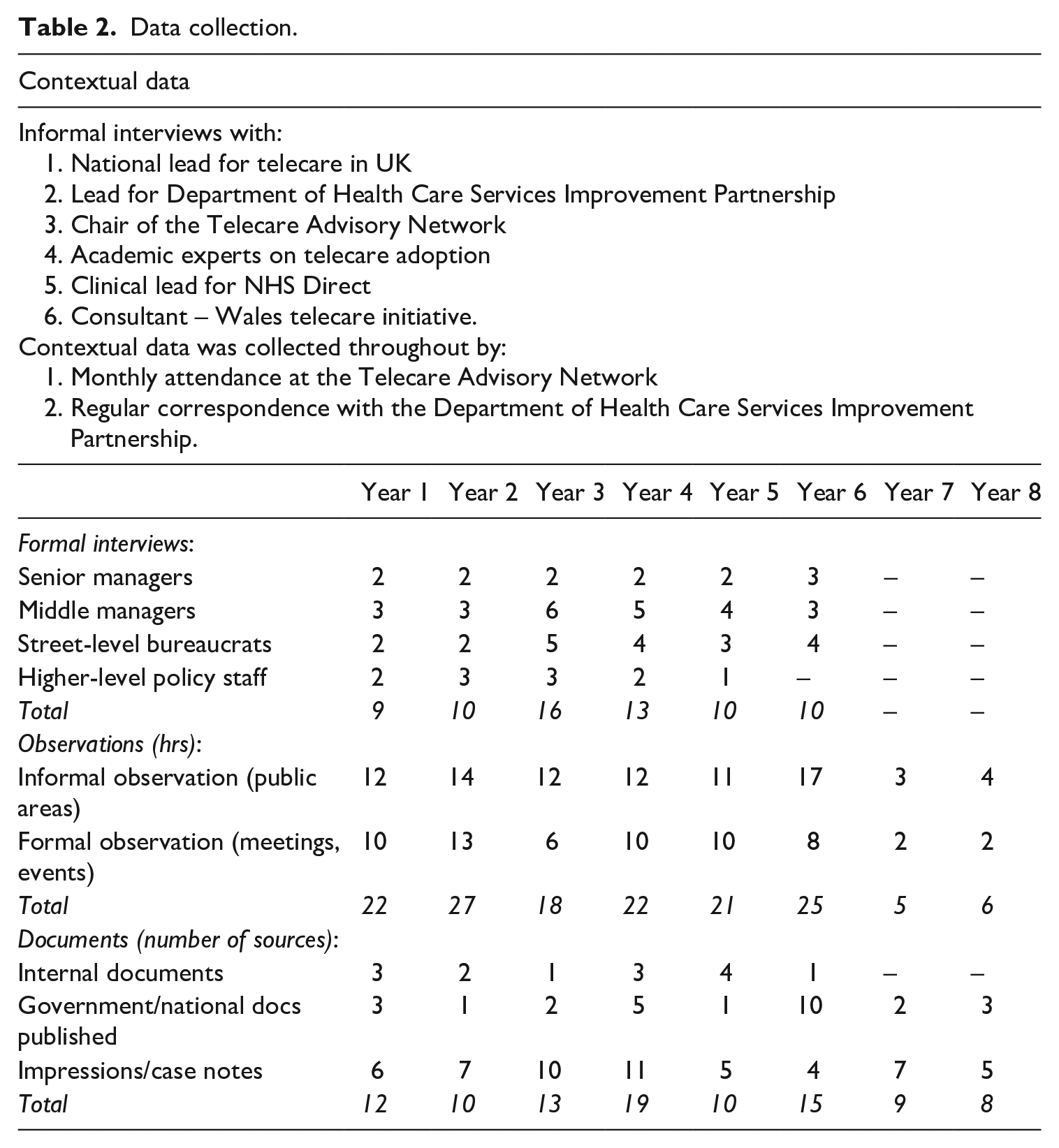
The most revealing data came from formal and informal observation of organisational dynamics through attending national policy advisory groups, senior organisational meetings and local work-group meetings. Observing relationships between different agents over time revealed the nuanced processes of policy alienation development. We noted, for example, how meeting etiquette, attendance, informal groupings of agents, and role dynamics shifted over time. We allowed our data collection to evolve in phases, pursuing emerging issues, conflicts and discussions, thus providing an authentic process understanding. Meaning in a policy context involves complex social processes that may not be immediately evident. In practice, this meant that observation, informal conversations (capturing reactions and responses of SLBs in the moment) and our own research notes became a significant feature of our data. At the 6-year point of data collection, when active implementation of the policy ended, we felt that we had reached saturation (in terms of formal interviews). However, through our policy networks, we continued observations and informal conversations for a further 2 years, to ensure that the organisational consequences of earlier responses and behaviours were fully captured.
Analytical framework and analysis
Our data analysis is best explained as following distinct first-order and second-order phases (Gioia et al., 2012). In the first-order phase, our priority was gaining familiarity with policy implementation literature and context. After an initial literature review, two of the authors read through the interview transcripts and recorded observations about the participants’ experiences in the form of ‘memos’, reflecting on the alignment and relational dynamics between SLBs, the organisation and the policy context. For example, we discussed how the insistence of policy makers that specific methodologies be used to review progress diminished the power of SLBs. At this stage, we refined our research aims in two key ways: (i) we identified that SLBs’ roles were key in instances of cohesion and misalignment; (ii) that the situated context within which a local telehealthcare community was placed (made up of SLBs, service users and technology champions) was important in creating meaning, regarding what was legitimate and valuable knowledge and activity.
Collectively, we arranged our key themes into a ‘policy implementation triangle’ (inspired by Hendy et al., 2019; Walt and Gibson, 1994), allowing us to systematically explore focused research objectives. We used this framework to guide data collection (a full research protocol is available as a supplementary material) and to anchor subsequent analysis (Hendy et al., 2019). In order to triangulate our data sources, we constructed a process database (Langley, 1999) tracking important events led by document analysis, and capturing narratives derived from our initial analysis of the interviews. We created an event timeline (see Figure 1) . This visual mapping was an important organising strategy to understand the relationship between organisational actions and the wider policy context (Langley, 1999). Recorded events include key policy milestones.
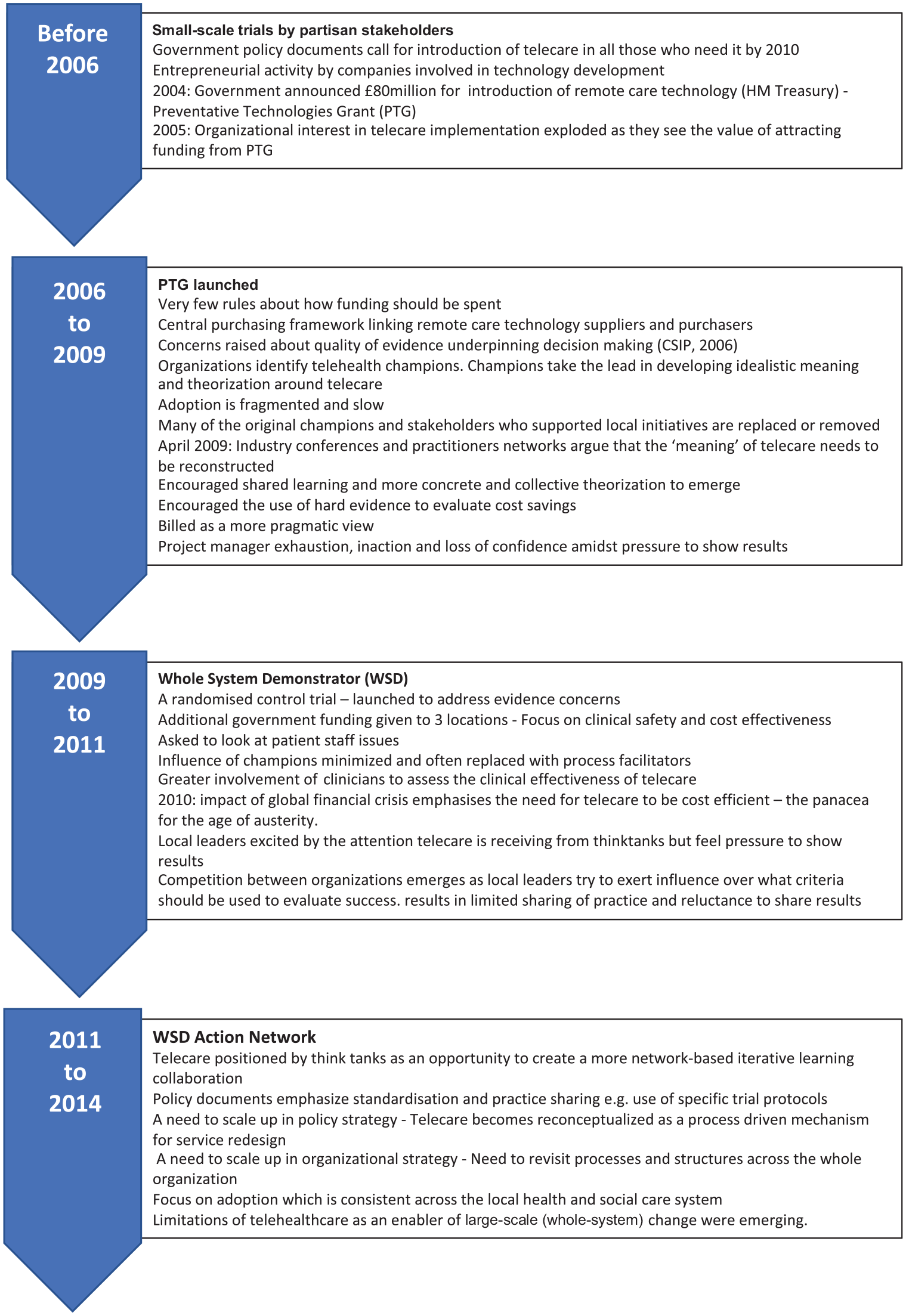
Evolution of the UK telehealthcare context.
This first-order phase of data analysis began soon after the first interviews and continued at regular intervals. At many times our two phases overlapped and we moved back to first-order phase activity on a number of occasions, to verify and check our emerging findings (see Corbin et al., 2014).
In our second analysis phase, we coded interviews more systematically. Guided by our policy implementation triangle, we used an open coding approach where our analysis developed into a system of categories, by comparing patterns in inductively emerging codes (Corbin et al., 2014). Our analysis process was interspersed with regular revisiting of the literature. As increasing misalignment in our case study emerged, we were drawn to theory on policy alienation to explain the disconnection between SLBs and telehealthcare policy (Tummers, 2013). Using this theoretical lens, our axial coding grouped together similar codes to form categories (Corbin et al., 2014; Gioia et al., 2012).
To ensure accuracy (Langley, 1999), we identified character profile narratives of key players. These included not only SLBs, but also key policy makers, influential think-tanks, advisory groups and networks, organisational leaders and other project leaders. For each, we explored the motives and constructed policy perceptions, noting changes over time. Through these, we explored individual interpretations and dynamic, intertwined movements through an analysis of key ‘plots’ (Czarniawska-Joerges, 1995) to verify and continually iterate our interpretation. Table 3 shows an overview of the final data structure (Gioia et al., 2012).
Data structure.
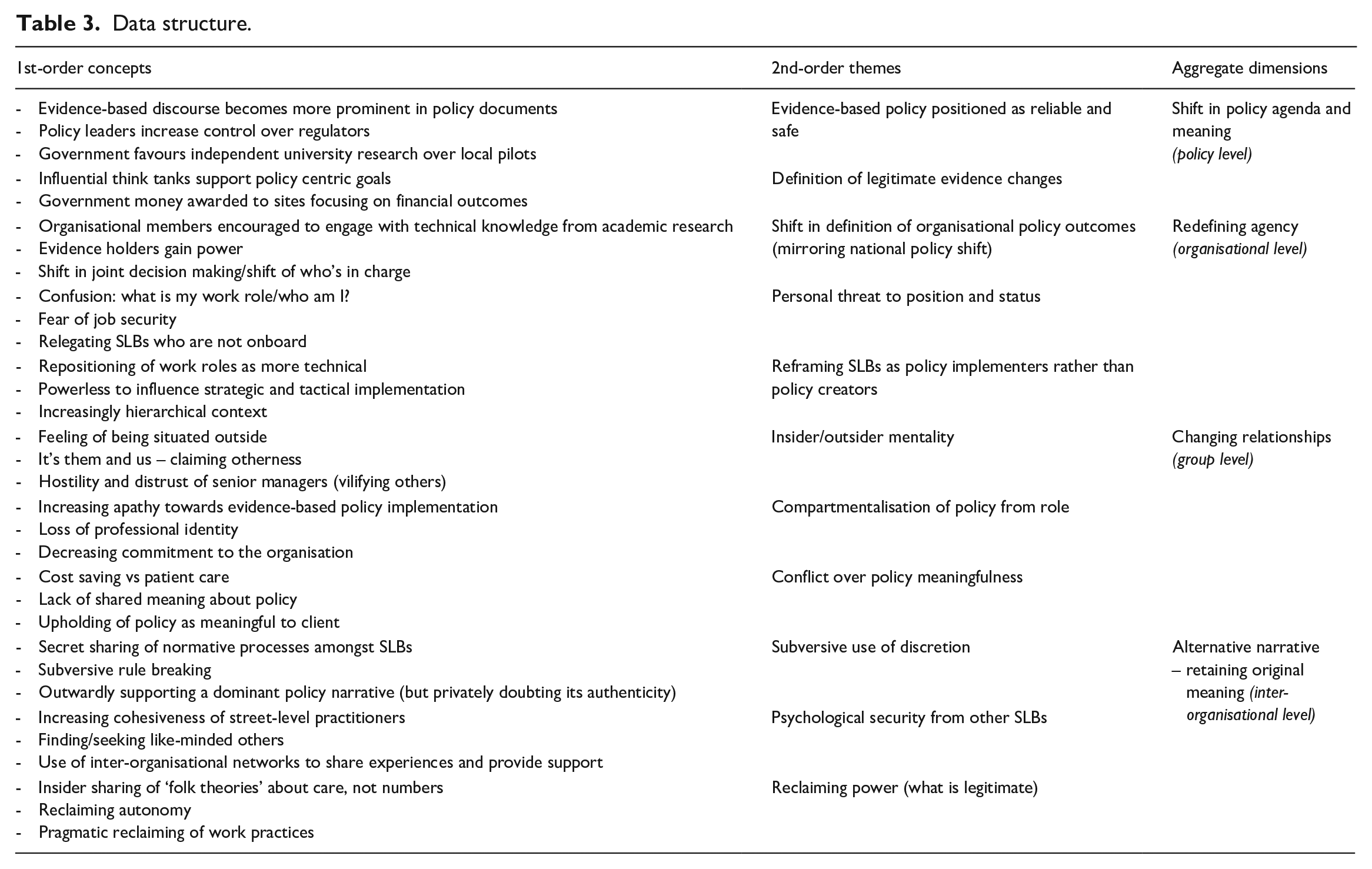
In the final stages of our analysis, we drew from process methodologies (Langley, 1999), organising our findings into three different contextual levels. Using a processual lens, we examined relationships between the aggregate dimensions that emerged from our second-order analysis. This model illustrates the intersection between changes in the external policy context, the organisational context and the group-/street-level context.
Drawing from policy alienation theory, we examined the process pathways by which multiple episodes of misalignment over time created alienation. Our findings suggest that the processual pathways for how powerlessness and meaninglessness develop were distinct but related. We present this model in Figure 2. This approach allowed us to examine the interaction between shifts at different levels and how the shared responses of agents contributed (e.g. how the SLBs’ responses fed back into the redefinition of agency). In the figure, italics represent episodes of misalignment between different contextual levels. At this final stage, we crosschecked this against our timeline and initial analysis, iterating until we were satisfied that our interpretation was the most plausible (Gioia et al., 2012). In the next section, we present the final model of policy alienation.
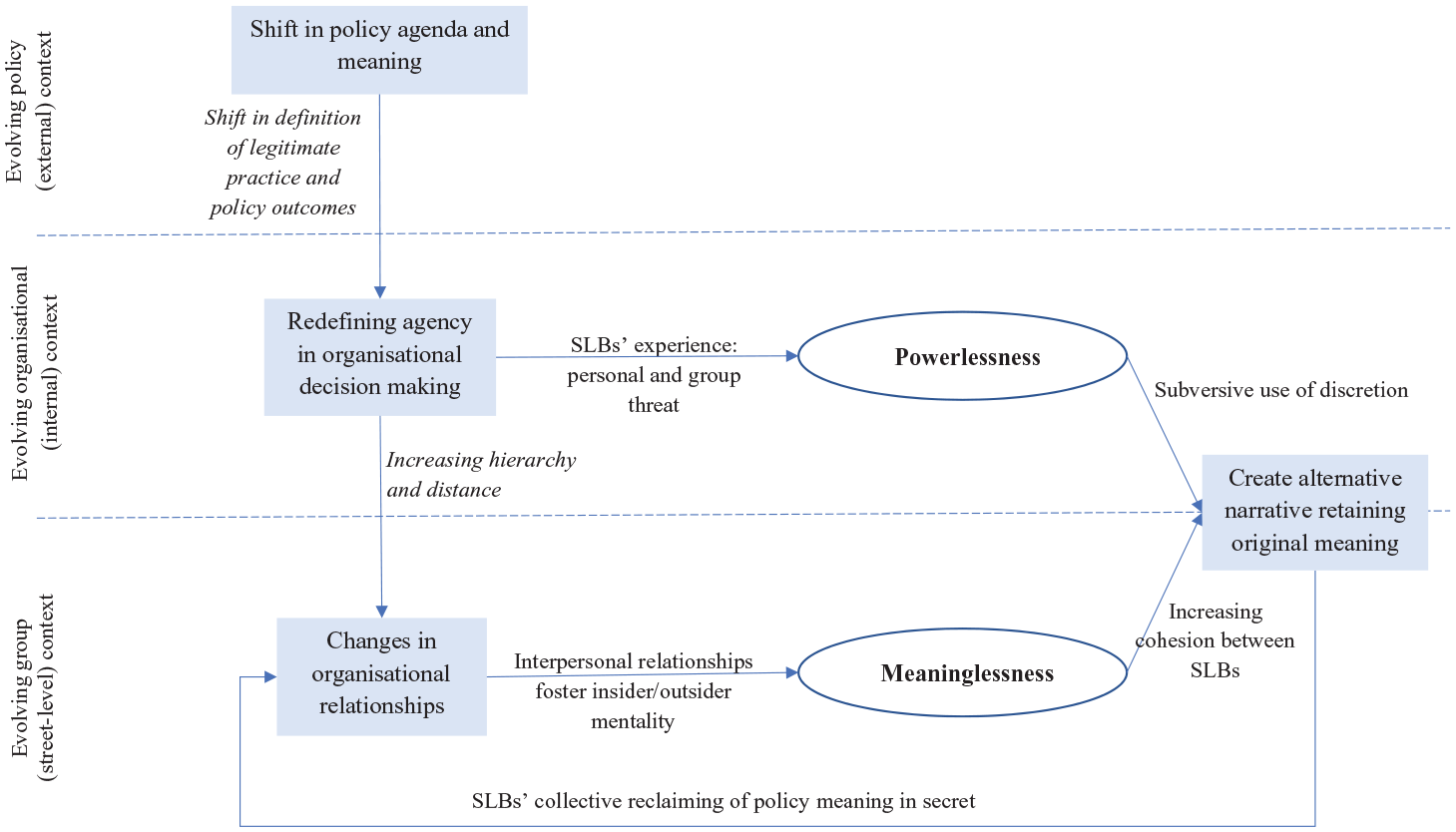
A process model of policy alienation.
A processual model of policy alienation
To understand how policy alienation develops, we present the following process model (see Figure 2), which illustrates the temporal and contextual linkages and serves as a framework for discussion of the findings. Central to this, we posit that, over time, contextual shifts alter the perception employees have of a policy.
Evolving policy context: Shift in policy agenda and meaning
When we entered the research arena (June 2006), central government directives about telehealthcare were vague, implementation sites were allowed to experiment, and pump-priming monies deployed ad hoc. For our organisations, local governance and political regulations created internal pressure to spend wisely. To mitigate the risk of insufficient deployment, senior management developed organisational implementation strategies by creating a shared vision. The vision embedded new decision making in first-hand experience; the reflective learning of staff engaged in roll-out. Historically, SLBs’ expert input provided parameters for emerging innovation, and senior managers happily continued to delegate decision-making powers. Almost everyone (management, policy makers and SLBs) agreed that ‘telehealthcare is a really great thing to do; it provides new status and kudos’ (telehealthcare manager, year 1) to the organisations.
Underlying this shared vision was a perception of the organisations as frontrunners. All members acknowledged there was little existing telehealthcare evidence, and positioned themselves as national contributors – as creators of new knowledge rather than as users. Telehealthcare potential was universally viewed with excitement, providing shared purpose and a shared sense of esteem, with themselves seen as ‘pioneers’. We see here, in the early stages, shifts in the context (with the introduction of government funding) that trigger the negotiation of meaning and the creation of shared vision. The policy agenda influenced how the policy was translated into action, bringing actors together: Developing the vision for telehealthcare is a hard game. I’m trying to input into that vision . . . to have that kind of vision, and the vision has to come from people like me. I think the key thing to telehealthcare is all about selling it, getting people on the ground to believe in it. (Telehealthcare manager; year 1)
Both organisations had previously been inclusive in their approach to developing telehealthcare innovations, historically welcoming ideas and suggestions from any client, innovator or SLB who exerted an interest, as equal and valid partners in the process. However, as our study evolved and telehealthcare became a strategic local and national priority, a new narrative developed, creating power asymmetries that had not existed before.
In the second year we observed an external political and environmental shift away from playful experimentation to a harder-edged evidence-based discourse. Additional government funding supported a direction change, with our sites having new formalised financial accountability. The approach promised freedom from risk – if you gather appropriate evidence, you can avoid blame if things go wrong (Grypdonck, 2006). Meaningful policy making was now conceptualised by senior policy makers as being underpinned by statistical data. Now, evidence provided by experts in economics, finance or science was deemed to be legitimate, with the more situated knowledge of lay-persons sidelined (Epstein et al., 2014).
Redefining agency and organisational decision making
This shift in defining legitimate practice created multiple episodes of misalignment between the policy- and organisational-context levels. Policy leaders (external) became more vocal about their expectations and goals. External policy leaders took charge of regulatory powers. Organisational leaders attempted to resolve this misalignment by constantly trying to redefine what constituted a valid contribution, by proposing decisions firmly rooted in evidenced-based knowledge of economic benefits. Senior leaders mandated certain knowledge types that were most valuable: ‘we must look to research papers – not use anecdotal testimonies’ (CEO; year 3). The policy ‘facts’ in decision making were no longer negotiated, co-constructed, experiential or practice focused. New evidence would be gained by engaging with outsiders, who now became valuable knowledge holders, that is, via national conferences, or by talking to industry experts and scanning university research. Agents with direct interest and involvement in evidence-gathering research (predominantly senior managers) gained power. Further episodes of misalignment occurred when, at meetings, senior leaders expressed doubts and frustration that initial exploits had not produced tangible results, despite anecdotal accounts from patients and experienced practitioners that the telehealthcare programme was effective. Positive reports from clients that telehealthcare was making a difference were dismissed: What we have got is feedback from the work that we’ve done locally from the people who have got the telehealthcare who tell us repeatedly what a difference it’s made to their lives, how much safer they feel, how much more responsive the services are. What it does not say is whether it reduces the numbers admitted to residential care, to nursing care. We haven’t got the evidence to prove that, so what? You know we did it our way here but we are supposed to take into account a more outside view – but their way is not our way. (Telehealthcare manager; year 2)
Changes in hierarchy and power
The promulgating of senior leader authority and political constraints privileged an organising style many SLBs found intimidating, if not downright hostile to participation, creating further episodes of misalignment and actual physical separation. An emerging personal threat over job security emerged as senior management exerted force to ensure compliance. Staff who were not seen as ‘being on board’ and aligned with the new vision and ‘hard’ evidence requirement were often replaced. In one organisation (year 3), when SLBs were unable to evidence the impact of their expenditure (on equipment and service provision), the CEO created two new formal positions that were filled by organisational members with established track records of creating an evidence base for outcomes. The SLBs found their power and roles diminished, and they were given other responsibilities (and one left the organisation): So, basically he sold the idea of telehealthcare and the idea of working together and the needs of scale and good practice and all of that, which was really key in getting to where we are. He’s now been replaced by someone else, because being explicit about the economics of it has become more and more prevalent. (Telehealthcare worker; year 3)
SLBs described having no input into policy enactment – tactical powerlessness (Tummers, 2013). Where previously their expertise and past experience was deemed valuable, it was now not good enough to influence implementation strategies, and they no longer possessed the agency to influence decision making: I said we will do it this way and we did. My experience, my twenty years of knowledge and my expertise were enough for us to do it well, now it’s all evidence based this and evidenced based that. It seems that the effective system I have implemented is no longer enough. (Telehealthcare Manager; year 4)
Previously (prior to 2006), SLBs had been decision makers regarding implementation and spending the small grant monies put aside for this work. With the introduction of larger grants (2006–2009) their autonomy was reduced. The organisational context shifted, and further episodes of misalignment emerged. Senior managers now viewed the organisation as implementers of others’ expert knowledge. SLBs experienced a collision between their work role and the organisation’s position regarding what knowledge was legitimate, with their discretion now limited by new rules and targets: There’s the S curve where you have a rise in expectations and excitement and then you have control and are making progress, then there is this huge trough where things start going wrong, management start to say NO! Evidence, evidence. Then all we’ve done, everything we’ve sold about how great all this is, just turns to shit. (Telehealthcare worker; year 4)
Over the study period the organisation’s senior management became increasingly disconnected from SLBs. The context became ever more hierarchical. SLBs discussed the power held over them, ensuring they ‘toed the party line’. They described control being taken away. Instead, there was an expectation to dutifully carry out the orders of those more senior. Redefining agency in organisational decision making allowed powerlessness to develop.
Changes in organisational relationships
Over time, the increasing power dynamics and new hierarchy between senior leaders and SLBs resulted in changes in relationships. This redefinition of agency represented other episodes of misalignment. The increasing distance caused a sense of unhappiness for SLBs. We began to see accusations of lies, self-interest and hidden motivations levied at senior representatives: They’ve [the management] got an aggressive policy which is about their own agenda, which has put off a lot of people. Almost none of it does or means what we actually think it’s going to – what they say it does. So, lots of untruths there . . .. (Assistant telehealthcare worker; year 5)
An insider/outsider mentality was adopted. SLBs began separating their own vision and values from the values of the organisation (which represented the views of senior managers). This was illustrated by an SLB expressing themselves as the ‘I’ now being in conflict with the ‘them’ of the organisation. The organisation became an ‘outsider’ for SLBs – a distinctly separate social entity concerned with political agendas, hidden motives and financial priorities.
SLBs demonstrated increasing apathy towards policy implementation support provided by the organisation, and disengagement in meetings: They [street-level telehealthcare staff] would turn up to meetings but didn’t want to get involved. Basically, I was going to meetings and I’d say I’ve got some money to give you. Nobody seemed to want it. (Senior manager; year 5)
We noticed that respondents lacked enthusiasm for continuing the work, becoming disappointed and less committed. Where meetings were previously a discussion, they now adopted an information dissemination function, with debate opportunities less frequently offered or taken up. SLBs became a more passive link in the chain of information dissemination. The new hierarchy positioned SLBs firmly outside, diminishing their identity from a ‘thinker and innovator’ to a ‘doer’. We witnessed a difference in how SLBs spoke about the meaningfulness of the policy (which they continued to claim as useful, but from their own perspective) and the meaninglessness of implementation (which they blamed the organisation for). It was notable that, throughout the period, the opinion that telehealthcare provided better care was almost universally upheld, with any criticism levelled at the meaninglessness of organisational implementation in terms of financial benefits. SLBs described a loss of voice and authenticity regarding the benefits for their clients and for society; many SLBs believed the economic benefits of the policy (e.g. cost saving) directly opposed the clinical benefits (e.g. a more joined-up care service, more responsive to patient needs): So, the focus on evidence has caused massive damage in terms of what we would have been doing, because we had to stop doing what was obvious, stop thinking about helping those people that benefit most, alter the direction of travel. So, it was very destructive. (Telehealthcare manager 1; year 6)
The insider/outsider mentality that emerged led to conflicts. Over time, SLBs compartmentalised their identification as stemming solely from the positive work they did, not from role they held within the organisation. Previously these had been intertwined.
Alienation and creating an alternative narrative – retaining the original policy meaning
Using alternative narratives is a well-known means to resist change (e.g. Cutcher, 2009; Vaara and Tienari, 2011) or unlock employee voice (Bryant, 2006). At this point, episodes of misalignment appeared to crystallise, with two distinct alternative narratives emerging, which we observed to some extent in interviews, but mainly when being on-site when having conversations. In the first narrative, SLBs questioned the expected financial outcomes of the policy, and experienced policy meaninglessness. They felt the technology was about providing people with a better quality of life rather than making cost savings. In the third and fourth years of our study, the focused policy desire to show economic benefits eroded their sense of purpose as carers and champions of the clients that they served. In the second narrative, they fought back, declaring how they cared about the person rather than the money. In this narrative, they resolved to continue to care and provide this new service in their own way. In our research notes at this time (year 4), we observed how their work roles changed to accommodate this shift, with the narratives providing a framework for action.
Despite the organisation’s attempts to create consensus around the actionability of technical evidence-based approaches, alternative views and active resistance grew. In the context of the changed relationship between SLBs and senior management, we observed members supporting senior management ideas around evidence-based policy publicly in management meetings, but on the street level many ‘good’ ideas were actively displaced amongst SLBs’ conversations at inter-organisational network events: Everybody was onboard verbally and in agreement, this telehealthcare was definitely something worthwhile and it should be taken forward, but then we know the reality of what’s really happening is not simple. I mean top management people were fighting for their way but for us this way didn’t feel right, we just weren’t really buying into this. (Telehealthcare manager; year 5)
Here, we see despite the inauthentic behavioural support for the policy, SLBs still believed telehealthcare could be beneficial to patients (client meaningfulness; Tummers, 2013). SLBs continued to subversively use their discretion to implement the policy, reporting that they implemented telehealthcare in cases without demonstrated economic benefit (against organisational rules). Reclaiming their work practices, SLBs continued to work with service users, and in these interactions acted upon meaning derived from the alternative narrative: that client experiences possessed the most authentic knowledge. However, these normative processes were largely hidden from senior management, and instead shared and spread across others inhabiting their close-knit community: Now we share different ideals, but I just need to try and stay true to what I believe – and who I am. I won’t compromise because they have decided to change the rules. I can’t just change everything I believe in and worked for to please them. Sometimes you have to fight to retain a sense of what is right and what feels right. (Telehealthcare project officer; year 5)
In the above extract, we can see street-level agendas taking priority over the organisational goals (‘what I believe’), and a clear statement of resistance – fighting to retain the meaning of the policy. In rigidly framing evidence, senior management created the need for SLBs and their work groups to construct something of their own.
SLBs became increasingly cohesive, within the organisations and also across inter-organisational networks. For example, we witnessed lengthy discussions between project champions about perceiving themselves as better care providers through telehealthcare. They exchanged anecdotal stories about patients who were seeing benefits, and frustration with management interference. In doing so, they retained the original shared policy meaning through their relationships with like-minded others. Work groups shared insider folk theories and often appeared to somewhat romanticise the work. In doing so, they reclaimed the power of the policy meaning. We observed SLBs who felt threatened shift allegiances inwards, towards their immediate clique, who provided psychological security; but the closer the cliques became to one another, the more alienated they appeared from the organisation. New norms emerge in response to alienation. Here, the secret nature of the alternative narrative revealed SLBs’ agency. Importantly, this response to feeling alienated created further division. The informal, horizontal membership allowed SLBs to connect with similar others, without senior management being aware.
For presentation ease, in our model, policy shifts are represented as travelling from left to right in a pseudo-sequential order as the storylines appeared in our data over time. However, we found policy alienation was not a predictable sequential process; instead, phases were iterative. Defining agency within a shifting organisational context was constant.
Discussion
By studying the many episodes of misalignment (between SLBs’ immediate context and other policy levels), this study set out to examine how policy alienation as a process (situated at a group level) develops over time. We also consider the impact of alienation on policy progress. To this end, we studied telehealthcare policy in two local authority organisations in the UK over a period of 8 years. Our findings are presented in a model that illustrates process pathways, that allowed episodes of misalignment to develop into shared group-level policy alienation.
During our study period, the UK was considered a worldwide frontrunner in the implementation and funding of telehealthcare. The WSD trial was the accumulation of this – being the largest trial of the technology (6000 people) at that time. No other country has invested as heavily in telehealthcare in terms of the scale of the plans – although other countries (like Sweden) had some very devolved small projects at the micro-level. Despite this commitment, telehealthcare in the UK today is not the mainstream service policy makers hoped for, but it remains high on the political agenda (Department for Health and Social Care, 2019).
Our research reveals how episodes of misalignment can lead to policy alienation. Our findings suggest that the processual pathways for how powerlessness and meaninglessness develop are distinct but related (see Figure 2). Powerlessness develops when organisational decision-making agency is redefined, and SLBs experience personal threats to their position. Meaninglessness develops when changes in internal organisation relationships allow an insider/outsider mentality to develop. This reveals that processes that allow powerlessness to develop reside predominantly at the organisational-context level, whereas processes that allow meaninglessness to develop reside predominantly in the group (street-level) context, but there are various interconnections between these layers.
So, how might these context-specific findings be applied to different policy contexts? Firstly, we argue that if we conceptualise policy alienation as a process rather than a state, we can better understand how episodes of misalignment in policy implementation may contribute to the policy alienation of SLBs and impact on policy progress. Existing literature has already provided a strong case for the relationship between SLBs’ policy alienation and achieving effective policy outcomes (e.g. Lavee et al., 2018; Thomann et al., 2018; Tummers et al., 2015). However, this work is premised on the assumption that policy meaning is static and synchronous between different implementation agents. Our research illustrates how policy implementation is chaotic, fraught and charged with unexpected outcomes. By studying policy enactment evolution over an 8-year period, where numerous strategies attempted to reignite policy implementation, we saw how policy alienation escalated, supported by the powerful policy context (as the evidence-based movement gained momentum; Puliyel, 2011). Over time the policy became more closed to adaptation, locked into a static and irreversible vocabulary (see Naslund and Pemer, 2012). Despite the subversive alternative agency, policy remained outwardly exogenous to the context-based history and SLBs’ reflections.
We examined policy alienation by drawing on literature that views policy implementation as a process. A process perspective positions power and politics as central features of policy implementation success because of the tensions it creates between policy making and implementation parties (Smith, 1973). Policy success from a policy maker’s perspective will not be the same as success perceived by an individual on the front line of policy implementation (Fotaki and Hyde, 2015; McConnell, 2010). From this perspective, policy implementation is inconsistent, non-linear, embedded in context and influenced by agency (Candel and Biesbroek, 2016; Pettigrew, 1992). We posit that, by considering the multiple shifting contexts in which SLBs operate (a policy context, an organisational context and a group context all embedded and interconnected), we can better understand how policy alienation develops and so better understand how to mitigate or avoid it. In viewing policy alienation as a process, we accept that the asynchronous nature of multi-agency change makes episodes of misalignment inevitable (Candel and Biesbroek, 2016) and, therefore, working to eliminate discrepancy is unlikely to be effective. Instead, working to address the threat to the SLBs’ organisational position (power and identity) may help to reduce powerlessness; equally, ensuring that SLBs do not feel like ‘outsiders’ may prevent the need to find an alternative shared meaning.
The second contribution of our article is revealing the more complex role of SLB agency in policy alienation development than previously discussed in the literature. Our study supports evidence that perceived discretion played a crucial role in the SLBs’ motivation to implement policy (Thomann et al., 2018). However, our SLBs were more strategic in their actions, disentangling their actions from their assessment of the policy’s merit. Our participants felt unable to unlock the policy benefits to society/clients because their role within the organisation became devalued and they felt personally disadvantaged by this.
The argument that SLB discretion is guided by self-interest is a common theme in the narratives of academics and senior policy leaders (Maynard-Moody and Musheno, 2000). The state-agent narrative argues that SLBs use discretion to make their work easier (e.g. focusing on easier clients) or by looking for quick-fix solutions and inventing procedures to unblock a client’s transition through the system (Maynard-Moody and Musheno, 2000). In line with this, Cohen and Gershgoren (2016) similarly found SLBs would more likely support organisational goal implementation where their self-interest was supported. Previous work has conceptualised this self-interest fuelled discretion in the form of reducing workload. However, in our study, SLBs’ main concerns related to their job security, personal values and relationships within the organisation. The changes in organisational relationships created professional identity loss (Spyridonidis et al., 2015). For our SLBs, identity was initially aligned with the ‘we’ of shared purpose. Within this episode of misalignment, this shared purpose dissipated as their relationship with the organisation changed. Their motivations for creating the alternative narrative were driven by needing to retain their professional identity as experts. Our study extends this research by revealing self-interest of SLBs conceptualised in terms of power and identity. This is significant because this self-interest is more normative and could guide discretion, not only on a case-by-case basis, but also by representing a wider shift in implementation. It is argued that discretion contributes to policy making (Gofen, 2014; Lipsky, 2010) through collective divergence in the actualisation of policy by SLBs and their work groups, and provides a useful and wider explanation of why policy implementation fails.
For presentation purposes, we have categorised the agentic responses of SLBs and senior managers in a normative sense. In practice, there were exceptions to these profiles, most notably one telehealthcare champion who actively embraced the evidence-based perspective, and became an external consultant (taking advantage of the newly acquired expert status), which allowed some pockets of implementation success in one organisation. We were unable to include all of the individual stories in this article but feel confident a majority of their experiences align with our interpretation. We would welcome further research that explores more deeply the influence of SLB self-interest on discretion from an identity perspective.
Understanding the role of agency is important because our SLBs were not passive, but instead actively sought out alternative actions to regain control. The alternative narrative appeared a useful communal resource, reclaiming what Swan et al. (2002) call ‘process power’ (who is included) and ‘meaning power’ (what ideas are considered legitimate). In this new active participation, shared meaning encourages in-group knowledge sharing, and perhaps reluctantly accepting a new identity (Spyridonidis et al., 2015). These findings present a complex picture, with surface actions (in management meetings) appearing more positive than they really were. Through our in-depth context immersion, we uncovered subtle differences between apparent enthusiasm and surface compliance. It is difficult to say what this complexity might mean for survey-based studies of policy alienation (e.g. Tummers et al., 2012b, 2015), but as a starting point it highlights the need for methods that encourage SLBs to reveal their ‘real’ feelings, and presents interesting future research opportunities, e.g. differentiating between attitudes and behaviour.
Our study revealed the ability of SLBs to hold more than one evaluation of meaninglessness. This illustrates ambiguity in feelings of policy alienation that have not been previously discussed. Interestingly, Maynard-Moody and Musheno (2012) describe a distinction between the way that SLBs answered questions about their judgements (which they depicted as rule-bound) and the way they acted and provided examples in the field, where they made judgements through exchanging narratives with other workers. In their study, the distinction is attributed to the inability of individuals to articulate the depth of normative reasoning that guides their actions; however, in our study these were more intentional distinctions. SLBs purposefully presented the state-agent expectation of discretion and subversively kept their agency secret from powerful organisational leaders and policy makers who sought to impose a different policy meaning. This secret was shared between groups of SLBs and created cohesion amongst them – they were empowered by this collective secrecy. These actions allowed them to reclaim the meaning of the policy and have agency whilst avoiding conflict with those outside of their group who did not share this meaning. Recently, Lavee and Strier (2019) found that emotional capital was transferred from SLBs to clients when social reform lacked policy support, bringing into question the emotional labour that SLBs have to manage. Exploring perceptions of policy progress from this perspective would be an interesting perspective for future research. Understanding the impact of holding more than one evaluation of meaninglessness, for professional identity or emotional coping, would also be of value to this literature.
Our third contribution is that SLB responses to episodes of misalignment contribute to the shared development of policy alienation. A key feature of our story is its shared and iterative nature. We found that the responses of SLBs to feeling alienated led them to adopt more subversive uses of discretion, and to become a cohesive group, creating an alternative, which in itself fed into further misalignment by solidifying the new power and relational dynamics in the organisation. Fotaki and Hyde (2015) found that employees’ defence mechanisms, responding to a threat to their agency, contributed to solidifying the organisation’s commitment to unsuccessful strategies. What we found was a similar cyclical effect, but this was not framed on individual psychological responses, but collective, social responses from groups of co-workers. Our research contributes to literature on policy alienation by highlighting that the development of SLB policy alienation is not a linear or singular process. The actions of SLBs in response to feeling alienated (through their actions to reclaim power and meaning) will interact with the environment, contributing to or preventing the resolution of episodes of misalignment in policy implementation. As a result, it is plausible that policy alienation will perpetually worsen over time.
By focusing on group context, we reveal the importance of interpersonal relationships between SLBs. This provides a more multi-level view of the impact of policy alienation on SLB behaviour. We found the process pathway to policy meaninglessness to be especially complex. Our research expands assumptions that meaninglessness is largely associated with loss of faith in the policy (Tummers, 2013) by explaining how conflicting policy meanings emerged. Siciliano et al. (2017) argue that SLBs engage in a collective sensemaking process where they use discussion and develop networks to understand the changes in the organisational and policy context. In our study, SLBs did not simply become disillusioned (Tummers et al., 2012b), but instead, meaninglessness evolved from changing relationships in their immediate context.
It was clear from our research that the changes in SLBs’ relationships (the drawing together of co-workers, and mistrust of senior leaders) had a significant impact on the development of policy alienation. It was also these peer-to-peer relationships that allowed the alternative narrative to develop and exacerbated misalignment and progress. In their research, Siciliano et al. (2017) explored the social networks of SLBs over three time points and found that an SLB’s individual belief about policy meaning is assimilated over time and will become more aligned with other members of their immediate work group. We extend this work further by offering a closer examination of the motives that underpin this convergence within a work group. We highlight how episodes of misalignment between different policy-context levels motivate SLBs towards greater cohesion and the creation of an alternative narrative, which helps to make sense of their group identity. Understanding these motives is important because it allows us to understand how shared episodes of misalignment culminate, and the impact of this.
Policy success or failure is largely a political issue with impact for reputation and electoral prospects of policy makers at the forefront of decisions such as those that we observed in our study (e.g. the need for a specific type of evidence) (McConnell, 2010). Many other political factors contributed to the limited success of telehealthcare, such as limited resources and certain groups’ level of resistance and access to implementation processes (Chrysanthaki et al., 2013). We have alluded to issues of power throughout our analysis, but this has not been specifically theorised in this article. The study has revealed the importance of relational dynamics between organisational members in implementing policy and how this is influenced by organisational status and decision-making processes. We would encourage future research to explore these issues more deeply to further expose how shared experiences at a group level of influence are impacted by the power of various actors.
Conclusions
Our study aimed to challenge the conceptualisation of policy alienation as a singular concept of outcome (success or failure at a specific time), positioning it instead as a more disordered process that interacts with progress over time. What, therefore, can we conclude about how policy alienation develops?
In terms of evaluating the impact of alienation on policy progress over time, we argue that it depends on who the proponents are, and their goals. At a national level, telehealthcare in the UK has not become the mainstream service that policy makers hoped for, but to SLBs it appears to have been somewhat personally beneficial. They used their discretion to respond to policy alienation, sharing their efforts with their work groups. This work-group dynamic offered many creative opportunities for agency and the ability to enhance or destroy policy implementation efforts. However, it also contributed to the development of policy alienation (the closer the cliques became to one another, the more alienated they appeared from the organisation). Longer term, the growing distance between SLBs and senior management led to more profound organisational effects.
Policy alienation did not happen overnight, but by the end of our study invisible factures had grown, with the multitude of micro-actions, like not turning up to meetings and not engaging in evaluation activities, accumulating and creating ever more impact in terms of derailing progress and actively destroying implementation efforts. It might seem easy to conclude from our case study that policy alienation is unavoidable. Given the non-linear nature of policy implementation, it is more likely than not that at times SLBs may begin to feel alienated from policy. In order to prevent the development of policy alienation, organisations need to be hyper-alert to the harmful effects of episodes of misalignment, and work to prevent their exacerbation. By taking a processual approach to policy alienation, we have begun to explore some ideas about how this can be created, and thus prevented. We do not believe that policy alienation inevitably develops from episodes of misalignment; however, our research does suggest that no one significant action will prevent it.
Supplemental Material
sj-pdf-1-hum-10.1177_00187267211003633 – Supplemental material for How does policy alienation develop? Exploring street-level bureaucrats’ agency in policy context shift in UK telehealthcare
Supplemental material, sj-pdf-1-hum-10.1177_00187267211003633 for How does policy alienation develop? Exploring street-level bureaucrats’ agency in policy context shift in UK telehealthcare by Danielle A Tucker, Jane Hendy and Theopisti Chrysanthaki in Human Relations
Footnotes
Acknowledgements
We would like to thank Professor James Barlow, who supported the research underpinning this article. We are also grateful to the three reviewers and editor who provided valuable feedback in developing the article.
Funding
The authors disclosed receipt of the following financial support for the research, authorship and/or publication of this article: UK Government’s ’Preventative Technology Grant’ and ’Whole System Demonstrator’ programme, further underpinned by Engineering and Physical Sciences Research Council (EPSRC), The Health and Care Infrastructure Research and Innovation Centre (HaCIRIC),  .
.
Supplemental material
Supplemental material for this article is available online.
Notes
References
Supplementary Material
Please find the following supplemental material available below.
For Open Access articles published under a Creative Commons License, all supplemental material carries the same license as the article it is associated with.
For non-Open Access articles published, all supplemental material carries a non-exclusive license, and permission requests for re-use of supplemental material or any part of supplemental material shall be sent directly to the copyright owner as specified in the copyright notice associated with the article.
