



Abstract
Background:
Massive Open Online Courses (MOOCs) can engage large numbers of learners. Understanding motivations for enrolling and elements that engage learners may help meet learner needs. This study explored motivations, intentions, recruitment methods and course acceptability of learners enrolled in ‘The Science of Weight Loss: Dispelling diet myths’ (SWL101X) MOOC on EdX.
Design and setting:
Cross-sectional analysis included 29,666 learners from 180+ countries.
Methods:
Learners provided demographic data, while 8,454 learners provided optional pre-course data and 987 provided post-course data. The pre-course survey examined learners’ motivations and intentions and recruitment method, and the post-course survey examined acceptability of course content. Descriptive statistics were reported as frequencies and percentages or medians (interquartile range)/means (standard deviation).
Results:
Learners (61% women, 51% aged between 25 and 44 years) enrolled in the MOOCs mainly to increase their nutrition knowledge (46%) and/or lose weight (62%). Most (61%) were recruited through EdX platforms (website, newsletters and blog). Course components were well received by the majority who completed the post-course survey.
Conclusion:
The SWL101X MOOC successfully delivered nutrition education. Future courses could consider trialling the text, videos and interactive features to further engage learners. Short, informal ‘talking head’ video content may facilitate engagement. Future courses should also ensure the inclusion of the most recent dietary practices for health, and the management of obesity as a chronic disease, as some of the content used in the course in this study does not represent current and/or best practice. The greater use of social media may enhance learner enrolment.
Introduction
Globally, the prevalence of overweight and obesity, body mass index (BMI) ⩾ 25 kg/m2, in adults has substantially increased in recent decades (Chooi et al., 2019; Hruby and Hu, 2015). The World Health Organization (2021) estimates that 52% of adults (⩾18 years) had overweight or obesity in 2016. National survey data from the USA found that between 2013 and 2016 almost half (49%) of all adults had attempted to lose weight in the previous 12 months (Martin et al., 2018). A systematic review identified that across studies, weight loss attempts are more prevalent in women than men (Santos et al., 2017).
In 2018, the US weight loss market was reportedly worth a record $72 billion (Schein et al., 2022). Recommended weight management strategies focus on improving dietary intake and increasing physical activity levels (U.S. Department of Health and Human Services, National Institutes of Health, 2013; Wiklund, 2016). A systematic review of 72 studies found that increasing physical activity is the most frequently used weight management strategy used by adults (Santos et al., 2017). However, for the large number of individuals interested in weight management, extensive nutrition and weight management information is available, meaning that numerous evidence-based and non-evidence-based weight management strategies are accessible (Santos et al., 2017), posing challenges for individuals in distinguishing between them.
Due to its ease of access and affordability, individuals use the Internet to source information to increase their nutrition knowledge (van Dillen et al., 2003; Pollard et al., 2015). Studies have found that up to 93% of individuals use the Internet to locate nutrition information (Cash et al., 2015; Quaidoo et al., 2018), which demonstrates the potential it provides as a medium to educate individuals in regard to nutrition information. However, as the Internet is not regulated for informational accuracy, it can be difficult for individuals to identify credible nutrition information and differentiate between fact or ‘fad’ (Gkouskou et al., 2011). Online nutrition education programmes such as Massive Open Online Courses (MOOCs), developed and provided by qualified health professionals, have great potential to bridge nutrition-related knowledge deficits at the public level, by providing evidence-based nutrition education on a large scale (Liyanagunawardena and Aboshady, 2018; Ng et al., 2014; Strasser, 2016).
MOOCs are short online courses accessible globally through online platforms such as EdX, Coursera and Saylor, and are generally offered free of charge as well as fee paying (Gamage et al., 2015), meaning they are highly accessible to most individuals irrespective of their socio-economic status (SES). MOOCs are characterised by short educational videos, quizzes, assignments and online discussion boards (Glance et al., 2013). ‘The Science of Weight Loss: Dispelling diet myths’ MOOC (https://www.edx.org/course/the-science-of-weight-loss-dispelling-diet-myths-2) released initially in 2017 is one such course available via the EdX platform to address nutrition knowledge deficits related to weight management and dieting myths. Currently, there are few studies that have explored the characteristics of MOOC learners (Adamski et al., 2020; Gibson et al., 2020), their motivations and intentions for enrolling, effective methods to recruit them and acceptability of course components. Understanding these issues may assist with and inform enrolment and engagement strategies in future MOOCs, which could help address nutrition knowledge deficits regarding weight management. Given this, the aims of this study were to
Explore the motivations and intentions of learners enrolled in ‘The Science of Weight Loss: Dispelling diet myths’ MOOC.
Explore the most effective strategies for recruiting learners to this MOOC.
Describe the acceptability of The Science of Weight Loss MOOC course components.
Methods
Study design
The study involved a cross-sectional analysis of data collected from The Science of Weight Loss: Dispelling diet myths (SWL101X), a free, open-access course available through the EdX platform (https://www.edx.org/course/the-science-of-weight-loss-dispelling-diet-myths-2). The reporting of this study adhers to the statement on the Strengthening the Reporting of Observational Studies in Epidemiology (STROBE) (Vandenbroucke et al., 2007).
Participants and recruitment
Participants were individuals who were enrolled on The Science of Weight Loss MOOC (SWL101X) during the period from 15 April to 27 May 2017. Recruitment took place via the EdX email newsletter, the EdX website and blog, via social media platforms (Facebook, Instagram, Twitter), via newspaper and radio promotions and via internal staff and student promotions from The University of Newcastle, Australia. Learners enrolled in the course through the EdX platform and informed consent was obtained for their data to be collected.
Course content and assessments
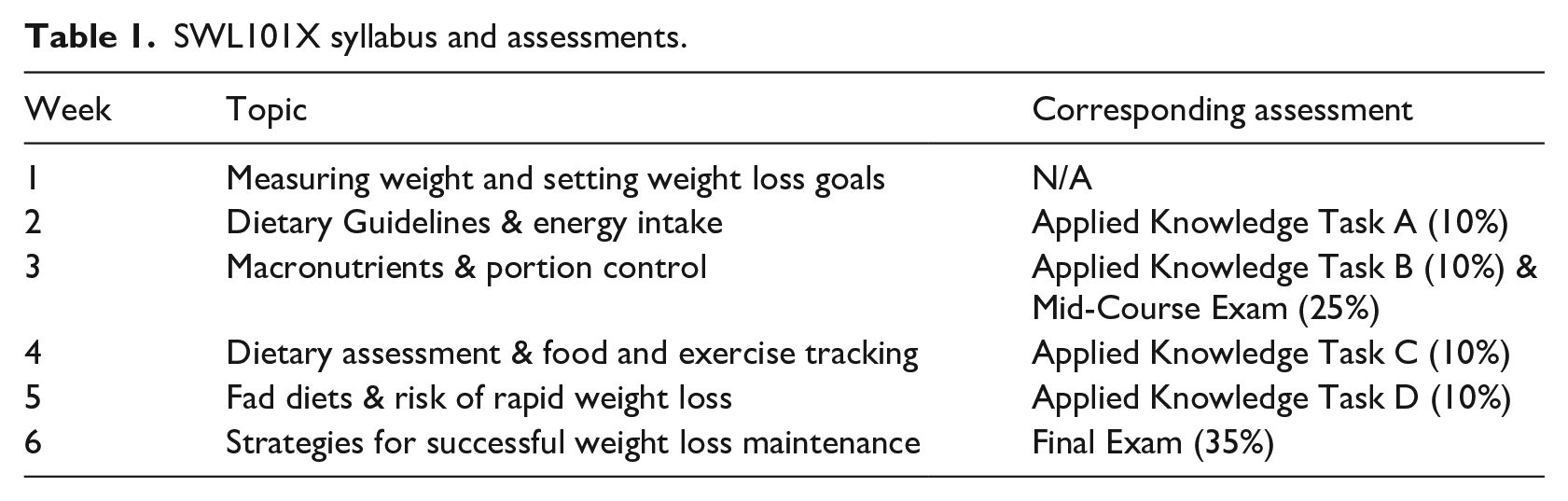
The 6-week introductory level course provided evidence-based information about food and nutrition while dispelling common myths about weight loss by teaching the science behind eating for a healthy body and mind. The SWL101X syllabus and assessment schedule is shown in Table 1. The course was developed and delivered by nutrition and dietetic professionals and academic researchers from the University of Newcastle, New South Wales, Australia.
SWL101X syllabus and assessments.
Learners were encouraged to spend 2 to 3 hours per week engaging in course activities including video lectures, practical tasks, quizzes, and discussions. ‘Dispel the myth’ and ‘Discuss the myth’ discussions were included at the end of each topic where learners had the opportunity to dispel and discuss common dietary misconceptions, for example, ‘Do carbohydrates make you gain weight?’ and ‘Do diet fizzy drinks make you gain weight?’
Data collection
Learners were asked to provide optional demographic data upon enrolment in the course. After enrolment and prior to starting the course, learners were asked to complete an optional survey which collected data about their motivations and intentions for enrolling, and the method by which they were recruited.
Following the 6-week course, learners were asked to complete an optional post-course survey which collected data about their acceptability of the course components. Survey responses were collected via EdX through the SurveyMonkey Inc. platform (San Mateo, California, USA, www.surveymonkey.com).
Measures
Demographic characteristics of learners
Demographic characteristics included gender, age group, education level, and country of origin, and were retrieved from the course database.
Motivations and intentions of learners
Pre-course surveys were optional and included three questions about the learners’ motivation and intentions for enrolling in the MOOC. The learners could select more than one response. The questions and response options were as follows: (1) Which of the following describes why you are taking this course? (i. I want to lose weight, ii. I am an instructional designer, iii. I want to expand my knowledge of nutrition and dietetics, iv. It’s my first MOOC [Massive Open Online Course], I want to try something new, v. I work in health/nutrition, vi. I am an educator in the field, vii. It’s about lifelong learning); (2) which statement best describes your intentions? (i. I’m just here to have a browse at the course, ii. I’m interested in some but not all of the courses, iii. I want to see all the material but not do assessments, iv. I might do some of the assessments, v. I have not decided yet, vi. I want to complete the whole course, including all assessments); and (3) how much time do you intend to spend on the course activities each week? (i. less than an hour, ii. between 1-3 hours, iii. between 3-6 hours, iv. over 6 hours a week).
Learner recruitment
The optional pre-course survey included one question about the method by which they were recruited: How did you find out about the course? (i. Instagram, ii. Facebook, iii. Twitter, iv. Newspaper, v. Radio, vi. The University of Newcastle, vii. Word of mouth, ix. EdX newsletter, x. EdX website, xi. EdX blog).
Acceptability of the course components
Seven questions were asked in the optional post-course survey about the learners’ acceptability of the course components and delivery: (1) This course helped me to determine to how to measure body composition and set weight loss goals; (2) this course helped me to understand how to calculate energy requirements; (3) the learning materials used an appropriate mix of text, videos and interactive features; (4) the videos were informative and engaging; (5) assessment requirements were made clear to me; (6) assessment activities were pitched just at the right level for me; and (7) I enjoyed this course. A 5-point Likert-type scale was used to rank questions from ‘strongly agree, agree, unsure, disagree to strongly disagree’.
Statistical analysis
Statistical analyses were performed using SPSS statistical software (SPSS Version 25, Armonk, New York, USA). Categorical data were summarised as frequencies and percentages (e.g. gender, age range, education level, country of origin, motivation, intentions, recruitment method). For the continuous variables, as the data sets were larger than 5,000, the Kolmogorov–Smirnov test was employed for normality testing (Mohd Razali and Yap, 2011). Normally distributed data were presented as mean and standard deviation while skewed data were presented as median and interquartile range. For the continuous variables of the 5-point Likert-type scale ranging from strongly disagree (1) to strongly agree (5) for the learners’ course acceptability data, the results were presented as mean and standard deviation. As the pre- and post-course survey questions were optional, data were analysed for completed responses; hence, the number of responses across different questions vary.
Ethics
Ethical approval was not required for this research. A Quality Assurance Proposal (QA142) was approved by the University of Newcastle Human Research Ethics Committee: allowing the use of the pre- and post-survey data.
Results
Sociodemographic characteristics of learners
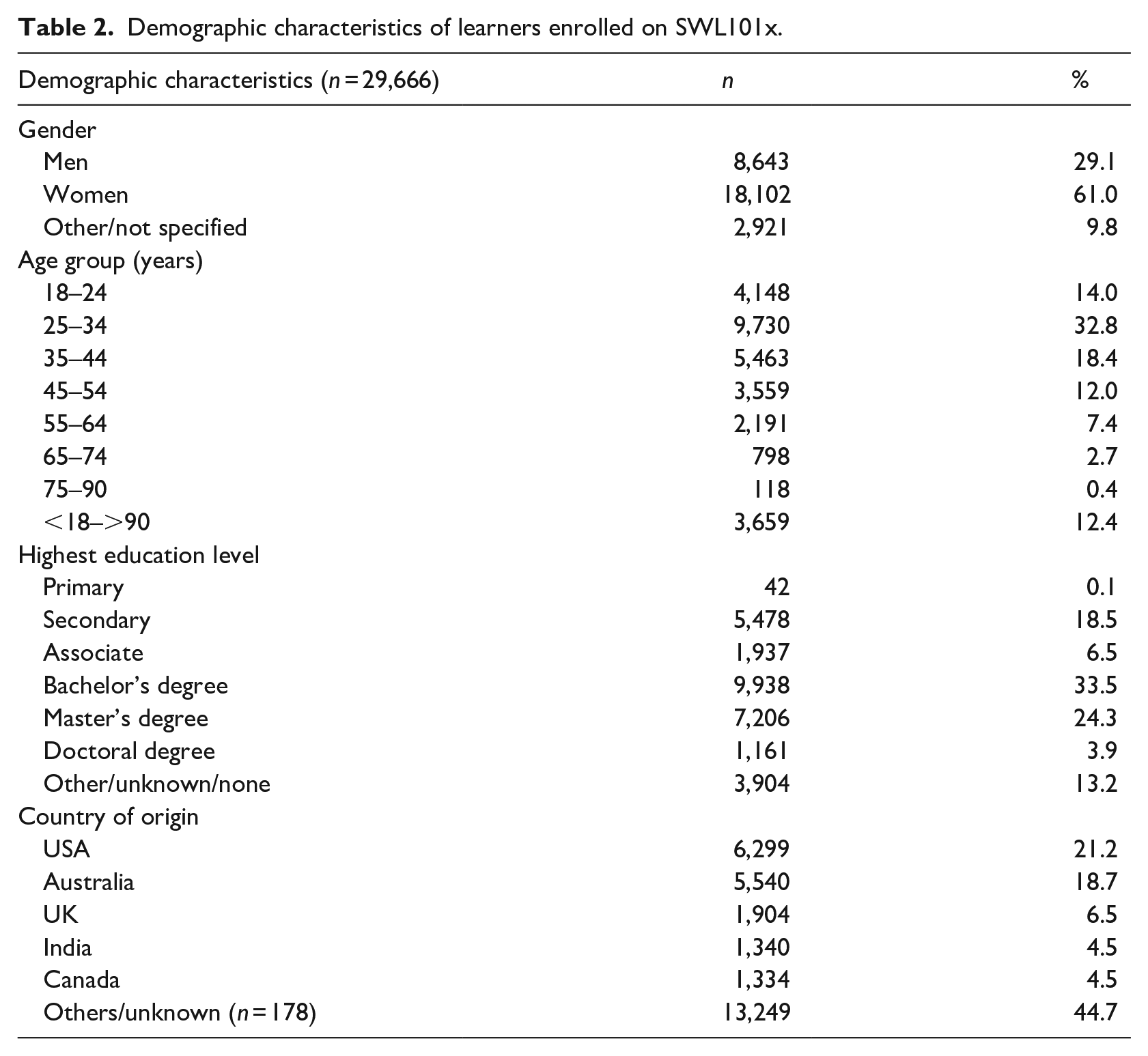
A total of 29,666 learners enrolled in The Science of Weight loss MOOC (SWL101X) and provided demographic data. From this, 8,454 enrolled learners (25.8%) completed the optional pre-course survey which assessed their motivations, intention and recruitment data, and 987 learners (3.0%) completed the post-course survey which provided data on acceptability of the course.
Of the 29,666 learners, 61.0% (n = 18,102) were women, and 51.2% (n = 15,193) were aged between 25 and 44 years. Fifty-eight percent (n = 17,144) had completed either a bachelor’s or master’s degree. Learners came from 183 different countries, with more than half (n = 16,417, 55.3%) residing either in the USA (21.2%), Australia (18.7%), UK (6.5%), India (4.5%) or Canada (4.5%) (Table 2).
Demographic characteristics of learners enrolled on SWL101x.
Motivations and intentions of learners
Of the 8,454 learners who completed the pre-course survey, 74.0% (n = 6,250) reported that they enrolled because they had an interest in expanding their nutrition and dietetics knowledge, 62.2% (n = 5,257) were interested in losing weight, 45.5% (n = 3,849) reported that it was ‘about lifelong learning’, 12.2% (n = 1,031) reported working in health/nutrition, 3.3% (n = 280) were educators, and 1.0% (n = 85) were instructional designers (Figure 1).
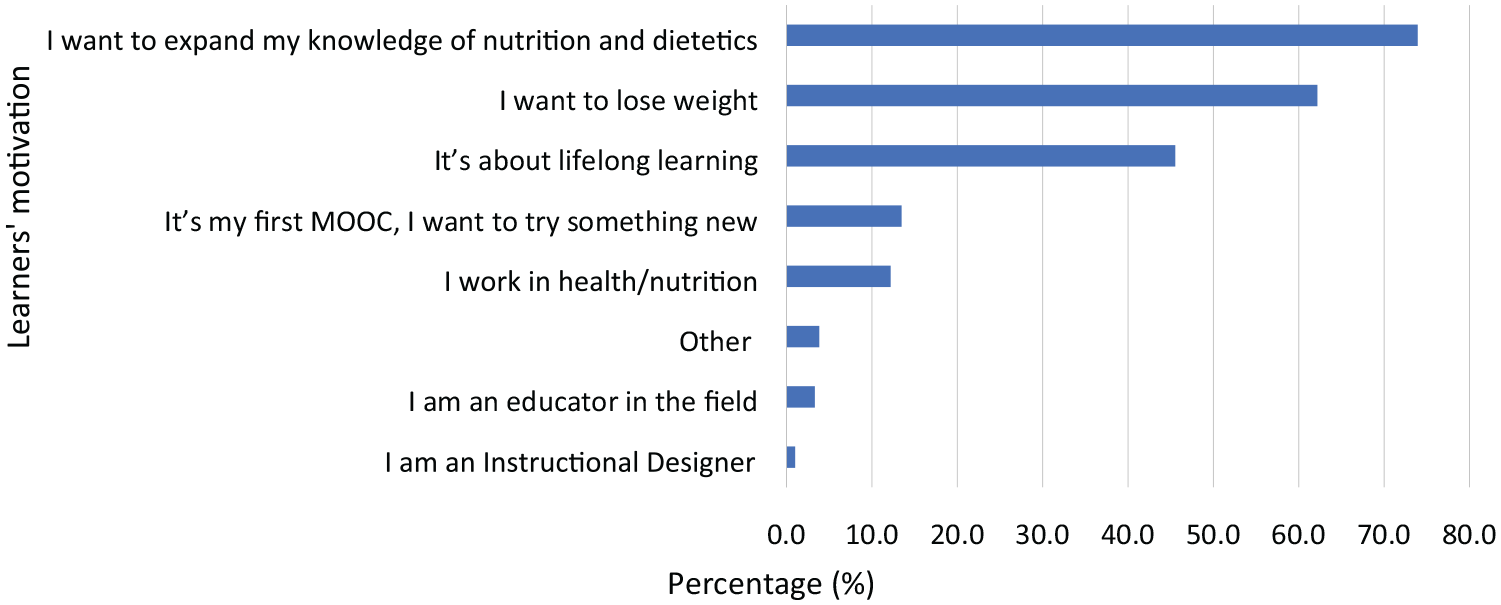
Learners’ motivations for taking SWL101x (n = 8,454).
Regarding the learners’ intentions, of the 8,454 learners who completed the pre-course survey, 44.1% (n = 3,726) reported that they wanted to complete the whole course including all assessments, 26.2% (n = 2,213) had not decided at the time of completing the pre-course survey, and 15.8% (n = 1,337) reported that they intended to do some of the assessments (Figure 2). Eight percent of learners (n = 700) were interested in the course material but not the assignments, and 5.7% (n = 478) were interested in some, but not all, of the course content, or just wanted to browse through the course content. Most learners (70.8%, n = 5,986) intended to spend 1 to 3 hours per week on the course components, while 18.9% (n = 1,599) intended to spend ⩾3 hours per week, and 10.3% (n = 869) intended to spend <1 hour per week on the course components (Figure 3).
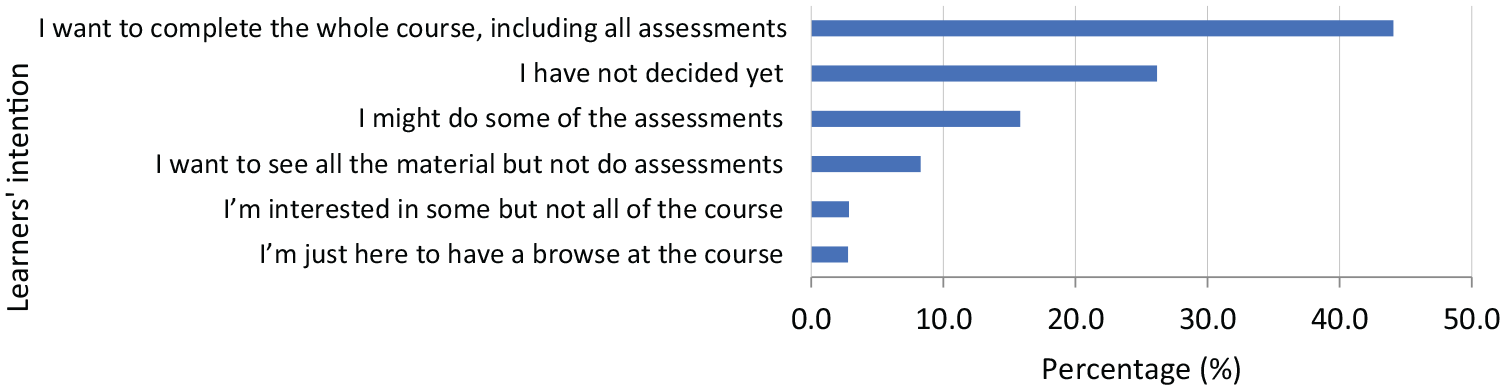
Learners’ intentions regarding SWL101x (n = 8,454).
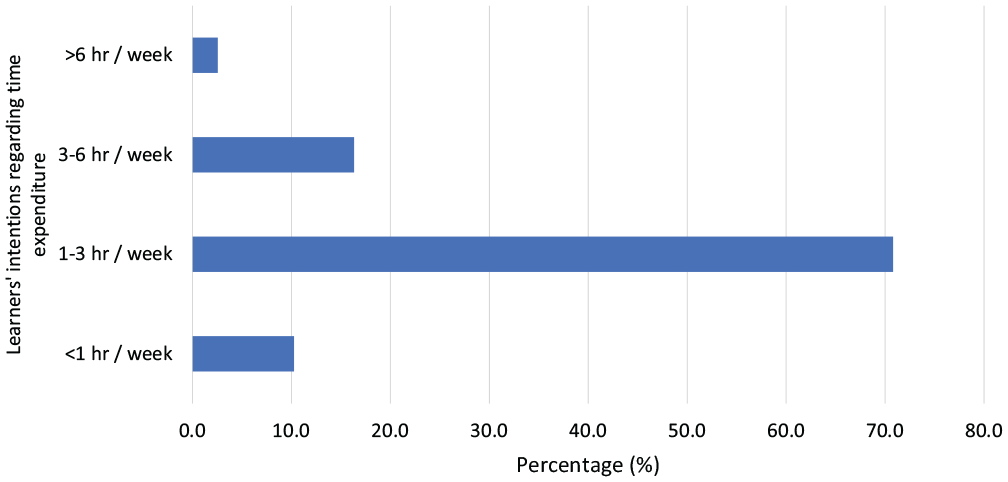
Learners’ intentions regarding time expenditure on the course content (n = 8,454).
In terms of recruitment, the pre-course survey responses indicated that most of the 8,454 learners who completed the optional pre-course survey (60.8%, n = 5,140) found about SWL101x through EdX platforms, including the website (32.8%), newsletter (25.0%) and blog (2.9%). Furthermore, 21.4% of the learners heard about the course through social media, primarily Facebook (20.2%, n = 1,711). Word of mouth accounted for 7.8% of recruitment methods (n = 663), followed by promotions by The University of Newcastle (3.9%, n = 332), radio (3.7%, n = 317) and newspaper (2.9%, n = 242) (Figure 4).
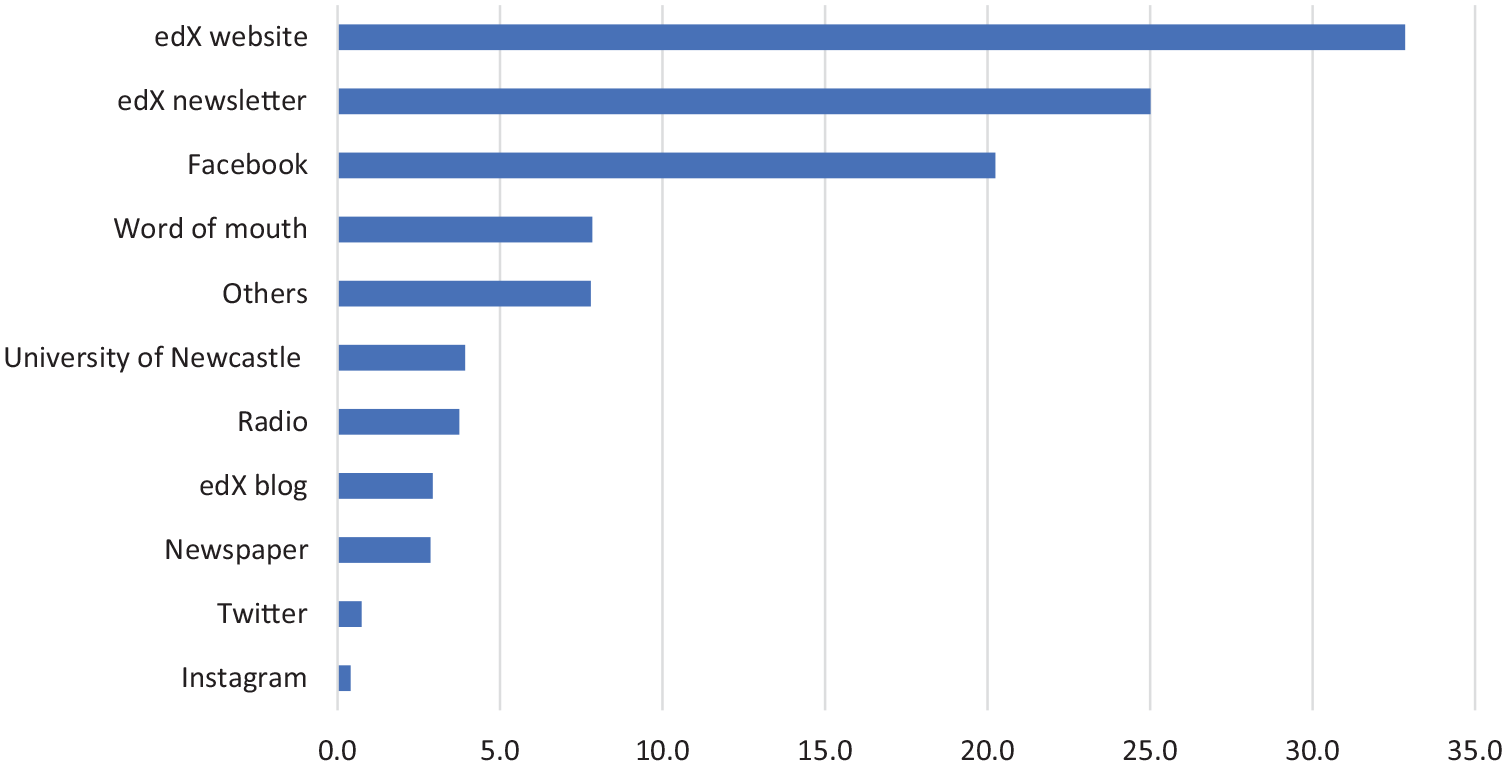
Learner recruitment methods (n = 8,454).
Acceptability of course components
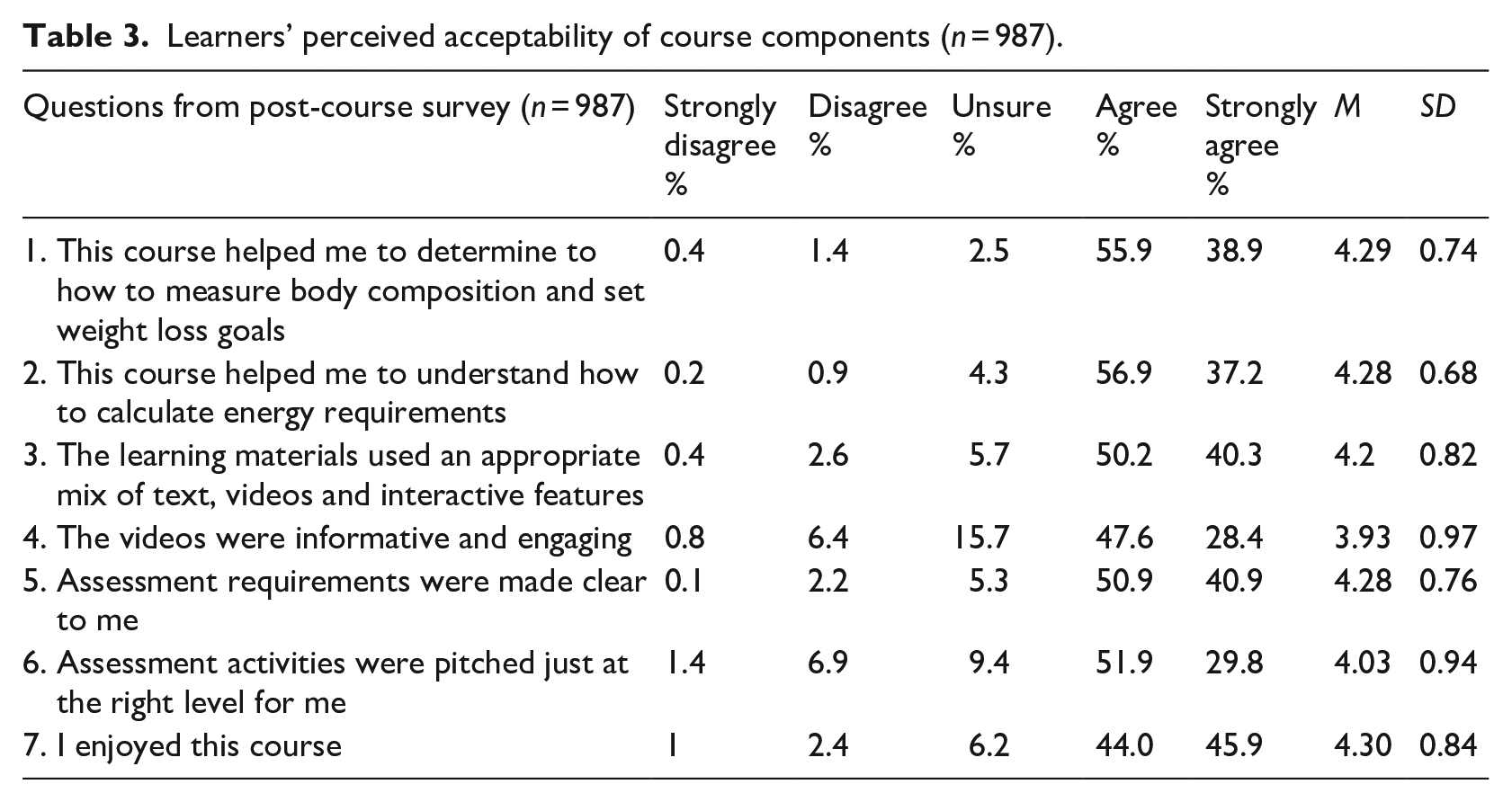
Table 3 presents the perceived acceptability of course components from the 987 learners who completed the post-course survey. In general, learners reported the components of the course were well received, with 94.8% (n = 936) agreeing or strongly agreeing that (question 1) the course helped them understand how to measure body composition and set weight loss goals, and with 94.1% (n = 929) agreeing or strongly agreeing for question 2, ‘How to calculate energy requirements?’. Ninety percent of the learners (n = 893) agreed or strongly agreed that the education materials used an appropriate mix of text, videos and interactive features, and 76.0% (n = 750) agreed or strongly agreed that the videos were informative and engaging. In terms of the course assessment items, 91.8% of the learners (n = 906) agreed or strongly agreed that the assessment items were clear, and 81.6% (n = 806) agreed or strongly agreed that they were pitched at the right level. Of the learners who completed the optional post-course survey, 90.0% (n = 888) agreed or strongly agreed that they enjoyed the course.
Learners’ perceived acceptability of course components (n = 987).
Discussion
This study explored the motivations and intentions of learners enrolled in ‘The Science of Weight Loss: Dispelling diet myths’ MOOC, as well as the most effective recruitment strategies, and the learners’ acceptability of the course components. In this sample of mostly women from over 180 countries, the majority reported enrolling due to an interest in expanding their knowledge on diet and nutrition, and/or were interested in weight management. Most learners intended to spend up to 3 hours per week on the course components, while a large proportion intended to complete the entire course and assessments. The results indicated that promotion via EdX platforms was the most effective enrolment method, followed by Facebook posts and advertisements. Learners completing the post-course evaluation reported that the course components were well received, with 90% reporting that they had enjoyed the course.
This MOOC enrolled approximately 30,000 individuals who overwhelmingly reported an interest in increasing their nutrition knowledge and managing their weight. These findings highlight widespread interest in learning about evidence-based strategies for weight management, which aligns with the increasing prevalence in overweight and obesity in adults around the world. Previous research has found that the Internet is the most utilised source of nutrition information (Cash et al., 2015; Quaidoo et al., 2018) and that lack of time to attend in-person appointments with health professionals is a barrier to obtaining nutrition information (Cash et al., 2015). Online courses such as this assist in addressing the need for credible nutrition and weight management, information to be easily accessed by individuals. In this MOOC, recruitment was noted to be mostly via EdX promotions. A relatively low proportion of learners found out about the course via social media which suggests that this marketing strategy could be improved to target a greater number of participants for future online courses (Syrkiewicz-S Witała et al., 2018).
In terms of learners’ acceptability of the SWL101x course components and delivery, the post-course survey data indicated that the combined use of text, videos and interactive features (e.g. weekly discussions) to deliver the content was well received by the learners. Videos are a widely used method for online learning and are recognised as being central to the student learning experience. The post-course survey analysis identified that while most learners agreed that the videos were informative and engaging, a small proportion did not agree. This presents an opportunity to refine and improve the video content for future courses. A study using data from almost seven million video watching sessions across MOOCs delivered via EdX reported that shorter videos (less than 6 minutes) are more engaging, as are informal ‘talking-head’ videos (Guo et al., 2014). Furthermore, learners tend to engage more in videos produced with a more personal feel, filmed in an informal setting (Guo et al., 2014). This is valuable information that could be used to improve learners’ engagement in future MOOCs.
Limitations and strengths
A noteworthy strength of this study was the large sample of learners from diverse countries which increases the external validity of the analysis and recommendations. The study also has some limitations. First, of the 29,666 learners who enrolled in the MOOC, only 26% completed the optional pre-course survey and only 3% completed the post-course survey, meaning that results cannot be contextualised to the whole sample. However, the course metrics were consistent with similar public health courses, which report a dramatic fall-off at each participatory step of activity (Gooding et al., 2013). A further limitation was the inability through sub-group analyses to identify the demographic characteristics of the learners who provided data about their motivations, intentions and acceptability of the course, due to the data collection methods adopted by EdX. Moreover, while it is important that online courses that address nutrition knowledge deficits related to the management of obesity are highly accessible to most individuals irrespective of their SES, the SES of the learners in this study was unable to be determined due to insufficient demographic data (i.e. data on income and occupation were not available). While 58% of learners in this study reported holding a bachelor’s or master’s degree, which is suggestive of higher SES, more information is needed to ascertain whether learners of low SES participated in the course. It should also be noted that the data for this study were collected in 2017 and therefore the findings should be interpreted with the age of the data in mind. Moreover, while the current study does not focus on the content of the course, it is worth noting that the course content is now outdated and as such the results should be interpreted with caution.
Implications for research and practice
This study highlights the global need and interest in evidence-based online courses that address nutrition knowledge deficits and specifically knowledge about the management of obesity as a chronic disease. The findings indicate that future online courses should continue to use a combination of text, videos and interactive features (e.g. weekly discussions) to engage learners. Video content that is shorter and filmed in an informal setting using a talking head may be beneficial to enhance learner engagement. Given that new evidence-based guidelines for obesity treatment, including the Canadian Adult Obesity Clinical Practice Guidelines (Brown et al., 2023), have been published since the MOOC was launched, the content of this MOOC needs to be updated. It is important that future courses include content related to non-diet approaches such as mindfulness-based eating practices and weight inclusive care, and nutrition for long-term health, in line with current Clinical Practice Guidelines (Brown et al., 2023). Greater use of social media to advertise courses and recruit learners may be advantageous in addition to further course promotion via EdX platforms. Future courses should consider recruitment strategies that attract lower socio-economic learners, for example, offering courses as part of nutrition programmes/websites that currently engage individuals of lower SES (e.g. the ‘No Money No Time’ (https://nomoneynotime.com.au/) online nutrition programme (Whatnall et al., 2022), and continue to offer courses at low or no cost, to ensure access to individuals irrespective of their SES.
Footnotes
Acknowledgements
This study was undertaken as partial requirement for award of the degree of Bachelor of Nutrition and Dietetics (Honours Program) at the University of Newcastle, Australia.
Funding
The author(s) disclosed receipt of the following financial support for the research, authorship, and/or publication of this article: the Science of Weight Loss SWL101x development was funded by The University of Newcastle. C.E.C. was supported by an NHMRC Senior Research Fellowship and a Gladys M Brawn Senior Research Fellowship from the College of Health, Medicine and Wellbeing, The University of Newcastle, Australia.

Data availability
The datasets generated during and/or analysed during the current study may be available from the corresponding author on reasonable request.