



Abstract
Although scientific literature tends to suggest that intellectually gifted/attention-deficit/hyperactivity disorder (ADHD) children are particularly vulnerable to psychosocial and academic adjustment difficulties—factors contributing to parental stress—there has been no study specifically examining parental stress, and parental self-efficacy among their parents. This study aimed to further explore parental stress and self-efficacy among parents of intellectually gifted/ADHD children. Using a cross-sectional correlational design, 279 parents (Mage = 41.50; 71.32% mothers) from Quebec, Canada, of children (n = 210; Mage = 9.38; 57.20% boys) aged 6 to 16 years—with either intellectual giftedness (n = 50), ADHD (n = 61), both intellectual giftedness and ADHD (n = 52), or neither (n = 47)—completed self-report questionnaires assessing parental stress and parental self-efficacy. The findings revealed that the interaction between children’s intellectual giftedness and ADHD was associated with an increase in parental stress levels, whereas no such effect was observed for parental self-efficacy. Furthermore, parents of intellectually gifted/ADHD children reported higher levels of parental stress compared to parents of children without these conditions, which may be partly explained by lower levels of parental self-efficacy. Finally, the results suggested that the interaction between the child’s neurodevelopmental condition and the parent’s gender alleviated parental self-efficacy, particularly among mothers of intellectually gifted/ADHD children. This study highlights the clinical utility of considering parental self-efficacy as a key intervention point for supporting parents of intellectually gifted/ADHD children in managing their parental stress.
Keywords
Several studies tend to suggest that children with both intellectual giftedness and attention-deficit/hyperactivity disorder (ADHD) are particularly at risk for psychosocial and academic adjustment difficulties (Foley-Nicpon et al., 2012; Gentry & Fugate, 2018; Mullet & Rinn, 2015). These difficulties are challenges for their parents, which can exacerbate parental stress (Barroso et al., 2018; Sanner & Neece, 2018). ADHD is a neurodevelopmental disorder characterized by symptoms of inattention and hyperactivity/impulsivity that manifest in 3% to 7% of children before age 12, disrupting daily functioning across multiple contexts, such as school and home (American Psychiatric Association [APA], 2022). Regarding intellectual giftedness, due to its complexity and the variety of proposed models to study it, there is no consensus within the scientific community as to its definition (Carman, 2013; Dai, 2018). Nevertheless, the National Association for Gifted Children (2019) defines it as a potential for higher levels of performance in skills or creativity in one or more areas of activity compared to peers of the same age, experience, and environment. In this study, the concerned area of activity is the intellectual domain.
In both research and clinical settings, intellectual giftedness is mainly identified through cognitive assessments, such as academic achievement or intellectual quotient (IQ) tests (Silverman, 2018). IQ thresholds for intellectual giftedness typically range from 120 to 130 (McClain & Pfeiffer, 2012), with the most common threshold in psychology being an IQ score of 130, corresponding to a prevalence rate of 2.28% (Tordjman & Kermarrec, 2019). However, relying solely on cognitive assessments to identify intellectual giftedness presents two major issues: (1) it raises elitism concerns, as it tends to under-identify intellectual giftedness in certain minority groups, and (2) it overlooks the developmental process critical to a child’s ability to fully realize their potential (Dai, 2020; Gagné, 2017). As a result, researchers have advocated for the integration of psychometric tools, such as IQ tests, with complementary methods like interviews or self-report questionnaires assessing characteristics frequently associated with intellectual giftedness, to ensure a rigorous and inclusive identification process (Heller, 2013; Zaia et al., 2018).
Parental Stress
Despite the well-documented negative consequences of parental stress on parents and children (Deater-Deckard et al., 2016; Rominov et al., 2016), no quantitative studies have specifically examined, to our knowledge, this phenomenon in parents of intellectually gifted/ADHD children. Parental stress is defined as the gap between parental expectations and available resources (Åsberg et al., 2008). Although several conceptual models of parental stress have been proposed in the literature (Abidin, 1992; Belsky, 1984; Crnic & Low, 2002; Webster-Stratton, 1990), Deater-Deckard and Panneton (2017) note that the most widely accepted framework remains Abidin’s (1992) parent–child model. According to this model, increased parental stress is associated with a decline in optimal parenting practices. However, this relationship is influenced by various factors, including parental distress, child-related difficulties, and parent–child relationship dysfunctions (Abidin, 1992). Studies have shown that mothers of intellectually gifted children (Bishop, 2012) and parents of ADHD children (Bonifacci et al., 2019; Flynn et al., 2021; Li & Lansford, 2018; Theule et al., 2013; Wiener et al., 2016) experience higher levels of stress compared to parents of children without these conditions. However, most study samples focused solely on mothers, limiting comparisons of parental stress between fathers and mothers, despite gender’s known impact on parenting roles (Nomaguchi & Milkie, 2017). Nevertheless, a meta-analysis of 44 studies on parental stress in parents of ADHD children revealed that mothers generally experience higher levels of stress than fathers, particularly in relation to child-related difficulties (Theule et al., 2013). Similarly, a recent study reported that approximately 30.50% of mothers of intellectually gifted children exhibited high to very high levels of parental stress, whereas only 16.70% of fathers experienced comparable levels (Renati et al., 2025).
Parental Self-Efficacy
In addition to heightened stress, parents of ADHD children also report lower parental self-efficacy compared to parents of children without this neurodevelopmental condition (Ben-Naim et al., 2019). Parental self-efficacy, based on Bandura’s (1977) concept of self-efficacy, reflects a parent’s belief in their ability to influence their child’s behavior and development (Balat et al., 2010). According to this model, it is shaped by mastery experiences, vicarious experiences, verbal persuasion, and emotional states such as parental stress (Bandura, 1977). Given that parental self-efficacy is negatively related to parental stress (Ben-Naim et al., 2019; Çekiç & Karageyik, 2021; Crnic & Ross, 2017; François-Sévigny et al., 2021) and to the child’s psychosocial and academic adjustment difficulties (Glatz & Buchanan, 2022; Yim-Dockery, 2019), its indirect effects in the relationship between the child’s neurodevelopmental condition and parental stress may be raised. However, no studies have examined, to our knowledge, this indirect effect in children with intellectually gifts and ADHD. Yet, enhancing parental self-efficacy could be a key intervention to help parents of intellectually gifted/ADHD children manage stress, as it serves as a protective factor for well-being of both parents and children (Albanese et al., 2019).
The Current Study
The overall aim of this study was to further investigate parental stress and parental self-efficacy among parents of intellectually gifted/ADHD children. More specifically, the first objective of this study was to examine the effect of children’s intellectual giftedness and ADHD on parental stress and parental self-efficacy. We hypothesized an interaction effect between children’s intellectual giftedness and ADHD on parental stress and parental self-efficacy. Specifically, we posited that the interaction between intellectual giftedness and ADHD, in children, would exacerbate their parents’ stress levels and decrease their parental self-efficacy levels. As a primary secondary objective, this study aimed to explore the indirect effects of parental self-efficacy to better understand the relationship between the child’s neurodevelopmental condition, and parental stress. Given the limited evidence on these associations, this objective remains exploratory. However, we hypothesized that a child’s combination of intellectual giftedness and ADHD, would be associated to parental stress through its links with parental self-efficacy, in comparison to parents of children without intellectual giftedness or ADHD, but not in comparison to parents of children with either intellectual giftedness or ADHD alone. As for the second secondary objective of the study, it aimed to examine the effect of the child’s neurodevelopmental condition and the parent’s gender on parental stress and parental self-efficacy. We hypothesized an interaction effect between the parent’s gender and the child’s neurodevelopmental condition on parental stress and parental self-efficacy. Specifically, mothers of children with intellectual giftedness/ADHD would exhibit higher levels of parental stress and lower levels of parental self-efficacy compared to fathers. Conversely, mothers of children without intellectual giftedness or ADHD would experience lower levels of parental stress and higher levels of parental self-efficacy than fathers.
Methods
Participants
The study’s sample consisted of 279 French-speaking parents from Quebec, Canada, of 210 children aged six to 16 (Mage = 9.38; SD = 2.51; 57.20% boys), including 199 mothers (Mage = 40.52; SD = 4.51) and 80 fathers (Mage = 42.53; SD = 6.87). Among them, 52 parents (nmothers = 38; nfathers = 14) completed the study for more than one of their children. In addition, data from both parents separately (n = 102) were collected for 51 children in the sample, based on their decision to participate jointly. Among the mothers surveyed, 76.00% have their child’s parent as a partner, compared to 95.30% of fathers. Most parents have two (51.70%) or three children (29.50%). The majority of parents hold a university degree (79.40% of mothers and 74.60% of fathers), and their primary occupation is full-time work (70.60% of mothers and 90.90% of fathers). The median gross family income was $140,000 (in Canadian dollars).
Regarding the children in the sample, 97 (46.20%) were identified as having intellectual giftedness and 113 (53.80%) as having ADHD, based on the assessment conducted for the study. Among those with ADHD, 64.60% met the criteria for the Diagnostic and Statistical Manual of Mental Disorders (5th ed.; DSM-5; APA, 2022) combined type, 21.20% for the predominantly inattentive type, and 14.20% for the predominantly hyperactive-impulsive type. Specifically, participants were assigned to one of four groups according to their neurodevelopmental condition, 50 had only intellectual giftedness (50.00% female), 52 had both intellectual giftedness and ADHD (40.40% female), 61 had only ADHD (31.70% female), and 47 had neither intellectual giftedness nor ADHD (52.20% female). In addition, 28.40% of children took medication daily, with 70.00% of these medications being used to treat ADHD. Before they participated in the study, 35.40% of the children (Mage = 7.37; SD = 1.90; 72.10% male) had undergone a (neuro)psychological evaluation, mainly by a neuropsychologist (73.50%), which led to the identification of a neurodevelopmental disorder (including ADHD, learning difficulties, intellectual giftedness and twice exceptionality). Behavioral difficulties were the most frequently cited reason (71.60%) by parents for requesting an assessment for their child.
Procedures
This study, part of a broader research project on the psychosocial adjustment of intellectually gifted/ADHD children, was approved by the Research Ethics Board—Humanities and Social Sciences at the University of Sherbrooke. Data were collected from 2022 to 2024. Participants were recruited via posters in schools and family gathering places, with eligibility verified through an initial phone interview. Families attended a 150- to 180-minute session at the Childhood and Adolescence Assessment and Intervention Clinic at the University of Sherbrooke. It is noteworthy that participants were not beneficiaries of the clinic’s services beyond the context of the study.
During the meeting, a graduate psychology student, under the supervision of the corresponding author—an experienced clinical neuropsychologist—administered cognitive tests to all children, regardless of whether they had previously undergone a neuropsychological evaluation prior to participating in the study. Parents completed a DSM-5 ADHD interview (K-SADS-PL-DSM-5), a clinical interview on the child’s functioning and giftedness, and questionnaires on parental stress and self-efficacy. If the second parent was not present at the meeting, he or she had the option to complete the questionnaires (30 minutes) on a secure online platform (SimpleSondage) using an alphanumeric code associated with their child.
Parents were classified based on their child’s neurodevelopmental condition (presence or absence of intellectual giftedness and ADHD) according to the child’s cognitive test results (e.g., Wechsler Intelligence Scale for Children – fifth edition [WISC-V], the Tower of London, the Delis–Kaplan Executive Function System Color-Word Interference Test [D-KEFS] and the Conners continuous performance test – 3rd edition [CPT-3]), along with the parent’s responses to clinical interviews and questionnaires. This approach ensured accurate classification while reducing sampling biases, allowing inclusion regardless of families’ financial means, as such assessments are typically conducted privately in Quebec (Canada).
Intellectual giftedness was identified using an IQ of ≥130 (included within the test’s margin of error) on the WISC-V (Full-Scale Intelligence Quotient [FISQ] or General Aptitude Index GAI), which is consistent with established recommendations for assessing twice-exceptional children (Silverman, 2018). These IQ scores were combined with the developmental history and traits associated with giftedness, gathered from the parent, a rigorous and comprehensive identification process (Heller, 2013; Zaia et al., 2018). ADHD was identified based on DSM-5-TR criteria, using the K-SADS-PL-DSM-5 interview and the Conners questionnaire (Third edition) completed by at least one parent, requiring at least six symptoms of inattention or hyperactivity-impulsivity, present before age 12, persisting for 6 months, affecting multiple settings, and causing significant impairment (APA, 2022).
Parents of children with significant sensory, motor, or neurological disorders that could interfere with participation in the intelligence test were excluded from the study. This also applied to parents of children with intellectual disabilities, specifically for the groups without intellectual giftedness, or with autism spectrum disorder, to avoid the presence of confounding factors related to these conditions.
Materials
Parents completed a custom questionnaire covering five sections: (1) parental demographics (e.g., age, education, occupation, income level); (2) child-related information (e.g., age, sex, gender, grade level, and school type); (3) family environment (e.g., marital status, household size); (4) prior psychological assessments, if applicable (e.g., evaluation history, reasons for assessment); and (5) child development milestones (e.g., age of first words, first steps).
Parental Stress
Parental stress was measured using the French version of the Parenting Stress Index, short form, one of the most widely used and studied instruments in the field of parental stress (Abidin, 2012; Toucheque et al., 2016). This 36-question self-assessment questionnaire, rated on a 5-point Likert-type scale (i.e., 1 = strongly disagree to 5 = strongly agree), consists of three 12-question subscales. The “Parental Distress” subscale assesses the level of distress a parent experiences in their parenting role. The “Parent-Child Dysfunctional Interaction” subscale evaluates the parent’s perception that their child does not meet their expectations and that their interactions with the child are not reinforcing their parenting role. Finally, the “Difficult Child” subscale assesses certain behavioral characteristics of the child that make parenting easier or more difficult, according to the parent’s perception. The instrument provides an average score for each subscale. The higher the score, the greater the parental stress. In this study’s sample, Cronbach’s alpha coefficients were excellent for the overall instrument (α = 0.96) and for the subscales “Parental Distress” (α = 0.92), “Parent–Child Dysfunctional Interaction” (α = 0.89), and “Difficult Child” (α = 0.89). The French version of the questionnaire has shown moderate correlation with the French version of the State-Trait Anxiety Inventory for Adults (r = 0.40; Spielberger et al., 1983), supporting its convergent validity (Toucheque et al., 2016).
Parental Self-Efficacy
Due to the lack of a widely used measure of parental self-efficacy, two instruments were selected based on their general operationalization of the concept, suitability for children aged 6 to 16 years, good psychometric properties, and complementarity, following assessment recommendations (Wittkowski et al., 2017).
The first instrument used to assess parental self-efficacy was the French version of the Parenting Sense of Competence (Gibaud-Wallston, 1977; Terrisse & Trudelle, 1988). This 17-item self-report questionnaire, which assesses parent’s appraisal of their parenting ability, comprises two subscales, rated on a 6-point Likert-type scale (i.e., 1 = totally disagree to 6 = totally agree). The first subscale, “Satisfaction,” consists of nine items that measure the parent’s degree of frustration, anxiety, and motivation in his or her parental role. The second subscale, “Efficacy,” includes seven items that evaluate the parents’ perceptions of the degree to which they had acquired skills and understanding to be a good parent. Since that parental sense of satisfaction represents a construct distinct from parental self-efficacy, only the “Efficacy” subscale was used for this study, which is consistent with the recommendations from the systematic literature review conducted by Wittkowski and colleagues (2017) about parental self-efficacy assessment. The subscale score is derived from the average of item responses, with a high score reflecting a strong sense of efficacy. In this sample, the alpha coefficient for the “Efficacy” subscale (α = 0.90) showed good internal consistency. This subscale has been validated for use with both mothers and fathers (Suwansujarid et al., 2013).
The second instrument used to measure parental self-efficacy was the Parent Empowerment and Efficacy Measure (Freiberg et al., 2014), which was translated into French using the reverse translation method (Klotz et al., 2022). This 20-item self-report questionnaire employs a parent strengths-based approach to assess parental self-efficacy, an underlying construct of empowerment (Freiberg et al., 2014). The instrument comprises two subscales rated on a 10-point Likert-type scale (i.e., 1 = definitely not the way I feel to 10 = definitely the way I feel). The first subscale, consisting of 11 items, assesses the confidence to be a good parent, which reflects the parent’s confidence in their ability to make effective parenting decisions and fulfill parenting responsibilities. The second subscale, comprising nine items, measures the parent’s capacity to connect with informal and formal network, indicating the parent’s confidence in their ability to seek support and engage in activities that promote positive parenting. Scores are calculated from the average of responses for each subscale, with higher scores indicating a greater degree of parental self-efficacy. In the sample of this study, Cronbach’s alpha coefficients were excellent for the overall instrument (α = 0.96) and for the two subscales (α = 0.94 and α = 0.90, respectively). The test–retest reliability over 4 weeks with a normative population sample was 0.84, reflecting the instrument’s reliability and stability (Freiberg et al., 2014). In addition, the questionnaire exhibits good convergent validity (r = 0.61) with the Parenting Sense of Competence, as well as excellent content validity (Freiberg et al., 2014). However, it has not been validated to determine whether it is equally sensitive for assessing parental self-efficacy in both mothers and fathers.
Intellectual Abilities
Children’s intellectual abilities were assessed using the French–Canadian norms of the WISC-V (Wechsler, 2014), a reliable tool for ages 6 to 16 (Rabin et al., 2016). The test’s seven core subtests (e.g., similarities, vocabulary, block design, matrix reasoning, figure weights, digit span, and coding) contributed to the Full-Scale IQ (FSIQ) and primary index scores (e.g., verbal comprehension, visual-spatial, fluid reasoning, working memory, and processing speed). The General Ability Index (GAI), calculated from five subtests, provide a measure of general intellectual ability that is less influenced by working memory and processing speed than the FSIQ. GAI is particularly useful for assessing intellectually gifted children with co-occurring conditions such as ADHD, as these children often exhibit weaknesses in working memory and processing speed (Lang et al., 2019; Rowe et al., 2010). The WISC-V has good reliability and validity across various populations, including French–Canadian cohorts (Watkins et al., 2018). Only FSIQ and GAI scores were used to describe and compare IQs by neurodevelopmental condition.
Data Analysis
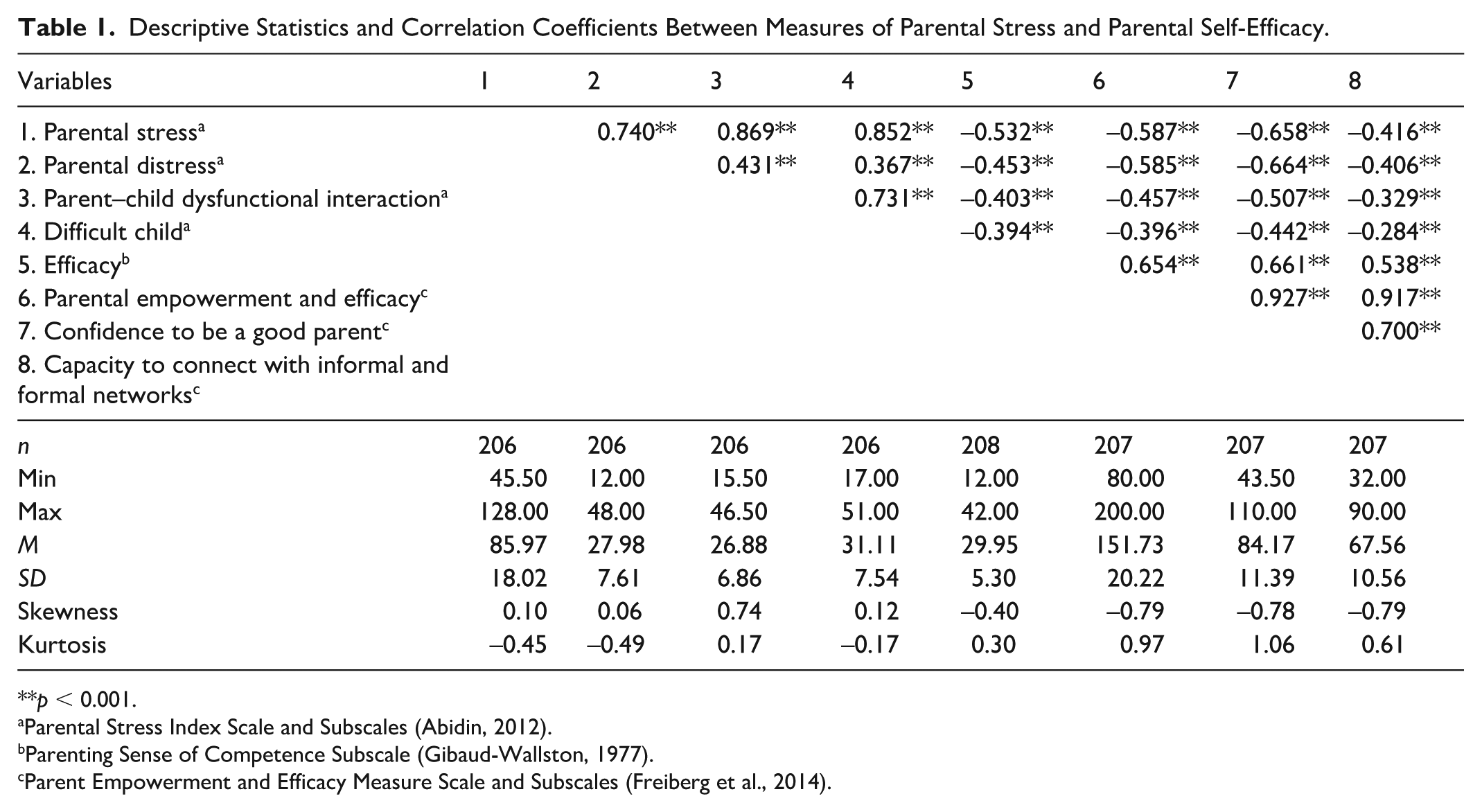
Analyses were conducted using IBM SPSS software. Missing data were addressed using the listwise deletion method (Kang, 2013). Listwise deletion was applied to eight participants who had more than 60% missing data on the Parent Empowerment and Efficacy Measure, as they had not completed the reverse side of the questionnaire. Welch’s t-tests showed that the excluded observations did not differ from those included in terms of sociodemographic characteristics. All postulates related to the main analyses have been verified and are respected. Univariate normality was assessed using skewness and kurtosis (see Table 1), all within the acceptable range of ±2 (George & Mallery, 2010). This was further supported by the Kolmogorov–Smirnov test (p values ranging from 0.06 to 0.200) and visual inspection of Q–Q plots. Based on these consistent findings, the assumption of multivariate normality was considered to be met. Multicollinearity was assessed using variance inflation factors (VIF), all of which were below 1.00, indicating no multicollinearity concerns. Visual inspection of residual plots confirmed the normality, linearity, and homoscedasticity of residuals. Given the potential violation of the assumption of independence of observations, as parents in the sample could participate with multiple children, precautions were taken in the primary analyses. Nevertheless, with values ranging from 1.61 to 2.17, the Durbin–Watson test indicated that the model residuals were likely independent. In this sense, a visual inspection of the relationship between, on one hand, the child’s neurodevelopmental condition, and, on the other hand, parental stress and parental self-efficacy variables revealed a random dispersion of the observations.
Descriptive Statistics and Correlation Coefficients Between Measures of Parental Stress and Parental Self-Efficacy.
p < 0.001.
Parental Stress Index Scale and Subscales (Abidin, 2012).
Parenting Sense of Competence Subscale (Gibaud-Wallston, 1977).
Parent Empowerment and Efficacy Measure Scale and Subscales (Freiberg et al., 2014).
As for preliminary analyses, internal consistency analyses were performed on all scales and subscales of the parental stress and parental self-efficacy measures and were interpreted using Cronbach’s alpha coefficients, to ensure the reliability of the materials among the study participants. In addition, Pearson correlations and tests of comparison of means (analysis of variance [ANOVA] or test t) were performed to identify sociodemographic variables (age of child and parents, gender and sex of parent and child, family income, parent’s occupation, parent’s level of education, parent’s marital status), and other factors (daily medication, presence of a psychological assessment before study participation, reason for assessment, developmental information) that might be relevant to control in the main analyses. In line with Cohen’s (1998) recommendations, the identification of these variables was based on medium or larger effect size with the parental stress and parental self-efficacy measures (r ≥ 0.30, η² ≥ 0.13 or d ≥ 0.50). It should be noted that the results of these analyses did not justify the relevance of controlling for any of these variables in the main analyses.
From a descriptive perspective of the children’s neurodevelopmental condition of parents in the sample, multivariate factorial variance analyses were conducted to examine the main and interaction effects of intellectual giftedness and ADHD (both as two-level factors; presence or absence) on IQ scores (FISQ and GAI). In addition, a chi-square analysis using Fisher’s Exact Test was performed to compare groups regarding ADHD presentation. Cramer’s V, representing the effect size for these analyses, was interpreted following Cohen’s (1988) guidelines.
For the main analyses, particularly those addressing the first hypothesis, mixed-effects models were separately conducted on the scores of the scales and subscales of parental stress and parental self-efficacy (continuous dependent variables). These models tested the fixed effects of the child’s intellectual giftedness and ADHD (both two-level independent variables [i.e., presence or absence]) and their interaction. In cases where significant main or interaction effects were found, parameter estimates were reported to indicate the direction and magnitude of these effects. In addition, a random effect for parent participation was included to account for the risk of nonindependence of observations from parents participating in the study with more than one child. This approach ensures that the hierarchical structure of the data is properly addressed, leading to more accurate and reliable inferences (Verbeke et al., 2018).
In addition, indirect effects analyses were performed using Hayes’ (2022) method from the PROCESS macro for SPSS (version 4.1; processmacro.org) to better understand the role of parental self-efficacy in the relationship between the child’s neurodevelopmental condition (a four-level independent variable) and parental stress (a continuous dependent variable), addressing the second hypothesis. Regarding the variables of parental self-efficacy and parental stress, only the total scores were used in this analysis. The four-level independent variable includes the following groups: intellectual giftedness, ADHD, neither intellectually gifted nor ADHD, and a reference group with intellectual giftedness and ADHD. This approach employed bootstrapping with bias-corrected confidence intervals (Hayes, 2022). Specifically, a 95% confidence interval for indirect effects was used with 5,000 bootstrap re-samples (Hayes, 2022; Preacher & Hayes, 2004). The Huber-White method was employed to provide robust standard errors due to the potential violation of assumptions of independence of observations and homoscedasticity (Poznyak, 2019).
Repeated-measures ANOVAs were conducted to address the third hypothesis. Each scale and subscale of parental stress and parental self-efficacy was a two-level within-subjects factor that considered both parents (i.e., mothers and fathers), and the child’s neurodevelopmental condition was the four-level between-subject factor (i.e., intellectual giftedness, ADHD, intellectual giftedness/ADHD and without intellectual giftedness or ADHD). Greenhouse–Geisser correction was used even when the sphericity assumption was respected (Field, 2013). In addition, a bootstrap resampling procedure with 1,000 samples was used to obtain more robust estimates of violations of certain assumptions, including the independence of observations (Field, 2013). In cases where an interaction effect was found between the type of respondent and the child’s neurodevelopmental condition, it was further decomposed using simple effects analysis to understand the specific nature of the interaction. It should be noted that for multivariate factorial analyses of variance, mixed-effects models, and repeated-measures ANOVAs, effect sizes are reported using partial eta squared (ηp²; 0.14 = large; 0.06 = medium; 0.01 = small).
Results
Preliminary Analysis
Descriptive statistics for the parental stress and parental self-efficacy questionnaires are presented in Table 1, as are Pearson’s correlation coefficients between these measures. The latter revealed the presence of significant and negative associations of medium to large effect sizes between parental stress and parental self-efficacy variables.
Descriptive statistics regarding the children’s neurodevelopmental condition, including IQ measured by FISQ and GAI, and the ADHD presentation according to DSM-5, are presented in Table 2, along with the results of the analyses. These analyses revealed significant interaction effects of intellectual giftedness and ADHD on IQ scores (FISQ and GAI). Specifically, these interactions indicated that the presence of ADHD in nongifted children was associated with lower FISQ (p < .001) and lower GAI (p = .009), while the presence of ADHD had no significant impact on IQ scores in intellectually gifted children. There was no significant difference in the percentage of ADHD presentation between children with or without intellectual giftedness.
Comparative Statistics for IQ and ADHD Presentation in Children.
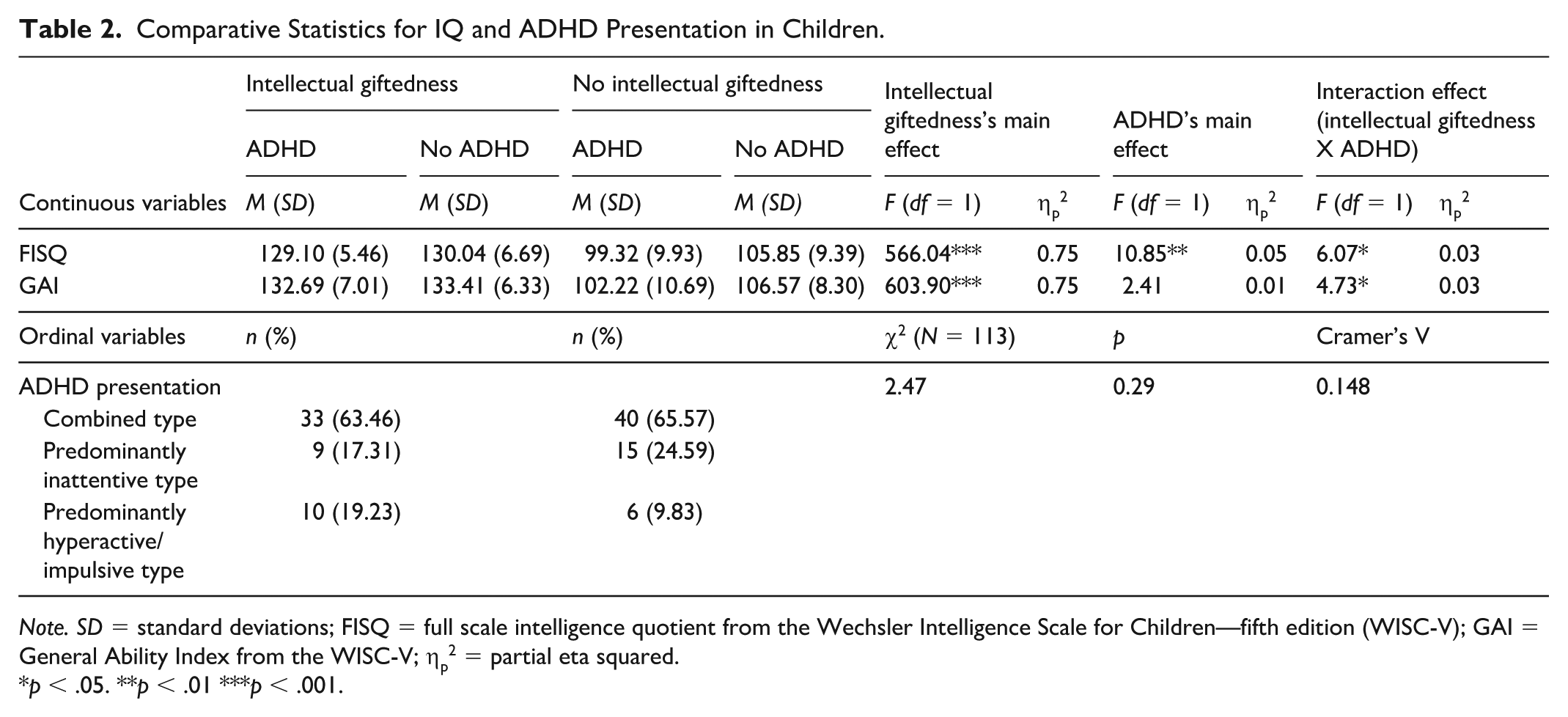
Note. SD = standard deviations; FISQ = full scale intelligence quotient from the Wechsler Intelligence Scale for Children—fifth edition (WISC-V); GAI = General Ability Index from the WISC-V; ηp2 = partial eta squared.
p < .05. **p < .01 ***p < .001.
Main Analysis
Effects of Intellectual Giftedness and ADHD on Parental Stress and Parental Self-Efficacy
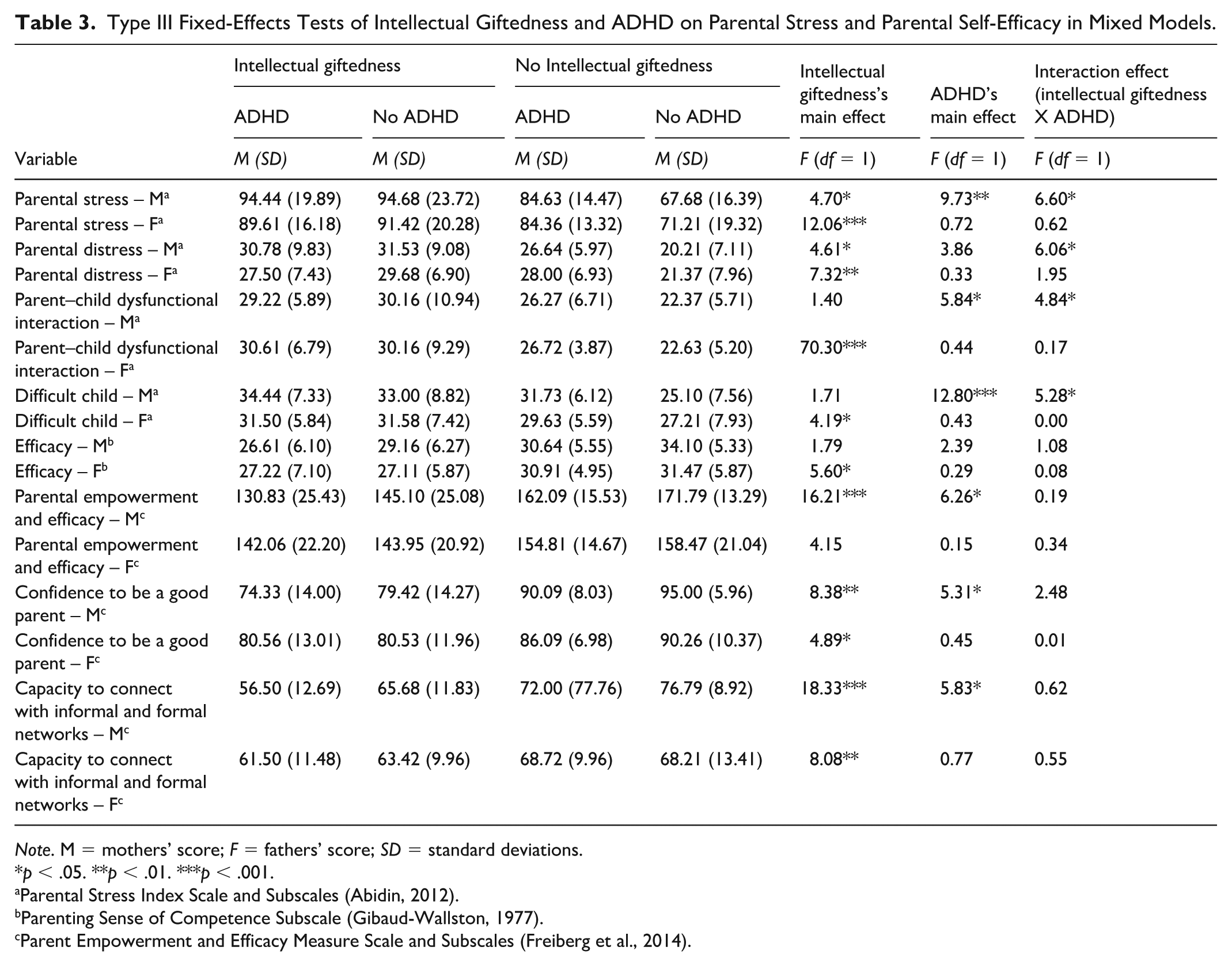
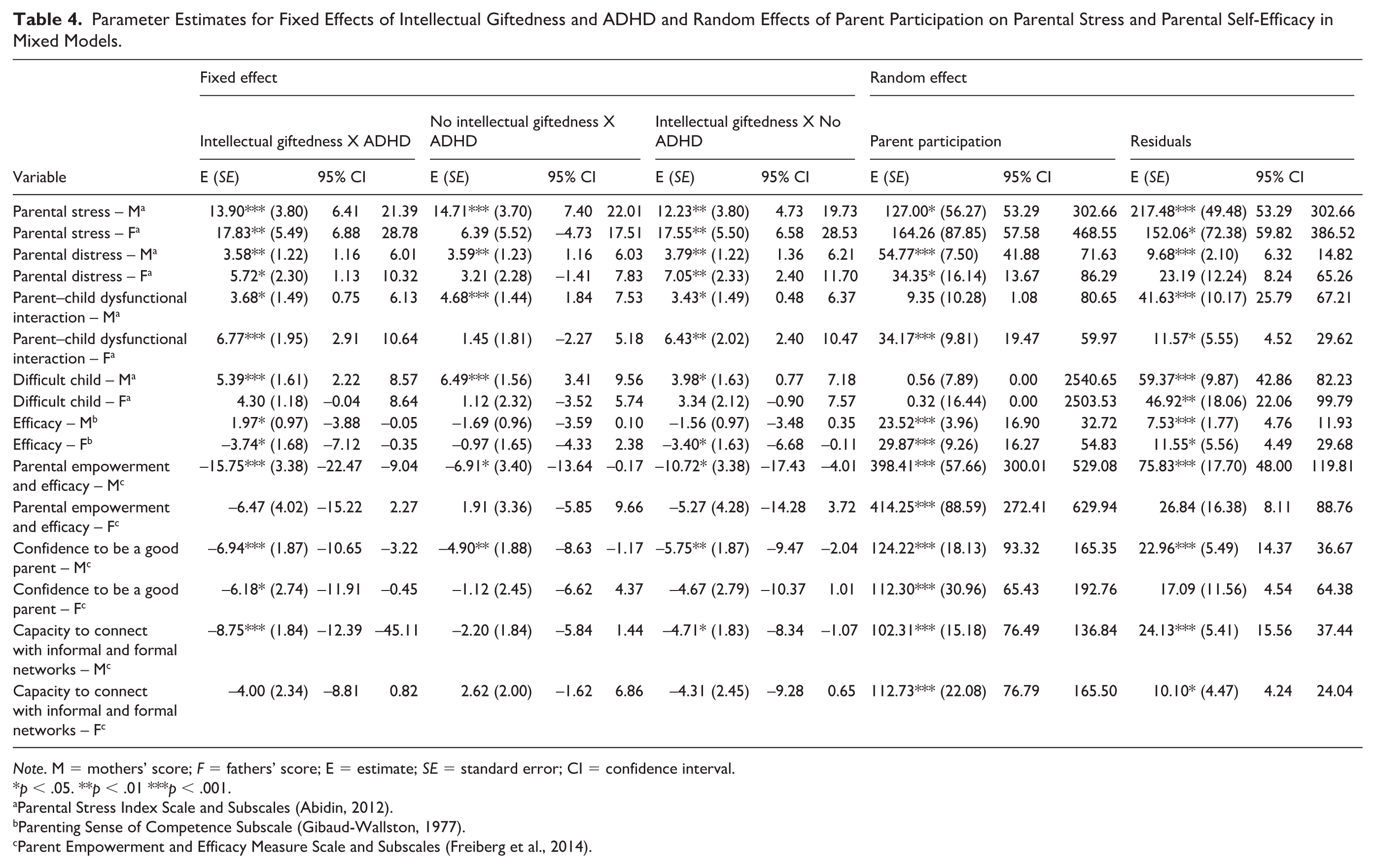
The results of the mixed-effects models, documented in Table 3, revealed interaction effects between intellectual giftedness and ADHD on parental stress, parental distress, stress related to parent–child dysfunctional interaction, and child difficulties for mothers. As reported in Table 4, the parameter estimates indicated that this interaction was associated with an increase in these variables for mothers. According to these parameter estimates, the presence of intellectual giftedness (in the absence of ADHD) was the strongest contributor to the increase in parental distress among mothers, whereas the presence of ADHD (in the absence of intellectual giftedness) was the primary driver of the increase in stress related to parent–child dysfunctional interactions and child-related difficulties for mothers.
Type III Fixed-Effects Tests of Intellectual Giftedness and ADHD on Parental Stress and Parental Self-Efficacy in Mixed Models.
Note. M = mothers’ score; F = fathers’ score; SD = standard deviations.
p < .05. **p < .01. ***p < .001.
Parental Stress Index Scale and Subscales (Abidin, 2012).
Parenting Sense of Competence Subscale (Gibaud-Wallston, 1977).
Parent Empowerment and Efficacy Measure Scale and Subscales (Freiberg et al., 2014).
Parameter Estimates for Fixed Effects of Intellectual Giftedness and ADHD and Random Effects of Parent Participation on Parental Stress and Parental Self-Efficacy in Mixed Models.
Note. M = mothers’ score; F = fathers’ score; E = estimate; SE = standard error; CI = confidence interval.
p < .05. **p < .01 ***p < .001.
Parental Stress Index Scale and Subscales (Abidin, 2012).
Parenting Sense of Competence Subscale (Gibaud-Wallston, 1977).
Parent Empowerment and Efficacy Measure Scale and Subscales (Freiberg et al., 2014).
Significant main effects of intellectual giftedness were observed on parental stress, parental distress, parent-child dysfunctional interaction, child difficulties, parental self-efficacy (for fathers), parental empowerment and efficacy (for mothers), confidence to be a good parent, as well as the capacity to connect with informal and formal networks (separately for mothers and fathers). More precisely, the parameter estimates showed that the presence of intellectual giftedness is associated with higher levels of parental stress, parental distress, and parent-child dysfunctional interaction for fathers. Also, the presence of intellectual giftedness generally resulted in significantly lower levels of parental self-efficacy for fathers, as well as in parental empowerment and efficacy, confidence to be a good parent, and capacity to connect with informal and formal networks for mothers.
Significant main effects for ADHD were also observed, including parental empowerment and efficacy, as well as the confidence to be a good parent and capacity to connect with informal and formal networks for mothers. The parameter estimates indicated that the presence of ADHD is linked to lower levels of these variables, particularly when associated with intellectual giftedness.
The random effects of parental participation were significant for all dependent variables at the individual level, except parental stress (for fathers), dysfunctional parent–child interaction (for mothers) and difficult child factors (separately for mothers and fathers), which were accounted for in the model (see Table 4).
Indirect Effects of the Child’s Neurodevelopmental Condition on Parental Stress Through Parental Self-Efficacy
The results of the indirect effects analysis, as illustrated in Figure 1 and reported in Table 5, revealed significant indirect effects of the child’s neurodevelopmental condition on parental stress through parental self-efficacy when comparing parents of intellectually gifted/ADHD children to those without neurodevelopmental conditions. Specifically, compared to parents of intellectually gifted/ADHD children, those of children without intellectual giftedness or ADHD exhibited higher levels of parental self-efficacy and subsequently lower levels of parental stress.
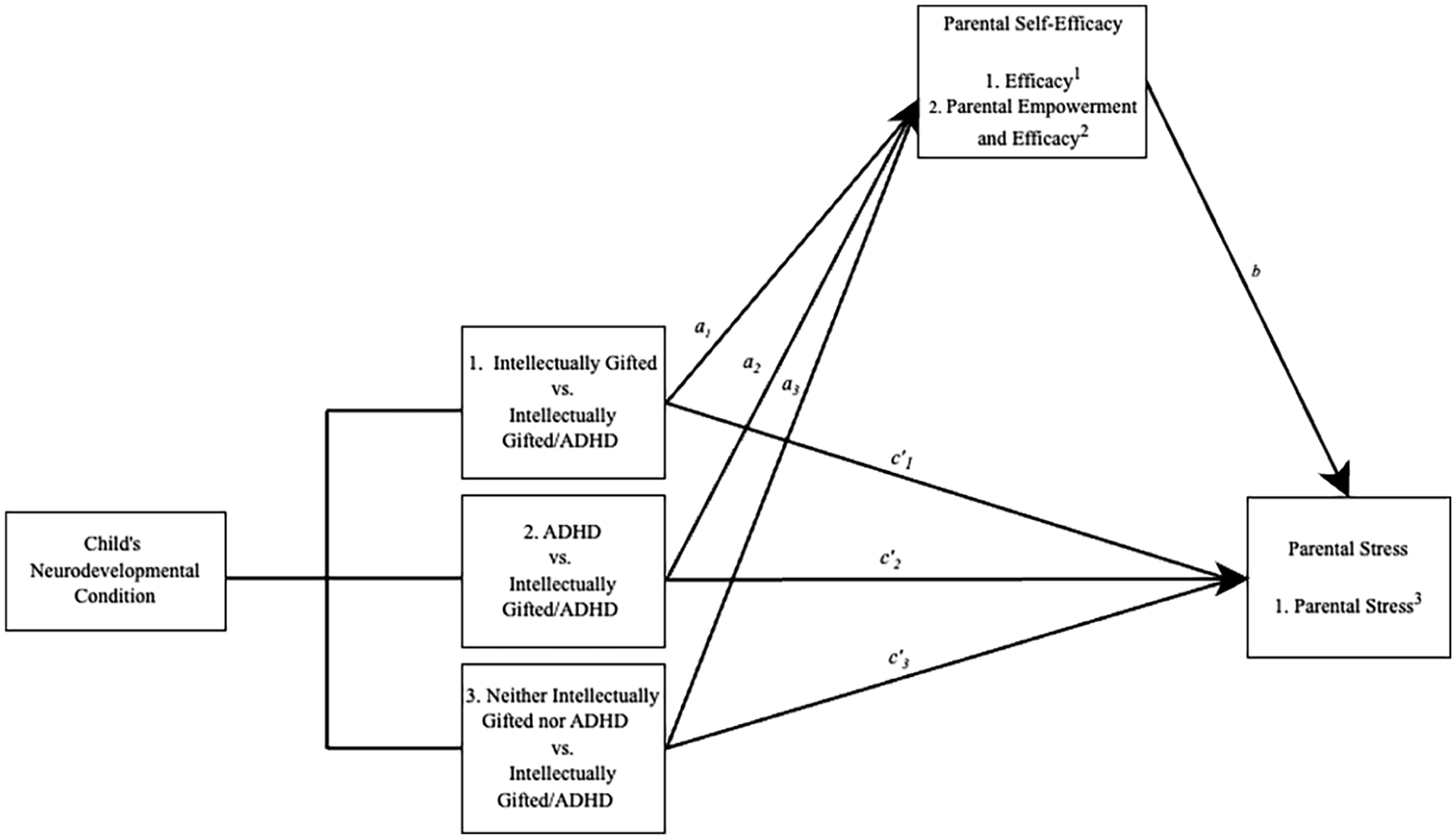
The Model Figures of the Direct and Indirect Effects of the Child’s Neurodevelopmental Condition on Parental Stress Through Parental Self-Efficacy.
Total, Direct and Indirect Effects of the Child’s Neurodevelopmental Condition on Parental Stress Through Parental Self-Efficacy.
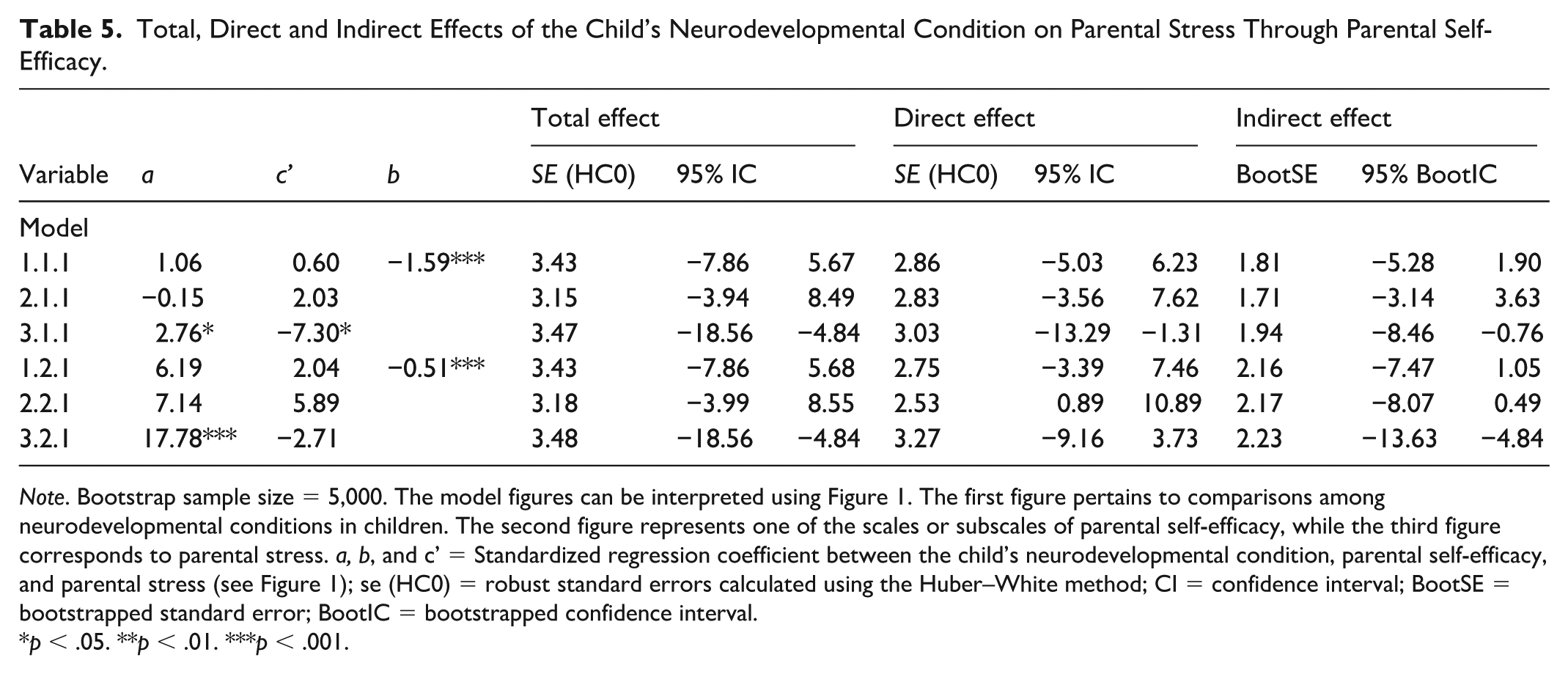
Note. Bootstrap sample size = 5,000. The model figures can be interpreted using Figure 1. The first figure pertains to comparisons among neurodevelopmental conditions in children. The second figure represents one of the scales or subscales of parental self-efficacy, while the third figure corresponds to parental stress. a, b, and c’ = Standardized regression coefficient between the child’s neurodevelopmental condition, parental self-efficacy, and parental stress (see Figure 1); se (HC0) = robust standard errors calculated using the Huber–White method; CI = confidence interval; BootSE = bootstrapped standard error; BootIC = bootstrapped confidence interval.
p < .05. **p < .01. ***p < .001.
Effects of the Child’s Neurodevelopmental Condition and the Parents’ Gender on Parental Stress and Parental Self-Efficacy
As documented in Table 6, the results of the repeated-measures ANOVAs revealed interaction effects between the child’s neurodevelopmental condition and the parents’ gender (mother or father) on parental empowerment and efficacy, confidence to be a good parent and capacity to connect with informal and formal networks. Simple effects analyses showed that mothers of intellectually gifted/ADHD children had lower levels of parent empowerment, efficacy, and confidence in being a good parent than fathers (0.020 < p < .009). Also, mothers of children without intellectual giftedness or ADHD showed higher levels in these domains than fathers (0.002 < p < .039). In addition, a significant effect of respondent type on parental self-efficacy was observed, favoring mothers regardless of the child’s neurodevelopmental condition.
Repeated-Measures ANOVA Statistics for Parental Stress and Parental Self-Efficacy Measures.
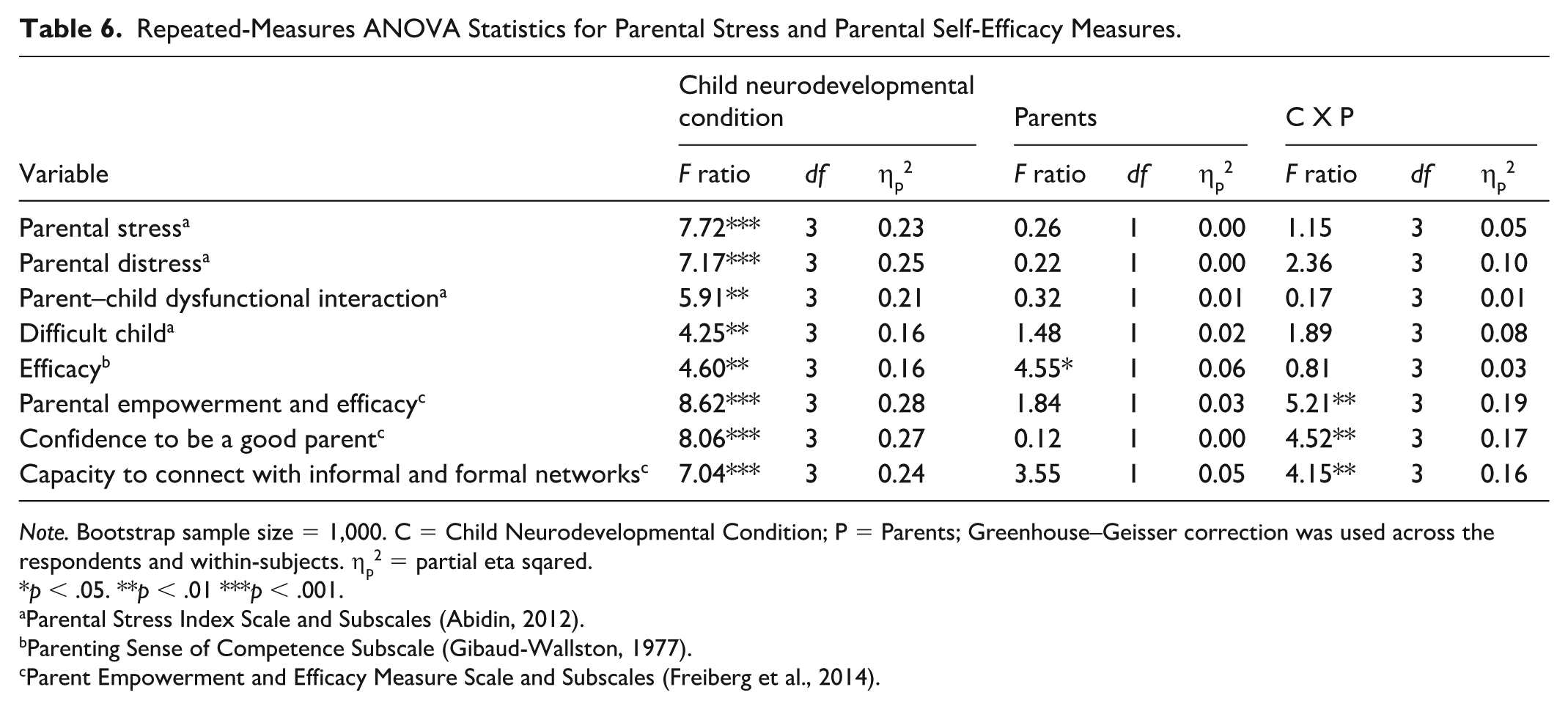
Note. Bootstrap sample size = 1,000. C = Child Neurodevelopmental Condition; P = Parents; Greenhouse–Geisser correction was used across the respondents and within-subjects. ηp2 = partial eta sqared.
p < .05. **p < .01 ***p < .001.
Parental Stress Index Scale and Subscales (Abidin, 2012).
Parenting Sense of Competence Subscale (Gibaud-Wallston, 1977).
Parent Empowerment and Efficacy Measure Scale and Subscales (Freiberg et al., 2014).
Discussion
Although scientific literature tends to suggest that intellectually gifted/ADHD children are particularly at risk of experiencing psychosocial and academic adjustment difficulties (e.g., Foley-Nicpon et al., 2012)—factors contributing to parental stress—there has been limited research addressing the parental stress experienced by these parents, and their parental self-efficacy. The main objective of this study was to further investigate parental stress and parental self-efficacy among parents of intellectually gifted/ADHD children.
The findings revealed that the interaction between intellectual giftedness and ADHD was associated with an increase in parental stress—particularly on parental distress, stress related to parent–child dysfunctional interaction, as well as on stress related to child difficulties among mothers—but not on parental self-efficacy, partially supporting our first hypothesis. This aligns with previous studies showing higher levels of parental stress among parents of intellectually gifted children (Bishop, 2012) and those of children with ADHD (Bonifacci et al., 2019; Flynn et al., 2021; Li & Lansford, 2018; Theule et al., 2013; Wiener et al., 2016) compared to parents of children without these neurodevelopmental conditions. More specifically, the current findings indicated that within the interaction between intellectual giftedness and ADHD, intellectual giftedness was most strongly associated with the increase in parental distress, whereas ADHD was more closely linked to the increase in stress related to child-related difficulties and parent–child dysfunctional interactions among mothers. These findings highlight the need to consider the distinct and interactive factors associated with intellectual giftedness and ADHD.
On one hand, the increase in parental distress associated with a child’s intellectual giftedness may stem from parents’ perceived lack of support and difficulties in identifying appropriate resources to aid them in their parenting role (Renati et al., 2017). For instance, the lack of parenting alliance—when both parents fail to adopt a consistent approach to child management or when intellectual giftedness is not perceived or valued similarly between them—may contribute to heightened parental distress (Renati et al., 2017). In line with this, Renati and colleagues (2025) observed that parental stress experienced by one parent can significantly impact the stress levels of the other. Similarly, the absence of a supportive collaboration between school and family (Renati et al., 2017) often poses significant challenges in obtaining school accommodations that meet the child’s unique needs. This, in turn, can increase the burden on parents to advocate for their child in the education system and to address their needs outside school, often leading to elevated stress and potentially parental distress (Besnoy et al., 2015; Dare & Nowicki, 2015). In Quebec, Canada, where the study participants reside, these challenges are amplified by a historical lack of understanding of giftedness within the educational system, compounded by limited access to services (Brault-Labbé et al., 2022, 2024). While recent policy shifts, such as the Ministry of Education’s 2020 endorsement of gifted students’ educational success, show promise, many parents of intellectually gifted children may still face ongoing challenges in ensuring their child’s unique needs are met, which could potentially contribute to parental distress.
On the contrary, the increase in stress related to child’s difficulties associated with ADHD may stem directly from core ADHD symptoms, such as hyperactivity and impulsivity, co-occurring conduct problems, as well as challenges in emotional regulation (Berenguer et al., 2020; Corcoran et al., 2017; Theule et al., 2013). In this regard, in their qualitative study, Leitch and colleagues (2019) reported that parents perceive their children’s ADHD behaviors, often described as “wrecking balls,” as a significant source of intense stress. In that context, parents often struggle to understand their child’s behavior, bear the perceived responsibility of constantly preventing or managing these behaviors, and experience feelings of disappointment and sadness over missing what they perceive to be a “normal” parenting experience (Bull & Whelan, 2006; Corcoran et al., 2017). Thus, parents of children with ADHD may encounter unmet parental expectations and insufficient reinforcement in their parenting role, potentially intensifying stress related to dysfunctional parent–child interactions.
Considering these findings, while parents of intellectually gifted/ADHD children may not necessarily experience higher levels of parental stress compared to parents of children who are exclusively intellectually gifted or have ADHD, their parental stress levels can vary depending on the predominance of traits associated with each condition and the dynamic interaction between them. This underscores the importance of tailoring support strategies to address the unique challenges these parents face, considering both the specific characteristics of intellectual giftedness and ADHD and their combined influence on parental stress.
Parental Self-Efficacy and Its Indirect Effect on Parental Stress Among Parents of Intellectually/Gifted Children
Furthermore, the findings suggested that the higher levels of parental stress observed among parents of intellectually gifted/ADHD children, compared to those of children without these conditions, could be partially explained by lower levels of parental self-efficacy, thereby supporting our second hypothesis. This stands in contrast to the results of De Vries’ (2016) study, which did not support a similar indirect effect model among parents of children with autism spectrum disorder. In De Vries’ study, the behavioral difficulties of children with autism spectrum disorder were not significant predictors of parental self-efficacy, suggesting differences in how these parents perceive and respond to their child’s challenges.
As an explanation, parents of children with autism spectrum disorder may be more likely to attribute their child’s behavioral difficulties to the inherent characteristics of the disorder, rather than to a lack of willpower in the child or deficiencies in their own parenting skills (Miranda et al., 2015). This contrasts with the tendency of parents of children with ADHD to blame themselves for their child’s behavior (Gray Brunton et al., 2014) and the feelings of inadequacy often experienced by parents of intellectually gifted children (Renati et al., 2017), both of which may contribute to lower parental self-efficacy. It is plausible that this reasoning extends to parents of intellectually gifted/ADHD children, who might face compounded challenges from the interaction of these two conditions, further lowering their self-efficacy in their parenting abilities.
Moreover, the findings did not reveal any significant differences between parents of intellectually gifted/ADHD children and those of children who are either intellectually gifted or have ADHD, suggesting that the indirect effect of parental self-efficacy on parental stress manifests similarly across these groups. This similarity may be explained by the shared sense of isolation (Dauman et al., 2019; dosReis et al., 2010; Guthrie, 2019; Hidalgo, 2016; Peebles et al., 2023; Renati et al., 2017) and stigma (Brault-Labbé et al., 2022; Hidalgo, 2016; Wells, 2018) reported by these groups of parents, which may limit their opportunities to enhance parental self-efficacy through mechanisms such as vicarious experiences—observing and learning from the parenting practices of others—or verbal persuasion, including receiving suggestions, advice, or encouragement (Bandura, 1977). This could, in turn, negatively impact their levels of parental stress, as highlighted by the present study’s findings.
Interaction of Parent Gender and Child Neurodevelopmental Condition on Parental Self-Efficacy
The findings also revealed significant interaction effects between the child’s neurodevelopmental condition and the parents’ gender on parental self-efficacy variables, supporting our third hypothesis. More specifically, mothers of intellectually gifted/ADHD children present lower levels of parent empowerment and efficacy, as well as confidence in being a good parent than fathers. In a context where previous studies have been inconsistent regarding gender differences in parental self-efficacy, as most of the existing literature has primarily focused on mothers or has not sufficiently examined these differences (Fang et al., 2021), the present findings provide additional insight into this phenomenon, specifically among parents of intellectually gifted children with ADHD. This difference between mothers and fathers may be partly explained by maternal blame, an unfavorable bias that attributes a child’s atypical behaviors to the mother’s perceived inability to control them, thereby undermining parental self-efficacy (Keown, 2012; Wells, 2018). Moreover, in the Canadian context, where 65% of child care responsibilities are carried out by women (Houle et al., 2017), the added responsibility of addressing the special needs associated with intellectual giftedness and ADHD further contributes to the already significant mental load of mothers (Papadopoulos, 2021). This additional burden can lead mothers to feel overwhelmed, which may be associated with feelings of guilt that undermine their confidence to be good parents (Papadopoulos, 2021).
Strengths and Limitations
This study is innovative in being among the first to examine parental stress and parental self-efficacy among parents of intellectually gifted/ADHD children, employing a method specifically designed to minimize sampling biases prevalent in previous research on intellectual giftedness (Francis et al., 2016; Martin et al., 2010). This approach includes a rigorous identification process for intellectual giftedness and ADHD in the study itself. In addition, participants across all groups were selected using uniform procedures within the same settings, ensuring consistency (Lavrijsen & Verschueren, 2023). The study also benefits from an adequate sample size with an approximately equal distribution of parents of male and female children (Bianco et al., 2011; Michael-Chadwell, 2011) and includes control groups that allow comparisons between children with and without intellectual giftedness (Francis et al., 2016).
However, the limitations of this study must be considered. Despite the implementation of gender-sensitive recruitment strategies, such as online crowdsourcing (Parent et al., 2017), the sample comprised only 29% of fathers, limiting the generalization of the study’s findings to the broader population of parents. This generalization is also affected by the fact that the parents in the sample have a higher level of education and family income than the average Canadian population. Finally, the cross-sectional design of the study may represent a limitation as it does not allow for tracking changes in parental stress and parental self-efficacy over time, particularly in a context where the identification of intellectual giftedness or ADHD in the child could enable parents to better understand and support their child.
Practical Implications
Given this study’s findings, targeted interventions specifically designed to enhance parental self-efficacy may represent a promising avenue for clinical practice aimed at reducing parental stress among parents of intellectually gifted/ADHD children. In particular, structured parent groups informed by Bandura’s (1977) self-efficacy framework could effectively address core determinants such as mastery experiences, vicarious experiences, and verbal persuasion (Wittkowski et al., 2016), empowering parents to better cope with the distinct challenges associated with parenting intellectually gifted/ADHD children.
To promote mastery experiences, group sessions could begin by guiding parents to identify at least one recent success or meaningful progress they have achieved with their child. This approach appears particularly relevant considering the present study’s findings, which highlight a particular need to strengthen parenting confidence among mothers of intellectually gifted/ADHD children.
To foster vicarious experiences, structured opportunities for parents to share testimonials and experiences could be integrated into the group sessions. During these interactions, parents could discuss specific challenges, successful strategies implemented, and observed improvements, thereby facilitating peer learning through modeling.
Finally, verbal persuasion could be effectively addressed through the regular inclusion of targeted psychoeducational content, delivered by qualified professionals, explicitly tailored to the unique challenges associated with both intellectual giftedness and ADHD. This strategy is especially pertinent, as the present study suggests that the combined effects of these conditions on parental stress may render generic parenting resources insufficient.
Future Directions
The results and limitations of this study suggest several directions for future research. First, given that the interaction between a child’s intellectual giftedness/ADHD has been shown to exacerbate parental stress levels, a qualitative exploration of the specific sources of this stress would be valuable. In addition, gaining a deeper understanding of how parental self-efficacy in parents of intellectually gifted/ADHD children develops and evolves through an exploratory qualitative design would provide valuable insights into this key intervention lever for managing parental stress. Finally, examining the perceptions of parents of intellectually gifted/ADHD children regarding their social support from partners, friends, extended family, and the community, and its relationship with parental stress, would benefit from a mixed-methods approach.
From a methodological perspective, future research should consider using a longitudinal design to better capture changes in parental stress and parental self-efficacy over time. Such a design would be particularly valuable in understanding how the identification of intellectual giftedness or ADHD in children influences these variables. In addition, future studies in the field of parenting would benefit from achieving better mother–father representativeness within their samples to generalize the findings to all parents, which requires gender-sensitive recruitment procedures. For example, it may involve explicitly inviting them, use targeted recruitment strategies, and adopt alternative data collection methods such as online crowdsourcing, and clearly communicating the benefits of participation (Davison et al., 2017; Parent et al., 2017; Sopack et al., 2015). Otherwise, future research should enhance recruitment efforts to ensure that samples are sociodemographically representative, aligning with the principles of equity, diversity, and inclusion.
Footnotes

Ethical Considerations
Ethical approval for this study was obtained from Research Ethics Board—Humanities and Social Sciences at the University of Sherbrooke (approval no. 2021-3026) on October 28, 2021.
Funding
The authors disclosed receipt of the following financial support for the research, authorship, and/or publication of this article: This work was supported by a grant from the Fonds de recherche du Québec (FRQ) and the Social Sciences and Humanities Research Council (SSHRC) to Mathieu Pilon. Juliette François-Sévigny was supported by a graduate fellowship of the Social Sciences and Humanities Research Council (SSHRC) and the University de Sherbrooke.
Open Science Disclosure Statement
The data analyzed in this study are not available for purposes of reproducing the results. The code or protocol used to generate the findings reported in the article are not available for purposes of reproducing the results or replicating the study. There are no other newly created, unique materials used to conduct the research.
Declaration of Conflicting Interests
The authors declared no potential conflicts of interest with respect to the research, authorship, and/or publication of this article.
Artificial Intelligence Use
ChatGPT 4o was used to translate part of the paper, which was originally written in French, the authors’ native language. The authors declared they took steps to ensure accuracy of AI-generated content, and that it contained no plagiarism or bias.