



Abstract
Teachers play a central role in the development of gifted students and are important actors in the (educational) system around the gifted student. However, their perceived involvement of and interactions with other actors in that system remains underexplored. Therefore, in this study, we explored teachers’ perceptions of involvement and interactions with key actors in gifted education: parents, school leaders, and other teachers. Furthermore, we aimed to identify facilitators and barriers to effective involvement and interaction as perceived by teachers in gifted education. An exploratory mixed-methods approach was used, involving 302 surveyed teachers from the Netherlands and 20 interviews. Findings revealed varying levels of perceived involvement, with parents being perceived as more involved than school leaders, and other teachers as highly involved. Despite these differences, teachers reported overall satisfaction with involvement and interactions. Satisfaction levels were positively related with increased involvement and interactions. Facilitators included willingness, approachability, and knowledge (sharing), while frequently mentioned barriers included the lack of these factors and the lack of policy. This study provides valuable insights into the opportunities and challenges involved in enhancing and sustaining effective involvement of and interactions with parents, school leaders, and other teachers, from the perspective of teachers in gifted education.
Keywords
Inclusive education aims to cater to the diverse educational needs of individual students, making it a promising approach for nurturing students’ talents, including talents of gifted students (Ninkov, 2020). Unfortunately, within (inclusive) classrooms, interventions and educational opportunities for gifted students are frequently lacking, hindering these students from realizing their full potential (Wong & Morton, 2017). This could potentially lead to issues such as compromised well-being (e.g., Vialle et al., 2007), dropouts (e.g., Landis & Reschly, 2013), and underachievement (e.g., Obergriesser & Stoeger, 2015).
Bronfenbrenner’s (1994) ecological systems theory provides a foundational perspective by emphasizing the multiple layers of environmental influence that shape individual development. Bronfenbrenner’s framework illustrates how factors within different systems, such as the microsystem (i.e., the immediate environment of the student) and the mesosystem (i.e., interconnections between the microsystems), interact to affect a child’s learning and development. This perspective encourages not only researchers, but also teachers, school leaders, and parents, to look beyond the individual student and consider the broader context in which education occurs, including the relationships within schools, and between school and home. Building on this ecological perspective, multifactor models, such as Gagné’s (2005) Differentiated Model of Giftedness and Talent and Ziegler’s (2005) Actiotope Model of Giftedness further elaborate on this interplay, particularly in the context of giftedness. These models focus on both cognitive and non-cognitive aspects of giftedness, while acknowledging the impact of external factors, such as the school and home environment, on the development and understanding of giftedness (Ziegler & Phillipson, 2012). In this respect, Ziegler and Stoeger (2017) argued that the development of giftedness thrives through an interaction between students’ personal characteristics, their actions, and their environment.
Within the school environment, teachers have a substantial impact on the educational development and well-being of gifted students (Bakx et al., 2025; Lassig, 2015). They not only play a crucial role in identifying gifted students (Golle et al., 2023; Tirri, 2017) but also bear the responsibility of providing these students with a suitable learning environment (Steenberghs et al., 2023). VanTassel-Baska and Johnsen (2007) emphasized the importance of advocacy and collaboration among gifted educators, administration, and parents for affecting change in gifted education. The Council for Exceptional Children (CEC, 2024) recently published the “CEC Initial Practice-Based Professional Preparation Standards for Gifted Educators.” Standard 7, “Collaborating with other Stakeholders,” also underscores the importance of collaboration with families, educational professionals, and service providers to facilitate effective educational support for gifted students.
While numerous studies have focused on teachers’ perceptions of gifted students (e.g., Akgul, 2021; Golle et al., 2023; Mellroth, 2021) or their education (e.g., Hujar & Matthews, 2021; Laine et al., 2019), there is a noticeable gap in the literature regarding teachers’ perceptions of other involved actors in gifted education. Little to no research has explored teachers’ perspectives on their connections with other adult actors within the gifted student’s environment. The aim of the current study was to explore teachers’ perspectives on the involvement of and their interactions with parents, school leaders, and other teachers within the context of gifted education in the Netherlands, as these actors possess the potential to meaningfully enhance education.
Given that the concepts of involvement and interaction can differ significantly across countries and cultures, the current study defined these concepts using Dutch literature and the Dutch educational context. Therefore, involvement is understood as the active participation and engagement of parents, school leaders, and other teachers in shaping and supporting the gifted student’s educational development. It is not a fixed personal trait but emerges from dynamic exchanges between individuals and their environment (Volman, 2011) and is considered one of the essential conditions for learning (Mascareño Lara et al., 2023). Central to this involvement is a collaborative, non-obligatory partnership between the school and home, always in the best interest of the student (Flinkevleugel & Eenshuistra, 2017). Interaction, in the current study, refers to the continuous process of communication and reciprocal exchange between these key actors (parents, school leaders, and other teachers). Effective communication is essential for establishing a strong collaborative partnership between the school and home, helping to prevent misunderstandings and to avoid educational problems (Herweijer & Vogels, 2013). Understanding teachers’ viewpoints on the involvement of multiple actor groups and interactions with these actors could provide valuable insights into both the opportunities and challenges for enhancing and sustaining mechanisms supporting gifted education.
First, parental involvement in education is recognized as crucial in fostering strong connections between families and schools, ultimately benefiting students’ academic performance (Denessen et al., 2009; Uludag, 2008). Some studies have emphasized the importance of collaboration between educators and parents or caregivers in facilitating successful inclusive education for gifted students (Corwith et al., 2019; VanTassel-Baska & Johnsen, 2007). Studies with a focus on general education identified vital components for cooperation and communication. For instance, Adams & Christenson (2000) highlighted trust as essential for constructive cooperation between teachers and parents. They defined this trust as confidence in each other’s commitment to the family–school relationship, leading to positive outcomes for students. In addition, they emphasized that the most effective way to cultivate and strengthen trust is through enhancing communication between school and home (Adams and Christenson, 2000). Effective communication skills are paramount for teachers to establish connections with parents, thereby facilitating parental involvement at school (Epstein & Sanders, 2006). Although these studies primarily focus on general education, the principles of trust and communication likely hold for gifted education as well. However, before collaborations can be effectively established or enhanced, it is imperative to understand what methods effectively involve parents and how interactions with them can be optimized. Despite the well-established impact of parental involvement on achieving positive educational outcomes of students (Garn et al., 2010; Matthews et al., 2024), limited research has delved into the underlying working mechanisms and conditions that drive this involvement and the interactions, particularly in gifted education.
Second, within the Dutch educational setting, school leaders play an important role in policymaking and facilitating education for gifted students. They bear the responsibility for overseeing processes within their schools and serve as decision-making authorities at the school level (Neeleman, 2019). Teachers are tasked with implementing policies set by school leaders, but translating these policies into classroom practices requires clear guidance from policy makers and explicit teacher support (Mills et al., 2014). School leaders play an important role in providing teachers with the necessary time and resources to effect organizational changes (Meyer et al., 2022). Research by Goddard et al. (2015) highlighted the importance of shared instructional principal leadership in fostering teacher collaboration, which in turn positively affects student achievement. Meyer et al. (2022) further corroborated these findings, showing that school leaders involved in instructional and staff development contribute to a culture of closer teacher collaboration. Despite these insights gained in general education research, there remains a gap in the literature regarding the specific involvement of school leaders and interactions between teachers and school leaders, particularly in the context of gifted education.
Third, the involvement of other teachers, supported by shared goals and structured interactions, is recognized as a key element in driving changes within educational settings (Meyer et al., 2023). This involvement, or collaboration, allows teachers to align their practices and collectively implement innovations that support educational change. In their systematic review on teacher collaboration in general education, Vangrieken et al. (2015) demonstrated that such collaboration not only enhances educational and job performance but also positively affects teachers’ mindset and motivation. However, when examining collaboration between gifted education teachers and general education teachers, Mofield (2020) described both beneficial and obstructive consequences. On one hand, both gifted and general education teachers reported growth in their competencies related to differentiation, and improvements in student learning. On the other hand, concerns were raised about all of the teachers’ lack of time and the challenge of reconciling conflicting assumptions regarding giftedness between gifted education teachers and general education teachers. While much research has focused on teacher collaboration, especially compared to the research focusing on school leaders and parents, little is known about the underlying working mechanisms and conditions of the involvement of and interactions between teachers, particularly within the context of gifted education. This gap in understanding leaves unanswered questions regarding the effectiveness of teacher involvement and interactions, as well as how they can be optimally integrated within gifted education.
Current Study
In the Netherlands, gifted education is part of the broader aim of inclusive education. All educators in primary and secondary schools collaborate in regional partnerships (in Dutch: “samenwerkingsverbanden”), mandated by the Dutch “Law on Inclusive Education” (in Dutch: “Wet Passend Onderwijs”; Rijksoverheid, n.d.) to enhance inclusive education. The board of each regional partnership and the schools in that particular partnership are responsible for ensuring good educational outcomes for all students, including those who require additional support. The aim is to help every child realize their full potential (Rijksoverheid, n.d.). However, the lack of clear guidelines regarding effective gifted education has led to a variety of opinions and inconsistent provision (De Boer et al., 2013). De Boer et al. (2013) emphasized that this inconsistency, experienced in both primary and secondary education, is compounded by difficulties in, among others, teacher expertise, policy development, and team involvement.
In this context, given the pivotal role of teachers as primary educational actors within students’ environments, we explored teachers’ perceptions concerning involvement of other key actors, namely parents, school leaders, and other teachers, as well as their interactions with these actors in primary and secondary gifted education in the Netherlands. In addition, possible relationships between involvement and interactions with these key actors were examined. Given the limited understanding of the underlying working mechanisms and conditions of the involvement of and interactions between these environmental actors, we also investigated teachers’ perceived facilitators of and barriers to involvement of and interactions with these actors. An exploratory approach was adopted to unveil these dynamics, aiming to contribute valuable insights to enhance inclusive primary and secondary education for gifted students.
The first set of research questions (RQs) investigated how teachers perceive the involvement of different actors in the education for gifted students:
To what extent do teachers assess the involvement of parents, school leaders, and other teachers, how satisfied are they with these levels of involvement, and is there a relationship between their perceptions of this involvement and their satisfaction levels?
What factors do teachers perceive as facilitators of or barriers to effective involvement of parents, school leaders, and other teachers?
The subsequent set of RQs delved into the interactions between teachers and different actors in the education for gifted students:
3. To what extent do teachers assess interactions with parents, school leaders, and other teachers, how satisfied are they with these interactions, and is there a relationship between their perceived number of interactions and their satisfaction levels?
4. What factors do teachers perceive as facilitators of or barriers to effective interactions with parents, school leaders, and other teachers?
The last set of RQs explored teachers’ perceived relationships between involvement of and interactions with different actors in the education for gifted students:
5. Is there a relationship between teachers’ satisfaction with involvement and satisfaction with interactions with parents, school leaders, and other teachers?
6. How do teachers perceive the relationship between their satisfaction with involvement and their interactions with parents, school leaders, and other teachers?
Method
Design
The current study was part of the nationwide project on Impact of Activities in Gifted Education (IMAGE; NRO Grant 40.5.20441.007, 2020) and comprised two studies: a questionnaire study and an interview study, constituting a mixed-methods approach. The questionnaire study, designated as Study 1, was designed to address RQ 1, 3, and 5. The interview study, designated as Study 2, focused on addressing RQ 2, 4, and 6. This mixed-method approach provides qualitative data to deepen the understanding of quantitative data, thus imparting meaning to numbers (Watkins, 2012). This approach leverages the strengths and differences of both quantitative and qualitative methods to best comprehend the research problem (Plano Clark, 2017). The current study and measures (i.e., questionnaire and interview protocol) were preregistered on the Open Science Framework (OSF; https://osf.io/yst5e/?view_only=09a2b6540a794c71b2f6face6151c9a3). The questionnaire and interview protocol are accessible in Dutch, along with their English translations.
Study 1
Procedure
To gather a representative sample of teachers, the board of each regional partnership, in which all primary and secondary schools collaborate, was approached to disseminate an online questionnaire developed in the Qualtrics program (https://www.qualtrics.com) to their schools and educators. Participants could complete the online questionnaire between March and December 2022, after providing active informed consent. The distributed questionnaire was part of a broader study conducted as part of the IMAGE project. Following initial inquiries to collect demographic information (e.g., age, gender, teaching level, educational background), participants were randomly assigned blocks of questions from the complete questionnaire. Notably, the questions within the relevant blocks for the current study were consistently presented in a fixed order. The completion time for this section of the questionnaire ranged from approximately 5 to 10 minutes. The entire questionnaire required approximately 25 minutes to complete, with some participants commencing it but deferring completion to a later time. The current study was independently assessed and approved by the Ethics Committee Social Science (ECSS) at Radboud University (protocol code ECSW-2021-129, December 16, 2021). As an incentive, participating teachers received a national results report and were invited to attend a complimentary online webinar on giftedness.
Participants
The objective of the questionnaire study was to draw a representative sample of teachers in primary and secondary education who offer education to gifted students in the Netherlands. Initially, 331 teachers started the questionnaire, but 29 participants did not complete it for unknown reasons and were excluded from further analyses. In total, 302 teachers were included in the analysis, with 240 (79.47%) working in primary schools and 62 (20.53%) in secondary schools.
Most primary school participants identified as female (84.58%), followed by male (14.17%), non-binary (0.42%), and two (0.83%) who preferred not to share this information. On average, primary school participants were 40.84 years old, with ages ranging from 21 to 66 years (SD = 10.94 years). These demographics aligned with the average age of the 129 Dutch primary school teachers (42.7 years old), and the predominant female representation among educators (87% female; Ministerie van Onderwijs, Cultuur en Wetenschap, 2023).
Most secondary school participants identified as female (70.97%), followed by male (25.81%), non-binary (1.61%), and one as other (1.61%). This gender distribution among participants slightly deviated from the national average (56% female; Ministerie van Onderwijs, Cultuur en Wetenschap, 2023). On average, secondary school participants were 46.69 years old, with ages ranging from 21 to 69 years (SD = 11.00 years) which aligns with the average age of Dutch secondary school teachers (43.1 years old; Ministerie van Onderwijs, Cultuur en Wetenschap, 2023). The overall demographics of the sample reflect the national averages and thus suggest that the sample is representative of teachers working in primary and secondary education in the Netherlands.
Participants had the opportunity to specify the types of interventions they offered to gifted students. This is illustrated in the heatmap in Figure 1, which displays the number of times interventions were simultaneously mentioned by the same participant, thus revealing patterns of co-occurrence among interventions. Figure 2 presents a chord diagram (https://flourish.studio/) visually depicting the connections between different types of interventions. Thicker lines indicate stronger connections, suggesting frequent consecutive offering of these interventions and a broader base signifies more frequent mention of an intervention overall.
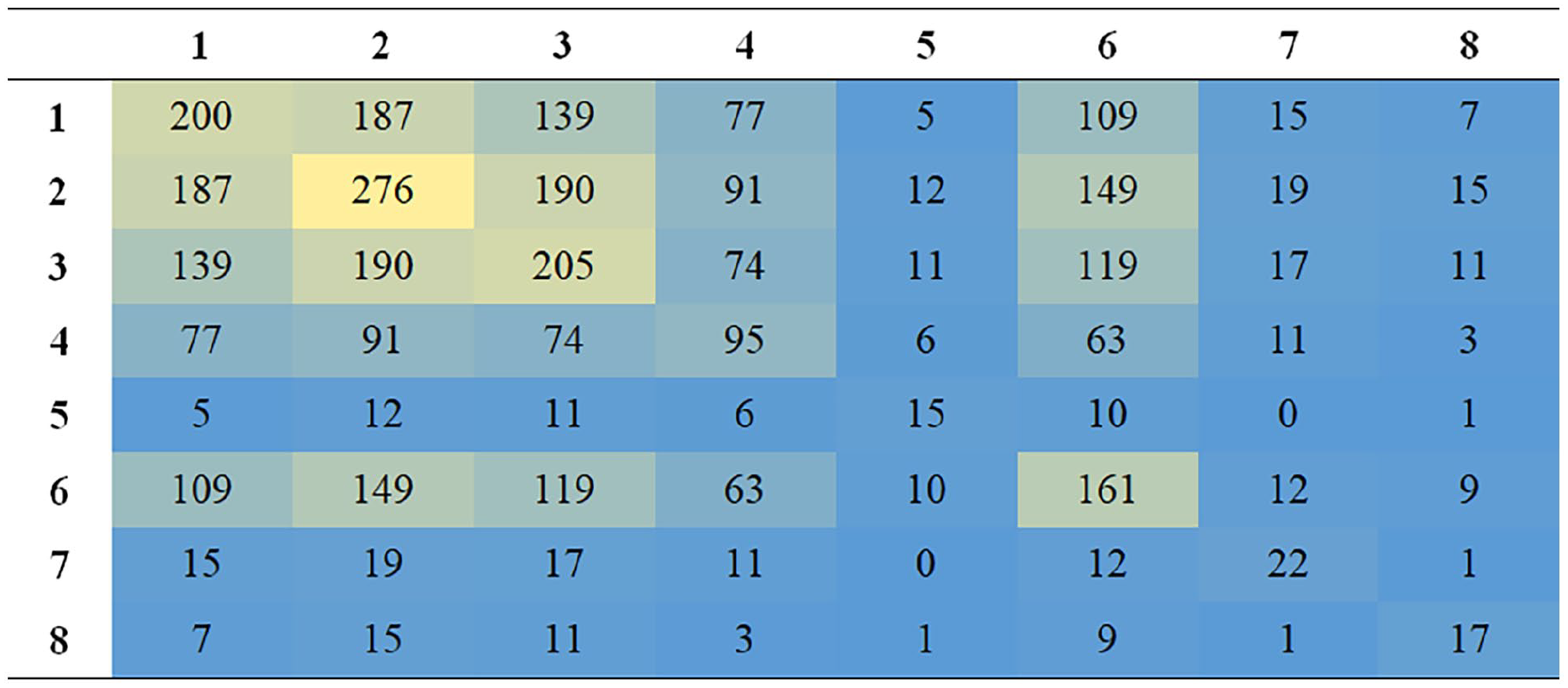
Heatmap Visualization of Overlap of Offered Educational Interventions for Gifted Students With High Overlap (Yellow) to Lower Overlap (Blue).
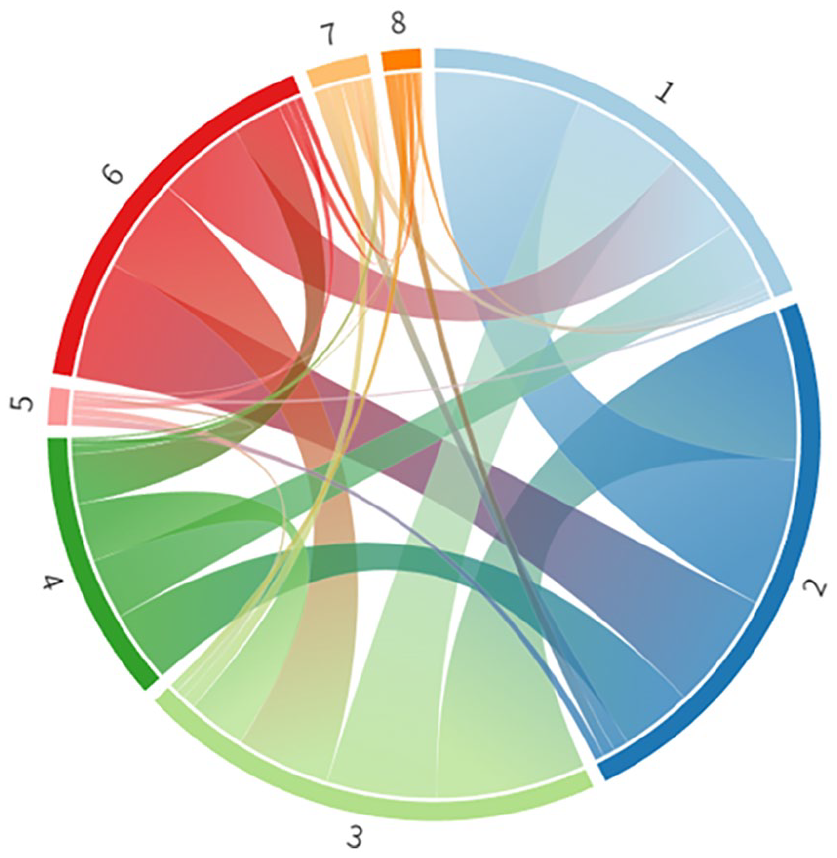
Chord Diagram of Combined Offered Educational Interventions.
Measures
The relevant block of questions for the present study comprised 23 items. Participants were prompted to respond to several items regarding their perceived involvement of and interactions with various stakeholders in the educational process, including parents, their school leader, and other teachers at their school. Each item included an option “not applicable.” The questionnaire developed for the current study is accessible in Dutch, along with its English translation, on OSF (https://osf.io/yst5e/?view_only=09a2b6540a794c71b2f6face6151c9a3).
To investigate involvement (RQ1), participants were asked to indicate the extent to which each actor (i.e., parents, school leaders, or other teachers) was currently involved in the gifted education they provided (“At the moment, the following persons are involved in the education that I offer to gifted students”). Responses were rated on a 5-point Likert-type scale with (1) “strongly disagree,” (2) “disagree,” (3) “neutral,” (4) “agree,” and (5) “strongly agree.”
Satisfaction with actor involvement (RQ1) was measured using a 5-point Likert-type scale with (1) “very unsatisfied,” (2) “unsatisfied,” (3) “neutral,” (4) “satisfied,” and (5) “very satisfied.” Teachers were prompted to rate their satisfaction specifically concerning the gifted education they offer (“How satisfied are you with the current involvement of the following persons in the education that you offer to gifted students?”).
In addition, to investigate interaction (RQ3), participants were asked about the perceived number (i.e., frequency) of their interactions with each actor across various domains, including knowledge sharing related to giftedness, general support/educational interventions for gifted students at both group and individual level, and education-related issues. Responses were rated on a 7-point Likert-type scale, with (1) “(almost) never,” (2) “yearly,” (3) “multiple times per year,” (4) “monthly,” (5) “weekly,” (6) “multiple times per week,” and (7) “daily.” An example item was: “Please indicate how often you interact with the following persons concerning knowledge sharing related to giftedness.”
Finally, participants were asked to evaluate their satisfaction with interactions with each actor concerning the education they offered to gifted students (RQ3; “How satisfied are you with your current interactions with the following persons about the education that you offer to gifted students?”) Responses were rated on a 5-point Likert-type scale varying from “strongly disagree” to “strongly agree.”
Data Analysis
The questionnaire data were analyzed using SPSS version 23. Before conducting analyses, assumptions underlying each statistical test were assessed, including normality and homogeneity of variance, to ensure the validity of the results. All “not applicable” answers were treated as missing data during the analyses.
Partial η2 was used to determine the effect size of the repeated-measures analyses of variance (ANOVAs). This η2 represents the proportion of total variance in the dependent variable that can be explained by the independent variable, after accounting for the effects of other variables in the model (Richardson, 2011). Following Cohen’s (1988) guidelines, η2 values of .0099, .0588, and .1379 were respectively considered as small, medium, and large effect sizes. R2 was used to indicate effect sizes of the simple linear regression analyses. Values of .01, .09, and .25 were respectively considered as small, medium, and large effect sizes (Cohen, 1988). For the regression analyses, all predictor variables were centered to reduce multicollinearity and facilitate the interpretation of results.
For RQ1 regarding the perceived involvement of different actors, a repeated-measures ANOVA with simple contrasts and Actor Group as within-subjects factor was performed to detect any differences between the various actor groups. Similarly, this type of ANOVA was utilized to address the potential differences in satisfaction levels between the actor groups. To further address RQ1, simple linear regression analyses were performed to explore the relationship between perceived involvement levels and satisfaction with involvement. Both the repeated-measures ANOVAs and the regression analyses employed Bonferroni corrections, setting significance levels α to .017 to account for multiple comparisons.
Furthermore, to answer RQ3, repeated-measures ANOVAs with simple contrasts and Actor Group as within-subjects factor were conducted to determine differences in interactions among the actor groups, and to assess satisfaction levels with these interactions. For these ANOVAs, α was Bonferroni-corrected, setting significance levels to .017 to correct for multiple comparisons. To further address RQ3, the relationship between the perceived interaction and the satisfaction with these interactions was explored by performing linear regression analyses. For these regression analyses, α was Bonferroni-corrected and significance levels were set to .004 to account for multiple comparisons.
To investigate the relationship between satisfaction levels with the involvement of actors and the satisfaction levels with interactions with these actors, thereby addressing RQ5, linear regression analyses were conducted and α was Bonferroni-corrected, with significance levels set to .017 to correct for multiple comparisons.
Study 2
Procedure
At the end of the questionnaire in Study 1, participants who indicated that they offered gifted education were invited to participate in an interview. Interested participants provided their email addresses for further contact, which were pseudonymized and stored confidentially.
As recruitment efforts in Study 1 did not yield a sufficient number of participants to partake in an interview, additional recruitment strategies were employed to increase participation. Researchers and collaborators actively recruited through LinkedIn, by sharing posts about this study on both personal and institutional platforms to reach a wider audience. In addition, announcements were made at professional conferences focusing on education and giftedness, during which participating researchers presented the study and encouraged attendees to take part. Prior to participating in an interview, each interviewee completed the questionnaire of Study 1. The answers to that questionnaire were added to the data of Study 1 and provided additional context for the interview in Study 2.
Participants willing to take part in an interview received an online informed consent form, requiring active consent. Once consent was provided, they were invited to participate in an interview, scheduled to accommodate their availability. This study received independent approval by the Ethics Committee Social Science (ECSS) at Radboud University (protocol code ECSW-2021-129, December 16, 2021).
The interviews were conducted by the first author from July until December 2022, online via Microsoft Teams, and lasted approximately an hour. All interviews were conducted in Dutch. The interviews were recorded, and Microsoft Teams automatically transcribed the interviews, which were then corrected and pseudonymised. Subsequently, the recordings were deleted. Upon completion of the interview, participants received an online gift voucher of €25.
Participants
In total, 20 participants took part in an interview. Although limited, this sample size aligns with findings of Guest et al. (2006), who suggested that saturation can be achieved with approximately 12 interviews. Of these 20 participants, 12 primary school teachers participated, with 83.33% identifying as female and 16.67% as male. The average age of participating primary school teachers was 38.33 years (SD = 10.31 years, range = 23–50). In addition, eight secondary school teachers participated, with a gender distribution of 62.50% female, 37.5% male, and 12.5% non-binary. The average age of participating secondary school teachers was 49.13 years (SD = 7.92 years, range = 34–61). Notably, there was a higher proportion of male participants among secondary school teachers in the current study compared to Study 1. However, overall, the demographics of both primary and secondary school teacher were generally comparable to those of Study 1.
Measures
The interviews were conducted using a semi-structured interview protocol. The interview protocol is accessible in Dutch, along with its English translation, on OSF (https://osf.io/yst5e/?view_only=09a2b6540a794c71b2f6face6151c9a3). Participants responded to about 22 open-ended questions relevant to this study. These questions delved into various aspects of the participants’ perspectives, including the involvement of parents, school leaders, and other teachers in the gifted education they provided. For example, participants were asked to identify facilitators and barriers in the involvement of their fellow teachers, with questions such as: “What do you consider a strong point in the current involvement of your fellow teachers in the education that you provide to gifted students?” Participants also reflected on their interactions with these actors, considering facilitating factors and barriers. For instance, they were prompted with this question: “What factors contribute to you having pleasant, constructive interactions with your school leader when it comes to education for gifted students, and what might hinder this?” In addition, certain interview questions referred to participants’ responses from Study 1. For example, participants were asked to reflect on whether their satisfaction levels with the involvement of certain actors affected the frequency and quality of their interactions. An example question addressing this aspect was:
In the questionnaire, you indicated that you are/are not satisfied with the involvement of parents in the education that you provide to gifted students. Do you notice that this level of (dis)satisfaction impacts the quality and frequency of your interactions with parents about this education?
Data Analysis
The data of the interviews were inductively coded and thematically analyzed using ATLAS.ti (2023). Thematic analysis, which allows themes to emerge directly from the data (Braun & Clarke, 2006; Clarke & Braun, 2017), was selected for its ability to explore the perspectives of different participants (Nowell et al., 2017), aligning with the research questions of the current study. This process followed the six-phase approach of Braun and Clarke (2006), starting with familiarization with the data through transcription and noting initial ideas. Next, initial codes were generated, leading to the identification of potential themes. These themes were then reviewed, defined, and named. Finally, the analyzed themes were described in this article.
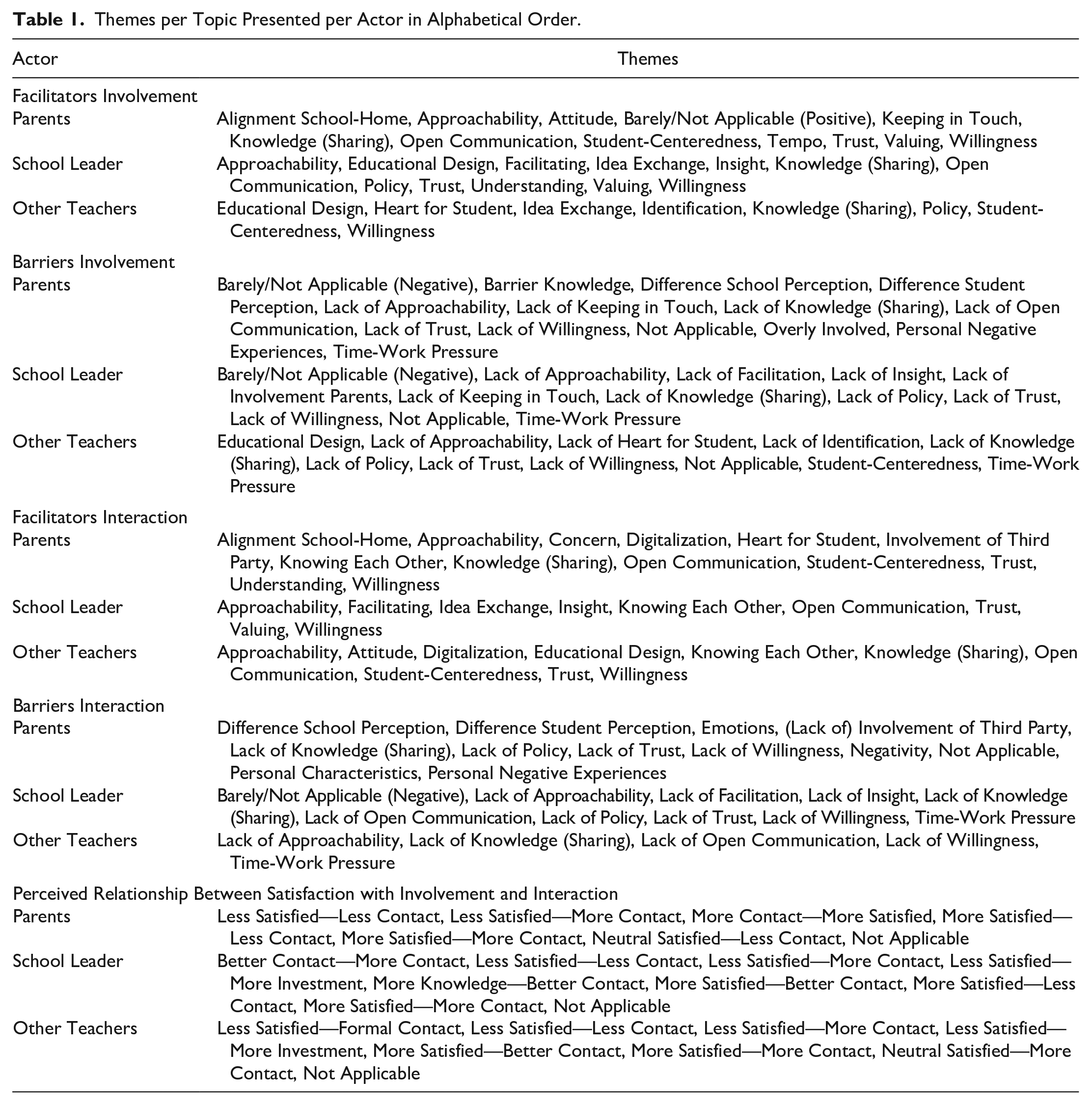
Several trustworthiness criteria were applied to ensure the rigor and credibility of this qualitative research (Nowell et al., 2017). All interviews were recorded, and the automatically generated transcripts were reviewed for accuracy. To ensure consistency, all interviews were conducted by the same interviewer. To support the transferability of this research, each found theme is accompanied by an example quote (as illustrated in the Supplemental Materials). To reduce subjectivity and to further enhance transferability, the data were coded by two coders and intercoder reliability was assessed through double-coding six interviews (Krippendorff’s α = .85, indicating strong agreement). This resulted in various overarching themes, presented in Table 1. The mentioned facilitators of and barriers to involvement were examined to address RQ2. The facilitators of and barriers to interaction were explored to answer RQ4. Finally, the perceived relationships between satisfaction with involvement and interactions were investigated to address RQ6.
Themes per Topic Presented per Actor in Alphabetical Order.
Results
Involvement of Actors and Satisfaction With Involvement
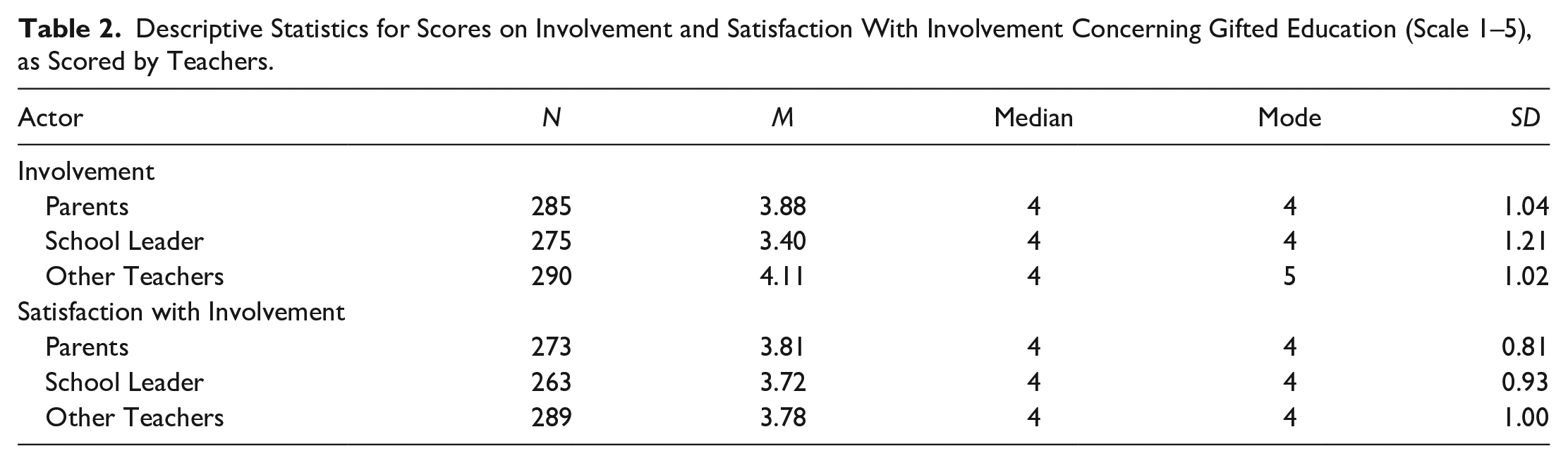
The extent to which teachers perceived involvement from and were satisfied with the involvement from parents, school leaders, and other teachers concerning gifted education are presented in Table 2, contributing to answering RQ1. For involvement, repeated-measures ANOVAs to investigate differences between actor groups (i.e., parents, school leaders, and other teachers) revealed that the assumption of sphericity was violated (Mauchly’s test; p = .007). Therefore, the Huynh–Feldt correction was applied, as the Epsilon was greater than .75. The effect of the within-subjects factor Actor Group was found to be significant, F(1.94, 512.61) = 39.92, p < .001. The effect size of this overall effect of Actor Group indicated a medium to large effect, partial η2 = .131. Simple contrasts revealed a significantly higher involvement of other teachers (perceived as “involved” to “very involved”) compared to parents (perceived as “involved”; p = .008, partial η2 = .026). Furthermore, simple contrasts revealed a significantly higher involvement of teachers compared to school leaders (perceived as “neutral to involved”; p < .001, partial η2 = .245). In addition, perceived involvement of parents (nearly “involved”) was significantly higher than that of school leaders, p < .001, partial η2 = .107, in gifted education, according to teachers (see Table 2).
Descriptive Statistics for Scores on Involvement and Satisfaction With Involvement Concerning Gifted Education (Scale 1–5), as Scored by Teachers.
For satisfaction levels, the assumption of sphericity was met (Mauchly’s test; p = .844). The effect of the within-subjects factor Actor Group was not significant, F(2, 484) = 1.36, p = .257. This indicated that there were no differences in the satisfaction of teachers with their perceived involvement of parents, school leaders, and other teachers concerning gifted education.
Relationship Between Involvement and Satisfaction With Involvement
Simple linear regression analyses revealed significant relationships between perceived involvement and corresponding satisfaction levels of teachers in gifted education, across all actor groups, thereby addressing the final part of RQ1. These relationships exhibited a large effect size, as presented in Table 3. This suggests that higher perceived involvement of an actor corresponds to greater satisfaction with their involvement among teachers in gifted education.
Results of Simple Linear Regression Analyses: Relationship Between Involvement in Gifted Education as Perceived by Teachers and Their Satisfaction With Involvement of Other Actors.
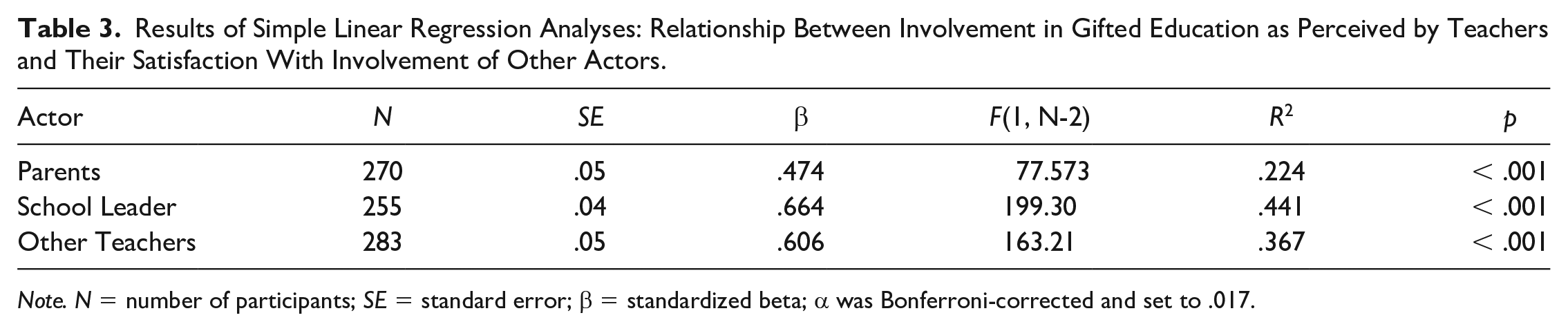
Note. N = number of participants; SE = standard error; β = standardized beta; α was Bonferroni-corrected and set to .017.
Facilitators of and Barriers to Involvement
Facilitators of Involvement
To answer RQ2, interview participants were asked to identify factors that facilitate the involvement of different actor groups. This exploration yielded several key factors, which are detailed in Supplemental Table 1 along with descriptive statistics and example quotes representing each theme. The following results focus on the three most frequently mentioned facilitators.
The most frequently mentioned facilitator for parental involvement was the theme of “Approachability,” as expressed by one teacher (T11): “. . . just that people know how to reach you, whether things are going well or not.” This was followed by the theme of “Student-Centeredness,” exemplified by a teacher’s (T10) observation that: “. . . parents sometimes know very well how their child is doing, or what their child can or cannot do.” The third most frequently mentioned facilitator for parental involvement concerned the theme of “Willingness,” illustrated by a teacher’s (T20) comment: “So yes, but they are really aware of it and that their child also needs a form of care. And they really want to be involved and greatly appreciate it when you involve them in that.”
School leaders’ involvement was perceived to be mostly facilitated by the theme of “Facilitating,” as one teacher (T06) noted: “And yes, financially as well, she allocates budget so that materials can be purchased. And especially the mental support of ‘Hey, is everything going as you want it to? Do you need anything from me?’” This theme was followed by “Willingness,” with a teacher (T05) stating: “And he is also willing to, well, think outside the box, to brainstorm on how things can be done differently.” The top three was concluded by the theme of “Policy,” where one teacher (T08) mentioned that their gifted education was: “. . . well integrated into the entire organisational structure of the school.”
For the involvement of other teachers, “Willingness” was identified most as a perceived facilitator. A teacher (T04) said: “. . . that the teachers themselves are open to the topic and want to discuss it.” Following was the theme of “Knowledge (Sharing),” as highlighted by one teacher (T03): “Hey, there’s a webinar, shall we look at it, because, well, we’re working on it anyway, maybe we can get something out of it. And then I think that’s how you really shape education together . . .” Finally, the theme of “Student-Centeredness” concluded the top three, as underscored by one teacher (T07) who mentioned: “There are indeed a few colleagues who consider it very important to look at the whole child and not just at the grades. And also, to look beyond behaviour. What does this student need?”
Barriers to Involvement
Continuing with the investigation of RQ2, teachers were also asked to identify barriers to the involvement of the different actor groups. Several factors emerged, which are detailed in Supplemental Table 2 along with descriptive statistics and example quotes representing each theme. The following results highlight the three barriers that were mentioned most frequently.
The most frequently mentioned perceived barrier to parental involvement was the theme of “Lack of Keeping in Touch,” exemplified by one teacher (T03): “So in that sense, they’re also not so involved that they actually keep track of that.” This was followed by the theme of “Overly Involved,” with a teacher (T18) mentioning: “And sometimes, it’s also challenging when parents are very demanding and want to know everything. You constantly have to justify what you’re doing and why things are happening.” “Lack of Trust” completed the top three most mentioned barriers to parental involvement, as expressed by one teacher (T12) as: “And sometimes they could also trust the education system a bit more.”
Related to the involvement of school leaders, “Lack of Policy” was mentioned most frequently as perceived barrier, as highlighted by a teacher (T01): “. . . so it’s not really a vision that is embraced and promoted.” The following theme was “Lack of Facilitation,” as expressed by a teacher (T07): “I wish they would allocate more hours for us to develop education, and for our professionalization.” The theme concluding the top three was “Lack of Trust,” with one teacher (T12) mentioning: “I also see letting go of something as a form of involvement. For instance, if you delegate leading a parent-teacher meeting to your team, it shows that you trust them completely, and I consider that a sign of involvement.”
The most frequently mentioned perceived barrier to the involvement of other teachers was “Lack of Knowledge (Sharing),” as one teacher (T03) said: “Think about parent-teacher conferences, you should be able to tell them what to do. If you say, ‘Well, that’s not my expertise,’ it comes across as quite unprofessional.” This was followed by the theme of “Lack of Willingness,” highlighting by a teacher (T02) by stating: “Because there are definitely colleagues who are like, ‘Oh, giftedness. Do they need attention again?’” The theme concluding the top three was “Educational Design,” one teacher (T07) stated: “There are people [other teachers] who just go very neatly from my book from chapter 1 to chapter 2, yes. And they don’t want to deviate from that either.”
Interactions With Actors
Interactions Concerning Knowledge Sharing
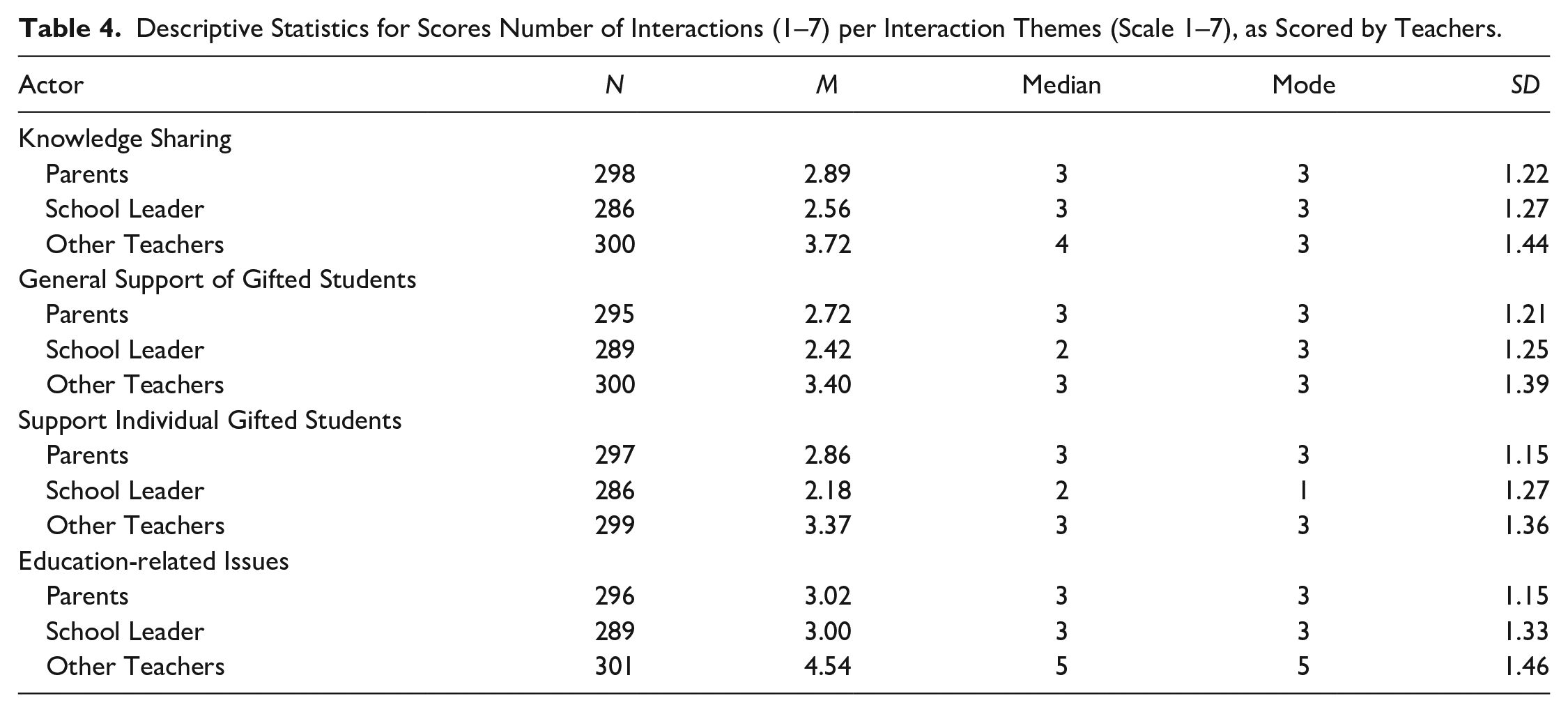
Related to RQ3, Table 4 shows the descriptive statistics used to summarize how often teachers interact with parents, school leaders, and other teachers concerning knowledge sharing on gifted education. Repeated-measures ANOVAs to investigate differences between actor groups (i.e., parents, school leaders, and other teachers) revealed that sphericity was assumed (Mauchly’s test; p = .389). The effect of the within-subjects factor Actor Group was significant, F(2, 564) = 96.65, p < .001. The effect size of this overall effect of Actor Group indicated a large effect, partial η2 = .255. Simple contrasts showed a significantly higher number of interactions concerning knowledge sharing on giftedness with other teachers (“multiple times a year” to “monthly”) than both parents (nearly “multiple times a year”; p < .001; partial η2 = .248) and school leaders (“yearly” to “multiple times a year”; p < .001; partial η2 = .378) by teachers, and a significantly higher number of interactions with parents than school leaders (p < .001; partial η2 = .051) by teachers.
Descriptive Statistics for Scores Number of Interactions (1–7) per Interaction Themes (Scale 1–7), as Scored by Teachers.
Interactions Concerning General Support for Gifted Students
Table 4 shows the descriptive statistics used to map how often teachers are interacting with parents, school leaders, and other teachers concerning general support for gifted students on a group level. Repeated-measures ANOVAs to investigate differences between actor groups (i.e., parents, school leaders, and other teachers) revealed that sphericity was assumed (Mauchly’s test; p = .271). The effect of the within-subjects factor Actor Group was significant, F(2, 568) = 82.66, p < .001. The effect size of this overall effect of Actor Group indicated a large effect, partial η2 = .225. Simple contrasts showed a significantly higher number of interactions concerning general support of gifted students with other teachers (“multiple times a year” to “monthly”) than both parents (nearly “multiple times a year”; p < .001; partial η2 = .206) and school leaders (“yearly” to “multiple times a year”; p < .001; partial η2 = .350) by teachers, and a significantly higher number of interactions with parents than school leaders (p < .001; partial η2 = .048) by teachers.
Support for Individual Gifted Students
Table 4 shows the descriptive statistics used to summarize how often teachers are interacting with parents, school leaders, and other teachers concerning support for gifted students on an individual level. Repeated-measures ANOVAs to investigate differences between actor groups (i.e., parents, school leaders, and other teachers) revealed that sphericity was assumed (Mauchly’s test; p = .796). The effect of the within-subjects factor Actor Group was significant, F(2, 562) = 114.11, p < .001. The effect size of this overall effect of Actor Group indicated a large effect, partial η2 = .289. Simple contrasts showed a significantly higher number of interactions concerning individual support of gifted students with other teachers (“multiple times a year” to “monthly”) than both parents (nearly “multiple times a year”; p < .001; partial η2 = .128) and school leaders (“yearly”; p < .001; partial η2 = .454) by teachers, and a significantly higher number of interactions with parents than school leaders (p < .001; partial η2 = .207).
Education-Related Issues
Table 4 shows the descriptive statistics used to map how often teachers interacted with parents, school leaders, and other teachers concerning education-related issues. Repeated-measures ANOVAs to investigate differences between actor groups (i.e., parents, school leaders, and other teachers) revealed that sphericity was assumed (Mauchly’s test; p = .244). The effect of the within-subjects factor Actor Group was significant, F(2, 568) = 211.58, p < .001. The effect size of this overall effect of Actor Group indicated a large effect, partial η2 = .427. Simple contrasts showed a significantly higher number of interactions concerning education-related issues with other teachers (“monthly to weekly”) than both parents (“multiple times a year”; p < .001; partial η2 = .509) and school leaders (“multiple times a year”; p < .001; partial η2 = .555) by teachers, and no difference in number of interactions with parents or school leaders (p = .873) concerning education-related issues.
Satisfaction With Interactions
Continuing with RQ3, Table 5 shows the descriptive statistics used to summarize how satisfied teachers are with their interactions with parents, school leaders, and other teachers concerning (gifted) education. These indicate a “neutral” to “satisfied” average score for all actor groups. Repeated-measures ANOVAs to investigate differences between actor groups (i.e., parents, school leaders, and other teachers) revealed that sphericity was assumed (Mauchly’s test; p = .508). The effect of the within-subjects factor Actor Group was not significant, F(2, 528) = 2.26, p = .105. This indicated that there were no differences between the levels of satisfaction with interaction with parents, school leaders, and other teachers by teachers concerning gifted education.
Descriptive Statistics for Scores on Satisfaction With Interactions Concerning Gifted Education (Scale 1–5), as Scored by Teachers.

Relationship Between Type of Interactions and Satisfaction With Interactions
Simple linear regression analyses revealed significant relationships between the number of interactions and corresponding satisfaction levels of teachers in gifted education, across all types of interactions and across all actor groups, hereby answering final part of RQ3. These relationships exhibited varying effect sizes, as presented in Table 6. This suggests that higher numbers of interactions with an actor corresponds to greater satisfaction with these interactions among teachers in gifted education.
Results of Simple Linear Regression Analyses: Relationship Between Number of Interactions per Topic in Gifted Education as Perceived by Teachers and Their Satisfaction With Interactions With Other Actors.
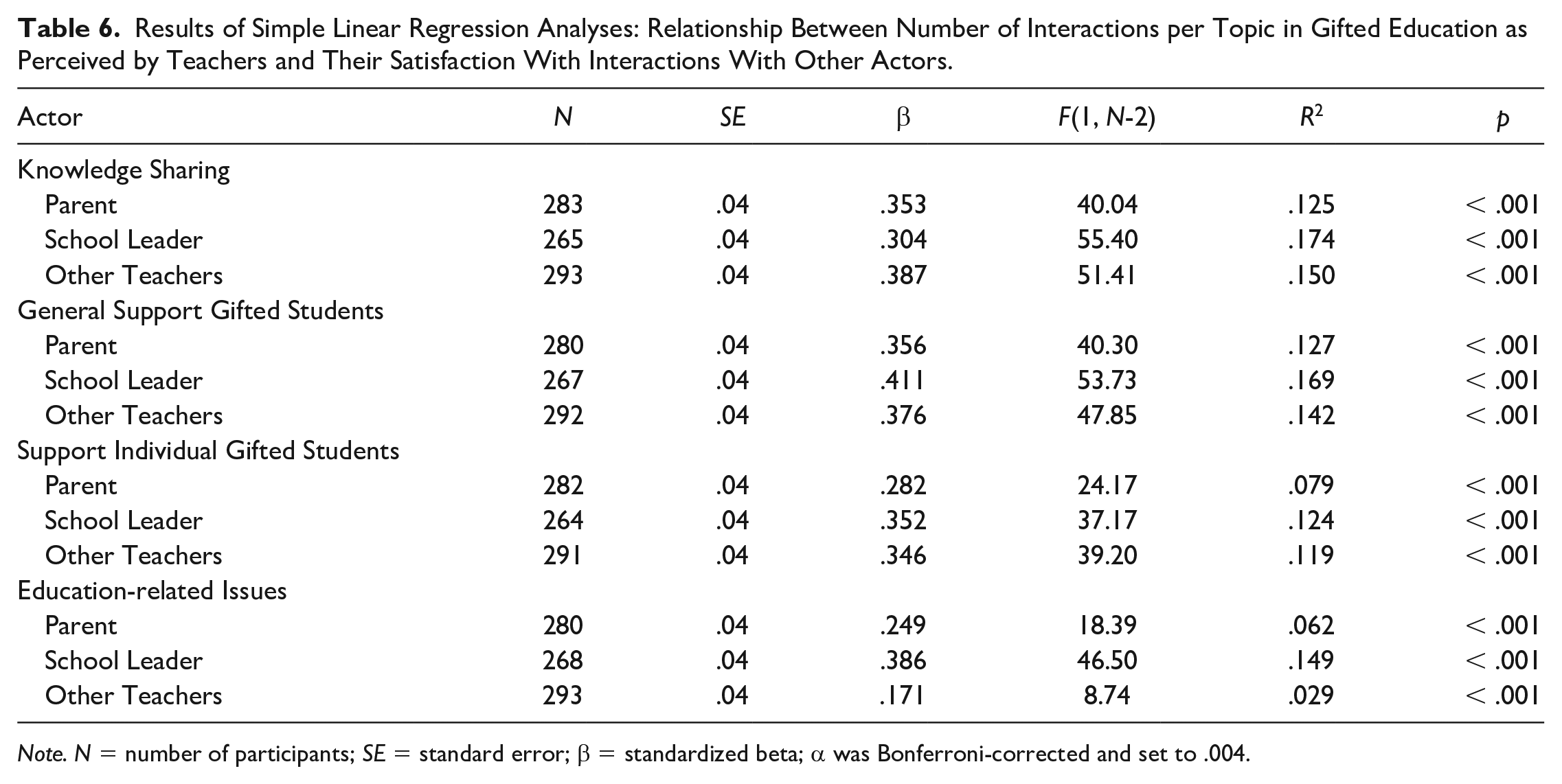
Note. N = number of participants; SE = standard error; β = standardized beta; α was Bonferroni-corrected and set to .004.
Facilitators of and Barriers to Interactions
Facilitators of Interactions
To address RQ4, interview participants were asked to identify factors that facilitate their interactions with different actor groups. This exploration yielded several key factors, which are outlined in Supplemental Table 3 along with descriptive statistics and example quotes for each theme. The following results emphasize the three most frequently mentioned facilitators.
The most frequently mentioned facilitator for interactions with parents was the theme of “Open Communication,” as expressed by one teacher (T05): “Transparency. We do—We say what we do and we do what we say.” This was followed by the theme of “Approachability,” exemplified by a teacher’s (T18) observation that: “And that can be about different things. Incidents, but also in positive ways. Just telling each other about how the day was on the schoolyard. So yes, good contact and regularly.” The top three facilitators for interactions with parents were rounded out by the theme of “Willingness,” illustrated by a teacher’s (T09) comment: “Easy in the sense that parents generally are open to it. Especially when they have a question themselves.”
Interactions with school leaders were perceived to be mostly facilitated by the theme of “Willingness,” as one teacher (T07) noted: “It’s positive because the school leader is open to it, interested, and eager to know . . .” This theme was followed by “Approachability,” with a teacher (T14) stating: “And that also means that if I ever want to discuss something, I’m pretty much welcome, and people are open to that.” The top three was concluded by the theme of “Facilitating,” where one teacher (T03) mentioned that: “ . . . fixed moments are also nice because you know when there’s an opportunity to ask questions.”
For the interactions with other teachers, “Willingness” was identified most as a perceived facilitator. A teacher (T17) said: “. . . I do feel a lot of willingness.” Following was the theme of “Open Communication,” as highlighted by one teacher (T04):
No, I actually appreciate the atmosphere we have among ourselves, that safe atmosphere where everyone can say, “Well, I planned to do it but it didn’t work out.” “Okay, why did that happen? What can we do to make it work next time?” Like that.
Finally, the theme of “Approachability” concluded the top three, as underscored by one teacher (T05) who mentioned: “Well, what’s nice is that there are short lines of communication. We can find each other quickly.”
Barriers to Interactions
Continuing with the assessment of RQ4, teachers were also asked to identify barriers to the interactions with the different actor groups. Several factors emerged, detailed in Supplemental Table 4 along with descriptive statistics and example quotes for each theme. The following results focus on the three most frequently mentioned barriers.
The most frequently mentioned perceived barrier to interactions with parents was the theme of “Emotions,” exemplified by one teacher (T07): “And when you notice that things are not going well, it’s often because parents are worried, and sometimes they express that in anger.” This was followed by the theme of “Difference Student Perception,” with a teacher (T02) mentioning: “That’s where a sort of, well, almost a yes-no situation arises: ‘My child needs this.’ ‘Well, we believe your child needs that.’ ‘But my child must . . . ’” “Difference School Perception” completed the top three most mentioned barriers to interactions with parents, as expressed by one teacher (T03) as: “Sometimes parents really want more, want different things than what we can or want to offer to such a child at school.”
Related to the interactions with school leaders, “Lack of Policy” was mentioned most frequently as perceived barrier, as highlighted by a teacher (T02): “Ideally, I would like there to be a bit more policy in place—I know it sounds very uniform straight away, but it would help.” The following theme was “Lack of Open Communication,” as expressed by a teacher (T12): “Openness was sometimes challenging for me because I didn’t always feel supported.” The theme concluding the top three was “Time-Work Pressure,” with one teacher (T06) mentioning: “. . . our school leader has a lot on her plate in terms of tasks and responsibilities, so sometimes she’s just busy and preoccupied.”
The most frequently mentioned perceived barrier to interactions with other teachers was “Lack of Knowledge (Sharing),” as one teacher (T19) said: “So yeah, less constructive, those are the teachers or colleagues who are still unfamiliar with the subject and [who] actually reason only based on stereotypes.” This was followed by the theme of “Time-Work Pressure,” highlighted by a teacher (T04) by stating: “So, time, you know. When they experience time, you experience time, and there’s peace and attention, then things always go better. Conversely, of course, less well. And yes, that’s actually also work pressure, you know. It’s related to that.” The theme concluding the top three was “Lack of Willingness” one teacher (T08) stated: “If I see that you have the willingness to invest energy in it, then that’s enough. And if that’s not the case for whatever reason, it could be anything, then the contact is less.”
Relationship Between Satisfaction With Involvement and Satisfaction With Interactions
Simple linear regression analyses revealed significant relationships between satisfaction levels with perceived involvement and satisfaction levels with interactions of teachers in gifted education, across all actor groups, thereby answering RQ5. These relationships exhibited a large effect size, as presented in Table 7. This suggests that a greater satisfaction with the perceived involvement of an actor corresponds to greater satisfaction with their interactions with these actors among teachers in gifted education.
Results of Simple Linear Regression Analyses: Relationship Between Satisfaction With Involvement in Gifted Education as Perceived by Teachers and Their Satisfaction With Interactions With Other Actors.
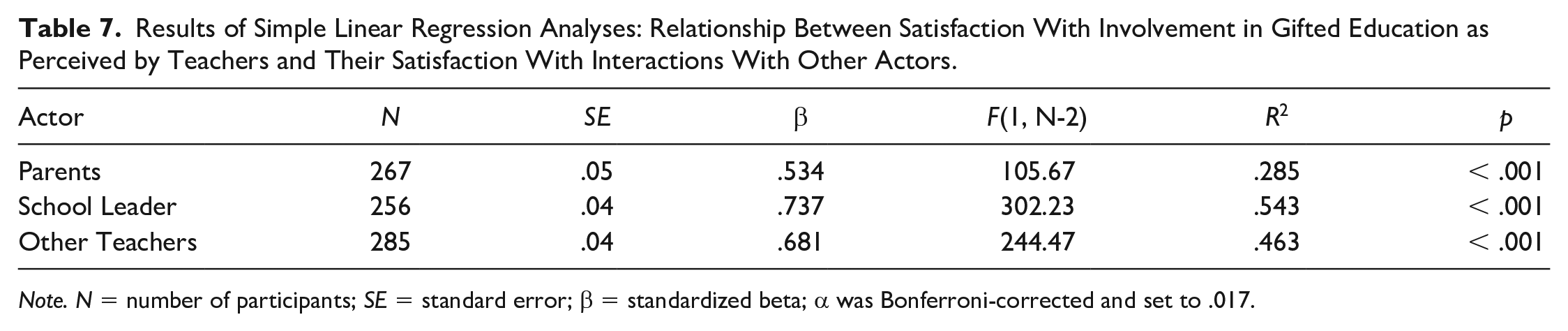
Note. N = number of participants; SE = standard error; β = standardized beta; α was Bonferroni-corrected and set to .017.
Perceived Relationship Between Satisfaction With Involvement and Interaction
To address RQ6, the final research question, interviewed teachers were asked about their perceived relationship between their satisfaction with a certain actor’s involvement, and their interactions with them. This resulted in several perceived relationships, which are detailed in Supplemental Table 5 along with descriptive statistics and example quotes for each relationship. The following results focus on the three most frequently mentioned relationships.
The theme “Not Applicable” emerged most frequently when asked about the relationship between satisfaction with the involvement of parents and the interactions a teacher had with them. One teacher (T14) mentioned: “It’s nice to be content, but yeah, my frequency is fairly consistent.” This was followed by “More Satisfied—More Contact,” as one teacher (T20) mentioned: “I think that when you notice that the contact is going well, you automatically communicate more easily, maybe sending an email sooner.” The top three most frequently mentioned relationships was concluded by “Less Satisfied—Less Contact,” highlighted by a quote from one teacher (T03) who stated:
If you then notice that it’s not really being done, or if you send a message like “Hey, he found this and this very difficult, do you recognize that at home?,” and there’s just no response, or just a “Yes” or “No,” then unfortunately, you do it less.
When asked about the relationship between the satisfaction with the involvement of school leaders, and the interactions teachers had with school leaders, the most frequently mentioned relationship was labeled as “More Satisfied—More Contact,” as one teacher (T01) exemplified: “ . . . they are really very involved, and yes, I talk to them a lot.” This was followed by “More Satisfied—Better Contact,” highlighted by one teacher (T12) as: “Yes, for sure, and then the conversations also become more constructive because I share more easily and more.” The top three mentioned relationship was concluded by “Less Satisfied—Less Contact,” with a teacher (T06) mentioning: “So, it’s not necessarily that we don’t want to reach or speak with her, but she also simply lacks the substantive knowledge that we need at that moment. So, we have other channels to reach out, so to speak.”
Related to the relationship between the satisfaction with the involvement of other teachers, and the interaction teachers had with them, the most frequently mentioned relationship was “More Satisfied—More Contact,” as one teacher (T15) stated that: “ . . . it’s always more enjoyable to brainstorm with people who are also willing to hear your opinion.” This was followed by “Less Satisfied—Less Contact,” with a teacher (T01) who said that: “And colleagues who resist [department name], well, I’m not going there in my free time.” The relationship concluding the top three was “Not Applicable,” as one teacher (T20) said that they were in touch: “. . . as much contact as necessary whether things are going well or not.”
Discussion
Teachers’ perceived involvement of and interactions with parents, school leaders, and other teachers in the field of education for gifted students were explored using a mixed-methods approach. By surveying 302 teachers and interviewing 20 teachers from primary and secondary schools, insight into teachers’ perceptions of involvement and interaction dynamics within the context of education for gifted students were sought.
Involvement Concerning Education for Gifted Students
From the current study, it can be concluded that teachers perceived parents and school leaders to exhibit neutral to involved average levels of involvement, with parents being significantly more involved than school leaders (RQ1). Other teachers were viewed as significantly more involved than both parents and school leaders. Despite the variations in perceived involvement, it can be concluded that there were no differences in teachers’ satisfaction levels with the involvement of the different actor groups (i.e., parents, school leaders, other teachers): Teachers reported feeling neutral to satisfied with the level of involvement they experienced from parents, school leaders, and other teachers in gifted education. Furthermore, perceived involvement and satisfaction with this involvement were positively related for all actor groups (RQ1). This suggests that while school leaders may appear less involved in gifted education compared to parents and other teachers, this does not significantly affect teachers’ satisfaction of this involvement.
Moreover, teachers’ perceived facilitators and barriers concerning the involvement of the various actor groups were explored (RQ2). No overlaps were observed between the facilitators and barriers for parental involvement, suggesting a clear distinction between these aspects. An overlap was in the context of school leaders’ involvement. The presence of facilitating behavior by school leaders was frequently mentioned as facilitator, followed by willingness and the presence of policy. However, teachers more frequently mentioned the lack of policy and facilitation as a barrier rather than their presence as a facilitator. This could indicate that policy and facilitation from school leaders in gifted education is still lacking in schools. However, it could also indicate that policy and facilitation are present, but not effectively perceived by teachers, highlighting the need for clearer guidance in translating policies into classroom practices, for instance by providing more teacher support (Mills et al., 2014).
For other teachers, a willingness to contribute to and/or communicate about gifted education was observed as a facilitator by participating teachers, while its absence, though less frequently mentioned, was perceived as a barrier. Similarly, the presence or absence of knowledge (sharing) emerged as an important factor, with its absence being more frequently mentioned as a barrier than its presence as a facilitator. Previous research by Mofield (2020) underscored the positive impact of collaboration between teachers in gifted education and general education teachers on enhancements in teachers’ competencies regarding differentiation, emphasizing the importance of knowledge (sharing). Mofield (2020) also highlighted the challenges of reconciling conflicting assumptions about giftedness between these teachers, underscoring the importance of both knowledge (sharing) and willingness. Across all actor groups, willingness emerged as a recurring facilitator of involvement. This willingness may be shaped by individuals’ perceptions of giftedness. Notably, the perceptions of parents (e.g., Ruf, 2021), school leaders (e.g., Nordström, 2022), and teachers (e.g., Matheis et al., 2017; Polyzopoulou et al., 2014) significantly affect the education provided to gifted students. These perceptions could potentially affect participants’ willingness to be involved with this education.
Interactions Concerning Education for Gifted Students
Furthermore, teachers’ interactions with parents, school leaders, and other teachers in the context of gifted education were investigated (RQ3). Questionnaire data revealed that teachers interacted more frequently with other teachers than with parents and school leaders across all queried topics (i.e., knowledge sharing, general support for gifted children, support for individual gifted children, and education-related issues) in this context. Teachers interacted more with parents than with school leaders across nearly all topics, except for education-related issues. Despite the variations in perceived number of interactions, it can be concluded that teachers’ satisfaction levels with the interactions with different actor groups were similar. Teachers indicated that they felt neutral to satisfied with their interactions with parents, school leaders, and other teachers concerning gifted education. This suggests that, in the context of gifted education, it might be acceptable for teachers to interact less with school leaders. Furthermore, significant positive relationships were found between the number of interactions on any queried topic and the corresponding satisfaction levels, across all actor groups (RQ3). This implies that an increased number of interactions with any actor corresponded to higher levels of satisfaction among teachers. One possible explanation for this relationship could be that increased interactions lead to better understanding, collaboration, and support among parents, school leaders, and teachers, thereby potentially enhancing overall satisfaction.
In addition, teachers’ perceived facilitators and barriers concerning interactions with the various actor groups were examined (RQ4). An overlap was observed between the willingness of a teacher to contribute to and/or communicate about gifted education as a facilitator and the lack thereof as a barrier. Across all actor groups, willingness was mentioned as a facilitator. Open communication was identified as a facilitator for interactions with parents and other teachers and the lack thereof was mentioned as a barrier in interactions with school leaders. Time-work pressure was cited as a barrier for interactions with both school leaders and other teachers. This finding aligns with Meyer et al. (2022), who emphasized the pivotal role of school leaders in providing teachers with the necessary time and resources to enact organizational changes. It underscores the relevance of addressing time constraints to facilitate effective collaboration among educators. This finding also aligns with Mofield’s (2020) research, in which it was stated that collaboration between teachers in gifted education and general education were hindered by time constraints.
Relationship Between Involvement and Interaction Concerning Education for Gifted Students
Based on the questionnaire data, it can be concluded that teachers’ satisfaction with the involvement of any actor (which was neutral to satisfied for each of the actor groups) was positively related with their satisfaction with the interactions (RQ5). This finding was further supported by interview data (RQ6), which highlighted the importance of positive and constructive direct contact. Conversely, less satisfaction with involvement was associated with less contact.
Notably, there were overlaps between the facilitators and barriers concerning involvement and interactions. For parents, approachability and willingness were identified as facilitators for both aspects. Epstein and Sanders (2006) emphasized the importance of effective communication skills for teachers to establish connections with parents, thereby facilitating parental involvement. Thus, maintaining or enhancing approachability and willingness to contribute to and/or communicate about gifted education may prove effective in fostering collaborations. For school leaders, willingness to contribute to and/or communicate about gifted education and being facilitating were experienced as facilitators for both involvement and interactions, whereas the lack of policy was indicated as a barrier to both involvement and interactions. In the case of other teachers, knowledge (sharing) and willingness emerged as facilitators of both involvement and interactions, and the lack of knowledge (sharing) and willingness was cited as barriers to both involvement and interactions. Previous research (e.g., Corwith et al., 2019; VanTassel-Baska & Johnsen, 2007) underscored the critical role of collaboration among teachers, school leaders, and parents in effecting change in gifted education. Parents (e.g., Denessen et al., 2009; Uludag, 2008), school leaders (e.g., Goddard et al., 2015; Meyer et al., 2022), and teachers (e.g., Meyer et al., 2023; Vangrieken et al., 2015) all have the potential to contribute to educational improvements, ultimately benefiting students.
Limitations and Future Research
Several limitations and recommendations for future research can be mentioned. First, only teachers’ perspective on certain actors’ involvement and their interactions with them were explored, offering a limited view. Future research should consider exploring other perspectives, such as those of school leaders and parents, to gain a more comprehensive understanding. Comparing these diverse perspectives could provide a more holistic overview, allowing researchers to discern commonalities and discrepancies across different actors’ perspectives. This overview, as part of a systemic approach (Ziegler & Stoeger, 2017), provides the opportunity to identify factors that are universally important, as well as those that may vary, thereby enriching the understanding of these dynamics. In addition, considering students’ perspectives and experiences could provide valuable insights. Even from an age as young as 5 years old, students are very capable of expressing what they need or prefer from teachers, whether these students are gifted or not (Bakx et al., 2019). Focusing on specific cases, such as individual students and their parents, teachers, and school leaders, could facilitate a deeper understanding. This would also enable the possibility to conduct social network analysis, combining quantitative and qualitative research methods to examine both objective and subjective relationships (Yousefi Nooraie et al., 2020), thereby offering further insights into the dynamics underlying involvement of and interactions with actors.
Second, the focus was on primary and secondary Dutch education for gifted students, with a majority of participants being primary school teachers. Although the sample comprised only a small part of the Dutch teacher population, it was generally representative according to national averages. Future research should aim for a more balanced distribution of participants across educational settings, possibly including early childhood education and higher educational settings as well. Comparing the perspectives of participants working in gifted education settings to those working in general education settings, could provide a more comprehensive view of teachers’ perspectives of the involvement of and interactions with parents, school leaders, and other teachers. Exploring other countries and cultures could also offer valuable insights, promoting cross-cultural research exchanges and contributing to a deeper understanding of gifted education (VanTassel-Baska, 2013). In the Netherlands, schools have considerable responsibility for and autonomy in shaping their policies, which may have influenced the outcomes of the current study. Investigating the responsibility and autonomy of schools in other cultural contexts could provide insights into universal mechanisms and conditions underlying successful gifted education.
Third, self-selection bias may have affected the results of both the online questionnaire and the interview study. Online questionnaires provide access to a large group of respondents but may result in biased estimates as participants self-select to participate (Bethlehem, 2010). The additional recruitment efforts may have led to increased participant selection bias. It is likely that participants of this study are predominantly teachers with an interest in the subject. In addition, no data were collected on the specific training and professional development that the participating teachers received regarding gifted education. Variations in training could potentially affect their perceptions and practices, thereby affecting the study’s results.
Implications for Theory and Educational Practice
Despite its limitations, important implications for both theory and educational practice emerge from the findings of the current study. Bronfenbrenner’s (1994) ecological systems theory and systemic models of giftedness (e.g., Gagné, 2005; Ziegler, 2005) have underscored the fundamental role of external actors in shaping the development of (gifted) students (Ziegler & Phillipson, 2012). The current study contributes to these theoretical models by providing empirical evidence of the importance of the involvement of and interactions between key actors in students’ environment (parents, teachers, and school leaders), from teachers’ perspective. These findings align with the theoretical models that emphasize the interaction of environmental systems surrounding (gifted) students as critical to their development (Bronfenbrenner, 1994; Gagné, 2005; Ziegler & Stoeger, 2017). Specifically, the current study highlights how teachers perceive the role of involvement and interactions in gifted education, which is a significant addition to understanding the actual application of these models. By illuminating the facilitators and barriers to these dynamics, the findings offer a practical perspective that supports and extends these theoretical frameworks.
Based on the findings of the current study, parents are encouraged to maintain an approachable and open attitude toward educational ideas and to remain willing to actively participate in and interact about their gifted child’s education. Teachers identified these factors as facilitators for meaningful involvement and interactions, aligning with Epstein and Sanders (2006), who emphasized the importance of effective communication skills for teachers to establish connections with parents. School leaders are advized to support teachers in developing and maintaining gifted education programs. This can be achieved by providing clear policies and guidance (Mills et al., 2014), and by facilitating an environment where teachers can share their knowledge and experiences. In addition, school leaders should ensure that there is space and time for teacher-parent interactions, as highlighted by Meyer et al. (2022), who noted the pivotal role of school leaders in providing teachers with necessary resources to enact organizational changes. Teachers are advized to sustain their willingness to be involved in and/or to communicate about gifted and giftedness education. Teachers are encouraged to continually update their knowledge on gifted education and giftedness, and to actively exchange this knowledge and their experiences among colleagues, as the collaboration between gifted and general education teachers has shown to be positively impactful (Mofield, 2020).
In concluding, teachers generally expressed satisfaction with the involvement of and interactions with parents, school leaders, and other teachers. Increased involvement and interactions were associated with higher satisfaction levels, underscoring the importance of ongoing engagement and regular communications among these actors. The current study sheds more light on one of the principles of a systemic approach to gifted education and it underscores the importance of enhancing and sustaining effective involvement of and interactions with parents, school leaders, and other teachers in gifted education in the future.
Supplemental Material
sj-docx-1-gcq-10.1177_00169862251351940 – Supplemental material for Teachers in Gifted Education: Their Perception of Involvement of and Interacting With Parents, School Leaders, and Other Teachers
Supplemental material, sj-docx-1-gcq-10.1177_00169862251351940 for Teachers in Gifted Education: Their Perception of Involvement of and Interacting With Parents, School Leaders, and Other Teachers by Jessica Vergeer, Marjolijn van Weerdenburg, Trudie Schils and Anouke Bakx in Gifted Child Quarterly
Footnotes
Ethical Considerations
Ethical approval for this study was obtained from the Ethics Committee Social Science (ECSS) at Radboud University Behavioural Science Institute (approval no. ECSW-2021-129) on December 16, 2021.
Funding
The authors disclosed receipt of the following financial support for the research, authorship, and/or publication of this article: This research project was supported by The Netherlands Initiative for Education Research (NRO) (grant number 40.5.20441.007, 2020).
Conflicting Interests
The authors declared no potential conflicts of interest with respect to the research, authorship, and/or publication of this article.
Open Science Disclosure Statement
The data analyzed in this study are not available for purposes of reproducing the results. The code or protocol used to generate the findings reported in the article are not available for purposes of reproducing the results or replicating the study. The newly created, unique materials used to conduct the research (i.e., the questionnaires and interview protocols) are available at  for purposes of reproducing the results or replicating the procedure. The study preregistration is available on the OSF repository at https://osf.io/yst5e/?view_only=09a2b6540a794c71b2f6face6151c9a3.
Artificial Intelligence Use
The authors confirm that no generative AI tools were used in the development of this article.
Author Biographies
References
Supplementary Material
Please find the following supplemental material available below.
For Open Access articles published under a Creative Commons License, all supplemental material carries the same license as the article it is associated with.
For non-Open Access articles published, all supplemental material carries a non-exclusive license, and permission requests for re-use of supplemental material or any part of supplemental material shall be sent directly to the copyright owner as specified in the copyright notice associated with the article.
