




Abstract
There is evidence that many gifted students set unrealistically high personal standards and that such perfectionistic tendencies may lead to higher stress. To build on this evidence, we examined whether performance perfectionism and school stress influence school burnout and school engagement in gifted students. A sample of 342 gifted students (Mage = 16.27, SD = 0.49) completed the study measures. Using structural equation modeling, we found that dimensions of performance perfectionism indirectly predicted school burnout and engagement via school stress. When gifted students reported that they expected themselves to perform perfectly at school, or that others expected them to perform perfectly at school, they reported more school stress. In turn, higher levels of school stress were related to increased school burnout and decreased school engagement. The management of performance perfectionism and school stress is therefore important when it comes to supporting and safeguarding gifted students.
Introduction
Some students display exceptional ability to reason and learn and attain extremely high levels of performance in their schoolwork. These students are labeled in various ways such as “gifted,” “talented,” and “more able” (Loft & Danechi, 2020). Here, we adopt the term “gifted” and refer to students: (a) whose potential for progress and attainment significantly exceed age-related expectations; (b) have the potential to discover and develop their talents when provided with the right opportunities; (c) require opportunities for enrichment and extension that go beyond those provided in the standard national curriculum; and (d) are gifted in one or more subject area across the curriculum (Pfeiffer, 2015; Subotnik et al., 2011). While intellectual ability plays a key role in the development of gifted students, factors such as motivation, self-confidence, and coping skills are important to consider (Rinn, 2024). One additional factor relevant to the development, achievement, and overall school experience of gifted students is perfectionism (Grugan et al., 2021; Hill & Madigan, 2022; Rice & Ray, 2018). In the present study, our aim is to better understand the role that perfectionism in gifted students plays in influencing school stress and two contrasting educational experiences—school burnout and school engagement.
Perfectionism and Gifted Students
Hewitt and Flett (1991) define perfectionism as a complex multidimensional personality trait characterized by irrational and extreme requirements for perfection. To capture the extent to which gifted students are perfectionistic toward their schoolwork, we adopt an extension to Hewitt and Flett’s (1991) multidimensional model that focuses specifically on performance (Hill et al., 2016). This model includes three distinct dimensions. Self-oriented performance perfectionism refers to internally motivated beliefs that achieving perfect performance is essential. Socially prescribed performance perfectionism refers to externally motivated beliefs that achieving perfect performance is essential to be valued by others. Finally, other-oriented performance perfectionism refers to internally motivated beliefs that it is essential for others to achieve perfect performance. In context of the school environment, the perfectionistic beliefs captured in this model relate to general academic performance and school grades (e.g., “I put pressure on myself to perfect my schoolwork and achieve perfect grades.”). This specificity is important given that researchers have identified that schoolwork and performance are central to the beliefs and behaviors of highly perfectionistic gifted students (Speirs Neumeister, 2004; Speirs Neumeister et al., 2007).
There are two major reasons why the study of perfectionism has the potential to offer insight into the experiences of gifted students. The first reason is the notion that many gifted students are highly perfectionistic and often place unrealistically high personal standards on themselves and their schoolwork (Margot & Rinn, 2016). Of note, in this regard, is Stricker et al.’s (2020) meta-analytical review of 10 studies (N = 4,340) of perfectionism in gifted students. Stricker and colleagues found evidence of higher levels of self-oriented perfectionism (and other similar perfectionism dimensions such as personal standards) in gifted versus typically developing students. Interestingly, Stricker and colleagues found no differences in socially prescribed perfectionism (and other similar perfectionism dimensions such as concern over mistakes) in gifted versus typically developing students. This pattern of results closely resembles the meta-analytical findings of Ogurlu (2020) who also examined perfectionism levels across these groups. When this evidence is considered, it is the tendency to strive for unrealistically high standards that appears to be a common feature among many gifted students.
The second reason is that perfectionism is influential in relation to the motivation, performance, and well-being of gifted students (Neihart & See Yeo, 2018). This influence is evident from a recent systematic review by Grugan et al. (2021) of 36 studies (N = 10,737) examining perfectionism in gifted students. The review found that dimensions of perfectionism, such as self-oriented perfectionism, displayed a mixed pattern of relationships. This included not only positive relationships with academic achievement and performance approach goals, for instance, but also negative relationships with happiness and creativity. By contrast, dimensions of perfectionism such as socially prescribed perfectionism were found to be problematic. This was evident in a positive relationship with depressive symptoms and a negative relationship with self-esteem. The evidence from this review shows the varied ways perfectionism dimensions might influence the school experience of gifted students.
Perfectionism and School Stress in Gifted Students
One outcome that is highly relevant to perfectionism and experienced by many gifted students is school stress (Henderson, 2011). In a longitudinal study tracking the stressors of gifted students over an 11-year period, Peterson et al. (2009) found that school-related stress was the most frequently reported type of stress. The stressors in this category included worries over college admission, academic competition with peers, and difficult classes (e.g., accelerated learning classes). In addition to these worries, some gifted students also report concerns relating to self-doubt, concerns over being different, and a preoccupation with proving their giftedness (Henderson, 2011). While it is not clear if gifted students are more (or less) vulnerable to stress than typically developing student groups, they do get stressed and there is potential for stress to have destructive effects on their school experience (Haberlin, 2015).
One factor that might help to explain why some gifted students experience higher levels of stress than others is perfectionism. According to Hewitt and Flett (2002), perfectionism can lead to higher stress via several mechanisms. Applied to a school context, highly perfectionistic students will generate stress via their unrealistic expectations (“I expect to get the highest marks in the class all of the time and for every subject.”). This level of expectation inevitably creates a discrepancy between the ideal self and the actual self, ultimately fuelling a profound sense of failure (Hewitt et al., 2022). Highly perfectionistic students will also anticipate stress before any failure has even occurred (“If I fail this exam, I won’t get into any university.”) and perpetuate stress through rumination (“No matter how hard I revise, I never achieve the marks that I want.”). This means that stress is generated in advance of any potentially stressful event and prolonged even after the event has passed. The final stress mechanism focuses on how the underlying meaning and appraisals that perfectionism instills in failure enhances stress (“If I don’t make the grade, I am worthless.”). That is, in attaching the attainment of perfection to self-worth and belonging, highly perfectionistic students will have a greater sensitivity and reactivity to perceived failure (Hewitt et al., 2022).
In support of Hewitt and Flett’s (2002) stress generation mechanisms, Einstein et al. (2000) found that self-oriented perfectionism and socially prescribed perfectionism were positively correlated with school stress among students in general. In a study of gifted students, Hill and Madigan (2022) also found evidence for the stress-generating potential of specific perfectionism dimensions. Hill and Madigan found that both striving for perfection (a dimension of perfectionism characterized by perfectionistic personal standards and self-oriented striving for perfection) and negative reactions to imperfection (a dimension of perfectionism characterized by negative affect in situations involving imperfection) were related to school stress. However, after controlling for the overlap between the two perfectionism dimensions, it was negative reactions to imperfection that uniquely predicted school stress. This dimension of perfectionism is interesting in that it captures a style of responding to failure relevant across different dimensions of perfectionism—including self-oriented performance perfectionism and socially prescribed performance perfectionism (Hill et al., 2024). We might therefore expect similar relationships when examining these dimensions of performance perfectionism.
Beyond Stress: School Burnout and School Engagement in Gifted Students
To move beyond Hill and Madigan’s (2022) study, it is important to consider outcomes that may be associated with perfectionism and stress in gifted students. One outcome that has been studied extensively in research on perfectionism and stress in other settings is burnout (Hill & Curran, 2016). Burnout is evident in people who come to experience a previously enjoyable activity as an aversive source of stress. In this regard, burnout has been described in some contexts as motivation gone awry (Gould, 1996). In the school context (Salmela-Aro et al., 2009), burnout is characterized by exhaustion (school-related feelings of chronic strain and fatigue resulting from overtaxing schoolwork), personal inadequacy (diminished feelings of competence and a lack of personal accomplishment in one’s schoolwork), and cynicism (an indifferent attitude toward schoolwork and its associated meaningfulness).
Researchers have found that perfectionism is related to burnout. However, there are very few studies of perfectionism and school burnout. In Hill and Curran’s (2016) meta-analysis of perfectionism and burnout, only two of 43 studies examined the relationship in education, both of which were in university students. Indicative of wider findings, these studies found that self-oriented perfectionism (and high personal standards) were negatively related or unrelated to school burnout, whereas socially prescribed perfectionism (and concerns over mistakes) were positively related to school burnout (Shih, 2012; Y. Zhang et al., 2007). However, to date, no study has examined the perfectionism-burnout relationship in gifted students. This is surprising given that perfectionism has long been identified as a potential antecedent of burnout among gifted students (e.g., Kaplan & Geoffroy, 1993). In addition, with more attention being given to the phenomenon of gifted kid burnout (e.g., Small, 2022), it is important to identify which dimensions of perfectionism may be risk factors for burnout among gifted students.
In addition to studying school burnout, it is important to study the conceptual opposite of school burnout—school engagement. School engagement captures an altogether more positive experience of school—one characterized as both positive and fulfilling. Based on Schaufeli’s conceptualization (Schaufeli & Bakker, 2004; Schaufeli et al., 2002), school engagement is defined as a state of mind characterized by vigor (a sense of energy and mental resilience while studying and a willingness to invest effort in one’s schoolwork), dedication (a sense of significance, enthusiasm, inspiration, pride, and challenge in one’s schoolwork), and absorption (a sense of being fully concentrated and happily engrossed in one’s schoolwork; Schaufeli & Bakker, 2004). There is evidence in school and other contexts that stress is inversely related to school engagement (e.g., Serrano et al., 2019). In this regard, stress may undermine the perseverance, determination, will power, and positive energy that we often associate with gifted students (Renzulli, 2012).
There is also evidence that perfectionism has relevance to school engagement (e.g., Damian et al., 2017; Kljajic et al., 2017; Shih, 2012). The evidence shows that self-oriented perfectionism and other similar dimensions are consistently positively related to school engagement, whereas socially prescribed perfectionism and other similar dimensions are typically unrelated to school engagement. This evidence suggests that self-oriented perfectionism may have the potential to energize school engagement, whereas socially prescribed perfectionism has little to no impact on the engagement experiences of students. As with burnout, though, researchers have not yet examined this potential in gifted students. By examining school engagement, we can investigate whether dimensions of perfectionism that are risk factors for more negative experiences in school (i.e., burnout) also undermine the potential for more positive experiences in school (i.e., engagement).
The Present Study
For the first time in a study of gifted students, we examined whether dimensions of performance perfectionism predict school burnout and engagement via school stress. Our first hypotheses were that self-oriented performance perfectionism would positively predict school stress and engagement but negatively predict (or fail to predict) school burnout. By contrast, socially prescribed performance perfectionism would positively predict school stress and burnout but negatively predict (or fail to predict) school engagement. We did not make any specific hypotheses regarding other-oriented performance perfectionism as this dimension has previously been ignored in research on stress, burnout, and engagement.
Method
Participants
A sample of 342 gifted students (117 males, 196 females, 29 gender not reported; Mage = 16.27, SD = 0.49, age range = 14–18) were recruited from a national conference for gifted students hosted in Wales. On average, students had achieved 12.54 General Certificate of Secondary Education (GCSE) qualifications (SD = 1.44). Out of the GCSE qualifications attained, students reported an average of 5.68 (SD = 3.18) top A* grades (now superseded by a numerical “grade 9”). For context, in 2023, the average number of GCSE qualifications taken by students in England was 7.81 and only 0.1% took more than 12 GCSE qualifications (Ofqual, 2023). In terms of achievement, an A* (or “grade 9”) is awarded to students who have performed exceptionally well—usually in the top 5% (Christian, 2022). Thus, the current sample of students are some of the highest performing students in Wales and the United Kingdom more broadly. 1
Procedure
Following institutional ethical approval, we recruited participants to complete our study questionnaire. The participants were recruited at a national conference for gifted students and those involved in their educational experience (e.g., teachers and academic support staff). Paper-and-pencil questionnaires were distributed to students between sessions. Our aim was to recruit the largest possible sample within the constraints of the conference event and achieve a total sample size that satisfies (or at least closely approximates) minimum participant-to-parameter ratio guidelines for structural equation modeling (SEM) analysis (5:1; Bentler & Chou, 1987). Based on our hypothesized models (see Figure 1), the final total sample size (N = 342) was considered acceptable for the planned analyses (6.84 participants for each distinct parameter to be estimated per model). All participants who volunteered to take part provided informed consent.
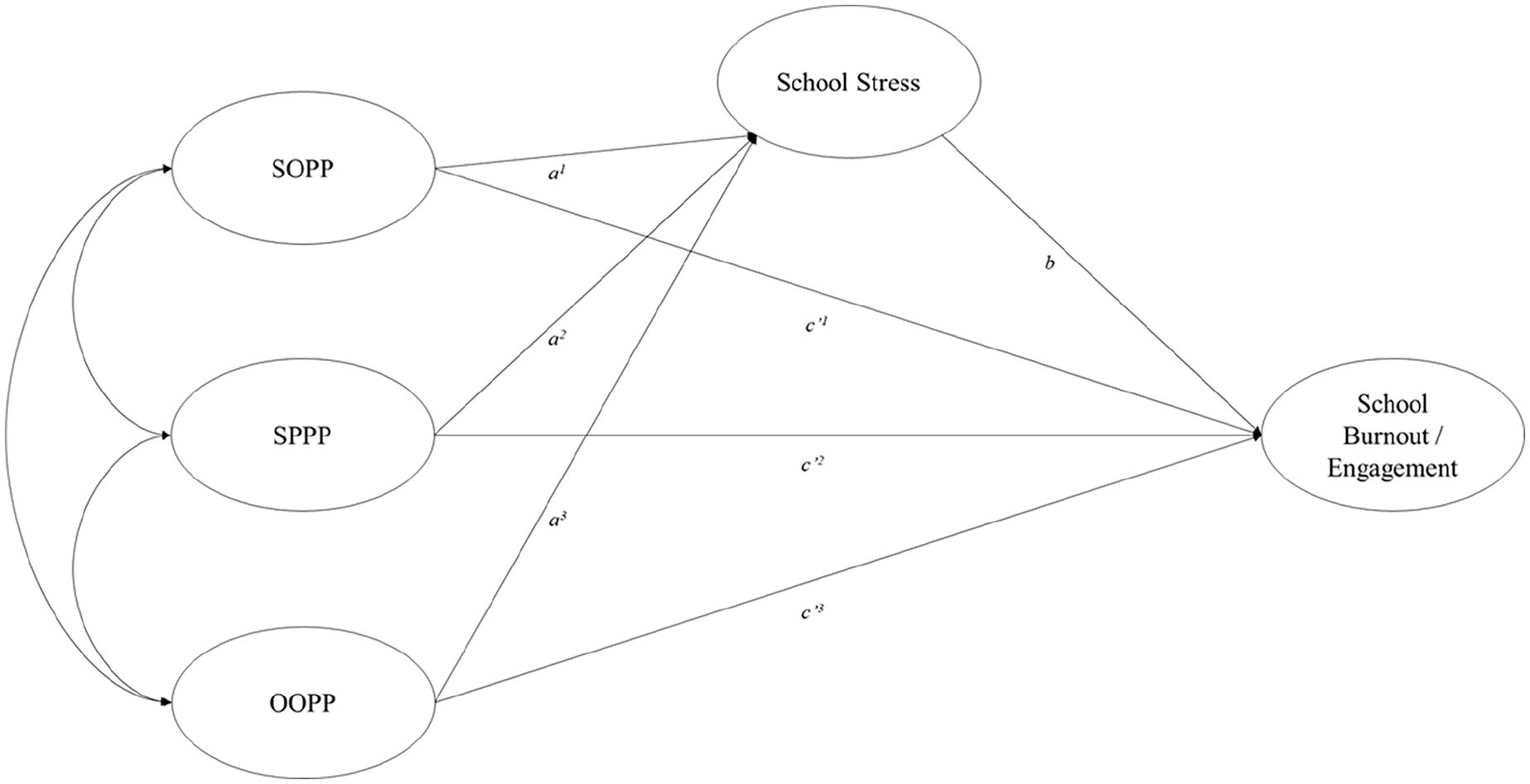
Model 1 (M1) and Model 2 (M2): The Relationships Between Performance Perfectionism, School Stress, and School Burnout (M1)/School Engagement (M2).
Measures
School Performance Perfectionism
The Performance Perfectionism Scale (PPS; Hill et al., 2016) was used to assess performance perfectionism. This 12-item scale assesses self-oriented performance perfectionism (four items, e.g., “I put pressure on myself to perform perfectly”), socially prescribed performance perfectionism (four items, e.g., “People view even my best performances negatively”), and other-oriented performance perfectionism (four items, e.g., “I am never satisfied with the performances of others”). We revised the instructions by asking participants to think about their attitudes toward school performance (as opposed to sport performance). When responding to items referring to others (e.g., “People always expect my performances to be perfect”), participants were instructed to think about those involved in their studies whose opinion they value highly (e.g., teachers, parents, and peers). The participants were asked to rate how much they agree or disagree with each statement using a 7-point Likert-type scale (1 = strongly disagree to 7 = strongly agree). There is evidence to support the validity and reliability of the PPS (e.g., Cronbach’s alpha ≥ .70; Hill et al., 2016).
School Stress
The short version of the Perceived Stress Scale (PSS-10; Cohen et al., 1983) was used to assess levels of school stress. The scale includes 10 items that capture the degree to which life has been unpredictable, uncontrollable, and overloaded during the previous month (e.g., “In the last month, how often have you felt difficulties were piling up so high that you could not overcome them?”). Participants were instructed to think about their experiences in school and rate how often they experienced the feelings identified in each statement using a 5-point Likert-type scale (0 = never to 4 = very often). There is evidence to support the validity and reliability of the PSS-10 (e.g., Cronbach’s alpha ≥ .74; Lee, 2012).
School Burnout
The School Burnout Inventory (SBI; Salmela-Aro et al., 2009) was used to assess school burnout. This nine-item scale assesses exhaustion (four items, e.g., “I feel overwhelmed by my schoolwork”), cynicism (three items, e.g., “I feel a lack motivation in schoolwork and often think of giving up”), and inadequacy (two items, e.g., “I often have feelings of inadequacy in my schoolwork”). Participants were instructed to think about the last month and rate how much they agree or disagree with each statement using a 6-point Likert-type scale (1 = completely disagree to 6 = completely agree). There is evidence to support the validity and reliability of the SBI (e.g., Cronbach’s alpha ≥ .78; Salmela-Aro & Upadyaya, 2020).
School Engagement
The short Utrecht Work Engagement Scale—Student Version (UWES-S; Schaufeli & Bakker, 2004) was used to assess school engagement. This nine-item scale assesses vigor (three items, e.g., “When I’m doing my work as a student, I feel bursting with energy”), dedication (three items, e.g., “I am proud of my studies”), and absorption (three items, e.g., “I am immersed in my studies”). Participants were instructed to think about the last month and rate how often they experienced the feelings identified in each statement using a 7-point Likert-type scale (0 = never to 6 = always). There is evidence to support the validity and reliability of the UWES-S (e.g., Cronbach’s alpha ≥ .70; Schaufeli & Bakker, 2004).
Data Analysis
The first stage of data analysis involved running a series of preliminary analyses (evaluating missing data, screening for outliers, and computing descriptive statistics, bivariate correlations, and reliability estimates). These analyses were conducted in IBM Statistics SPSS 29.0. The second stage of data analysis involved using SEM to examine whether performance perfectionism predicts school burnout and engagement via school stress. These analyses were conducted in Mplus 8.8 (Muthén & Muthén, 1998–2017).
Hypothesized Models
We tested two models to examine whether dimensions of performance perfectionism (exogenous variables) predict school burnout (endogenous variable in Model 1) and school engagement (endogenous variable in Model 2) via perceived school stress (mediating endogenous variable). In these models, the exogenous variables were measured using single item indicators from the PPS (four self-oriented performance perfectionism items, four socially prescribed performance perfectionism items, and four other-oriented performance perfectionism items), the mediating endogenous variable was measured using paired and averaged item-parcel indicators from the PSS-10 (five-item parcels for school stress), and the endogenous variables were measured using subscale-level indicators from the SBI (three subscales for school burnout in Model 1) or UWES-S (three subscales for school engagement in model 2). 2 See Figure 1 for the primary relationships under investigation.
We followed Anderson and Gerbing’s (1988) two-step approach to SEM. The first step involved testing measurement models in which latent constructs were specified to covary. The second step involved testing structural models in which theory-based relationships were specified between the latent constructs. We also made a post hoc decision to add gender (dummy-coded male [0] vs. female [1]) and age (years) as control variables.
To evaluate model fit, we used multiple fit indices (chi-square statistic [χ2], comparative fit index [CFI], root mean square error of approximation [RMSEA], and standardized root mean square residual [SRMR]). However, as χ2 is oversensitive to sample size and minor model misspecifications, we focused on the alternative fit indices specified. We considered whether the models met criteria for acceptable (CFI > .90, RMSEA, SRMR < .08) or excellent (CFI > .95, RMSEA, SRMR < .06) model fit (Marsh et al., 2004).
To evaluate the significance of the theory-based direct effects between the latent constructs of interest in each structural model we used both a conventional alpha level (α = .05) and model-specific adjusted alpha levels. We adjusted alpha based on the number of direct pathways specified between latent variables in each model (k = 7) and the average absolute correlation for each latent variable with other latent variables in the model (rj). An adjusted alpha level was computed for each direct relationship across the two structural models. See Smith and Cribbie (2013) for the Adjusted Bonferroni (AB2) correction formula for SEM.
To evaluate the significance of indirect effects we employed bias-corrected bootstrapping with 5000 iterations (Hayes, 2009). In each model, we estimated the effect of the exogenous variables (self-oriented, socially prescribed, and other-oriented performance perfectionism) on the endogenous variable (school burnout or school engagement) via the mediating endogenous variable (school stress). In total, six indirect effects were estimated (three indirect effects per model). Indirect effects were deemed significant if their bootstrapped 95% confidence interval (CI) excluded the value of zero (Hayes, 2009).
Results
Data Screening
The missing value analysis identified 318 complete cases and 24 cases with at least one item non-response. Cases with item non-response that exceeded 5% (three or more items, N = 1) or were missing multiple items from a specific subscale were removed (N = 1). The remaining data were missing completely at random (χ2 = 542.32, df = 543, p = .50) and replaced using the mean of non-missing items from relevant subscales. Subscales were then computed and screened for univariate and multivariate outliers. Standardized z-scores greater than ±3.29 (p < .001, two-tailed) served as the indicator for univariate outliers, whereas a Mahalanobis distance greater than χ2(10) = 29.59 (p = < .001) was used as the criteria to identify multivariate outliers. These evaluations resulted in a further four cases being removed from the study (final N = 336; Mage = 16.27; SD = 0.49). Mardia’s normalized coefficient for multivariate kurtosis was 4.02, indicating that the data also satisfied the assumption of multivariate normality.
Preliminary Analyses
The bivariate correlations show that self-oriented and socially prescribed performance perfectionism shared small positive correlations with school stress, and small-to-moderate positive correlations with measures of school burnout. Self-oriented perfectionism shared small positive correlations with measures of school engagement. The only exception to this was a non-significant relationship between self-oriented performance perfectionism and vigor. Socially prescribed and other-oriented performance perfectionism were unrelated to all measures of school engagement. School stress shared moderate-to-large positive correlations with measures of school burnout and small-to-moderate negative correlations with measures of school engagement. See Table 1 for descriptive statistics and bivariate correlations.
Descriptive Statistics, Bivariate Correlations, and Reliability Estimates.
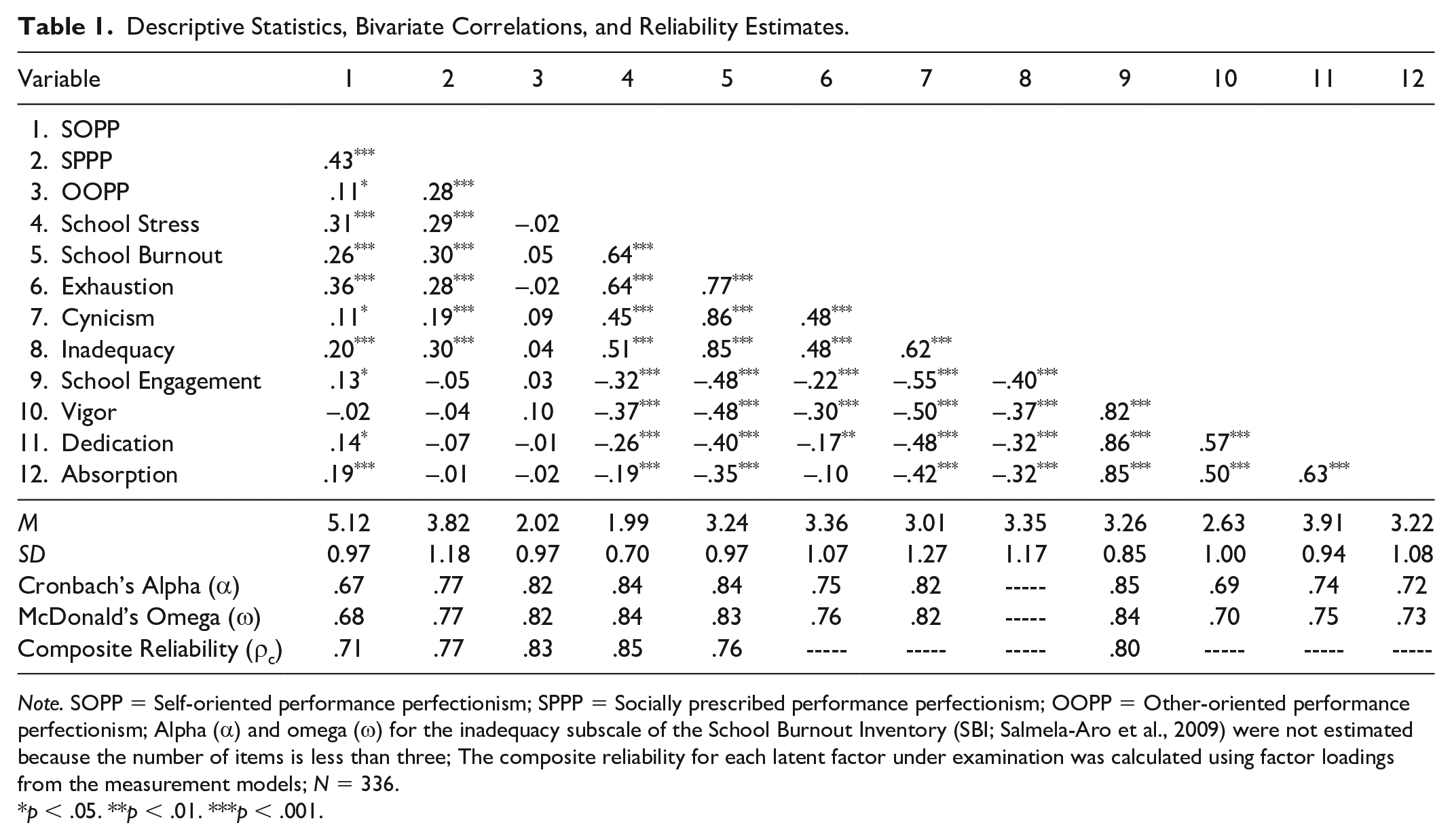
Note. SOPP = Self-oriented performance perfectionism; SPPP = Socially prescribed performance perfectionism; OOPP = Other-oriented performance perfectionism; Alpha (α) and omega (ω) for the inadequacy subscale of the School Burnout Inventory (SBI; Salmela-Aro et al., 2009) were not estimated because the number of items is less than three; The composite reliability for each latent factor under examination was calculated using factor loadings from the measurement models; N = 336.
p < .05. **p < .01. ***p < .001.
We measured and reported reliability of all variables with greater than two items using Cronbach alpha (α) and McDonald omega (ω) estimates. The α and ω estimates are reported in Table 1 (α and ω = .67 to .85). However, as the primary analyses involved the examination of latent variables, we also measured and reported composite reliability (ρc) estimates. All latent variables demonstrated acceptable levels of composite reliability (ρc ≥ .71; Hair et al., 2020).
Model 1: Performance Perfectionism, School Stress, and School Burnout
Measurement Model
The measurement component of Model 1 provided acceptable fit to the data (χ2 = 423.88, df = 160, CFI = .90, RMSEA = .07 [.06, .08], SRMR = .06). The standardized factor loadings from indicator variables to corresponding latent variables were all significant (p < .001) and ranged from .30 to .87.
Structural Model
The structural component of Model 1 also satisfied the criterion for acceptable model fit (χ2 = 451.83, df = 190, CFI = .90, RMSEA = .06 [.06, .07], SRMR = .05). The findings show that the performance perfectionism variables in combination with the age and gender variables accounted for 35% variance in school stress, whereas the performance perfectionism variables in combination with the age, gender, and school stress variables accounted for 69% variance in school burnout.
Direct Effects
The direct effects from the structural model are reported below and depicted in Figure 2. Self-oriented performance perfectionism (a1 = .25, SE = .08, p = .003 [adjusted α = .023]) and socially prescribed performance perfectionism (a2 = .24, SE = .09, p = .008 [adjusted α = .024]), but not other-oriented performance perfectionism (a3 =.01, SE = .07, p = .929 [adjusted α = .014]), positively predicted school stress. In turn, school stress positively predicted school burnout (b = .76, SE = .07, p < .001 [adjusted α = .024]). The direct pathways from each performance perfectionism dimension to school burnout (c’1, c’2, and c’3) were nonsignificant. The interpretation of significance was consistent for each direct effect irrespective of the alpha value (conventional vs. adjusted) used.
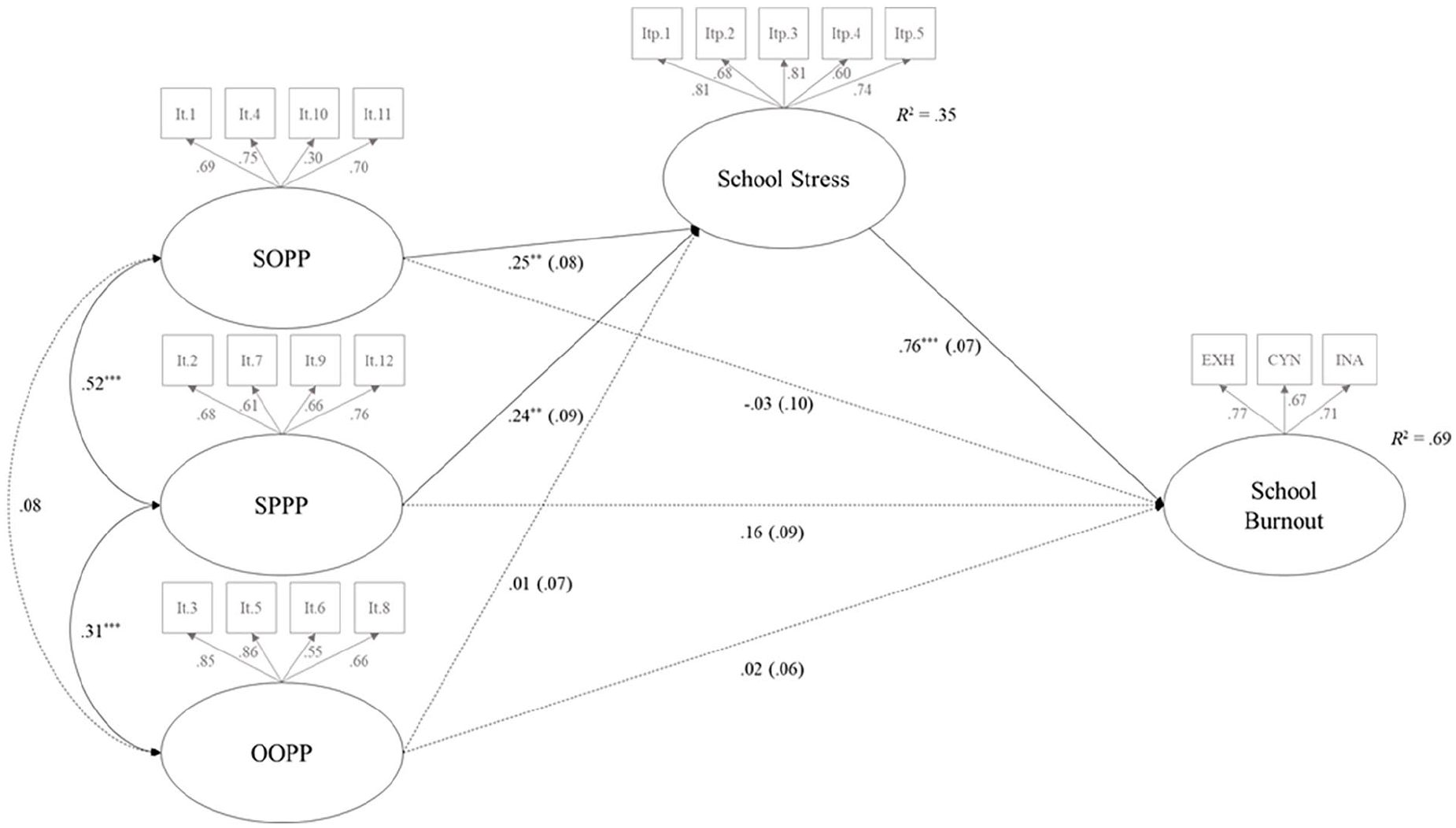
Standardized Direct Effects From Model (M1): The Relationships Between Performance Perfectionism and School Burnout (via School Stress).
Indirect Effects
The assessment of indirect effects in the structural model indicated that self-oriented performance perfectionism (ab1 = .19, 95% CI = [.07–.34], SE = .07, p = .005) and socially prescribed performance perfectionism (ab2 = .18, 95% CI = [.05–.31], SE = .07, p = .008) positively predicted school burnout via school stress. The indirect effect for other-oriented performance perfectionism on school burnout via school stress (ab3 = .00, 95% CI = [–.09–.10], SE = .05, p = .929) was nonsignificant.
Control Variables
We found that gender (but not age) was a significant predictor of stress (β = .39, SE = .06, p < .001). We investigated this difference using an independent samples t-test and found that the mean score for school stress (M = 2.21, SD = 0.67) reported by students who self-identified as female (N = 195) was higher than the mean score (M = 1.66, SD = 0.64) reported by students who self-identified as male (N = 113). The difference in means (∆M = 0.54) was statistically significant (t(306) = 6.99, p < .001, 95% CI = [0.39, 0.70]) and large (Hedges’ g* = 0.84 [0.60, 1.08]; Delacre et al., 2021). Neither gender nor age significantly predicted school engagement.
Model 2: Performance Perfectionism, School Stress, and School Engagement
Measurement Model
The measurement component of model 2 provided acceptable fit to the data (χ2 = 385.49, df = 160, CFI = .91, RMSEA = .07 [.06, .07], SRMR = .06). The standardized factor loadings from indicator variables to corresponding latent variables were all significant (p < .001) and ranged from .29 to .87.
Structural Model
The structural component of Model 2 also satisfied the criterion for acceptable model fit (χ2 = 409.38, df = 190, CFI = .91, RMSEA = .06 [.05, .07], SRMR = .06). The findings show that the performance perfectionism variables in combination with the age and gender control variables accounted for 35% variance in school stress, whereas the performance perfectionism variables in combination with the age, gender, and school stress variables accounted for 33% variance in school engagement.
Direct Effects
The direct effects from the structural model are reported below and depicted in Figure 3. Self-oriented performance perfectionism (a1 = .26, SE = .08, p = .002 [adjusted α = .021]) and socially prescribed performance perfectionism (a2 = .24, SE = .09, p = .007 [adjusted α = .021]), but not other-oriented performance perfectionism (a3 = .00, SE = .07, p = .981 [adjusted α = .013]), positively predicted school stress. In turn, school stress negatively predicted school engagement (b = –.58, SE = .08, p < .001 [adjusted α = .020]). The direct pathway from self-oriented performance perfectionism to school engagement was significant (c’1 = .53, SE = .09, p < .001 [adjusted α = .020]), whereas the direct pathways from socially prescribed (c’2) and other-oriented performance perfectionism to school engagement (c’3) were nonsignificant. The interpretation of significance was consistent for each direct effect irrespective of the alpha value (conventional vs. adjusted) used.
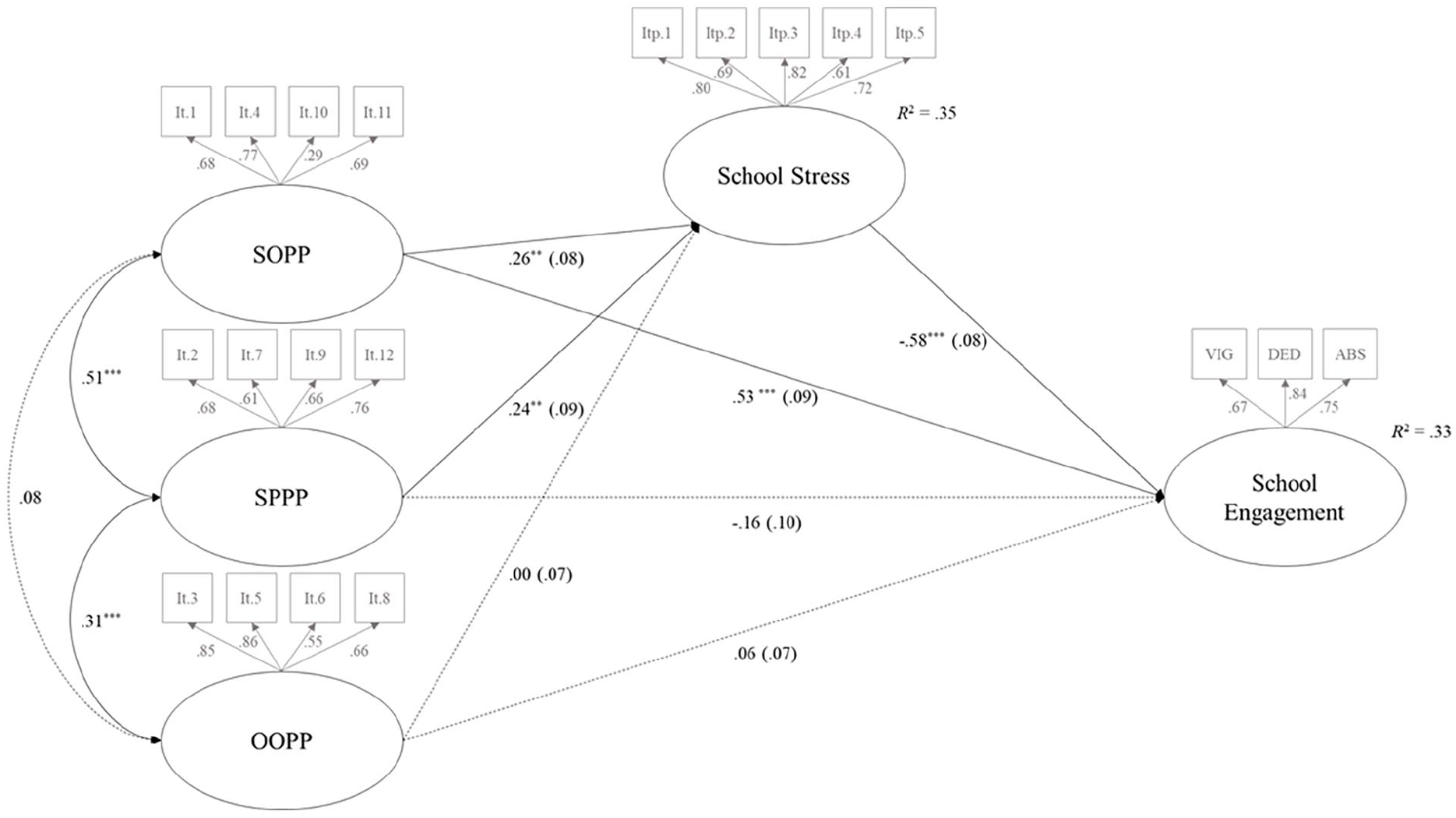
Standardized Direct Effects From Model (M2): The Relationships Between Performance Perfectionism and School Engagement (via School Stress).
Indirect Effects
The assessment of indirect effects in the structural model indicated that self-oriented performance perfectionism (ab1 = –.15, 95% CI = [–.27––.05], SE = .06, p = .010) and socially prescribed performance perfectionism (ab2 = –.14, 95% CI = [–.26––.04], SE = .05, p = .011) negatively predicted school engagement via school stress. The indirect effect for other-oriented performance perfectionism on school engagement via school stress (ab3 = –.00, 95% CI = [–.08–.08], SE = .04, p = .982) was non-significant.
Control Variables
We again found that gender (but not age) was a significant predictor of stress (β = .39, SE = .06, p < .001) and neither gender nor age significantly predicted school engagement.
Discussion
The study examined whether dimensions of performance perfectionism predicted school burnout and engagement via school stress in a sample of gifted students. In our first model, we found evidence that dimensions of perfectionism—self-oriented performance perfectionism and socially prescribed performance perfectionism—positively predicted school burnout via school stress. No direct effects from the dimensions of perfectionism to school burnout were evident. In the second model, we found that dimensions of perfectionism—self-oriented performance perfectionism and socially prescribed perfectionism—negatively predicted school engagement via school stress. The only direct effect evident was the positive effect of self-oriented performance perfectionism on school engagement. No relationships involving other-oriented perfectionism were statistically significant in either model.
Performance Perfectionism, School Stress, and School Burnout
In line with previous research on perfectionism in gifted students, we found that self-oriented performance perfectionism and socially prescribed performance perfectionism positively predicted school stress (Hill & Madigan, 2022). These findings suggest that gifted students with higher levels of either of these two perfectionism dimensions may frequently perceive problems in school as being overwhelming, outside their control, and difficult to overcome. Based on previous research, problems that are relevant to gifted students involve worries over college admission, academic competition with peers, and difficult classes (Peterson et al., 2009). While these stressors are part of school life for all gifted students, the resultant stress is likely intensified among those who are more perfectionistic in the demands they set for themselves or perceive from others. This may be because they view learning as something that should (for them, at least) be fast and easy (Rimm, 2008). When this is not the case, perfectionistic tendencies such as stringent self-evaluation and mistake rumination may exacerbate stress (Hewitt & Flett, 2002).
To build on this evidence, we examined the relationships between performance perfectionism, school stress, and school burnout. In line with previous research in education, and as expected, we found a nonsignificant direct relationship between self-oriented performance perfectionism and school burnout (Shih, 2012; Y. Zhang et al., 2007). We did, however, find that self-oriented performance perfectionism positively predicted school burnout via school stress. This pattern of results is in-keeping with evidence suggesting that the debilitating potential of self-oriented perfectionism is indirect. For example, in sport, Hill et al. (2008) found that self-oriented perfectionism positively predicted athlete burnout via a lower sense of unconditional self-acceptance. In context of the present study, the evidence suggests that this susceptibility to burnout may apply to gifted students via more frequent experiences of school stress.
In line with previous research, we found evidence that socially prescribed performance perfectionism positively predicted school burnout via school stress. Gifted students with higher levels of socially prescribed perfectionism are likely to feel under intense pressure to meet impossible expectations perceived from others (Hewitt & Flett, 1991). This pressure may come from parents or teachers who are viewed as being hypervigilant to mistakes in schoolwork, quick to criticize “poor” grades, and insistent on gaining admission to only the most prestigious universities (Webb et al., 2007). When gifted and highly perfectionistic students are unable to meet unrealistic expectations from others, stress and symptoms of burnout are inevitable (Henderson, 2011). In keeping with this idea, researchers have found that socially prescribed perfectionism shares robust relationships with stress and burnout in students more broadly (e.g., Hill & Curran, 2016). This relationship makes sense given that burnout involves feelings of being overworked, trapped, and incompetent, all of which are relevant to socially prescribed perfectionism (Flett et al., 2022). Here, we extend this line of research by showing that socially prescribed performance perfectionism is a key predictor of stress and burnout in gifted students.
We also examined the relationships between other-oriented performance perfectionism, school stress, and school burnout. While researchers often omit other-oriented perfectionism from their research, we feel that its inclusion is required to provide a complete test of perfectionism in gifted students. In line with evidence from research with gifted students that suggests other-oriented perfectionism has fewer personal consequences than the other perfectionism dimensions (Speirs Neumeister et al., 2007), we found that other-oriented performance perfectionism was unrelated to school stress and school burnout. To further evaluate the role that other-oriented performance perfectionism plays in the burnout experiences of gifted students, it may be important to examine interpersonal stress. In the school context, gifted students who are extremely demanding of others are likely to experience impatience and frustration with peers and teachers, especially if they are seen as interfering with learning and school performance (Callahan, 2018). The interpersonal stress arising from making unrealistic demands of others may better predict school burnout. Indeed, research in students more broadly shows that interpersonal stress predicts school burnout (X. Zhang & Li, 2024).
Performance Perfectionism, School Stress, and School Engagement
In line with the view that self-oriented perfectionism might be energizing for students, we found evidence for a direct positive relationship between self-oriented performance perfectionism and school engagement. This evidence aligns with previous research showing that self-oriented perfectionism may come with some inadvertent academic benefits including increased achievement, cognitive engagement, and satisfaction in school (e.g., Damian et al., 2017; Gaudreau et al., 2016; Madigan, 2019). Such benefits are likely the result of the effort and dedication that follows a strong need to maintain self-worth by avoiding appearing incompetent relevant to others (Speirs Neumeister et al., 2015). While this may be the case, it is important to note that we found that self-oriented perfectionism shared a negative indirect relationship with school engagement via stress. This finding provides an important reminder that self-oriented performance perfectionism includes a self-critical component that tends to (somewhat paradoxically) undermine potential benefits that come with this dimension of perfectionism. In this case, gifted students higher in self-oriented performance perfectionism may be highly engaged in school but also vulnerable to stressful episodes that weaken engagement experiences.
The relationship between socially prescribed performance perfectionism and school engagement was less complex. We found that socially prescribed performance perfectionism shared a negative indirect relationship with school engagement via stress. The evidence shows that higher levels of socially prescribed performance perfectionism may confer risk to heightened school stress and subsequent diminished school engagement. Gifted students sometimes feel stressed by the weight of expectations thrust on them by others (Pfeiffer & Stocking, 2000). This pressure is likely to be further compounded when gifted students also have higher levels of socially prescribed performance perfectionism. What may be key to the vulnerability in such students is difficulties in coping with stress effectively. There is evidence in gifted students that dimensions of perfectionism characterized by evaluative concerns (e.g., socially prescribed perfectionism) are more strongly related to avoidance-oriented coping (internalizing and externalizing) than they are to approach-oriented coping (problem-solving and support-seeking; Mofield et al., 2016). It is possible that this heighted vulnerability to stress and inability to cope effectively with difficulties is a combination that undermines the positive energy, will power, and determination that characterizes school engagement.
We also examined the relationships between other-oriented performance perfectionism, school stress, and school engagement. In doing so, we found that other-oriented performance perfectionism was unrelated to school stress and school engagement. This finding is difficult to locate in the literature given the lack of evidence on relationships between other-oriented perfectionism and engagement-related outcomes, especially within an educational context. Even in the studies that do include other-oriented perfectionism, the evidence is inconsistent. For example, in a workplace context, Childs and Stoeber (2010) found that other-oriented perfectionism positively predicted work-based vigor but shared no meaningful relationships with work-based dedication or absorption. There is also evidence supporting the potential for other-oriented perfectionism to undermine engagement. For example, Stricker et al. (2019) found that people higher in other-oriented perfectionism perceive daily life situations as low in positivity (not fun, enjoyable, or pleasant) and duty (not requiring work, energy, or effort; Stricker et al., 2019). Based on this mixed pattern of results, our findings, and the exclusion of other-oriented perfectionism in research on young people more broadly, further research is clearly required. While other-oriented performance perfectionism may play a more subdued role in experiences of stress and engagement among gifted students, it may have an important role to play in influencing other school experiences (e.g., anger and argumentative behavior).
Implications
The findings suggest that vulnerability to stress may provide a basis for both increased burnout and decreased school engagement among highly perfectionistic gifted students. This is a significant problem given the performance, motivation, and well-being issues associated with these outcomes (see Madigan & Curran, 2021; Martins et al., 2022; Walburg, 2014). With these risks in mind, it will be important to increase knowledge about the features, causes, and consequences of perfectionism among gifted students and those supporting their development. This includes how to manage perfectionism related stress and when and how to seek help, if needed. Schools should also consider the integration of psychoeducational interventions for perfectionism as part of routine practice and curricula (e.g., Hill et al., 2021). These types of support will help teachers, counselors, and parents to facilitate open communications about perfectionism and may better equip gifted students with the skills they need to handle school stress. One important framework to help guide such efforts is the Peterson Proactive Developmental Attention (PPDA) model (Peterson & Jen, 2018). One focus within PPDA-based group discussions is to help gifted students make sense of the stressors they experience and enhance communication regarding related concerns. We encourage consideration of this approach and others (e.g., Olton-Weber et al., 2020) when seeking to improve preventive measures within schools to support gifted students and manage perfectionism and stress.
Limitations and Future Research Directions
The present study has a few limitations that are important to consider. The first limitation relates to using cross-sectional data to test for indirect relationships. The theories that underpin our models are dynamic in nature—they describe processes that unfold over time (e.g., perfectionism underpinning experiences of chronic stress and subsequent burnout). This means that cross-sectional data is unable to determine the extent to which relationships between study variables reflect the influence one construct is likely to have on another over time (Maxwell & Cole, 2007). Researchers should therefore build on our findings using longitudinal data. In previous research of this kind, perfectionism has been found to predict longitudinal increases in both stress and burnout (Childs & Stoeber, 2016).
The second limitation relates to the generalizability of our findings among gifted students. Because we recruited participants from a national conference for gifted students, it is likely that the sample is highly heterogenous. The school leaders who identified gifted students to invite to this conference likely used a range of identification strategies (e.g., GCSE qualifications, teacher assessment, and potential for achievement) and criteria (e.g., minimum three top A* grades vs. five top A* grades). While the sample all achieved high levels of success in their GCSEs, we did not collect data on their specific interests, achievements, or personal backgrounds. This means that future research is needed to identify variables that may impact or alter the relationships identified in the present study. One key question that is relevant in this regard is whether the results are applicable to gifted underachievers. The final limitation to note relates to our decision to model total school burnout and total school engagement. Future research is required to determine potential differences in how perfectionism and stress influence individual symptoms of each school experience.
Conclusion
We examined whether dimensions of performance perfectionism predicted school burnout and engagement via school stress in a sample of gifted students. We found that stress was a key factor in the relationships from dimensions of performance perfectionism (self-oriented performance perfectionism and socially prescribed performance perfectionism) to school burnout and school engagement. The findings suggest that pressure for perfection in school performance (self-imposed or perceived from others) is a potential risk factor for heightened stress and, in turn, heightened stress is a potential risk factor for heightened school burnout and diminished school engagement. The results are important as they highlight that managing perfectionism and stress may be especially important when it comes to safeguarding positive motivation and emotion toward schoolwork in gifted students.
Footnotes
Acknowledgements
The authors would like to acknowledge and thank the National Association for Able Children in Education (NACE) for their continued support of our research examining perfectionism in gifted students.
Authors’ Note
Andrew P. Hill is a research advisor for the National Association of Able Children in Education (NACE). This is an unpaid role. Luke F. Olsson is now affiliated to Liverpool John Moores University, Liverpool, UK. The study was designed and conceptualized by all authors. Material preparation, data collection, and analysis were performed by Michael C. Grugan and Luke F. Olsson. The first draft of the manuscript was written by Michael C. Grugan and Andrew P. Hill. All authors reviewed and edited previous versions of the manuscript and approved the final manuscript.
Declaration of Conflicting Interests
The authors declared no potential conflicts of interest with respect to the research, authorship, and/or publication of this article.
Funding
The authors received no financial support for the research, authorship, and/or publication of this article.
Open Science Disclosure Statement
The data analyzed in this study are not available for purposes of reproducing the results. The code or protocol—MPlus input instructions—used to generate the findings reported in the article are available for purposes of reproducing the results or replicating the study at  . There are no other newly created, unique materials used to conduct the research.
Ethics Approval Statement
Ethical approval for the study was obtained from the Institutional Review Board at York St John University (UREC04-21/11/19) on 11/21/2019.