




Abstract
Parents of individuals with disabilities face many challenges in accessing appropriate school services for their offspring. While advocacy programs are becoming increasingly common, little is known about the nature of parent advocacy including its related constructs. The purpose of this study was to examine the associations between motivation, special education knowledge, empowerment, three types of advocacy activities (i.e., individual, peer, and systemic), and civic engagement among 246 parents of children with disabilities using structural equation modeling. Results show that motivation leads to improved knowledge and empowerment. More than knowledge, empowerment significantly and positively correlates with individual advocacy. There is a linear relationship suggesting that individual advocacy informs peer advocacy and peer advocacy informs systemic advocacy. Finally, greater systemic advocacy positively and significantly correlated with greater civic engagement. Implications for research and practice are discussed.
Parents often advocate for their children with disabilities. The initial passage of the Individuals with Disabilities Education Act (IDEA, the U.S. federal special education law, previously called the Education for All Handicapped Children Act) was spearheaded by parents of children with disabilities. In its subsequent reauthorizations, parent involvement in IDEA reauthorizations became less common (Turnbull et al., 2011). For example, in the IDEA reauthorization in 2004, less than 3% of all individual feedback was from families of individuals with disabilities (York, 2004). Limited parent involvement in IDEA reauthorizations is surprising given that IDEA recognizes the importance of parent involvement in educational decision-making (e.g., requires parent consent for services and embeds safeguards for parents). Thus, it is essential to better understand advocacy including its facilitators (e.g., motivation, knowledge, and empowerment) and outcomes (e.g., advocacy activities and civic engagement). The purpose of this study was to examine the associations of motivation, knowledge, empowerment, advocacy, and civic engagement.
Empowerment frameworks are often applied to understand the phenomenon of parent advocacy. Empowerment is the channeling of resources into positive change (Gutiérrez et al., 1998). Operationally, empowerment may manifest as participation in decision-making, collaboration with others, having a sense of control, accessing resources, and conducting personal actions (Goldman, 2020). For example, Balcazar and Suarez-Balcazar (2017) developed an empowerment framework as a result of decades of pioneering research about parent advocacy. In their framework, motivation precedes advocacy. Indeed, motivation is characterized as a resource that is needed before an individual can demonstrate positive change. In their framework, positive changes include knowledge, behaviors, and/or attitudes to overcome a negative situation (e.g., a conflict between the parent and the school). Their framework has been expanded to reflect the multiple ecosystems aligned with Bronfenbrenner’s (1979) socioecological framework: the microsystem (i.e., advocacy for one’s own child), the mesosystem (i.e., peer advocacy for other families of individuals with disabilities), the exosystem (i.e., advocacy for systems change in disability policy), and the macrosystem (i.e., overall civic engagement). Given the complexity of parent advocacy and its tremendous impact on individuals with disabilities, it is important to understand the constructs of parent advocacy.
There has been some prior research examining the constructs of parent advocacy. Li and colleagues (2024) examined the associations among knowledge, empowerment, and advocacy among 185 parents of transition-age youth with autism in three states. Their findings revealed that while both knowledge and empowerment contributed to advocacy, empowerment had a greater impact on advocacy. There was also a hierarchical nature among the three types of advocacy activities (i.e., individual, peer, and systemic advocacy). Specifically, there was a direct linear relation between individual and peer advocacy as well as between peer and systemic advocacy but notably absent between individual and systemic advocacy. Unfortunately, their study is limited in generalizability. The sample was restricted to families of individuals with autism; it is unclear whether the same relations would generalize to families of other types of disabilities. With respect to advocacy, families of individuals with autism (vs. other types of disabilities) often advocate more frequently and litigiously (Holben & Zirkel, 2023). Furthermore, the sample was limited to three states and only to parents of transition-aged youth; research suggests that parents often advocate throughout the school years (Kurth et al., 2020).
Furthermore, there may be other constructs not explored by Li and colleagues (2024) that impact parent advocacy. Aligned with the empowerment framework suggested by Balcazar and Suarez-Balcazar (2017), motivation may precede parent knowledge and empowerment. Other studies have suggested that motivation can impact parent advocacy. Indeed, in a study of parent advocates, participants reported that their motivation to impact change for their child and for all children with disabilities resulted in their desire to attend advocacy programs (Goldman et al., 2019). Thus, it may be that there is a relation between motivation and the constructs of knowledge and empowerment.
In addition, a parent’s advocacy for systemic special education changes may generalize into broader civic engagement. Throughout history, there have been several examples of ways in which parents of children with disabilities impact policy changes. Most notably, parents of children with disabilities initiated lawsuits which served as the impetus for the Education for All Handicapped Children Act (Turnbull et al., 2011). Parent systemic advocacy within the special education system may translate into efforts for systems change in domains outside of special education. For example, there has been a tremendous uptick in state laws about serving students with dyslexia. One reason for the policy momentum around dyslexia is parent advocacy in state-level legislation (Gearin et al., 2020). Research is needed to understand the relations between different types of advocacy in special education and broader civic engagement.
With the looming reauthorization of the IDEA, it is important to understand the constructs connected to parent advocacy. In past decades, parent input in IDEA reauthorizations has been minimal (Turnbull et al., 2011; York, 2004). By characterizing parent advocacy in special education, we can have a better understanding of the relations with advocacy which can inform the mechanisms of action that should be targeted in intervention research. For this study, the research question was as follows: What is the nature of relations among motivation, knowledge, empowerment, advocacy, and civic engagement? We hypothesized that empowerment (vs. knowledge) would more greatly impact advocacy alongside a hierarchical nature among the types of advocacy activities (Li et al., 2024). Given that intrinsic motivation instigates action, motivation was hypothesized to correlate with knowledge and empowerment (Goldman et al., 2019). Furthermore, due to the associations between advocacy and civic engagement (Burke et al., 2020), we hypothesized that the two constructs will be linked.
Method
Participants
As part of a larger multisite project, participants included 246 parents of individuals with disabilities from six U.S. sites (IL, NM, ME, LA, SC, and Washington DC). Eligibility criteria for the study were as follows: (a) being a parent or legal guardian of an individual with a disability; (b) indicating a willingness to attend a civic engagement program; and (c) completing the presurvey in English. On average, participants were 46 years of age (SD = 8.75). Half of the sample reflected racial minority backgrounds. Their offspring with disabilities were, on average, 15 years of age (SD = 5.44) (see Table 1).
Demographics for the 246 Parent Participants.
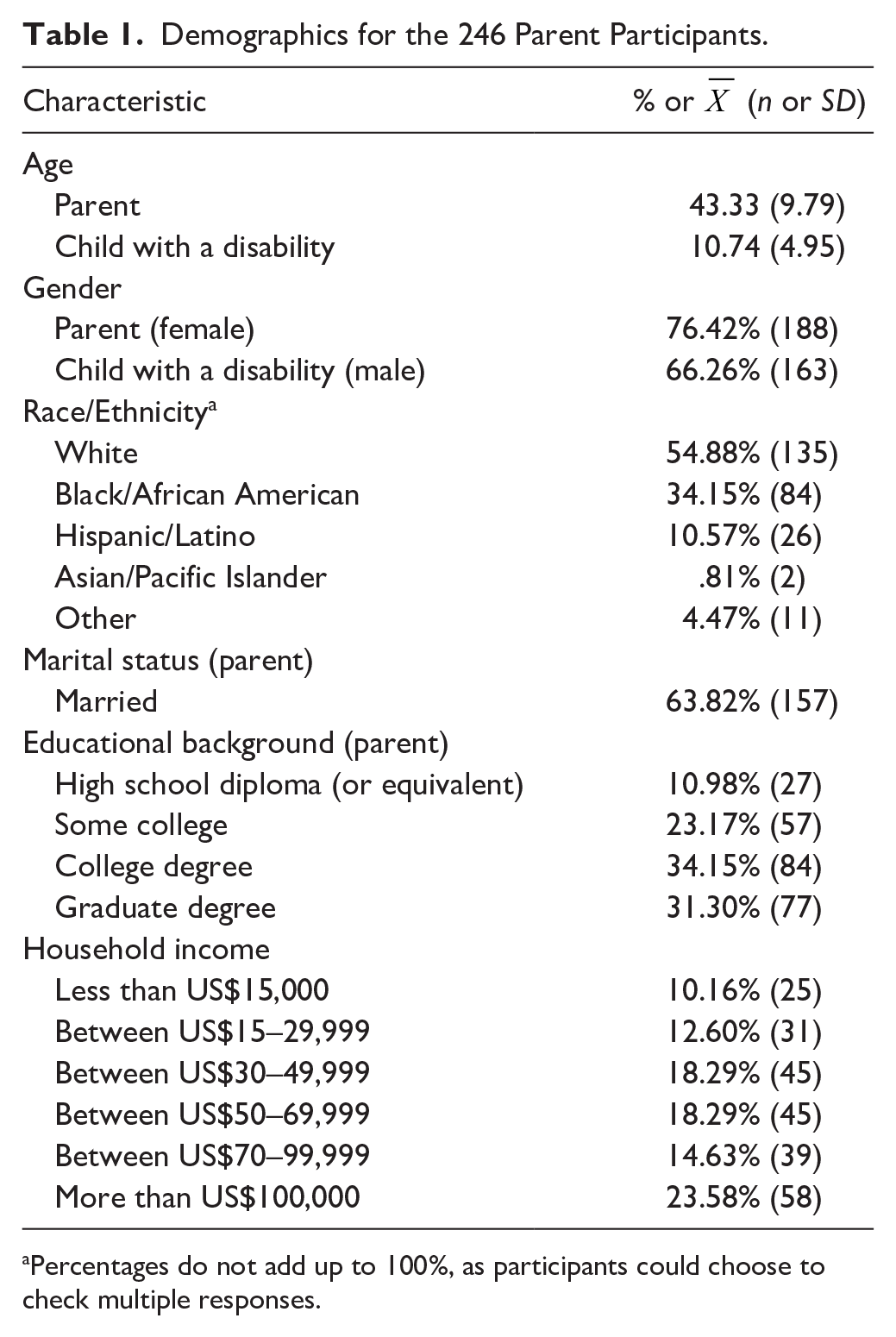
Percentages do not add up to 100%, as participants could choose to check multiple responses.
Recruitment and Procedures
Data were collected as part of a randomized controlled trial (RCT) to investigate the impact of a civic engagement program among parents of children with disabilities. The civic engagement program was comprised of 6 hr of instruction about special education policy, IDEA reauthorizations, and methods for civic engagement (see Rossetti et al., 2020, for more detail). Each civic engagement program was offered by a Parent Training and Information Center (PTI, a federally funded center designed to educate and empower parents of children with disabilities). PTIs spearheaded participant recruitment in each of the six study sites (IL, NM, ME, LA, SC, and Washington DC) via email circulations and postings. Data used in this analysis were collected from participants at baseline (prior to receiving any intervention) via an online survey. Approval from the University Institutional Review Board was obtained for all study procedures, and written consent was obtained from all participants. Each participant received a US$20 gift card for their participation in the study.
Measures
Special Education Knowledge Scale
In the Special Education Knowledge Scale, there were 10 multiple-choice questions about knowledge of IDEA (Burke et al., 2016). Each question had four response options; only one response option was correct. A sample item was “At what level does the federal government currently fund IDEA?”. Prior studies indicate high reliability and validity among parents of children with disabilities (Burke et al., 2016).
Family Empowerment Scale
Family empowerment was measured using the 12-item family subscale of the Family Empowerment Scale (FES; Koren et al., 1992) which measures the extent to which parents feel empowered. Items are rated on a 5-point Likert scale from (1) “not at all true” to (5) “very true.” Item scores are summed to form an overall score, with higher scores indicating greater empowerment. Prior studies of the FES demonstrate high reliability among families of individuals with disabilities (e.g., α = .91; Huscroft-D’Angelo et al., 2018). For this sample, Cronbach’s alpha was .92.
Advocacy Activities Scale
The Advocacy Activities Scale (Li et al., 2024) was developed based on established measures about parental advocacy for special education rights (Burke et al., 2016) and the literature about disability advocacy (Balcazar et al., 1996). The measure was comprised of 15 items (individual advocacy = 7 items, peer advocacy = 3 items, and systemic advocacy = 5 items) to which participants responded on a 5-point Likert scale ranging from (1) “not at all” to (5) “very often.” The summed score for each subscale was used to measure the level of involvement in advocacy activities, with higher scores equating to more involvement. Prior studies indicate high reliability among parents of individuals with disabilities (Cronbach’s alphas were .92, .88, and .91 for individual, peer, and systemic advocacy, respectively, Li et al., 2024). Reliability was high for all three subscales: individual advocacy (α = .88), peer advocacy (α = .83), and systemic advocacy (α = .90).
Public Service Motivation
The 14-item Public Service Motivation Scale (Perry, 1996) measures an individual’s willingness to provide services to others. A sample item was “I am prepared to make enormous sacrifices for the good of society.” For each item, there was a 5-point Likert scale ranging from (1) “disagree” to (5) “agree.” Items were summed to create the composite variable. Prior studies with families of children with disabilities indicate high reliability (α = .92; Goldman et al., 2019). In this study, Cronbach’s alpha was .92.
Broad Civic Engagement
The Broad Civic Engagement Scale included 19 items to examine civic engagement via civic, electoral, and political activities (Jackson-Elmoore, 2006). A sample item was “Have you volunteered or done any voluntary community service for no pay?”. Each item had three response options: (a) “Not within the last 12 months,” (b) “Yes, I have in the last 12 months,” and (c) “Yes, once a month or more.” In prior studies with families of children with disabilities, the scale demonstrated high reliability (α = .79–.87; Burke et al., 2022). In this study, the alpha was .91.
Analysis
The associations between motivation, knowledge, empowerment, the three types of advocacy activities (i.e., individual, peer, and systemic), and civic engagement were examined using structural equational modeling (SEM) analyses. All analyses were conducted using Mplus (Muthén & Muthén, 2017). The full model consisted of one exogenous variable (i.e., motivation) and six endogenous variables (i.e., knowledge, empowerment, individual advocacy, peer advocacy, systemic advocacy, and civic engagement). No multicollinearity was found between variables. Three nested models were developed to test in this study based on prior research and findings associated with the relations between the variables of concern (Li et al., 2024). Model A represents our hypotheses of the various relations among all the variables without additional constraints. Model B encompasses Model A, but with the paths to civic engagement constrained to only include systematic advocacy because systemic advocacy may matter the most for civic engagement. For example, systemic advocacy activities (e.g., testifying at IDEA hearings and contacting legislators about special education) can generalize to broader civic engagement (e.g., testifying at local hearings and contacting legislators about nonspecial education issues, Wray-Lake & Abrams, 2020). Model C was based on Model B with additional constraints to the paths stemming from the construct of knowledge given that prior research suggests that knowledge only minimally impacted advocacy (Li et al., 2024). The models were then evaluated according to the following model fit indices.
Specifically, model fits were assessed via the chi-square test, standardized root mean square residual (SRMR), root mean square error of approximation (RMSEA), comparative fit index (CFI), and the Tucker–Lewis index (TLI). However, the chi-square test can be unreliable in evaluating SEM model fit because it is highly sensitive to sample size, often leading to statistically significant results even for minor model misfits in large samples. Thus, other fit indices must be considered to obtain a more accurate assessment of the mode (Hu & Bentler, 1999). RMSEA is an absolute fit index which compares the hypothesized model with a perfect-fit model. CFI and TLI are incremental fit indices that compare the hypothesized model with a null model (i.e., a model where all variables are not correlated) that provides the worst fit. To evaluate whether the model fit was satisfactory, the chi-square statistic (p > .05 suggests failing to reject the model) in conjunction with CFI (>.90), TLI (>.90), SRMR (<.08), and RMSEA (<.06) was utilized to indicate an acceptable model fit (Hooper et al., 2008).
Results
Nature of the Correlations Among Model Variables
Descriptive statistics for motivation, knowledge, empowerment, advocacy activities, and civic engagement are presented in Table 2. Spearman’s correlations were used to assess the associations among motivation, knowledge, empowerment, individual advocacy, peer advocacy, systemic advocacy, and civic engagement. As expected, there were statistically significant associations between empowerment and two of the three advocacy activities (i.e., individual and peer; r = .17 and .45, respectively). Similarly, there were statistically significant associations between civic engagement and all three advocacy activities (r =.15–.44). There were also statistically significant strong associations among individual advocacy, peer advocacy, and systemic advocacy (r = .27–.61).
Descriptive Statistics and Correlations of Variables.
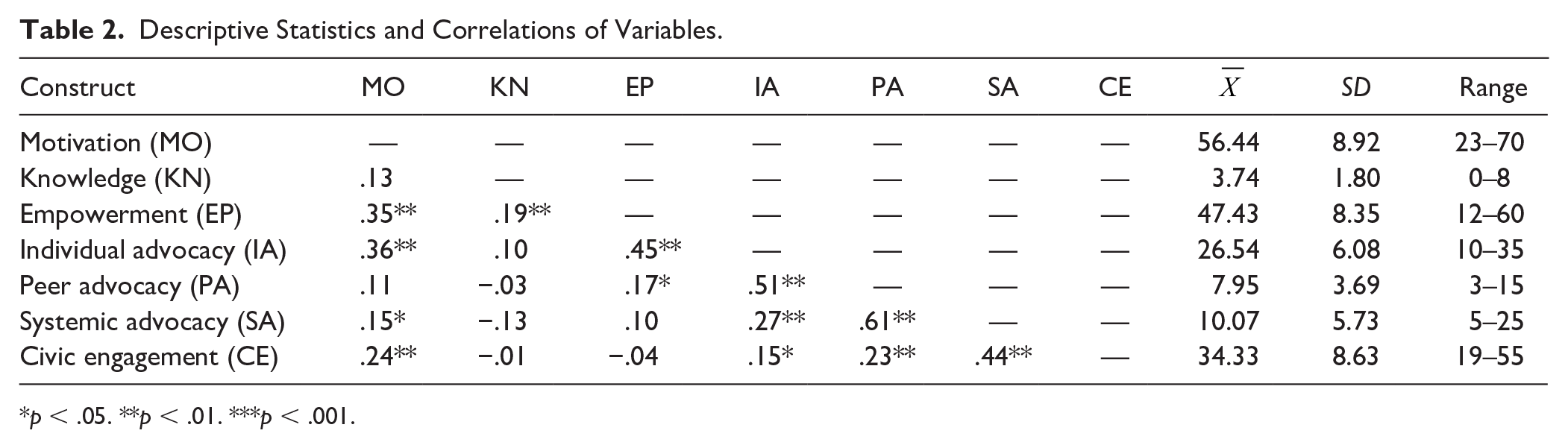
p < .05. **p < .01. ***p < .001.
Model A
The model showed acceptable fit, χ2 (7) = 20.73, p = .004, SRMR = .06, RMSEA = .10, CFI = .95, and TLI = .85. Specifically, the model showed that motivation had a statistically significant, positive relation with knowledge (β = .16, p < .05) and empowerment (β = .39, p < .01). There were no statistically significant relations between knowledge and any of the three advocacy activities. There was a significant, positive relation between knowledge and empowerment (β = .19, p < .01). While there were no significant relations between empowerment and peer or systemic advocacy, there was a significant, positive relation between empowerment and individual advocacy (β = .38, p < .01). There was a significant, positive relation between individual and peer advocacy (β = .56, p < .01) and a significant, positive relation between peer and systemic advocacy (β = .62, p < .01). Furthermore, there was a significant, positive relation between systemic advocacy (but not individual and peer advocacy) and civic engagement (β = .41, p < .01) (see Figure 1 and Table 3).
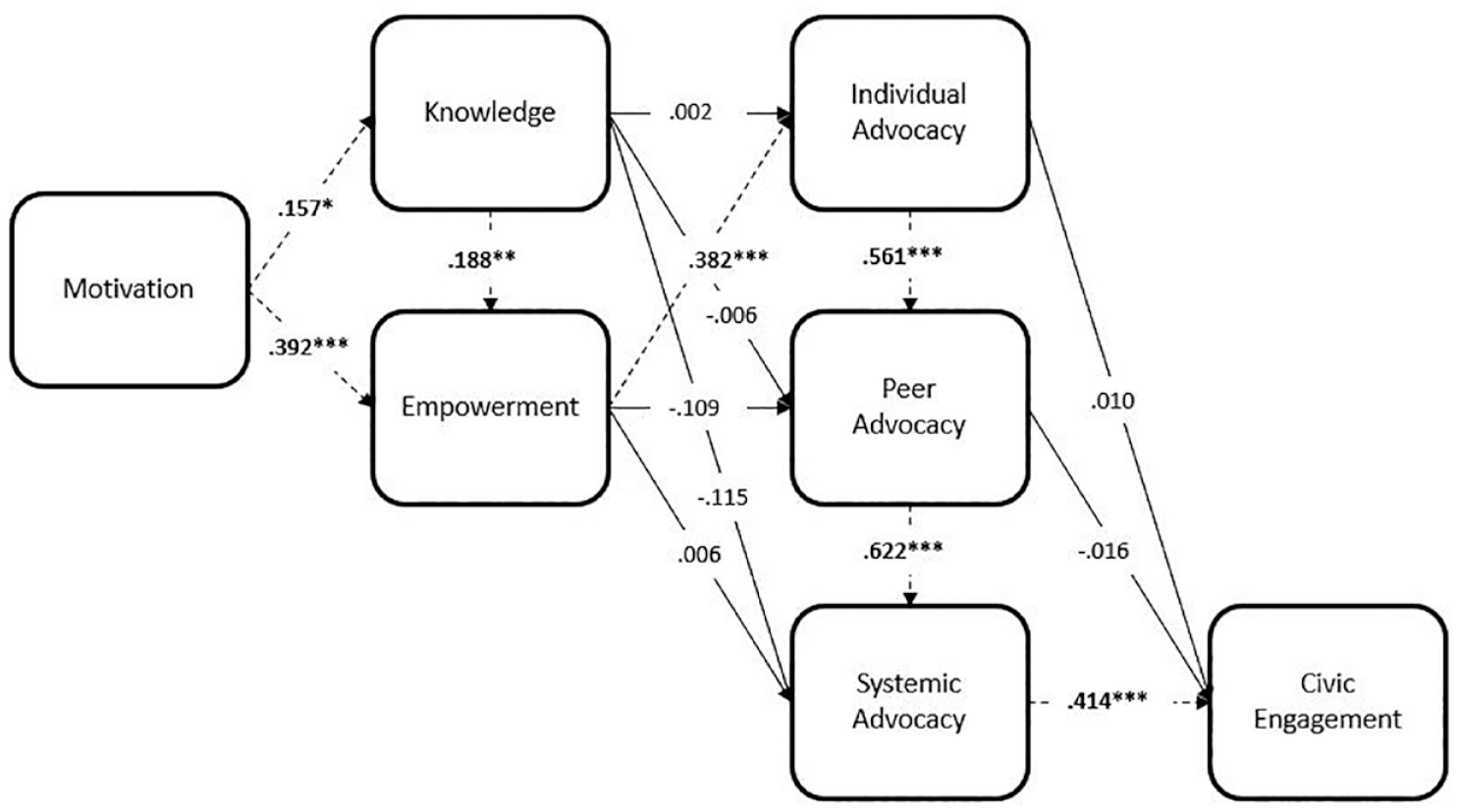
Model A.
Model Statistics of Direct Effects.
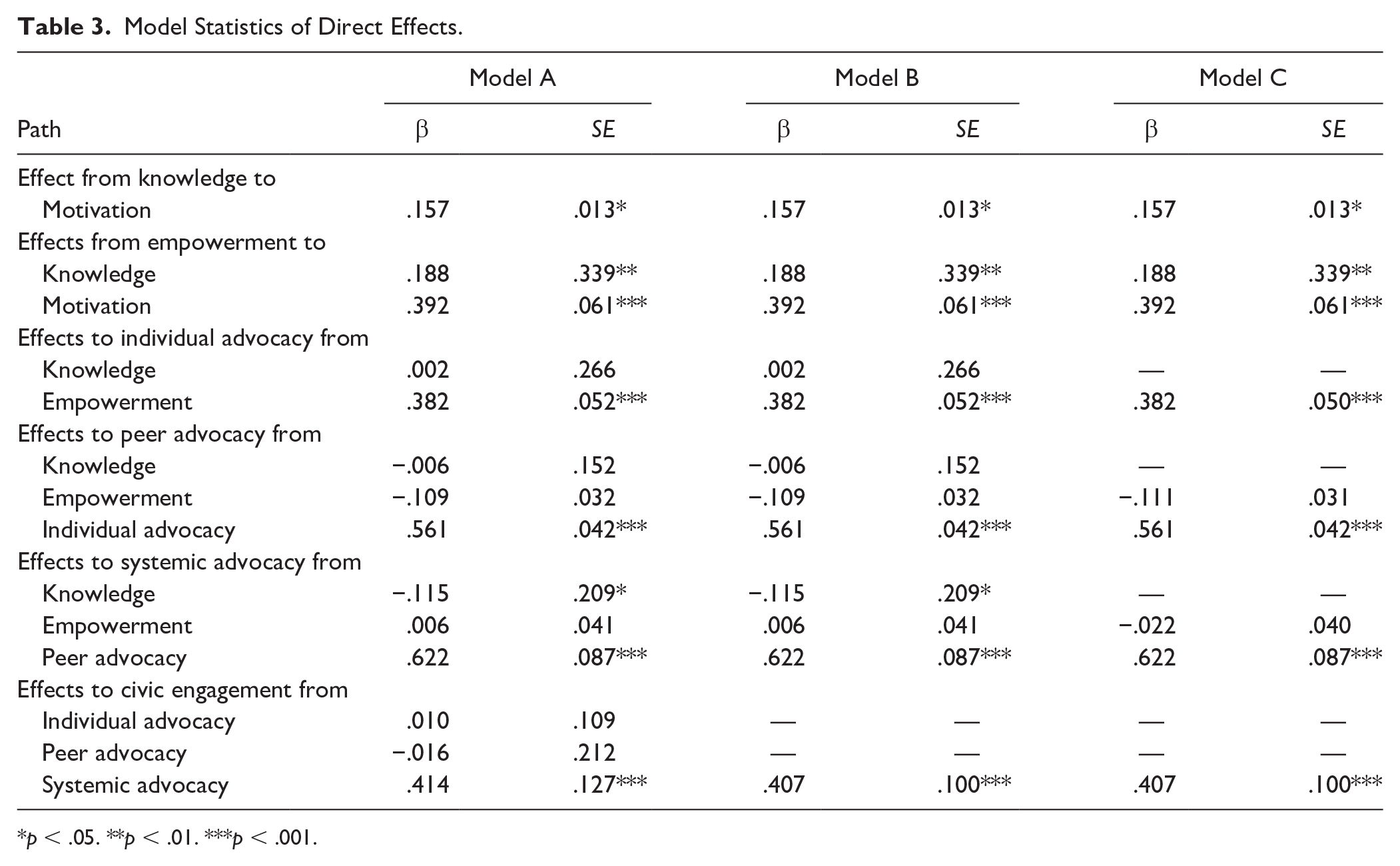
p < .05. **p < .01. ***p < .001.
Model B
The model showed exceptional fit, χ2 (9) = 20.76, p = .01, SRMR = .06, RMSEA = .08, CFI = .96, and TLI = .90 (see Figure 2 and Table 3).
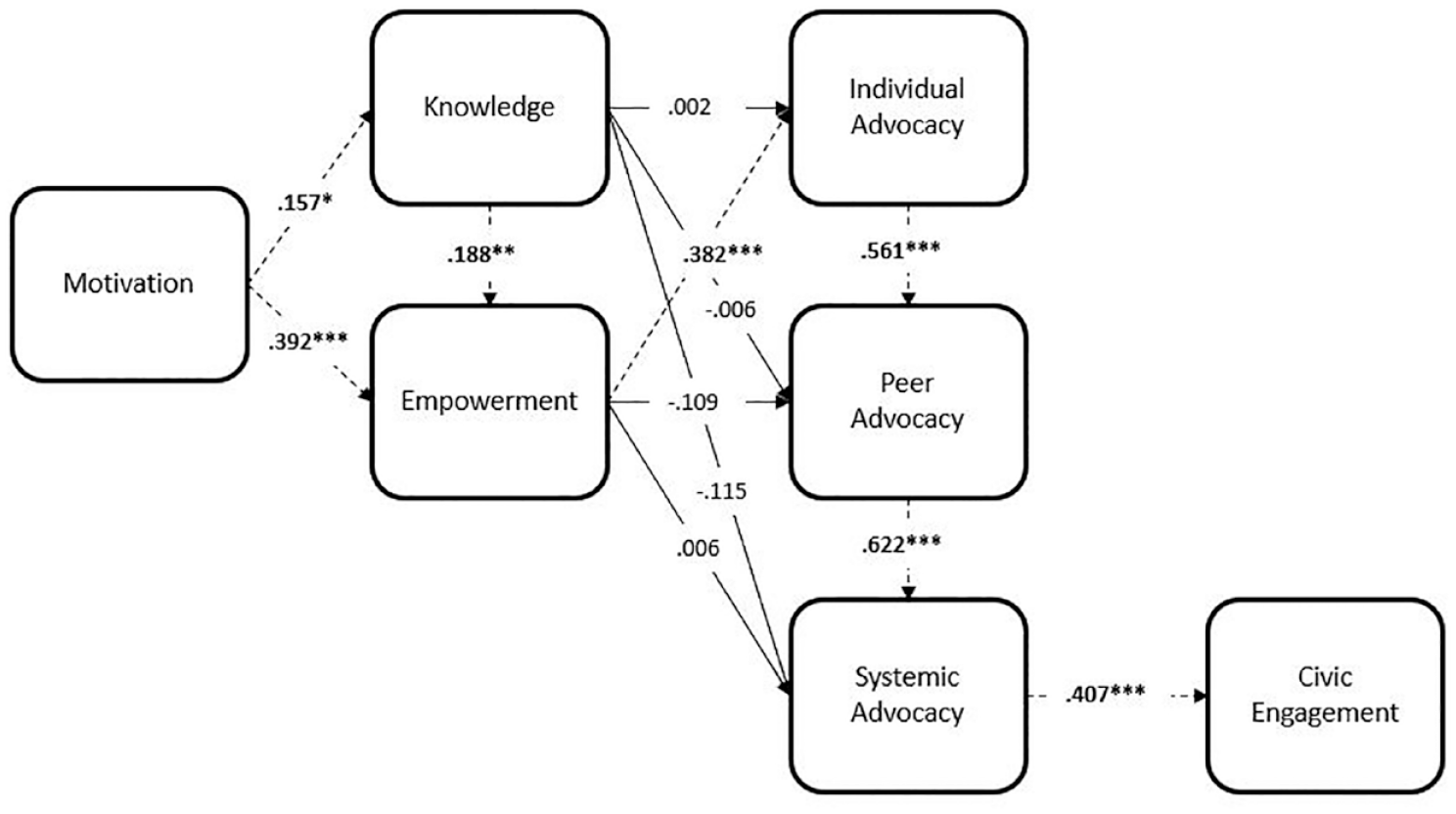
Model B.
Model C
The model showed exceptional fit, χ2 (12) = 24.51, p = .02, SRMR = .06, RMSEA = .08, CFI = .96, and TLI = .92 (see Figure 3 and Table 3).
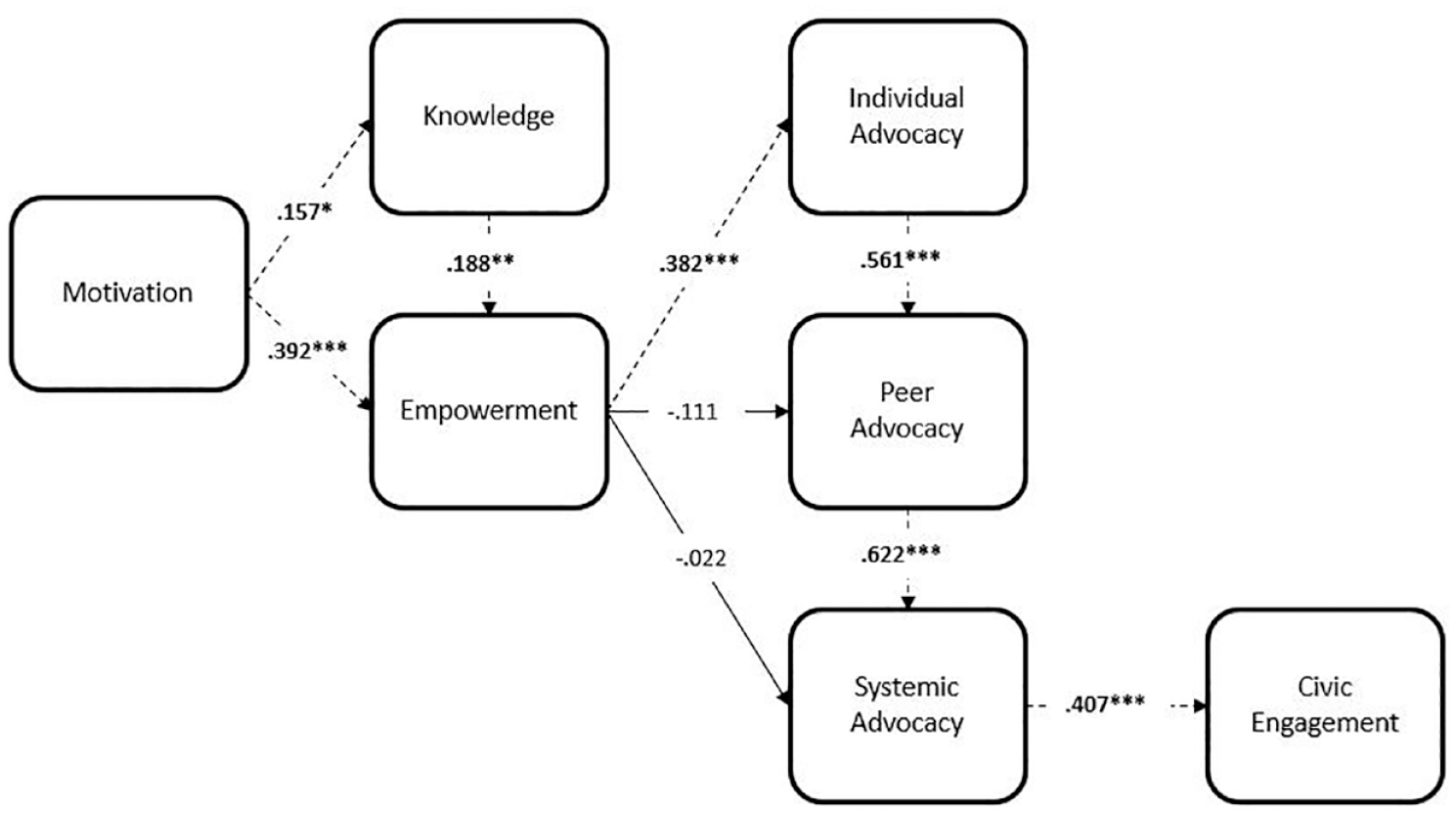
Model C.
Model Comparisons
Model C exhibited the best-fit indices, indicating a marginal improvement over Model B and Model A. Although the improvements in fit indices were marginal, they consistently favored Model C. To statistically compare the models, chi-square difference tests were conducted. The results of these tests indicated that the additional constraints in Model C did not significantly worsen the model fit compared with Model A (Δχ2 = 3.78, df = 5, p > .05). Similarly, Model C did not significantly differ from Model B (Δχ2 = 3.75, df = 3, p > .05). Given the combination of improved fit indices and nonsignificant chi-square difference tests, Model C was determined to be the best fitting model since it provides a more parsimonious representation of the data without a significant reduction in model fit.
Discussion
While policy, research, and practice demonstrate the importance of parent advocacy, little is known about its relations to other constructs. This study contributes to the literature by using a large, diverse sample of parents of children with disabilities across multiple states to identify relevant constructs of advocacy. There were three main findings. First, the most parsimonious model reveals significant paths related to parent advocacy. This finding supports previous research (Li et al., 2024) underscoring the hierarchical relations between the three levels (i.e., individual, peer, and systemic) of advocacy activities. This study extends prior research by replicating the aforementioned findings in a sample that includes families of children with other types of disabilities, in different states, and of varying ages. The findings further extend the literature by revealing two new, relevant constructs: (a) motivation is a precursor to knowledge and empowerment and (b) systemic advocacy may generalize into civic engagement.
Furthermore, the most parsimonious model aligns with extant theory. As hypothesized by the Empowerment framework developed by Balcazar and Suarez-Balcazar (2017) and grounded in the ecological systems theory by Bronfenbrenner (1979), the model underscores the multifaceted relations to advocacy. Accordingly, intervention research may consider focusing on empowerment (vs. knowledge) as the primary mechanism of action that may influence advocacy. Advocacy programs that focus on parents advocating for their own children (e.g., Project Familias Incluidas en Recibiendo Mejor Educación Especial (FIRME), Rios et al., 2024) and for other families (e.g., Parents Taking Action, Dababnah et al., 2023) should examine the potential distal effects the program may have on systemic advocacy and civic engagement. Furthermore, intervention researchers may consider examining motivation as a moderator of effectiveness.
Second, the construct of motivation was not only shown to precede knowledge and empowerment but it impacted empowerment more than knowledge. This finding is novel as prior studies investigating advocacy had not quantitatively examined the effect of motivation on knowledge and empowerment (Goldman et al., 2019). It is important to interpret this finding using an equity lens. Although not examined in special education research, other research about motivation suggests that individuals with limited resources and/or who face systemic barriers may be less motivated to seek knowledge and empowerment. For example, in a systematic review of the literature about patient empowerment in the medical system, Loukanova and colleagues (2007) identified that individuals who lacked access to technology to interact with their healthcare providers were significantly less likely to be motivated to be knowledgeable or empowered about their health care. Similarly, individuals with limited financial income, no health insurance, and/or limited healthcare access were less likely to be motivated to be empowered.
The cross-section between motivation and equity is particularly salient to special education. While racial disproportionality in evaluation for special education services remains contested (Morgan et al., 2017; Sullivan & Osher, 2019), there is clear and consistent evidence of racial and ethnic disparities with respect to segregated placements, restraint and seclusion, and suspension and expulsion (Nanda, 2019). Within the parent advocacy literature, families of color have repeatedly reported the systemic barriers they face in advocacy and a general distrust of the school system (Harry & Ocasio-Stoutenburg, 2021). It may be that marginalized parents of children with disabilities are less likely to be motivated to seek knowledge and/or empowerment given such systemic biases. There should be continued conversation about motivation and equity in the context of parent advocacy.
Third, this study extends the literature by finding that systemic advocacy correlated with greater civic engagement. The role of civic engagement may be particularly meaningful for parents of children with disabilities. Compared with parents of children without disabilities, parents of children with disabilities report greater stress, anxiety, and depression (Scherer et al., 2019). The broader literature about civic engagement suggests that greater involvement in civic engagement activities can lead to improved mental health (Fenn et al., 2024). Notably, increased civic engagement activities may be particularly powerful among marginalized populations by serving as ways to dismantle systems of oppression (Hope et al., 2018). Future research may consider exploring the relation between civic engagement and parents of children with disabilities, as broader civic engagement may not only have positive effects for public policy but also for parent mental health and well-being among a vulnerable population.
Building on this finding, research is needed to identify the systemic barriers parents face in accessing appropriate school services for their children. To this end, future research may reflect a mixed methods approach (Leko et al., 2023) wherein parents of children with disabilities complete surveys about their advocacy activities and interviews about the barriers they face in accessing services. By triangulating quantitative and qualitative findings, there could be a more holistic understanding of whether an advocacy program could enable families to specifically mitigate the systemic barriers facing their own children.
Limitations
While this study serves as an important launching point, it has a few limitations. First, the cross-sectional data prevent us from identifying directionality among the constructs. Future researchers should consider collecting longitudinal data to help discern causality; by identifying the direction of relations, interventions can be developed that target certain variables which then improve other constructs. Second, the sample reflected individuals who were registered for a civic engagement program and the majority of the sample reported college degrees. Also, the sample reflected individuals who were recruited by PTIs. Accordingly, it may be that families who were already engaged in advocacy were more likely to participate in the study. Thus, the generalizability of findings may be limited. Future research should reflect the general population of families of children with disabilities to ensure that the relations of constructs exist beyond a convenience sample. Related to the measures, all measures were self-reported. The use of self-reported data may introduce response bias, as participants could have inaccurately estimated their advocacy. Observations of the measures (e.g., artifacts of advocacy activities and observations of civic engagement) may provide a more objective understanding of the constructs. By including other measures beyond self-report in future research, there can be a more holistic picture of the nature of these constructs.
Implications for Research and Practice
It is important to determine whether the associations between motivation, knowledge, empowerment, advocacy activities, and civic engagement found in this study are generalizable to the general population and across the lifespan. In this study, all participants were registered for a civic engagement program. It may be that parents who are not registered for such a program have less motivation and, accordingly, the relations to advocacy differ. Furthermore, the sample was linguistically homogenous (i.e., all completed the survey in English). Families who are emerging multilingual learners often have unique advocacy experiences (Magaña et al., 2015). Relatedly, military families of children with disabilities often have unique experiences with advocacy given the likelihood of needing to move (and, correspondingly, change schools) throughout the child’s life (DiPietro-Wells et al., 2020). Research is needed with more diverse families (including linguistically diverse and military-connected) to discern whether the same relations exist with advocacy.
Furthermore, longitudinal research is needed to discern the directionality of the constructs, whether the same constructs of advocacy exist across the lifespan, and the long-term effects of the civic engagement program on parent advocacy and civic engagement. Regarding the former, while parents of individuals with disabilities often advocate well into adulthood (Anderson et al., 2021), it is unclear how the constructs of advocacy change over time. Research strongly suggests that advocacy during adulthood may differ from school services as service delivery systems shift from entitlement-based to eligibility-based (Hanley-Maxwell et al., 1995). It may be that advocacy and its related constructs also shift. For example, given the greater complexity and silos in the adult service delivery system (vs. the school system), knowledge (vs. empowerment) may become more important to individual advocacy over time. On a different note, the mode of advocacy may change over time. As a result of the pandemic, virtual (vs. in-person) advocacy became more common (Burks-Abbott et al., 2021). Research is needed to examine whether the modality of advocacy has permanently changed as an effect of COVID-19. With respect to the latter, it is important to understand the distal effects of a civic engagement training. Such effects could be measured not only by self-report of advocacy activities but also by interviews with participants about their advocacy experiences.
The strong association between empowerment and advocacy activities may have tremendous implications for advocacy programs. Increasingly, researchers are developing and testing advocacy programs for families (Dababnah et al., 2023; Rios et al., 2024). Furthermore, across the United States, there are 83 PTIs and Community Parent Resource Centers (CPRCs) which aim to empower families of children with disabilities to advocate. Researchers and practitioners should reflect on their advocacy programming to discern whether they are able to increase empowerment—the primary construct related to individual advocacy. To this end, researchers and practitioners may consider targeting motivation and empowerment as the mechanisms of change which could increase parent advocacy. Perhaps alternatively, if the goal of an intervention is to increase civic engagement among parents of children with disabilities, researchers and/or practitioners may target first improving individual, then peer and eventually systemic advocacy.
The results could inform actions to be taken by teacher preparation programs. Within teacher preparation programs, there should be an emphasis on equipping educators with the skills and knowledge needed to support parent advocacy. Indeed, there have been calls to include advocacy as a pillar of teacher education (Strassfeld, 2019). Furthermore, in alignment with high-leverage practices in special education and the nature of current learning, it is important to use technology with practitioners (Smith & Tyler, 2011) and to address special and general education teachers given the role of response to intervention (Brownell et al., 2020). To do this, general and special education teacher preparation programs may include online modules that are co-taught by staff at PTIs and/or CPRCs or offer virtual internships with PTIs and/or CPRCs. Both types of teacher preparation programs may require a practicum wherein higher education students are paired with families of children with disabilities to understand parental advocacy efforts by attending school meetings with families, connecting families to resources, and interviewing families about their experiences with schools.
School leaders and policymakers should consider this study’s findings in the context of the changing nature of special education. Increasingly, there is greater: evidence about the importance of technology, use of sophisticated methods in special education (e.g., use of neuroscience to understand the origins of reading disabilities), and need for response to intervention (Brownell et al., 2020). In alignment with the use of technology, leaders and policymakers should offer virtual safe spaces for parents to voice their concerns. To this end, school leaders and policymakers may offer virtual town halls for families or create an online complaint box allowing families to share problems they are experiencing with the schools. In addition, leaders and policymakers may offer quarterly advisory council meetings including have an “open mic” portion wherein families can ask questions. To address the latter changes in special education, leaders and policymakers should consider family advocacy in tandem with current research identifying evidence-based practices. It is important that family advocacy in partnership with data-based decision-making informs choices made by school leaders and policymakers. By hearing directly from families and considering high-leverage practices in special education, school leaders and policymakers may be able to create more inclusive and supportive environments for students with disabilities to learn and families to express themselves.
