



Abstract
New Zealand is known as a nation of immigrants with increasing cultural diversity. Currently, in Auckland, almost a quarter of residents identify with an Asian ethnicity, the largest subgroup of which is Chinese. In the field of gifted and talented education, providing access to a culturally diverse environment is an important aspect of meeting gifted students’ special needs. Although the New Zealand educational context has placed added emphasis on culturally differentiated instruction for Māori and Pasifika gifted students, New Zealand primary schools’ implementation of approaches to address the learning needs of Chinese students has been largely unexplored. In this article, we present a summary of research which explored the beliefs and perceptions of Chinese gifted and talented students, their parents, and teachers of gifted and talented students within New Zealand using interviews and Q methodology. Our Q methodology consisted of 48 statements which were sorted by 10 Chinese students, their parents, and 10 New Zealand teachers. The data were analyzed using factor analysis. By drawing on the voice of the participants and on the results of the Q methodology, a culturally responsive theoretical framework was developed. This framework aims to contribute to our understanding of the learning needs of gifted Chinese students in New Zealand and to promote an ongoing partnership between Chinese families and the school. We also explain how these elements can be translated into partnership practices within the school context. The importance of listening to voices of minority groups and immigrant families is emphasized.
Schools are facing increased racial and cultural diversity, and extensive research has shown that underachievement and disruptive behaviors can frequently occur when gifted and talented students are not identified and when their cultural differences are not recognized in classroom activities (Cartledge et al., 2008; Losen & Skiba, 2010). To counter this issue, Sternberg (2007) suggested that cultural origins and contexts should be considered in identifying gifted and talented students. Consistent with Sternberg’s suggestions, Grantham et al. (2013) indicated that using a multicultural gifted and talented educational approach could prevent disengagement in children with outstanding skills. Scott (2014) further elaborated on this point by arguing that this approach could not only increase gifted and talented students’ learning interests and outcomes but could also enhance positive outcomes for all students. Given that New Zealand is a country with an increasing number of immigrants, it is important for practitioners to make a committed effort to understand the cultural backgrounds and the personal learning needs of gifted and talented students who are living in this country.
Gifted and Talented Education: New Zealand Perspectives
In 2001, an initiative report, the Working Party on Gifted Education: Report to the Minister of Education (Ministry of Education, 2001) set core principles for gifted and talented education in New Zealand. This report recommended adding gifted and talented education to the National Administration Guidelines (NAGs); this addition was made in 2005 and still remains. In the NAGs 1(c)(iii), “each board, through the principal and staff, is required to, through the analysis of good-quality assessment information, identify students and groups of students who have special needs (including gifted and talented students)” (Ministry of Education, 2023, p. 3). It is recognized that gifted and talented learners have unique abilities and needs; they require, therefore, special learning opportunities.
In 2004, the Ministry of Education released research on the identification of and provisions for gifted and talented students in New Zealand schools (Riley et al., 2004). This landmark research investigated a range of initiatives mentioned above for gifted and talented students and for those who identify and educate them in the schooling sector. In 2012, the Ministry of Education updated a handbook to all New Zealand Schools Gifted and Talented Students: Meeting their Needs in New Zealand Schools, which was first published in 2002. This publication provided schools and teachers with a multimethod approach of identification. While it suggested that teacher nomination is one of the most commonly used methods of identification, some schools use other methods such as rating scales, assessment tools, teacher-made tests, portfolios, parent and whānau [family] nomination, self-nomination, peer nomination, and educational psychologist nomination. This publication also presented identification processes for under-served groups. This includes, but is not limited to, students from diverse cultures, twice or multiexceptional students, underachieving students, and students from economically disadvantaged backgrounds (Ministry of Education, 2012).
In New Zealand schools, the vision and core principles for providing for gifted and talented students are “gifted and talented learners are recognised, valued, and empowered to develop their exceptional abilities and qualities through equitable access to differentiated and culturally responsive provisions” (Ministry of Education, 2012, p. 10). To ensure each gifted student is given opportunities to access teaching and learning resources that tailor individual student’s needs, schools in New Zealand offer differentiated programs for gifted and talented students. It aims to create a responsive classroom environment in content (what is taught or learned), process (how the content is taught or learned), and product (how learning is evidenced by gifted and talented students). In addition, the majority of New Zealand schools use a combination of approaches such as acceleration (e.g., separate subject acceleration) and enrichment (e.g., 1-day schools and special classes) provisions (Riley & Bicknell, 2013). In New Zealand, there are a range of enrichment approaches used. Some take place in small group withdrawal sessions (e.g., numeracy and literacy extension classes). Most enrichment practices in New Zealand schools take place within the classroom with teachers’ drawing upon higher levels in cognitive taxonomies to promote deeper analysis and creative problem-solving relating to class content. These qualitative differentiation tasks often take the form of individual or small group investigations in the curriculum areas of students’ strengths and passions. Classroom-based enrichment activities can take many forms, including inquiry-based learning, project-based learning, and collaborative group work. These types of activities encourage students to ask questions, explore multiple perspectives, and work together to find solutions to complex problems.
Due to the cultural diversity of gifted students in New Zealand schools, identification practices and provisions are required to support culturally responsive approaches which are in line with New Zealand policy documents and initiatives (Ministry of Education, 2012). According to Bevan-Brown (2011), a culturally responsive environment should incorporate cultural content such as cultural knowledge and tradition, cultural values and beliefs, and teaching and assessment which utilizes culturally preferred ways of learning.
Culturally Diverse Gifted and Talented Education in New Zealand
In New Zealand, there is ongoing acknowledgment of cultural considerations of gifted behavior, and in schools, there is a range of provisions for gifted and talented learners (Ministry, of, & Education, 2012, 2013, 2018). There is an emphasis on the importance of educators understanding cultural diversity in Aotearoa New Zealand when conceptualizing giftedness (Ministry of Education, 2020a). Two Ministry documents have been produced, Ka Hikitia—Accelerating Success: The Māori Education Strategy 2013 to 2017 and Tapasā—Cultural Competencies Framework for Teachers of Pacific Learners, published in 2013 and 2018, respectively. These two documents are a landmark for multicultural teaching strategies and policy shaping to meet the learning needs of Māori and Pasifika students.
In addition to government-funded approaches, there continues to be an increase in New Zealand research in the field of gifted education. Riley’s (2019) research emphasized the importance of providing gifted students with opportunities to engage and learn with peers of like abilities. She argued that this is critical in our New Zealand education system as most gifted students are taught in mixed-ability classrooms alongside their same-age peers. White and Riley (2017) suggested there was a limited or restricted way professional development was enacted among early childhood teachers. They identified these teachers’ needs to access specialists in gifted education. Their research showed that having a strong interprofessional relationship with educational specialists could benefit teachers to help gifted learners and their families to access relevant support. Their findings were consistent with Clarke et al.’s (2021) research with 345 early childhood teachers, which suggested that gifted and talented education-related topics are not sufficiently covered in teachers’ professional development.
In New Zealand, Māori conceptualizations of giftedness have gained a more prominent position in the gifted and talented education landscape since the mid-1990s (Bevan-Brown, 1993, 1999, 2002). Research on giftedness in New Zealand suggests that Māori values, knowledge, and perspectives should be integral to the education of Māori gifted students (Bevan-Brown, 2011; Ministry of Education, 2001; Riley & Moltzen, 2010). The first formal research done in the area of Māori gifted and talented education was conducted by Bevan-Brown in 1993. Bevan-Brown’s (1993, 1999, 2002, 2011) research has provided a strong foundation for understanding giftedness from a Māori perspective. She emphasized that Māori culture can dominate people’s perceptions of giftedness. She argued that individuals differ from one another, including the degree to which they identify with cultural beliefs and values. She explained the importance of acknowledging and supporting cultural diversity when teaching Māori students. Currently, Māori gifted and talented students are identified as priority learners by the Ministry of Education; their educational experiences in New Zealand are under the spotlight (Scobie-Jennings, 2015).
In recent studies, culturally responsive research has changed from focusing not only on the conceptions of Māori giftedness but also on what factors promote Māori academic success. The Ministry of Education (2013, 2020b) has suggested Māori should be able to achieve success, as Māori and teaching practices should be responsive to the cultural identities of Māori students. With areas of expertise in racial-ethnic identity construction, Webber’s (2008, 2011, 2012, 2015) research has reinforced the point that cultural identification is a new pathway for leading “Māori success as Māori” (Ministry of Education, 2013, p. 5). She stated that racial-ethnic identity plays an important role in the resilience and development of Māori gifted students’ academic success because it “frames who they are, how they belong and their achievement aspirations” (Webber, 2012, p. 21). Webber (2011) indicated that there is a positive correlation between the identity of Māori gifted students and their ability to achieve academic success.
Further research supports Webber’s (2012) premise in relation to a greater number of ethnic groups. Webber et al. (2013), through an investigation of adolescents from four ethnic groups in New Zealand (Pākehā, Māori, Samoan, and Chinese), found that although adolescents from minority groups (Māori and Samoan) have higher academic aspirations than the majority of their Pākehā cohorts, stereotypes perceive Māori and Samoan students as less likely to be academically successful. In contrast with Māori and Samoan students being stereotyped as less academically able, Webber et al. (2013) suggested that their Chinese peers have a long history of being stereotyped as good at mathematics and as being extremely studious.
Confucianism Influences Chinese Value and Education
Western-born children of Chinese descent have demonstrated high performance in academic areas, especially in mathematics, science, and other technological areas (Deng & Gopinathan, 2016; Jerrim, 2015; Pang et al., 2011). Previous studies have argued that high achievement has been attributed to Chinese cultural traits (Sun & Braeye, 2012; Zhou & Kim, 2006), which have been largely developed from Confucianism. These cultural influences are outlined below.
Family Honor Is Related to Education
Based on Confucianism, in China the family is the basis of society; a harmonic family relationship plays the key role in developing the country. Confucianism identifies five different types of human relationships: ruler and subject, father and son, elder brother and younger brother, husband and wife, and friend and friend. Among them, three deal with the family. It advocates that each family member should strive to achieve the success of the family. Hence, family is bounded by an individual’s development, performance, and achievement. Chinese parents believe that they have the responsibility to help their children succeed, especially in educational practice. Education is viewed as a family business and obligation.
Previous research has demonstrated that compared with other ethnic groups, in general, Chinese parents have high expectations of and demands on their children’s performance, mainly focusing on the academic domain (Cheung & Pomerantz, 2011; G. H. Huang & Gove, 2015). Chinese parents believe that academic achievement can bring honor to the family. Low achievement is an embarrassing issue for the whole family; children’s underachievement or failure in academic domains is considered as shame on the family, parents often feel guilty about this as they feel they have not tried their best to support their children (G. H. Huang & Gove, 2012).
To help their children to explore their potential and achieve their goals, Chinese parents believe that parental involvement is necessary and critical (Sun & Mulvaney, 2021; Vialle, 2013). For instance, home tutoring or extra tutorial classes are the main ways Chinese parents support their children. Parents take children’s academic performance, such as test results, seriously. They are also willing to make extra effort to provide academic support (Vialle, 2013).
Family Hierarchy and Family Harmony Help to Make Education Success
In Confucianism, family hierarchy and family harmony are highly valued (Leung et al., 2010). In Confucian philosophy, filial piety is a virtue of respect for parents and ancestors, and of the hierarchies within society: father–son, elder–junior, and male–female (Feuchtwang, 2016), and is considered a key virtue of Chinese culture. In general, both in terms of physical and mental implications, filial piety means it is important to be good and take care of parents; to show love, respect, and support to seniors; to not be rebellious; and to perform family duties. Confucianism believes that the hierarchy provides stable relationships among the family members as each one knows their family duties. Based on this hierarchy, family harmony should be gained.
In addition, based on Confucianism, filial piety is part of the criteria to show whether a person has good character. It has a close connection with children’s respect and obedience. It shows parents’ authority as well. Therefore, Chinese parents believe that children’s rebellion is unacceptable; challenging parents’ authority might lead to harsh punishment. In China, children have been educated that they should follow their parents’ instructions to maintain a stable relationship with parents or seniors in the family, which is beneficial for family harmony. Under this circumstance, Chinese students are used to following instructions, and they are often more disciplined than Western students (Bear et al., 2018). These values are applicable in educational practice too, with parents demonstrating their authority and execution in different kinds of educational decision-making and behaviors, such as children’s homework, examinations, school, and major selections and career choices. Thus, it could be deduced that Chinese families are more able to achieve high academic success as this is part of the filial piety and harmony of the family. It is likely that linking the sense of achievement with family honor and family harmony results in Chinese students being highly motivated (Li et al., 2018).
When taking parental involvement as an example, Chinese students generally consider that parental involvement is important and necessary to enhance their potential and motivate them. They feel comfortable when they get extra support and instructions from their parents, and students are willing to be monitored and supervised. From the perspective of parents and students, parental involvement is the co-operation between the two parties; it is a family business in which both of them have the same goal, namely children’s improvement of performance in different areas. Chinese parents and children consider it as a great family honor when the children achieve academic success.
Confucian Perceptions of Gifted and Talented Education
The Analects (Lun Yu, 206 BC–220 AD) is a book which is written by Confucius’s followers. It contains a collection of sayings and ideas attributed to Confucius and his contemporaries. In the book, there is a chapter about education, and it presents the view that Confucian philosophy emphasizes individual’s effort and cultivation. It suggests that only a hard worker can demonstrate educational success and a student’s effort is the most significant factor contributing to their achievement (see The Analects, 7:25, 14:7, 15:6, and 18:1). To Confucius, it is not enough to depend on teachers’ input to become more successful, and students should try their best to explore their potential. Specifically, motivation and effort should not only apply at school age, but individuals should consider effort also as a lifelong issue.
In the area of gifted and talented education, The Analects includes statements which can be linked to Confucian philosophy’s definition of being gifted. For example, “People are similar by nature, but through habituation become quite different from each other” (17:2). In this sentence, habituation refers to the “post-born” activities, which is a term opposite to “natural ability.” Confucianism believes that gifted and talented behaviors can be nurtured, and this is not just a nature issue. Consistent with this statement is the quote: “I was not born with wisdom. I love the ancient teachings and have worked hard to attain to their level” (7:19), which reinforces the importance of effort through “post-born” activities. Another example from The Analects is “Teach students in accordance with their aptitude” (1:16). It advocates that educators should know that giftedness can be demonstrated in different ways, while students have different learning needs, it emphasizes that it is essential to understand and hear students’ voices, to be instructed in different strategies so as to identify Chinese giftedness and meet their personal learning needs.
Confucian Philosophy Shapes Chinese Perceptions of Gifted and Talented Education
Current research has shown the overwhelming impact of Confucian theories on Chinese who are living overseas (Chang et al., 2021; Vialle, 2013). Even for those people who have lived in Western countries for years, research has illustrated that Chinese have considerably different perceptions of gifted and talented education from Western ideas. In Australia, researchers have found that a significant reason for the academic performance of Chinese Australian being generally higher than Anglo-Australians is the extra support of their parents (Vialle, 2013). After investigating 222 academically gifted Chinese American adolescents’ perceptions of parental involvement, Chang et al. (2021) concluded that although these participants’ levels of orientation toward American culture were higher than their levels of orientation toward Chinese culture, their views of their academic success and personal achievement were largely influenced by their parents. In Canada, researchers argued that another predictor of Chinese students’ high achievement is that immigrant Chinese parents educate their children with more strict discipline and rules by setting aside homework time, limiting social time, and enrolling their children in private classes (Costigan et al., 2010).
For the past 2,000 years, Confucian philosophy has been inspiring Chinese people because it indicates that giftedness can be developed, and other factors besides natural ability can impact its development. As a result, Chinese parents believe that gifted and talented education is important; the success of their children comes from combined parental effort which means that being successful is controllable (Ng & Wei, 2020). Instead of only focusing on their children’s intelligence quotient (IQ) score tests, Chinese parents pay more attention to the effort and time they give to nurture their children so as to achieve success (Ng & Wei, 2020; Yao et al., 2020).
The focus of this article is to present research which explored New Zealand primary school teachers’, Chinese parents’, and gifted and talented Chinese students’ perceptions of the learning needs of Chinese gifted and talented students. To understand and compare the perceptions of New Zealand teachers, Chinese parents, and Chinese gifted and talented students, Q methodology was used to study the perceptions of the three groups of participants in more detail.
Method
In this study, an interpretivist paradigm was utilized to explore learning needs of Chinese gifted and talented students in New Zealand. The interpretivist paradigm aims to understand and describe human nature (Punch, 2009). It is a type of research that seeks meanings and relies on close relationships between the researcher and participants. The first author is from a similar culture to the parents and students. She found that sharing her cultural background and experiences with her participants encouraged them to share their immigrant experiences and their views as a minority group in New Zealand. In this manner, when approaching these participants, the first author reflected on her background with them, so as to ensure the parents and students felt safe and comfortable to share their perceptions during the interviews.
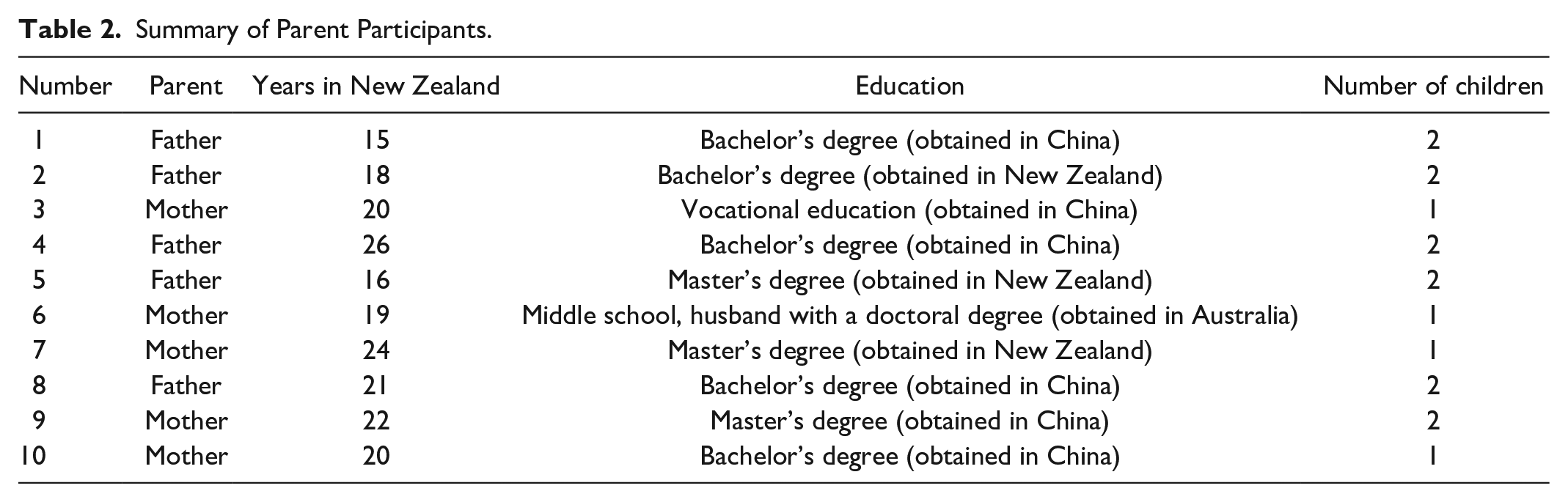
Q methodology was used in this study which comprised both qualitative and quantitative data collection. It consisted of two parts: Q-sorting and interviews (Stephenson, 1953). Initially designed by Stephenson (1935), Q methodology considers individual perspectives and building a comprehensive context of subjective phenomena, and it emphasizes the perceptions of individuals. The use of Q methodology enabled the researchers to identify participants’ personal perceptions about Chinese gifted students’ learning needs in a robust manner. A total of 30 participants (10 New Zealand teachers, 10 Chinese students, and 10 Chinese parents) were involved in this study. Participants were from eight different full-primary (ages 5–12 years) and/or intermediate (ages 12–14 years) schools in Auckland, New Zealand. The student participants were descendants of Chinese parents who were New Zealand permanent residents or citizens. All student participants had been enrolled in New Zealand primary schools for at least 2 years and had been identified as gifted or talented by gifted and talented education coordinators or special education needs coordinators in their schools. The parents of the gifted and talented student participants comprised the parent participant groups, while teacher participants were teachers with experience in gifted and talented education. The teachers worked in full-primary and intermediate schools in Auckland and did not have a direct relationship with either the student or parent participants. Tables 1, 2, and 3 present the participants’ demographics.
Summary of Student Participants*.
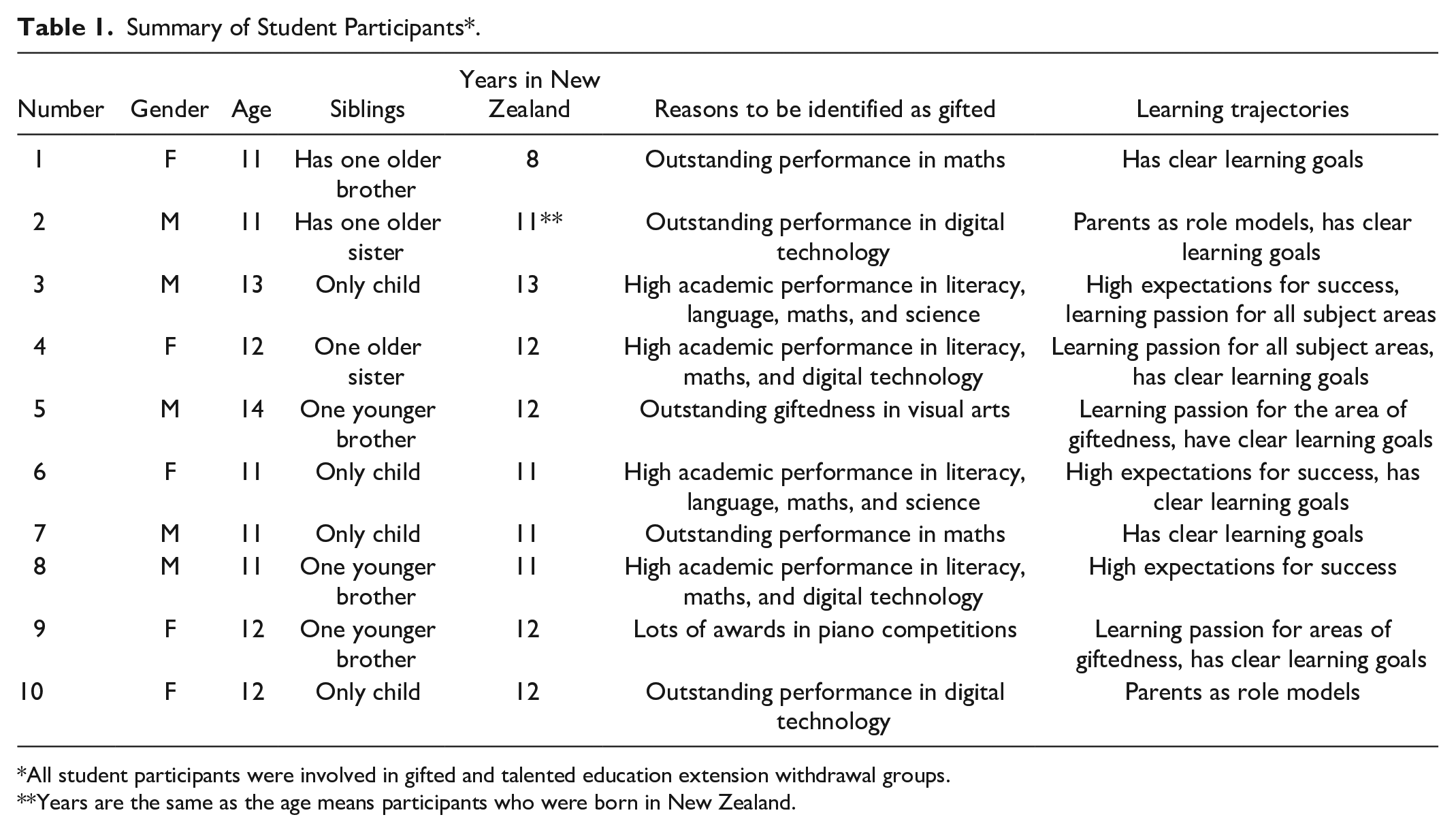
All student participants were involved in gifted and talented education extension withdrawal groups.
Years are the same as the age means participants who were born in New Zealand.
Summary of Parent Participants.
Summary of Teacher Participants.
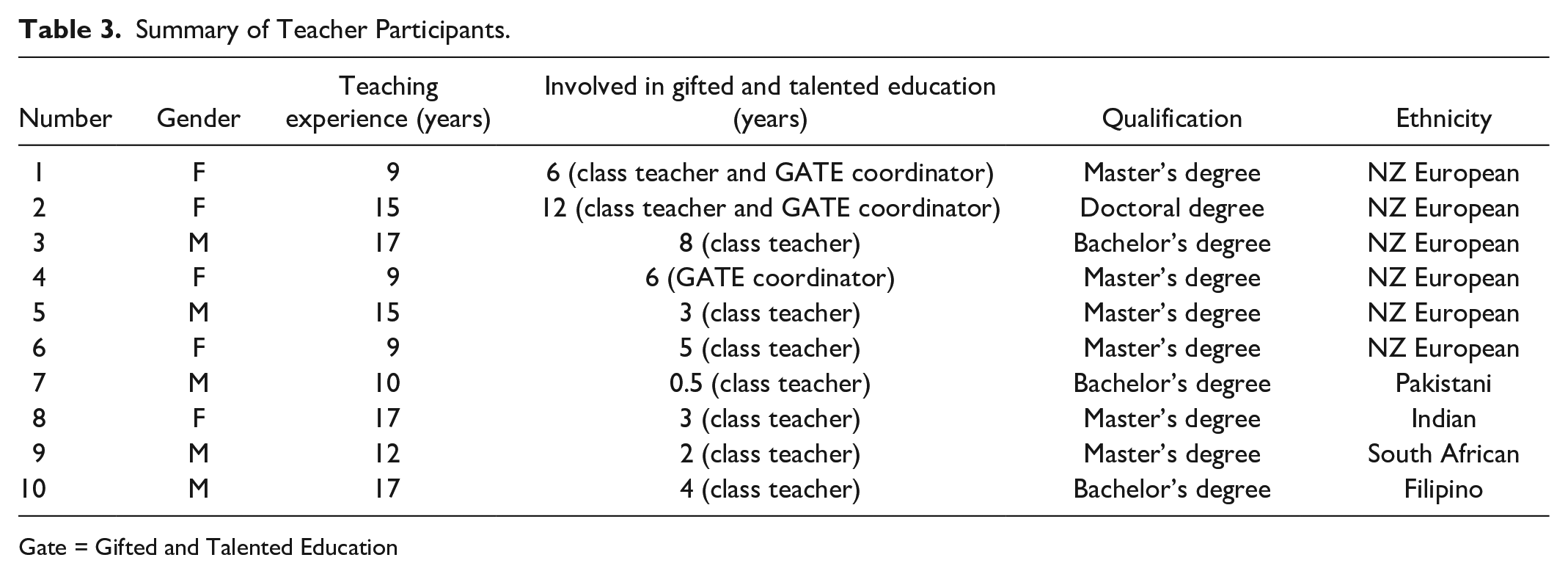
Gate = Gifted and Talented Education
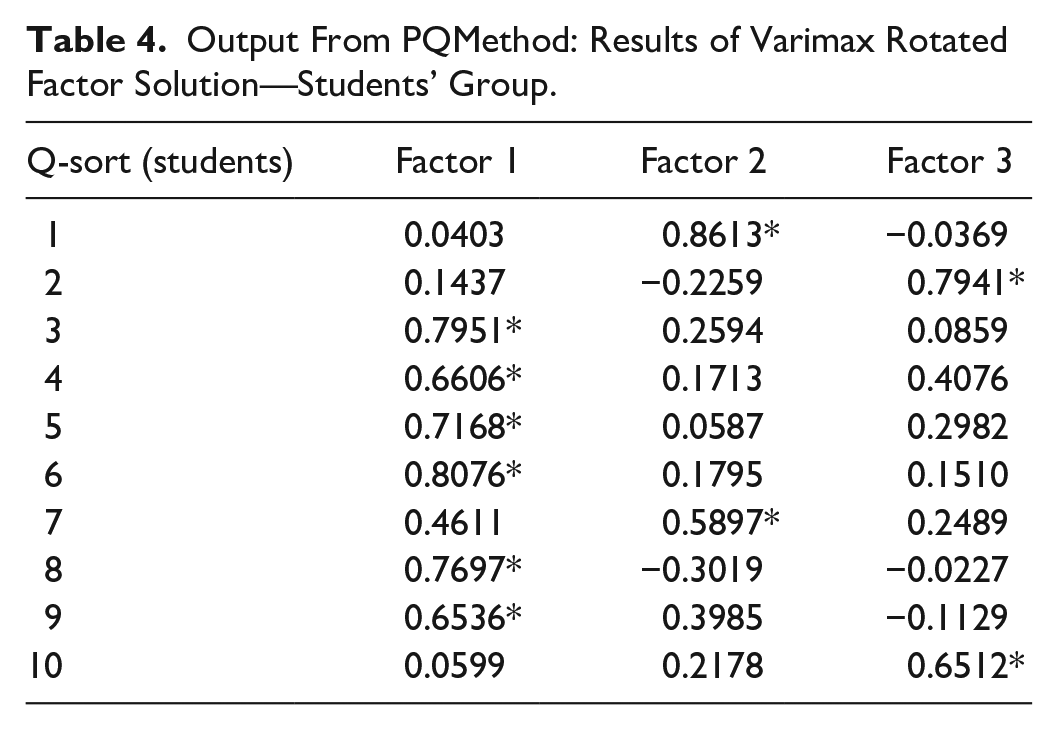
Output From PQMethod: Results of Varimax Rotated Factor Solution—Students’ Group.
To conduct a Q methodology, the first decision is the set of Q statements. To select a set of quality statements, a concourse is necessary. In Q methodology, the concourse comprises existing media, which includes scholarly articles, blogs, and face-to-face interviews, direct questions, and personal opinion (Watts & Stenner, 2012). Q statements can be selected from these existing sources (Pike et al., 2015). In this study, the concourse was the interview data collected in a preliminary study (Yao, 2022). In Q methodology, statements should be short, stand-alone sentences so they are easy to read and understand (Watts & Stenner, 2012). Once these statements have been sifted into a range of themes, the set of statements are said to reflect a balanced view of the entire concourse (Pike et al., 2015).
The participants in each group were given a deck of 48 cards (see Online Appendices 1–3) containing the identified statements. They were asked to arrange the cards in a grid according to the extent to which they agreed with the statements, with scores ranging from −4 to +4 (Figure 1).
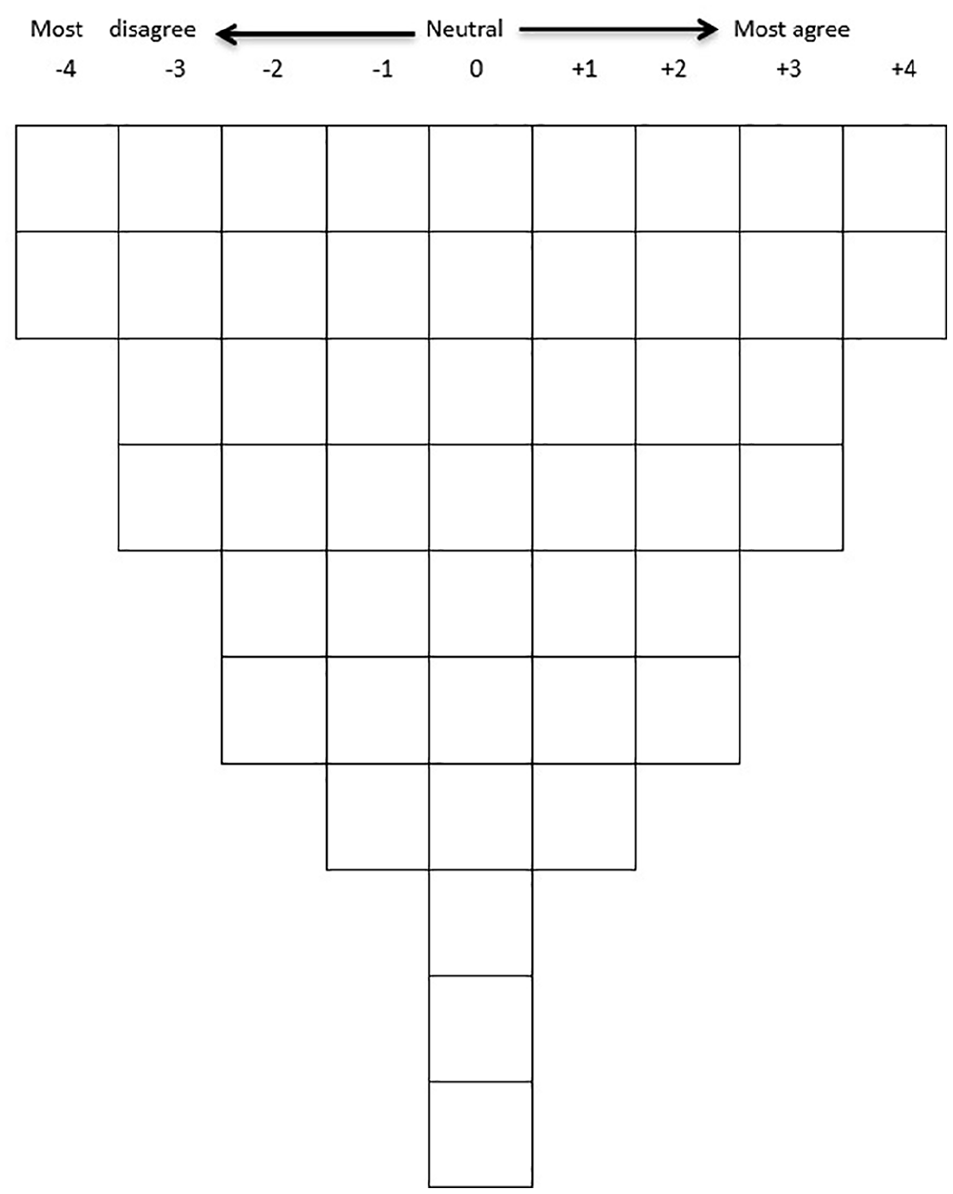
Fixed Distribution for the Q-Sorting.
The program PQMethod was used to analyze the data from Q-sorting (Schmolck, 2011). Each item on the survey was coded, and the data were entered into PQMethod to perform statistical analyses. The correlation matrix of all Q-sorts was calculated, which indicated the level of agreement or disagreement between the individual Q sorters. Then, the correlation matrix was subjected to factor analysis, to identify the number of groupings of Q-sorts by virtue of being similar or dissimilar to one another, that is, to examine how many different Q-sorts are in evidence (Brown, 1980, 1993).
After completing the Q-sorting, participants were required to discuss and justify their statement ranking through a postsort interview. Data from the postsort interview allowed us to better understand why these specific statements were in the agreement and disagreement category clusters (Donner, 2001; van Exel & de Graaf, 2005). Each participant had a one-on-one interview with the first author. The post-Q-sort interview process was recorded and transcribed by the first author. Synthesis and comparison of the data was categorized to identify further themes. The technique of data analysis of post-Q-sort interviews in this study used Gallagher and Porock’s (2010) card content analysis.
Findings and Discussion
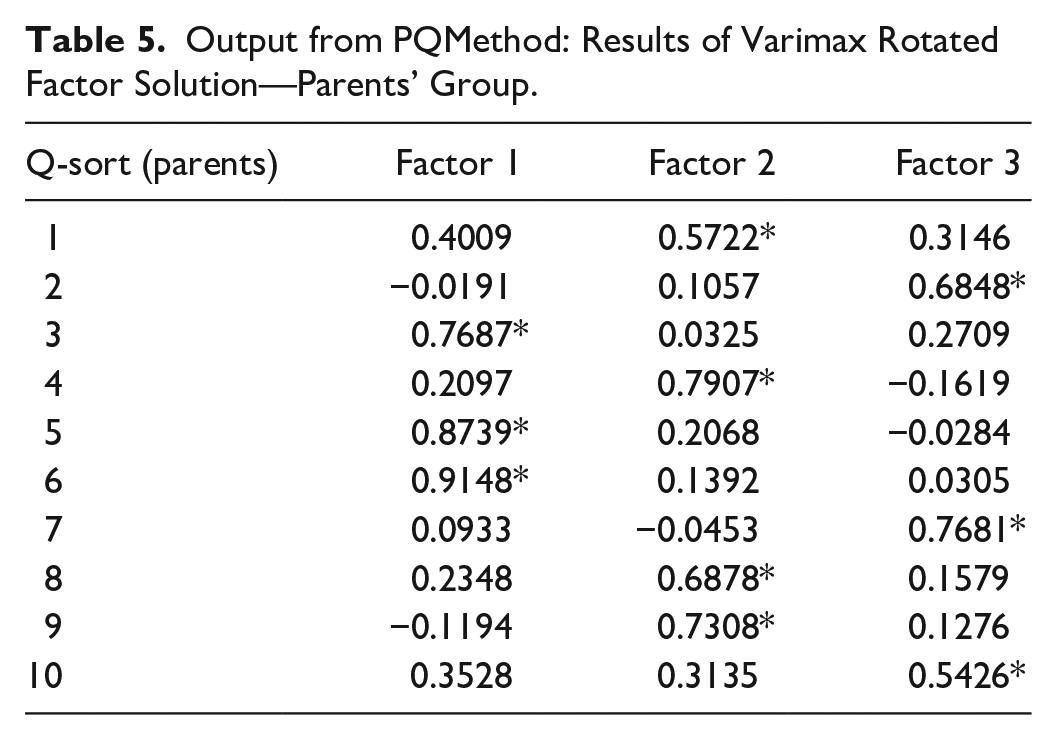
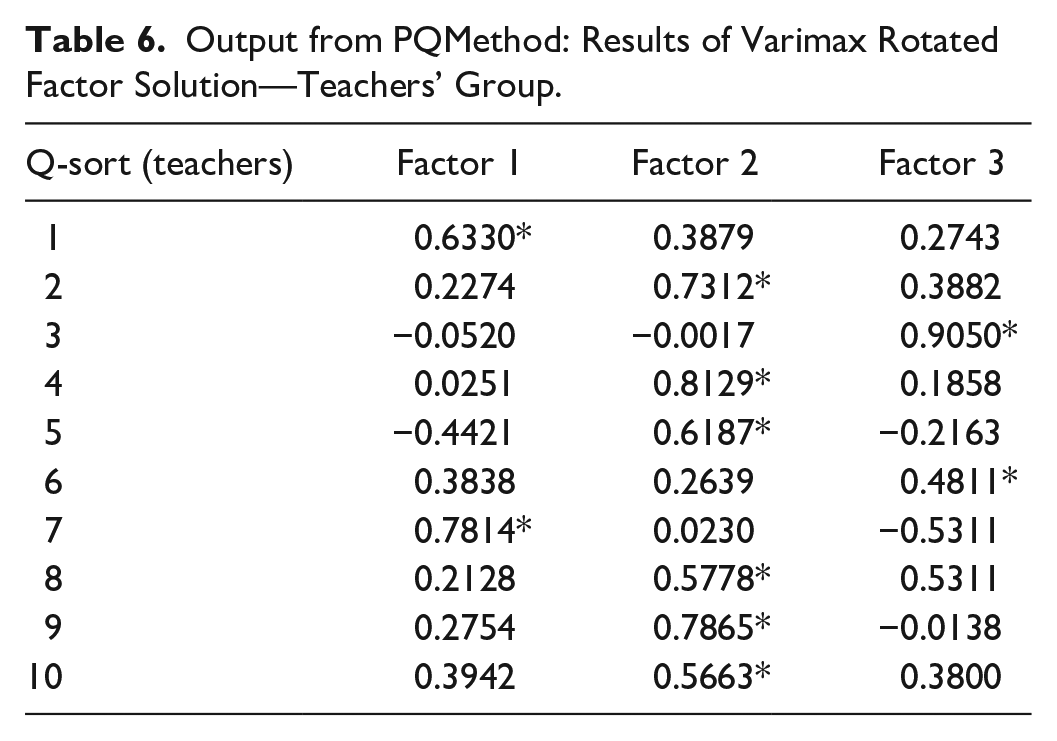
Tables 5, 6, and 7 illustrate the results of the varimax rotation factor analysis of the three participant groups; factor loadings with an asterisk (*) indicate a defining sort. Each group has a three-factor solution, which best represented the participants’ responses to the statements. It can be seen that Students 3, 4, 5, 6, 8, and 9 represented Factor 1, Students 1 and 7 represented Factor 2, while Students 2 and 10 represented Factor 3. Parents 3, 5, and 6 represented Factor 1; Parents 1, 4, 8, and 9 represented Factor 2; and Parents 2, 7, and 10 represented Factor 3. Teachers 1 and 7 represented Factor 1, Teachers 3 and 6 represented Factor 3, while the rest of the teacher participants represented Factor 2.
Output from PQMethod: Results of Varimax Rotated Factor Solution—Parents’ Group.
Output from PQMethod: Results of Varimax Rotated Factor Solution—Teachers’ Group.
Factors of Three Participant Groups.
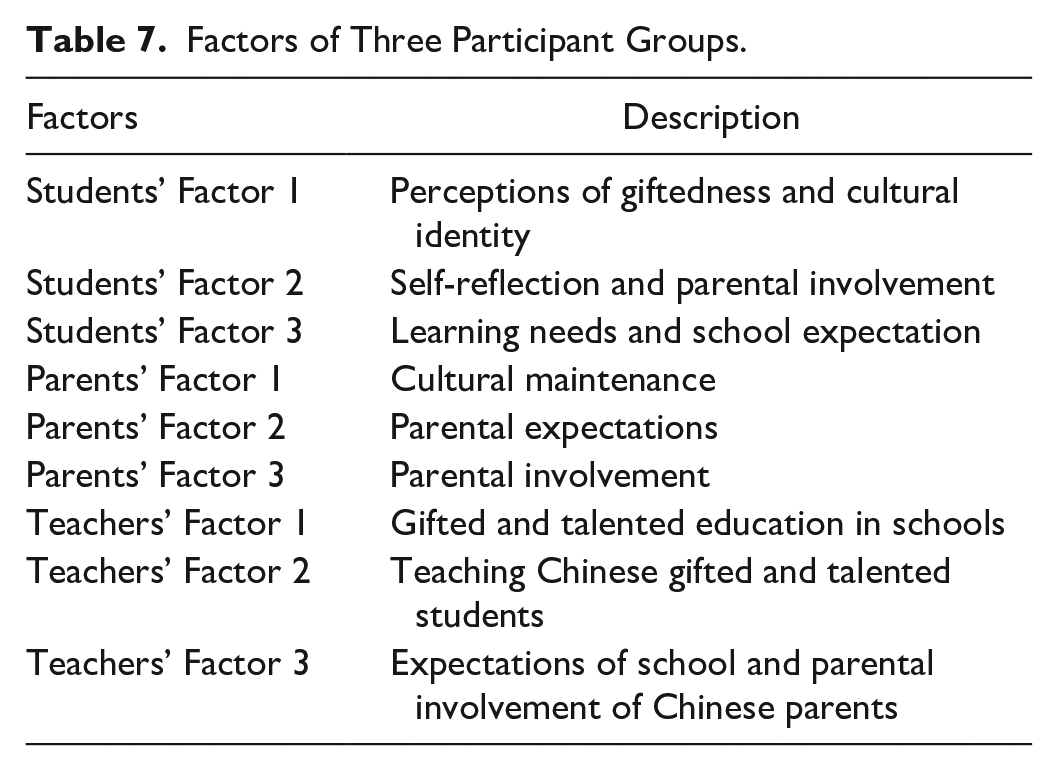
Based on the statements which had the highest level of agreement and those statements that had the highest level of disagreement for each participant group, the factors of three participant groups have been listed (see Table 7).
As with the students’ group, they reported that coming from a bicultural background has a great impact on their educational values and their perceptions of being gifted. All Chinese students in this study were bilingual speakers and spoke English at school and Chinese at home. Consistent with Yu’s (2010) study of Chinese immigrants in New Zealand, students in this study appeared to be successfully adapting to being in a different cultural context. They also appeared to be comfortable with respect to their expectations toward academic achievement and personal development. One possible reason for their attitude was 7 of the 10 Chinese student participants were attending Chinese classes, and all of their parents requested that they speak Chinese at home. The present results are in line with the results of Chan’s (2018) study of Chinese immigrant families’ aspirations for children’s bilingual learning in New Zealand, in which these parents indicated they were committed to supporting their children’s Chinese language and literacy ability, despite growing up in an English-speaking host country.
The tall-poppy syndrome, which is widely known in New Zealand, can shape perceptions of giftedness and the response to being identified as gifted (Moltzen, 2004). Previous research in relation to the New Zealand context indicated that students are reluctant to show outstanding skills and they try to fit into their peer group (Margrain, 2010; Moltzen, 2004; Tapper, 2012). However, in this study, student participants’ attitudes toward being gifted were generally positive.
Participants’ general attitudes toward being gifted were positive, they believed being gifted motivated them, and they enjoyed showing their outstanding skills among their peer group. This perception might be grounded in Confucianism, which reinforces the idea that individuals should be proud of being gifted as these people can bring honor to the whole family and could also lead the family to a higher socioeconomic class (G. H. Huang & Gove, 2012; Leung, 2002). Another possible reason could be these students felt welcomed and widely accepted by their family and community by showing their giftedness. Students in this study felt they were encouraged by parents to develop giftedness which built on their strengths and aspirations. This result is consistent with previous studies (Chan, 2007; Wu, 2008), which show that a supportive family environment could promote positive attitudes toward achievement in gifted children.
Student participants also spoke highly of the importance of parental involvement in their learning process. They indicated that their parents were understanding and respectful, and they had frequent open communication with their parents when they were making essential decisions. They thought their parents had a sound knowledge of their learning needs, and they felt their parents endeavored to offer support to explore their potential. These results are in line with Chan’s (2005) study of Chinese gifted students’ perceptions of parental involvement. It can be seen that supportive and respectful family environments appear to be important to the development of giftedness.
From the perspective of expectations of school, the student participants did not have expectations that the school would support and/or integrate their Chinese culture when delivering gifted and talented programs. In addition, they did not expect that their teachers should attempt to address or integrate relevant cultural knowledge (i.e., Chinese) into their classroom activities. This view may have been prevalent because the students’ cultural needs may have been fulfilled at home so their expectations of schools in this area were limited. This reflects an education belief within Confucian philosophy; Chinese parents believe maintaining cultural values and language learning is a family duty (Ji & Koblinsky, 2009; Li, 2004).
Parents in this study strongly believed that being involved in a bilingual environment could benefit children’s cognitive development, which they felt was essential to nurture giftedness for their children. In addition, parents thought speaking Chinese and understanding Chinese culture would be an advantage for their children’s future career development. This finding is in line with the importance of bilingual education identified in previous studies and the overwhelming positive benefits of bilingualism, such as improving access to literacy and solving a wide range of nonverbal problems (Barac & Bialystok, 2012; Bialystok, 2006).
The findings suggested that parents’ knowledge of giftedness as well as their understanding of gifted and talented education in the Western educational system is limited. Parents reported that their understanding of giftedness and gifted and talented education mostly comes from their traditional cultural and educational values; thus, although they had the awareness that the definition and understanding of giftedness could be considerably different in Western culture, parent participants were struggling to increase their understanding due to their workload and limited resources.
All parent participants showed a strong willingness for their children to have been identified as gifted in different areas. They indicated that their involvement was essential to develop their children’s giftedness. They believed they had a healthy relationship with their children, and they thought they understood their children’s learning needs mostly through open and effective communication. This finding is different from two previous New Zealand studies (Chellapan & Margrain, 2013; Wong & Morton, 2017) in which there is acknowledgment that parents of gifted children are aware of the negative discourses that surround the gifted label. Parents in Chellapan and Margrain’s (2013) study were very sensitive to the effects of egalitarianism, anti-intellectualism, and the tall-poppy syndrome in New Zealand. It is likely that the very positive parent perception in this study can be linked to beliefs underpinned by Confucianism, in which being gifted means elitism and is seen as a note of distinction (Tommis, 2013).
Although in traditional Chinese culture there was a strong preference for male children over female children, parents in this study did not appear to show sexual stereotyping. Findings showed that parents in this study encouraged their children to pursue nontraditional interests, regardless of their gender. For example, parents with gifted daughters shared that they were committed to their daughters’ well-being and success, and they were willing to support their girls to explore science, technology, engineering, and math (STEM) subjects by fostering their interest and curiosity. A possible reason for these perceptions could be that the parents in this study were well educated; hence, they were more likely to break down traditional barriers and commit to gender equality (Chen, 2012; Vialle, 2013). Also, since the parents in this study had been living in New Zealand, they may have been influenced by gender equality values within New Zealand education system.
An interesting finding showed that parents did not expect schools to know more about Chinese culture and Chinese parenting style. They also did not see the need for teachers to engage with the Chinese community. Also, it seems that parent participants did not have an expectation that the school would have specific and formal gifted and talented programs for their children. They understood that schools were not just focusing on their children, and they acknowledged many below-average students might need more attention and support from teachers than their own gifted child. To reduce the burden for both teachers and schools, parents chose to seek external resources to develop their students’ giftedness. A possible reason for this could be that the parent group believed gifted and talented education should not occur only in the school context. This reflects the Chinese traditional view of Confucianism, which emphasizes that education cannot be completed without one’s voluntary effort and teachers’ teaching alone cannot progress achievement without students’ commitment (Wu, 2006). Another explanation for the parents’ limited interest in pursuing more details about the gifted and talented programs in their children’s schools could be that the majority of Chinese parents in this study were highly educated and analysis of the literature demonstrates Chinese parents’ education level can have an impact on students, with highly educated parents feeling they can create access to resources themselves thereby supporting their own children (Chen, 2012; Guo, 2014).
The teacher participants believed improving teachers’ knowledge of Chinese culture would be beneficial in terms of developing closer relationships with students and their parents. However, eight teachers in this study acknowledged they had limited knowledge of Chinese culture. Teacher participants also reported that they did not embed Chinese culture into their teaching of Chinese students either, and their teaching approaches with Chinese students were the same as those used with the majority of students. There seemed to be a disconnect between teachers’ beliefs about the importance of culturally responsive teaching and the degree to which they chose to incorporate this type of teaching into the curriculum for Chinese students. The teachers did not consider it necessary to tailor their strategies given that many of the teachers in this study perceived the Chinese students they had worked with were respectful of their advice and willing to take constructive critique to advance understandings (G. H. Huang & Gove, 2012; Kim & Yeh, 2002; Wang et al., 2009). Consistent with previous studies (Hawe et al., 2000; Johansen et al., 2011), six teachers in this study agreed that they needed to pay more attention to misbehaving students to minimize class disruption rather than spend extra time with gifted students. Hence, the extra learning needs of Chinese gifted students seemed to be overlooked, thereby limiting the chance of this group’s voice being heard.
There was agreement among teacher participants that they were aware that the expectations and practices of education for Chinese migrants were different from those that they held. However, teachers stated that they could see that over time, an increasing number of Chinese parents were more likely to fit into the New Zealand educational context. This further confirms that parents’ personal life experience and acculturative attitudes inevitably shape their expectations (Costigan & Koryzma, 2011; Guo, 2014). In this research, it was suggested by teacher participants that minimizing the disconnect between parents and teachers is critical, so that parents can have a better understanding of the expectations about education in New Zealand and to collaborate with teachers to lead higher levels of student success in this country.
A key outcome of this research has been the development of a culturally responsive framework for school practice. This framework was developed to represent the “voice” of the participants and their views about how to promote a reciprocal partnership between teachers working with gifted Chinese students, the students themselves, and their parents.
A Culturally Responsive Framework
The participants felt that their “lack of voice” had an impact on some very important aspects of the education of Chinese gifted and talented students. In response to this feedback, it is hoped that this culturally responsive framework will contribute to our understanding of the learning needs of gifted Chinese students in New Zealand and to promote an ongoing partnership between Chinese families and the school. The framework is called Let Voices Be Heard because it is based on the voices of the participants (see Figure 2). This is a sequential framework which contains four steps. The following paragraphs will provide detailed explanations of each step.
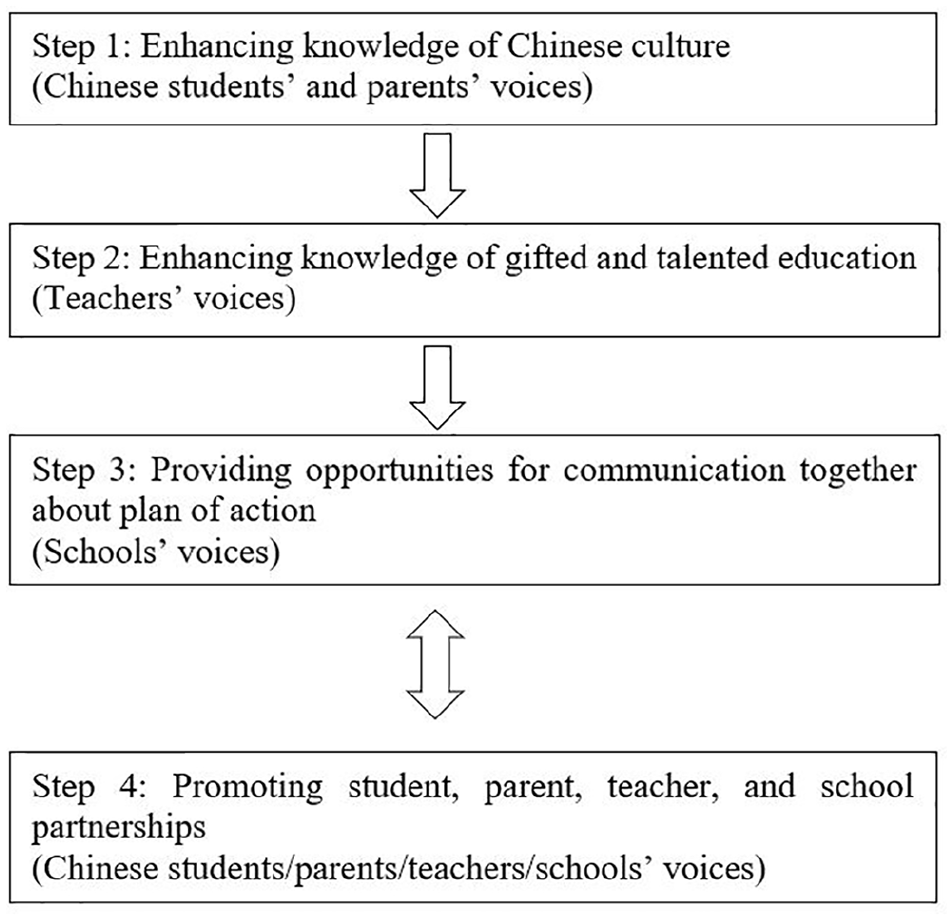
Let Voices Be Heard.
Step 1: Enhancing Knowledge of Chinese Culture
When working with Chinese gifted students, the teachers in this study felt it was a priority for their knowledge of the cultural background of these learners to be enhanced. Inviting Chinese parents and students to share their cultural knowledge with the teacher is the first step in this culturally responsive framework. This will provide Chinese students and parents with the opportunity to have their voices heard and enable teachers to learn more about the cultural backgrounds, cultural strengths, and cultural values of the Chinese children they are working with.
Eight teachers in this study acknowledged they had limited knowledge of Chinese culture. The teachers felt their understanding of the Chinese culture was somewhat superficial (e.g., knowledge of Chinese festivals and food). Teacher participants believed improving teachers’ knowledge of Chinese culture would be beneficial in terms of developing closer relationships with students and their parents. There is an abundance of international (e.g., Baker, 2015; O’Grady, 2014; Scott, 2014) and New Zealand (e.g., Burgon et al., 2012; Scobie-Jennings, 2015; Webber et al., 2013) research which has identified the need for developing strategies for culturally responsive teaching of minority gifted students, and the importance of increased cultural awareness for teachers to teach minority gifted students (e.g., Baker, 2015). The teachers felt it was not realistic to incorporate knowledge of just one culture into teaching practice as they have other students from different cultural backgrounds. While knowledge of Māori and Pacific cultures was viewed as the priority, teachers felt they did not have time to learn about Chinese culture.
Chinese values and education have been largely influenced by Confucianism. By improving the knowledge of Chinese culture, such as Chinese social etiquette and basic principles of Confucianism, educators will have the opportunity to reflect on and share how they might recognize and provide a culturally responsive learning environment for Chinese students. For example, teachers could be introduced to the fact that being reluctant to ask questions or being quiet in the classroom may not mean Chinese students are passive learners but may be due to cultural values and beliefs and be seen as a sign of respect. In the Chinese traditional culture, teachers have higher authority than students so should not be questioned. This suggestion was particularly reinforced by two teachers in this study who had married a Chinese person, thus giving them more opportunities to understand the culture. By having the opportunity to listen to parent voice, this could open up discussion about a student’s home culture, language, values, and beliefs (Toppel, 2015), thus creating connections with students’ communities, which largely impacts students’ achievement (Scobie-Jennings, 2015; Webber, 2011).
Step 2: Enhancing Knowledge of Gifted and Talented Education
While the first step in the framework is based on establishing a link with parents and students and gathering relevant knowledge and understanding of Chinese culture, the second step would be to enhance Chinese parents’ and students’ knowledge of gifted and talented education in New Zealand. This gives parents and students an opportunity to listen to teachers’ voices. Chinese parents in this study said they had little knowledge of the gifted and talented programs in their children’s school. Interestingly, more than half of Chinese parents who were interviewed did not show much interest in knowing more about the gifted and talented programs in schools. The parents’ group believed that gifted and talented education should not occur only in the school context and all parent participants strongly believed education at home with the family was essential to nurture gifted children. This is consistent with previous research which shows that Chinese immigrant parents have reported discrepancies in education values and beliefs with schools (Chang et al., 2021). In order for parents to acknowledge the role teachers play in developing their children’s gifts and talents, it is essential for parents to be given the opportunity to hear the teachers’ voices about the strategies being utilized in the school/classroom context and discuss together the scope of a school/home partnership. Hence, it is necessary to introduce these immigrant families to the school values, beliefs, and expectations, especially the knowledge of the New Zealand Curriculum.
For Chinese families with gifted children, it is essential for parents to hear the schools’ definition of giftedness and talent, for them to become familiar with key priorities in Ministry of Education documents, and recommendations to parents regarding pedagogical principles and strategies underpinning the Ministry recommendations. In this study, although these Chinese parents had a strong willingness to become familiar with the new school system and culture, they faced challenges with accessibility and availability of resources. It is hoped that this second step will provide opportunities for a support network to be established at primary and intermediate school levels.
Schools are encouraged to make sure these resources are easily accessible to Chinese immigrant parents. For example, educational workshops at convenient times and locations, free or with an affordable cost, and purchasing resources should also be taken into consideration. Schools could prepare some multilingual pamphlets and newsletters which include school and gifted program information. In addition, schools could encourage Chinese parents with more knowledge of the New Zealand education system to share their experience with new Chinese immigrant families so to overcome language barriers. By improving Chinese parents’ understanding of different educational values and expectations, these parents in this study said they would be more willing to engage with school activities and communicate with teachers.
Step 3: Providing Opportunities for Communication Together About a Plan of Action
Steps 1 and 2 create the foundation and avenue for communication between parents and schools. The next step in the framework is to involve Chinese parents in the development of action plans for their gifted and talented children, so parents and teachers together can provide the best support possible.
Generally, teacher participants in this study were not comfortable and confident to engage Chinese parents, and they were uncertain how best to communicate with them without offending their cultural values. Likewise, Chinese parents said they were often not clear about what schools expected of them. Therefore, an important part of this framework would be for Chinese parents to have the opportunity to contribute their ideas when action plans are being developed by the school.
Parents in this study reported incongruence between their expectations regarding their child’s education and the school’s expectations for their children. Six of them reported that they believed their children’s schools were too permissive. These parents were concerned that their children’s exposure to permissiveness through schooling undermines their vigilance as parents, and values such as obedience and respect for authority. This is clearly linked to their culture of origin, which encompasses being respectful, responsible, and well behaved (C. Y. Huang & Lamb, 2015; G. H. Huang & Gove, 2012). Part of a future plan of action to enhance parent trust and teacher–parent communication could be for schools to invite Chinese parents into the classroom to see their child’s learning. This sets the scene for initiating discussion about the positive progress their children are making or perhaps any concerns parents may have about their child’s education at school.
The Chinese parents in this study said they often perceived themselves to be powerless to make school-related decisions. They felt they did not have knowledge about the school curriculum or about how the gifted programs worked in schools. The parents felt uncomfortable with communicating with teachers as they worried that teachers might judge them negatively due to their ignorance and this might be detrimental to their children’s relationships with teachers. This was likely due to Chinese parents holding teachers in high regard and believing that it is disrespectful to challenge teachers (C. Y. Huang & Lamb, 2015; Kim & Yeh, 2002). In Confucian philosophy, teachers are professional and respected; thus, parents should not interfere with the teachers’ domain (Kim & Yeh, 2002). It is hoped that the third step in this framework would help to overcome some of the challenges outlined above. Step 3 could create a forum to discuss common areas of interest or concern and discuss the possibility of working together on a supportive plan of action.
Step 4: Promoting Student, Parent, Teacher, and School Partnerships
Step 4 is intended to promote a reciprocal ongoing communication and partnership channel between the school and the parents. It suggests that the communication include discussion of the plan of action for promoting the Chinese students’ learning which occurs through a partnership between parents and teachers. It is, however, only a successful partnership if the communication channel remains open, reciprocal, and ongoing.
The ultimate goal of this framework is to let all voices be heard within the same space. Ensuring that the voices, from Chinese students and their parents, teachers, and schools, are shared and heard has the potential to promote an effective and reciprocal partnership among all the relevant participants.
One of the most popular stereotypes about Chinese gifted students is the notion that they are hardworking and have high self-expectations (Costigan et al., 2010; Henfield et al., 2014). This view might suggest to educators that these students could be successful without extra support and can impact the need to provide additional educational resources. This is consistent with the views of teachers in this study. They suggested that stereotypes became more pervasive and powerful when educators were hesitant to engage with Chinese communities or reluctant to know more about Chinese culture. To help with the development of a partnership between all relevant participants, schools should take proactive measures to ensure Chinese gifted students can take full advantage of the programs and services offered. In addition to a parent/teacher partnership plan, schools could also give parents an opportunity to evaluate the gifted and talented program offered to their child and discuss any concerns, suggestions, and positive feedback these parents may have.
In this research, it was acknowledged that some schools and some Chinese parents had different approaches to supporting gifted students. This disparity could result in another challenge for partnership, with some Chinese parents having limited interest in gifted programs in their child’s school. For example, parents in this study reported that their children had participated in some enrichment programs which focused on developing writing and mathematical skills. However, the parents felt they were unable to fully understand the goals and outcomes of these programs and they felt that the school did not offer explanation for the enrichment programs. Handling differences in education practices can be a sensitive issue such that it is necessary to approach conversations with Chinese parents in a respectful and understanding manner. For example, before discussing the education practice in New Zealand, schools could be open to parents’ perspectives and give them an opportunity to express their views and/or concerns. When discussing the practices and goals of the gifted programs, teachers are encouraged to explain the benefits and teaching methods used in the programs. Although Chinese parents might not be familiar with the Western educational ethos such as problem-solving skills, creativity, and critical thinking skills, it is highly likely they would respect different teaching practices if they felt their views were sought and valued. In traditional Chinese culture, when a respected person like a teacher makes an effort to initiate a conversation with a parent, the parents often perceive that the teacher, and the school, value their child and will pay attention to their child’s school performance. If parents could be informed that while schools may have different approaches to catering for gifted students, the goal is always to support the student’s learning and enhance their development. Recognizing the commonalities between Western and Eastern approaches to support gifted students will likely result in Chinese parents feeling more confident in their child’s educational path and thereby becoming more informed about the strategies that are most effective for fostering their child’s talents and abilities. This has the potential to promote more open collaboration between parents and teachers to ensure their child’s needs are being met and it may even lead to parents becoming more involved in gifted programs.
In addition, when engaging with the local Chinese community, it is important for educators to be aware of and address the stereotypes associated with gifted Chinese students—especially for those second- or third-generation immigrants. Their perceptions of giftedness are largely different from their parents and/or grandparents, and their Chinese classmates who just recently migrated from China. Promoting a strong partnership is an essential component for overcoming stereotypes. Teachers who are more engaged with Chinese students and their communities can become more confident about acknowledging these differences as they draw on their partnership experiences.
It is not an easy task to promote reciprocal ongoing communication between teachers and parents. New Zealand teachers are facing heavy workloads; it has been reported that teachers in New Zealand work an average of 52.1 hr each week (Dolton et al., 2018). More specifically, New Zealand primary school teachers have reported increasing levels of burnout with respect to their health and well-being (Burgon et al., 2012). It is hoped that senior management can promote the reciprocal ongoing communication between teachers and parents in ways that do not increase teachers’ overall workload. For example, since New Zealand has experience in supporting teachers to develop cultural competence to successfully teach Māori learners, it is hoped that senior staff at the school could synthesize possible similarities and differences between Chinese and Māori culture, as well as the use of second-language teaching and learning strategies. This could be helpful for creating effective professional development sessions. In addition, recruiting more support staff who share similar cultural backgrounds with the target cultural students can provide accessible cultural resources to teachers in the workplace. Schools could put on cultural events and activities to provide teachers with more opportunities to connect with students’ communities.
From Theory to Practice: How This Framework Works
New Zealand has included a focus on the educational needs of its growing population of culturally diverse students within the national curriculum. The cultural diversity principle is one of eight principles in the New Zealand Curriculum, and it requires teachers to value students as individuals and celebrate the diversity that they bring. There are Ministry of Education documents which focus on issues related to addressing the unique needs of Māori and Pacific students. The common points within these documents are the need to nurture and maintain strong relationships between schools and families through valuing individuals’ cultures. This focus fits well with the culturally responsive framework presented in the previous section.
The key focus area within this culturally responsive framework and the New Zealand Curriculum’s cultural diversity principle is reciprocity. Within the present context, this underscores the importance for Chinese gifted students, their parents, and their teachers to value and respect each other’s voices. By listening to Chinese students’ and parents’ voices, teachers and schools will have the opportunity to gain an understanding of Chinese educational values. By listening to teachers’ voices, Chinese parents would have the opportunity to gain more knowledge of the New Zealand educational system and its expectations. By listening to schools’ voices, Chinese parents could be more active in parental involvement in school activities and/or in the development of a plan of action to support their children’s learning needs. Eventually, by giving everyone a voice, this has the potential to contribute to and enhance partnerships and services to provide the best support for our Chinese students. The culturally responsive framework provides a platform to connect Chinese communities and schools.
This framework also has potential to encourage teacher self-reflection. The four steps in the framework provide a sequence guide for developing a strong and sound plan to support many Chinese gifted and talented students. Whether the school has a large number of Chinese students or one Chinese student, the teachers can reflect on their use of the framework to promote the development of a culturally responsive environment. This framework also has potential to be a guide for beginning teachers who are working with Chinese gifted and talented students for the first time.
The principles and practices that are effective for teaching Chinese students also have potential to be applied to other students from different cultural backgrounds. This can help to create a more inclusive and effective learning environment for all students, regardless of their ethnicity or cultural background. By using the lens of meeting Chinese students’ learning in this framework, teachers can become more aware of the diverse cultural backgrounds of their students and tailor their teaching strategies accordingly.
While a culturally responsive framework has been designed to nurture the voice of participants, it is important to highlight that there was a limited sample size of participants in this research. As a result, the voice of participants in this research may not be representative of all New Zealand Chinese gifted and talented students, their parents, and teachers. For further research, it is recommended a larger, more representative survey of Chinese families, and teachers across all regions in New Zealand would be useful.
Another limitation of this research was that teachers who participated were not from the same schools as the students and parents. As a result, the gifted and talented environment of the students/parents and teachers could have been somewhat different. Future research could recruit students and teachers from the same schools and classrooms to address the potential impact of this on the generalizability of the results. In addition, all Chinese students in this study were drawn from high-decile schools with high-income backgrounds and with well-educated parents with relatively high English proficiency. Future research could include a more diverse participant sample with respect to school and family demographics. (e.g., school decile rating, level of family social status, parents’ educational level, and English proficiency).
Conclusion
Numbers of Asian immigrants to Anglosphere countries are increasing. They are generally becoming more visible at the national level, impacting population size, age structure, and ethnic composition. In New Zealand, it has been estimated that one third of Aucklanders will be Asian by the Year 2038 (Stats NZ, 2018); currently, in Auckland, almost a quarter of residents identify with an Asian ethnicity, the largest subgroup of which is Chinese (Stats NZ, 2018). As these immigrants settle in have families or extend their families, there will be an increase in Chinese students within New Zealand schools. This research study has shown that unfortunately in New Zealand, there are some educators who have a relatively limited knowledge of Chinese culture. While Chinese students are enrolled in gifted and talented programs, their parents and some classroom teachers feel these students’ learning needs are being overlooked due to communication barriers between Chinese immigrant families and New Zealand schools. By knowing more about the Chinese culture, educators in New Zealand might point the way to a brighter future for gifted and talented Chinese students and their parents.
By listening to the students and parents, by taking time to get to know more about local Chinese communities, the challenges and difficulties that many of these immigrant families may face will become more evident. Results of this study have shown that Chinese parents and students struggle with the different educational expectations and school systems in New Zealand, that some stereotypes about Chinese immigrants still exist, and that for some gifted Chinese students’, their learning needs have been overlooked in New Zealand schools. While this research was specific to the New Zealand context, given the similar ancestral, historical, and cultural ties, the framework has a potential to provide “food for thought” for other Anglosphere countries wanting to support the learning needs of their gifted Chinese students.
It is hoped this framework will provide a guide to assist with recognizing and celebrating a Chinese child’s identity by listening to the voices of students and parents, by supporting their culture and working in partnership with family to enhance the demonstration and development of students’ gifts and talents.
Supplemental Material
sj-docx-1-gcq-10.1177_00169862231193700 – Supplemental material for Listen to the Voices of Gifted Chinese Students in New Zealand: A Culturally Responsive Framework
Supplemental material, sj-docx-1-gcq-10.1177_00169862231193700 for Listen to the Voices of Gifted Chinese Students in New Zealand: A Culturally Responsive Framework by Zhu Yao, Catherine Rawlinson and Richard Hamilton in Gifted Child Quarterly
Footnotes
Declaration of Conflicting Interests
The author(s) declared no potential conflicts of interest with respect to the research, authorship, and/or publication of this article.
Funding
The author(s) received no financial support for the research, authorship, and/or publication of this article.
Open Science Disclosure Statement
The data analyzed in this study are not available for purposes of reproducing the results. The code or protocol used to generate the findings reported in the article is not available for purposes of reproducing the results or replicating the study. The newly created, unique materials used to conduct the research are not available for purposes of reproducing the results or replicating the procedure.

Notification
This journal operates a double-anonymized peer-review process. Due to a technical error, this article was initially reviewed using the double-anonymized process and subsequent reviews were conducted through a single-anonymized peer-review process. All authors and reviewers were made aware of the error and agreed to proceed with the peer-review process with the identity of the authors known to the reviewers. No reviewers reported conflicts of interest.
Author Biographies
References
Supplementary Material
Please find the following supplemental material available below.
For Open Access articles published under a Creative Commons License, all supplemental material carries the same license as the article it is associated with.
For non-Open Access articles published, all supplemental material carries a non-exclusive license, and permission requests for re-use of supplemental material or any part of supplemental material shall be sent directly to the copyright owner as specified in the copyright notice associated with the article.
