



Abstract
This article presents the case of Carlo Baroccio, an Italian Jewish banker from Rome who enrolled in the Italian army during the First World War. He appears photographed in a private family album in uniform at home, with friends, on trips, and with his family. Carlo’s family is a case study example of a family of Roman Jews after the opening of the ghetto in 1870. The study explores the role of photography in the display of enthusiasm and involvement of this community in the First World War through the analysis of Carlo's private photographs. It examines how patriotism manifested in this soldier's private sphere and in his private photo album, and how it was expressed through his wife's supporting, patriotic gaze while constructing the album. The study will present the background on the status of Jewish women after emancipation and during the First World War. The contextual background of these photographs is examined, and the photos are explored using visual semiotic tools.
Introduction
This article analyzes photographs from a private photo album of a Jewish soldier from Rome during the First World War. In this album, Carlo Baroccio (1879–1925) appears in his photographs in uniform in several locations: near national monuments and parks, with a horse and carriage, and in mundane situations, which are all interpreted as signs of his and his wife's patriotism, as will be explained in this article. 1
Carlo's family was part of the Roman Jewish community, the ebrei romani, who had lived in the Roman Ghetto for centuries until the opening of the ghetto in 1870, following the battle of the Risorgimento and the unification of Italy. The Jewish Italian researcher Anna Foa (2022) explains that the Jews took an active part in the construction of the new Italian state. The long-awaited Jewish emancipation that followed entailed freedom, equality, and financial, cultural, and educational opportunities for Italian Jews (Barromi-Perlman, 2024). Consequently, out of a sense of nationalism and pride, 45 years later, the Italian Jewish minority responded with enthusiastic patriotism and supported the war effort of the Grande Guerra. Their loyalty to the Kingdom of Savoy motivated the community's leaders to support the Italian army's attack on the Austro-Hungarian Empire in 1915 (Klein, 2018). Supported by the rabbis, many Italian Jews fought in the First World War, and many Jewish combatants received decorations for their bravery. Ilaria Pavan, who has researched the history of Italian Jews and Italian antisemitism in the 19th and 20th centuries, claims that the Jewish Italians’ service in the First World War has not received adequate historical scholarship attention despite the increasing interest over the last few years in Italy's Jewish minority and the part it played in Italian life in the early 20th century (Pavan, 2015: 137). This article’s contribution is the unique way it analyzes the case of the Roman Jewish population during the First World War and highlights its patriotism based on a visual analysis approach. It analyzes selected photographs from a private album of an Italian Jewish soldier who enlisted in the First World War and served as a cavalier. The analysis of selected photographs opens the door to exploring the mindset of the cultural and social situation of the Jewish community in Rome at the time. It explores how patriotism and militarism entered this soldier's private sphere and family life and how it was viewed and perceived by his patriotic wife, who took part in the process of image construction and preservation of visual memory by constructing a photo album and enlarging photographs of him as a soldier. Carlo's patriotism is reflected not only in his pictures but also in how his wife Emma perceived him and how she wished others would continue seeing him after his death.
The article discusses the role of the female gaze in the album's construction process. Its underlying assumption is that incorporating military attire into the everyday life experience and environment of one's private sphere and at home is a sign of endorsing and accepting the ideology and symbols of society and embracing them into one's personal life. Carlo's album contains many photographs of him in uniform, some of which were enlarged and framed at home. His images as a soldier and their display in his home attested to his and his wife's allegiance to Italy and its cause and ideology. 2 The role of women during the war is discussed, expanding on how Emma's family and upbringing affected her patriotic sentiments.
Methodology
Focusing the attention of this research on the analysis of one family and one album is a form of selective vision that enables a view of a larger social existence and social behavior patterns and practices. Applying the sociologist Erving Goffman's perspective, Daniel Cefai similarly explains that the social order of Italian society can be explored by focusing on a minor attribute of a private individual (Cefai, 2022: 65–68). This study follows Goffman's rationale to observe what people do, where and when they do it, how they adjust to their immediate material circumstances, and how they reorganize their actions in the course of their activities and interactions. Thus, photographing a person in an everyday situation, such as drinking from a fountain in uniform, can serve as data regarding the general state of mind, ways of adjusting, choice of activities, social status, and social interactions of that person in his community during that time frame.
Visual analysis treats visual data as part of historical data. In this case, the historical visual data is private and personal, comprising small images pasted on black construction paper in a photo album. Since all the people directly connected to the photo album, or who knew Carlo, have passed away, and no direct narratives are linked to the images, the interpretation and analysis are constructed and contextualized through indirect research. 3 The diverse data collection assists in generating and understanding the history and sensitivities of the cultural group of the Roman Jews during that time frame.
Analysis of photo albums
Private family photo albums have become relevant sources for cultural and social history research and visual research methods. Art historian and museum curator Michaela Sidenberg explains that the albums enrich the effort to construct a detailed, individualized, vivid picture of the daily life of different social milieux of past generations. Furthermore, they testify to the changes in lifestyle and taste, the evolution of social conventions or political atmosphere, and subtle nuances of personal mannerisms, inclinations, and relationships (Sidenberg, 2020: 72–73). However, decoding visual information in photographs, including family albums, should not be based on the conviction that they simply depict reality (Barromi-Perlman, 2012). In the 19th century, the camera was considered a positivist tool that recorded the natural world accurately, in all its forms, including in private photographs. Roland Barthes claimed that every photograph gives the observer the impression of “the stupefying evidence that ‘this is how it was’ and the reality of ‘having been there’” (Barthes, 1980: 278).
Yet, photographs or albums do not serve as concrete evidence. Family albums often lack a systematic structure or apparent intentionality of the photographer. They do not rely on structured texts to convey a message, and their reading lacks consistency. Barthes (1974) explains that family photographs function as readerly texts in which the viewers read the photographs, in the sense that they are not expected to undertake a discourse or dialogue with or about the images. Viewers of family albums are expected to passively accept the visual text and related narratives, absorbing the memories, legacies, histories, and narratives (Barromi-Perlman, 2012: 103). Viewers of family photographs do not question whether the family photo is a social construction or “an object of complex, emotional and cultural meaning, and [an] artifact used to conjure memory, nostalgia and contemplation” (Sturken, 1999: 178).
Family photographs are objects of complex, emotional, and cultural meaning and an artifact used to conjure memory, nostalgia, and contemplation. The construction of an album involves selecting preferred images to be placed in it. The form, quantity, order, size, captions, space, and repetition—all constitute part of the data of a photo album. Covert narratives often accompany family narratives, along with subtexts. Connecting the images to oral narratives or refraining from doing so could serve the purpose of perpetuating family memories that are favorable while purposefully omitting other stories.
Unfortunately, in the case of Carlo's album, the album was hidden in a cupboard and never presented on family occasions. Furthermore, the family refrained from delving into the past, indicating that these memories were painful. Thus, the analysis here is based on assumptions, hypotheses, and bits of personal memories. These pieces of information are contextualized into a larger story of the family background and the community's experience before and during the First World War. 4 The methodological challenge here is building a historical and cultural context and interpreting the visual data, thereby constructing the meaning of the photographs. Semiotic analysis tools are employed, relating to the formal construction of the photographs; the composition, angle, and distance from the photographer; the size and quality of the image; the information in the background and foreground; the gaze, the return of the gaze, and textual information. The number and choice of photographs, how they are pasted on the page, and the written text are part of the information contributing to understanding the visual information.
This study, in essence, is interdisciplinary, combining various research methods, such as visual ethnography and semiotic analysis. The nature of ethnographic work involves the interpretation of cultures (Geertz, 1973). How the culture and tradition are presented and discussed is also relevant information. My position as a researcher in this study is complex, leading to an emic and etic stance. On the one hand, it is a study of my family's history from over a hundred years ago, in which almost all family members are deceased. The man I am researching is my grandfather, and I have indirect ties and historical roots in the ebrei romani community. On the other hand, I did not grow up as a Roman Jew, which positions me as an outsider. As such, my challenge is understanding the nuances of the culture, what triggers people, the hand motions, the facial expressions, and the tones of speech. As an outsider, I use analytic distance to assess how sensitive topics are narrated, argued, negated, and dismissed during interviews and conversations, which constitutes part of the data collection.
My impression from interviews and conversations is that Roman Jews tend to divert the conversation from the First World War period to the Italian 1938 racial laws against the Jews. Apparently, the shock of being excluded by the racial laws from the Italian nation, as equal citizens, after serving their country in the First World War as well as the War on Eritrea and Somalia in 1889, the invasion of Libya in 1911, and the invasion of Ethiopia in 1935–1936, while serving in the highest ranks of government, did not wear off. All these factors contributed to the challenge of gathering information from of gathering information from this period in Jewish Italian history. Ruth Nattermann (2019) validates my impressions by writing that the Jewish memory of the First World War in Italy has been widely neglected in historiography and in collective memory. As in the German and Austrian context, Italian Jews’ recollections of the First World War were overlain or even destroyed by the devastating experience of the Second World War and the Holocaust (Nattermann, 2019: 249).
Emma's gaze and agency as a patriotic woman
Emma Baroccio, née Zevi (1894–1989), my grandmother, Carlo's wife, compiled the album after his untimely death in 1925 from illness. Emma's gaze is expressed in how she created this one album, positioning herself as an observer and an active agent in the visual memory she constructed. The bulk of the album consists of photographs of Carlo in uniform; the last two pages are wedding photographs, and in the middle there are various photographs of them as a couple, with friends, and with their baby boy, Guiliano. The album contains 75 photographs and 15 obituary columns published in the local press, mostly presenting Carlo as a decorated and promising banker at the Banca Commerciale Italiana (Italian Commercial Bank). There are no other albums of Emma or her children, Carla and Giuliano, to be found, other than loose photographs in drawers.
Figure 1 shows a studio portrait of Emma. She had been used to being photographed from a very young age (her earliest photograph dates back to 1897, at the age of three). The power in pictures lies not only in their content but also in what is done with them. Emma's choice of pasting family photos into an album, her preferences of size, order, and layout, and her decision to display them at home on her mantelpiece and walls are part of her agency. Viewing personal pictures involves emotional practices. Gillian Rose, who has written extensively about visual research methods, explains that “family photos are particular sorts of images imbedded in specific practices, and it is the specificity of those practices that define a photograph” (Rose, 2010: 14). Rose relates to social practices of the taking, making, and circulation of the photograph. In Emma's case, she was not following a social practice but rather creating her unique practice. Carlo did not die during the war but only seven years later from a disease, so any traditional method of commemorating soldiers who died in the First World War did not apply here. Emma intuitively understood the power of the images as material objects and how their size, format, and how they are viewed and displayed imbue them with value. Emma's actions were not part of her visual culture but her personal and private decision that addresses Richard Chalfen's question of “what do ordinary people ‘do with’ their personal pictures” (Chalfen, 2008: 119).
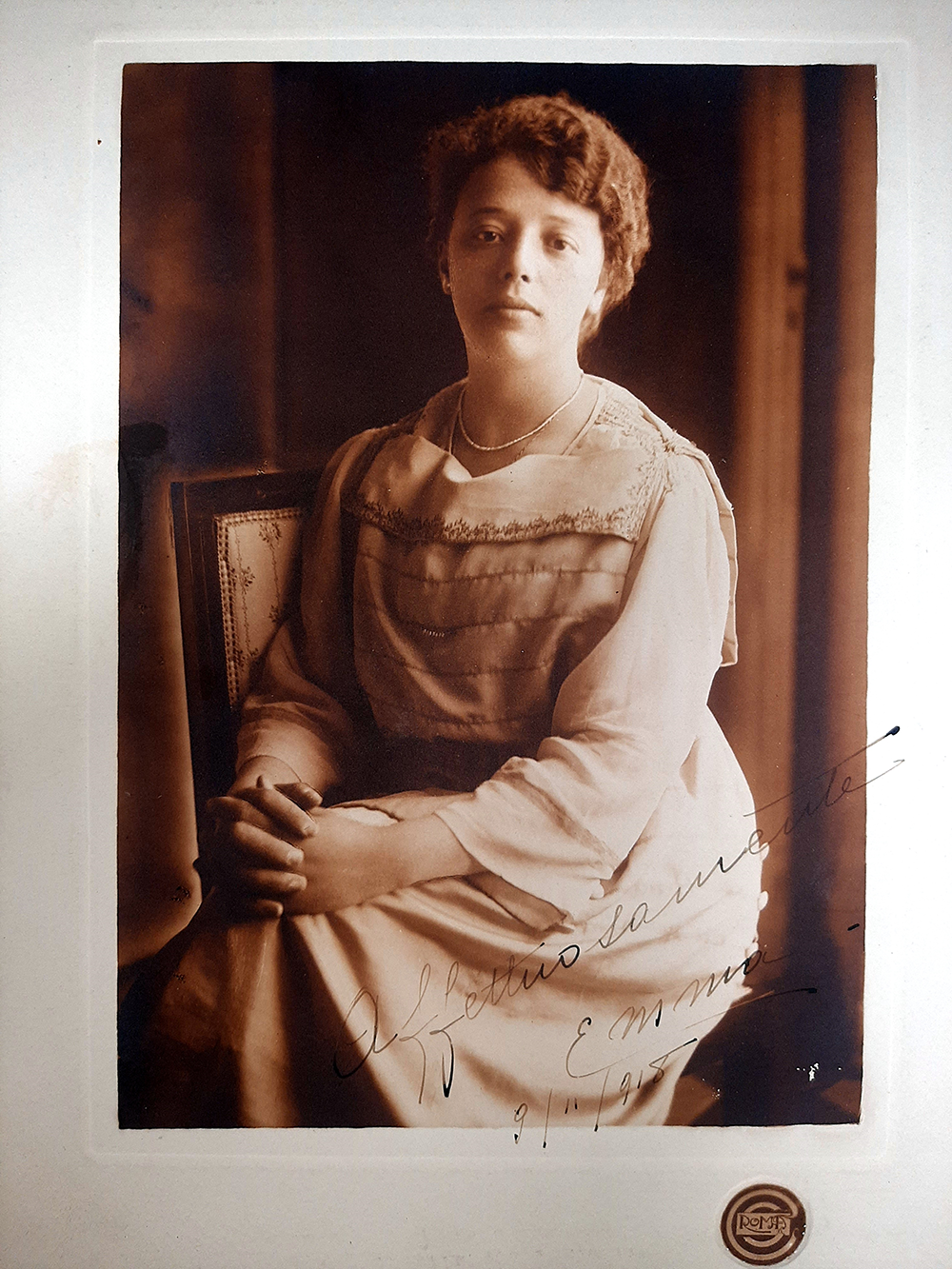
Portrait of Emma Zevi, 1918.
I suggest viewing Emma's actions as a supportive female gaze of her soldier/banker/husband in line with what was described by Nattermann as “an extraordinary commitment to the war effort on the part of many Italian-Jewish women” (Nattermann, 2015: 234). Emma was raised in a period of progressive influences of the activities of Jewish women, such as Sara Levi Nathan (1819–1892), an Italian women's movement pioneer. Nathan was dedicated to developing a laicist education for Italian Jewish women after 1870 and struggled for development and justice and building a nation based on the principles of equality. These actions served as an impetus for Italian women's emancipation (Nattermann, 2015: 166–167).
In a private interview, 5 the Italian historian Luisa Levi D’Ancona Modena explained that liberal ideas came to Italy at the end of the 19th century through the migration of Jewish female students and intellectuals from Western and Eastern Europe. “On arrival, however, they found that Italian women were excluded from political and property rights, and often from education, while the strict ‘sense of sexual hierarchy’ in the family extended to work regulations” (Modena, 2022: 4). Modern, secular, educated, liberal women from upper-class or middle-class backgrounds, such as Emma, “were more likely to be pro-interventionist” (Nattermann, 2019: 240). They supported Italy's intervention in the war and its aims to acquire territories and expand national borders (Wilcox, 2021). Italian Jewish feminists hoped the war would further Jewish integration into Italian society and lead to the emancipation of Jewish women. Nattermann notes the national unity of Jews and non-Jews in supporting the Italian cause (Nattermann, 2015), yet she describes this attitude as a “dangerous fascination” that “undoubtedly lay in their family histories and lasting identification with the ideals of the Risorgimento” (Nattermann, 2022: 186). Additionally, Nattermann notes that Italian Jewish women's wartime ideological positioning, everyday experiences, and memorization of the First World War have been neglected in research (Nattermann, 2019: 235). Instead, the relevant historiography has focused for decades on the political and military participation of Jewish men on the scene of war (Nattermann, 2022: 186).
My grandmother was supportive of feminism her entire life, though not an active feminist. Italian politics and Mussolini's Fascism disillusioned her. Like all bourgeois Jewish women during that time, she did not work or pursue higher education or a career; she devoted her energy as a volunteer to ADEI WIZO (The Association of Italian Jewish Women). Iael Nidam-Orvieto (n.d.) writes that this voluntary organization was a liberal-bourgeois organization which, following the entry of women into the workforce after the First World War, dealt with welfare, education, and, later, politics, embracing the right to vote and equal rights for women in the labor market. Following the First World War, during which women entered the labor force for the first time, these organizations fought for universal suffrage and the opening of the labor market and the world of academia to women. Viewing Emma as a Jewish emancipated woman during a period of nationalism provides the context for her image construction of Carlo's legacy and commemorating his service. Framing the pictures allowed her to express support for her husband and simultaneously voice her opinions during a period of changing opportunities for women.
Emma's visual choices
Figure 2 shows a small, framed photograph of Carlo in uniform alongside other pictures of Carlo and Emma from Emma's home. Carlo and Emma were a typical couple of the middle-class, post-liberation, pre-First World War generation of Roman Jews. Emma came from a bourgeois family, and Carlo came from a middle-class background and struggled for upward social mobility through his banking career and by marrying into a bourgeois family. His career exemplifies the social changes among Jews following Italy's unification. As soon as they were granted equality, the Jews felt free to embrace any career—political, military, academic, professional, administrative, or commercial—and attain the highest positions. Jews acheived prominent positions in various branches of public life. For example: Alessandro Fortis (prime minister, 1905–1906), Luigi Luzzati (prime minister, 1910–1911), Ernesto Nathan (the legendary mayor of Rome, 1907–1913), and Sidney Sonnino (minister of Foreign Affairs, 1914–1918) (Rovighi, 1999). These impressive political achievements empowered their feelings of nationalism and patriotism. Enlisting as soldiers in the Italian army was the next: step in the path towards the full participation of Jews in the life of Italian society. This was, indeed, the first occasion in which all male Jews faced their duty as Italian citizens, which they had become with full rights. (Museo Ebraico di Roma, 2015)
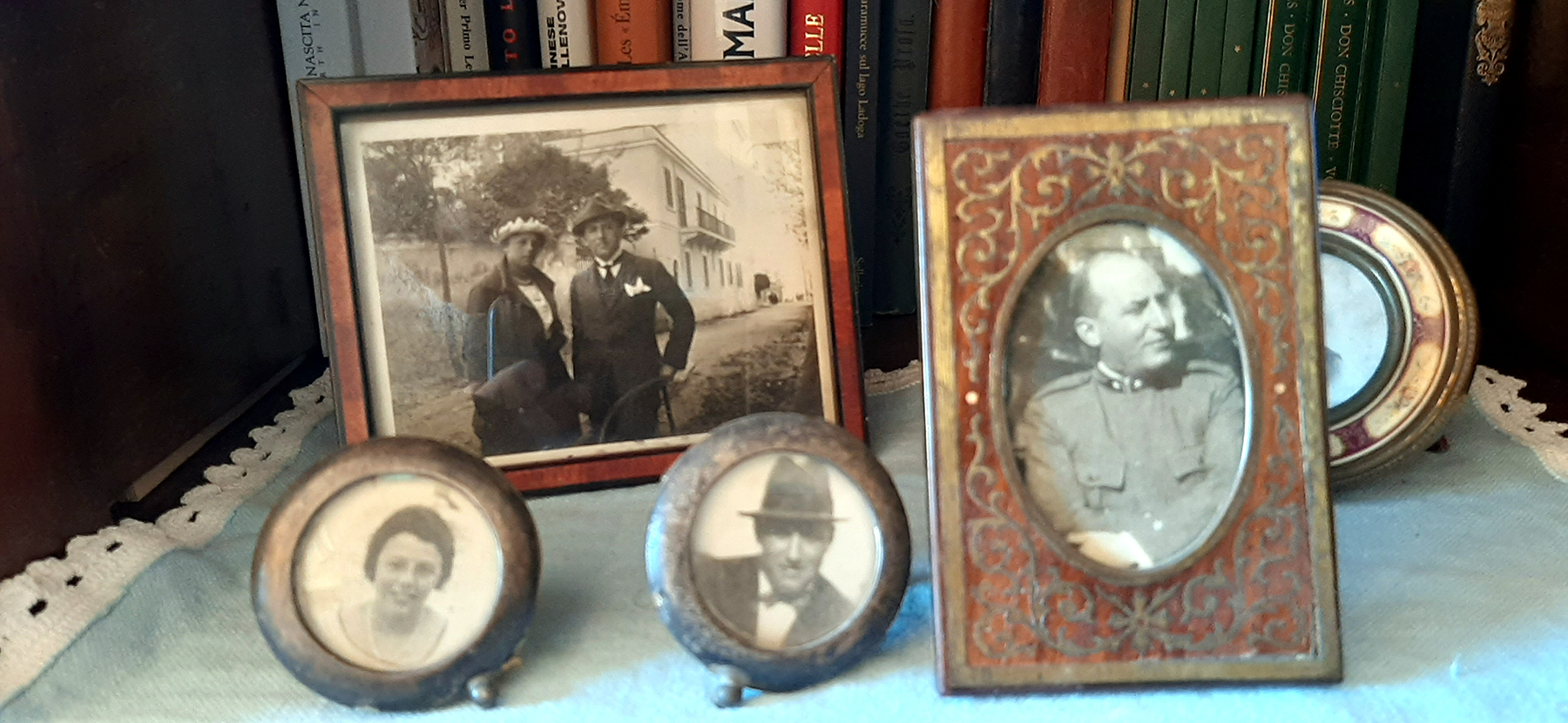
Photographs on the mantlepiece in Rome.
Figure 3 shows the original print of Carlo in uniform, in which he appears content and confident, posing as a soldier and being observed as one. This photograph has been enlarged and pasted into the photo album. He is seen holding a hat in one hand and a pair of gloves in the other and seems self-conscious of his appearance and countenance.
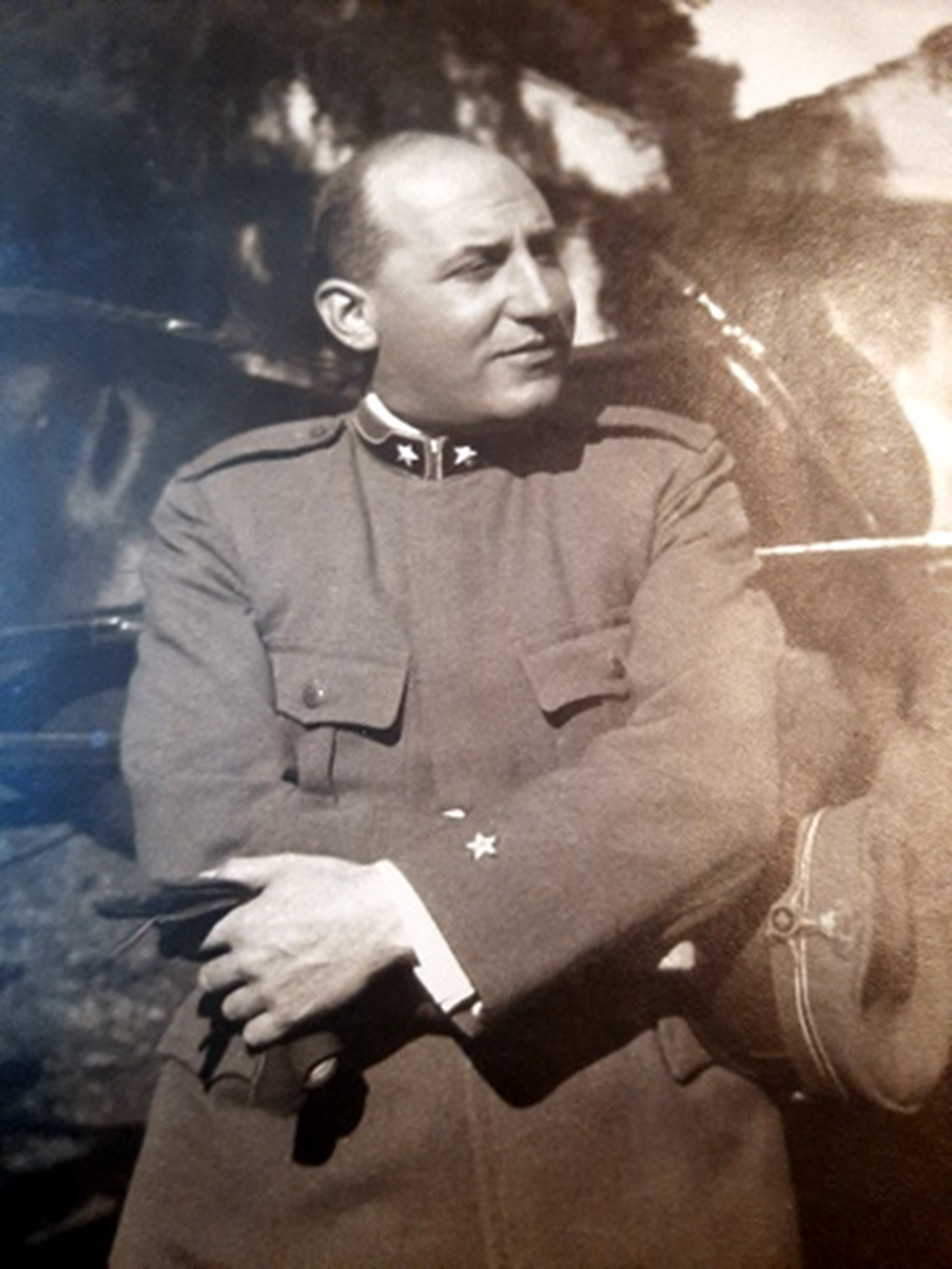
The original photograph.
Figure 4 shows an enlarged photograph of Figure 3 that hung on Emma's living room wall until her death. There were other small photographs of Carlo around the house. Yet, choosing Carlo's image—the soldier—as the ultimate viewing and remembering image for her children and herself emphasizes the weight and importance of his military career in his life story in her eyes. Emma's choice to enlarge this photograph and turn it into the most prominent and dominant image in her home turns the image into a signifier of how she wished to present him to the family and her children to see him. The layers of meaning embedded in the image of a proud soldier in the enlargement of the photograph and the decorative frame were perpetuated in the family. Her values are reflected in her choice of visual imagery in the photo album, the enlargements, and the small photographs around the house. This value system proved successful; Guiliano, Carlo's son, born in 1920, always hung this exact reproduction near his bedside.
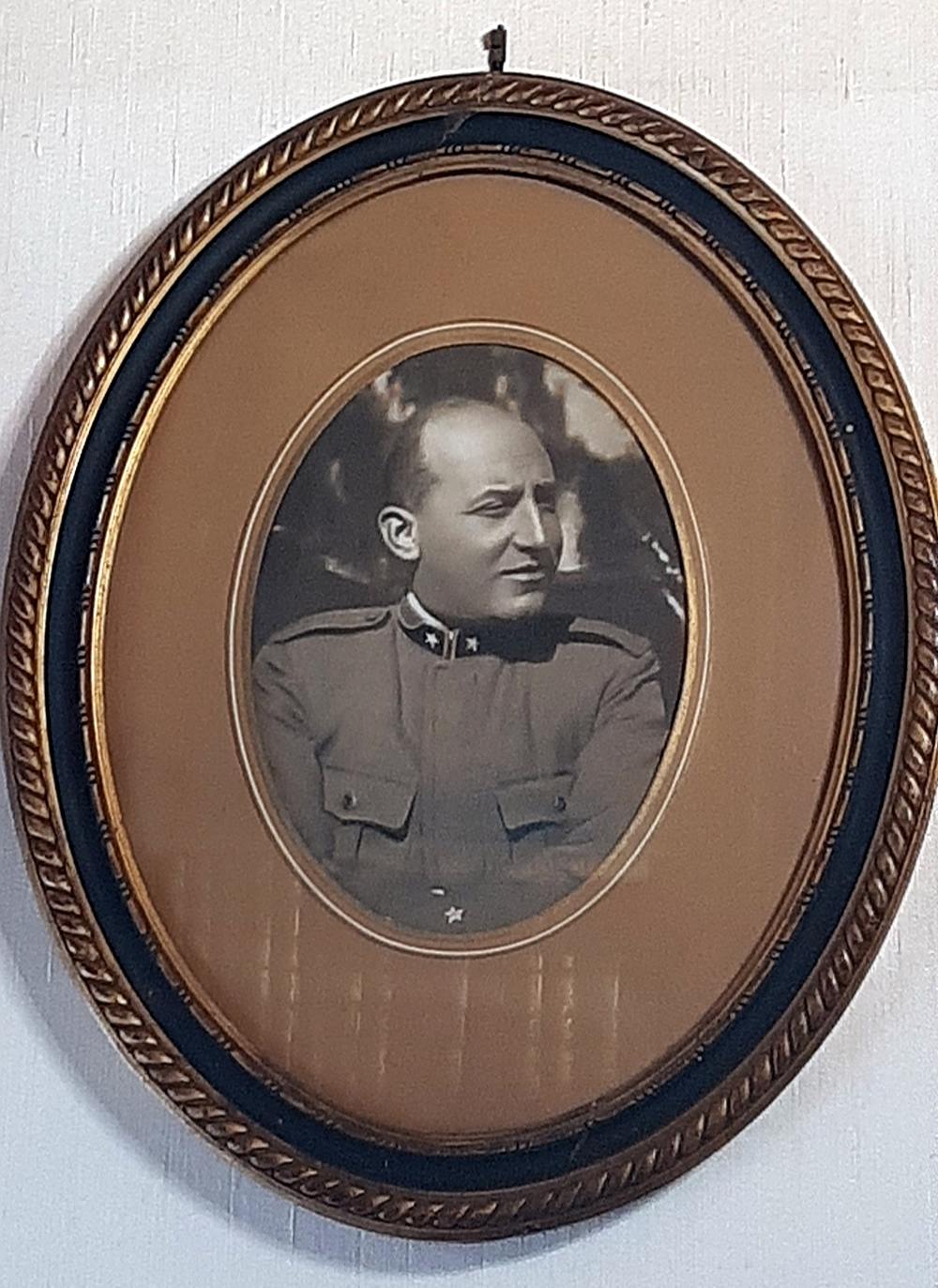
Framed enlargement of Carlo in uniform.
My grandmother's values stemmed from her upbringing and her surroundings of Italian nationalism and patriotic ideology. Emma's family came from a prestigious bourgeois Jewish family in Rome. The four sons took after their father, Benedetto Zevi, a renowned medical doctor decorated for his services during cholera and smallpox epidemics by Pope Pius IX. Benedetto volunteered as a Medical Captain in the National Guard and can be seen in Figure 5 in a rare photograph of a Jew in uniform in Rome in 1876. 6
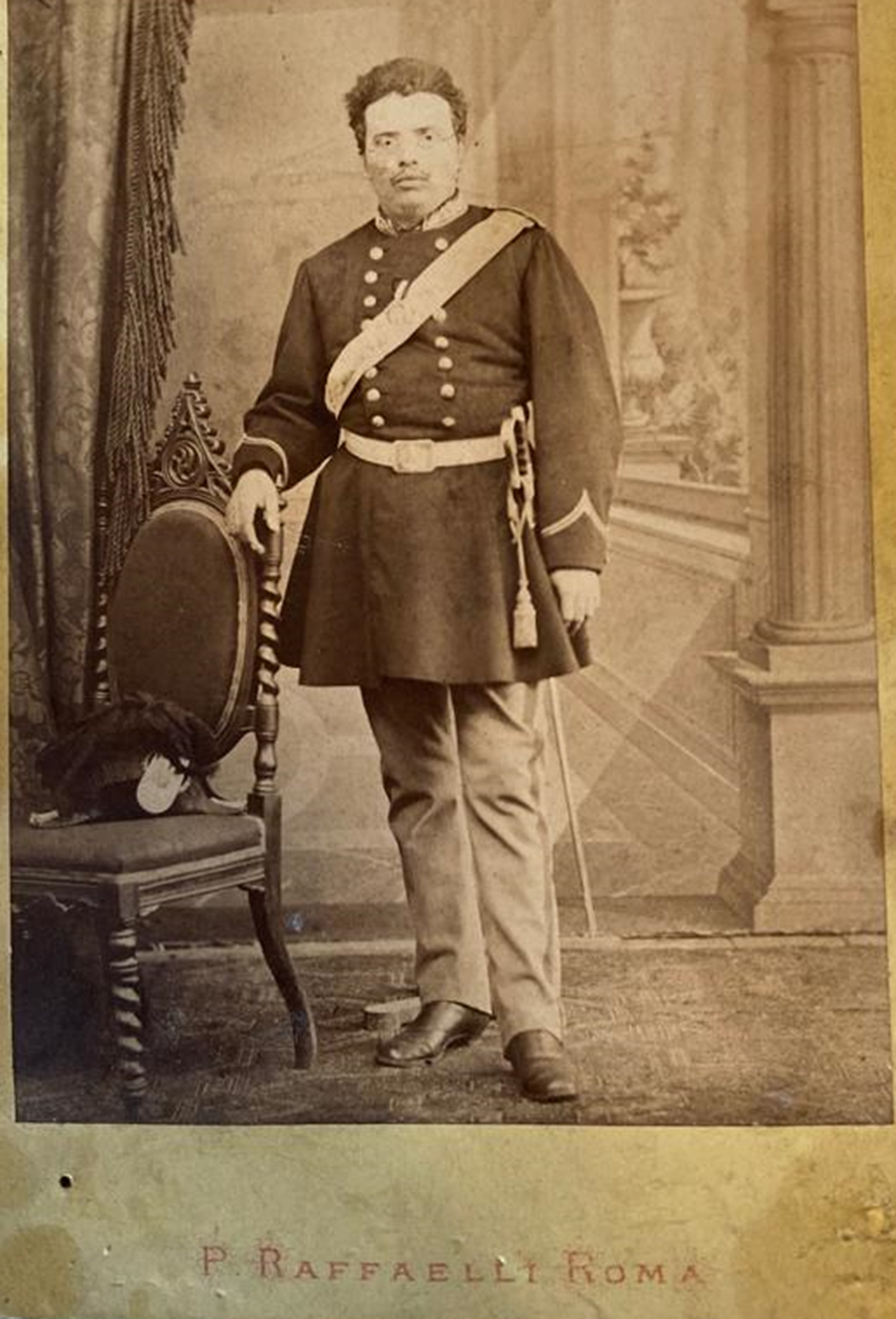
Benedetto Zevi (1842–1889) in uniform.
Benedetto Zevi was a descendant of an old Jewish family from Rome. 7 According to the family history, the Zevi family arrived two thousand years ago due to the conquest of Jerusalem in 63 BCE. British Jewish historian Cecil Roth writes that the original Jewish community is probably the oldest in the world (Roth, 1972). The first mention of the Jews in Rome is in 161 BCE, during Judah Maccabee's period. According to Roth, “After the Romans invaded Judea in 63 BC, which from then on was for centuries part of the Roman Empire … Jewish prisoners of war were brought to the capital as slaves” (Roth, 1972: 240). “Zevi” was originally a Hebrew name (Tzvi, a gazelle), typical of Roman Jewish families who trace their origins back to Jerusalem.
Emma used to say that what made her most proud was to see the photographs of her four brothers in uniform in her dining room. Figure 6 presents her four brothers in uniform: Vittorio, Alfredo, Guido, and Giorgio Zevi. Her brother Vittorio was a medical captain, and Giorgio was a medical lieutenant who served in the war in Libya in 1911. Alfredo served as a lawyer. Emma was orphaned at a young age and became a widow with two babies at the age of 31. She was emotionally bonded to her brothers and looked up to them, having been cared for in all aspects by them. Her brothers’ patriotism could have been rooted in the phenomenon described by Vanda Wilcox, a researcher of the military, cultural, and social history of the First World War, who writes that: A strong sense of national loyalty rooted in emancipation, combined with significantly above-average levels of literacy and education, meant that the Jews were well represented with the regular professional ranks of the army (serving both as officers and Non-Commissioned Officers) (Wilcox, 2019: 188)
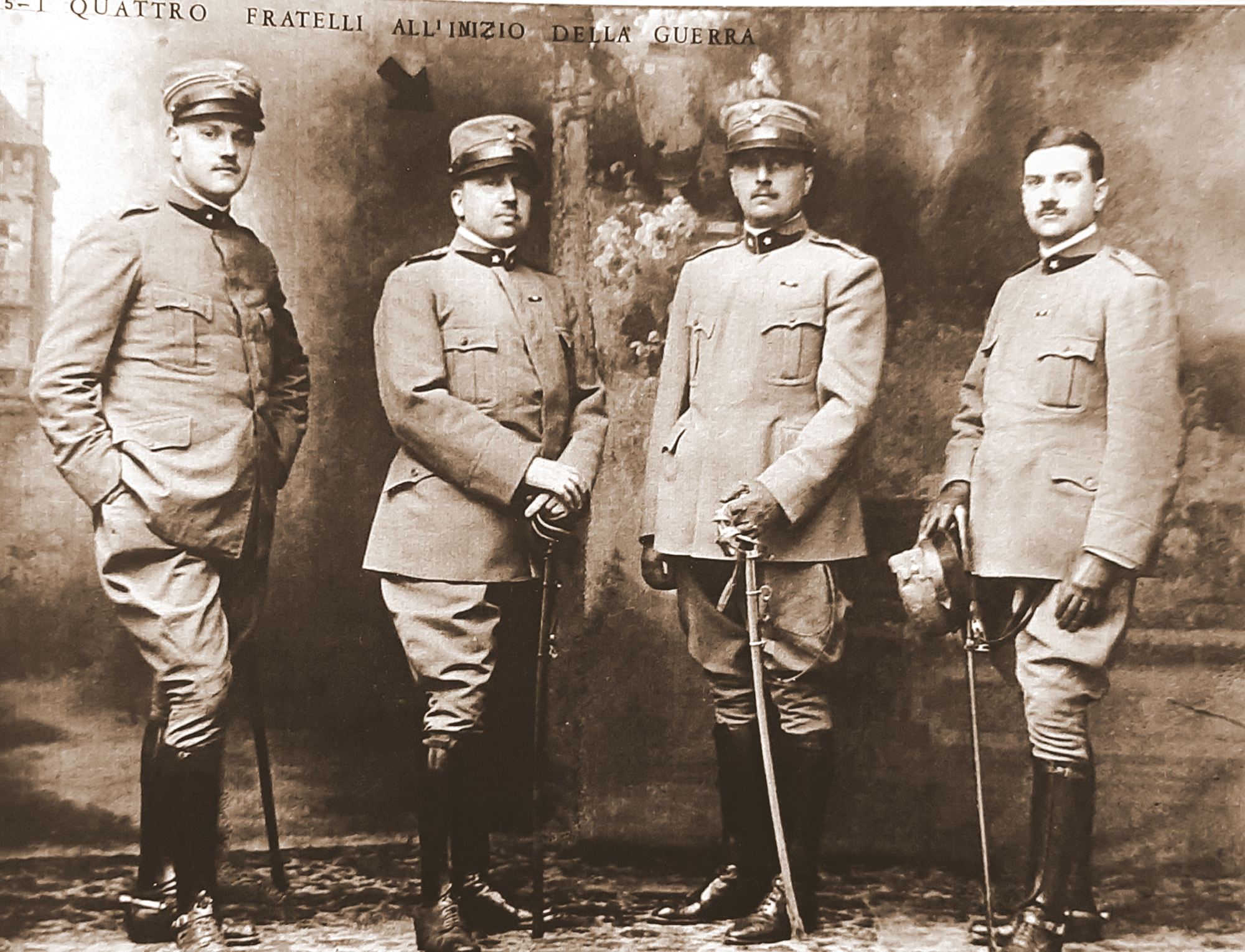
Portrait of Emma's four Zevi brothers, Vittorio, Alfredo, Giorgio, and Guido.
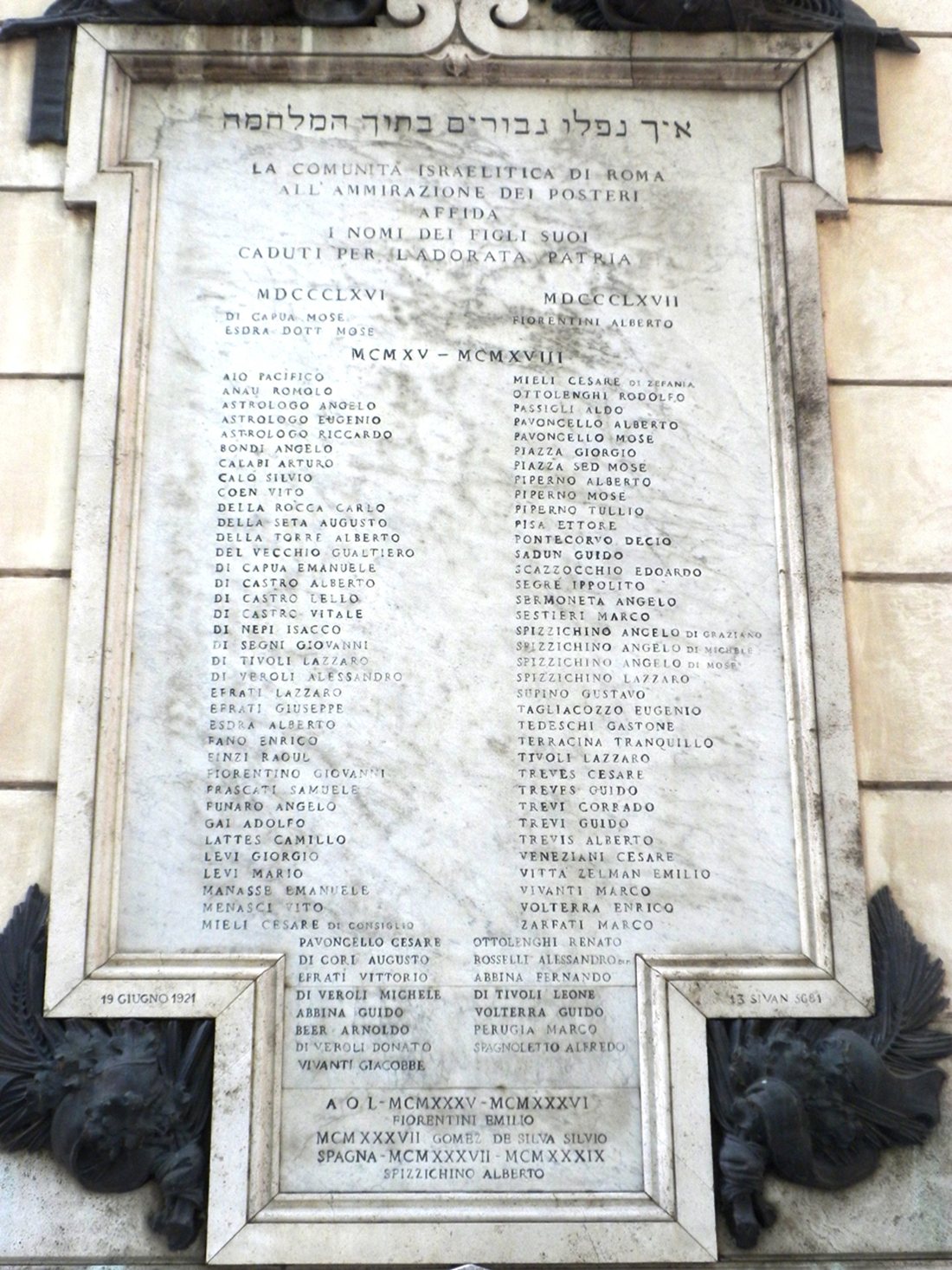
Plaque with names of deceased Jewish Roman soldiers, who died in the Great War. The plaque was erected on June 19th, 1921. 9
Wilcox adds that Jewish servicemen were significantly more likely than others to serve in specialized branches of the army, such as the artillery or engineers, which required greater technical skills and literacy than standard infantry service, reflecting higher average educational standards amongst the populace at large.
The Italian Jews during the First World War
Italy entered the war on the Allies’ side on May 24, 1915, 10 months after its outbreak, seeking territorial gains from the Austro-Hungarian Empire. Contrary to the strong initial trends in Italy to remain neutral during the war, the national movement of irredentism sought to bring under Italian rule territories that remained under the Austro-Hungarian Empire when the unified Italian Kingdom of 1870 was formed. These areas had cultural and historical links to Italians: the Italian-speaking Tyrol regions (Welschtirol including Trento), Istria, Gorizia, Trieste, and the Dalmatian coastline. “However, irredentists also laid claim to Nice and Savoy in south-eastern France, and the most extreme variants insisted that Italy would be geographically incomplete without Corsica, Malta, and the Swiss canton of Ticino” (Stibbe, 2018: 1).
More than five million Italian soldiers participated in the conflict. Its civilian and military casualties in the war were high. 8 Of the 1,600,000 Italians who perished during the First World War, 560,000 were soldiers (Fornasin et al., 2019: 602–603). Many Jewish men enlisted in 1915, and over 13 percent of Italian Jewish men (5500 soldiers) fought in the war. Klein estimated that the number of Jewish fighters was proportionally identical to the non-Jewish Italian fighters.
Due to the high literacy rate of Italian Jews, particularly from the north, “half of the Jewish soldiers were officers compared to four percent of non-Jewish combatants” (Klein, 2018: 41). About four percent of the military medical personnel during the war were Jewish. The older Jewish doctors usually served in hospitals near their city of origin, while 25 percent of all Jewish medical personnel served on the frontlines (Supino and Roccas, 2017: 2). Ultimately, many Jewish men enlisted and served as military clerks because they were educated in a country that suffered from rampant illiteracy. Wilcox states that in 1915, the Italian national literacy was around 65%. The infantry was drawn mainly from the peasantry, the social groups with the lowest literacy levels (35%). The urban working class constituted 11.5% of the armed forces in 1915–1918 and were mostly assigned to roles requiring literacy. Thus, the ordinary private infantryman who suffered the heaviest casualties would have been a peasant or rural working-class man who struggled with literacy (Wilcox, 2012: 174–175).
The Italian Jewish men excelled in their military service. There were 40 Jewish generals—an extraordinary number for their small population, and “[one] of every ten Jewish combatants received decorations for their bravery, compared with one of every fifty non-Jewish fighters” (Klein, 2018: 41). Two Jewish soldiers received gold medals, 207 were awarded silver medals, 238 bronze medals, and 28 received encomi solenni (a citation for commendable performance in military service) (Toscano, 1993: 285). The Italian Jews generated an extraordinary number of decorated generals and admirals for this population. Evidently, Italian Jews were proud of their military service, particularly in light of their ancestors’ ancient history as exiled enslaved people from Jerusalem. Military service was a means to confront the notion that conflates Judaism and cowardice and to prove their allegiance to Italy and its cause.
The loyalty of the Italian Jews to the newly unified Italian state was such that: It is no coincidence that several patrioti (patriots) and Garibaldini (Garibaldi supporters) decided either to convert or to make their children Christian or both, in the conviction that being a Jew was an obstacle for the creation of a new, national, unified and independent state. (Bernardini, 2008: 297)
Unsurprisingly, in the post-Risorgimento years, there was a growth in mixed marriages and integration with the non-Jewish environment (Bernardini, 2008: 298). Nationalism, the new political conviction, became a secularized religion at the price of severing ties with tradition. Traditional Jewish culture was overshadowed by Italian identity, leading, as feared by some traditionalists, to a decline in Jewish life. D’Ancona Modena debates this notion, writing that “forms of secularism and Jewishness could coexist for Italian Jews” in such a way that “secularism in Italy could include a commitment to a Jewish collective” (Modena, 2018: 263). The strong desire to integrate into Italian society was reflected in naming children, as Claudio Procaccia, the director of the Historical Archive of the Jewish community, explains). After the liberation from the Ghetto, parents changed their children's Jewish first names to the first names of the Savoy monarchy, such as Vittorio Emanuele and Carlo Alberto (Procaccia, 2021: 41). Little Jewish girls to this day are named Elena and Margherita, after the names of Savoy queens. In her work on Italian Jews, Pavan describes a display of the utmost national loyalty of the Jews in putting an Italian flag on a baby's crib next to a family heirloom, such as a pendant, thus creating a triangle of family, nation, and religion (Pavan, 2003: 796). According to Wilcox, conversions were common in the period of assimilation in the late 19th and early 20th centuries (Wilcox, 2019). From my personal knowledge, in my family, this became even more so during the Nazi occupation in 1943 and immediately after.
According to Pierluigi Briganti (2009), Jews were accepted as soldiers, but Jewish officers were subjected to varying limitations and discrimination. Yet, as Wilcox argues, there seems unlikely to be any official discrimination. However, it may have seemed appropriate to ignore episodes of open antisemitism during wartime since, as officers, they were subjected to varying limitations and discriminations that were not official (Wilcox, 2019: 203). Since Jewish soldiers were not categorized according to faith in the army records, information about them is accessed by the community or interested researchers. The Italian armed forces were explicitly secular. This secular ethos meant that the army did not seek to keep records of the religious faith, so tracing religious identity within the armed forces takes “a lot of detective work” (Wilcox, 2019: 188).
The historian Mario Toscano writes that the number of casualties in battle among the Jewish Italians in the war totaled 261 people (Toscano, 1993: 285). Carlotta Ferrar degli Uberti, lecturer in Italian History, explains that: the First World War directly involved the civilian population, forcing it to become familiar with mass death, at both public and private levels. Dying for one's fatherland was celebrated as the crowning glory of an act of faith and was equated with martyrdom, the means to gain immortality: those who died became immortal. (Uberti, 2017: 202)
Twenty-five percent of Jewish soldiers were recruited from Rome in 1916, the highest number amongst Italian Jews (Wilcox, 2019: 198). Most of those called to participate in the conflict from this community were simple troop soldiers, with a minority of officers (Museo Ebraico di Roma, 2015). Based on the link between lower education levels and higher mortality among Italian troops in the First World War, it is likely that the less educated ebrei romani served in combat and suffered casualties (Fornasin et al., 2019: 601). Outside Rome's synagogue, a marble plaque carries the names of about eighty-four Jewish Roman soldiers who died for their “Beloved Homeland” (Figure 7). Jonathan Cherry describes the inherent social tension related to the construction of memorial sites: “[T]hese memorials were going to be interpreted and ‘read’ by those who viewed them. Sensitivity and nuanced attention to detail with regard to the design, iconography, inscription, and materials [is] used … for each memorial” (Cherry, 2020: 213). In this case, the Roman Jewish community chose to commemorate with a large inscription in Hebrew from the Old Testament on the top: “How the Mighty Have Fallen.” The choice to use Hebrew stems from the ebrei romani's connection to the Hebrew language they spoke before being taken captive as enslaved people. It is part of the long history and culture of this specific community. The Hebrew language is used in liturgy, tombstones, and marriage certificates. The plaque (Figure 7) appears on the building's outer wall, built on the ruins of the old Ghetto that was demolished in the late 19th century. The building, the ruins of the Ghetto, the names of the deceased, and the choice of language all play a role in the self-perception and identity of this community.
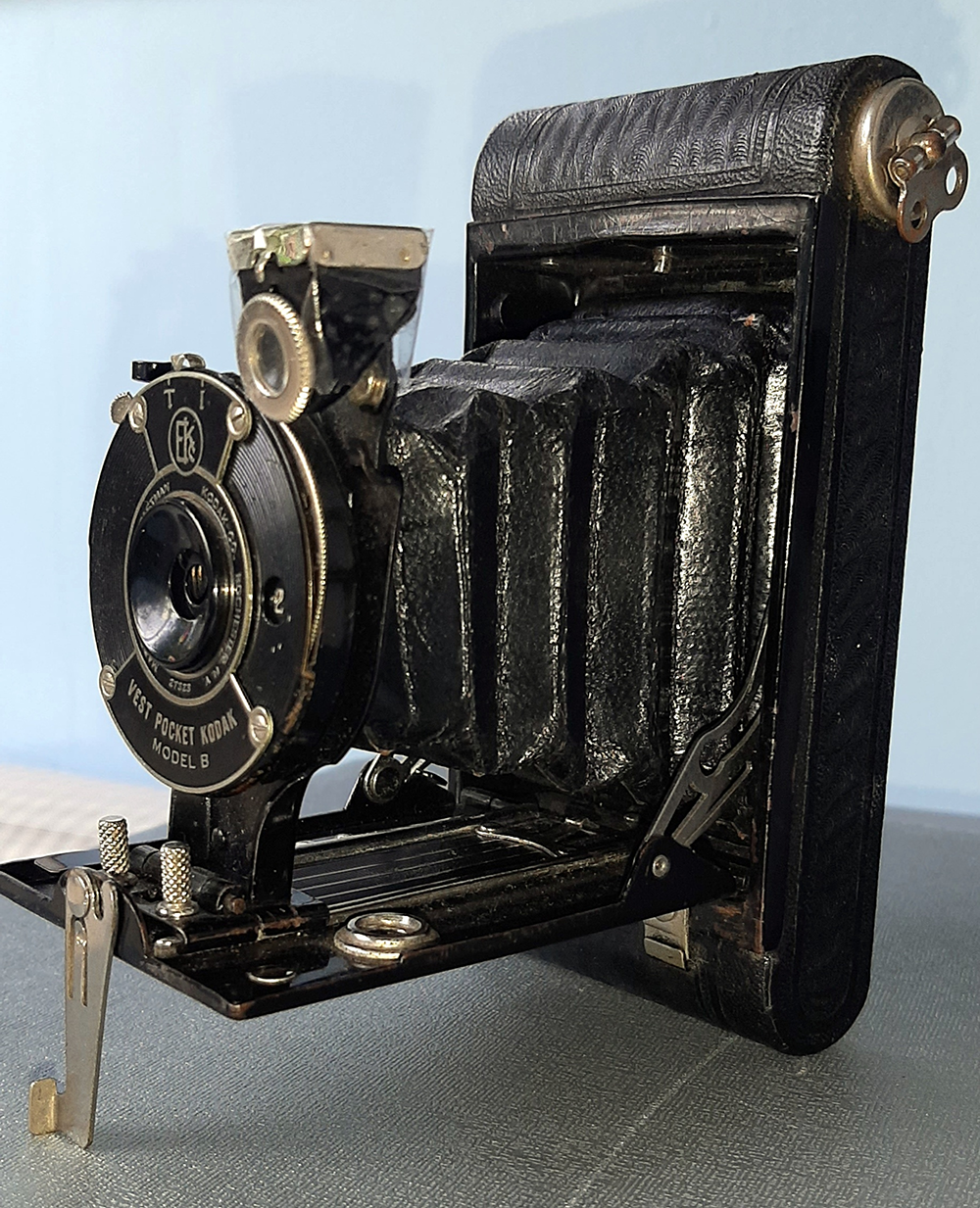
Vest-pocket Kodak. 13
The role of the Italian rabbis in the First World War
The institution of the Italian military rabbinate, formed in 1914, was important to the war effort. Like the catholic chaplains, the rabbis followed the troops to the front as volunteers and provided spiritual and religious assistance to the fighters. L Scott Lerner, professor of Humanities, Comparative Literature, and Judaic Studies, writes about the speech given by the chief rabbi of Rome, Rabbi Vittorio Castiglioni, before the First World War, at the inauguration of the Great Synagogue in 1904. The speech was: aimed to reconcile his modern sense of the significance of the moment as a turning point for Roman Jews with the history of the Jewish people inherited from normative tradition. The challenge was to render the Jewish story of exile and return compatible with the adoption of the Italian Patria (fatherland). (Lerner, 2002: 18)
This attitude explains the Rabbinate's unconditional support for the Italian monarchy. The Italian Jews, who were granted civil rights, financial independence, and wealth, were motivated to acquire their place in society and found their place and moment in Italian history at this significant time. According to Lerner, the historical sermon of Rabbi Castiglioni creates an analogy between the building of the Second Temple in Jerusalem and of the great synagogue in Rome. Rabbi Castiglioni suggests that “the construction of the Great Synagogue over the ruins of the ghetto, like the rebuilding of the Temple over the ruins of the original, was an act of divine providence” (Lerner, 2002: 19). Castiglioni's speech represented “love for an Italian homeland and equality with Catholic Italians as integral to a process of liberation and return that would bring an end to exile” (Lerner, 2002: 22).
Pavan accessed correspondence between rabbis and soldiers during the war that sheds light on their attitudes and interpretations of the conflict and how they merged traditional Jewish values with Italian patriotism and nationalism. It seems that patriotism was more important than religion. Pavan adds that there were “blessings for soldiers on their way to the front spoken from the pulpit” (Pavan, 2015: 145) and cites their support of mobilization in their sermons: “God is with us!” In a cry lifted to the heavens to call down blessings upon Italy, we seem to hear the voice of our prophets proclaiming that justice and righteousness are with us, that God is with us. We . . . call on you, Eternal Lord, as the God of the Italian hosts. Adonai tzva’ot imanu. The Lord of Hosts is with us. We are the force of righteousness; now we are righteousness armed with force . . . Italy's heart is wholly pledged to this holiest of wars . . . and the sword of freedom is in the hand of Victor Emmanuel. Imanu’el! “God is with us!” (Pavan, 2015: 143)
The rabbis fully and unconditionally identified with the Italian territorial cause and wartime campaign against the Austro-Hungarian Empire, expressing the Jewish community's gratitude for their emancipation (Pavan, 2015: 47). Uberti explains that individual rabbis justified the war from a religious point of view and in political and theoretical terms. Angelo Sacerdoti, the chief rabbi of Rome (1912–1935), said, “Killing for one's fatherland and for justice may be not just lawful but actually the will of God.” Rabbi Samuel Hirsch Margulies, rabbi of Florence, composed a prayer justifying violence: “the sacred duty towards my fatherland, which fights for its honour, for its right, and for the liberation of its sons who suffer beneath the foreign yoke” (Uberti, 2017: 206–207). They justified the war and endorsed its propaganda of being threatened by a hostile and barbarous enemy, citing the antisemitic accusations against Jewish Austro-Hungarians. Tullia Catalan, professor of Contemporary History, explains that new forms of antisemitism that emerged in Europe obliged the Jews to confront themselves with their own Jewish identity in light of their emancipation. New violent manifestations of antisemitism in the Austro-Hungarian Empire could not be ignored or underestimated (Catalan, 2003: 140). Volunteering in the war effort was a way of reconciling their Jewish faith and tradition with their role and devotion as Italian citizens.
During the war, Rabbis volunteered as military chaplains in a limited capacity, enabling soldiers to eat kosher food, organizing Jewish holidays, and ensuring that the graves of Jewish soldiers did not bear crosses (Catalan, 2003). The Jewish soldiers were discreet regarding their religion, refraining from identifying as Jews out of precaution, as there were conversion attempts in military hospitals. Soldiers’ correspondence shows that “there were requests for prayer books and shawls, acquiring mazzos for Passover and securing leave for religious celebrations” (Wilcox, 2019: 197–199). Five chaplains were sent to a major military hospital attached to the five main armies, but unlike Catholic chaplains they were not permitted into the frontline area. Twelve rabbis were allowed to take assistants as the scale of the conflict grew (Wilcox, 2019: 196).
The distinct background of the ebrei romani and the First World War
Both Emma and Carlo's families were ebrei romani and both lived for centuries in the Roman ghetto. The history of this community is unique among the Jewish communities in Italy, leading to the particular characteristics, social cohesion, and mindset of its members. Roth (1972) explains that people living in the ghetto in Rome suffered worse conditions than other Italian Jewish communities for longer periods, and Kenneth Stow (2016) describes the ghetto in Rome as a wretched place. The development of education and feelings of patriotism of the ebrei romani differed from the northern Jews’ path; Jewish communities in Piedmont, Parma, Modena, Tuscany, Lombardy, and Veneto, who had been released from their ghettos 30 years before, enjoyed extended periods of social equality under Napoleon's reign. Having been granted equal civil rights early in the 19th century, they had acquired education, financial independence, and wealth (Tas, 1978). Consequently, as mentioned earlier, Jews from the north who enlisted in the First World War were educated, serving as e.g. doctors or lawyers.
In contrast, the Roman Jews, from 1550 until 1870, suffered the persecution of Papal rule and lived in the confinement of the Ghetto. Roman Jews were mainly poor, and some remained so until the early 20th century, living in squalid conditions under constant oppression and humiliation by the Church. Foa explains that the church enabled the existence of the Jews in the ghettos while maintaining their inferior position in society, from a theological perspective, with the intent of converting them to Christianity (Foa, 2022). Not being allowed to have more than one synagogue, the community was divided into five small ones inside the Ghetto (Scola Tempio, Scola Nova, Scola Siciliana, Scola Catalana and Scola Castigliana) (Antonocci et al., 2006). Olympia Modigliani, Carlo's mother, is registered as belonging to the Scola Castigliana. As descendants of Sephardic Jews (who arrived in Rome after the Spanish Inquisition in 1492), the family prayed in this Sephardic synagogue according to their specific rituals. However, not being pious, the rituals were not passed on in the Baroccio family. As a widow, Emma did not practice Jewish traditions other than Passover and Yom Kippur and did not keep a kosher home. She was part of a general trend in Jewish life in Rome. Following the unification of Italy in 1870, the social fabric of this community changed rapidly in a short time. Secularization, urbanization, and the upheaval of emancipation led to assimilation and distancing oneself from Jewish rituals. As such, the term emancipation carried negative connotations for some because it suggested that the insertion of the Jews into their surrounding society would lead to a loss of their Jewish identity (indeed, many converted to Christianity on the Zevi side of the family, particularly during and after the Second World War). 10 By 1915, in less than two generations, the Roman Jews turned from subjugated people to equal citizens. They immersed themselves in the social, cultural, academic, political, and financial fabric of the new urban metropolis of Rome (Barromi-Perlman, 2024).
However, to my understanding, the covert layers of the identity of this community persisted. After having suffered for centuries, the history of poverty, abuse, and traumas of the ebrei romani, which distinguished them from other Italian Jews, could not vanish overnight. The memories, traumas, changes, reforms, and social transitions constituted part of the fabric and character of the Roman Jews. 11 A significant part of them retained a legacy of an abused and victimized minority population.
An analysis of the family album of Carlo Baroccio
This specific album contains no logical timeline; dates, places, and events are mixed. Interestingly, from all the images of Carlo's life, a third of this album (29 photographs) consists of photographs in uniform in public spaces. The photographs in the selected album are mostly very small, between 5 x 7 cm and 9 × 14 cm, most probably taken by the popular camera at the time—the vest-pocket Kodak camera or ‘VPK’—advertised in the USA as “The Soldier's Kodak” (Figure 8). 12
The album shows photographs of the young family on trips, family events, and outings. 14 The following analysis focuses on photographs in the photo album taken between 1915 and 1918. Official portraits of soldiers from the First World War are often similar in style and composition and lack emotion or affect. They are formal and instrumental, accompanied by details on the names, ranks, date of birth, and physical features of the soldiers that serve for identification. The standard images usually show only the face and shoulders, as can be seen in Figure 9.
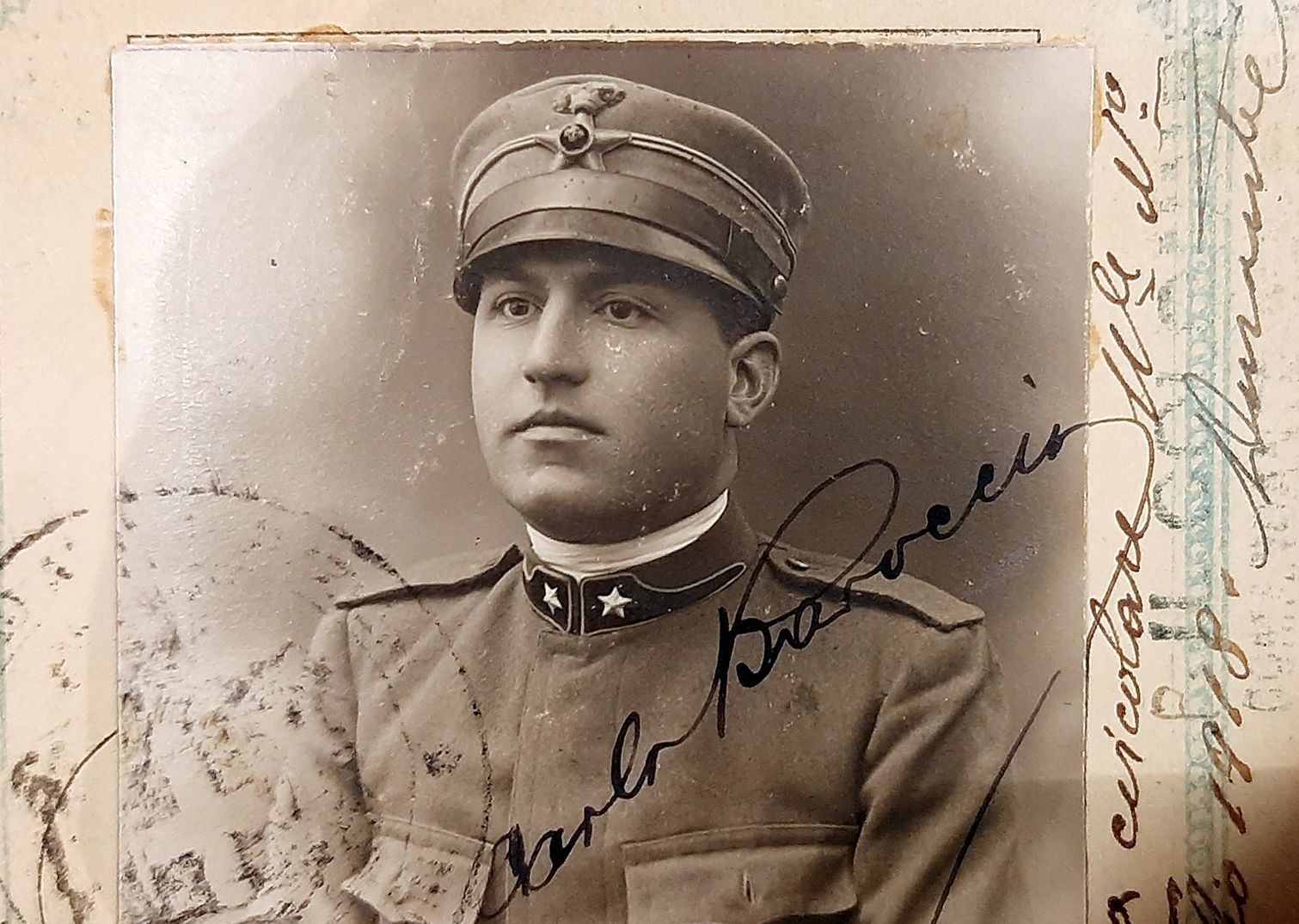
Carlo in official military portrait.
Interestingly, the significant corpus of the selected photographs in the album compiled by Emma shows Carlo staging, acting out, gesticulating while speaking, and using strong facial expressions. How Carlo, the man and soldier, poses, glances at the photographer, and is observed by others—for example, his cousin, who appears in most of the photographs––plays a role in constructing his particular military persona. It is not one of a combat soldier at the battlefront nor a display of military camaraderie. Carlo appears as a ‘civilian’ soldier who lives in the city, participates in urban life, and reads a newspaper. The visual connection between his civilian life and his military appearance works in stride; it indicates that he is unwilling to connect them and derives from the acceptance of militarism in his life. These unofficial, private photographs connote, in an indirect way, military pride and patriotism through their demeanor.
Figure 10 presents Carlo in uniform, drinking from a water fountain. His entire body is inclined towards the fountain, leaning on it. Usually, one is used to standing upright when drinking, putting the fingers on the bottom of the fountain to make the water surge upwards from the hole in the middle of the pipe (a Roman trick). But Carlo presents himself in a vulnerable way, posing to the camera humorously. The image is that of an antihero, possibly a comic one. His hands are close to his body, so he almost loses his balance.
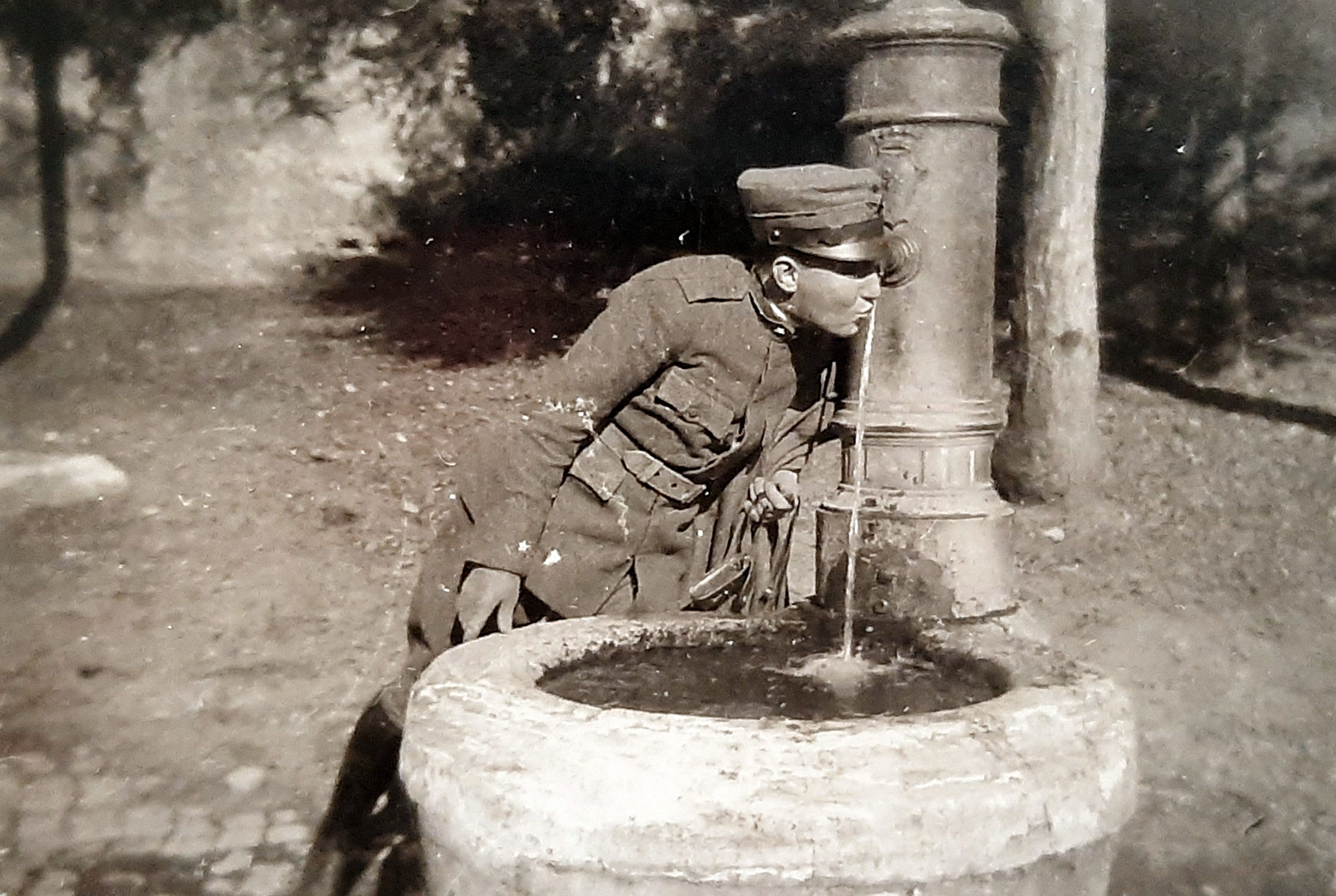
Carlo, dressed in uniform, drinking from a water fountain in Rome.
In Figure 11, Carlo is posing in front of the camera. His cousin is seated, holding a newspaper, and he and Carlo seem to be having a lively conversation with each other. The newspaper appears in multiple photographs and serves as a sign of literacy, education, and social standing. The setting resembles a film set, a casual, friendly, physically close encounter between civilians and soldiers. The seated person is conversing with Carlo; his left hand is facing upward in a gesture of intent as if trying to make a point or say something.
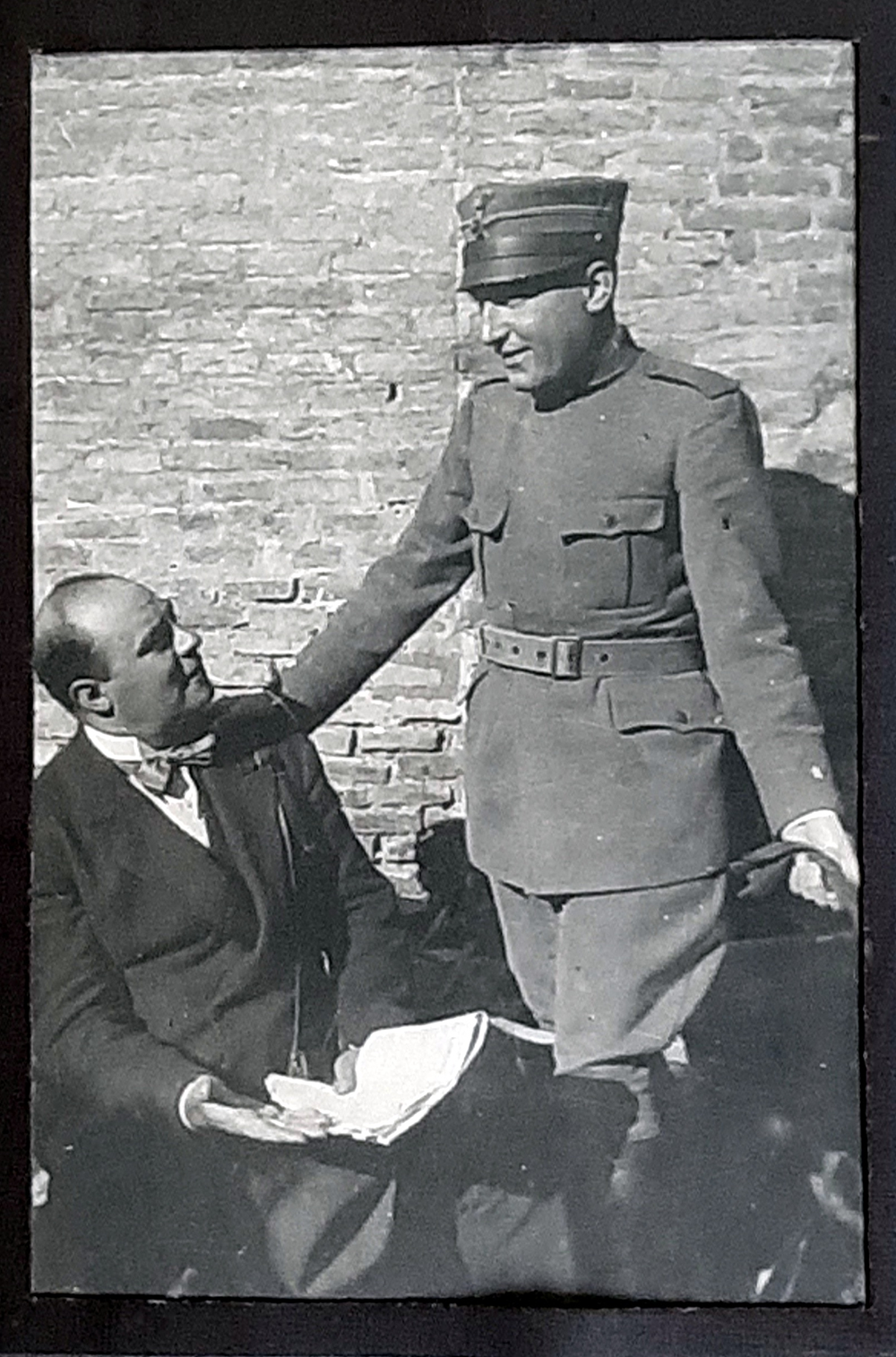
Carlo, with a cousin from the Modigliani family.
Carlo is presented here, again, as an antihero. The image takes him far from his military service to his home and a safe environment, creating a mélange between his cousin and himself as an Italian soldier. Appearing in uniform at home, with friends, and on social occasions normalizes and legitimizes the appearance of men in uniform. The semblance of the so-called wartime normality of a soldier engaging with civilians at home is a visual sign that appears in all these photos and dominates the album. The visual semblance of normalcy for a Jewish soldier fits into the everyday experience of being Jewish and “being in the world.” According to Husserl, the philosophical notion of the everyday, which in the natural world consists of our everyday experiences, affects our way of looking at the existing world. Both the natural attitude and the lived experience are characterized by naïveté (Dorfman, 2013: 125–126). This naïveté influences how we believe in images of the world that is out there. Human beings exist in relation to the objects and experiences within their world, hence the concept of ‘being-in-the-world.’ The power of ‘the everyday’ lies in how we perceive ourselves, which relies on how we are accustomed to seeing ourselves in public, private, and intimate spheres and in photographs.
Posing in an image of an everyday casual encounter, in which one is in uniform and the other is in civilian clothes, is an indirect way of legitimizing militarism, turning this into the order of the natural world. In the album, there are no photographs from the warfront, trenches, or army units, no comrades in uniform or any indication of participation in combat. The visual data does not include pictures of a rifle, a pistol, or a knife, nor of any active military engagement other than driving a carriage in Rome. There are only dignified photographs of Carlo at home. Since, as mentioned, Emma's brothers were lawyers and doctors, and not all Jews participated in warfare, this was possible for Carlo. Carlo's home front images create a visual social statement of so-called normalcy for Jewish Italians who participated in the war effort. The construction of ‘normalized’ portraits of Jewish Italians participating in the war could also be read as a form of immersion in Italian society, in which the military plays a part. Since the photographs in the album were never made public, they present how Carlo wished to see himself in his own eyes and those of his close family and how Emma chose to commemorate him. It appears that their patriotism had found its way deep into their self-perceptions.
In all his photographs, Carlo appears with family members. Roman Jews were a tight-knit clan. Procaccia explains that the ebrei romani usually clung to their tribe and family, socially associating mainly with family members. 15 Figure 12 shows Carlo at home with his cousin. The cousin is pointing with his index finger, and Carlo is following, seeing something that attracts their attention, bonding them at that moment. The image creates a definition of time and place that separates them from what the viewer of the image does not see or know. It is their own private experience. Other photographs in the album create for the viewer this sense of intruding on an intimate, personal experience familiar only to Carlo.
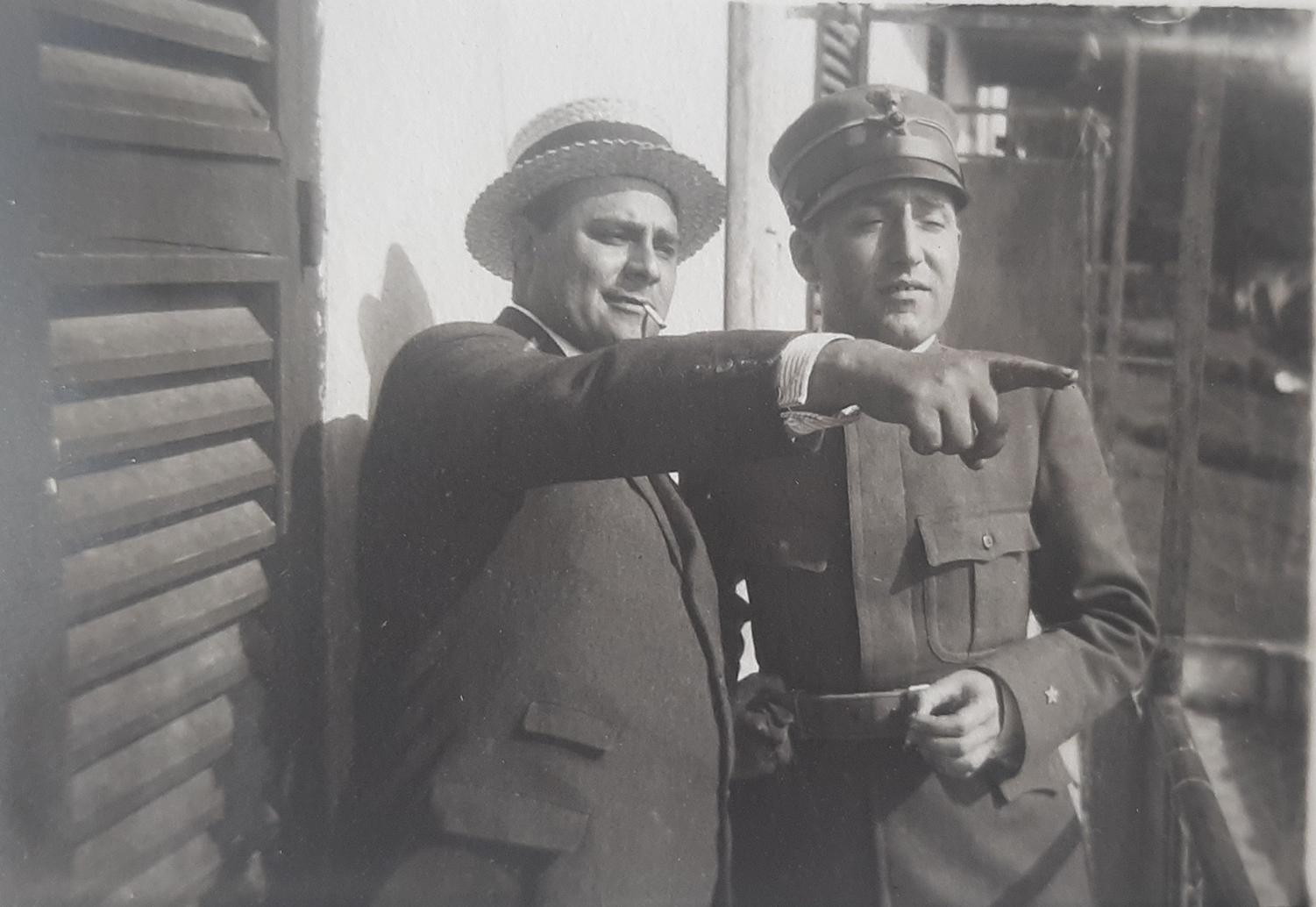
Carlo and his cousin.
Figure 13 follows the same line of staging and posing for photographs of Carlo in uniform in strange, unusual situations. These photos seem odd compared to other images of soldiers appearing gravely and solemnly in uniform and facing the photographer. Carlo is supposedly hiding from someone who can see him. It is difficult to explain this image, its context, the ‘why’ and the ‘when’ of its production. Considering the sequence of these odd photographs, I can assume that they are joined by the same underlying principle: being light-hearted, humorous, jovial, and frolicking in uniform was part of integrating military existence into the normalcy of life, possibly the result of the photographer's hand. I do not know who took the photographs since there is no information on the back of them. It appears that Carlo felt comfortable with the photographer, and the jovial atmosphere resulted from acquaintance with the person behind the camera.
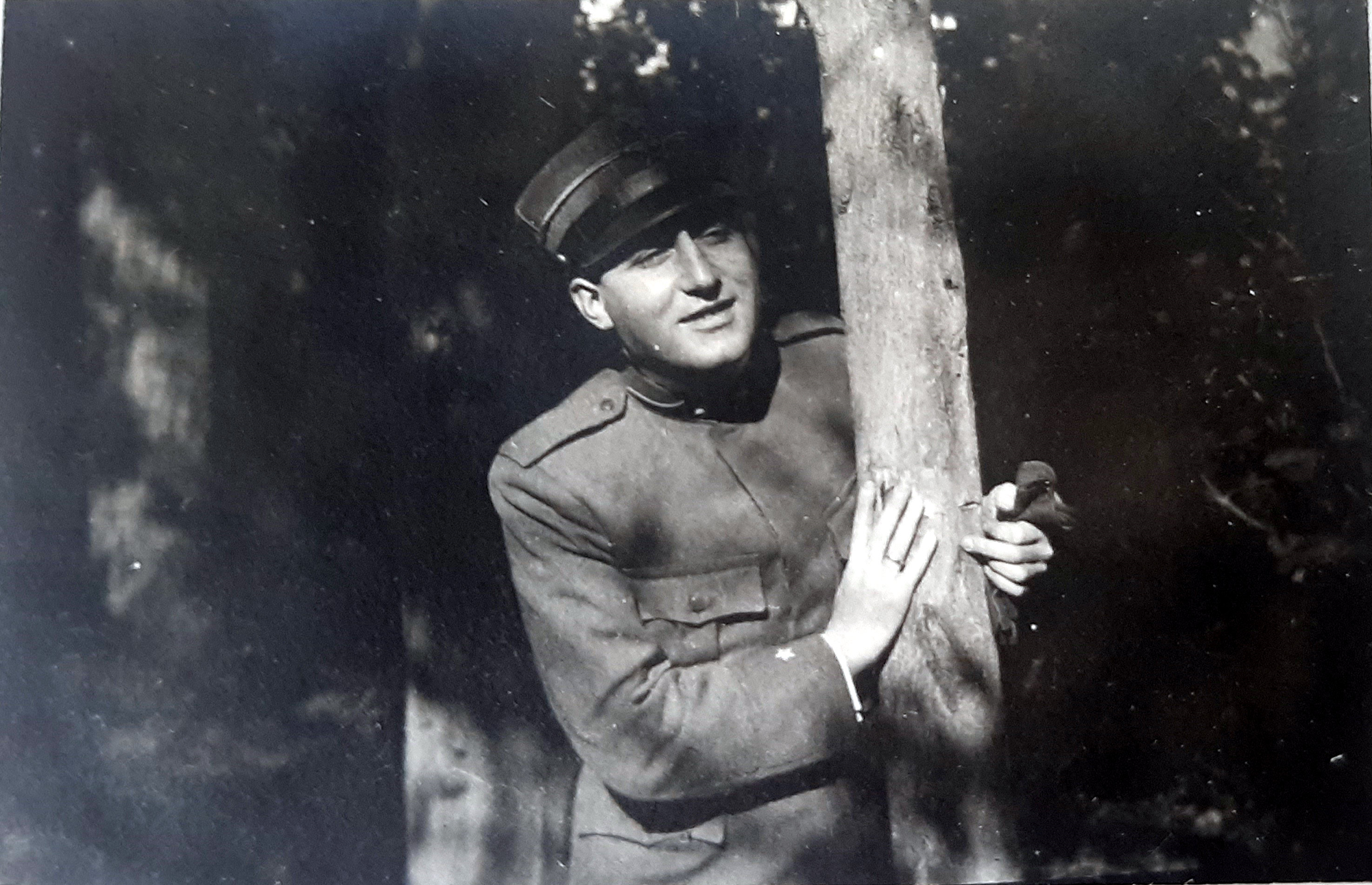
Carlo hiding behind a tree.
In Figure 14, Carlo appears again in uniform in a situation unrelated to his military service. He stands proudly, posing with his cape in front of an Italian historical monument, which serves as a sign that he had chosen to have his portrait visually connected with Italian heritage, thus integrating national visual symbols into his private photo album. Gil Pasternak, professor of Photographic Cultures and Heritage, argues with the so-called innocence associated with photographs near monuments and suggests thinking of them as discursive sites in relation to “canonical, national ideological and sociological tropes, topoi and historiographies” (Pasternak, 2013: 58). However, the amateur photographer was not paying attention to displaying the entire column, nor the Vatican arms inscribed on it. Possibly, they were interested in Carlo's elevated positioning at the top of the steps because of his short height. The monument's size overshadows him and gains visual significance in this photograph. It is not a portrait of him but of an Italian monument and him.
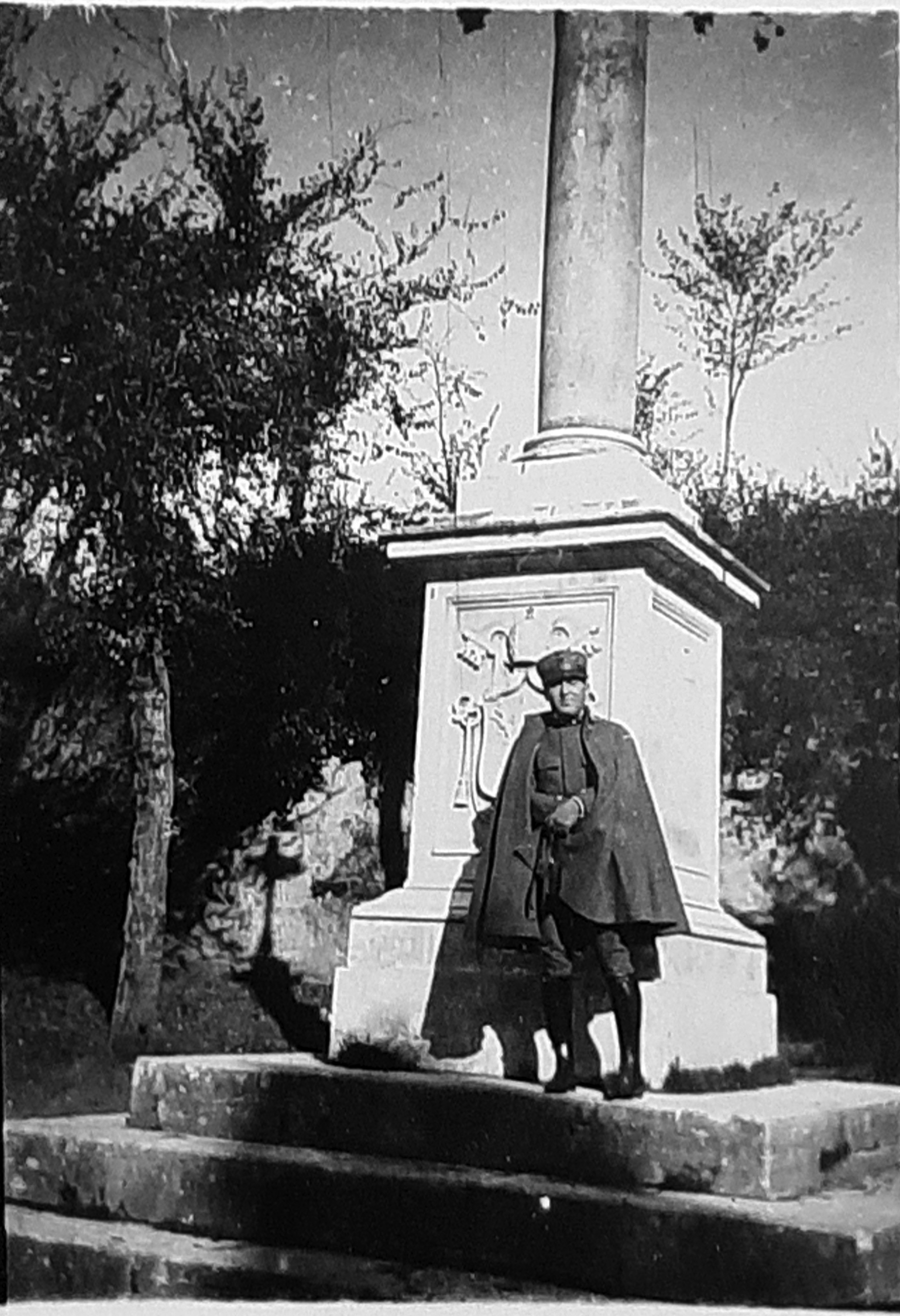
Carlo in First World War uniform.
Simon Levis Sullam, associate professor of Modern History, writes about the notion of the physique and height of Jews, as addressed by Max Nordau in 1903 in his essay “What Does Gymnastic Mean for Us Jews?” Nordau speaks about the original Jews’ defective appearance and small size because of the unfavorable conditions in which they lived. Nordau asks whether the Jews became small or always have been and stresses the role of physical activity in Zionism's ideals of masculine strength. Sullam explains that “In the Italian context, the formulas ‘muscular Judaism’ and ‘muscle Jew’ apparently remained unknown both at the time and afterward” (Sullam, 2017: 30–31). Carlo, like the rest of his family, was short by today's standards (1.64 m). However, his height was average compared to his cousins and in-laws.
Carlo received two medals from the Ordine Della Corona D’Italia in 1922. King Victor Emmanuel II founded the Order in 1868 to commemorate the unification of Italy in 1861. I found two identical ‘Croce da Cavaliere dell Ordine della Corona d'Italia’ (Knight's Cross of the Order of the Crown of Italy) medals (shown in Figure 15) in my father's drawers after he died. 16 Whoever rendered extraordinary service to the Kingdom of Italy and the sovereign in a civic and military capacity, regardless of religious affiliation, was awarded the medal. The diploma (Figure 16), the only official record of his army service that I found, indicates that he served as a cavalier in the army. My father preserved both the diploma and the medal yet kept it private at home. No transgenerational memory existed regarding these artifacts. Since my father was orphaned at the age of five, he did not have the opportunity to get to know his father and learn about his past directly from him. Any information about the family and heritage was transmitted through my grandmother, who was inclined to remain private. Therefore, all the contextual information I have gathered is woven into a story of my grandfather that I have pieced together, always wishing my grandmother had felt free to talk at those times when I asked.
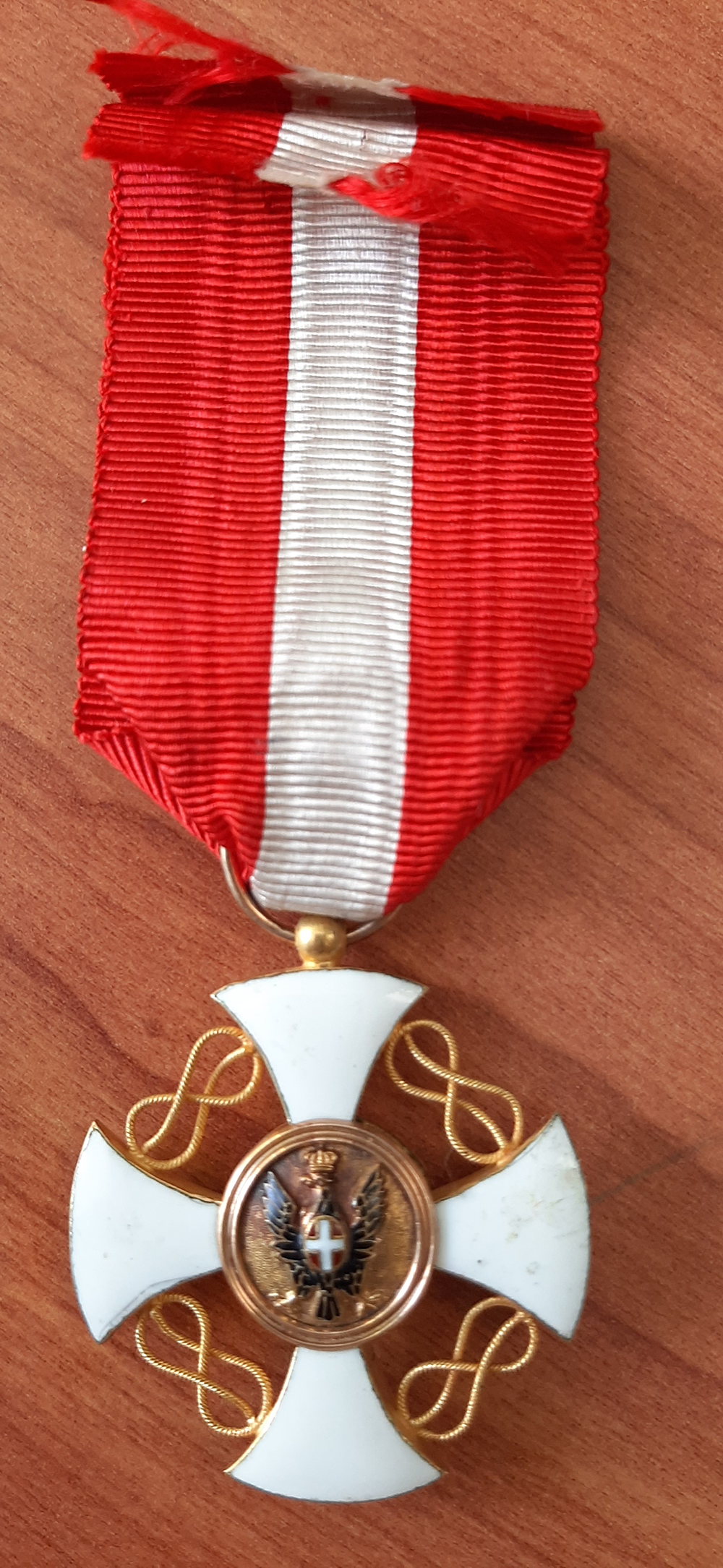
Carlo's Italian Order of the Crown.
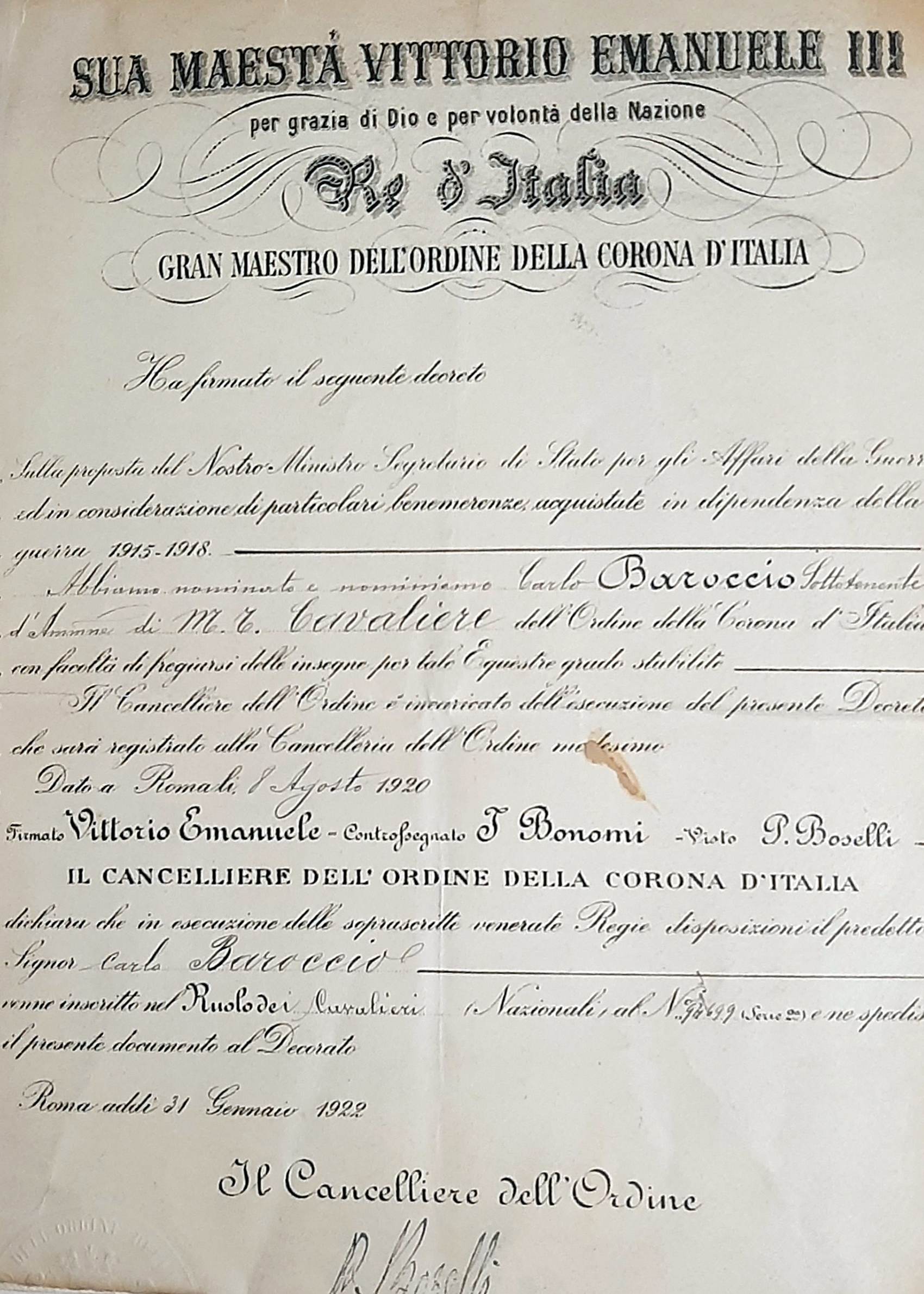
Diploma from the Ordine Della Corona D’Italia.
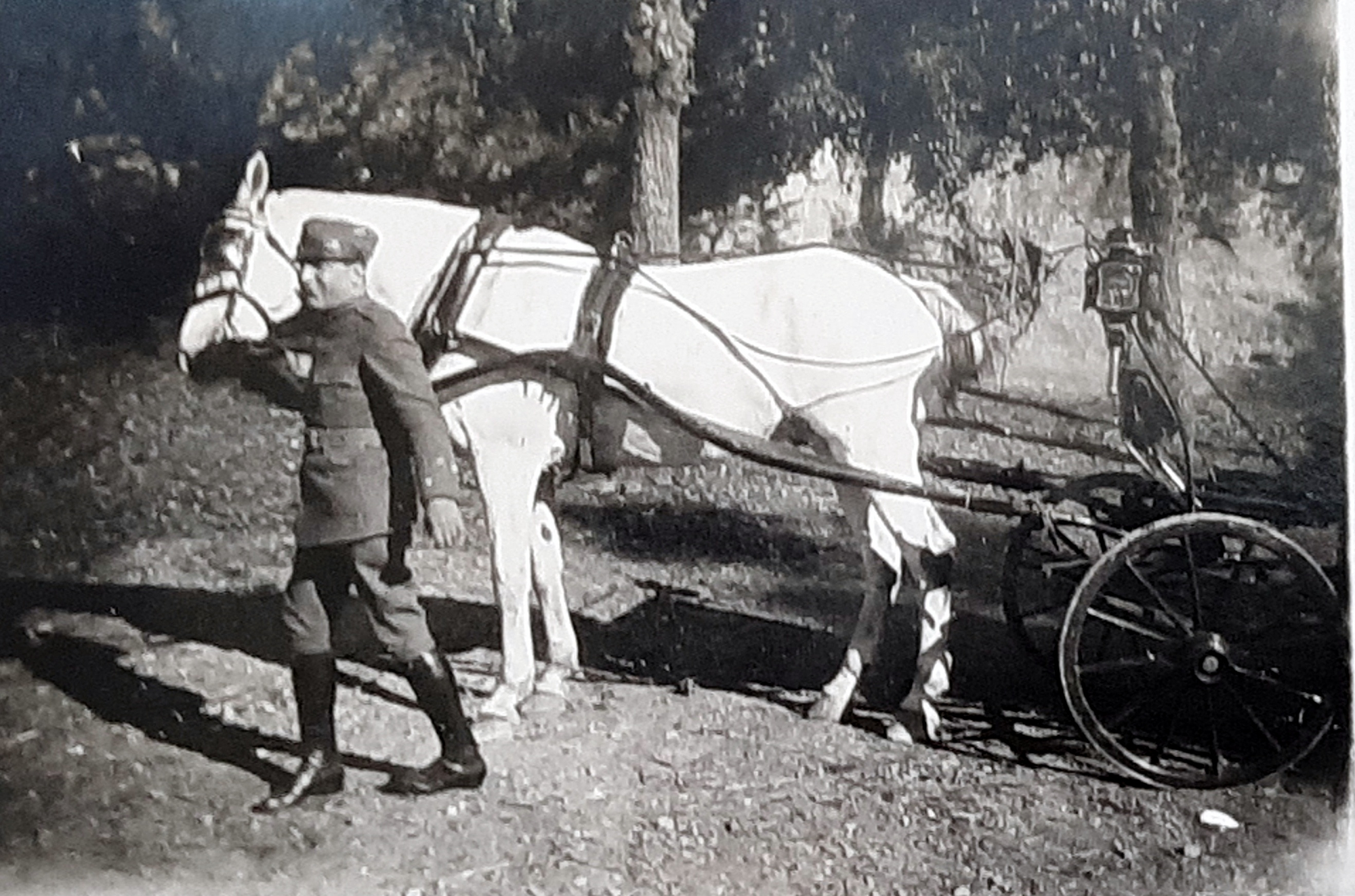
Carlo with horse and carriage.
Carlo appears in several photographs beside a horse carriage or riding it (Figure 17) (his shortness of height is distinct when he stands near the horses). Two horses, one white and one dark brown, appear in the album in several photographs, as well as images of carriages. At the time, this did not stand out as bearing significance until I discovered the diploma in my father's belongings stating that he was a cavalier in the army. This form of pasting the information to make sense is part of data collection and inductive research.
Carlo appears in Figure 18 with his cousin. The visual signs of a newspaper and a walking cane suspended over the cousin's shoulder appear in this photograph. The cane, a status symbol and signifier, and the folded handkerchief in the jacket were considered fashionable for gentlemen. Klein explains that bourgeois Jews dressed according to the general fashion. Men wore three-piece suits and ties and folded handkerchiefs in jackets. Their accessories could include a monocle, hat, walking cane, watch chain, or gloves (Klein, 2018: 35). Carlo (Figure 18) is conscious of being photographed, posing to create an air of naturalness, of feel-good photographs similar to a form of phatic communication common today on social media. Nathan Jurgenson, a social media theorist, explains that phatic communication, which relies on feel-good photographs and familiar symbols, plays a role in positive interaction between people. Means of phatic communication emphasize a non-referential use of language to share feelings and to establish a mood of sociability and communion with other people. Visual phatic communication employs photography to create social photos. Jurgenson explains that “the general function of the photo is about social communication, rather than to stand alone as a self-referential object. The social photo finds its purpose, not in the image object itself but in the transmission of the moment it presents” (Jurgenson, 2020: 23). Viewing photos of social interactions can develop “feel-good” positive responses rather than a critical engagement with the content of the image. The communicative mechanism in photographs is demonstrated in two pictures from the family (Figures 19 and 20).
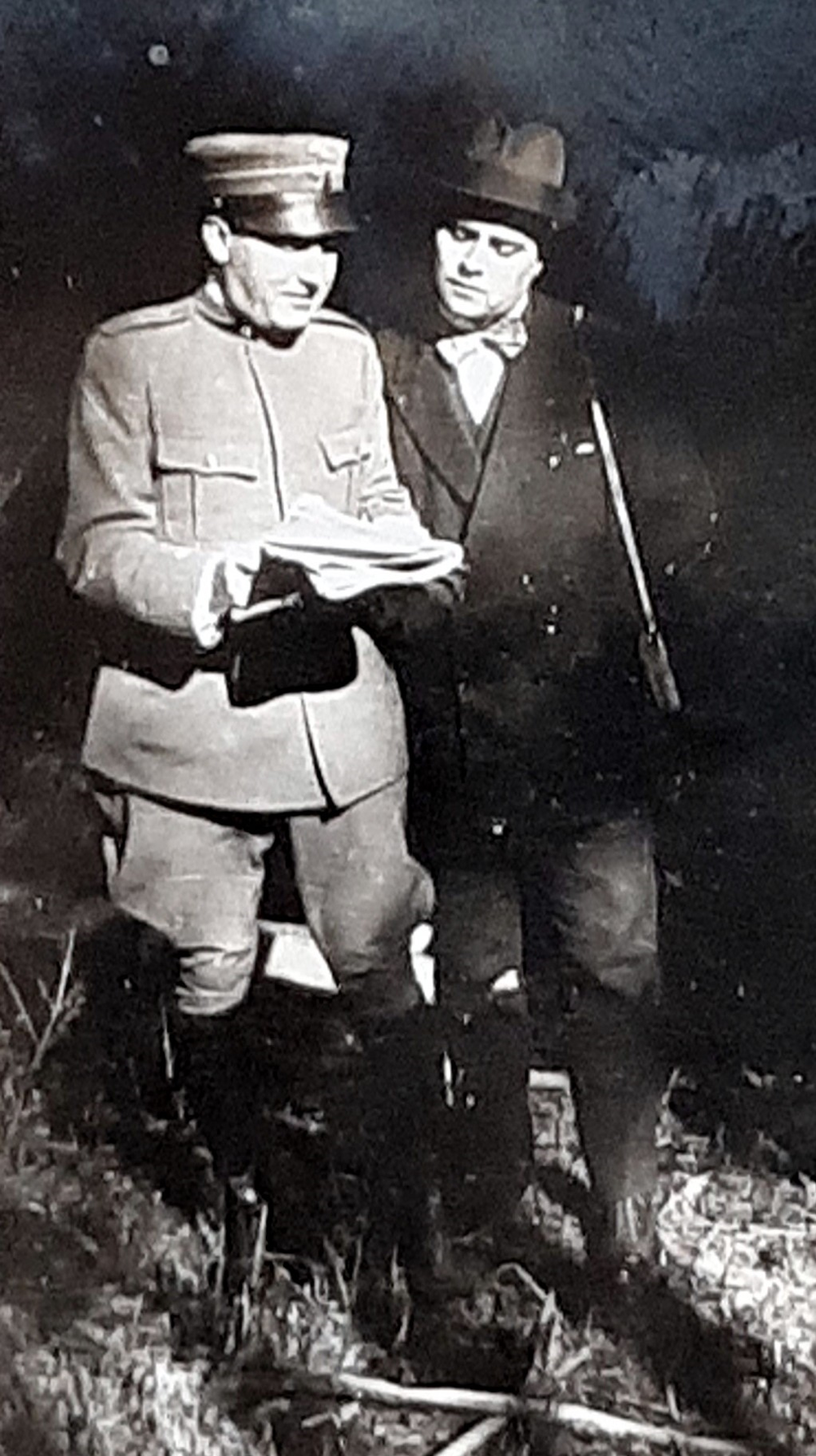
Carlo reading a newspaper.
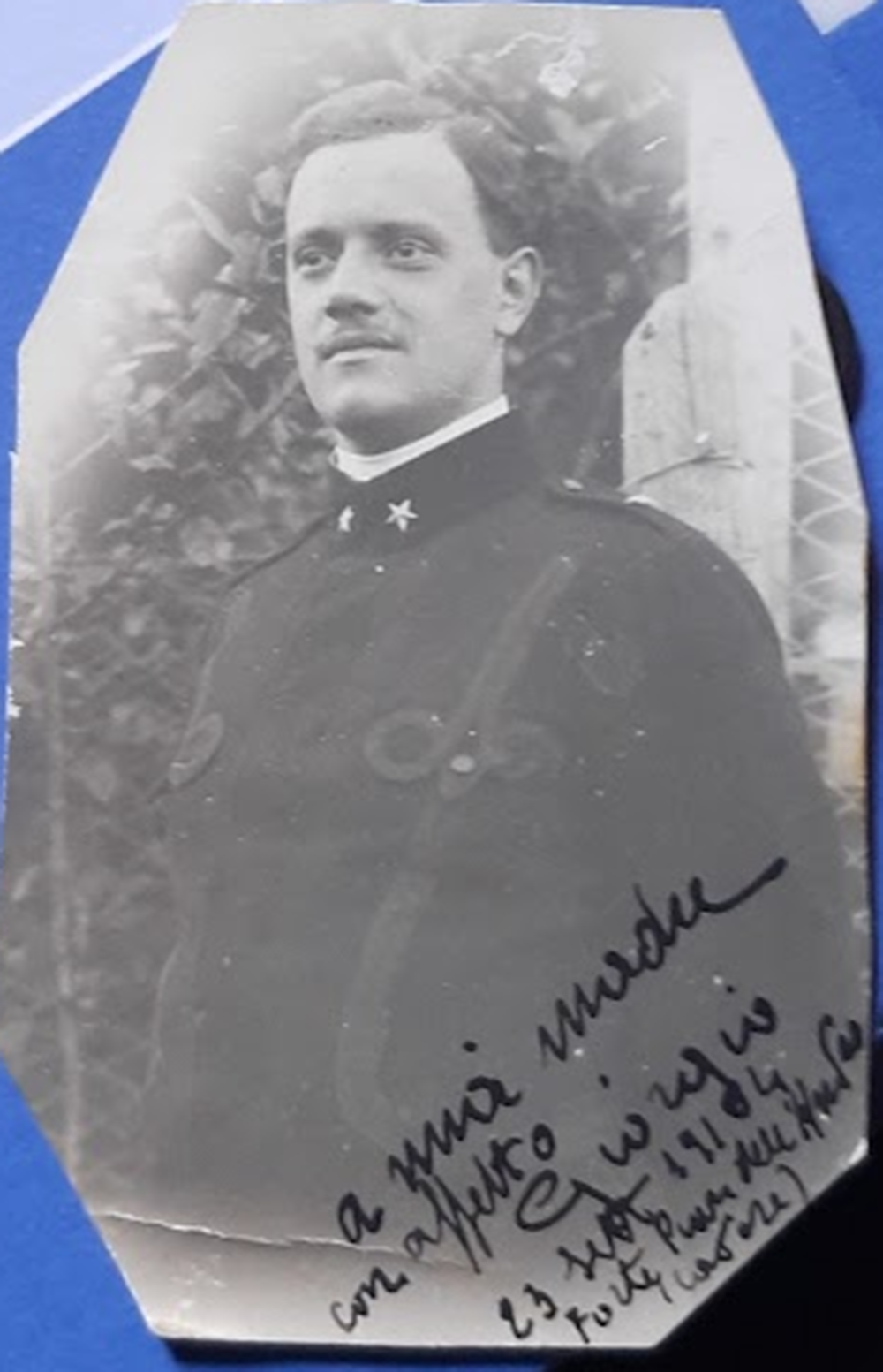
Giorgio Zevi, Emma Zevi's brother, in uniform in 1914.
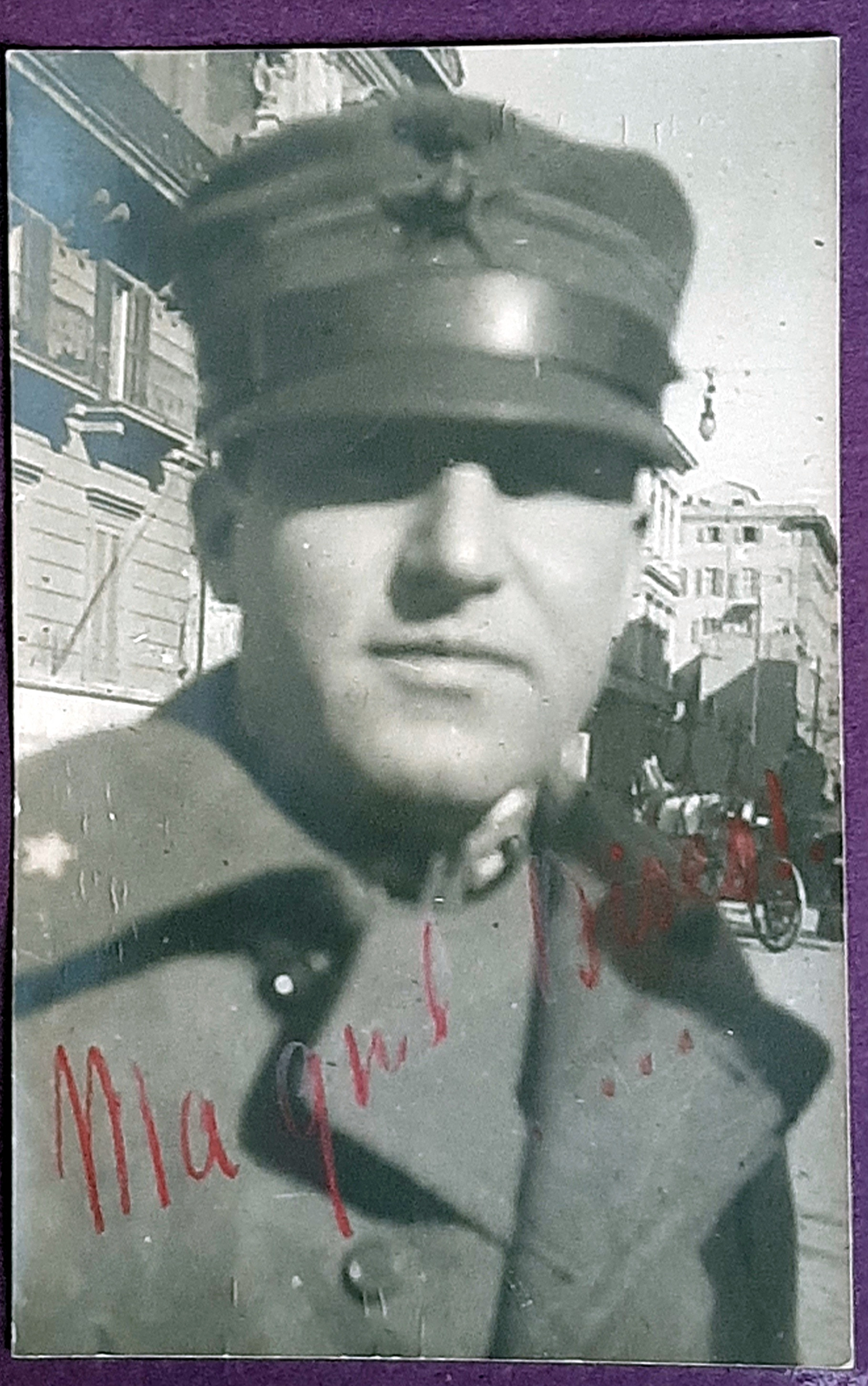
Carlo in a street photograph.
Figure 19 is of Giorgio Zevi, Emma's youngest brother. Giorgio, who had also fought in the Libyan War in 1911, was a lieutenant in the artillery when he sent this image to his mother. 17 The inscription says, “To my mother, with affection, Giorgio, 23 Sept. 1914.” Writing on the emulsion rather than on the back side of the picture integrates the textual and visual information into a new visual text. The added text allows Giorgio to control the reading of the image. It indicates that he was present at a specific recognized time and place.
The picture of Giorgio as a soldier extends beyond a traditional portrait into an image that depicts an Italian Jewish soldier standing upright, looking proudly sideways. His mother, the referent in this case, can decode the text and the visual information. The image and handwritten text become inseparable. Reading this text and viewing the image by his mother (Dalinda Zevi) creates a union between the two based on a mutual decoding system of social understandings of the time. Giorgio emphasizes “my mother,” which positions her as a reader who accepts her role as a referent, as “his mother.” The text is intended for her, with affection, and assumes that the positive message will reciprocate. Yet, Dalinda is a passive viewer, in comparison to Emma, who chose to present images of Carlo taken before they were married and commemorate them in the family narrative after he died. Emma actively constructed a visual legacy, while Dalinda received a message.
In comparison, in Figure 20 of Carlo, there is an illegible inscription on the photograph in red ink, with the first prominent word, “Ma” (My). Like Giorgio Zevi, Carlo also wrote on his portrait, personalizing the image, which might have been common practice at the time. It is the only text written by Carlo in the album and the only original handwriting to be found. This action of adding a personalized message, in handwriting, on the emulsion is an active means to own the image, to connect to it and what it conveys to the viewer and the receiver of the message, who decodes it. Carlo also owns his informal appearance, on a busy street, in essence resembling a modern-day selfie. There is no date or indication of where it was taken. It appears, once again, that he is creating his private arena. The photograph addresses a sense of absence in the sense that the person who was intended to read the message is unknown to the viewer and the information is unclear. The cultural code of presenting oneself in uniform with an accompanying text, as a means to communicate, assuming that the message will be decoded accordingly, connects the two images of Figures 19 and 20.
Conclusion
The story of the role of the Jewish Italian soldiers in the First World War appears to be straightforward, as recounted by the Italian Jews. They were loyal to the Savoy Kingdom and wanted to express their loyalty and gratitude. Hence, since they felt proud to be equal citizens and to have a homeland to defend, the Jews were eager to enlist in the army and contribute to the war effort. These patriotic sentiments were expressed in their actions. What is missing in this narrative is how these sentiments manifested themselves in their private activities and lives.
This study opens the door to a Jewish soldier's life, private sphere, and experiences in the First World War through observation and analysis of a personal photo album. The photographs in Carlo's photo album reveal a hidden aspect of visual signs of patriotism at home; they express how the military experience found a place in one's private experience. It is not easy to understand the extent of patriotic feelings on a personal and private level more than a century ago unless there are written documents to testify to feelings, such as letters, recorded interviews, testimonies, films, and books, all lacking in this research. The traces left in this case are the photographs compiled by Emma into an album. Emma, Carlo's wife, married him as a banker after the First World War in 1919; she took her own agency in creating a legacy for him by means commemorating him as a soldier in the photo album she compiled.
Carlo's pictures stand out in their lightheartedness and joviality. The revelation of his various displays of emotions in the photographs taken during the war shows how deeply his patriotism penetrated his being and state of mind. Public declarations of loyalty and speeches are less authentic than this personal expression of an individual showing his pride in being an Italian soldier as well as the pride reflected in his wife's actions vis-à-vis the photographs.
The analysis presented in this study shows the role of photographs in constructing a visual narrative. The research illustrates the power of the photographs to reveal covert and overt messages that, in this case, played a part in the soldiers’ and families’ lives during the tumultuous and precarious period of the First World War. The study also accentuates the particularly vulnerable situation of the ebrei romani and the war's impact on their private sphere through the analysis.
This form of research can shed light on other Jewish communities in Europe during the period of the First World War, such as Germany, Austria, and France. The research can enhance the ability to gain a deeper understanding of the Jewish memory of the First World War, in relation to complex and shifting constructions of Jewish identity over time.
Footnotes
Acknowledgements
I am indebted to the archivists from the Historical Jewish Archive in Rome for assisting me in my research. My thanks go to Sylvia Haia Antonucci and Claudio Procaccia. I am grateful to friends and family members who devoted time to my questions and interviews: Joyce Bigio, Luigi Facini, Giorgio Gommel, Ilana Kaufman, Laura Mincer, Lee Perlman, Marina Pipperno, Alberto Zevi, Fausto Zevi and Sergio Zevi.
